Feeds:
Posts
Comments

Archive for the ‘wildlife’ Category

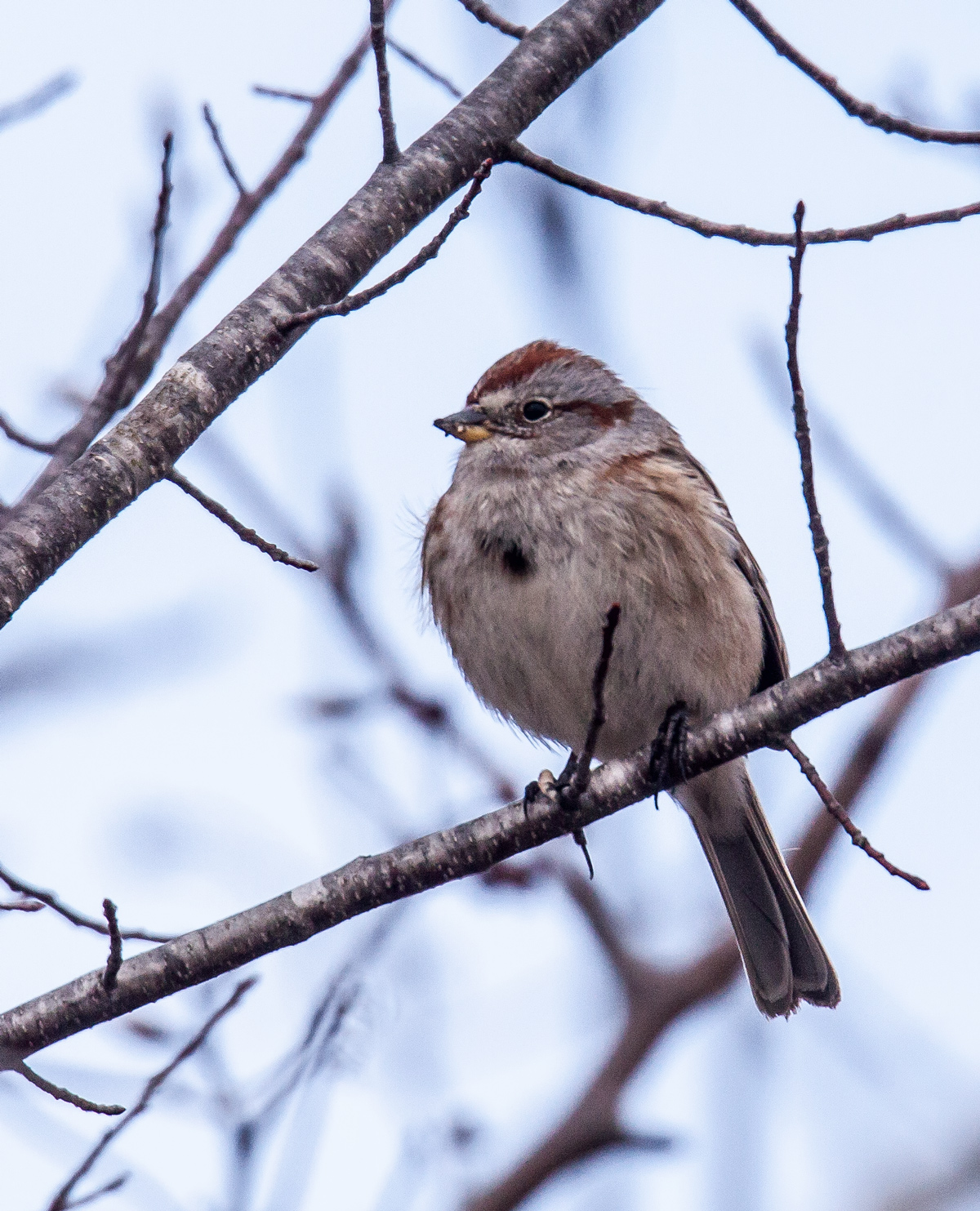
Do all sparrows look the same to you? I am definitely no bird expert, but I could immediately see that the sparrow that I spotted yesterday at Occoquan Bay National Wildlife Refuge was different from the ones that I am used to seeing. The first thing that I noticed was that it was lighter in color than the usual sparrows and that the cap on its head was red, rather than the typical brown.

When I returned home and looked at the images on my computer, I also noted the two-toned bill and the black spot in the middle of its chest. All of these characteristics made it relatively easy to identify it as an American Tree Sparrow (Spizella arborea). I could not remember if I had seen this species before, so I checked my blog postings and found that it has been more than five years since I last photographed one.

It is easy to dismiss commonplace subjects, like sparrows, as not worthy of your time and attention. If you do so, though, you will miss the chance to discover their beauty. Like people, birds are not merely members of their species—they are unique individuals. I recommend spending time with them and getting to know them better.
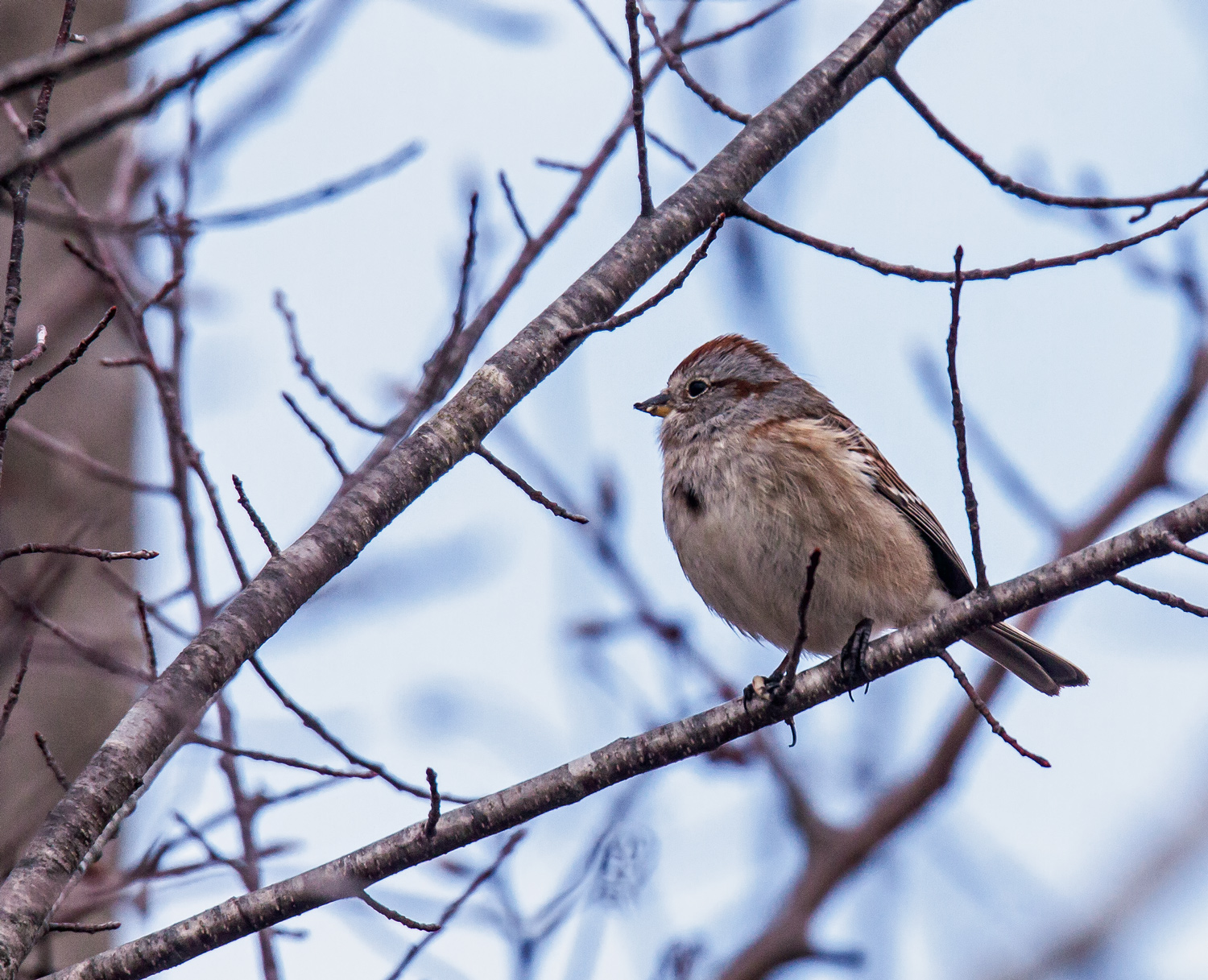
American Tree Sparrow

American Tree Sparrow

© Michael Q. Powell. All rights reserved.

Read Full Post »

There were several groves of trees near the Munich airport hotel that I stayed in prior to my return flight to the United States. I figured there might be some birds to photograph and was happy when I spotted birds flitting about. They reminded me of chickadees, but were much more colorful.

I did a little research on-line and think that the bird in the first photo is a Eurasian Blue Tit (Cyanistes caeruleus) and the one in the second image looks to be a Great Tit (Parus major).  Apparently they are both pretty common, but they seem rare and exotic to me because they are not to be found in the area in which I live.

Eurasian Blue Tit

Great Tit

© Michael Q. Powell. All rights reserved.

Read Full Post »

I spotted this bird on Friday as I explored the area around my hotel near the airport in Munich, Germany. I am not sure of the exact name of the town, but it is one of many airport hotels that are in a relatively rural area adjacent to the airport.

I spotted the bird, which I was sure was some kind of a raptor, from a distance and was able to move a little closer to the mound on which it was perched. My initial thought was that it was some kind of hawk or falcon, but it was different from any of the ones that I have seen in my home area of Northern Virginia.

Thanks to the experts on a Facebook birding forum, I learned that this is a Eurasian Kestrel (Falco tinnunculus). It is somewhat similar to the American Kestrel, the smallest falcon that we have in North America, a species that I have seen a few times.

Eurasian Kestrel

© Michael Q. Powell. All rights reserved.

Read Full Post »

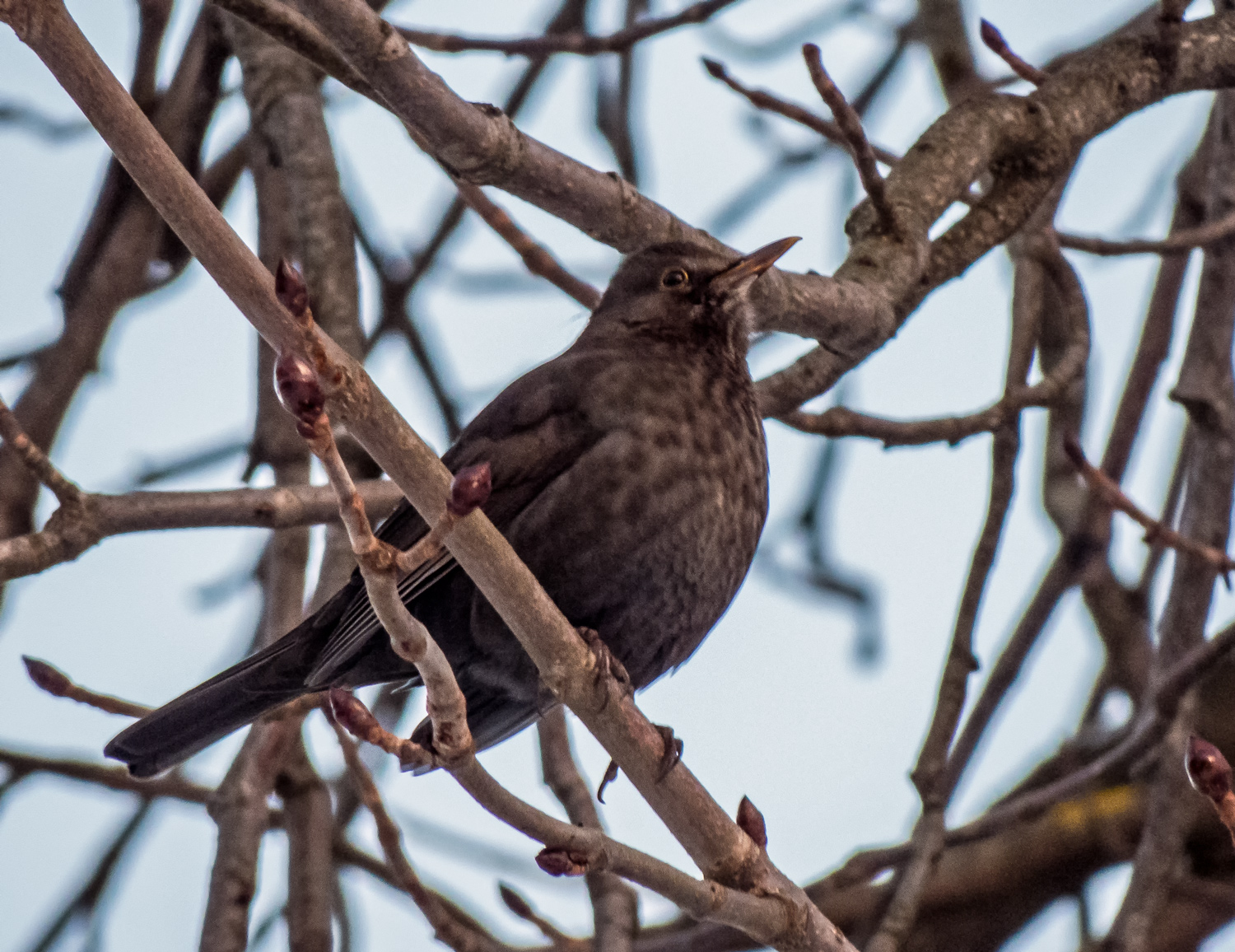
Blackbirds in Germany are more closely related to American Robins (Turdus migratorius)—both belong to the thrush family—than to Red-winged Blackbirds (Agelaius phoeniceus), which belong to an entirely different bird family.

Here is a shot that I took earlier this week of a female Eurasian Blackbird (Turdus merula) in Oberammergau, Germany. In many places this bird species is known as the Common Blackbird or simply as a blackbird. When I first spotted this bird, I was struck by two things. First, the shape of the body and bill reminded me immediately of a robin, even though the red-breast was not present. Secondly, the song that the bird was singing was melodious, unlike the sometimes grating calls of Red-winged Blackbirds.

Eurasian Blackbird

© Michael Q. Powell. All rights reserved.
Read Full Post »

I spotted this White-throated Dipper (Cinculus cinclulus) on Sunday on the Ammer River in Oberammergau, Germany. This little bird, which is about 7 inches in length (18 cm) is also known as the European Dipper or simply a dipper.

Remarkably this bird walks on the stones on the bottom of a moving stream against the current, with its head downwards to locate prey, according to an article on oiseau-birds.com. According to this report, the current’s force against the bird’s bowed back keeps it on the river bed as it walks, propelled by wing movements. Of note, the White-throated Dipper is the national bird of Norway, according to Wikipedia.

White-throated Dipper

© Michael Q. Powell. All rights reserved.

Read Full Post »

As I was exploring the Ammer River on Sunday afternoon, the day of my arrival in Germany, I spotted these two Common Merganser ducks (Mergus merganser). Initially they were sleeping with their heads tucked under their wings, but eventually they woke up and swam around a little and I was able to get some shots.

I am on a brief trip to Germany for work and am staying in the small Bavarian town on Oberammergau, in southern Germany. It is located in the mountains and at the moment has lots of snow. I did manage to get a few shots of the town and of the mountains on Sunday that I hope to feature later this week. Our work schedule looks to be pretty busy and I am not sure I will have the chance to get out again with my camera before I depart on Saturday.

Common Merganser

Common Merganser

Common Merganser

© Michael Q. Powell. All rights reserved.

Read Full Post »

Most of my readers know that I love to photograph Bald Eagles. (Haliaeetus leucocephalus). When I am lucky enough to catch one in flight, it usually is just as the eagle is leaving the tree or when it is high in the sky. About two weeks ago, I manage to capture this eagle from a different perspective as it flew by at a relatively low level. It is not the sharpest image I have ever taken, but there is something about the outstretched wings and the glimpse of the head under the wings that I really like.

Bald Eagle

© Michael Q. Powell. All rights reserved.

Read Full Post »

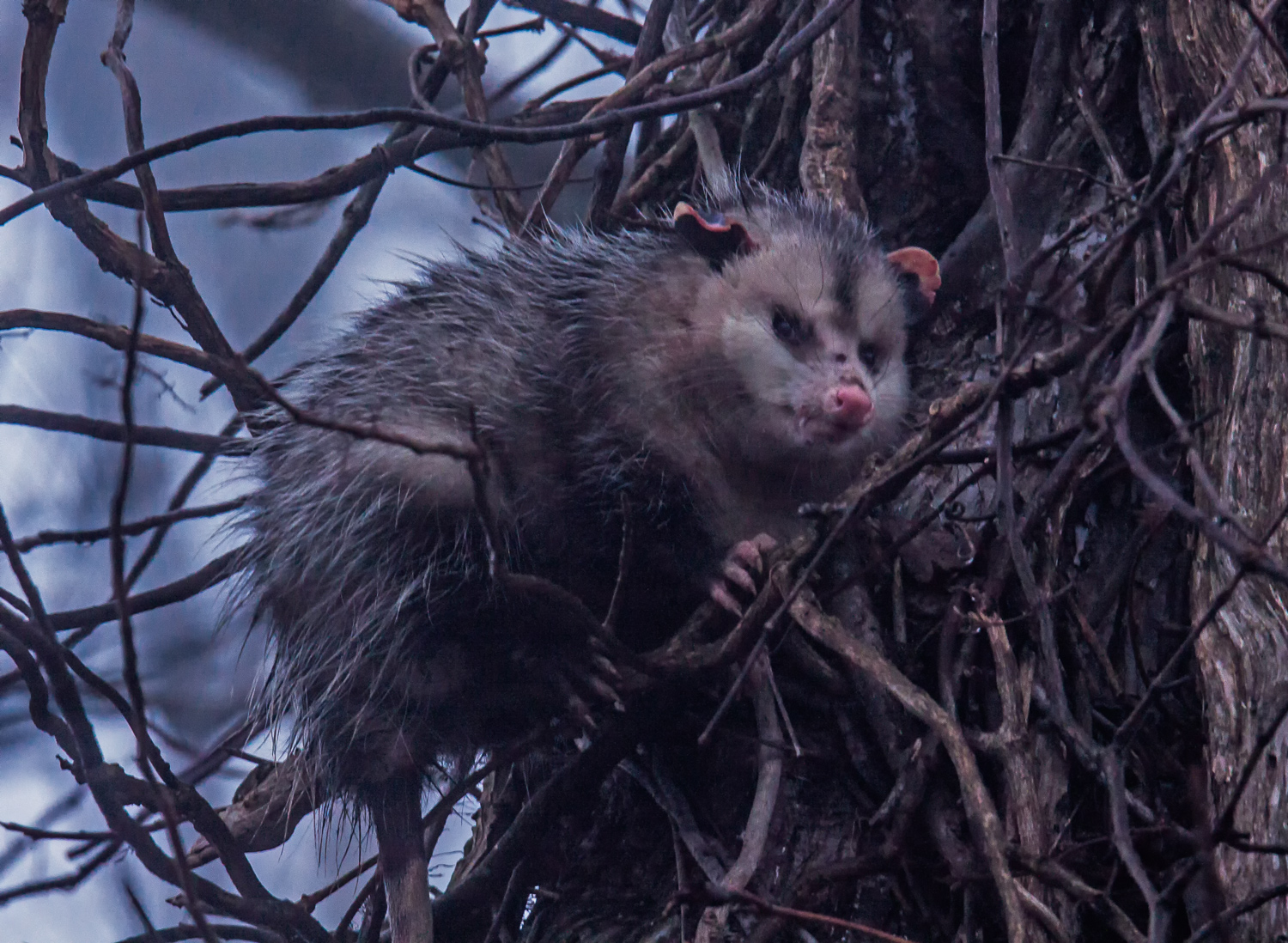
I have been to Occoquan Bay National Wildlife Refuge dozens and dozens of times, but had never seen an opossum there until yesterday. I am pretty sure that I would not have seen this one almost hidden in the trees if fellow photographer Ricky Kresslein had not pointed it out to me. Initially I was incredulous, suspecting that he had misidentified a raccoon, but as soon as I looked closely at the animal, I realized he was right.

The Virginia Opossum (Didelphis virginiana), the animal that I photographed, is the only marsupial found in North America north of Mexico. I had to double-check, but was able to confirm my remembrance that a marsupial is an animal with a pouch, like a kangaroo or a koala.

The connection to Australia and New Zealand is occasionally a source of some confusion, because the “possums” in those locations are entirely different species. Here in North American, “opossum” and “possum” are used interchangeably.

One of the most common references to this animal is the expression “playing possum.” In the literal sense, it refers to the Virginia Opossum’s reaction sometimes when threatened—it may roll over, become stiff, drool, breathe slowly and shallowly, and appear to be dead. In a more general sense, the expression has come to mean pretending to be dead or asleep to avoid having to deal with a problem.

Virginia Opossum

© Michael Q. Powell. All rights reserved.


Read Full Post »

These Hooded Merganser (Lophodytes cucullatus) couples appeared to be on a double date when I spotted them earlier this week at a little suburban pond near where I live. It is now getting to be that time of the year when more and more birds are pairing off.

I took a lot of shots these ducks as they swam by and this is one of the few photos in which all four heads are visible and facing in the same direction. No matter whether you are  photographing animals, birds, or people, it is always a challenge to take a group photograph in which all subjects have pleasing poses..

Hooded Merganser

© Michael Q. Powell. All rights reserved.

Read Full Post »

Normally I plan my photo expeditions so that I arrive after the sun has already risen. After all, if I want to photograph wildlife subjects, I need to have enough light to be able to see them. Recently, however, I have been trying to get there before sunrise in order to capture images of the color in the sky. This is becoming a problem for me, because the gates of the wildlife refuge where I like to explore do not open until 7:00 in the morning and we have almost reached the point in the year where the sun rises even earlier than that.

On Tuesday, I arrived at Occoquan Bay Wildlife Refuge at about 7:05 and the color in the sky was amazing, a beautiful red color tinged the clouds. My view of the most colorful parts of the sky was blocked by trees, so I did my best to frame the sky with those trees. My the time I reached the water, the most saturated colors had disappeared, but in some directions I could still see some glorious pastel colors and I captured the second image. I love the abstract quality of that image, a depiction of nature at its simplest, a series of wonderful shapes and colors.

colorful dawn

colorful dawn

© Michael Q. Powell. All rights reserved.
Read Full Post »

I watched and waited for an extended period of time yesterday as this Bald Eagle (Haliaeetus leucocephalus) groomed itself in a tree overlooking one of the trails at Occoquan Bay National Wildlife Refuge. I was pretty much in the open at the edge of the trail and did not dare to move forward for fear of spooking the eagle. Fortunately I had my camera and long telephoto zoom lens on a monopod, because I know from experience that I would not have been able to hold it pointed upwards for that long a period of time.

I tried to stay as alert and ready as I could, which can be quite a challenge after a while. Sometimes a bird will signal its intent to take off, but this eagle took off without a warning. Acting on instinct mostly, I managed to capture the first image when the eagle was just clearing the edge of the branches. In the second shot, I clipped off the edge of the wings, but decided to include it to give you an idea of the challenge of trying to track the speed a bird when it first takes off. The final image shows you what the eagle looked like when it was perched in the tree before the takeoff.

bald eagle

Bald Eagle

Bald Eagle

© Michael Q. Powell. All rights reserved.

Read Full Post »

This Red-shouldered Hawk (Buteo lineatus) was so puffed up early last Saturday morning at Occoquan Bay National Wildlife Refuge trying to stay warm that I couldn’t even see its feet—it was about 18 degrees (minus 8 degrees C) when I captured the image. The hawk seemed to be hunched over a bit and it looks like some of its lower feathers were draped over its feet.

Red-shouldered Hawk

© Michael Q. Powell. All rights reserved.


Read Full Post »

It will be a few more months until dragonflies reappear in our area, so for now I have to content myself with this one in my front yard that I photographed yesterday as the snow was gently falling. This metal dragonfly is part of a raised sprinkler that stands about three feet tall (about a meter).

I really like the way that the dragonfly has weathered and acquired various colors. I suppose I could talk of rust and tarnish, but I prefer to think of it as “patina.”

dragonfly

© Michael Q. Powell. All rights reserved.

Read Full Post »

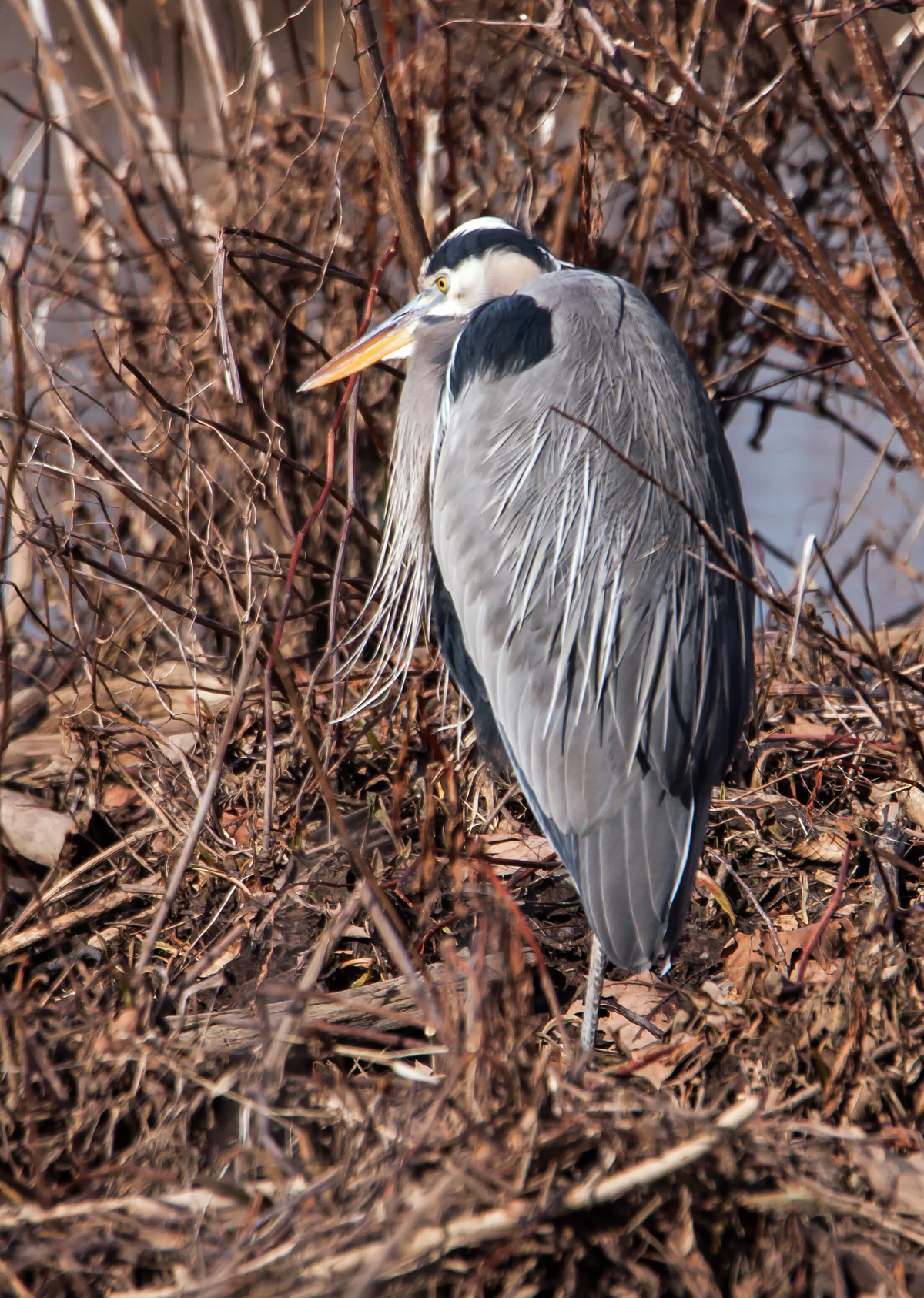
It was not as bitterly cold on Monday as it is today, but this Great Blue Heron (Ardea herodias) nonetheless seemed to be hunkered down at the edge of a pond as it sought to stay warm at Occoquan Bay National Wildlife Refuge. It almost looks like the heron is wrapped in a cloak of fluffed-up feathers with only a minimum amount of its body exposed to the elements.

Great Blue Heron

© Michael Q. Powell. All rights reserved.

Read Full Post »

It’s nesting time for eagles at Occoquan Bay National Wildlife Refuge. On Monday I spotted this Bald Eagle couple in a nest that I know has been used the for at least the last two years. The tree is adjacent to one of the main trails at the refuge and is pretty prominent. Shortly after my sighting, I encountered one of the law enforcement officers who was putting up barriers to block access on the roads near the nesting site to protect them from human interference.

Each year they put up the barriers in slightly different locations. I am hoping that this year’s barriers are about the same distance from the nest as last year’s. At that distance, I was able to photograph the eagles from a distance that let me get photos about the same as the first image below and also monitor the eagles. I was fortunately last year to be able to even get some distant shots of the two eaglets after they were born. Perhaps I will be equally lucky this year.

Bald Eagle

Bald Eagle

© Michael Q. Powell. All rights reserved.

Read Full Post »

Brown Creepers (Certhia americana) are tough to photograph as they spiral their way up tree trunks, so I was thrilled when I managed to get a mostly unobscured shot of one of these little birds on Monday at Occoquan Bay National Wildlife Refuge.

How small are Brown Creepers? According to information on the Cornell Lab of Ornithology website, Brown Creepers are 4.7 to 5.5 inches in length (12 to 14 cm) and weigh 0.2 to 0.3 ounces (5 to 10 grams). For the sake of comparison, the birds that I featured yesterday, Bald Eagles, are 27.9 to 37.8 inches in length (71 to 96 cm) and weigh 105.8 to 222.2 ounces (3000 to 6300 grams).

Brown Creeper

© Michael Q. Powell. All rights reserved.

Read Full Post »

How willing are you to show others your unedited images? When I first started getting more serious about taking photos six and a half years ago, I used to go out shooting with my mentor Cindy Dyer. When we were finished, we would immediately download my images and she would go through them with me.

It is a very humbling experience to let someone see all of your shots, but in doing so Cindy was able to see what I was attempting to do and how well I was succeeding in things like composition and camera settings. Her view was that I should try to get it as correct as I could in camera and not rely on software to fix my problems.

Earlier today I posted an image of a Bald Eagle (Haliaeetus leucocephalus) in a blog posting that I titled Unexpected eagle. In response to the posting, Liz of Exploring Colour asked me how much I had cropped the image. I answered her verbally, but then realized it would be more effective to show her the uncropped image and then the cropped one that I used in this morning’s post.

I was shooting with a Tamron 150-600mm lens at 600mm for this shot and that was what allowed me to fill so much of the frame with the eagle. It is very unusual for me to be able to get that close to an eagle without spooking it. When I am uncertain of the amount of time that I will have with a subject, I will usually use the center focus point of my camera and I think that is what I did here.

My DSLR is getting a bit long in the tooth and doesn’t have as many megapixels as some of the really new ones, which means I can’t crop as severely as some other photographers can without degrading the quality of my images. I have no objections to cropping, though I usually try to keep it as minimal as possible.

Bald Eagle

Uncropped image

bald eagle

Cropped image

© Michael Q. Powell. All rights reserved.

Read Full Post »

As I rounded a curve on a trail yesterday morning at Occoquan Bay National Wildlife Refuge, I looked up and realized there was a Bald Eagle (Haliaeetus leucocephalus) right in front of me. I reacted pretty quickly and managed to capture this image before the eagle spotted me and flew away.

Most of the time when I have been in similar situations, the eagle has spotted me before I spotted him and reacted before I did. In this case, I suspect that the eagle was either distracted or was looking in another direction when I first came into view.

bald eagle

© Michael Q. Powell. All rights reserved.

Read Full Post »

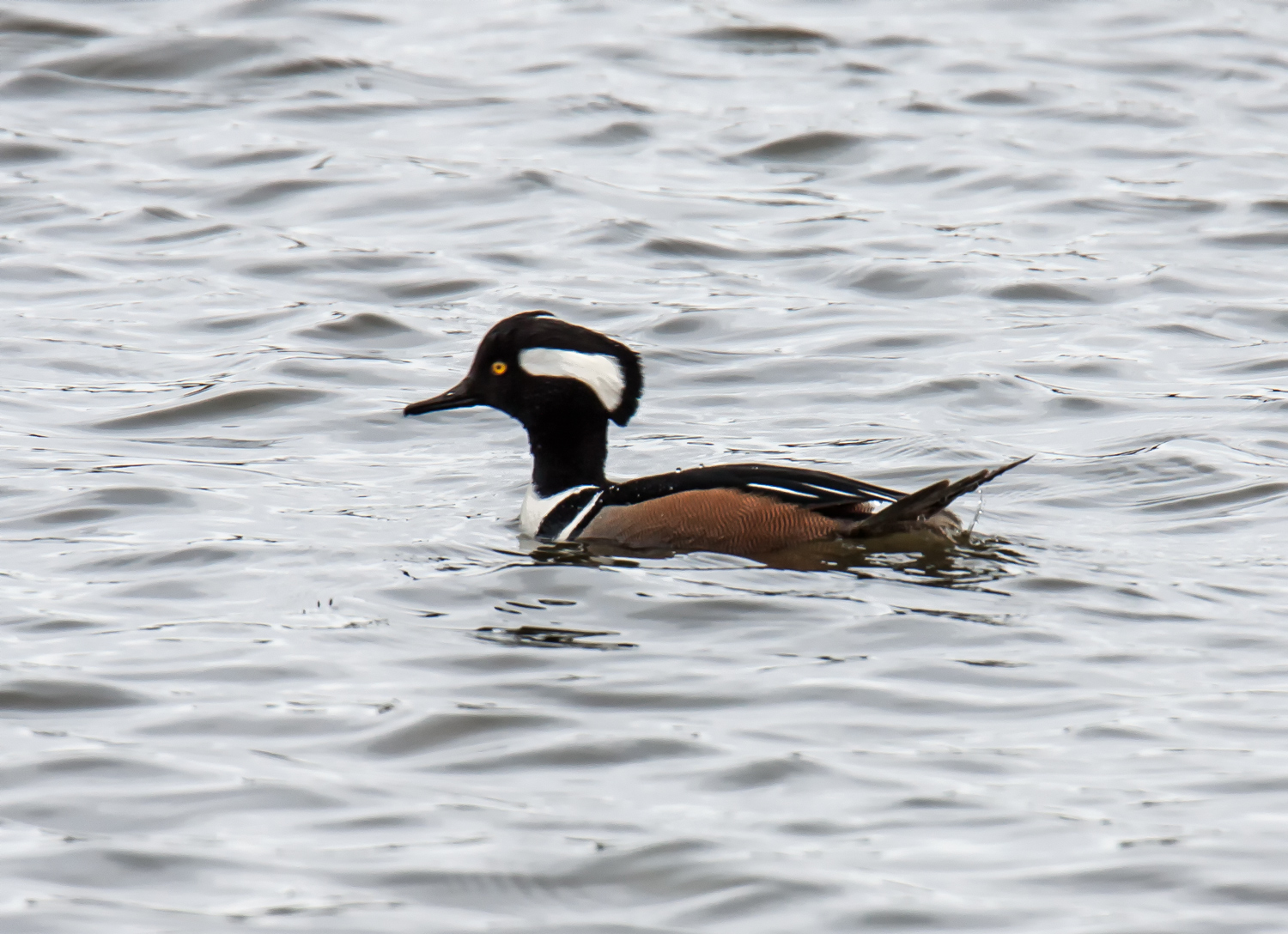
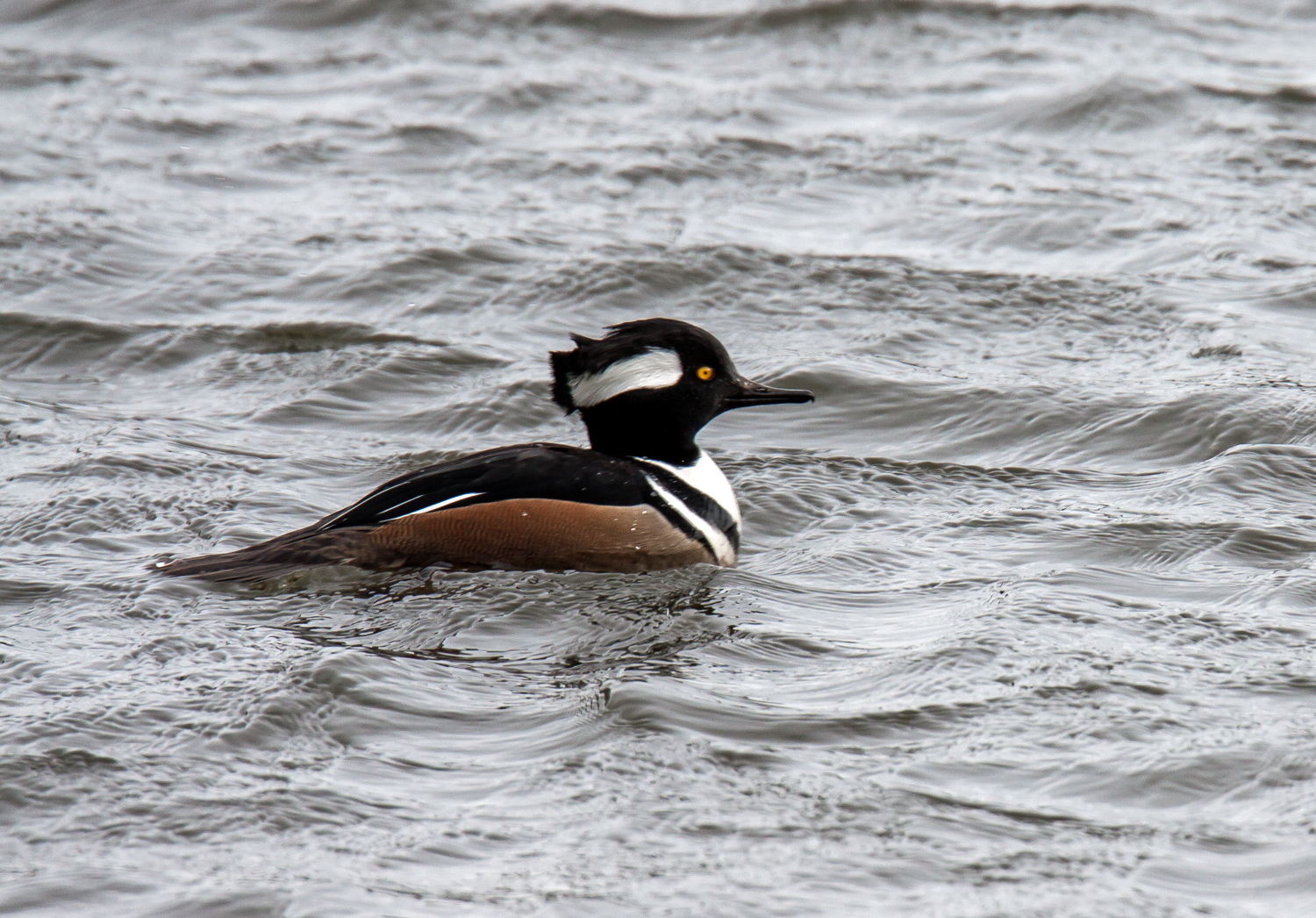
With most birds the shape of their heads is a constant, but with Hooded Mergansers (Lophodytes cucullatus), the shape can be wildly variable. I am not really sure how of the bird’s anatomy, but the “hood” appears to be pretty floppy, creating the effect of multiple “hairstyles.” Here are a few of the styles that a male Hooded Merganser was sporting during a brief period last week at a local suburban pond.

Hooded Merganser

Hooded Merganser

Hooded Merganser


© Michael Q. Powell. All rights reserved.
 

Read Full Post »

There was a sheet of ice in the center of the pond, but I had no idea how thin it was until a Ring-billed Gull (Larus delawarensis) that I was watching fell through the ice. I captured this little series of shots as the gull scrambled to regain its footing. Undeterred by its brief contact with the frigid water, the gull continued its solitary march across the ice, although it did seem to move a bit more slowly and cautiously.

Ring-billed Gull

Ring-billed Gull

Ring-billed Gull

© Michael Q. Powell. All rights reserved.


Read Full Post »

How would you dry off after a bath without a towel or a blow dryer? You might have to try the approach of this male Hooded Merganser duck (Lophodytes cucullatus), who rose out of the water and flapped his wings to dry off and fluff his feathers. Afterwards, the little duck spent a considerable amount of time adjusting the feathers with his bill, presumably to maximize their insulation value on a cold winter day.

Hooded Merganser

Hooded Merganser

Hooded Merganser

© Michael Q. Powell. All rights reserved.

Read Full Post »

The blue and gray colors of this male Ring-necked duck (Aythya collaris) seemed to be a perfect match for the cool tones of the icy waters of the suburban pond where I spotted him earlier this week. All of those cool colors also really make the warm yellow of his eyes stand out.

Ring-necked duck

© Michael Q. Powell. All rights reserved.

Read Full Post »

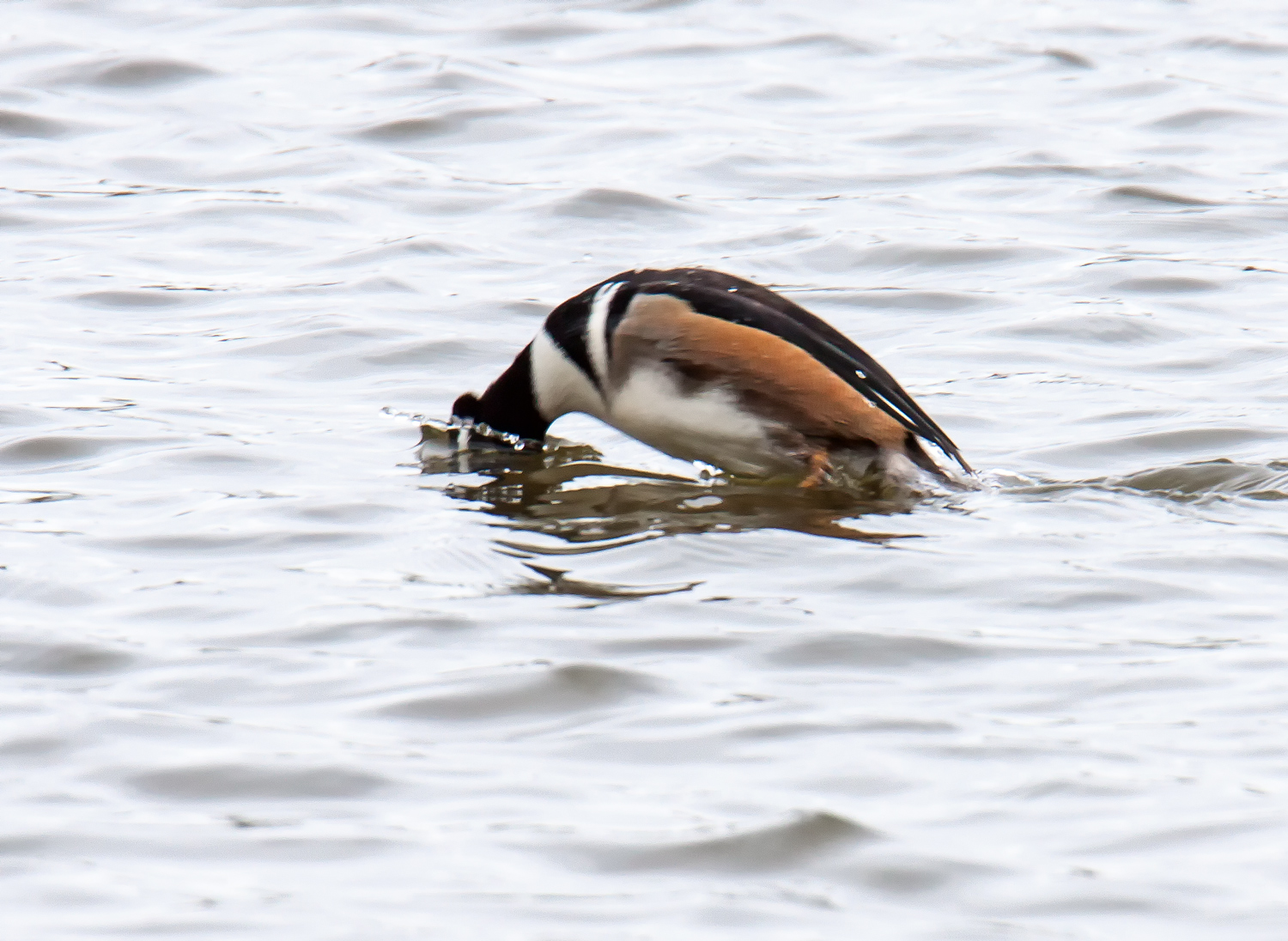
During the winter, there are fewer wildlife subjects to photograph than at other times of the year, so I find myself paying a lot of attention to each and every one. Earlier this week at a small suburban pond not far from where I live, I spent a lot of time watching a male Hooded Merganser duck (Lophodytes cucullatus) diving for food. “Hooded Merganser” is a long multi-syllabic name, so I affectionately refer to these ducks as “hoodies.”

This duck appeared to be the only member of his species at the pond, so he was not distracted by having to show off for the females. The “hoodie” would swim along and suddenly would dive. Initially I thought that there was no way that I could capture an image mid-dive—his actions seemed too unpredictable.

However, I gradually began to detect a pattern. It was fascinating to see how he would extend his neck, arch his back, and then plunge into the water. So, I watched and waited for him to extend his neck and then would start shooting. Most of the shots were not successful, but I did manage to capture a few fun photos of the diving “hoodie.”

Hooded Merganser

Hooded Merganser

Hooded Merganser

© Michael Q. Powell. All rights reserved.

Read Full Post »

Even when the weather is bad and other birds are hunkered down, sparrows are invariably active. Most of the time they are at ground level, but occasionally one will perch a bit higher off of the ground and give me a chance to get a decent shot.

That was the case this past Friday at Occoquan Bay National Wildlife Refuge, when a Song Sparrow (Melospiza melodia) took a break and posed for me briefly on the end of a log. I liked the composition when I took the shot and decided to post it without any cropping. I also couldn’t help noticing as I was working on the image that the sparrow’s colors are almost a perfect match for those in the background.

Sparrows are really special to me too because both on my parents loved His Eye Is On The Sparrow, a hymn that reminds us that God cares for each one of us. That is a message I think we all can use right now, at a time when so many of us are stressed out over the situation in our respective countries and in the world in general.

Song Sparrow

© Michael Q. Powell. All rights reserved.

Read Full Post »

Yesterday I finally made my way out into the wilds of Occoquan Bay National Wildlife Refuge for the first time following our recent snowfall. The wildlife refuge is open despite the partial federal government shutdown, but I was pretty sure that the access road had not been plowed, so I waited a few day for road conditions to improve.

It was heavily overcast for much of the day and the wildlife seemed to have hunkered down. Sightings were pretty scarce, so I was really happy when I spotted this duck. It was already a good distance away from me and I think it sensed my presence about the same time as I saw it and started swimming away immediately. I had a pretty good idea that this was a female Common Merganser duck (Mergus merganser) and some friendly folks on a Facebook forum confirmed the identification.

As far as I know, this is the first time that I have spotted this species—I am more used to seeing the Hooded Merganser, whose female sports a similar hairstyle to that of the Common Merganser.

Common Merganser

Common Merganser

© Michael Q. Powell. All rights reserved.
Read Full Post »

Today I decided to feature two of the smallest birds that I spotted in the trees in my neighborhood after our recent snowfall. The first one is a Tufted Titmouse (Baeolophus bicolor), a little bird that is in the same family as the chickadee. The second one, I believe, is a House Finch (Haemorhous mexicanus), a bird that I don’t recall having seen before. I was really drawn to its red coloration and learned from the Cornell Lab of Ornithology website that the red of a male House Finch comes from pigments contained in its food during molt (birds can’t make bright red or yellow colors directly).

tufted titmouse

housefinch

© Michael Q. Powell. All rights reserved.

Read Full Post »

Female Northern Cardinals (Cardinalis cardinalis) do not stand out as much as their bright red male counterparts, but their beauty is at a minimum comparable, albeit in a more dignified and understated way. The male cardinal is like a loud, raucous call, while the female is more like a soft, seductive whisper.

female Northern Cardinal

female Northern Cardinal

female Northern Cardinal

© Michael Q. Powell. All rights reserved.

Read Full Post »

One of the cute little birds that I saw in the snow in my neighborhood earlier this week was this Dark-eyed Junco (Junco hyemalis). I can’t help but smile at the bird’s pose, which gives the image a really whimsical,almost cartoonish feel.

Dark-eyed Junco

© Michael Q. Powell. All rights reserved.


Read Full Post »

Many of you know that I love dragonflies. I actively search for them not only in Northern Virginia, where I live, but also on work trips to Belgium and Austria. Liz, a fellow blogger from New Zealand, knows that I suffer from dragonfly withdrawal during the winter and posted this image to help me deal with my symptoms. Be sure to check out the other cool postings on her blog, Exploring Colour and also The Wandering Moa, a blog on hiking in New Zealand that was the source of this image of a really cool dragonfly.

Ms. Liz's avatarExploring Colour

dsc03279Click on the photo to enlarge (you may need to click again for full-size). Photo used with permission from The Wandering Moa

Apparently spelt “humongous” for Americans. I admit I’ve got some particular readers in mind as I post this: Mike Powell who photographs dragonflies in Virginia USA and young Benjamin who follows Mike’s blog and with the help of his Gram enthusiastically inspects all the detail of Mike’s photos.

Just two days ago I found a New Zealand blog newly started in early January – The Wandering Moa. Lili published a post about her first alpine tramp (serious hike) and her story included the encounter with this fabulous dragonfly as she was walking through an area of native beech forest. She kindly granted me permission to share the photo. The orange triangle is the standard plastic symbol used to mark walking tracks here. This is one massive dragonfly!

View original post 132 more words

Read Full Post »

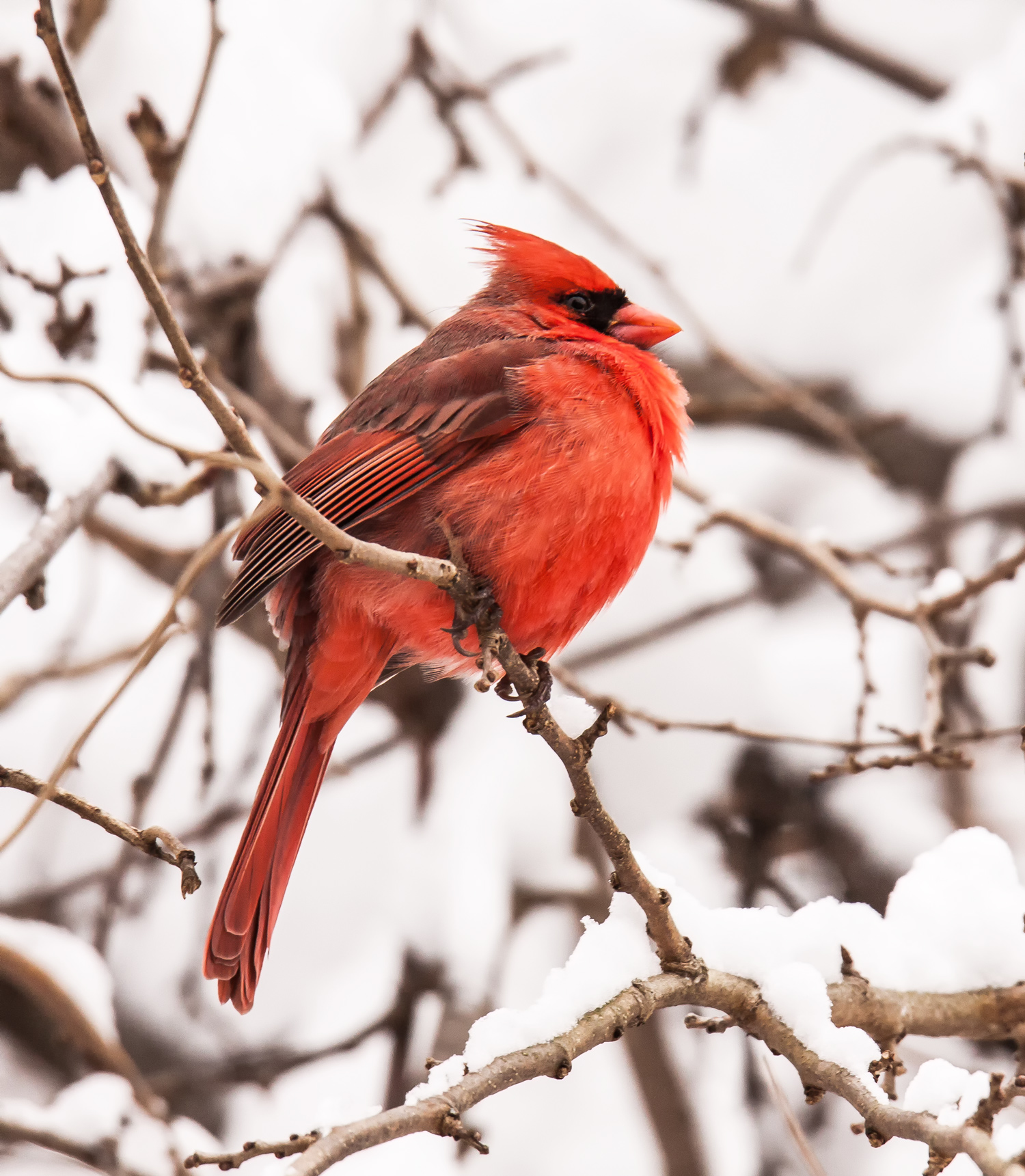
Images of a bright red cardinal in the brilliant white snow—some might view such shots as a bit cliché, but I view them instead as iconic. I ventured out into my neighborhood earlier this week after the snow had stopped falling and was thrilled to find a small group of Northern Cardinals (Cardinalis cardinalis). They spent most of their time buried in the branches, but eventually I was able to capture some unobstructed images of some male cardinals.

Although I like the details of the second shot, the first shot really draws me in by presenting a better depiction of the snowy environment. In some parts of the country this is a typical winter scene, but here in Northern Virginia, this is the biggest snow storm we have had since 2016, so it was pretty unusual to have this kind of photo opportunity.

Northern Cardinal

Northern Cardinal

© Michael Q. Powell. All rights reserved.

Read Full Post »

I love the way that Bufflehead ducks (Bucephala albeola) run across the surface of the water to gain speed before taking off, like this male bufflehead that I spotted last Saturday at Occoquan Bay National Wildlife Refuge. The images were already pretty much monochromatic because of the limited light, so I decided to do a black-and-white conversion of them.

If you look closely at the first image, you will see that my camera’s shutter speed was fast enough to freeze the motion of the water, but slow enough that the wings are blurred, which I think enhances the sense of speed. The wing tips are blurred in the second image as well and we also have a really cool reflection of the bufflehead after it has successfully taken to the air.

bufflehead

bufflehead

© Michael Q. Powell. All rights reserved.

Read Full Post »

« Newer Posts - Older Posts »