Feeds:
Posts
Comments

Archive for the ‘Summer’ Category

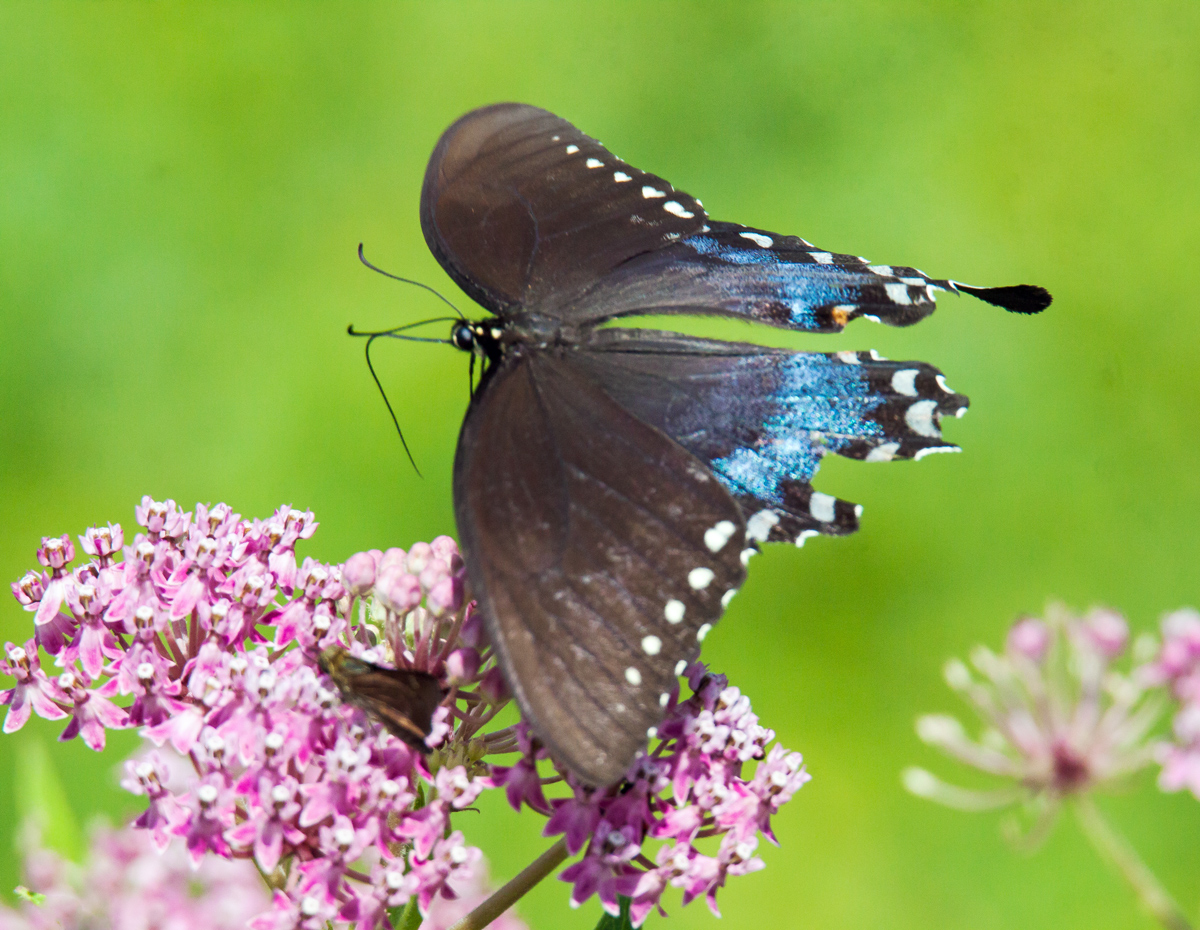
Butterflies fly so expertly that I often can’t tell that they have severe wing damage until I look closely. That was certainly the case this past weekend when I was observing a dark swallowtail at Huntley Meadows Park.

I didn’t get an absolutely clear look at it, but I think it might be a Spice Bush Swallowtail butterfly (Papilio troilus), judging from its colors and patterns. In the first photo, you can see only minor damage, but when the butterfly changed position, the extent of the damage became much more apparent.

I consider flight to be somewhat of a mystery in any case, but it is even more of a mystery how a butterfly can fly so well when one of its wings is almost completely detached from its body,

Spicebush Swallowtail

Spicebush Swallowtail


© Michael Q. Powell. All rights reserved

Read Full Post »

This past weekend I spotted an unusual-looking spider at Huntley Meadows Park. I took this shot from a distance, so I didn’t capture all of its wonderful details, but it looks to me like a Triangulate Orb Weaver spider (Verrucosa arenata), also known as an Arrowhead Spider.

The spider was hanging in mid-air, which helped a slight bit with focusing, but Arrowhead Spiders are less than a half inch in size (about one cm), so it was a bit of a challenge getting any kind of shot with my telephoto zoom lens extended to 600mm.

Arrowhead Spider

© Michael Q. Powell. All rights reserved

Read Full Post »

Here’s a shot of another one of the colorful butterflies of Huntley Meadows Park. I spotted this Red Admiral (Vanessa atalanta) there this past Friday morning as it perched in a tree. What was the butterfly doing in the tree? It seemed to me that it was simply resting, though I suppose that it might also have been trying to attract a mate.

From a photography perspective, I really like the way that the background is divided into two separate colors, creating a kind of yin-yang effect.

Red Admiral

© Michael Q. Powell. All rights reserved

Read Full Post »

On Monday I spotted this beautiful Swift Setwing dragonfly (Dythemis velox) at Jackson Miles Abbott Wetlands Refuge at Fort Belvoir, a nearby military base. When I observed one at the same location in June, it was the first time that one had been recorded in Fairfax County, the county in Northern Virginia where I live, so I was a little surprised to see that they are still around.

If you would like to see some photos of my initial sighting, check out my blog posting from June 25. The range of this dragonfly seems to be moving northward and it seems likely that I’ll be seeing this species again next year, since I suspect that mating and egg-laying have been taking place during the past two months.

Swift Setwing

Swift Setwing

Swift Setwing

© Michael Q. Powell. All rights reserved.

Read Full Post »

My eyes were drawn yesterday to the bright yellow of a patch of goldenrod as I was exploring Jackson Miles Abbott Wetlands Refuge at nearby Fort Belvoir. From past experience I knew that goldenrod also attracts a wide variety of insects, so I moved in closer with my macro lens at the ready.

There were a lot of skipper butterflies, but what really caught my eye was a small, brightly patterned insect that was crawling around in the goldenrod. Based on its shape, I assumed that it was some kind of beetle, but I had not idea what kind it was. When I returned home and began to do a little research, I was a little shocked to learn that the insect in question was a moth, not a beetle. I am pretty sure that it is an Ailanthus Webworm moth (Atteva aurea).

The colors and patterns of this moth are so spectacular that I think it needs a name that is more descriptive and easier to remember. Any ideas?

Ailanthus Webworm moth

Ailanthus Webworm moth

© Michael Q. Powell. All rights reserved.

Read Full Post »

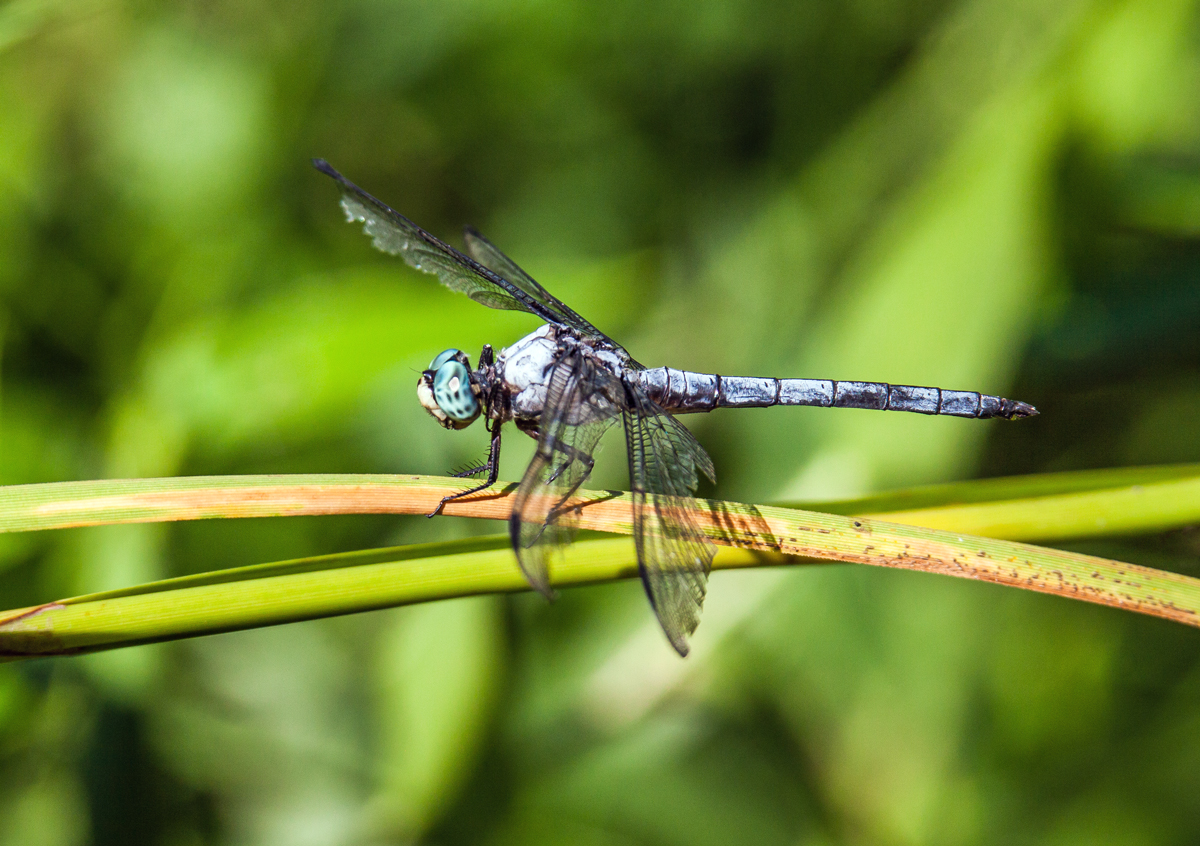
Many of the dragonflies that I see this late in the summer have wings that are torn and tattered, yet they seem to still fly perfectly well. The dragonflies clearly are survivors—survivors of encounters with predators and thorny vegetation or even of overly energetic mating sessions.

Last Friday I spotted this Great Blue Skimmer (Libellula vibrans) as it perched on some bent stalks of grass. He is not a perfect specimen, but I can’t help but be drawn in by his beautiful speckled blue eyes.

Yes, he still deserves to be called “great.”

Great Blue Skimmer

© Michael Q. Powell. All rights reserved.

Read Full Post »

The last few years I haven’t seen many Monarch butterflies (Danaus plexippus) and I have read reports of their declining numbers. I was therefore pretty excited when I spotted one yesterday at Huntley Meadows Park. As I approached, the Monarch got spooked and flew up into a tree. Fortunately I was shooting with my long telephoto zoom lens and I managed to get this somewhat unusual shot of the beautiful butterfly.

Monarch butterfly


© Michael Q. Powell. All rights reserved.

Read Full Post »

Despite this summer’s scorching heat and high humidity, the bees of Green Spring Gardens were busy at work gathering pollen and sipping nectar during a recent visit to the gardens. I’m certainly no expert on bees, but it looks like there are several different varieties in the photos below.

I’m pretty confident that the bee in the final shot is a carpenter bee because its abdomen is bare and shiny, unlike that of the bumblebee, which has a hairy abdomen. If you look closely at that image, you’ll see that this bee appears to be a nectar robber—it is piercing the flower from the side to extract the nectar and thereby is not playing any role in pollinating the flower.

bee

bee

bee

© Michael Q. Powell. All rights reserved.

Read Full Post »

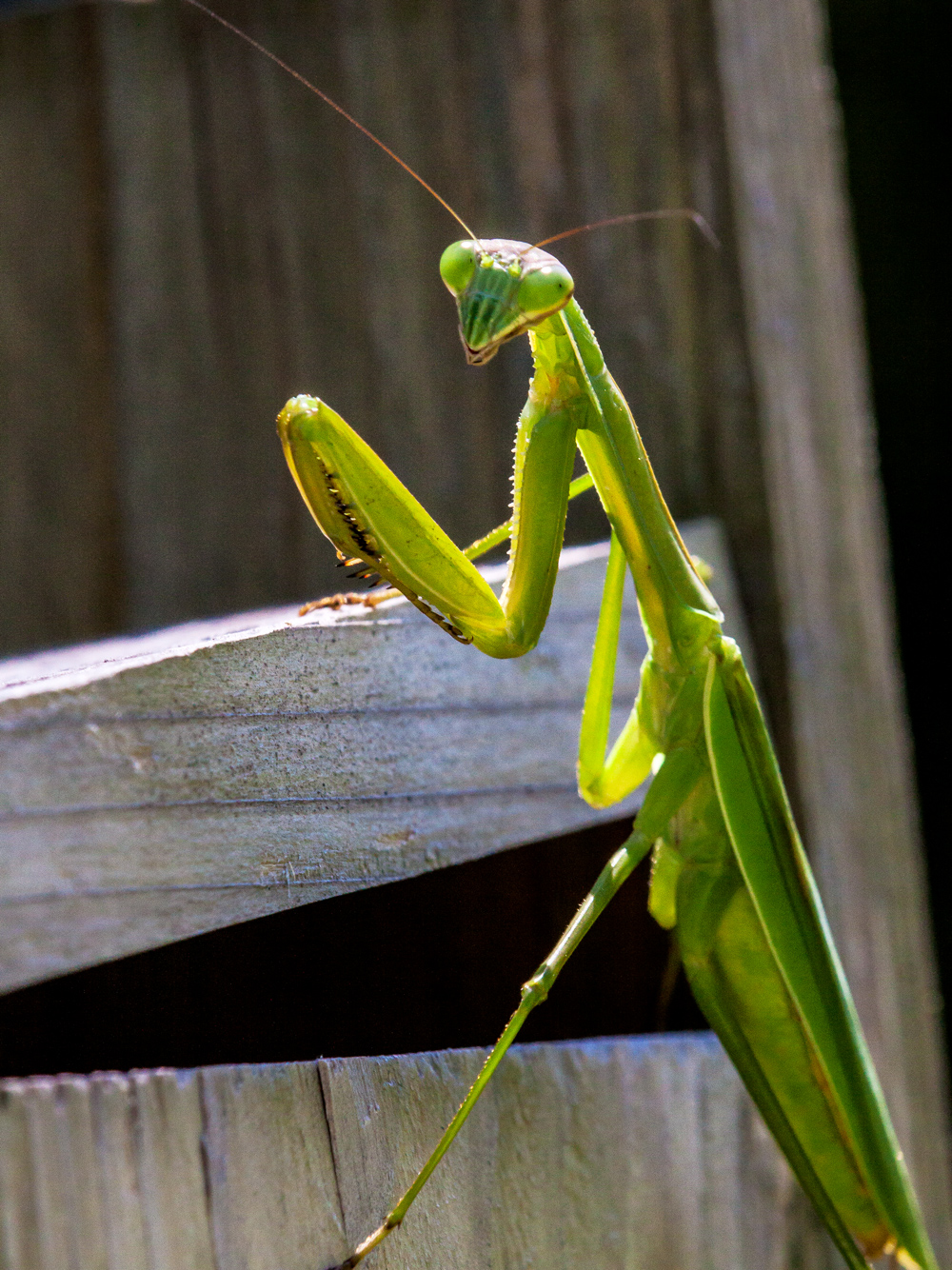
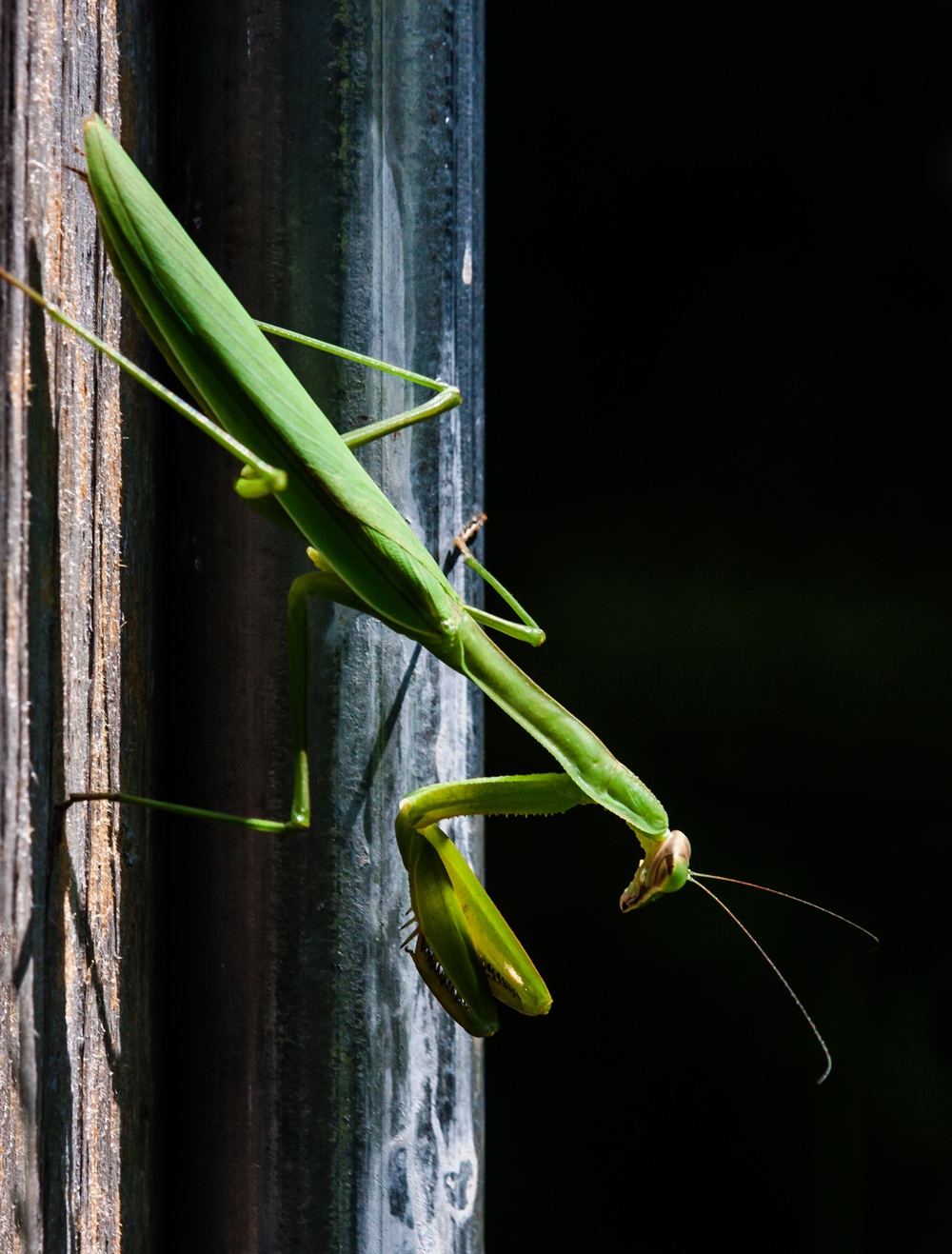
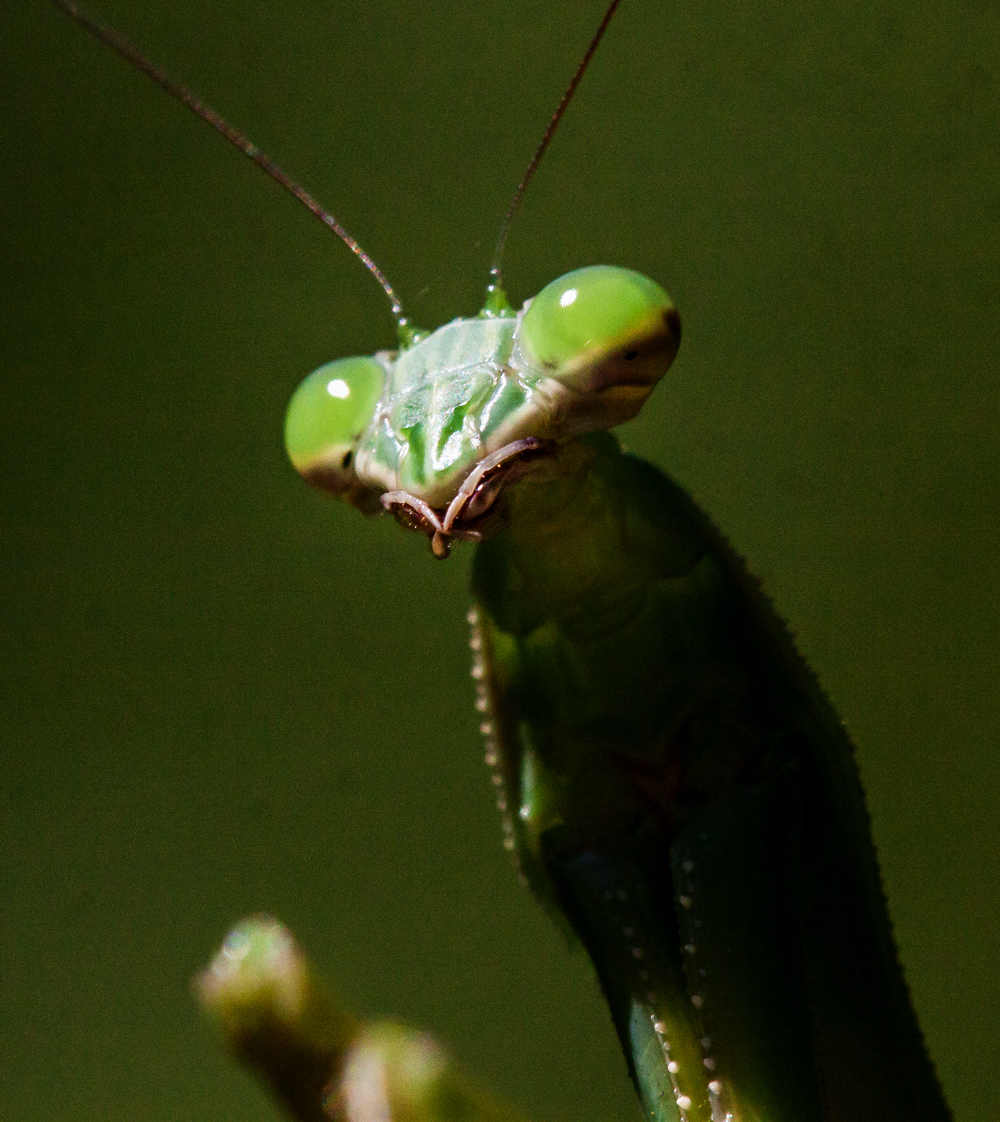
I spotted this Praying Mantis on Saturday at Huntley Meadows Park as it was crawling about on a nesting box for birds in one of the remote areas of the park. I am pretty confident that the nesting box, which was used by Tree Swallows earlier in the year, was no longer in active use—otherwise the mantis probably would not have survived for long. I was struck by the size of the insect, which seemed to be about six inches (15 cm) in length.

I think this may be a Mantis religiosa, one of the more common types of mantises, though Wikipedia notes that there are over 2400 species worldwide, so I could easily be incorrect in my identification.

Praying Mantis

Praying Mantis

Praying Mantis

© Michael Q. Powell. All rights reserved.

Read Full Post »

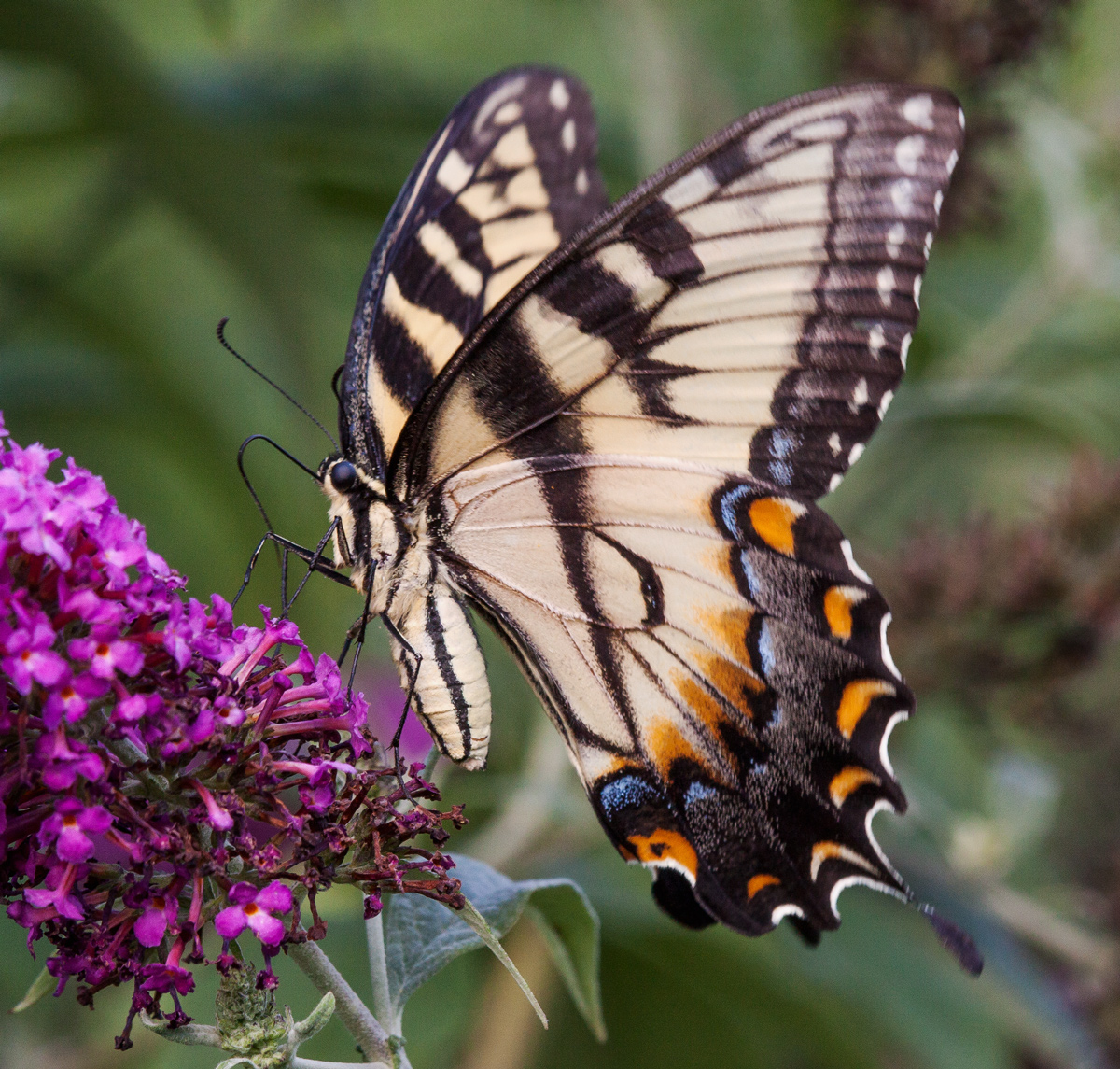
Hot, humid summer days may be a little tough on us, but butterflies seem to love them. I captured this shot of a spectacular Eastern Tiger Swallowtail (Papilio glaucus) this past weekend at Huntley Meadows Park as it sipped nectar from what I think is Joe-Pye weed (g. Eutrochium). (I am a bit uncertain about the plant identification and wonder if it might instead be a kind of milkweed, but “Joe Pye” rhymes with butterfly and sounds cooler, so I’ll go with that as a possible identification.)

Unlike many butterflies that I see at this time of the year whose wings are tattered and torn, this butterfly seemed to be in perfect condition. The sun was shining brightly when I took these shots and I was really afraid of blowing out the highlights of this lightly-c0lored butterfly. I switched the metering on my camera to spot metering and was able to get a good exposure of the butterfly and the background went really dark, adding a bit of drama to the images.

Eastern Tiger Swallowtail

Eastern Tiger Swallowtail

Eastern Tiger Swallowtail

© Michael Q. Powell. All rights reserved.

Read Full Post »

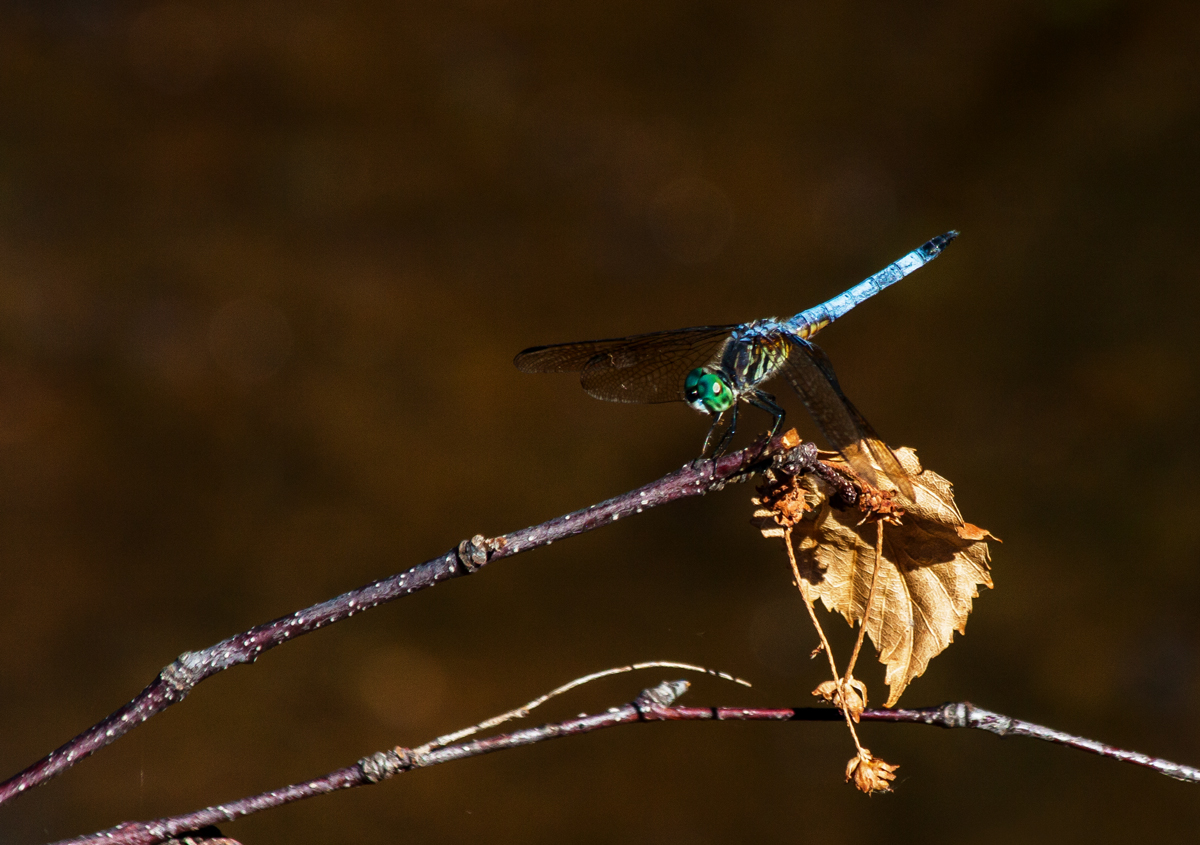
It was really easy to find Blue Dasher dragonflies (Pachydiplax longipennis) near the hotel where I stayed in Woburn, Massachusetts this past weekend. The challenge was capturing them in interesting poses, which was a bit more difficult than usual because they were unusually skittish—maybe they are not used to seeing people.

Blue Dasher

Blue Dasher

Blue Dasher

© Michael Q. Powell. All rights reserved.

Read Full Post »

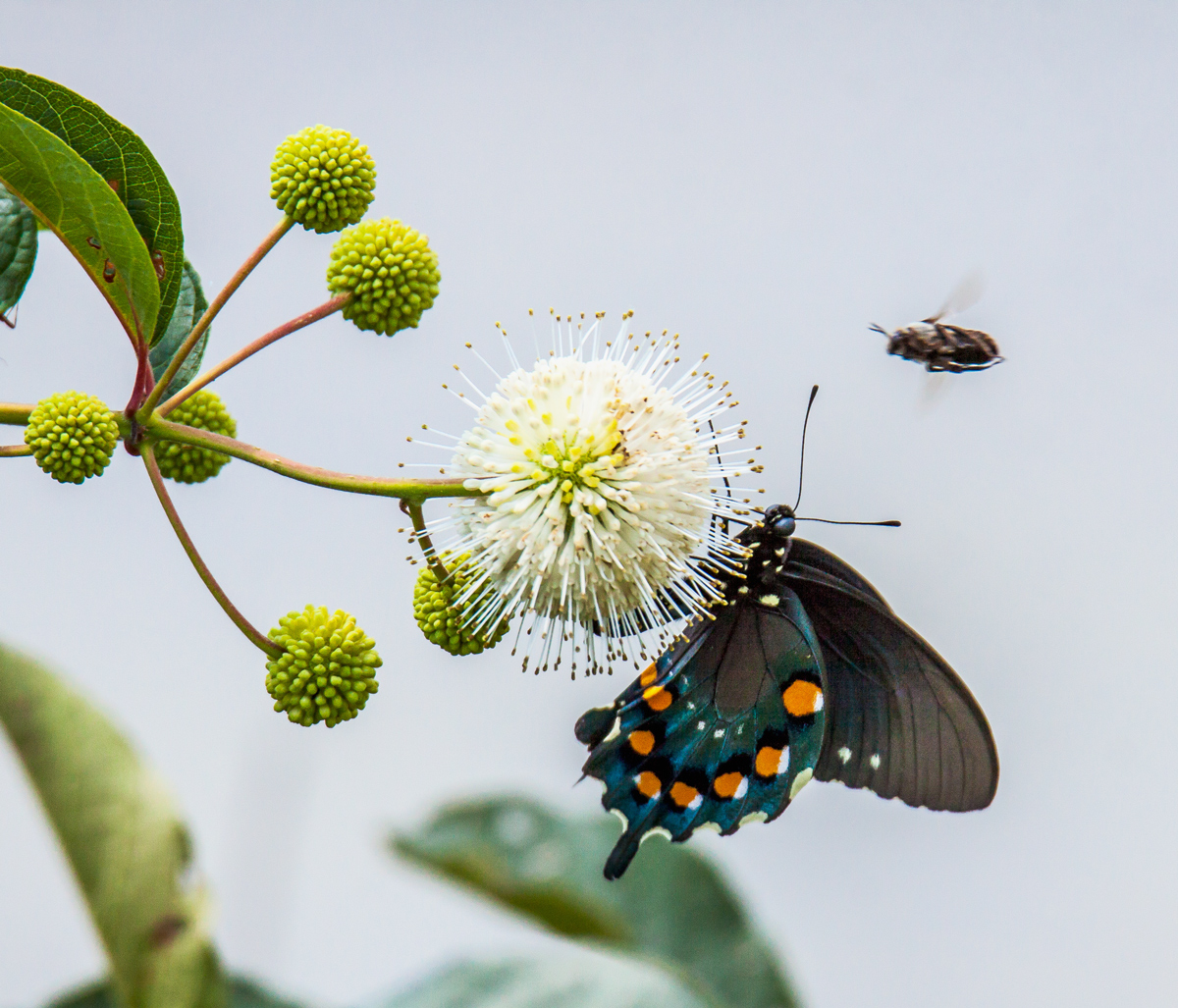
Butterflies were really active this past Monday at Huntley Meadows Park, especially around the buttonbushes (Cephalanthus occidentalis). A dark swallowtail butterfly caught my eye and my mind raced to remember how to distinguish among the various dark swallowtails. Fortunately I had enough presence of mind to capture some images, knowing I could search different resources when I got home.

I’m pretty confident that the butterfly in question is a Pipevine Swallowtail (Battus philenor). One of its distinguishing characteristics is a single row of orange spots in the shape of a C. As I was searching the internet, I came across a wonderful posting by Louisana Naturalist that has side-by-side photos of four different dark swallowtails —the Black Swallowtail, the dark morph of the female Eastern Tiger Swallowtail, the Spicebush Swallowtail, and the Pipevine Swallowtail.

As I was trying to get a shot of this butterfly, which was in constant motion, another insect decided to photobomb us. I think it is a bee and I am including a photo of the photobombing insect just for fun.

Pipevine Swallowtail

Pipevine Swallowtail

© Michael Q. Powell. All rights reserved.

Read Full Post »

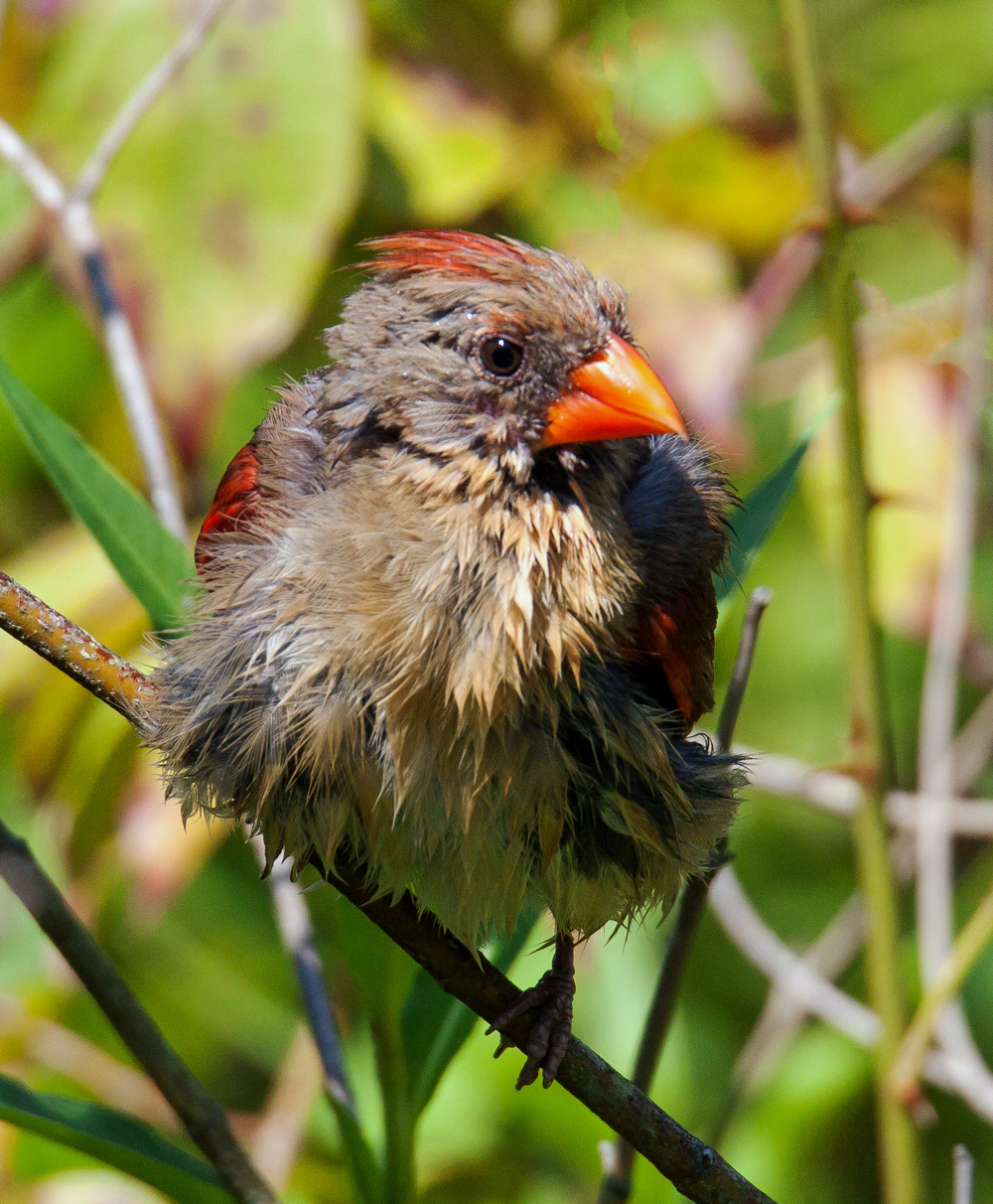
How do birds manage to survive the unbearable heat of summer? Monday, on a day when temperatures soared to 100 degrees (38 degrees C), I spotted this Northern Cardinal (Cardinalis cardinalis) at Huntley Meadows Park. It was sitting in the shade and looked like it had fluffed up its feathers or was drying off after a dip in the pond in an effort to stay cool.

I was the crazy one standing in the sun.

Northern Cardinal

Northern Cardinal

© Michael Q. Powell. All rights reserved.

Read Full Post »

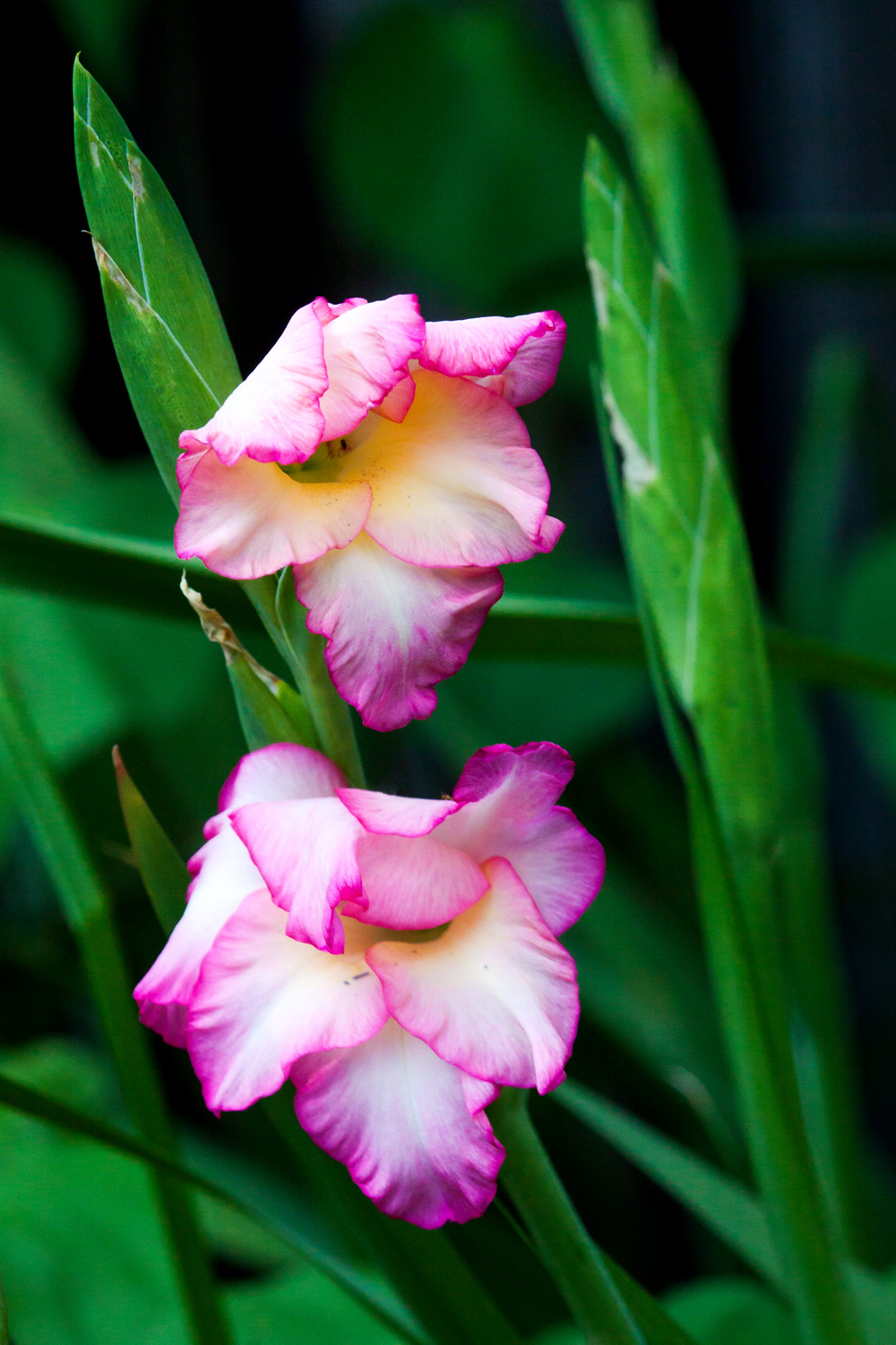
When the temperature is 96 degrees outside (about 36 degrees C), it’s hard to have the energy to go far with my camera. Fortunately, my neighbor, fellow photographer Cindy Dyer, has an awesome garden. I was glad to be able to capture this shot of some gladiolas that were blooming there this past weekend.

Thanks, Cindy.

gladiolas

© Michael Q. Powell. All rights reserved.

Read Full Post »

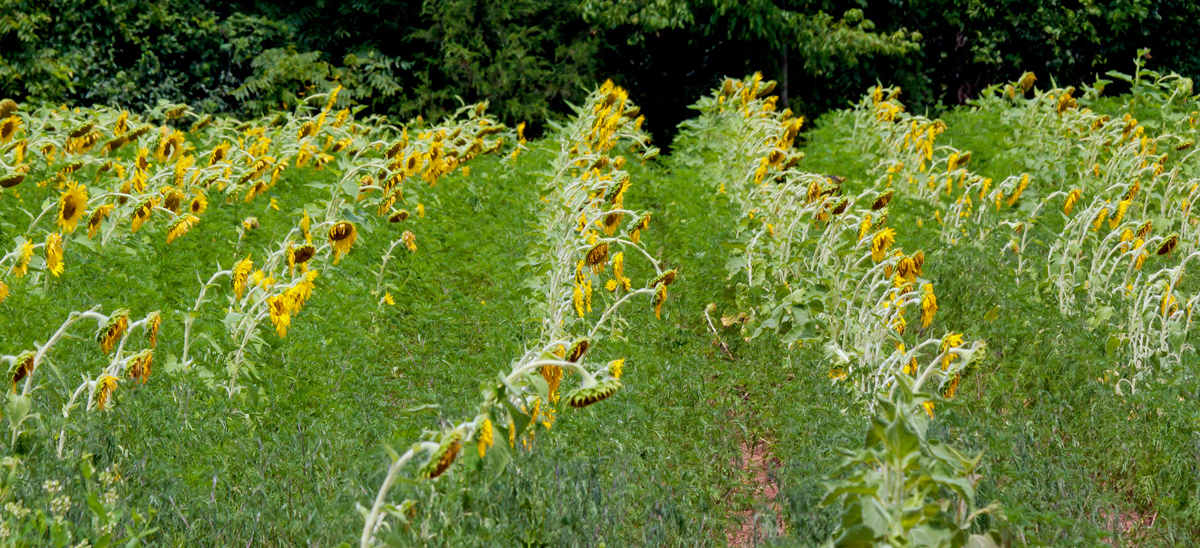
The bright colors and distinctive shape of sunflowers never fail to bring a smile to my face. Here’s a shot of one from my trip last Friday to McKee-Beshers Wildlife Management Area in Poolesville, Maryland.

sunflower

Normally a shot like this is easy to get when the towering sunflowers reach tall into the sky. In reality, however, the sunflowers at this site were not that tall and I had to crouch low to the ground to capture this image. In addition, many of the sunflowers were a bit wilted and past their peak. One of my Facebook readers commented that it looked like the flowers had their heads bowed in prayer in the following shot, which gives you and idea of the conditions in one area of the field of sunflowers.

sunflower

© Michael Q. Powell. All rights reserved.

Read Full Post »

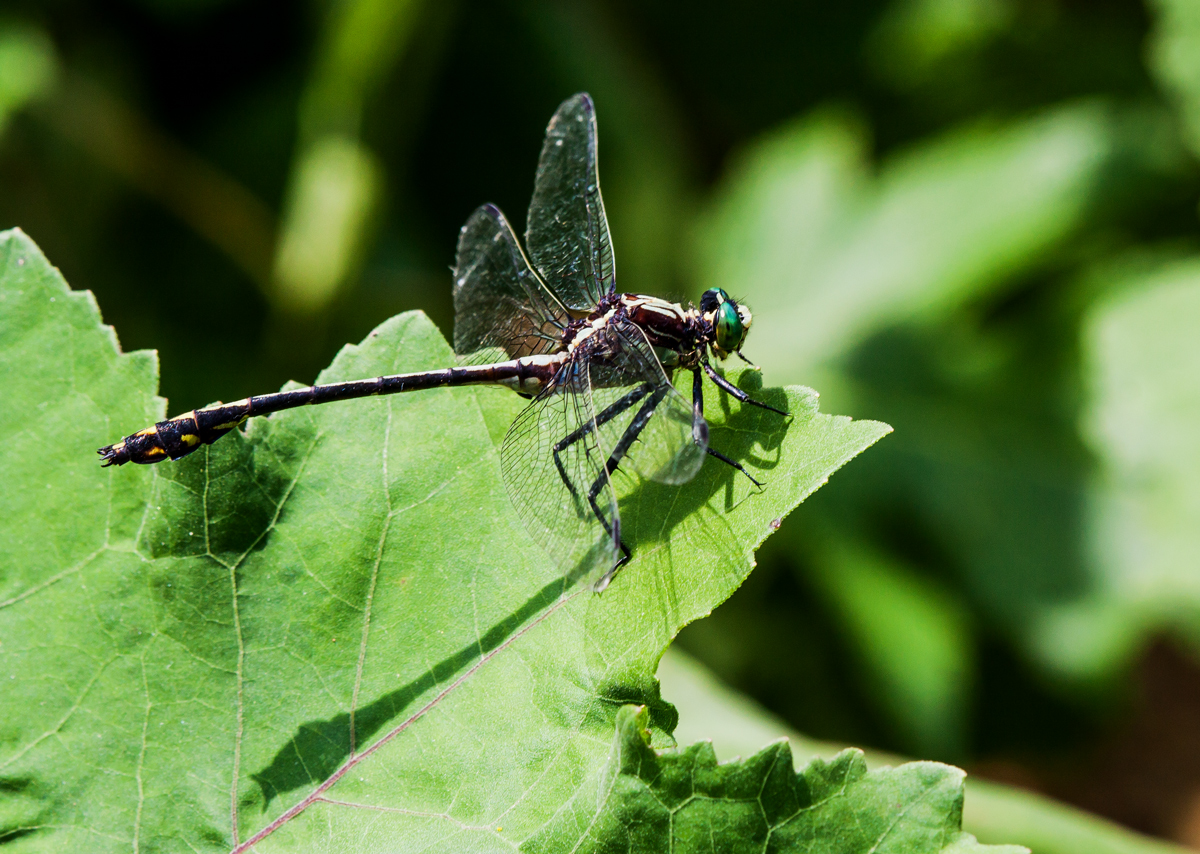
As I was walking through a field of sunflowers at McKee-Beshers Wildlife Management Area in Poolesville, Maryland, I spotted an unusual dragonfly that I couldn’t immediately identify. It turned out to be a Black-shouldered Spinyleg dragonfly (Dromogomphus spinosus)—a cool name for a cool-looking dragonfly.

When I first caught sight of the dragonfly, the dragonfly’s long, skinny abdomen and the enlarged area near the end suggested to me that it was a member of the clubtail family of dragonflies. (You can get a really good sense of the shape of the “clubtail” when you look at the shadows in a couple of the images). The only clubtails that I have seen with any kind of regularity have been Common Sanddragons and Unicorn Clubtails, and this was clearly not one of them. When I am out in the field, I don’t worry too much about identification—I practice what I call the “Law of the West,” i.e. “shoot first and ask questions later.”

Later in the day my shooting partner was able to identify the dragonfly after I pointed her to the website “Dragonflies of Northern Virginia.” This website is my favorite resources for information and photos of dragonflies in my area. I checked my past blog postings because I had a vague recollection that I had seen this species before and found a posting indicating that I saw one almost exactly a year ago on a trip to a different part of Maryland.

Black-shouldered Spinyleg

Black-shouldered Spinyleg

Black-shouldered Spinyleg

© Michael Q. Powell. All rights reserved.


Read Full Post »

Yesterday I traveled with my photography mentor Cindy Dyer to McKee-Beshers Wildlife Management Area in nearby Poolesville, Maryland to check out the large fields of sunflowers that are planted there each year. We just missed the peak blooming period and many of the sunflowers were drooping and seemed a little wilted. Cindy, who has visited this area multiple times, noted that the sunflowers were not as tall or as dense as in previous years.

Several American Goldfinches (Spinus tristis) that I observed in the fields, however, were definitely not disappointed—they were gorging themselves on sunflower seeds. The goldfinches were pretty skittish, but occasionally were distracted enough when feeding that I was able to get some shots, despite the fact that I was shooting with my 180mm macro lens.

American Goldfinch


American Goldfinch

American Goldfinch

American Goldfinch

© Michael Q. Powell. All rights reserved.

Read Full Post »

During a quick trip to Jackson Miles Abbott Wetlands Refuge at Fort Belvoir, Virginia last weekend, I was thrilled to see that the spectacularly patterned Banded Pennant dragonflies are still around. This is the only location that I visit regularly where I have spotted this dragonfly species and I am never quite sure when an encounter will be the last one of the season.

As I was looking over the two shots that I chose to use with this posting, I realized that they represent two different approaches that I use when photographing dragonflies. Ideally I will try to position myself so that the camera’s sensor is parallel with the dragonfly’s wings and most of the dragonfly will be in focus. That was the case with the second shot and it really highlights the beautiful pattern of the wings. However, the image seems a bit too static for my taste. I prefer the first shot, in part because the pose is more dynamic and the direct eye contact with the dragonfly draws me in.

Banded Pennant

Banded Pennant

© Michael Q. Powell. All rights reserved.

Read Full Post »

Blue Dasher dragonflies (Pachydiplax longipennis) have become for me one of the signs of summer in the area in which I live. When the weather turns hot and humid, they can often be seen flying lazily over the marshes and ponds, perching frequently on vegetation growing out of the water.

On a recent trip to Green Spring Gardens, I captured some images perched male Blue Dasher dragonflies. In the first shot, the dragonfly was perched on the edge of a lotus leaf. I really like the curves and softness of the leaves, which contrast with the details of the dragonfly. I think too that the shadow cast on the lower leaf adds some additional visual interest to the  image.

The second image features a Blue Dasher in the obelisk pose. It is generally believed that some dragonflies assume this pose to dissipate heat by reducing the amount of their bodies that is exposed to direct sunlight. I was shooting partially into the sun, which forced me to overexpose the image a bit and accounts for the lighter background. However, the surface of the water was covered with a lot of duckweed and was not uniform in color. As a result, the background ended ended up with some ugly gray patches that I seemed to be impossible for me to remove.

Blue Dasher

Blue Dasher

© Michael Q. Powell. All rights reserved.

Read Full Post »

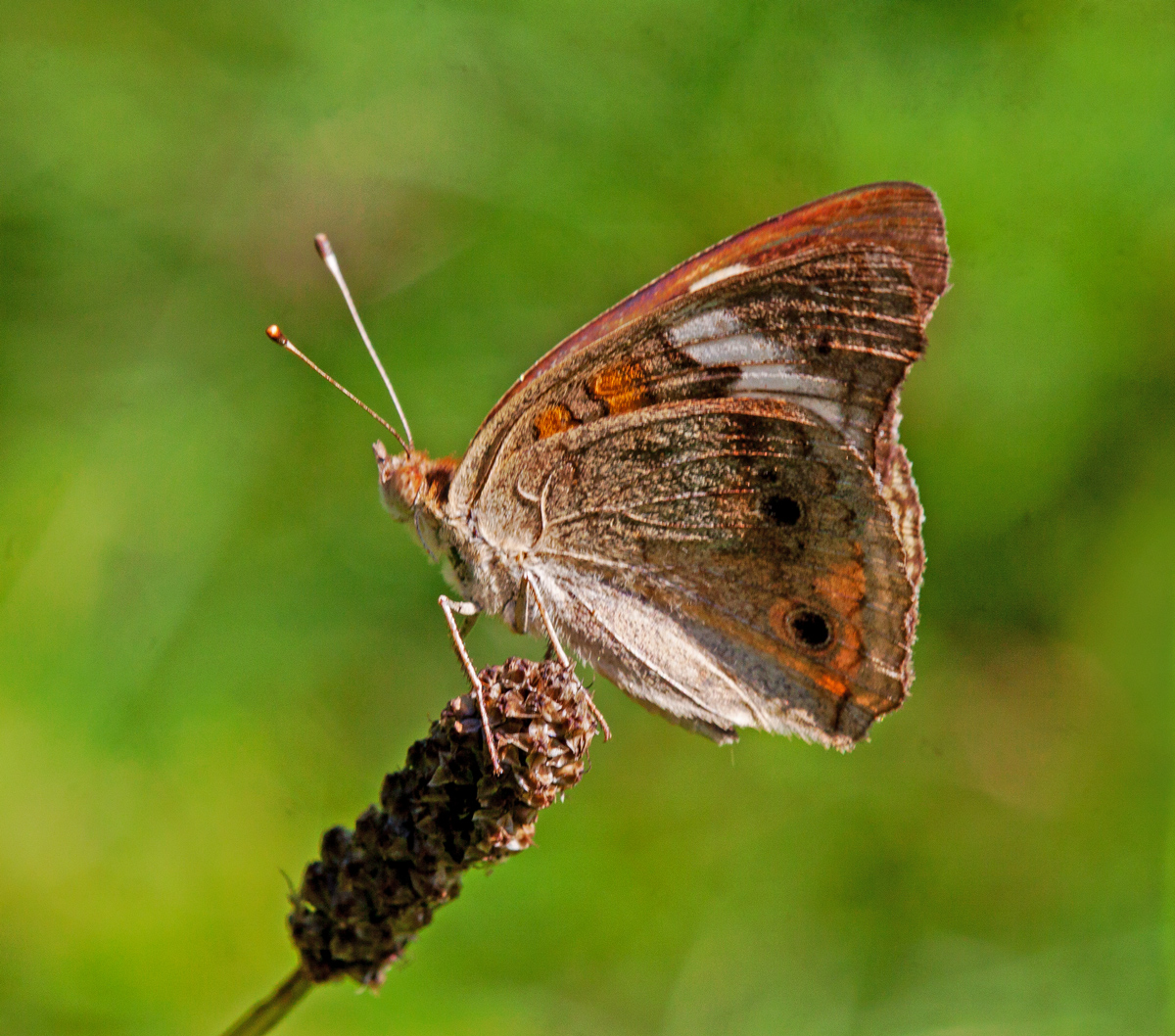
I first spotted this small Common Buckeye Butterfly (Junonia coenia) as it was flying low above a grassy patch at Jackson Miles Abbott Wetlands Refuge. Periodically it would stop and I would attempt to get a shot of it. It was probably hilarious to watch our little pas de deux—the butterfly would fly and perch and I would bend my knees and crouch, which served as a signal for the butterfly to take off again.

I’m pretty patient, so we danced this way for quite a while before the butterfly decided to perch on some low vegetation rather than on the bare ground. I was finally able to capture a shot, though the butterfly didn’t pose long before taking off again.

Common Buckeye

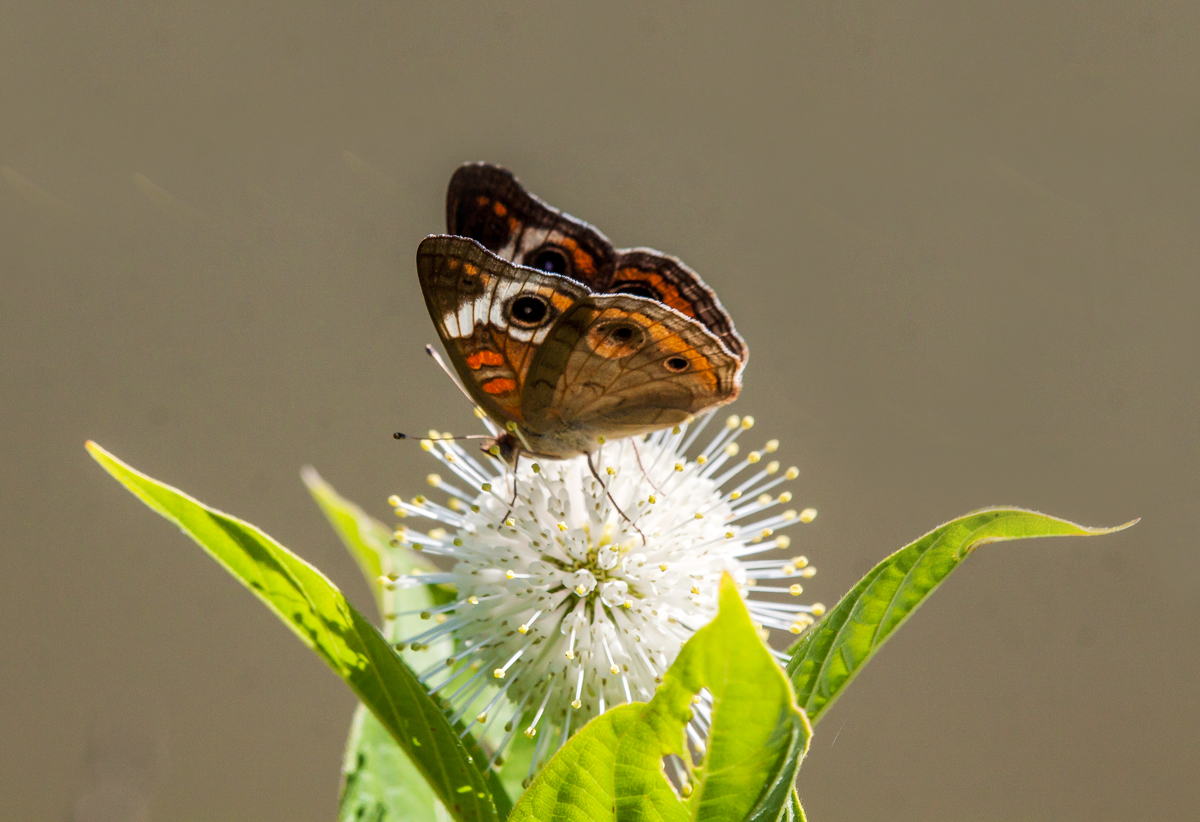
As I continued the chase, my knees started getting a bit sore. I was thinking of giving up the chase when suddenly the butterfly flew higher into the air and landed on a buttonbush (Cephalanthus occidentalis). These bushes are a virtual magnet for butterflies and I love the spiky spheres of the plant. I wasn’t able to get very close to the buttonbush, but captured this image that I really like.

Common Buckeye

The chase ended here and we went our separate ways. I hope that I never get too old or too self-conscious to chase butterflies, a pursuit that makes me feel like a carefree child again.

© Michael Q. Powell. All rights reserved.


Read Full Post »

Some folks are really into chasing imaginary creatures with their cellphones. I prefer to chase living creatures with my camera and captured this image of a beautiful Eastern Tiger Swallowtail butterfly (Papilio glaucus) yesterday as it was feeding at Green Spring Gardens, a county-run historic garden in Northern Virginia.

The butterfly gave me multiple opportunities to get shots as it flew around a small area of the gardens, but it rarely gave me an obstructed view. Often it was partially buried in the flowers or turned away from me at an angle. When I took this shot, the butterfly had opened its wings and offered me a rare look at its body as well as its amazingly long proboscis.

Eastern Tiger Swallowtail

© Michael Q. Powell. All rights reserved.


Read Full Post »

Yesterday I spotted this spectacular female Swamp Darner dragonfly (Epiaeschna heros) at Huntley Meadows Park. At almost 3 1/2 inches long (90 mm), Swamp Darners are one of the largest dragonflies in our area.

It was a rare treat for me to capture shots of one perching—usually I see them only in flight. Like most darners, Swamp Darners hand vertically from vegetation, often low to the ground. I was fortunate to see this beautiful dragonfly fly to the perch and it remained there long enough for me to maneuver into position for a clear shot with my long zoom lens. I actually had to pull back from the maximum 600mm focal length of the lens in order to be able to fit the dragonfly’s entire body in the frame.

If you want to get a higher-resolution look at some of the wonderful details of this dragonfly, including the amazing colors of its eyes, be sure to click on the image.

Swamp Darner

© Michael Q. Powell. All rights reserved.

Read Full Post »

I love the colorful patterns on the wings of a Halloween Pennant dragonfly (Celithemis eponina), but rarely have the chance to see one. Therefore, I was pretty excited when I spotted one from a distance last week at Huntley Meadows Park, my favorite marshland location for nature photography.

I moved a little closer to get some initial shots with my Tamron 150-600mm lens fully extended. Generally I use my long zoom for birds more often than for dragonflies.  In this case, however, the lens turned out to be a better choice than my macro lens, because the dragonfly flew away when I took a couple of steps toward it and I never saw it again.

Most of the Halloween Pennant dragonflies that I have observed in the past have had wings that were more amber-colored than those of this individual, but the wing pattern is so distinctive that I am pretty sure about my identification. In addition to the wonderful wings, I was really struck by the length and two-toned color of this dragonfly’s legs.

Halloween Pennant

© Michael Q. Powell. All rights reserved.

Read Full Post »

Normally I try to move in really close to my subjects using a telephoto or macro lens. Yesterday, however, I decided to try to “see” the world differently by using a wider lens (24-105mm) during a quick trip with my photography mentor Cindy Dyer to Kenilworth Park and Aquatic Gardens in the Anacostia area of Washington D.C. to check out the water lilies and lotus flowers.

The trip was a spur-of-the-moment decision while we were eating lunch, so we knew that we would miss out on the soft early morning light that we both prefer. However, the weather was beautiful, with the temperatures and humidity less oppressive than in recent weeks, so we decided to brave the Washington D.C. area traffic to check out the park.

Cindy is no stranger to the park. Last year four of her images of water lilies from the park appeared on US postage stamps, which were so popular that half a billion were printed. Check out this link to see information about these stamps. Earlier this year, one of Cindy’s images of Sacred Lotuses at the park was on one of the 16 postage stamps issued to commemorate the centennial of the National Park Service. Check out this link for more information about that stamp.

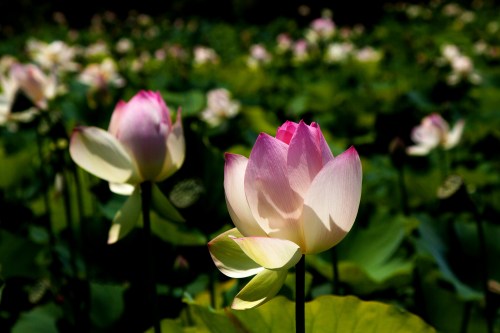
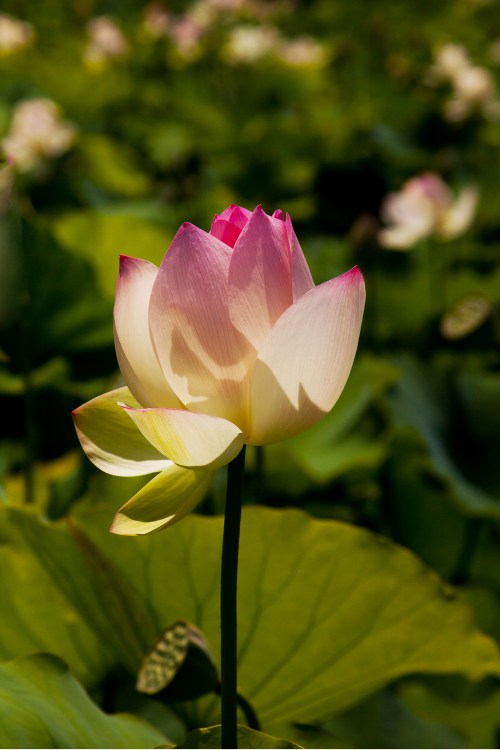
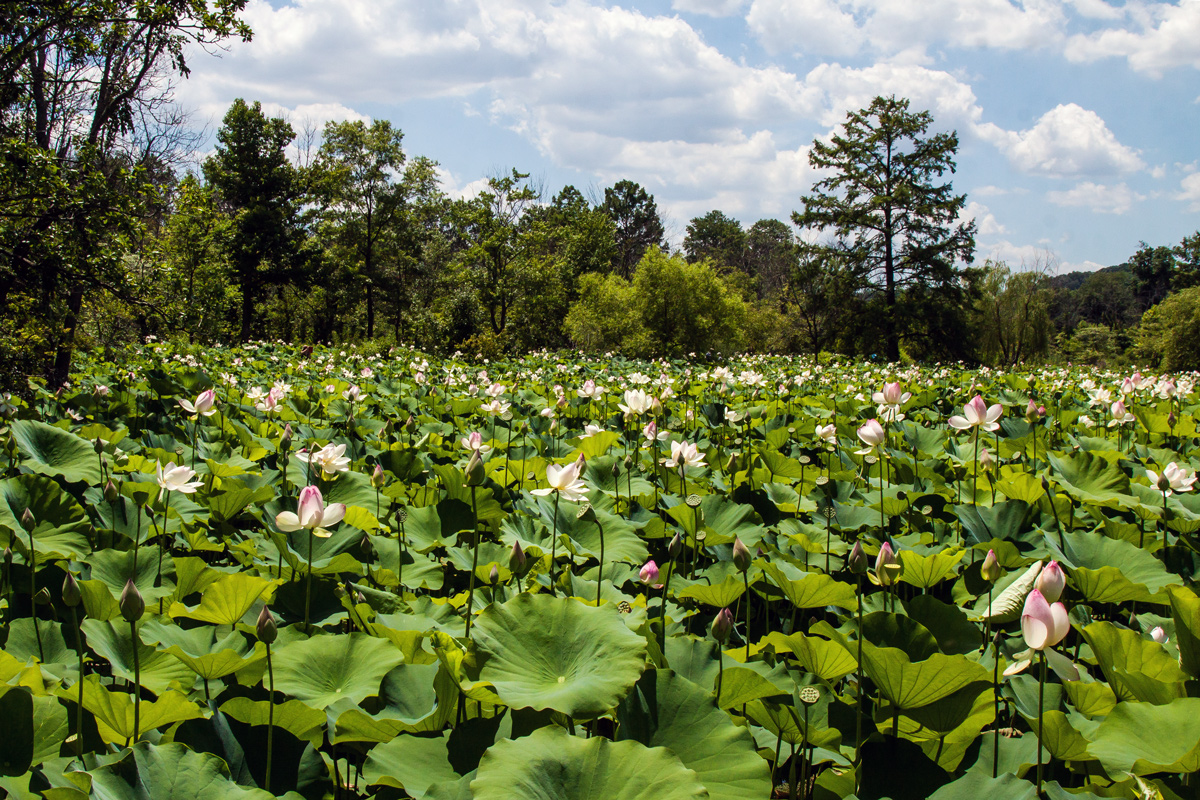
Here are some of my images of Sacred Lotuses (Nelumbo nucifera) from yesterday as I tried to step back a bit and see the flowers as part of a larger landscape. Initially I struggled a bit as I kept focusing on details, but my mind and my eye grew accustomed to the idea that the lens was not going to let me get in close. Gradually I started to see things differently and to frame my photos accordingly.

Kenilworth Park and Aquatic Gardens

Acres and acres of lotuses

Kenilworth Park and Aquatic Gardens

Lotuses fading into the distance

Kenilworth Park and Aquatic Gardens

Lotus and seed pod

© Michael Q. Powell. All rights reserved.

Read Full Post »

Summer is definitely here. In the Washington D.C. area where I live, summer means endless stretches of hot, humid weather. Even the insects seem to move more slowly, like this Eastern Amberwing dragonfly (Perithemis tenera) that I recently photographed as it languidly buzzed around the vegetation at Brookside Gardens in Wheaton, Maryland.

Eastern Amberwing

© Michael Q. Powell. All rights reserved.

Read Full Post »
How was your summer? Did you take a vacation and relax or at least take some time off from work?

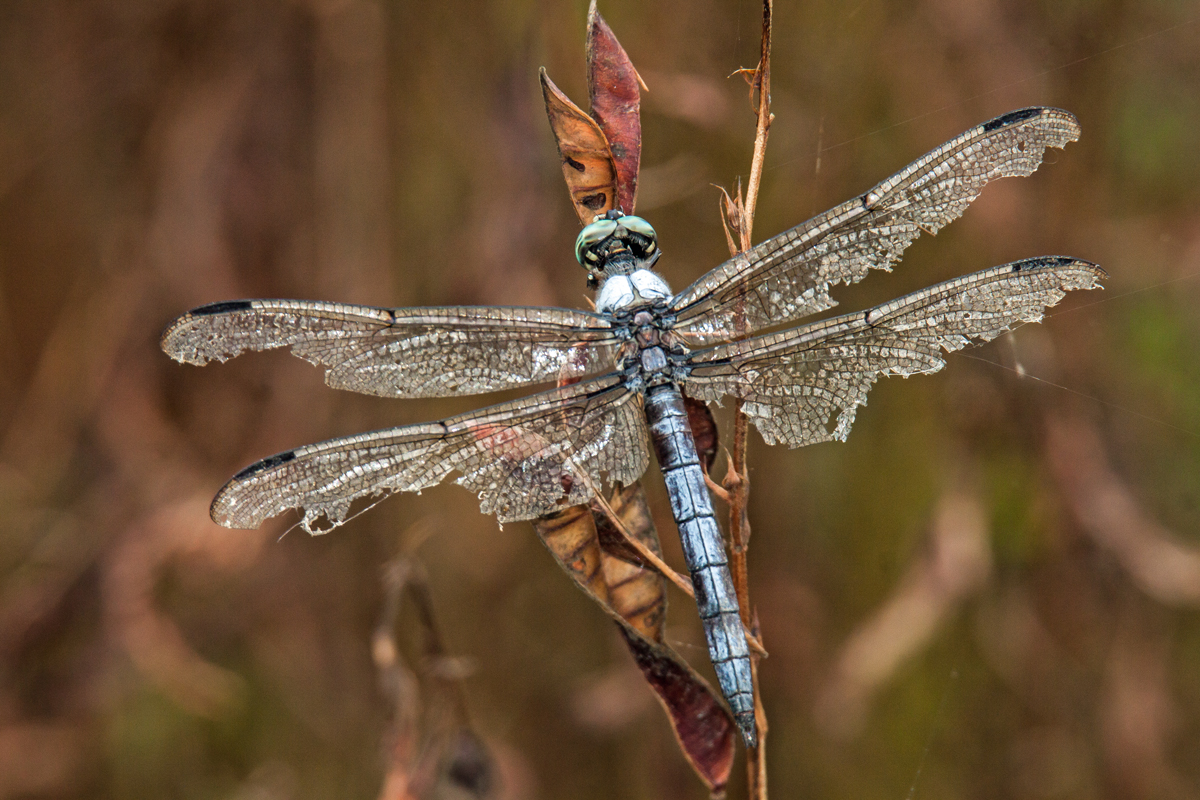
There are no vacations for dragonflies. It looks like this has been a long, hard summer for the male Great Blue Skimmer (Libellula vibrans) that I spotted earlier this month, judging from the almost shredded condition of his wings. Yet somehow, he is still able to fly and continues to survive

Autumn is almost upon us and the number of dragonflies that I observe is dropping. Before long, only a few hardy species will remain. For now, I take joy in seeing the tattered survivors, whose beauty is undiminished in my eyes.

Great Blue Skimmer

© Michael Q. Powell. All rights reserved.

Read Full Post »

I’m back from a brief overseas trip and it’s time to switch back from shooting in urban surroundings to my more typical nature images. In the meantime, here’s a shot of a beautiful Eastern Tiger Swallowtail (Papilio glaucus) from a pre-trip visit to Huntley Meadows Park in Alexandria, Virginia.

Eastern Tiger Swallowtail

© Michael Q. Powell. All rights reserved.

Read Full Post »

Late in the summer, there is a great abundance of flying and crawling insects—they are everywhere. I enjoy photographing many of them and generally I will try to identify my subjects when I post their photos.

In this case, however, I didn’t get a close enough view or a sharp enough shot of this cool-looking insect for me to be confident in any identification. (Alas, the photo is clear enough for me to realize that I need to clean my camera’s sensor, for I can see a bunch of stops in the beautiful background of what is often called “sensor dust.”)

Still, I really like the insect’s pose at the top of the vegetation, a pose that somehow brings to mind the “King of the World” moment in the movie Titanic.

bug

© Michael Q. Powell. All rights reserved.

Read Full Post »

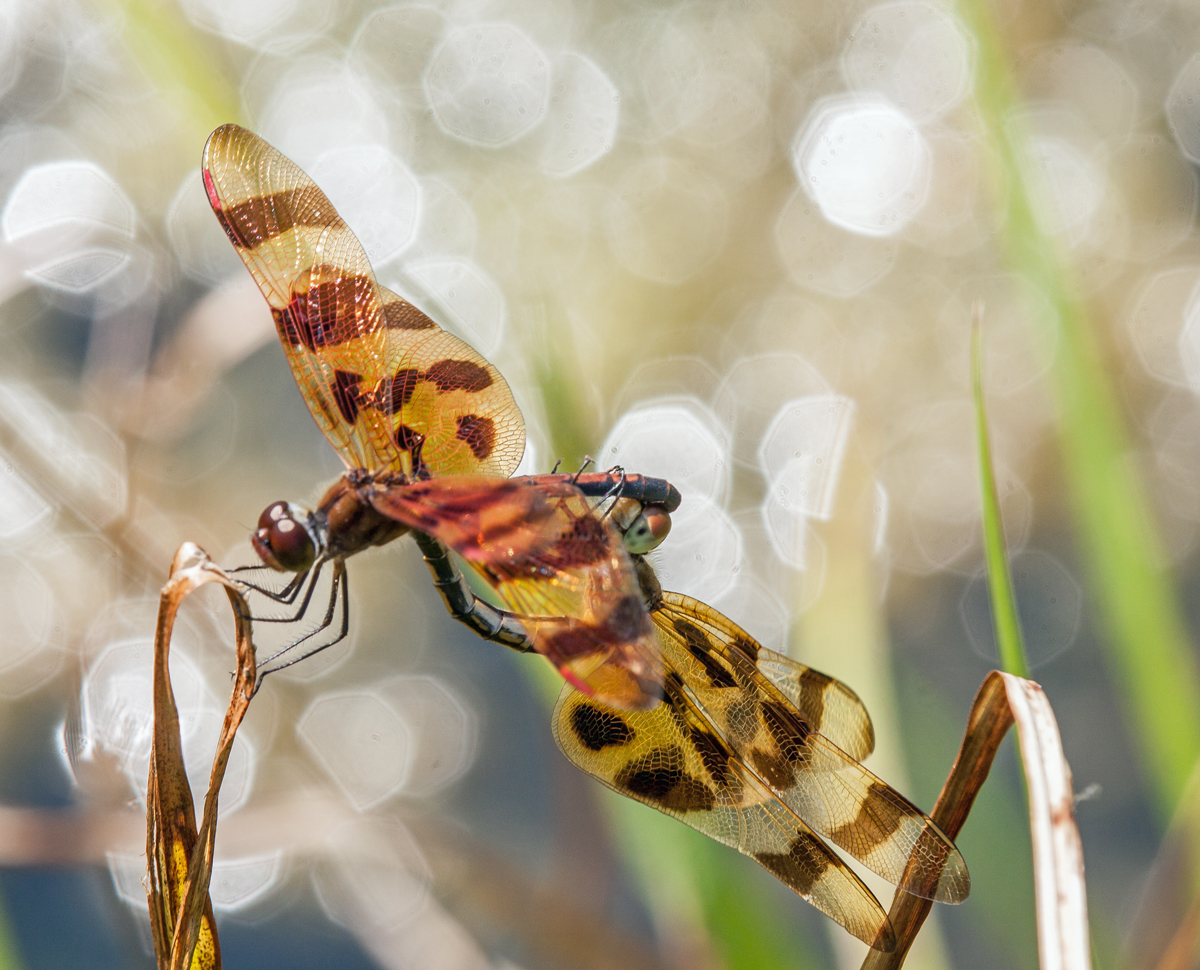
Summer days are drifting away and the biological clocks are almost certainly ticking loudly for some dragonflies. This past weekend at Meadowlark Botanical Gardens in Vienna Virginia, I spotted these two Halloween Pennant dragonflies (Celithemis eponina) engaged in a little summer loving.

It’s hard not to feel a little bit like a voyeur as I move in closer to photograph the acrobatic intertwining of the tiny dragonfly bodies. Summer loving happens so fast and soon my colorful little friends will be gone for the season,

Halloween Pennant

Halloween Pennant

© Michael Q. Powell. All rights reserved.

Read Full Post »

There were lots of other available thistle plants yesterday at Huntley Meadows Park, but an Eastern Tiger Swallowtail (Papilio glaucus) and a Great Spangled Fritillary (Speyeria cybele) kept jockeying for position on this single flower, each seemingly determined to gain the upper hand.

Who knew that butterflies were so competitive?

Competitive butterflies

© Michael Q. Powell. All rights reserved.

Read Full Post »

It had been quite a while since I had last seen a Yellow Garden Spider (Argiope aurantia), so I was pretty excited to see one during a visit this past weekend to Dyke Marsh Wildlife Preserve, a tidal wetlands park along the Potomac River in Virginia.

The spider must have sensed my presence too, because she began to oscillate the entire web vigorously. I had to wait for her to settle down before attempting to get some shots. I was on an elevated boardwalk and the spider was considerably below the level of my feet. As a result, I had somewhat limited options for framing my shots, though I was able to photograph the spider from a couple of different angles, and was not able to get really close to the spider.

I was happy that I managed to capture the really cool zigzag portion of the spider’s web, a distinctive characteristic of this particular species.

Argiope spider

Argiope spider

© Michael Q. Powell. All rights reserved.

Read Full Post »

« Newer Posts - Older Posts »