Feeds:
Posts
Comments

Archive for the ‘spring’ Category

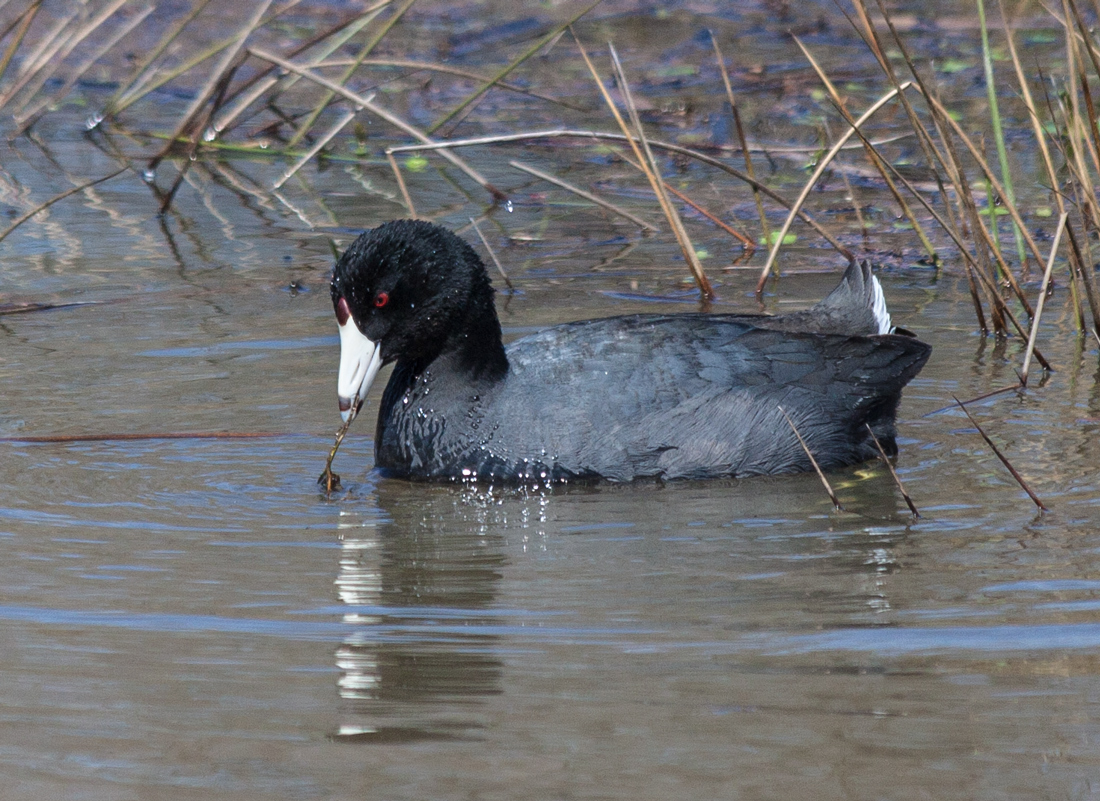
Another coot? Yes, as I was going over my recent shots of an American Coot (Fulica americana) at my local marsh one more time, I decided that I liked this image even more than the one I posted yesterday. The coot has a kind of determined look in its eye and the tilted head gives it a sense of tension, like it is exerting effort to pull that plant out of the water. Besides, I seem to be attracted to birds and animals with unusually colored eyes.

I find it tough at times to choose the best shot quickly when I have shot a series of images. Probably I need to take a little more time in reviewing the images, but I am often in too much of a hurry to find an image (or images) to post. A year ago, I felt compelled to attempt to post every single day, but I have backed off slightly and miss a day now from time to time.

Nonetheless, I still like to post images that appeal to me, which are often, but not always, my “best” shots. Sometimes the photos will merely document the experience that I want to share with readers and may not be technically great images. It’s a little selfish, perhaps, but I shoot mostly for me. Fortunately, I sense that my skills are improving and hope that the quality of the images I post tend to reflect that improvement.

coot_redeye_blog

© Michael Q. Powell. All rights reserved

Read Full Post »

Thanks to some recent rains and a major wetland restoration project at my local marsh, we seem to have a lot more American Coots (Fulica americana) than last year. Most of the time they seem to like to keep their distance. This past Monday, though, one of them drifted toward an area relatively close to where I was standing and I managed to get this shot of the coot feeding on some of the vegetation growing out of the water.coot_hungry_blog© Michael Q. Powell. All rights reserved

Read Full Post »

As I was tiptoeing my way along a tree that had fallen across a flooded area of my local marsh, I glanced down and caught sight of this turtle, submerged in the shallow water. I am no expert in identifying turtles, but it was pretty easy to identify this as a Spotted Turtle (Clemmys guttata), a species that I don’t see very often.

According to Wikipedia, the spotted turtle is federally endangered in Canada and in the United States it is considered to be vulnerable to extinction in the wild in the medium-term future, or threatened in most of its habituating states. Within Virginia, the state in which I live, the Herpetological Society is pretty grim in its prognosis, “Extinction or extirpation is possible. Populations of these species are in decline or have declined to low levels or are in a restricted range. Management action is needed to stabilize or increase populations.”

It was a bit of a challenge getting a shot of this turtle. I was standing on the trunk of a tree, so my footing was a bit precarious. The water was probably only a few inches deep, but it seemed to defeat my auto-focusing system, so I ended up focusing manually. Finally, there was a bit of glare coming off of the surface of the water, so I had to bend down to search for an angle that allowed me to minimize the glare.

I am hoping that I will see these turtles often and that Huntley Meadows Park, the place where I take a lot of my wildlife photographs, will continue to be a refuge for this species and for many other ones.


turtle_spotted_blog

© Michael Q. Powell. All rights reserved

Read Full Post »

Taking advantage of yesterday’s gorgeous springtime weather, this little Eastern Gray Squirrel (Sciurus carolinensis) took a break from his chores to enjoy a snack and to bask in the warmth of the sun for a few moments.

squirrel2_spring_blogsquirrel1_spring_blog

© Michael Q. Powell. All rights reserved


Read Full Post »

Hoping to capture a shot of an osprey  (Pandion haliaetus) snagging a fish earlier this month, I started firing my camera each time the osprey dove toward the surface of the water with talons extended, but, unlike the bird, I came up empty-handed. The osprey, it turns out, was not fishing for food—it was gathering building materials for its nest. It was impressive nonetheless to watch an osprey fly up into the sky with a pretty large branch in its grasp.

Click on the photos if you want to see a higher resolution view of the images. (I am always amazed by the osprey’s yellow eyes.)

osprey_fishing1_blogosprey_fishing2_blog

© Michael Q. Powell. All rights reserved

Read Full Post »

Despite the rain yesterday, the male Red-winged Blackbirds (Agelaius phoeniceus) were singing up a storm. It seemed like their entire bodieswould expand as they prepared to call out loudly. I didn’t see any female blackbirds respond to the calls—in fact, I didn’t see any at all.

blackbird_singing2_blogblackbird_singing1_blogblackbird_singing3_blog

© Michael Q. Powell. All rights reserved

Read Full Post »

It’s springtime and love is in the air. Two tree swallows (Tachycineta bicolor) seemed intent on getting to know each other better, but kept getting buzzed by a third swallow. A couple of times, one of the swallows, which I suspect was the male, took off and chased away the potential rival.

swalow_couple2_blogswallow_couple1_blogswallow_couple3_blog

© Michael Q. Powell. All rights reserved

Read Full Post »
Like the dried-up leaves on this branch, winter is tenaciously hanging on, refusing to give way to spring. March is almost over, yet I look out the window and see that the ground is still covered with snow.

Soon the monochromatic tones of winter will be replaced by the pastel colors of spring. Starved for bright colors, my senses rejoice when I am greeted by bright colors, like those of this male Northern Cardinal (Cardinal cardinalis) that I observed this past weekend.

cardinal_march_blog

© Michael Q. Powell. All rights reserved

Read Full Post »

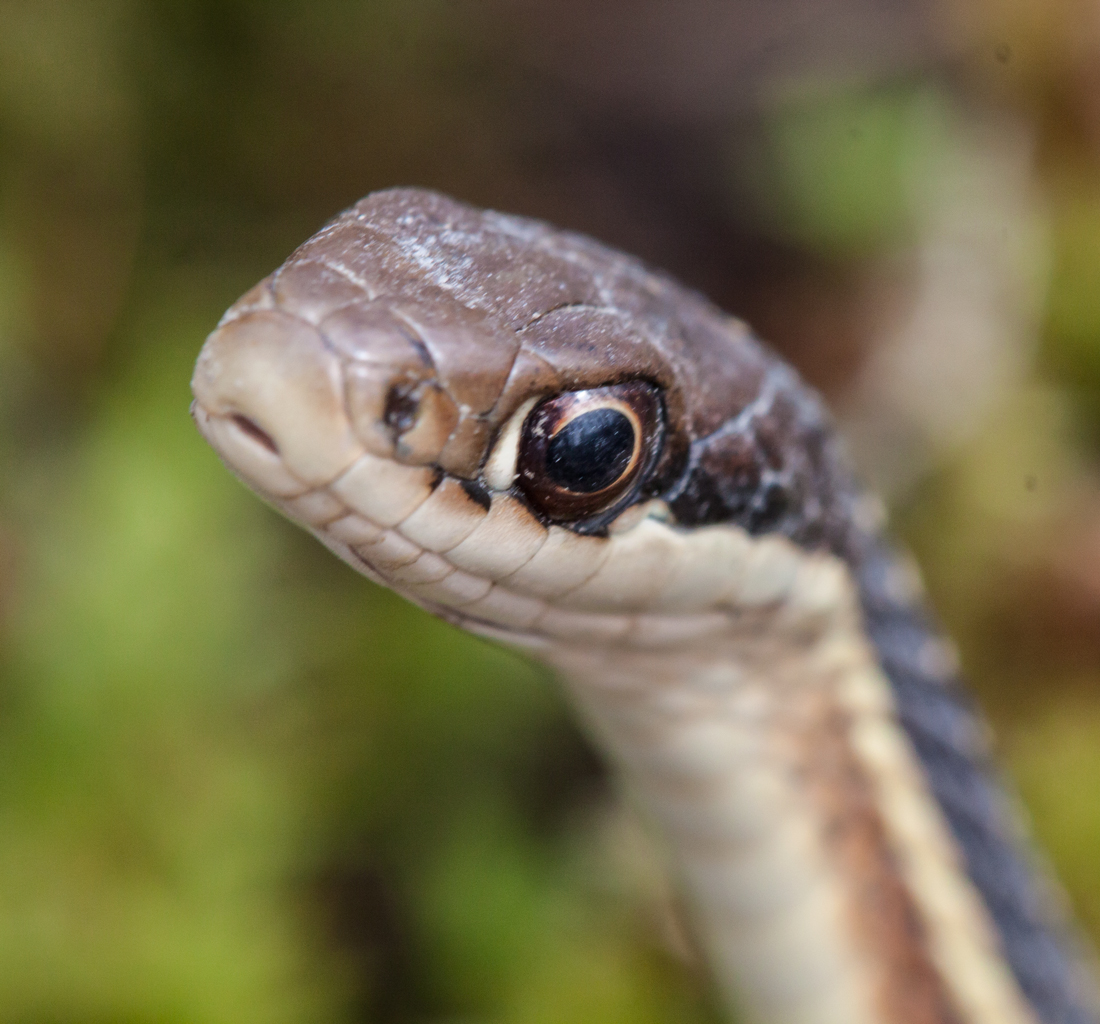
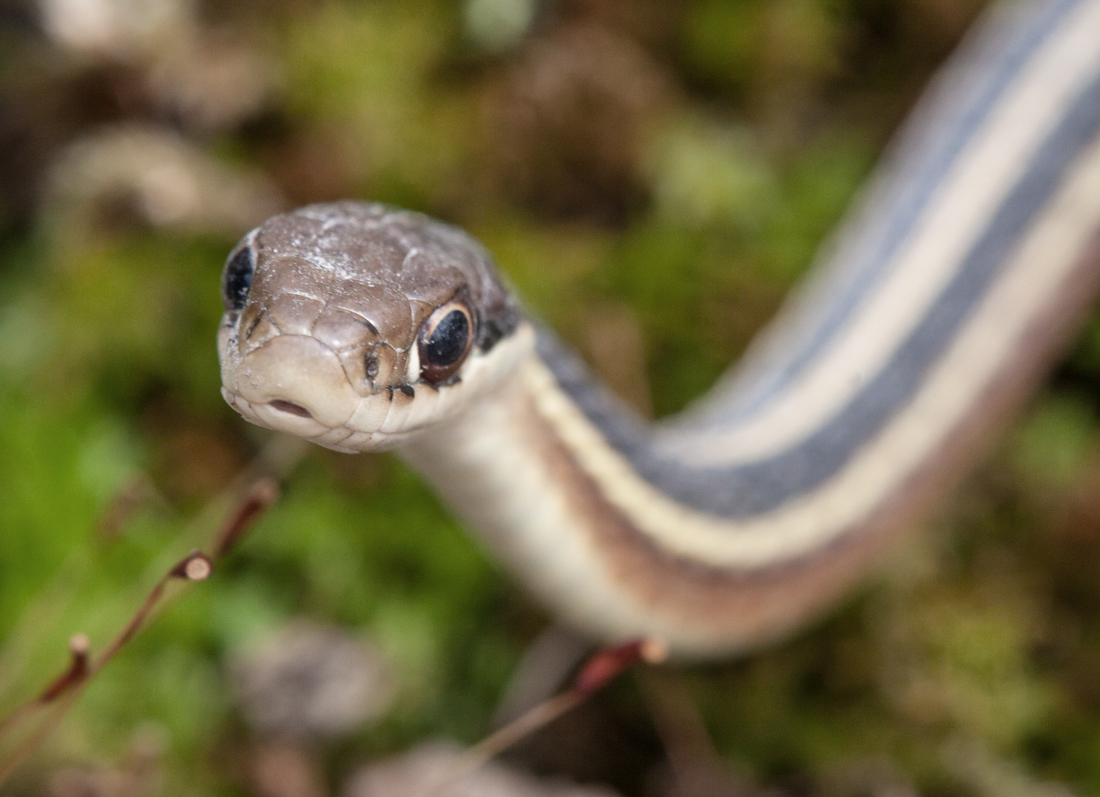
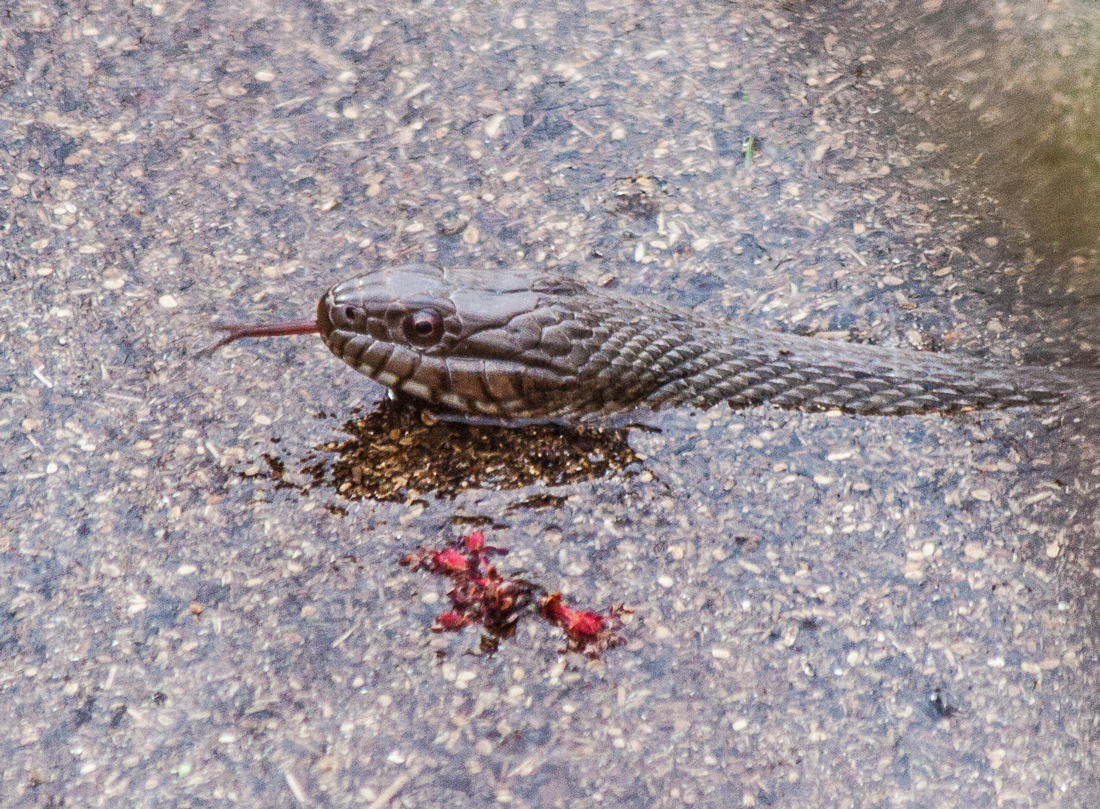
Can snakes whistle? It sure looks like this Common Ribbonsnake (Thamnophis sauritus) is trying hard to whistle as he purses his lips and seems to be blowing air in this series of shots. Who knew that snakes had lips? This snake has lips that rival those of Mick Jagger and look a bit like they were enhanced with collagen.

When you shoot subjects, how close do you get to them? My general rule for wildlife subjects is to shoot them from a distance (so I can be sure of getting a shot) and then move slowly closer and closer. I was amazed at how close this snake let me approach—this first shot was not cropped very much at all.

I like the head-and-shoulders look of the first image (taking into account the fact that snakes don’t really have shoulders), which draws attention to the snake’s eye. At times, though, I prefer the shots that show more of the snake’s body and my favorite of this group is probably the third shot. I really like the curve of the snake’s body and the tilt of its head. It’s hard to see in this reduced-size image, but two little tips of the snake’s forked tongue are visible in its partially open mouth.

snake3_march_blogsnake2a_march_blogsnake4_march_blog

© Michael Q. Powell. All rights reserved

Read Full Post »
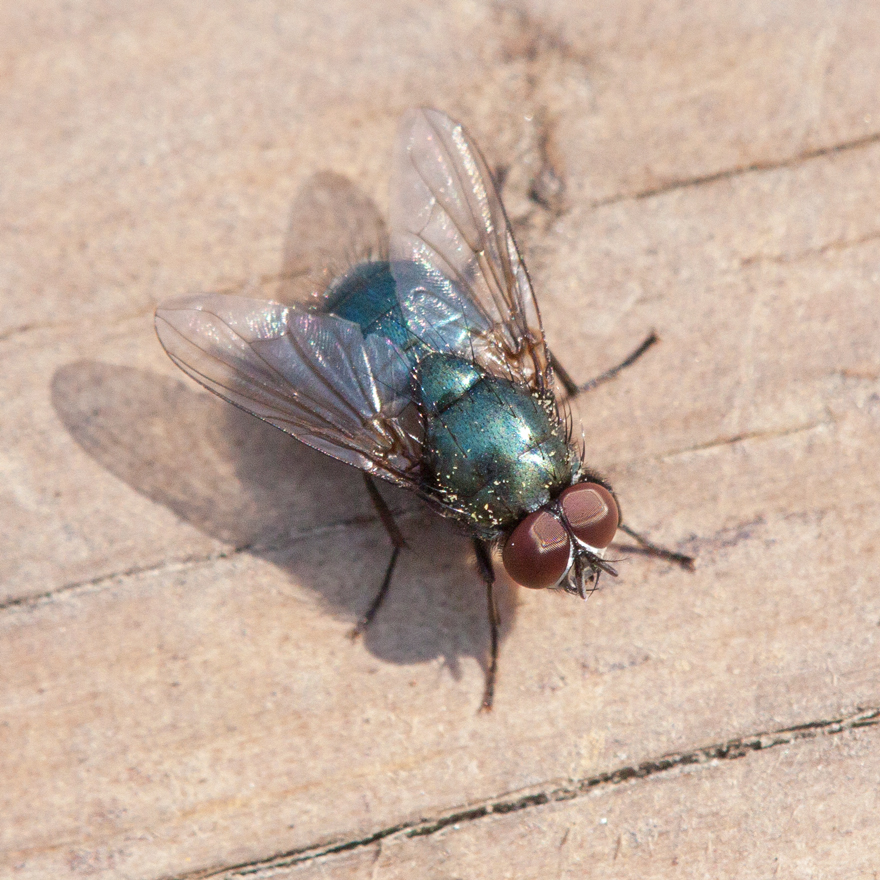
The world changed for me when I put my macro lens back on my camera, simultaneous becoming smaller and bigger. Instead of looking in the distance for birds, I switched my focus to the world immediately in from of me, searching for tiny objects that I can photograph.

In vain I long for colorful butterflies and dragonflies, but it is too early in the spring for them to appear. As soon as a fly buzzed by me, I was seized with an irresistible urge to capture its image. It’s only a fly (a Green Bottle Fly, I think), but it is symbolic of the joys to come, the time when I will spend endless hours chasing after insects, trying to capture the detailed beauty of their colors and patterns.

fly_march_blog

© Michael Q. Powell. All rights reserved

Read Full Post »

The late afternoon sunlight shining through this crocus from behind illuminated it like a natural stained glass window. I love the beauty of simple things.

crocus2_march_blog

© Michael Q. Powell. All rights reserved

Read Full Post »

Yesterday afternoon, my dear friend and fellow photographer Cindy Dyer called to alert me that there were some crocuses blooming in her garden. The lighting was wonderful and the dirt in the background provides a simple backdrop for the gorgeous colors of this little spring flower.

crocus1_march_blog

© Michael Q. Powell. All rights reserved

Read Full Post »

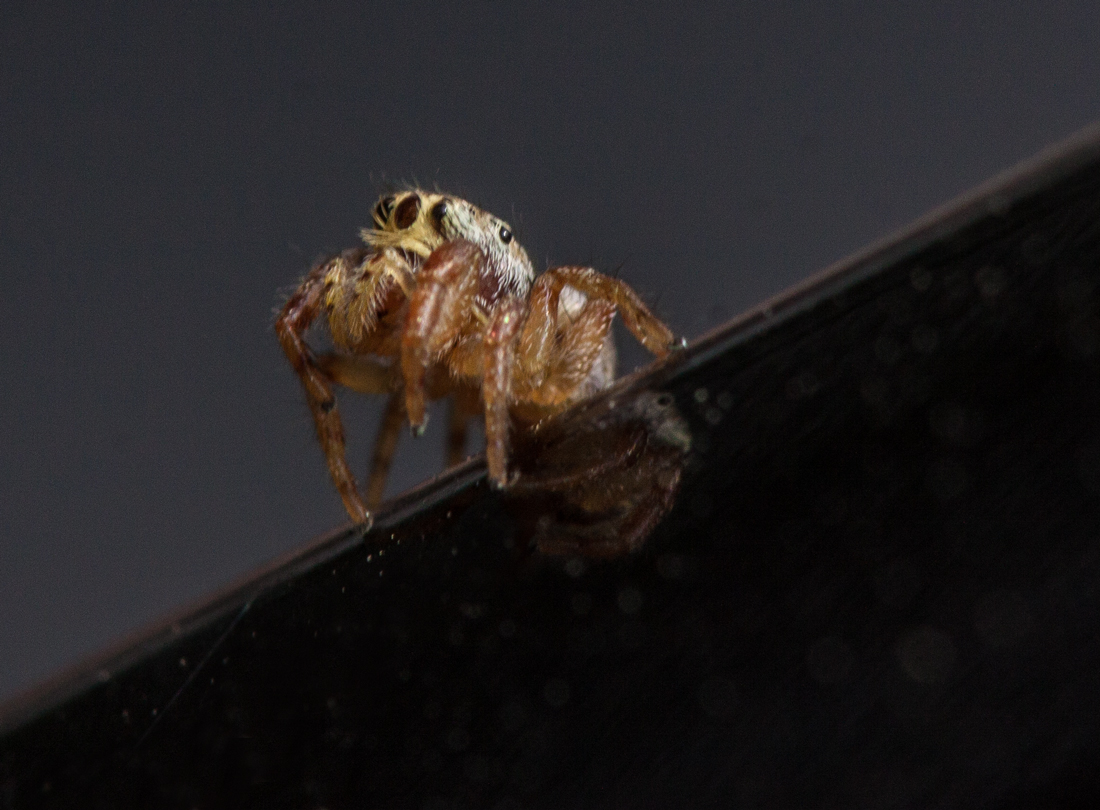
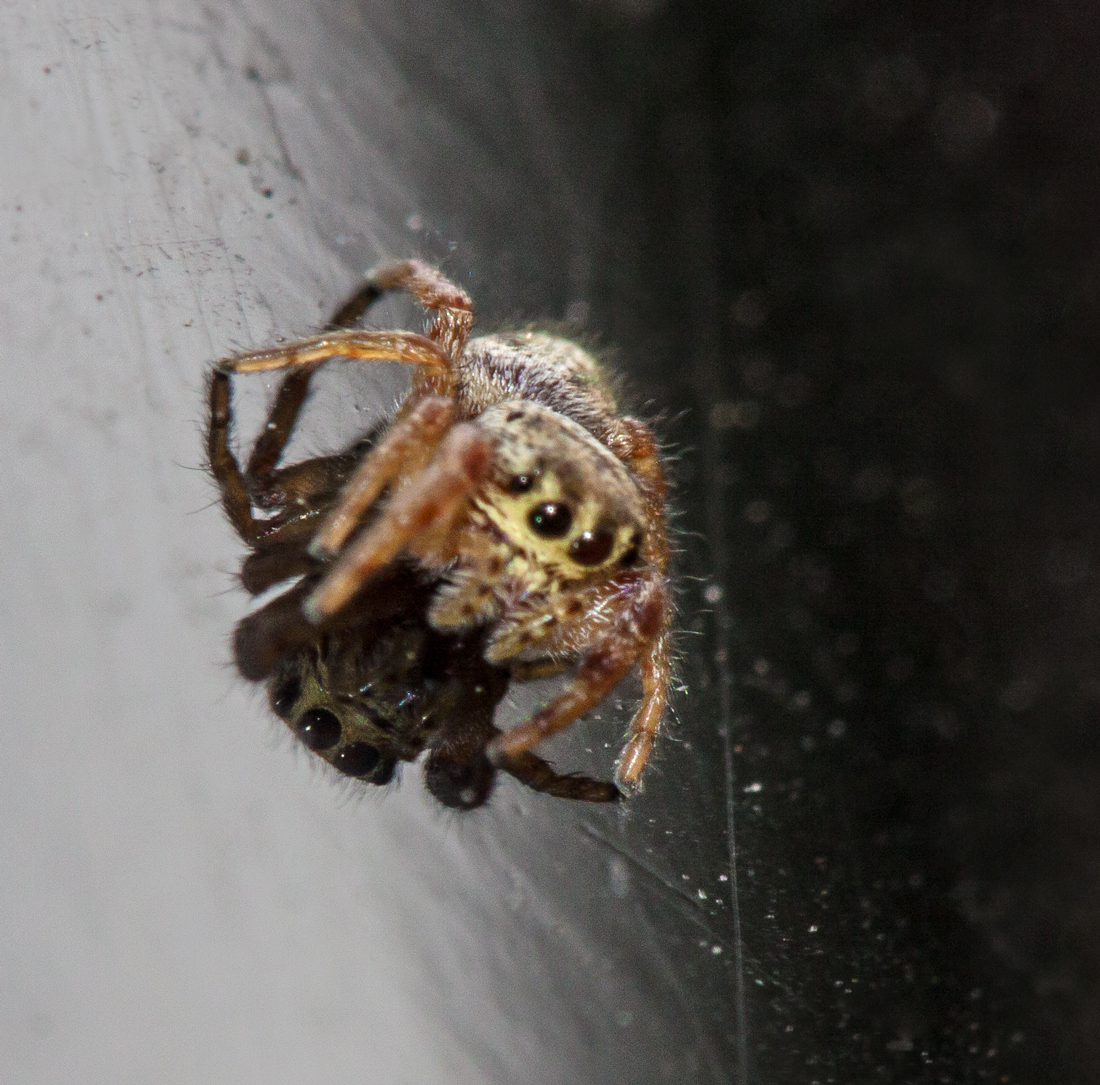
Sometimes you don’t have to travel far to get good nature photos. I noticed this colorful little jumping spider on my car yesterday when I was loading my camera gear, getting ready to go out shooting. spider4_car_blog

It was a fun challenge trying to get shots of the spider as it moved to various parts of the trim surrounding the windshield, many of which were reflective. I wasn’t sure how long the spider would hang around, so I didn’t set up my tripod and I think it would have been pretty awkward to do so.

spider1_car_blog

I am hoping that nobody snapped pictures of me as I sprawled my body across the hood of the car, trying to find a way to brace my body and get a decent shooting position. My Tamron 180mm macro lens lets me get in close, but it does not have image stabilization.

spider3_car_blogOne of the first things that I noticed when I reviewed my images was that my car is dirty. In this area, they use a lot of salt on the roads when it snows and I suspect that those little white spots are salt residue. I thought about removing them in post-processing, but decided that I like the more urban, gritty feel that they give the images (and besides, it would have been a lot of work to get rid of all of them).

spider2_car_blog

I am always thrilled when I find a jumping spider. There is something special about all of those eyes that simply fascinates me and I am particularly happy when I manage to get reflections in the eyes.

© Michael Q. Powell. All rights reserved

Read Full Post »
Now that it is spring, I have started carrying around my macro lens, which I was able to use to get this really close-up shot today of an Eastern Garter snake (Thamnophis sirtalis) at Huntley Meadows Park, my favorite local spot for nature photography. The snake was curled up in a mossy area and seemed to be a little sluggish. Consequently, he did not slither away when I got down low and moved in close to take this photo.

CORRECTION: Fellow photographer and blogger Walter Sanford, who is much more of an expert in snakes than I am, has identified this snake as a Common Ribbonsnake (Thamnophis sauritus sauritus), not an Eastern Garter snake.

snake1_march_blog

© Michael Q. Powell. All rights reserved

Read Full Post »

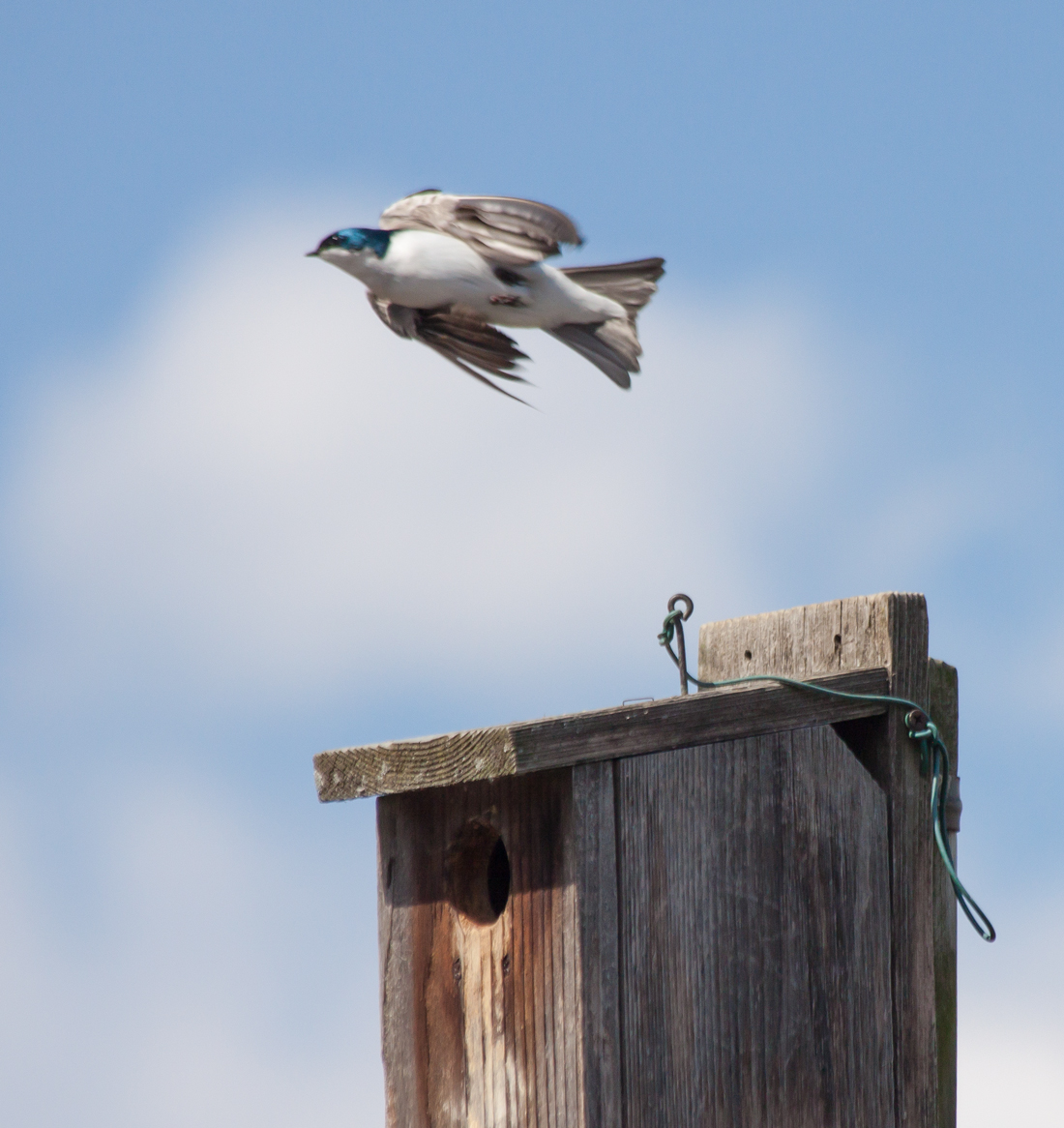
I was a little surprised to see some Tree Swallows (Tachycineta bicolor) on Saturday when I visited Dyke Marsh Wildlife Preserve, a freshwater tidal wetlands on the Potomac River. I thought it was a bit early for these little aerial acrobats to be here, given the fact that there are not yet many insects for them to catch, but they were flying about and checking out a nesting box.

Sometimes I get cool shots of birds in flight by accident, like this shot of a Tree Sparrow, which took off as I was photographing it. The angle of view is one that I have never before captured in any image.

swallow_flight_blog

Two of the swallows seemed to spend a lot of time together and I suspect that they are a breeding pair, though they were periodically buzzed by other tree swallows, which could be other potential suitors for the female. One of the swallows eventually entered the box and I suspect that the swallows are constructing a nest in it, though I didn’t see any of them actually carrying in construction material.swallow_entrance_blogIt’s a good sign for me that spring is almost here when I see birds reappearing (even as I shovel away eight or so inches of snow that have fallen in the last 24 hours).

© Michael Q. Powell. All rights reserved

Read Full Post »

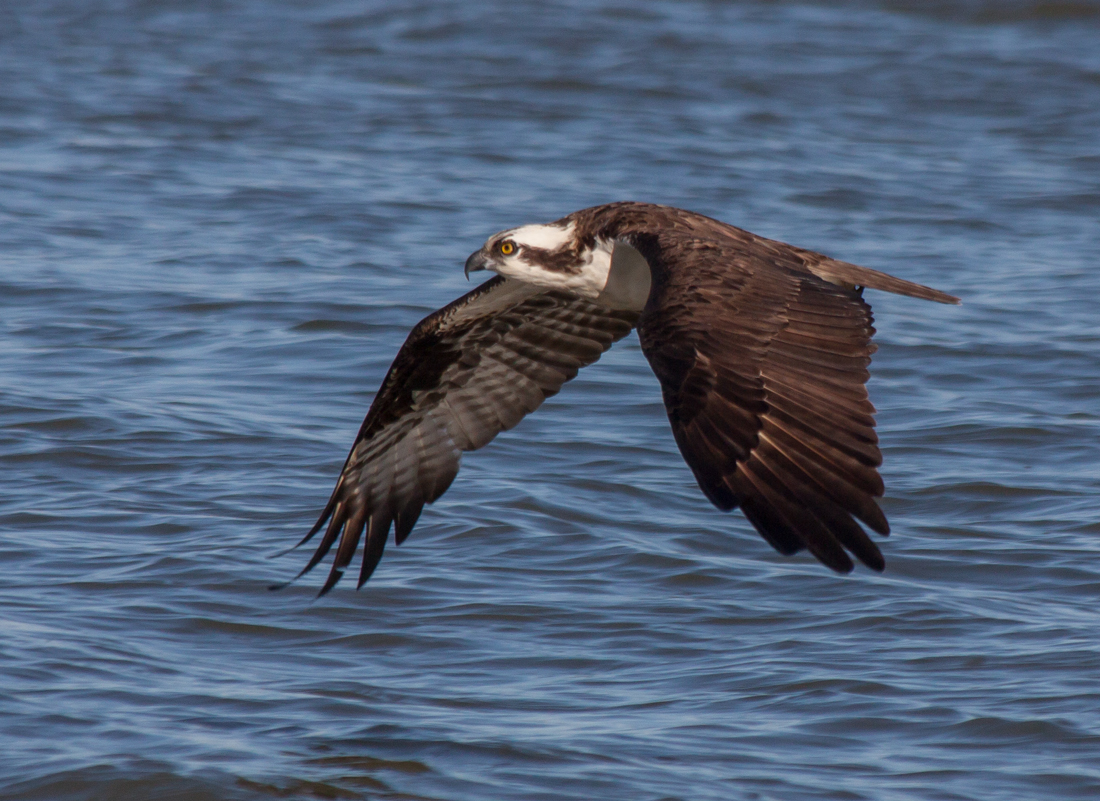
A breeding pair of Ospreys (Pandion haliaetus) has returned to a nesting site only a few miles from where I live and I was thrilled to get some shots of the ospreys yesterday, on a bright sunny day.

The nest, which has been used for quite a number of years, is built on a wooden piling near the Belle Haven Marina south of Old Town Alexandria on the Potomac River. The piling is tilted quite a bit, apparently because of the pressure of the ice that accumulated when the cold temperatures this winter caused the river to freeze, but the birds seem undeterred and were busily adding sticks to the nest yesterday. It looks like the ospreys may be compensating for the angle by building the nest higher on one side than the other, though it is really hard to tell at the moment.

I took lots of shots yesterday that I need to review, but I thought I would post this one as a sneak preview and suspect that I will have enough shots for another few postings. The ospreys flew by a few times (most often the male) and I was able to get photos of them in flight andworking on the nest.  I remember hearing that there were ospreys on the Potomac River, but somehow never made the trip last year during breeding season. This year, I will try to make more frequent trips to check on the couple’s progress.

osprey_flight_blog

© Michael Q. Powell. All rights reserved

Read Full Post »

The temperatures this past weekend soared past 60 degrees (16 degrees C), bringing the turtles up from the mud on the bottom of the ponds at my local marsh. Most of the turtles crowded together on the log in the first shot appear to be Eastern Painted Turtles (Chrysemys picta picta), but I think I detect at least one Red-eared Slider (Trachemys scripta elegans).

Not all of turtles, however, wanted to bask in the sun in a communal environment. The second image shows a turtle that managed to find its own log and was enjoying a few moments of contemplative solitude.

turtles_sunning_blogturtle_sunning_blog

© Michael Q. Powell. All rights reserved

Read Full Post »

« Newer Posts