Feeds:
Posts
Comments

Archive for the ‘spring’ Category

Earlier this season, it looked like a pair of Bald Eagles had occupied a large nest at Occoquan Bay National Wildlife Refuge. Each time that I visited the refuge, I would check the nesting site to look for indications that an eagle was sitting on eggs. Unfortunately, the nest is so deep and so high up that it is almost impossible to tell if an eagle is inside of the nest.

Last week, I watched a pair of Ospreys (Pandion haliaetus) fly into the nest and seize it and captured this shot of them doing so. Generally ospreys use much smaller, thrown-together nests, but I guess that this pair decided to advantage of what I assume is a currently unoccupied eagle nest.

As I watched the two ospreys approach the nest with dangled legs, I couldn’t help but think of the scenes from the Wizard of Oz movie in which the flying monkeys seized Dorothy. The mind works in strange ways.

osprey

© Michael Q. Powell. All rights reserved.


Read Full Post »

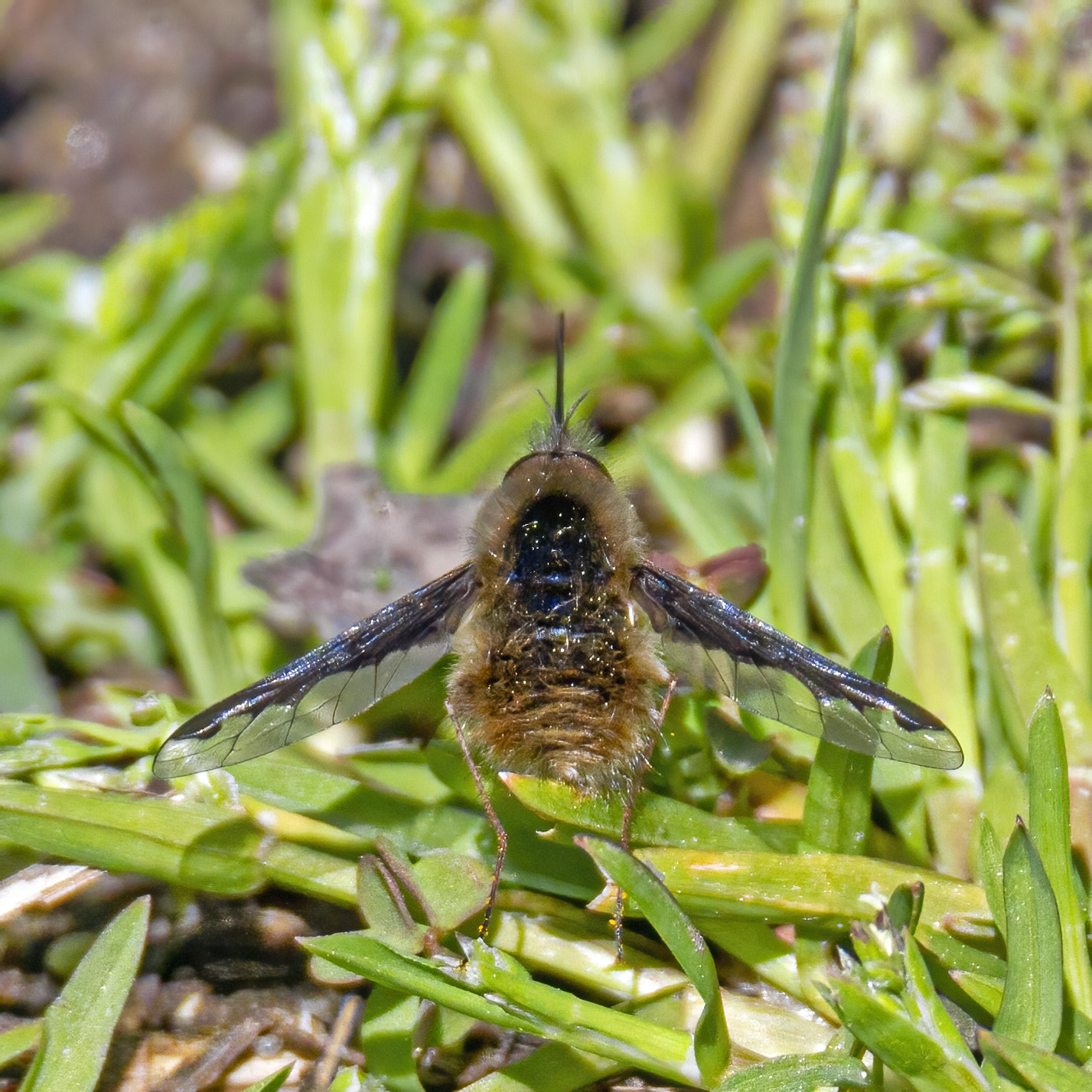
Is it a bee? Is it a fly? Well, it has a fuzzy body like a bumblebee and has a long, rigid proboscis that looks like a stinger, but its patterned wings and long legs look more like those of a fly. In actuality, it is a Greater Bee Fly (Bombylius major), a parasitic bee mimic that is one of the earliest spring pollinators of wildflowers. I photographed this bee fly last week at Occoquan Bay National Wildlife Refuge.

I was quite happy to be able to capture so many of the details of this curious creature, including its long proboscis, spindly legs, patterned wings, and fuzzy body. In case you are curious, the body of one of these bee flies is about six-tenths of an inch (15mm) in length and its wing span is about one inch (25mm). I recommend that you double-click on the image to get a better look at the little details of this bee fly.

If you would like to learn more about these fascinating little bee flies, including their parasitic behavior, check out this article on the US Forest Service website by Beatriz Moisset entitled “A Pollinator with a Bad Reputation.

Bee Fly

© Michael Q. Powell. All rights reserved.

Read Full Post »
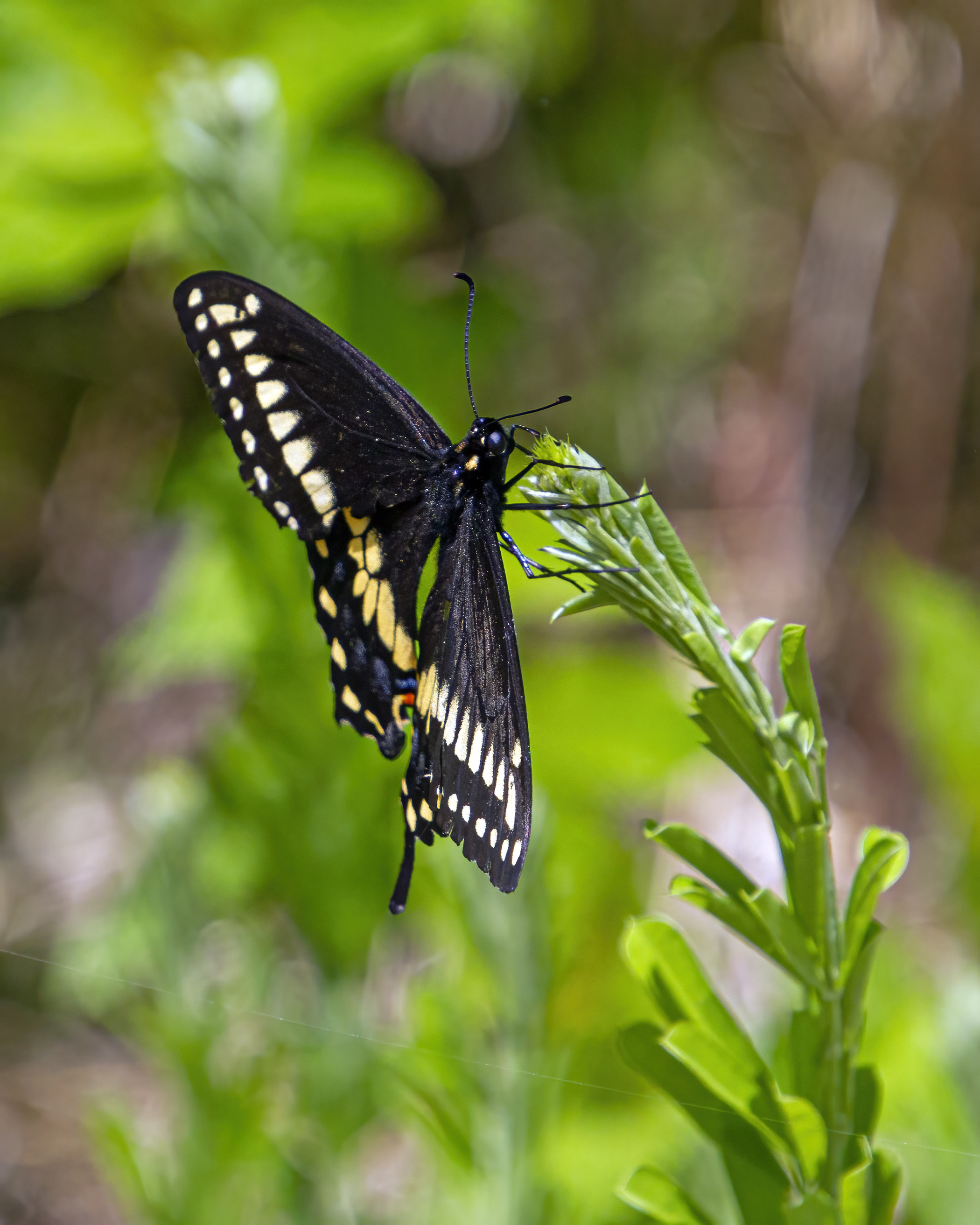
I was absolutely thrilled last week to spot this Zebra Swallowtail butterfly (Eurytides marcellus) at Occoquan Bay National Wildlife Refuge. Zebra Swallowtails overwinter winter in the chrysalis (cocoon) stage before emerging as adult butterflies in the spring. A second brood is born later in the year and they are the ones that lay the eggs that develop into the caterpillars that will enter into cocoons and hibernate throughout the winter.

I love the beautiful colors of this butterfly, with its zebra-like stripes and pops of red and blue—I often think of the Zebra Swallowtail as a “patriotic” butterfly, because of its red, white, and blur coloration..

Zebra Swallowtail

© Michael Q. Powell. All rights reserved.


Read Full Post »

This Yellow-throated Warbler (Setophaga dominica) was pretty far away when I spotted its little patch of bright yellow feathers this past Tuesday at Occoquan Bay National Wildlife Refuge. I doubted that I would be able to get a recognizable shot of it, but decided to take a chance, given that it was the first warbler that I had seen this spring. The resulting shot won’t win any contest, but I am happy that I was able to document my sighting.

Warblers pass through my area each spring at about the same time as the leaves begin to appear on the trees. It can be a bit frustrating for me to be able to hear some of these little birds without being able to see them when they are hidden in the foliage. It is a little game of hide-and-see that I play every year and this time I was able to capture a shot of one of my colorful fellow players.

Yellow-throated Warbler

© Michael Q. Powell. All rights reserved.

Read Full Post »

I was surprised and delighted to spot this Cabbage White butterfly (Pieris rapae) as it was feeding on a newly sprouted dandelion on Tuesday at Occoquan Bay National Wildlife Refuge. I love chasing these elusive little butterflies that I used to think were moths.

Gardeners consider Cabbage Whites to be pests, because their caterpillars can do significant damage to plants, including cabbage, broccoli, cauliflower, and collard greens, but I find them to be beautiful. In that respect I guess I am a kind of dreamer who prefers to focus more on form than on function.

Cabbage White

© Michael Q. Powell. All rights reserved.

Read Full Post »

Long telephoto lenses tend to distort your depth perception. On Tuesday I watched this North American Snapping Turtle (Chelydra serpentina) swimming about in a pond at Occoquan Bay National Wildlife Refuge. I was a bit creepy as the turtle got bigger and bigger in my viewfinder when it began to swim directly towards me. One part of my brain objectively knew that the turtle was still a long way off, but it was nonetheless a bit disconcerting when the snapping turtle’s dinosaur-like eyes appeared to be staring right at me.

Spring is here, though the weather has been cool recently and there were some local frost warnings last night, and all kinds of creatures are waking up. I’m still looking for my first dragonfly of the year and will probably continue my quest later today.

snapping turtle

© Michael Q. Powell. All rights reserved.

Read Full Post »

I have been hearing a lot of Red-winged Blackbirds (Agelaius phoeniceus) during recent visits to Occoquan Bay National Wildlife Refuge and was delighted to finally capture a shot of one last week that shows the distinctive yellow and red shoulder patch of the males of his species.

I was hoping that the blackbird would fly to some lower branches, but he seemed content to perch high above me in a tree. I was pleased, though, to be able to capture this fun little portrait—it is tough to convince birds to pose for me.

Red-winged Blackbird

© Michael Q. Powell. All rights reserved.


Read Full Post »

Most of the time when I am out in nature, I am focused on wildlife and often neglect to take landscape photos. Last week, though, was a notable exception when I went for a hike in Prince William Forest Park, an installation administered by the National Park Service located about 25 miles from where I live.

Most of the park is forested and hilly and there was not much wildlife to observe, so I enjoyed the natural beauty that surrounded me. My iPhone tracks the number of steps that I take and it shows that I walked about 12 thousand steps that day. That may not sound like a lot of steps, but the statistics also indicated that I climbed the equivalent of 37 flights of stairs.

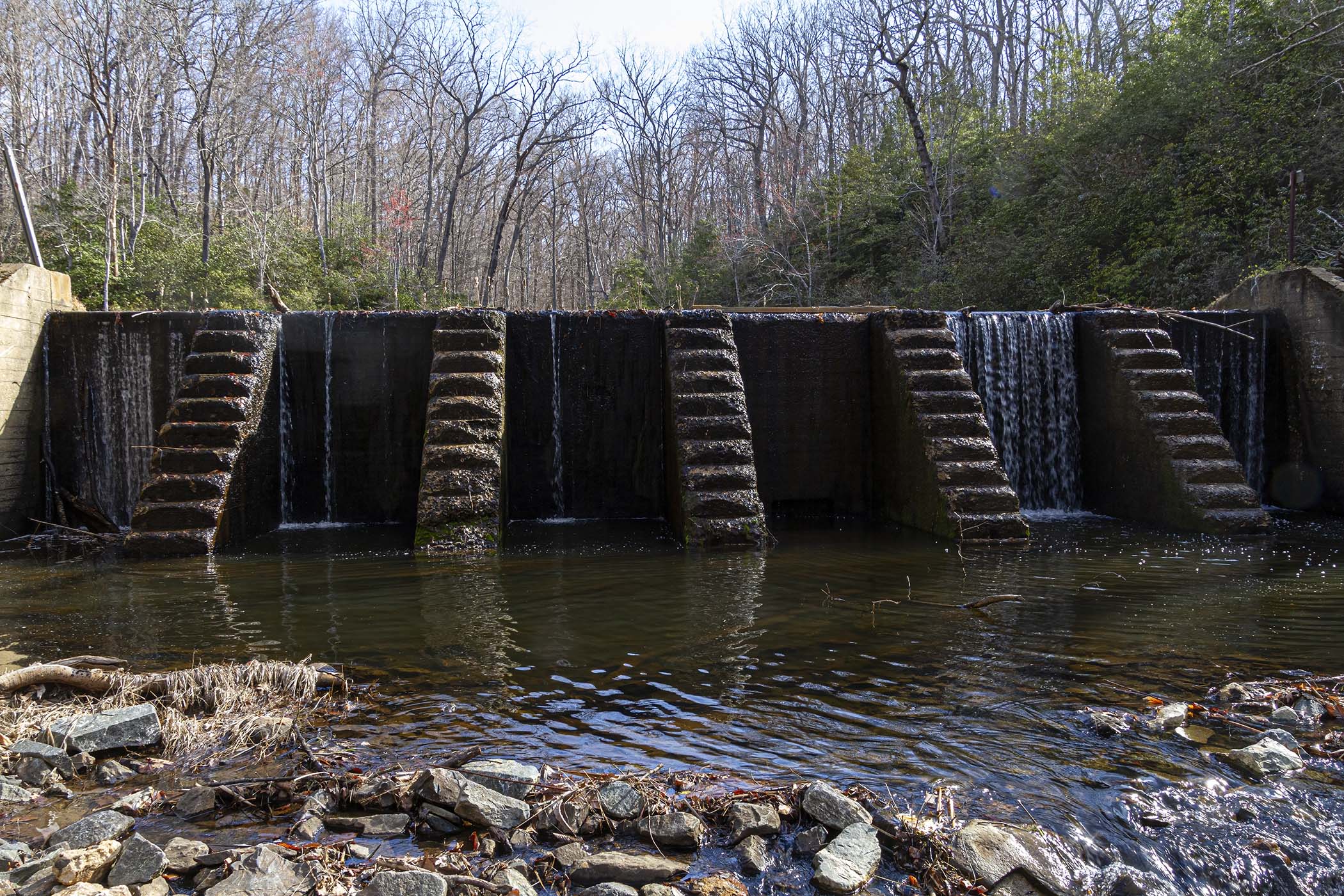
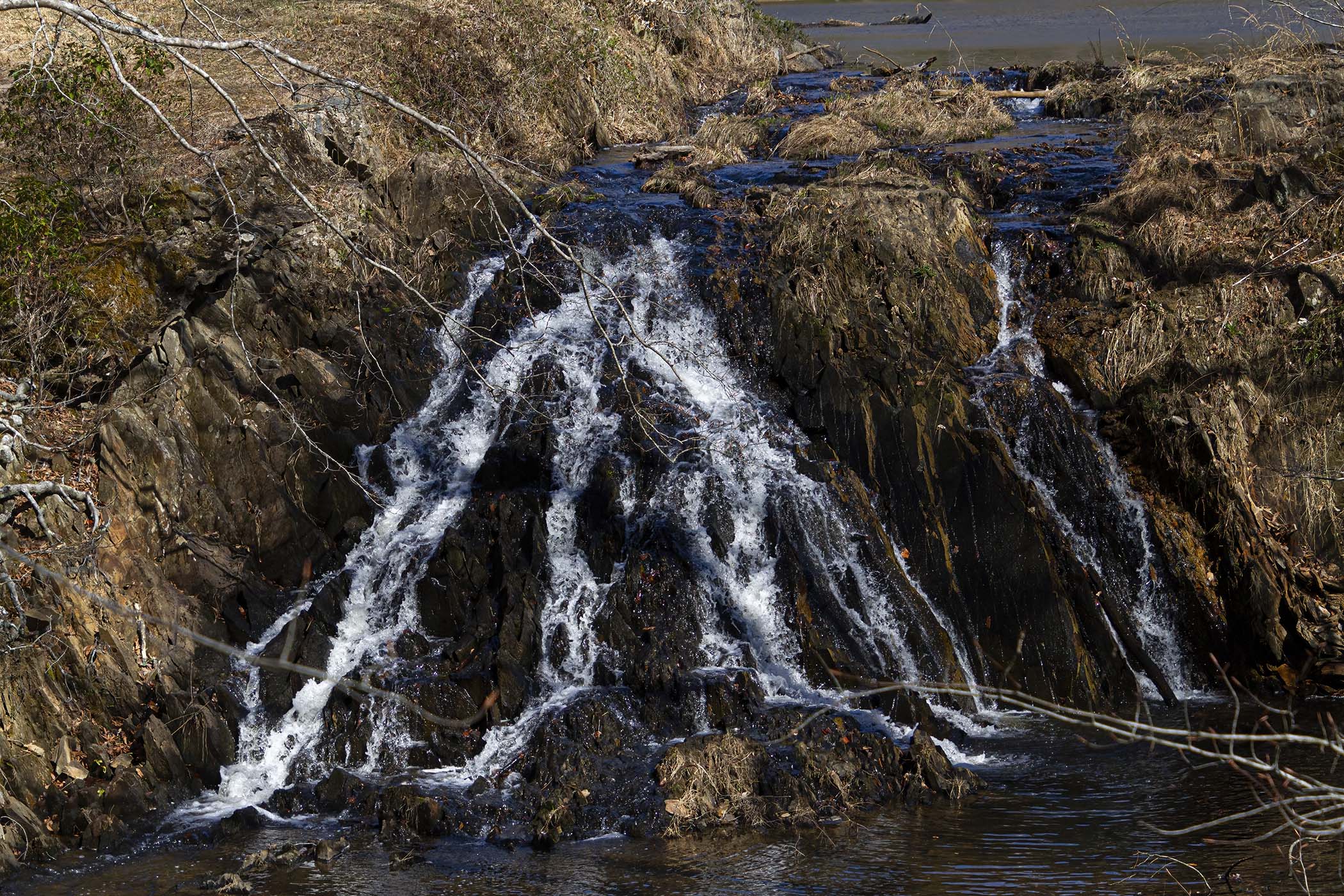
One of the highlights of my hike was walking along Quantico Creek that runs through a portion of the park—I love the sound of rushing water. At several places along the creek there are dams, as you can see in several photos below, that tend to slow the flow of the water.

It was a wonderful way to spend the day and I left the park physically tired, but mentally refreshed and rejuvenated.

Prince William Forest Park

Prince William Forest Park

Prince William Forest Park

Prince William Forest Park

© Michael Q. Powell. All rights reserved.

Read Full Post »

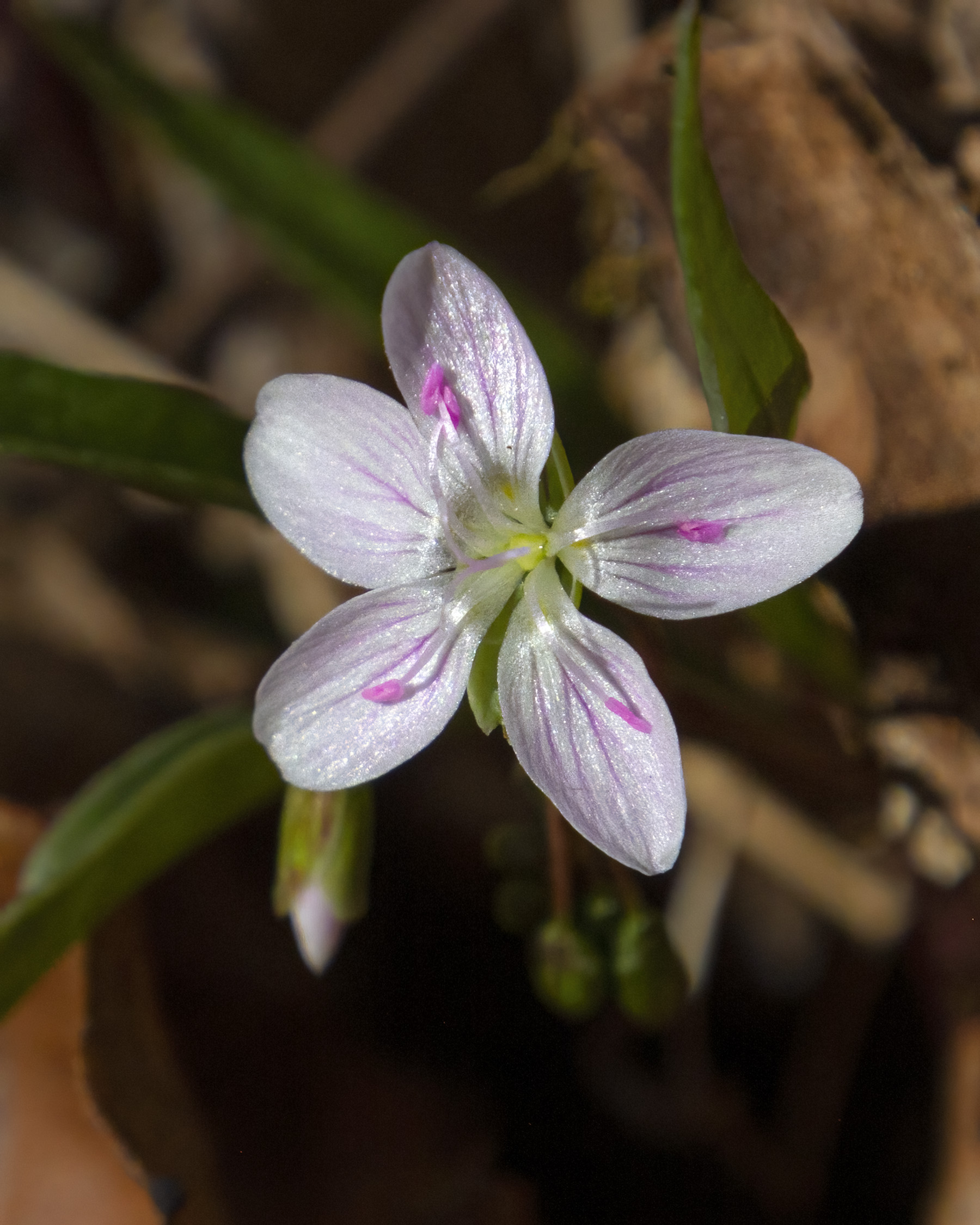
Spring is definitely here. I spotted my first Spring Beauty wildflower (Claytonia virginica) on 26 March during a hike at Prince William Forest Park in Triangle, Virginia. Before long I am sure that I will see large numbers of them in the forest, though they tend to be ephemeral and don’t bloom for very long.

The Spring Beauty plants have tiny underground tubers that Native Americans reportedly prepared and ate like potatoes, though I suspect that you would have to collect a lot of them to make a meal.

Spring Beauty

© Michael Q. Powell. All rights reserved.


Read Full Post »

Springtime has definitely arrived in Northern Virginia. All kinds of trees are starting to put out buds and leaves and Washington D.C.’s famous cherry trees are now in full bloom.

On Wednesday I explored a creek in Prince William County, hoping to find some early dragonflies. I was not successful in my quest, but I was quite happy to capture this image of a female Northern Cardinal (Cardinalis cardinalis) with some of the bright spring colors that have recently emerged. The subdued coloration of the female Cardinal does not stand out quite as much as that of her male counterpart, but I find it her more refined colors to be even more beautiful than those of the male.

Northern Cardinal

© Michael Q. Powell. All rights reserved.

Read Full Post »

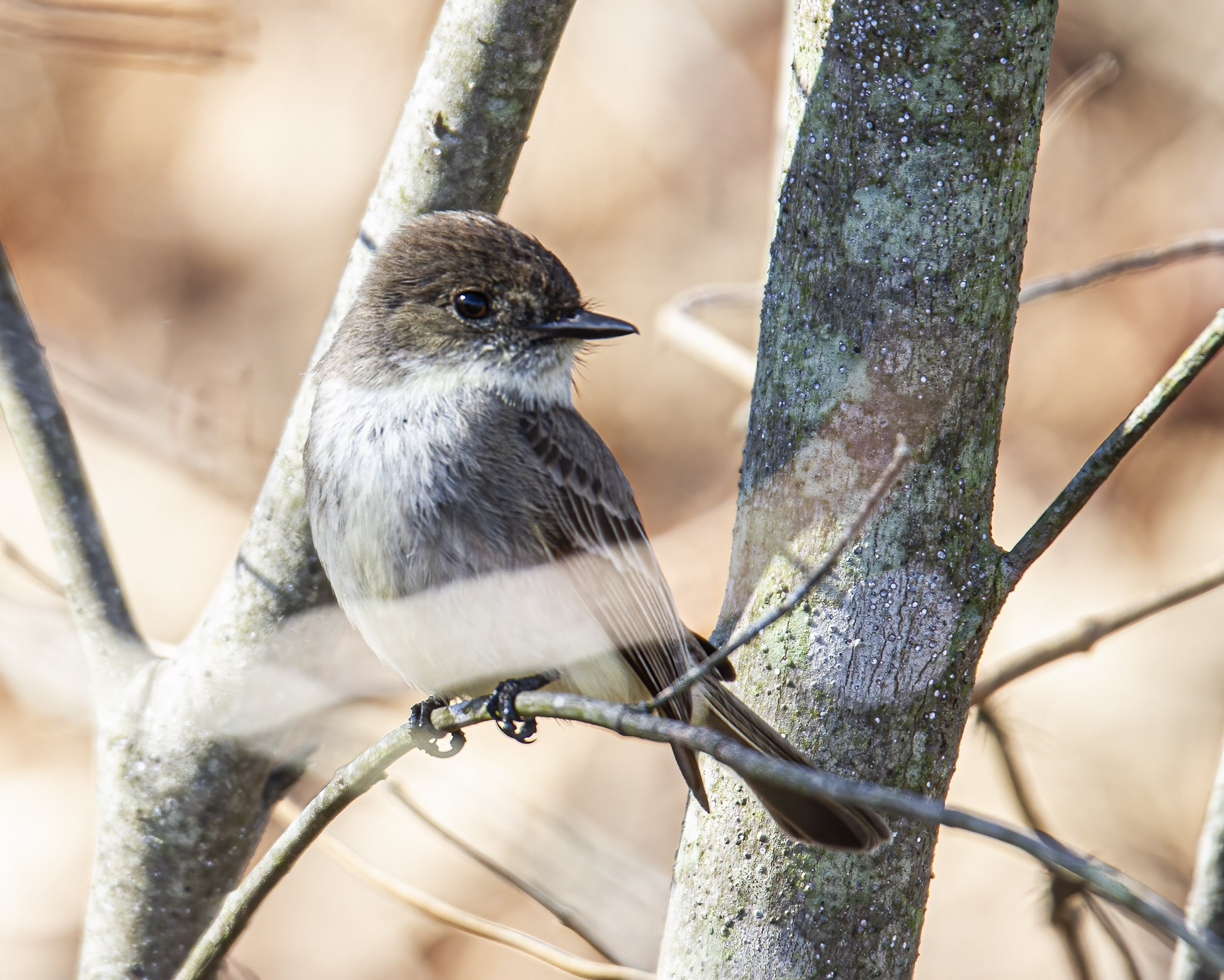
In some locations the reappearance of Eastern Phoebes (Sayornis phoebe) is one of the first indications that spring is returning. I am not sure if Eastern Phoebes are with us year round in Northern Virginia, but I know that it as been quite a few months since I last saw one.

On Tuesday I spotted this phoebe in a tree at Occoquan Bay National Wildlife Refuge. Branches were partially blocking my view of the bird, but I managed to find get a clear view of its face (and most importantly of its eye) by making small adjustments to my shooting position.

Eastern Phoebe

© Michael Q. Powell. All rights reserved.


Read Full Post »
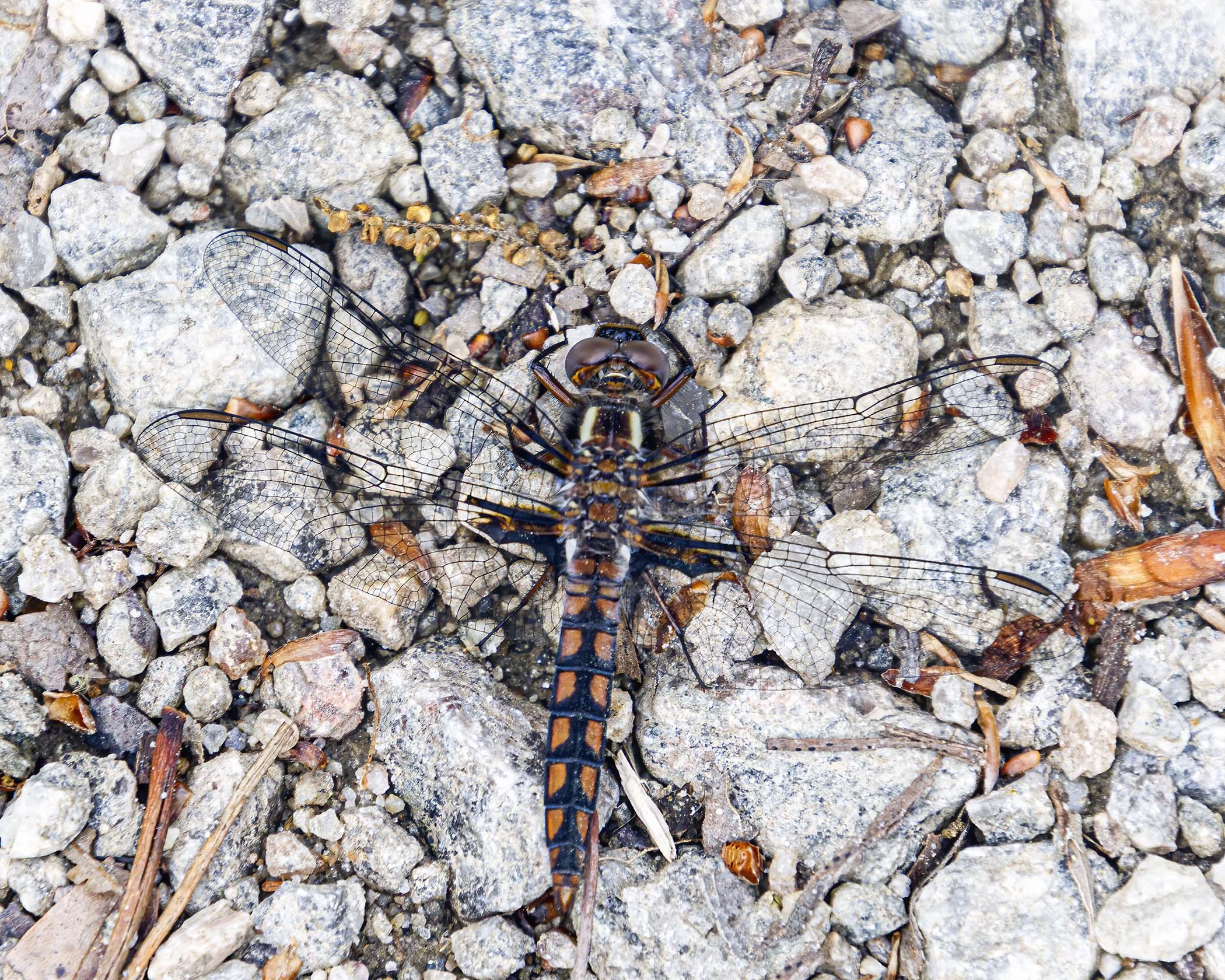
I was delighted to spot this Brown Thrasher (Toxostoma rufum) last week at Occoquan Bay National Wildlife Refuge. I had to move around a lot to get a clear view of its head, though I was pretty sure it was a thrasher when I caught a glimpse of its bright yellow eye and long tail. The Cornell Lab of Ornithology did a great job in describing the challenges of spotting this species, “It can be tricky to glimpse a Brown Thrasher in a tangled mass of shrubbery, and once you do you may wonder how such a boldly patterned, gangly bird could stay so hidden.”

Brown Thrashers are present year round in the southern portions of Virginia, but I think they move north into my area of Northern Virginia during the breeding season. Before long we should have lot of other birds, including warblers, migrating through our area and, of course, dragonflies and other insects will soon reappear. Yesterday  i noted a posting in Facebook with photos of dragonflies that were recently taken in central Virginia. I will probably venture out later today to see if I can spot any dragonflies myself.

Brown Thrasher

© Michael Q. Powell. All rights reserved.

Read Full Post »

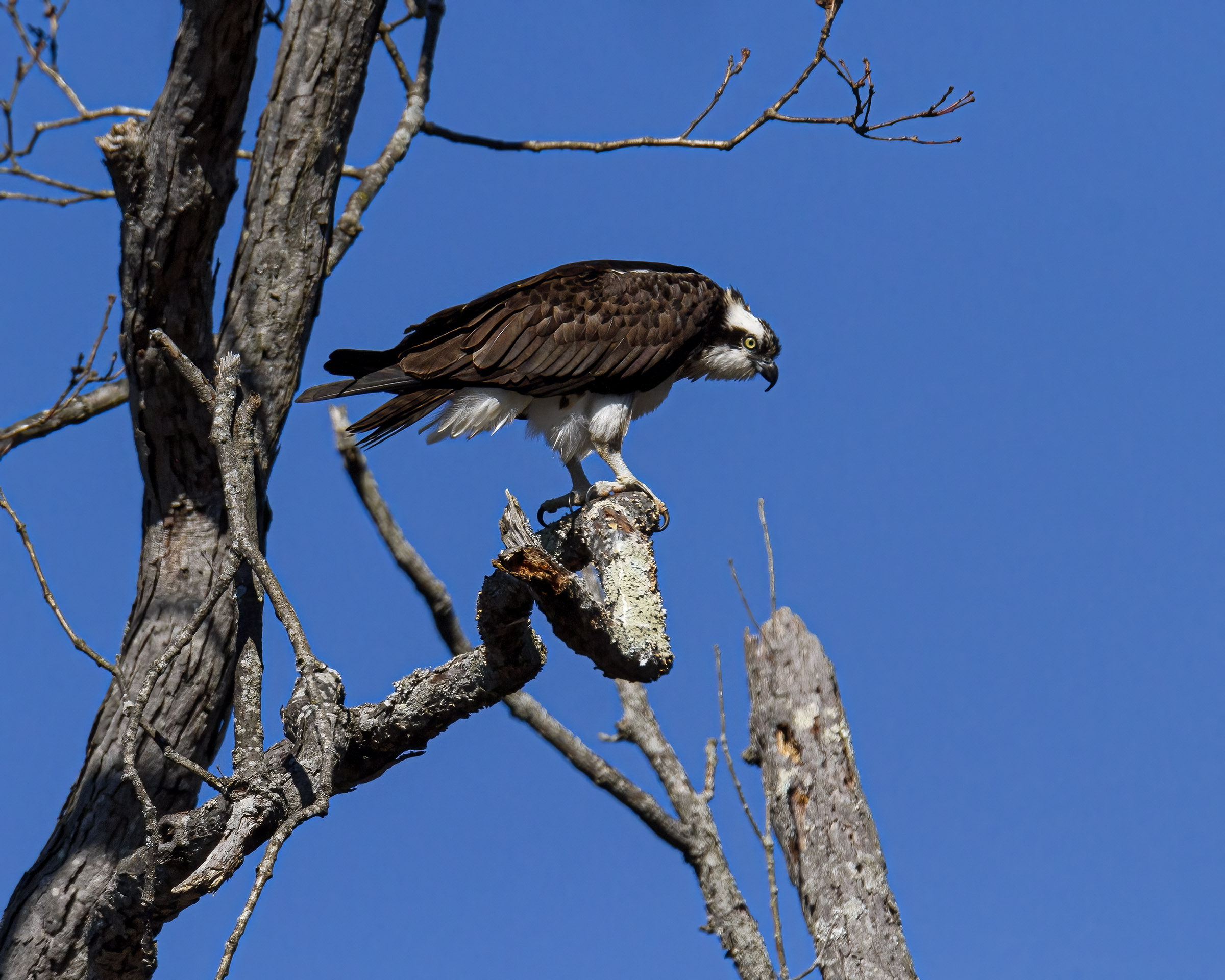
Osprey (Pandion haliaetus) are very opportunistic birds—they will make a nest almost anywhere there is a bit of space. Last week I spotted an osprey perched on the roof of a duck blind in the water and captured this cool little image.

These little shack-like structures on stilts have been built in the waters off of Occoquan Bay National Wildlife Refuge and are used a few weeks a year during duck hunting season. It is a little disconcerting during that time to hear shotguns being fired only a short distance away, but the money collected for hunting licenses is used for waterfowl habitat improvement and restoration in Virginia.

Osprey

© Michael Q. Powell. All rights reserved.

Read Full Post »

Buds are beginning to grow on many of the trees in my area as we welcome the beginning of spring.  However, it looks like this little Carolina Chickadee (Poecile carolinensis) that I spotted on Tuesday at Occoquan Bay National Wildlife Refuge was impatient and chose to nibble on a tender young bud that had barely started to develop.

The lighting conditions were not optimal, but I like the way that I was able to capture the way that the chickadee used its tiny bill to poke into the underdeveloped bud. It may not seem like much, but I suspect that the chickadee welcomed the taste of the tender spring bud after a long winter of gnawing on hard, wizened seeds.


Carolina Chickadee

© Michael Q. Powell. All rights reserved.

Read Full Post »

Something attracted the attention of this Osprey (Pandion haliaetus) on Tuesday at Occoquan Bay National Wildlife Refuge and it kept looking down at the ground. At first I thought that the osprey had caught a fish that it was trying to protect from competitors, but when I zoomed in, I did not see any fish.

Perhaps the osprey was looking for its mate or was merely curious to observe all the things that were going on. I don’t think that the osprey had spotted me when I took these shots, but that is also a possibility.

Osprey

Osprey

© Michael Q. Powell. All rights reserved.

Read Full Post »

When Great Blue Herons (Ardea herodias) take off from the water, they really stretch out and usually I cut off part of their bodies when trying to photograph them in action. Last week, though, my timing was good and I captured this little sequence of images as a heron took to the air, flew for a short distance, and “stuck” its landing in the water.

I was really happy with the way that I was able to capture so many details, from the arc of the water droplets as the heron rose out of the water to the bird’s different-colored feathers. In the final photo, the spread wings, wind-blown “hair,” and the wonderful reflection combine to create a really cool mood in the image.

Great Blue Heron

Great Blue Heron

Great Blue Heron

© Michael Q. Powell. All rights reserved.

Read Full Post »

When I spotted this Gray Petaltail dragonfly (Tachopteryx thoreyi) on Monday at Occoquan Regional Park, I could see that it was feasting on some kind of insect that it had caught, but I could not get close enough to identify the prey. Dragonflies are fierce predators that feed on a wide variety of insects, sometimes including other dragonflies or damselflies.

When I examine the image carefully I can just make out the wings and legs and possibly an eye of the victim, but that does not help me to identify it. The dragonfly was perched high on the trunk of the tree and when I tried to move closer to get a better shot, the sharp angle made it even harder to see what was going on. I was happy enough to capture this profile view of the Gray Petaltail, which would otherwise have been pretty well camouflaged by the rough bark of the tree.

Gray Petaltail

© Michael Q. Powell. All rights reserved.

Read Full Post »

Many dragonflies have transparent wings that seem to disappear when they are flying, making them look even smaller and hard to detect. Male Widow Skimmer dragonflies (Libellula luctuosa), however, have such large bi-colored patches on their wings that they look almost like butterflies when in flight, an impression heightened by the fluttering way that they fly.

I was thrilled when I spotted this male Widow Skimmer—the females of this species do not have the white wing patches—on Monday at Occoquan Regional Park. The dragonfly flew by me numerous times and I watched and waiting, hoping that it would land.  My patience eventually paid off and I was able to capture this shot that shows off its wings beautifully. This may not be the most artistic image that I have ever captured, but it is a good one to use for the purpose of identification.

One of the coolest things about photography is that it can be both scientific and artistic, allowing me to be as geeky as I want in either domain.

Widow Skimmer

© Michael Q. Powell. All rights reserved.

Read Full Post »

Sable Clubtail dragonflies (Stenogomphurus rogersi) are uncommon in my area. This dragonfly species is generally found only in very small numbers, has a short flight period, and requires very specific habitats, preferably a small, clean forest stream. There is only one location in my area where I have found Sable Clubtails in the past and some years I have not seen a single one.

I was therefore really excited on Monday when I spotted what I thought might be a Sable Clubtail. I was not sure of my identification, though, because this dragonfly was in a different location at the park, not along the stream where I had seen Sable Clubtails in the past.

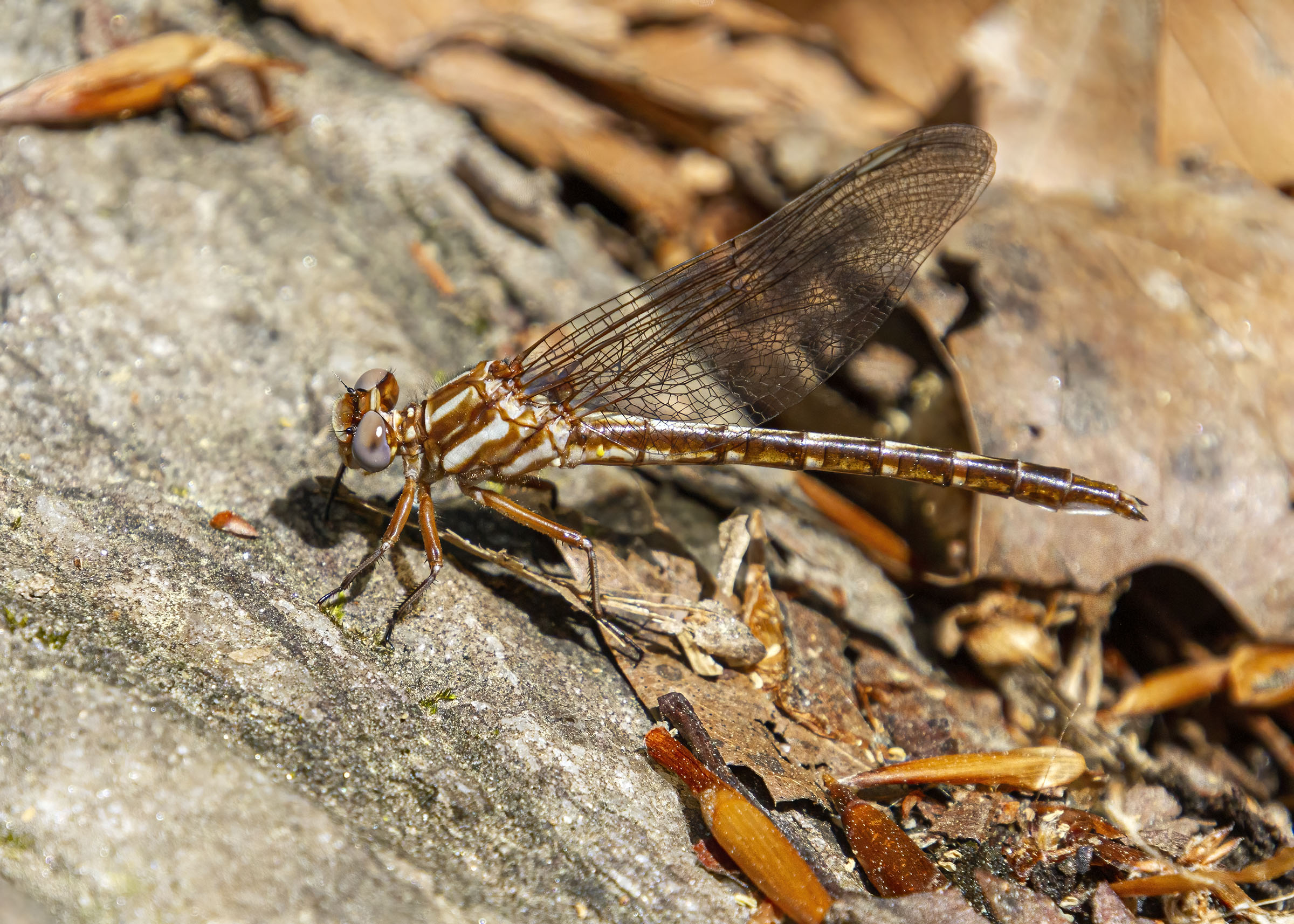
When I returned home and examined my photos on my computer, I was shocked to see that the dragonfly was a female–I am pretty sure that all of the Sable Clubtails that I have previously seen were males. For the sake of comparison, I have added a photo of a male that was part of a posting I did on 10 June 2024 entitled Sable Clubtail dragonfly (male). If you look closely at the tip of the abdomen (the “tail”) of each dragonfly, you will see different shaped terminal appendages, which are key factors in helping to identify the gender of a dragonfly.

Different dragonfly species have different courting behaviors. In some cases, the males and females are present in the same area, but in other cases, the females remain in a different area until they are actually ready for mating. I looked through my resources and on-line to see if I could find any information about the behavior of Sable Clubtail females, but came up empty-handed.

Where do female Sable Clubtails like to hang out? With a sample size of only one, I certainly can’t come to any conclusions, but I will continue to keep my eyes open and perhaps I will encounter another one.

Sable Clubtail

Sable Clubtail

© Michael Q. Powell. All rights reserved.

Read Full Post »

I love the way that water lilies seem to glow, as though there were a light emanating from their centers. I photographed this pretty pink water lily during a recent visit to Green Spring Gardens, a county-run historical garden not far from where I live. Several white water lilies were also in bloom, but somehow I was drawn to the solitary pink one that was surrounded by lily pads.

Whenever I see Water Lilies in bloom, I immediately think of one of my favorite artists—Claude Monet. During the last thirty years of his life, water lilies (Nymphéas in French) were the main focus of his artistic production.

water lily

© Michael Q. Powell. All rights reserved.


Read Full Post »

Most of the time when I spot Eastern Amberwing dragonflies (Perithemis tenera) they are busily flying about over the water, but this handsome little guy decided to rest a bit in the vegetation at the water’s edge on Thursday at Jackson Miles Abbott Wetland Refuge.

Most of the summer dragonflies have now arrived on the scene, so I may not be featuring any new species for a while. However, I am content to photograph my familiar “friends,” always hoping to capture them in different perches, activities, or lighting conditions. Each moment gives me a new chance to capture something beautiful and/or unusual. Beauty is everywhere.

Eastern Amberwing

© Michael Q. Powell. All rights reserved.

Read Full Post »

Slaty Skimmers (Libellula incesta) have now started to appear at Jackson Miles Abbott Wetland Refuge, signaling to me that summer is almost here. During the hottest months of the year, Slaty Skimmers are one of the commonly seen dragonfly species in my area, in part because they are habitat generalists—you can find them everywhere,

The greyish-blue bodies and dark eyes of the mature male Slaty Skimmers make them easy to identify. The immature members of this species, however, are a lot harder to identify, because they are similar in appearance to the young of several other species in the area. Fortunately for me, the Slaty Skimmers in these two photos, the first that I have photographed in 2024, are both mature males.

Slaty Skimmer

Slaty Skimmer

© Michael Q. Powell. All rights reserved.

Read Full Post »

When I spotted a dragonfly patrolling over the water of a small pond yesterday at Jackson Miles Abbott Wetland Refuge, I knew almost immediately that it was a Prince Baskettail dragonfly (Epitheca princeps). How could I tell? As it flew by, I could catch glimpses of the dark patches on its wings and the Prince Baskettail is the only large dragonfly with patterned wings in our area. (Prince Baskettails are almost three inches (76 mm) in length).

Seeing the dragonfly in flight was easy, but getting a clear shot of it was a considerable challenge. I watched the dragonfly and was able to determine its approximate patrol area. When it flew into that area, I attempted to track it, sometimes using my camera’s autofocus and sometimes focusing manually. Most of my shots were out of focus or did not include the dragonfly in the frame, but I managed to get a few decent shots, with the image below being the best of the lot.

Some of my fellow wildlife photographers marvel at images like this and think that high end gear or special techniques are necessary. The reality, though, is that I use relatively modest equipment and the “secret” to my success quite often is a combination of patience, practice, and persistence.

Prince Baskettail

© Michael Q. Powell. All rights reserved.

Read Full Post »

Most people know that Monarch butterflies love milkweed, but if you move in closer to the plants, you’ll discover a world of fascinating little creatures, like this Red Milkweed Beetle (Tetraopes tetrophthalmus) that I spotted last week at Green Spring Gardens, a county-run historical garden not far from where I live.

I first encountered these little red beetles a dozen or so years ago and became a bit obsessed with them. I am not sure if it is their “longhorn” antennae or the bold pattern on their bodies or the bright color that attracts me most—I just know that I love seeing them in all of their developmental forms (they go through several interesting instars as they grow).

This milkweed beetle was crawling around a lot, so it was hard to get a shot of it. Fortunately, it stopped for a moment when it reached the end of the leaf and I was able to capture this simple environmental portrait..

The next time you see some milkweed, stop for a moment, examine it closely, and prepare to enter a fascinating little world as the scent of the flowers envelops you.

Red Milkweed Beetles

© Michael Q. Powell. All rights reserved

Read Full Post »

I love photographing dragonflies as they perch on lotus flowers and lotus buds. Alas, the lotuses were not yet in bloom last week when I visited Green Spring Gardens, a nearby county-run garden that has a small pond with a few lotuses and water lilies.

Fortunately quite a few dragonflies were buzzing around the pond and I managed to capture this image of a male Blue Dasher dragonfly (Pachydiplax longipennis) as he perched on the tip of a rolled-up lotus leaf. I like the way that the texture of the leaf adds visual interest to the image, something that would be absent if the dragonfly had perched on a bare branch.

I will probably return to the gardens in a few weeks to see if I can get some shots of the lotuses when they are blooming. As I recall, lotuses seem to enjoy the hazy, hot, and humid days that are far too common during the summer in the Washington D.C. area.

Blue Dasher

© Michael Q. Powell. All rights reserved.

Read Full Post »

I love the stunning green eyes of this male Sable Clubtail dragonfly (Stenogomphurus rogersi) that I spotted last week while exploring a small stream in Fairfax County, Virginia. The eyes look like they are made out of malachite or some similar semi-precious stone.

Sable Clubtails are generally found only in very small numbers, have a short flight period, and require very specific habitats—this species prefers small, clean forest streams. There is only one location in my area where I have found this species in the past and some years I have not seen a single one. I was therefore really excited when I manage to get some shots of this somewhat uncommon dragonfly species last Monday.

Sable Clubtail

Sable Clubtail

Sable Clubtail

© Michael Q. Powell. All rights reserved.

Read Full Post »

Do you believe in unicorns? I am always delighted when I manage to spot a Unicorn Clubtail (Arigomphus villosipes), a beautiful dragonfly species in which both sexes have a small hornlike projection between their eyes that gives rise to their common name—you can’t really see the “horn” in these photos, so you’ll have to take my word on it. I spotted the dragonfly in this posting while exploring a small pond in Fairfax County, where I live.

It is fairly easy to identify this species, because of the rusty-edged club at the bottom portion of the dragonfly’s abdomen and its very visible bright tip. Male Unicorn Clubtails tend to fly short patrols and perch quite often on low vegetation.  It is not hard to spot them if I am in the appropriate environment, which is usually a pond or marsh, unlike most other clubtail dragonflies that prefer rivers and streams.

Chasing unicorns and dragons? That is how I enjoy spending my time in the wild.

Unicorn Clubtail

Unicorn Clubtail

© Michael Q. Powell. All rights reserved.

Read Full Post »
When male Eastern Pondhawk dragonflies (Erythemis simplicicollis) are very young, they have green bodies with dark banding on the abdomen, just like their female counterparts. Over time male Eastern Pondhawks are gradually transformed into a duller shade of blue and finally a powdery bluish-grey.

From an aesthetic point of view, my favorite stage of development is when they are young males and their thoraxes are a beautiful shade of green that contrasts wonderfully with their blue abdomens. Eastern Pondhawks of both genders have cool-looking green faces that help to distinguish them immediately from other dragonfly species.

I spotted this Eastern Pondhawk during a recent visit to Jackson Miles Abbott Wetland Refuge, a small refuge that belongs to a nearby military installation. It is not a contiguous part of that installation, however, and is open to the public. The composition of this shot is quite simple, but I like the way that the Y-shape of the forked branch helps to divide up the frame and lead the viewer’s eyes to the main subject.

Eastern Pondhawk

© Michael Q. Powell. All rights reserved.

Read Full Post »

On Monday I photographed this female Widow Skimmer dragonfly (Libellula luctuosa) at Occoquan Regional Park, my first sighting of this species in 2024. Why is it called a “Widow Skimmer?” Someone apparently thought the dark patches on the wings of this species looked like the mourning crepe that historically widows wore and even a portion of its Latin name “luctuosa” means “sorrowful.”

The dark wing patches are quite distinctive and may it relatively easy to identify this species. The males of the species, which I did not see at all that day, have patches of white in addition to the same dark wing patches of the female and their bodies are blue in color when they are mature. Click on this link to see some photos of a male Widow Skimmer from a few years ago.

Widow Skimmer

© Michael Q. Powell. All rights reserved.

Read Full Post »

On Monday I played a little game of peekaboo with this Great Blue Skimmer (Libellula vibrans) dragonfly at Occoquan Regional Park. As I approached, the dragonfly hunkered down and was almost hidden from view. I stopped and waited and eventually the Great Blue Skimmer lifted its head, looked right at me, and appeared to smile.

The second shot provides a more traditional view of this species, highlighting its beautiful speckled eyes and white face that help in distinguishing it from other blue dragonflies in our area. Great Blue Skimmers are quite common in my area during the summer, but this was one of first ones that I spotted this year.

Great Blue Skimmer

Great Blue Skimmer

© Michael Q. Powell. All rights reserved.

Read Full Post »

This Gray Petaltail dragonfly (Tachopteryx thoreyi) looked like it was trying to climb a small tree when I spotted it from a distance on Monday at Occoquan Regional Park in Lorton, Virginia. I was happy to be able to capture this shot from the side, because when Gray Petaltails perch flat against a tree, they become virtually invisible—their black and gray coloration causes them to blend in perfectly with the rough bark of a tree.

Gray Petaltail

© Michael Q. Powell. All rights reserved.

Read Full Post »

« Newer Posts - Older Posts »