Feeds:
Posts
Comments

Archive for the ‘spring’ Category

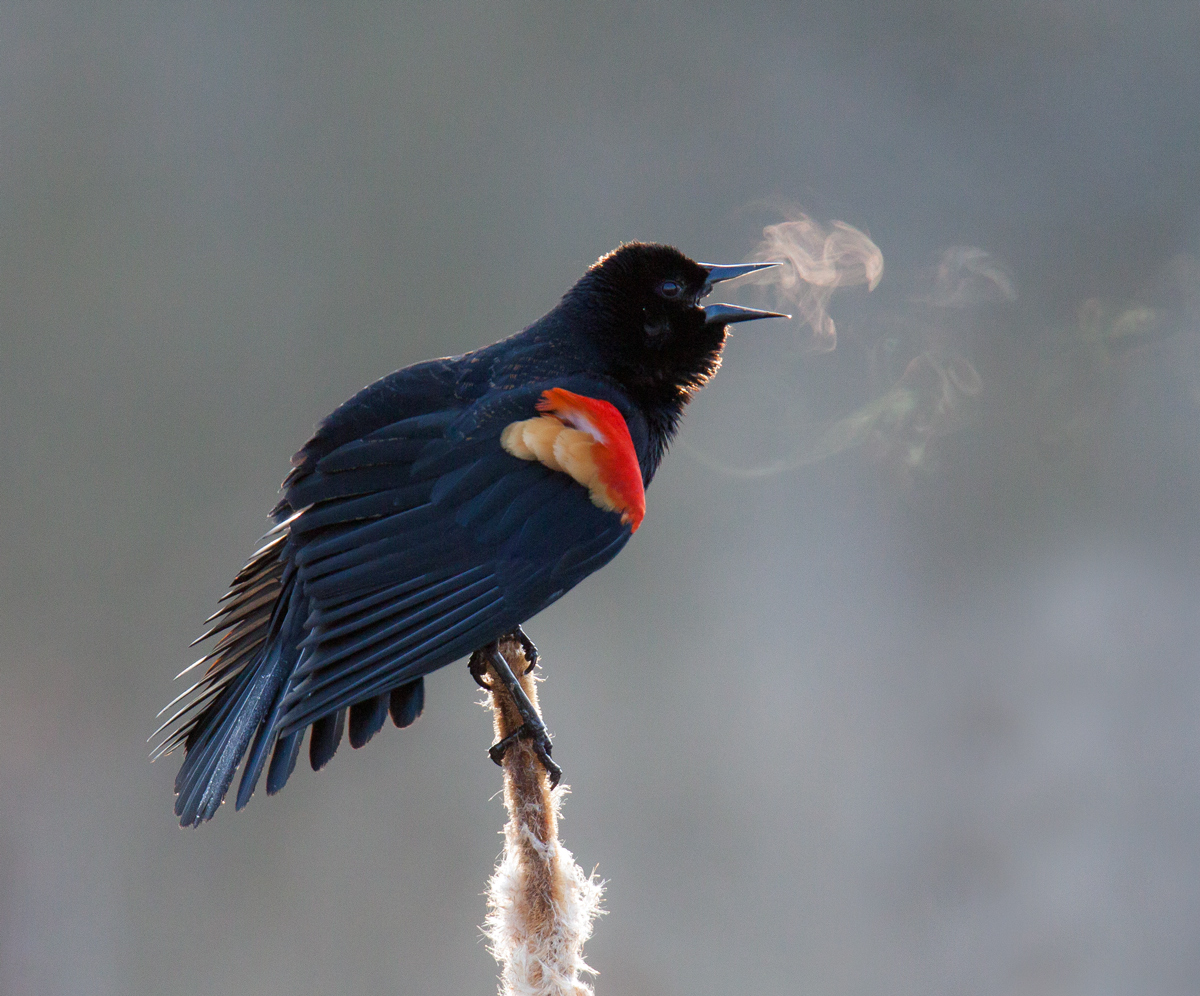
It was so cold yesterday morning at Huntley Meadows Park that the breath of a Red-winged Blackbird (Agelaius phoeniceus) was visible as he sang out from atop a cattail.

Spring is definitely in the air and potentially record high temperatures are forecast for later in the week. However, it was right about at the freezing level when I arrived at the local marshland park where I spent so much of my free time wandering with my camera in hand.

I’ve photographed Red-winged Blackbirds lots of times, but I rarely pass up an opportunity to shoot them again—I just never know when I may capture an unusual moment. The sun had risen and light was starting to reach the cattails. I turned toward the light when I heard a blackbird call out.

As I zoomed in on the bird, I was amazed to see that the blackbird’s breath was visible as he forcibly exhaled when singing. In the still morning air the visible breath swirled about and the bird looked like a smoker getting his early morning nicotine fix.

I was fascinated by the differing patterns of the condensation as the blackbird moved his head or body position and was thrilled to be able to capture several different views of the blackbird’s visible song.

As I went to bed last night, I noticed that the counter for my blog was right at a hundred thousand views. Thanks to so many of you for helping me to reach this milestone and for encouraging me and supporting me as I journey on into photography.

Red-winged Blackbird

Red-winged Blackbird

Red-winged Blackbird

© Michael Q. Powell. All rights reserved.


Read Full Post »

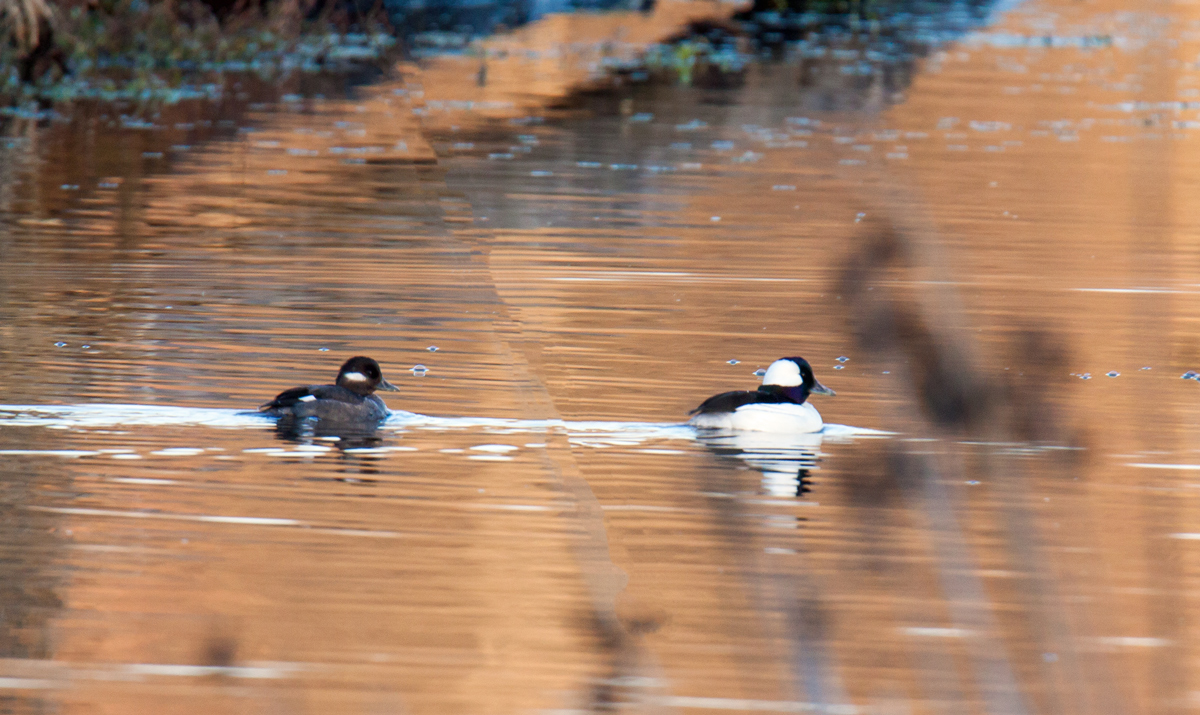
Do dabbling ducks double date? It sure looked like that was the case earlier this week when I spotted a Mallard (Anas platyrhynchos) couple and a Hooded Merganser (Lophodytes cucullatus) couple swimming away from a larger group of mostly mallards for a few quiet moments together. I grew up in a family with eight siblings, so I can really understand their pursuit of peace and privacy. 

It’s almost springtime and many of the birds are searching for mates. Usually it’s the males that put on elaborate displayes, but I think the female “Hoodie” here was the one that went all out to impress her date with an elaborate hairstyle.

duck dating

© Michael Q. Powell. All rights reserved.

Read Full Post »

I know that there are deer at Huntley Meadows Park, the suburban marshland park where I take many of my photos, but I rarely see any of them. Perhaps they too see the posted signs warning of archery hunting to keep the population in control.

Saturday morning, however, I spotted three White-tailed deer (Odocoileus virginianus) in an open area in front of a stand of cattails.  The deer grazed for a little while before fading silently back into the forest and I managed to get a few shots of them.

It’s a nice change of pace to get some shots of mammals at a time of the year when so many of my postings are devoted to insects.

White-tailed deer

Michael Q. Powell. All rights reserved.

Read Full Post »

Yesterday, the last full day of spring, I spotted a Halloween Pennant (Celithemis eponina), one of my favorite dragonflies, at Huntley Meadows Park, a place where I had previously never seen one. It was an auspicious end to spring, even if it seems a bit strange to speak of spring and Halloween in the same posting.

As you can see, these dragonflies like to perch on the very top of the vegetation in the fields. That’s an advantage in isolating the subject, but the slightest breeze causes them to wave back and forth like a pennant.

I snapped away when I spotted the Halloween Pennants and have not yet gone through all of my images, but I am so excited that I can’t help but share a couple with you now. There may be a few more to come later.

Halloween Pennant

Halloween Pennant

Michael Q. Powell. All rights reserved.

Read Full Post »

If I had wings as fragile as those of this male Spangled Skimmer dragonfly (Libellula cyanea), I am not sure that I would choose to perch on a branch with so many thorns. I can personally attest to the fact that those thorns are sharp, very sharp.

Although I see quite a few blue dragonflies, Spangled Skimmers are pretty easy to identify—they are the only local dragonflies with both black and white stigmas on their wings. I love it when the differences among species are that obvious.

On the day I took this shot, the field seemed to be full of Spangled Skimmers and Great Spangled Fritillary butterflies. If I had only seen an American flag, i.e. the Star Spangled Banner, I would have exhausted the short list of items that I associate with the word “spangled.”

Spangled Skimmer

Michael Q. Powell. All rights reserved.

Read Full Post »

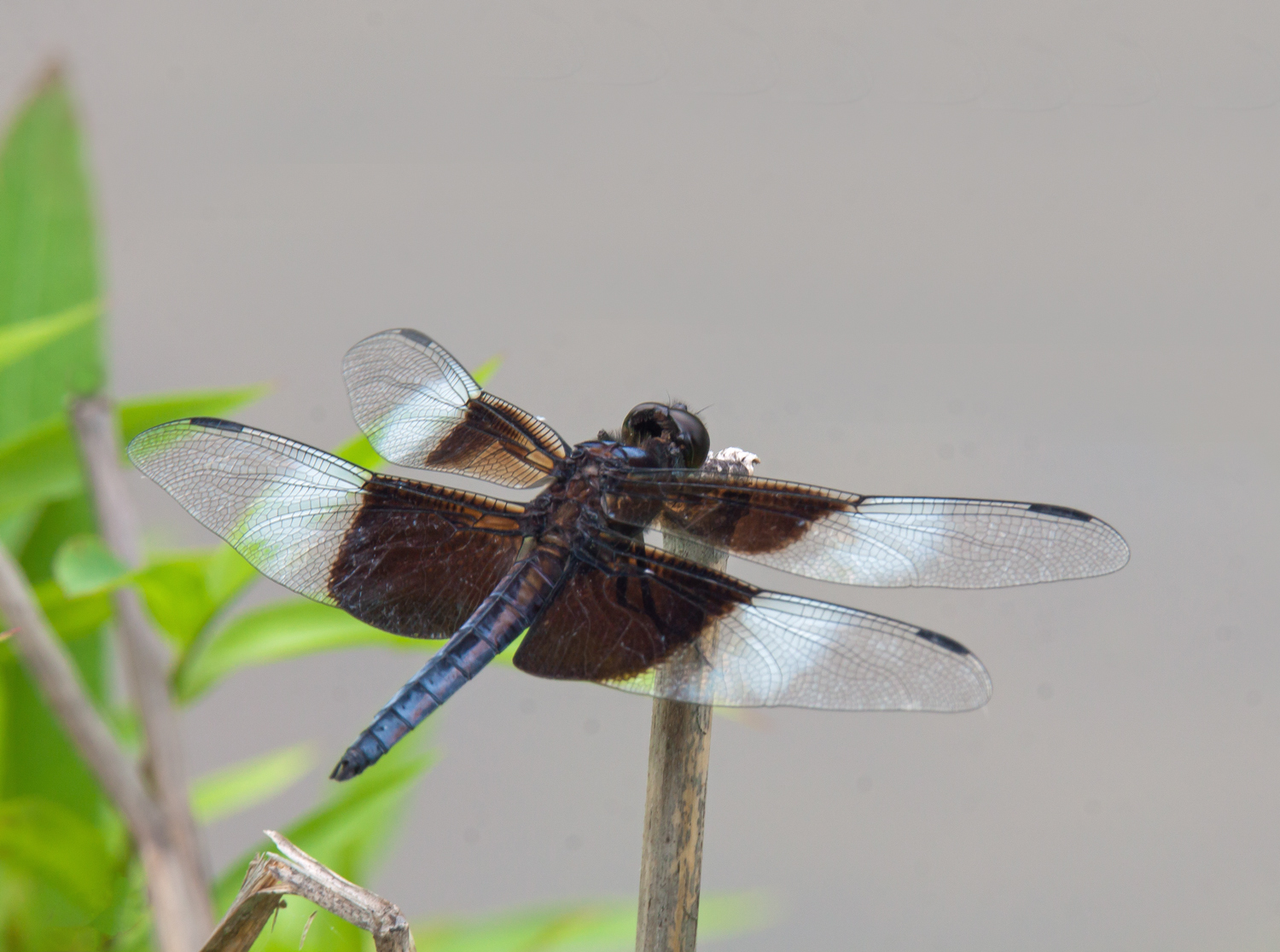
Flying slowly and weakly with its patterned wings, a male Widow Skimmer dragonfly (Libellula luctuosa) looks amazingly like a butterfly as it flutters by. Fortunately this one stopped to perch on some vegetation at the edge of a small stream and I was able to get this shot.

Widow Skimmer

This was the second time that I have seen a male Widow Skimmer this spring. It’s easy to tell that this is a male, because the females do not have the white spots on their wings. When I saw one last month, though, it was a little tougher to make the call. Immature male Widow Skimmers look a lot like females, as is the case with many dragonfly species. The colors of “fresh” dragonflies tends to be pale and wing patterns may not have developed fully yet. The photo below provides a pretty clear view of the “claspers” at the tip of the abdomen, which indicates that this is a male. Eventually he will grow up and begin to look more like the mature Widow Skimmer in the first photo.

Widow Skimmer

Michael Q. Powell. All rights reserved.


Read Full Post »

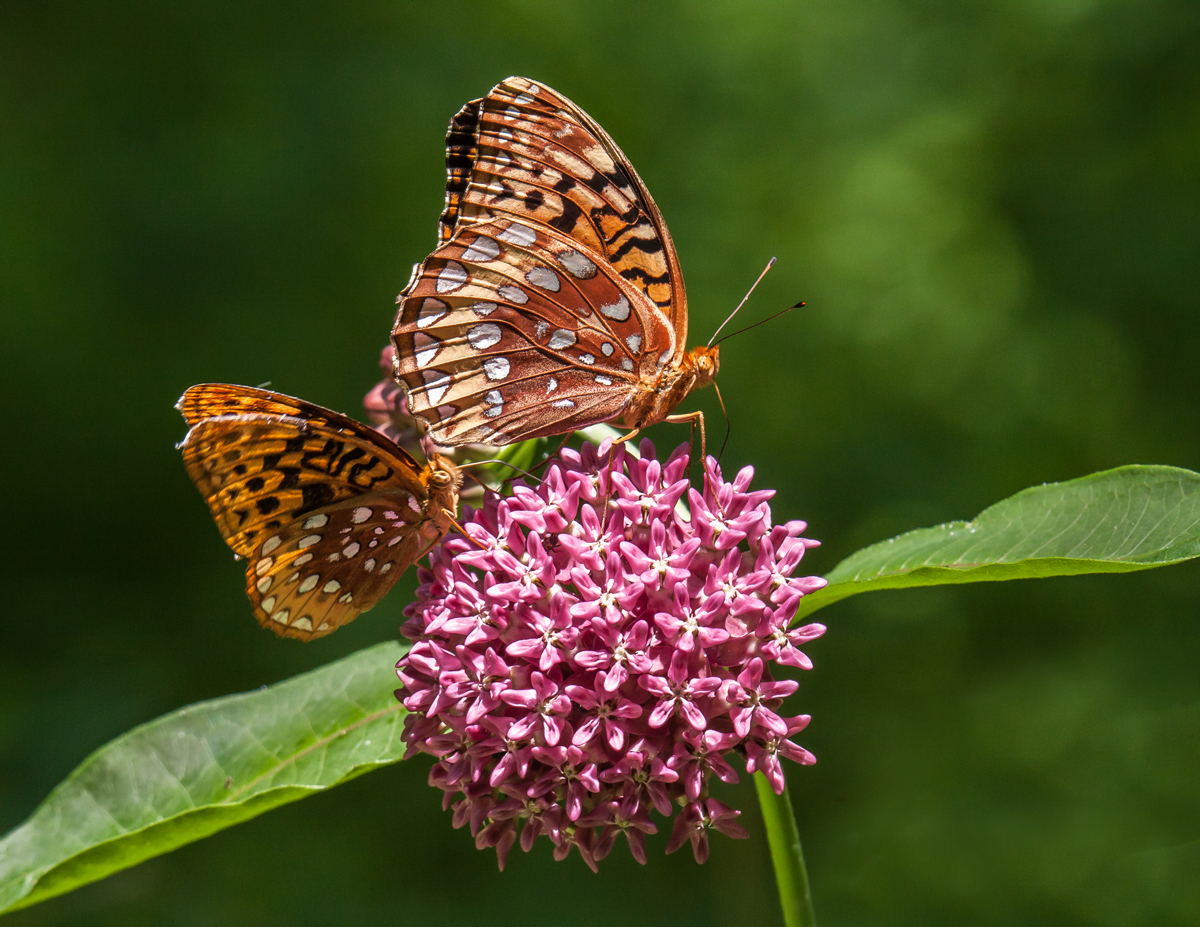
Swamp Milkweed (Asclepias incarnata) is now in bloom at my local marshland park and the Great Spangled Fritillary butterflies (Speyeria cybele) are loving it.

Great Spangled Fritillary

Michael Q. Powell. All rights reserved.

Read Full Post »

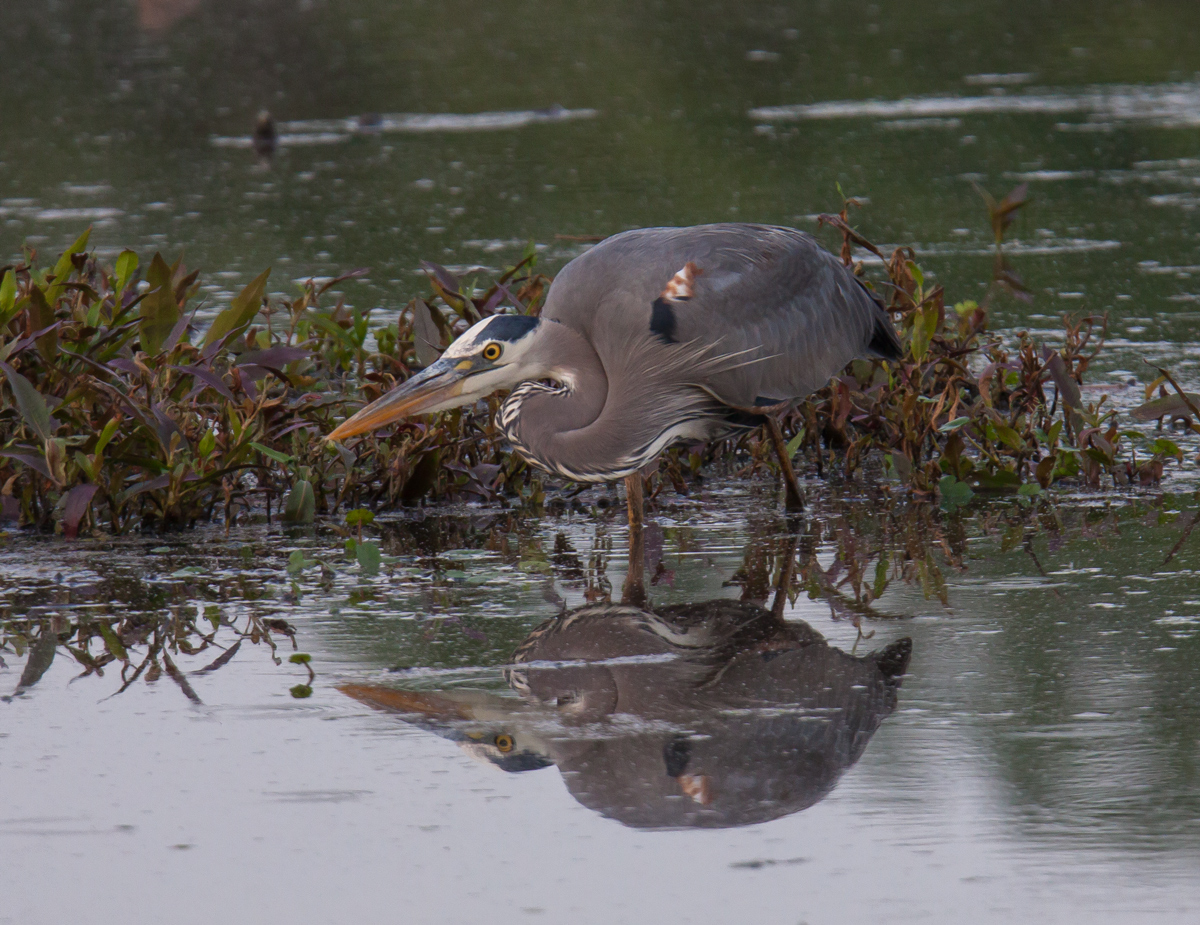
Shortly after dawn one morning last week, I encountered a Great Blue Heron (Ardea herodias) that seemed to be pensively contemplating the new day. He glanced in my direction as I took a few shots, but remained in place as I continued on my way, both of us lost in our thoughts.

Great Blue Heron

Michael Q. Powell. All rights reserved.

Read Full Post »

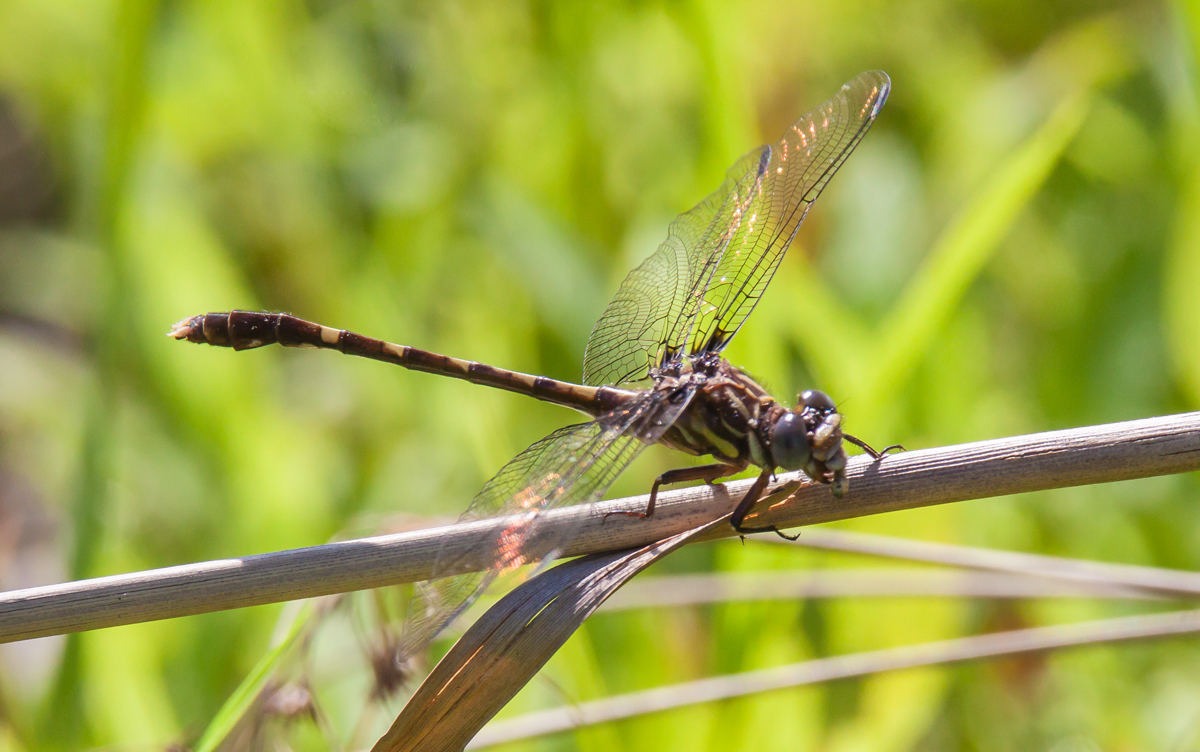
Where can I find a Common Sanddragon dragonfly? As its name suggests, this species is most often found  on the sandy banks of a stream and that is precisely where I found one earlier this week at my local marshland park.

Common Sanddragon

Almost exactly a year ago I stumbled onto a Common Sanddragon (Progomphus obscurus) as I wandered through a remote area of the park, so I had a pretty good idea where to look for one this year. That find was especially cool, because it was the first time that the species had been spotted in the park and it has since been added to the species list for Huntley Meadows Park.

However, this was not the first Sanddragon that I spotted this spring. A week earlier, I spotted one in the marsh vegetation, about halfway between the treeline and a little stream. It was definitely unusual to see this dragonfly away from the sand and perching above the ground.

Common Sanddragon

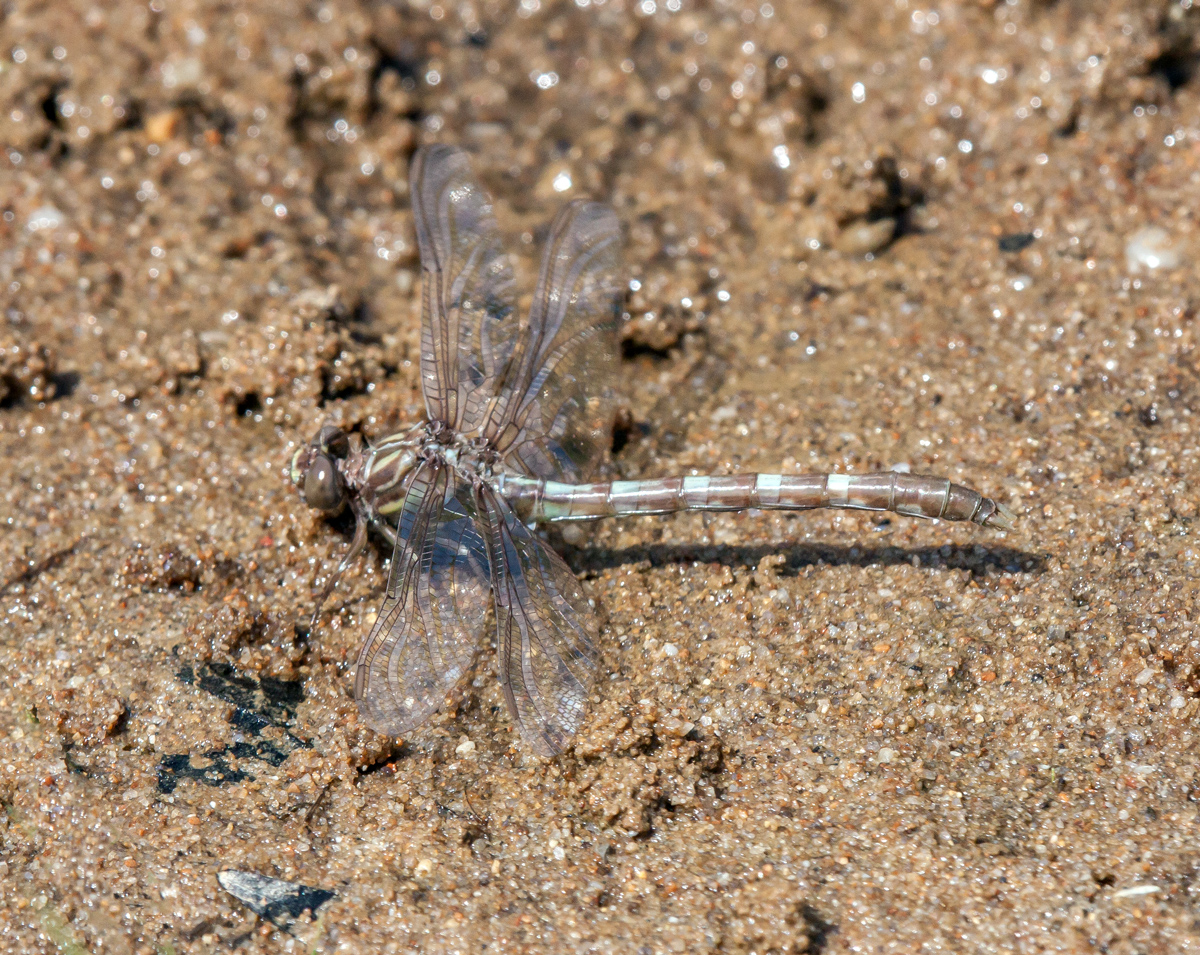
That find was unusual, but it was perhaps not as unusual as the teneral male Common Sanddragon that I saw the same day as the dragonfly in the first image. When dragonflies shed their exoskeletons and are transformed from aquatic nymphs to acrobatic flyers, they are initially pale in color and their wings are very fragile and shiny. The coloration on this one was so much different from that of a mature adult, that I had to consult with a more experienced friend to reassure myself that this in fact was a Common Sanddragon.

Common Sanddragon

I went out yesterday morning to search again for Common Sanddragons and was disappointed to see that all of the sandy banks were under water following several days of rain. Perhaps I will have better luck today.

Michael Q. Powell. All rights reserved.

Read Full Post »

I don’t see rabbits very often at Huntley Meadows Park, so I was thrilled to see this Eastern Cottontail (Sylvilagus floridanus) on Monday in one of the meadows in a remote area of the park. I suspect that the rabbits are more active at dawn and dusk, when I am not there, though one of my friends offered a more straightforward explanation—the raptors are efficient hunters.

Eastern Cottontail rabbit

Rabbits have become a part of my daily life since I recently adopted a friend’s rabbit. She moved into an apartment in the city and could not bring PR (Prime Rib) with her, so he now lives with me. I don’t know the full story of his name, but do recall that her former rabbit was called Porkchop.

PR spends most of his time in his cage, but for an hour or so each evening I let him run around the living room. Sometimes he runs and jumps at such high speeds that I wonder if there is caffeine in his food. I took this shot of him relaxing after one of his evening exercise sessions. I think the photo makes for an interesting comparison with the rabbit in the wild (and I also think he’s cute, though I may be biased).

PR

Michael Q. Powell. All rights reserved.
Read Full Post »

Green Herons seem so intense most the time when I seem them, standing motionless in one spot, ready for a strike.  What do they for relaxation or for fun?

Early this Monday, I caught a Green Heron (Butorides virescens) in some unguarded moments and learned some of its secrets. Who knew that Green Herons like to dance and to sing? They also appear to meditate, centering themselves as they start their days.

It’s not easy being green.

Green Heron

Practicing for a part in Riverdance

Green Heron

Anyone want to join me for show tunes?

Green Heron

Early morning reverie

© Michael Q. Powell. All rights reserved.

Read Full Post »

Do you believe in unicorns? I spent part of yesterday chasing a flying unicorn, although in this case it was the Unicorn Clubtail dragonfly (Arigomphus villosipes), not the one that looks like a horse.

Unicorn Clubtail

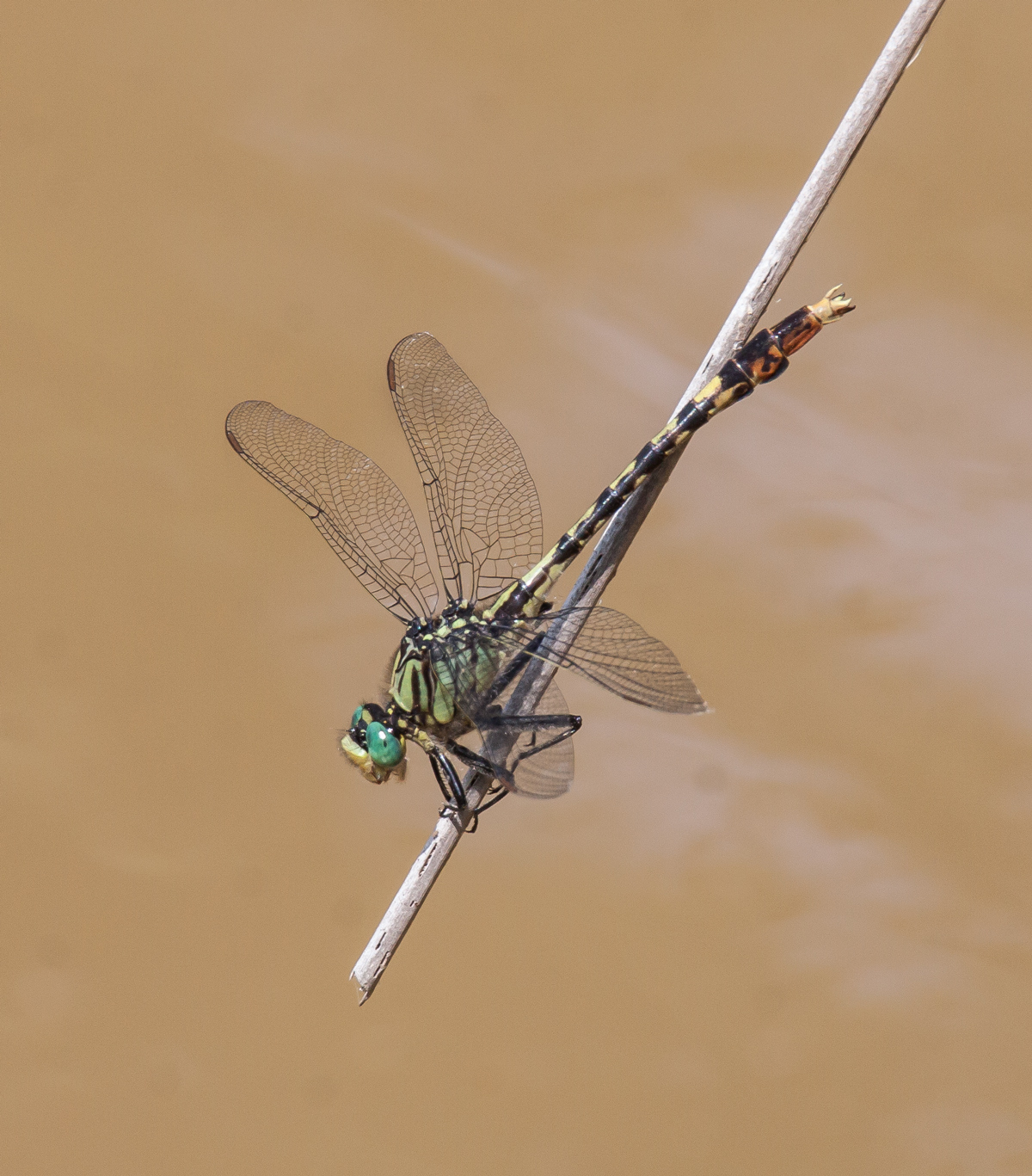
The Unicorn Clubtail is not a mythical creature, but I rarely see one—I am lucky if I manage to see a couple during an entire season of dragonfly watching. The u-shaped terminal appendage in the male Unicorn Clubtail is pretty distinctive and as soon as I saw this image on my computer screen, I knew that I had captured a unicorn.

When I first spotted this dragonfly, it was perched on a sandy area of the bank of a small stream. I mistakenly assumed that it was a Common Sanddragon, a somewhat similar species which is also part of the clubtail family (the members of this family have slim abdomens that end in an enlarged tip, i.e. the “clubtail”). When the dragonfly flew up into some vegetation that hung over the pond, I snapped off some photos as quickly as I could, because it is rare to get shots of these dragonflies with an unobstructed background.

One of my friends, Walter Sanford, a fellow photographer and blogger suggested to me earlier this spring that I use my Tamron 150-600mm lens, one that I use primarily for birds, to photograph dragonflies. I protested a bit, suggesting that I would not be able to capture the fine details of the dragonflies with the lens, which is reported to be a little soft at the long end.

There are some challenges, including the minimum focusing distance of 107.3 inches (2.7 m), which means I have to be a pretty good distance from my subject. However, shots like this one make me realize his advice was good—the extra reach helps me get shots that I might not be able to get otherwise, especially if I tried to move closer to take a shot with a shorter telephoto lens and risked spooking the dragonfly.

© Michael Q. Powell. All rights reserved.


Read Full Post »

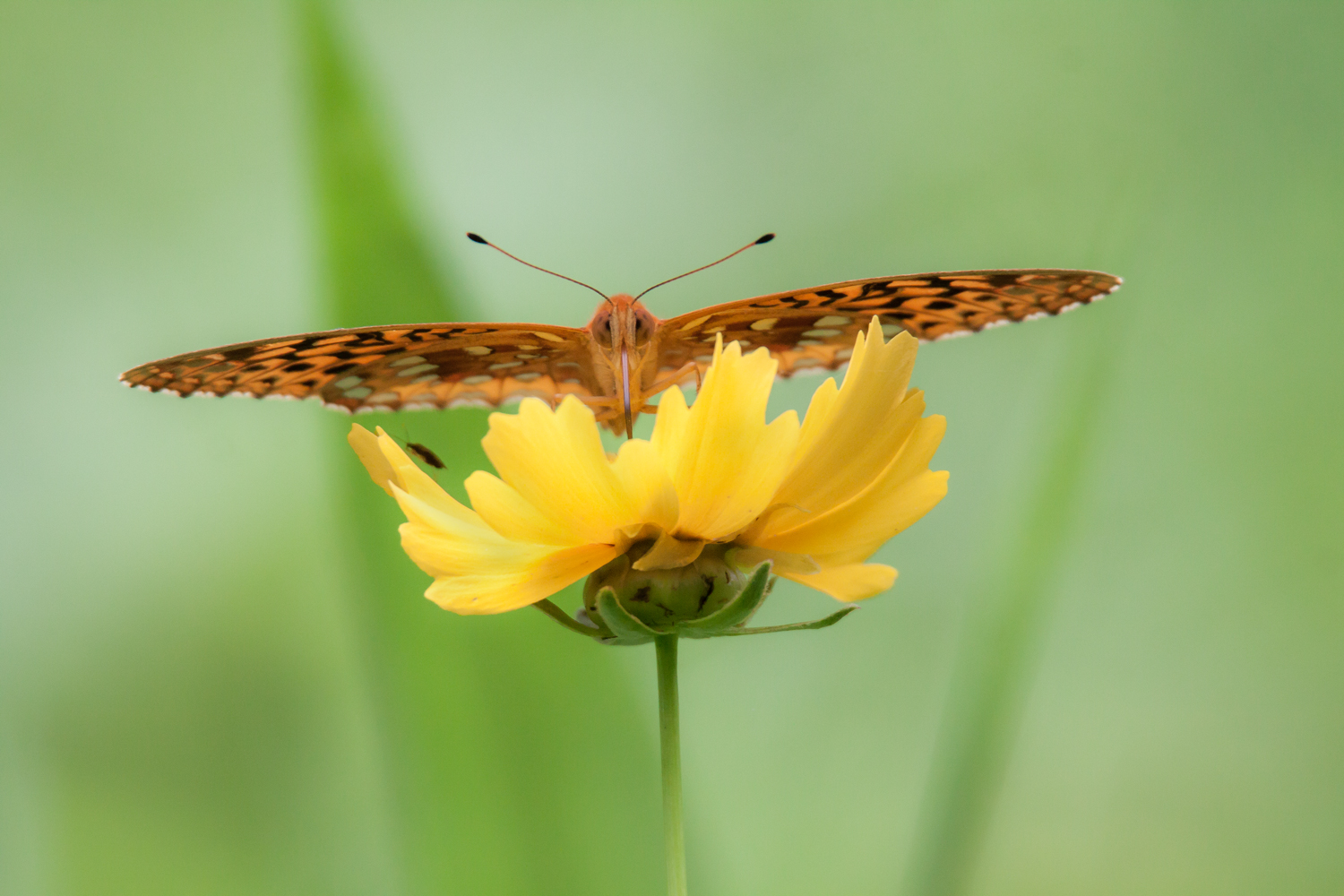
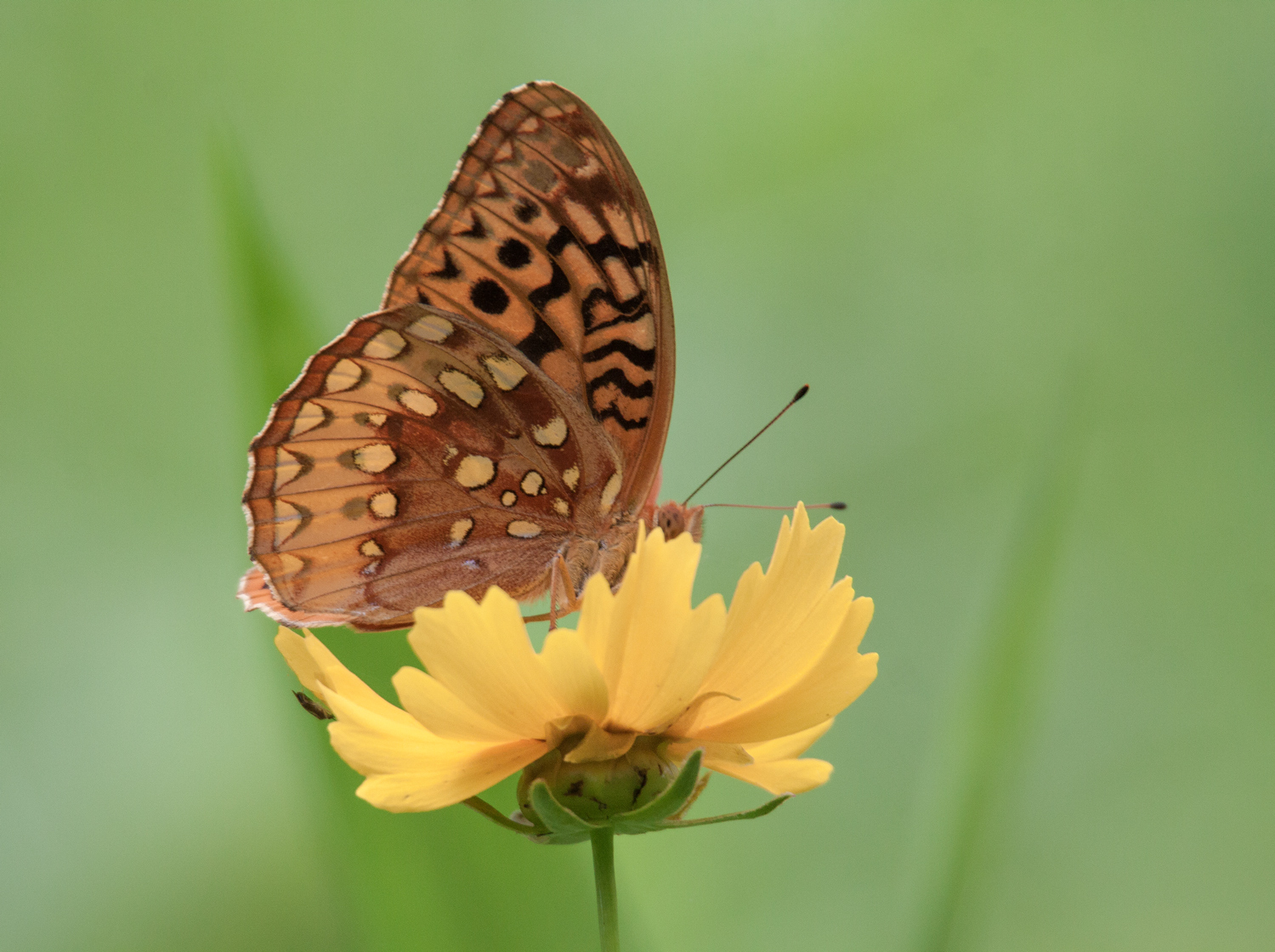
Eye to eye with a butterfly—it’s fun trying to capture subjects from different angles, in this case a Great Spangled Fritillary butterfly (Speyeria cybele) at Huntley Meadows Park in Alexandria, Virginia.

Great Spangled Fritillary

Great Spangled Fritillary

© Michael Q. Powell. All rights reserved.

Read Full Post »

At this time of the year many birds seem to hide behind the leaves of the trees, but this Barn Swallow (Hirundo rustica) was cooperative early one recent morning and perched at several spots out in the open. Click on any of the images to see them all in slide show mode.


© Michael Q. Powell. All rights reserved.


Read Full Post »

Dragonflies sometimes look like aliens to me, with their giant eyes and other worldly flying skills. My initial impression of this photo was that it looked like an alien landscape from a science fiction movie—the terrain perfectly matched the subject.

Common Whitetail

So what’s the reality? It’s a female Common Whitetail dragonfly (Plathemis lydia) in the process of depositing eggs in the shallow water at the edge of a pond. She is hovering over the water and then will drop down and dip the tip of her abdomen in the water, causing the concentric ripples you see in the image. A short while later, she repeats the process. What you don’t see in the photo is her mate, who is hovering nearby, keeping watch over her as she ensures the continuity of his genetic line.

There will be more aliens.

© Michael Q. Powell. All rights reserved.

Read Full Post »

Ebony Jewelwings (Calopteryx maculata) are one of the most distinctive and easily recognizable damselflies because of their dark wings and metallic bluish-green bodies. So why is the female damselfly in the first shot so pale and colorless?

Ebony Jewelwing damselfly

When damselflies (and dragonflies) shed their exoskeletons and move  from being water-dwelling nymphs to acrobatic flyers, they are initially pale in color, a stage known as “teneral.” In a short time, the wings harden and gradually the newly emerged damselflies, like this one, become more colorful and look more like the one in the second image.

Ebony Jewelwing

As I was photographing this damselfly, it took off and I captured a somewhat blurry image of it in the air that I really like—it reminds me of a water color painting.

Ebony Jewelwing

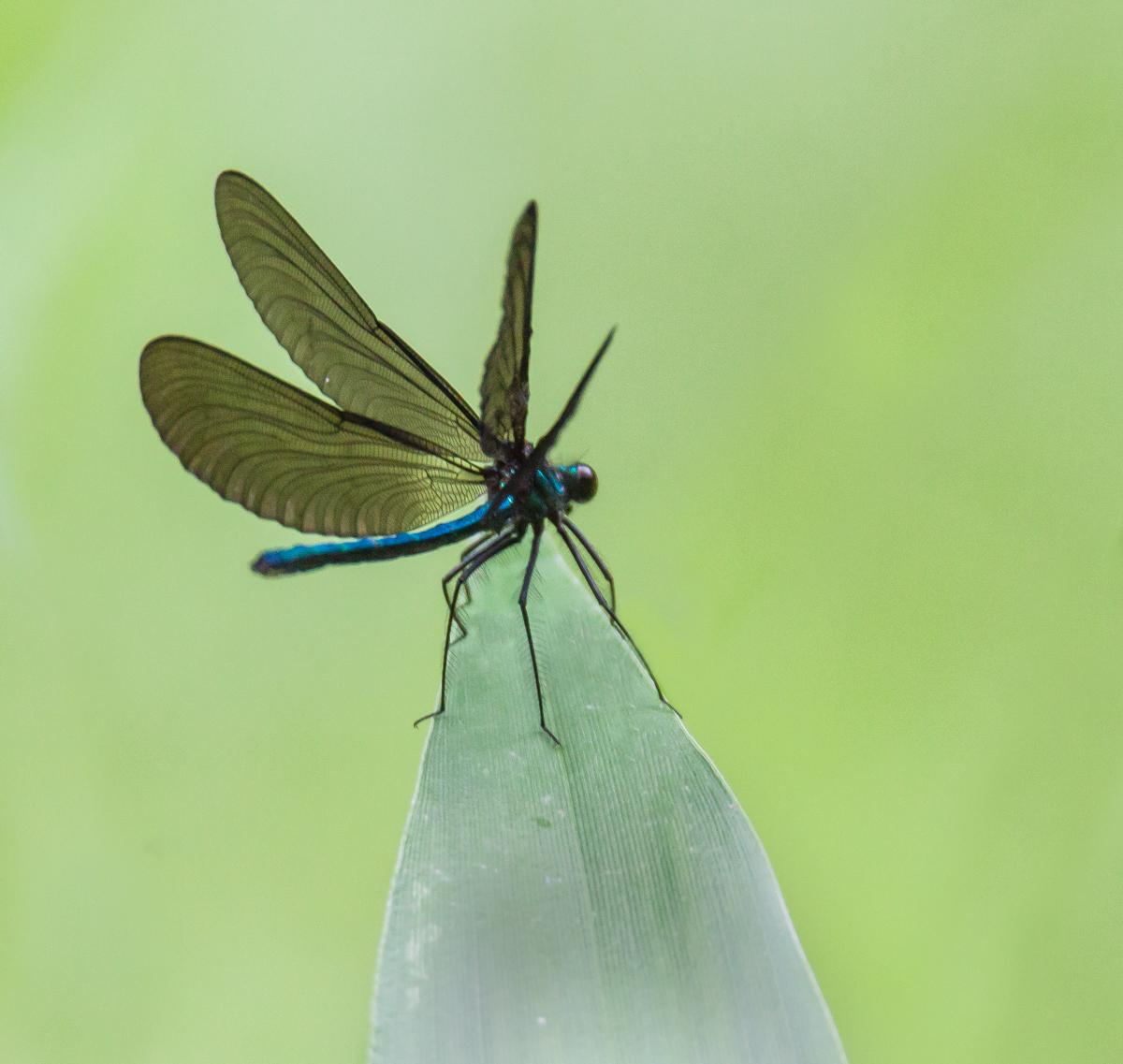
I must be in an “artsy” mood this morning, because one of the other images that I really like of the Ebony Jewelwing is this final one, in which the damselfly was perched at the end of a leaf with wings spread wide, displaying the intricate details of those delicate wings.

Ebony Jewelwing

© Michael Q. Powell. All rights reserved.


Read Full Post »

Earlier this week I caught a glimpse of my favorite moth, the spectacular Hummingbird Clearwing moth (Hemaris thysbe). Normally these little beauties hover at high speeds as they collect nectar, but this one kept perching on leafy plants, permitting me to capture its wings at rest. I wonder if the moth was laying eggs.

I am always fascinated by the names of species and found this interesting bit of information about this moth’s Latin name on the bugguide.net website. “Pyramus and Thisbe were lovers who died tragically. Pyramus found Thisbe’s blood-stained scarf, assumed she had been killed, and committed suicide with his sword. It seems likely the reference to the story of Thisbe is a reference to the rusty, somewhat blood-like coloration of this moth.”

Hummingbird Clearwing

© Michael Q. Powell. All rights reserved.


Read Full Post »

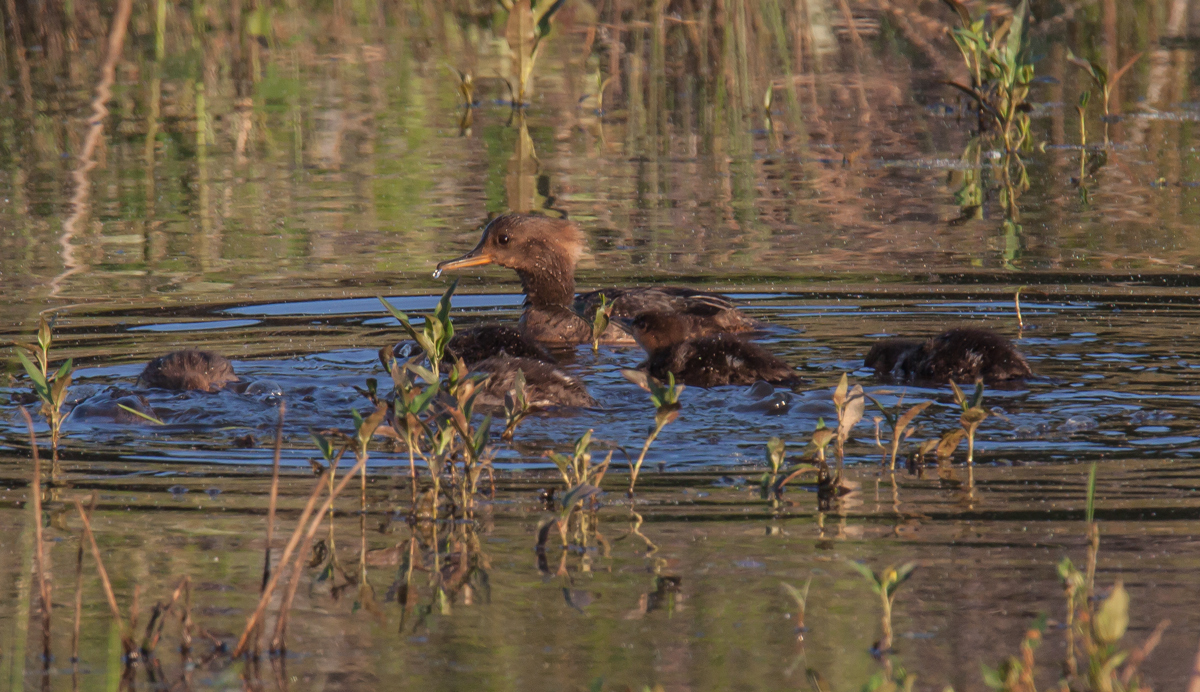
Shortly after sunrise at Huntley Meadows Park on Tuesday, a mother Hooded Merganser duck (Lophodytes cucullatus) checked on her seven babies and got them ready to start the day. I don’t know if the little family spent the night on the log, but it was probably a good idea to get moving before the numerous snapping turtles woke up. Most of the babies seem to be paying attention to the Mama in the first shot, though the one on the end seems to be daydreaming or is distracted.

Hooded Merganser

A short while later the family dropped into the water and started to swim away. This second shot is my favorite one from an artistic perspective. I just love the interplay of the light and the shadows.

Hooded Merganser

As the Merganser family continued to swim, it got tougher and tougher to track them amid all of the vegetation growing in the pond. Only occasionally would I get an unobstructed glimpse of them. I managed to get most of the family in this shot. One of the ducklings was a bit ahead of the group, perhaps the adventurous one on the end of the log in the first shot.

Hooded Merganser

When they reached a spot that Mama Merganser considered to be safe, all of the babies began to stick their heads under the water. I don’t know if they were bathing or playing or if this was a lesson in fishing. Whatever the case, the mother duck remained vigilant.

Hooded Merganser

It’s at moments like this that I regret that the father Merganser does not stay around to help in raising the ducklings. It would sure ease the burden on the Mama and would enhance the chances for survival for the cute little babies.

© Michael Q. Powell. All rights reserved.


Read Full Post »

This osprey’s glare in my direction suggests that he is NOT willing to share the fish that he worked so hard to catch. (I already posted a shot of this osprey munching on the fish, but additional photos showing its facial expressions seemed too good not to share as well.)

Osprey

Sometimes, especially when I am in a hurry, I will quickly look through my recent photos, choose a single one I really like, and write a short post. That’s exactly what I did with the initial Freshly Caught Fish posting a few days ago. I knew that I had gotten some good shots of the Osprey (Pandion haliaetus), who was so cooperative that I was able to set up my tripod, but I knew it was going to take a fair amount of time to look through the photos. It was nice to be able to use the tripod, but I learned how tough it is to shoot almost straight up with a long telephoto zoom—I was crouching and on my knees as I sought to look through the viewfinder.

I now have sorted through my photos from that morning and selected a few more that show the osprey as he was eating and as he was sending me unambiguous messages.

OspreyOspreyosprey

© Michael Q. Powell. All rights reserved.
 

Read Full Post »

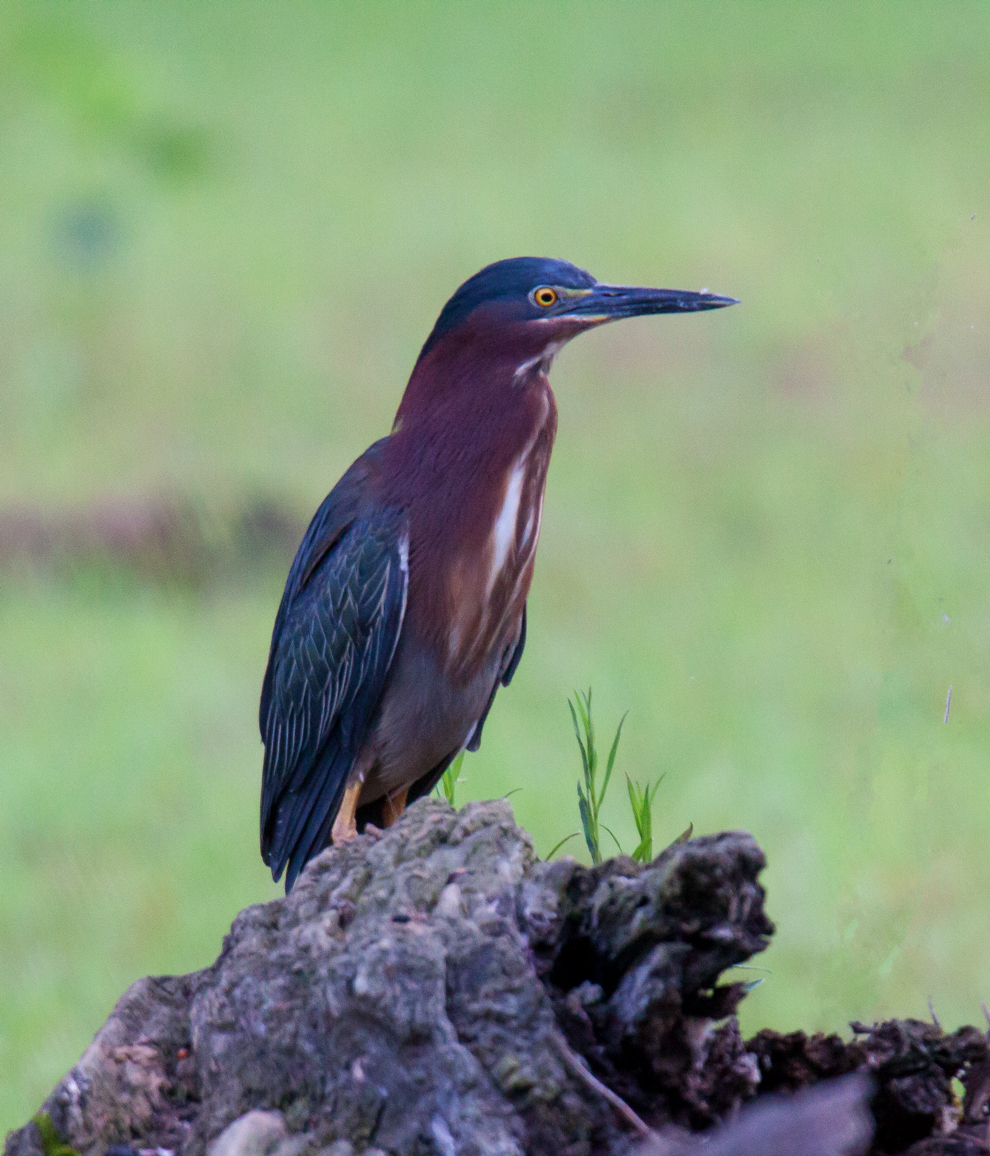
The sun was barely up, but this little Green Heron (Butorides virescens) was already busy, trying to find something to eat for breakfast. Alas, I didn’t see the heron catch anything this time before it moved out of sight. (If you want to see a fun shot of a Green Heron looking directly at a frog that it had just captured, check out my post from July 2012 entitled Not Seeing Eye to Eye.)

Green Herons are a lot smaller than the Great Blue Herons that I see fairly often  and quite a bit more elusive. This heron seemed to be just waking up and wandered about a little on the muddy edge of a former beaver pond before entering the water. That is how I was able to get the second shot that shows the heron’s legs.

I was probably at the limits of my ability to take photos in limited light. I was shooting at ISO 1600, about as high as I dared go with my somewhat dated Canon 50D. As is usually the case, I was using aperture-preferred mode with a selected setting of f/8. What I didn’t realize until afterwards was how slow the shutter speed was—as low as 1/20 sec for these shots, quite a bit slower than optimal for a focal length of 500mm on my 150-600mm lens. Focusing in the limited light was a little slow, but seemed to be pretty accurate. Usually I don’t dwell quite so much on the technical aspects of my shots, but I know that some folks have questions about the capabilities of the Tamron 150-600mm lens in low light and wanted to share my experiences (which are mostly positive).

Green Heron

Green Heron

© Michael Q. Powell. All rights reserved.

Read Full Post »

There is nothing quite like the taste of a freshly caught fish and this Osprey (Pandion haliaetus) seemed to be devouring its breakfast with gusto early on Saturday morning at Huntley Meadows Park in Alexandria, Virginia.

Osprey

© Michael Q. Powell. All rights reserved.
Read Full Post »

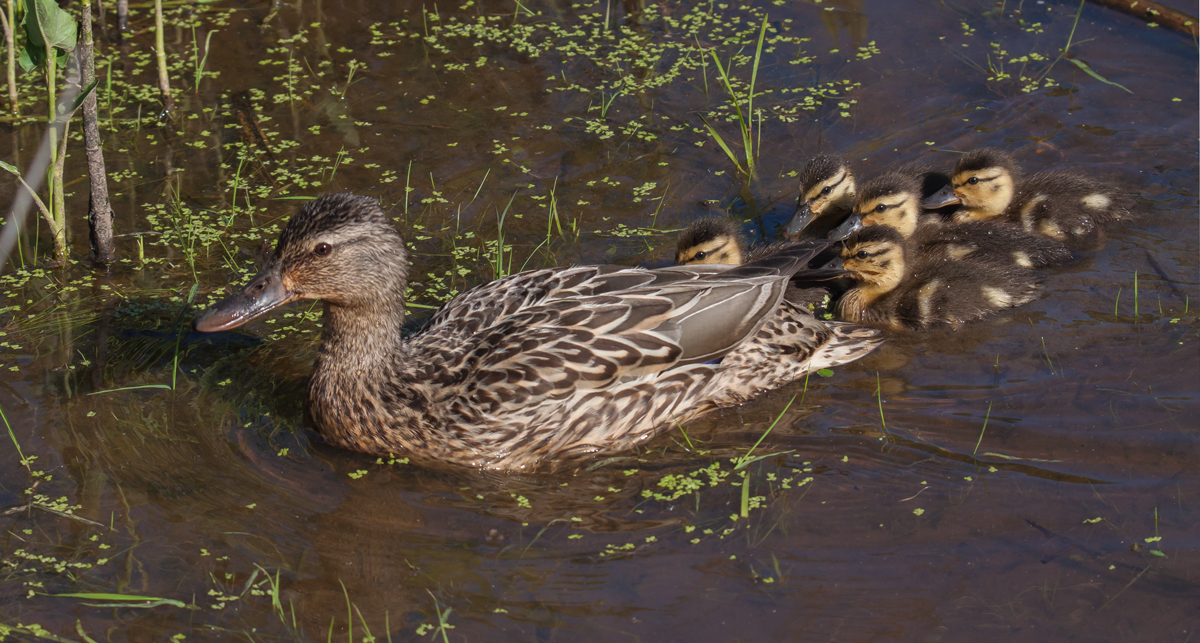
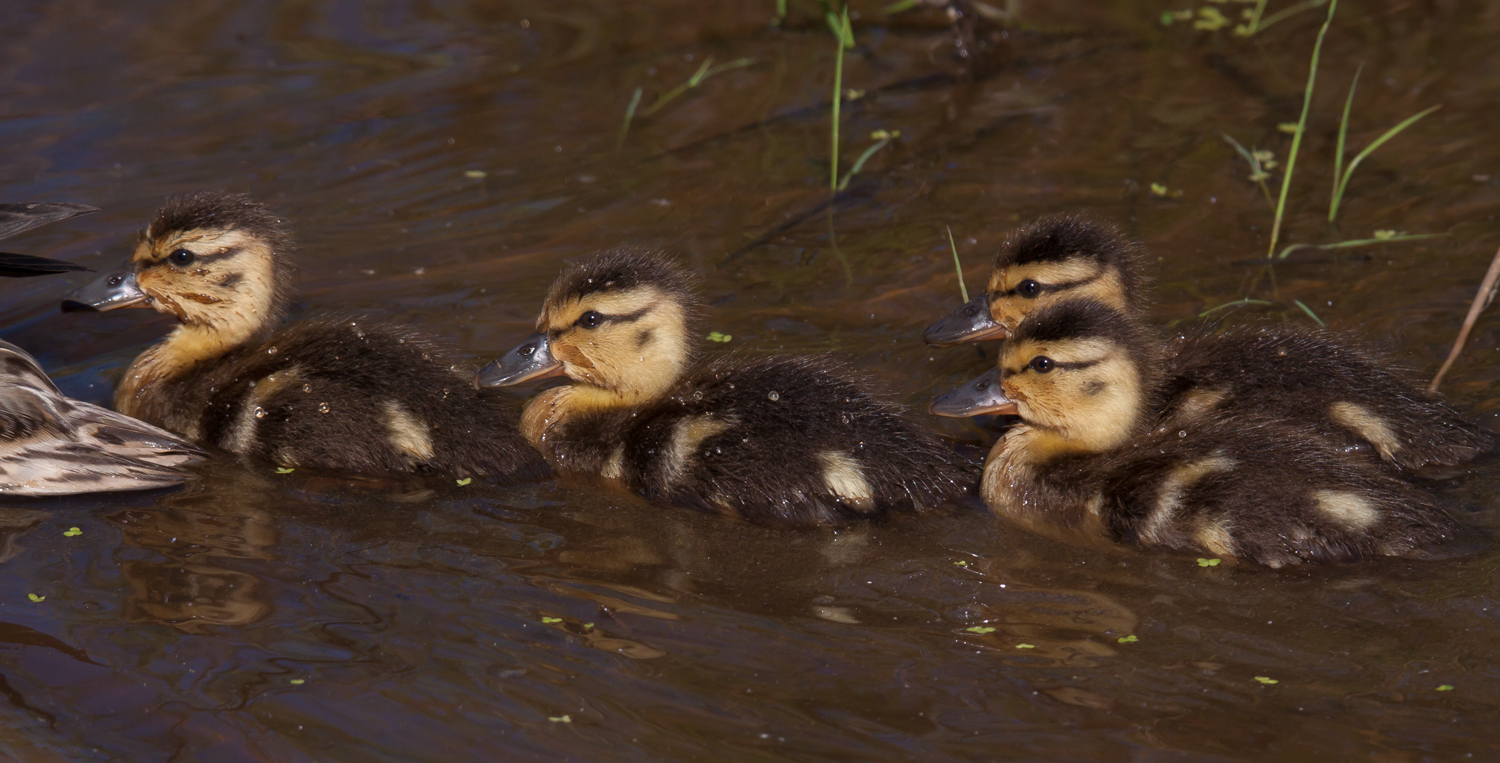
Make way for ducklings! Yesterday I finally saw my first Mallard baby ducks of the season at Huntley Meadows Park. I have spotted Canada Geese goslings multiple times this month and they are already growing quite large.

Mallard ducklings

The ducklings look so small and fragile and the Mallard Mom (Anas platyrhynchos) seemed to be doing her best to keep them tightly bunched together as they made their way slowly through the shallow waters of the marsh. When they paused for a moment, though, some of the ducklings wanted to explore their surroundings. When I zoomed in for a close-up shot of the babies, one of them wandered out of the frame, leaving only four to be featured.

This Mom is going to be really busy raising and protecting these little ones.

Mallard ducklings

© Michael Q. Powell. All rights reserved.


Read Full Post »

Unlike some other species of birds, Hooded Merganser ducks (Lophodytes cucullatus) don’t seems to sit on their eggs continuously. They will often lay them in nesting boxes and periodically check on them, perhaps adding more eggs to the nest.

Hooded Merganser

I took this first shot earlier today at Huntley Meadows Park as a female Hooded Merganser was getting ready to eventually enter a nesting box. When I first spotted the female duck, she was standing on top of the nesting box. During previous springs I learned that this was a sign that she had eggs in the nesting box and that eventually she would fly into it. So I waited and waited, hoping to catch the moment.

It may look like she is actually preparing to enter the box, but in fact she had just stepped off of the roof and was gliding to the ground. Unfortunately, she dropped behind a virtual wall of vegetation and I could not see her when she lifted off from the ground and flew straight into the box and I missed that shot.

Here are a few shots of the female Hooded Merganser as she paced back and forth on the roof of the nesting box, peering to the right and to the left to makes sure that all was safe before she entered the box.

Hooded Merganser

Hooded Merganser

Hooded Merganser

As I was doing some research on Hooded Merganser ducks, I came across a blog from Lee Rentz Photography that includes a video from inside a nesting box of a Hooded Merganser. Be sure to check it out.

© Michael Q. Powell. All rights reserved.


Read Full Post »

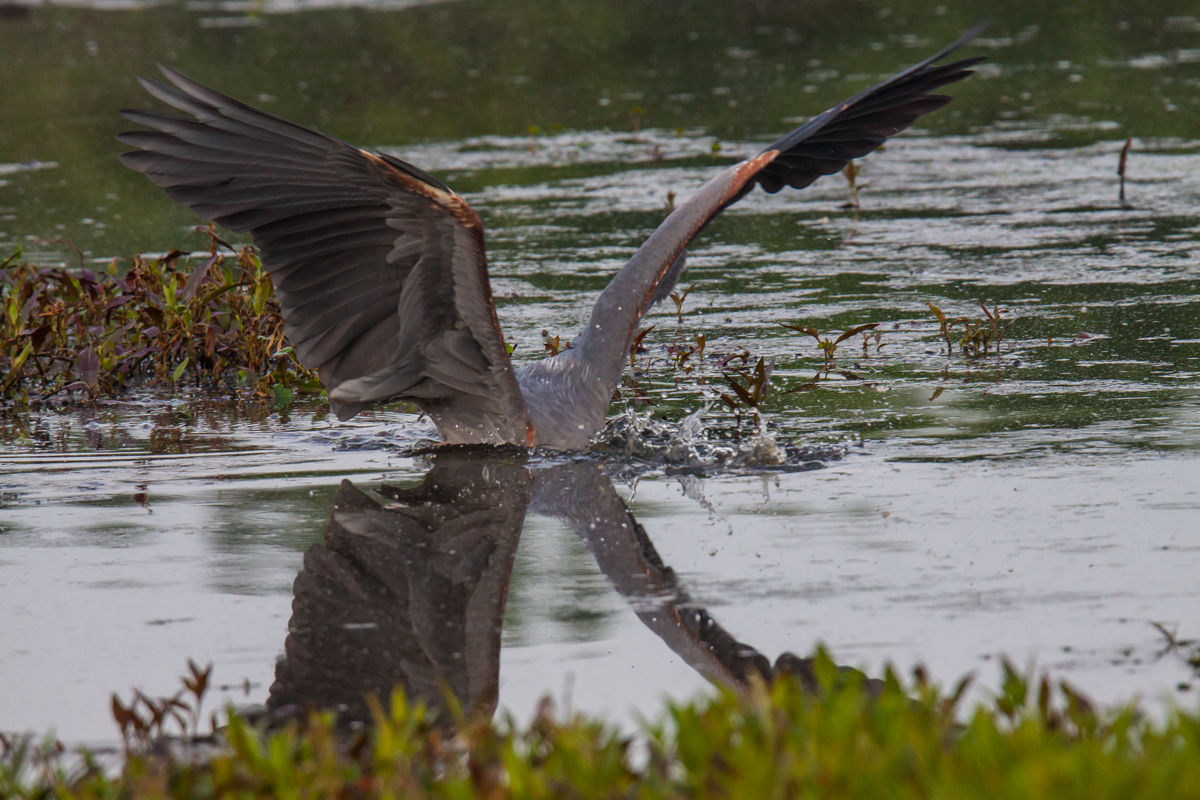
I am thrilled that I was able to get a shot of a Great Blue Heron triumphantly holding a freshly caught fish and I followed my initial instinct to post that photo. However, I also managed to capture a sequence of shots of the action that led to that culminating moment that I really like that I thought would be fun to share.

In this first shot, the heron has just made the strike and has plunged its head deep into the water. I am not sure why the heron extended its impressive wings like this, but suspect it was either to generate greater force or to maintain stability.

Great Blue Heron

When I first spotted the Great Blue Heron (Ardea herodias), it was obviously focused on finding a fish. When it bent over like this, I suspected that the heron had already spotted one and was tracking it.

Great Blue Heron

Suddenly the heron turned to the side and made the strike that I showed in the first shot. Some of the herons that I have observed in the past have been amazing in their ability to catch fish, but I have seen others, especially the young ones, that would strike repeatedly at branches and floating leaves. As a result, I knew that success was not guarantee and I waited to see how the heron had done. In this next shot, the heron’s head is just starting to reemerge from the water. At that moment it certainly knew if it had a fish in its grasp, but I still was in the dark.

Great Blue Heron

At last the heron lifted its head a bit more and I could see that indeed it had caught a fish. I really like this shot shows the little vortex that was created in the water as the fish is pulled up into the air.

Great Blue Heron

Now, after the fact, it’s easy for me to sit back and analyze what the heron was doing. During the brief moments when I was taking the shots, it was all I could do to concentrate on keeping the heron centered in the viewfinder and hoping that the buffer in my camera would not fill up too quickly as I fired away in burst mode.

© Michael Q. Powell. All rights reserved.


Read Full Post »

I can’t get over the beauty of the dragonflies, especially this early in the season. On Monday, I spotted this beautiful male Painted Skimmer dragonfly (Libellula semifasciata) at a tiny pool (which was really more like a puddle) at my local marshland park.

The colors and pattern of the wings make this species quite distinctive and pretty easy to identify. The striking beauty of the Painted Skimmer has also attracted the attention of several other photographers in this area.

I personally love to see how others choose to photograph similar subjects. If you want to see more beautiful images of Painted Skimmers, check out recent postings by Walter Sanford and Joel Eagle. Each of us was presented with a similar dragonfly in different circumstances and made a series of creative choices to produce our individual portraits of this almost magical creature.

Painted Skimmer

© Michael Q. Powell. All rights reserved.
Read Full Post »

New dragonflies continue to emerge as we move deeper into spring and yesterday I spotted my first Twelve-spotted Skimmer dragonfly (Libellula pulchella) of the season, a strikingly beautiful young male. It’s easy to tell that this one is a male because the female does not have the white spots. Local dragonfly expert and fellow photographer and blogger, Walter Sanford, commented to me that, “This guy is a “freshie.” His abdomen will turn white with pruinescence when he matures.”

I am a curious guy and I started to wonder how you are supposed to count the spots to get to the twelve in this species’ name. Do the white ones count? Do the interconnected brown ones in the middle count as one or as two? Who decides?

This is not as simple as it seems and this species is sometimes known as the Ten-spotted Skimmer. Really? A bugguide.net article explains it this way:

“Once upon a time, this was the Ten-spot(ted) Skimmer, and formerly appeared in most books under that common name. To make it so, the basal spot of opposite wings was counted as one spot crossing the thorax (and so it appears at a glance, especially when they are flying or seen from a distance). Some authors rationalize it as counting the cloudy white spots on the wings, but that’s only good for mature males, and it often doesn’t work (there are often only eight white spots, the two at the base of the hind wing either missing or having been rubbed off).”

Confused? Hopefully we all can agree on the distinctive beauty of the species.

I’ll be keeping my eyes open for more of these dragonflies, although I learned yesterday from Kevin Munroe’s wonderful Dragonflies of Northern Virginia website that it is unusual to see more than a few of them at any one site. Apparently the Twelve-spotted Skimmers are a bit more picky about their habitat needs than many of the other skimmers in our area.

Twelve-spotted Skimmer

© Michael Q. Powell. All rights reserved.

Read Full Post »

When a Northern Watersnake (Nerodia sipedon) sensed my presence at the edge of a pond this weekend at Meadowlark Botanical Gardens, it began to swim right at me. As the snake grew larger and larger in my viewfinder, I assumed it would veer off. I was wrong. The snake actually came out of the water and I captured this first shot of the triumphant snake who forced me to back away.

Northern Watersnake

Initially the snake was swimming lazily in the shallow water of the pond, seemingly basking in the warm of the midday sun.

Northern Watersnake

Suddenly the snake turned its head and looked straight at me. It did not look amused.

Northern Watersnake

The snake started to flick its forked tongue and began to swim rapidly through the vegetation that separated us.

Northern Watersnake

A part of my brain certainly understood that the snake was not as close as it looked in my telephoto zoom lens, but a more instinctive, primordial part of the brain kicked in when the snake started to fill the viewfinder. I know that this kind of snake is not poisonous and that I had nothing to fear, those rational thoughts were crowded out by the emotional responses that screamed at me that I needed to back away.

I honestly did not expect the snake to come out of the water and it happened so fast that I am not sure how it did it. The snake seemed to propel itself out of the water in a jump. Once it was on terra firma, the snake assumed the confrontational pose that you see in the first photo.

This round goes to the snake.

© Michael Q. Powell. All rights reserved.


Read Full Post »

The intricate shape and delicate colors of this beautiful little flower simply captivated me yesterday at Meadowlark Botanical Gardens in Vienna, Virginia. (I think it is a kind of columbine flower.)

columbine

© Michael Q. Powell. All rights reserved.

Read Full Post »

When you can see your own reflection in an eye, you know that you have managed to get really close to a subject, in this case an Eastern Box Turtle (Terrapene carolina carolina) that I encountered this past week while walking through the woods at my local marshland park.

Of course, it is equally possible that I am imagining things and the reflections are merely those of the trees and the sky. In either case, I really like the isolated, almost abstract view that I managed to get of the eye of the turtle.


Eastern Box Turtle

© Michael Q. Powell. All rights reserved.

Read Full Post »

Most of the snakes that I encounter at my local marshland park blend in well with their surroundings, but the one that I almost literally stumbled on this past Monday in one of the park’s meadows was a notable exception—it was bright orange in color.

I had never before seen a snake that looked like this one and moved as close as I could to get a shot of its head with my macro lens. (During this time of the year I tend to have my 180mm macro lens on my camera much of the time.) The snake was cooperative when I was taking the close-up shots. However, after I backed up to try to get a shot of its whole body, the snake decided that enough was enough and slithered away quickly into the underbrush. I managed to get only a single body shot that has a partially obscured head, but I included it to give you an overall view of the snake.

I searched around several websites about snakes in Virginia and have concluded that this is probably an Eastern Hognose snake (Heterodon platirhinos. These snakes come in a variety of colors and I didn’t find too many photos of them with this exact coloration, but I did find several references to an “orange phase.”

I continue to be amazed at the diversity of wildlife that I find in Huntley Meadows Park—I have been going there regularly for several years now, but continue to find to find new and different creatures. It sure helps to keep  me motivated to hit the trails in a constant state of excited expectation with my camera in hand.

Eastern Hognose snake

Eastern Hognose snake

© Michael Q. Powell. All rights reserved.
Read Full Post »

As I was out searching for dragonflies in the heat of the midday sun, a butterfly came fluttering into view. I haven’t seen many large butterflies yet this spring, so I followed after it, trying to identify it. When the butterfly paused for a moment to feed on one plant, I scrambled to get a shot.

The light was harsh and coming from a bad direction, but my long telephoto showed me clearly that it was a swallowtail butterfly, but definitely not at all colored like the Eastern Tiger Swallowtails that I often see during the summer. The markings were distinctive enough that it was easy to determine later that it is a Zebra Swallowtail butterfly (Eurytides marcellus), a species that I had never before encountered.

Multiple sources indicate that the Zebra Swallowtail is closely associated with the pawpaw tree, though I don’t know enough about trees and blossoms to determine if that is the plant on which this butterfly was feeding.

As I was poking about on the internet, I also learned from ereferencedesk.com that in 1995 the Zebra Swallowtail was designated as the official state butterfly of Tennessee. I must confess that I didn’t know that states have official butterflies.

Zebra Swallowtail

© Michael Q. Powell. All rights reserved.
Read Full Post »

« Newer Posts - Older Posts »