Feeds:
Posts
Comments

Archive for the ‘spring’ Category

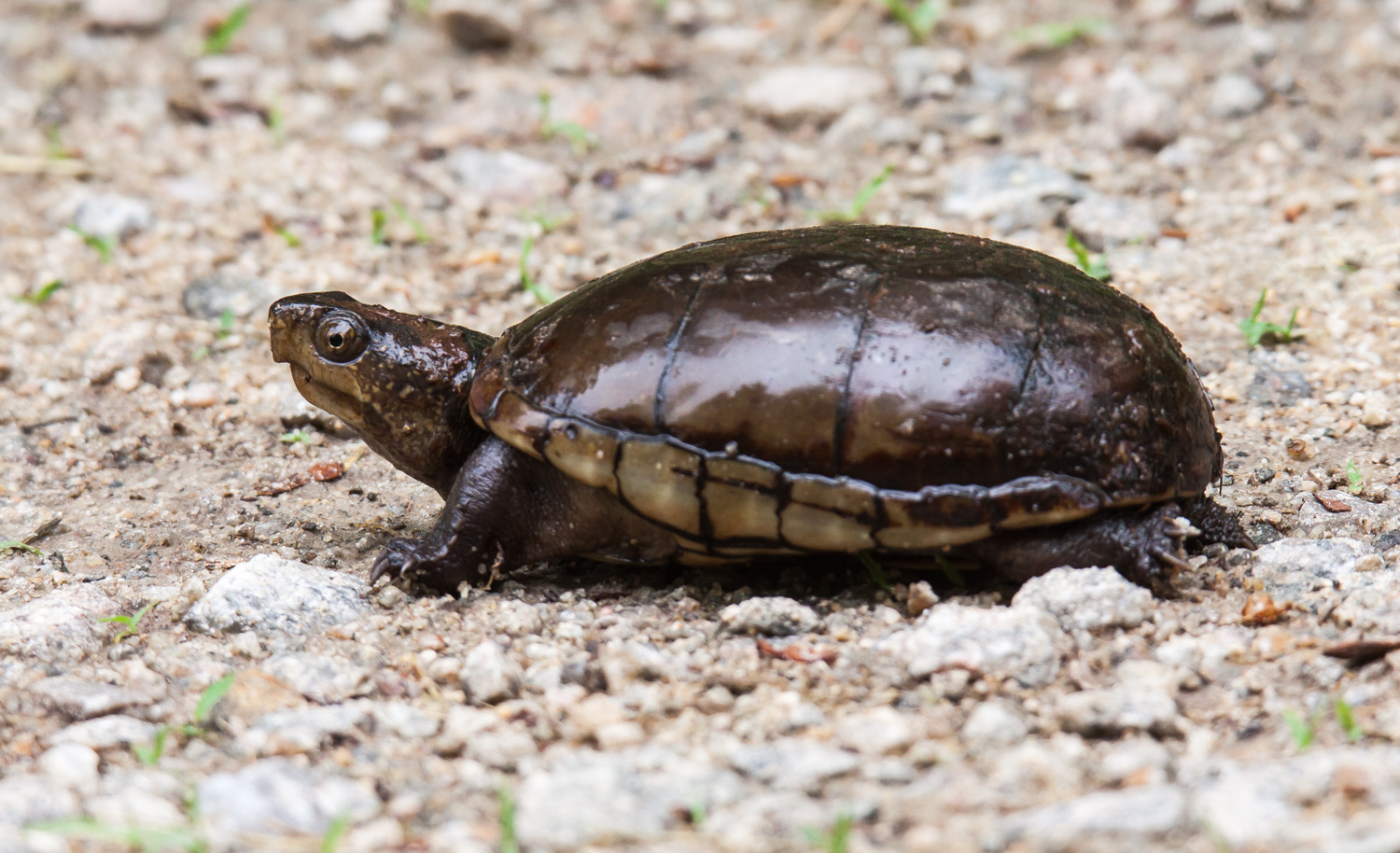
Can turtles smile? It is always cool to see turtles in the wild, especially Woodland Box Turtles (Terrapene carolina carolina), like this beauty that I spotted yesterday at Occoquan Bay National Wildlife Refuge. She seemed to be trying to smile when I snapped her portrait. (I think the turtle is a female because of her brown eyes—males usually have red eyes.)

There is something really special for me about seeing the color, patterns, and even the shape of this turtle’s shell, which is quite distinctive and unlike that of any other turtle that I see. These turtles, which are also known as Eastern Box Turtles, can live for a long time, as much as 100 years when in captivity, according to Wikipedia. In the wild, though, their life span is considerably shorter. Why? According to the same article in Wikipedia, “Box turtles are slow crawlers, extremely long lived, slow to mature, and have relatively few offspring per year. These characteristics, along with a propensity to get hit by cars and agricultural machinery, make all box turtle species particularly susceptible to anthropogenic, or human-induced, mortality.”

Woodland Box Turtle

Woodland Box Turtle

© Michael Q. Powell. All rights reserved.


Read Full Post »

Are you ever fully satisfied when you meet a goal? I think that many of us drawn to wildlife photograph are restless in our pursuit of newer and better images. We can celebrate our successes, but we tend to be self-critical. We are convinced that we can always improve our skills and our photos, that we need to keep pushing and pushing in a never ending quest for more interesting subjects or better conditions or sharper images .

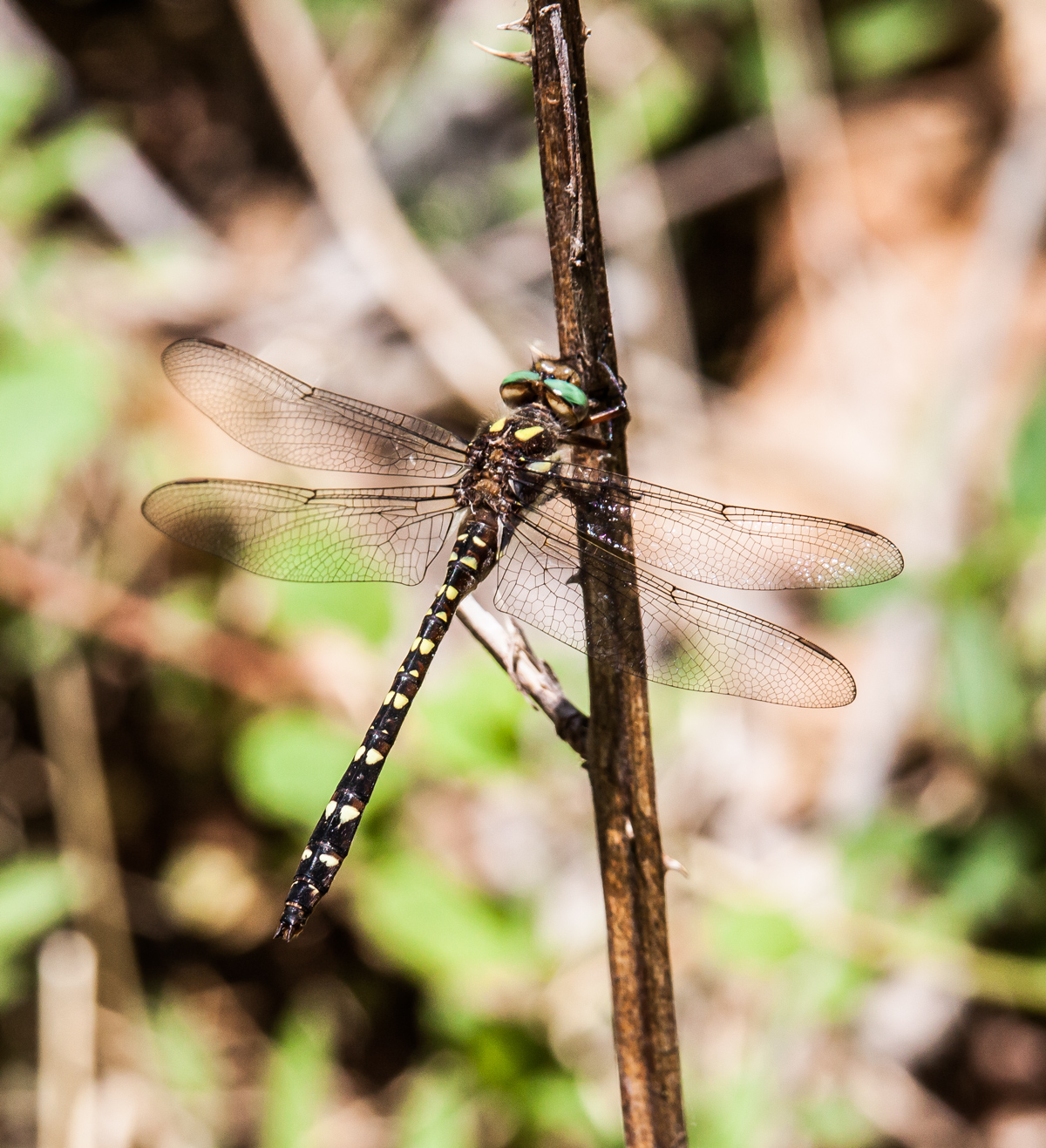
In many ways, that was the case for me this past Monday, when fellow dragonfly enthusiast Walter Sanford and I scoured an area of Occoquan Regional Park for spiketail dragonflies. In a blog posting earlier this week I chronicled our long and ultimately successful search for the elusive Twin-spotted Spiketail. I was feeling a bit tired by the time we saw that dragonfly, but Walter had told me that an additional dragonfly species had been spotted in that same area, the Brown Spiketail dragonfly (Cordulegaster bilineata).

So we kept going and went looking again in an area that we had searched earlier in the day. Some say that the definition of insanity is repeating the same actions and expecting different results. If that’s true, I guess that I qualify as being more than a little crazy. It turned out that we were lucky, really lucky and had multiple chances that afternoon to photograph several male Brown Spiketails. Unlike the Twin-spotted Spiketails from earlier in the day that flew away and never returned, the Brown Spiketails would fly only a short distance away when spooked and it was relatively easy to track them visually to their new perches. Eventually we reached a point of satiation where we would not even take a shot of a dragonfly if it was even partially obscured by vegetation or was facing in the wrong direction. We hoped we would see a female of the species, but it turns out that all of the spiketails we saw that day were males.

The Brown Spiketail dragonflies seem to have a lighter-colored bodies than the Twin-spotted Spiketails (brown vs black) and has paler spots, but to my inexperienced eye they otherwise look pretty similar. I was happy to capture some relatively sharp images that you can see in even greater resolution by clicking on them. For even more detailed photos, check out Walter’s excellent images of our adventures in his blog posting today. He has mastered some techniques that allow him to capture an amazing amount of detail in his dragonfly shots.

Brown Spiketail

Brown Spiketail

Brown Spiketail

© Michael Q. Powell. All rights reserved.

Read Full Post »

Early Monday morning at Occoquan Bay National Wildlife Refuge I spotted my first Monarch Butterfly (Danaus plexippus) of the spring. It seemed really skittish and flew up into the trees. I was happy to be able to capture this image from an unusual angle—it is not often that I photograph a butterfly while aiming my camera in an upwards direction.

Some years I see only a few Monarchs and I read quite often about their threatened habitats. I am therefore excigted each time that I am blessed to see one of these beautiful butterflies.

Monarch butterfly

© Michael Q. Powell. All rights reserved.


Read Full Post »

When you go out to take photos, do you have specific goals in mind? I consider myself to be an opportunistic shooter—I like to walk around in the wild and photograph whatever happens to catch my eye.

This past Monday, though, I joined fellow dragonfly enthusiast and photographer Walter Sanford on a very targeted mission. We were going to search for some relatively uncommon dragonfly species called spiketails in a location where they had been recently seen. These species can be found only during a limited period of the spring and only at small forest streams or spring-fed seepages.

We were particularly interested in the Twin-spotted Spiketail (Cordulegaster maculata), a dragonfly that is less than 3 inches in length (76 mm) and usually hangs vertically or at an angle in vegetation close to the ground. As you can probably tell from my description, these dragonflies are tough to find. Walter and I have hunted together for dragonflies in the past and have found that it helps to work in pairs, so that if one flushes a dragonfly, the other person can sometimes track it to its new location.

We searched and searched for what seemed like hours and came up empty-handed. Just when it seemed like we might be getting ready to concede defeat, I spotted what I think was a Twin-spotted Spiketail. I called out to Walter and put my camera to my eye. Alas, the dragonfly flew away before I could get a shot. Previously he and I had a conversation about whether it was better to have seen none or to have seen one and not gotten a shot. I was now faced with the second case.

We figured that our odds were about one in a million of spotting another Twin-spotted Spiketail, but having seen one, we had a glimmer of hope and kept searching. Without intending to do so, we drifted apart, out of sight of each other. Suddenly I heard Walter’s voice calling to me, saying that he had spotted one. The basic problem was that I did not know where he was. I wrongly assumed that he was near a small stream, so I rushed downhill through the muck and the thorns, but didn’t see him. He called out again even more insistently and I realized that he was uphill from me. Apparently I am not good at determining directions on the basis of sounds.

I scrambled up the bank to him and he motioned to me to move around him on the left. About that time, the dragonfly that he was photographing took off and headed down the trail. Walter was about ready to give chase when I told him to stop—I had spotted what turned out to be a male Twin-spotted Spiketail at ankle-height just a few feet from where he was standing. Our patience and persistence ended up being rewarded and I was thrilled to be able to get some shots of this beautiful dragonfly, a species that I had never before encountered.

Long-time readers may recall that Walter and I are very different in our approaches to many things. Our photography gear is different; my background and education is in liberal arts and his is in science; and our personalities are quite dissimilar. Not surprisingly, our writing styles vary too. Several times in the past we have done companion blog postings after our adventures. Check out Walter’s blog post today for his perspective on our hunt for this elusive dragonfly and for his wonderful images.

As it turned out, our day of dragonfly hunting was not yet over, but that will the subject of a future blog posting.
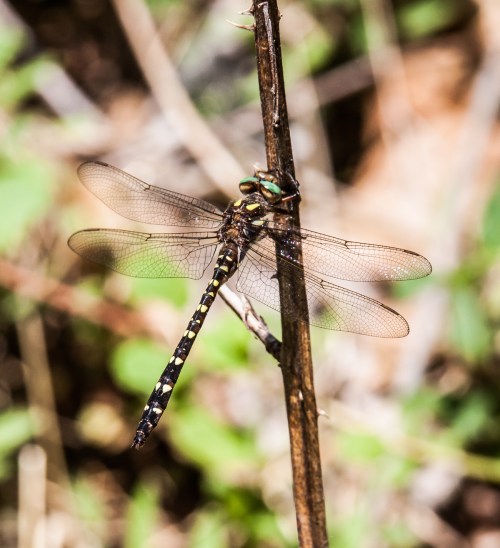
Twin-spotted Spiketail

© Michael Q. Powell. All rights reserved.

Read Full Post »

When I saw a flash of bright blue this past Friday at Occoquan Bay National Wildlife Refuge, I thought for sure that it was a male Eastern Bluebird, but when I looked more closely, I was thrilled to see that it was an Indigo Bunting (Passerina cyanea). Ever since one of my youngest viewers, a four year old named Benjamin, commented that bluebirds have as much orange as blue, I have been very conscious of species that have colors associated with their names.

In the bird world, most of the species names are associated with mature males, which tend to be a lot more colorful than females. The female Indigo Bunting, for example, is not blue at all, but is brownish in color. When I was just getting started in photographing birds, I remember being confused when I was told that a sparrow-looking bird at which I was pointing my camera was a Red-winged Blackbird—it was neither black, nor did it have red wings.

Some of the photographers in my area have recently posted images of a Blue Grosbeak, another bird that has bright blue feathers. They tend to be uncommon, but I will certainly be keeping my eyes open for flashes of blue, a color that seems to be relatively rare in the world of wildlife.

Indigo Bunting

© Michael Q. Powell. All rights reserved.

Read Full Post »

On the last day of April I spotted a Blue Corporal dragonfly (Ladona deplanata) that was newly emerged and was not yet blue. This past Friday I went back to the same location at Occoquan Bay National Wildlife Refuge and found a young male Blue Corporal that had already gained his blue coloration.

Additionally, he was now perching on some vegetation rather than on the ground, which allowed me to get a more artistic shot—I really like the arc of the vegetation and how it helped make for an interesting composition.

Blue Corporal

© Michael Q. Powell. All rights reserved.


Read Full Post »

Common Baskettail dragonflies (Epitheca cynosura) were flying yesterday at Jackson Miles Abbott Wetland Refuge and I managed to capture a few shots of them while they were patrolling over the pond.

There are some really cool things about dragonflies that you can observe from the photos. In the first one, you can see how dragonflies can eat on the move. Their amazing aerial skills help them to snag smaller insects out of the air. This is particularly important for species like this one that seem capable of flying for hours on end without pausing to perch. In both images you can see how the dragonfly tucks up its legs to make it more aerodynamic while flying.

So how do I get photos like this? Above all else, patience is the key. There were several dragonflies flying over the water yesterday and I observed each of them, trying to discern a pattern in their flights. The others were flying more erratically, but this one seemed to hover a bit from time to time. The subject was too small for my camera to grab focus quickly, so I resorted to focusing the lens manually.

It took a lot of shots, but eventually I was able to capture a few images that let you see some of the beautiful details of the dragonfly, particularly its very striking eyes. In case you are curious about the differing backgrounds, I shot the first image while pointing down at the dragonfly, while for the second one I was more level with the dragonfly, which caused the background to essentially disappear.

Common Baskettail

Common Baskettail

© Michael Q. Powell. All rights reserved.

Read Full Post »

I thought that this was some kind of warbler when I saw it yesterday at Occoquan Bay National Wildlife Refuge, but some folks on the Facebook “What’s This Bird” forum  identified it for me as an immature male Orchard Oriole (Icterus spurius). I think that I was fooled by the yellow color, since most warbler have at least a touch of yellow. Now when I look more closely at the photos, I realize that the bill is shaped differently from those of warblers.

Orchard Oriole

Orchard Oriole

© Michael Q. Powell. All rights reserved.

Read Full Post »

It seems like I am increasingly spending my time trying to track small birds as they energetically flit about in a tangle of newly-emerged leaves. In their aggressive foraging for food, they rarely seem to pause and pose for me on isolated branches, so I am figuring out ways to integrate the foliage into my photos.

Here are a couple of images of Blue-gray Gnatcatchers (Polioptila caerulea) from this past weekend at Occoquan Bay National Wildlife Refuge that show not only the birds, but also a part of their environment. As I was doing a little research on this gnatcatcher on the Cornell Lab of Ornithology website, I was a bit surprised to learn that gnats do not form a significant part of the Blue-gray Gnatcatcher’s diet—they eat all kinds of insects and spiders.

Blue-gray Gnatcatcher

Blue-gray Gnatcatcher

© Michael Q. Powell. All rights reserved.

Read Full Post »
“You look like an angel…” I am not sure what was so special about that particular spot on that specific tree, but this Yellow-rumped Warbler (Setophaga coronata) used all of its aerial and acrobatic skills to peck away at it on Monday at Occoquan Bay National Wildlife Refuge. From what I could tell, the warbler held on to the branch with its feet and used its outspread wings for balance. In the second image, it looks like the warbler was using a pendulum-like motion to generate momentum.

The bird’s body positions remind me of artistic portrays of angelic beings that I have a seen in multiple museums and books and I felt blessed to have had the chance to see this relatively common bird in an unusual way.

Yellow-rumped Warbler

Yellow-rumped Warbler

© Michael Q. Powell. All rights reserved.


Read Full Post »
It’s taken a while, but I have finally spotted my first locally-born dragonfly of the season. Previously I had seen some Common Green Darner dragonflies, which were probably migrants from the south, but on Monday, the last day of April, I spotted this newly-emerged Blue Corporal dragonfly (Ladona deplanata) at Occoquan Bay National Wildlife Refuge.

I did not get a really good angle for this shot, so I can’t be absolutely certain of the dragonfly’s gender, but I think that it may be a male. One of the tricky things about identifying the gender of dragonflies is that immature males often look similar in coloration to females. If this is a male its abdomen will eventually turn blue in color, which helps explain the first part of the species name. As for the “corporal,” I have been told that this is a reference to the two whitish lines on the dragonfly’s thorax that resemble the two stripes that corporals wear as their rank insignia in the US Army.

The weather is warming up and I expect to be seeing a whole lot more dragonflies in the upcoming weeks and months. Unlike this Blue Corporal, some of them will perch above the ground rather than on in, which should permit me to get some more photogenic shots. Our weather this spring has been a bit crazy and the emergence of dragonflies seems to have been delayed, but with this spotting I can confidently state that the dragonfly season has started for me.

Blue Corporal dragonfly

© Michael Q. Powell. All rights reserved.

Read Full Post »
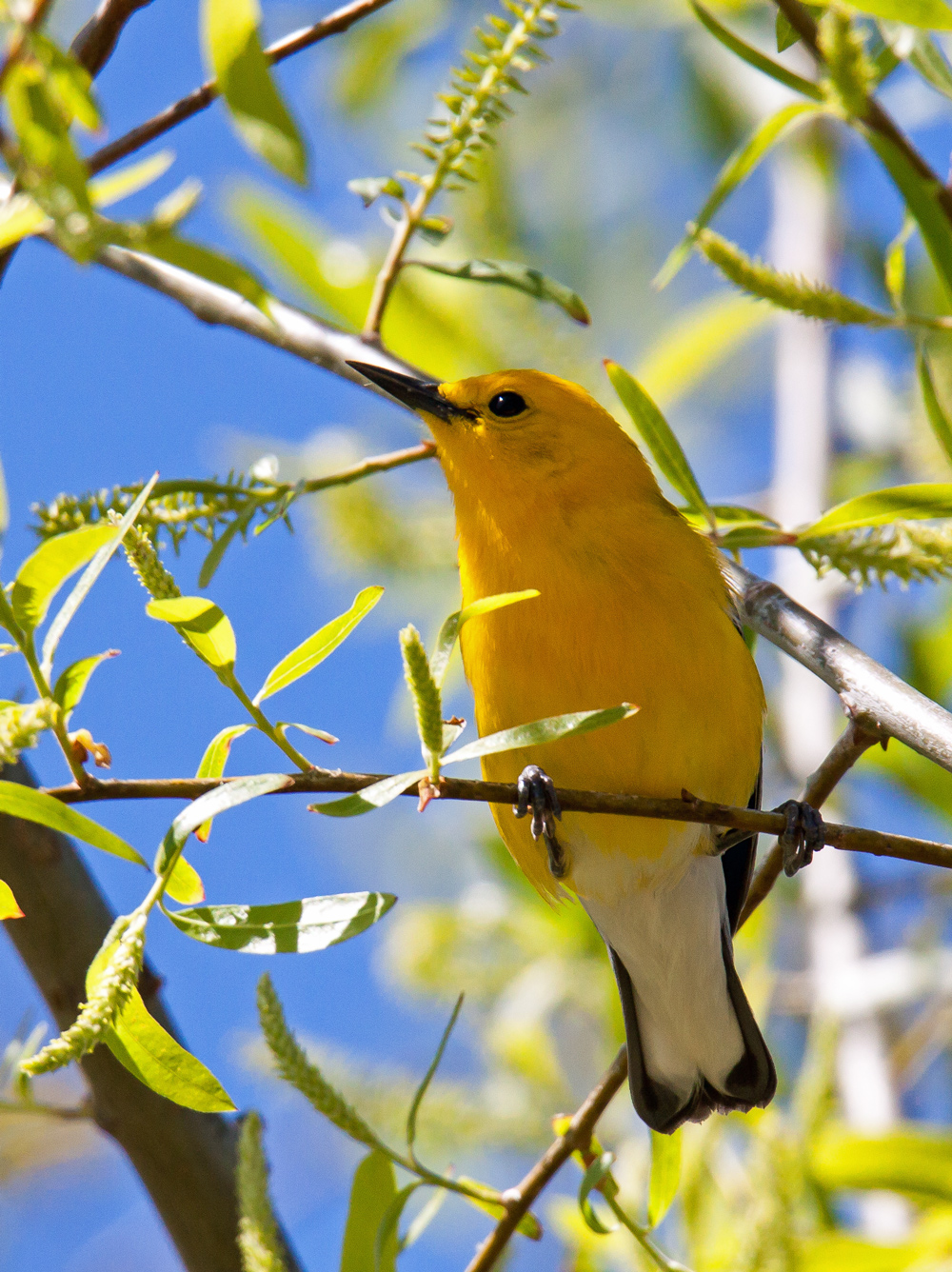
Most warblers seem to have some yellow on their bodies, but I had never before seen one with as much yellow as the Prothonotary Warbler (Protonotaria citrea) that I spotted on Monday at Occoquan Bay National Wildlife Refuge. The yellow coloration helped me in tracking the bird, although it stayed high in a tree and was in almost constant motion. Now that there are leaves on many of the trees, I’m finding it to be harder and harder to get unobstructed shots of birds.

I will definitely be trying to get some more shots of this spectacular bird, hopefully in the near future.

Prothonotary Warbler

Prothonotary Warbler

Prothonotary Warbler

© Michael Q. Powell. All rights reserved.

Read Full Post »

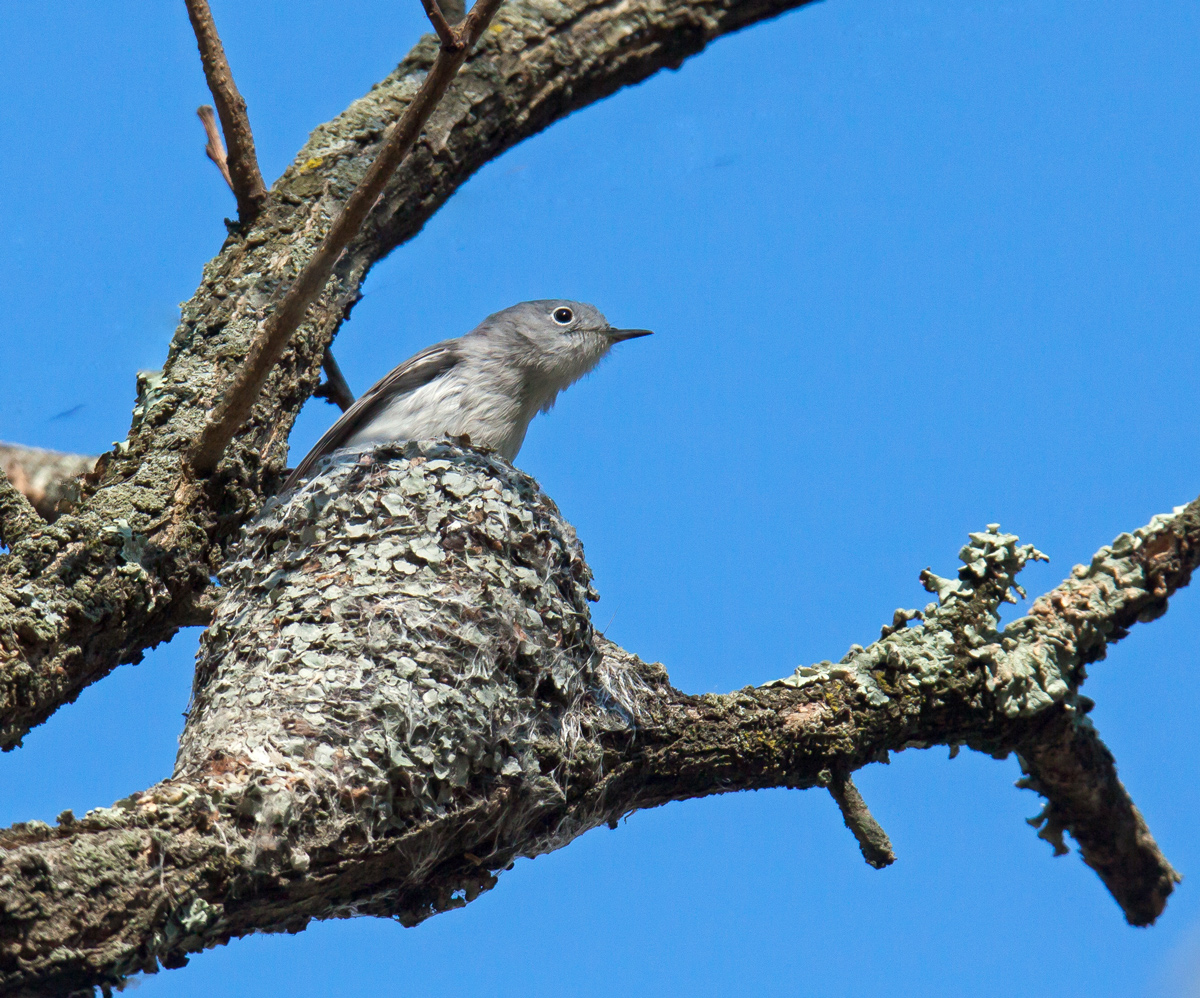
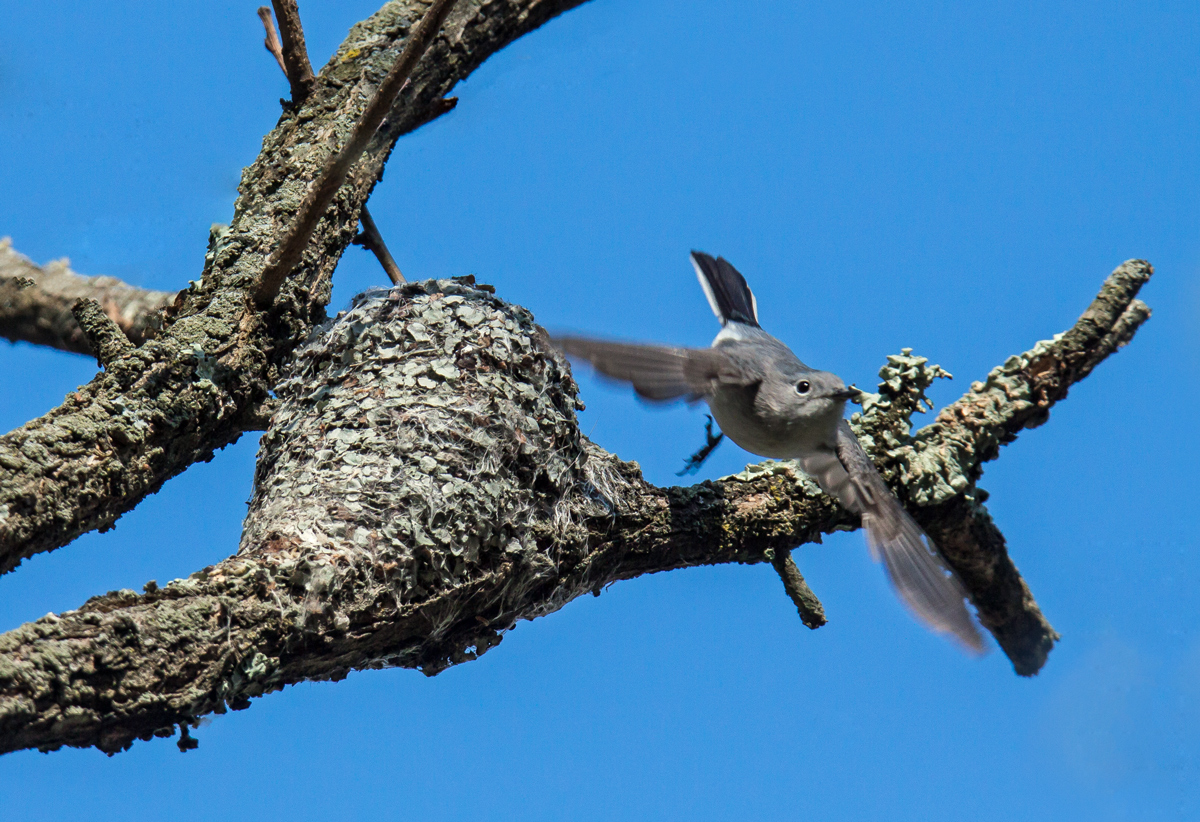
I was thrilled yesterday when I managed to spot a tiny Blue-gray Gnatcatcher (Polioptila caerulea) in a nest at Jackson Miles Abbott Wetland Refuge. These little birds use lichen and spiderwebs to make nests that blend in amazingly well with the trees on which they are found and it is unlikely that I would have been able to spot the nest if the bird had not been initially sitting in it.

Blue-gray Gnatcatcher

Blue-gray Gnatcatcher

Blue-gray Gnatcatcher

© Michael Q. Powell. All rights reserved.

Read Full Post »

As I was looking over some images from about a month ago, I realized that I had not posted any views of this North American Beaver (Castor canadensis) that I spotted swimming off of Occoquan Bay National Wildlife Refuge one early morning. At that hour we both were moving pretty slowly—one of us on land and the other in the water.

As the beaver altered its course , the light falling on its face and body changed, occasionally catching a bit of sunlight from the just-risen sun. I love the way that the water was tinged with light blue and pink and how the mostly still water picked up the reflections of the swimming beaver.

North American Beaver

North American Beaver

North American Beaver

© Michael Q. Powell. All rights reserved.

Read Full Post »

I will be heading home soon after my brief stay in Vienna, Austria and thought I would post a few last wildlife photos that I took here. These images help reinforce to me the notion that there is always something interesting in nature to photograph, no matter where I happen to be.

The first image is an unidentified species of frog that I encountered at the edge of a pond while wandering about the Donau-Auen National Park. It reminds me of the Southern Leopard Frog that I often see at home in Northern Virginia.

frog in VIenna

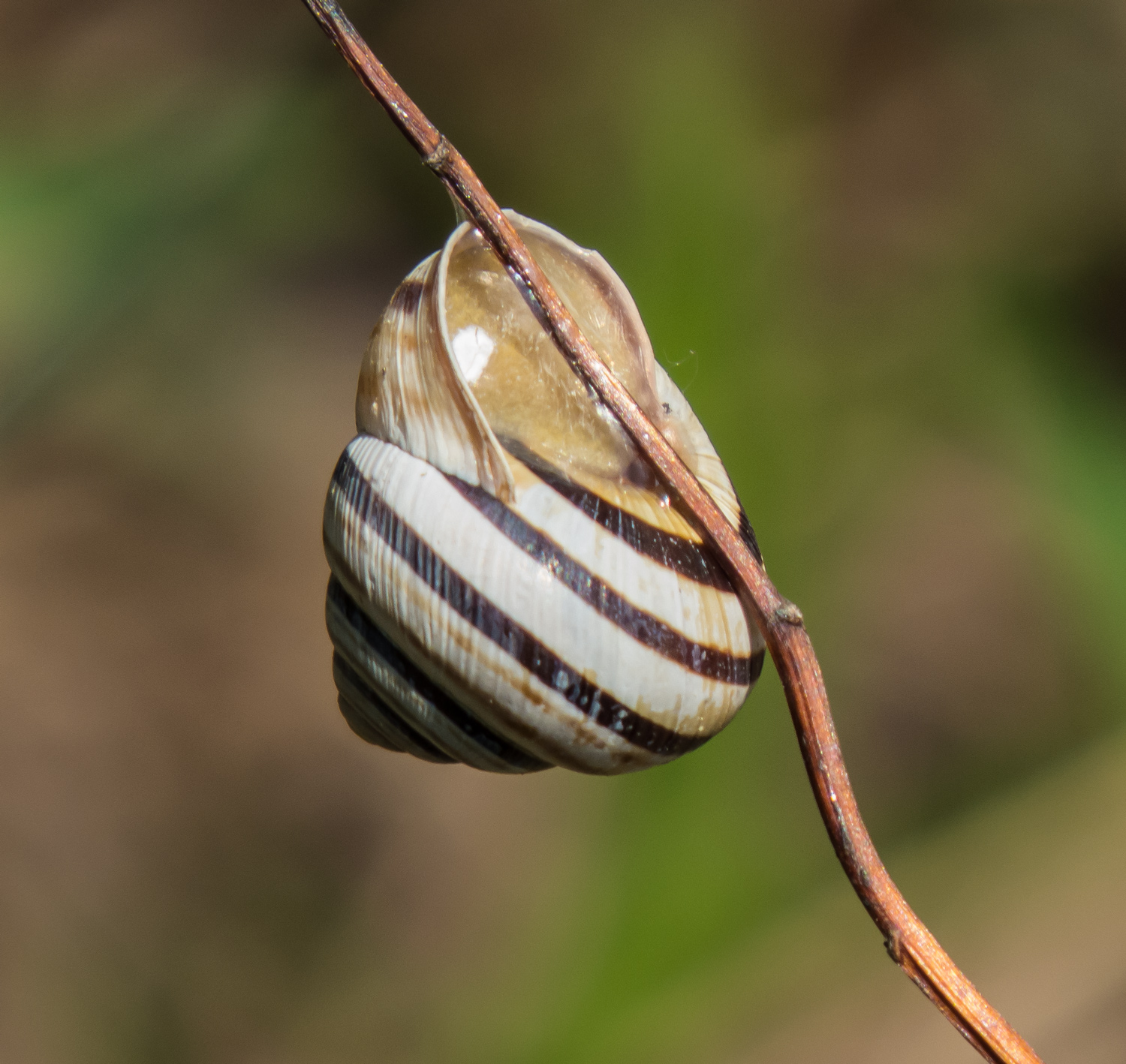
The second image appears to be a Viennese Banded Snail (Cepaea vindobonensis) that I also spotted in the National Park.  I thought that it was really cool the way that it had attached itself to the vegetation.

Viennese Banded Snail

The final image shows what I believe to be a Mute Swan (Cygnus olor) that I saw at the Stadtpark (“city park”) not far from the hotel where I am staying. I always find swans to be beautiful and graceful, even when located in an urban environment.

swan in Vienna

© Michael Q. Powell. All rights reserved.

Read Full Post »

Here are a few shots of butterflies that I spotted last weekend during a visit to the Donau-Auen National Park in Vienna, Austria. Unlike the brightly-colored larger butterflies that I sometimes see in gardens, these butterflies were small, rather drab in coloration, and very skittish. They also tended to perch on the ground, which made them a little tougher to photograph. In my experience, woodland butterflies tend to fit this general profile.

I particularly enjoyed chasing one butterfly, which is shown in the first and second images below. The butterfly is a species that I do not see at home and looks quite nondescript when its wings are closed. With the wings open, though, the butterfly reveals its beautiful colors and patterns—it is like a hidden treasure.

The other two butterflies are also quite beautiful, with wonderful muted tones and patterns.


butterfly in Vienna

butterfly in Vienna

butterfly in Vienna

butterfly in Vienna

© Michael Q. Powell. All rights reserved.

Read Full Post »

Dragonflies are amazing. They spend most of their lives as nymphs in the water before they crawl out, discard their exoskeletons, and become beautiful aerial acrobats. I photographed this probable Downy Emerald dragonfly (Cordulia aenea) last weekend at the Donau-Auen National Park in Vienna, Austria.

The object in the upper right in the first image is the discarded exoskeleton, often called an “exuvia,” and further down the vegetation is the dragonfly itself.  The dragonfly appears to have recently emerged from that same exuvia. Note how much longer the dragonfly’s body has grown after emergence. The wings of the dragonfly are not yet fully extended, suggesting that it still is in the process of emergence. If you look closely at the exuvia, you may notice some white stringy looking parts. These are the breathing tubes are part of the respiratory system that helped the dragonfly breathe while still a water-dwelling nymph.

I was standing on a relatively steep incline and the reed-like vegetation was growing out of the water, so it was a challenge to get a good angle to photograph the dragonfly. The second image was taken from a different angle from the first (and I was happy that I was able to keep from sliding into the water).

I proceeded down the trail for a while before looping back and returning to the spot where I had seen the dragonfly. I think the dragonfly in the final image may be the same one as in the first two shots, though obviously the perch is not the same. After dragonflies have emerged, they generally have to wait some time for the wings to harden and for their metamorphosis to be complete.

dragonfly in Vienna

dragonfly in Vienna

dragonfly in Vienna

© Michael Q. Powell. All rights reserved.

Read Full Post »

Damsels in Vienna? Here are a few shots of some beautiful little damselflies that I encountered this past weekend during a visit to the Donau-Auen National Park in Vienna, Austria.

While traveling for work I normally leave at home my Canon DSLR and big lenses and use instead a Canon SX50 point-and-shoot camera with a super zoom lens. There are some compromises and limitations with this type of camera, but I am quite pleased with the results I can achieve using it, including these almost-macro images.

damselfly in Vienna

damselfly in Vienna

damselfly in Vienna

© Michael Q. Powell. All rights reserved.


Read Full Post »

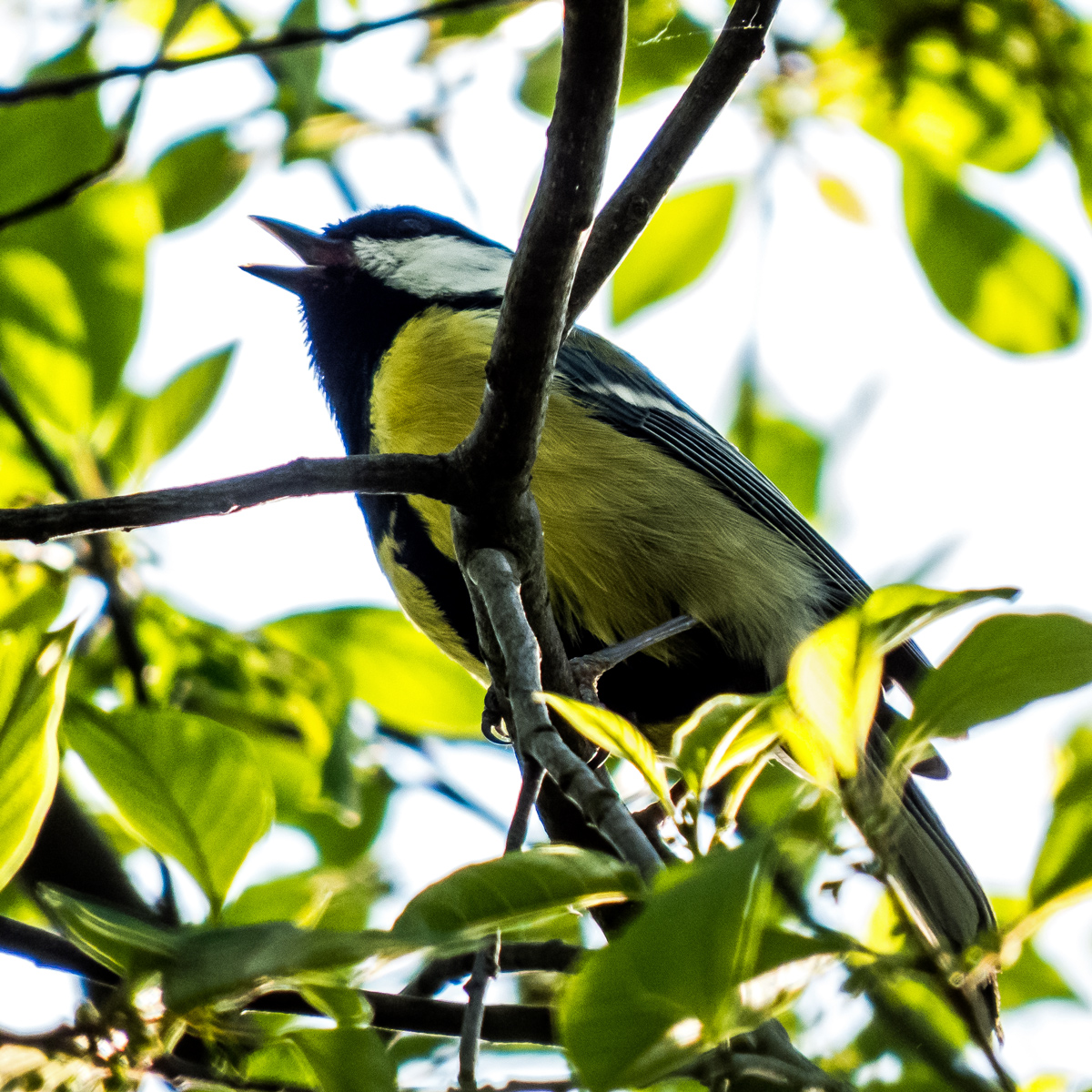
Finding birds is tough when the leaves are on the trees, but I did manage to spot this cool-looking one here in Vienna, Austria while visiting the Donau-Auen National Park. If this bird had remained quiet, there is no way that I would have been able to find it, but fortunately for me it was singing loudly.

I did a quick internet search, but so far I have not yet been able to identify it. I’d welcome identification assistance, particularly from someone with experience with European birds.

UPDATE: Thanks to the assistance of a number of viewers, I have been able to identify this bird as a Great Tit (Parus major), a widespread and common species throughout Europe, the Middle East, Central and Northern Asia, and parts of North Africa.

singing bird in Vienna
© Michael Q. Powell. All rights reserved.

Read Full Post »

I have been to Vienna, Austria often enough in the past 25 years that I have seen most of the big tourist sights. Now, when I have a bit of free time in the city, as I did yesterday, I like to go exploring in the Donau-Auen National Park and seek out wildlife.

I was thrilled when I spotted dragonfly in flight and was able to photograph it after it landed high in a tree. It is not a species with which I am familiar, but fellow bloggere and dragonfly enthusiast Walter Sanford suggested that it is of the Emerald family and I tend to agree with him.

dragonfly in Vienna

© Michael Q. Powell. All rights reserved.

Read Full Post »

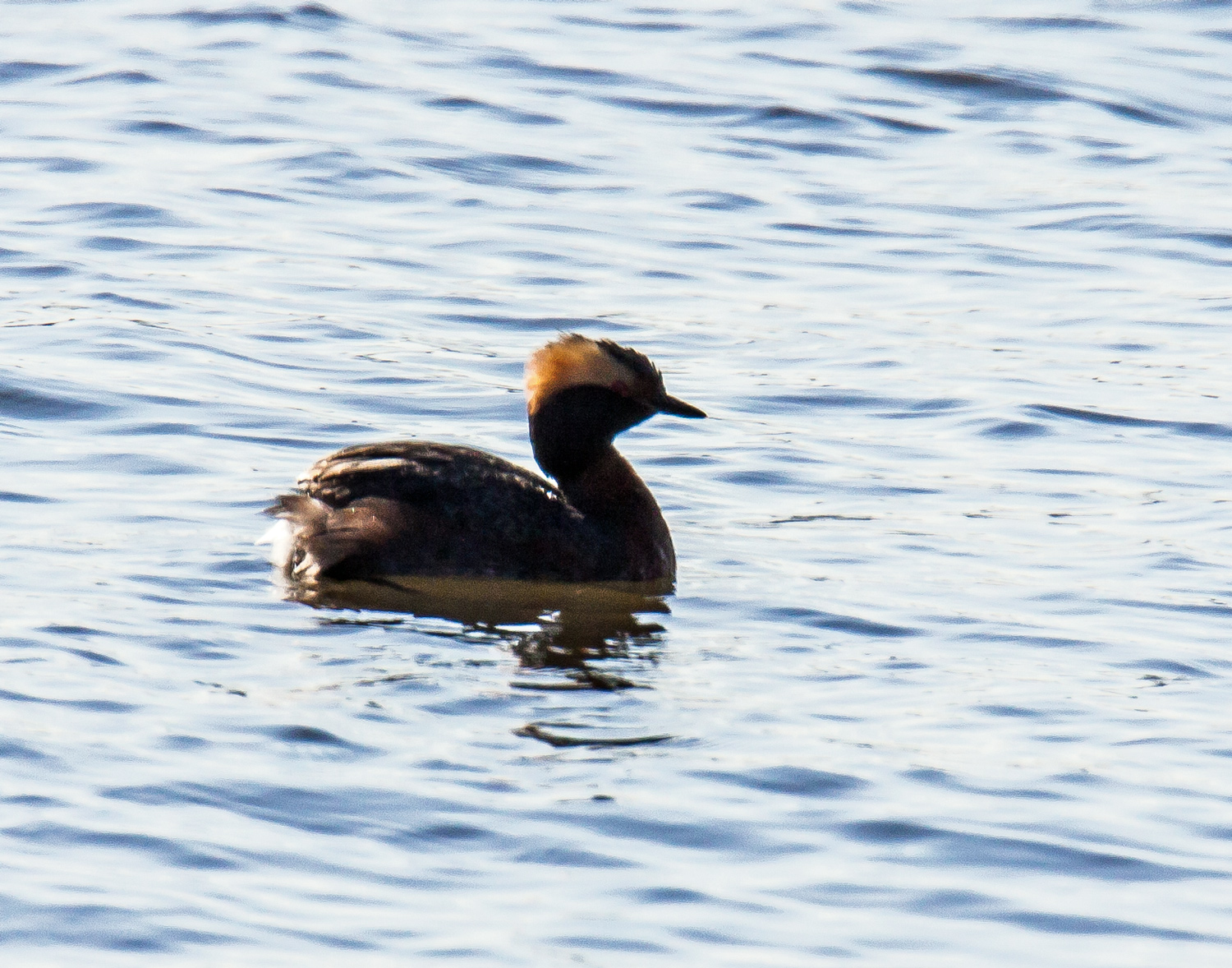
Earlier this year I encountered an unfamiliar bird that turned out to be a Horned Grebe (Podiceps auritus). On-line photos showed that the bird has really cool plumage during mating season and I remember hoping that I would see one this spring.

Well, this past Friday I spotted one in the distance in the waters off of Occoquan Bay National Wildlife Refuge. The light was coming from almost in front of me and the grebe was a long way off, but I did manage to capture the sunlight glistening off of the blonde “horns” of this beautiful bird. I especially like the first shot in which you can see just a bit of the grebe’s red eyes and the feathers really do look like horns.

Horned Grebe

Horned Grebe

© Michael Q. Powell. All rights reserved.

Read Full Post »

I was thrilled yesterday morning to spot an American Kestrel (Falco sparverius) at Occoquan Bay National Wildlife Refuge. It’s pretty rare for me to see this beautiful little falcon and the lighting was good enough for me to see some of its wonderful colors and patterns. From the photos that I have seen on-line, I think this is a female—males have wings that are slate blue in color.

I was also able to watch it hunting for a little while over a distant field. A kestrel hovers in mid-air as it searches for prey below. Although the kestrel dove low a couple of times, I did not see it catch anything.

Both times that I have seen a kestrel, it has been perched in the same tree and I plan to return there regularly during my treks through the wildlife refuge.

American Kestrel

© Michael Q. Powell. All rights reserved.

Read Full Post »
Sometimes the view from the back is just as spectacular as the view from the front. I spotted this male Wild Turkey (Meleagris gallopavo) in full display this past Friday at Occoquan Bay National Wildlife Refuge. There were no females around to impress, but somehow, like a vain bodybuilder, this guy seemed compelled to flex and show off, even while doing something as mundane as foraging for food.

Initially I was disappointed that this turkey steadfastly refused to turn around and show me his face. As I surveyed the scene, though, I realized that I really loved the perfect fan shape of the displayed tail and the geometric abstractness of the the turkey from this angle. In fact, this kind of a shot might cause viewers to linger a little longer on the image as they gradually figure out what the main subject is, i.e. that it is a wild turkey.

 Wild Turkey
© Michael Q. Powell. All rights reserved.

Read Full Post »

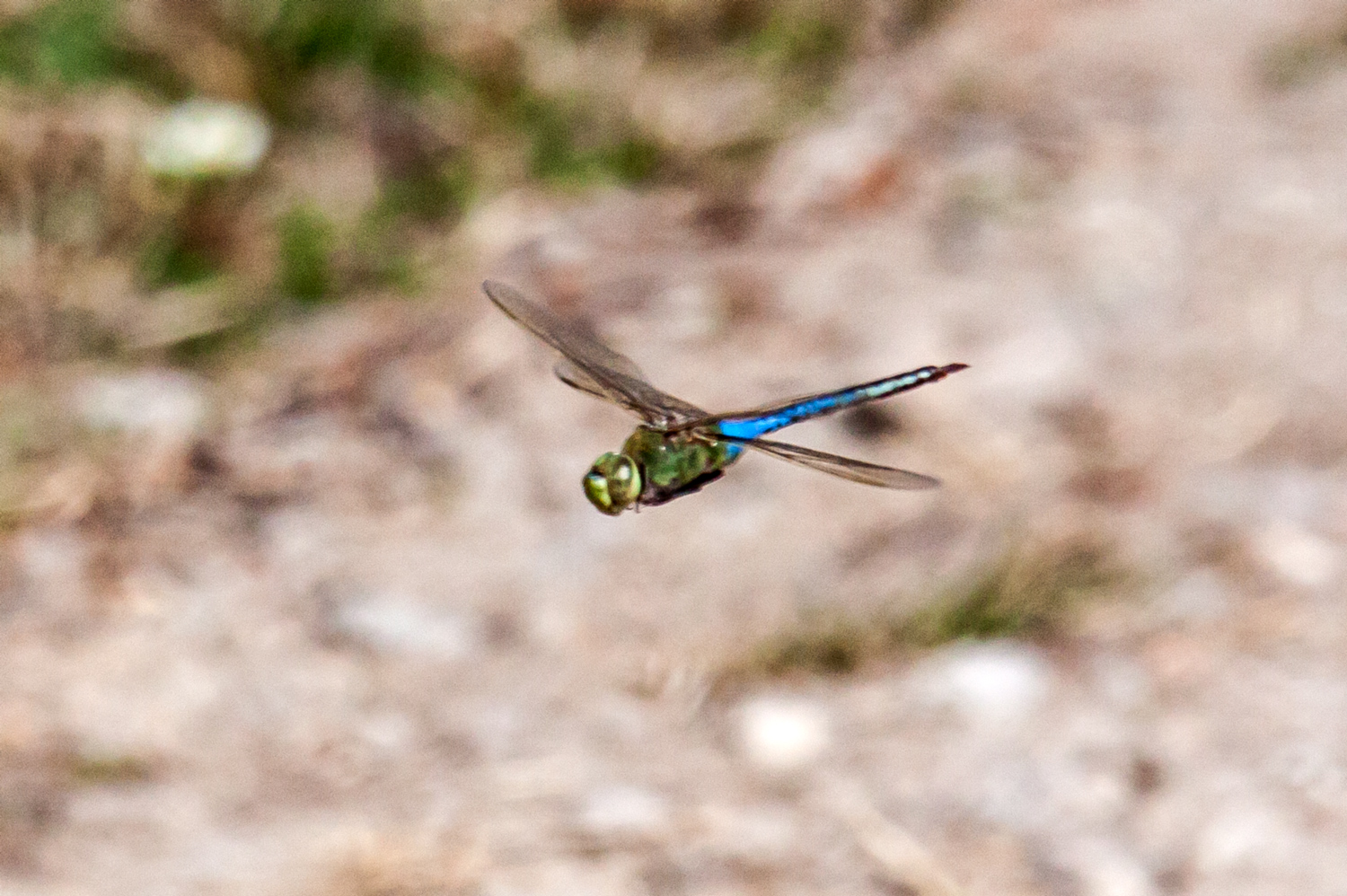
Are you patient and persistent? If so, you have the right temperament to try to photograph dragonflies in flight. Every dragonfly season I spent endless hours in mostly fruitless attempts to capture in-flight images of dragonflies. One of my friends on Facebook described this as “a near impossible task” and, of course, she is right.

My first somewhat successful effort this year was a shot of a Common Green Darner (Anax junius) patrolling above one of the paths at Occoquan Bay National Wildlife Refuge last Friday. As you might suspect, getting the moving dragonfly in focus is one of the biggest challenges, because the subject is too small for the camera’s autofocus to engage. Sometimes I will focus manually as I track the dragonfly and sometimes I will use a zone focusing technique in which I preset the focusing distance and wait (and hope) for the dragonfly to fly into the zone.

A near impossible task? It certainly is, but I enjoy the challenge the way that its pursuit confounds observers—one such observer watched me closely for several minutes on Friday and couldn’t figure out what I was trying to photograph.

Common Green Darner

© Michael Q. Powell. All rights reserved.


Read Full Post »

Recently I have been thinking a lot about the relationship between seeing and taking pictures as I find myself growing more and more acutely aware of the details in my surroundings. The more I shoot, the more I see and the more I see, the more I shoot. I am continually amazed at the things that I see and even more amazed that I am able to capture some of those experiences with my camera.

I have fallen in love with a quotation attributed to photographer Dorothea Lange, “The camera is an instrument that teaches people how to see without a camera.” Even when I don’t have a camera in my hand, I seem to be viewing the world differently than I did in the past. My sensitivity has undoubtedly been heightened by greater knowledge of my subjects and my skills honed by lots of practice and familiarity with my gear.

This past Friday, I spotted a Bald Eagle (Haliaeetus leucocephalus) soaring in the air over the waters adjacent to Occoquan Bay National Wildlife Refuge. That was not very unusual and I was able to capture some shots like the second one below. As the eagle flew out of range, I noticed that it seemed to be decreasing in altitude and circling back, so I continues tracking the bird. Somehow I suspected that the eagle was tracking a fish. Unlike an osprey that drops straight down into the water to catch a fish, an eagle seems to pluck a fish out of the water as it flies by.

I watched in awe and wonder as the eagle caught a fish. My timing was off a bit and my shots of the moment of the moment of the catch were not in focus, but I captured this image of the eagle flying away with its catch, an image that I really liked. As I think back about the experience, I feel absolutely no disappointment that I did not photograph it better. Instead, I feel a kind of joy and exhilaration that I was able to experience a really cool moment in nature.

Photography has opened my senses to those kinds of moments and motivates me to spend hours on end trekking about with my camera in hand. Capturing those experience in images is a real bonus whenever I am able to do so.

Bald Eagle

Bald Eagle

© Michael Q. Powell. All rights reserved.


Read Full Post »

My bird books say that Gray Catbirds (Dumetella carolinensis), like this one that I spotted on Friday at Occoquan Bay National Wildlife Refuge, make catlike mewing sounds, which accounts for the name. When I initially heard this bird, it was making a variety of different sounds, none of which sounded like a cat, and I thought it was a Northern Mockingbird. It was only when I zoomed in and saw that the bird had less distinctive markings than those of a mockingbird that I realized that it was a different species. Catbirds do, however, belong to the same family Mimidae (also known as mimic thrushes) as Northern Mockingbirds and Brown Thrashers, like the one that I featured in a recent posting.

When I was growing up, I remember hearing the expression “sitting in the catbird seat” and I learned that it meant being in an enviable or advantageous position. I never really wondered, though, what this had to do with a catbird and only today did I search for the origins of the expression. According to the website phrases.org.uk, “Catbirds seek out the highest perches in trees to sing and display. The allusion to that is most likely to be the derivation of the term. It may also be the source of an earlier term with much the same meaning – ‘sitting pretty‘.”

Gray Catbird

© Michael Q. Powell. All rights reserved.


Read Full Post »

Babies are always exciting and it looks like there are at least two eaglets in one of the Bald Eagle (Haliaeetus leucocephalus) nests that I have been watching for quite a few weeks. When I arrived at the barrier that blocks one of the trails on Friday morning at Occoquan Bay National Wildlife Refuge, I noticed that the adult eagle was no longer sitting in the center of the nest—she was sitting in a much more upright position than previously and was sitting to one side of the nest. I began watching the nest through my telephoto zoom lens and periodically I was see the top of a little head pop briefly into view. I kept watching and eventually was able to get a shot that shows two babies.

I decided to crop the shot in two ways. The first one is a pretty severe crop, but it lets folks get a good look at all three eagles. The second crop is much looser and gives a better sense of the context of the shot by showing more of the tree and of the nest.

Bald Eagle babies

Bald Eagle babies

© Michael Q. Powell. All rights reserved.

Read Full Post »

Dragonflies are one of my favorite subjects to photograph and each spring I eagerly await their reappearance. Yesterday I captured my first image of one this season, a beautiful Common Green Darner (Anax junius) that I spotted at Occoquan Bay National Wildlife Refuge.

Common Green Darners are a migratory species and the ones that we see in early spring, like the one in the photograph, probably flew here from somewhere further south. Once they arrive, they have a series of tasks to accomplish—they mate, lay eggs, and die. The next generation of Green Darners will emerge in a few months and fly south in the autumn. That generation will die in the south and the following generation will fly north in the spring.

What an amazing life cycle!

Common Green Darner

© Michael Q. Powell. All rights reserved.

Read Full Post »

I often wonder about the origins of the names of some species, but it’s pretty obvious why this particular bird is called a Yellow-rumped Warbler (Setophaga coronata). It is pretty hard to miss that posterior patch of bright yellow feathers, which leads some birders to affectionately call the bird a “butter butt.”

As I was tracking the bird through the vegetation, it came out into the open briefly, but turned away from me, and giving me a view of its underside. I find it fascinating to view a bird from multiple angles, but I must confess that I would have had trouble identifying the bird if this had been the only view that I had been able to capture.

Some of you may have noticed that I have been doing most of my photo treks these past few months in Occoquan Bay National Wildlife  Refuge. In this case, however, I spotted the warbler at Jackson Miles Abbott Wetland Refuge last Friday, because I was checking to see if any dragonflies had emerged yet. There were none to be seen, but I am going out today, a week later, to search again for them. The weather is supposed to soar today to 80 degrees (27 degrees C), which is much more hospitable to dragonflies than the near-freezing levels that we had earlier in the week.

Yellow-rumped Warbler

Yellow-rumped Warbler

© Michael Q. Powell. All rights reserved.

Read Full Post »

We have had colder than normal weather this past week, so I was quite shocked to see a fairly large orange and black butterfly last Friday fluttering about at Occoquan Bay National Wildlife Refuge. Actually, when the butterfly opened its wings I could see its bright colors, but it kept them closed, the butterfly blended in well with the background and look simply like another fallen leaf.

In our area there are two butterflies that are very similar in appearance and I knew that this one was either and Eastern Comma (Polygonia comma) or a Question Mark (Polygonia interrogationis) butterfly. I am often amused by the names given to species in nature and I wonder what kind of a personality some has that decides to name two butterfly species after punctuation marks—almost certainly it was a scientist and not an artist.

You can tell the two species apart by the markings on both the outer and inner wings and I concluded that this one is probably a Question Mark. If you are curious about the differences, check out a posting by TrekOhio called “Butterflies that Punctuate: The Eastern Comma and the Question Mark” that goes into some detail in explaining how to tell the species apart.

In the next few days, the weather is supposed to warm up and hopefully more colorful insects will appear (and maybe even some more birds). It’ll be fun to see what I can find and photograph.

Question Mark butterfly

Question Mark butterfly

© Michael Q. Powell. All rights reserved.


Read Full Post »

If this Brown Thrasher (Toxostoma rufum) had not been making so much noise as it thrashed about in the dry leaves, I might not have spotted it on Monday at Occoquan Bay National Wildlife Refuge—its camouflage is almost perfect, except for those startling eyes.

Brown Thrasher

© Michael Q. Powell. All rights reserved.

Read Full Post »

« Newer Posts - Older Posts »