Feeds:
Posts
Comments

Archive for the ‘Photography’ Category

I will often shoot the same subjects over and over again. Each photo opportunity offers the possibility of a difference setting, a different pose, and different lighting conditions. I guess that is why I like the excitement and unpredictability of nature photography versus the more controlled environment of studio photography.

Last week I captured this image of a female Big Bluet damselfly (Enallagma durum) at Occoquan Bay National Wildlife Refuge. The single leaf on which the damselfly is perched makes for a simple composition that helps the subject to stand out, which is really important when the subject is so small. The sunlight helped to create a cool elongated shadow on the leaf that add additional visual interest to the shot. The minimal color palette works well too, I think.

Sometimes it is nice to have a little extra drama in our lives, even if it is only a dramatic damselfly.


Big Bluet

© Michael Q. Powell. All rights reserved.

Read Full Post »

On Monday I spotted this freshly emerged female Common Green Darner dragonfly (Anax junius) at Occoquan Bay National Wildlife Refuge.  It won’t be long before it will be time for her to migrate southward. Yes, some dragonflies actually migrate.

When I first started getting into dragonflies, it never struck me that dragonflies could travel long distances. I figured that they lived and died in a relatively confined geographic area. Although that may be true for some dragonfly species, that is not the case for the Common Green Darner. One of my favorite websites, Dragonflies of Northern Virginia, describes the amazing saga of this species in these words:

“They emerge in the Southeast and fly north, arriving here late March thru May. After their long flight, they mate, lay eggs and die. Their young emerge in July and August. Congregating in large swarms, this 2nd generation begins flying south in September. They lay eggs that fall, after arriving in their southern destinations, and die. When their young hatch in March, they fly back to Northern Virginia and it starts again – a two generation migration.”

Many of us have gotten used to using Global Positioning System (GPS) devices to help us navigate or use Google Maps. How do these dragonflies know where to go? How do they find a destination that they have never visited before? It boggles my mind and fills me with awe and wonder when I contemplate questions like these.

Common Green Darner

Common Green Darner

© Michael Q. Powell. All rights reserved.


Read Full Post »

When I first spotted two small dark shapes in the the waters of Occoquan Bay, I wasn’t sure what I was seeing. As I zoomed in and saw that it was two birds, I assumed that they were cormorants or some similar bird. When the birds changed position and the sun reflected off their white heads, I was shocked to realize that it was two adult Bald Eagles (Haliaeetus leucocephalus) perched on a floating log.

The photo is a little deceptive because it makes it look like the foreground is a beach. The tide was fairly low when I took this shot and the shallower water was covered with some kind of floating debris—it was definitely not solid ground.

Why were the eagles on the log? I thought that maybe they were feeding, but when I scanned the log, I could not see any evidence of a fish. It looks to me like this is a couple, with the larger female on the left, that is involved in some kind of marital dispute. She seems to be telling her mate something and he seems to be a bit cowed and defensive.

What do you the conversation is about between these two eagles?

bald eagles

© Michael Q. Powell. All rights reserved.

Read Full Post »

I was looking into the bright sun when I spotted this Eastern Tiger Swallowtail butterfly (Papilio glaucus) feeding on a nearby flower. Normally that is not an ideal situation for photography and often renders the subject as a silhouette. However, I adjusted my camera settings and was able to capture the translucency of the butterfly’s wings and the shape and color of the vegetation showing through from behind the wings.

Eastern Tiger Swallowtail

© Michael Q. Powell. All rights reserved.

Read Full Post »

From  a distance I noticed a flash of yellow moving from a tree to a patch of flowers. The flight was too fast for a butterfly, and when I moved a bit closer I spotted, as I had suspected, an American Goldfinch (Spinus tristis). Judging from its coloration, I think it may be a juvenile, though I must admit that after a summer of chasing insects, my bird identification skills are a little rusty. The goldfinch was somewhat skittish and uncooperative, but I was able to capture these two images that I decided to share them with you all.

American Goldfinch

American Goldfinch

© Michael Q. Powell. All rights reserved.


Read Full Post »

I have not seen as many Green Herons (Butorides virescens) this year as in previous years, so I was happy to spot one this past Tuesday during a quick trip to Meadowlark Botanical Gardens in nearby Vienna, Virginia.

Green Herons are smaller and squatter than the more commonly seen Great Blue Herons (Ardea herodias). Normally I see Green Herons at water’s edge, because their shorter legs do not allow them to wade into deeper water, and they are often partially hidden from view by vegetation. This Green Heron, though, had placed itself at the edge of a drainage system in the middle of a small pond, which is why I was able to get an unobstructed shot of this handsome bird.

Green Heron

© Michael Q. Powell. All rights reserved.

Read Full Post »

I thought it was too late in the season for lotuses, so I was thrilled to see them at Meadowlark Botanical Gardens earlier this week in bloom, as seed pods. and most surprisingly as buds.

I am fascinated by lotuses in all of their stages. I love the three-dimensional quality of the flowers and the way that you can look into the center of them. Lotus seed pods are a little creepy—from certain angles they look like a cluster of eyeballs that follow you around. By contrast, I always feel a sense of calm when I am enjoying the simple beauty of the lotus buds.

lotus

lotus seed pods

lotus buds

© Michael Q. Powell. All rights reserved.


Read Full Post »

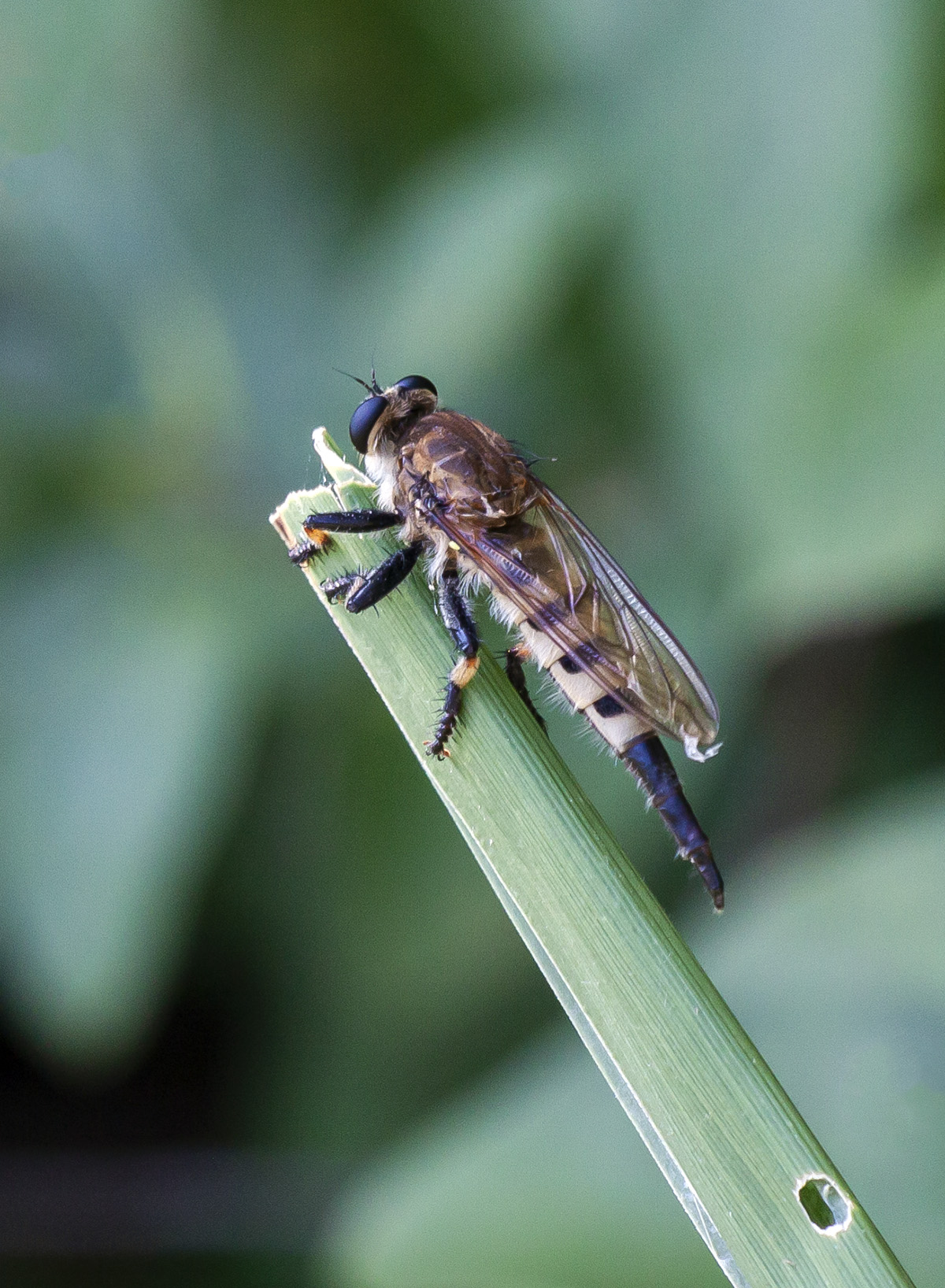
The Red-footed Cannibalfly (Promachus rufipes), a kind of robber fly has just about the coolest (and creepiest) name of any insect. I spotted this female Red-footed Cannibalfly last week at Occoquan Bay National Wildlife Refuge. If you look very closely at the image, you can actually see some of its tiny red feet. However, this insect is not known for being cute—it is a particularly fierce predator that can take down much larger prey, reportedly including hummingbirds.

On a personal basis, I have a particular fondness for the Red-footed Cannibalfly. On 31 August 2013, I did a posting called simply Red-footed Cannibalfly. The posting had some decent photos and and some interesting information and had a modest degree of success, with a total of 44 likes.

Amazingly, though, the posting has been viewed 2530 times to date. Apparently when folks go searching with Google, Bing, or some other search engine, they come across my posting and are intrigued enough to view it. I know that search engine algorithms are closely-guarded secrets, but for this one particular topic, I seem to have broken the code. If you do a search for “red-footed cannibalfly,” you might see my name pop up on the first page of results—it’s a weird claim to fame, but life on the internet is often a mystery.


Red-footed Cannibalfly

© Michael Q. Powell. All rights reserved.

Read Full Post »

I was excited to spot this Ruby-throated Hummingbird (Archilochus colubris) during a short visit yesterday to Meadowlark Botanical Gardens with some friends. The hummingbird was feeding on some distant orange jewelweed flowers (Impatiens capensis) and I was using a macro lens at that moment, so I was especially thrilled when I managed to capture this image.

I do not see hummingbirds very often, so it really is a treat for me to see one in action. It is absolutely mesmerizing to watch these little birds frenetically flying among the flowers, stopping from time to time to sip the nectar from one of them. Tracking the moving hummingbird was definitely a challenge with my 180mm macro lens. Strangely enough, though, I probably had an easier time in doing so with this lens than if I had been using my much longer telephoto zoom lens—it can be tough trying to track, focus, and zoom simultaneously when handholding a long lens.

This image is a significant crop of the original image, but the detail holds up fairly well, all things considered. Does equipment matter? It matters to some extent, but you can often get decent results by simply taking the shots with whatever camera and lens that you have at hand.

Ruby-throated Hummingbird

© Michael Q. Powell. All rights reserved.


Read Full Post »

Do you have a favorite insect? Although I like dragonflies a lot, my favorite insect is probably the rainbow-colored Handsome Meadow Katydid (Orchelimum pulchellum). I was thrilled to spot this beauty on some colorful vegetation last Saturday at Occoquan Bay National Wildlife Refuge.

I remember well the sense of incredulity that I felt when I saw one of these insects for the very first time—I simply could not believe that the bright colors were real. The beautiful curling leaves hide the details of the katydid’s body a little, but add a wonderful artistic element to this image. If want to see the brilliant colors of a Handsome Meadow Katydid on full display, check out this link to a 2013 posting that I entitled Rainbow Grasshopper—it is one of my most popular posts to date with over 315 views.

The vivid colors of this katydid are sure to grab your attention, but you should also be sure to check out its eyes. I am still blown away every time that I see those amazing eyes that seem to be looking deeply into me.  Here’s looking at you, kid.

Handsome Meadow Katydid

© Michael Q. Powell. All rights reserved.


Read Full Post »

If you were to pit a mantis against a spider, which one would have the advantage? I thought it would be the mantis, but that was clearly not the case this past week at Occoquan Bay National Wildlife Refuge. This spider had a large web stretched over a path on which I was walking, and I guess the mantis was unlucky enough to get stuck in its sticky strands as it was moving through the air.

mantis versus spider

© Michael Q. Powell. All rights reserved.
Read Full Post »

What signposts mark for you the transition from summer to autumn? Many folks might point to changes in the foliage colors or cooler weather, but for me the spotting of my first Fine-lined Emerald dragonfly (Somatochlora filosa) marks an unofficial beginning to the new season.

Fine-lined Emeralds are a relatively uncommon dragonfly species, both locally as well as nationally. They seem to prefer a coastal plain and are active for only about a month, generally the month of September. Yesterday I visited Occoquan Bay National Wildlife Refuge, a place where I have seen Fine-lined Emeralds in the past, and I was thrilled when I eventually spotted one. However, it took me several hours before I was able to capture this shot, because most of the Fine-lined Emeralds that I saw flew by me without stopping and I would lose them when I gave chase.

You probably noticed a few things about this dragonfly when you looked at the photo. First, it is clear why the family to which this dragonfly belongs is called “Emerald”—those brilliant green eyes are mesmerizing. Secondly, you can’t help but notice that Fine-lined Emeralds do not perch horizontally like most dragonflies you are likely to encounter. Instead, they hang almost vertically from bare branches. As a result, their slender bodies are hard for the eye to detect and also tend to confuse a camera’s autofocusing system. Most of the time I end up having to manually focus, as I did in this situation. Lastly, if you click on the image, you can see this dragonfly’s beautiful markings on the thorax (the “chest”) and the abdomen (the “tail”).

So, for me autumn has begun with the arrival of the Fine-lined Emerald dragonfly. Has autumn started for you yet or are you waiting for some additional personal signs of the season?

Fine-lined Emerald

© Michael Q. Powell. All rights reserved.

Read Full Post »

As I was looking at a small patch of purple aster flowers yesterday at Jackson Miles Abbott Wetland Refuge, I noticed that the center of one of them was a different color than all of the rest. I moved closer and was thrilled to see this very cool-looking White-banded Crab Spider (Misumenoides formosipes) nestled in among the petals of the flower. This kind of spider does not build a web, but patiently perches, waiting to pursue passing prey.

crab spider

crab spider

© Michael Q. Powell. All rights reserved.

Read Full Post »

With a name that includes the word “bluet,” you might expect that this female Big Bluet damselfly (Enallagma durum) would be blue, but obviously that is not the case here. There is a blue female variant in this species, but this one appears to be the olive variant.  Damselfly identification is difficult under the best of circumstances, because so many of them share the same colors—only the patterns help you distinguish among them. In this case, size helps a bit too, because Big Bluets are in fact larger than many other damselflies.

As I was exploring Occoquan Bay National Wildlife Refuge a few days, I was fortunate that this damselfly chose to perch at almost eye level on a stalk of Eastern Gamagrass, which let me get a clear shot with the sky in the background.  Most of the time damselflies like this perch lower to the ground in areas with denser vegetation.

Big Bluet

© Michael Q. Powell. All rights reserved.


Read Full Post »

I guess that the main subject of this image is the tiny male Eastern Amberwing dragonfly (Perithemis tenera), but I must confess that I was equally drawn to the curving shapes of the branches sticking out of the water during my recent trip to Jackson Miles Abbott Wetland Refuge. Normally I try to fill as much of my frame with my primary subject by using a zoom lens or by moving closer, but in this case I actually moved back in order to be able to capture more of the vegetation.

I really like the way that the warm amber color of the aptly named Eastern Amberwing stands out against the muted tones of the rest of the image. The style of this image is different from most of my shots (assuming that I have an identifiable style), but I enjoy mixing it up from time to time by shooting from different angle or distances.

Eastern Amberwing

© Michael Q. Powell. All rights reserved.

Read Full Post »

The milkweed plants were dirty and dried up, but I knew from past experience that there might be ladybugs crawling around on them. The first two plants that I checked were full of aphids, a favorite food of ladybugs, but I did not see any ladybugs at all. As I approached a third plant, I saw a flash of red and spotted a small ladybug crawling quickly down the stem of the plant. I was not as close as I could have like to have been, but managed to capture some images before the ladybug disappeared from sight.

I like the way that this shot turned out because the reddish-orange of the ladybug really stands out against the blues and greens in the rest of the photos. In case you are curious, the little specks of yellow are aphids. In this case, the aphids were safe, for this ladybug seemed to be in too much of a hurry to stop for a snack.

ladybug

© Michael Q. Powell. All rights reserved.

Read Full Post »

Monarch butterflies (Danaus plexippus) are beautiful in any situation, but when you surround them with red, orange, and yellow flowers, they absolutely explode with color. I was thrilled when I spotted this Monarch during a short visit to Green Spring Gardens this past Saturday morning. The butterfly was initially quite skittish and flew all around before finally settling on what I believe to be some kind of lantana flower. I had to maneuver around to try to get a good shooting position, but the butterfly stayed put for a minute and accommodated me. I was super happy when I managed to include some of the colorful flowers in the background and I just love the way that the colors work so well together.

monarch

© Michael Q. Powell. All rights reserved.

Read Full Post »

I spotted this beautiful American Lady butterfly (Vanessa virginiensis) during a quick visit this past Saturday morning to Green Spring Gardens, a county-run historic garden not far from where I live. A lot of butterflies were active that day, but my eyes were immediately drawn to this American Lady, a species that I do not see very often. I had to chase it a bit before it stopped to feed on this flower, which was so popular that the American Lady had to share it with a much smaller skipper butterfly. The flower was growing near a fenced in area of public plots where people grow vegetables and the fence caused the striped effect in the background.

Although I spend most of my time photographing subjects in the wild, it was nice to visit a more cultivated place that was still ablaze with summer colors. I am quite conscious of the fact that the summer is slowly slipping away.

American Lady

© Michael Q. Powell. All rights reserved.

Read Full Post »

What do you see first when you look at this image? Do you see the beautiful colors, textures, and shapes of the rock that makes up both the foreground and the background? Are you drawn to the lines and somber coloration of the Powdered Dancer damselfly (Argia moesta) and its shadow? Do you focus on the damselfly’s brightly shining gray eye?

I spotted this little damselfly this past week while exploring a creek in Fairfax County with fellow dragonfly enthusiast Walter Sanford. There is a simplicity to this image that I find really appealing. I especially like the limited color palette and the sense of harmony in the way that the colors work together.

What do you think?

Powdered Dancer

© Michael Q. Powell. All rights reserved.


Read Full Post »

Really, an image of a horsefly? That sentence fragment was part of an internal dialogue that I had with myself when considering whether to post this image. I know that most people find flies to be fairly disgusting.  However, I was really taken with the details that I managed to capture when this enormous horsefly—it looked to be about 2 inches (50 mm) in length—perched in front of me earlier this week as I was resting alongside a rocky creek.

The fly’s eyes seem to have multiple colors and its body has several wonderful patterns. It is not all beauty, though, and I find those sharp points protruding from the face to be menacing, an impression enhanced by the enlarged shadow that cast by the fly.

I have to admit that I was fascinated by this giant horsefly and that fascination prompted me to post the photo despite my initial inhibitions. What do you think?

horsefly

© Michael Q. Powell. All rights reserved.

Read Full Post »

Yesterday I was thrilled to spot this spectacular female American Rubyspot damselfly (Hetaerina americana) while exploring a creek in Fairfax County, Virginia with my good friend and fellow  dragonfly enthusiast Walter Sanford.  This species is found along streams and rivers and this in only the second time that I have ever seen American Rubyspots. The green and brown colors on the thorax (the “chest”) of this damselfly are incredible and I highly recommend you click on the images to get an even better look at the amazing details.

Signs are starting to appear that we are approaching the end of summer. Already I have noted that the number of dragonflies is dropping, though there still seem to be plenty of butterflies. It was therefore particularly gratifying to see this unfamiliar damselfly yesterday. The dragonfly season, though is far from over—there are some autumn dragonfly species that I have not yet seen.  Birds are starting to migrate through this area, so some may appear in this blog soon, but there should still be dragonfly photos for the next few months at least.

American Rubyspot

American Rubyspot

© Michael Q. Powell. All rights reserved.

Read Full Post »

The only other time that I can remember a butterfly perching on me was when I was in an indoor enclosed butterfly garden. This time, though, it was out in the wild and I was a bit shocked when Walter told me that there was a butterfly on my head. Thanks to Walter Sanford, my friend and fellow dragonfly enthusiast, for capturing this encounter. Be sure to check out his blog for lots of wonderful images of dragonflies and other cool creatures.

waltersanford's avatarwalter sanford's photoblog

There’s a butterfly on your hat. A Red-spotted Purple butterfly (Limenitis arthemis astyanax).

16 AUG 2019 | Occoquan Bay NWR | Red-spotted Purple butterfly

This comical butterfly-man union was observed during a photowalk with Michael Powell at Painted Turtle PondOccoquan Bay National Wildlife Refuge, Prince William County, Virginia USA.

16 AUG 2019 | Occoquan Bay NWR | Red-spotted Purple butterfly

The weather was extremely hot and humid. (Notice the Cumulus congestus clouds building in the background.) Both Mike and I were soaked with sweat as soon as we started our photowalk earlier the same day at another site. The butterfly was feeding upon mineral salts on Mike’s “Duck Dynasty” hat.

Copyright © 2019 Walter Sanford. All rights reserved.

View original post

Read Full Post »

Great Blue Skimmer dragonflies (Libellula vibrans) are really common, but I enjoy photographing them anyways, like this grizzled male that I spotted earlier this week at Jackson Miles Abbott Wetland Refuge. The curling vines of the plant on which this dragonfly chose to perch add some additional visual interest to these photos.

I must confess that ordinary blue dragonflies have a special place in my heart, because my very first blog posting on July 7, 2012 featured a photo of a Blue Dasher, another common species. My photography skills and my knowledge about dragonflies have increased significantly since that time, though I am still quite proud of that initial photo that started me on this long journey into photography.


blue dasher

Blue Dasher

© Michael Q. Powell. All rights reserved.

Read Full Post »

How do spiders decide where to place their webs? Is there some special secret that is passed on from generation to generation about optimal web placement for capturing prey? I know that human fisherman and trappers look for specific conditions and wonder if it is the same with spiders.

Whatever the case, this Black and Yellow Garden Spider (Argiope aurantia) appears to have mastered her trapping skills and looks to have caught both a female Common Whitetail dragonfly (Plathemis lydia) and what I think is some kind of female grasshopper. I am not really sure about the latter victim, but that is what I believe the green-colored object is in the image.

Often I see the webs of this kind of spider in fairly thick vegetation, but this web was hanging in mid-air about six feet high at the edge of a small pond last weekend at Jackson Miles Abbott Wetland Refuge. The murky grayness in the upper right portion of the image is the water of the pond. In the left hand side you can see some of the web strands that tenuously connected the web to some nearby vegetation. This spider would not have one any contests for the beauty of its web, but there is no arguing with its success in capturing prey.

argiope aurantia

© Michael Q. Powell. All rights reserved.

Read Full Post »

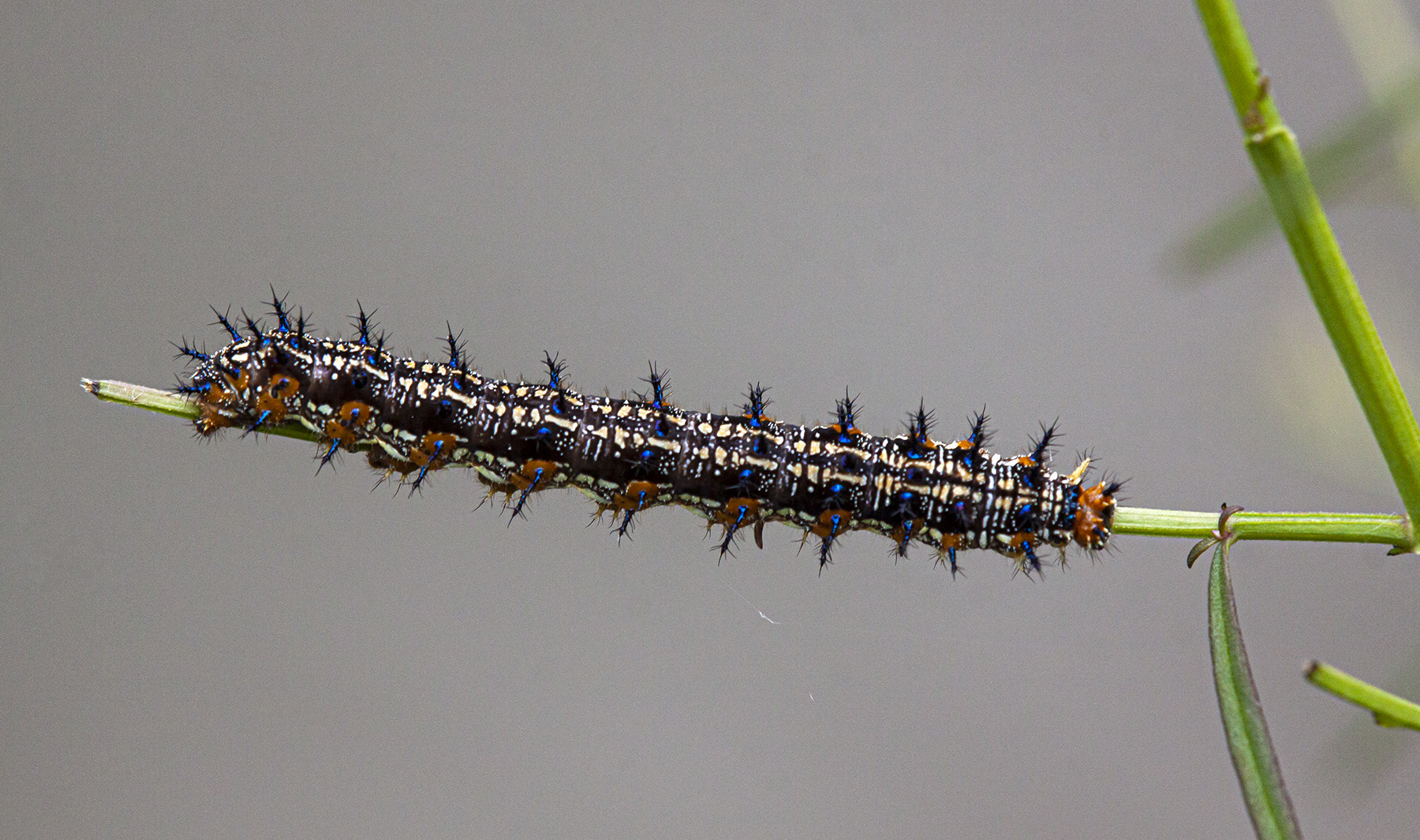
Yesterday I spotted this amazing looking caterpillar alongside a pond at Jackson Miles Abbott Wetland Refuge. I have not yet been able to identify it, but I was really struck by the stunning blue dots and the prickly spikes that run the length of the caterpillar’s body. Often these types of spikes are an indication of a venomous stinging caterpillar, so I kept my distance as I was taking this shot. Click on the image if you want to get a closer look at the wonderful details of the caterpillar.

UPDATE: Several helpful folks have weighed in and have identified this as a Common Buckeye caterpillar (Junonia coenia). Thanks for the help.

caterpillar

© Michael Q. Powell. All rights reserved.

Read Full Post »

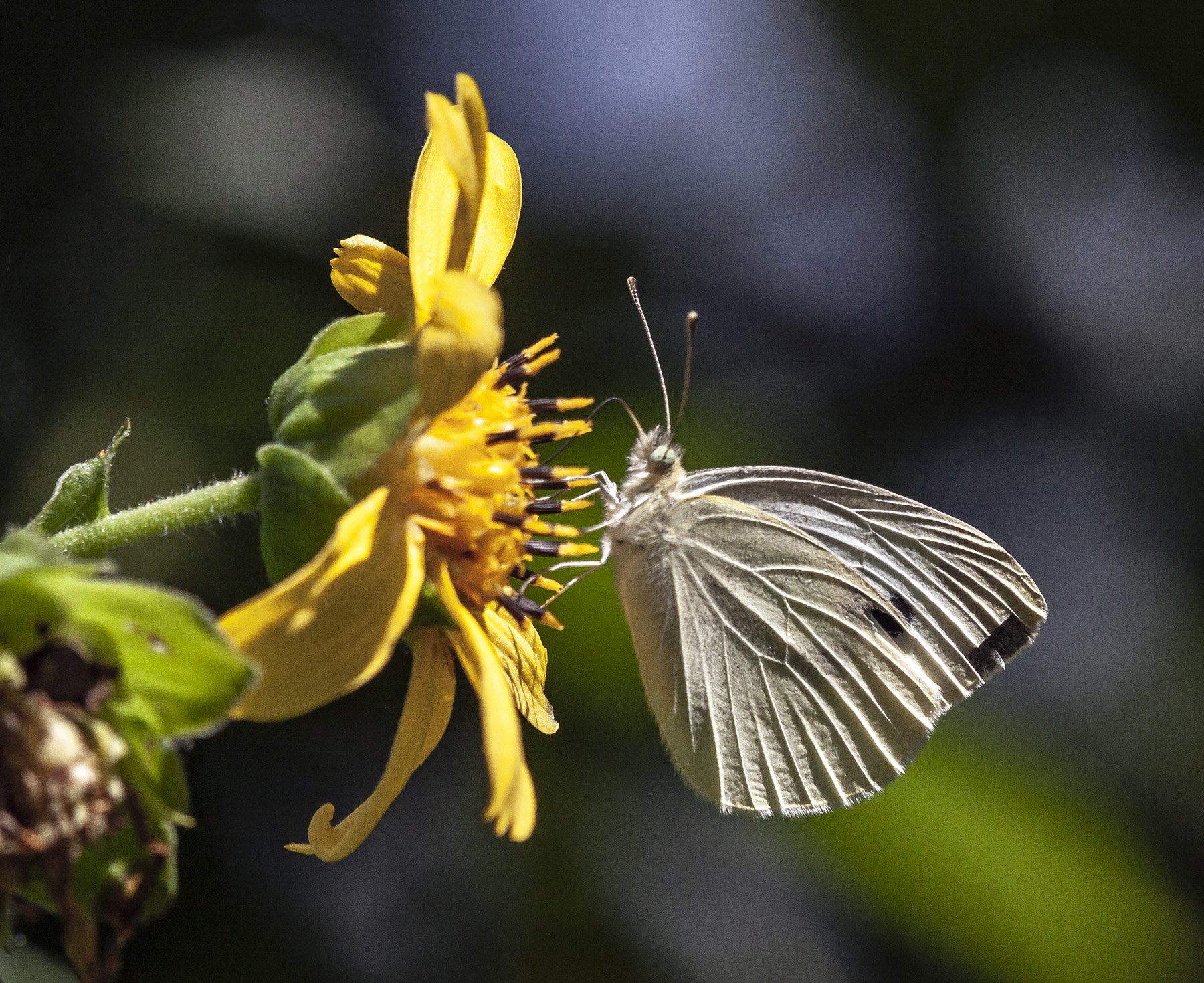
Cabbage White butterflies (Pieris rapae) are small, plain, and common, yet I find a real beauty in their elegant simplicity, especially when I get a view of their speckled green eyes. I spotted this Cabbage White last weekend when I was exploring Occoquan Bay National Wildlife Refuge. As always, my biggest challenge was getting into a shooting position in which the butterfly’s body was on a single plane in order to get most of it in focus—in this case I more or less succeeded in doing so.

Cabbage White

© Michael Q. Powell. All rights reserved.

Read Full Post »

There were quite a few grasshoppers yesterday at Occoquan Bay National Wildlife Refuge and this one cooperated for me by posing momentarily. Initially the grasshopper hung upside down as shown in the first image, but eventually it climbed around on the stalk of vegetation and assumed a more upright pose.

I couldn’t help but notice that the background of the two shots seems really different. I think this was caused by the fact that I shot them from very different angles, even though I remained more or less in the same spot.

grasshopper

grasshopper

© Michael Q. Powell. All rights reserved.

Read Full Post »

Some people see spiders as creepy and others see them as cool. I am definitely in the latter category and was happy to spot this Black and Yellow Garden Spider (Argiope aurantia) during a recent trip to Jackson Miles Abbott Wetland Refuge.

I love the zigzag pattern that is a distinctive characteristic of the webs constructed by this species of spider and was thrilled that I managed to capture the zigzag in this shot. This spider is pretty common and has a lot of different common names including zigzag spider, writing spider, yellow garden spider, and golden garden spider. Zigzag Spiders can get to be pretty big and I have seen them capture large prey including, alas, dragonflies. It is amazing to see how fast the spider is able to wrap up its captured prey in web material. In case you have never witnessed the process, here’s a link to a 2017 posting that shows a spider wrapping up a freshly caught damselfly.

zigzag spider

© Michael Q. Powell. All rights reserved.

Read Full Post »

As many of you know, I love trying to capture images of dragonflies in flight. This Slaty Skimmer dragonfly (Libellula incesta) cooperated by periodically hovering a bit during a recent trip that I made to Jackson Miles Abbott Wetland Refuge. The first two images show you some of the details of the dragonfly’s body, including the way it tucks in its legs when in flight, and the final image gives you a wider view of the environment in which I was shooting.

Slaty Skimmer

slaty skimmer

slaty skimmer

© Michael Q. Powell. All rights reserved.

Read Full Post »

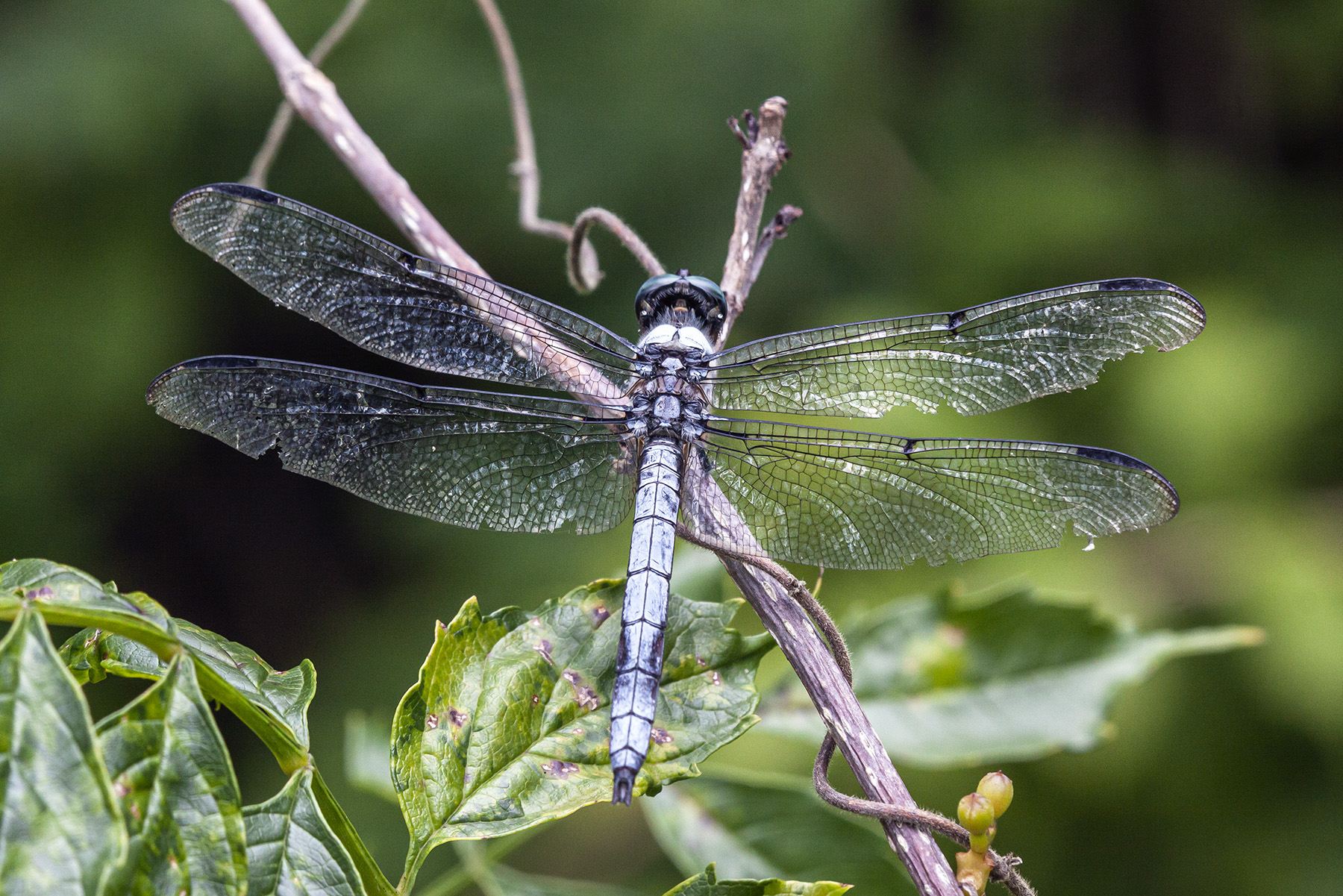
Last Friday I spotted this handsome adult male Calico Pennant dragonfly (Celithemis elisa) while exploring Occoquan Bay National Wildlife Refuge with my friend and fellow dragonfly enthusiast Walter Sanford.  Earlier this month I did a posting entitled Mosaic Wings that featured a photo of an immature male of this same species that had a bright yellow body. This image gives you an idea of how the body color changes to red as the male Calico Pennant dragonfly matures.


Calico Pennant

© Michael Q. Powell. All rights reserved.
Read Full Post »

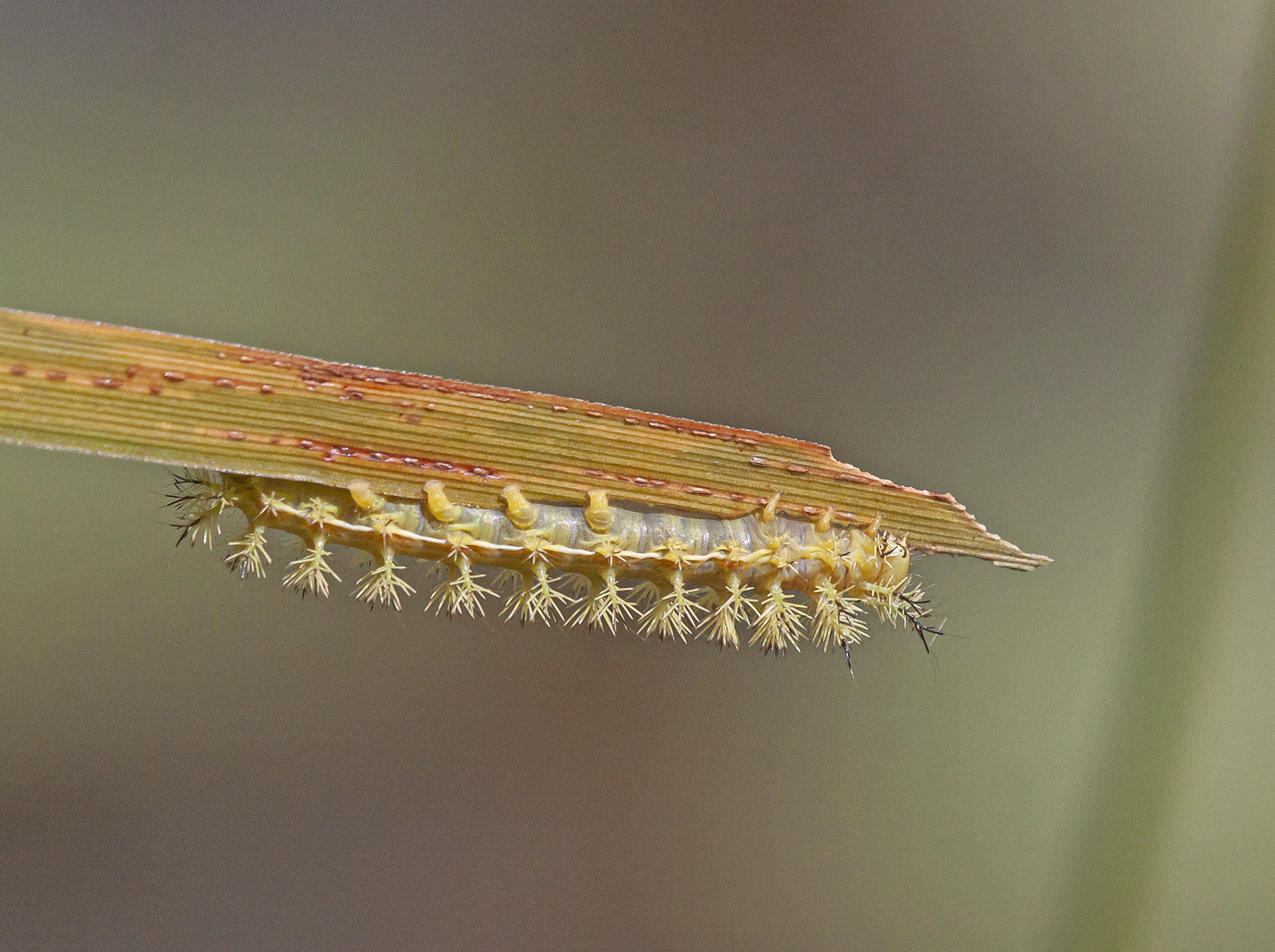
I spotted this strange looking caterpillar recently while exploring Jackson Miles Abbott Wetland Refuge. I was intrigued by all of the tufted spines sticking out of its back—I am pretty sure that it is upside down in this photo. Over the years, I have learned that it is best to avoid spiny caterpillars, because many of them are poisonous.

I sent a copy of a photo of this caterpillar to the helpful folks at bugguide.net and one of the viewers there suggested that this is an Eastern Buck Moth caterpillar (Hemileuca maia). I have not yet been able to get a confirmed identification, but according to Wikipedia, the caterpillars of this species are, “covered in hollow spines that are attached to a poison sac. The poison can cause symptoms ranging from itching and burning sensations to nausea.”

Fortunately I kept my distance when I captured this image with my long macro lens. I have no desire for a close encounter with a spiny caterpillar.

Eastern Buck Moth

© Michael Q. Powell. All rights reserved.

Read Full Post »

« Newer Posts - Older Posts »