Feeds:
Posts
Comments

Archive for the ‘Photography’ Category

Ever since I was a kid, I have always enjoyed the game “one of these things is not like the others.” Can you spot the juvenile Snow Goose (Anser caerulescens) in this photo of geese that I observed last Thursday at Occoquan Regional Park?

Generally the only geese that I ever see in my area are Canada Geese (Branta canadensis). They are so numerous that many people consider them to be a nuisance. I have learned from experience that birds intermingle when floating on the water, so I was carefully scanning the flock of Canada Geese when I spotted this anomaly. At first I thought it might be some kind of duck, because it seemed so much smaller than the other birds. After some research and  assistance from more experienced birdwatchers, however, I have determined that it is a Snow Goose, a species that I have never photographed before.

The song “One of these things is not like the others” used to pop up regularly on the Sesame Street television program with all kinds of different items. When I looked on YouTube, I came across a delightful video with the song that features with food items and a mitten and dates back to 1969. Click on this link to watch the short video that concludes with the provocative question, “Did you ever try eating a mitten?”

Snow Goose

© Michael Q. Powell. All rights reserved.

Read Full Post »

This female Red-winged Blackbird (Agelaius phoeniceus) was backlit on Monday at Occoquan Bay National Wildlife Refuge, so I had to overexpose the image, which made the cloudy sky turn almost pure white. I really like the effect, which is reminiscent of a high-key portrait taken in a studio setting. One of my Facebook friends commented that the shot looked to him “like an old time copper image.”

My initial thought was to crop the image in a landscape format, as in the second image below, because I liked the graceful curve of the main branch. Upon further reflection, I decided that maybe there was literally too much white space in the image and opted for the square format in the first shot below, which gives a bit more attention to the main subject. What do you think? Do you have a preference for one version over the other?

red-winged blackbird

red-winged blackbird


© Michael Q. Powell. All rights reserved.


Read Full Post »

I never get tired of photographing Bald Eagles (Haliaeetus leucocephalus). Here is a shot of one taking off from a tree last week at Occoquan Bay National Wildlife Refuge. My view was partially obscured by branches, but I somehow managed to keep the eagle’s eye in focus.

I never got a fully clear shot of the eagle when it was perched, so it was a happy surprise that I was able to capture this image when it started to take off. I think the eagle’s pose here is more dynamic than any shot I could have taken when it was in a static position, so it is not a huge loss that I have no perched pose.

bald eagle takeoff

© Michael Q. Powell. All rights reserved.

Read Full Post »

I generally do not like to take “traditional” selfies. When I do photograph myself, I prefer shots like these ones that I captured early in the morning last Thursday at Occoquan Bay National Wildlife Refuge. When the sun is low, the shadows are so elongated, as in the first photo, that they remind me of Alberto Giacometti’s famous statue “L’homme qui marche” (The Walking Man).

selfie

selfie

© Michael Q. Powell. All rights reserved.

Read Full Post »

How much gear do you carry with you when you go out to take photographs? Each time that I get ready, it is like planning for a trip. More gear means that I will be more ready for the full range of situations that I may encounter, but more gear means more weight. So what do I do? I compromise. During the winter, I tend to have my 150-600mm zoom lens on my DSLR and during the summer I use a 180mm macro lens as my primary lens. I will usually have a second lens in my camera bag, often a 24-105mm lens, but often it goes unused.

For greater flexibility I usually carry my trusty Canon SX50 super zoom camera. It is lightweight and versatile, with an equivalent field of view of 24-1200mm, a 50X zoom. Like me, it is a bit old and slow and has some limitations, but it lets me capture wide-angle shots in the winter and distance shots in the summer without having to change lenses on my primary camera in the field. It also lets me shoot in RAW,  my preferred format for capturing images.

On the 2nd of January, I was chasing the sunrise. I knew that sunrise was scheduled for around seven o’clock, which is the time when the electrically-controlled gates of my favorite wildlife refuge slide open. I was a little late leaving home and as I drove south on the interstate, I could see the sky turning a beautiful shade of red. As I entered the refuge, I could see that the colors were starting to fade. As soon as I got to the parking lot, I grabbed my SX50 and captured the second shot below with the engine still running and the car door open.

I turned off the engine, grabbed my gear, and headed for the water. Along the way I stopped to capture the third shot below, a view across a frosty field. When I finally got to the water, I could see that the sun had already risen. However, the clouds reflected some of the brightness of the sun and added drama to the scene and I was able to capture the wide view that you see in the first photo below with the SX50.

In case you wonder why I did not post these photos earlier, I simply forgot to upload them immediately from my “second” camera. It was a nice surprise for me when I looked at them on my computer screen for the first time yesterday. The images validated for me the value of carrying this camera with me for its multi-purpose capability, a kind of photographic Swiss Army knife.


sunrise

sunrise

sunrise

© Michael Q. Powell. All rights reserved.

Read Full Post »

Last month I received a curious question from Cindy Dyer, my good friend and photography mentor—she asked me if I had any good winter images. In addition to being an amazing photographer, Cindy works as a graphic designer. The editor with whom she works on Hearing Life Magazine, the official magazine of the Hearing Loss Association of America, wanted a winter-related full-page original image for the January/February 2020 issue.

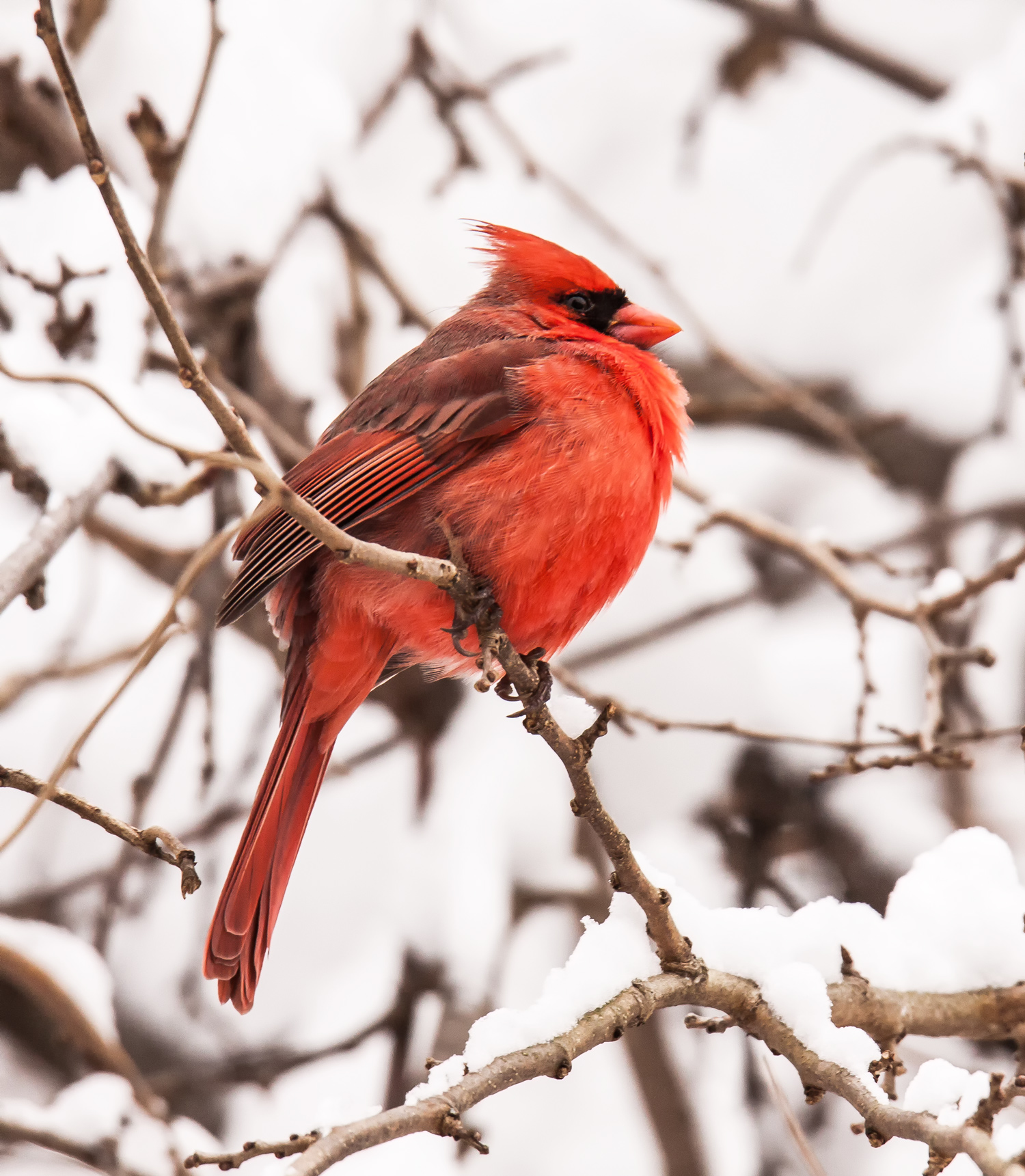
She knew that she did not have many snow images, but figured that I would. I gave her some options, and she chose this shot of a male Northern Cardinal (Cardinalis cardinalis) that I photographed in my neighborhood after a snowstorm last January. The editor loved this image as cardinals hold special significance to her—her late sister loved them—and added the quotation from Vincent Van Gogh, one of my favorite artists.

I was curious about the context of the quotation and learned from vangoghletters.org that it was from a letter that Vincent Van Gogh wrote to his brother Theo from London in January 1874. Here is the paragraph of that letter than contains the quotation, “Things are going well for me here, I have a wonderful home and it’s a great pleasure for me to observe London and the English way of life and the English themselves, and I also have nature and art and poetry, and if that isn’t enough, what is?” As I read the letter in its entirety, I was equally struck by Van Gogh’s commentary about nature and art, “Always continue walking a lot and loving nature, for that’s the real way to learn to understand art better and better. Painters understand nature and love it, and teach us to see.”

I am always thrilled to see one of my images in print and I was excited yesterday when I finally received a printed copy of the magazine. One of my goals this year is to have more of my photos printed—I have a few of my favorites hanging on the wall already, but still have room for more of them. If you are interested in seeing the original posting in which this image appeared, click on this link to Cardinal in the snow.


Northern Cardinal

© Michael Q. Powell. All rights reserved.

Read Full Post »

Although I am normally a little unhappy when I cut off the tip of a bird’s wings when taking its photo, the intensity of this Bald Eagle(Haliaeetus leucocephalus) more than made up for any sense of disappointment and I am actually thrilled with these shots. I was standing close only a short distance from the eagle last Thursday at Occoquan Bay National Wildlife Refuge and was concentrating on photographing it while it was perched. When the eagle suddenly extended its wings and took off without warning, my immediate reaction was to concentrate on tracking it rather than worry about pulling back on the zoom and in all three of these photos I clipped the wings.

I decided to present the photos in reverse chronological order, because the first image is my favorite. If you look closely you will note that the eagle snagged a few spiky balls from the sweet gum tree in which it was perched, sending them flying and leaving one stuck in its tucked-in talons. You can also see how the eagle generated its initial lift with a flap of its impressive wings in the final photo and then pushed off with its talons to clear the branches in the penultimate image.

Bald Eagle

Bald Eagle

Bald Eagle

© Michael Q. Powell. All rights reserved.

Read Full Post »

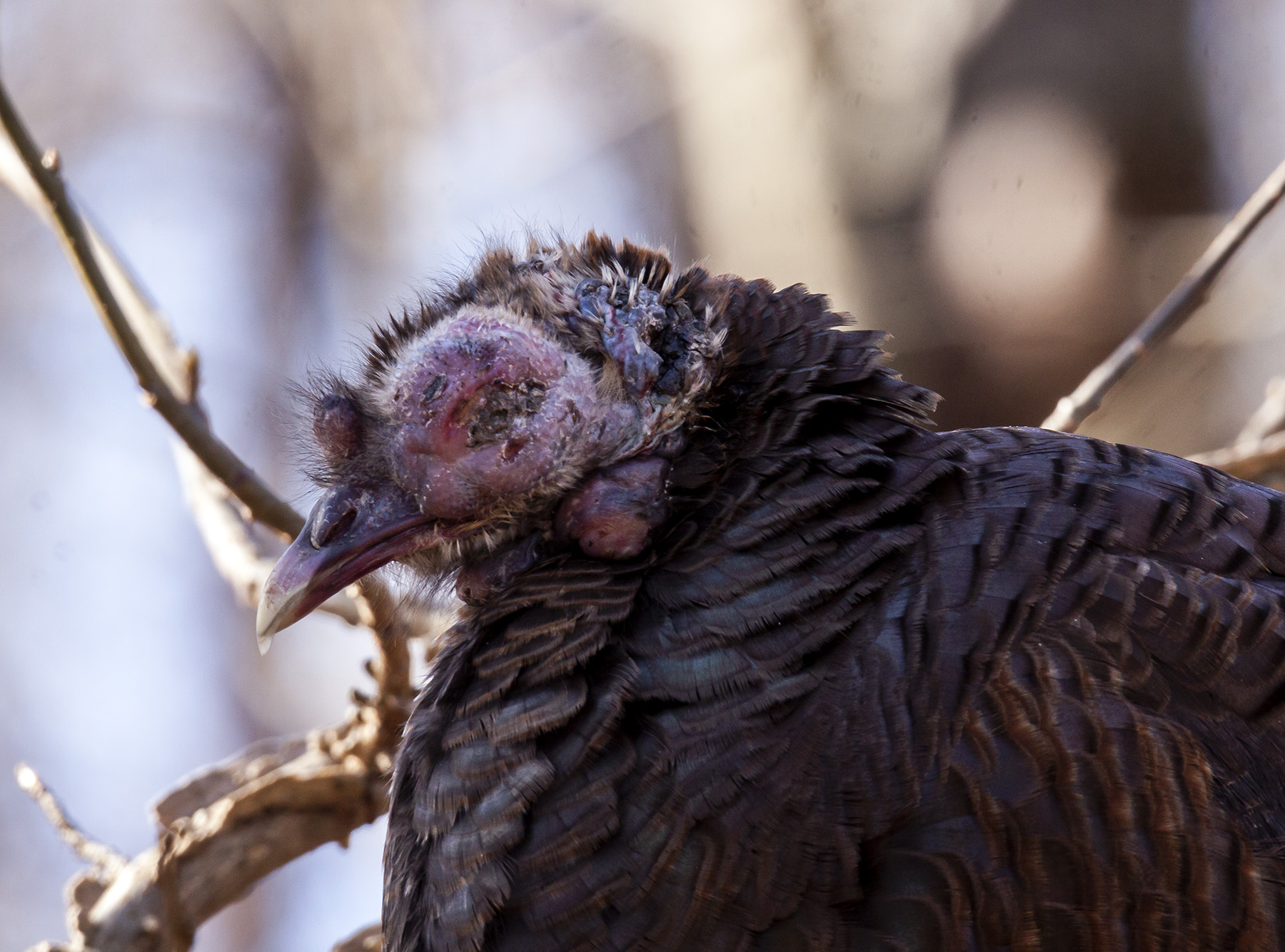
When I spotted this Wild Turkey (Meleagris gallopavo) roosting low in a tree at the edge of a trail last Thursday at Occoquan Bay National Wildlife Refuge, I was initially happy to be able to get a shot. As I got closer, though, I was saddened to see that the turkey appeared to be injured or more likely suffering from a disease.

I was initially alerted to the presence of a ranger who drove past me heading in the opposite direction in a truck. I was sure that the passing of the truck had spooked the turkey and was surprised to see that it was still there as I silently moved closer. I noted small movements by the turkey, so I could tell that it was alive, but the extent of the damage to its face made me wonder if it could see. I quickly took the first two shots and departed.

When I circled back an hour later, I could see that the turkey had changed positions, but was still perched in the tree. I could now see that the damage to the other side of its face was equally severe. I worry about the survivability of this injured/sick wild turkey.


Wild Turkey

Wild Turkey

Wild Turkey

© Michael Q. Powell. All rights reserved.

Read Full Post »

The last few days I have been struck again by some fundamental differences between birders and photographers. In simple (and overgeneralized) terms, birders tend to be more scientific in their approach and photographers tend to be more artistic.

Most birders keep detailed records of what they see when they go out for a walk and have life lists of species they have observed. They know about the ranges of each species for each season and can often recognize a bird from its call. Any sighting of a bird “counts,” even if the bird is far away and a photo of it is tiny and blurry, though a photo is not an absolute requirement.

Many photographers like me don’t keep track of all that they see—if I am not able to get a shot of a bird that I spot, preferably a good shot, I mentally erase the sighting from my memory. I have not studied and internalized information about most bird species and therefore have trouble determining if a species is rare or common. That distinction does not really matter to me as I am generally more focused on getting a well-composed shot in decent light with an interesting pose, ideally a dynamic pose. I was therefore excited by the sequence of shots that I captured of a bald eagle taking off when I did a photowalk on Thursday at Occoquan Bay National Wildlife Refuge and immediately posted those images in posting on Friday morning.

I also took some shots of a small yellow bird on the icy surface of a small pond. I really did not know what it was, but suspected that it was some kind of warbler. I posted a photo on the Virginia Birding Facebook forum and asked for help. The response that I got from birders was immediate and excited—I was asked to document the sighting in eBird, an online database of bird observations with real-time data about bird distribution and abundance, and to repost the photo in the Virginia Notable Bird Sightings Facebook forum.

Why were the birders so excited? The bird, I was told, is a Nashville Warbler (Leiothlypis ruficapilla). According to the moderator of the Virginia Notable Bird Sightings forum, current records for Nashville Warblers are “very sparse on the East Coast. There are no other winter records for the species currently input to eBird at Occoquan NWR so this is quite remarkable.”  Apparently this is really late in the season to see a species that should have migrated through our area quite a while ago.

As for me, I am happy with the way I was able to capture the warbler’s reflection on the ice and the natural framing of the subject by the vegetation. The fact that it is a rare sighting at this time of the year is at best of secondary importance to me.

Nashville Warbler

Nashville Warbler

© Michael Q. Powell. All rights reserved.

Read Full Post »

A number of Bald Eagles (Haliaeetus leucocephalus) were active yesterday morning at Occoquan Bay National Wildlife Refuge and I managed to capture this sequence of images as one of them was in the process of taking off from its perch.

I had accidentally spooked this eagle from its previous perch a bit earlier and was fortunately to be able to visually track the it to the new perch, a tree in the middle of a large field. The high vegetation surrounding the trail gave me some cover as I moved along the trail until I was in sight of the eagle again. I waited and watched the eagle, hoping to detect signs when it was preparing to depart. When the eagle bent down a little, I suspected that it was getting ready to fly away and I guessed right.

My zoom lens was extended to its maximum focal length (600mm) for these shots, so I was really happy that I was able to capture the full wing extension in the final shot—I am often prone to clip off the tips of the wings in situations like this. The final shot is my favorite in this sequence and I encourage you to click on the image to see the wonderful details more clearly, like the position of the talons as the eagle pushed off from the tree.

Bald Eagle

Bald Eagle

Bald Eagle

Bald Eagle

© Michael Q. Powell. All rights reserved.


Read Full Post »

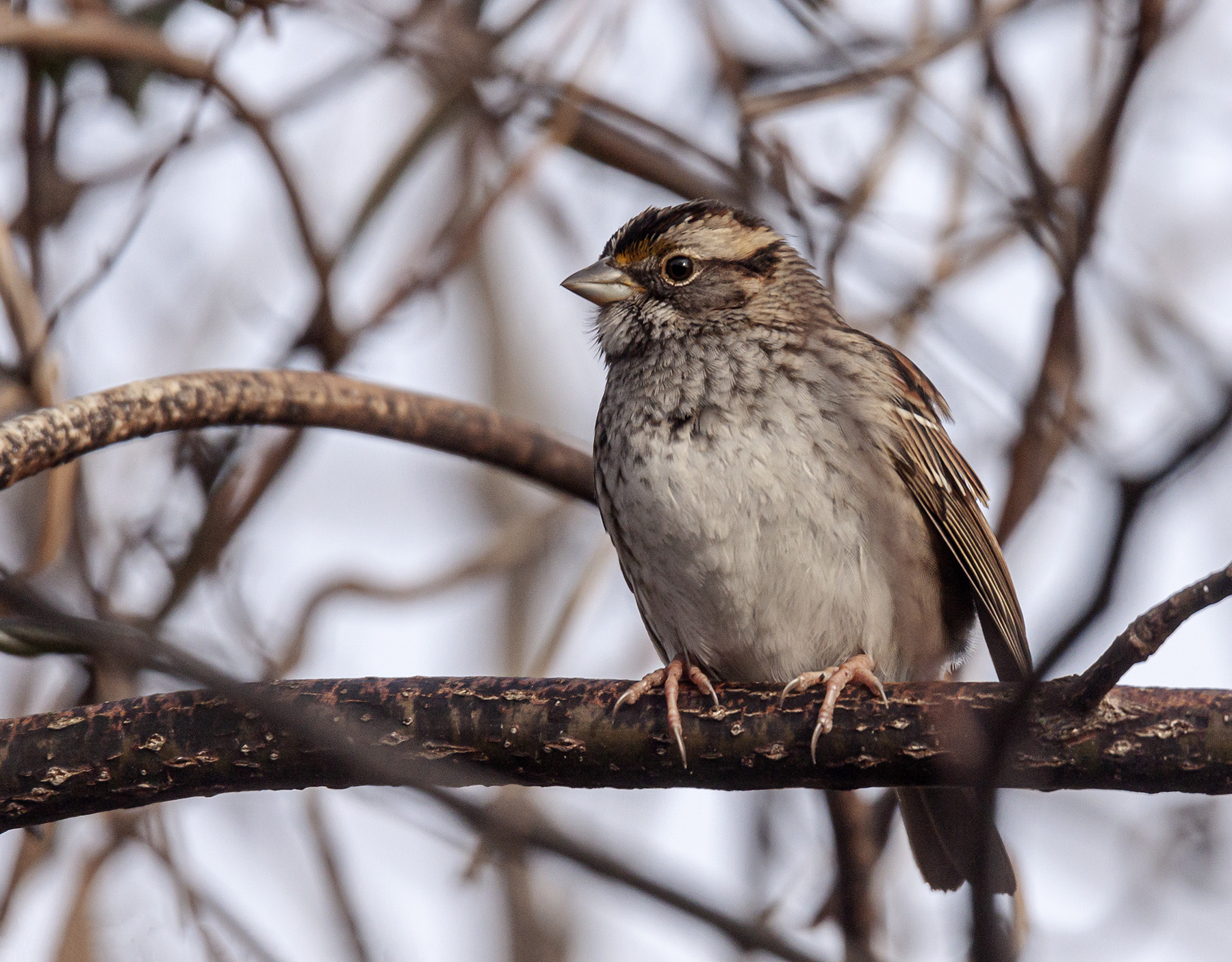
We have moved into a season of the year in which it is increasingly difficult for me to find birds to photograph. When the weather is cold and grey, birds seem to be less active and are certainly less visible. Photography, though, is not about efficiency for me—I have come to enjoy my long, mostly solitary walks in nature with my camera irrespective of the actual results.

Consequently I think that I value each of my interactions with wild creatures even more than usual during the winter. For example, last week I worked hard to capture this little portrait of a White-throated Sparrow (Zonotrichia albicollis) at Occoquan Bay National Wildlife Refuge. Sparrows are often ignored by many birders and photographers, because of their commonness and drabness, but I enjoy the challenge of trying to photograph them as they move about, scratching and pecking, often buried within bushes and other vegetation.

White-throated Sparrow

© Michael Q. Powell. All rights reserved.


Read Full Post »

Last week I watched as a Great Blue Heron (Ardea herodias) slowly flew across the sky and perched high in a tree in the middle of the woods. The perch seemed precarious and the heron’s position did not appear to be at all comfortable. I honestly don’t know how the heron managed to land amidst all of the small branches—it required precision flying for the heron to pull in its wide wings at precisely the right moment as it decelerated.

Great Blue Heron

© Michael Q. Powell. All rights reserved.

Read Full Post »

A week ago I did a retrospective posting on some of my favorite photos from the first half of 2019 and alerted readers that a second posting would appear “in the next few days.” Here at last is part two—click here if you missed the first installment. As was the case in the initial posting, I went through my postings month by month and selected two photos for each month. I have provided a link to the individual postings in the captions of the photos to make it easier for interested readers to see the images in the context of the original postings, which often include additional photos and explanatory information.

If you look carefully at the dates, you may notice that I did not include any photos from November in this posting. As many of you may recall, I was in Paris for three weeks in November. After my first posting, one reader suggested that I do a separate posting for Paris, rather than be forced to select two photos from the many that I posted of my adventures in Paris. I decided to follow that recommendation, so hopefully there will be  a third and final posting of my look back at 2019 sometime “soon.”


Sable Clubtail

Sable Clubtail dragonfly, July 6, 2019 Sable Clubtail

Halloween Pennant

Halloween Pennant dragonfly July 31, 2019 Perching Halloween Pennant

Osprey

Osprey, August 3, 2019, No sushi for me

Eastern Ringtail

Eastern Ringtail dragonfly, August 5, 2019 Getting down with an Eastern Ringtail


crab spider

Crab spider, September 7, 2019, White-banded Crab Spider

Handsome Meadow Katydid

Handsome Meadow Katydid September 10, 2019 My favorite insect?


Blue-faced Meadowhawk

Blue-faced Meadowhawk dragonfly, October 2, 2019 Blue-faced Meadowhawk in October

Bald Eagle

Bald Eagle October 16, 2019 Bald Eagle Takeoff

Hooded Merganser duck December 7, 2019 Hoodie Season

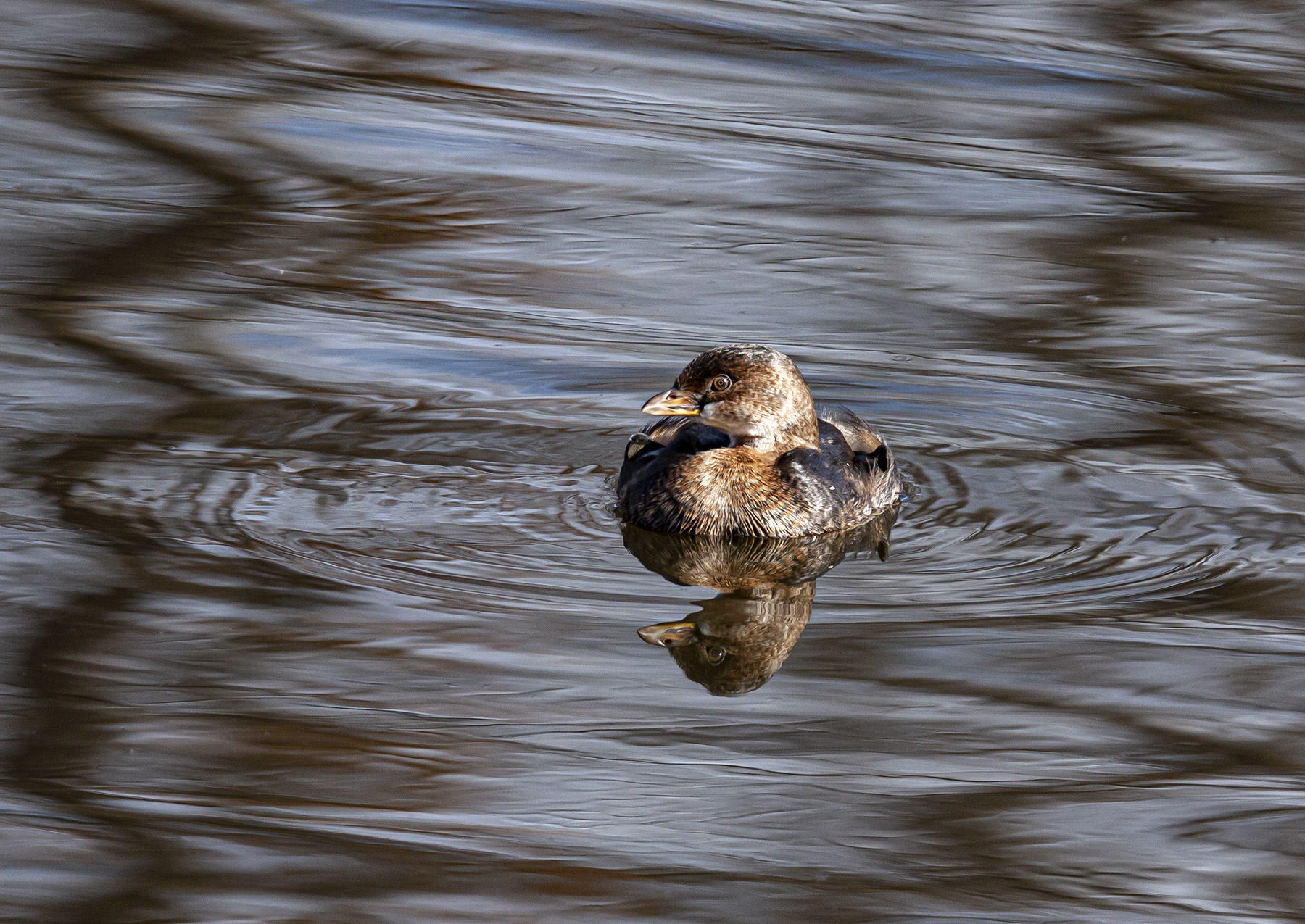
Pied-billed Grebe

Pied-billed Grebe December 24, 2019 Portrait of a Pied-billed Grebe


© Michael Q. Powell. All rights reserved.

Read Full Post »

Bald Eagles (Haliaeetus leucocephalus) at one of the nesting sites at Occoquan Bay National Wildlife Refuge looked to be renovating their nest this past week. In the first shot, the female eagle was taking a short break from arranging the sticks around the edge of the nest. The second shot gives you a wider view of the nesting site and also shows the male eagle perched higher in the tree and to the right.

The male eagle arrived at the tree first and a short time later the female flew in and began to work. The male seems to be keeping watch over his mate and surveilling the overall situation.

I was planning to watch the eagles for an extended period of time, but unfortunately a loud group of visitors approached from the opposite direction and spooked the two eagles. In the upcoming weeks, I expect the refuge authorities to close off some of the adjacent trails to allow the eagles to nest in peace. I was therefore really happy to have had the chance to see the bald eagles during these preliminary stages of renovating their nest.

Bald Eagle nest

Bald Eagle nest

© Michael Q. Powell. All rights reserved.
 

Read Full Post »

This past Thursday I was thrilled to photograph a handsome male Eastern Towhee (Pipilo erythrophthalmus) at Occoquan Bay National Wildlife Refuge.  Most of the times when I see towhees, they are poking about in the leaves, half hidden by the shadows, so it was wonderful to get a few unobstructed shots of one.

As I was doing a little research on this bird, I came across this wonderful description of the species on the Cornell Lab of Ornithology website:

“A strikingly marked, oversized sparrow of the East, feathered in bold black and warm reddish-browns – if you can get a clear look at it. Eastern Towhees are birds of the undergrowth, where their rummaging makes far more noise than you would expect for their size. Their chewink calls let you know how common they are, but many of your sightings end up mere glimpses through tangles of little stems.”

Eastern Towhee

Eastern Towhee

© Michael Q. Powell. All rights reserved.

Read Full Post »

I accidentally spooked a small flock of wild turkeys (Meleagris gallopavo) on Thursday at Occoquan Bay National Wildlife Refuge and one of them flew up into a tree in the middle of a field. I waited patiently and captured these shots when the turkey finally flew out of the tree. As you probably have noticed, the images are not in chronological order—I decided to lead with the two shots in which the turkey is in the air, which I think are the most dramatic images, and finish with the shot in which the turkey was starting to take off.

I was shooting almost straight into the sun, which is why the turkey is mostly a silhouette and the images seem like they were shot in black and white.

wild turkey

wild turkey

wild turkey

© Michael Q. Powell. All rights reserved.

Read Full Post »

Yesterday at Occoquan Bay National Wildlife Refuge I was thrilled to capture these images of a cute little Golden-crowned Kinglet (Regulus satrapa). Golden-crowned Kinglets are really small, only 3.1-4.3 inches (8-11 cm) in length and weighing 0.1-0.3 ounces (4-8 g), and they very active, which makes them hard to spot and even harder to photograph.

The kinglet posed so nicely that I don’t even have to explain why it is called “Golden-crowned.” In fact, it was the bright yellow streak on its head that initially caught my eye and helped me as I tracked the tiny bird as it moved in and out of the vegetation.

Golden-crowned Kinglet

Golden-crowned Kinglet

© Michael Q. Powell. All rights reserved.

Read Full Post »

Can birds smile? With rigid bills, it is probably anatomically impossible for birds to smile in the same way that humans do.

Sometimes, though, a bird will look at me in such a friendly, inquisitive way that it is easy for me to imagine that it is smiling at me. That was the case recently with this female Bufflehead duck (Bucephala albeola) that had cocked her head to the side and looked right at me.

I generally try to approach my subjects as slowly and stealthily as I can so that they will not perceive me as threatening. Of course, most wildlife subjects have much more highly developed senses than I do and they usually catch me in the act. Sometimes they will flee, but if I am lucky, they will simply smile at me.

bufflehead

© Michael Q. Powell. All rights reserved.


Read Full Post »

Happy New Year to all of my family and friends. Best wishes for a wonderful 2020, full of fun and adventures.

This is a shot of the colorful little bantam rooster that served as my alarm clock this past weekend. As I sought to photograph him, he climbed atop a woodpile on the front porch of the house and made a short series of vocalizations. As I noted in an earlier posting, I am essentially a city boy, so I have no idea how long and loud a sound has to be for the rooster to be considered to be “crowing.”

bantam rooster

© Michael Q. Powell. All rights reserved.

Read Full Post »

At the end of each year I am faced with a decision about whether to do a review of the year and/or select my favorite photos. Some years I have done a selection based on the number of views received; some years I have chosen my personal favorites; and some years I have opted to do no yearly retrospective whatsoever.

This year I went through my postings month by month and selected two photos for each month. Rather than give an explanation for each selection, I have provided links to the postings themselves to make it easier for interested readers to see the images in the context of the original postings that often include additional photos and explanatory information.

This has been a rewarding year for me in so many ways and I have had a lot of wonderful experiences capturing images. Thanks so much to all of you for your support and encouragement. Stay tuned for part two, which should appear in the next few days.


Northern Cardinal

January 16, 2019 Cardinal in the snow (https://michaelqpowell.com/2019/01/16/cardinal-in-the-snow-3/


winter sunrise

February 4, 2019 Reflected sunrise colors (https://michaelqpowell.com/2019/02/04/reflected-sunrise-colors/)


mountains in Germany

February 22, 2019 Mountain views in Germany (https://michaelqpowell.com/2019/02/22/mountain-views-in-germany/)


Northern Mockingbird

March 30, 2019 Mockingbird seeking seeds (https://michaelqpowell.com/2019/03/30/mockingbird-seeking-seeds/)


Uhler's Sundragon

April 12, 2019 Uhler’s Sundragon dragonfly (https://michaelqpowell.com/2019/04/12/uhlers-sundragon-dragonfly/)


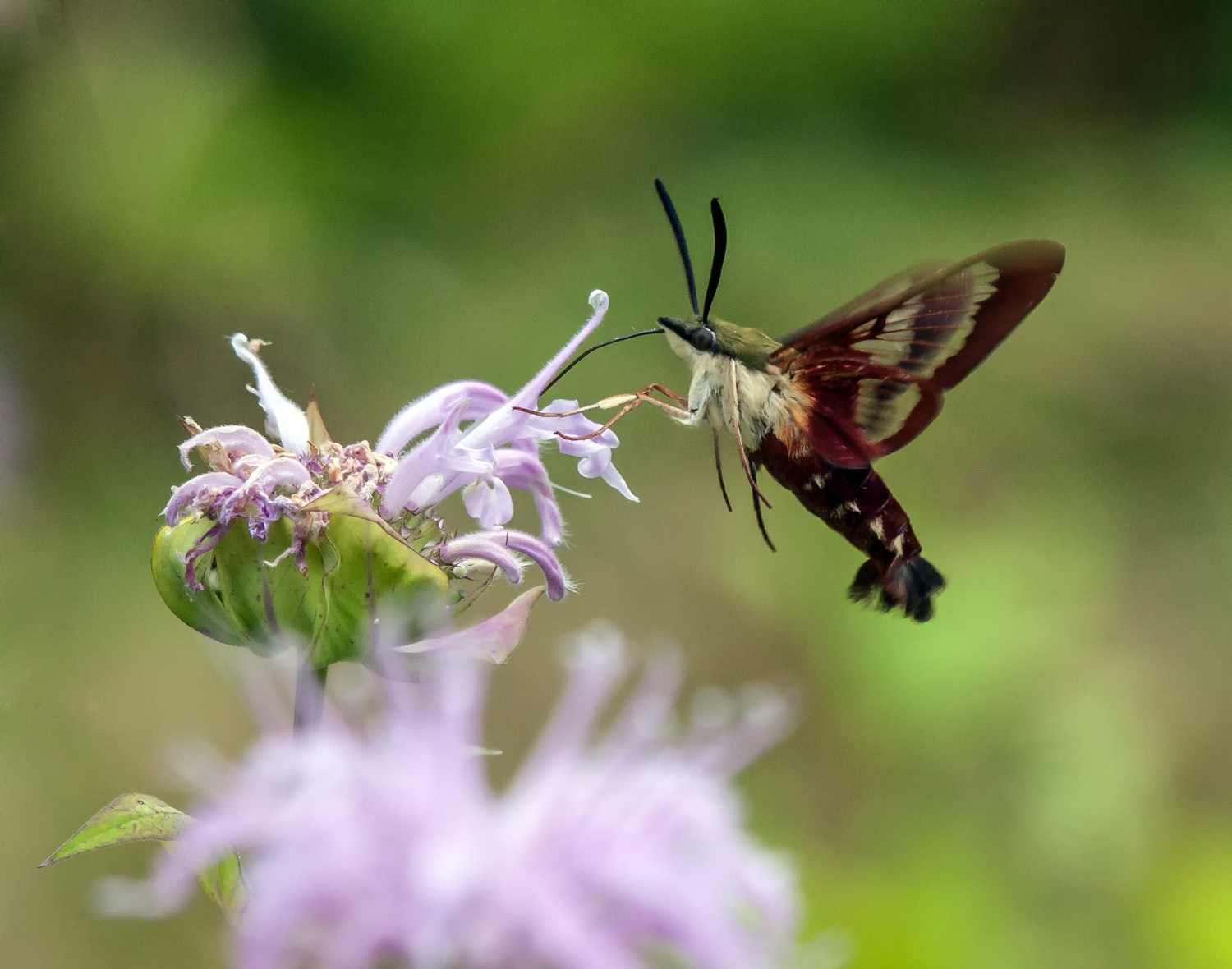
Hummingbird Clearwing Moth

June 24, 2019 Hummingbird Moth (the posting was on 2 July, but the photo was taken on June 24) (https://michaelqpowell.com/2019/07/02/hummingbird-moth/)

© Michael Q. Powell. All rights reserved.


Read Full Post »

Some bird species are very territorial and will chase off intruders, while others are content to peacefully coexist with members of other species. Canada Geese (Branta canadensis) are definitely in the latter category—they barely reacted when this Ring-necked Duck (Aythya collaris) passed through the middle of their flock, weaving his way in and around the much larger birds.

I love to capture images with multiple species in a single frame. In this case, I am curious why the duck chose to swim through the geese rather than going around them. Was he courageous and bold? Was he stubborn and determined?

How will you face the upcoming new year? Here’s hoping that, like this little duck, you will be able to move confidently forward towards your goals, mindful of the obstacles that face you, but unbowed by them.


Ring-necked Duck


© Michael Q. Powell. All rights reserved.


Read Full Post »

Recently I mentioned that I had spotted a pair of Bald Eagles (Haliaeetus leucocephalus) at a nearby “suburban pond” and realized that readers may have differing ideas of what such an environment looks like. The pond is man-made and serves as a storm water retention pond. A gentleman who lives nearby told me that it is 35 feet deep (1066 cm) at its deepest point. There is a path that goes around the pond, which is bounded by a complex of townhouses on one side, by roads on two sides, and by a wooded area on the final side.

Last week I captured a series of images of an eagle swooping down and pulling what I think was a small fish from that pond. I was a long way off and the focus is not as sharp as I would have liked it, but I think the photos show pretty clearly how close the pond is to a road. You can see some vehicles, traffic signs, and even the signals for a crosswalk. I really like the fact that I can see a pretty good variety of wild creatures in this pond. Initially I thought that there were only ducks and geese there, but I have also seen Great Blue Herons and Double-crested Cormorants, and now even Bald Eagles.

Perhaps you have a similar small body of water where you live. I encourage you to check it out and you may surprised to find a lot of wildlife living there.

Balg Eagle

Bald Eagle

Bald Eagle

© Michael Q. Powell. All rights reserved.
 

Read Full Post »

Even when they are dozing, ducks seem to be keeping an eye on me, including a male Ring-necked Duck (Aythya collaris), a male Hooded Merganser (Lophodytes cucullatus), and a male Ruddy Duck, all of which I spotted this past week floating on a local pond.


Ring-necked Duck

Hooded Merganser

Ruddy Duck

© Michael Q. Powell. All rights reserved.


Read Full Post »

Sometimes I don’t have to worry about getting my ducks in a row—they do it themselves for me. I was really struck by the beauty and grace of these ducks as I watched them glide across the water earlier this week. Mallards (Anas platyrhynchos) are the most common ducks where I live and most folks here take them for granted, barely giving them a passing glance.

I think that there is something special about rediscovering the beauty in the familiar—all that it usually requires is slowing down, putting aside distractions, and focusing on the moment with all of your senses. You will find that there is beauty surrounding you all of the time.

Mallard ducks

© Michael Q. Powell. All rights reserved.


Read Full Post »

As I was observing ducks and gulls earlier this week on a small suburban pond, most of them suddenly took the air. Instinctively I looked up, suspecting that there was a hawk or eagle overhead, and sure enough I spotted a Bald Eagle (Haliaeetus leucocephalus).

I extended my telephoto zoom lens and tried to focus on the moving bird and was a bit surprised when a second eagle flashed across the frame—it was a pair of Bald Eagles. The eagles made several passes over the pond and I was happy to be able to capture these shots, including a couple of images with both of the eagles in the same frame.

This is the first time that I have seen Bald Eagles at this location, but hopefully will not be the last time.

Bald Eagle

Bald Eagle

Bald Eagle

© Michael Q. Powell. All rights reserved.

Read Full Post »

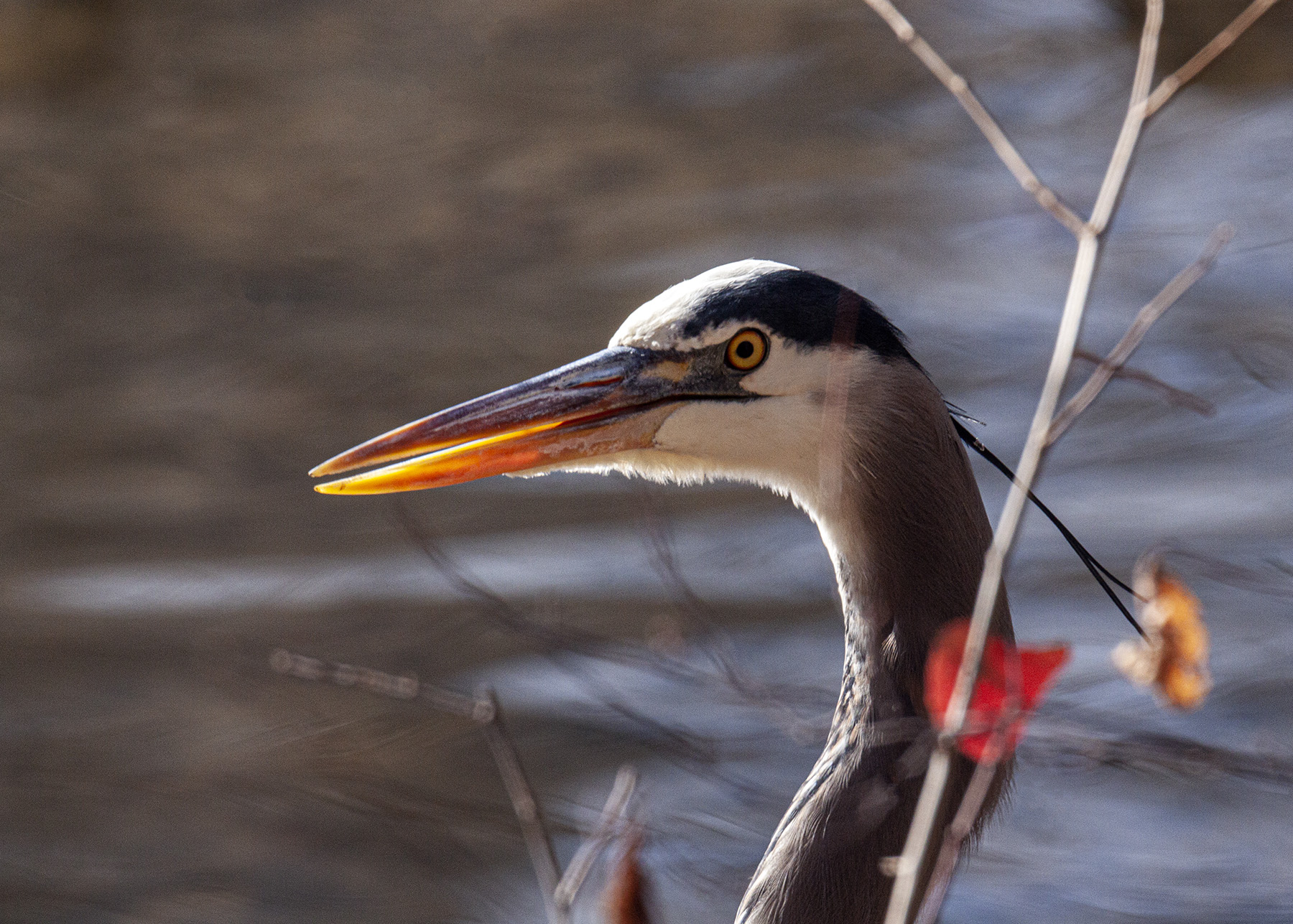
Merry Christmas to family and friends who are celebrating Christmas today and Happy Holidays to all of you scattered throughout the world. Even this Great Blue Heron (Ardea herodias) seemed to want to join me in singing earlier this week.

“And heaven and nature sing,” as the chorus to “Joy to the World” tells us, as all creatures join with the landscape to “repeat the sounding joy.”

Great Blue Heron

© Michael Q. Powell. All rights reserved.

Read Full Post »

Pied-billed Grebes (Podilymbus podiceps) are small and often stay in deep waters, but I managed to capture these shots of one yesterday at a suburban pond not far from where I live. If you click on the photos, you can see the grebe’s beautiful eye coloration and the pattern on its bill.

As I was walking along the pond, I initially spotted the little grebe while it was napping. It had drifted a little closer to shore than normally, so I was pretty excited to have a chance to get some shots of this elusive bird. However, the grebe’s head was in the shadows, so I watched and waited, marveling at the patterns in the water.

I captured the second shot below shortly after the grebe started stirring and looked to one side. As it started to swim away, the lighting was almost perfect and I captured the first shot below, a wonderful little side portrait of this Pied-billed Grebe.

Pied-billed Grebe

Pied-billed Grebe

© Michael Q. Powell. All rights reserved.

Read Full Post »

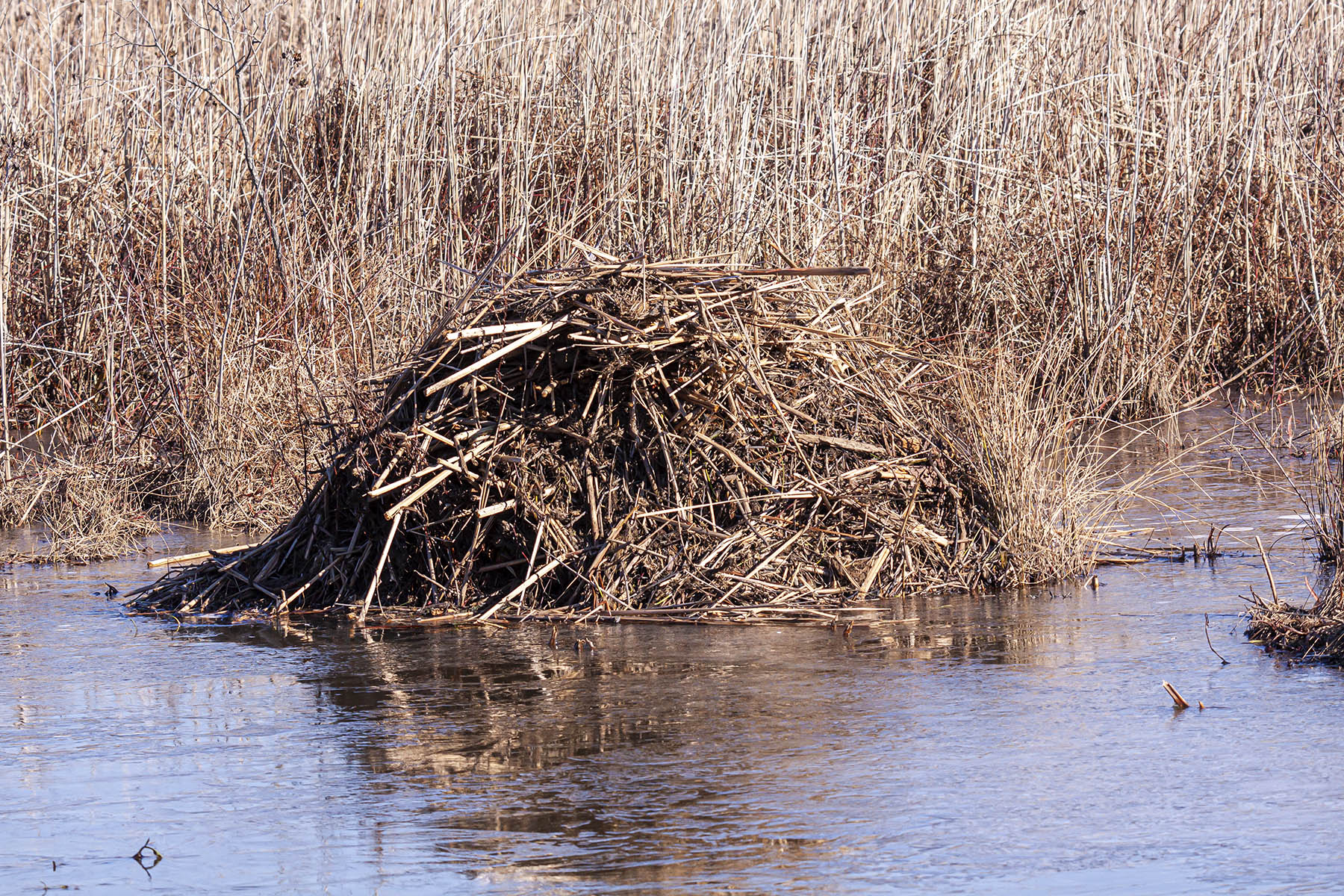
As I was scanning a pond last week for activity at Occoquan Bay National Wildlife Refuge, I spotted this structure. Its relatively large size initially made me think that it might be a beaver lodge, but after more closely examining the construction materials, I have concluded that it is more likely to be a muskrat habitation.

Unlike beavers that use large sticks and logs and a lot of mud, muskrats (Ondatra zibethicus) mostly use cattails and other reeds to form mounds that permit them to dry out and get some air. Occasionally beavers and muskrats will share a beaver lodge, but I am pretty sure that is not the case here. The fragile nature of this kind of muskrat house makes it vulnerable to predators if the pond freezes over and allows access to foxes or coyotes, both of which inhabit this wildlife refuge.

muskrat house

© Michael Q. Powell. All rights reserved.

Read Full Post »

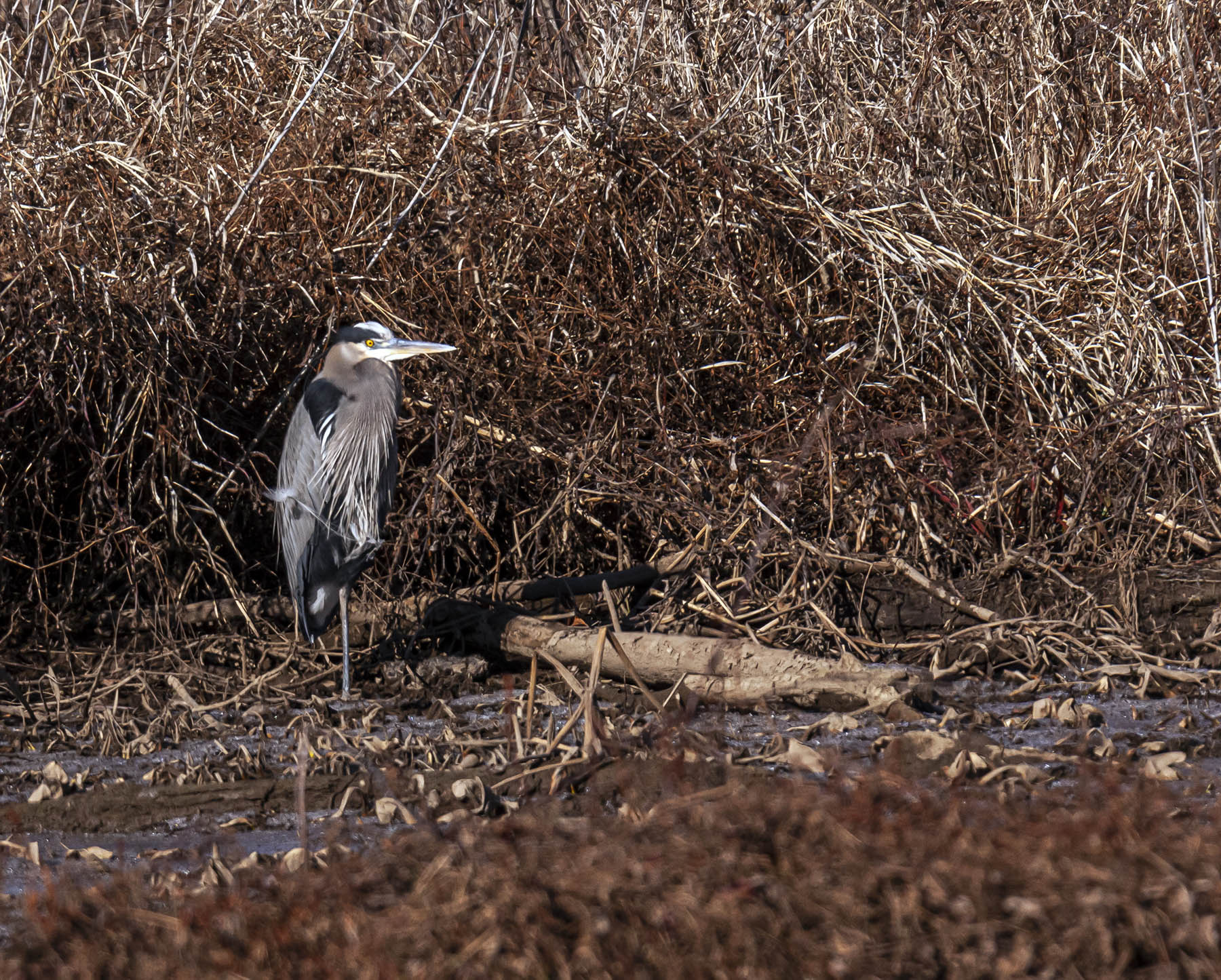
It was a frigid and desolate day and ice had formed at the edges of the ponds at Occoquan Bay National Wildlife Refuge. My initial scan revealed that there were no ducks or other water birds on the surface of the water. As I looked more carefully, though, I caught sight of the familiar shape of a Great Blue Heron (Ardea herodias).

The heron was stationary, huddled on the opposite side of the pond from me. I can’t tell for sure, but it looks like the heron was standing on a single leg, with the second leg pulled up under its chest feathers in an effort to conserve body heat. Great Egrets and Green Herons leave our area and head south before the winter arrives, but Great Blue Herons remain with us throughout the cold season.

Great Blue Heron

© Michael Q. Powell. All rights reserved.

Read Full Post »

As I have gotten older, I have rediscovered the joy of taking naps. When I was a child, I seem to recall rebelling a bit against the idea of a forced midday nap, but now I look forward to them. Sunday afternoon naps have become part of my routine and now that I have retired, I sometimes indulge myself without waiting for the weekend.

Several of the Bald Eagles (Haliaeetus leucocephalus) that I spotted on Thursday at Occoquan Bay National Wildlife Refuge seemed to share my fondness for napping. In the first shot below, the Bald Eagle looked like it was just settling in for a long winter’s nap. The eagle’s head is bowed forward in the familiar position that I used during my recent transatlantic flights when drifting off to sleep. I am mildly amused by the fluffiness of the head feathers on this “bald” eagle—the head feathers remind me of the wigs worn by British barristers.

The second image shows a Bald Eagle couple. The male eagle, the smaller one to the left, appears to be alert, but his female partner seems to be asleep. Female eagles are larger than their male counterparts, but this female has magnified that size differential by a rather extreme fluffing of her feathers. (I am assuming that eagles tighten their talons while napping, so that any sudden movements while asleep do not not dislodge them from their perches.)


Bald Eagle

Bald Eagle

© Michael Q. Powell. All rights reserved.

Read Full Post »

It was cold and breezy yesterday at Occoquan Bay National Wildlife Refuge, but at least the sun was shining. Most of the birds seemed to be hiding, probably trying to stay warm, so I was particularly thrilled when I finally spotted this Bald Eagle (Haliaeetus leucocephalus) in a tree overhanging the trail on which I was walking.

The eagle appears to have spread its tail feathers a bit to provide some additional warmth for its feet, though I must confess that I have no idea if eagles actually get cold feet. I moved forward slowly, knowing that I would probably spook the eagle, but I needed to pass under the tree in which it was perched. I took the second shot when I was closer to the eagle and it seems pretty apparent that it had spotted me. Sure enough, the eagle took off a few seconds later.

After so much time overseas this past month, it was really nice to get back to the familiar surroundings of “my” wildlife refuge. Unfortunately, a major construction project has closed large sections of my favorite trail that runs along parallel to the water, so I may have to search for a different location to shoot this winter. The good news is that I am blessed to live in an area with a lot of options for wildlife photography. My goal will be to find another location that is remote enough that it is not too crowded—I generally prefer to be by myself when I am experiencing nature.

Bald Eagle

Bald Eagle

© Michael Q. Powell. All rights reserved.

Read Full Post »

« Newer Posts - Older Posts »