Feeds:
Posts
Comments

Archive for the ‘Photography’ Category

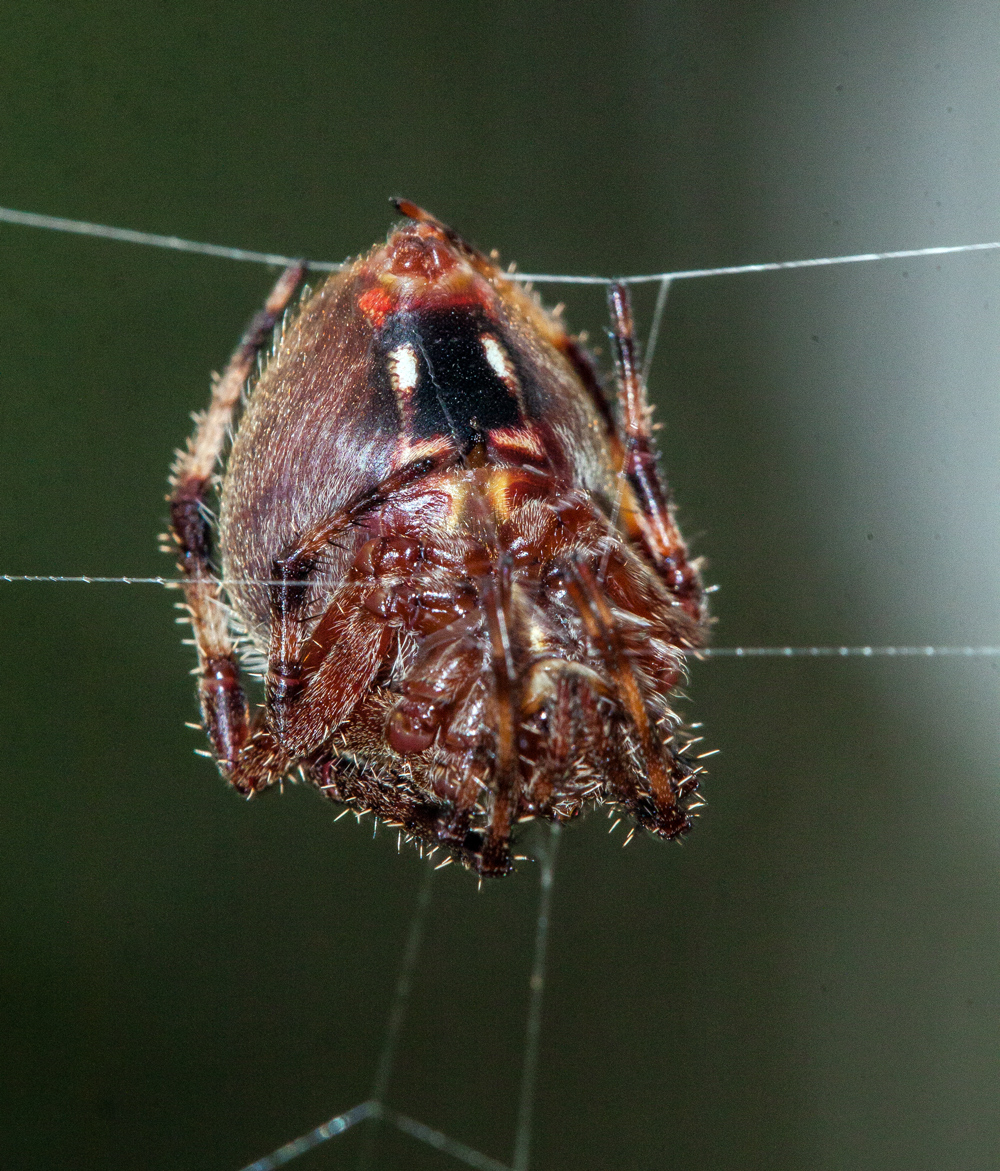
I first caught sight of this spider yesterday when I almost walked into it—it was hanging in mid-air at eye level across a path and we were less than a foot apart when I encountered it.

Initially the spider scampered up a bit and then seemed to run out of web and came to a stop, giving me some time to change to my macro lens. The spider, which I think is a kind of orb weaver (Neoscona crucifera) that is sometimes called a barn spider, was about seven feet off the ground by this time, so it was quite a challenge getting a stable shooting position. I raised the ISO and used the pop-up flash and managed to get some reasonably sharp images.

These are my favorite two images. I really like the detail in the first shot, but like the background and angle of view more in the second shot. Which one is better? I vacillate in trying to decide, so included them both.

orbweaver spider

orbweaver spider

© Michael Q. Powell. All rights reserved.

Read Full Post »

I’m back from a brief overseas trip and it’s time to switch back from shooting in urban surroundings to my more typical nature images. In the meantime, here’s a shot of a beautiful Eastern Tiger Swallowtail (Papilio glaucus) from a pre-trip visit to Huntley Meadows Park in Alexandria, Virginia.

Eastern Tiger Swallowtail

© Michael Q. Powell. All rights reserved.

Read Full Post »

As I conclude another brief trip to Brussels, I thought I’d include a number of the photos that I managed to snap while walking in the streets of the central part of the city. As is typical of this time of the year, the weather was often gray with intermittent light rain, but I did manage to see some interesting sights.

balloons_blog

bums_blog

buns_blog

tower_blog

towers_blog

© Michael Q. Powell. All rights reserved.

Read Full Post »

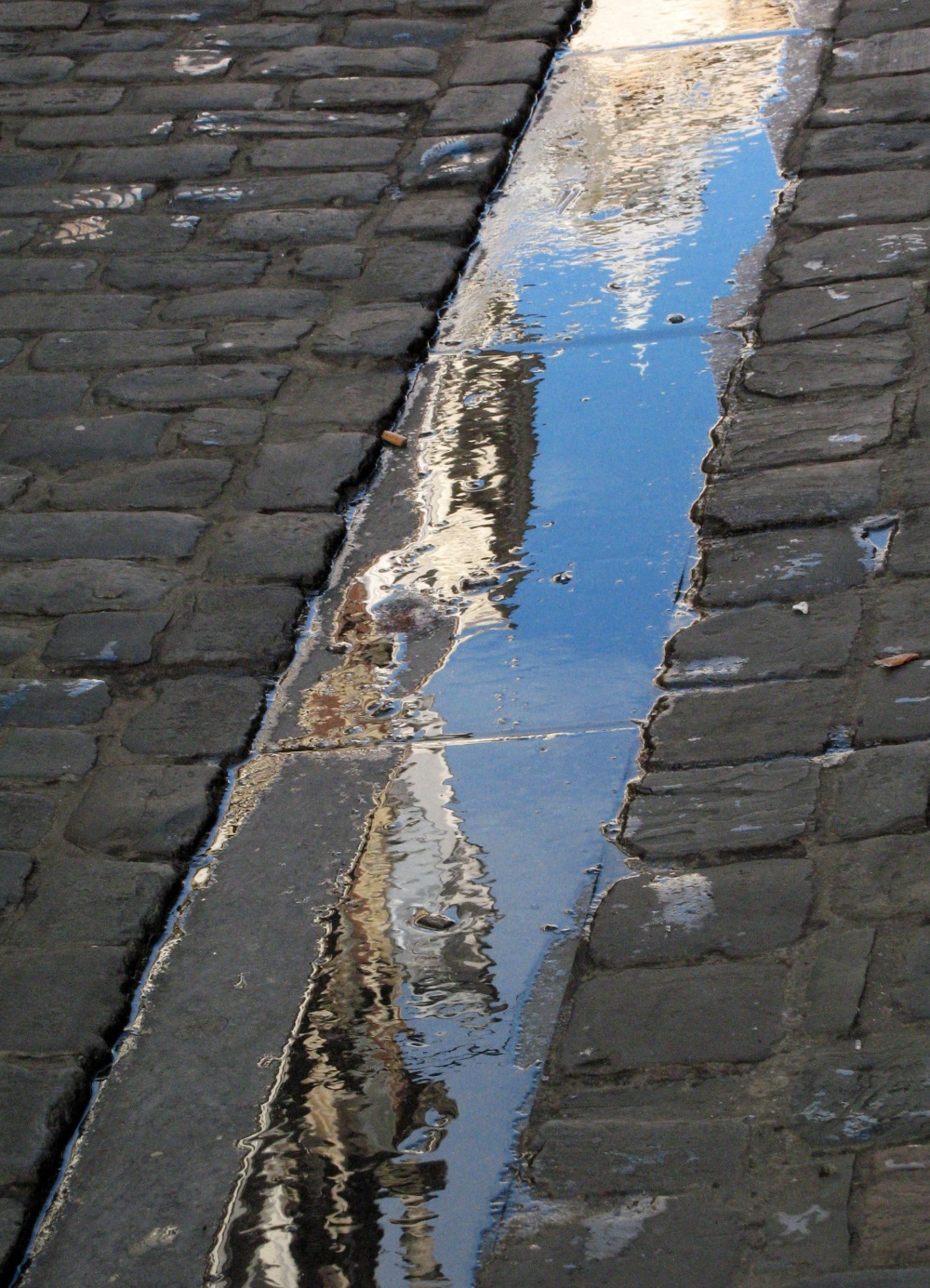
How do you capture the beauty of a city? Do you look up directly at the monuments and impressive buildings or do you look down and perhaps catch an indirect reflection of the unique character of the environment?

I took this shot on one of the cobblestoned side streets that lead to the Grand-Place in Brussels. I like the simple, graphic way in which the  image gives you a sense of the beauty of this ancient city square, while also showing a little of the gritty, littered urban landscape that seems typical in Brussels.

Grand-Place

© Michael Q. Powell. All rights reserved.

Read Full Post »

While briefly in Brussels on business, I was able to take advantage of a beer festival held at the Grand-Place, the historical central square of the city. Booths were set up in the center of the square and there was an extensive variety of beers to taste. I initially visited the square in the post dawn hours, when workers were cleaning up the area after Saturday night’s festivities and then returned with friends on Sunday afternoon to sample some of the beers.

View of the Grand-Place and some of the booths

View of the Grand-Place and some of the booths

Beer weekend

Beer weekend

“Proud of our beers”

Troll beer

Troll beer

“The Beer of Bravery” Previously  “Beer of Victory,” but sales in France were low.

it's a family affair...

It’s a family affair…

© Michael Q. Powell. All rights reserved.

Read Full Post »

Late in the summer, there is a great abundance of flying and crawling insects—they are everywhere. I enjoy photographing many of them and generally I will try to identify my subjects when I post their photos.

In this case, however, I didn’t get a close enough view or a sharp enough shot of this cool-looking insect for me to be confident in any identification. (Alas, the photo is clear enough for me to realize that I need to clean my camera’s sensor, for I can see a bunch of stops in the beautiful background of what is often called “sensor dust.”)

Still, I really like the insect’s pose at the top of the vegetation, a pose that somehow brings to mind the “King of the World” moment in the movie Titanic.

bug

© Michael Q. Powell. All rights reserved.

Read Full Post »

As we move closer and closer to the end of the summer, many of the butterflies are starting to show the effects of time, with faded colors and missing pieces of their wings. Yet somehow, at least in my eyes, their beauty is undiminished, like this Viceroy butterfly (Limenitis archippus) that I spotted this past week at my favorite local marshland park.

viceroy butterfly

© Michael Q. Powell. All rights reserved.

Read Full Post »

When watching birds, I usually have my camera’s zoom lens fully extended. On rare occasions I am actually zoomed in a little too closely, as was the case when I took the shot of a Great Egret (Ardea alba) this past Monday at Huntley Meadows Park.

Despite the clipped wings, I love the details and the beautiful arc of the feathers of its wings as this stunning bird takes to the air.

Great Egret

© Michael Q. Powell. All rights reserved.

Read Full Post »

What kind of subjects lend themselves to black and white film? Can you decide beforehand and try to see the world in black and white, as I started out trying to do, or do you decide afterwards, as most people do when converting digital images to black and white?

This is the continuing story of my experimentation with a totally mechanical Nikon F SLR loaded with Ilford HP 5 Plus black and white film. I wandered through the streets of Washington D.C. looking for subjects and came upon this bust of noted Soviet human rights activist Andrei Sakharov outside of the Russia House restaurant on Connecticut Avenue.

I worked hard on this one to try to compose it and shoot it in an interesting way and I like the way that it turned out. It turned out that focusing manually is tougher than I thought, even with the visual assists in the viewfinder of a film camera, like the micro prism. I was definitely out of practice and I worried that all of my images would be soft and out of focus. This image reassured me that if I am careful, I can get relatively sharp images and capture details like the texture that you can see on the hands and the head of the statue.

Andrei Sakharov

Eventually I made my way to the National Zoo and last week I posted some digital shots of some of the animals that I encountered there. The zoo posed a big problem for me in getting a proper exposure, because there was a mixture of harsh midday sunshine and shadows. As I looked over my negatives, I realized that I need to meter more often—I took a series of shots of lions that were sometimes in the sunshine and sometimes in the shade and overexposed many of the shots.

However, one of my favorite images of the roll of film was this one of a female lion that was properly exposed and captured a good amount of detail. At this point in the day, I had switched to a Tokina 80-200mm lens to give myself a bit of additional reach.

lion

So could I take the kind of wildlife/nature shots that I normally feature with a film camera? It would be tough to do so, but this shot of a Monarch butterfly suggests that it would not be impossible. The pattern of the Monarch is so well-known, that most of us can imagine its orange and black coloration without actually seeing the colors. This is the only one of my black and white images on which I did a significant crop, and you can see how the background has become a bit grainy.

Monarch butterfly

For folks who are interested in the process, I developed the film with Ilfosol 3 developer, a general purpose developer. I exposed the film as though it were ISO 200, instead of the box speed of ISO 400, and learned that pulling the film like this is likely to lead to lower contrast (while shooting it at higher speeds will tend to give more contrast). I scanned the negatives with a Canoscan 8400f scanner as TIFF files and did a few adjustments in Photoshop Elements 11.

So what did I learn? I learned to slow down and be more deliberate as I contemplate my shots; I learned to look past some of the colors of the world and search for shapes and lines and contrast; and I leaned the value in producing my images in a manual, hands-on way, leading to a greater sense of ownership of those images.

I learned a lot, though clearly I have a lot more to learn as I continue to explore this new/old area of photography.

© Michael Q. Powell. All rights reserved.

Read Full Post »

Do you ever feel a desire to step outside of your comfort zone in your photography, to capture some images in a completely different way, to return to the basics of our craft? For the last month, I have felt an irresistible urge to shoot some black and white film, something that I haven’t done in over thirty years.

When I told some folks at work that I was planning to shoot some film during a week of vacation, one of them responded by asking if I was making a movie. I patiently explained that I would be putting some black and white film into a non-digital camera. He stared back at me with a look of incredulity and asked if I couldn’t simply convert some of my digital images into black and white.

I still have some analog cameras, but most of them have some electronic assists—I wanted a truly mechanical camera. I found a Nikon F SLR with a 50mm f/1.4 lens on my local Craigslist. The Nikon F introduced in 1959, was Nikon’s first SLR, although this particular camera was produced in 1971, judging from its serial number. The camera is so basic that it requires no battery. When was the last time you took photos with a camera without a battery? The camera has no meter and I ended up using my DSLR as the meter.

Nikon F

What about film? I went to one of the last remaining camera stores in our area and bought a couple of rolls of Ilford HP5+ film, a black and white film with a “box speed” of ISO 400. I ended up shooting it at ISO 200, because it was very sunny and bright the day that I went shooting. (Using the “sunny 16” guidelines, I would have been shooting all day at 1/500 sec and f/16.)

What should I shoot? I decided that an urban environment would be more suitable for my film project than my normal wildlife environment, so I got on the metro and headed into Washington D.C. with my Nikon SLR and my Canon DSLR in tow.

I got off on the elevated outdoor metro platform at Reagan National Airport and my first shot was of the airport’s control tower. I wanted to try to find subjects with shapes and lines that would show up in black and white. (I am including some digital shots of the same subjects at the end of the post. I didn’t try to exactly match the shots, but they give you an idea of the differences in how the cameras rendered the subjects.)

Reagan National Airport

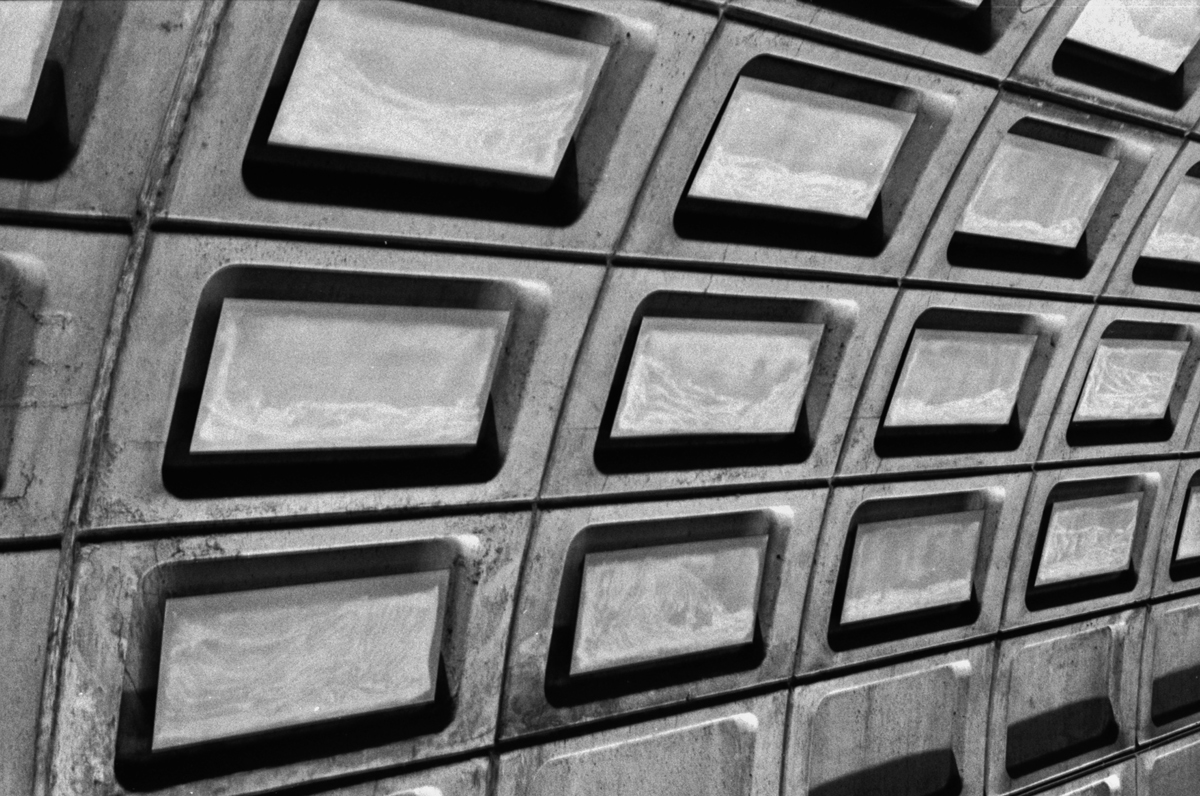
The next shot was of the Metro’s ceiling at the underground station in Rosslyn, Virginia. (You may have already seen a similar shot that I took with my digital camera and posted last week.)

metro

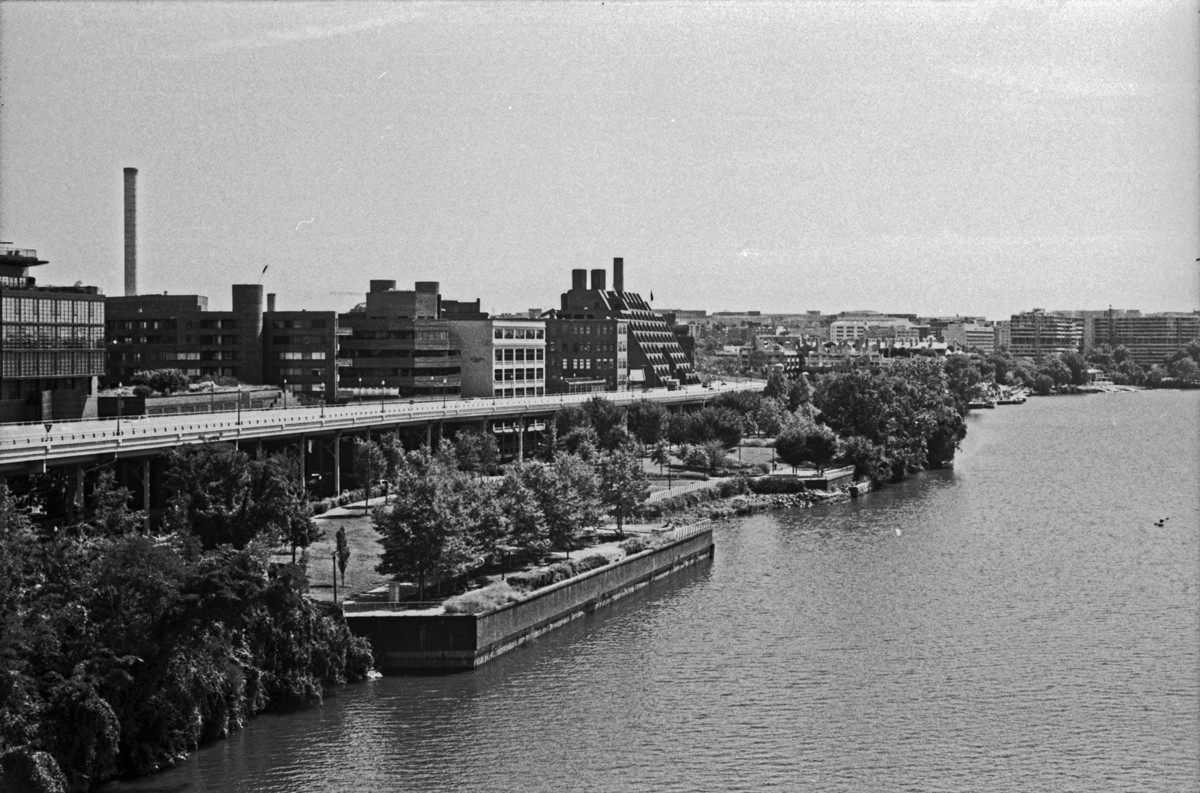
I exited the Metro in Rosslyn and walked across the Key Bridge into Georgetown. From the bridge, I took this shot of part of the waterfront in Georgetown. I like the old time feel of this shot.
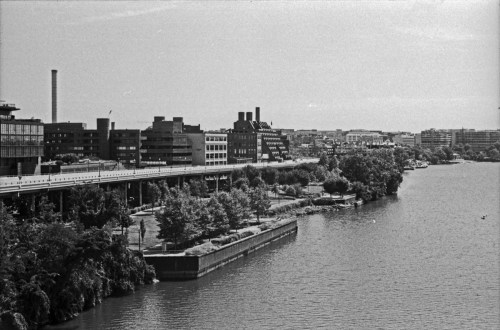
Georgetown waterfront

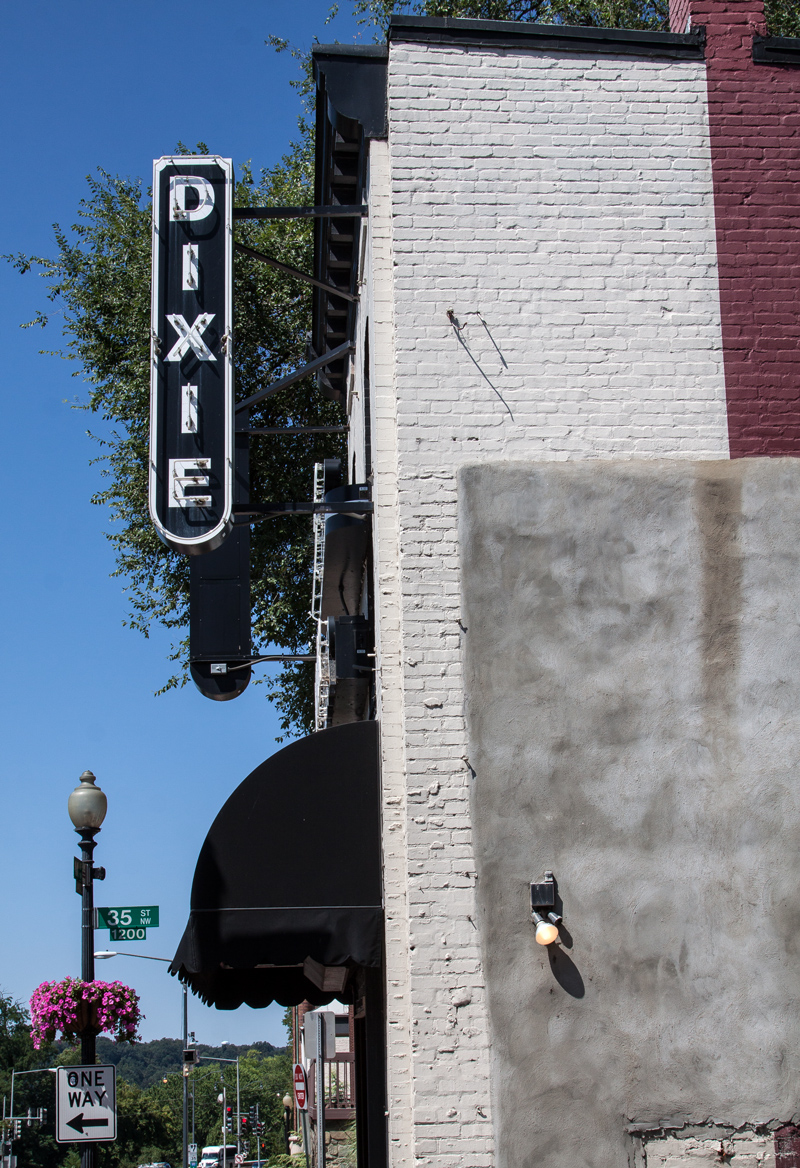
One of the first things that you see when you cross the bridge is Dixie Liquors, an old-fashioned liquor store with a really cool sign that I have always liked.

Dixie Liquors

That was the start of my adventure with film. As I had hoped, I was looking at the world with different eyes and was forced to slow down, knowing I had to input manually the shutter speed and aperture and very conscious of the fact that I had no auto focus to help me. I was also shooting with a fixed focal length lens, so I did not have the luxury of zooming in and out. Most of all, though, I was filled with uncertainty, not knowing for sure if any of my shots would come out, worrying that my old camera might have a light leak or that I would mess up the development of the film.

I’ll continue my saga in another posting or two in the upcoming weeks. As promised, here are some digital shots that I took as I used my Canon DSLR as a meter for my manual Nikon.


control tower Reagan National Airport

metro ceiling

Georgetown waterfront

Dixie Liquors

© Michael Q. Powell. All rights reserved.

Read Full Post »
What signs do you look for that point to the change of seasons? Throughout most of my life, the changing colors of the fall foliage have been the primary indicator of the end of summer and the beginning of autumn.

The last few years, however, I have become increasingly sensitive to seasonal changes in the dragonfly population as I have increasingly focused my attention and my camera lens on these fascinating and colorful aerial acrobats. Summer is prime time for many dragonfly species, but certain species show up much later in the season and stay with us throughout much of the autumn days.

One of these late-arriving species is the Blue-faced Meadowhawk (Sympetrum ambiguum) and I was thrilled yesterday to spot a male of this species at Huntley Meadows Park, the marshland where I take a lot of my wildlife photos. This is my first spotting of a Blue-faced Meadowhawk this season and I suspect it won’t be long before I also start seeing his “cousin,” the Autumn Meadowhawk (Sympetrum vicinum).

I particularly like the bright red color and bold pattern of this dragonfly’s body and its beautiful turquoise face. Although I may vacillate a bit from time to time, I think this is the most beautiful dragonfly species that I have ever encountered. What do you think?

Blue-faced Meadowhawk

© Michael Q. Powell. All rights reserved.

Read Full Post »

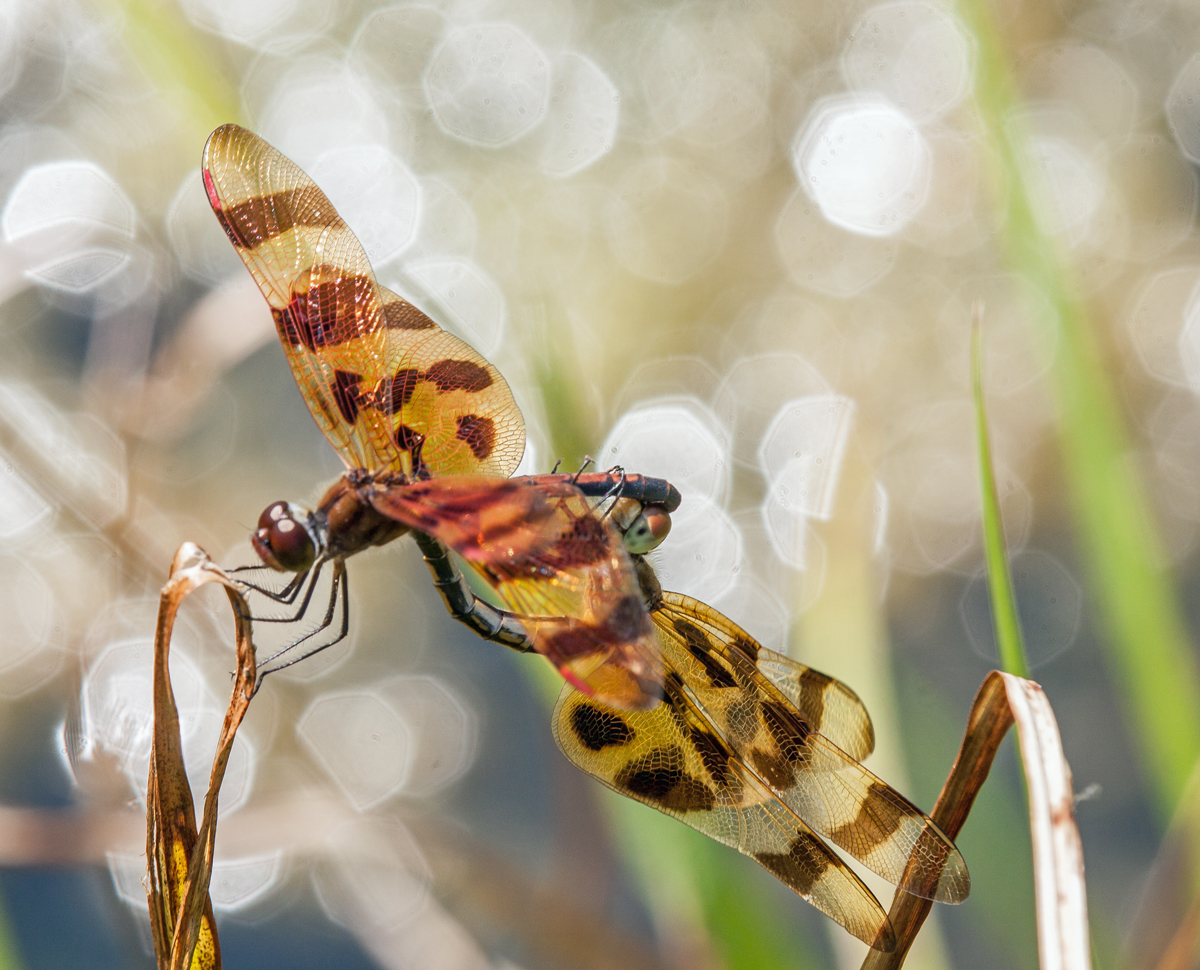
Summer days are drifting away and the biological clocks are almost certainly ticking loudly for some dragonflies. This past weekend at Meadowlark Botanical Gardens in Vienna Virginia, I spotted these two Halloween Pennant dragonflies (Celithemis eponina) engaged in a little summer loving.

It’s hard not to feel a little bit like a voyeur as I move in closer to photograph the acrobatic intertwining of the tiny dragonfly bodies. Summer loving happens so fast and soon my colorful little friends will be gone for the season,

Halloween Pennant

Halloween Pennant

© Michael Q. Powell. All rights reserved.

Read Full Post »

One of the highlights for me of a short visit yesterday to Meadowlark Botanical Gardens in Vienna, Virginia was spotting this spectacular dragonfly, which I think is a female Banded Pennant (Celithemis fasciata).

Earlier this summer, I spotted a male Banded Pennant, whose body was blue, but the coloration of this one suggests to me that it is a female. The dragonfly was perched on the highest branches of a small tree, which allowed me to isolate it against the beautiful blue sky. You may notice that the branches are different in the two photos—the dragonfly flew away a few times, but returned to the same tree a short time later.

CORRECTION: My initial identification was incorrect. My local dragonfly expert, Walter Sanford, with whom I neglected to consult in advance, provided a correct identification. This is a female Halloween Pennant (Celithemis eponina), not a Banded Pennant.


Banded Pennant

Banded Pennant

© Michael Q. Powell. All rights reserved.

Read Full Post »

In its simplest form, photography is about light and darkness, about lines and shapes. That was what I was seeking to capture when I took some shots in a Metro station in Rosslyn, Virginia earlier this week.

I took this week off from work and have spent a considerable amount of time thinking about photography, watching lots of videos, and shooting different subjects in different ways. I have even shot and developed some black and white film—I’ll do a separate posting on that soon.

This first shot highlights the distinctive ceilings that are present in many of the stations in the D.C. Metrorail system. I love the geometric patterns and the interplay of light and shadows in this image. I took this 1/3 second exposure by leaning my camera on a railing.

metro ceiling

The Rosslyn station is at a point in the Metro system where the trains pass under the Potomac River. Consequently, the escalators are extremely long. As I rode the escalator up, I was fascinated by the different lights and captured this image when I was approximately at the mid-point between the level of the tracks and the above-ground station.

It was midday on a weekday, which is why you don’t see more people in this shot. Things get really crowded during rush hour and woe to those who do not follow the Metro etiquette of staying to the right on the escalator steps unless passing.

metro escalator

© Michael Q. Powell. All rights reserved.

Read Full Post »

Walking in Washington D.C. along the National Mall, I couldn’t help but notice that humans were not the only ones taking advantage of the water fountains along the periphery. Several different kinds of birds were bathing and drinking in the water of backed-up fountains.

In the first shot, a bird, which may be a Common Grackle (Quiscalus quiscula), seemed to be testing the water in the fountain—a few seconds later, it was happily splashing about.

urban bird

I love the defiant stance of the larger bird in the second shot, looking like he is the leader of an urban gang, prepared to defend his turf against outsiders like me.

urban bird

© Michael Q. Powell. All rights reserved.

Read Full Post »

On a trip to the National Zoo earlier this week, I was walking around in heat of the summer sun, unlike most of the animals, who were relaxing in the shade or finding other ways to cool off.

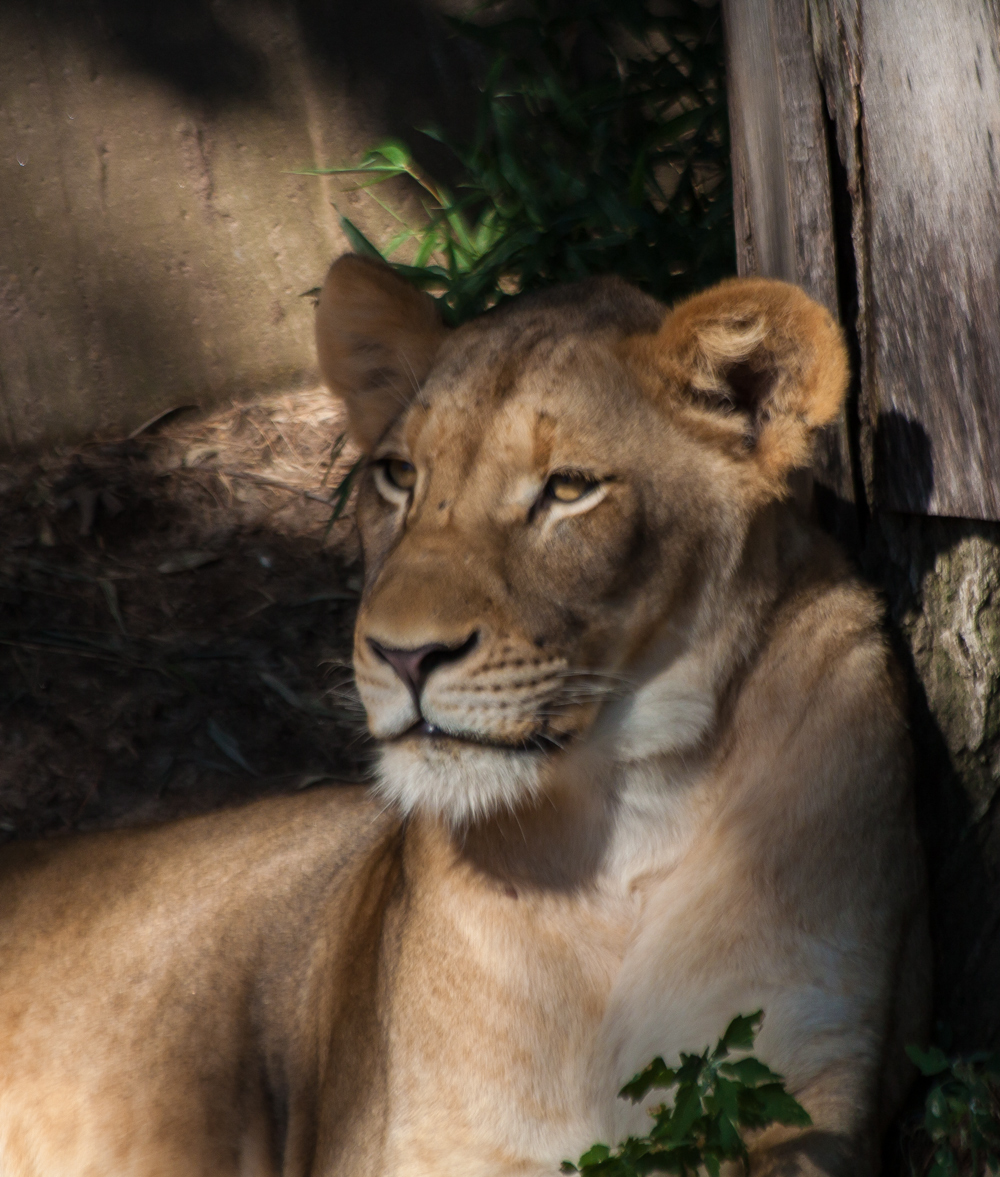
This female lion was dozing in the shade and would periodically raise her head and look in our direction with sleepy eyes.

lion

This tiger decided to swim a bit in the water of the moat at the front edge of its enclosure. I couldn’t tell how deep the water was—at times it looked like the tiger was merely walking in the water and not actually swimming.

tiger

This cheetah seemed a little agitated and was not relaxing. It was walking back and forth along the fence line that separated its enclosure from the adjacent cheetah enclosure.

cheetah

I’ll probably never go on a safari and see these beautiful creatures in the wild, but my trip to the National Zoo in Washington D.C. afforded me a glimpse of their power and their majesty. I am happy that the National Zoo is active in efforts to ensure the preservation of endangered species, in particular the cheetah. Check out this article for more information about those efforts.

© Michael Q. Powell. All rights reserved.

Read Full Post »

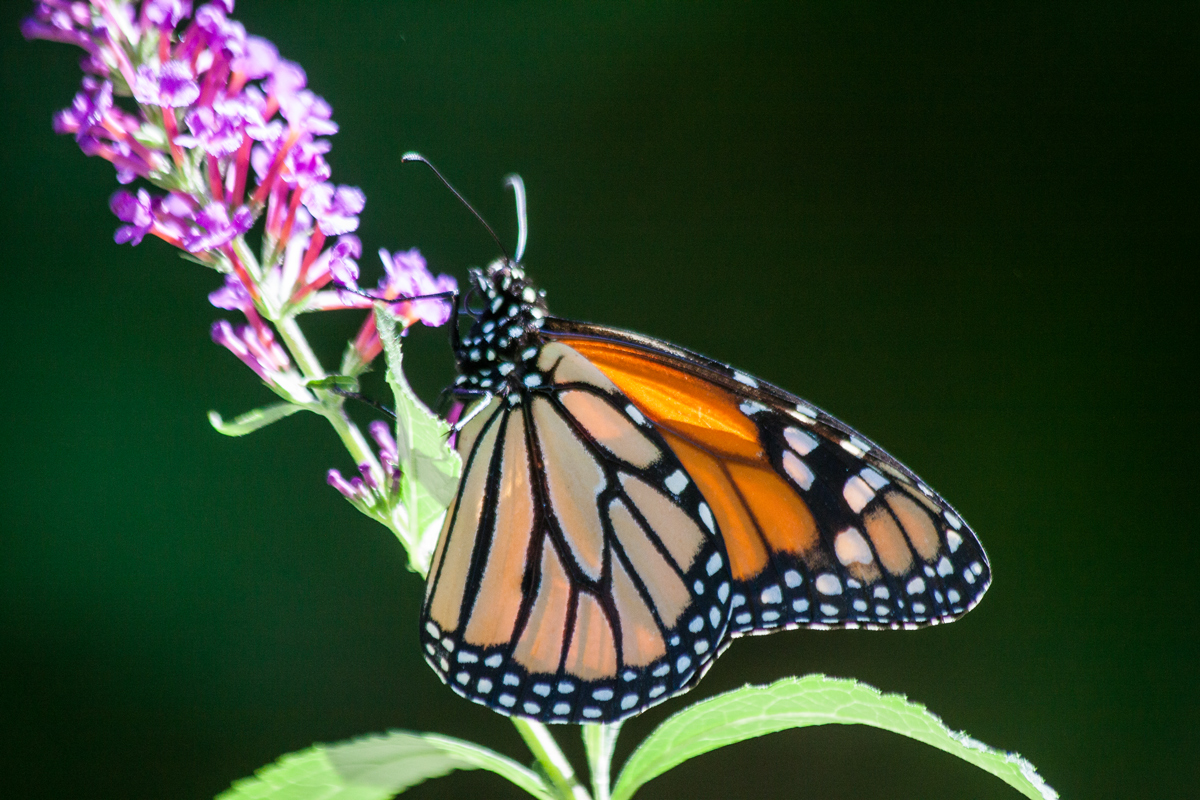
I haven’t seen very many Monarch Butterflies (Danaus plexippus) the last few years, so I was thrilled when I spotted this one yesterday at the outdoor butterfly garden at the National Zoo.

I chased after it as it flew from plant to plant, hoping that it would come to rest withing range of my camera. Once the Monarch had landed I circled around until I was on the same plane as the butterfly and got this shot. Fortunately I was close enough that I was able to fill the frame with the beautiful Monarch and a small amount of the flower on which it was feeding—this is an uncropped image.

It was midday and the lighting was a little harsh, but it did help illuminate the wing from an angle and showcase the butterfly’s spectacular colors.

I did take some photos of some of the animals at the National Zoo, which I will present in another posting, but thought I’d start with the Monarch Butterfly, an unexpected bonus of my brief visit to the zoo.

Monarch butterfly

© Michael Q. Powell. All rights reserved.

Read Full Post »

There were lots of other available thistle plants yesterday at Huntley Meadows Park, but an Eastern Tiger Swallowtail (Papilio glaucus) and a Great Spangled Fritillary (Speyeria cybele) kept jockeying for position on this single flower, each seemingly determined to gain the upper hand.

Who knew that butterflies were so competitive?

Competitive butterflies

© Michael Q. Powell. All rights reserved.

Read Full Post »
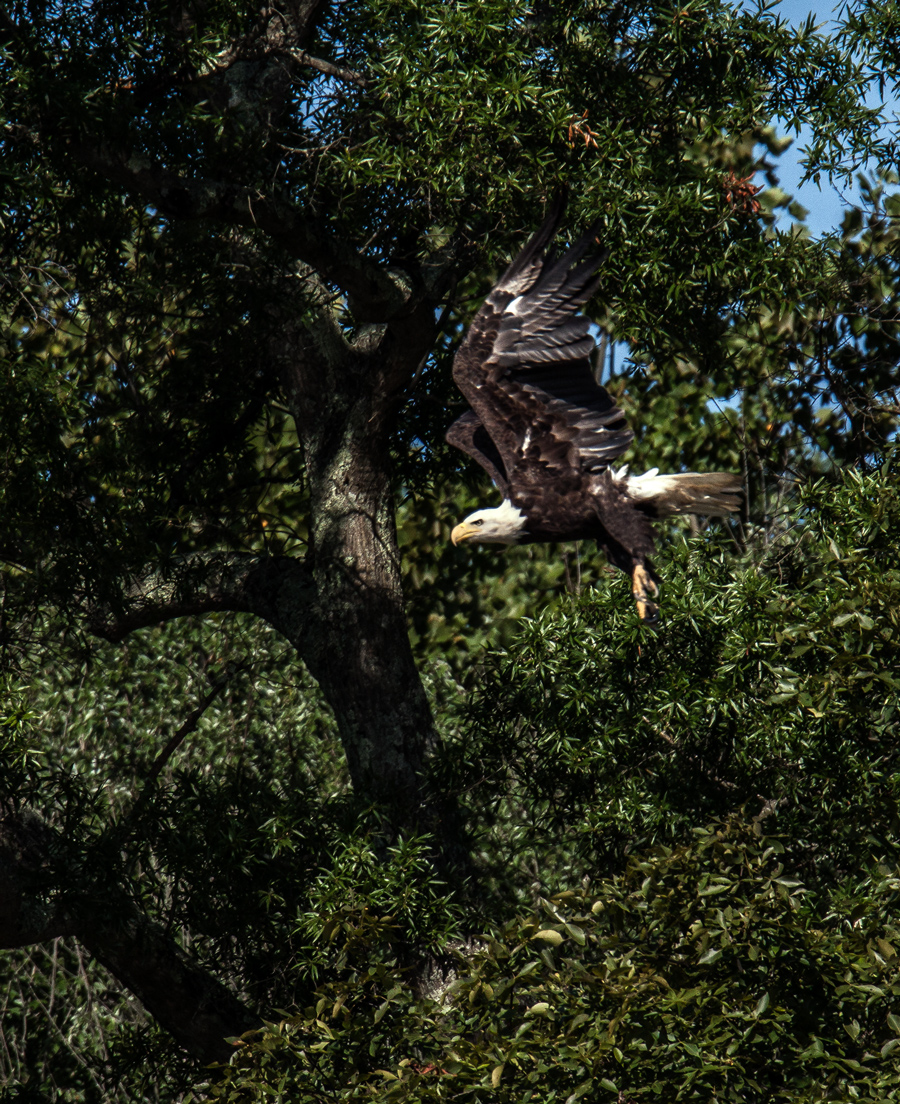
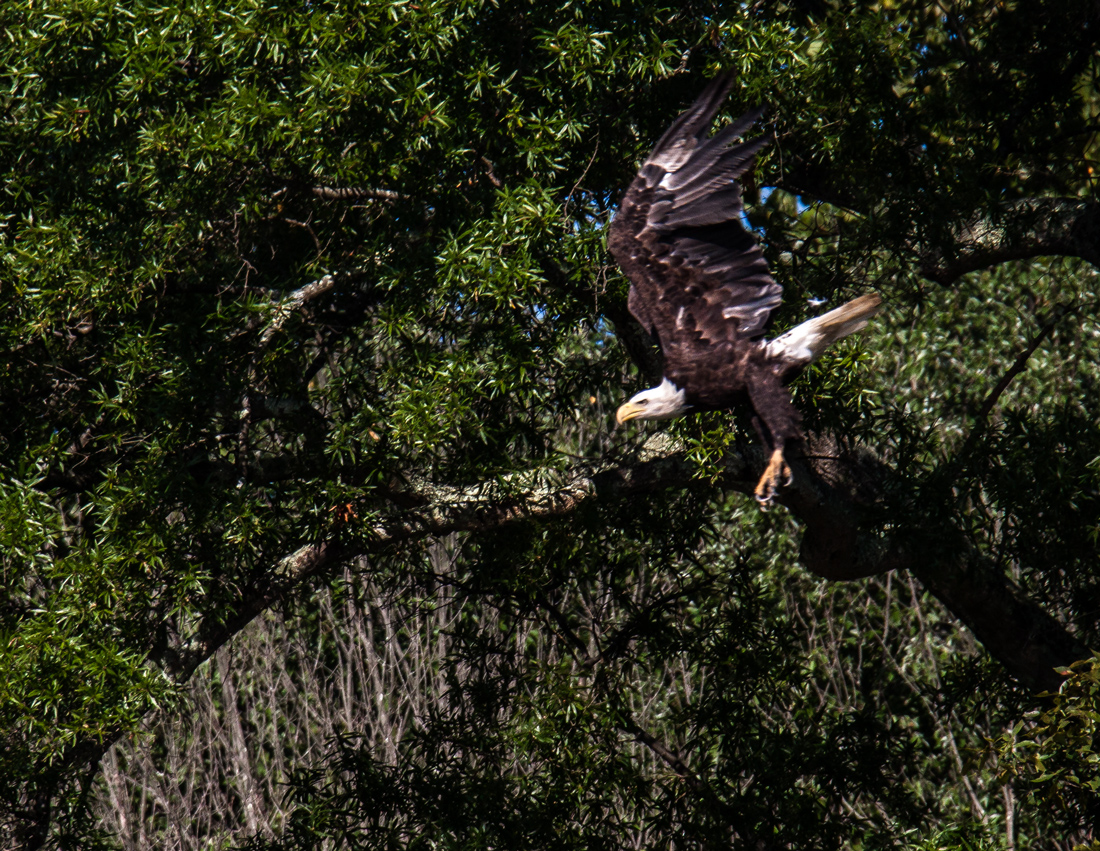
Walking down one of the informal trails at Huntley Meadows Park this past Friday, I spotted a dark shape in a distant tree. The moment that I got my camera focused on what turned out to be a bald eagle, it took off.

My camera settings were not optimal, but I somehow managed to capture some images of the eagle in flight as it flew away. The final shot in this posting shows my initial view of the eagle, just seconds before he took to the air.

As I have noted before, it’s a wonderful day for me whenever I see a Bald Eagle (Haliaeetus leucocephalus) and especially so when I am able to photograph this majestic bird.

Bald Eagle

Bald Eagle

Bald Eagle

© Michael Q. Powell. All rights reserved.

Read Full Post »

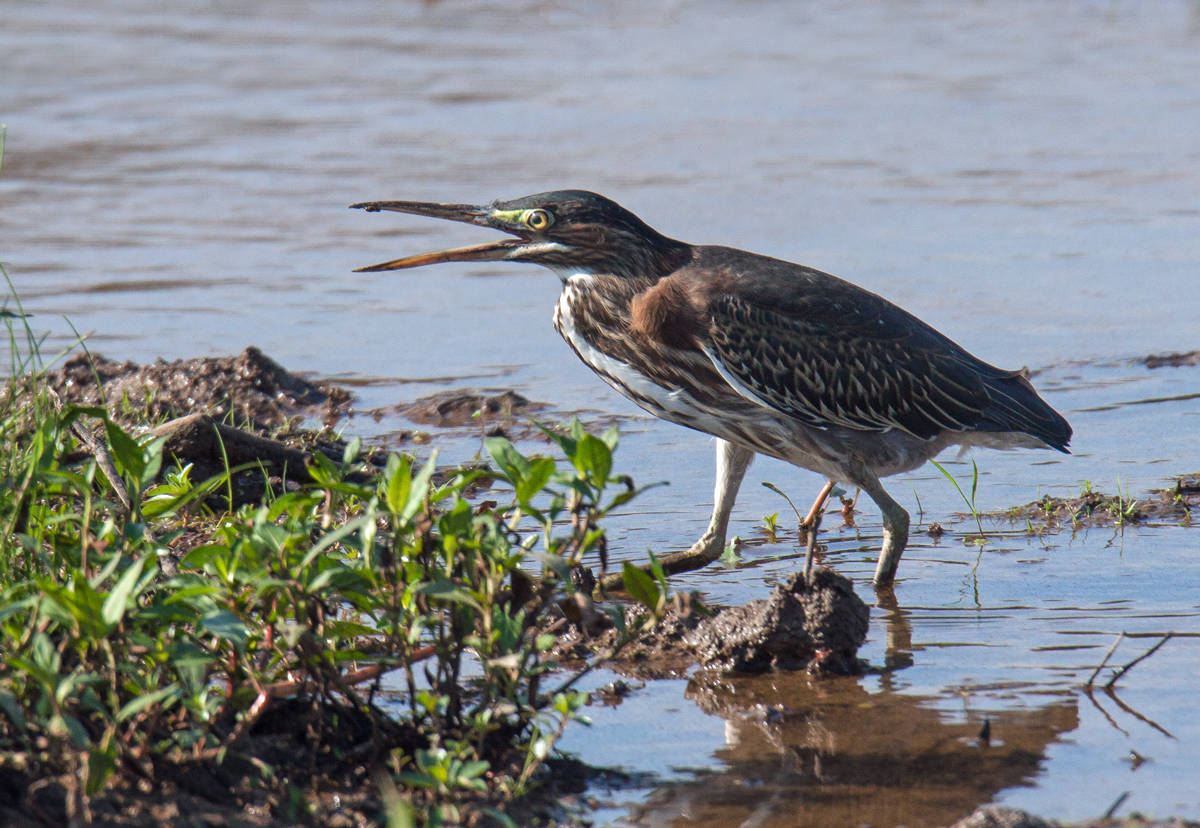
Do herons laugh? Herons remind me of many people in the Washington D.C. area—they are serious, focused, and driven. How do herons relieve their stress?

Yesterday morning I was observing a Green Heron (Butorides virescens) at my local marshland park. Suddenly he opened his mouth wide in a huge smile and appeared to be laughing.

I am not sure what prompted his actions, but I couldn’t help but smile. Laughter, after all, is contagious.

Green Heron

© Michael Q. Powell. All rights reserved.

Read Full Post »

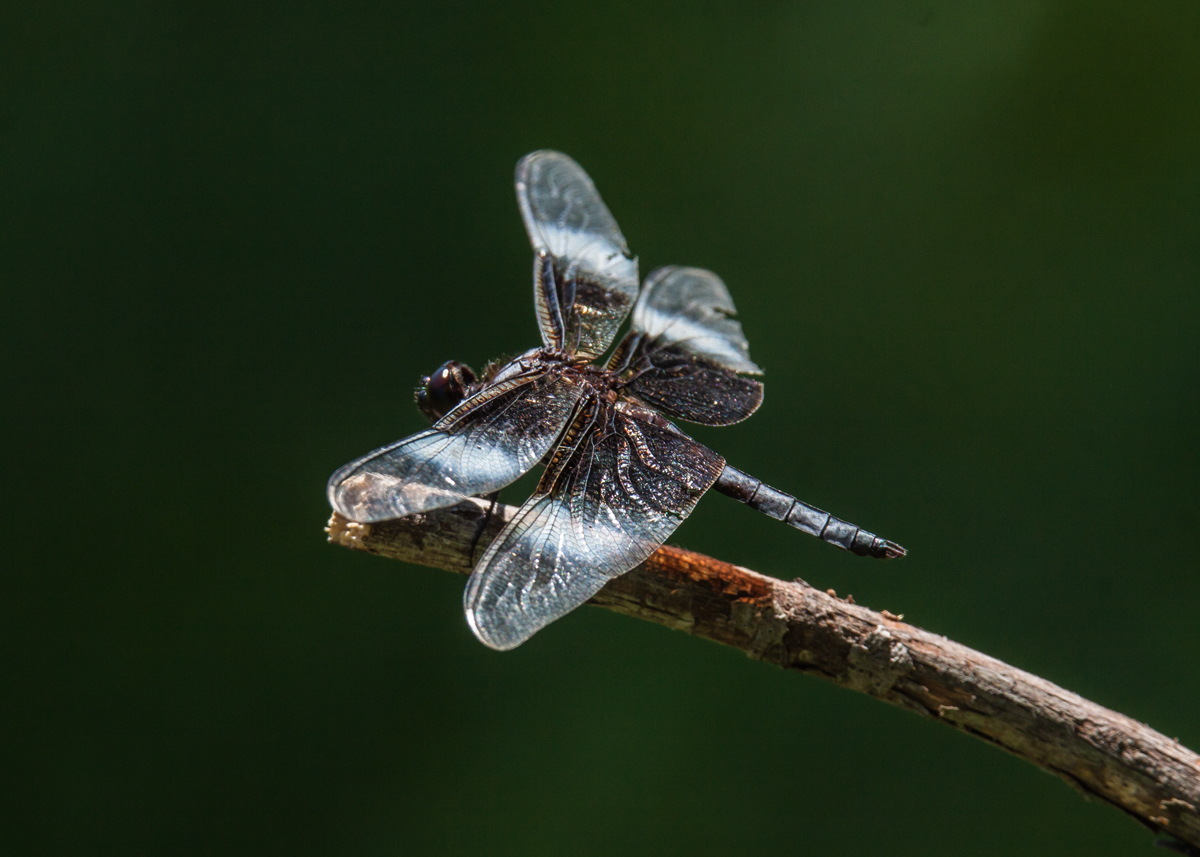
I love the dramatic lighting, the graphic quality, and the simple composition of this shot of a male Widow Skimmer dragonfly (Libellula luctuosa) that I took earlier this month at Jackson Miles Abbot Wetlands at Fort Belvoir, a nearby military installation here in Virginia.

There is a real beauty in simplicity.

Widow Skimmer

© Michael Q. Powell. All rights reserved.

Read Full Post »

It had been quite a while since I had last seen a Yellow Garden Spider (Argiope aurantia), so I was pretty excited to see one during a visit this past weekend to Dyke Marsh Wildlife Preserve, a tidal wetlands park along the Potomac River in Virginia.

The spider must have sensed my presence too, because she began to oscillate the entire web vigorously. I had to wait for her to settle down before attempting to get some shots. I was on an elevated boardwalk and the spider was considerably below the level of my feet. As a result, I had somewhat limited options for framing my shots, though I was able to photograph the spider from a couple of different angles, and was not able to get really close to the spider.

I was happy that I managed to capture the really cool zigzag portion of the spider’s web, a distinctive characteristic of this particular species.

Argiope spider

Argiope spider

© Michael Q. Powell. All rights reserved.

Read Full Post »

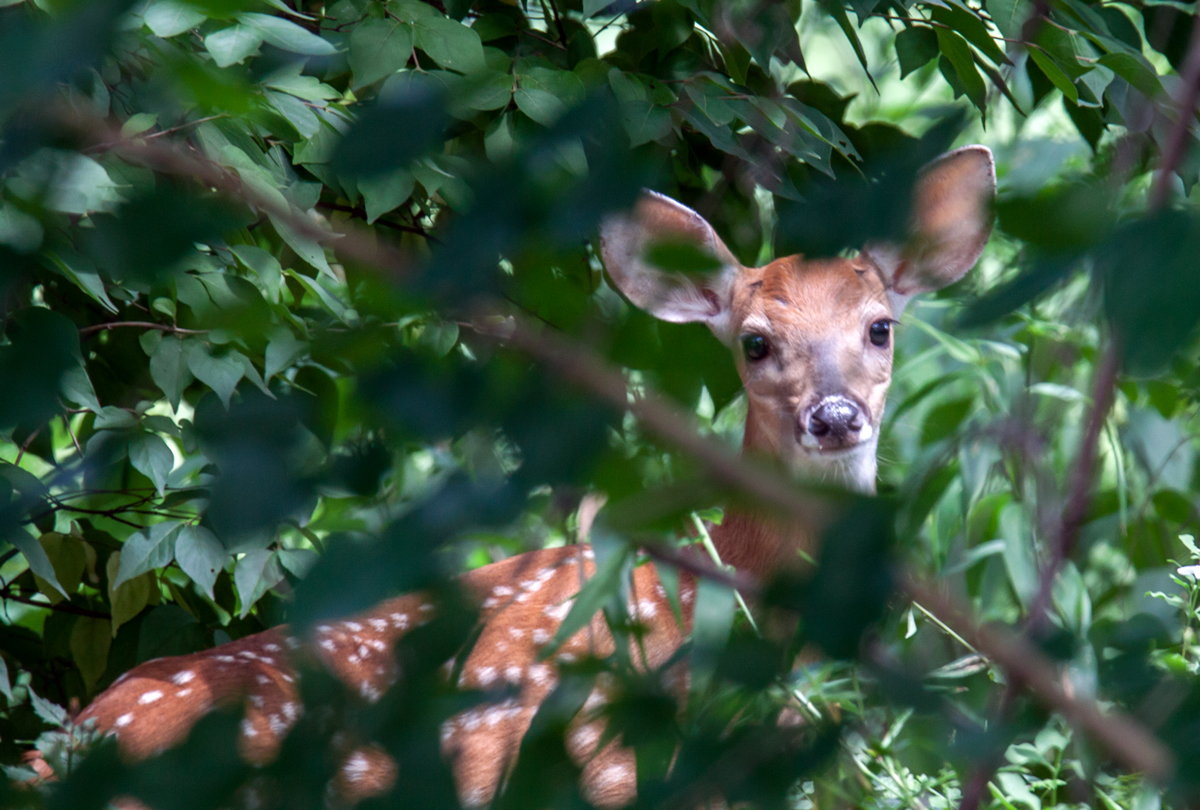
To post or not to post? For over a week, I have gone back and forth in my mind, trying to decide if I should post this image. Most of my deliberation has centered around the indisputable fact that significant parts of the main subject, a young White-tailed deer (Odocoileus virginianus), are obscured by the leaves and branches. Does the foliage add to the image or detract from it?

Ultimately, I decided that the emotional impact of the fawn’s gentle eyes, staring out at me from behind the curtain of leaves, trumped all other consideration. The leaves actually help to draw attention to those eyes, with their unbelievably long lashes.

What makes a good photo? I think a lot about that question as I go over my images. How heavily do I weigh technical and creative considerations? Most of the time, as was the case here, I’ll decide with my heart.

fawn

© Michael Q. Powell. All rights reserved.

Read Full Post »

A group of small birds was foraging in the shallow waters of a stream and I approached them quietly, hoping to get close enough to isolate one of them with my camera. They seemed to be in constant motion and I followed them, waiting and hoping. Finally they stopped for a moment and I crouched low and took this shot of what I believe to be a Least Sandpiper (Calidris minutilla).

I thought about cropping the image a little so that the bird would not be quite as centered, but I decided that I like the ripples in the left corner too much to cut them off. What you see in this posting, therefore, is the framing as the image came out of the camera.

Least Sandpiper

© Michael Q. Powell. All rights reserved.

Read Full Post »

When photographing a subject, how important are the surroundings to you? Most of you know that I like close-up shots and often I zoom in or crop to the point where you don’t have a good sense of the environment.

This past weekend, I went for a walk along the Potomac River (on the Virginia side) and observed a lot of damselflies. I had my Tamron 150-600mm lens on my camera and soon realized that I had a problem—even at the minimum focusing distance (approximately 9 feet/2.7 meters), there was no way that I could fill the frame with a damselfly.

Still, I was drawn to the beauty of the damselflies, which I believe are Blue-tipped Dancers (Argia tibialis), and I took quite a few shots of them.

As I reviewed the images on my computer, I realized how much I liked the organic feel of the natural surroundings. In the first shot, there are lots of vines on the surface of the rock on which the damselfly is perched that add texture and visual interest. In the second shot, I love the twist in the vine and the single leaf hanging down.

All in all, the surroundings on these two shots were so interesting that I didn’t feel any desire to crop the images more severely, and the environment has become just as much the subject as the damselfly. It’s probably worth remembering this the next time when I am tempted to move in really close to a subject—I should at least attempt to get some environmental shots too.

UPDATE:  It looks like my initial identification was off—there are lots of blue damselflies and this one more probably is a Big Bluet (Enallagma durum). Thanks to my local odonata expert, Walter Sanford, for the assist.

Blue-tipped Dancer

Blue-tipped Dancer

© Michael Q. Powell. All rights reserved.

Read Full Post »

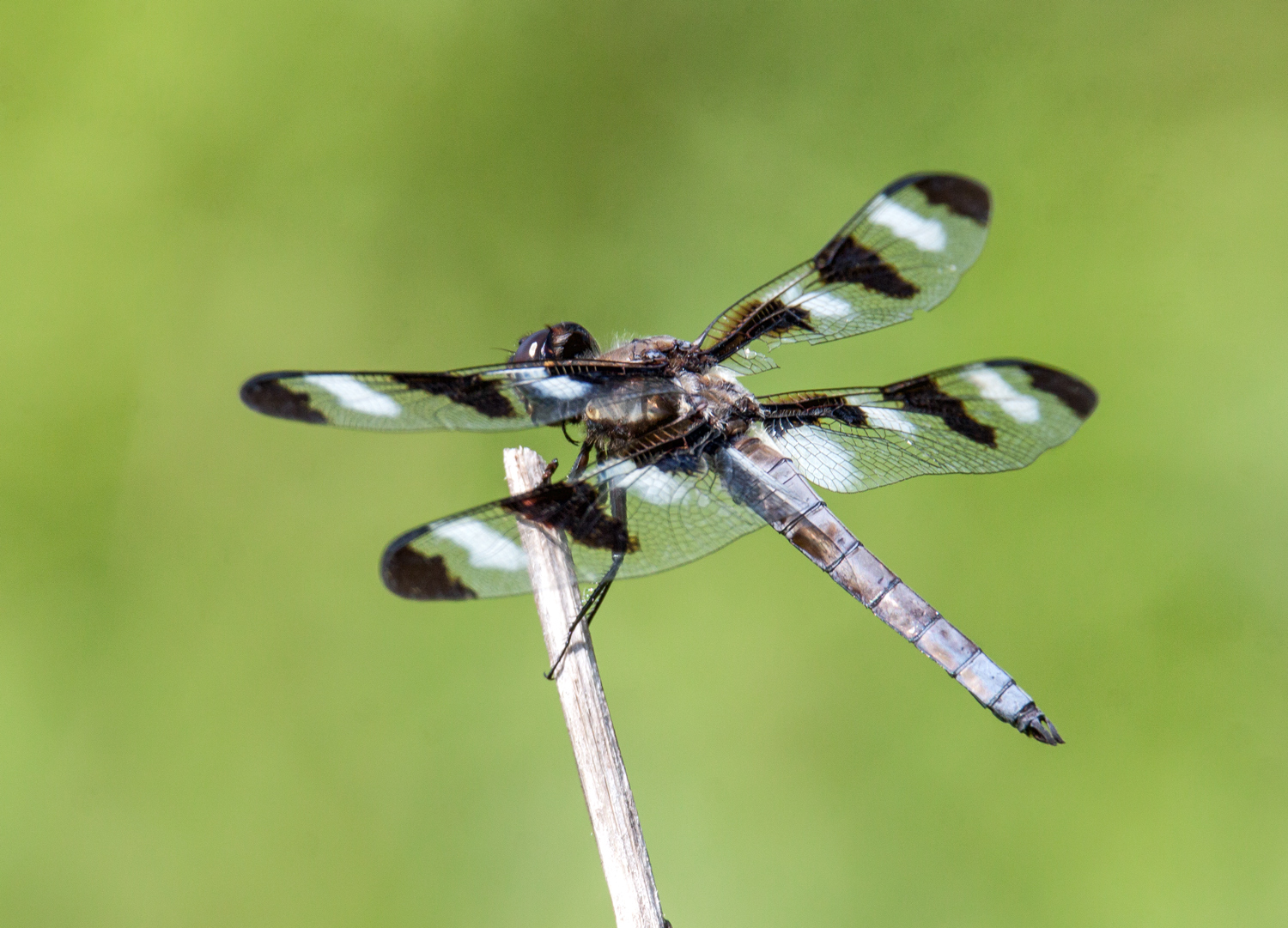
I tend to focus on the realism of close-up details in most of my dragonfly shots, but sometimes the dragonfly seems almost abstract, a mix of colors, shapes, and patterns, like this male Twelve-spotted Skimmer (Libellula pulchella) that I encountered the past Friday.

For those readers who may not be familiar with this boldly-patterned dragonfly species, I am also including a more “traditional” shot of the same Twelve-spotted Skimmer.

Twelve-spotted Skimmer

Twelve-spotted Skimmer

© Michael Q. Powell. All rights reserved.

Read Full Post »

Most dragonflies appear to like the sunlight, but this Mocha Emerald dragonfly (Somatochlora linearis) that I encountered yesterday seemed to prefer the heavy shade, which made it a bit of a challenge to photograph.

I was walking along a small stream, moving in an out of patches of sunlight when I first spotted the dragonfly. I had my long telephoto lens on my camera and took some initial shots, which turned out blurry—there didn’t seem to be enough light for my camera’s autofocus to function well. I quickly set up my tripod and tried to focus manually, but that didn’t work out too well either.

Fortunately, the dragonfly seemed oblivious to my actions. I switched to my 180mm macro and moved in closer and finally was able to see well enough to focus. Because of the limited amount of light, I had the ISO cranked up to 1600 and used the pop-up flash.

As I moved about trying to get a better angle, I slid twice down the slippery bank of the stream into the shallow water and somehow managed to lose one of the little rubber feet of my tripod, but managed to get a couple of decent shots of this shadow-dwelling dragonfly.

Mocha Emerald

Mocha Emerald

© Michael Q. Powell. All rights reserved.

Read Full Post »

Last weekend I encountered an adorable family of White-tailed Deer (Odocoileus virginianus) while walking along a sandy area of Holmes Run, a stream not far from where I live that eventually flows into the Potomac River.

I had unobstructed views of the deer and was able to get some shots with my telephoto zoom without scaring them away. Unfortunately, the loud sounds of a passing freight train caused them to turn and run into the brush as I was trying to get shots from additional angles.

Still, I am happy with my results and think the sand adds a different look to my normal shots of deer in vegetation.

White-tailed deer

White-tailed deer

White-tailed deer

White-tailed deer

© Michael Q. Powell. All rights reserved.

Read Full Post »

I love looking at the world through my macro lens and finding beauty on a tiny scale, like this gorgeous green bee that I spotted this past weekend in the garden of my neighbors.

I am not certain of the exact identification of this bee, but I think it is part of the genus Agapostemon that includes a variety of green sweat bees.


green bee

© Michael Q. Powell. All rights reserved.

Read Full Post »

I can understand how an adept female Red-winged Blackbird (Agelaius phoeniceus) can catch one dragonfly, but how in the world did this one manage to catch two at once?

I can’t tell for certain, but the dragonflies in the bird’s mouth look to be female Common Whitetails (Plathemis lydia) or possibly immature males, which look like the females. The wings seem to be very transparent, so it’s possible too that these may be newly emerged dragonflies—when they first transition from the water nymph stage into dragonflies, they are very vulnerable.

Red-winged Blackbird

© Michael Q. Powell. All rights reserved.

Read Full Post »

Yesterday as I was watching some Ruby-throated Hummingbirds (Archilochus colubris) buzzing around some distant trumpet flowers at Huntley Meadows Park, one of them suddenly flew closer to a small patch of cardinal flowers (Lobelia cardinalis).  The shutter speed was too slow to stop the action completely, but you can see how perfectly the hummingbird’s bill fits into the long tubular flower that is too narrow for most bees to reach.

Hummingbirds fly really fast, so I wasn’t too surprised that there was a lot of motion blur in my shots. I was a bit shocked, however, to see that my shutter speed had fallen to 1/100 of a second for these shots, which is, of course, way too slow for the subject, particularly because I was shooting with my zoom lens at 600mm handheld. When I was focusing on the sitting hummingbird that I included as the final shot here, there was considerably more light and the subject was stationary and I did not make any adjustments when the hummingbird flew to a darker area with the cardinal flowers.

If you look closely at the shot of the perched hummingbird, you may notice that it has tiny feet. According to the Cornell Lab of Ornithology website, “The extremely short legs of the Ruby-throated Hummingbird prevent it from walking or hopping. The best it can do is shuffle along a perch. Nevertheless, it scratches its head and neck by raising its foot up and over its wing.”

Ruby-throated Hummingbird

Ruby-throated Hummingbird

Ruby-throated Hummingbird

© Michael Q. Powell. All rights reserved.


Read Full Post »

« Newer Posts - Older Posts »