Feeds:
Posts
Comments

Archive for the ‘Photography’ Category

Male Wood Ducks (Aix sponsa) are colorful and unusual looking and are one of my favorites. I spotted this one atop a nesting box at Huntley Meadows Park on Friday as he was singing in the rain. He stayed there for quite some time, periodically moving from one side of the roof to the other.

I waited and waited to see if a female Wood Duck would emerge from the box. but I never saw her. Perhaps he is keeping watch over eggs that may have been laid in the box.

Wood Duck


Wood Duck


Wood Duck

© Michael Q. Powell. All rights reserved.

Read Full Post »

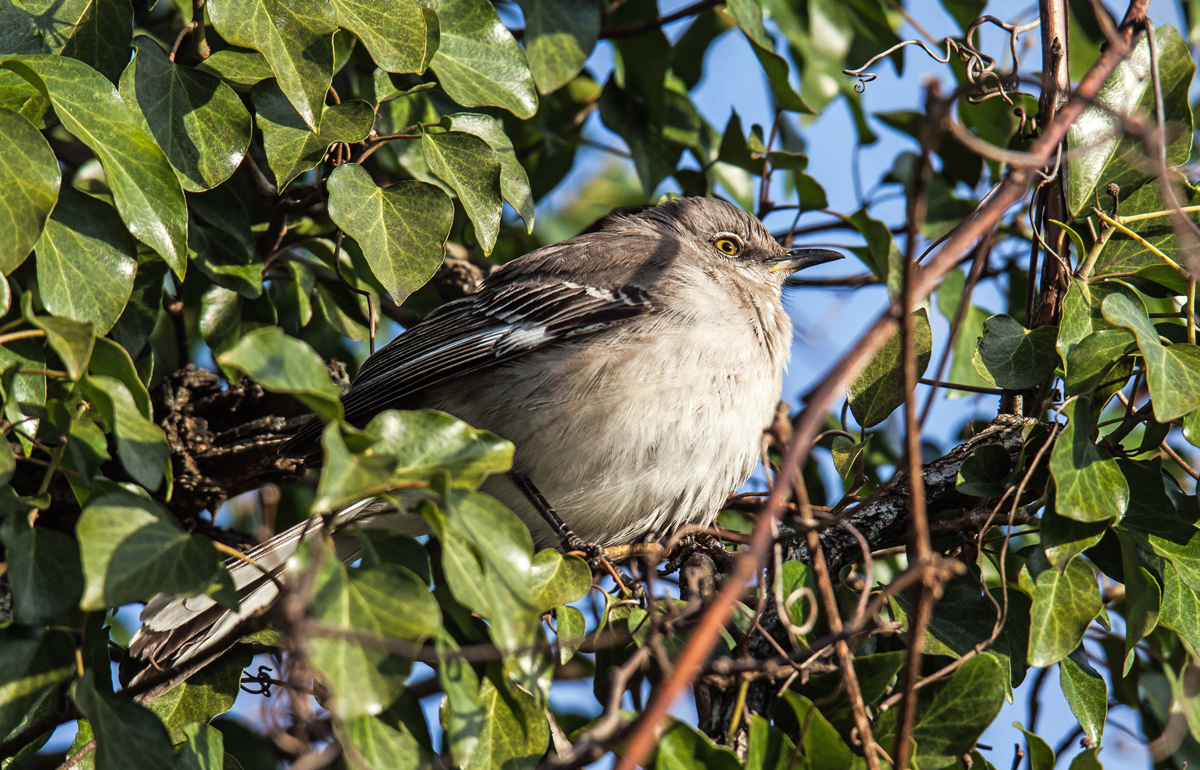
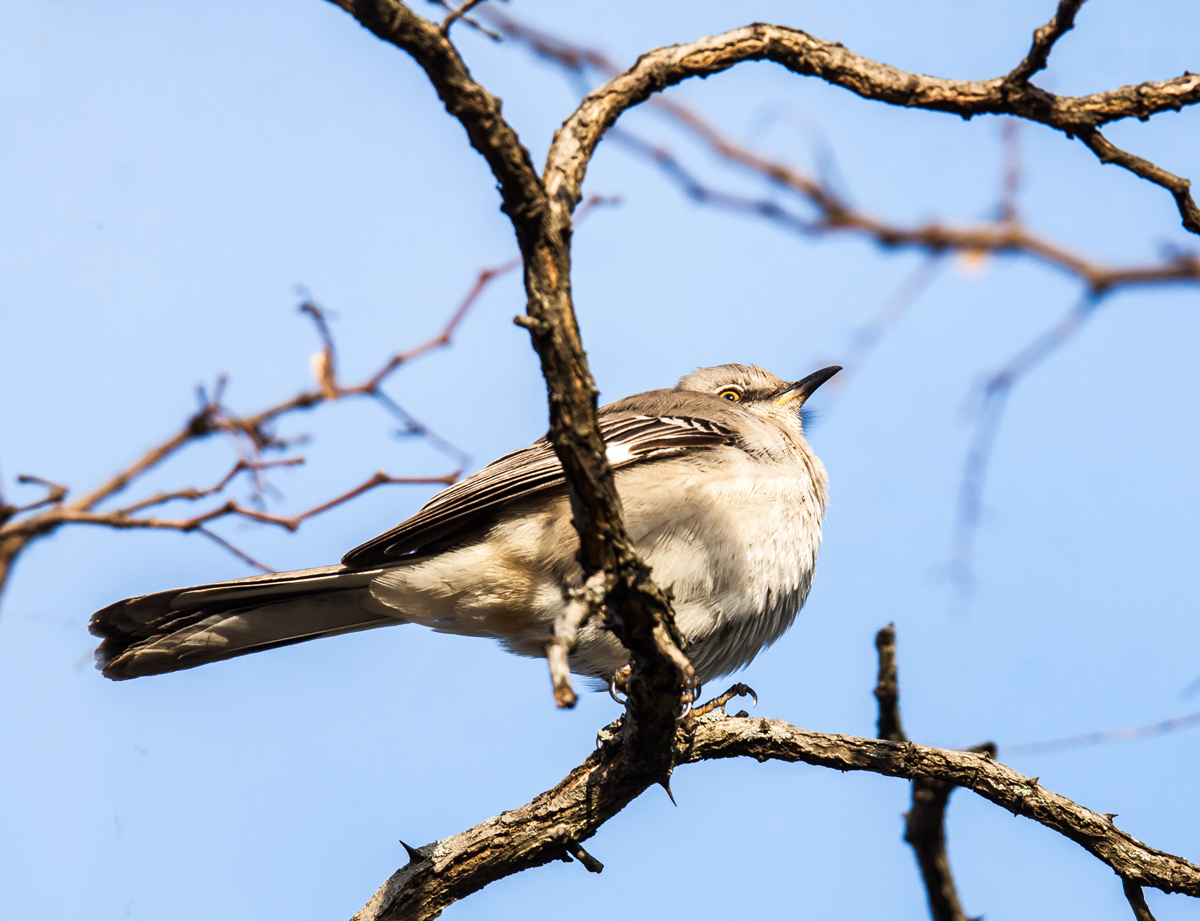
It was below freezing and windy yesterday morning when I headed out with my camera. I didn’t expect to see many birds and was a little surprised when I kept running across Northern Mockingbirds (Mimus polyglottos). They are pretty common where I live, but I just have not seen very many of them this winter.

The first one that I spotted was huddled inside a bush with its feathers all puffed up, probably in an effort to keep warm.

Northern Mockingbird

Another one seemed to be trying to warm up by facing the sun.

Northern Mockingbird

A final mockingbird seemed undeterred by the wind that was ruffling its feathers and boldly sang out a happy song, greeting the arrival of the new day.

Northern Mockingbird

© Michael Q. Powell. All rights reserved.

Read Full Post »

This muskrat (Ondatra zibethicus) was so close yesterday morning at Huntley Meadows Park that I almost stepped back off of the edge of the slippery boardwalk as I tried to make sure that I was within the focusing range of my telephoto zoom lens.

I ended up wet from the intermittent rain, but managed to avoid falling into the water.

muskrat

© Michael Q. Powell. All rights reserved.

Read Full Post »

The Hooded Mergansers (Lophodytes cucullatus) of Huntley Meadows Park seem to spend a lot of their time in areas where they are partially hidden by the vegetation. Occasionally, though, a visual tunnel will open up briefly that lets me get a mostly unobstructed shot, like this one of a handsome male that I spotted this past Monday.

hooded merganser

© Michael Q. Powell. All rights reserved.

Read Full Post »

It has been quite a while since I have seen any mammals other than squirrels, dogs, and humans at Huntley Meadows Park. Although I long to spot a fox, beaver, or even a coyote (someone saw one recently in one of the remote areas of the park), I was quite happy when I caught sight recently of a little muskrat (Ondatra zibethicus) as it munched away on some vegetation. The sound of my camera’s shutter or my movement must have alerted the muskrat to my presence and within seconds the furry creature disappeared beneath the surface of the water.

muskrat

© Michael Q. Powell. All rights reserved.

Read Full Post »

Hooded Mergansers (Lophodytes cucullatus) were really active yesterday at Huntley Meadows Park, including this female, who seemed to be contemplating using this nesting box to lay her eggs a little later this spring.

You might call it “thinking outside of the box”—or not.”  🙂

Hooded Merganser

Hooded Merganser

Hooded Merganser

© Michael Q. Powell. All rights reserved.

Read Full Post »

It’s so easy to overlook the ever-present, drab-colored sparrows when searching for birds to photograph. This past weekend, though, I stopped and watched one as it pecked away in the mud at Huntley Meadows Park, my favorite local marshland park. By slowing down and looking more closely, I was able to marvel in the beauty and industrious persistence of this little bird, which I believe is a Swamp Sparrow (Melospiza georgiana).

Slowing down and looking more closely—that’s probably a lesson I could probabl apply to more areas of my life than just photography.

Swamp Sparrow

Swamp Sparrow

Swamp Sparrow

© Michael Q. Powell. All rights reserved.

Read Full Post »

Whenever I walk the two year old German Shepherd who belongs to my son and daughter-in-law,  one of the highlights for Katie is stopping by my house so that she can visit with Prime Rib (PR), my adopted rabbit.

The two of them seem to enjoy staring at each other and sniffing. Katie has never displayed any hostility towards PR and PR is not intimidated by her presence and often just ignores her.

It was an interesting challenge trying to get this shot using available light. Katie kept moving and PR often stayed in a position in which his eyes were not visible. Beautiful morning light was coming in from the right through the sliding glass doors, but it was not exactly where I would have liked it. I ended up using my Canon 24-105mm lens, a lens that I don’t use that often. I particularly like the way that I was able capture Katie’s intense focus and utter fascination with the little rabbit.

PR and Katie

© Michael Q. Powell. All rights reserved.

Read Full Post »

The wind was howling yesterday afternoon at Huntley Meadows Park, making the water really choppy and threatening to blow me off of the boardwalk. A solo American Coot (Fulica americana) was one of the few birds that attempted to navigate its way among the waves—it looked almost like a scene at the ocean’s shore.

American Coot

© Michael Q. Powell. All rights reserved.

Read Full Post »

A new alcoholic beverage? No, in this case, the title of my blog posting is literal.

When I first spotted this Double-crested Cormorant (Phalacrocorax auritus) on Monday, I thought it was wading in the water. Looking more closely, I realized it was standing on the rocks, giving us a really good view of its dark, webbed feet.

Double-crested Cormorant

© Michael Q. Powell. All rights reserved.

Read Full Post »

I’d never before seen river barges, so it was pretty cool to watch these ones moving along the Ohio River in Wheeling, West Virginia during my brief trip there last month. I never realized that barges are pushed from behind rather than pulled from the front. How in the world are they able to steer?

barges

© Michael Q. Powell. All rights reserved.

Read Full Post »

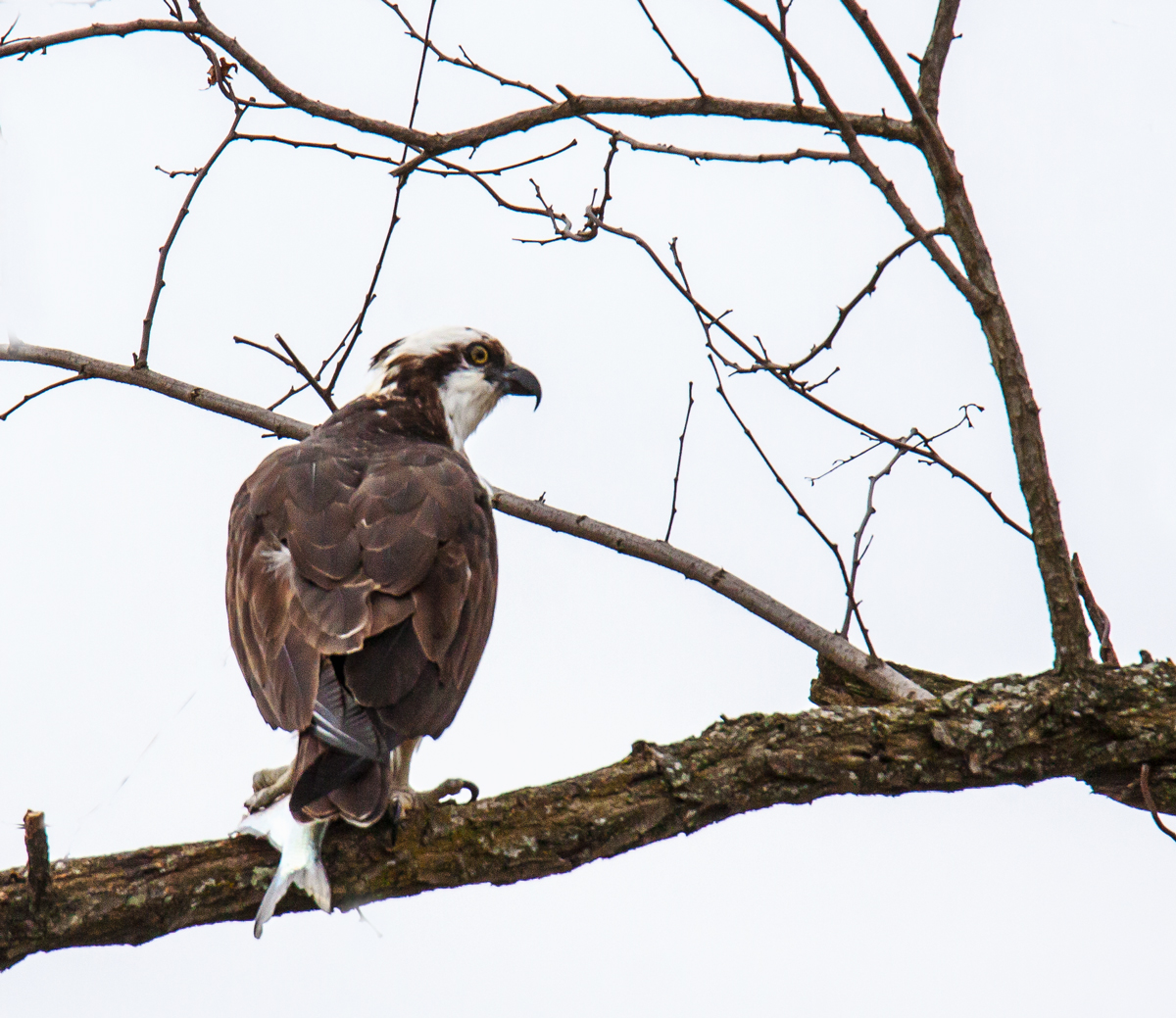
I inched my way forward yesterday when I spotted this bird in a tree at the edge of Lake Cook in Alexandria, Virginia. Gradually I came to see that it was an osprey (Pandion haliaetus) lunching on a fish. When I moved a few steps closer, however, it detected my presence and its reaction was quicker than mine—I couldn’t quite keep the osprey within the frame of my camera.

I have included an image of the osprey just before it took off to give you an idea of what I was seeing as I was doing my best to be stealthy. The eyesight and reactions of raptors is so good that it is really tough to get even this close. I suspect that in this case the osprey was slightly distracted because it was eating.

The osprey did not fly completely out of sight but perched in the highest branches of a tree on the other side of the small lake. There the osprey was able to continue its lunch without further interruptions.

osprey

osprey

© Michael Q. Powell. All rights reserved.

Read Full Post »

During the winter months, my macro lens doesn’t get used much, but I was happy to have it with me during my recent trip to Georgia when I spotted this beautiful flower in bloom at the Oxbow Meadows Environmental Learning Center in Columbus. I’m pretty sure that it is a variety of spiderwort ( g. Tradescantia), a commonly seen flower where I live, but not in February

I grew to love this kind of shot when I first started shooting with Cindy Dyer, my photography mentor and muse. She infused me with a love for macro photography and for botanical subjects that is re-energized each spring. As I look at this image, I imagine her telling me how much she likes it, but also gently reminding me that I should have shot it with a tripod to get the extra degree of sharpness and more precise framing.

spiderwort

© Michael Q. Powell. All rights reserved.

Read Full Post »

As I drove back yesterday from Georgia to Northern Virginia, an almost 800 mile drive (1287 km),  I stopped at a rest area on I-95 in North Carolina. Noting that there was a small man-made pond, I decided to investigate for odes and spotted this damselfly. One of the experts in the Southeaster Odes Facebook Group helped to identify this beauty as a female Fragile Forktail damselfly (Ischnura posita).

It’s a whole lot cooler in Northern Virginia than it was in Georgia and North Carolina, so I suspect that I will have to wait a month or two for damselflies and dragonflies to emerge here. With this sneak preview, I can hardly wait.

fragile forktail

© Michael Q. Powell. All rights reserved.

Read Full Post »

It’s still a bit early for dragonflies in Northern Virginia, but when temperatures soared to almost 80 degrees (27 degrees C) yesterday in Columbus, Georgia, I decided to see if I could find some here. I had a wonderful time exploring some of the area of the Oxbow Meadows Environmental Learning Center that is not far from Fort Benning, where I was staying.

I came up empty-handed for dragonflies, but did spot some beautiful little damselflies. Later in the spring, these will be fairly common, but after a long period with no odonates, they seem rare and exotic.

The first one looks like a Fragile Forktail damselfly (Ischnura posita), but I am not sure about the others. Several of them flew so weakly that I wondered if they had only recently emerged.

Fragile Forktail

damselfly

damselfly

damselfly

damselfly

© Michael Q. Powell. All rights reserved.

Read Full Post »

I couldn’t help but do a double take when I saw this sign at Fort Benning, Georgia. I was filled with visions of dogs on automatic conveyor belts being sprayed with soap and slapped with moving towels. Was hot wax an option for dogs?

I did a little checking and learned that the dog wash is a separate facility adjacent to the car wash. It is the first of its kind on a US military installation and includes a coin-operated, do-it-yourself, climate-controlled booth that offers washing, drying and flea and tick bathing options. The booth is then automatically sterilized after each use.

dog wash

© Michael Q. Powell. All rights reserved.


Read Full Post »

From a distance, it looks almost like they are drilling for oil in the center of Fort Benning, Georgia. Those towers, however, are not oil derricks, but are used for training soldiers who will become airborne-qualified. There are a series of towers of varying heights and as soldiers master their equipment and techniques, they are literally taken to greater heights.

In 1980 I was at Fort Benning for US Army Officer Candidate School (OCS), and I remember running on a track around those towers. During my Army career, I did not go through airborne training and I am happy to say that I have a perfect record—I have landed safely aboard every aircraft on which I have taken off.

I am currently at Fort Benning to celebrate my son’s graduation from OCS. Yesterday I had a chance to walk around the field on which the towers are located and to capture a variety of shots. Here are some of my favorites.

jump towers

jump tower

tower3_blog

jump tower

jump tower

jump tower

© Michael Q. Powell. All rights reserved.

Read Full Post »

This tiny chickadee was energetically digging into a cattail last week at Huntley Meadows Park. Although it is usually recommended not to photograph subjects mid-bite (at least human ones), I like the way this shot turned out of the industrious little bird.

Judging from the range maps, this is probably a Carolina Chickadee (Poecile carolinensis), although we sometimes also get Black-capped Chickadees (Poecile atricapillus). These two types of chickadees look quite similar and I am not yet skilled in distinguishing between them.

chickadee

© Michael Q. Powell. All rights reserved.

Read Full Post »

This past Thursday I made a quick trip to Wheeling, West Virginia and fell in love with the signs that had been painted long ago on the sides of some of the brick buildings in the downtown area. Here are a few of my favorite ones.

Wheeling

Wheeling

Wheeling

© Michael Q. Powell. All rights reserved.

Read Full Post »

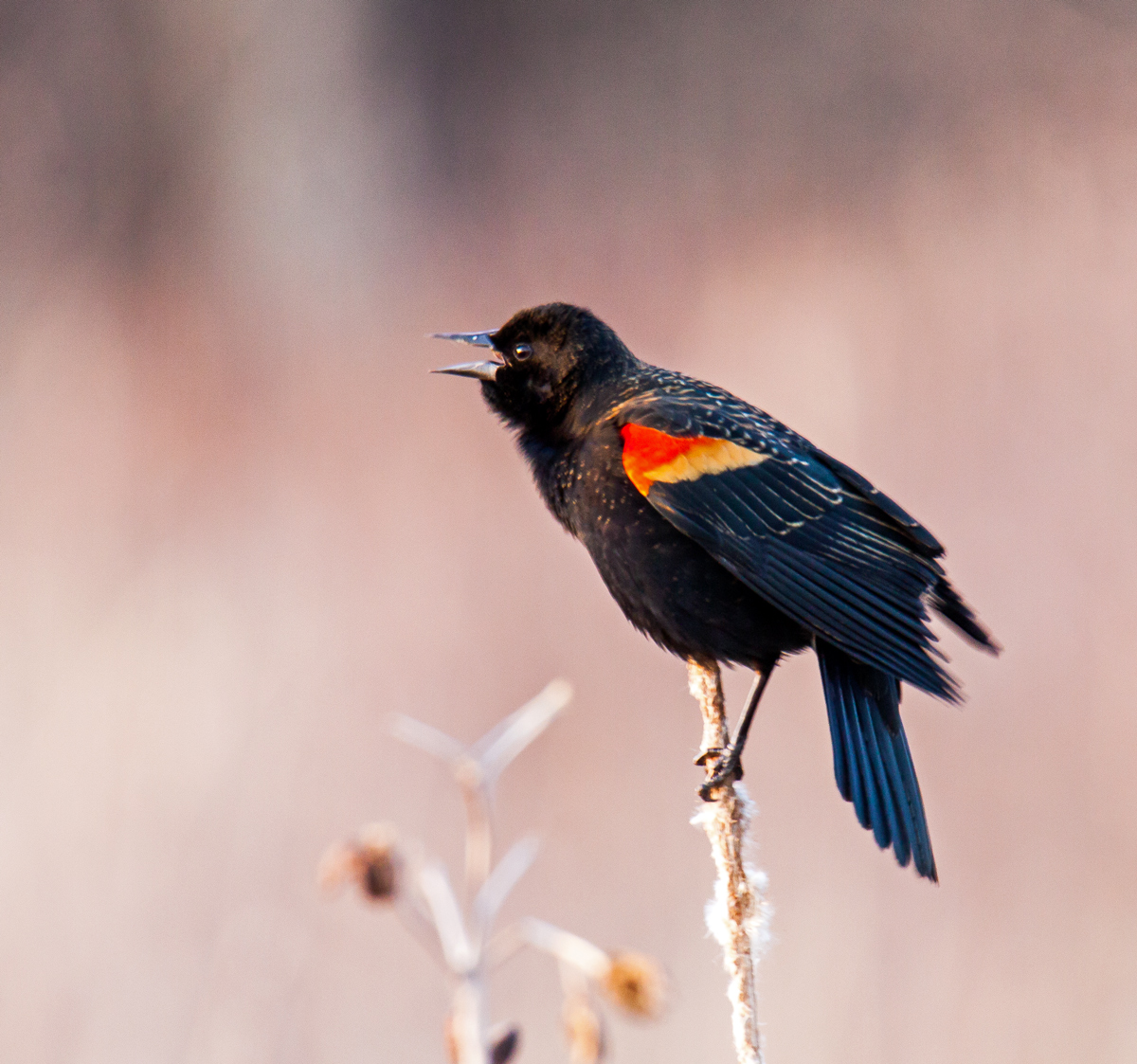
A large number of Red-winged Blackbirds (Agelaius phoeniceus) were in the trees and among the cattails yesterday afternoon at Huntley Meadows Park and their raucous calls resounded throughout the park. The males seemed to competing to see who could call out the loudest and longest, as if to say, “Can you hear me now?”

Red-winged Blackbird

Red-winged Blackbird

© Michael Q. Powell. All rights reserved.

Read Full Post »
It is hard to believe that there could possibly be any insects or other nourishment in the dried-up reeds and cattails, but this male Downy Woodpecker (Picoides pubescens) was feverishly pecking away this past Monday at Huntley Meadows Park. He was extremely focused and persistent—I hope that his efforts were eventually rewarded.

Downy Woodpecker

© Michael Q. Powell. All rights reserved.

Read Full Post »
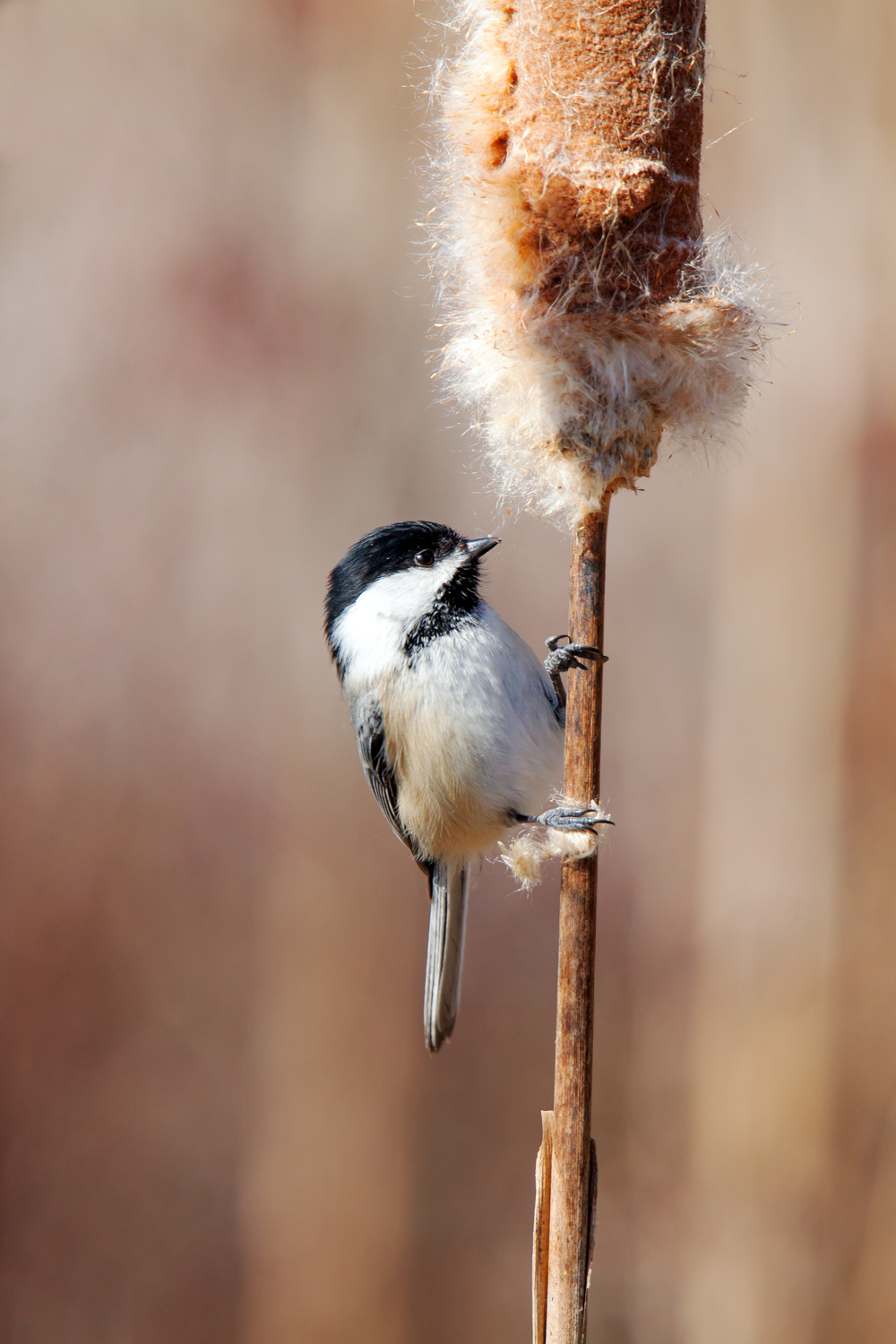
My little chickadee—spotted yesterday afternoon in the cattails at Huntley Meadows Park. In our area, most of the chickadees are Carolina Chickadees (Poecile carolinensis), but we do get some Black-capped Chickadees (Poecile atricapillus) too. The species are so similar that I am never completely sure which one I am looking at. This one, for example, looks like some of the images that I see of the Black-capped Chickadee.

When it came to presenting this image, I was a little bothered by the large amount of negative space on the left side. However, I really like the way that the image emphasizes the tallness of the cattail. The more I looked at the image, the more I grew to like the composition, so I ended up not cropping it at all.

chickadee

© Michael Q. Powell. All rights reserved.

Read Full Post »

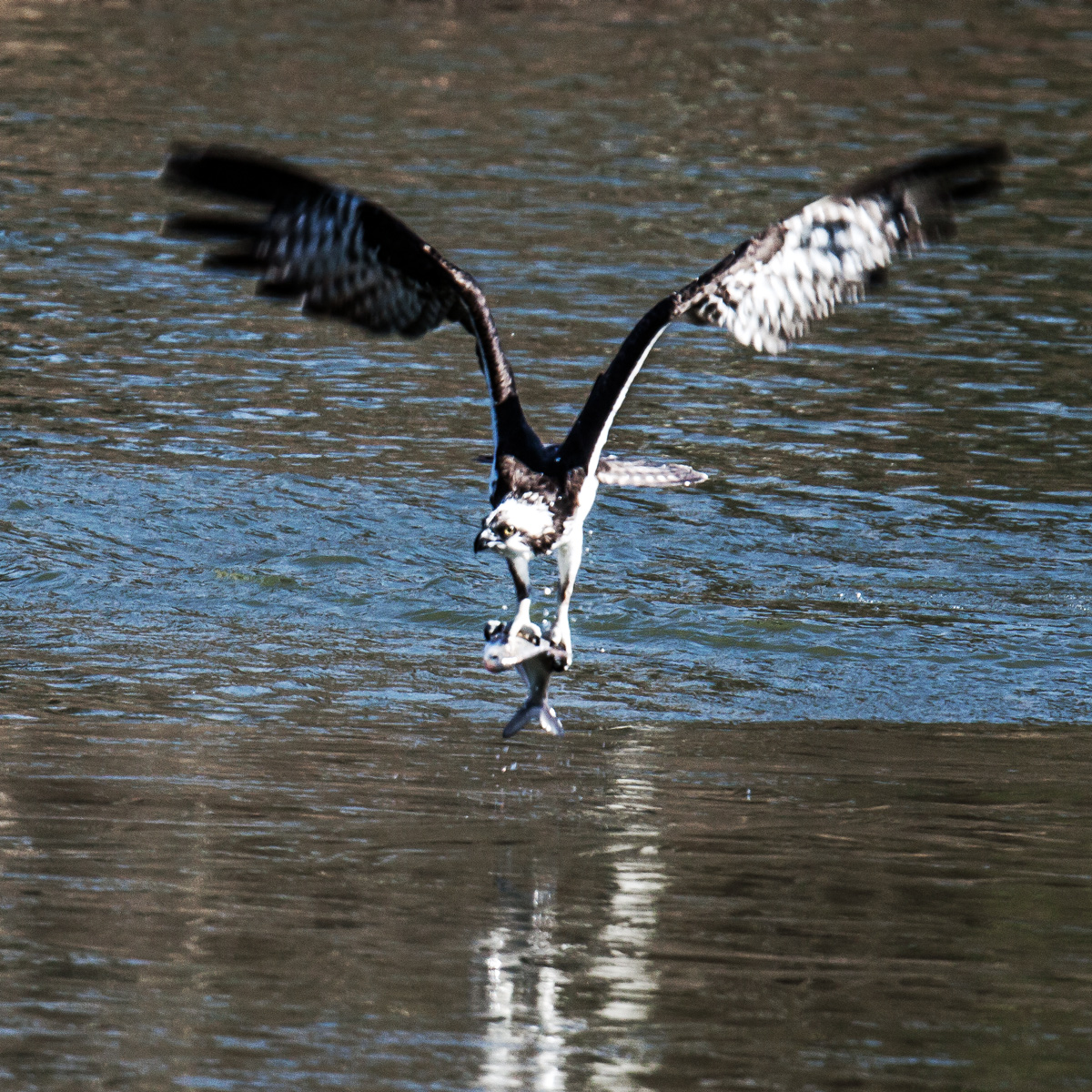
I was thrilled when I caught an Osprey (Pandion haliaetus) in action today at Lake Cook in Alexandria, Virginia. I had seen one there a little over a week ago, so I was somewhat ready when I saw one circling overhead this afternoon. It didn’t take long for the osprey to pull out a pretty good sized fish—I think the lake is stocked with trout, though I really don’t know fish well enough to know if that is the type of fish that the osprey caught.

Although I knew that the osprey would eventually dive for a fish, I was a little slow in reacting when it finally did. In particular, I had difficulty reacquiring focus after the big splash so images like the final image below are a bit soft in focus. I was fortunate that there was a lot of sunlight and I was able to get some sharper images when the osprey flew higher in the sky.

Osprey

Osprey

Osprey

© Michael Q. Powell. All rights reserved.

Read Full Post »

Recently I posted an image of a Pied-billed Grebe (Podilymbus podiceps) that prompted one reader to comment that the grebe looked like a “poorly drawn duck.” Now I’ll admit that the shape and proportions of a grebe are a bit unusual, but I was sure that with the right angle and lighting I could manage to take a beauty portrait of this little bird. I’m not sure that I succeeded fully, but I don’t feel at all uncomfortable characterizing the bird in this image as a “pretty grebe.”

Pied-billed Grebe

© Michael Q. Powell. All rights reserved.

Read Full Post »

The plumage of the Double-crested Cormorant (Phalacrocorax auritus) is pretty drab, but it helps to make its beautiful orange bill and spectacular blue eyes stand out even more. I spotted this immature cormorant—adults have darker-colored breast feathers—yesterday afternoon at Lake Cook in Alexandria, Virginia. The cormorant was standing still in shallow water and seemed to be trying to absorb some warmth from the intermittent sun on a cold and windy day, with temperatures just above freezing.

Double-crested Cormorant

© Michael Q. Powell. All rights reserved.

Read Full Post »

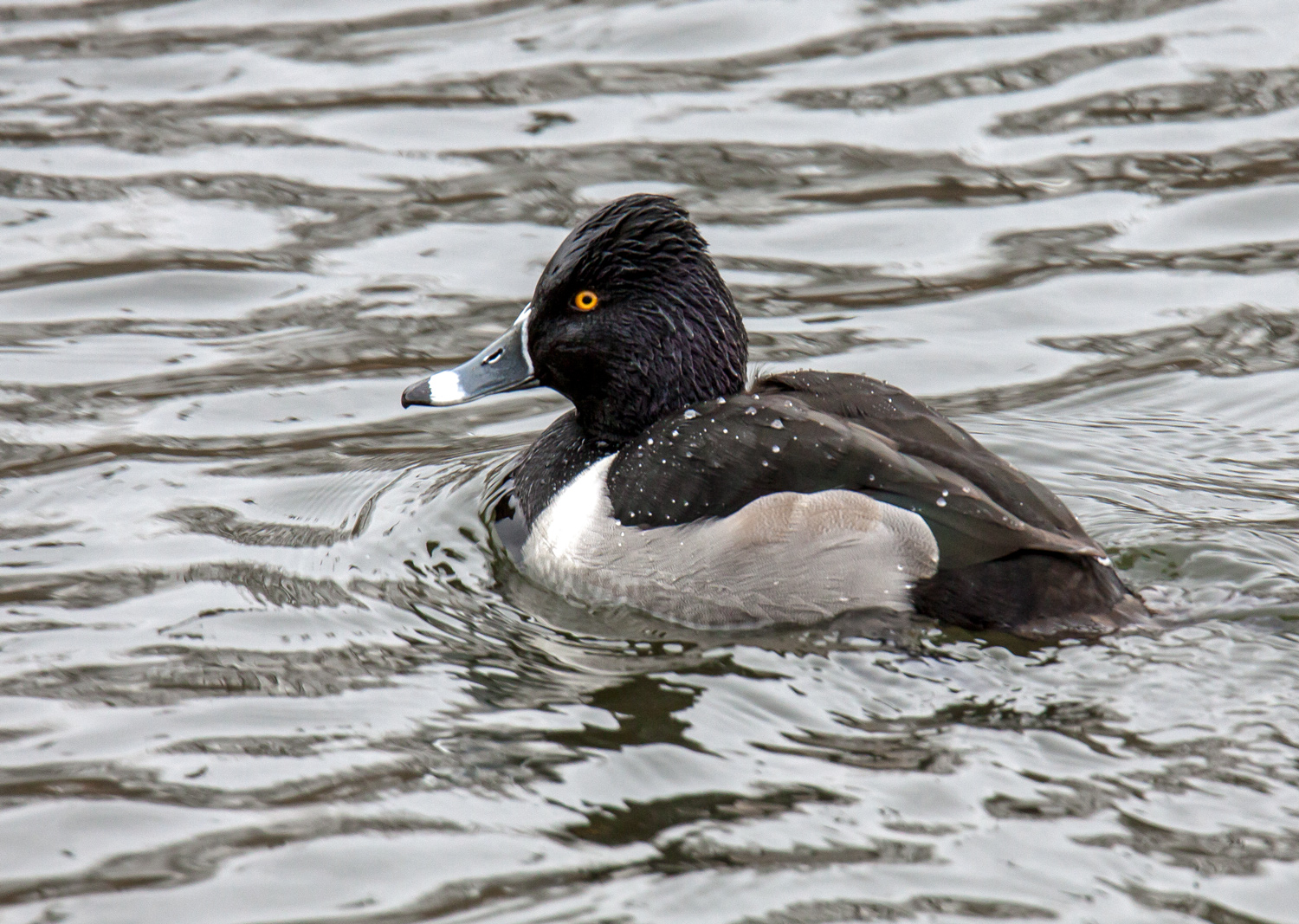
Experienced birders know that this is not an Indigo Cone-headed duck. In fact, there is no such bird—I simply made up the name because I was not really satisfied with calling this bird a Ring-necked duck (Aythya collaris). It is definitely a cool-looking bird, but where is the ring around its neck?

The Cornell Lab of Ornithology explained this conundrum with these words:

“This bird’s common name (and its scientific name “collaris,” too) refer to the Ring-necked Duck’s hard-to-see chestnut collar on its black neck. It’s not a good field mark to use for identifying the bird, but it jumped out to the nineteenth century biologists that described the species using dead specimens.”

I’m in favor of having practical names that are descriptive of live specimens that I might encounter. If Indigo Cone-headed duck doesn’t work for you, how about Ring-billed duck? I’d enjoying hearing any creative ideas you might have about renaming this handsome little duck.

Ring-necked duck

© Michael Q. Powell. All rights reserved.

Read Full Post »

As I looked across the pond at a group of ducks, I spotted a flash of red amidst the dark blue heads of the male Ring-necked ducks. Initially I was confused. The only bird that I had previously seen with a red head was a Red-headed woodpecker and I was pretty sure that a woodpecker was not swimming around in the water.

I maneuvered my way around the small pond and was able to capture some images of this odd duck. Imagine my shock when I checked my bird identification guide and learned that this duck is actually called a Redhead duck (Aythya americana). Frequent readers of this blog know that I sometimes complain about the seemingly inappropriate names that have been given to birds and insects, but in this case the name is simple and straightforward and fits.

As far as I can tell this Redhead is alone—I couldn’t spot any other male or female Redheads at the pond. He seems to like hanging out with a group of male Ring-necked ducks who also seem to be bachelors.

I don’t know how long this guy will stay at this location, but I am definitely going back soon to try to get some more shots of this spectacularly handsome Redhead.

Redhead

© Michael Q. Powell. All rights reserved.

Read Full Post »

Normally Hooded Mergansers (Lophodytes cucullatus) like to stay in deep water and it’s tough to get close-up photos. Yesterday, however, I came upon this male near the shore of a small pond  and I managed to snap off a couple of shots before he turned his back and swam away.

These little ducks have an amazing amount of personality, especially when seen up close.

Hooded Merganser

© Michael Q. Powell. All rights reserved.

Read Full Post »

Have you ever watched a Hooded Merganser duck dive? They will be swimming along and then suddenly they will arch their bodies and thrust slightly upwards before disappearing into the water.

As I watched a group of Hooded Megansers (Lophodytes cucullatus) diving in the deep water of a small pond, I decided to see if I could catch them mid-dive. It proved to be more difficult to accomplish than I realized and I ended up with lots of frames of tails sticking out of the water. Here’s the best shot of a female that I managed to capture as she prepared to go under the water. Her body position reminds me of a dolphin, though I have never seen a dolphin with that kind of a hairstyle.

Hooded Merganser

I was not quite as successful with the male ducks, but I did capture a fun two-image sequence.  The male Hooded Merganser did not seem to come out of the water as much as the female did. As a result, he created a much bigger splash—if this had been an Olympic diving competition, he would certainly have lost points for his sloppy entry into the water.

Hooded Merganser

Hooded Merganser

© Michael Q. Powell. All rights reserved.


Read Full Post »

A loud smack in the water yesterday afternoon at Lake Cook in Alexandria, Virginia caused me to turn my head and I was shocked when I saw an Osprey (Pandion haliaetus) pull a fish out of the water—I though that all of the osprey had gone south for the winter months ago.

This encounter was a real test of my ability to react quickly. I had been watching some small birds in the bushes at the edge of the water when I heard the osprey’s impact with the water. My brain went into overdrive as I tried to figure out what had caused the sound, but simultaneously I was raising my camera to my eye and pointing it in the direction from which the sound had come. I didn’t have time to change the settings on the camera and was fortunate that they were more or less ok. My focus was set for single shot and not continuous focus, so many of my shots were not in focus and my shutter speed ended up at 1/500 sec, a bit too slow to freeze the action. Still, I am thrilled that I got a couple of decent shots out of the encounter.

After I posted a photo in a birding forum in Facebook, several local birders noted that osprey often return to the area in mid-February, so this osprey is only a bit of an early bird.

osprey

osprey

© Michael Q. Powell. All rights reserved.

Read Full Post »

One of the most unusual-looking water birds that I occasionally see is the Pied-billed Grebe (Podilymbus podiceps), like this one that I spotted in a small, man-made pond yesterday in Kingstowne, a suburban community near where I like in Northern Virginia.

According to the Cornell Lab of Ornithology the Latin genus name for “grebe” means “feet at the buttocks.” And I thought “grebe” sounded funny just by itself—imagine having that Latin name as part of your name.

Pied-billed Grebe

Pied-billed Grebe

Pied-billed Grebe

© Michael Q. Powell. All rights reserved.

Read Full Post »

« Newer Posts - Older Posts »