Feeds:
Posts
Comments

Archive for the ‘Photography’ Category

With so much water currently in the central wetlands area of Huntley Meadows Park, I don’t see many shorebirds at this time of the year. The shorebirds seem to prefer to wade in shallow water. This past weekend, however, I spotted this one as it surveyed the marshland from atop a log. I think it is a Greater Yellowlegs (Tringa melanoleuca), although I admit that I have troubles identifying the different shorebirds, many of which look almost identical to me.

As you can see, the yellowlegs was a long way away. Usually I try to get close-up shots with either a telephoto or a macro lens and am a little disappointed if I can not fill a substantial part of the frame with my primary subject. In this case, however, I was never tempted to crop the image more severely, because  the surrounding landscape is an important element of making this image appealing to me.

Greater Yellowlegs

© Michael Q. Powell. All rights reserved

Read Full Post »

Best wishes for a blessed and happy Easter to all who are celebrating this day. Earlier this morning I went to an outdoor sunrise service at my church at 6:30 a.m. and I am not getting ready for our normal morning service in a couple of hours. Easter is a bit later this year than in some years in the past and it was already light and pleasantly warm when we began our service—in past years we were often bundled up and needed flashlights to read the programs.

I chose two images to celebrate Easter. The first is a macro shot of a flower from a recent trip to Green Spring Gardens and it speaks to me of the growth and renewal of this season. The second is a shot of my PR (Prime Rib), my very own Easter bunny, who greets me each morning.

Happy Easter to all of you.

Easter

Prime Rib

© Michael Q. Powell. All rights reserved

Read Full Post »

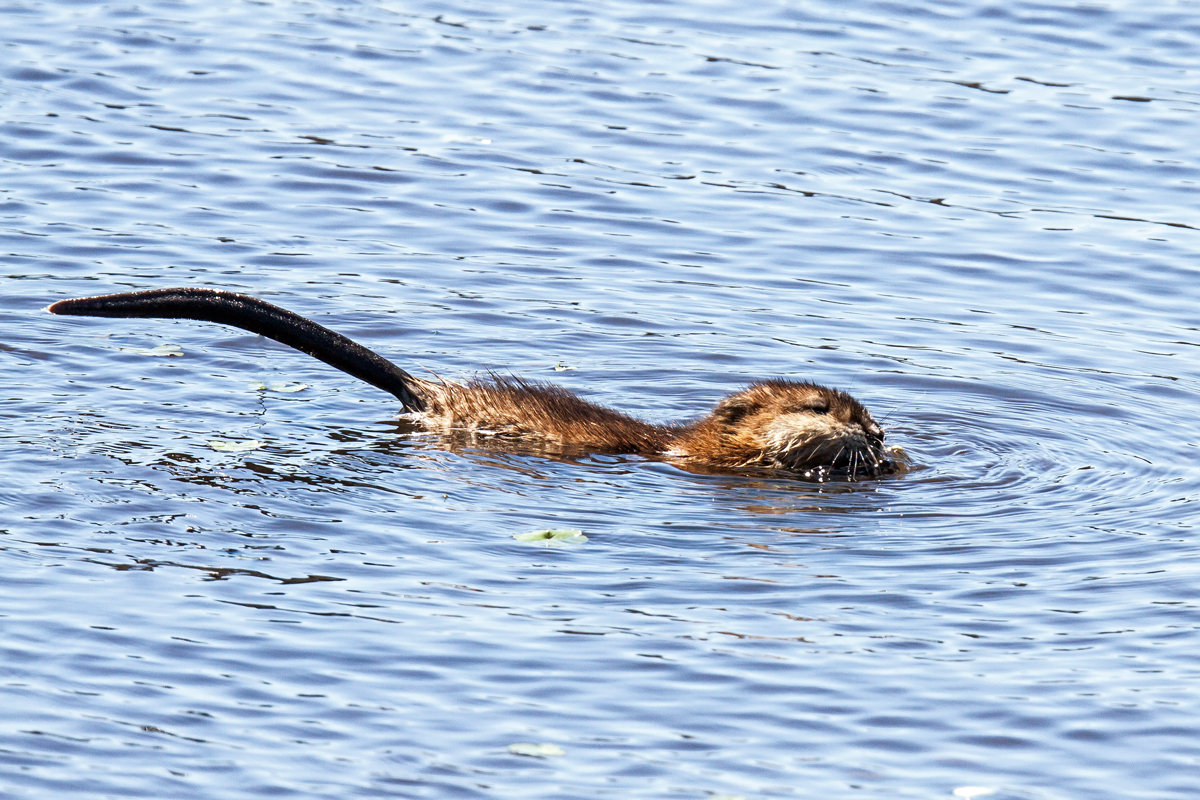
I am not exactly sure what was going on, but this muskrat (Ondatra zibethicus) seemed to be really struggling in the open water one afternoon last week as the strong wind gusts made the water really choppy at Huntley Meadows Park. Normally muskrats use their tails as a source of underwater propulsion, but it seemed really unusual to see a muskrat’s tail completely out of the water.

A Wikipedia article noted that muskrat tails are covered with scales rather than hair, and, to aid them in swimming, are slightly flattened vertically, which is a shape that is unique to them. I somehow had always thought of muskrat tails as being long and skinny, but, as the image shows, their tails are quite substantial.

I can’t tell for sure, but it looks like the muskrat may be carrying something in its mouth and/or front paws. Is that why it was seeking to balance itself with its tail? For now it remains a mystery, but I think I will go back over the other photos that I took of this muskrat to see if I can find an answer.

muskrat

© Michael Q. Powell. All rights reserved

Read Full Post »

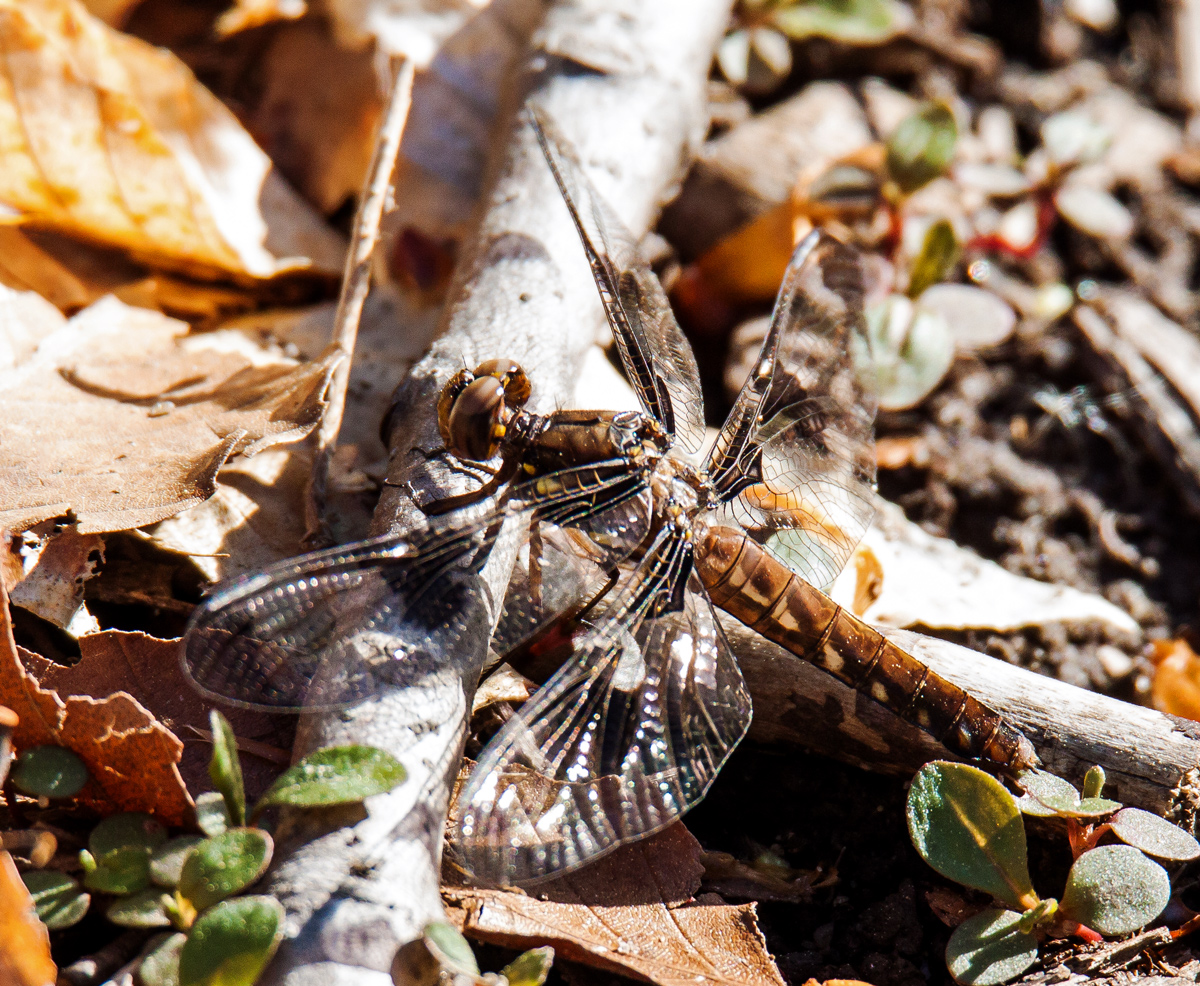
On the same day that I saw the Common Whitetail dragonfly that I featured yesterday in my blog posting, I was thrilled to have the chance to photograph an uncommon dragonfly, a male Stream Cruiser (Didymops transversa). I had never before seen a Stream Cruiser, but local dragonfly expert and fellow photographer Walter Sanford had observed them in the past at Accotink Bay Wildlife Refuge and offered to guide me.

It’s somewhat of an understatement to say that Stream Cruisers are hard to spot. The are not very big (about 2.2 inches (56-60mm) in length), they are skittish, and they often perch on the stems of low vegetation. During the hours that we searched for them, I observed a couple of probable Stream Cruisers in the air, but lost them in the blur of the vegetation and never saw a single one land. Walter saw the first one of the day, a female, and posted an awesome photograph of the beautiful dragonfly in a blog posting yesterday. Unfortunately for me, I was unable to make it to the dragonfly’s location before she flew away. Walter spotted a few more Stream Cruisers during the day, but each time I couldn’t get there quickly enough to see one.

I was beginning to think that I was going to end up empty-handed for the day when Walter called out that he had spotted a male perched in the underbrush. This Stream Cruiser was cooperative enough to stay perched as I rushed to try to get a shot. I had my Tamron 180mm macro lens on my camera at that moment. The dragonfly and the stem on which it was perched were so small in the viewfinder that my camera’s autofocus would not lock on my subject, so I had to resort to focusing manually. Dragonflies have so many fine details that it is really hard to tell when they are in focus. This image was the best I could get after cropping the initial shot quite a bit.

Stream Cruiser

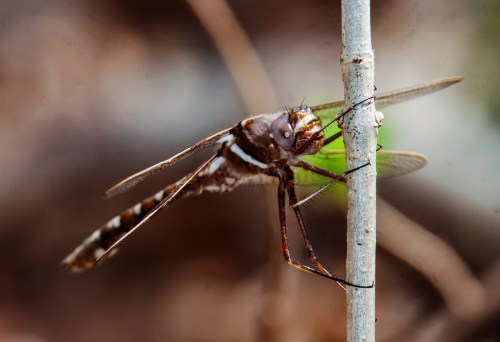
I decided to push my luck and see if I could get a better shot with my Tamron 150-600mm lens that I use primarily to photograph birds. Amazingly the dragonfly stayed put while I changed lenses. Once again I had to focus manually, which is an even bigger problem with this lens, because the focus ring is located really close to the lens mount. It’s hard to hold the camera steady and focus manually at the same time.

Here’s an image that I shot at 600mm. I managed to get the eye pretty sharp and to capture some of the details of the dragonfly’s incredibly long legs, but the depth of field was so shallow that the abdomen is out of focus. Normally I will try to move around the subject to be as parallel as I can be, but in this case I stayed fixed at one spot and remained as immobile as I could.
Stream Cruiser

It is really nice to start off this dragonfly season with a new species. If you want to learn more about the Stream Cruiser dragonfly, check out this page from the Dragonflies of Northern Virginia website (and stay tuned for Walter’s shots of this dragonfly that should appear tomorrow morning in his blog).

© Michael Q. Powell. All rights reserved.


Read Full Post »

Thanks to recent warmer weather, dragonflies are finally starting to emerge in Northern Virginia. I captured this image of a female Common Whitetail dragonfly (Plathemis lydia) on Monday at Accotink Bay Wildlife Refuge. Unlike many species with the word “common” in their names, Common Whitetail dragonflies are actually pretty common. They are among the first species to emerge in the spring and among the last to depart in the fall. Unlike many of the early spring species, they are habitat generalists—you can find them pretty much anywhere  and do not have the scour the underbrush or walk through streams in remote locations.

Although I spotted a Common Green Darner dragonfly earlier this month, I was not able to get a photo of it and suspect that it had migrated from another location. This is my first photo of the season of a “native” dragonfly, with plenty more sure to follow in the coming months.

Common Whitetail dragonfly

© Michael Q. Powell. All rights reserved.

Read Full Post »
When some birds zoomed by me this past weekend, I could tell they were swallows by the way that they flew.  Their coloration, however, didn’t seem to match the Barn and Tree Swallows that I have previously seen at Huntley Meadows Park.

One of them finally perched and I got this shot of what appears to be a Northern Rough-winged Swallow (Stelgidopteryx serripennis), a bird that I had never seen before. According to the Cornell Lab of Ornithology, “The species derives its name from the outer wing feathers, which have small hooks or points on their leading edges.”

The bright sun made for a pleasant day, but made it tough to properly expose for the brilliant white feathers on the swallow’s chest. I was happy that I managed to capture a few details of the feathers despite the rather harsh midday sunlight.

Northern Rough-winged Swallow

© Michael Q. Powell. All rights reserved.

Read Full Post »

Why do I like to get up really early in the morning, striving to arrive at my destination just as the sun is rising? There is something special about the sights and sounds and even the smell of the early morning. At a time when many people are still snuggled in their warm beds, many wild creatures are already active.

It’s a real challenge, though, to pinpoint that activity and it is even harder to photograph it. Even when I am not able to get a shot, however, I am often filled with a sense of awe and reverence as I share the start of the day with all of these amazing creatures.

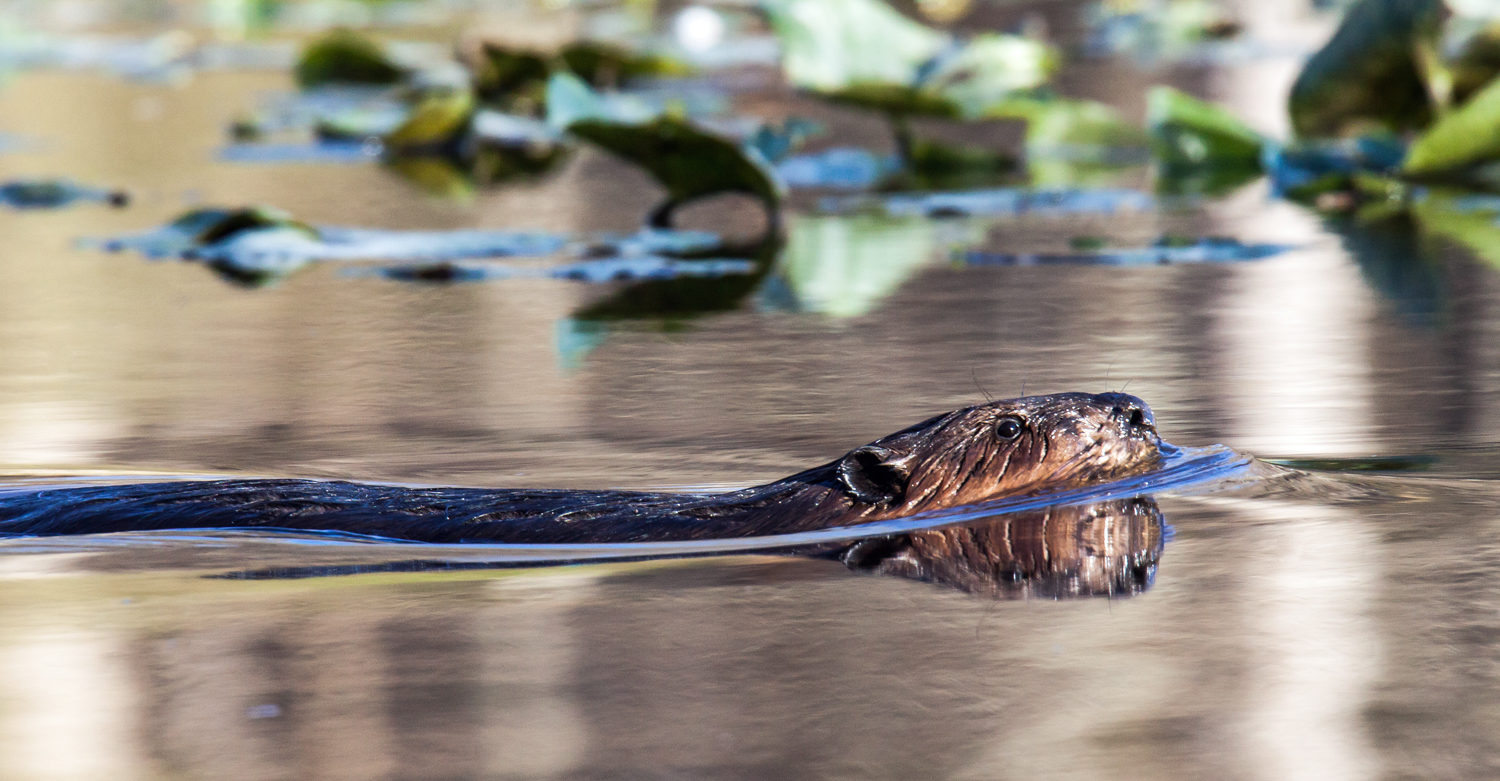
When things come together, it is truly magical, and I had one of those experiences this past weekend. I was seated on a fallen tree at the edge of a remote beaver pond at Huntley Meadows Park, my favorite spot in the park. I had been sitting there for a while, almost entranced by the reflections in the water, when I suddenly spotted the unmistakable wake of a swimming beaver.

This North American Beaver (Castor canadensis) appeared to be swimming laps in the middle of the pond. The beaver would head a certain direction for a little while and then would turn and swim back in the other direction, moving back and forth, in and out of the shadows and the reflections. Time seemed to slow down. I leaned forward slightly and tried to get as low as I could, but did not make any abrupt movements for fear of spooking the beaver.

It is really difficult to put into words what I was feeling as I observed the swimming beaver and I hope this image helps to convey a sense of the encounter. Eventually the beaver swam off and I continued on my way, filled with a sense of calm and inner peace.

Why do I like to get up early? The knowledge and the hope that special moments like this may await me are sufficient motivation for me.

beaver

© Michael Q. Powell. All rights reserved.

Read Full Post »
As the seasons change, new birds appear and disappear at my favorite marshland park—Huntley Meadows Park—in Northern Virginia. We are fortunate to be along the migratory route for birds flying north and south and are far enough south to be a destination of some overwintering birds.

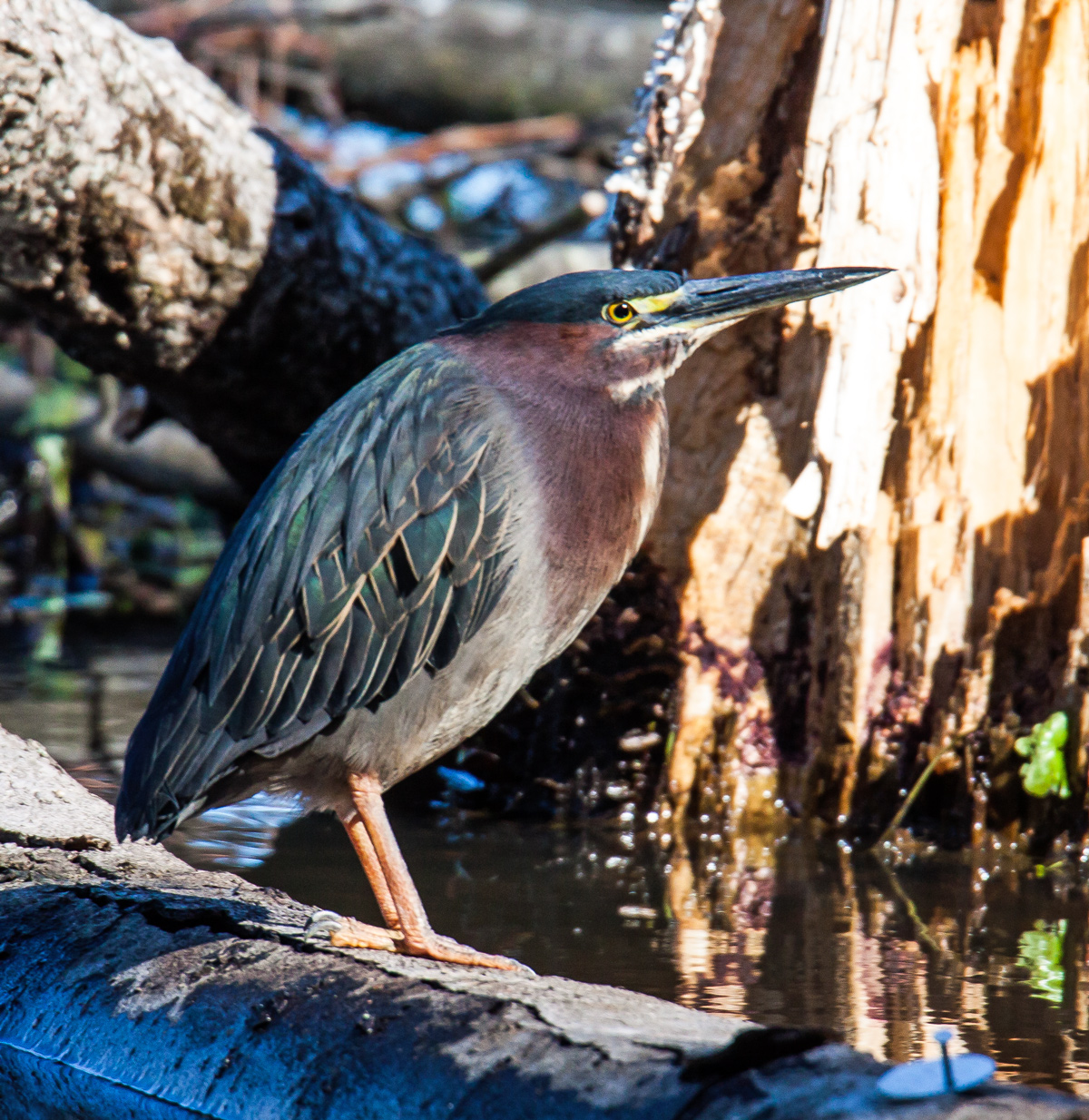
Unlike the Great Blue Herons, which remain with us all year, Green Herons (Butorides virescens) leave in the autumn and I eagerly await their arrival in the spring? Why? I am utterly fascinated by these squat little birds, despite the fact they have none of the elegance of the Great Blue Herons and Great Egrets. They always strike me as industrious and diligent and go about their work, generally avoiding the spotlight. Green Herons also seem to have an abundance of personality and almost seem capable of expressing emotions. Finally, Green Herons have a subdued, but refined beauty, a beauty that I was able to capture in this image from yesterday morning.

Welcome back, Green Herons. I missed you. Perhaps it is true that absence makes the heart grow fonder.

Green Heron

© Michael Q. Powell. All rights reserved.

Read Full Post »

Many of the birds seemed to have sought shelter from the strong winds yesterday at Huntley Meadows Park, but this female Ring-necked Duck (Aythya collaris) went about her daily grooming routine without paying any attention to the weather conditions. She did, however, seem a little shy and struck a coy pose when I pointed my camera in her direction.

Ring-necked Duck

© Michael Q. Powell. All rights reserved.

Read Full Post »

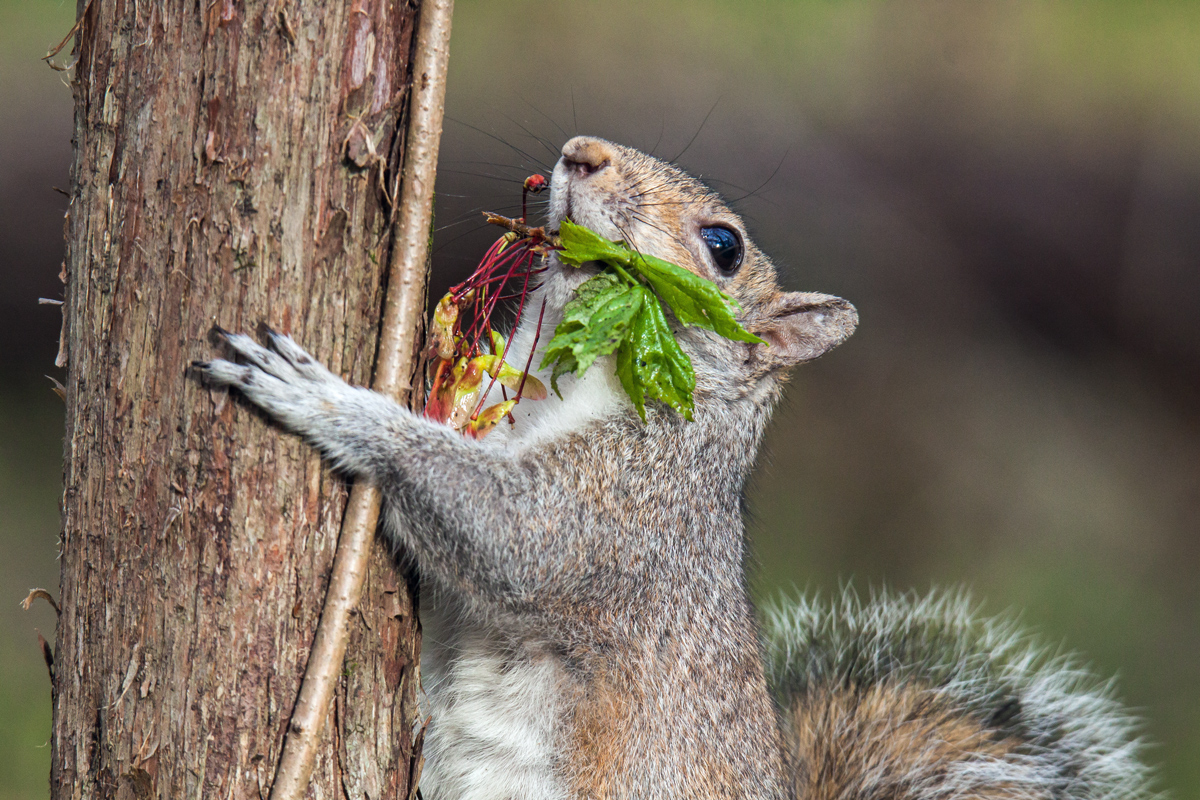
Greens for breakfast? It’s not what I would choose, but it’s what was on the menu for an Eastern Gray Squirrel early this morning at Huntley Meadows Park. The squirrel paused for only a second, so I didn’t have much time to frame the shot. I like the result and this was a rare occasion when I did not need to crop the image at all.

As for my breakfast choices, I think I will stick with my usual oatmeal.

Gray Squirrel

© Michael Q. Powell. All rights reserved.


Read Full Post »
Coots look clumsy when bobbing about in the water, but amazingly they look even more awkward out of the water, like this one that I spotted Monday at Huntley Meadows Park. Their green feet, which are not webbed like those of a duck, seem disproportionately large and almost cartoonish, like the oversized Hulk hands that I have seen little kids wear at times in the past.

When I first started photographing birds, I assumed that American Coots (Fulica americana) were part of the duck family. After all, coots swam in the water, were about the same size as some ducks, and sometimes seemed to hang out with ducks.

When I did a little research, however, I learned that coots are not at all related to ducks. As the Cornell Lab of Ornithology points out, “they’re closer relatives of the gangly Sandhill Crane and the nearly invisible rails than of Mallards or teal.”

American Coot

© Michael Q. Powell. All rights reserved.

Read Full Post »

What predators at Huntley Meadows Park are powerful enough to kill an adult beaver? Could this North American Beaver (Castor canadensis) have died of natural causes? Why was its body more than half a mile from the water?

The bright orange incisors and the large flat tail make identification of the body easy, but the cause of death is a mystery. A trail runner pointed out the carcass to me shortly after I spotted a Black Vulture this past weekend, which explains why the vulture was hanging around. (Check out my earlier posting Black Vulture in a tree to see photos of this somewhat creepy bird.)

It was interesting to see the reactions of different park visitors to these questions when I posted them to a community Facebook page. Some immediately assumed that coyotes, which have been spotted in the park, were responsibleand focused on the size and ferocity of these predators. Others spoke of disease or about the complex social structures of the beavers and how teenage beavers are kicked out of the lodge at a certain point in time and forced to fend for themselves.

Some readers simply used emojis, including one with tears. Somehow the loss of this industrious herbivore with human-like paws touches many of us deeply, reminding us of the fragility and preciousness of our own lives.

R.I.P., beautiful creature of God.

death of a beaver

death of a beaver

death of a beaver

© Michael Q. Powell. All rights reserved.

Read Full Post »
Basking in the rays of yesterday’s early morning sunlight, this female Hooded Merganser (Lophodytes cucullatus) seemed to be caught up in a moment of reverie as she contemplated the start of a new day at Huntley Meadows Park.

Hooded Merganser

© Michael Q. Powell. All rights reserved.

Read Full Post »
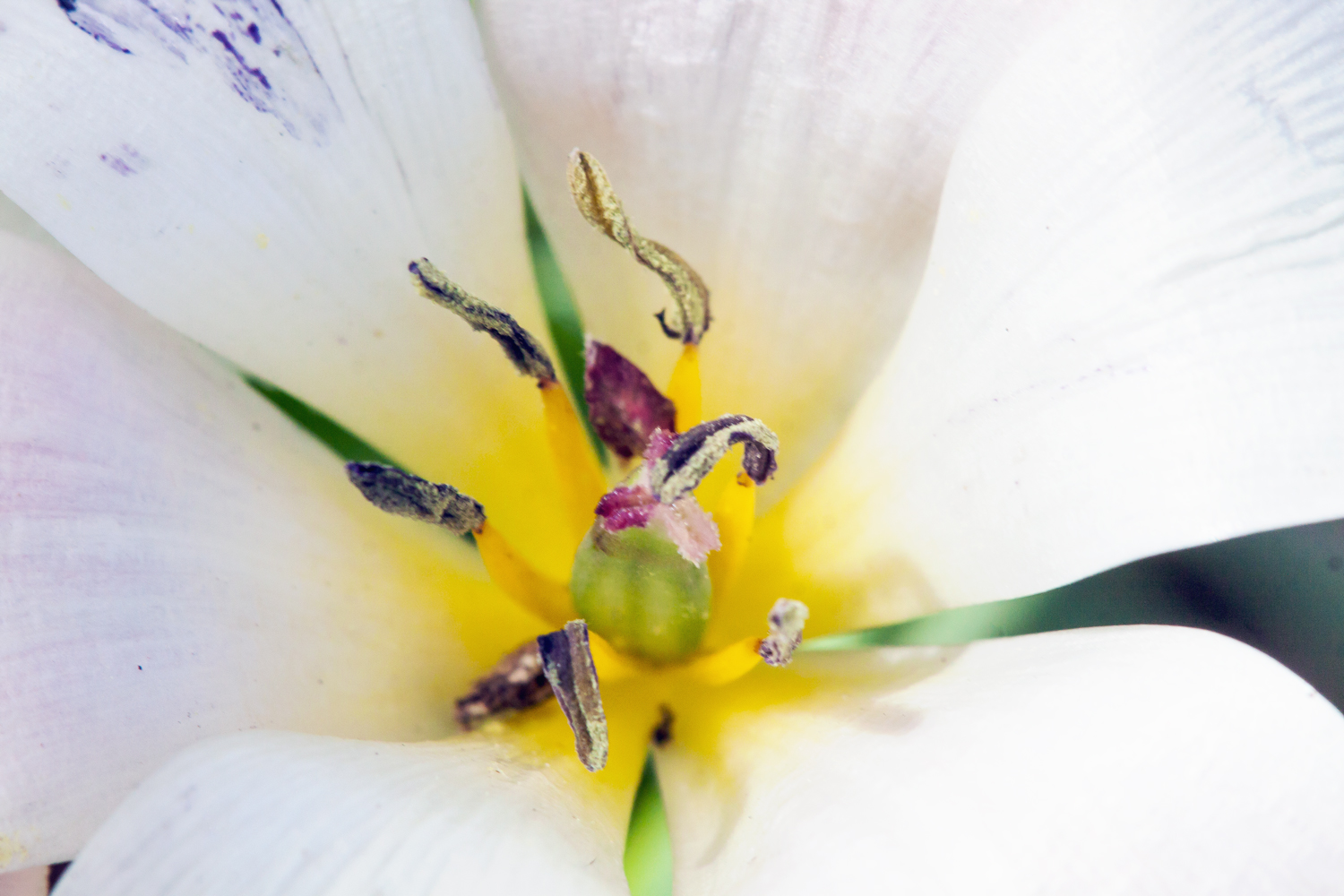
I don’t have my own garden, but my neighbor and fellow photographer Cindy Dyer always has beautiful flowers in her garden, like this Lady Jane tulip (Tulipa clusiana) that I photographed yesterday afternoon with the sunlight streaming in from behind the flower.

Lady Jane tulip

© Michael Q. Powell. All rights reserved.

Read Full Post »

As I rounded the corner of one of the remote trails yesterday at Huntley Meadows Park, I stopped abruptly—a large black bird was perched low in a tree almost directly in front of me. At first I thought it might be a wild turkey, but it turned out to be a Black Vulture (Coragyps atratus).

Most of the vultures that I see are Turkey Vultures, which have red heads, and generally I see them soaring high in the sky. When this vulture became aware of my presence, it flew to a nearby tree and looked down at me. I tried not to feel paranoid, but it looked almost like it was going to dive bomb me. The vulture perched in one more tree before finally flying away.Black Vulture

Black Vulture

Black Vulture

© Michael Q. Powell. All rights reserved.


Read Full Post »
Usually it’s the female Wood Duck (Aix spionsa) who is most interested in a nesting box, but during a recent trip to Huntley Meadows Park, I spotted a male Wood Duck who also seemed pretty interested. Maybe he had been watching a lot of home improvement television shows and was thinking of the renovations he could do.

Wood Ducks

Of course, the female Wood Duck also had to check out the nesting box. After all, she is the one who has to lay the eggs inside of it. Judging from what I have seen in previous years, she will have sole responsibility for taking care of the little ducklings—the male seems to disappear after they are born.

Wood Ducks

© Michael Q. Powell. All rights reserved.

Read Full Post »
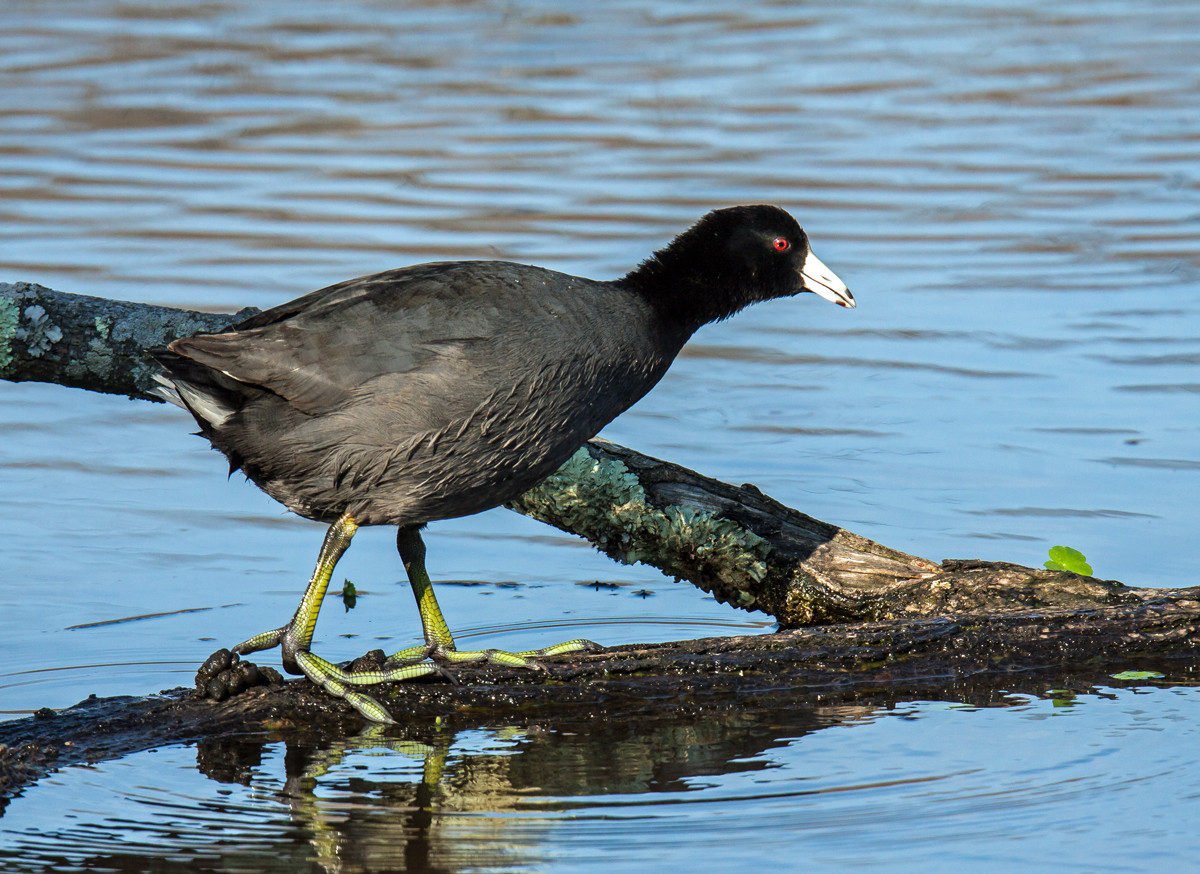
As we move deeper and deeper into spring, more birds are starting to arrive at my favorite marshland, Huntley Meadows Park. Last weekend I spotted my first Tree Swallow (Tachycineta bicolor) of the year. Actually I had spotted a few of them a bit earlier zipping around the sky, but this was the first one that I saw perched on the ground.

The Tree Swallows seem to enjoy using the nesting boxes scattered throughout the park and this one was checking out one of the boxes. I was happy also to be able to get a shot of the swallow perched in a tree—despite their names, I rarely see Tree Swallows in the trees.

Tree Swallow

Tree Swallow

Tree Swallow

© Michael Q. Powell. All rights reserved.


Read Full Post »

Normally I see turtles at water level, but this intrepid turtle had climbed up the trunk of an overhanging tree at Jackson Miles Abbott Wetlands Refuge on Monday and was perched several feet about the surface of the pond. I love the way that his coloration and texture almost perfectly match those of the tree.

turtle in a tree

A short while later I encountered three turtles perched on the trunk of a tree growing at an angle out of the water. The angle was steep enough that I was not sure how they managed to get themselves into position or how they were able to keep from sliding down into the water.

turtles in a tree

© Michael Q. Powell. All rights reserved.

Read Full Post »

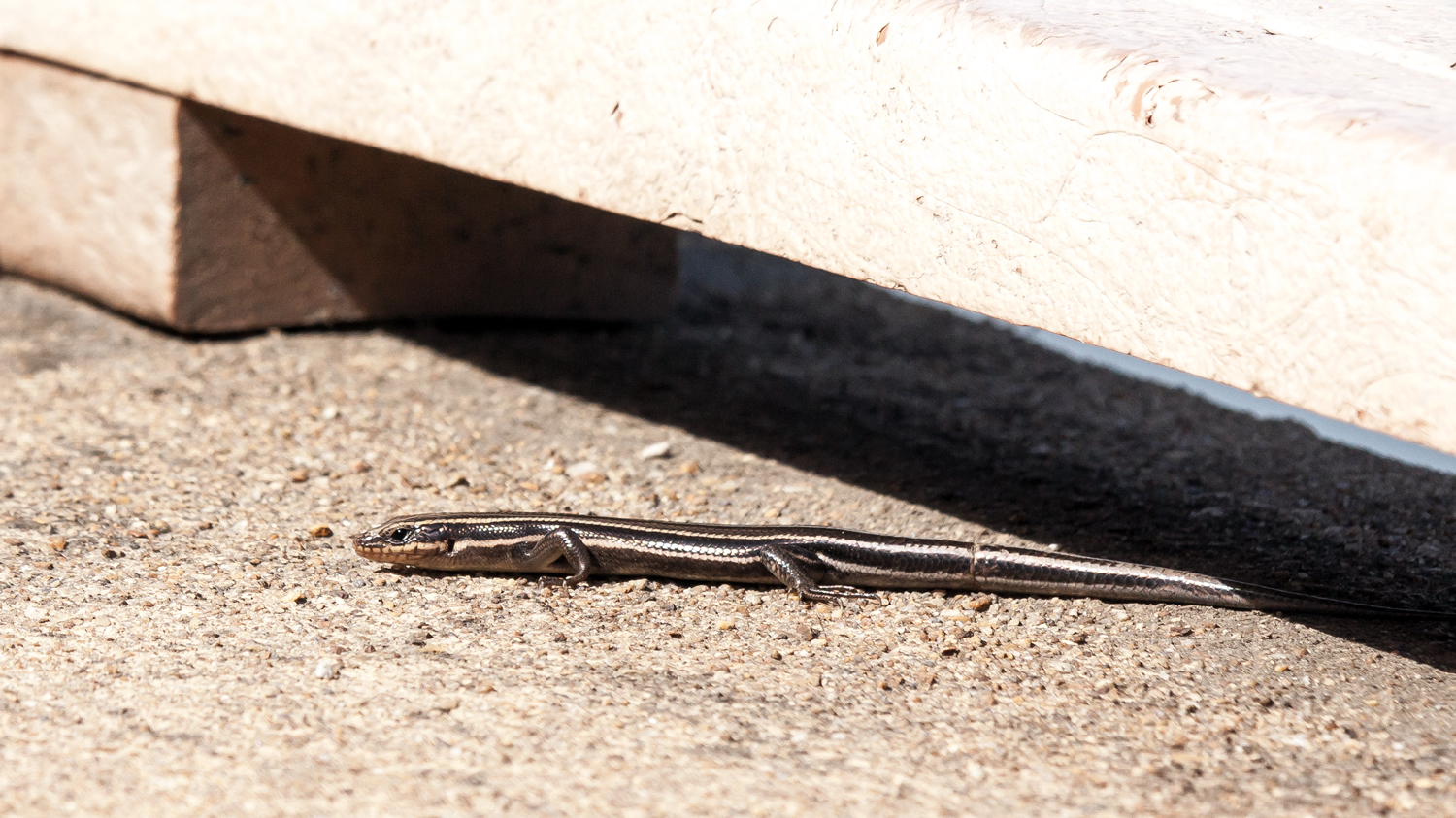
A warm, sunny springtime day caused all kinds of creatures to appear, including this Common Five-lined Skink (Plestiodon fasciatus) that I spotted on a concrete fishing platform at Jackson Miles Abbott Wetlands Refuge in Alexandria, Virginia. This variety of skinks is one of the few lizards in the area in which I live and the skinks tend to be elusive and skittish, so I generally see only the tail of the skink as it is running away.

This skink and I engaged in a protracted game of hide-and-seek as I sought to get close enough for some shots. Although I would have been a bit happier with a more natural backdrop, I am relatively content with the images that I was able to capture.

Common Five-lined Skink


Common Five-lined Skink

Common Five-lined Skink

© Michael Q. Powell. All rights reserved.

Read Full Post »

Do bees drink water? As I was investigating the ponds at Green Spring Gardens again yesterday for signs of dragonflies, I spotted some bees landing in the shallow water. It looked like they were getting drinks of water, but I wondered if it was possible that they were somehow gathering nectar and/or pollen.

I did a little research and found out that bees do in fact drink water. One article at honeybeesuite.com described some of the reasons why bees bring water back to the hive. It also noted that, “Bees seem to prefer water that has some growth in it—such as green slime—rather than perfectly clean water.” and speculated that the bees can smell the growth and recognize it as a water source. That was certainly the case at the pond yesterday, where the water had all kinds of green gunk growing on it.

honey bee

© Michael Q. Powell. All rights reserved.

Read Full Post »

It’s still a little too early for dragonflies, but I did find some cool little bees yesterday afternoon at Green Spring Gardens in Alexandria, Virginia, a county-run historical garden not far from where I live. Longtime readers of the blog know that I love taking macro photographs and during summer months my trusty Tamron 180mm macro lens is on my camera most of the time.

Yesterday I decided to dust off my macro lens and search for insects. For most of the afternoon I came up empty-handed, but then I spotted a few bees gathering pollen. They kind of look like honey bees, but I don’t remember honey bees being that small. Grape Hyacinths (g. Muscari) are only a couple of inches tall and the first photo gives you an idea of the size of the bees.

Spring is finally here and I look for an explosion of insects soon. During this transitional time of the year I expect to be switching back and forth between my telephoto zoom lens, primarily for birds, and my macro lens, primarily for flowers and insects.

bee

bee

bee

© Michael Q. Powell. All rights reserved.

Read Full Post »

As I was making my way to the start of the boardwalk at Huntley Meadows Park early on Monday morning, a helpful birder pointed through the trees to a pair of Wood Ducks (Aix sponsa) that appeared to be seeking a nesting cavity. The female kept moving among the trees, but the male stayed still for a moment and let me get this long-distance shot.

It’s pretty unusual to see ducks in a tree and generally I know they are in the trees only when I hear them flying away. The Cornell Lab of Ornithology website notes that Wood Ducks “are one of the few duck species equipped with strong claws that can grip bark and perch on branches.” This spring I have noted Wood Ducks checking out nesting boxes at the park, but perhaps this couple prefers a more natural birthing experience (or maybe all of the nesting boxes are being used by other Wood Ducks or Hooded Mergansers).

wood duck

© Michael Q. Powell. All rights reserved.


Read Full Post »

This Great Blue Heron (Ardea herodias) decided to try out a new vantage point at Huntley Meadows Park on Monday and surveyed potential prey from atop the boardwalk. Although the heron looks to be contemplating diving into the water, it eventually jumped into the water feet first.

I love trying to capture birds in motion, but am happy to settle for images in which there is a kind of tension and anticipation of action, rather than a more static pose.

Great Blue Heron


© Michael Q. Powell. All rights reserved.

Read Full Post »

Like a runner at the starting blocks, this male Northern Cardinal (Cardinalis cardinalis) was tensed as he prepared to push off from the top of a dead tree yesterday morning at Huntley Meadows Park.

What a beautiful way to start the spring.

Northern Cardinal

© Michael Q. Powell. All rights reserved.

Read Full Post »

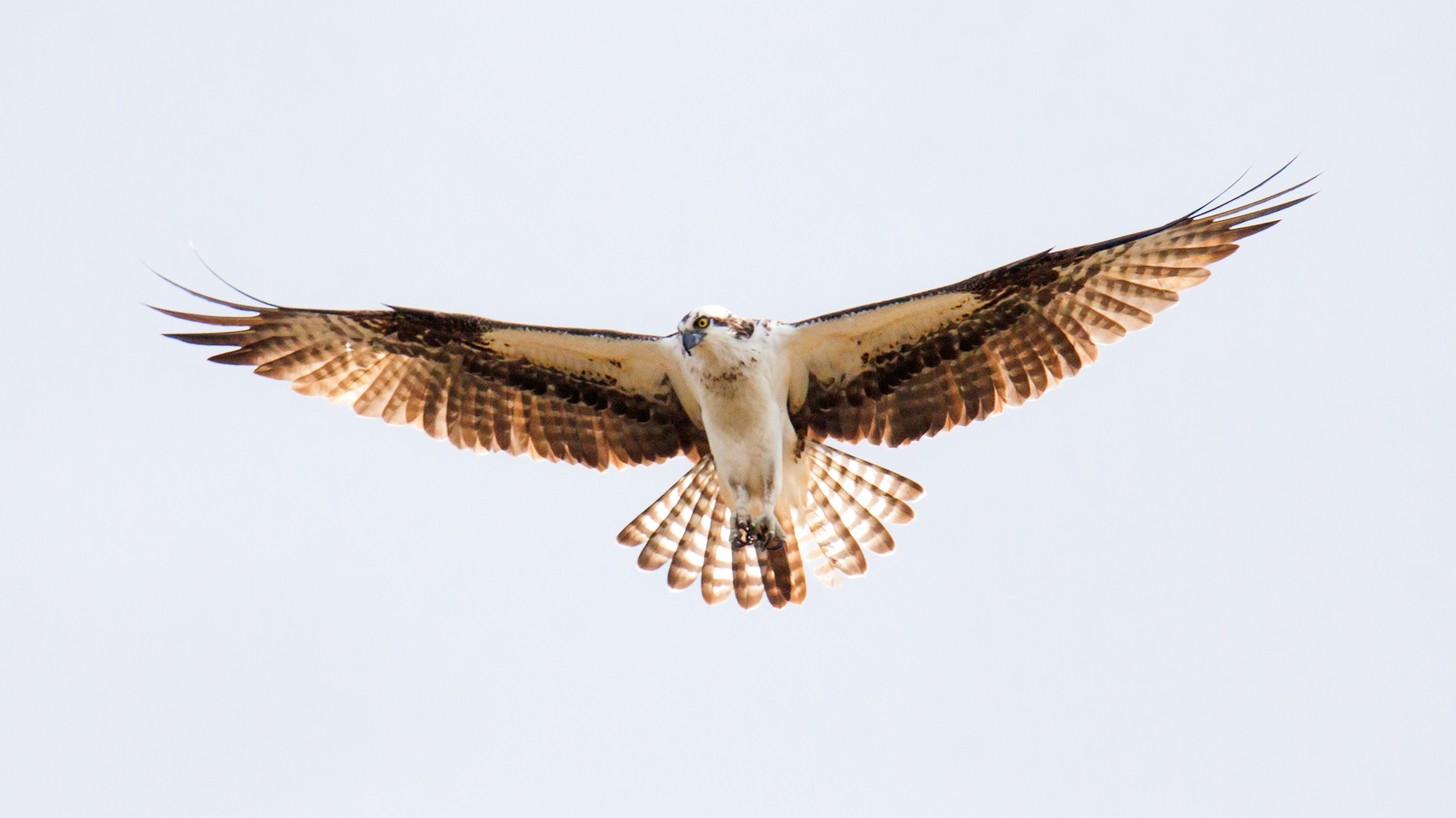
When I first spotted an Osprey (Pandion haliaetus) yesterday afternoon, it was perched at the top of a tall tree at Lake Cook in Alexandria, Virginia. Suddenly it began a series of what seemed to be warm-up, stretching exercises. The position reminds me a little of the obelisk position that some dragonflies assume to avoid excessive exposure to the sun. A short time later, the osprey took to the sky.

As I attempted to track the osprey circling overhead, I found myself shooting in radically varying lighting situations. The sky was blue, but there were large expanses of gray and white clouds. Some of the time I was also shooting directly into the sun. As a result, the two in-flight shots below look almost like they were shot on different days, when in fact they were taken only seconds apart.

osprey

osprey

osprey

© Michael Q. Powell. All rights reserved.

Read Full Post »
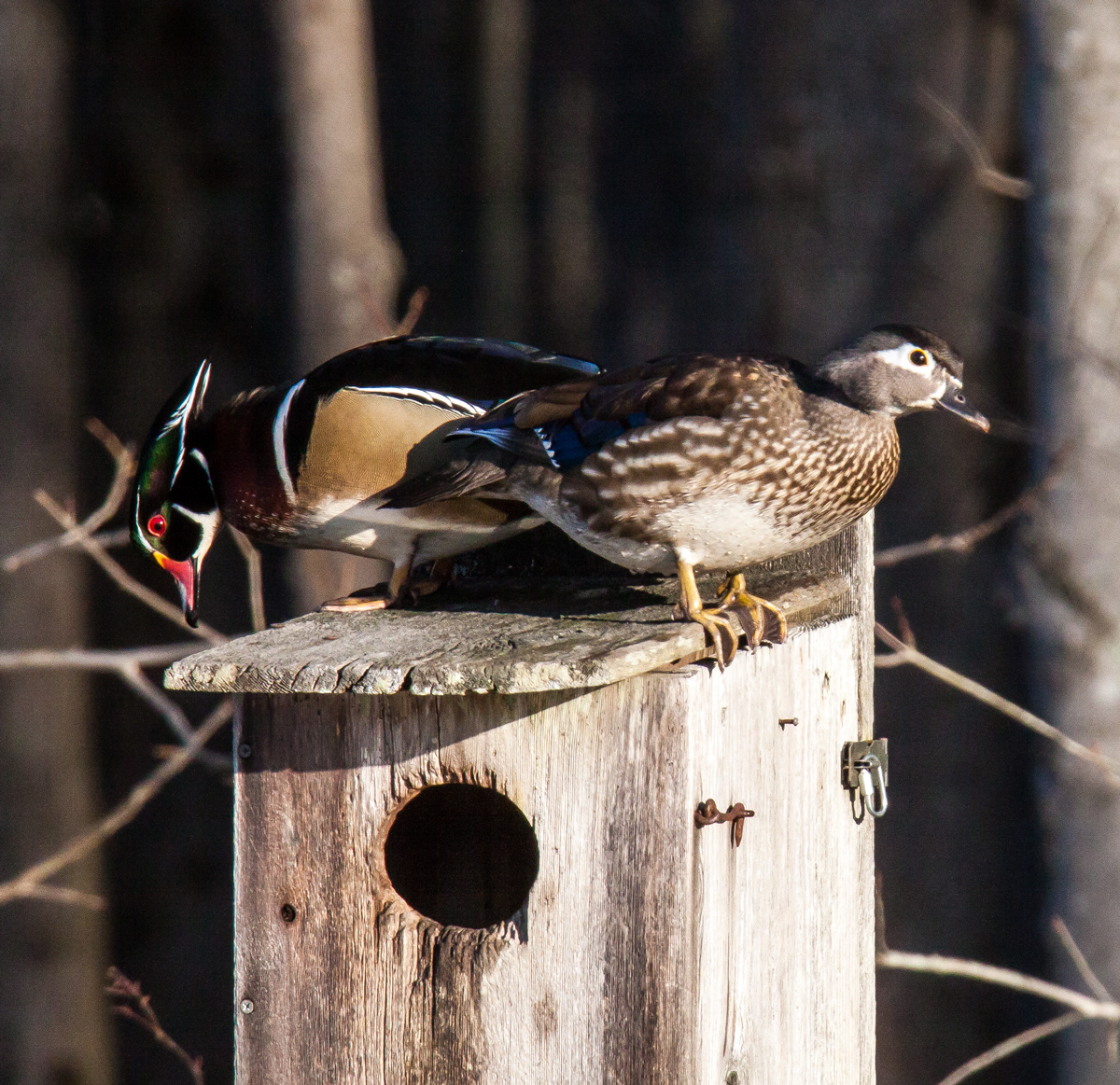
This Double-crested Cormorant (Phalacrocorax auritus) was focusing so intently on the water yesterdy that I thought it was stalking a fish. I was initially shocked at the size of the fish that it pulled out of the water until I realized that it was only a large leaf.

Double-crested Cormorant

The cormorant waved the leaf around proudly until it finally let go of the leaf. Obviously this bird has a policy of “catch and release.”

Double-crested Cormorant

Undeterred, the cormorant went back to fishing—I never did see him land one, but he might have been catching small fish during his dives.

Double-crested Cormorant

© Michael Q. Powell. All rights reserved.


Read Full Post »

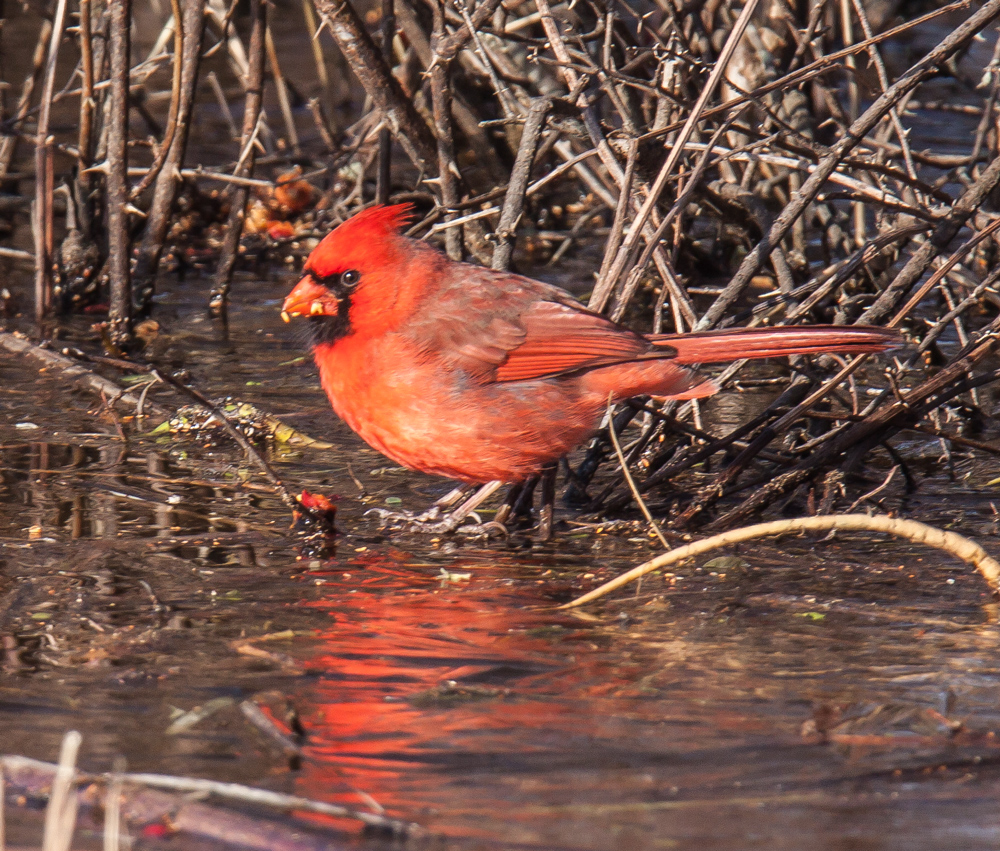
Early yesterday morning there was a coating of ice on much of the water at Huntley Meadows Park. Northern Cardinals (Cardinalis cardinalis) were taking advantage of this new surface to forage for seeds in the lower parts of the vegetation growing out of the frozen water.

The bright red one is immediately identifiable as a male. The other one looks like it could be a female or an adolescent male. As is often the case with birds, male cardinals start off looking like females before they acquire their adult plumage. I’m leaning towards it being a female because of the color of the bill—with younger cardinals, the bill is often dusky rather than bright orange.

Northern Cardinal

Northern Cardinal

Northern Cardinal

© Michael Q. Powell. All rights reserved.


Read Full Post »
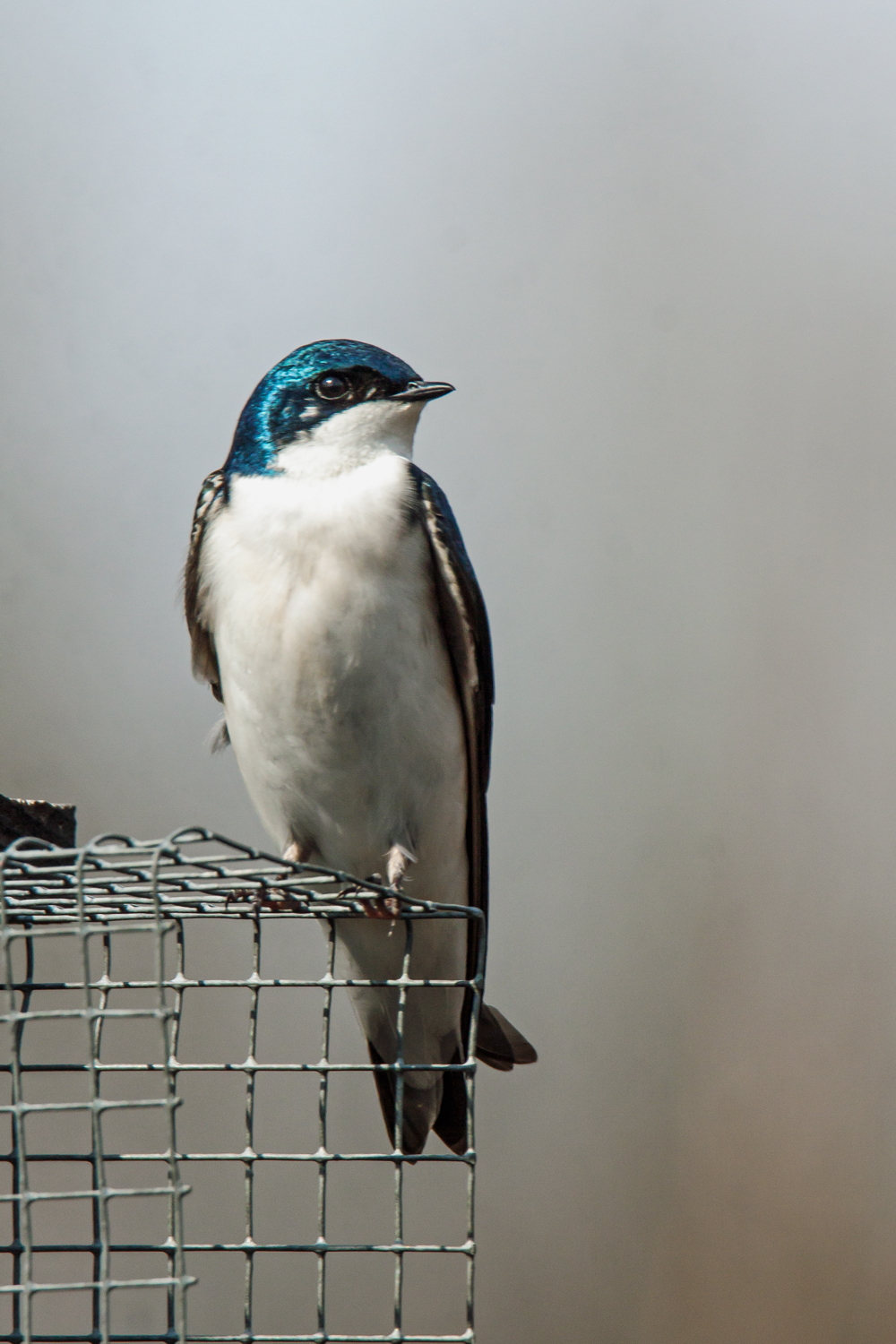
Even familiar birds can look cool and different when viewed from an unusual angle. I photographed this Red-bellied Woodpecker (Melanerpes carolinus) Monday morning at Huntley Meadows Park. I was shooting almost straight up and the subject was mostly backlit and in the shadows, but I could just see the red color at the edge of the head.

As an added bonus, you can just see what appears to be the touch of red on the bird’s belly that is responsible for its name—normally you can’t see it and wonder why it is called “red-bellied.”

Red-bellied Woodpecker

© Michael Q. Powell. All rights reserved.

Read Full Post »

Do coots laugh? I don’t know for sure, but that’s certainly what this American Coot (Fulica americana) seemed to be doing when I spotted him on Monday morning at Huntley Meadows Park.

American Coot

A bit later in the day, when the direction of the light was less harsh, I saw some more coots and was able to capture an image that shows more accurately the color of the coot’s body and its eerie red eyes.

American Coot

© Michael Q. Powell. All rights reserved.

Read Full Post »

The beavers at Huntley Meadows Park have been remarkably elusive this winter, so I was excited to see this one on Monday as it swam by in the beautiful early morning light.

There are several beaver lodges in the park where I have spotted North American Beavers (Castor canadensis) in the past, but it is hard to know for sure which ones are currently active. Occasionally I will come to the park really early or stay late, hoping to spot a beaver, but this is the first one that I have spotted in many months. With a little luck I will be able to see one a bit closer than this one, which quite a distance away when I photographed it.

beaver

© Michael Q. Powell. All rights reserved.


Read Full Post »
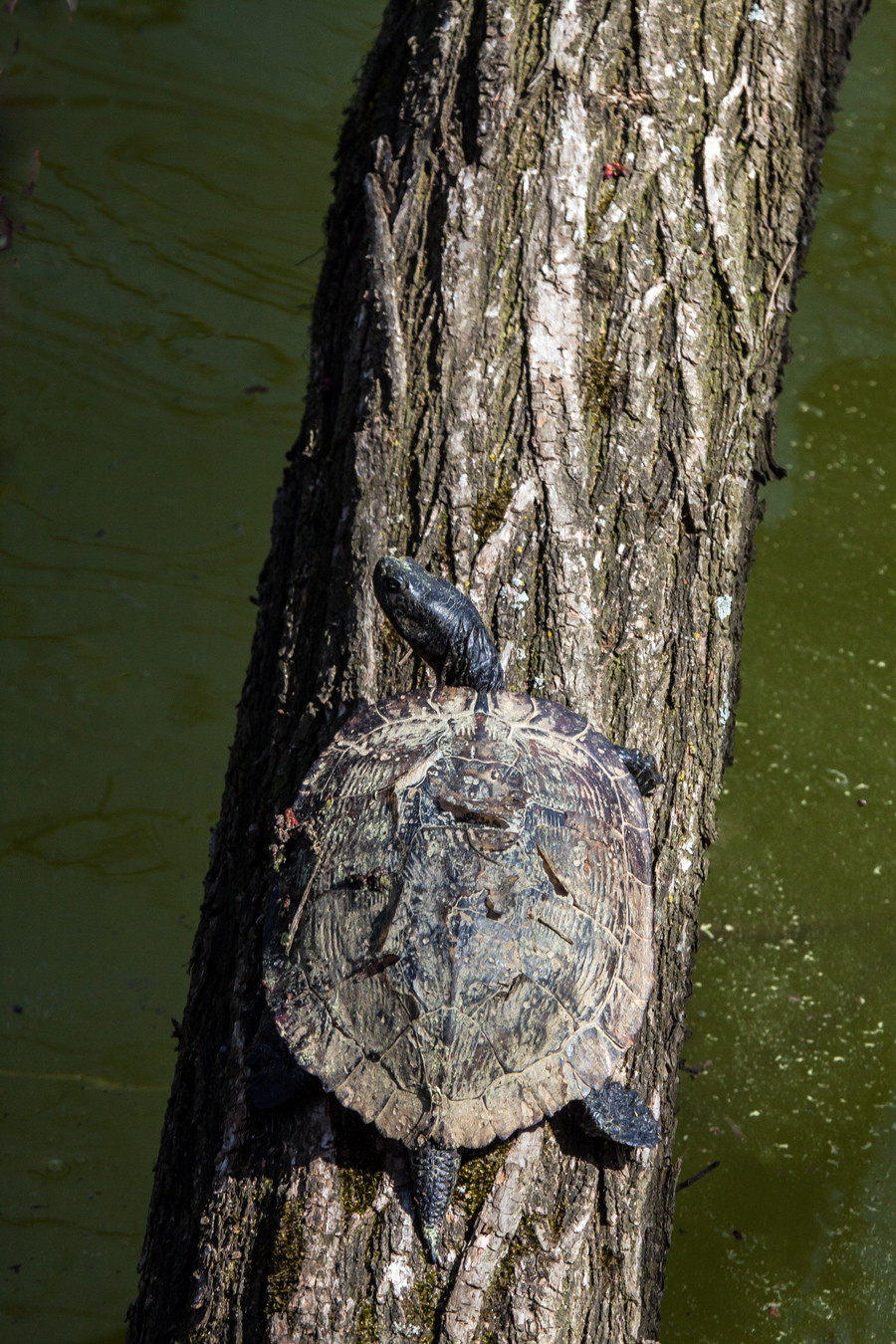
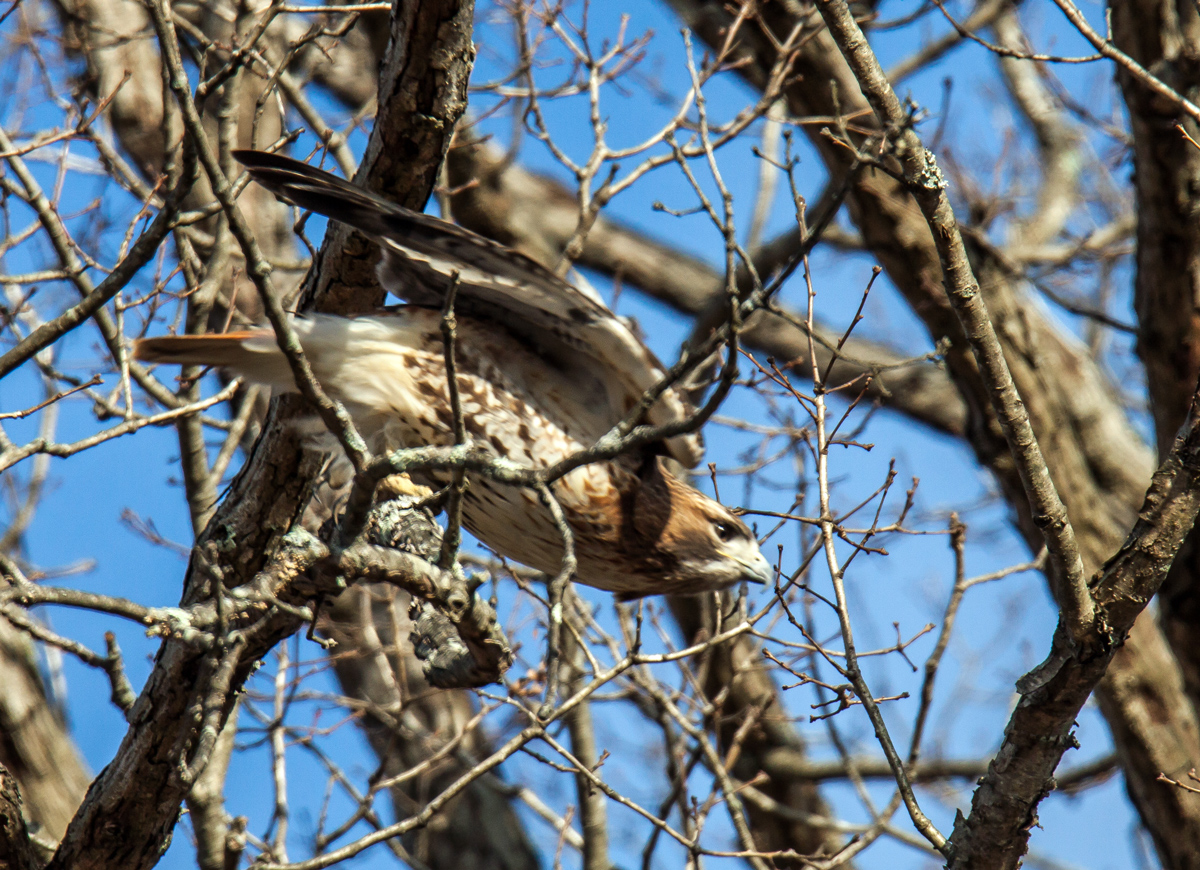
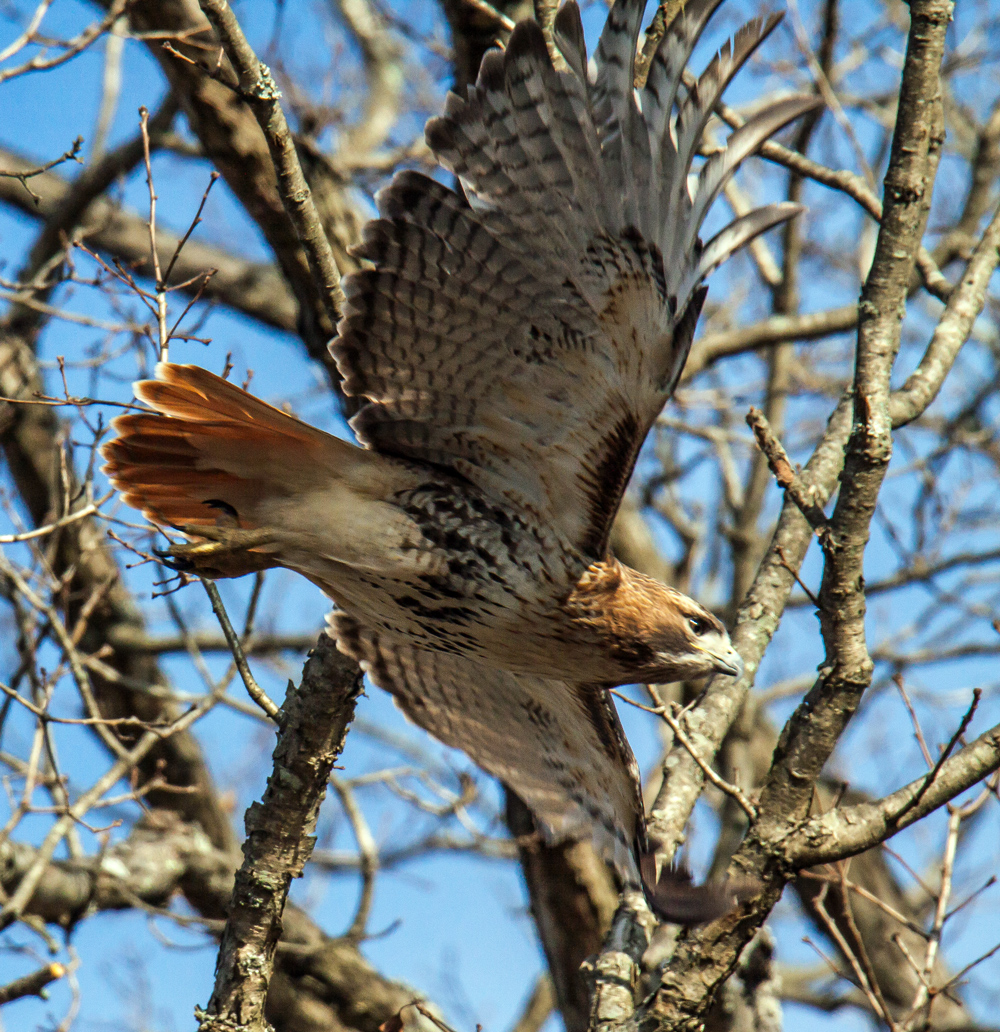
This Red-tailed Hawk (Buteo jamaicensis) seemed to be facing in the opposite direction when a sharp-eyed fellow photographer spotted it in a tree across a field. We were able to move quite a good distance across the field before the hawk became aware of our presence and took off.

Instead of flying up into the air, the hawk flew downwards initially and then flew behind the stand of trees, so I was unable to get any mid-flight shots with the sky as the background. However, I did manage to capture a sequence of shots as the hawk was getting ready to take off and also shortly after the takeoff.

Red-tailed Hawk

Red-tailed Hawk

Red-tailed Hawk

Red-tailed Hawk

Red-tailed Hawk

© Michael Q. Powell. All rights reserved.


Read Full Post »

« Newer Posts - Older Posts »