Feeds:
Posts
Comments

Archive for the ‘Photography’ Category

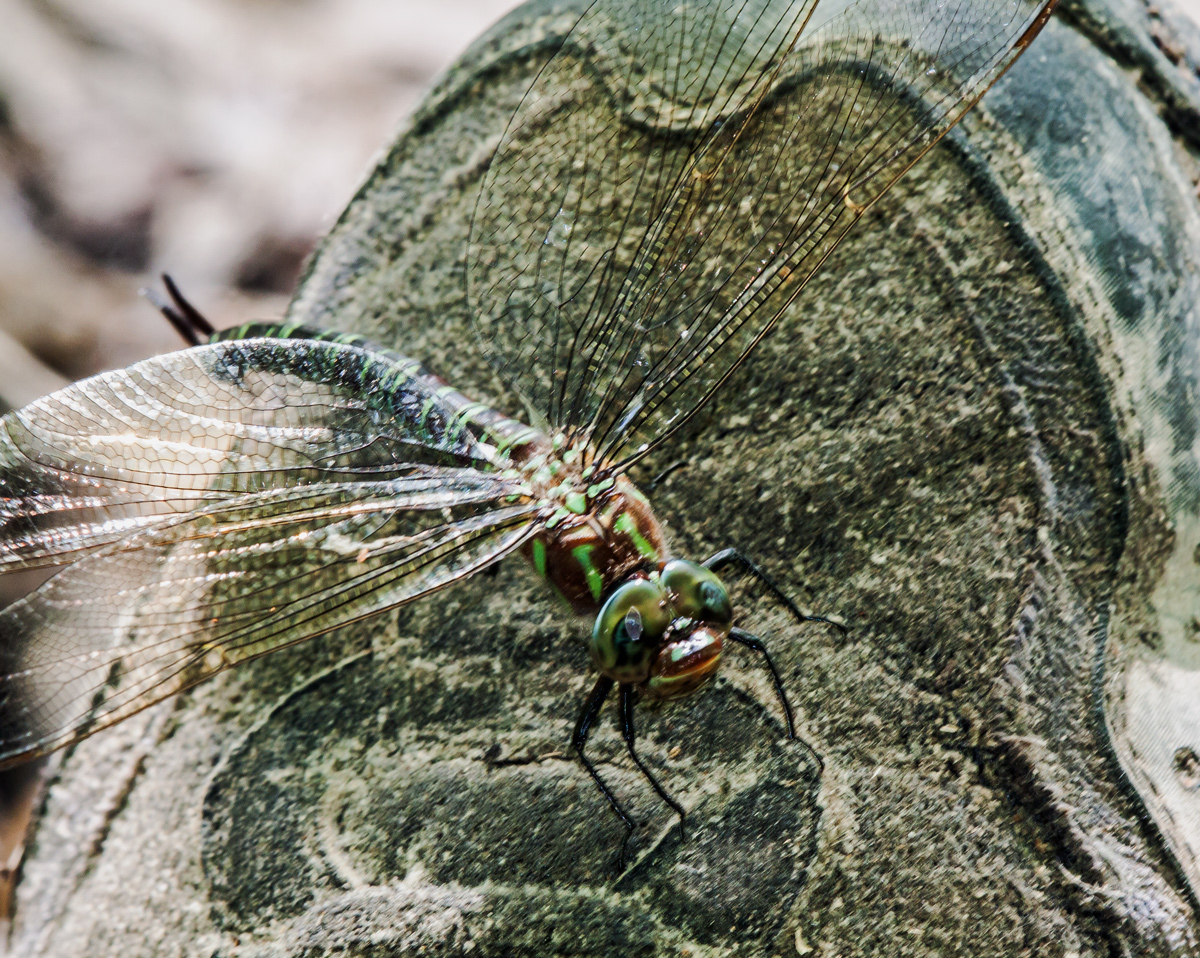
The time drew near for our departure and I had pretty much given up hope of getting any good shots of dragonflies during a visit with some friends last Saturday to Lewis Ginter Botanical Garden in Richmond, Virginia. There were several streams and ponds and I would occasionally see dragonflies flying around, but the planted areas of the garden prevented me from getting close to the water and the spots where the dragonflies were perching.

As I was crossing a small bridge that connected the boardwalk to the “shore,” a dragonfly suddenly flew up from the level of the water into a tree and perched on some relatively low-hanging leaves, about eight feet (243 cm) from the ground. I was able to track the dragonfly to its location and approached it slowly and cautiously.

The dragonfly was perching vertically and the first thing I noticed was that its wings were bright and shiny, suggesting that it had only recently emerged. My initial thought was that it was a Unicorn Clubtail (Arigomphus villosipes), because of the distinctive curved tip of the abdomen. When I got home, I looked at photos of Unicorn Clubtails and doubts began to creep into my mind about the identity of this dragonfly, because the colors seemed different from the ones depicted, which were more yellow than green. I posted a photo into a Facebook group and some experts confirmed that my initial instincts had been correct.

I took shots from several different angles, wishing that I was about a foot taller so that I would not have been shooting upwards at an angle. It turned out, though, that there was an advantage to shooting upwards, for I was able to get a pretty good view in the final image of the distinctive yellow “horn” between the dragonfly’s eyes that caused it to be named “unicorn.”

Unicorn Clubtail

Unicorn Clubtail

Unicorn CLubtail

© Michael Q. Powell. All rights reserved

Read Full Post »

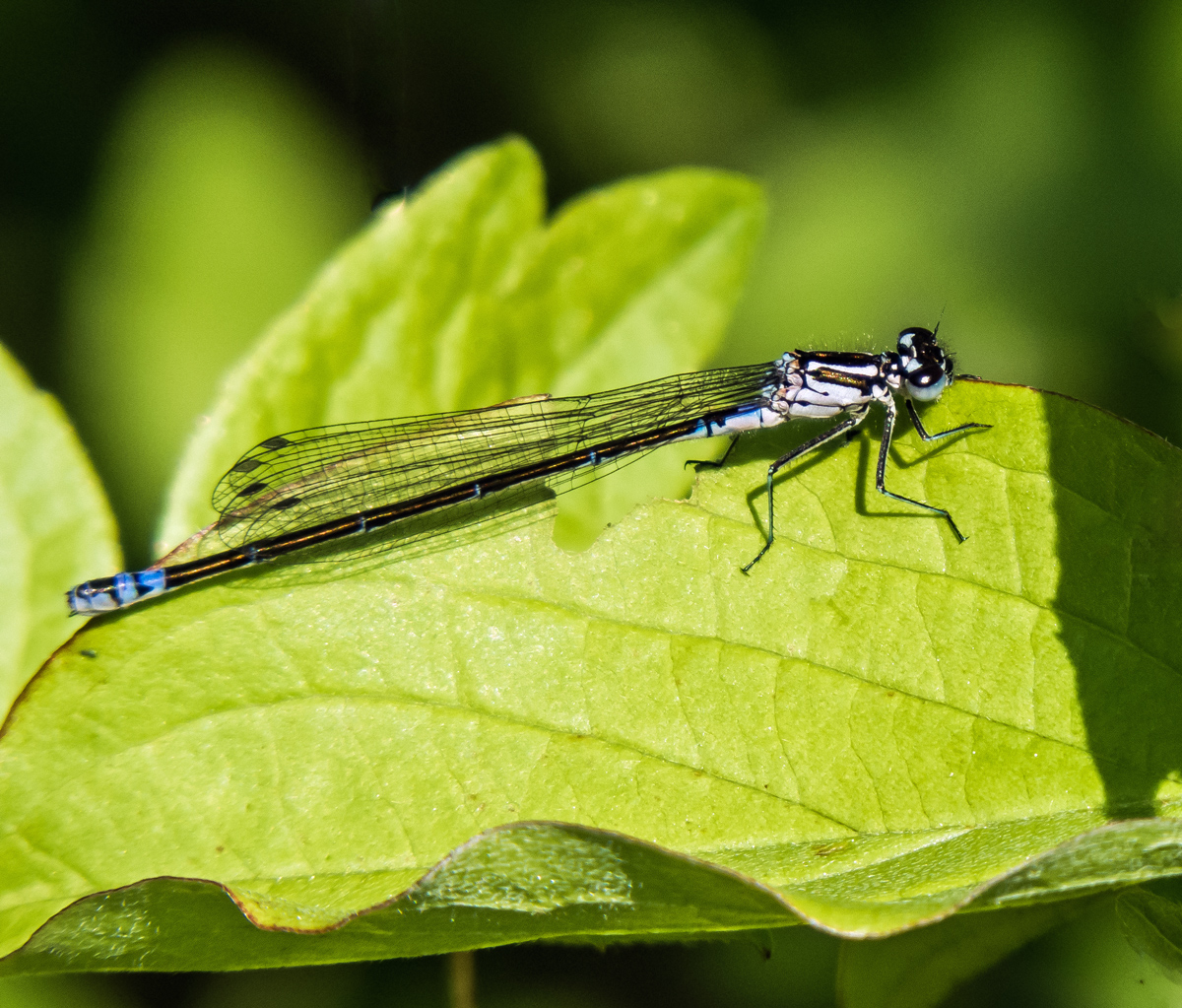
In addition to dragonflies, damselflies are now appearing in greater numbers, like this beautiful little Ebony Jewelwing (Calopteryx maculata) that I spotted on Friday at Huntley Meadows Park. Identification is pretty easy, because it is the only dark-winged species in our area. The red eyes suggest that it is newly emerged—the eyes will change to a less demonic color later—and the lack of white markings on the wings indicate it is a male. Click on the image if you want to see some of the details of the damselfly at higher resolution, like the tiny hairs on its legs.

Ebony Jewelwing

© Michael Q. Powell. All rights reserved

Read Full Post »

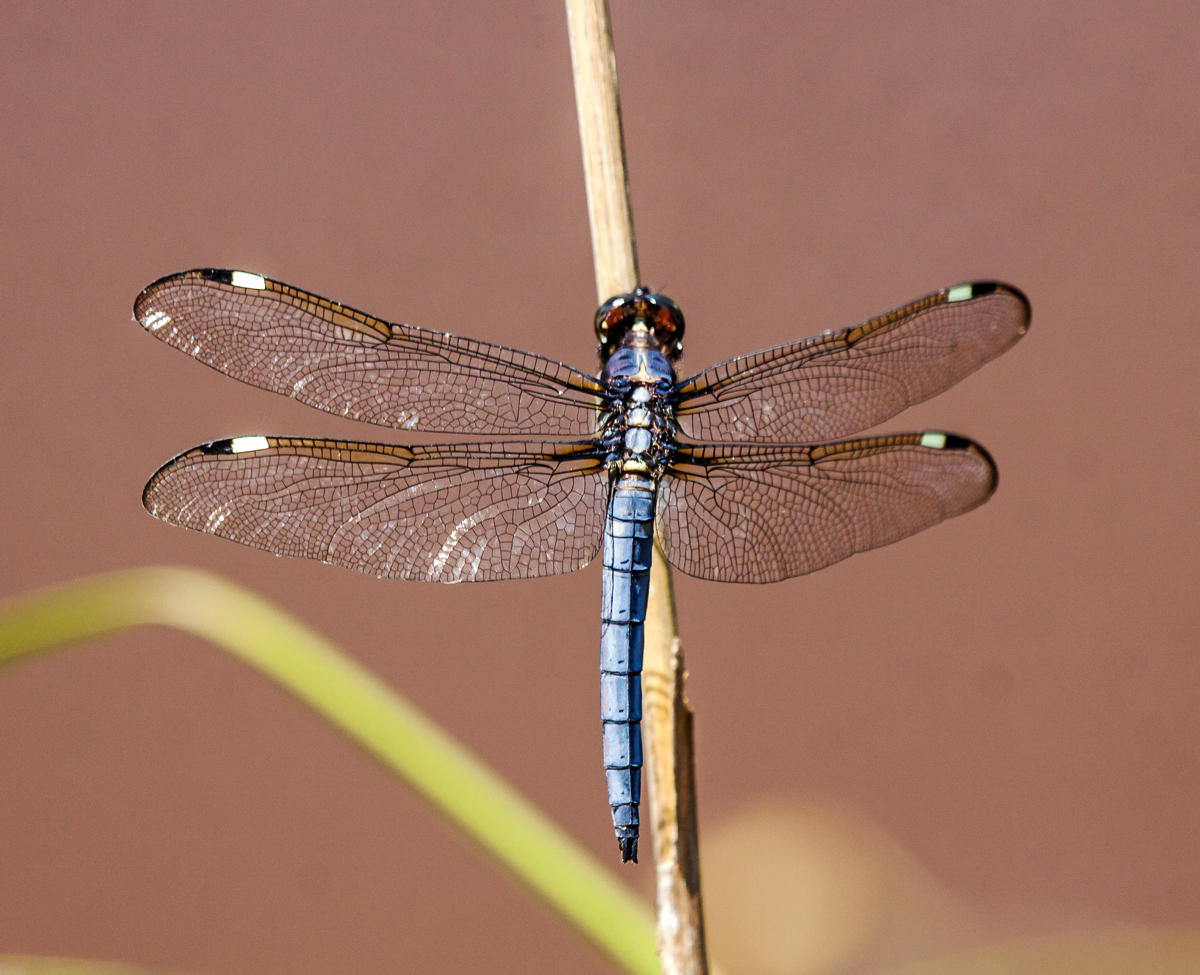
As the weather warms up, more and more dragonflies finally are starting to emerge at Huntley Meadows Park in Alexandria, Virginia. like these Spangled Skimmers (Libellula cyanea) that I spotted yesterday at the park. Spangled Skimmers are pretty easy to identify, because they are the only dragonflies in our area that have the both black and white “stigma” on the front edges of their wings. The adult male is blue, but immature males have the same coloration as the females, so you have to look closely to determine gender.

The first image, for example, shows an immature male, while the second image shows a female. If you examine the extreme tip of the abdomen (what I used to call a “tail”), you can see some differences. You may also note that the terminal appendages match for the first and third images, both of which show males.

If you want to learn more about Spangled Skimmers, check out this page from the Dragonflies of Northern Virginia website. The website is a wonderful resource for anyone interested in dragonflies, not just for folks who live in our area.

Spangled Skimmer

Spangled Skimmer

Spangled Skimmer

© Michael Q. Powell. All rights reserved
Read Full Post »

It was wonderful early this morning to catch a glimpse of one of the Hooded Merganser families (Lophodytes cucullatus) at Huntley Meadows Park. The ducklings appear to be almost grown up now and the survival rate seems to be higher than normal. In the past I have often seen the size of similar families dwindle down to just a couple of ducklings because of the large number of potential predators, most notably snapping turtles. I am amazed that the mother is able to watch over so many babies—the father doesn’t stick around to help raise the offspring.

mama merganser and babies

© Michael Q. Powell. All rights reserved
Read Full Post »

Every spring I seem to have the same problem—I see small brown skipper butterflies and can’t seem to identify them. Wikipedia notes that there are over 3500 species recognized worldwide, so I don’t feel too bad about my poor identification skills. I spotted this particular one during a recent trip to Meadowlark Botanical Gardens in Vienna, Virginia as it was feeding on what looks to be some variety of salvia flower—there are a lot of types of salvia flowers too.

As I looked through internet photos of possible matches for my skipper, I considered that it might be a Peck’s Skipper or possibly a Fiery Skipper, but none of them is a perfect match. I’m hoping that it turns out to be a Zabulon Skipper (Poanes zabulon). Why? More than anything else, I think “Zabulon” is a cool name.

skipper

© Michael Q. Powell. All rights reserved

Read Full Post »

The simple shape and spare palette of spiderwort plants (g. Tradescantia) really appeal to me and I found myself taking innumerable photos of them during a visit with fellow photographer Cindy Dyer to Meadowlark Botanical Gardens in Vienna, Virginia this past weekend. Be sure to check out Cindy’s blog for some awesome colorful images of many of the other flowers that we observed.

My friends all know that I have a warped sense of humor, so it would come as no surprise to them when I confess that I can’t help but think of an abnormal growth on an arachnid every time that I use the word “spiderwort.” As the weather continues to warm up, I’m pretty confident that I will soon be featuring images of spiders, warts and all.

spiderwort

© Michael Q. Powell. All rights reserved

Read Full Post »

Most of us have probably tried to frame a shot by using an archway, foliage, or other natural or man-made object to draw the attention of our viewers to our main subject. Yesterday I decided to try something a little more elaborate  during a visit to Meadowlark Botanical Gardens in Vienna, Virginia.

The Korean Bell Pavilion at Meadowlark Botanical Gardens in Vienna,VA is an amazing structure. It was made by hand using traditional methods and houses an enormous bell. How could I highlight its beauty? I started off by taking some conventional shots of the structure and they were ok, but probably the same as hundreds of other visitors have taken.

Korean Bell Pavilion

As I was exploring some of the other buildings in the Korean Bell Garden, I noticed some beautiful carved wooden openings that faced the bell pavilion. By half-kneeling and half-standing, I realized that I could frame a view of the pavilion through the opening.

Korean Bell Pavilion

I liked the shots that I was getting, but the “frame” seemed to be a bit too dark, so I decided to see what would happen if I used my pop-up flash. As I expected, the flash helped to reveal some of the beautiful grain and color of the wood without affecting the rest of the image.

Korean Bell Pavilion

As I stood up, I saw another wooden opening and tried a similar approach, resulting is a panoramic-style shot.

Korean Bell Pavilion

Of course, it is always possible to add a frame to a shot after it has been taken, but for me it’s a lot more fun to try to frame the image while I am taking it. At a minimum, it’s worth the extra effort to try to find new angles and perspectives for a shot.

© Michael Q. Powell. All rights reserved


Read Full Post »

Flowers are beautiful, of course, but when it comes to taking photos, I seem to be equally (or more) attracted to insects among the flowers. Yesterday we finally had some sunshine here in Northern Virginia after three soggy days in a row and I made a trip to Green Spring Gardens with my mentor Cindy Dyer to check out the flowers in bloom.

The wind was blowing most of the afternoon, which turned many of the flowers into moving targets, but patience and persistence allowed me to get some shots of some of my favorites, like love-in-a-mist and columbines. I am still going through my images, but I was immediately attracted to this shot of a bee in flight that I captured as it moved from one iris to another.

I remember being a little surprised to see a bee gathering pollen from irises—there seemed to be much candidates nearby, including some large, showy peonies. The bee didn’t spend long in each iris and the long petals of the iris often hid the bee from view. As I was tracking the bee, I somehow managed to maintain focus and captured this whimsical little shot of it in mid-air. My shutter speed of 1/640 sec was not fast enough to freeze the wings, but I really like the blur of the wings, which enhances the sense of motion for me.

bee and iris


© Michael Q. Powell. All rights reserved

Read Full Post »

It has rained almost continuously for several days since my return from a brief overseas trip to Vienna, Austria. After a week spent mostly in the city, I was itching to get out into the wild again. The rain finally let up in middle of this morning, so I went out exploring with my camera at Jackson Miles Abbott Wetland Refuge.

The wetland was really wet and it was cool and cloudy, so not much was stirring, except this little butterfly. I think I disturbed its sleep, for it was motionless with its wings spread wide until I was almost on top of it. Suddenly it took to the air and flew away. I am not sure what type of butterfly this is, but I was so happy to be in my “natural” environment again, that I am content to simply marvel in its delicate beauty.

UPDATE: In a Facebook insect identification group, my pretty little butterfly has been identified as a Crocus Geometer moth (sp. Xanthotype) or possibly a False Crocus Geometer moth.

butterfly

© Michael Q. Powell. All rights reserved

Read Full Post »

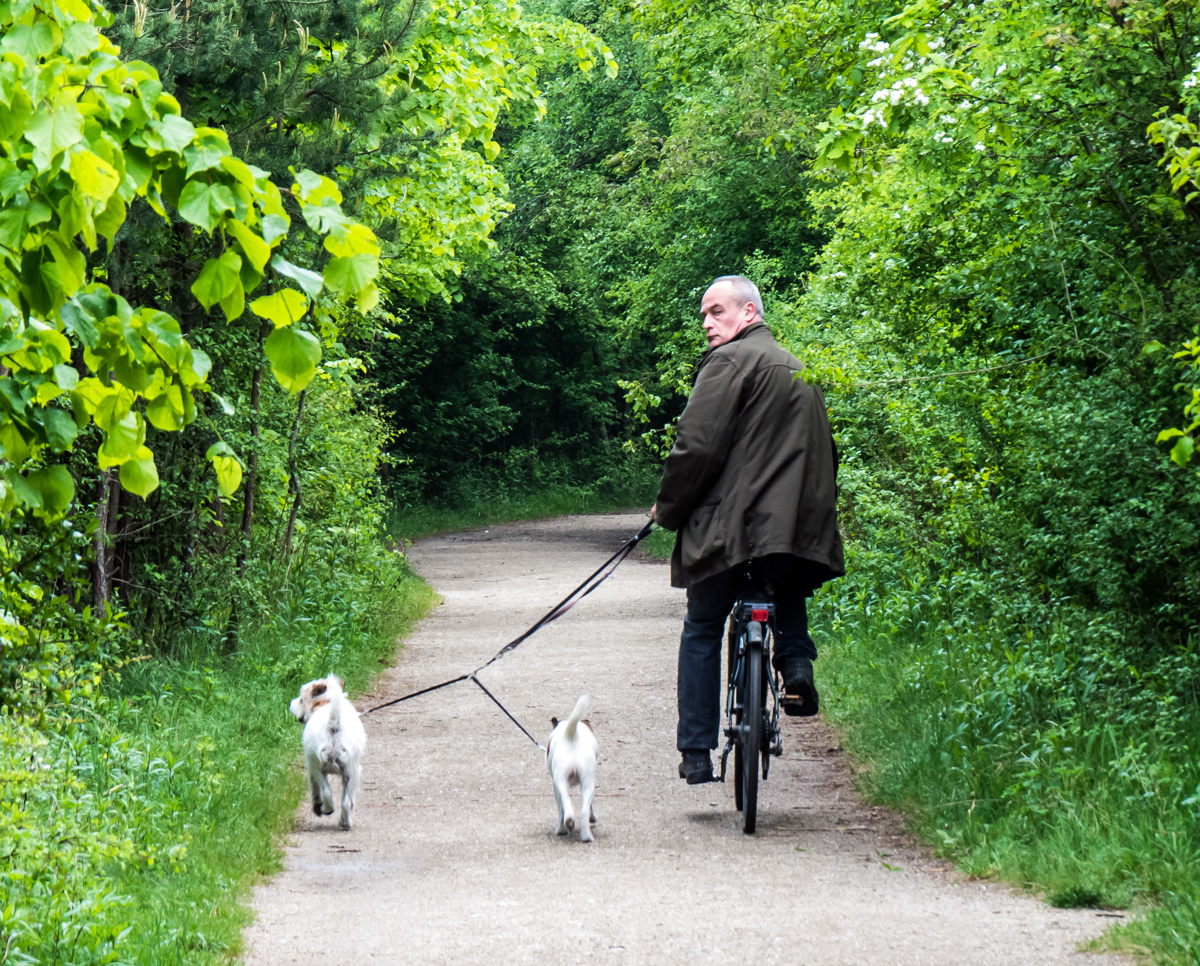
Walking two dogs simultaneously while riding a bicycle? I am not sure that I would try it, but this man in Vienna was somewhat successful in doing so.

dog walking in Vienna

© Michael Q. Powell. All rights reserved

Read Full Post »

I was hoping that I would be in Vienna at the right time of the year to see baby swans, but I guess my trip brought me here a bit too early. At the lake at Donau-Auen National Park, I could see one Mute Swan (Cygnus olor) swimming around and wondered if it was alone. When I walked further around the lake, I spotted what appears to be its mate, partially hidden by the vegetation, sitting on a nest.

Mute Swan

Mute Swan

Mute Swan

Mute Swan

© Michael Q. Powell. All rights reserved

Read Full Post »

As I wandered through the Donau-Auen National Park in Vienna, Austria this past weekend I did not see any large butterflies, but I did spend quite some time chasing several smaller ones.  The butterfly species appear to be somewhat similar to the ones that I see in Northern Virginia, but not identical, as was the case with the damselflies that I featured yesterday.

butterfly in Vienna

butterfly in Vienna

butterfly in Vienna

© Michael Q. Powell. All rights reserved

Read Full Post »

Nature photographers are a peculiar breed of people. How else could I explain why I headed off to the Donau-Auen National Park within hours of my arrival in Vienna, Austria. I am staying in the center of the city, virtually surrounded by historic buildings and monuments, yet I feel more drawn to explore nature than history.

Saturday was a warm, sunny day and I was hoping to encounter dragonflies as I explored some of the areas of the park that I have visited before. It may be a little early in the season or that I was simply not lucky, but in any case I did not encounter a single dragonfly. I was, however, quite fortunate and saw quite a few damselflies. These beautiful little creatures are tiny and elusive and like to hide perch on vegetation, so it is often challenging to get clear shots of them.

I was shooting with my Canon SX50, a superzoom point-and-shoot, which helped me sometimes to get shots without scaring off the damselflies. In some cases, though, it was really tough to get the camera’s focus to lock onto the target.

The shapes and colors of the damselflies are somewhat familiar and may be related to the species that I see at home, but I am not even going to try to identify them. I hope that you can enjoy the delicate beauty of these damselflies that I encountered during my most recent adventures in the national park here in Vienna.

damselfly in Vienna


damselfly in Vienna


damselfly in Vienna

damselfly in Vienna

© Michael Q. Powell. All rights reserved

Read Full Post »

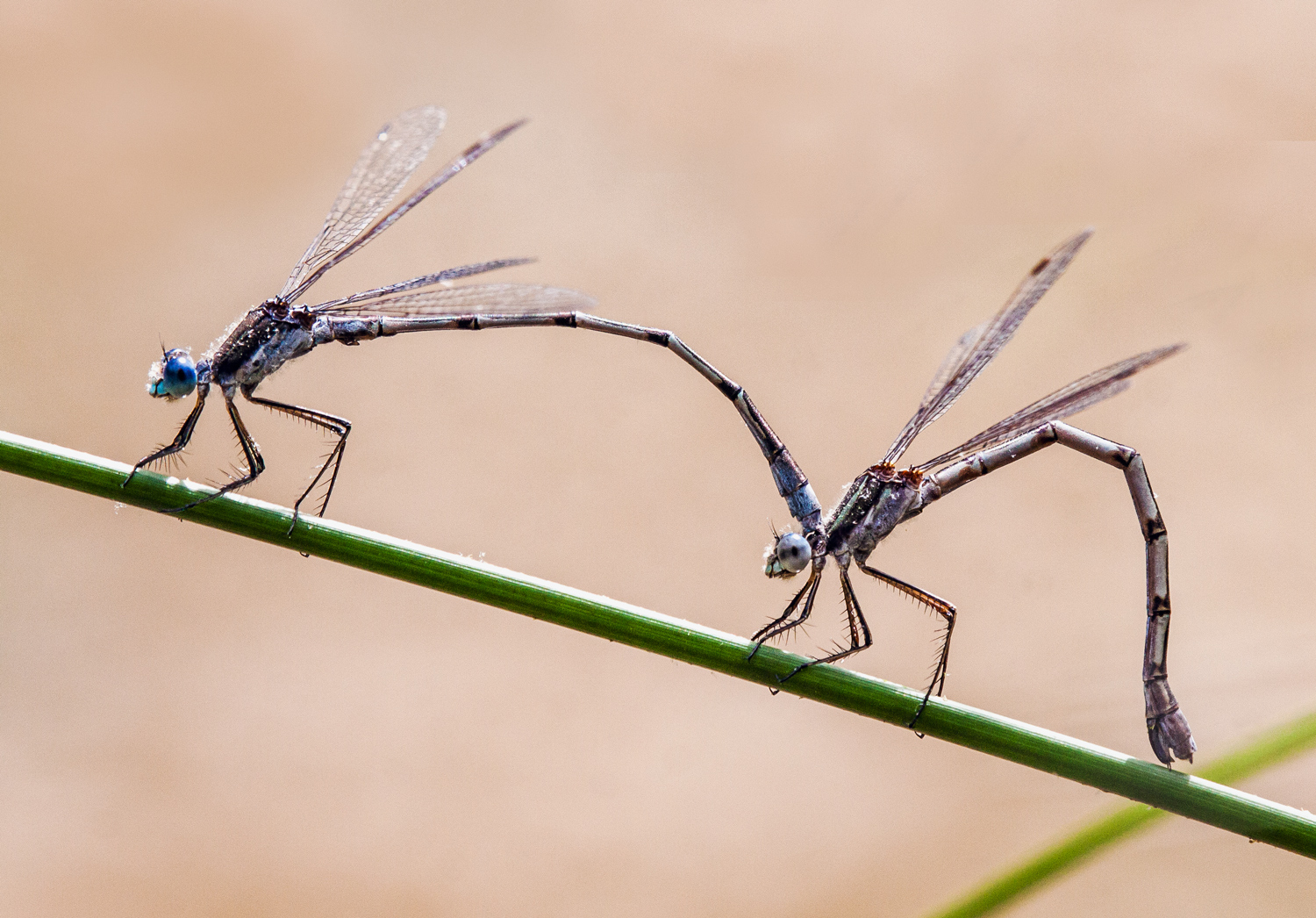
You have to be awfully lucky to capture in-flight images of damselflies, but it helps a little when they are in tandem. I spotted these Southern Spreadwing damselflies (Lestes australis) last week at Huntley Meadows Park. The pair in the foreground were still hooked up after mating and appeared to be heading for the branch that you can see in order to lay eggs there.

It’s cool how you can see another damselfly in the background flying in from another direction. I noticed that some single damselflies, probably rival males, seemed to be trying to interfere with the couples when they were involved in ovipositing, which is why the male stays with the female until he is sure the job is done.

Southern Spreadwing

© Michael Q. Powell. All rights reserved
Read Full Post »

These Southern Spreadwing damselflies (Lestes australis) were engaging in a little May Day mayhem this past Monday at Huntley Meadows Park. If I have this figured out right, the female, the one on the right in this image, is depositing her eggs in the vegetation after successfully mating with the male, who is still holding on to her.

Southern Spreadwing

 © Michael Q. Powell. All rights reserved

Read Full Post »

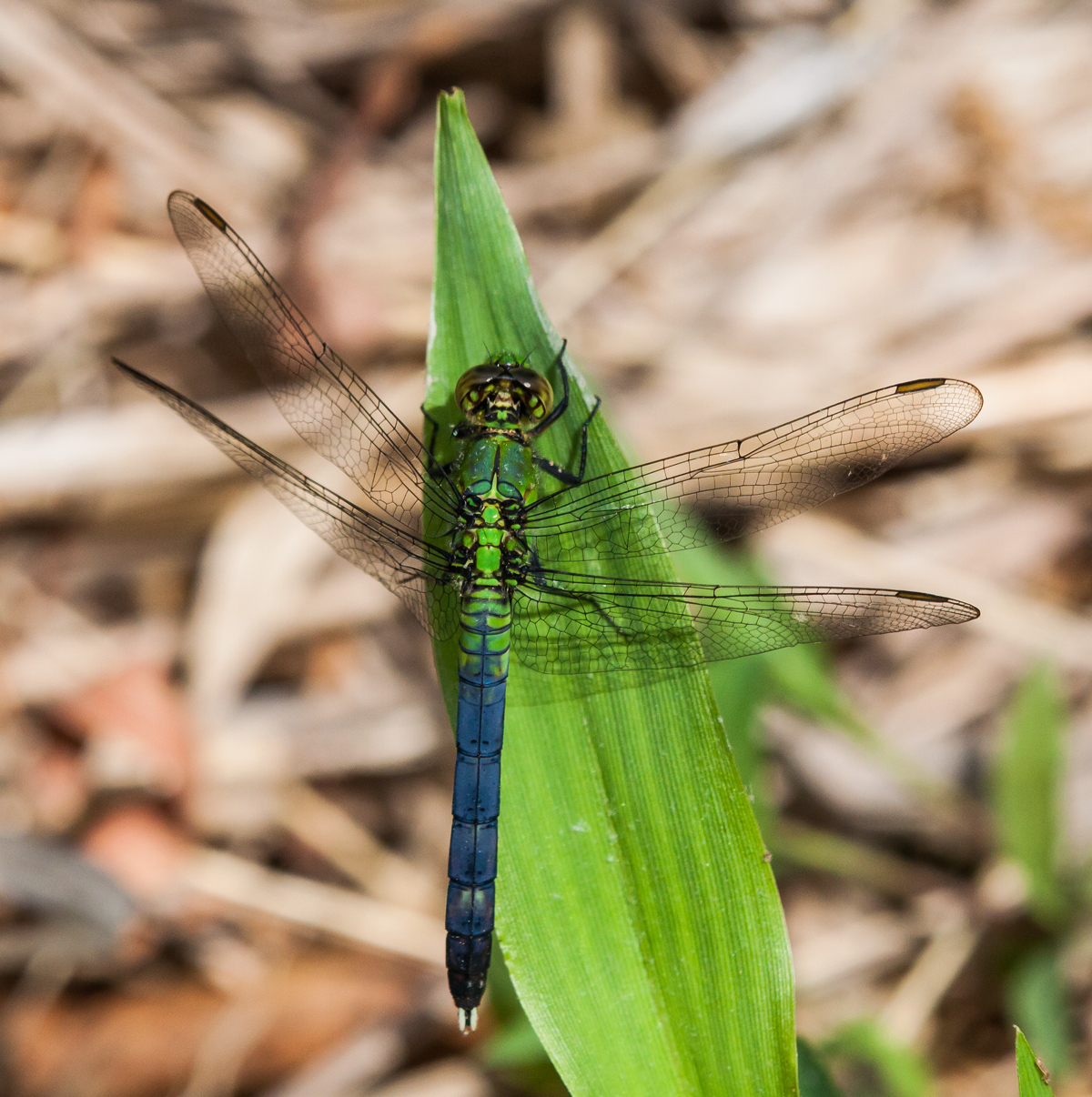
Male Eastern Pondhawk dragonflies (Erythemis simplicicollis) start out with the same bright green coloration and bold black and white stripes as the female that I featured in a posting earlier this week. Over time the males turn a fairly nondescript blue and are outshone by their female counterparts.

On Monday, I was fortunate to capture this image of a male Eastern Pondhawk in a transitional  stage, with beautiful two-toned shades of green and blue. I was thrilled when it perched on a green plant, which helps to draw the viewer’s eye to the dragonfly in a background of dried-up fallen leaves.

Eastern Pondhawk

© Michael Q. Powell. All rights reserved

Read Full Post »

Creepy or cool? This snake and I stared at each other for a while on Monday at Huntley Meadows Park before it decided that it had had enough and silently slithered away. One of my Facebook friends praised me for winning a staring contest with a snake, but I think that it may have simply gotten bored or had satisfied its curiosity.

I am not sure of the species, but think that it may be an Eastern Ratsnake (Pantherophis alleghaniensis).

Eastern Ratsnake

© Michael Q. Powell. All rights reserved

Read Full Post »

I celebrated May Day yesterday by searching for dragonflies at Huntley Meadows Park and was rewarded by spotting my first Eastern Pondhawk dragonflies (Erythemis simplicicollis) of the season. This bright green female pondhawk was almost hidden in the fresh vegetation, but she really showed her colors when she perched on the brittle fallen leaves on the forest floor. The muted tones of gray and brown created a wonderful (albeit cluttered) backdrop that really let her beautiful colors and patterns stand out.

Eastern Pondhawk

© Michael Q. Powell. All rights reserved

Read Full Post »

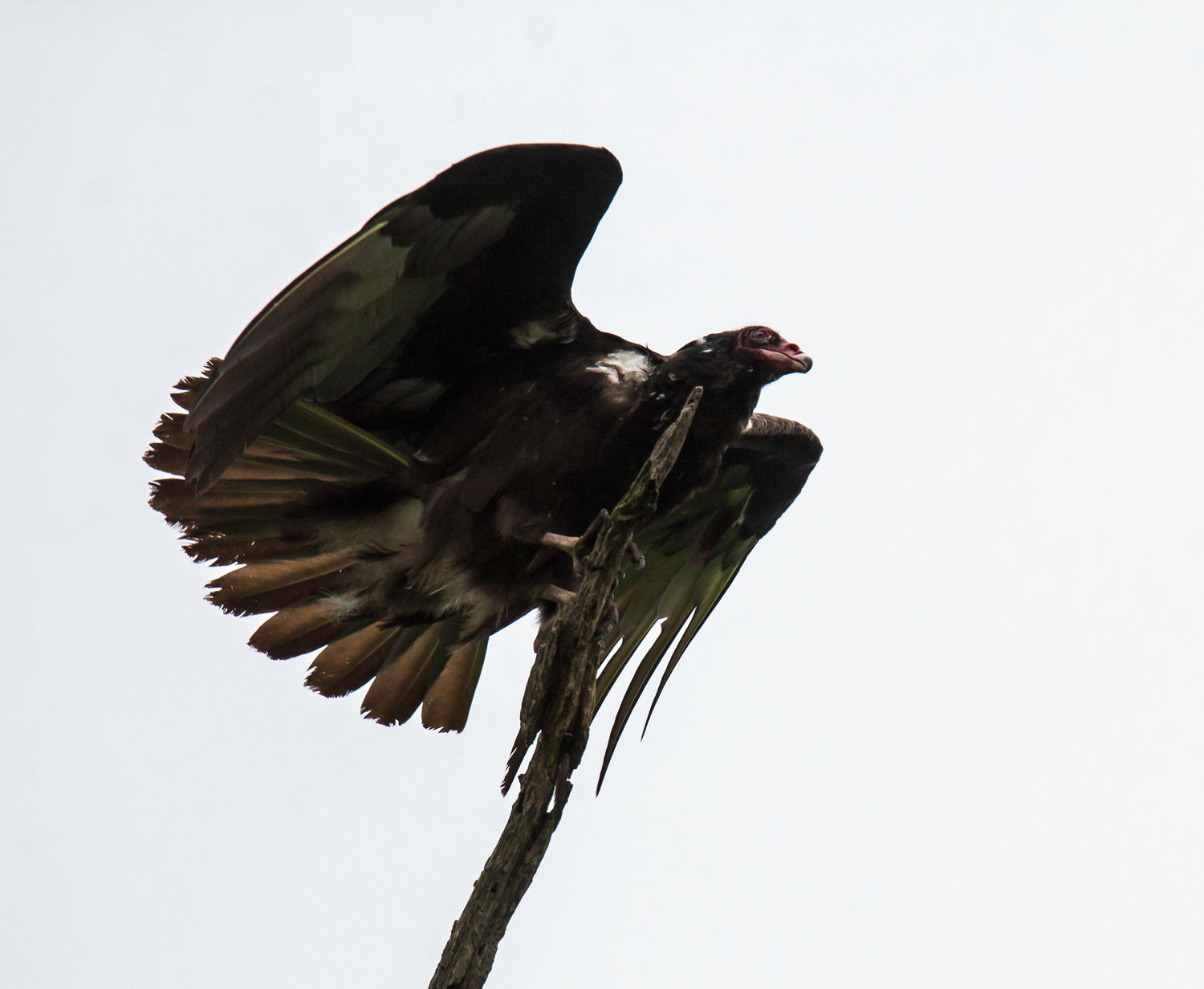
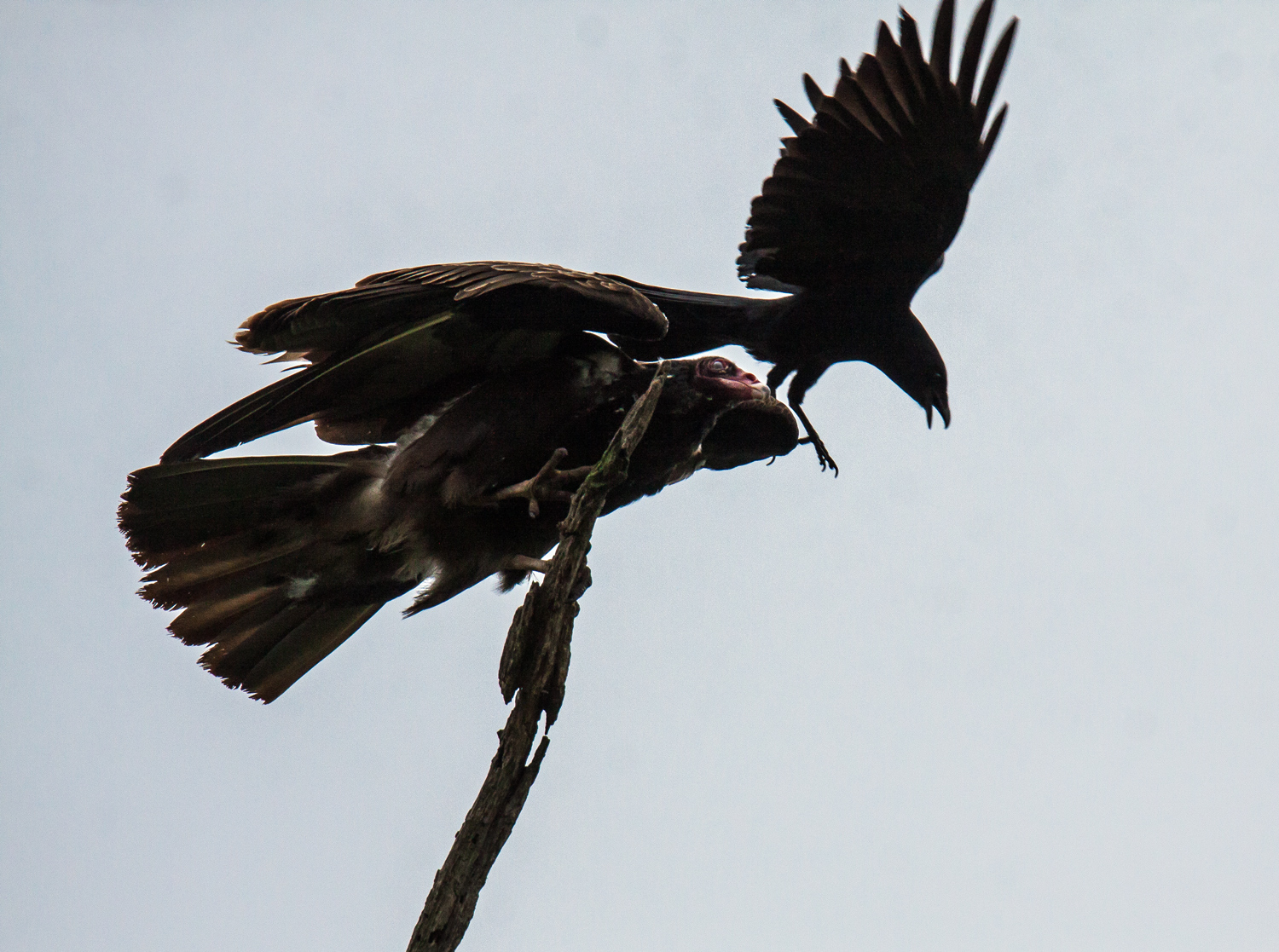
I was watching a Turkey Vulture high in a tree at Huntley Meadows Park this past weekend, when all at once it seemed to get tense and agitated. Suddenly a flash of black crossed my field of view as I gazed through my camera’s viewfinder.

I had no idea what had happened until I saw this photo–an aggressive crow appeared to be attempting to get the vulture to move. What was unusual was that the attack was not preceded by the loud calls of a crow, nor did there appear to be a group of crows, as is often the case when crows harass larger birds.

The vulture stayed put and eventually lowered its wings. (The second shot shows the vulture seconds before the attack, when it had raised its wings and appeared to be ready to take action if required.)

Turkey Vulture

Turkey Vulture

© Michael Q. Powell. All rights reserved

Read Full Post »

The weather yesterday was hot and sunny—perfect for dragonflies, although a little uncomfortable for me. I decided to search in the vicinity of a vernal pool, one of my favorite spots for dragonflies at Huntley Meadows Park. As I was walking along a small water-filled ditch, a large dragonfly flew up from the water and perched in a tree just a short distance away. I suspected it might be a Swamp Darner (Epiaeschna heros) and it turns out that I was right.

About this time each year, a number of female Swamp Darners descend on this small ditch to lay their eggs. Unlike many other dragonflies, which lay their eggs in the water, Swamp Darners lay their eggs in moist, often rotten logs. Essentially they tunnel into the wood before they lay the eggs.

I spotted the most likely target log and sat on the bank of the ditch to see if the dragonflies would come. It didn’t take long for them to arrive. Sometimes it was just one dragonfly, while at other times there were two or even three of them laying eggs in the same log. I was shooting with a 180mm macro lens, so I could not zoom out to include all of them (and I did not want to move for fear of scaring them away). In one of the photos, you can see two of the Swamp Darners in action and part of the abdomen of a third one in the upper left corner.

I don’t know if it is some biological imperative for species preservation that compels them to deposit these eggs, but the females were putting them everywhere. I was a little shocked when one of them landed on my mud-covered shoes and began to deposit eggs there.

The dragonflies were so focused on depositing their eggs that I was able to lean forward and get a close-up view of the face of one of them. I love dragonfly faces and especially their amazing giant eyes.

Swamp Darner

Swamp Darner

Swamp Darner

Swamp Darner

Swamp Darner

© Michael Q. Powell. All rights reserved

Read Full Post »

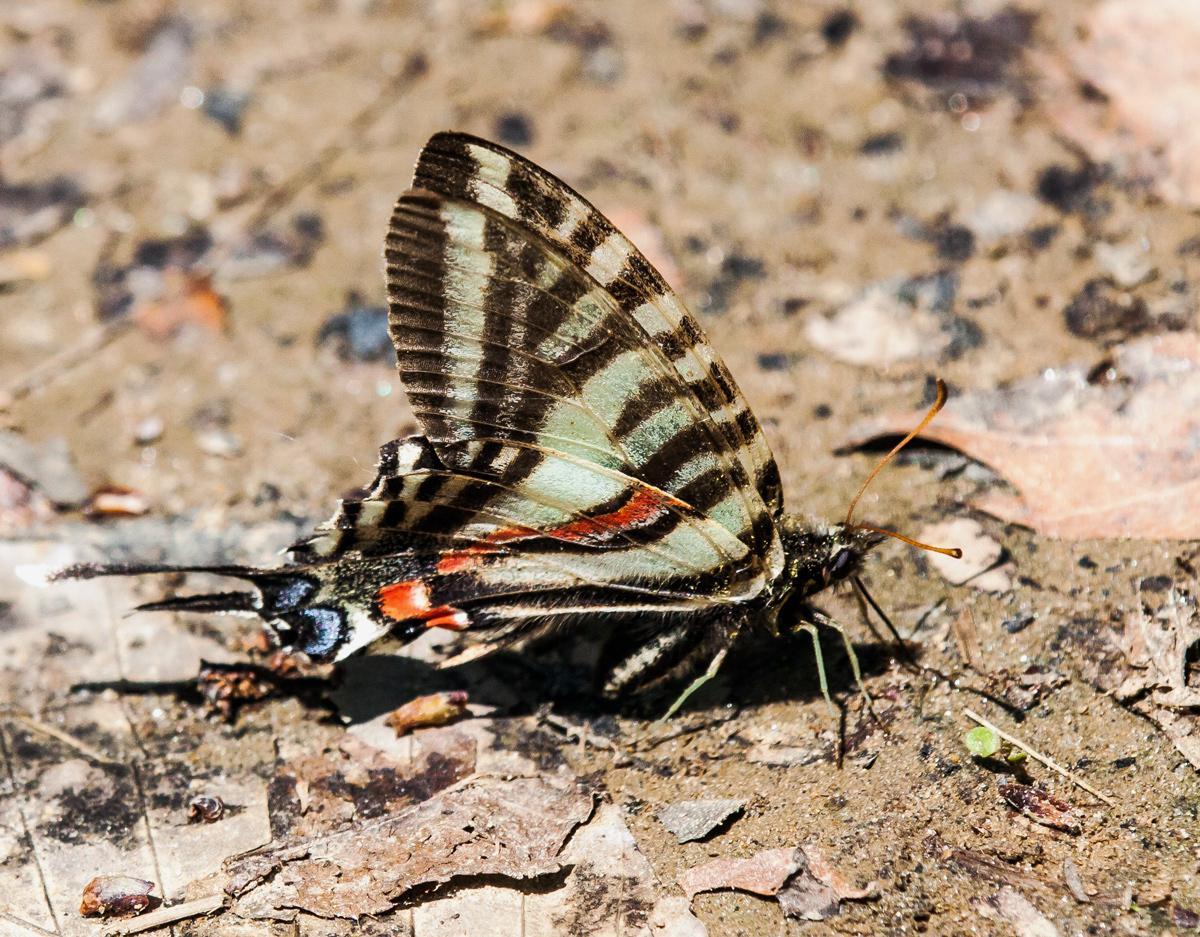
As I was exploring Accotink Bay Wildlife Refuge yesterday afternoon, Zebra Swallowtail butterflies (Protographium marcellus) kept fluttering by me. Occasionally one would perch for a moment  within range and I was able to get a few shots.

I really love the coloration and the shape of this beautiful butterfly that I rarely see. Although this butterfly is often associated with pawpaw trees, the ones that I saw perched mostly on the ground and seem to be obtaining either water or minerals.

Zebra Swallowtail

Zebra Swallowtail

Zebra Swallowtail

© Michael Q. Powell. All rights reserved

Read Full Post »

As this Turkey Vulture circled overhead, I couldn’t help but notice the large gap in its wing feathers. Some birds seem to fight with each other, which cold account for the missing feathers, but I don’t recall ever seeing a Turkey Vulture squabbling with another bird. What would they fight about? Territory? Food?

Despite the gap, the vulture seemed to have no trouble flying and its wingspan was still pretty impressive.

Turkey Vulture

© Michael Q. Powell. All rights reserved
Read Full Post »

Is it just me, or does this iris make anyone else think of a rather elegant lady with a broad-brimmed hat? There is just something whimsical about the position of this rather ordinary flower that brings a smile to my face.

I don’t have my own garden, but fellow photographer and neighbor Cindy Dyer has all kinds of flowers in her garden. Her irises have just started to bloom and I walked by her townhouse recently and spotted this somewhat faded iris and took this shot.

iris

© Michael Q. Powell. All rights reserved

Read Full Post »

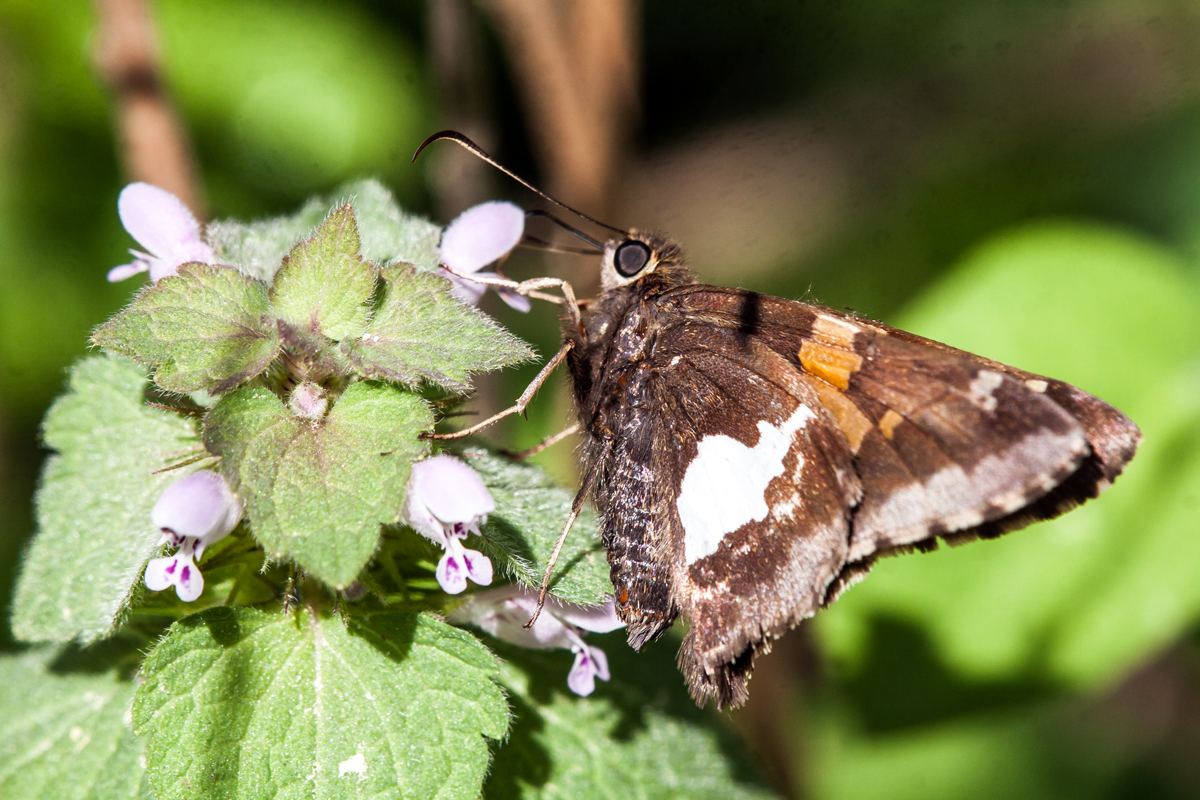
Out of the more than 3500 different species of skipper butterflies worldwide, according to Wikipedia, there is really only one that I can reliably identify—the Silver-spotted Skipper (Epargyreus clarus). I spotted this beautiful little butterfly this past weekend at Jackson Miles Abbott Wetland Refuge. The skipper was so intent on feeding that it let me get pretty close to it. As a result, this image is one of the rare cases when I didn’t feel a need or desire to crop at all. I am not very good at plant identification, but I really like the tiny flowers of the plant in this image.

Silver-spotted Skipper

© Michael Q. Powell. All rights reserved

Read Full Post »

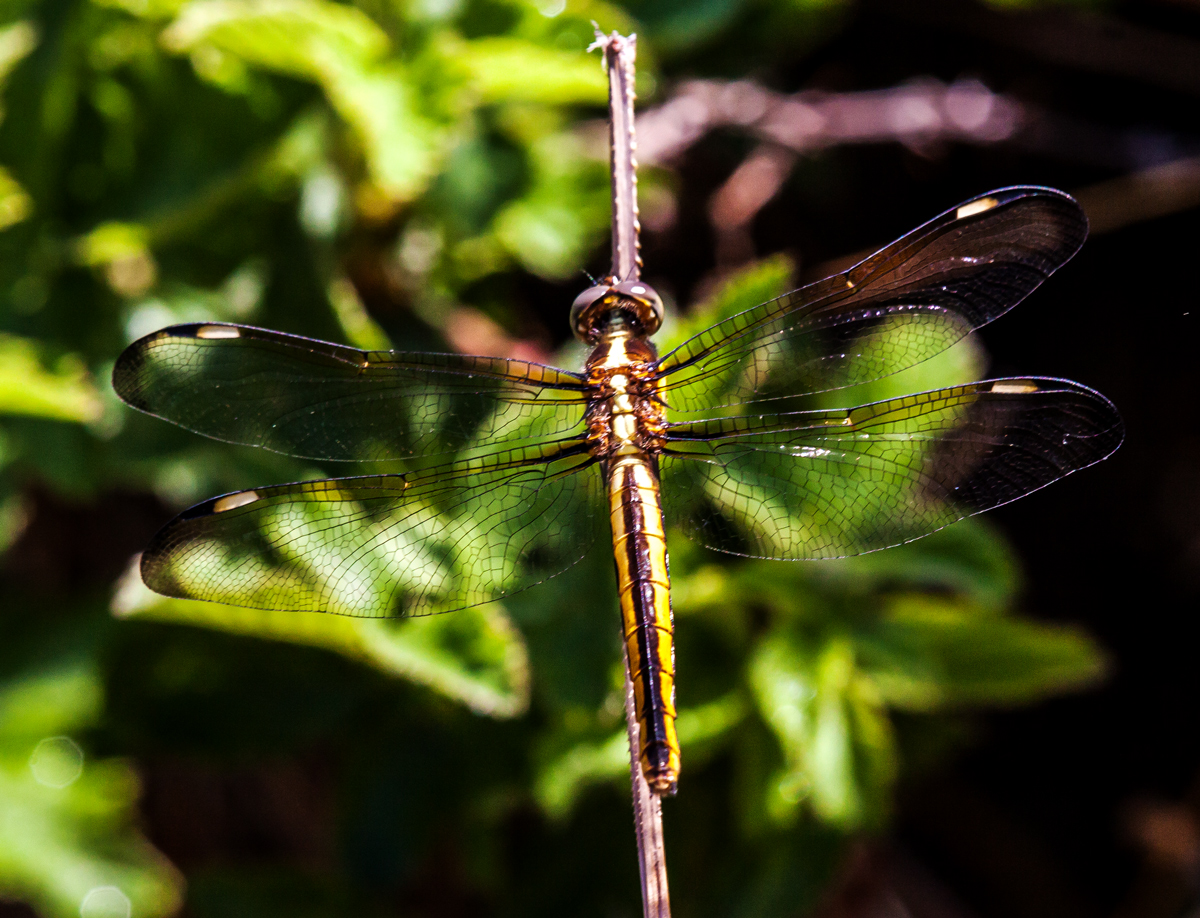
During the summer it seems like dragonflies are everywhere, perching prominently in plain sight, but this early in the season there are a whole lot fewer of them and the ones that are around are hard to find. Fellow dragonfly enthusiast and blogger Walter Sanford recently did a posting about some Ashy Clubtail dragonflies (Phanogomphus lividus) that he had spotted at Jackson Miles Abbott Wetlands Refuge.

I had never seen this species before, so I set off this past Friday to see if I could find one of my own. Walter had alerted me to look for the Ashy Clubtails perched in the grass and in the low vegetation that surrounds the small pond at the wildlife refuge. I circled the pond several times in vain before I suddenly caught sight of some dragonfly wings shining in the sunlight. I was able to track the dragonfly during its short flight and saw where it landed in the grass.

Almost certain that I had found an Ashy, I approached the dragonfly slowly and cautiously, fearful of scaring it away before I could get a shot. I was face-to-face with dragonfly, which is not the greatest position for capturing its details, and was able to confirm that it was an Ashy Clubtail. Its pale coloration and very clear wings indicate that it is newly emerged, what is often called a “teneral,” and it looks to be a female. Having gotten a few shots, I tried to get a better angle and spooked the dragonfly.

Ashy Clubtail

Buoyed by my success, I was motivated to search even harder and eventually spotted two more teneral female Ashy Clubtails. One was in some chest-high thorny bushes and I had to push up against them to get as parallel as possible with its body for a detailed shot. I was able to photograph the third Ashy from almost directly overhead and the final photo gives you the best overall view of this beautiful dragonfly.

These Ashy Clubtails ares not as brightly colored as some of the dragonflies that will appear later in the summer, but they were definitely a welcome sight for me.

Ashy Clubtail

Ashy Clubtail

© Michael Q. Powell. All rights reserved

Read Full Post »

It’s springtime and love is in the air. So many creatures seem to be searching for mates and some of them have obviously found one, like this pair of Pearl Crescent butterflies (Phyciodes tharos) that I spotted in flagrante delicto at Jackson Miles Abbott Wetland Refuge in Northern Virginia this past Friday.

I am no expert in butterfly anatomy and have no idea how this works, but there is a real beauty in the position, which appropriately looks  to me like a double heart. What can I say, I am a romantic at heart.

Pearl Crescent

© Michael Q. Powell. All rights reserved

Read Full Post »

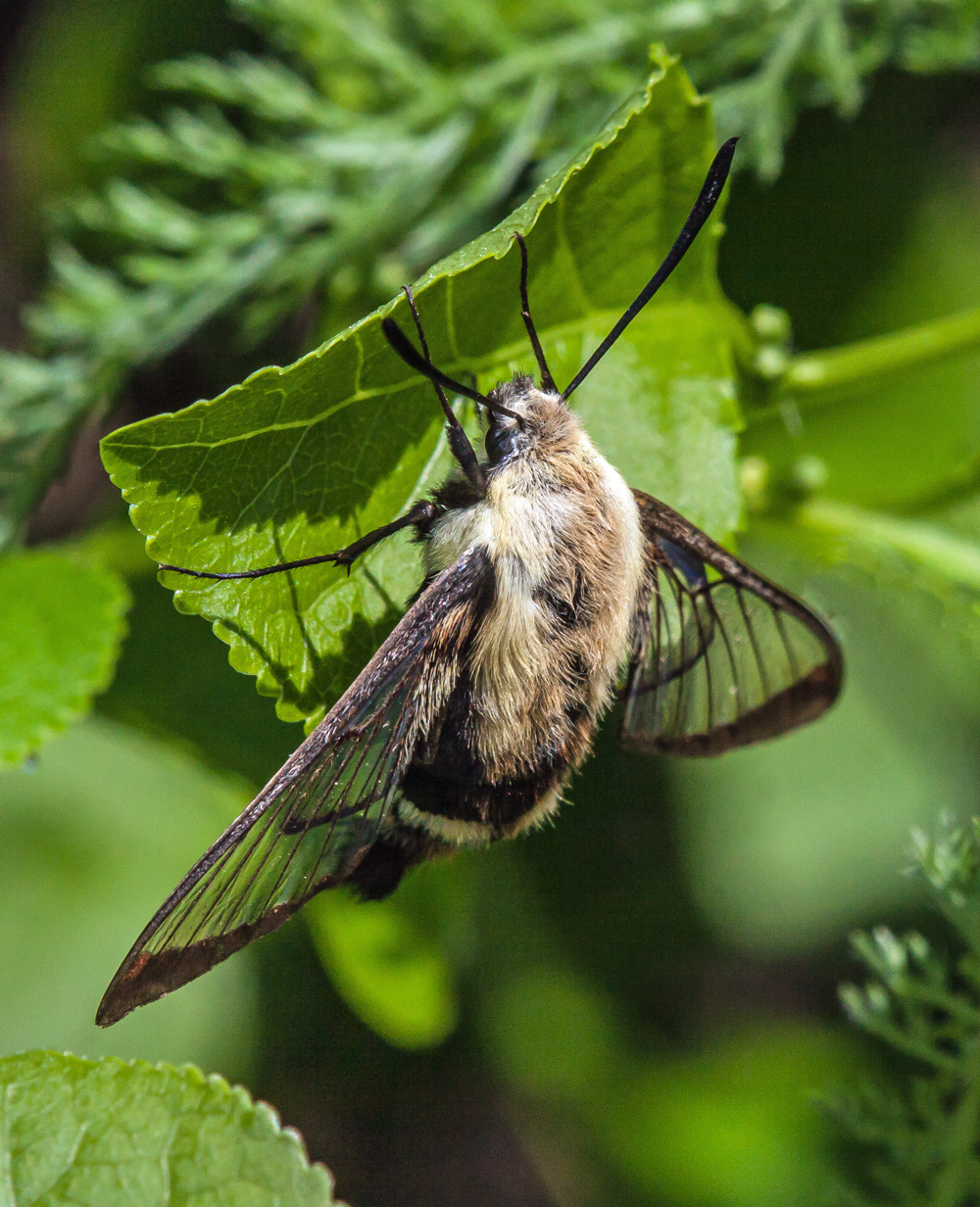
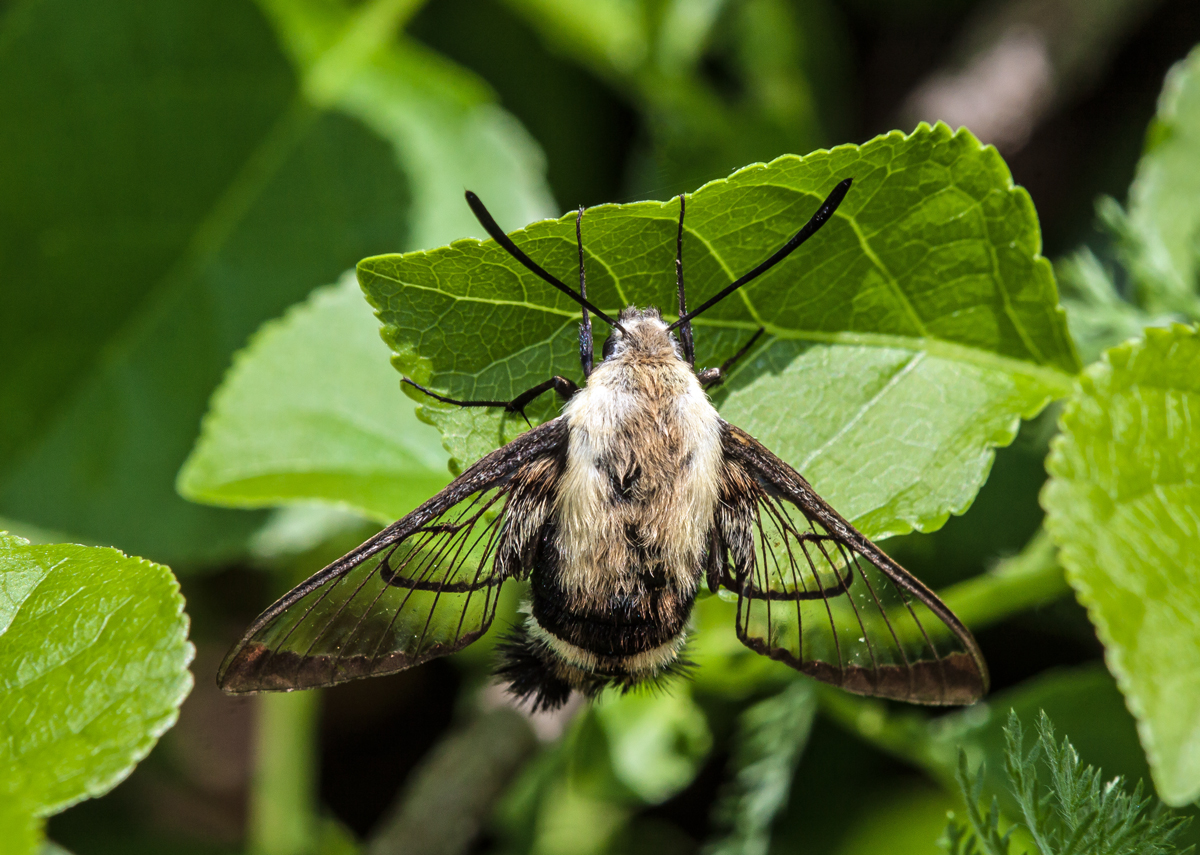
As I was searching for dragonflies yesterday at Jackson Miles Abbott Wetland Refuge, I noticed an unusually large bumblebee and started to give chase. When it landed and I moved in close, it became clear that it was not a bumblebee after all—it was a clearwing moth.

I have seen clearwing moths in the past of the the variety commonly known as Hummingbird Clearwing Moths (Hemaris thysbe), but they have generally been hovering like a hummingbird rather than perching like this one and their wings were outlined in red, not black. It took only a few minutes of internet research to discover that this is a Snowberry Clearwing Moth (Hemaris diffinis).

Snowberry Clearwing moth

Snowberry Clearwing moth

© Michael Q. Powell. All rights reserved
Read Full Post »

Last weekend at Huntley Meadows Park, a Tree Swallow (Tachycineta bicolor) seemed determined to scare off potential competitors by screaming loudly and vigorously flapping its wings as it sat atop a pole to which a nesting box was attached. The swallow spent a lot of time looking upwards, scanning the skies for rivals. I couldn’t tell if the swallow’s mate was inside of the nesting box or if it was simply staking a claim to the box for future use.

Tree Swallow

Tree Swallow

© Michael Q. Powell. All rights reserved
Read Full Post »

This delicate little butterfly was facing away from me, but I love the way that you can see the beautiful markings on the inside of its wings. I believe it is an Eastern Tailed-Blue butterfly (Cupido comyntas), a kind of hairstreak butterfly with an average wingspan of only about one inch (25mm).

I chased after a number of these butterflies earlier this week when I was exploring Jackson Miles Abbott Wetland Refuge at Fort Belvoir, Virginia. They don’t fly very fast, but their flight path is unpredictable and close to the ground and they usually don’t perch for long in one spot.

I suspect that if someone had been observing me from a distance, they would have been hard-pressed to figure out what I was trying to photograph and might have concluded that I was merely another crazy wildlife photographer. We are a peculiar breed, aren’t we?

Eastern-tailed Blue

© Michael Q. Powell. All rights reserved


Read Full Post »

Now that the dragonfly season has started in my area, I am devoting more and more of my available photography time to searching for these beautiful little creatures. Some dragonflies can be found almost anywhere, but many of them require a very specific kind of habitat and may be present for only limited periods of time.

Yesterday afternoon I visited Jackson Miles Abbott Wetland Refuge, which features a small pond surrounded by a pathway. Last year I found several different dragonfly species there, so I knew that I might have a chance of seeing some dragonflies. I looked in the brush and in the vegetation and came up empty-handed until I looked at the water and spotted several dragonflies flying low above the water.

I recognized the dragonflies as Common Baskettail dragonflies (Epitheca cynosura) and knew that I faced a challenge—this species seems to fly continuously and rarely have I seen one perch. I realized that if I wanted to get some shots of the dragonflies I would have to capture the images while they were flying.

I had my Tamron 180mm macro lens on my camera and started to track the flying dragonflies. I have tried a number of focusing techniques in the past and have had the most success when I focus the lens manually (although I hesitate to use the word “success,” given the high rate of failure in getting an in-focus shot). This was my favorite shot of a Common Baskettail flying above the water. There is a bit of motion blur in the wings and I had to crop the image quite a bit, but I managed to keep most of the dragonfly in focus.

Common Baskettail

I walked multiple circuits around the pond, still searching for more dragonflies. I tend to like to keep moving, rather than sticking in one spot. As I reached one end of the pond, I suddenly realized that a dragonfly was hovering in mid-air right in front of me. The dragonfly was moving slowly above a grassy patch adjacent to the pond, but did not seem interested in heading for the water.

I could hardly believe my good fortune and tried to compose myself and focus on the dragonfly. I managed to get some detailed shots that show, for example, how the Common Baskettail folds up its legs when flying. I took the first shot below while on my knees, so that I was almost level with the dragonfly. For the second shot, I was shooting down on the dragonfly and it looks almost like it was taken by a drone, hovering above the hovering dragonfly.

Common Baskettail

Common Baskettail

© Michael Q. Powell. All rights reserved

Read Full Post »

Hooded Merganser ducks (Lophodytes cucullatus) are usually pretty skittish, but the females are a little less so at this time of the year as they hang around and wait for their eggs to hatch.  I spotted this little lady earlier this month on a morning when the light was particularly beautiful. She was unusually cooperative and looked in my direction as if to say, “I’m ready for my close-up.”

Hooded Merganser

© Michael Q. Powell. All rights reserved
Read Full Post »

« Newer Posts - Older Posts »