Feeds:
Posts
Comments

Archive for the ‘Macro Photography’ Category

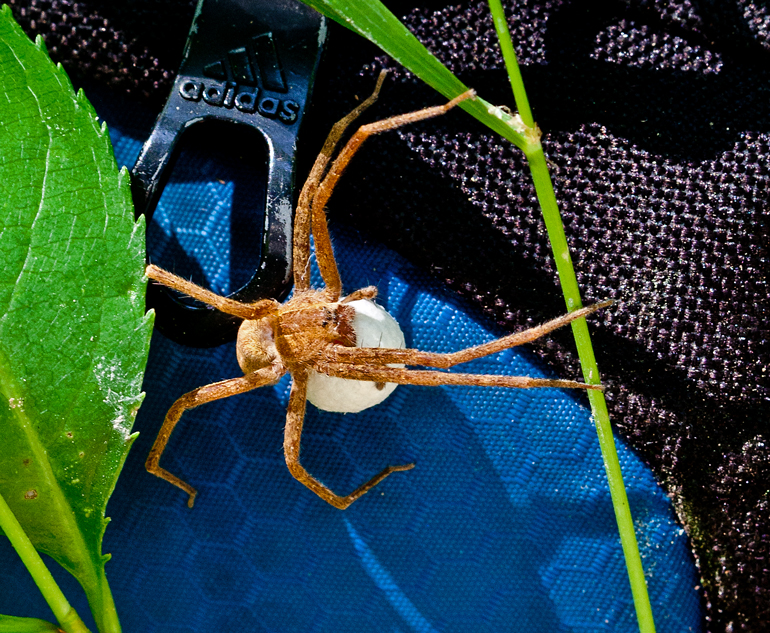
As I was reaching for my camera bag after taking a photo of a spider, I was surprised to see an unexpected visitor—a much larger spider with what looks like an egg sack.

I was in a wooded area and had placed my bag on the ground while I set up my tripod to take a photo of a small spider (shown in the second photo).  After getting the shots, I returned to my bag. I bent down to open the zipper of the bag and suddenly was eye-to-eye with the spider. The spider seemed really large at that moment, although retrospectively it does not seem that big when I compare it with the Adidas logo on the zipper pull. When I tried to adjust the bag’s position, the spider moved away, but fortunately I had the foresight to take some photos before attempting to improve the lighting situation.

I am not sure of the identification of either of these spiders, but find them both to be pretty cool in their own ways. I’d welcome some more information from more knowledgeable readers about the white ball and, in particular, if it is an egg sack.

UPDATE: I have done a little research and think that the spider in the first shot may be a Nursery Web Spider (Psaurina mira), a spider that is known for carrying its egg sack with its fangs. Some other spiders attach the egg sack to their spinnerets.
egg1_blogspider2_green_blog

Michael Q. Powell. All rights reserved

Read Full Post »

After spending most of their lives underground as nymphs, the 17 year cicadas (Magicicada septendecim) spend the few weeks of their adult lives looking for love. The males are very loud in their “singing” as they seek to attract females. I watched one cicada couple go through a very brief introduction and courtship phase and then suddenly they were mating.

I guess that you have to move quickly when your days are numbered.

love1_blog

Michael Q. Powell. All rights reserved
Read Full Post »

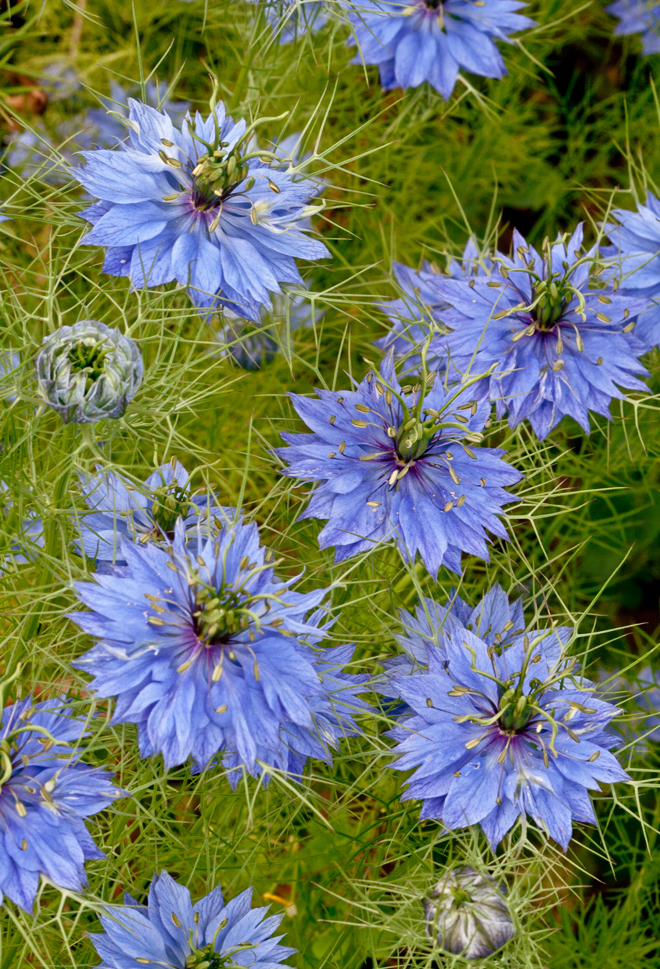
This cluster of Love-in-a-mist (Nigella damascena), one of my favorite flowers, was so striking that I decided to try to capture the grouping, even though usually when I take photos of flowers, I focus on a single blossom.

Framing the shot was a challenge, as I struggled to find a plane and camera settings that would keep most of the flowers in focus. I’m pretty happy with the result and I did only a slight amount of cropping to get this final image.

I grew up in the era of what is known now as classic rock-and-roll and it seemed natural to borrow the title of a Led Zeppelin song for this posting. I can’t say that I remember too many of the lyrics, excepted the chorus of repeated “Wanna whole lotta love,” but some of the guitar playing was really memorable.

lofoflove_blog

Click on the photo for a higher resolution view.

Michael Q. Powell. All rights reserved

Read Full Post »

From a distance, I couldn’t tell why the stems of this plant were bright red in color, but when I got closer, I realized it was covered in little red insects. I think that these might be aphids, but I am not completely sure. There were ladybugs in some nearby plants, and if these are in fact aphids, the ladybugs may be in for a feast.

Does anyone have a better idea what kind of insects these are?

bugs_blog

Michael Q. Powell. All rights reserved

Read Full Post »

Like Paul Revere’s call in 1775, the cry went out in early May, “The cicadas are coming, the cicadas are coming.” After 17 years in the ground, the cicadas of Brood II  (Magicicada septendecim) were coming back in force. The Washington Post ran a story with the sensationalist headline of Bug-phobic dread the looming swarm of Brood II cicadas” and hysteric anticipation gripped the metro D.C. area.

Like most of the snowstorms forecast in this area, the invasion of the cicadas has been underwhelming. I had not seen a single cicada until I traveled to Manssas, VA for a cookout and the got to see and hear a large number of these scarey-looking insects. Apparently we are past the peak moments, but the noise in some places was just short of deafening and there were some bushes that were covered with the giant insects.

I was struck by the contrast between the fierce look of this cicada and the delicate beauty of the purple iris on which he was perched.

beast1_blog

Michael Q. Powell. All rights reserved
Read Full Post »

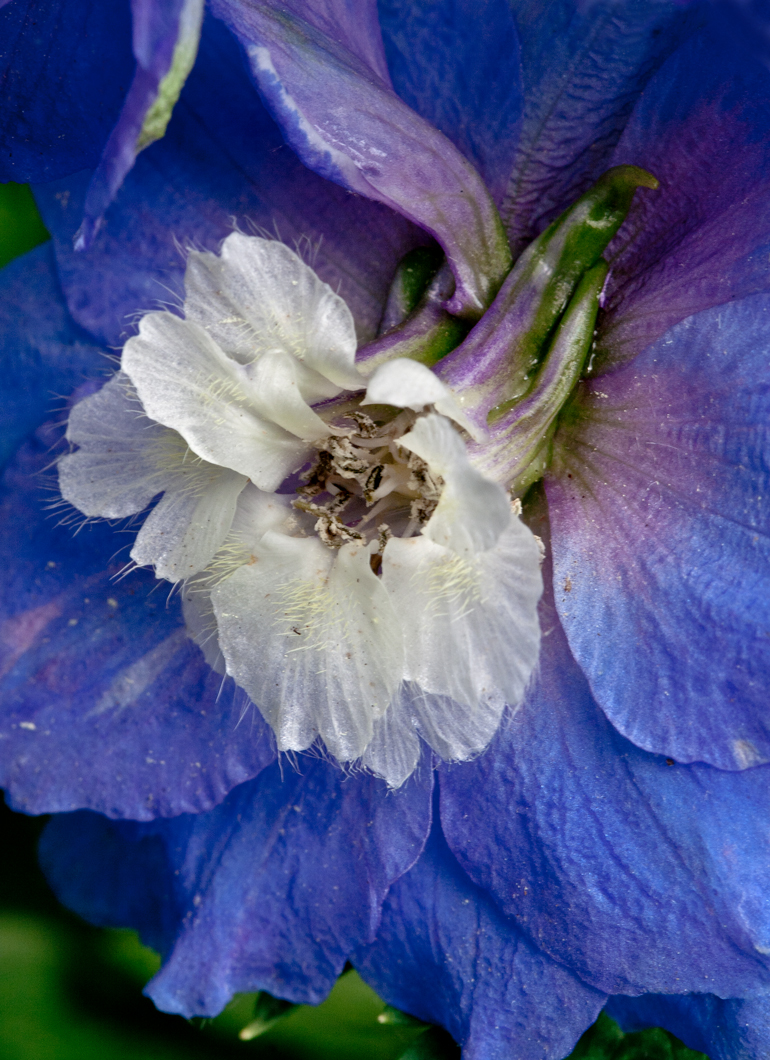
Whenever my neighbor has new flowers popping up in her garden, she invariably invites me to come and photograph them, and this close-up shot of a blue delphinium is my newest capture.

The neighbor in question is Cindy Dyer, a noted flower photographer and fellow blogger, and I thinks she almost always chooses photogenic flower species to plant. Check out her blog to see some gorgeous shots of all kinds of flowers. (She also is the one who got me started shooting regularly and has been an endless source of inspiration and encouragement for my photography.)

I love the beautiful color of this flower, which is pretty small, and the different textures that you can see in this shot.

delphinium_closeup_blog

Michael Q. Powell. All rights reserved
Read Full Post »

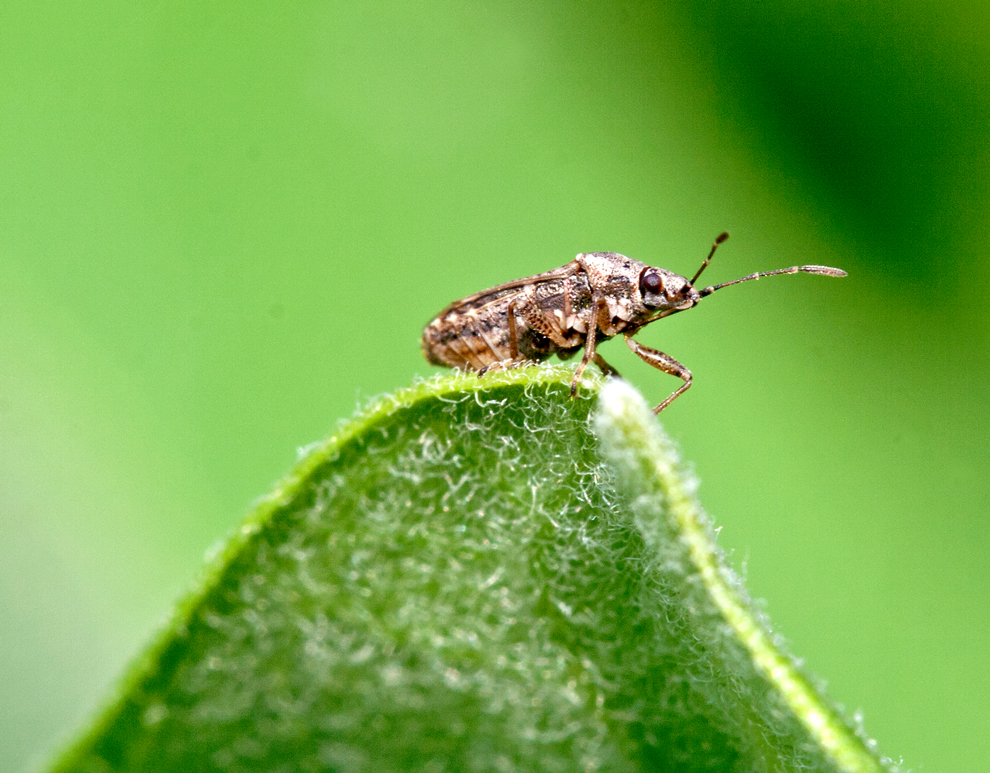
It took some time for this tiny insect to ascend to the top of this leaf, which may have looked like a mountain to him, and once there he seemed relax and pose for me, as though he was really proud of his accomplishment.

I don’t have any idea what kind of insect he is and would welcome any additional information (or even guesses) from fellow bloggers. To aid you in identification, I have loaded a higher resolution view that you can access by clicking on the photo.

littleinsect_1a_blog

Michael Q. Powell. All rights reserved

Read Full Post »

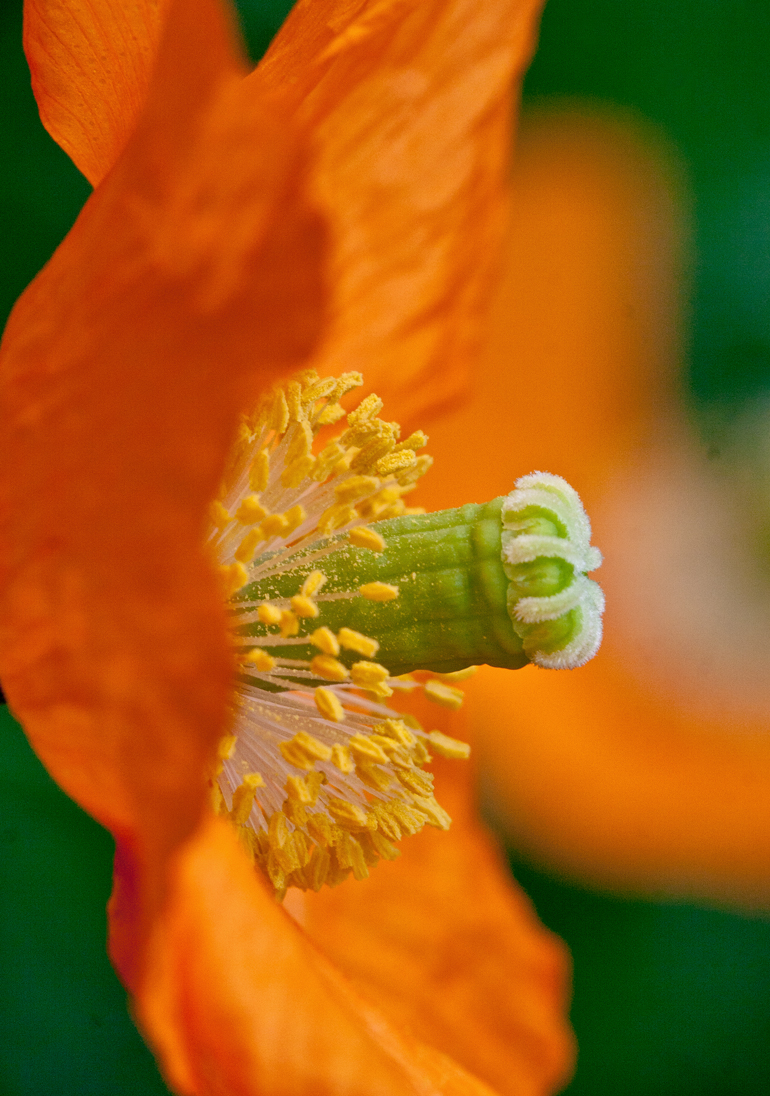
Vibrant colors surrounded me this past weekend, when I visited a local garden, and this morning I felt like highlighting the beautiful pink and yellow of a pair of peonies and the contrasting orange and green in a close-up shot of an orange poppy.

peonies_blog

orange_poppy_blog

Michael Q. Powell. All rights reserved
Read Full Post »

This weekend I learned how difficult it is to get good shots of a tiny spider when it is in the middle of a cluster of plants and is surrounded by an untidy mess of web material, rather than a nice web.  Auto-focus was utterly useless and the camera refused to focus on the spider—it wanted to focus either on the plants in the background or on the web material. Manual focusing was required and it was tough to tell which parts of the spider were in focus at any given moment.

I used my tripod, which helped a little, and even used the pop-up flash to give me little extra light (you can see the shadows it caused in the second photo). I especially like the way that the colors in the images turned out, giving the photos kind of an out-of-this-world, sci-fi look.

The second shot is an action shot in which the spider has captured some kind of flying insect, which I can’t really identify. I didn’t have a great angle, but find the shot to be interesting.

As I shoot more insects and spiders, I am experimenting and finding out what works for me (and admiring even more the photographers who are able to get the amazing shots that I see on other blogs and elsewhere on the internet).

spider1_blog

spider2_blog

Michael Q. Powell. All rights reserved

Read Full Post »

It was raining a little yesterday when I encountered my first harvestman (order Opiliones) of the spring, which explains the drops of water that you may notice on some on its legs.

Growing up, I was accustomed to calling them daddy longlegs and thought they were a kind of spider. Last year, I learned that harvestman in fact are not spiders, even though they do belong to the class of arachnids—harvestmen are in the order Opiliones and spiders are in the order Araneae.

I shot this image with my 55-250mm telephoto zoom, which meant that I couldn’t get in super close to the harvestman. However, I did manage to get at least part of all of his legs in the shot, which was not the case last year when I photographed one with my macro lens—there is an unavoidable tendency to want to get close whenever I put the macro lens on my camera.

Daddy1_blog

Michael Q. Powell. All rights reserved

Read Full Post »

I was thrilled yesterday when I spotted this Red-spotted Purple butterfly (Limenitis arthemis astyanax), which brought to mind the two things that bothered me about this butterfly last year when I first encountered it.

The first thing is that the name makes no sense at all—there is not purple at all in the Red-spotted Purple butterfly. Secondly, I recalled that it was almost impossible to get a photogenic background with this butterfly. Bugguide notes that adult butterflies of this type take moisture from mud puddles, rotten fruit and animal feces and last year I always found them in the latter situation. I guess I should be happy that the background for these photos was a concrete path!

I took these shots with my telephoto zoom at close to 400mm and realize the limitations of the lens for this type of shot. Most significantly, I couldn’t get close enough to be able to frame this better and the size of the lens limited my agility, the more so because I had it on a tripod. Still, I am happy to capture colors like this that always help to brighten my day.

butterfly2_blogbutterfly1_blogbutterfly3_blog

Michael Q. Powell. All rights reserved

Read Full Post »

As I was looking in my neighbors’ garden for flowers to photograph, I came across this cool-looking little spider, which I have not yet been able to identify.

The spider was really small, maybe a half-inch (a little over 1 cm) in size and didn’t sit still too much, so it was quite a challenge to photograph him. I really like his eyes and his hairy legs, which look almost like they are transparent.

One of the things that I especially like about spring is that insects reappear and give me photo opportunities like this one.

spider2_blogspider3_blog

Michael Q. Powell. All rights reserved

Read Full Post »

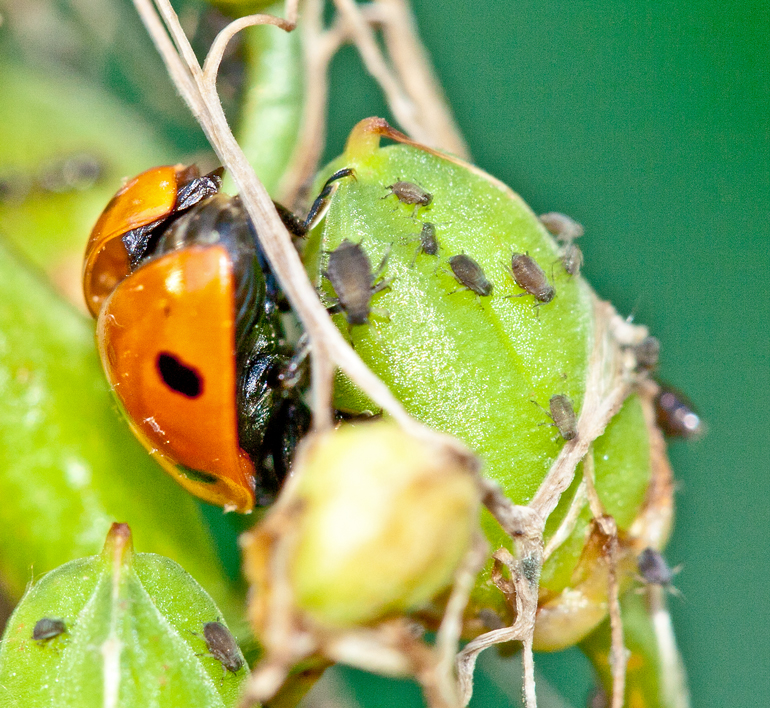
This ladybug was not in a very good position for me to get a shot, but I usually try to photograph every ladybug that I see, so I took the shot, totally oblivious to the fact that she was not the only bug in the frame.

Occasionally, when I am photographing a flower or an insect, there is an additional insect in the photo that I notice only when reviewing the  images, what my friend Cindy Dyer calls a “bonus bug.” How did I miss almost a dozen bugs in my viewfinder?

Can anyone identify the little bugs?

bugs_blog

Michael Q. Powell. All rights reserved

Read Full Post »

Looking at this plant from the side, all you notice are the tall, straw-like spikes that radiate from the center, but from above, it’s like looking into a kaleidoscope. I love the repetition of the colors and patterns in a wide circle around the center blossom.

I don’t have any idea what kind of flower this is, so I’ll make up my own name for it and call it the Kaleidoscope flower.

circle_blog

Michael Q. Powell. All rights reserved

Read Full Post »

I really enjoy the challenge of trying to photograph insects and this ladybug was a relatively cooperative subject. She sat still for quite a while, which allowed me to experiment a little with techniques. The first show was taken after she started to move a little.

The light was fading a little, so I decided to see what would happen if I used my pop-up flash. It’s obvious to me that I risk having a hot spot, which is most visible in the second shot, but it seems that the additional light helped to bring out some additional details. I have seen the fancy setups advertised that use dual external flashes, but don’t think that I am ready to make that kind of financial commitment. Perhaps I will experiment with a cheaper, LED light or possibly a ring light and see how well they work.

ladybug2_blogladybug1_blog

Michael Q. Powell. All rights reserved

Read Full Post »

Do you prefer to take photos alone or with others?

Normally I prefer to shoot alone, to move at my own pace and shoot whatever catches my eye at a given moment. However, there are advantages to working side-by-side with another photographer. The other person can serve as a spotter and point out opportunities and subject that you might have otherwise missed. It’s also interesting and instructive after a shoot is done to compare images and see the same scene through another set of eyes.

Friday late in the afternoon, I noticed that my neighbor, friend, and photography mentor, Cindy Dyer, was out in her garden taking photos of her beautiful flowers. Cindy, a noted photographer, has been a constant influence on my photography this past year, encouraging me and inspiring me. She loves this time of the year, when nature explodes with color, and her blog is full of beautiful images of flowers of all varieties (and lots of other cool photos too).

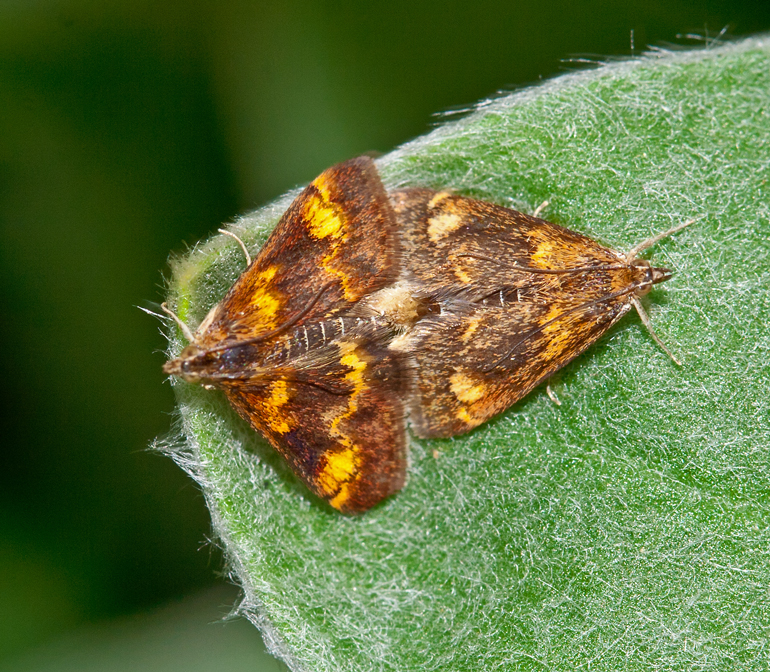
When I started shooting with Cindy, I was shooting a lot of flowers and a few insects, but gradually moved to shooting more insects than flowers. Somehow my eyes are attracted to insects. Shortly after joining Cindy in her garden with my camera and tripod, I spotted what I thought was an interesting looking insect. Upon closer examination, it turned out to be a pair of mating moths, that together were about one inch long (2.5 centimeters). They were positioned in such a way that the only way to capture them was to shoot from directly overhead. I had real problems with depth of field as I got my macro lens as close as it would let me get.

I challenged Cindy (in a friendly way) to photograph this couple and she took up the challenge and posted an image in her blog. It was an interesting challenge pitting Nikon against Canon and teacher against student as we explored the limits of our macro lenses and photography skills.

This little incident helped to remind me of the benefits of shooting with someone else, especially someone who gently pushes me forward. It usually works best for me when we travel somewhere and shoot side-by-side part of the time and wander on our own the rest of the time—the best of both worlds.

moths_mating_blog

Michael Q. Powell. All rights reserved

Read Full Post »

Yesterday was warm and humid, which felt almost like summer here and brought out more dragonflies.

The sun was a little harsh just before noon, but I couldn’t help chasing after the dragonflies and got this shot of a male Common Whitetail dragonfly (Plathemis lydia).

head-on_blog

Michael Q. Powell. All rights reserved
Read Full Post »

I have been taking photos of a lot of flowers in a lot of different places and thought I would post a few of my favorites.

The first one is of a plant called Lily of the Valley that was growing in the back yard of one of my neighbors. It was pretty small and close to the ground, so I have to create a makeshift bean bag to support my camera, using cushions for lawn furniture

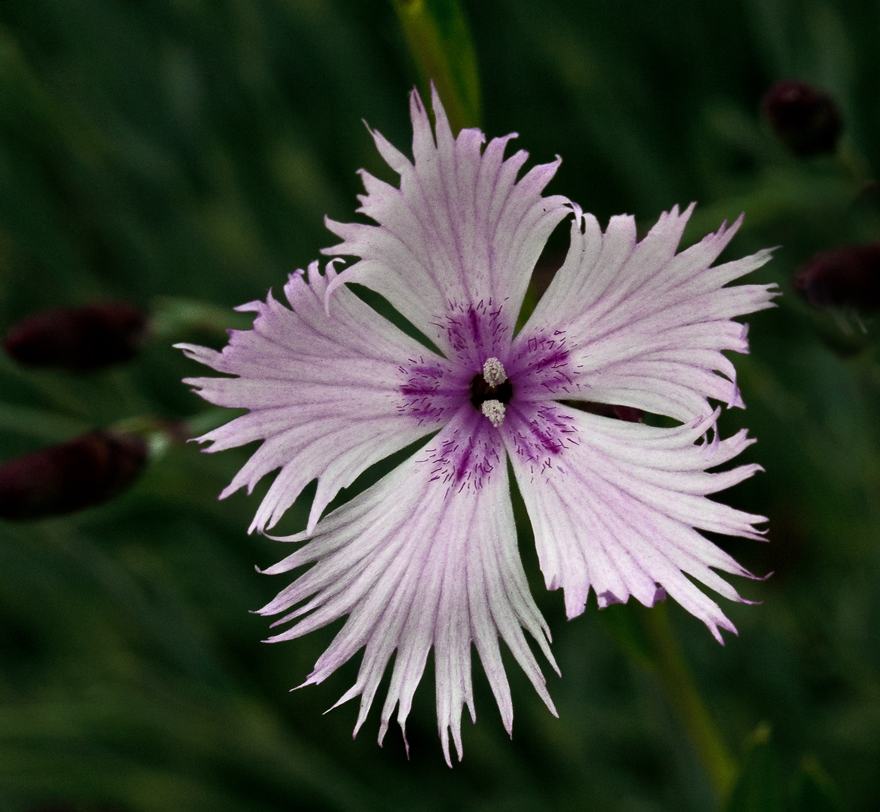
I really don’t know what the second flower is called, but I really liked the shape of its petals and the slight pinkish-purple tinge of color .

The final shot is a small plant that was growing in the rock garden of a county-run historical garden that I love to visit. From a distance, the flower looked like it was in the shape of a cube.

lily_blogflake_blogsquare_blog

Michael Q. Powell. All rights reserved

Read Full Post »

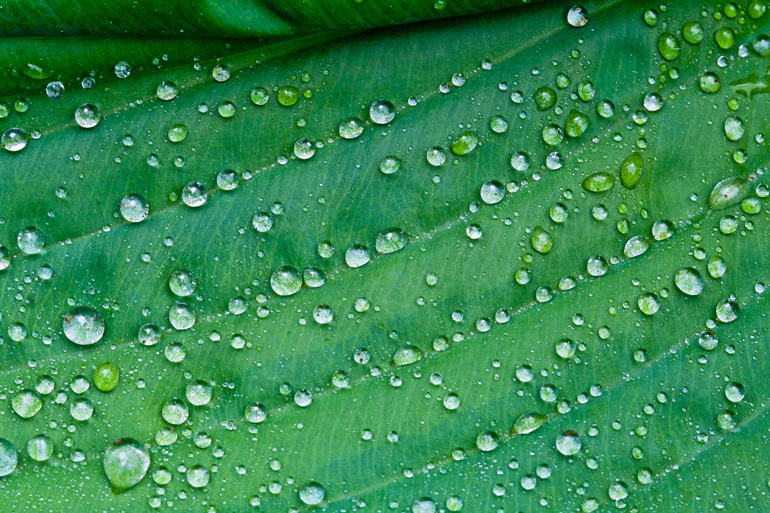
I love to photograph raindrops, normally focusing on a single drop, but I was really attracted this weekend to the rows of water drops on a single leaf of this Hosta plant. Many of them formed perfect little spheres of water, like tiny jewels or little water pearls.

Sometimes it’s easiest to find real beauty in simplicity, with no need for bright colors or ornate details.

drops1_blog

Michael Q. Powell. All rights reserved
Read Full Post »

Love-in-a-mist (Nigella damascena) is a flower that looks like it came from outer space, with wild tendrils shooting out of its middle and green spikes surrounding it.

I was surprised this past weekend to see some of the plants putting out blossoms this early at a local garden that I like to visit. I had never seen Love-in-a-mist (I love saying the flower’s name) in its early stage of growth and really like the look of the bud in the last photo, surrounded by the soft green spikes, as the flower is at all stages of growth.

Before long, entire patches of this garden will be covered with this remarkable flower—we can always use more Love, whether it is in a mist or not.

love1a_bloglove3_bloglove2_blog

Michael Q. Powell. All rights reserved

Read Full Post »

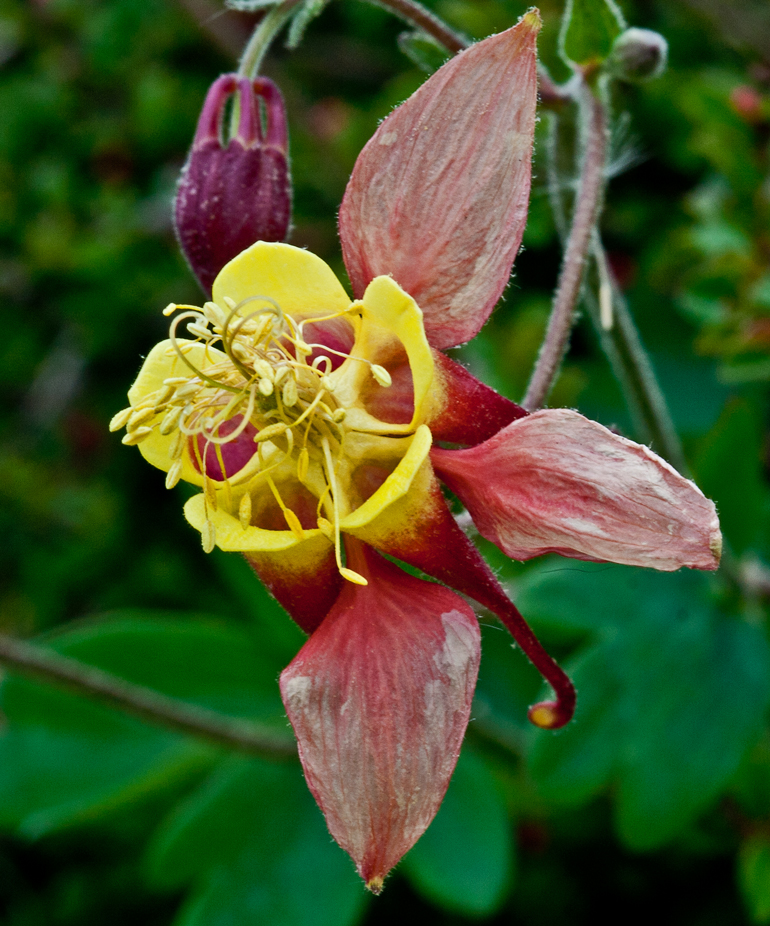
Columbines come in a variety of colors and they have sharp angles as well as soft curves—these are a few of the reasons that columbines are among my favorite spring flowers.

purple_columbine_blogdown_blog

Michael Q. Powell. All rights reserved
Read Full Post »

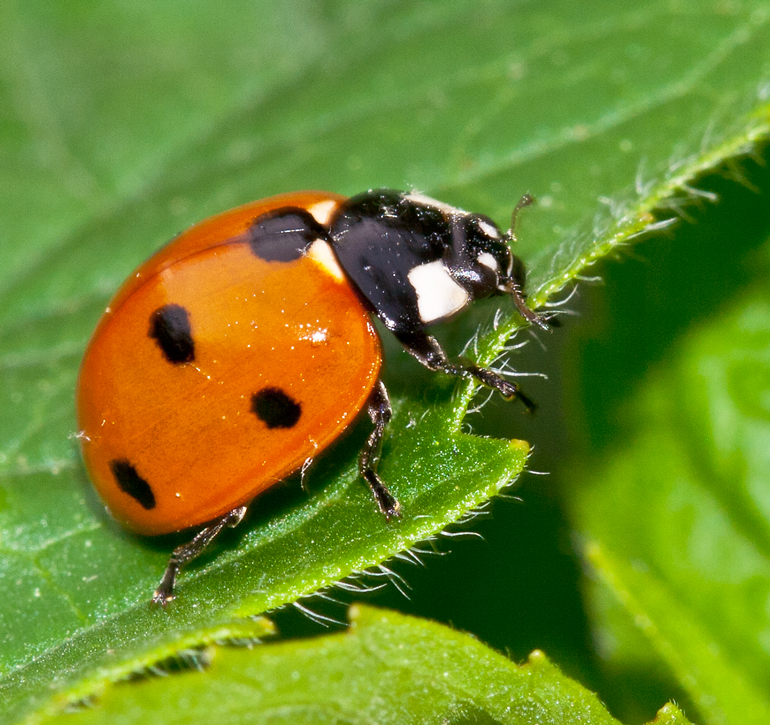
Ladybugs are often considered symbols of good luck and many people look at them as cute. Consequently, you have probably never considered them as menacing (assuming that you are not an aphid), but that is the descriptor that came to mind when I first looked at this head-on image of a ladybug that I photographed yesterday.

Perhaps I am just not used to looking eye to eye with a ladybug, but this one seems to have a deadly serious look on its face, like it was not happy that I was disturbing it.

I took the shot in my neighbor’s garden, using a macro lens and a hand-held diffuser to cut down on the intensity of the sunlight. Although I stopped down the lens to get some additional depth of field, the back portion of the ladybug, including its rear legs, are out of focus, which helps to draw attention to the face.

The change in seasons means that I will probably be featuring fewer birds in my blog than during the winter, and a whole lot more insects and flowers.

ladybug1a_blog

Michael Q. Powell. All rights reserved

Read Full Post »

Is it just me, or does this image look like it came from a low budget science fiction movie, with a strange-looking alien creature hovering over a Martian landscape?

I was chasing dragonflies again this past weekend, trying to capture images of them in flight, and ended up with this image of a female Common Whitetail dragonfly (Plathemis lydia). It’s pretty tough to try to track these flying insects with a hand-held telephoto zoom lens extended to almost 400mm. My autofocus seemed too slow and I adapted a technique of trying to focus manually, while trying to keep the lens steady. I can’t tell for sure if this image was auto-focused or was manually focused.

Female Common Whitetail dragonflies do not have a white tail and in many ways that makes them a little easier to expose correctly. The wings are blurred, but you can still see the brown markings that identify this as a female, and not an immature male.

Last summer I was content to get a shot of a dragonfly when it was stationary, but this summer I am going to work hard to capture some more images of dragonflies in flight.

whitetail2_blog

Michael Q. Powell. All rights reserved

Read Full Post »

Snake eyes are often cold and menacing, but somehow this snake that I encountered yesterday seems to have warm brown eyes that look almost like he is smiling.

This snake, which I think is a Common Garter Snake (Thamnophis sirtalis), was curled up in some underbrush near the edge of the marsh. It was a real challenge getting a clear view of his head, the more so because I was using my 135-400mm lens that has a minimum focusing distance of almost seven feet (two meters).

For this shot, I used my tripod so that I could get an exposure of 1/30 second at f/9, with the lens zoomed out to about 350mm. I like the fact that I was able to capture some of the beautiful texture of the scales on his skin. You can easily see how I had to look for little sight windows through the brush, which is mostly blurred and hopefully is not too distracting. Finally, I am happy that I managed to capture some of the sinuous curves that help to guide the viewer’s eye to the snake’s head.

snake1_blog

Michael Q. Powell. All rights reserved
Read Full Post »

Although most people probably associate the descriptor “whitetail” with deer, it’s also part of the name of this dragonfly that I photographed yesterday, an immature male Common Whitetail dragonfly (Plathemis lydia).

I remember seeing the adult male Whitetail a lot last summer, and its body is a chalky white in color, as its name suggests. Males start out looking a lot like the female, which has a brown body with some white or yellow markings, according to Bugguide. However, it’s relatively easy to tell the immature males from the females, because their wing patterns are different. Males have wider bands of brown and clear wingtips (no, they are not wearing dress shoes—I am talking about the literal tips of the wings).

I am sure that I’ll get lots more photos of Common Whitetail dragonflies this summer, including some in much better light, but it was nice to see them appearing already in April.

dragonfly1_blog

Michael Q. Powell. All rights reserved

Read Full Post »

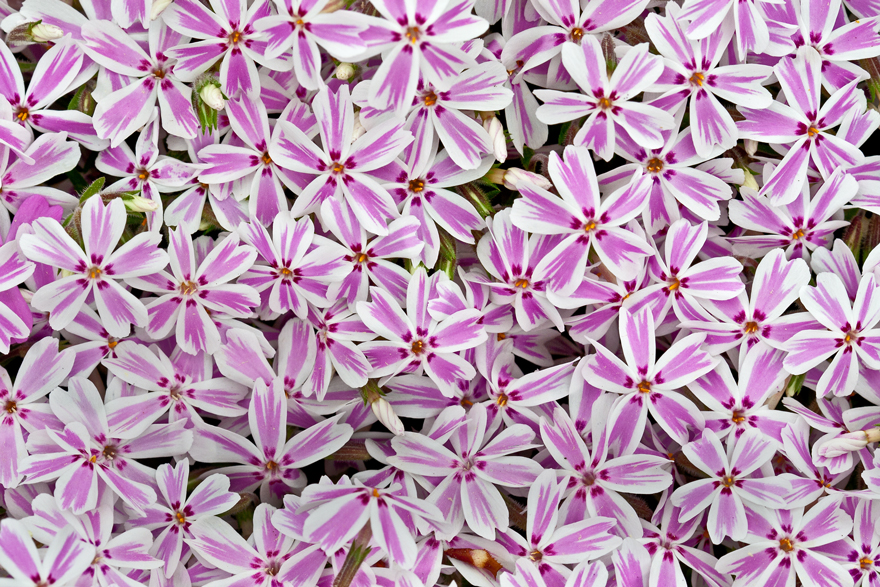
Here is a shot of the beautiful Creeping Phlox (Phlox stolonifera) that covered one whole area of the rock garden at one of the local gardens that I like to visit.

phlox_blog

Michael Q. Powell. All rights reserved
Read Full Post »

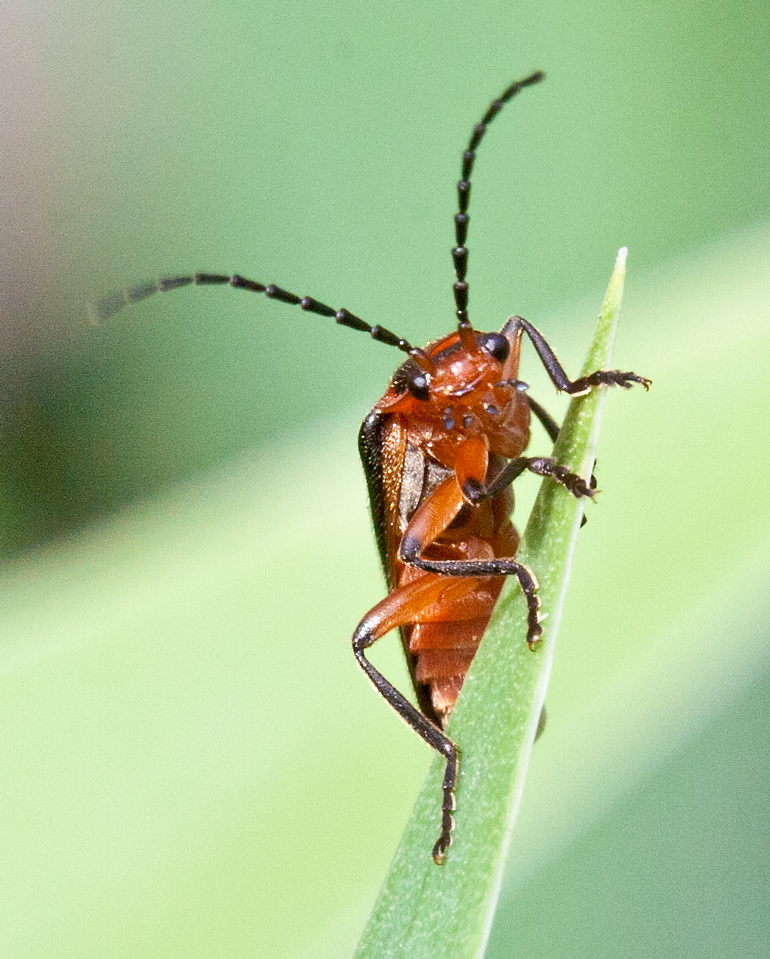
An insect on the edge of a leaf is a perfect candidate for a macro shot and when I saw this one from a distance in my neighbor’s garden, I got to work without a clue about its identity.

When I looked at the photos initially, I thought I had captured images of a Red Milkweed Beetle (Tetraopes tetrophthalmus), because of its bright red body and curved, segmented antennae. (I have a self-identified obsession with this insect that I discussed in a blog posting last year.) However, there were a few problems with that identification. This beetle seemed smaller; it was on a plant that was definitely not a milkweed plant; and it seemed too early to be seeing a milkweed beetle. My identification was further complicated by the fact that I never did see the back of the beetle.

So what insect did I photograph? I have been going over photos at bugguide.net, one of my favorite sources and wonder if this might be a Lily Leaf Beetle (Lilioceris lilii). Tentatively, though I like the name that I invented for this post, Red Spring Beetle.

I may not be sure about the identification of this insect, but I know that I like the photos that I managed to get, especially the first one. I captured a pretty good amount of detail and I like the way that he posed, looking directly at me.

red_bug3_blogred_bug2_edited-1

Michael Q. Powell. All rights reserved

Read Full Post »

As I was admiring the beautiful tulips in my neighbors’ garden, I noticed this fly perched on the edge of one of them. In a different setting he might have gone unnoticed, but here the details of the fly provide a nice contrast with the wonderful primary colors of the tulips in the background.

With spring here in full force, I am reacquainting myself with my macro lens, causing me to look more closely at details like the red compound eyes of this fly and his hairy back legs.  It’s fun too to note the details of his tiny little feet.

I am now remembering how much I have to pay attention to lighting, depth of field, and shutter speed when shooting macro shots, particularly because my macro lens is not image stabilized. Very minor problems can really be magnified when I try to get in this close, especially with an animate subject.

fly_tulip_blog

Michael Q. Powell. All rights reserved

Read Full Post »

We’ll have more ladybugs in our neighborhood even sooner than I expected.

My neighbor and photography mentor, Cindy Dyer, has ladybug larvae in her garden as I showed in a recent posting. Some of them have already entered the pupa stage, the final stage before adulthood. Once metamorphosis is complete, the shell splits open and a full-grown ladybug emerges. Initially, the shell is soft, but pretty rapidly the exoskeleton hardens and takes on the look that we associate with ladybugs.

Here’s a photo from today of a ladybug pupa. I think that it is probably from a Harlequin Ladybug (Harmonia axyridis), a type that is also known as the Multicolored Asian Lady Beetle. If you want to know more about the life cycle of a ladybug, check out the posting that I did last fall entitled Baby Ladybugs.

larva2_web

Michael Q. Powell. All rights reserved

Read Full Post »

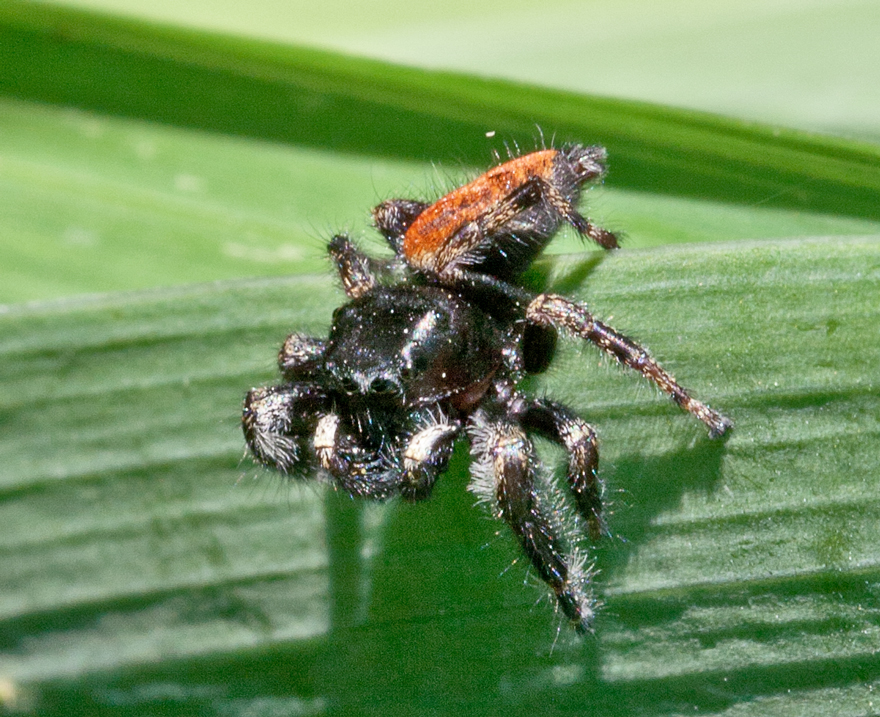
I was checking out the plants yesterday in my neighbor’s garden when I came upon this cool-looking spider, a type that I had never before encountered. From an initial check on-line, it looks like this might be a kind of jumping spider, though I really am out on a limb with the guess. In any case, I really like the combination of red and black on his body and the multiple eyes that are just visible.

With the arrival of spring, I am starting to see some familiar insects from last year and some new “friends.” It’s an exciting time for me.

spider_blog

Michael Q. Powell. All rights reserved

Read Full Post »

When I came across this fairly large snake, which I think is a Northern Black Racer snake (Coluber constrictor constrictor), I was happy that I had a fairly long telephoto lens.

He looked to be about 48 inches long (1.2 meters) and was partially coiled on top of a bush at the edge of the beaver pond at my local marsh. Although he was basking in the sun, he was definitely alert, which was one of the reasons why I was very cautious. The photo provides a close-up view of his head, but it was shot with my zoom lens at about 340mm, so I was not close and personal with him.

Wikipedia notes that this snake usually swallows its prey alive, despite the “constrictor” in its Latin name. Although these snakes will try to avoid predators, “once cornered they put up a vigorous fight, biting hard and often.” I’ll definitely keep that in mind.

One other interesting bit of trivia that I discovered about the Northern Black Racer snake (and I recognize that I could be wrong in my identification) is that the snake was designated as the official state reptile of Ohio in 1995.

snake_blog

Michael Q. Powell. All rights reserved
Read Full Post »

« Newer Posts - Older Posts »