Feeds:
Posts
Comments

Archive for the ‘Macro Photography’ Category

I don’t know much about the courting behavior of Eastern Tailed-blue butterflies (Cupido comyntas), but the male at the bottom of the photo was actively pursuing a female when I photographed them on Wednesday in Prince William County. Eastern Tailed-blues are tiny butterflies, with a wingspan of about an inch (25 mm), so you have to look really closely to see the single narrow tail on each hind wing. When their wings are closed, Eastern Tailed-blues are mostly grayish0-white in color, so it was a real visual treat to be able to capture them with their wings open.

Eastern Tailed-blue

© Michael Q. Powell. All rights reserved.

Read Full Post »

Most of the time fishing spiders have some of their legs in the water to sense the vibrations of potential prey, but the large Six-spotted Fishing Spider (Dolomedes triton) that I spotted last Friday in Prince William County was perched on a log at the edge of a small creek. When I posted the photo on Facebook, one of my friends noted that he often finds fishing spiders far from the water, including in his wood pile.

I do not know how large this spider was, but it looked huge to me. Perhaps that is because the spider had all of its legs fully extended, unlike some spiders whose legs are partially bent when they are in a web.

Six-spotted Fishing Spider

© Michael Q. Powell. All rights reserved.


Read Full Post »

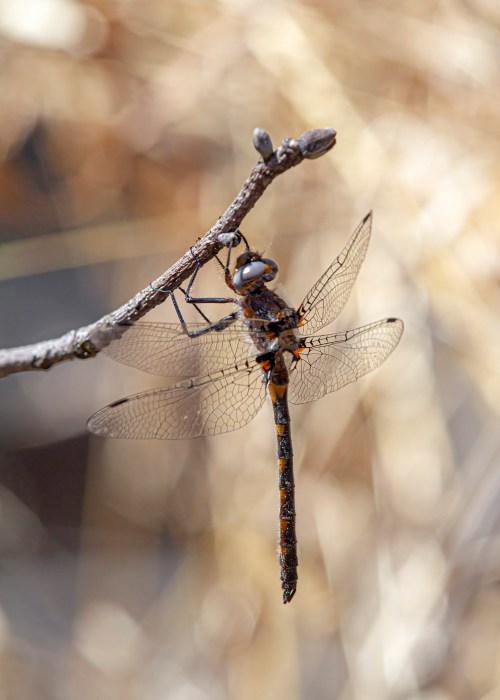
On Monday I was thrilled to photograph my first dragonfly of the year at Occoquan Bay National Wildlife Refuge, the location that I visit most frequently with my camera. The first prize goes to an immature male Blue Corporal dragonfly (Ladona deplanata)—males turn blue as they mature, but initially they have the same coloration as the females. Blue Corporals of both genders have two light-colored stripes on the front of their thoraxes, the traditional rank military insignia for corporals.

Later in the day I spotted a female Blue Corporal perched on some dry leaves, as shown in the second photo. Can you spot the differences between the dragonflies in the first and second photos? The male abdomen tends to be a bit thinner than the abdomen of the female. However, the biggest difference is in the terminal appendages, i.e. the specific parts at the very tip of their abdomens (their “tails”).

The following day I returned to the refuge and spotted another Blue Corporal perched in some vegetation—I think it is another immature male. Most of the time Blue Corporals like to perch on the ground, but this one looked like it had only recently emerged and may have been waiting for its wings to harden.

When dragonflies undergo their metamorphosis from water-dwelling nymphs to aerial acrobats, their wings are initially very clear and fragile and the creatures are very vulnerable, so I was careful not to disturb the dragonfly when I took a few photos. If you are interested to learn more, check out a 2016 blog posting  Metamorphosis of a dragonfly in which I documented the entire transformation process of a Common Sandragon dragonfly in a series of 15 photos. At the end of that series you will be able to see why I characterized the wings of a newly-emerged dragonfly as “fragile.”

Blue Corporal

Blue Corporal

Blue Corporal

© Michael Q. Powell. All rights reserved.

Read Full Post »

Early spring wildflowers, like the Virginia Spring Beauty (Claytonia virginica), are an important source of food for a host of small bees and other insects. Many insects gather pollen from these flowers and in doing so help to pollinate the plants.

Some species of bees, though, lack  scopa (the pollen-collecting hairs) and do not collect pollen to feed their offspring. The genus Nomada, according to Wikipedia, is the largest genus of kleptoparasitic bees sometimes referred to as “cuckoo bees.” Kleptoparasitic bees are so named because they enter the nests of a host and lay eggs there, stealing resources that the host has already collected.

It is a little hard to see the body of the bee in the photo below, but if you look closely you can see its striped abdomen, which is wasp-like in appearance. I was not sure of the type of bee, so I posted it to BugGuide, a useful resource for insect identification, and one of the experts there identified the bee as belonging to the genus Nomada.

cuckoo

© Michael Q. Powell. All rights reserved.

Read Full Post »

Have you ever looked closely at a dragonfly’s legs? A dragonfly has six legs that are attached in pairs to its thorax. The main parts of the leg are the upper leg or femur, the lower leg or tibia, and the foot or tarsus, which is made up of three segments and ends with a pair of claws. The legs are covered with spiky hairs and fulfill a variety of functions, including perching, catching and holding onto prey, and cleaning its mouth and eyes.

The first photo is a close-up view of a Uhler’s Sundragon (Helocordulia uhleri) that I spotted on 4 April near a creek in Prince William County, Virginia. You get a really good view of one of the middle legs of the dragonfly, including the way that it bends at two joints and the way the tiny claws are used to hold onto the perch. I can’t be sure, but I believe that the dragonfly may be using one of its front legs to wipe its large compound eye. If you click on the photo, you can see some of the thousands of ommatidia, the faceted optical units that allow a dragonfly to see in almost 360 degrees around itself.

In the second photo, you can see that the sets of legs are of different lengths. The back legs, which are the longest, are the ones that are most often used to catch and subdue prey. The front leg nearest us, does not seem to be used and the moment for perching and the “elbow” appears to be touching the eye. At first I thought that this was merely an awkward perch, but the more I look at the photo, the more I think that the dragonfly is cleaning its eye.

The final photo, which was actually the first of these photos that I took, shows the entire body of the Uhler’s Sundragon. The Uhler’s Sundragon is visually similar to the Selys’s Sundragon, the first dragonfly that I spotted this year, with the notable difference that the Uhler’s Sundragon has little orange patches at the base of its wings, as you can see in the photo, that are not present with the Selys’s Sundragon. If you look at the front legs, it appears to me that the dragonfly was using both of them initially for perching—its “elbow” does not appear to bent as it was in the middle photo.

This post was a little more “geeky” than usual, delving deeper into dragonfly anatomy than I usually do. I think it is fascinating to try to observe and understand the behavior that I see in my subjects and hope that you may also find these details to be somewhat interesting.
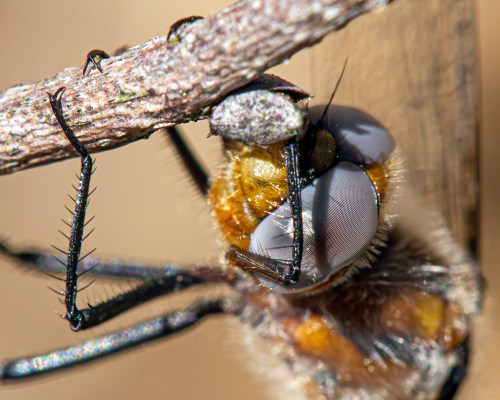
Uhler's Sundragon

Uhler's Sundragon

Uhler's Sundragon

© Michael Q. Powell. All rights reserved.

Read Full Post »
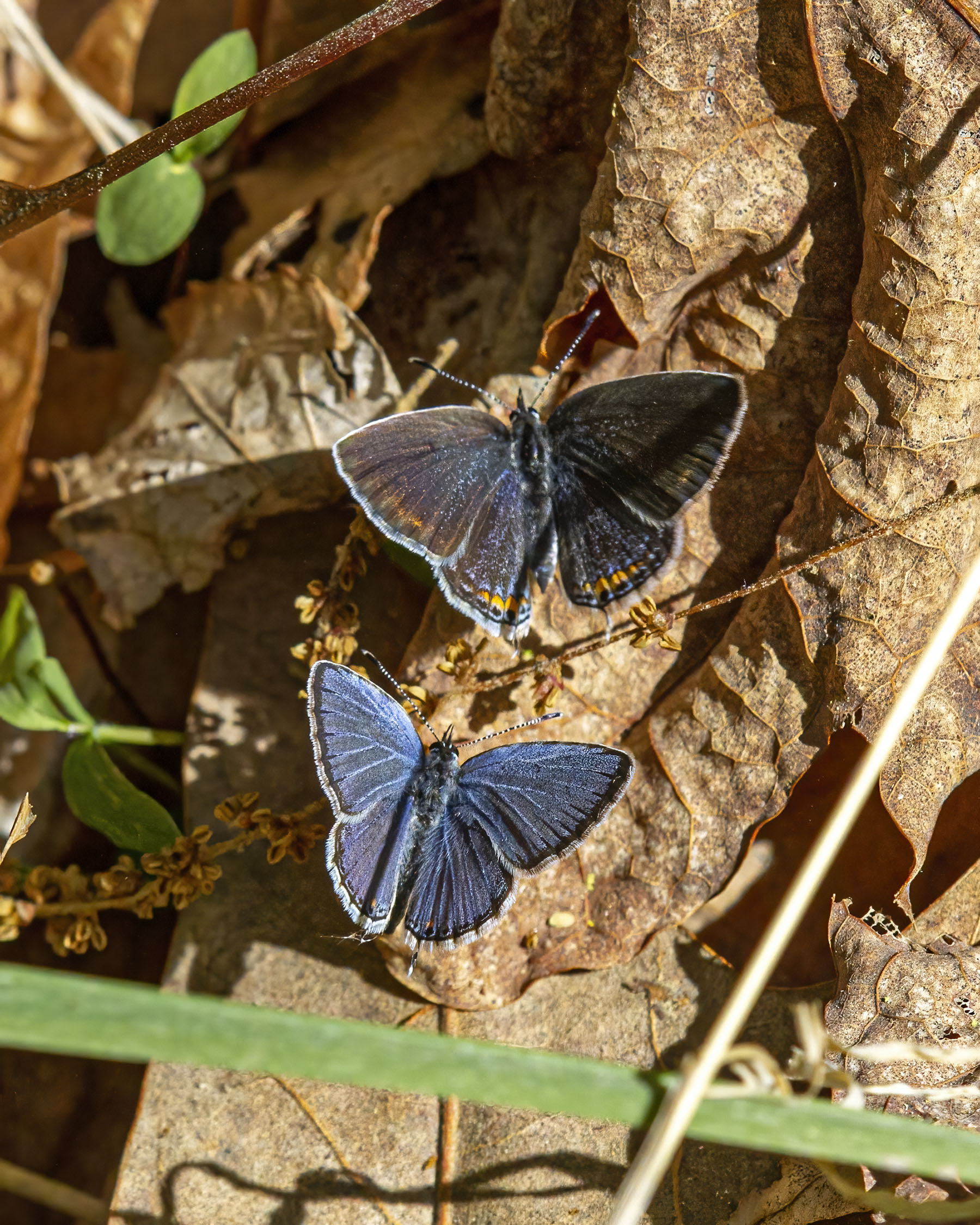
As I was exploring the edge of the same small pond where I photographed the newt featured in yesterday’s blog posting, I spotted my first damselfly of the season. Damselflies and dragonflies both belong to the order of flying insects known as Odonata. Damselflies tend to be smaller and slimmer that dragonflies and most damselflies hold their wings above their bodies when at rest, unlike dragonflies that perch with wings extended.

Identification of this damselfly was somewhat difficult for me. On the one hand, I saw the broken shoulder stripe that looks like an exclamation point, which suggests that this is a Fragile Forktail damselfly (Ischnura posita). On the other hand, my identification guide states that there is no blue at the tip of the abdomen (the “tail”) of the Fragile Forktail, making me think it might be an Eastern Forktail.

I posted the photo to a Facebook forum called Virginia Odonata and one of the experts there made the following comment, “This is quite an unusual Forktail. Easterns rarely have the split shoulder stripe, but I am still inclined toward Fragile even though the amount of blue on S9 is unusual.”  For your information, naturalists divide the abdomen of a dragonfly into ten segments and you start counting from the thorax area (the upper body), so S9 is the penultimate segment.

When it comes to identifying birds and insects, I have grown accustomed to living with some degree of uncertainty. Even experts will sometimes disagree, particularly if there is only a photo from a single angle, which was the case with this damselfly.

For me, the precision of my identification is not critically important—I can enjoy the beauty of this little damselfly without knowing its name. For the second day in a row, I am reminded of Shakespeare, who famously wrote in Romeo and Juliet, “What’s in a name? That which we call a rose, by any other name would smell as sweet.”


Fragile Forktail

© Michael Q. Powell. All rights reserved.


Read Full Post »

Yesterday was an unusually warm spring day, with temperatures soaring to 82 degrees (28 C). I suspected that I might find some early season dragonflies and I was right. Last week I saw my first dragonfly of 2023, but it does not really count for me, because I was not able to get a photograph of it.

My first “official” dragonfly of 2023 turned out to be an uncommon one, a Selys’s Sundragon (Helocordulia selysii). According to the Maryland Biodiversity Project, “Selys’s Sundragon is an uncommon, early-season corduliid which breeds in small streams in wooded areas through much of the southeast.” Corduliidae, also known as the emeralds, emerald dragonflies, or green-eyed skimmers, is the family of dragonflies to which the Selys’s Sundragons belong.

As far as I can recall, I have seen this species only twice in the past, both times in 2021. Check my 16 April 2021 blog posting entitled Selys’s Sundragon Dragonfly for details about my first encounter, including some photos that compare the Selys’s Sundragon with the very similar-looking Uhler’s Sundragon.

As many of you know, dragonflies are my favorite subjects to photograph during the warmer months. There is something almost magical about this beautiful aerial acrobats that inspires me. I love the challenge of spotting and photographing these tiny creatures—the Selys’s Sundragon in these photos, for example, is only about 1.7 inches (43 mm) in length.

During the summer, many common dragonfly species can be seen in a variety of habitats, but the early season dragonflies tend to be habitat specialists and have very brief flight season, often less than a month. For that reason, I usually try to go out with my camera as often as I can during the month of April.

Selys's Sundragon

Selys's Sundragon

© Michael Q. Powell. All rights reserved.

Read Full Post »

Raindrops were glistening in the sunlight after an April shower on Saturday, enhancing the beauty of these red tulips in the garden of my dear friend and photography mentor Cindy Dyer.

One of my favorite movies when I was growing up was “The Sound of Music” and I can still remember the words of many of the songs from the movie. In one delightful scene, Julie Andrews tells the children that when she is unhappy, she tries to think of nice things and begins a song with the words, “raindrops on roses and whiskers on kittens…these are a few of my favorite things.”

Raindrops seem almost magical, whether they are on roses, on tulips, or on any other vegetation. If you are not familiar with the song “My Favorite Things,” here is a link to a YouTube clip of that wonderful scene from “The Sound of Music.”

tulip

tulip

tulip

© Michael Q. Powell. All rights reserved.


Read Full Post »

At this time of the year I am drawn to any insects that I see flying about and I have found myself chasing after even small flies. There’s usually a period of readjustment as I switch from searching for subjects that are far away to looking for tiny subjects that are often only an arm’s length away from me. Most of the time I have to rely upon movement to spot these insects—only occasionally am I able to spot a perched insect.

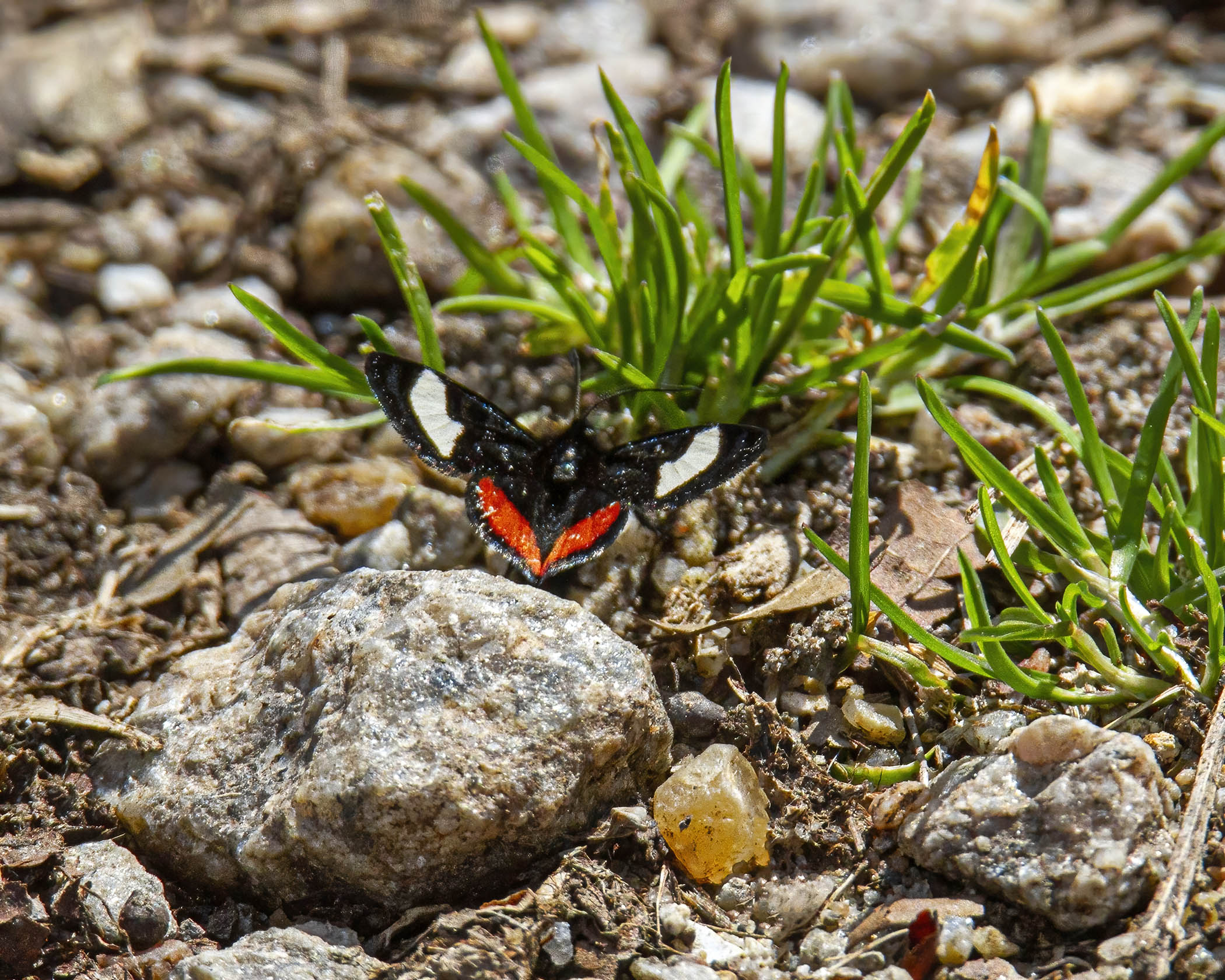
As I noted in yesterday’s blog posting, I finally spotted my first two butterflies of the spring. I thought I had spotted a third butterfly last Wednesday at Occoquan Bay National Wildlife Refuge when this colorful little insect flew in front of me. I am pretty familiar with the butterflies in my area, but did not recognize this one.

After doing some research, I have concluded that this is probably a Grapevine Epimenis Moth (Psychomorpha epimenis). According to the Missouri Department of Conservation, “The grapevine epimenis flies during daytime and would seem too colorful to be a moth, but a moth it is. A member of the noctuid family, its many drab, grayish relatives include dagger, owlet, armyworm, cutworm, and earworm moths.”

Grapevine Epimenis Moth

© Michael Q. Powell. All rights reserved.

Read Full Post »

Flowers are starting to bloom in the garden of my dear friend and fellow photographer Cindy Dyer. Yesterday I photographed several varieties of tulips and some cute little grape hyacinths.

As many of you know, I do not have my own garden. However, my photography mentor Cindy Dyer lives nearby and she has amazing gardens in her front, side, and back yards. She generally plants flowers that she knows are photogenic and I know that during the growing season that there will almost always be something to photograph.

Earlier this spring, I was able to photograph a few crocuses and a tiny red tulip, but now a whole lot more flowers are starting to appear. The multi-colored tulip in the first photo, I believe, is a variety known as the Lady Jane tulip (Tulipa clusiana var. ‘Lady Jane’). In the past, this tulip stood much taller—this one was growing close to the ground.

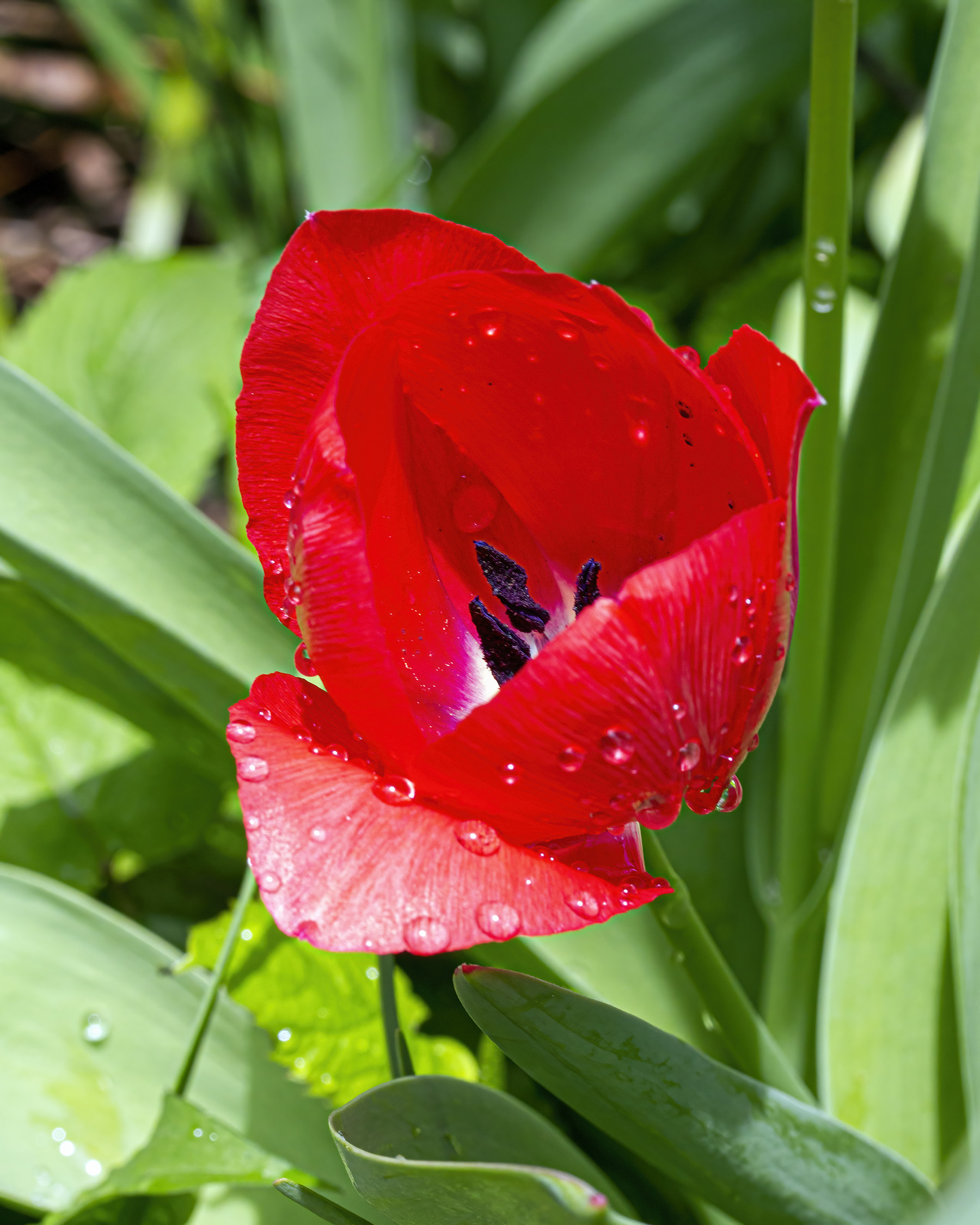
The red tulip in the second photo is a more traditional variety. I deliberately set my camera to have a shallow depth of field to blur out the background that at this time of the year is somewhat patchy and cluttered. As I processed the photos on my computer I noticed that I had inadvertently captured a shot of my first insect of the season, what Cindy likes to call a “bonus bug.” The weather yesterday was cloudy, so I did not have to worry about harsh shadows, which meant that the colors seemed especially vibrant and saturated.

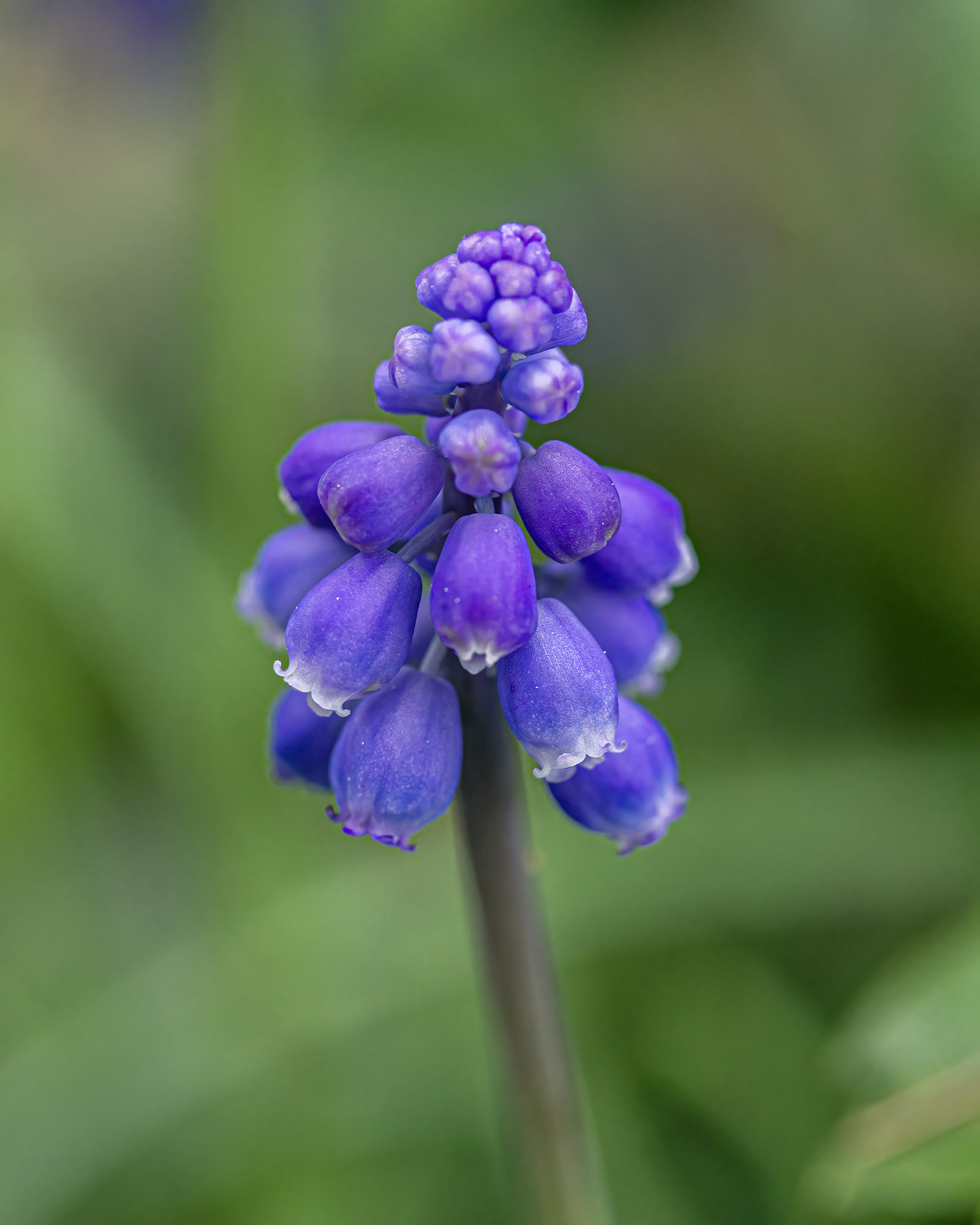
The final photo shows a tiny grape hyacinth (g. Muscari), one of many that have popped up in Cindy’s garden. These colorful little flowers grow really close to the ground, so I was sprawled out a bit to get this low-angle shot that isolated the flower from the background.


Lady Jane tulip

tulip

grape hyacinth

© Michael Q. Powell. All rights reserved.


Read Full Post »
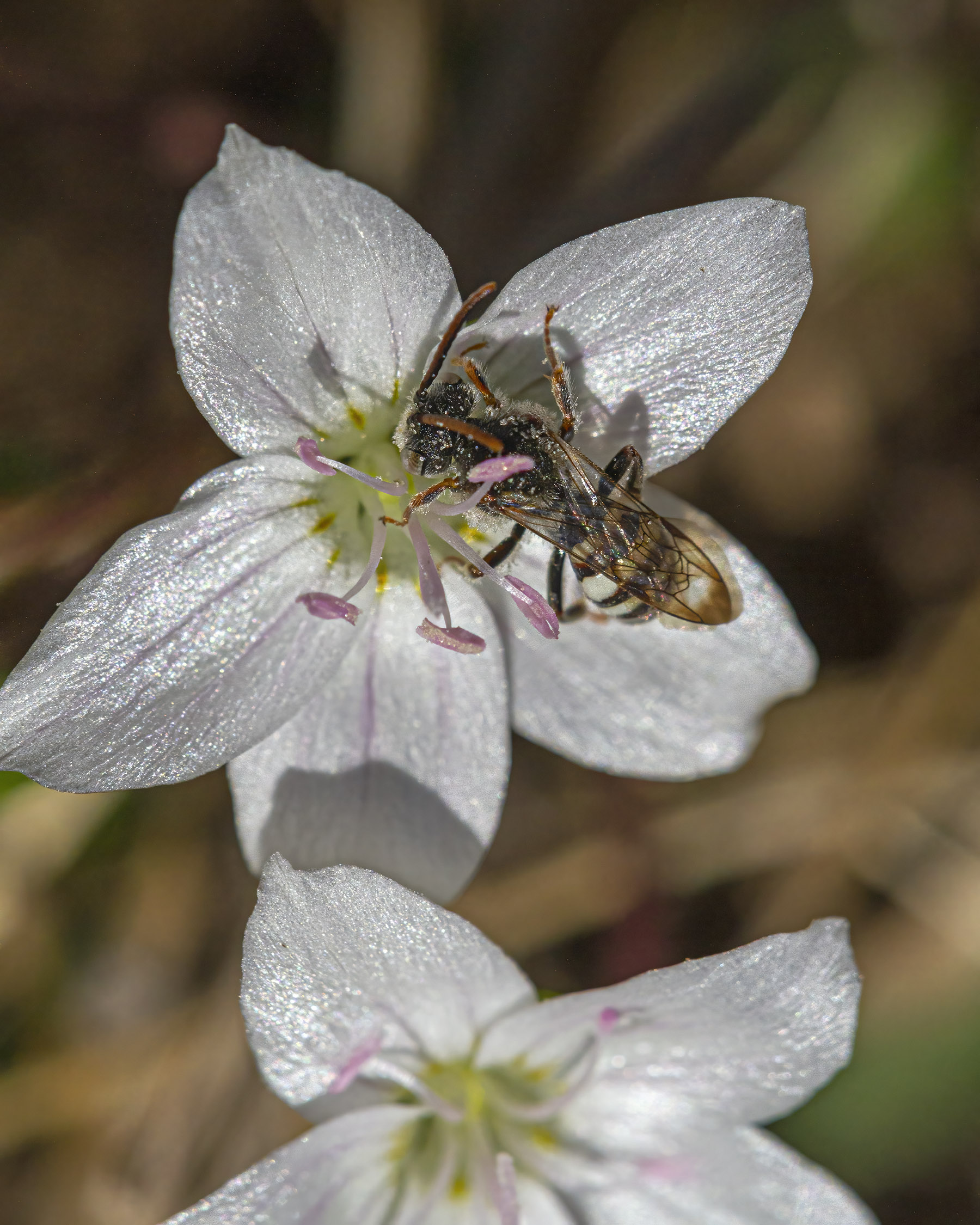
Spring is almost here. This past weekend I spotted the first spring flowers—blooming in the garden of my friend and fellow photographer Cindy Dyer. Longtime readers of this blog are well aware that I am not a gardener, but often visit the Cindy’s garden during the flower season—Cindy deliberately plants flowers that are fun to photograph.

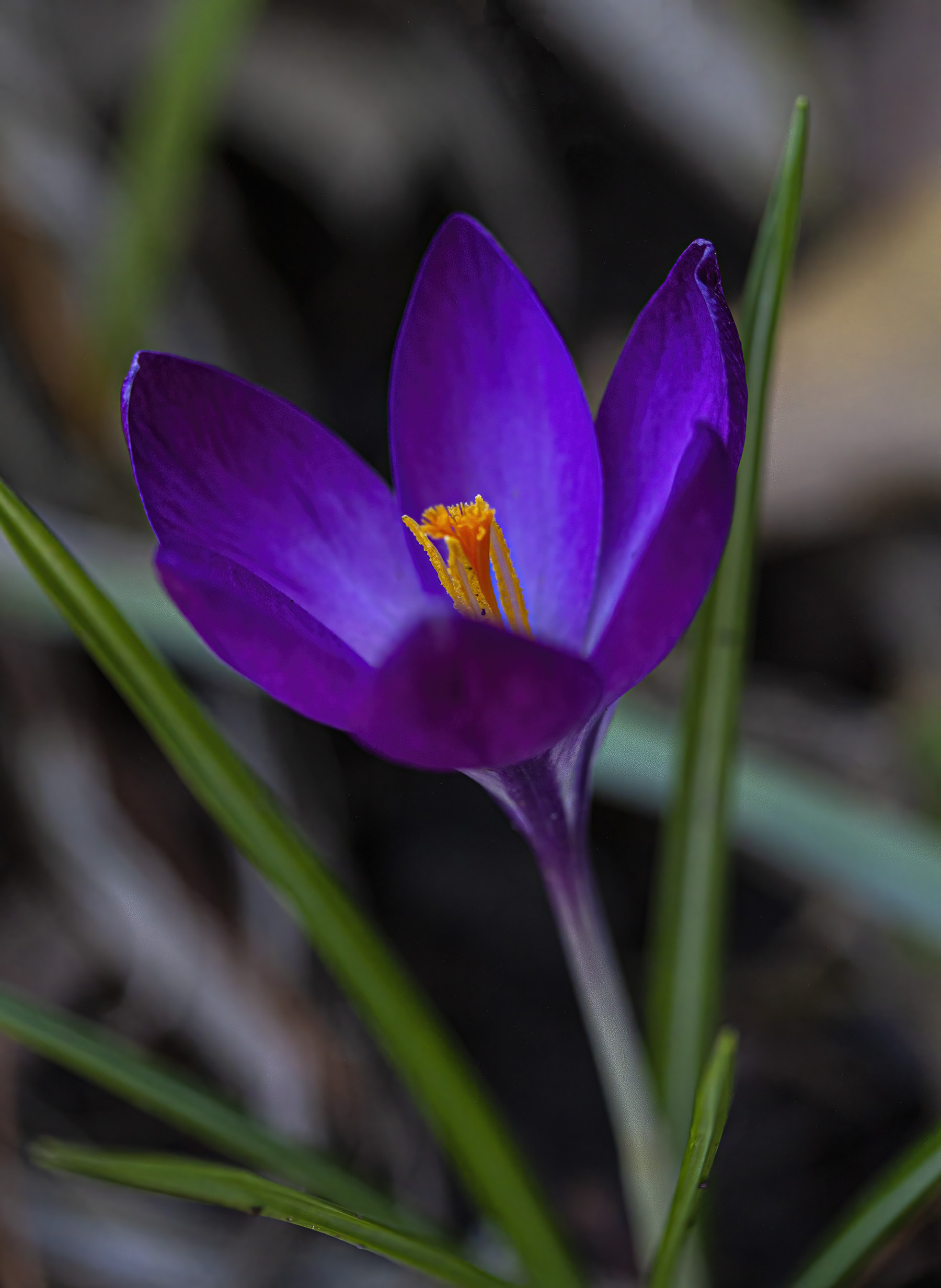
The first crocuses that I spotted were some purplish ones that in Cindy’s front garden. These are the type of crocuses that I encounter most frequently and I associate them with the arrival of spring. When I posted a photo of one on Facebook, Cindy alerted me to the fact that several yellow ones were blooming in her backyard garden.

I don’t recall ever having seem yellow crocuses before, so I was delighted to see them. I was really awkward trying to get a shot of them, so I resorted to getting a relatively close-up shot with my 60mm macro lens.

I have also noticed clusters of cheery yellow daffodils in bloom throughout my neighborhood. Our weather is still variable, but spring is on the way. On a side note, next Sunday we begin Daylight Savings Time, yet another sign of the changing seasons. If I am not mistaken, Europeans do not change their clocks until the last Sunday in March, which is 26 March in 2023.

crocus

crocus

© Michael Q. Powell. All rights reserved.

Read Full Post »

As I was walking along on one of the trails at Occoquan Bay National Wildlife Refuge last Friday, I noticed a large spider coming in my direction at a pretty good clip. I gave the spider plenty of space, but managed to capture this image of what I believe is a Wolf Spider with my long telephoto lens.

Wolf spiders belong to the family Lycosidae and are among the most common spider species found around the world. According to an article entitled “Wolf Spider: Friend or Foe?” wolf spiders “are keen hunters that chase or pounce on prey like wolves rather than spin a web and wait for a meal. Unlike wolves hunting as packs, wolf spiders generally live and hunt alone. Hunting occurs both day and night.”

wolf spider

© Michael Q. Powell. All rights reserved.

Read Full Post »

I was thrilled to spot this Blue-faced Meadowhawk dragonfly (Sympetrum ambiguum), one of my favorite species, this past Wednesday at Occoquan Bay National Wildlife Refuge. The dragonfly was cooperative and let me get pretty close with my Tamron 180mm macro lens and capture some of the amazing details of this colorful dragonfly, like its tiny feet and the little hairs on its legs.

I personally find the combination of the bright red body and the blue eyes to be stunningly irresistible and I look forward to spotting this species each autumn. If you click on either of the two images, you will be able to see some of the individual facets that make up the compound eyes. I have always wondered what it would be like to see the world through the eyes of a dragonfly.

I really like the description of a dragonfly’s sight that I found in a fascinating article by a writer called GrrlScientist that I encourage you to read. She wrote,

“Each compound eye is comprised of several thousand elements known as facets or ommatidia. These ommatidia contain light sensitive opsin proteins, thereby functioning as the visual sensing element in the compound eye. But unlike humans, day-flying dragonfly species have four or five different opsins, allowing them to see colors that are beyond human visual capabilities, such as ultraviolet (UV) light. Together, these thousands of ommatidia produce a mosaic of “pictures” but how this visual mosaic is integrated in the insect brain is still not known.”

I had to search hard to find this dragonfly and it was the only one of its species that I saw that day. At this time of the year few dragonflies are still flying. However, I am not ready to call it quits for the dragonfly season, though the end is drawing near.


Blue-faced Meadowhawk

Blue-faced Meadowhawk

© Michael Q. Powell. All rights reserved.


Read Full Post »

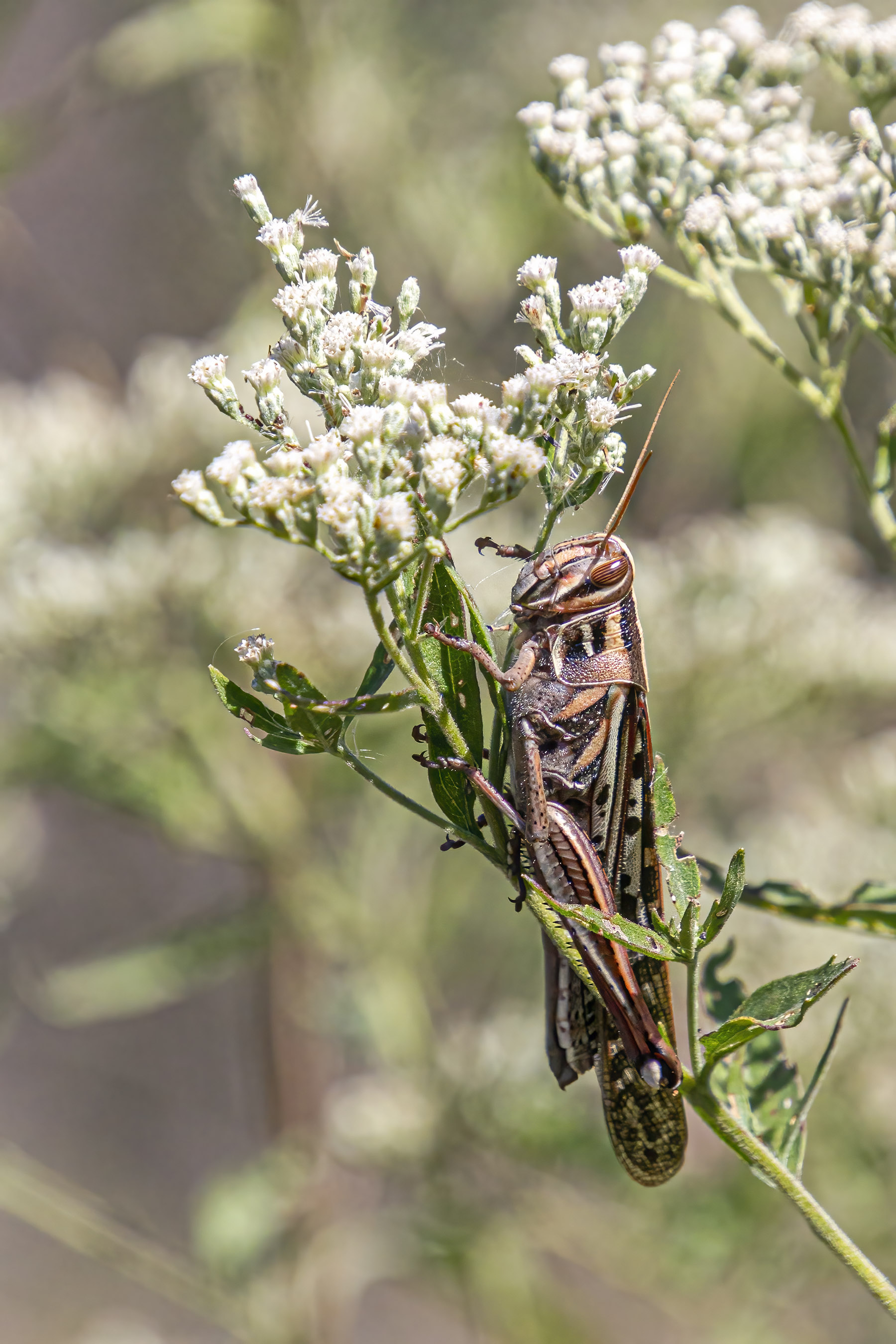
Quite often when I am walking through grassy fields, the ground in front of me seems to explode with grasshoppers arcing through the air in all directions. Last week during a visit to Occoquan Bay National Wildlife Refuge, I managed to capture images of two of them.

I am not certain of the species of the formidable looking grasshopper in the first photo. When I looked through sources on line, however, it looked most like an American Bird Grasshopper (Schistocerca americana). Grasshoppers like this always make me think of medieval knights, suited up in protective armor.

The insect in the second image is almost certainly a katydid, and not a grasshopper—the extremely long antennae are often an easy identification feature. I love the brilliant green of the katydid’s body and its matching green eyes. There are lots of different kinds of katydids and I do not know to which species “my” katydid belongs.

We have had a lot of rainy weather recently and temperatures have noticeably dropped. Today’s forecast calls for intermittent rain and a high temperature of only 50 degrees (10 degrees C). I wonder if this cool, rainy period will mark the end of the season for some of the insects that I have been photographing during the past few months.

grasshopper

katydid

© Michael Q. Powell. All rights reserved.

Read Full Post »

I think that the small spider in the foreground may be a male Black and Yellow garden spider (Argiope aurantia) and the larger one in the background a female of the same species. The body length of male Argiope aurantia spiders ranges from 0.20–0.35 inches (5–9 mm) and for females ranges from 0.75–1.10 inches (19–28 mm), according to Wikipedia.

A male Argiope spider communicates with a potential mate by plucking and vibrating the female’s web, according to the same Wikipedia article, which may explain what was happening when I captured this image on 13 September at Occoquan Bay National Wildlife Refuge.

I saw more than a dozen of the large female spiders at the wildlife refuge during my most recent visit there. Many of them had prey wrapped up in web material, stashed for future consumption. One of them, however, was busily consuming a ladybug, as shown in the second image below.


Argiope aurantia

spider and ladybug

© Michael Q. Powell. All rights reserved.


Read Full Post »

Black Saddlebags dragonflies (Tramea lacerata) are one of a dozen or so dragonfly species in North America that migrate. Not surprisingly they are strong fliers and most of the time when I see one, it is flying high overhead—they do not seem to perch very often.The dark patches on their hind wings, which someone thought resembled saddlebags, are so distinctive that it is pretty easy to identify a Black Saddlebags when I see one in the sky.

As I was exploring Occoquan Bay National Wildlife Refuge on Tuesday, I spotted a dragonfly as it zoomed by me and watched it land low in the vegetation. I moved forward as stealthily as I could and was delighted to see that the perching dragonfly was a Black Saddlebags. The background was quite cluttered, but I managed to find a clear visual path to the dragonfly and was delighted to capture this detailed image—I encourage you to click on the photo to see the beautiful markings on the abdomen and the distinctive “saddlebags.”

If you want to learn more about this particular species, I recommend an article from the University of Wisconsin at Milwaukee entitled “Black Saddlebags Dragonfly (Family Libellulidae).” Among other things, you will learn that for Black Saddlebags dragonflies, “Mating is brief if done aerially [the ultimate multitasking] and only slightly longer if the pair is perched.”

Black Saddlebags

© Michael Q. Powell. All rights reserved.

Read Full Post »
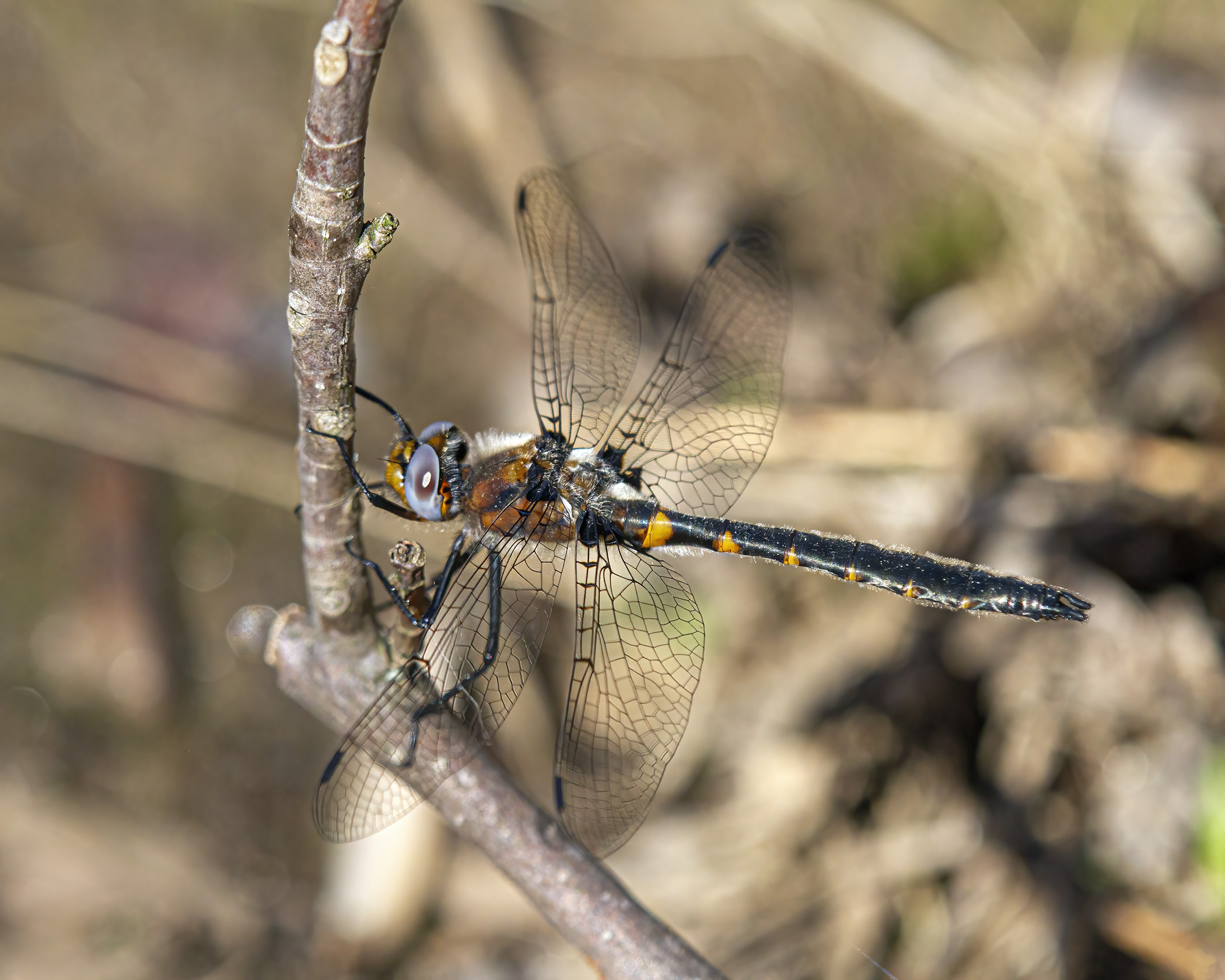
As I approached a patch of thistle in bloom on Tuesday, I was looking carefully to see if there were any butterflies feeding on the flowers. Suddenly I noticed a flash of bright red and realized immediately that it was a Hummingbird Clearwing Moth (Hemaris thysbe).

Hummingbird Clearwing moths, which actually do resemble hummingbirds as they dart among the flowers, hovering periodically to such nectar, are not exactly rare where I live, but I tend to see them only a few times a year. Fortunately I reacted quickly enough to capture this image, because the moth flew out of sight after it had finished feeding on this flower.

For shots like this, the wing position is really important and I was thrilled that I was able to capture the wings fully extended, which highlights the transparent portions of the wing responsible the common name of this species. The details of the moth and the thistle are pretty sharp and the background is blurred enough that it is not a distraction—I like this shot a lot.

Hummingbird Clearwing Moth

© Michael Q. Powell. All rights reserved.


Read Full Post »

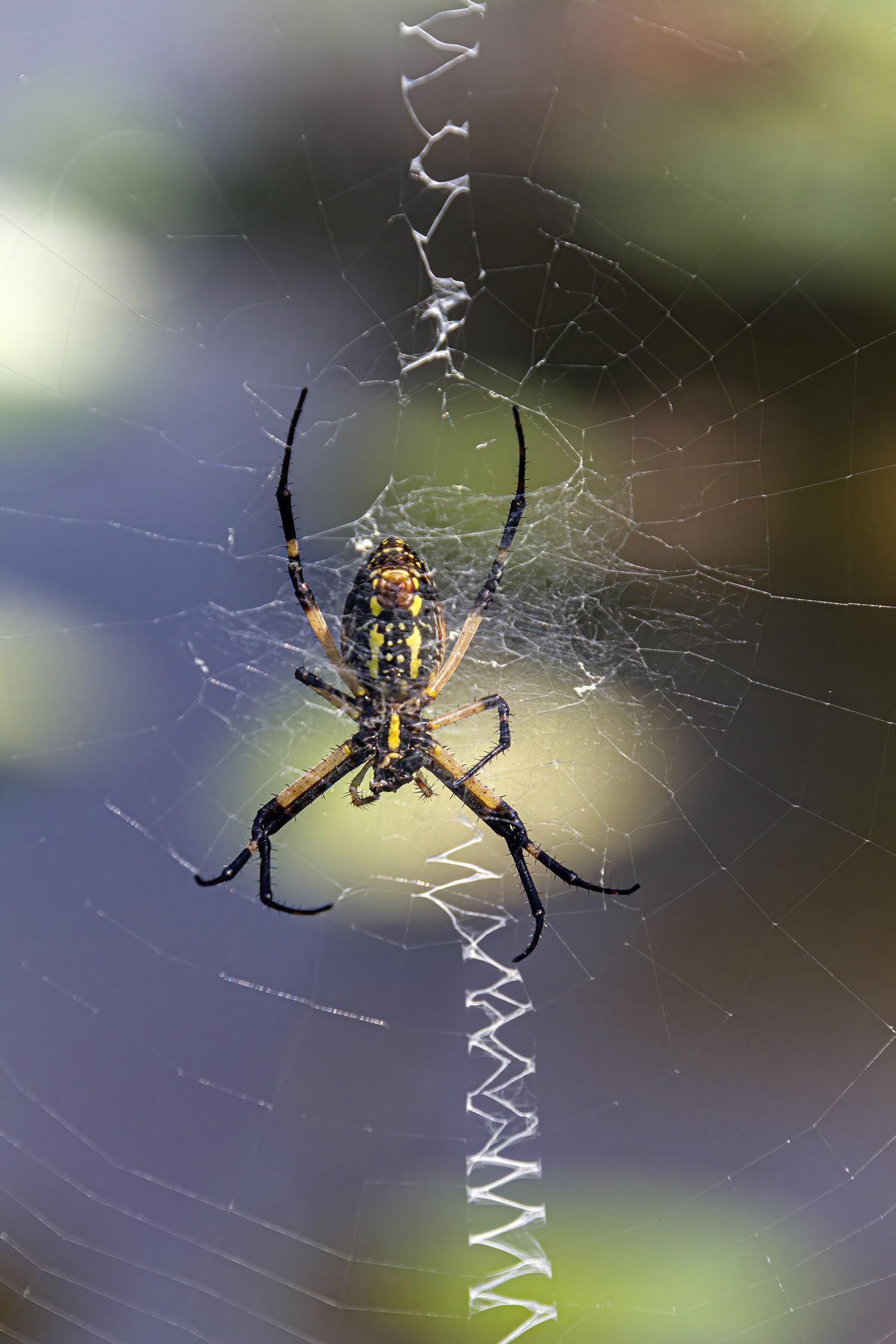
During my recent visits to Jackson Miles Abbott Wetland Refuge, I have noticed the reappearance of Black and Yellow Garden Orbweaver Spiders (Argiope aurantia). During the late summer and early fall, these relatively large spiders can be seen in the vegetation surrounding the pond and in the adjacent fields.

One of the coolest things about this spider is the distinctive zig-zag pattern, known technically as a stabilimentum that the spider uses for the central part of its web. According to Wikipedia, the purpose of the zig-zags is disputed. “It is possible that it acts as camouflage for the spider lurking in the web’s center, but it may also attract insect prey, or even warn birds of the presence of the otherwise difficult-to-see web.”

Argiope aurantia

© Michael Q. Powell. All rights reserved.

Read Full Post »

I was not sure of the species of these damselflies when they flew by me in tandem last week at Green Spring Gardens, but I managed to track them visually until they landed on some floating vegetation. As some of you may recall, when damselflies mate, their bodies form a shape that resembles a sidewards heart, a position sometimes referred to as the “wheel” position. When mating is completed, the damselfly couples fly off together with the male still grasping the female by the back of her head and the male stays attached as the female deposits her eggs—that may have been why they landed on this vegetation.

When I returned home and was able to examine the damselflies closely, I was delighted to see that they were Dusky Dancers (Argia translata), a species that I rarely see. If you click on the photos, you can get a closer look at the stunning eyes and beautiful markings of these damselflies. I am particularly drawn to the pattern of thin blue rings around the abdomen of the male, the damselfly on the left that is perched almost vertically.

Dusky Dancer

© Michael Q. Powell. All rights reserved.

Read Full Post »
I love the way that this acrobatic bee was able to position its antennae for optimized access to the nectar in this bee balm flower last Friday at Green Spring Gardens. The bee was so focused on the flower that it paid me no attention, allowing me to get really close to it to capture this image.

I believe that the bee is an Eastern Carpenter Bee (Xylocopa virginica). As for the flower, there was quite a variety of flowers in different colors that looked like this one. I think that it is a type of bee balm (g. Monarda), though I really do not know flowers very well.

bee

© Michael Q. Powell. All rights reserved.

Read Full Post »
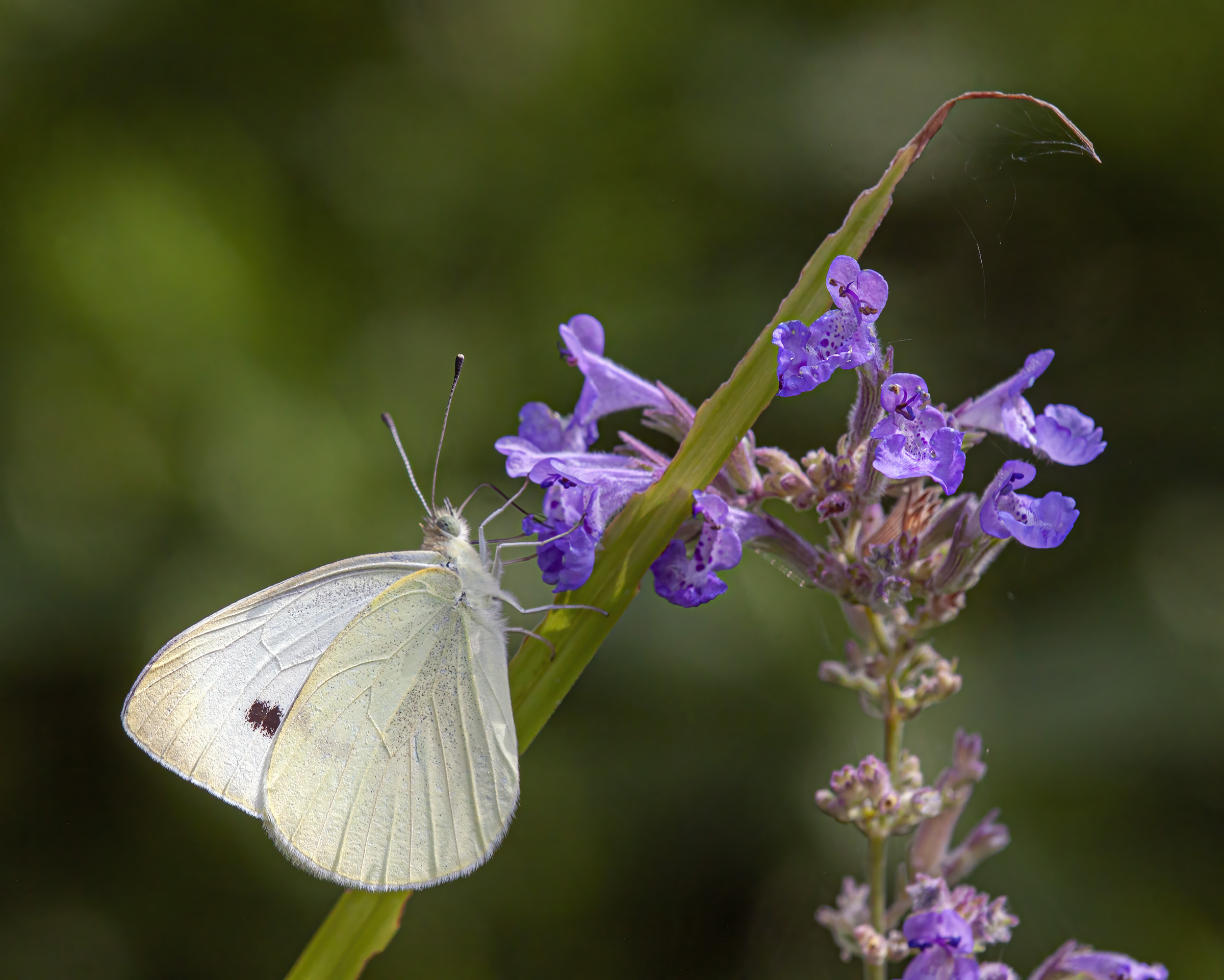
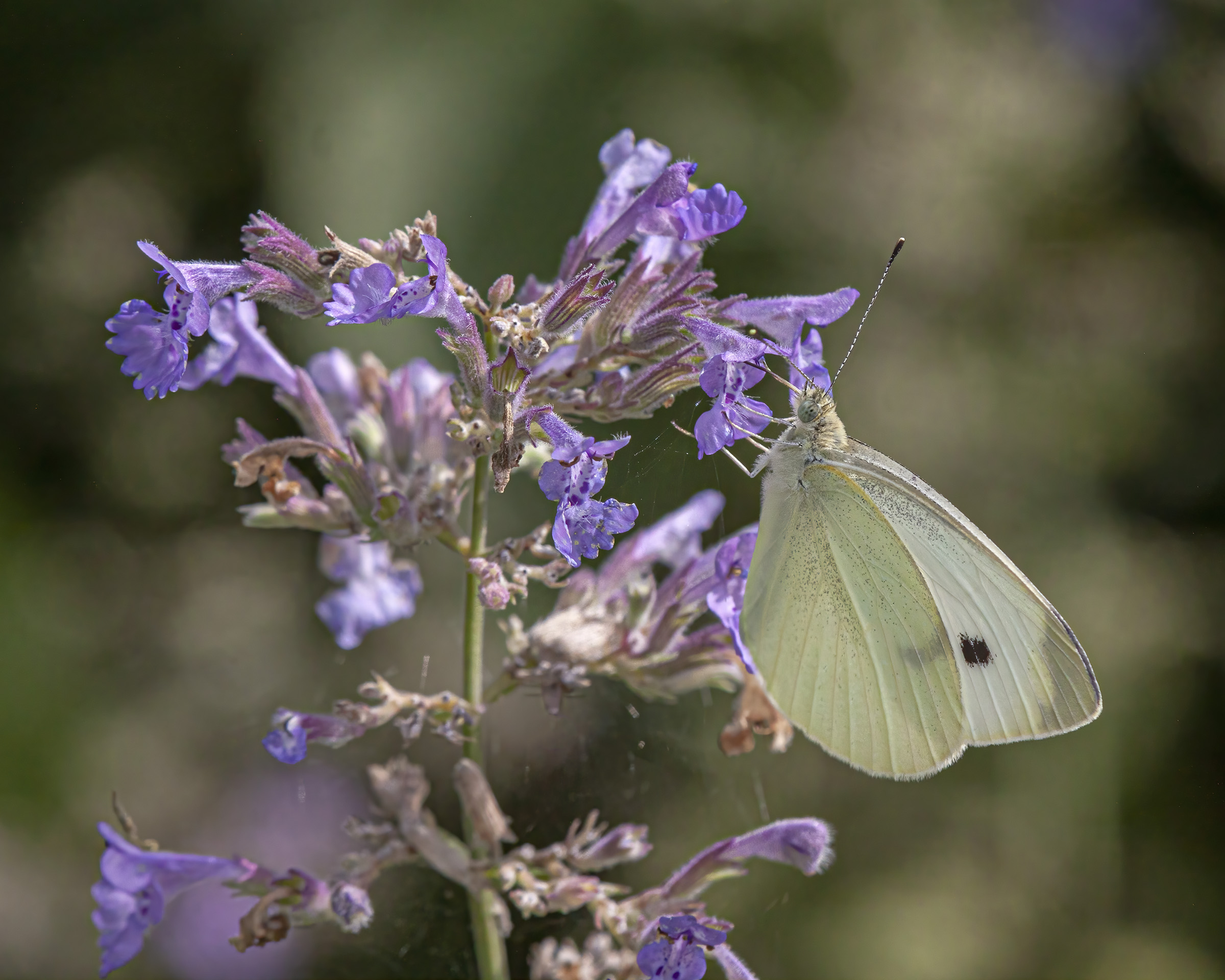
I love the simple beauty of Cabbage White butterflies (Pieris rapae). They are mostly white with a few touches of black, but if you get a close-up look, you discover that they have stunningly speckled green eyes. Cabbage Whites, in my experience, tend to be pretty skittish and do not stay in one place for very long. If you were to track my movements, you would probably discover that I spend a good amount of time chasing after these little beauties.

Last Friday I was able to capture these images of a Cabbage White butterfly as it flitted about some pretty purple flowers at Green Spring Gardens. The first shot is my clear favorite of the three thanks to its saturated colors, out-of-focus background, and interesting composition. The other two images, however, are interesting in their own ways, showing a more dynamic view of the butterfly at work.

I am not a gardener, so I tend to view this butterfly almost exclusively from the perspective of its beauty—the same is true with invasive species of animals and insects. I fully recognize that this butterfly is considered to be an agricultural pest and can cause damage to crops, but that, in my eyes, does not diminish its beauty.

Cabbage White

Cabbage White

Cabbage White

© Michael Q. Powell. All rights reserved.


Read Full Post »

I never know what will catch my eye when my camera is in my hand. On Monday, for example, I spotted these tiny, colorful flowers while hunting for dragonflies at Occoquan Regional Park. The blue one is a type of blue-eyed grass (g. Sisyrinchium), but I can’t identify the pretty pink one.

I am not a gardener, so I never learned to differentiate between flowers and weeds—they are all flowers to me. I find the names of plant species to be confusing at times. Blue-eyed grass, for example, is not actually a grass, but a perennial related to the iris, and it comes in multiple colors. Yikes!

The good news is that my lack of knowledge about plants does not keep me from enjoying fully the beauty of these tiny flowers. To borrow a line from Shakespeare, “What’s in a name? That which we call a rose, by any other name would smell as sweet.”

If you recognize the pink flower and can identify it, please let me know what it is. Ten years ago I could not identify a single dragonfly, but over time I have learned a lot about them. There is hope, therefore, that I will similarly expand my knowledge of flowers as I encounter and photograph them.

UPDATE: Thanks to Steve Gingold, I now know that the pink flower is a Deptford Pink (Dianthus armeria), a plant species native to Europe that is naturalized in much of North America. Be sure to check out Steve’s blog for lots of wonderful nature images and a wealth of information about plants, insects, and other aspects of nature, especially in Western New England, where he lives.


pink flower

blue-eyed grass

pink flower

© Michael Q. Powell. All rights reserved.


Read Full Post »

I was thrilled to spot this cool-looking Six-spotted Fishing Spider (Dolomedes triton) yesterday at Green Spring Gardens, a county-run historic garden in Alexandria, Virginia, not far from where I live. These spiders usually keep several of their legs on the surface of the water and detect the vibrations of potential prey and them scamper across the water to capture their targets.

Initially the spider had its legs anchored on the edge of a colorful lily pad a short distance from the edge of a small pond, as shown in the first photo. When I got a little too close, the spider moved a short distance away, as shown in the second photo, but eventually it returned to its original spot.

Fishing spiders like this one are quite large—a female can grow to be about 2.4 inches (60 mm) in length, including her legs, while the male is somewhat smaller. According to Wikipedia, Six-spotted Fishing Spiders hunt during the day and can wait can wait patiently for hours until stimulated by prey. Potential prey include both aquatic insects and terrestrial insects that have fallen into the water, tadpoles, frogs, and small fish. Amazingly, these spiders are capable of capturing fish up to five times their body size, using venom to immobilize and kill the prey.

Six-spotted Fishing Spider

Six-spotted Fishing Spider

© Michael Q. Powell. All rights reserved.

Read Full Post »
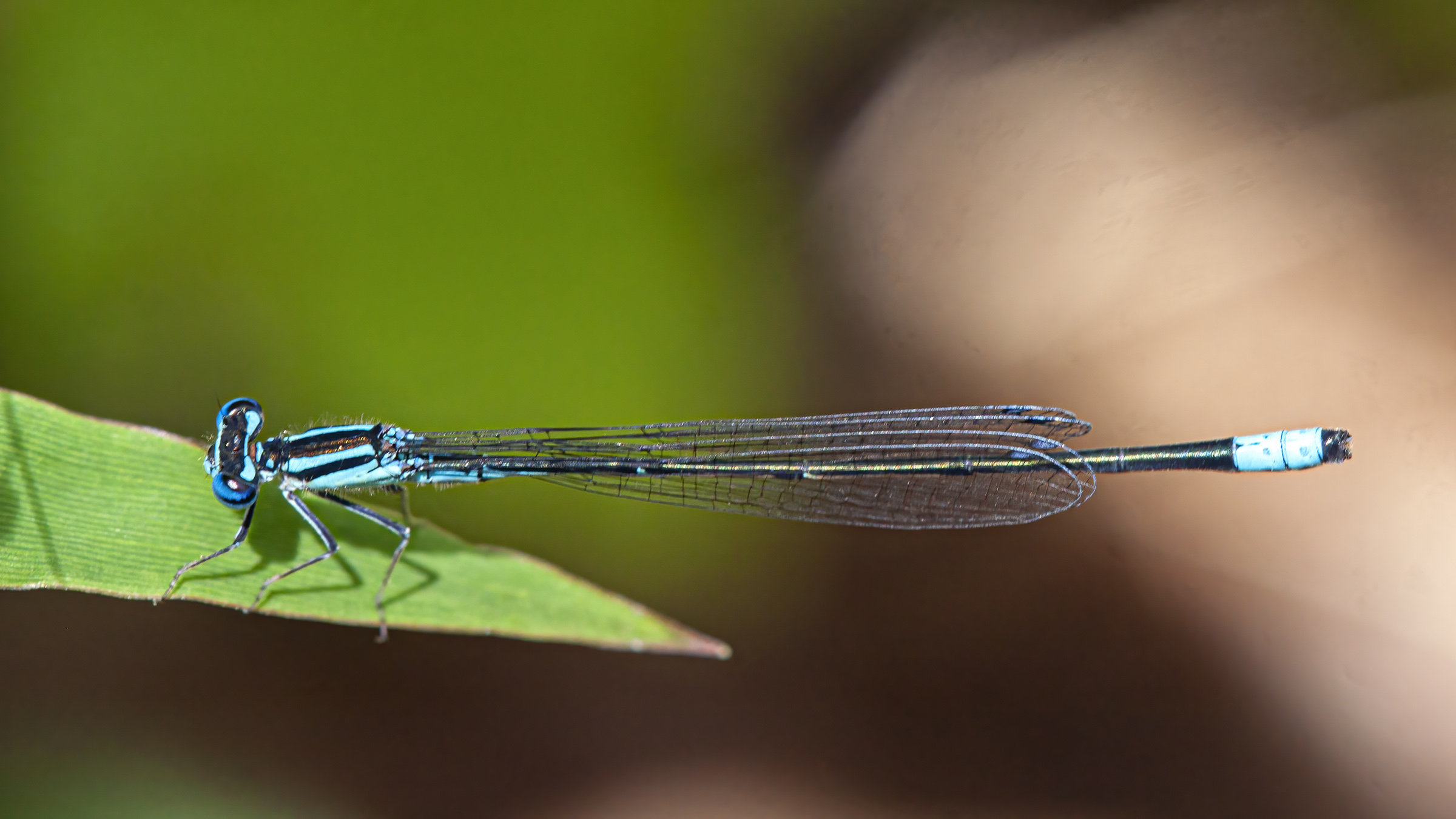
Last week I was excited to capture this image of a beautiful Turquoise Bluet damselfly (Enallagma divagans) as I explored the edge of a small pond in Prince William County, Virginia. The damselfly was conducting short patrols over the water and then would perch on the vegetation sticking out of the water.

I got low to the ground and squatted as close to the water’s edge as I dared, doing my best to avoid falling into the water as I leaned forward. I managed to stay dry as I waited patiently. Eventually the Turquoise Bluet perched within range of my lens and I was able to capture a pretty detailed image of the little bluet, which was about 1.4 inches (35 mm) in length.

Turquoise Bluet

© Michael Q. Powell. All rights reserved.

Read Full Post »
When damselflies mate, it is often a very conspicuous event, easily recognized by the heart-shaped “wheel” formation of the mating couple. The male clasps the female by the back of her head and she curls her abdomen to pick up sperm from secondary genitalia at the base of the male’s abdomen. That’s about as graphic as I dare go in describing the process.

Yesterday I spotted a pair of mating Ebony Jewelwing damselflies (Calopteryx maculata) as I was exploring a stream in Fairfax County, Virginia, the county in which I live. Ebony Jewelwings are immediately identifiable, because they are the only damselflies in our area with dark wings. They can be found at a wide variety of running waters, especially at shaded forest streams, like the one where I found this couple.

Male Ebony Jewelwings have wings that are all black, while females have dark brown wings with conspicuous white pseudostigmas—the male is on the right in this photos. The body of the males is a metallic green with copper highlights—in certain lights, their bodies may look distinctly blue. Females seem to have a bit more color variation, though it is hard to tell their true color because of the reflected light from their shiny bodies.

Ebony Jewelwing

© Michael Q. Powell. All rights reserved.

Read Full Post »

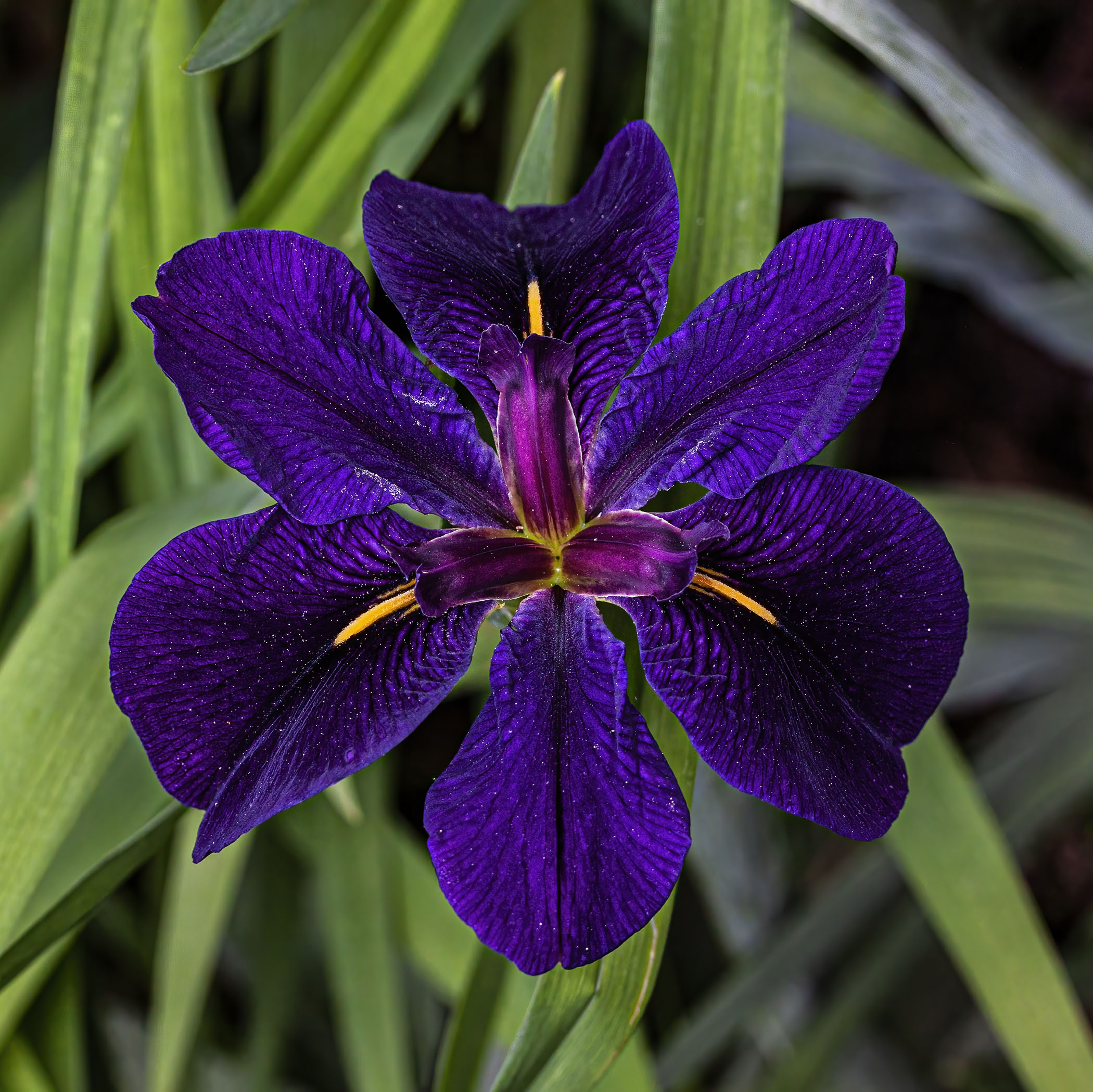
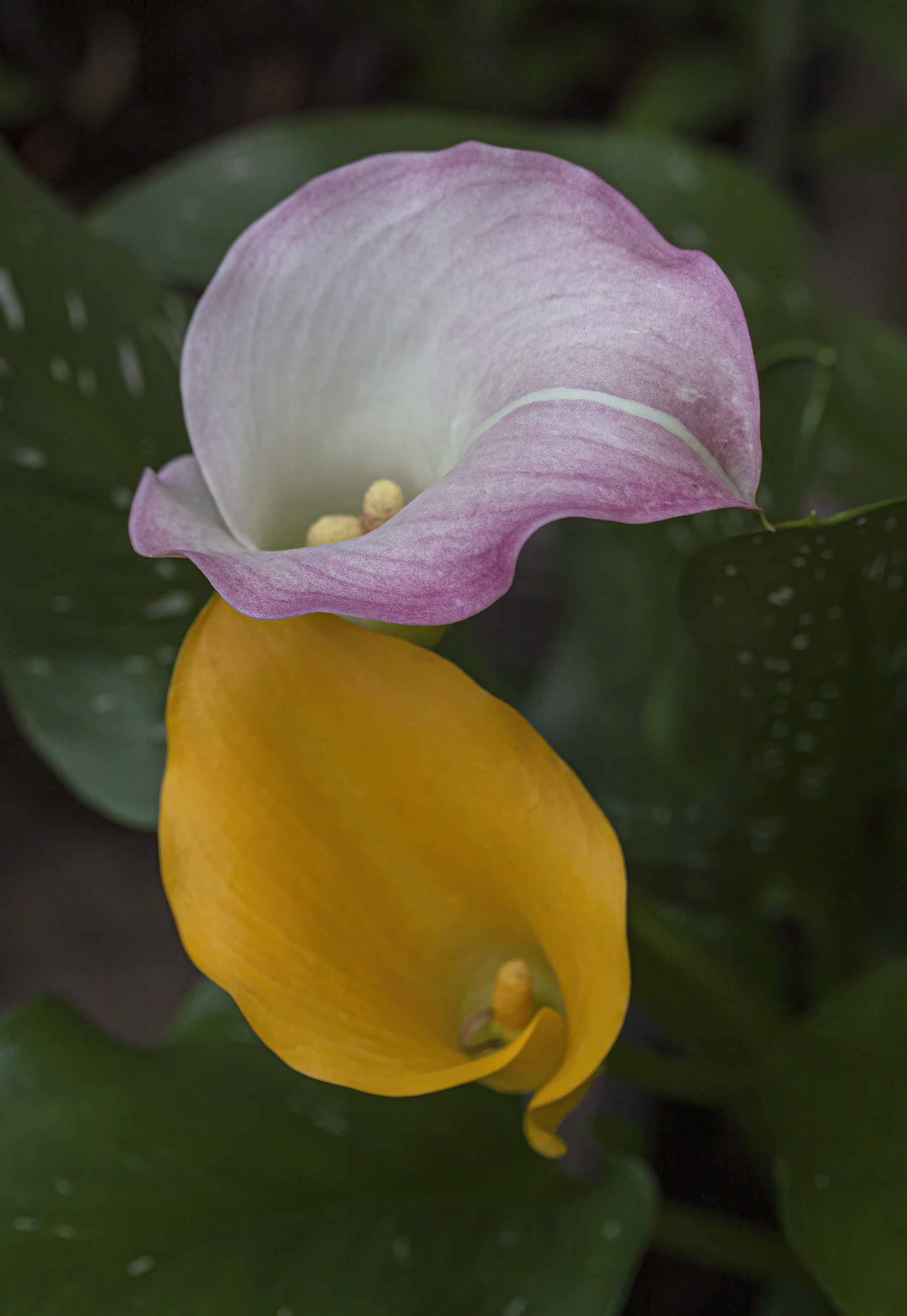
Many irises have come and gone this spring, but I was delighted to see that this stunning dark violet one was blooming yesterday in the garden of my neighbor and fellow photographer Cindy Dyer, a variant that she told me is a Louisiana iris ‘Black Gamecock.’ Cindy also has some gorgeous Calla Lilies blooming in a container on her front porch in a wide variety of colors.

Intermittent thunderstorms are in the forecast for most of today and I doubt that we will see the sun. My senses need the stimulation provided by bright colors, like those of these beautiful flowers in Cindy’s garden in late May.

iris

Calla Lily

Calla Lily

© Michael Q. Powell. All rights reserved.


Read Full Post »

It did not seem like there was much pollen inside of each little phlox flower, but bees were busily collecting it when I spotted several of them last Saturday at Meadowlark Botanical Gardens in Vienna, Virginia. I love the way that some bees, including honeybees, collect pollen in little pouches on their back legs. When the pickings are really good, I have seen those pouches, which technically are called corbiculae, so full and bulging that they seem ready to burst—that was not the case this early in the spring, when not very many flowers were in bloom.

I was pleasantly surprised when I managed to capture a bee in flight in the second photo below as it surveyed the phlox flowers and planned its next assault. My 180mm macro lens is notoriously slow to acquire focus, so I rarely try to use it to try to capture moving subjects. The lens also is so noisy when focusing that one of my friends calls it “The Grinder.” Nonetheless, my trusty Tamron lens is my constant companion during the warm months and it is the one I use most often for my insects and other macro shots.

bee and phlox

Bee and Phlox

© Michael Q. Powell. All rights reserved.


Read Full Post »

As we were photographing some Spring Snowflake flowers (Leucojum vernum) on Saturday at Meadowlark Botanical Gardens, my dear friend and photography mentor Cindy Dyer noticed what looked like a spider’s leg on the side of one of the flowers and asked me to go around to the other side of the flower to investigate.

Sharp-eyed Cindy was right—I spotted this tiny spider clinging to the side of the snowflake and was delighted that I was able to capture this image of it.

Leucojum vernum

© Michael Q. Powell. All rights reserved.

Read Full Post »

I love the rich color, velvet-like texture, and geometric shape of this beautiful little flower that I spotted yesterday at Meadowlark Botanical Gardens in Vienna, Virginia. I believe that this is a Red Trillium (Trillium erectum). According to Wikipedia, Red Trilliums are also known as wake robin, bethroot, and stinking benjamin.

I was curious about the name “stinking benjamin,” so I searched on-line and learned that Red Trilliums produce fetid or putrid odors purported to attract carrion fly and beetle pollinators. Some describe the odor as similar to that of a wet dog—I did not get close enough to verify personally the accuracy of this assertion.

Red Trillium

© Michael Q. Powell. All rights reserved.

Read Full Post »
Ashy Clubtail dragonflies (Phanogomphus lividus) like to perch on the ground, which makes them really difficult to spot. Fortunately I saw these two dragonflies land last Friday during separate encounters in Prince William County and was able to get close enough and low enough to photograph them. If I had not seen them move, I probably would not have been able to detect them.

Both dragonflies had really shiny wings, an indication that they had emerged fairly recently. Initially the wings are fragile when a dragonfly emerges and they are folded above its head. The dragonfly gradually pumps fluid through the veins of the wings and they progressively harden and pop open into the normal outstretched resting position. Sometimes, as you can see in the final photo, a dragonfly will temporarily hold its wings closed over its head in their former position.

Dragonfly metamorphosis is a fascinating phenomenon, a remarkable transformation of a water-dwelling larva into an incredible aerial acrobat. Several years ago I managed to witness the entire process with a Common Sanddragon dragonfly and documented the thirty-minute process in a blog posting entitled Metamorphosis of a dragonfly. Be sure to check out that posting to see photos of the different stages of the amazing transformation.

Ashy Clubtail

Ashy Clubtail

Ashy Clubtail

© Michael Q. Powell. All rights reserved.

Read Full Post »

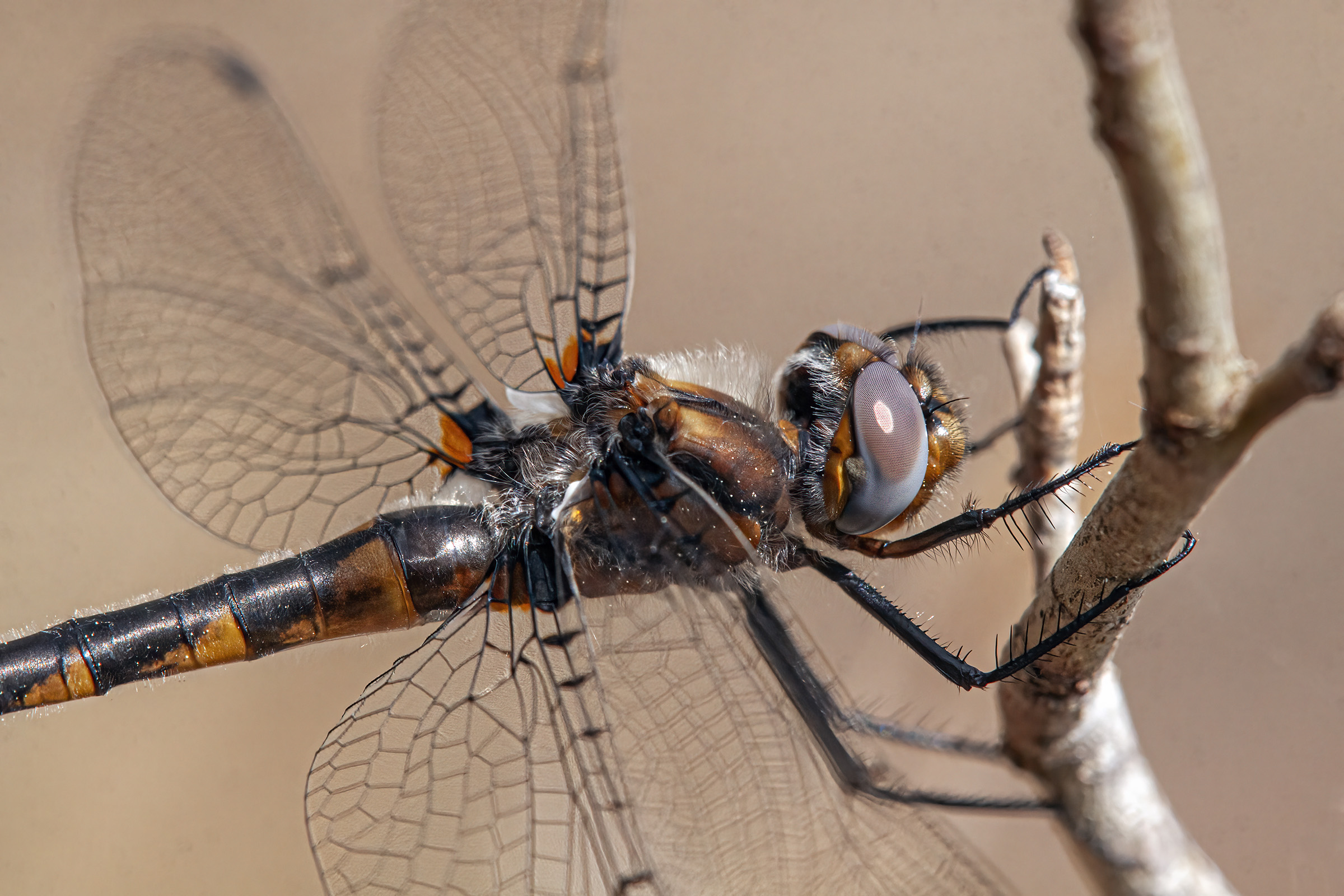
Have you ever taken a close-up look at a dragonfly’s amazing compound eyes? Dragonflies have the largest compound eyes of any insect; each containing up to 30,000 facets, and the eyes cover most of the insect’s head, resembling a motorcycle helmet. According to a wonderful article by GrrlScientist, “each facet within the compound eye points in a slightly different direction and perceives light emanating from only one particular direction in space, creating a mosaic of partially overlapping images.”

How exactly does that work? Scientists are still not sure how this visual mosaic is integrated in the dragonfly’s brain. If you can get close enough for a shot, you can actually see the individual facets, technically known as ommatidia. The first image below is a cropped image of an unusually cooperative Uhler’s Sundragon (Helocordulia uhleri) that I encountered last Friday while exploring a stream in Prince William County. If you click on the image, you can see the pattern of facets in the eyes.

The second image is an uncropped version of the first photo. I like the way that I as able to capture so many details of the dragonfly as it perched, like the spiky hairs on its legs and the stubble on its face as well as the pollen on its body.

The dragonfly in the third shot is another Uhler’s Sundragon that I spotted later in the day. From this angle, you can see the dragonfly’s tiny feet as it grasps the dried stalk of vegetation.

I love close-up images and will often try to capture them after I have taken some initial shots. When I am at close range, the angle of view is particularly important, because the depth of field is so shallow—some legs of the dragonfly, for example, will inevitably be out of focus, so I have to choose carefully what I want to be in focus.

Hand-holding and breathing techniques are also really important, because any movement will cause the fine details to be blurred. This is a bit of a challenge with the 180mm macro lens that I use because it does not have any built-in image stabilization.

Uhler's Sundragon

Uhler's Sundragon

Uhler's Sundragon

© Michael Q. Powell. All rights reserved.

Read Full Post »

« Newer Posts - Older Posts »