Feeds:
Posts
Comments

Archive for the ‘Macro Photography’ Category

This small Green Treefrog (Hyla cinerea) was swaying in the breeze, mostly obscured by the heavy growth in the marsh, when I first spotted it. I searched for an opening to get an unobstructed shot and finally found one, looking through a circularly bent dried leaf.

The different elements of the scene, however, were all in motion at different speeds.  I felt like I was playing a carnival game as I tried to aim and shoot at a target that would appear and disappear from view. Eventually I got a shot that was pretty close to the mental image that was my target and the frog was framed.

circle_frog_blog© Michael Q. Powell. All rights reserved

Read Full Post »

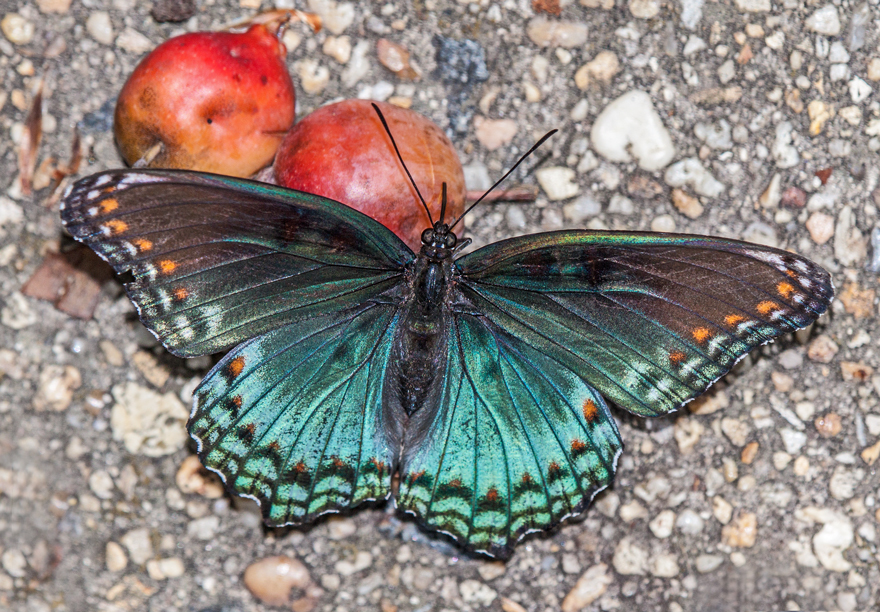
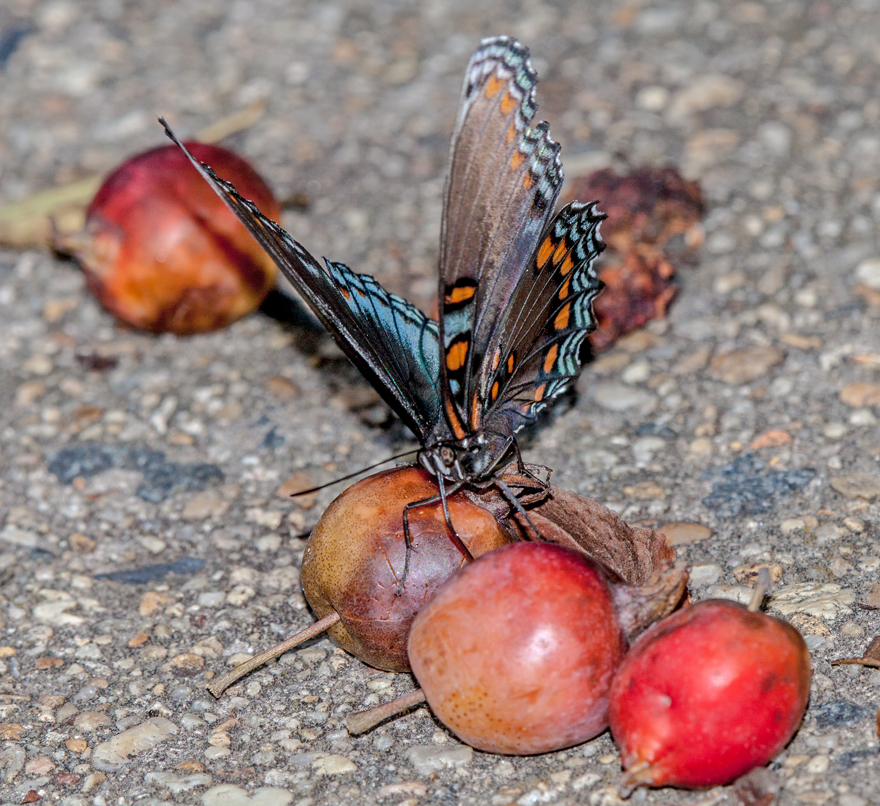
In the townhouse community in which I live in Northern Virginia, many of us have crabapple trees in our front yards, and the fallen crabapples are a nuisance at this time of the year. However, they do provide food for certain butterflies that prefer rotten fruit to flower nectar, like this Red-spotted Purple butterfly (Limenitis arthemis astyanax) that I photographed this morning.

crabapple2_blogcrabapple_blog© Michael Q. Powell. All rights reserved

Read Full Post »

If you were an insect or even a hummingbird, you would definitely not want to encounter this large insect with the macabre moniker of Red-footed Cannibalfly (Promachus rufipes), also known as the Bee Panther.

This insect is considered to be a giant robber fly. Robber flies in general are predators that wait for their prey to fly by and then attack it. Wikipedia describes the attack in this way, “The fly attacks its prey by stabbing it with its short, strong proboscis  injecting the victim with saliva containing neurotoxic and proteolytic enzymes which very rapidly paralyze the victim and soon digest the insides; the fly then sucks the liquefied material through the proboscis.”

It’s hard to believe that a fly could actually take down a hummingbird, but bugguide, which I have found to be a good reference for insects, notes that there have been reports of a Red-footed Cannibalfly attacking a Ruby-throated Hummingbird.

When I first saw this insect fly by, I thought it was some strange kind of hairy dragonfly, but the more that I looked at it, the more I realized that it was not a dragonfly—the eyes and wings were all wrong. I have spotted several of these flies already, but so far have not seen any with captured prey.

I came across a wonderful commentary on these insects in a blog called Ohio Birds and Biodiversity that sums up my feelings about them—”Be thankful these insects aren’t the size of Sandhill Cranes.”

big_insect_blogcannibal_blog

© Michael Q. Powell. All rights reserved

Read Full Post »

My goal for this photo was pretty simple—move slowly toward this grasshopper and get a good close-up shot. I think that I achieved my goal. I love shooting with my macro lens.

grasshopper_closeup_blog

© Michael Q. Powell. All rights reserved

Read Full Post »

I love backlit subjects, especially when the light shines through from behind and provides a stained glass effect, as was the case with this Viceroy butterfly (Limenitis archippus).

backlit_viceroy_blog

© Michael Q. Powell. All rights reserved

Read Full Post »

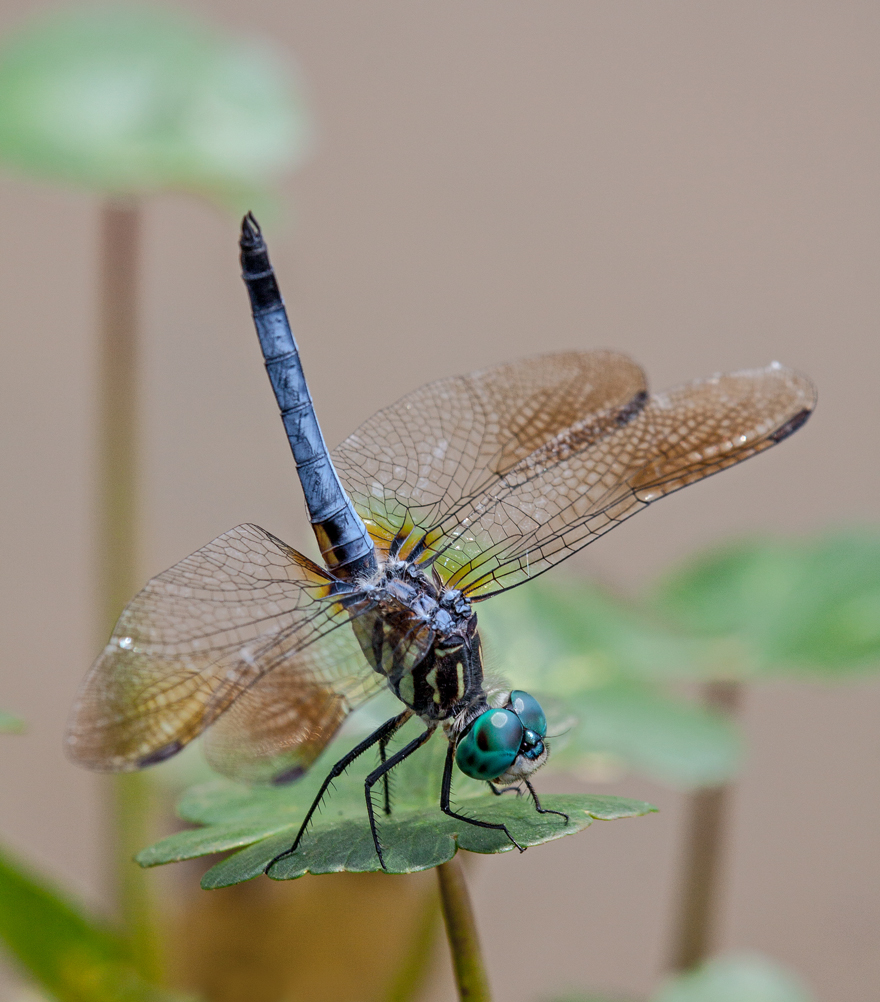
Most dragonflies choose perches high in the air, but this male Blue Dasher (Pachydiplax longipennis) decided to land on a little plant just inches above the surface of the water at my local marsh, creating a photographic challenge for me.

Hanging over the edge of the boardwalk, I tried to get at eye level with the dragonfly and simultaneously sought an uncluttered background.  In the first image, I was successful in shapes of the leafs, achieving a kind of three-dimensional effect. The water turned into an almost even gray, totally lacking in details. The second image gives you a better sense of the context, with the ghostly plants in the background.

The Blue Dasher dragonfly is the most common one that I see and it’s always a challenge to come up with creative new ways to show off its beauty. For this one day, I feel like I successfully met that challenge.

dasher_leaf_blogdasher_leaf_2_blog

© Michael Q. Powell. All rights reserved

Read Full Post »

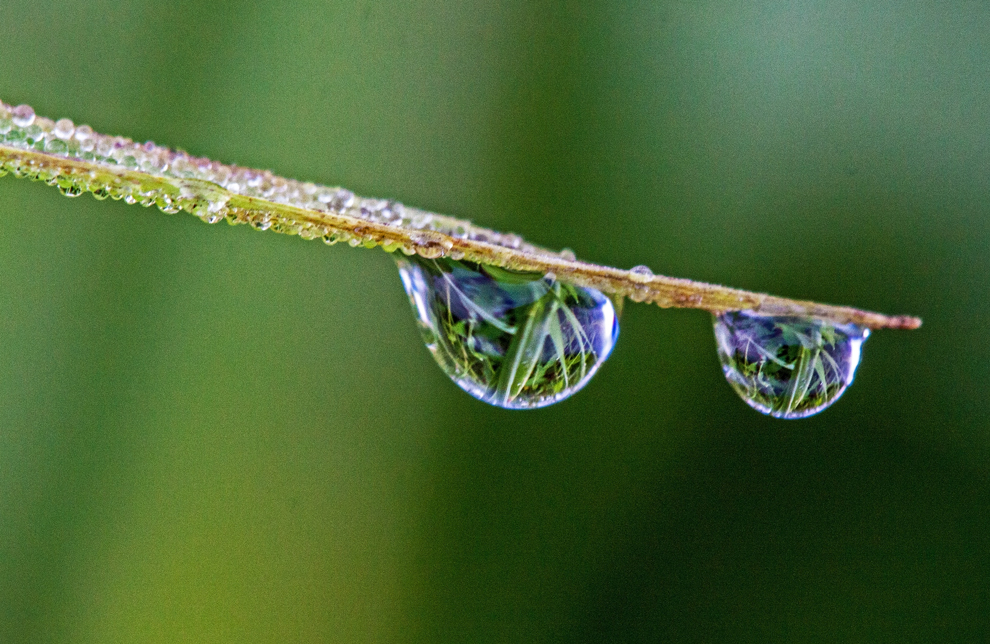
When drops of rain bead up on the surface of a leaf, the effect is magical—a world of crystal orbs is created. Most of the time the drops appear almost solid, reflecting back the light.

From certain angles, though, the raindrops serve as lenses, offering us a miniature view of the world. Within the drops, the inner world and the world beyond come together and create a beautiful effect.

drops_blog

© Michael Q. Powell. All rights reserved

Read Full Post »

I seem to be seeing spiders everywhere recently, so I thought I’d feature photos of three of them to represent the wide diversity of the population that I have observed.

The first one was very small and appeared to be hiding at the bottom of this leaf, waiting for its prey to come along. It did not appear to have made a web.

The second one had a web suspended over the water and is, I believe, a kind of long-jawed orb weaver of the Tetragnathidae family. It has awfully long legs compared to most other spiders. I usually see them making webs late in the day as the sun is beginning to go down.

The final one is a kind of spider that I see pretty regularly, though I don’t know what kind it is. It appears to have captured some prey, perhaps a grasshopper.

spider_leaf_blogjaw_blogspot2_blog

© Michael Q. Powell. All rights reserved

Read Full Post »

Who makes up these crazy names? Freddy Krueger? Jason? Believe it or not, this colorful little caterpillar is called a Smeared Dagger Moth caterpillar (Acronicta oblinita). Someone obviously had been been watching too many slasher or horror films.

Fortunately, it has another name—it is also called a smartweed caterpillar.

colorful_blog

© Michael Q. Powell. All rights reserved

Read Full Post »

I probably should have come up with a more creative title for this posting than the name of the featured insect. I mean, really, how many readers will be enticed to read a posting about a Dusky Stink Bug (Euschistus tristigmus)?  I word “stink” is enough to turn off some people.

Stink bugs are pretty much all shaped the same, but they come in different colors and patterns, many of which are similar, so identification is not always easy. In this case, for example, I had to determine if the shoulders were rounded or pointed to distinguish between two brown stink bugs—they look pointed to me.

The stink bug was hanging upside down, feeding on a plant that I can’t identify, when I encountered him. He seemed to be feeding, although I never did get a look at his face in order to verify my assumption. The upside down perspective is a little odd and I thought about rotating the image, but ultimately decided to leave it with its original orientation.

shield_blog

© Michael Q. Powell. All rights reserved

Read Full Post »

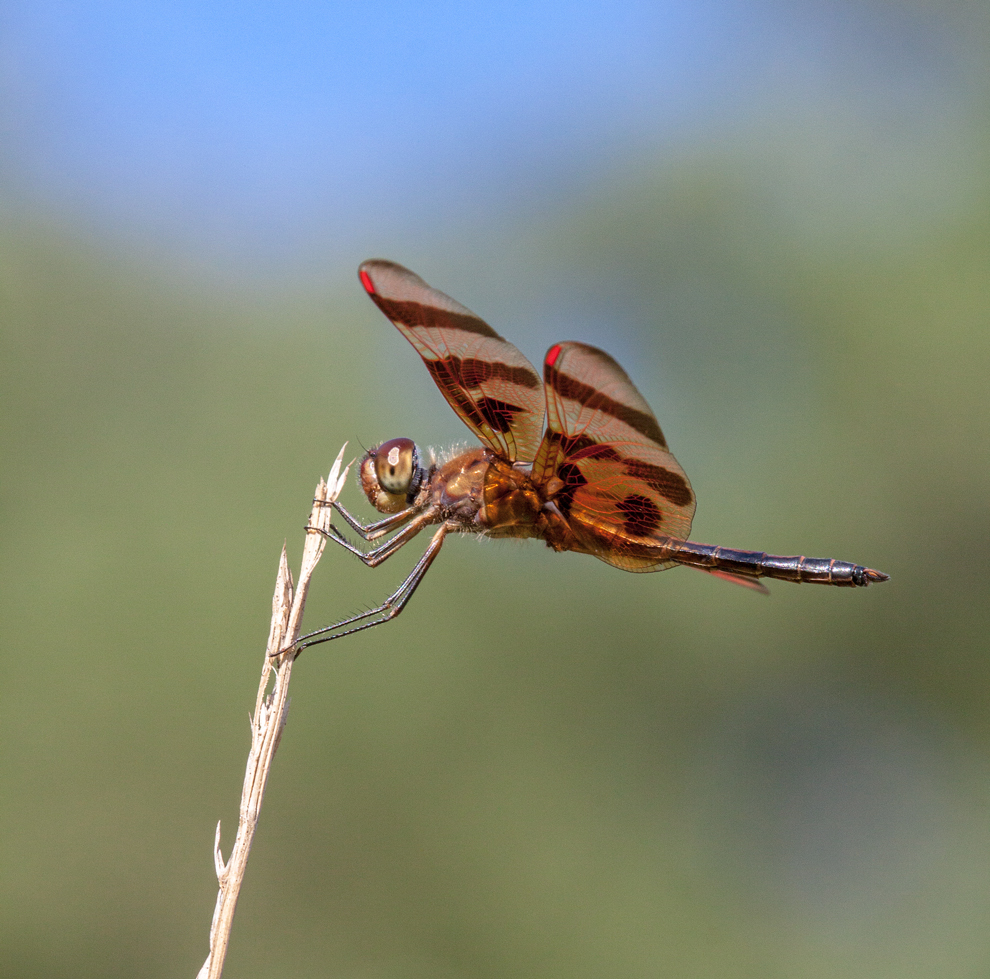
It’s not hard to see where this dragonfly gets its name—the Halloween Pennant (Celithemis eponina)—when it is perched on the very tip of a stalk of grass and is blown about by even the slightest wind.

I took this shot from a very low angle to try to show the sky and I am pretty happy with the way in which I was able to separate the dragonfly from the background.

blowing_blog

© Michael Q. Powell. All rights reserved

Read Full Post »

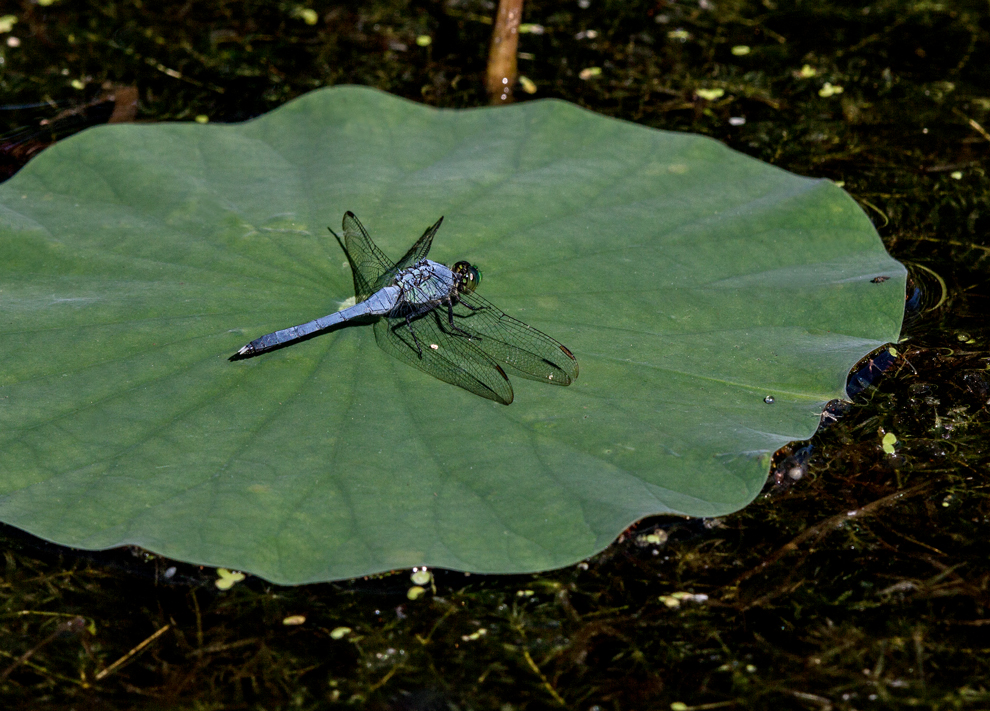
In most of my dragonfly shots the dragonfly is perched on an upright object, so, for variety, I decided to post this shot of a male Eastern Pondhawk dragonfly (Erythemis simplicicollis) in a different position—posing on a lily pad.

The dragonfly made multiple touch-and-go landings on this lily pad, sometimes landing near the edge, as in the first image, and sometimes in the middle, as in the second image. I couldn’t tell if he was using the lily pad as a platform for hunting insects or was merely resting. (It seems to me that it would be more advantageous for hunting to be higher up, unless you are hunting aquatic insects, which didn’t seem to be the case here.)

pad2_blogpad1_blog

© Michael Q. Powell. All rights reserved

Read Full Post »

Until I got a really close-up shot, I never realized that the body of a grasshopper had so many amazing textures. Previously, I had naively assumed that the body parts were relatively smooth. Click on the image to see a higher-resolution view of the details of the “shoulders,” legs, wings, and antennae.

I hope that no one opened this posting thinking that it was a culinary one. I’ve never tasted a grasshopper, but assume that it would have a crunchy texture. Who knows, maybe it tastes like chicken, which seems to be the default flavor for exotic animal protein sources.

grasshopper_texture_blog© Michael Q. Powell. All rights reserved

Read Full Post »

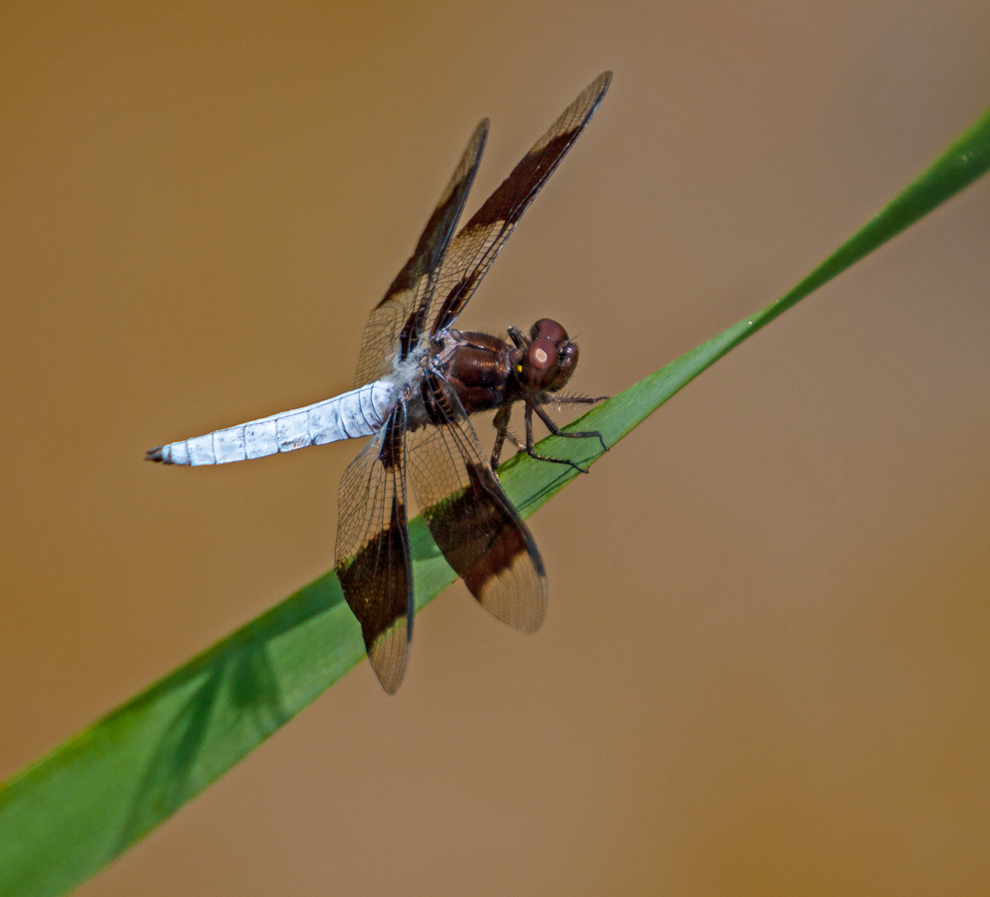
Some of my favorite images are almost minimalist in their approach, like this shot of a male Common Whitetail dragonfly (Plathemis lydia).

The composition is simple, the color palette is limited, and there is a pretty good amount of negative space. The subject is not unique and unusual—its name even indicates that it is “common.”

I managed to capture some of the details of the dragonfly, though, like the “hairs” on the legs (click on the image to see a higher resolution view), though the image is not super sharp. The shadow of the wings on the green leaf adds an additional touch of visual interest to the image.

The photo is not spectacular and showy, but I find a real beauty in its quiet simplicity.

whitetail_A_blog

© Michael Q. Powell. All rights reserved

Read Full Post »

I usually think of bees as being yellow and black, but I encountered this cool-looking metallic green bee (of the Agapostemon family) yesterday at Lewis Ginter Botanical Garden in Richmond, Virginia.

I remember The Green Hornet on television when I was a child, but I had never seen a green bee before. At first I was not even sure that it was a bee, but as I watched it gather pollen, I concluded that it had to be a bee.

It seems appropriate that I would be suffering from color confusion at that moment, because the bee was perched on a Purple Cone Flower (Echinacea purpurea), a flower that in my experience is rarely purple—they normally appear to be more pink than purple.

Now that I have freed my mind and broken the bonds of my conventional thinking about the color of bees, perhaps I will be able to bee all that I can bee.

green_bee1_blog green_bee2_blog green_bee3_blog

© Michael Q. Powell. All rights reserved

Read Full Post »

One of the many reasons why I love dragonflies is their amazing wings, which are so delicate and yet so powerful, like those of this male Blue Dasher dragonfly (Pachydiplax longipennis). In this shot, I tried to capture some of the intricate detail of the structure of the wings of the dragonfly. They remind me a bit of the leaded glass windows that I sometimes see in old homes, with each small piece of glass outlined in black.

dragonfly_wings_blog

© Michael Q. Powell. All rights reserved

Read Full Post »

When I first caught sight of this male Blue Dasher dragonfly (Pachydiplax longipennis) in the air, I thought that he had captured some sort of prey. I was wrong, yet I was also right.

The male dragonfly’s prey was a female dragonfly and they were in a mating position that I later learned is known as the wheel. The sheer flexibility and athleticism involved seems worthy of the Cirque de Soleil. Apparently it starts when the male grabs the female’s head with special claspers at the tip of his abdomen.

I came across a fascinating article by Jennifer Ackerman in National Geographic Magazine entitled Dragonflies Strange Love that provides some amazing insights into the mating habits of dragonflies. One sentence really sums up the process, “Grab, shake, bite, puncture, punch—that’s just the courtship ritual of these dazzling aerobats.”

The male dragonfly seems to be driven by an incredibly strong biological drive. I can almost hear one of them repeating the words of the Tina Turner song, “What’s love got to do with it?”

wheel_blog

© Michael Q. Powell. All rights reserved

Read Full Post »

This bee might argue that it’s just the camera angle, but my initial impression of this bee was that he looked chubby—I don’t think that I have ever encountered a bee with such a round face. He reminds me of a sumo wrestler at the start of a match.

The bee pretty much ignored me, though, and seemed to really get into his work, literally, gathering pollen from some kind of milkweed plant, perhaps swamp milkweed (Asclepias incarnata).

chubby_blog

© Michael Q. Powell. All rights reserved

Read Full Post »

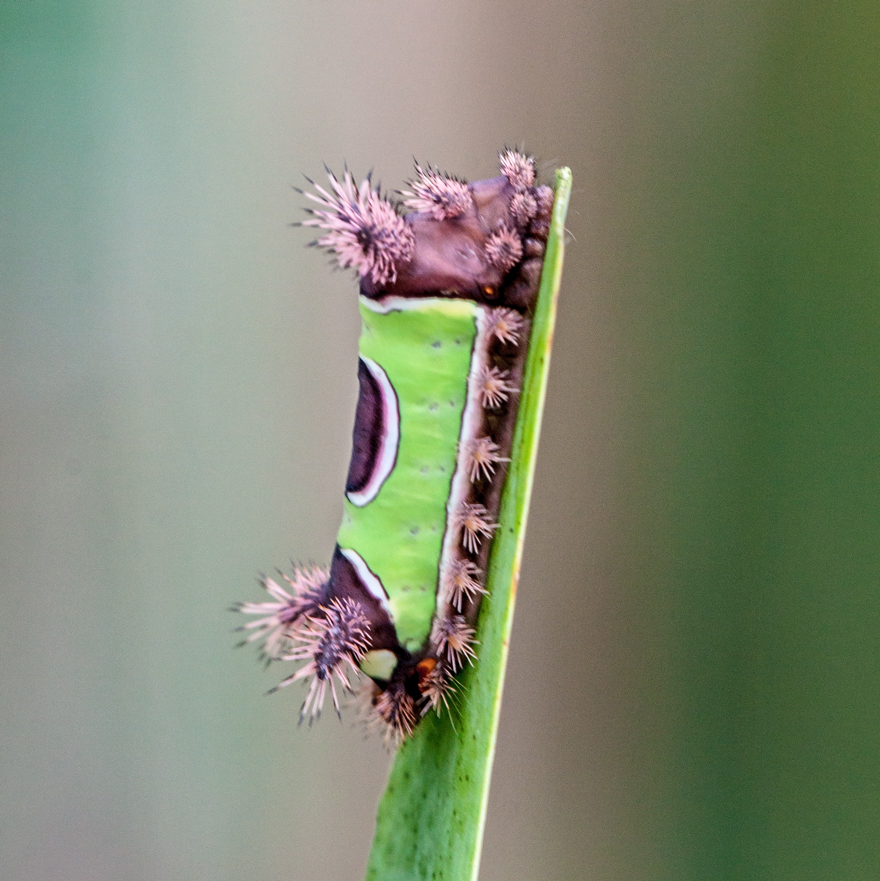
It was just starting to rain when some fellow photographers and I encountered a very strange-looking caterpillar. I couldn’t believe my eyes and was immediately reminded of the dogs in my neighborhood that sometimes wear colorful raincoats in inclement weather.

It turns out that this is a Saddleback caterpillar (Sibine stimulea), the larva of a type of moth. Once you get past the green “saddle,” it’s hard to miss all of the spines, which happen to be venomous. According to Wikepedia, stings by this caterpillar can cause swelling, nausea, and leave a rash that can last for days. Yikes! If I had known that in advance, I might not have leaned in to get a close-up shot of the head, though fortunately my 180mm macro lens allowed me to stay at a safe distance.

I can safely say that this is the most bizarre caterpillar I have ever seen. It’s hard to imagine that I can possibly encounter anything stranger than this, but my local marsh continues to surprise and amaze me.

saddleback_catterpillar1_blogsaddleback_caterpillar2_blog

© Michael Q. Powell. All rights reserved

Read Full Post »

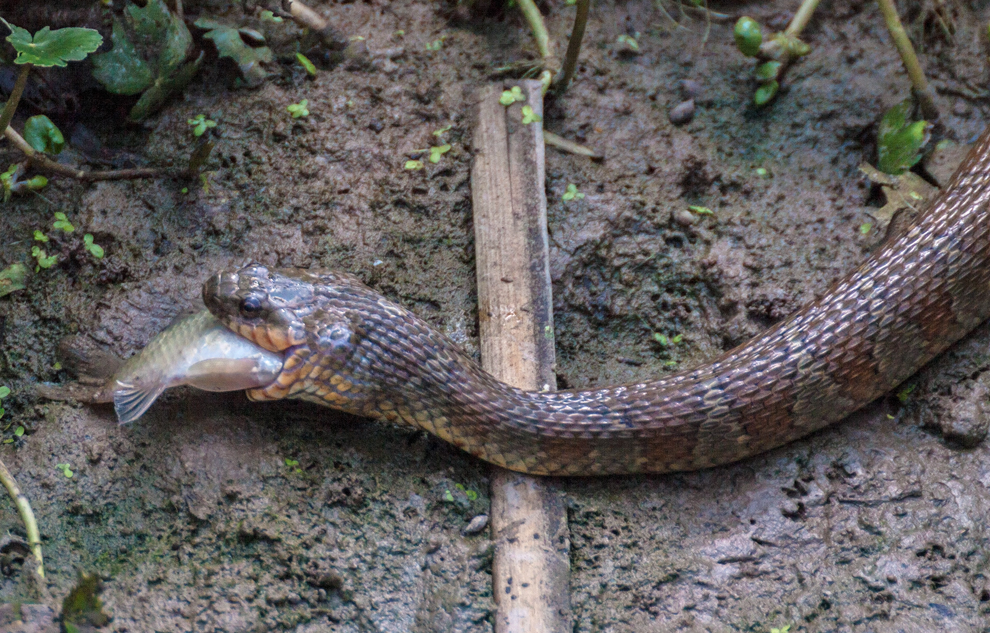
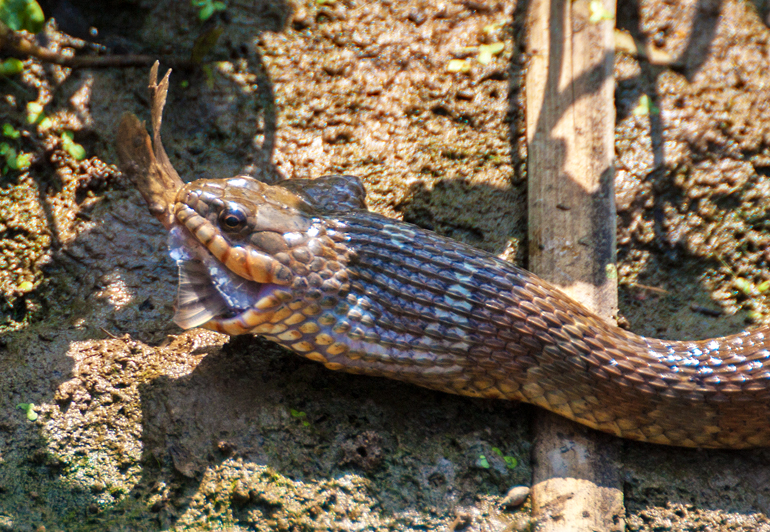
As I was walking along the boardwalk at my local marshland park, I heard some splashing in the shallow, muddy water and was surprised to see a Northern Water Snake (Nerodia sipedon) emerging from the water with a fish in its mouth. I did not see the snake actually catch the fish, but by the time I caught sight of it, the snake already had a firm grip on the head of the fish. I suspect that the snake had moved onto dry land to make certain that the fish had no chance of escaping.

Fascinated and a little horrified, I watched as the snake opened its mouth wider, worked the obviously strong muscles of its throat, and gradually swallowed the small fish. In the series of photos below, you can see how the snake’s head and throat grew larger as more and more of the fish was drawn in.

After the snake finished its meal, it returned to the water and joined two other snakes searching for prey.  At times it looked like they might be working together to push the fish into the shallow water. That may have been my imagination, though, as I noted that the successful snake made no attempt to share his catch with the others.

snake_fish1_blogsnake_fish2_blogsnake_fish3_blogsnake_fish4_blog

© Michael Q. Powell. All rights reserved

Read Full Post »

I was attracted initially by the bright red color of a cardinal flower (Lobelia cardinalis), but then I noticed a small amount of movement. When I looked more closely, I realized there was a tiny bee—the smallest that I have ever seen—busily gathering pollen. Rather than gathering pollen in little sacs, as I had seen other bees do, this bee seemed to be collecting it on his abdomen.

I don’t know much about plant anatomy, but as I searched on the internet, I learned some fascinating things about the cardinal flower, especially from a blog posting by Eye on Nature dealing with the way in which hummingbirds pollinate cardinal flowers. That posting contains some detailed images of the cardinal flower as well as some fantastic shots of a hummingbird.

I shot these images handheld with my 180mm macro lens. Ideally I should have used my tripod to get clearer shots, but the bee was so active that I feared that it would be gone if I had taken the time to set up the tripod.

It’s hard to appreciate the small size of the “bearded” section of the cardinal flower, so I enclosed an overall look at the flower as a final photo.

tiny_bee_blogtiny_bee2_blogtiny_bee-3_blogcardinal_flower_blog

© Michael Q. Powell. All rights reserved

Read Full Post »

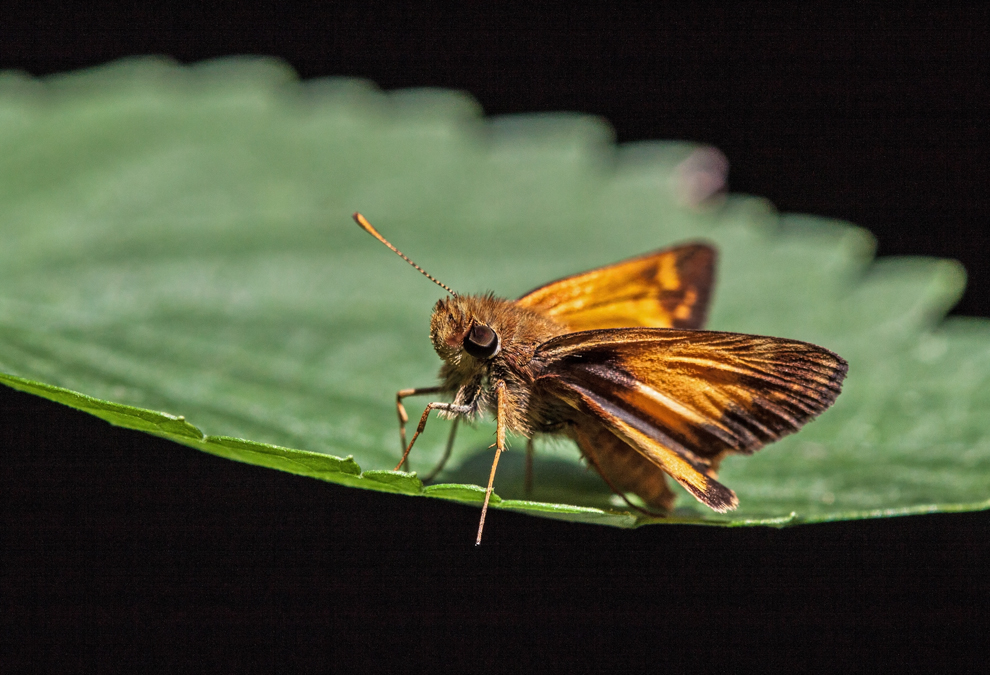
Every now and then I take a photograph and I am not really sure how I achieved the effect in the shot, like this one of a Fiery Skipper butterfly (Hylephila phyleus) on a jagged leaf.

With the exception of a few minor adjustments of the RAW image and a tiny bit of cropping, this looks just like the image I started with. When I first examined the image, I was pretty sure that I had used flash, but the EXIF data indicate that flash was not used. I took the shot handheld at ISO 400, f/6.3, and 1/500 sec. The depth of field was pretty shallow, but I did get the eye pretty much in focus, and I like the way the sharpness falls off so quickly.

I especially like the blurry jagged back edge of the leaf and the sharper near edge. The triangular shape of the wings seems to mirror those jags. Even the butterfly’s pose seems to work well, with the one leg dangling over the edge. If you click on the image, you get a higher resolution view of the photo.

I think that this is a Fiery Skipper, though I confess that I am not very good at identifying these little butterflies. Let me know if you can help in further identifying the butterfly.

skipper_leaf_blog

© Michael Q. Powell. All rights reserved

Read Full Post »

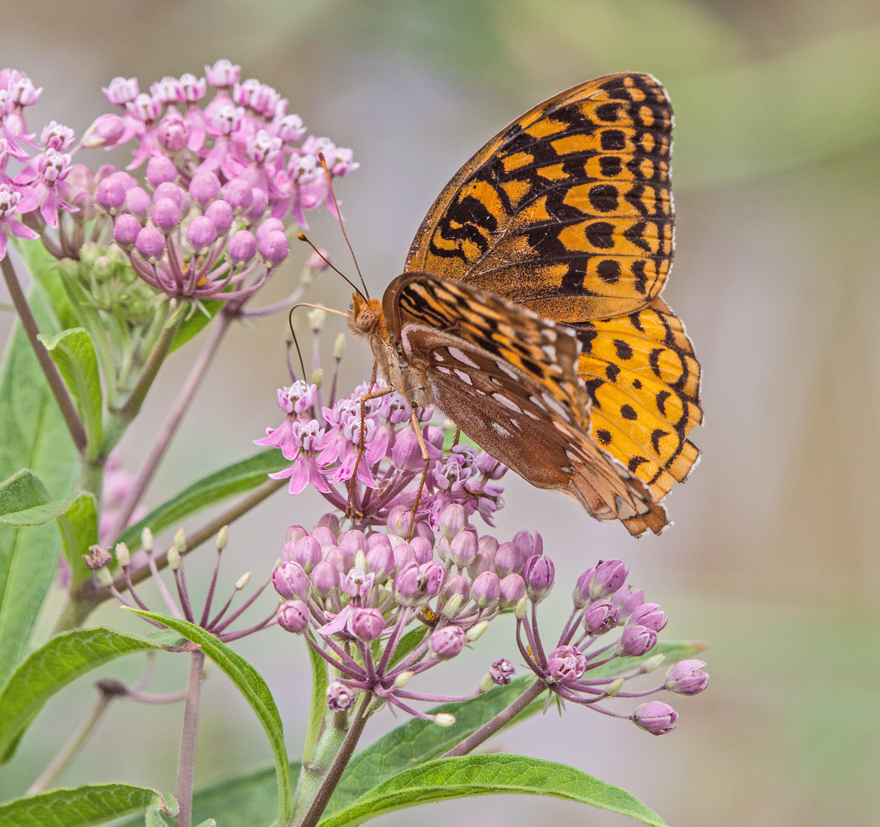
Normally I don’t think of orange and pink as colors that work well together, but I really like the result when I captured a shot of a Great Spangled Fritillary butterfly (Speyeria cybele) feeding on an unidentified pink flower.

spangled_pink_blog© Michael Q. Powell. All rights reserved

Read Full Post »

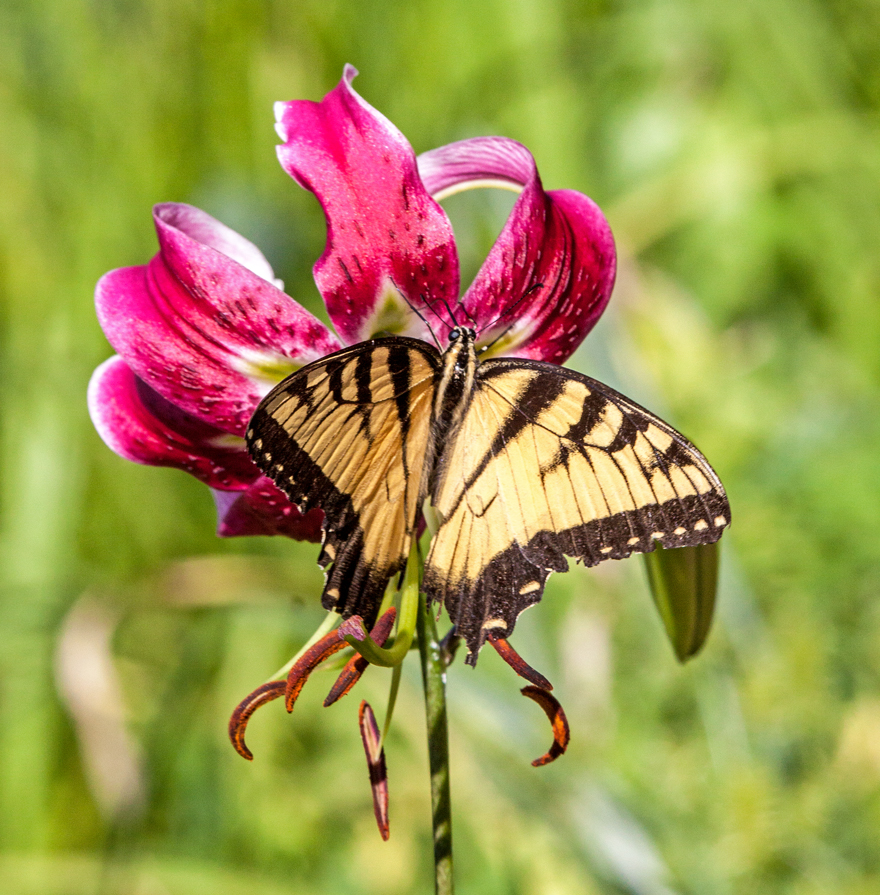
I don’t know my flowers very well, but I think that this Eastern Tiger Swallowtail (Papilio glaucus) is feeding on some kind of tiger lily (Lilium columbianum). Tiger on tiger—I like the way that sounds. Whatever the case, I love the gorgeous colors of the flowers, providing a gorgeous contrast to those of the butterfly.

tiger_blog

© Michael Q. Powell. All rights reserved

Read Full Post »

The weather this week has been mostly gray and dreary and I felt the need for a burst of bright colors, so I am posting this image from last week of a two Eastern Tiger Swallowtail butterflies (Papilio glaucus) feeding on an unidentified flower against the backdrop of a brilliant blue sky. The butterflies were even cooperative enough to place themselves at different angles to add  visual interest to the shot.

swallowtails_blog

© Michael Q. Powell. All rights reserved

Read Full Post »

The wasp looked huge, even from a distance, but I could get a clear shot of it against a beautiful blue sky, so I stepped out of my comfort zone and got close enough to it to get these images.

Fortunately I was shooting with a 180mm macro lens, so I was not exactly on top of the wasp, but even so, it was a little disconcerting to try to get a shot of a moving insect that looked so enormous and a bit threatening in the viewfinder.

After I took these shots, the wasp flew away and I breathed a sigh of relief—another sting avoided.

wasp2_blog

wasp1_blog

© Michael Q. Powell. All rights reserved

Read Full Post »

When I am chasing after little butterflies, it’s rare that I manage to get a shot of them with their wings open—I am lucky if I can get a side view.

This little brown butterfly, which I think is an Appalachian Brown (Satyrodes appalachia), perched in a location, however, which allowed me to shoot downward, catching its wings wide open. The muddy, brown water of the marsh normally would not be optimal for an image, but seem to work well here, almost matching the colors of the butterfly.

I also was able to get a shot from the side, the second image, showing the butterfly’s beautiful brown eyes. There was intermittent rain the day that I was shooting and you can see a few raindrops on the leaves of the plant on which the butterfly is perched.

brown_butterfly1_blogbrown_butterfly2_blog

© Michael Q. Powell. All rights reserved

Read Full Post »

Let me introduce you to the coolest-looking insect I have ever encountered, the Handsome Meadow Katydid (Orchelimum pulchellum), an insect that I photographed this past weekend at my local marsh. The name just seems to fit the insect perfectly, unlike so many other insects that seem to have been named almost randomly.

I still recall the first time that I encountered a Handsome Meadow Katydid last summer and the resulting double take—I could not believe what my eyes were seeing. The bright colors of the body were astonishing and seemed so unreal that one of my friends wondered if I had colorized the photo.

It’s the eyes, though, that make this insect so attractive for me. There is just something so alluring about those blue eyes, eyes that I don’t expect to see in an insect.

I got some pretty good shots of Handsome Meadow Katydids last year, but was growing concerned that I would not see many this year (you can tell it’s a katydid, in part, because of the length of the antennae). I actually heard this katydid before I saw it. I was passing by a small bush and hear a kind of vibrating sound. I put my ear closer and closer to the plant and finally spotted the source.

I had to go pretty wide in cropping the shot, because the katydid was stretched out along the small branch. Click on the image if you want see a higher resolution view of the photo, including those amazing eyes.

rainbow1_blog

© Michael Q. Powell. All rights reserved

Read Full Post »

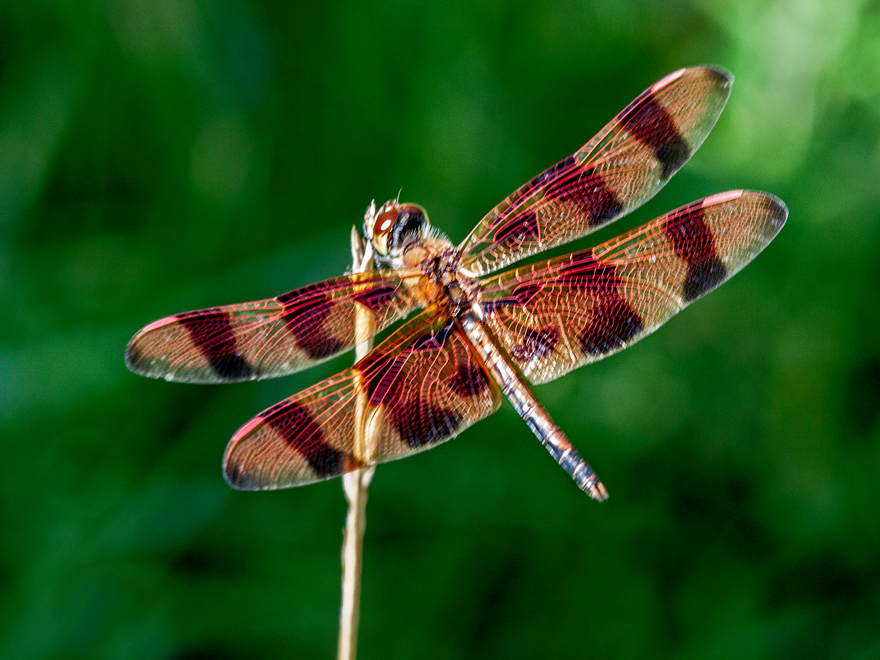
Yesterday I was happy to get some shots of my favorite dragonfly, the Halloween Pennant dragonfly (Celithemis eponina), at Meadowlark Botanical Gardens in Vienna, Virginia.

I don’t see this dragonfly at all at most of the usual places where I take photographs, so I was really excited when I caught sight of a couple of them yesterday. I chased them around for well over an hour and attempted to take a couple of hundred shots using a wide range of camera settings.

Why did I take so many photos? The dragonfly gets the “pennant”  part of its name because it likes to perch on the very tip of a weed stalk and waves in the breeze like a pennant. Yesterday, in fact, was breezy and it was quite an adventure trying to keep the dragonfly in focus, particularly because I was trying to fill the frame with the dragonfly.

The dragonflies that I photographed were reasonably cooperative and I was able to attempt shots from the side, from above, and even from below (fortunately the insects in the grass did not bite very often).

I have not been able to go through the shot to pick the best ones, but thought it would be nice to post one now, especially for those readers who may not be familiar with this beautiful dragonfly. I suspect that I will eventually post at least a couple more images in future postings.

Halloween1_blog

© Michael Q. Powell. All rights reserved
Read Full Post »

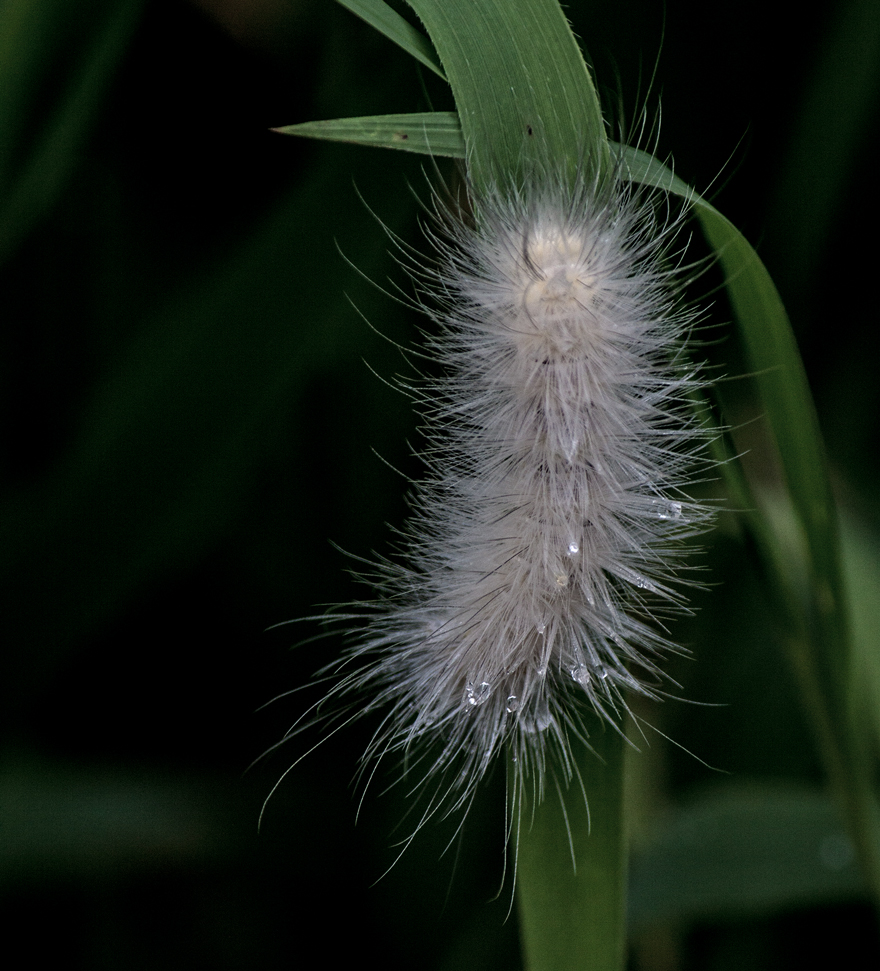
It’s hard enough to identify moths and butterflies when they are fully grown—it seems almost impossible to do so when they are caterpillars, like this fuzzy white caterpillar that I encountered today at my local marshland park.

The caterpillar had so much long hair that it was hard to see the actual body, which might have been quite small for all I could tell. It was crawling around in the cattails on a day that featured intermittent rain. If you look closely at the first shot, you can see little water drops near what I think is the area of the head.

The second shot may look like it was done with flash, but the darker background was caused merely by changing the settings on my camera and deliberately overexposing the image.

fuzzy2_blogfuzzy1_blog

© Michael Q. Powell. All rights reserved

Read Full Post »

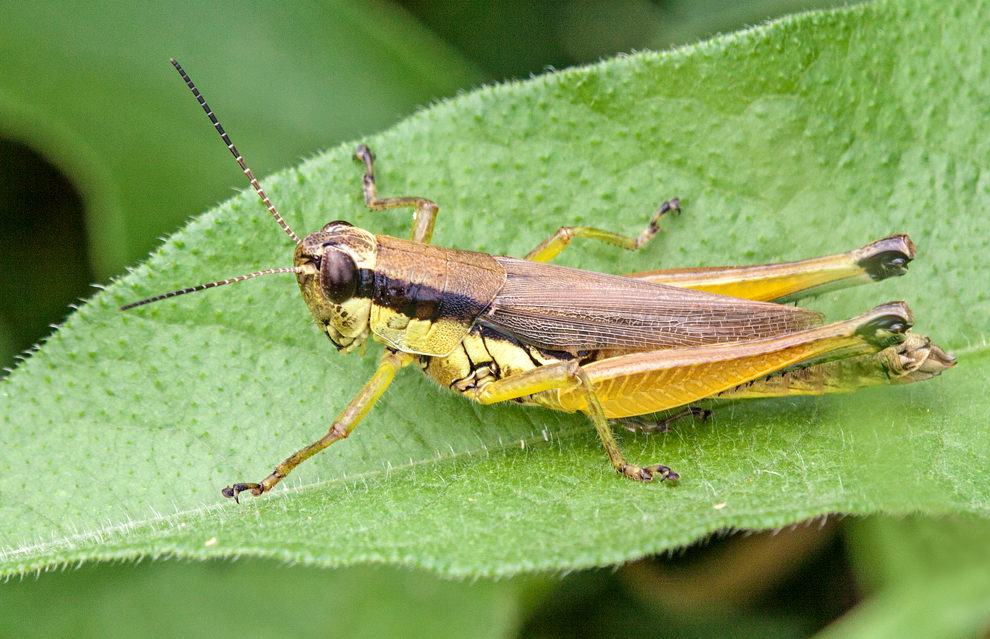
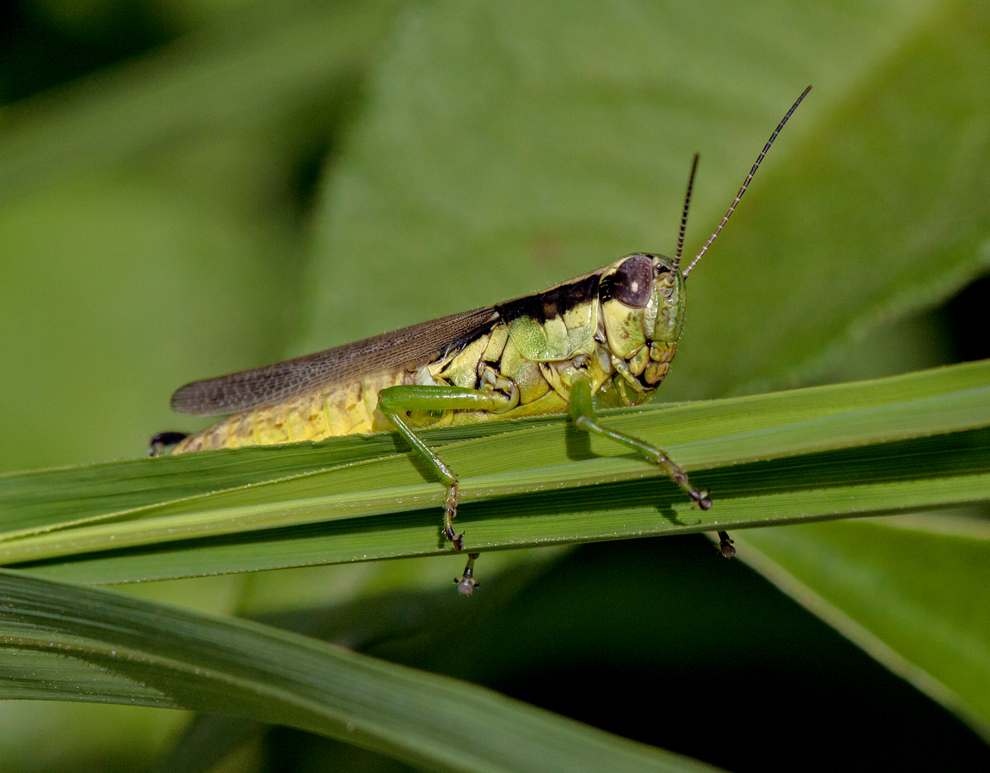
I haven’t seen many grasshoppers this summer, so I was happy to get a few shots of this one before he hopped off the leafy stalk for a new destination. I especially like the details of the eyes and the mouth.

Grasshoppers are special to me, in part because “grasshopper” is the term that my photograph mentor, Cindy Dyer, uses for me, her student. Some of you may be old enough to remember the television series Kung Fu from the 1970’s, in which Master Po, the blind monk, called his young pupil “grasshopper.”

I often wondered why he used that particular word and today I came across an explanation in Wikipedia. Apparently it stemmed from an exchange between the Master Po and the student, Caine, in the pilot episode of the series.  There is a lot of wisdom in that final response.

Master Po: Close your eyes. What do you hear?
Young Caine: I hear the water, I hear the birds.
Po: Do you hear your own heartbeat?
Caine: No.
Po: Do you hear the grasshopper which is at your feet?
Caine: Old man, how is it that you hear these things?
Po: Young man, how is it that you do not?

grasshopper1_blog

© Michael Q. Powell. All rights reserved

Read Full Post »

« Newer Posts - Older Posts »