Feeds:
Posts
Comments

Archive for the ‘Macro Photography’ Category

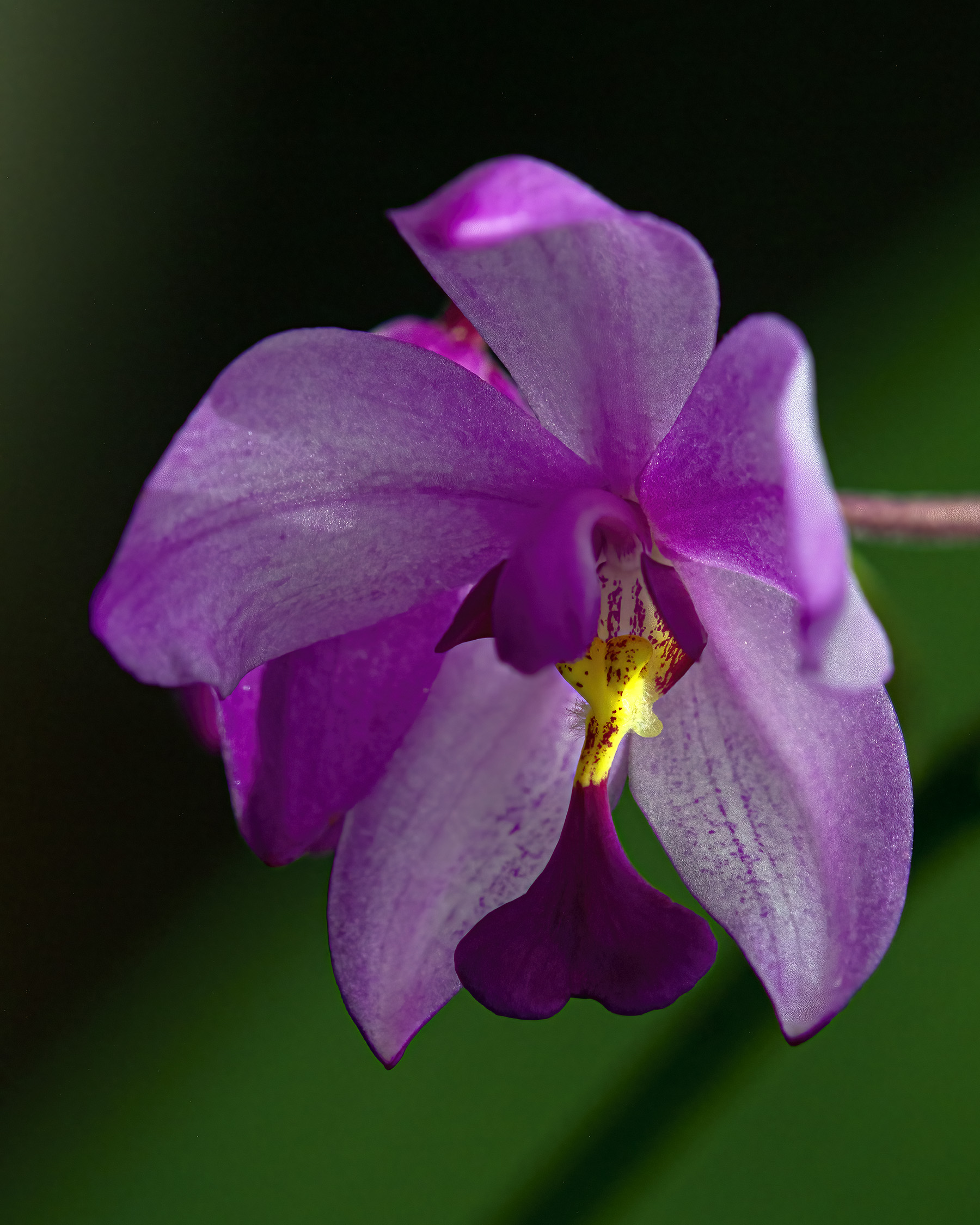
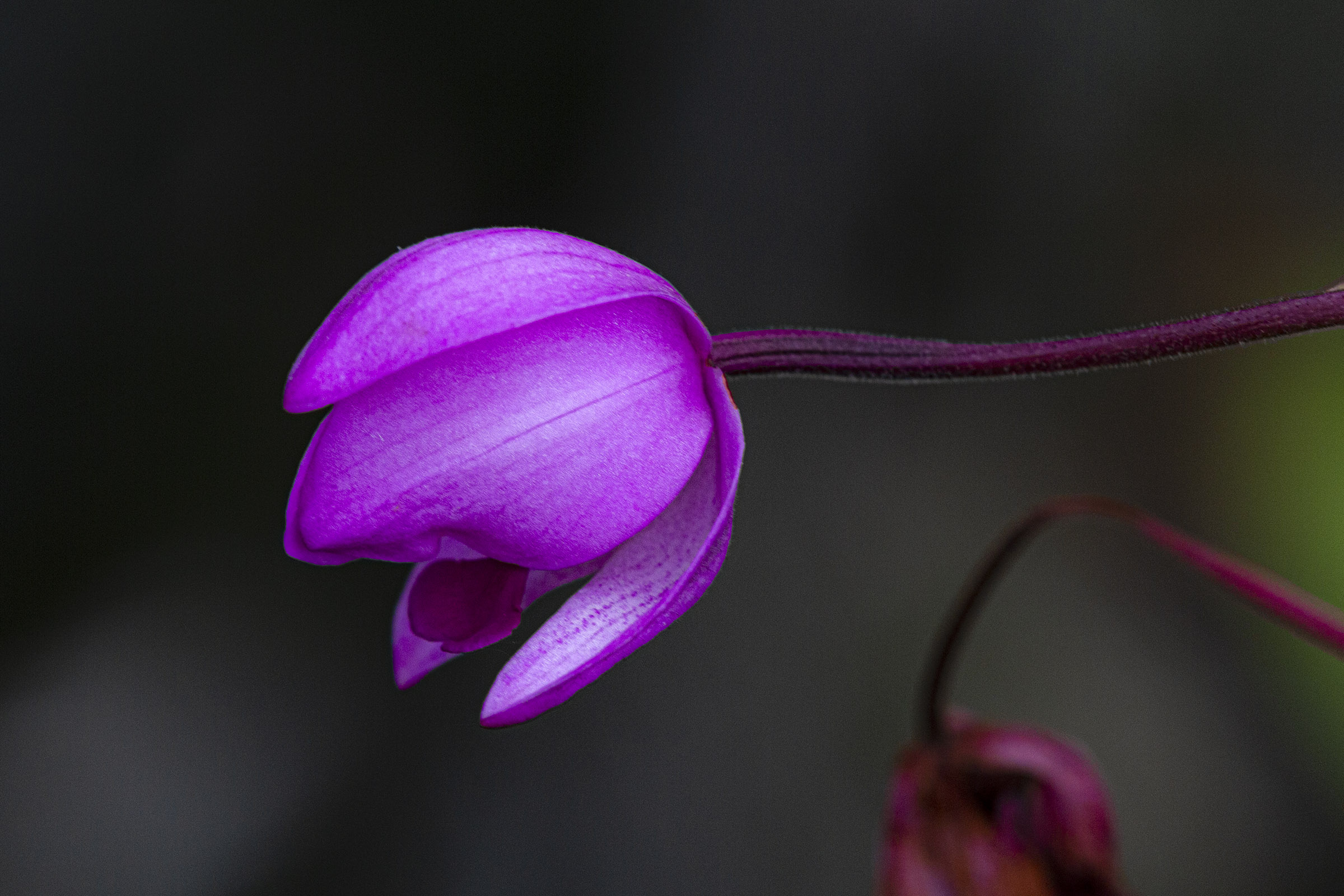
In addition to the stunning pink and purple bromeliad that I featured in an earlier posting, here are some shots of tropical plants that I observed in the “glasshouse” at Green Spring Gardens last week. The first two shots are of what I believe is a ground orchid—it may be a Phillippine Ground Orchid (Spathoglottis plicata), but there are a number of similar species, so I cannot be sure of the identification.

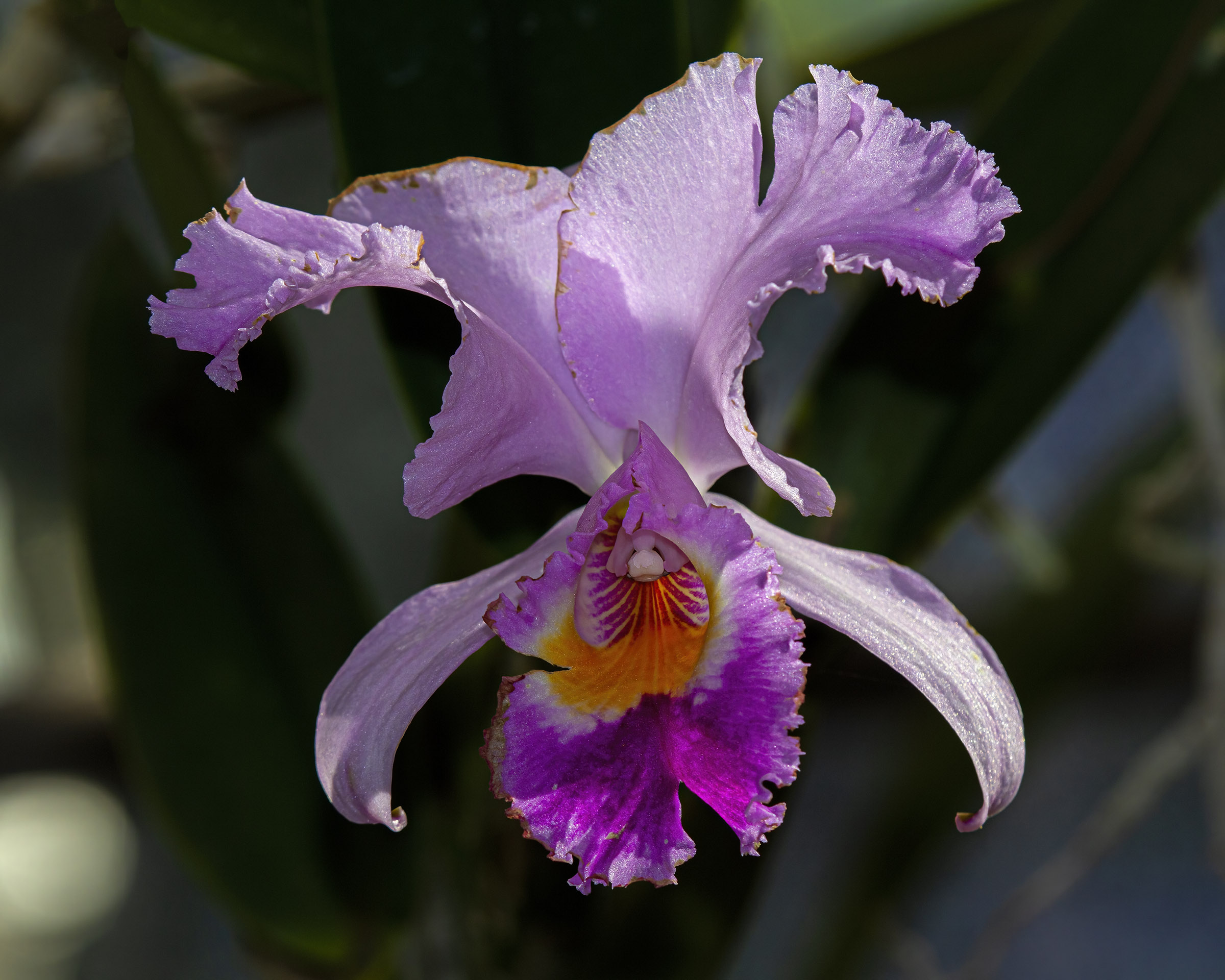
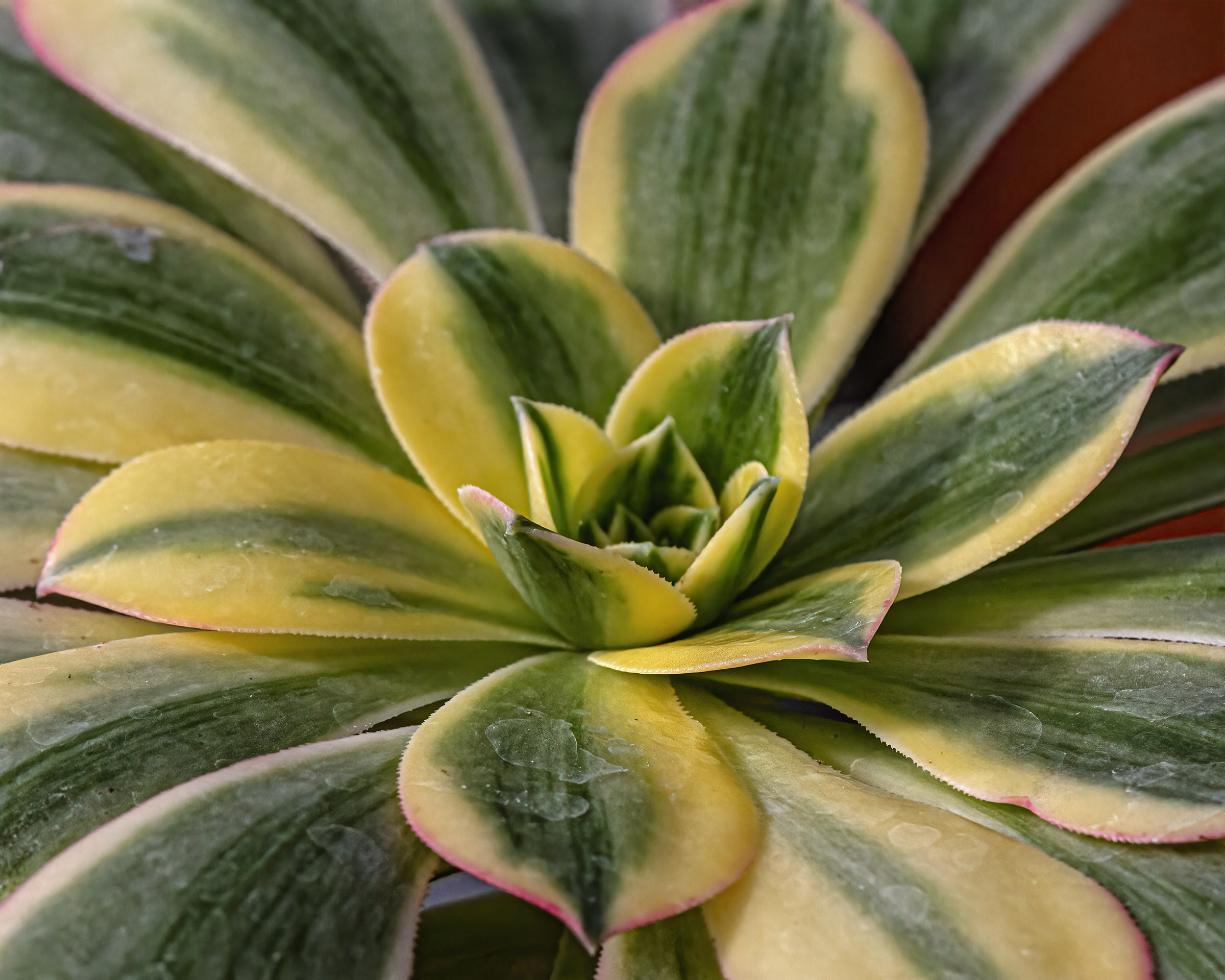
The third photo shows an orchid that is more typical of what I imagine when I think of an orchid. It is a little past its prime, but is still incredibly beautiful. The final photo is a close-up view of one of the many succulents that I observed. I love the geometric patterns of the multi-colored leaves in the image.

One of the nice things about taking photos indoors was that I did not have to worry about the wind creating movement. However, there was not a lot of space for maneuvering and the background was often cluttered, so I had to work hard to find pleasing angles for my photos.

This is a totally different style of photography that the bird photography I have been doing the past few months, but I think that it is good to mix things up a bit to keep from getting stuck in a rut photography-wise.

ground orchid

ground orchid

orchid

succulent

© Michael Q. Powell. All rights reserved.

Read Full Post »

On Thursday I spotted this cool-looking Arrowhead Spider (Verrucosa arenata) , also known as a Triangle Orbweaver, at Occoquan Bay National Wildlife Refuge. This spider is one of the few known orbweavers that sits facing upwards in its web—all other species face downward.

Its distinctive triangle-shaped abdomen makes this species pretty easy to identify. If you look closely at the image, I think that you can see a couple of the spider’s large round eyes shining brightly in between several of the legs in the upper left portion of the spider’s body.

Arrowhead Spider

© Michael Q. Powell. All rights reserved.

Read Full Post »

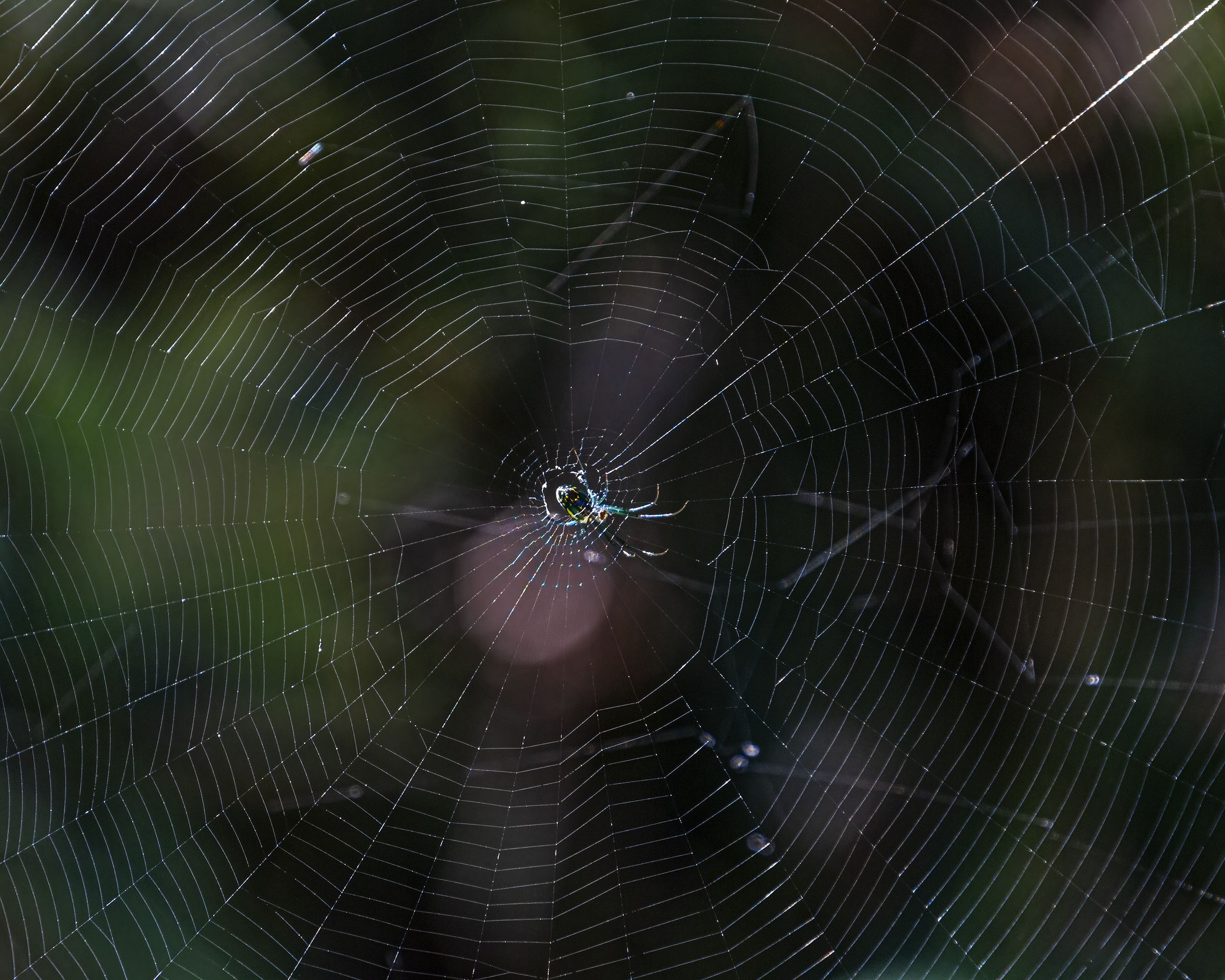
I am always amazed by the skill and artistry of spiders that construct elaborate webs, like this little Orchard Orbweaver spider (Leucauge venusta) that I photographed last Tuesday at Occoquan Bay National Wildlife Refuge. It is a bit of a challenge to capture an image of a web like this, especially in full daylight, but I managed to do so by focusing very carefully and deliberately underexposing the image so that the background appeared a bit darker than it was in real life.

Orchard Orbweaver

© Michael Q. Powell. All rights reserved.

Read Full Post »

What is going on in this photo? It is really cool to photograph the interaction between two species, but it is often difficult to interpret the nature of their exchange. Is it mere curiosity or are there more deadly and sinister intentions on the part of one of the actors? If so, which one is the predator and which one is the potential prey?

I captured this image this past Monday at Occoquan Bay National Wildlife Refuge. I could not identify either of these insects, so I posted the photo and requested identification assistance on bugguide.net, a wonderful resource for insect identification.  It did not take long before I received a response that the insects were an Orange Assassin Bug (Pselliopus barberi) on the left and a Milkweed Leaf Beetle (Labidomera clivicollis) on the right.

I may be giving too much weight to the “assassin” part of the name of one of these insects, but, judging from their individual postures, it seems to me that the orange bug is preparing to attack the black-and-red beetle. Who know? It is such a cool and creepy photo that perhaps I should have waited until Halloween to post it.

Orange Assassin Bug Milkweed Leaf Beetle

© Michael Q. Powell. All rights reserved.

Read Full Post »

As I was exploring Occoquan Bay National Wildlife Refuge this past Friday, I spotted some colorful red and black bugs. I had no idea what they were, but I happened to be walking with a fellow dragonfly enthusiast and he told me that they were Florida Predatory Stink Bugs (Euthyrynchus floridanus).

Unlike most other stink bugs that feed on plants, Florida Predatory Stink Bugs feed on insects that attack plants and are therefore considered to be beneficial. According to the North Carolina Extension website, “Immature Euthyrhynchus have a strong tendency to aggregate, and they even attack larger prey in concert. Apparently, aggregation behavior allows them to successfully attack prey too large to be subdued by a single nymph. Sometimes adults aggregate with nymphs, although when times get hard, these bugs sometimes feed on smaller relatives! When the bugs jab their proboscis into a less fortunate insect, they inject a toxin that slowly immobilizes the prey. The predigested insides are then sucked out.”

When they are developing, these stink bugs go through five stages, known as instars. The two largest bugs in the photo below are adults, while the two in the middle are in some what earlier stages of development. I don’t know for sure what this group of bugs was doing, but wonder if there is some kind of prey beneath them that they are immobilizing together.

Florida Predatory Stink Bug

© Michael Q. Powell. All rights reserved.

Read Full Post »

On Wednesday at Jackson Miles Abbott Wetland Refuge I was thrilled to spot this rainbow-colored Handsome Meadow Katydid (Orchelimum pulchellum), which is probably my favorite insect. In addition to its multiple colors, I love its striking blue eyes and long antennae.

My title is a little misleading, because technically there are some differences between grasshoppers and katydids. One of the most visible differences is the length of the antennae—a katydid’s antennae are longer than the length of its body, while a grasshopper’s tend to be shorter. In the first photo, I cut off one of the antennae a bit when I cropped the photo, but if you look closely you can see that the antenna runs all the way to the left edge of the photo.

Shortly after I took the first photo, the katydid became aware of my presence and tried to hide from me. She stretched out her legs, which really elongated her body, and she was almost successful in concealing herself behind the stalk of grass.

How do I know that the katydid is a female? If you look closely at the tail end of the katydid in the first photo, you can see a red scimitar-shaped appendage. That is the ovipositor that the katydid uses to make a slit in vegetation in which to deposit her eggs.

Handsome Meadow Katydid

Handsome Meadow Katydid

© Michael Q. Powell. All rights reserved.


Read Full Post »

Yesterday it was hot and humid and there was an air quality alert because of smoke from the Canadian wildfires. I was therefore not too surprised when I pulled into the parking lot at Occoquan Bay National Wildlife Refuge to see that I was the only car there. As I have mentioned previously, I prefer to enjoy nature alone whenever possible, so I was quite pleased that I had the refuge to myself.

It was about midday, so I knew that the birds would not be very active—they tend to be more active in the early morning and later afternoon—but I knew that many insects prefer the warmest periods of the day. I saw quite a few Big Bluet damselflies (Enallagma durum) in the vegetation near the water. As its name suggests, this damselfly is quite large—up to 1.7 inches (43 mm)—and is primarily a coastal species.

This was my favorite shot of the day of a Big Bluet. I like the overall cool tones of the image and the way that the vegetation fades into background, allowing the viewer to focus on the wonderful details of this beautiful Big Bluet.

Big Bluet

© Michael Q. Powell. All rights reserved.


Read Full Post »

I was thrilled on Wednesday to photograph my first Common Sanddragon dragonfly (Progomphus obscurus) of the year as he was enjoying a sandy beach near Wickford Park in Alexandria, Virginia. Unlike most dragonflies that prefer to perch on vegetation, Common Sanddragons are usually found perched flat on the sunny, sandy sections of shallow creeks.

According to the Dragonflies of Northern Virginia website, “Despite its name, this species is rare in Northern VA. In other parts of the country, where clean, sunny, shallow creeks with plenty of sandy/gravely banks are common, so too are Common Sanddragons. Our urban waterways are too influenced by stormwater, flowing fast and unchecked off impervious surfaces (roads, parking lots, roofs, etc.). This creates deeply incised, eroded banks and streambeds, with excess silt, unstable flows.”

This species is special to me because I was the first person to document its presence at Huntley Meadows Park, a county-run marshland park where I used to do a lot of my photography before it became overcrowded with photographers. Check out my June 2014 blog posting New dragonfly species in the park for the details of how I stumbled upon this “new” species.

Common Sanddragons are also special to me because in June 2016 I was lucky enough to observe and document the thirty minute metamorphosis of a water-dwelling nymph into a Common Sanddragon dragonfly. I had been collecting some discarded exoskeletons of already emerged dragonflies on a sandy bank of a stream when suddenly I felt one moving in my hand. I quickly placed it on the sand and was able to photograph the dragonfly as it was emerging. It was a remarkable encounter and I encourage you to check out my blog posting Metamorphosis of a dragonfly.

Nothing quite that exciting happened during my most recent encounter. I was able to capture some images of the dragonfly on various parts of the “beach” where I initially spotted him. He was pretty skittish and flew away multiple times, but kept returning to the same general are of the creek, sometimes choosing the sandy areas and sometimes opting for the more rocky spots. I particularly like the first photo that has a mixture of rocks and sand and has some green algae that matches the stunning eyes of this Common Sanddragon.


Common Sanddragon

Common Sanddragon

Common Sanddragon

© Michael Q. Powell. All rights reserved.

Read Full Post »

How many views does one of my blog posts need to get for me to consider it “successful” or “popular?” On a good day, my blog receives about 100 views, of which 60 may be related to that day’s post. If a post receives over a 100 views over time, I’ll consider it to be one of my top posts.

However, WordPress has a mind of its own, and the most-viewed postings, in my view, are not necessarily the best-written ones or the ones with my best photos. Some of the posts continue to receive views years after they were written thanks to searches on Google and other search engines. Even then, some subjects seem to go in and out of popularity on the search engines as a result of ever-changing algorithms.

For many years, my most popular blog posting was one from 4 November 2014 entitled Rescue of an Injured Bald Eagle that documented the rescue of the eagle by an a county animal control officer at my local marshland park. I was lucky enough to be present during the rescue operation and my photos (including a link to my blog posting) were picked up by several on-line news organizations in the Washington D.C. area. As a result, that posting has had 3,475 views to date, including 3,290 views during the initial month of the posting.

Bald Eagle rescue

This month, another blog posting has taken over the lead from the posting of the eagle rescue. My new top post is now a 9 May 2016 blog posting called Blue-eyed Garter Snake. Although this posting had only 70 views during its initial month, it now has had 3,512 views, including 438 views in 2023.

garter snake

Another posting may soon overtake the eagle rescue posting. The 3 August 2013 posting entitled Fuzzy White Caterpillar currently has had a total of 3,442, only 72 of which came during its initial month. Neither the writing or the photos in that posting are all that great, but I suspect that the title is so generic that it comes up often in Google searches.

fuzzy white caterpillar

One final contender for the top post is a 31 August 2013 posting entitled Red-footed Cannibalfly. This posting has had 3,169 views, of which 61 came in its initial month. For five years in a row it had over 350 annual views and appeared on the first page of Google results. Something changed, however, and it has fallen in the Google rankings since 2018, though it still appears as the fifth entry in a Bing search of “Red-footed Cannibalfly.”

red-footed cannibalfly

To be perfectly honest, I do not really care that much about views. I use this blog as a means to express myself creatively in my writing and in my photos. I am grateful for the modest success that I have enjoyed and even more thankful for the community of supportive people who have encouraged and supported me over the years.

I made my first posting on 7 July 2012, so I will soon be celebrating an anniversary. According to WordPress, my postings have had 403,801 views to date and I am thankful for each and every one of them and for all of you.

© Michael Q. Powell. All rights reserved.


Read Full Post »
Most of the times I am outdoors when I am photographing butterflies, but occasionally I have the opportunity to visit indoor butterfly gardens. One of the cool thing about these facilities is that they often contain tropical species that are not present in my local area.

Early in June I visited Lewis Ginter Botanical Garden in Richmond, Virginia and spent some time in the butterfly garden in an enclosed area of the large glass conservatory. Shooting in this environment challenges my composition skills and photography techniques as I try to hold my camera steady, focus on these moving subjects, and avoid including people and man-made objects in the backgrounds of the images.

Here are a few of my favorites from my time with these butterflies, several of which perched on me while I was exploring their environment. There is a double-door system that is sort of like an air lock to try to prevent the butterflies from escaping when people enter and exit. The staff folks also carefully check you when you are leaving to ensure that no butterflies are hitching a ride on you.

butterfly

butterfly

butterfly

butterfly

© Michael Q. Powell. All rights reserved.

Read Full Post »
Dragonflies and damselflies have rather limited lifespans after they emerge from the water and are transformed from aquatic nymphs into aerial acrobats. One of their biological imperatives is to perpetuate their species, so it is not unusual to see mating activity during this time of the year that is primetime for dragonflies and damselflies.

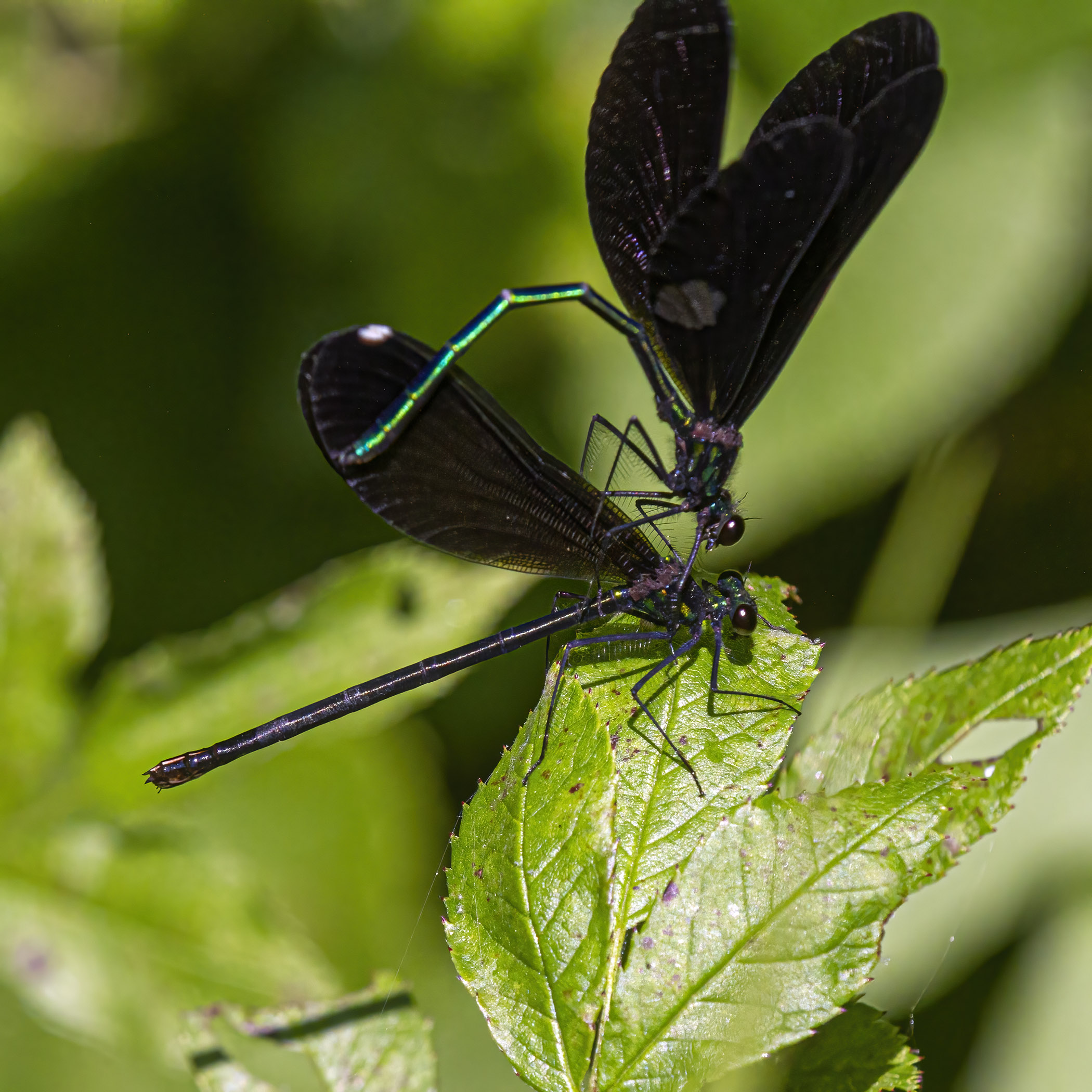
On a trip earlier this month to Occoquan Regional Park, I spotted this pair of Ebony Jewelwing damselflies (Calopteryx maculata) in their distinctive sidewards-heart mating position. I am really happy with this image because I was able to use my shooting angle and camera settings to keep the bodies of both damselflies in focus and achieve a blurry background that allows a viewer to focus on the damselflies without any visual distractions.

In case you are curious, the damselfly to the left is the female and the one with the shiny green body is the male. You can tell the genders from the mating position and from the little white patch on the wings that is present on female Ebony Jewelwings and not on the completely dark wings of the males


Ebony Jewelwing

© Michael Q. Powell. All rights reserved.

Read Full Post »
Last week I managed to capture a series of images of a hook-up between two Ebony Jewelwing damselflies (Calopteryx maculata). Initially I was focused on a female that was perched on a leaf, but then noticed a male who was circling around her. According to Wikipedia, “Calopteryx males will hover in front of a female with alternating fast and slow wingbeats; if she is receptive she will remain perched, otherwise she will fly off.” This female remained in place, so the male moved in, as you can see in the first three photos.

During mating, the male uses claspers at the tip of his abdomen to grasp the female behind her head tightly enough to resist the attempts by other males to dislodge him, a position sometimes called “tandem.” The male then flexes his abdomen to encourage the female to loop her abdomen round to interlock with him, forming the “wheel’ position,” the sidewards-heart position shown in the final photo.

I suppose that I could leave the description here, but the process that was taking place was so weird and fascinating that I thought I should explain what is going on. In order to keep from getting too graphic, I will borrow some language from Wikipedia.

“Mating in damselflies, as in dragonflies, is a complex, precisely choreographed process involving both indirect insemination and delayed fertilization….When he (the male) is ready to mate, he transfers a packet of sperm from his primary genital opening on segment 9, near the end of his abdomen, to his secondary genitalia on segments 2–3, near the base of his abdomen. The male then grasps the female by the head with the claspers at the end of his abdomen; the structure of the claspers varies between species, and may help to prevent interspecific mating… The female then curls her abdomen downwards and forwards under her body to pick up the sperm from the male’s secondary genitalia, while the male uses his “tail” claspers to grip the female behind the head: this distinctive posture is called the “heart” or “wheel.”

Wow! I think I will leave it at that. Suffice it to say that the process is complicated and the participants have to be incredibly flexible.

Ebony Jewelwing

Ebony Jewelwing

Ebony Jewelwing

Ebony Jewelwing

Ebony Jewelwing

Ebony Jewelwing

© Michael Q. Powell. All rights reserved.

Read Full Post »
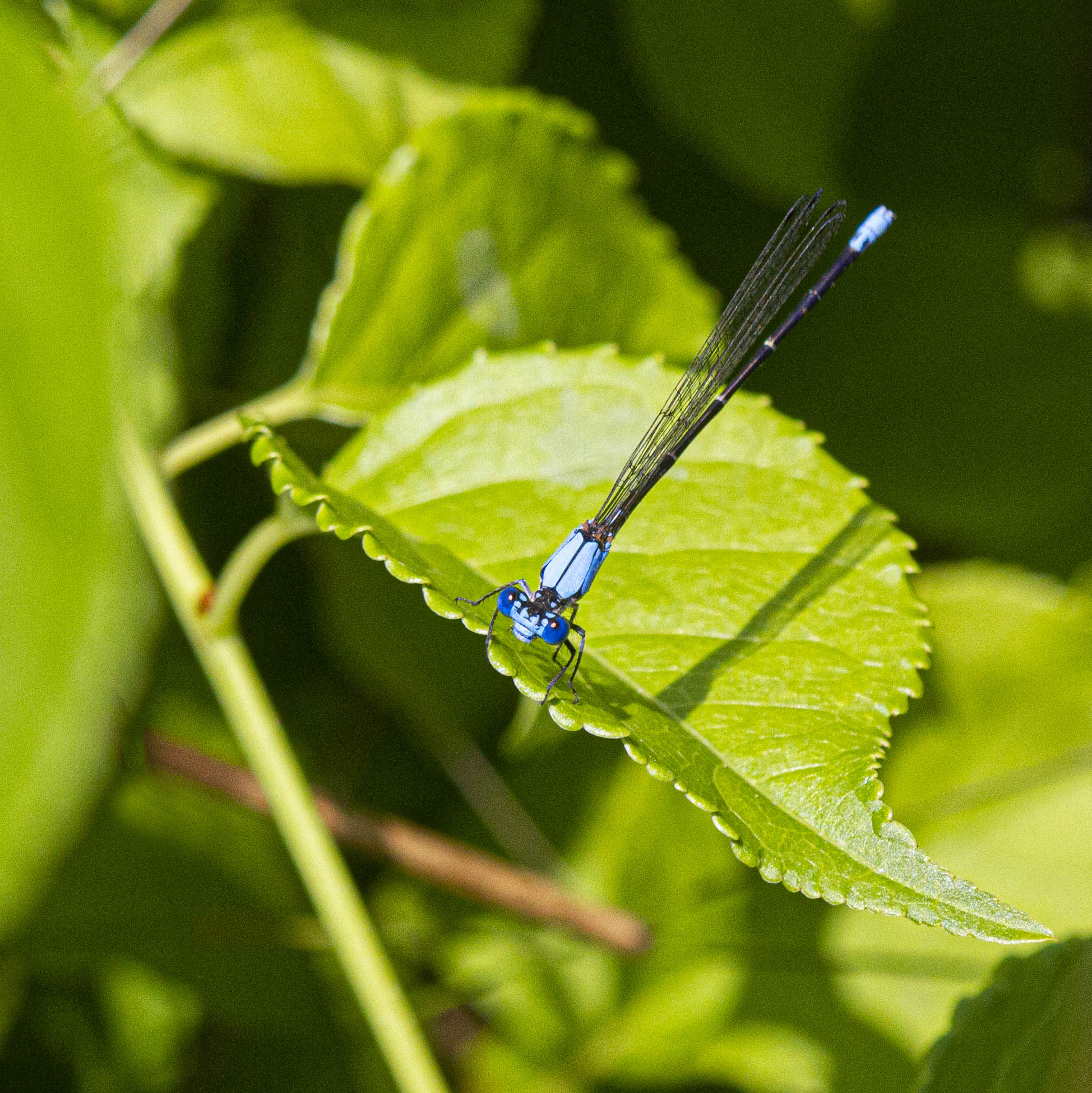
Many damselflies have distinctive shoulder stripes, but the thoraxes of Blue-fronted Dancers (Argia apicalis) are almost completely blue and have only hairline black stripes. Last Saturday I was delighted to spot some Blue-fronted Dancers at the small pond at Jackson Miles Abbott Wetland Refuge, my first sighting of this species this season. Although the blue thorax made them easy to identify, what really struck me were their brilliant blue eyes, a feature that I had never noticed before. Wow!

I was able to photograph these damselflies on various locations as I repeatedly circled the pond. Periodically I would glance out at the water, where several families of Canada Geese were swimming around with their almost grown goslings. In the final photo, you can see one of the feathers from the geese, a quirky and almost whimsical addition to my photo of the Blue-fronted Dancer—I really like that image.

Blue-fronted Dancer

Blue-fronted Dancer

Blue-fronted Dancer

© Michael Q. Powell. All rights reserved

Read Full Post »

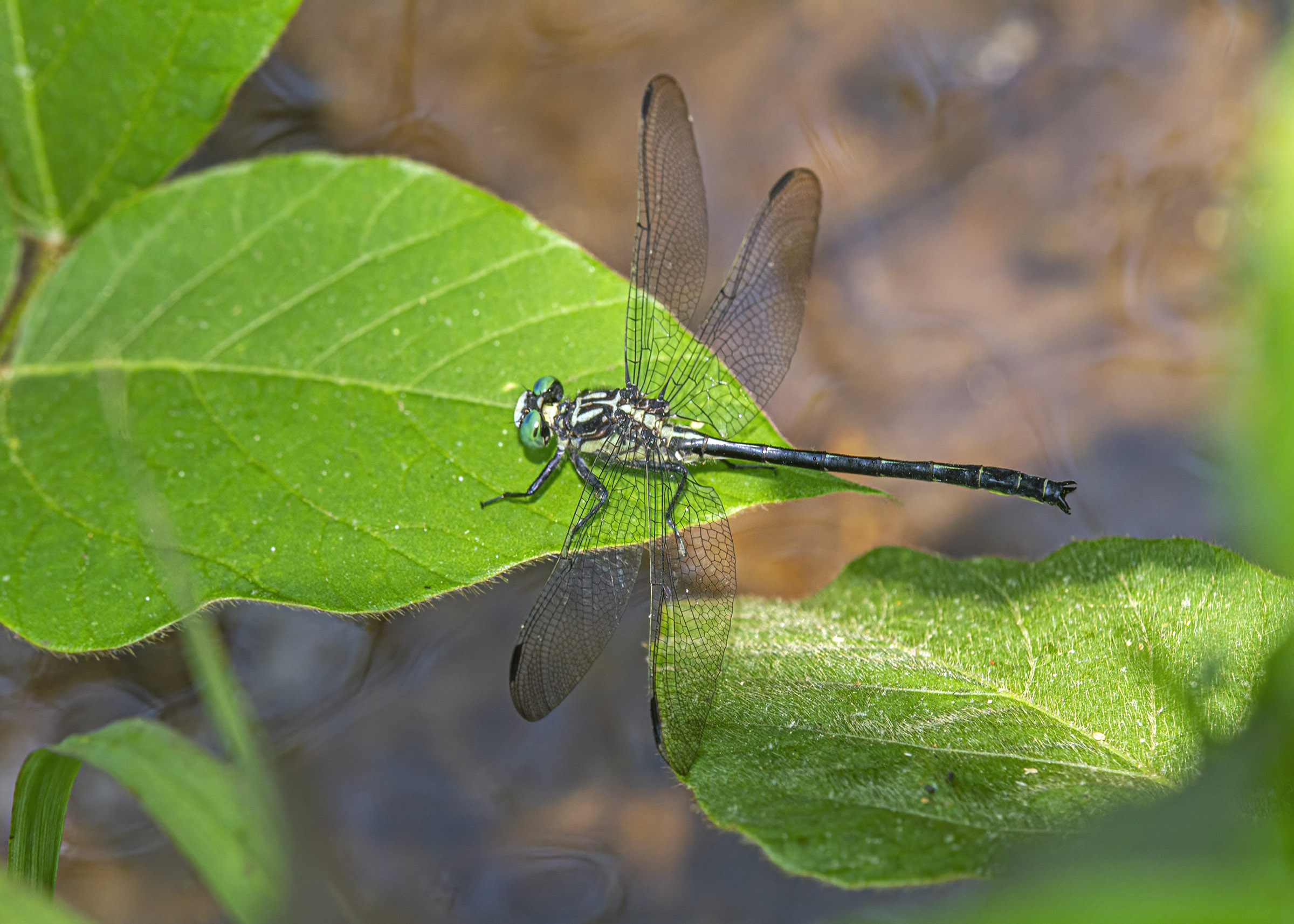
I was thrilled to spot at least one male Sable Clubtail dragonfly (Stenogomphurus rogersi) last Saturday while I was exploring a small stream in Fairfax County, Virginia. I visited that section of the stream several times during the day and had multiple sightings of a Sable Clubtail, but I am not sure if there was more than one of this species or if I was seeing the same individual each time.

As you can see from these two photos, Sable Clubtails like to perch low in vegetation just above the level of the water of the stream. As a result I had to crouch really low to be able to capture these images. The lighting was brighter for the first photo and you can see many of the details of the markings on the dragonfly, but I really like the cool shadow in the second image, which has a more “artsy” feel.

Sable Clubtails are rarein our area. Fellow dragonfly enthusiast Walter Sanford did extensive research and rediscovered this species in 2018 and I have been fortunate to see a Sable Clubtail at this stream in most years since then. If you are interested in the backstory of Walter’s efforts, check out his June 2018 blog posting entitled Off-season homework pays dividends.

Sable Clubtail

Sable Clubtail

© Michael Q. Powell. All rights reserved


Read Full Post »

Many summer dragonfly species are now emerging on the scene, like this immature male Widow Skimmer dragonfly (Libellula luctuosa) that I spotted last Tuesday at Occoquan Regional Park in Lorton, Virginia.

Anecdotally, someone thought that these dragonflies appeared to be draped in mourning crepe and that is the source of the “widow” in the name of the species. The Loudon Wildlife Conservancy website states that “This dragonfly got the “widow” name because, unlike most other dragonfly species where the male stays near the female after she lays the eggs, the male in this pair leaves her after the eggs have been laid.” Either explanation is plausible, though I have seen more references to the first explanation than the second one.

I was quite fortunate that the dragonfly chose a high perch that allowed me to separate it from the rest of the background. Quite a few of the dragonflies that I have photographed recently have perched on the ground or in dense vegetation and the backgrounds in those photos have been quite cluttered.

Widow Skimmer

Widow Skimmer

© Michael Q. Powell. All rights reserved

Read Full Post »

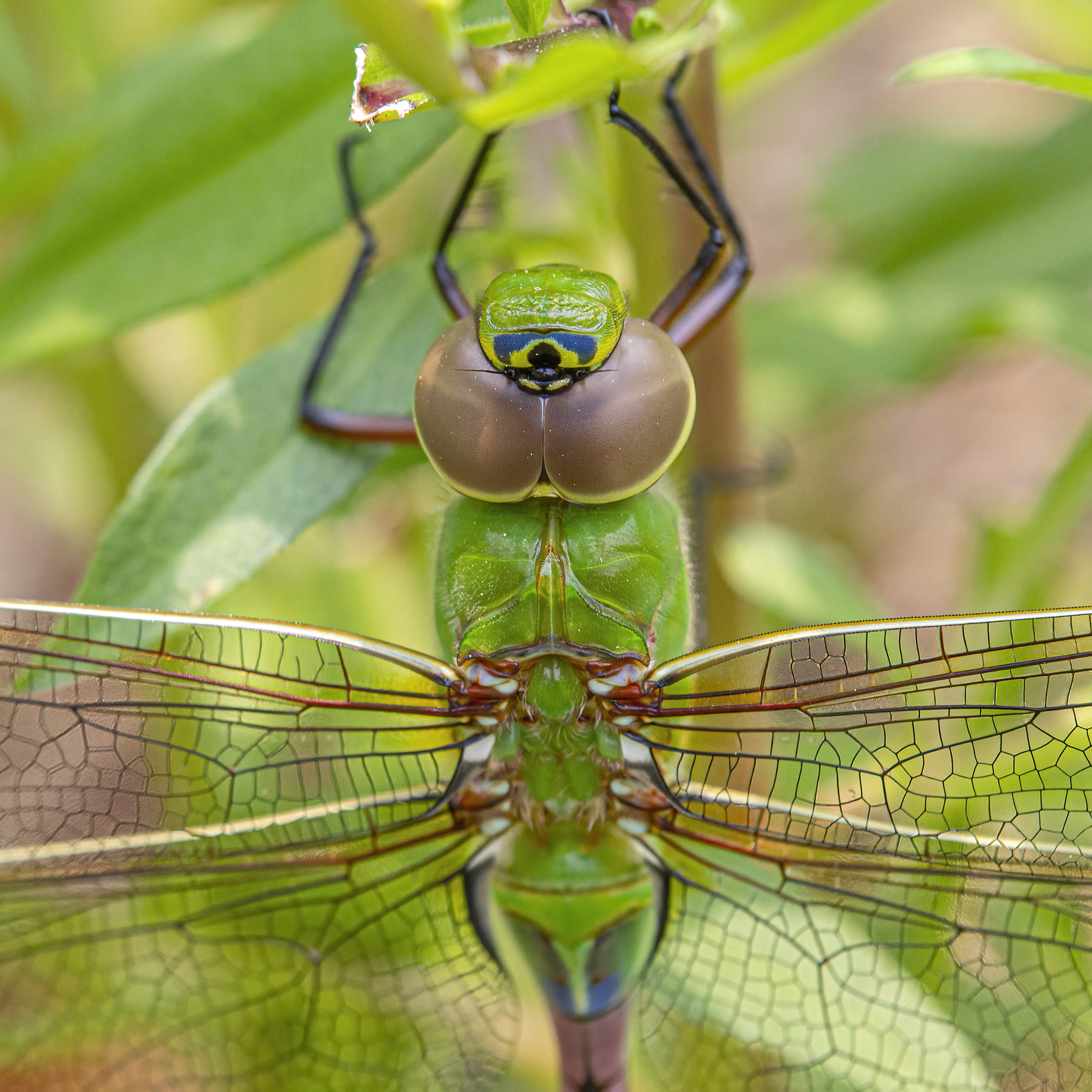
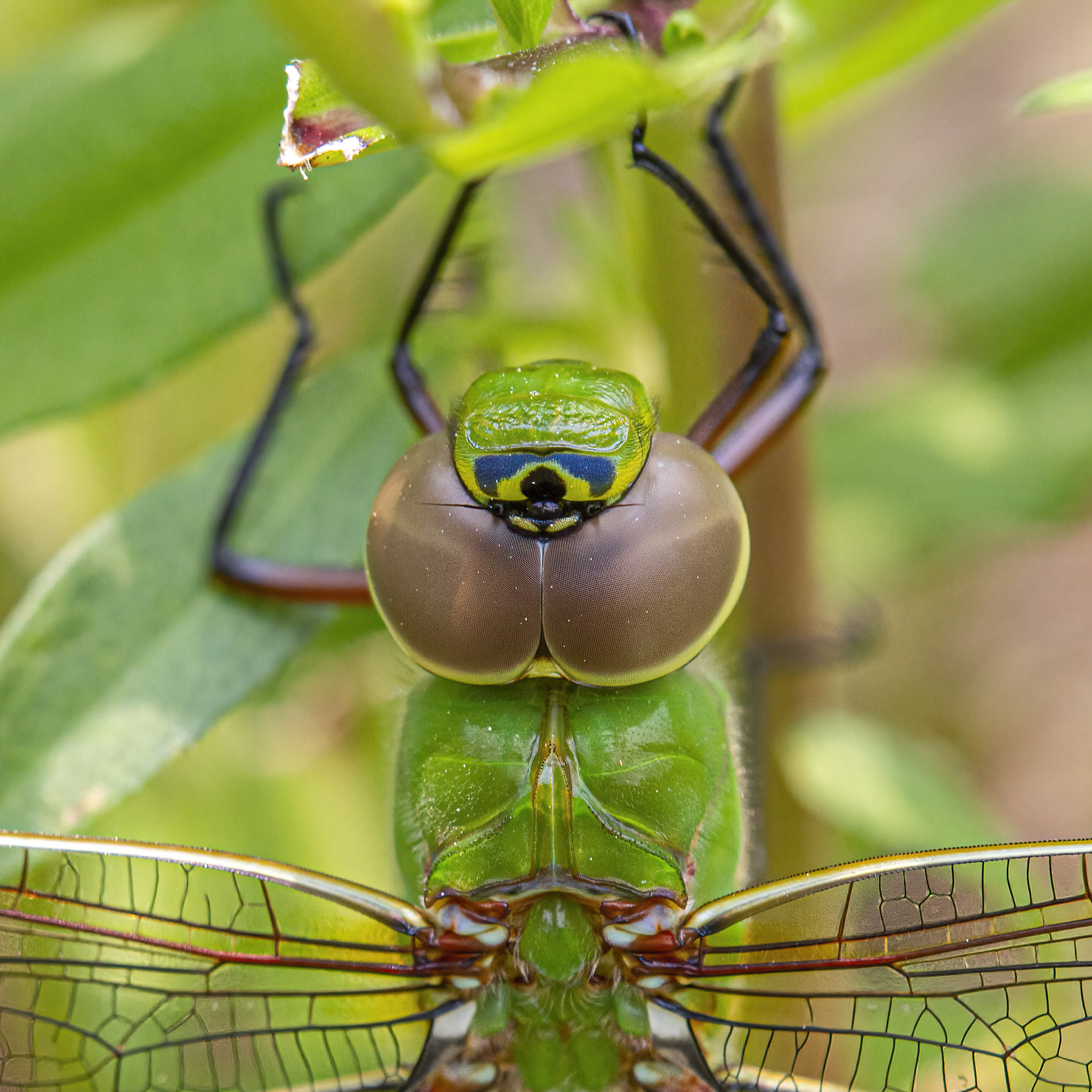
I am used to seeing Common Green Darner (Anax junius) dragonflies flying overhead, but on Tuesday I had the relatively rare chance to see one up close at Occoquan Regional Park. The Common Green Darner is a large, colorful dragonfly that is known for its long distance migratory flights. According to Wikipedia, “By attaching micro-radio transmitters to Common Green Darners, researchers have found them to be capable of migrating up to 140 kilometers in a day, though they typically cover less distance per day. ” Wow!

I spotted this dragonfly when I saw it fly to a perch in the vegetation just inches above the ground. I slowly made my way towards the vertically-perched Common Green Darner and surprisingly it did not move. I am not certain, but I had the impression that the dragonfly had newly emerged and was resting as its body parts dried out.

My 180mm macro lens gives you the impression that I was right on top of the dragonfly, but I was actually quite a bit farther away than it seems. After I took a few shots and moved away, the Common Green Darner remained in place. In fact, when I passed by the same area about twenty minutes later, it was still perched there.

I was thrilled by the amount of detail that I was able to capture. You can easily see the distinctive “bullseye” marking, for example, on the “face” of the dragonfly. The second image is a closer crop of the first image and it helps you to see some of the ommatidia, the thousands of faceted optical units that make up the dragonfly’s amazing compound eyes. You may want to click on the image to make it larger on your screen.

According to an on-line article called Dragonfly’s Eyes, “Dragonflies have very large eyes and have very good vision. Vision dominates their behaviour, including predation and looking for mates. The compound eye is made up of ommatidia which is a visual unit consisting of a lens system and a group of light sensitive cells. A large dragonfly may have up to 30,000 ommatidia in each compound eye. Each ommatidium collects one visual information, together form a mosaic image in the dragonfly’s brain. It is believed that the insects’ compound eyes are not as high resolution as vertebrate eyes. However, the dragonfly’s visual system is extremely sensitive to movement and it points in almost all direction and gives the 360 degree visual field.”

Common Green Darner

Common Green Darner

© Michael Q. Powell. All rights reserved.

Read Full Post »

Last week I was delighted to spot several Aurora Damsel (Chromagrion conditum) damselflies as I was exploring a pond in Prince William County. I had seem some Aurora Damsels earlier in the spring, when they were newly emerged, but had not yet seen any mature adults.

According to the damselfly guide that I use for reference, Damselflies of the Northeast by Ed Lam, the genus Chromagrion “consists of a single species, the Aurora Damsel, a blue and black damselfly with bright yellow on the side of the thorax. It lacks eyespots and shoulder stripes and often perches with its wings slightly spread, unlike most members of its family” of Pond Damsels (Coenagrionidae).

As I have learned from photographing insects and birds, I rarely can capture all of the distinguishing features of a species in a single photograph. In the first photo, you can see the slightly-spread wings, the distinctive markings on the abdomen and thorax, and the lack of eye spots.  You cannot, however, see the bright yellow markings on the thorax. I like to think of these kinds of shots as “scientific,” because the entire body of the damselfly is in almost perfect focus.

I personally tend to be a little more fond of shots like the second image. The damselfly seems to be posing for me with its head slightly cocked and the background and the perch are creative parts of the image. The eyes of the damselfly are in focus, but most of the rest of its body is at least a little blurry. I like to think of this type of shots as “artistic.”

Most of my photography is a mixture of  the “scientific” and the “artistic” approaches. Sometimes the approach is dictated by the circumstance, e.g. when I have to react instantaneously, and sometimes the approach is a consequence of the creative choices that I have made in my camera settings or in composition or angle of view. The cool thing about photography is that it easily accommodates a wide range of approaches and I can be as geeky or artsy as I want to be at ay given moment.

Aurora damsel

Aurora Damsel

© Michael Q. Powell. All rights reserved.

Read Full Post »
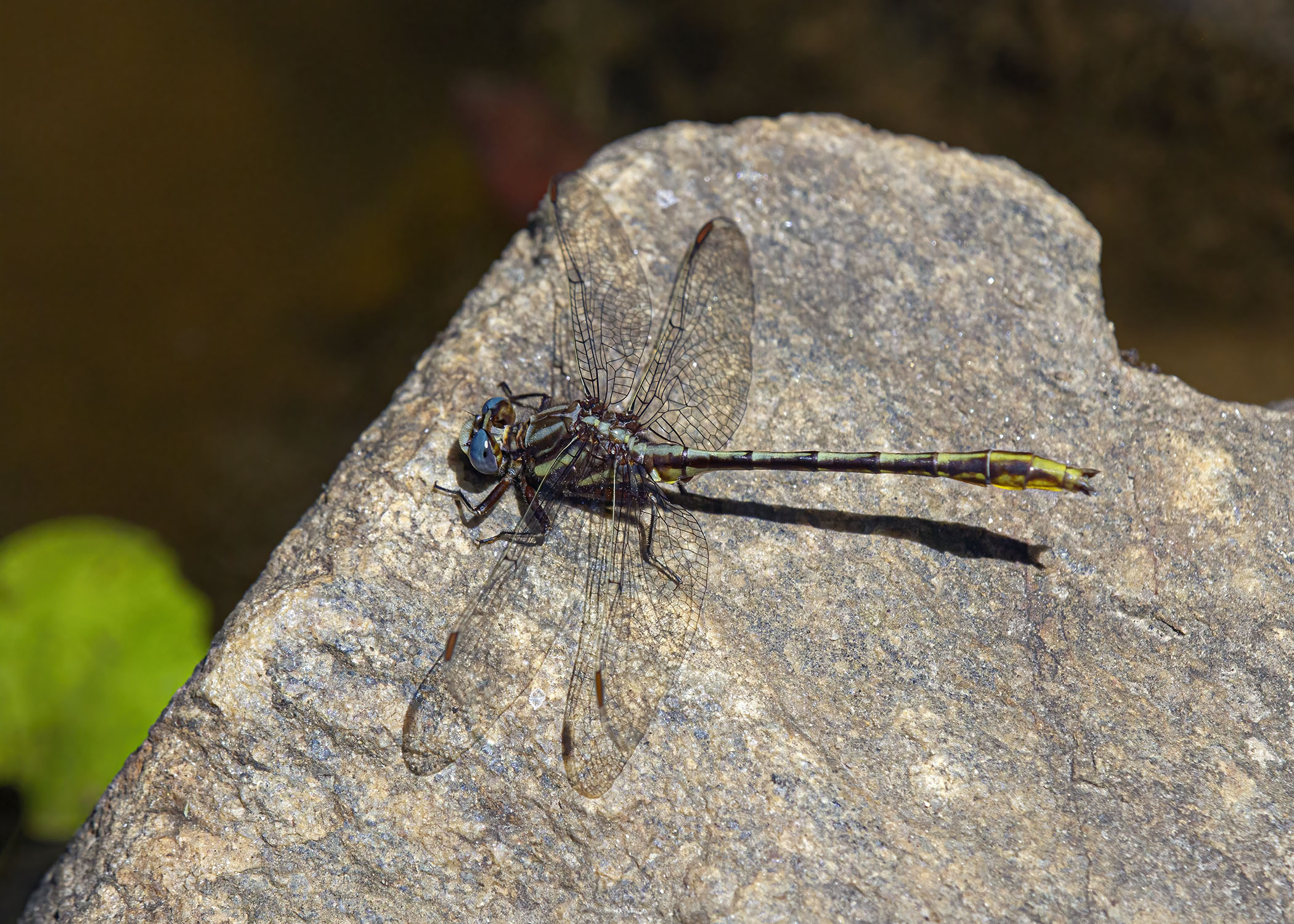
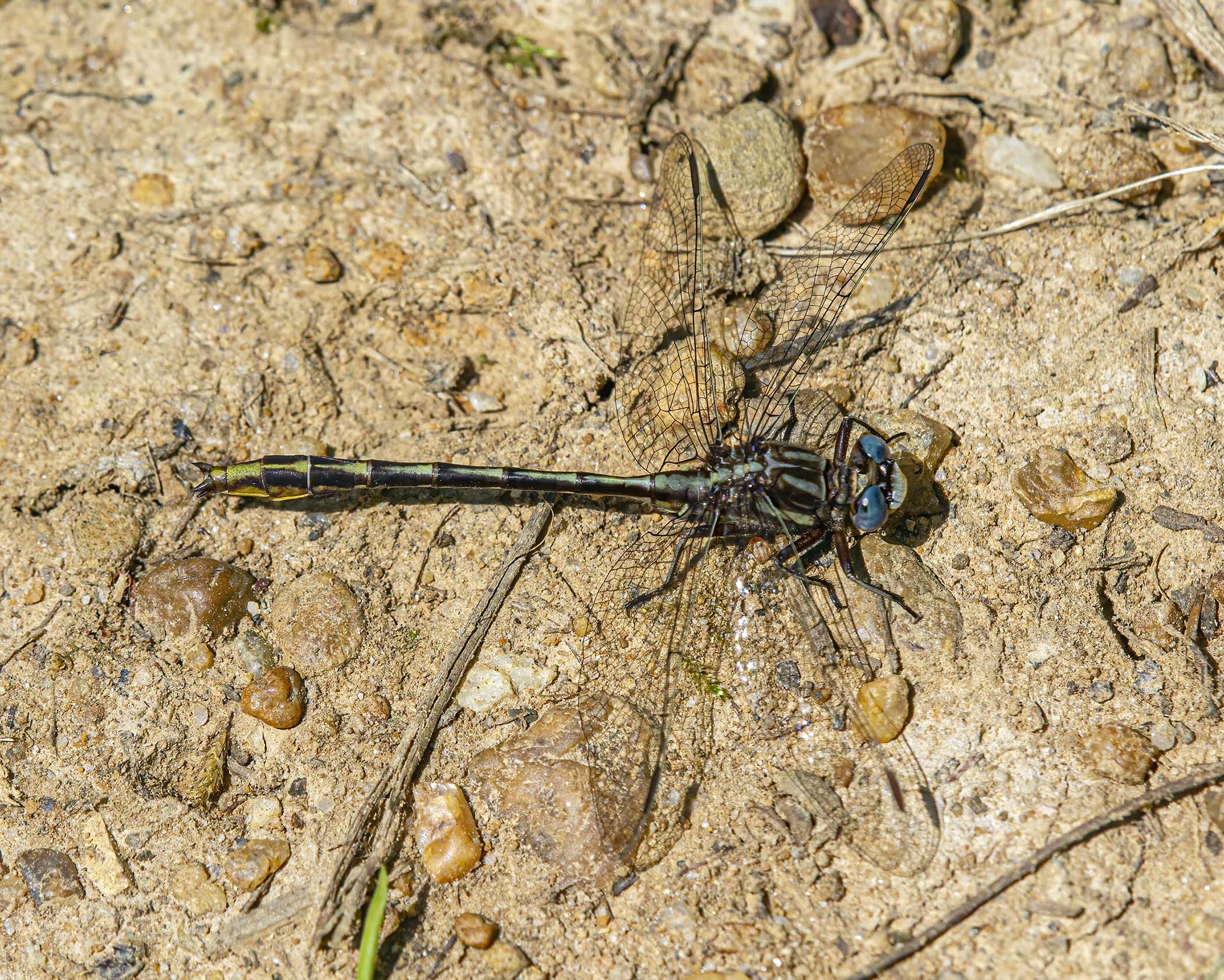
I was delighted to spot several handsome Lancet Clubtail dragonflies (Phanogomphus exilis) during a recent visit to Jackson Miles Abbott Wetland Refuge, my first sightings of this species this season. As you can see from these two photos, Lancet Clubtails like to perch flat on the ground and I spotted both of these near the edge of the pond.

I love the bright blue eyes of Lancet Clubtails and the yellow flange near the tip of the abdomen, a feature that helps to distinguish Lancet Clubtails from the visually-similar Ashy Clubtails. Some members of the Clubtail family have large and obvious “clubtails,” but the one on the male Lancet Clubtails is relatively small—you have to look at the proper angle to see it well. I like the way that the shadow in the first photo makes it easy to see the enlarged area near the end of abdomen that constitutes the “clubtail.”

Lancet Clubtail

Lancet Clubtail

© Michael Q. Powell. All rights reserved.

Read Full Post »

Some people get creeped out by spiders, but many of them are quite beautiful, like this tiny Orchard Orbweaver spider (Leucauge venusta) that I spotted on Wednesday in Prince William County. The sun was shining brightly on the shiny body of the spider, so I underexposed the image intentionally, which is why it looks so dark in the photo—the background was green in real life. I was also leaning my lens against a branch for stability, since even the slightest movement at such close range can blur an image.

Orchard Orbweavers are really common where I live, but I suspect that most people do not look closely enough at them to see their beautiful colors. According to the LSU AgCenter, “Orchard spiders are .13 to .3 inches (3.5 to 7.5 mm) in length, with females typically larger than males.” I believe that the aforementioned measurements are for the body alone and do not include the legs.

In addition to capturing some of the beautiful colors of the Orchard Orbweaver, I was thrilled to capture a look at the web of the spider. These webs are much smaller and compact than the webs of some of the larger orbweaver spiders in our area, which is a good thing, because many of these webs seem to be built across paths and I often run into them face-first.

Orchard Orbweaver

© Michael Q. Powell. All rights reserved.


Read Full Post »

This little damselfly is called an Orange Bluet (Enallagma signatum). Yes, the name is confusing and seems to be a bit of an oxymoron. Most bluets have various patterns of blue and black on their bodies, but surprisingly there are also bluets that are patterned predominantly in red, orange, yellow, green or black. The male Orange Bluet adopted a seemingly confrontational pose and stared right at me as I prepared to photograph him last Thursday at Jackson Miles Abbott Wetland Refuge—maybe he felt the need to defend his territory.

I would have liked to have captured an eye-to-eye shot, but was afraid of scaring away the damselfly if I bent down closer to it, so took the shot from a downward angle. Although a substantial part of the Orange Bluet’s body is out of focus in this image, I think the shot worked out ok, owing largely to the fact that the damselfly’s eyes were in focus. The curve of the stalk on which it was perched was a nice bonus and added some visual interest to the shot.

Orange Bluet

© Michael Q. Powell. All rights reserved.

Read Full Post »

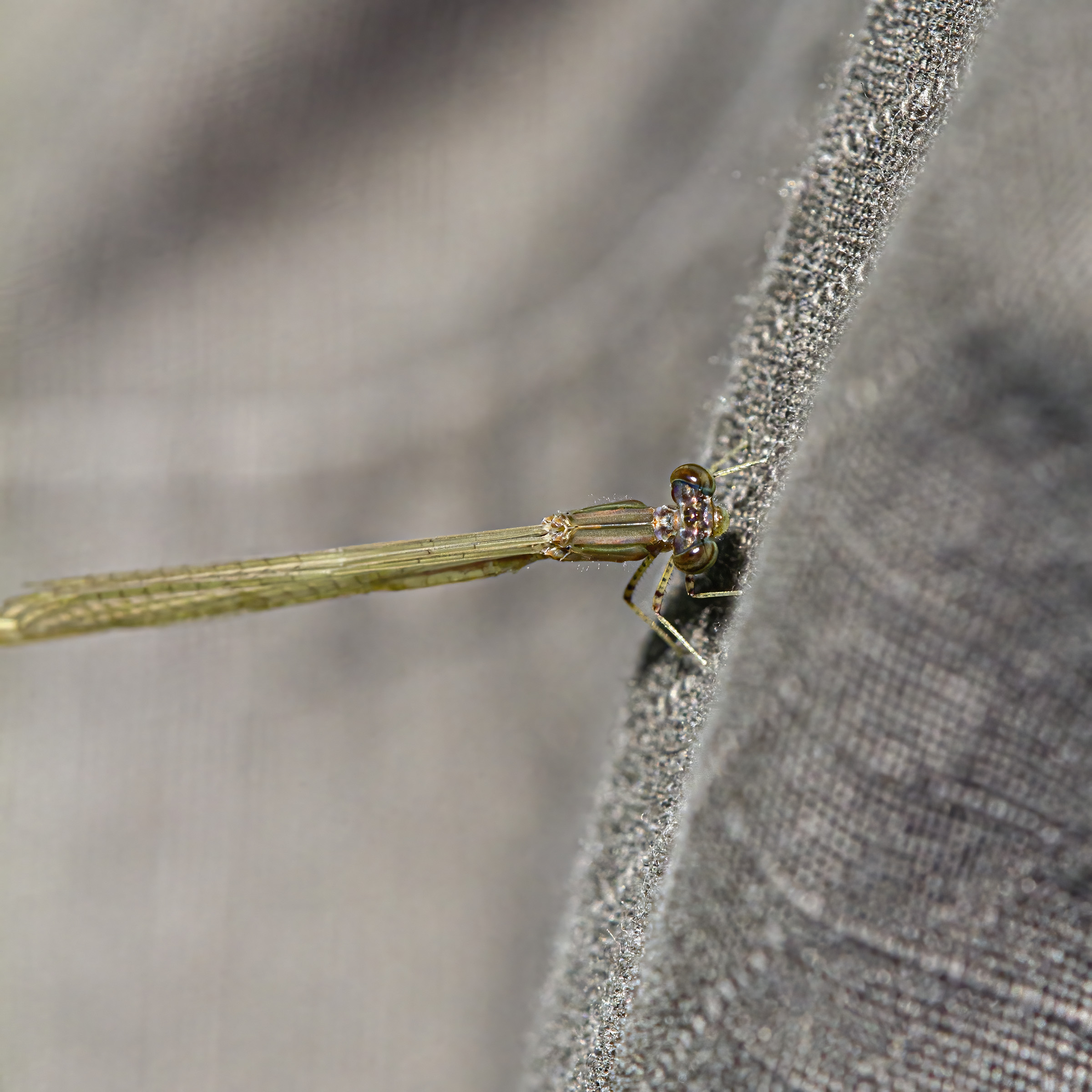
I did not get a close enough look at it to identify its species, but a teneral damselfly decided to momentarily hitch a ride on my pant leg last Wednesday at Green Spring Gardens in Alexandria, VA. A teneral damselfly is one that has only recent emerged and is therefore pale and does not yet have its full adult coloration.

It turns out that a 180mm macro lens is less than optimal for a selflie, even of my leg—I could not get far enough away to include the whole damselfly in the frame. The only other alternative is for me to become a lot more flexible, which at my age does not seem very likely.

teneral damselfly

© Michael Q. Powell. All rights reserved.


Read Full Post »

There are lots of different species of skipper butterflies in my area and it is hard for me to tell them apart. I spotted this beautiful little butterfly last Wednesday at Green Spring Gardens, just a few miles from where I live. I think that it is a Zabulon Skipper (Poanes zabulon), although it might possibly be the similar-looking Peck’s butterfly. I’d like to say that there is a scientific reason why I chose Zabulon over Peck’s, but it really is because I think that Zabulon is the cooler name of the two—I love the exotic sound of the word “Zabulon.”

I tried to get down to eye-level with the butterfly when I photographed it so that the background would fall away into a pleasant green blur and was largely successful. I like too that I was able to capture some of the green striations in the leaf on which the butterfly is perched and those little lines help to lead the viewer’s eyes to the butterfly.

Zabulon Skipper

© Michael Q. Powell. All rights reserved.


Read Full Post »

This tiny Cabbage White butterfly (Pieris rapae) paused for only a moment on a pink flower, but I managed to get a shot of it on Wednesday at Green Spring Gardens. If you look closely, you can just make out the butterfly’s stunning green eyes.

The composition of this image is pretty simple, but I think it is effective. I would have liked to blur out the background a bit more, but even though it is cluttered, it is not distracting. I think that is because the pink and white are so bright and distinctive that they “pop” against the green background.

Cabbage White

© Michael Q. Powell. All rights reserved.

Read Full Post »

On Wednesday at Green Spring Gardens, a county-run historic garden just a few miles from my home, I got a really good look at this bee’s proboscis, the long, straw-like tongue that it uses to collect nectar. From my angle, it looked more like a deadly weapon. Yikes! As you can probably tell, I have switched to using my macro lens most of the time now that the warmer weather has caused more insects to reappear.

One of my friends on Facebook named this bee the “Gene Simmons” bee, because it reminded him of an iconic pose by the singer from the band KISS in which his extended tongue reached to the tip of his chin. It is hard to know if it is true, but according to urban legend, Simmons had his tongue insured for a million dollars during the 1970’s, when KISS was at its height of popularity. The popular rumor at the time that he had a cow’s tongue grafted onto his own, however, has been disproven.

bee tongue

© Michael Q. Powell. All rights reserved.


Read Full Post »

I photographed this damselfly on last Wednesday at Occoquan Regional Park in Northern Virginia. The pattern of black and blue markings on the damselfly’s abdomen was unfamiliar to me. The closest I could come when comparing it with photos in my identification guide was a female Azure Bluet (Enallagma aspersum), but identification of bluet species can be tricky, since almost all of them are black and blue and you have to look really closely to distinguish one from another.

I posted the photo in a Facebook group dedicated to dragonflies and damselflies in Virginia and was a little shocked when one of the experts in the group confirmed my tentative identification. As far as I can recall, this is a new species for me, which makes this sighting even more special.

Azure Bluet damselfly

© Michael Q. Powell. All rights reserved.


Read Full Post »

Yesterday I spotted my first Ebony Jewelwing damselfly (Calopteryx maculata) of the season while exploring at Occoquan Regional Park in Lorton, Virginia. As far as I know, this is the only damselfly in our area with completely dark wings, so it is a pretty easy species to identify.

Most of the time I spot Ebony Jewelwings in the shadowy vegetation along small streams, but this one was perched in the open. Perhaps it was enjoying the warmth of the spring sunshine.

I am not sure why the eyes of this damselfly appear to be red, because most of the time the eyes of male Ebony Jewelwings are darker. Perhaps the reddish coloration is a result of the angle of the light or maybe it is related to the age of the individual and will darken as he grows old.

Ebony Jewelwing

© Michael Q. Powell. All rights reserved.

Read Full Post »

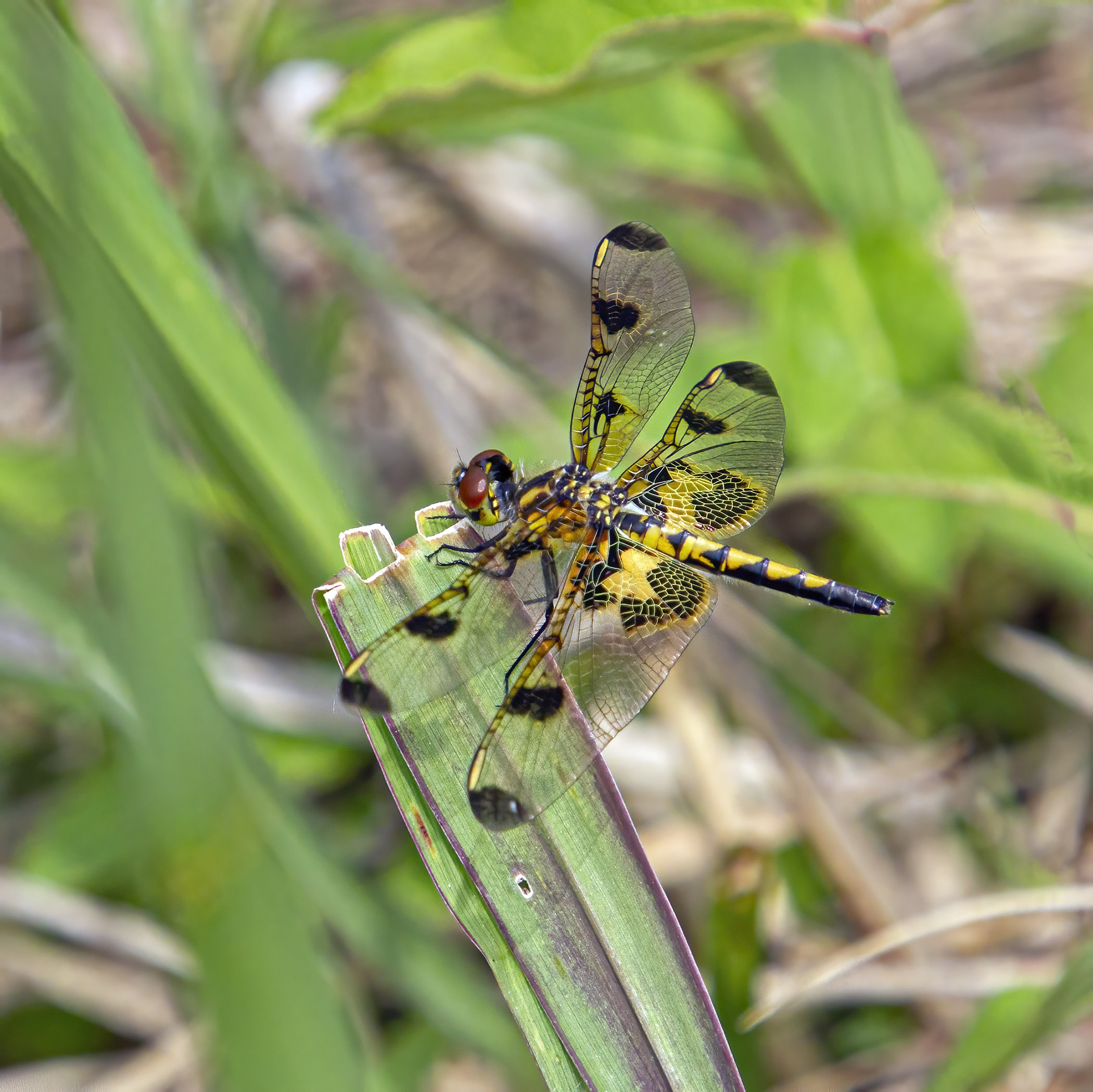
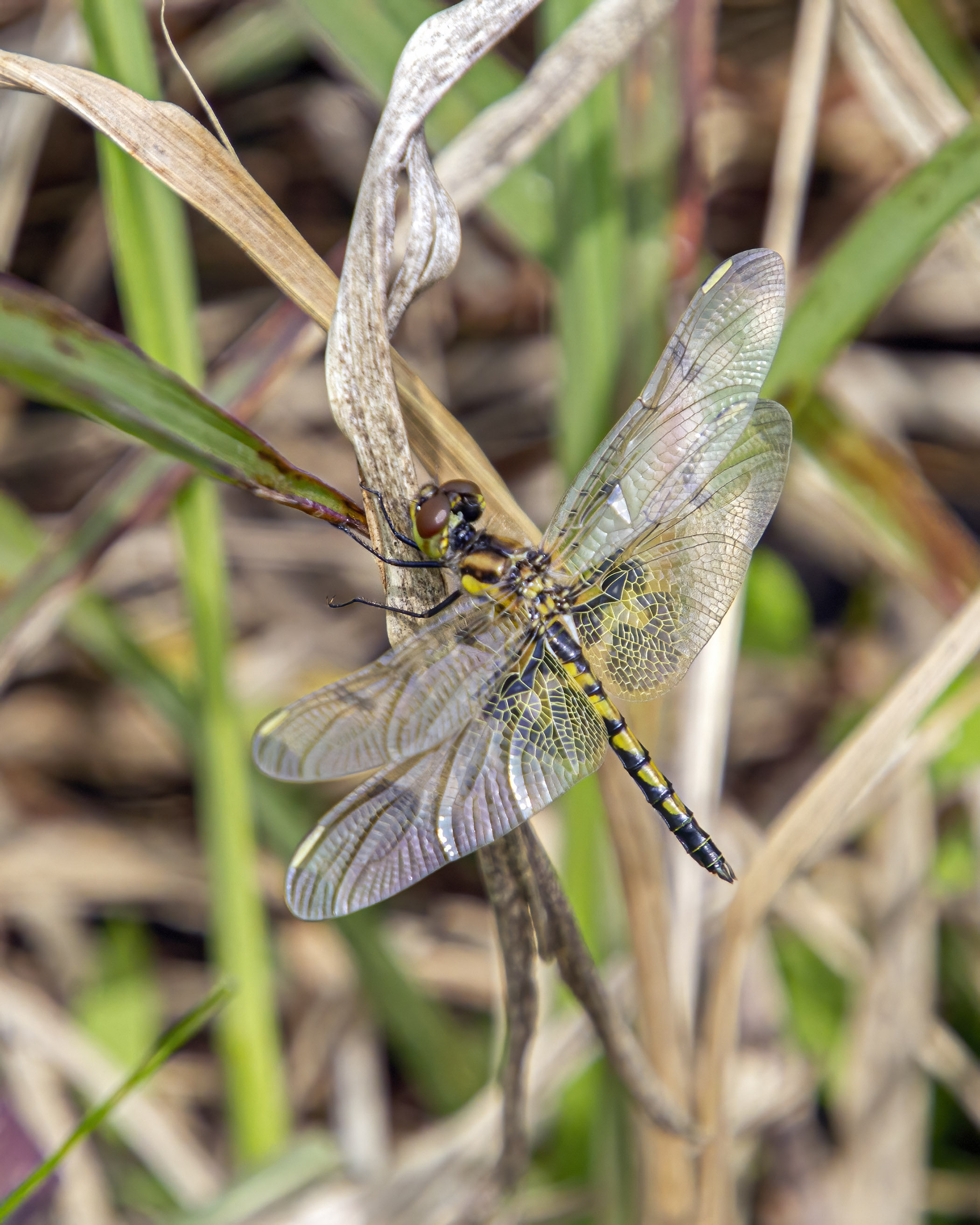
I was delighted last Thursday to see quite a few Calico Pennant (Celithemis elisa) dragonflies during a visit to Occoquan Bay National Wildlife Refuge. The markings and wing patterns on this species are really striking, making this one of the most attractive species that I see during the dragonfly season.

Some of the Calico Pennants appeared to have newly emerged—when dragonflies initially break through the exoskeleton of their water-dwelling larvae selves, their wings are really shiny and fragile and their coloration is often pale. The dragonfly in the first photo appears to be in that stage of development, which is sometimes referred to as “teneral.” It you look closely at the place where the dragonfly is grasping the vegetation, you can see what is quite probably its discarded exoskeleton from which it had recently emerged.

The Calico Pennants in the second and third photo are females, as was the one in the first photo. The patterns on the wings of these more mature females are more distinct and their yellow coloration is somewhat brighter. How do I know that they are females? If you look closely at the ends of their abdomens (the “tails”) you can see the terminal appendages that indicate their gender.

Female Calico Pennants have yellow markings on their abdomens, but that is not a reliable indicator of their gender, because immature males have that same coloration. The dragonfly in the fourth photo, for example, is an immature male Calico Pennant. If you compare the tip of the abdomen of this dragonfly with the one in the third photo, you may be able to see that there are differences.

What does a mature male Calico Pennant look like? I managed to spot only a single mature male that day, but fortunately was able to capture a shot of it. As you can see in the final photo, adult male Calico Pennants have red marking on their abdomens and the veining on their wings is pinkish in color.

We are gradually transitioning to the summer dragonfly species and some of the early spring ones are starting to disappear. I’ll be keeping my eyes open for the “new” species, so don’t be surprised to see more dragonfly photos in the upcoming months.

Calico Pennant

Calico Pennant

Calico Pennant

Calico Pennant

Calico Pennant

© Michael Q. Powell. All rights reserved.

Read Full Post »

I love to use my macro lenses. There is something almost magical about capturing details on tiny subjects, like this Fragile Forktail damselfly (Ischnura posita) that I spotted this past Monday alongside a pond in Prince William County, Virginia. Fragile Forktails are only about an inch (25 mm) in length, so I had to get pretty close to my subject to “fill the frame,” even with my 180mm macro lens.

One of the biggest challenges when I get this close to a subject is that my depth of field is really shallow, so I risk having a lot of my subject out of focus. In fact, in the majority of my photos of this damselfly, either the eyes or the tip of the abdomen is in focus, but not both. In this kind of situation, the “trick” to having the entire subject in focus is to position myself so that the sensor of my camera is parallel with the plane of the subject.

In this image, you can see that about the only things in focus are the damselfly and the edge of the leaf on which it was perched—the rest of the image is pleasingly blurred. This approach works pretty well with damselflies, which hold their wings above their bodies when perched, but does not work as well with dragonflies, which perch with outstretched wings. As a result, portions of the dragonflies in most of my photos are blurred, though I usually give top priority to keeping their eyes in focus.

Fragile Forktail

© Michael Q. Powell. All rights reserved.

Read Full Post »

As I was reviewing my photos of the past couple of weeks, I was a little surprised at the number of shots that I have taken of Blue Corporal (Ladona deplanata) dragonflies in wildly varying environments. Blue Corporals are an early-season species and won’t be around for too much longer, so I am happy to have had the opportunity to observe so many of them. Most of the time, Blue Corporals like to perch flat and, judging from the photos, it doesn’t seem to matter if there are rocks, vegetation, or even lily pads.

From the perspective of a naturalist, I like the way that the different photos give you a feel for the environments in which I found these dragonflies. As a photographer, I was also struck by the way that the colors and textures of the background interact with the subjects. Most of the backgrounds in these shots are somewhat cluttered, but I did my best to use framing and focusing techniques to keep the background from being too distracting.

If I had to make a choice, I would say that the first photo is my favorite of the Blue Corporal images. I love the juxtaposition of the dragonfly with the varied textures, shapes, and colors of the rocks. I also really like the way the background grows progressively more blurry towards the top of the image. Do you have a favorite?

Blue Corporal

Blue Corporal

Blue Corporal

Blue Corporal

© Michael Q. Powell. All rights reserved.

Read Full Post »

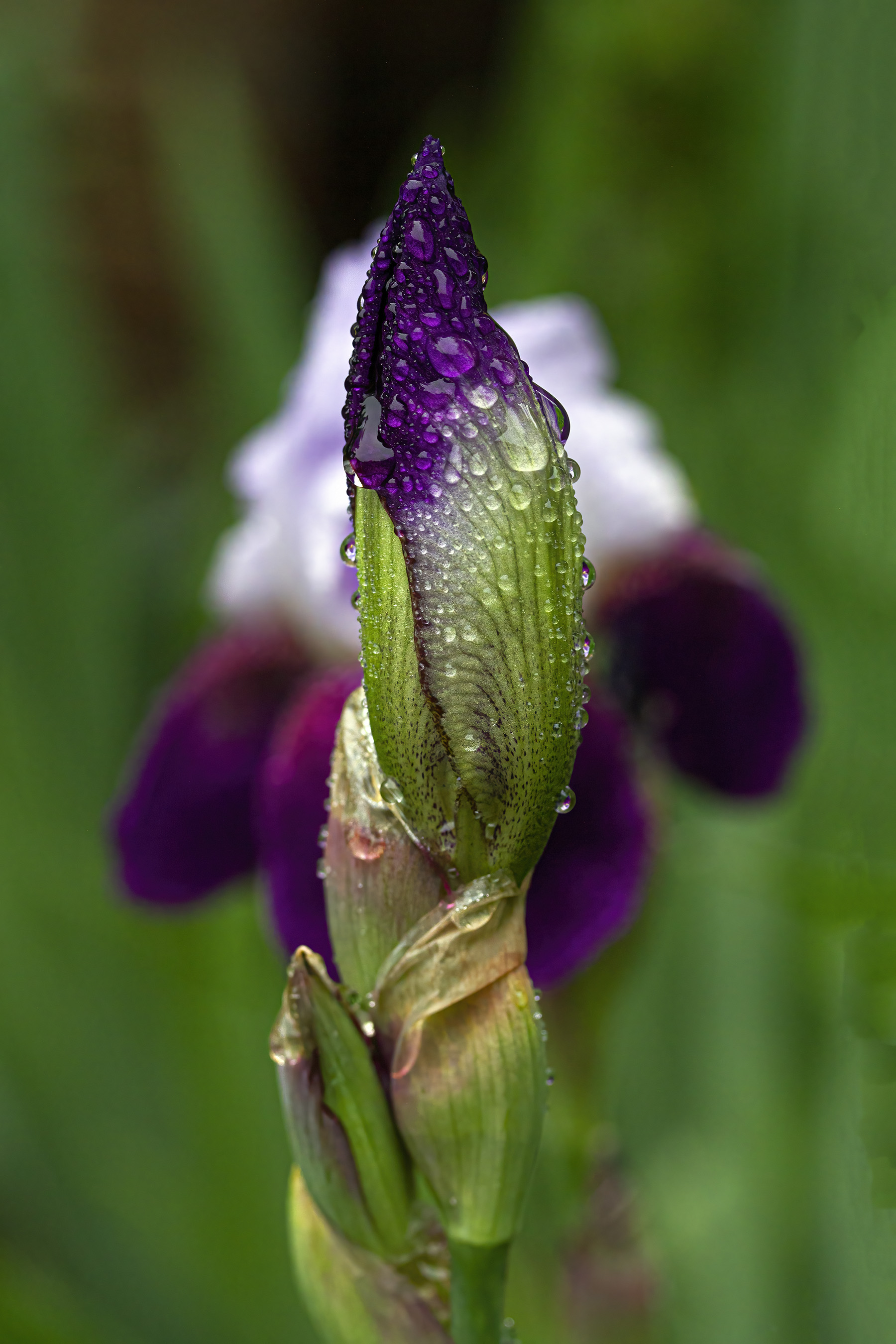
The rain has stopped for now, but some raindrops remain, sparkling like tiny jewels this morning on the bearded irises in the garden of my neighbor and fellow photographer Cindy Dyer. I tried to get creative with the framing of the first shot, with a blurred iris in the background of an unopened bud.

In the second shot, I was so close to the bearded iris that you almost can’t tell that the primary subject is a flower—I love my macro lenses. There third and fourth shows show a couple more varieties of irises that are currently in bloom in Cindy’s garden, with lots more still to come.

Iris

Iris

Iris

Iris

© Michael Q. Powell. All rights reserved.

Read Full Post »

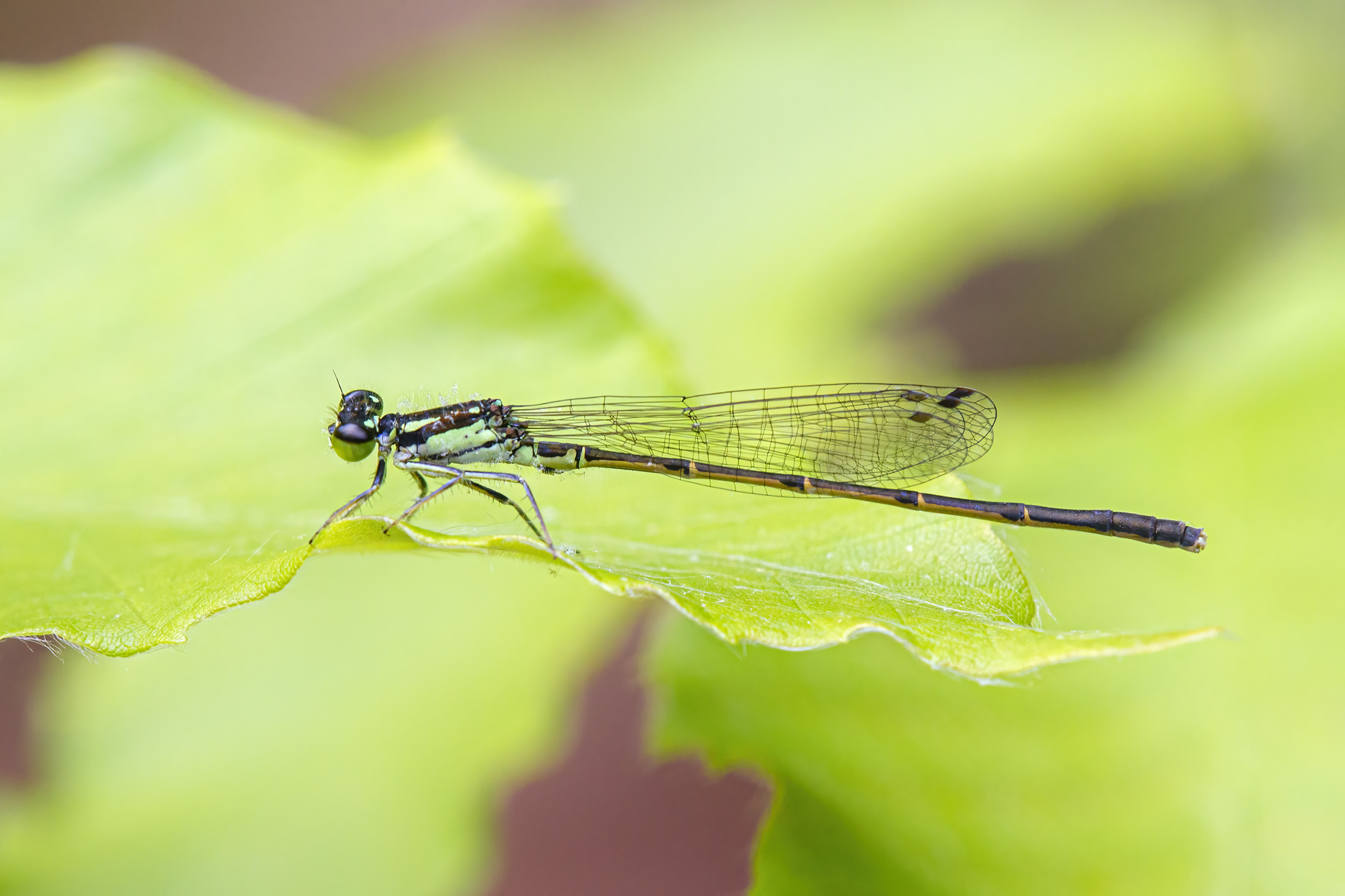
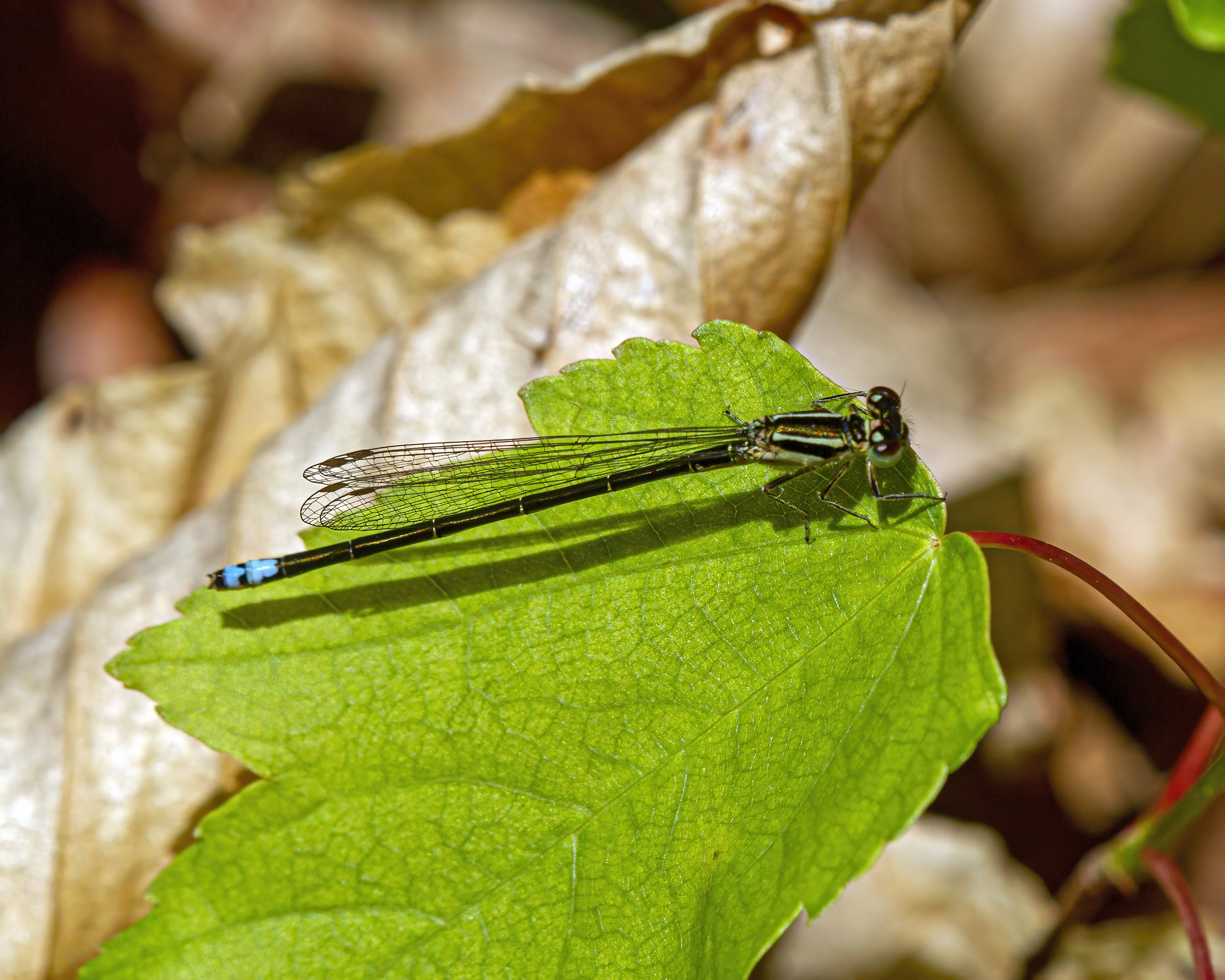
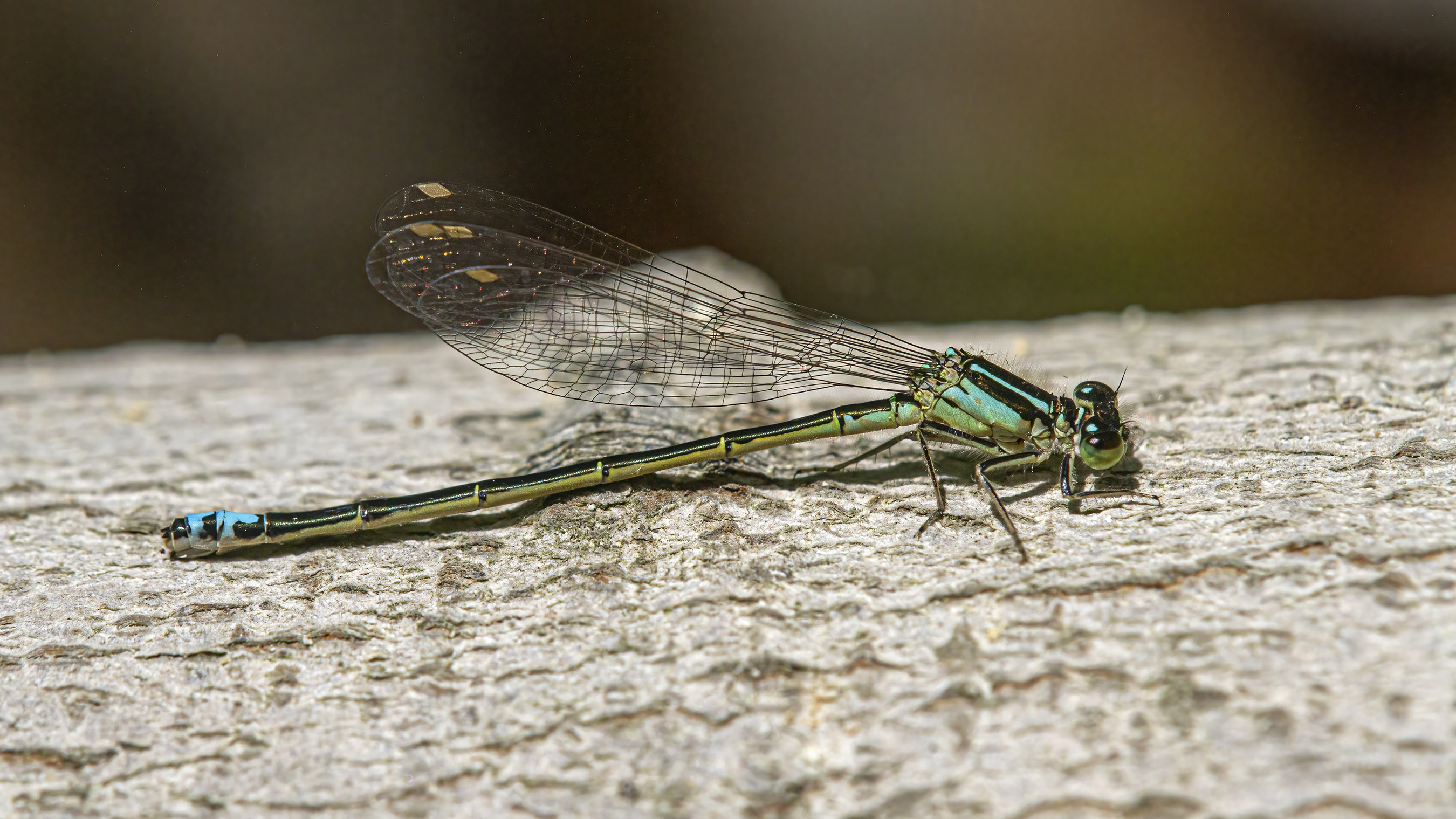
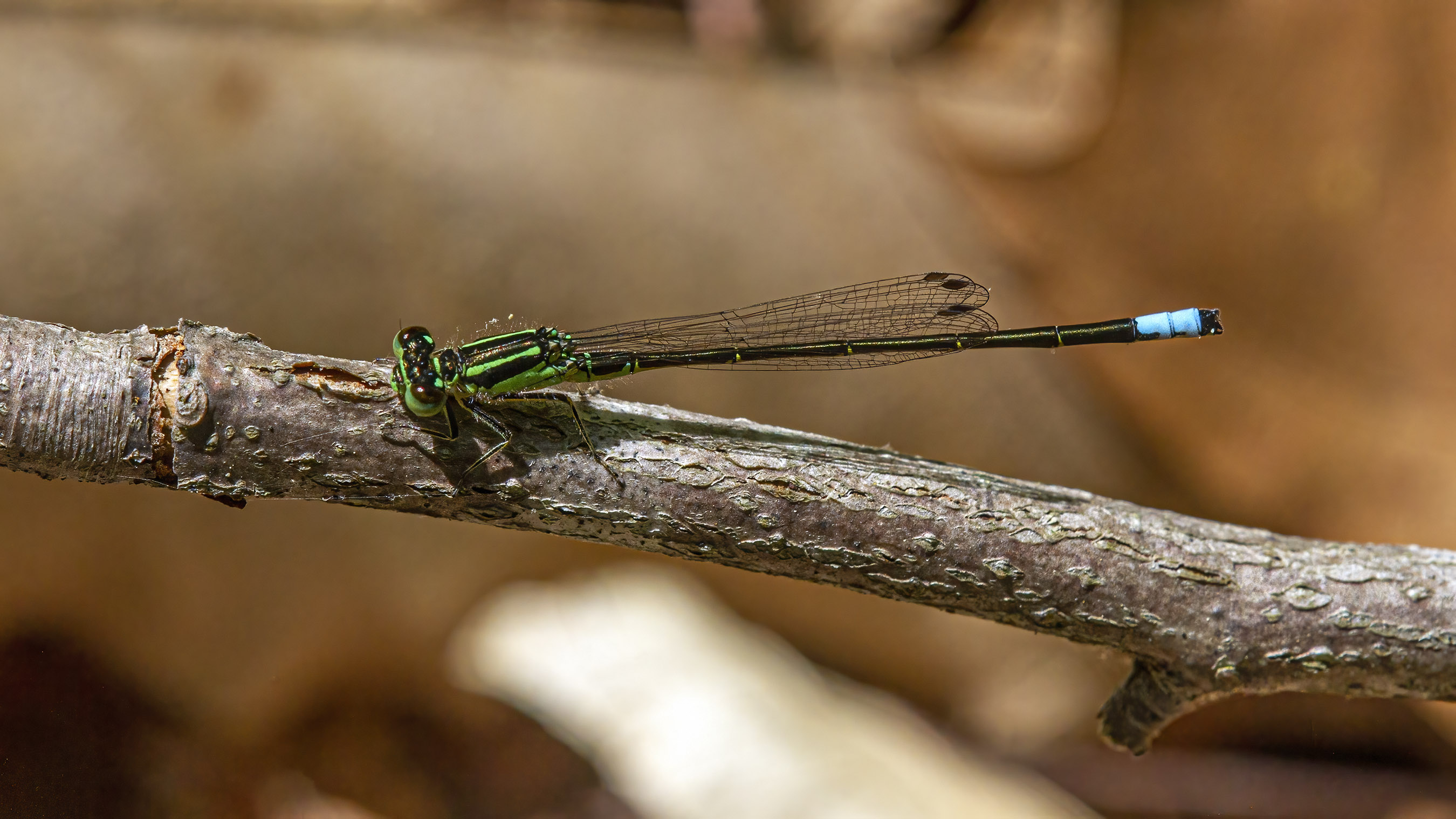
Yesterday I went exploring in Accotink Bay Wildlife Refuge, a nature preserve on the grounds of Fort Belvoir, a nearby US Army installation. I did not see many dragonflies, but was happy to spot some Eastern Forktail (Ischnura verticalis) damselflies. These damselflies are quite small—about an inch (25 mm) in length—and have distinctive blue markings near the tips of their abdomens.

Many damselflies have combinations of black and blue on their bodies, so identification can often be difficult. Usually I start by looking at the body and deciding if it is primarily black, as was the case here, primarily blue, or somewhere in the middle. After that, I examine the shape of the markings at the tip of the abdomens and compare them with the pictures in my damselfly identification guide.

Somehow, though, I always have more problems with damselfly identification that I do with dragonfly identification. Fortunately I am part of several Facebook groups that have experts who can weigh in when I need help in identifying a particular damselfly.

Eastern Forktail

Eastern Forktail

Eastern Forktail

© Michael Q. Powell. All rights reserved.

Read Full Post »

« Newer Posts - Older Posts »