Feeds:
Posts
Comments

Archive for the ‘Macro Photography’ Category

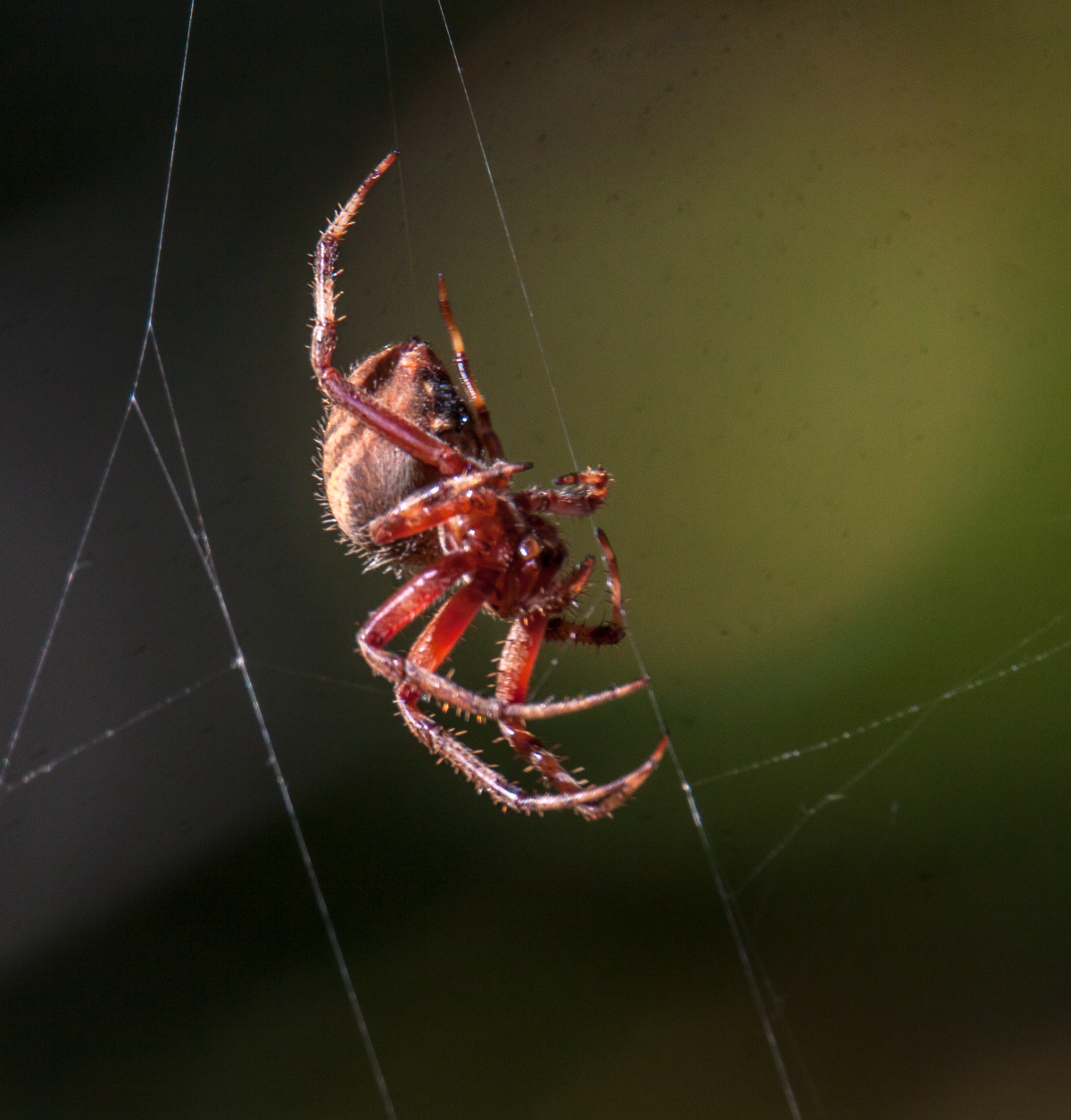
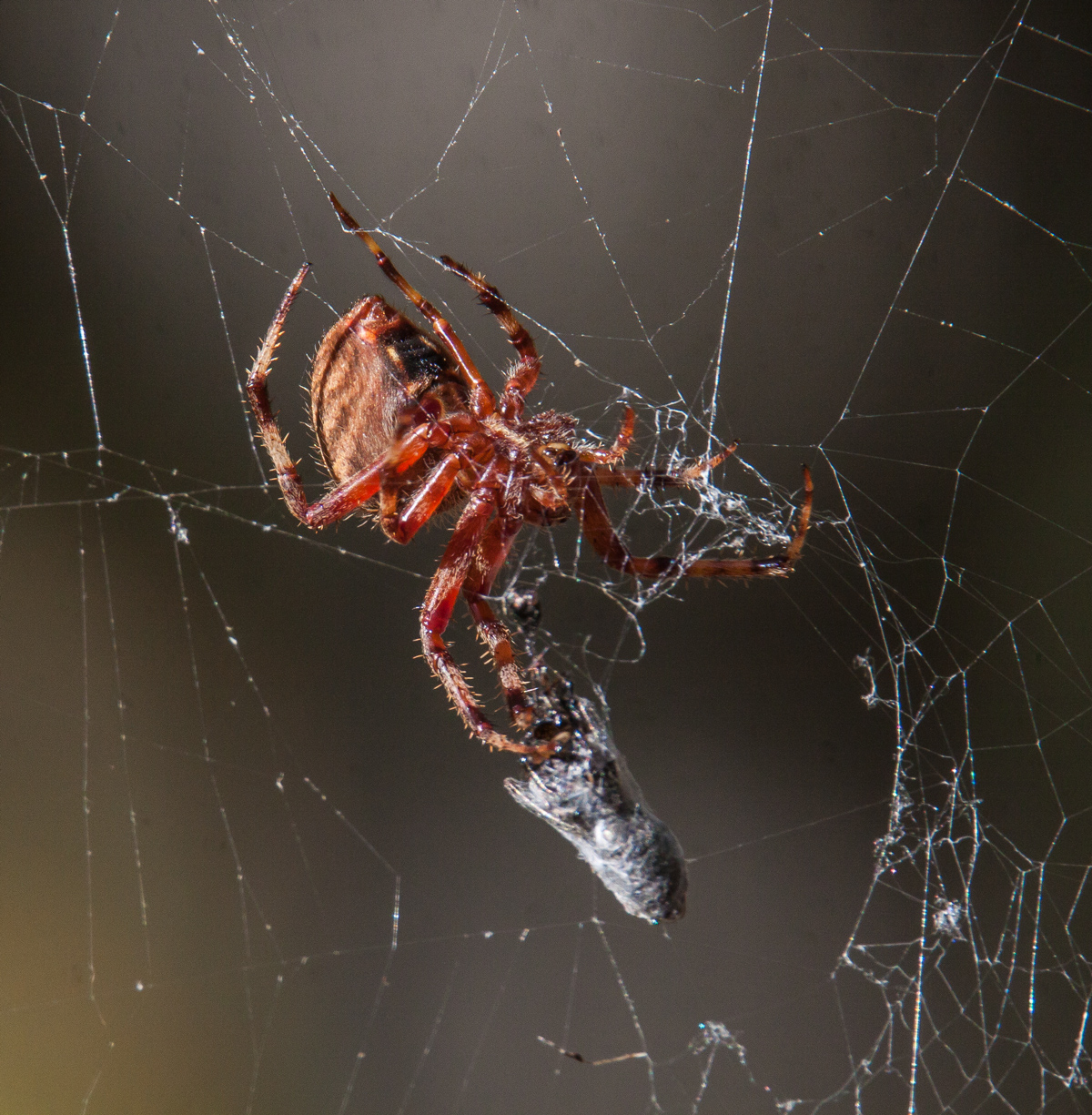
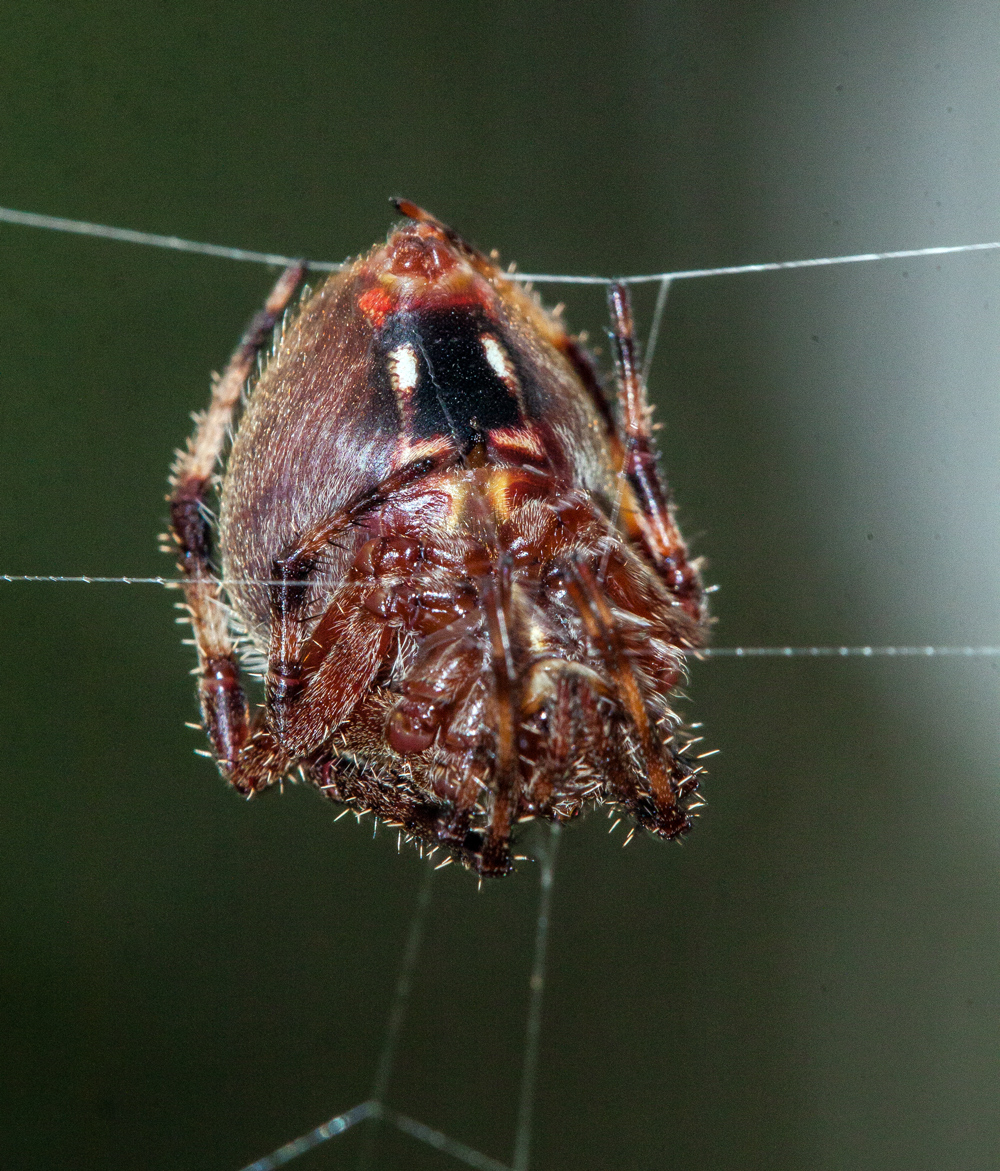
After a summer of not seeing many spiders, I was thrilled recently to spot this orbweaver spider as it dealt with an unidentified prey that it had captured.

Most of the large spiders that I observe are Black and Yellow Garden spiders (Argiope aurantia), but this one looks different from the ones that I have previously seen, especially in the first image. It may be that I am used to seeing the spider only in the center of her web, as in the second image, or perhaps this is a different spider species.

This was an unusual case for me, because I spotted the spider as I was walking through a field of waist-high vegetation and I was able to get pretty close to the spider and get these shot with my macro lens. Generally, I am forced to photograph spiders like this from a distance (which most people probably think is a good idea anyways).

There are some subjects, like cute birds, that I photograph that I know will have a broad appeal, but past experience has shown me that spiders tend to divide people into two camps—some people are fascinate and think spiders are totally cool, while others are thoroughly creeped out and find spiders to be repulsive.

What do you think about spiders?

orbweaver spider

orbweaver spider

© Michael Q. Powell. All rights reserved.

Read Full Post »

Although it is October, my good friend and fellow photographer Walter Sanford continues to discover new species of damselflies in my favorite marshland park. Check out his posting (and his site) for some awesome images of his newest find.

waltersanford's avatarwalter sanford's photoblog

I’m fairly certain I discovered a new species of damselfly at Huntley Meadows Park (HMP): Sweetflag Spreadwing damselfly (Lestes forcipatus).

A Sweetflag Spreadwing damselfly (Lestes forcipatus) spotted at Huntley Meadows Park, Fairfax County, Virginia USA. This individual is a male. 15 OCT 2015 | HMP | Sweetflag Spreadwing (male)

This individual is a male, as indicated by its hamules and terminal appendages.

A Sweetflag Spreadwing damselfly (Lestes forcipatus) spotted at Huntley Meadows Park, Fairfax County, Virginia USA. This individual is a male. 15 OCT 2015 | HMP | Sweetflag Spreadwing (male)

(See a full-size version of the preceding photo, without annotation.)

The hamules are key field markers for differentiating some species of similar-looking damselflies, such as Southern Spreadwing (Lestes australis) and Sweetflag Spreadwing (Lestes forcipatus).

All male damselflies have four terminal appendages, collectively called “claspers.” Male damselfly terminal appendages don’t look exactly the same for all species of damselflies, but their function is identical.

A Sweetflag Spreadwing damselfly (Lestes forcipatus) spotted at Huntley Meadows Park, Fairfax County, Virginia USA. This individual is a male. 15 OCT 2015 | HMP | Sweetflag Spreadwing (male)

(See a full-size version of the preceding photo, without annotation.)

Claspers are used to grab and hold female damselflies…

View original post 352 more words

Read Full Post »

How do you feel when confronted with a graphic image of mating damselflies? Are you shocked, offended, fascinated, or intrigued? Is it art or is it pornography?

I couldn’t help but feel a little bit like a voyeur as I crept closer and closer on Monday to the mating Great Spreadwing damselflies (Archilestes grandis) with my macro lens. As I prepared the photos for this posting, it seemed like I had extracted a couple of pages from the Damselfly Kama Sutra. What exactly were they doing as they assumed more and more acrobatic positions? It was like watching an R-rated (or maybe X-rated) Cirque du Soleil performance.

Art or pornography? Sometime in the distant past I remember studying a Supreme Court case in which attempts were made to define obscenity. With the help of Wikipedia, I refreshed my memory. It was a 1964 case and Justice Potter Stewart wrote some words that have become a guideline for assessing a given piece of work:

“I shall not today attempt further to define the kinds of material I understand to be embraced within that shorthand description [“hard-core pornography”], and perhaps I could never succeed in intelligibly doing so. But I know it when I see it…”

So that’s it, “I know it when I see it.”

I’ll boldly contend that my photos are art. I am glad, however, that I am not a parent who has to respond to a young child’s curious question about what these damselflies are doing. The birds and the bees are simple to explain by comparison. With damselflies, I think the Facebook expression fits—”it’s complicated.”

Great Spreadwing damselflies

Great Spreadwing damselflies

© Michael Q. Powell. All rights reserved.

Read Full Post »

I just love the beautiful blue eyes and distinctive markings of the male Great Spreadwing damselfly (Archilestes grandis) and I was thrilled when I spotted one on Saturday at Huntley Meadows Park in Alexandria, Virginia.

I wonder if it damages this little guy’s self-esteem to be called a “damsel?” Perhaps he looks with envy at his odonate brethren with the more macho-sounding “dragon” in their names. Do we need a more gender-neutral name for damselflies?

Great Spreadwing damselfly

© Michael Q. Powell. All rights reserved.

Read Full Post »

What’s the largest damselfly in North American? According to Dennis Paulson, in his wonderful book, Dragonflies and Damselflies of the East, that title goes to the Great Spreadwing damselfly (Archilestes grandis), which is more than two inches (5 cm) in length, i.e. bigger than many of the dragonflies that I so frequently chase.

My good friend and local dragonfly expert Walter Sanford spotted a male Great Spreadwing this past week and posted a photo of it and yesterday I felt inspired to try to find one myself. He had provided me the general location at Huntley Meadows Park, my favorite local place for nature photography, and I patiently searched near the water, in the tall vegetation, and under the trees for almost two hours.

As my patience was starting to wear thin, I finally spotted one. The Great Spreadwing damselflies have a yellow racing stripe on their thorax and are quite distinctive, in addition to their size. I took some initial shots with my big zoom lens and then switched quickly to my 180mm macro lens.

The first Great Spreadwing I spotted was a male, but eventually I spotted a female and a pair of them in the tandem position. I am still going through my shots, but wanted to post a couple initially. I will probably post some more images in another posting or two.

The first shot shows a female Great Spreadwing damselfly—you can tell from her coloration and her terminal appendages. She let me take quite a few photos and returned to nearby vegetation a couple of times when she was spooked. The second image is a close-up that shows her beautiful eyes and her blue upper lips, which I think technically are called labrum.

Perhaps blue lips are the new fashion craze for the autumn. I’ll look around and see if any of the young ladies in the Washington D.C. area are sporting this look.

Great Spreadwing damselfly

spread2_female_blog

© Michael Q. Powell. All rights reserved.

Read Full Post »

I spotted this barn spider (Neoscona crucifera) hanging in the air about the same time she sensed my presence. She scampered up her web as I moved in a little closer. Eventually she climbed back down and I managed to get these shots of her in motion.

Initially I couldn’t figure out why she was hurrying down the strands of her web. When she stopped, however, I could see that she was anxious to finish off the snack that she had wrapped up earlier.

Although these shots may look like they were taken with a macro lens, they were actually taken at 600mm on my Tamron 150-600mm zoom lens. I ended up focusing manually on the spider, because my camera kept wanting to focus on the background, which was a good distance away. Additionally, I used my pop-up flash on at least some of these images to bring out some of the details of the spider.

barn spider

barn spider

barn spider

barn spider

© Michael Q. Powell. All rights reserved.

Read Full Post »

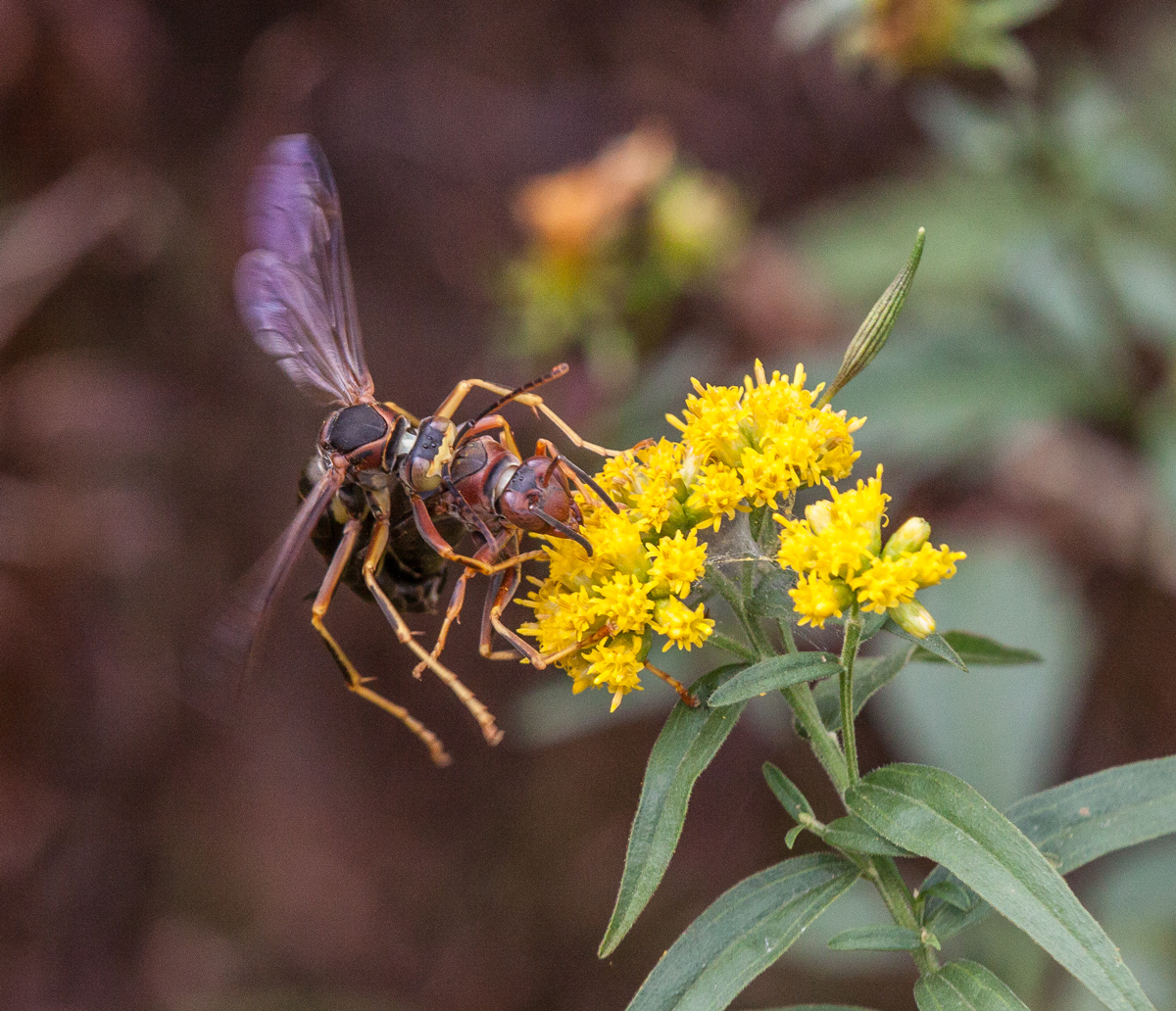
Cole Porter famously wrote that, “Birds do it, bees do it, even educated fleas do it…”  Apparently he could have included wasps, judging from this shot I took on Monday of mating wasps at Huntley Meadows Park.

I had my macro lens on my camera and was checking out a yellow flowering plant, which I think is goldenrod, when I heard the buzzing of an insect. I assumed that it was a bee, but when it landed, I realized it was a wasp. As I looked through my viewfinder and focused more closely on the subject, it became apparent that it was not one wasp—it was a mating pair.

They didn’t stay long, but I was able to get a reasonably clear shot of the couple as they “do it.”

If you are not familiar with the Cole Porter song that I referenced, “Let’s Do It (Let’s Fall in Love), check out a YouTube video of Ella Fitzgerald singing a jazzy version or a more traditional arrangement by Conal Fowkes.

mating wasps

© Michael Q. Powell. All rights reserved.

Read Full Post »

We usually think of springtime as the season of love, but apparently autumn is also a good season if you are a damselfly. I don’t know what was so special about this one plant sticking out of the water, but mating damselfly couples seemed to be competing for a spot to land and deposit their eggs on it this past Monday at Huntley Meadows Park in Alexandria, Virginia.

I’m no expert when it comes to identifying damselflies, in part because so many different species have similar patterns of black and blue, but I think these couples, all in the tandem position, may be Big Bluets (Enallagma durum). I’d welcome any corrections or confirmation of my initial identification.

UPDATE:  My local odonate expert, Walter Sanford, weighed in with a correction to my identification—these damselflies are Familiar Bluets (Enallagma civile), not Great Bluets. When it comes to my initial identification, you might say that I blew it.

For those who might be curious about the technical aspects of the photo, I took this with my Canon 50D at 600mm on my Tamron 150-600mm lens, which is the equivalent of 960mm when you take into account the crop sensor of my camera. I continue to be pleased with the amount of detail that I can capture with the relatively affordable long lens, even when it’s extended to its maximum length. If you click on the image, you can see even more of those wonderful details.

mating damselflies

© Michael Q. Powell. All rights reserved.

Read Full Post »

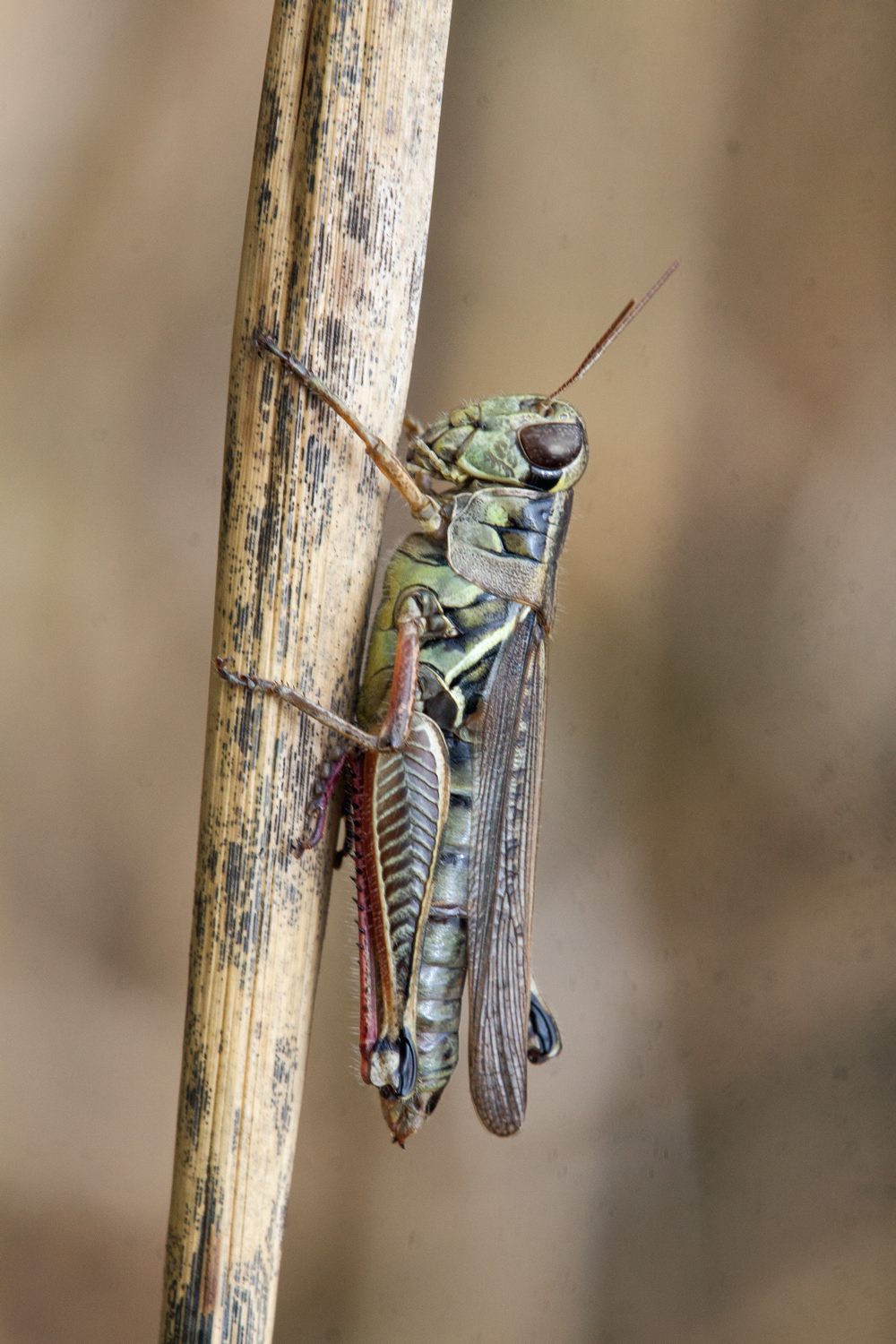
The dragonfly population continues to decrease as we move deeper into autumn, but my little winged friends seem to have been replaced by grasshoppers. Whenever I walk through the fields of my favorite marshland park, I am preceded by mini explosions of insects. Most of the grasshoppers hop far away, but yesterday one of them chose a nearby stalk of grass and posed for me.

grasshopper

© Michael Q. Powell. All rights reserved.

Read Full Post »

“Blue eyes
Baby’s got blue eyes
Like a deep blue sea
On a blue blue day”

Somehow the words to the old Elton John song come to mind when I gaze into the stunning blue eyes of this Blue-faced Meadowhawk (Sympetrum ambiguum). This dragonfly was unusually cooperative and let me move in to take this close-up portrait with my macro lens.

Blue-faced Meadowhawk

If you have never heard “Blue Eyes” or just want a blast from the past, here’s a link to a YouTube video of Elton John performing the song.

© Michael Q. Powell. All rights reserved.


Read Full Post »

I first caught sight of this spider yesterday when I almost walked into it—it was hanging in mid-air at eye level across a path and we were less than a foot apart when I encountered it.

Initially the spider scampered up a bit and then seemed to run out of web and came to a stop, giving me some time to change to my macro lens. The spider, which I think is a kind of orb weaver (Neoscona crucifera) that is sometimes called a barn spider, was about seven feet off the ground by this time, so it was quite a challenge getting a stable shooting position. I raised the ISO and used the pop-up flash and managed to get some reasonably sharp images.

These are my favorite two images. I really like the detail in the first shot, but like the background and angle of view more in the second shot. Which one is better? I vacillate in trying to decide, so included them both.

orbweaver spider

orbweaver spider

© Michael Q. Powell. All rights reserved.

Read Full Post »

What signs do you look for that point to the change of seasons? Throughout most of my life, the changing colors of the fall foliage have been the primary indicator of the end of summer and the beginning of autumn.

The last few years, however, I have become increasingly sensitive to seasonal changes in the dragonfly population as I have increasingly focused my attention and my camera lens on these fascinating and colorful aerial acrobats. Summer is prime time for many dragonfly species, but certain species show up much later in the season and stay with us throughout much of the autumn days.

One of these late-arriving species is the Blue-faced Meadowhawk (Sympetrum ambiguum) and I was thrilled yesterday to spot a male of this species at Huntley Meadows Park, the marshland where I take a lot of my wildlife photos. This is my first spotting of a Blue-faced Meadowhawk this season and I suspect it won’t be long before I also start seeing his “cousin,” the Autumn Meadowhawk (Sympetrum vicinum).

I particularly like the bright red color and bold pattern of this dragonfly’s body and its beautiful turquoise face. Although I may vacillate a bit from time to time, I think this is the most beautiful dragonfly species that I have ever encountered. What do you think?

Blue-faced Meadowhawk

© Michael Q. Powell. All rights reserved.

Read Full Post »

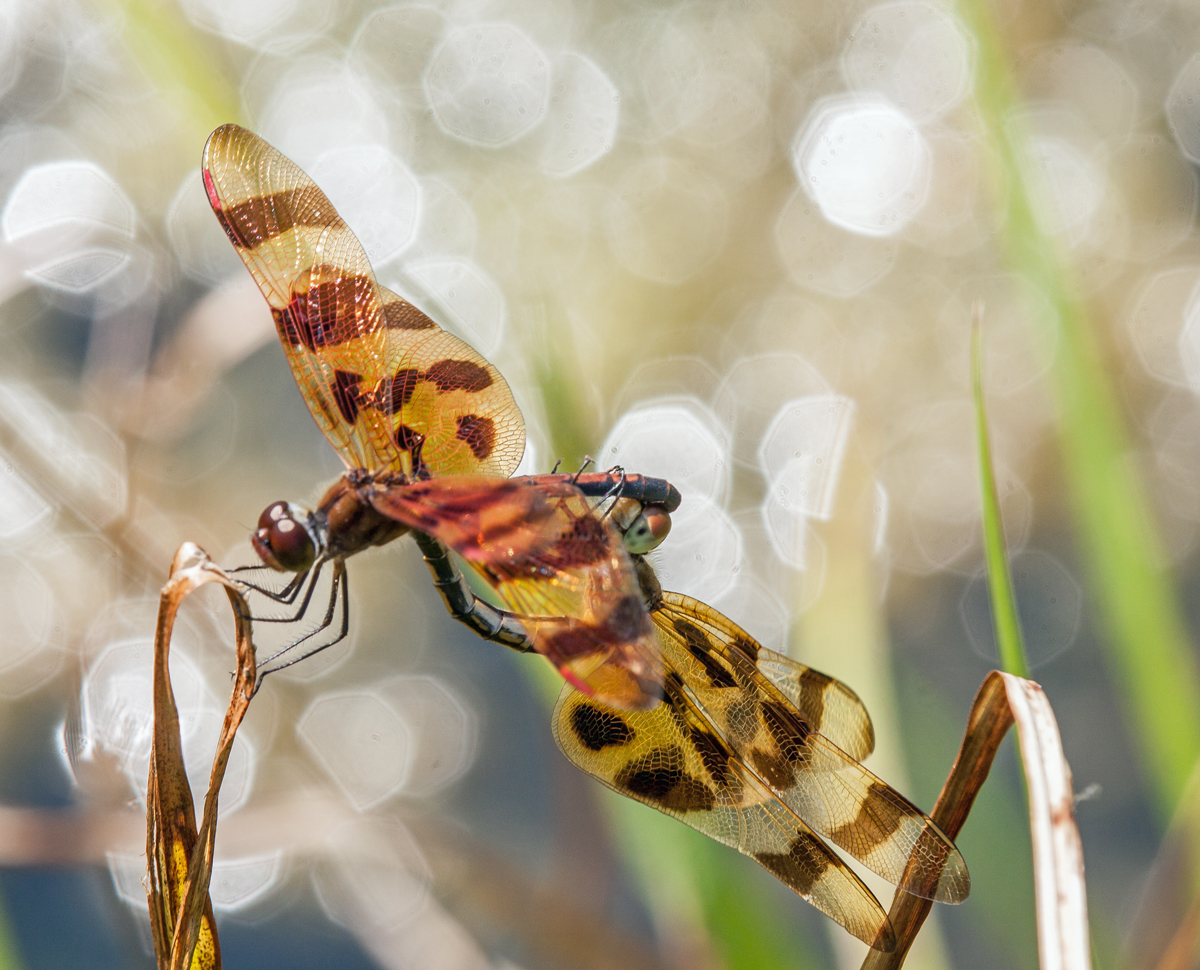
Summer days are drifting away and the biological clocks are almost certainly ticking loudly for some dragonflies. This past weekend at Meadowlark Botanical Gardens in Vienna Virginia, I spotted these two Halloween Pennant dragonflies (Celithemis eponina) engaged in a little summer loving.

It’s hard not to feel a little bit like a voyeur as I move in closer to photograph the acrobatic intertwining of the tiny dragonfly bodies. Summer loving happens so fast and soon my colorful little friends will be gone for the season,

Halloween Pennant

Halloween Pennant

© Michael Q. Powell. All rights reserved.

Read Full Post »

One of the highlights for me of a short visit yesterday to Meadowlark Botanical Gardens in Vienna, Virginia was spotting this spectacular dragonfly, which I think is a female Banded Pennant (Celithemis fasciata).

Earlier this summer, I spotted a male Banded Pennant, whose body was blue, but the coloration of this one suggests to me that it is a female. The dragonfly was perched on the highest branches of a small tree, which allowed me to isolate it against the beautiful blue sky. You may notice that the branches are different in the two photos—the dragonfly flew away a few times, but returned to the same tree a short time later.

CORRECTION: My initial identification was incorrect. My local dragonfly expert, Walter Sanford, with whom I neglected to consult in advance, provided a correct identification. This is a female Halloween Pennant (Celithemis eponina), not a Banded Pennant.


Banded Pennant

Banded Pennant

© Michael Q. Powell. All rights reserved.

Read Full Post »

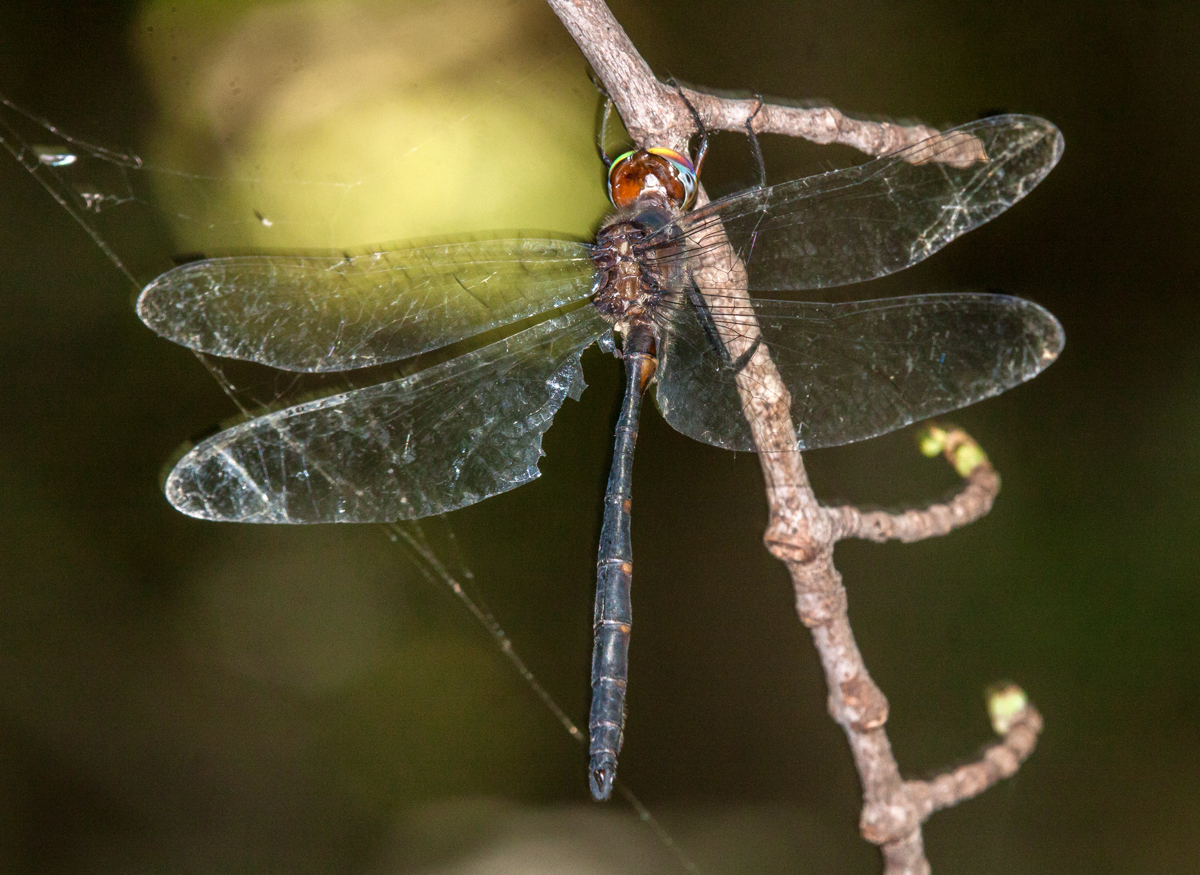
Most dragonflies appear to like the sunlight, but this Mocha Emerald dragonfly (Somatochlora linearis) that I encountered yesterday seemed to prefer the heavy shade, which made it a bit of a challenge to photograph.

I was walking along a small stream, moving in an out of patches of sunlight when I first spotted the dragonfly. I had my long telephoto lens on my camera and took some initial shots, which turned out blurry—there didn’t seem to be enough light for my camera’s autofocus to function well. I quickly set up my tripod and tried to focus manually, but that didn’t work out too well either.

Fortunately, the dragonfly seemed oblivious to my actions. I switched to my 180mm macro and moved in closer and finally was able to see well enough to focus. Because of the limited amount of light, I had the ISO cranked up to 1600 and used the pop-up flash.

As I moved about trying to get a better angle, I slid twice down the slippery bank of the stream into the shallow water and somehow managed to lose one of the little rubber feet of my tripod, but managed to get a couple of decent shots of this shadow-dwelling dragonfly.

Mocha Emerald

Mocha Emerald

© Michael Q. Powell. All rights reserved.

Read Full Post »

I love looking at the world through my macro lens and finding beauty on a tiny scale, like this gorgeous green bee that I spotted this past weekend in the garden of my neighbors.

I am not certain of the exact identification of this bee, but I think it is part of the genus Agapostemon that includes a variety of green sweat bees.


green bee

© Michael Q. Powell. All rights reserved.

Read Full Post »

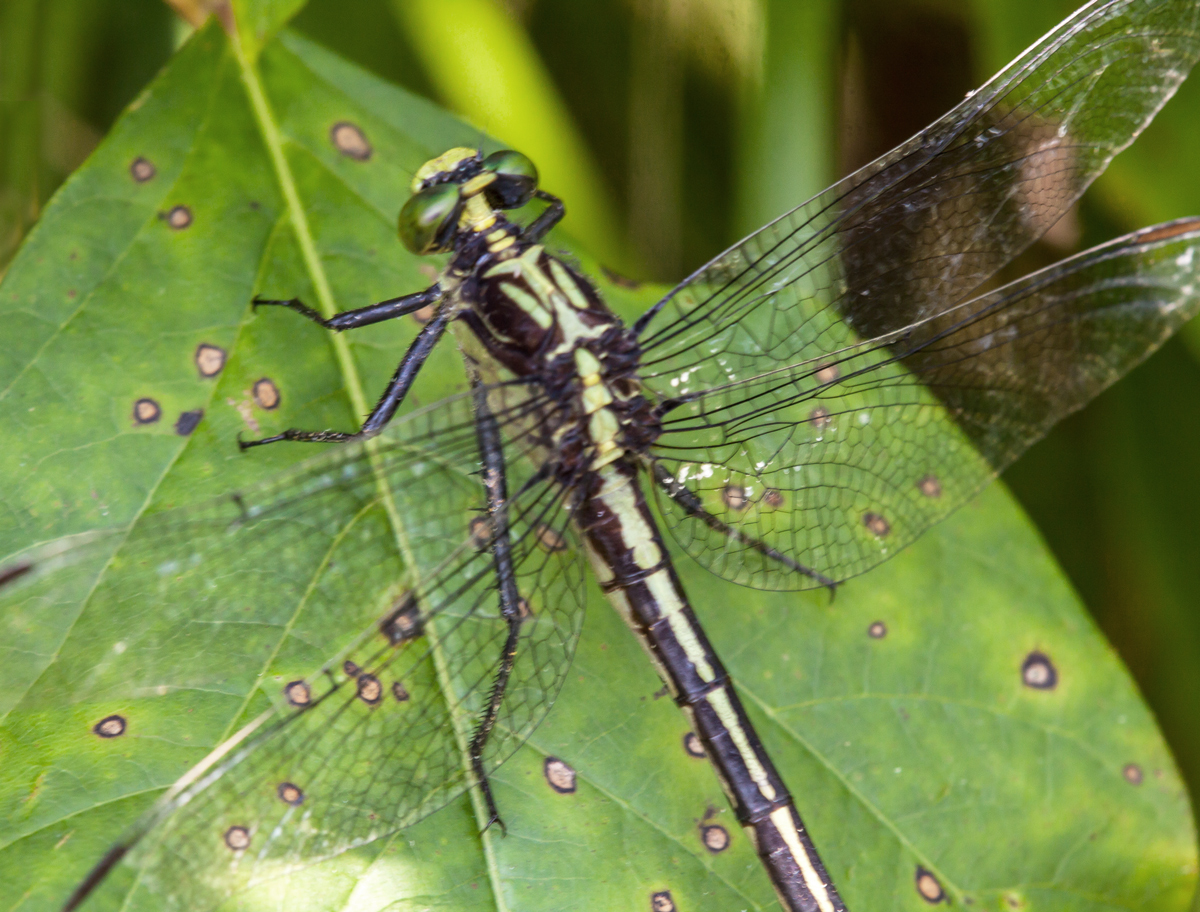
Last Saturday at Lilypons Water Gardens in Adamstown, Maryland I spotted a large dragonfly that I had never seen before, a Black-shouldered Spinyleg (Dromogomphus spinosus). That’s definitely a cool (and descriptive) name for a spectacular-looking dragonfly.

The dragonfly remained perched in the vegetation surrounding a small pond long enough for me to get shots from a few different angles and distances with my macro lens. I was particularly struck by the length of the long black legs, which somehow reminded me of those of a spider.

Black-shouldered Spinyleg

Black-shouldered Spinyleg

Black-shouldered Spinyleg

© Michael Q. Powell. All rights reserved.


Read Full Post »

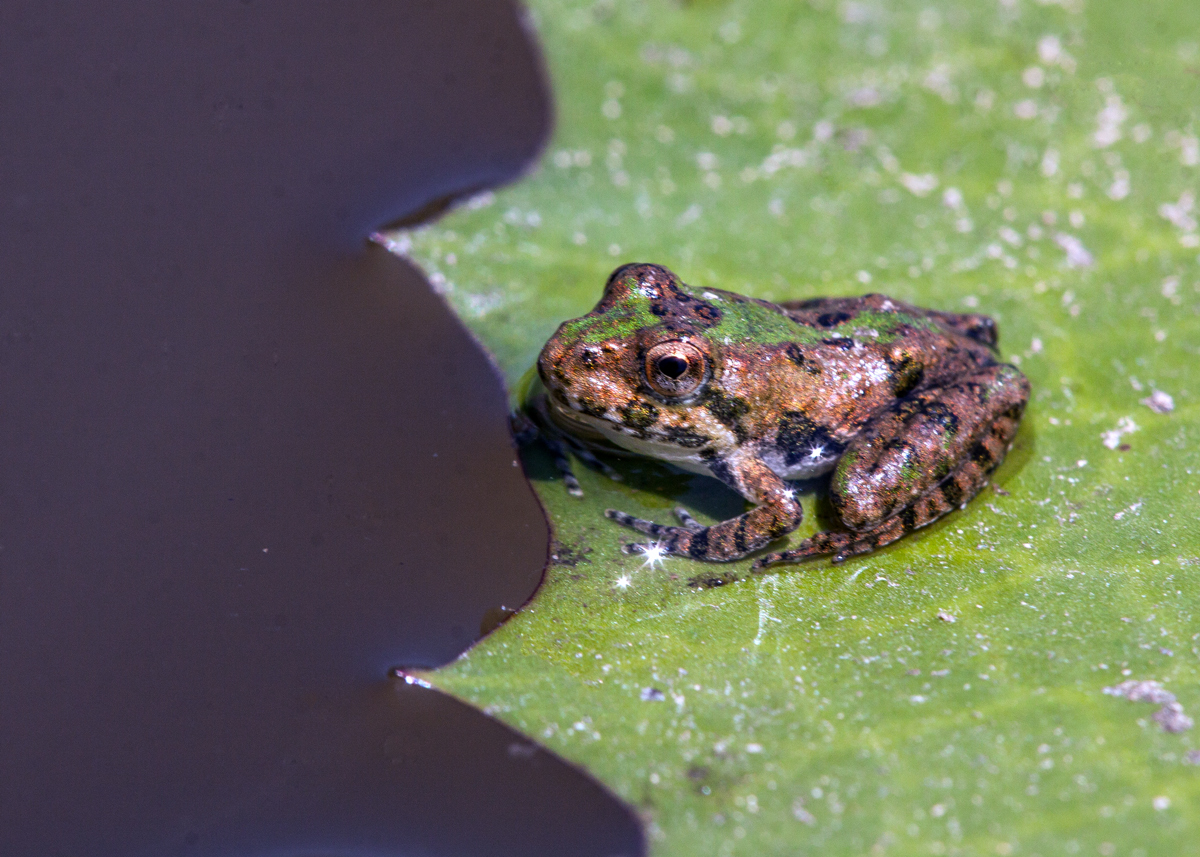
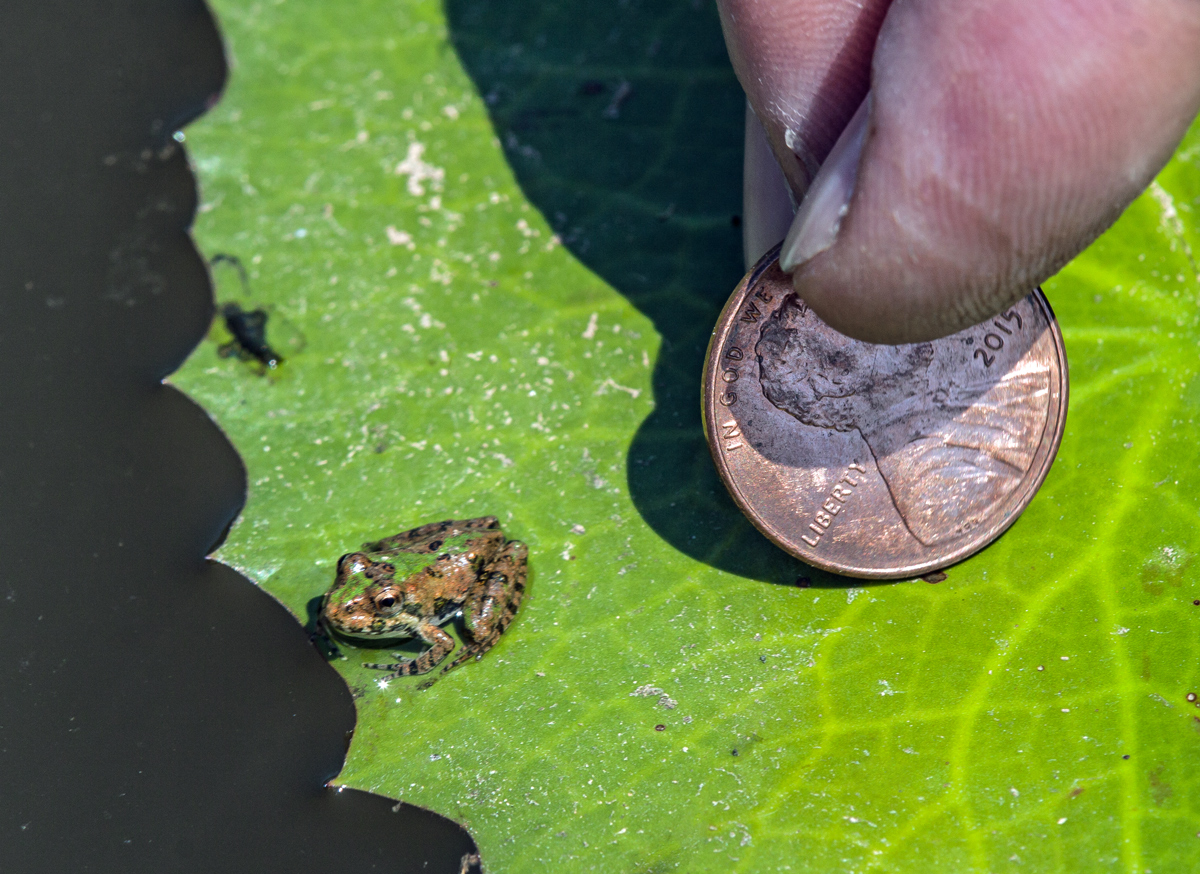
Perched at the edge of a lily pad, this frog at Lilypons Water Gardens was so small that I doubt I would have seen it by myself. However, one of my sharp-eyed fellow photographers spotted it and served as the hand model for the shot with the penny.

A helpful Facebook reader suggested that this is probably a Northern Cricket frog (Acris crepitans) and it certainly does look like the photos that I can find on the internet. Judging from the size of the penny, which is 3/4 of an inch in diameter (19 mm), I’d guess that the frog was less than 3/8 of an inch (9.5 mm) in size.

My fellow photographer tried to move the penny slowly into position, but, as I suspected would happen, the frog jumped away shortly after the second shot below. I would have liked to capture the frog in motion, but ended up instead with a shot of the vacant lily pad—the frog had jumped right out of the frame.

Northern Cricket frog

tiny2_frog_blog

© Michael Q. Powell. All rights reserved.


Read Full Post »

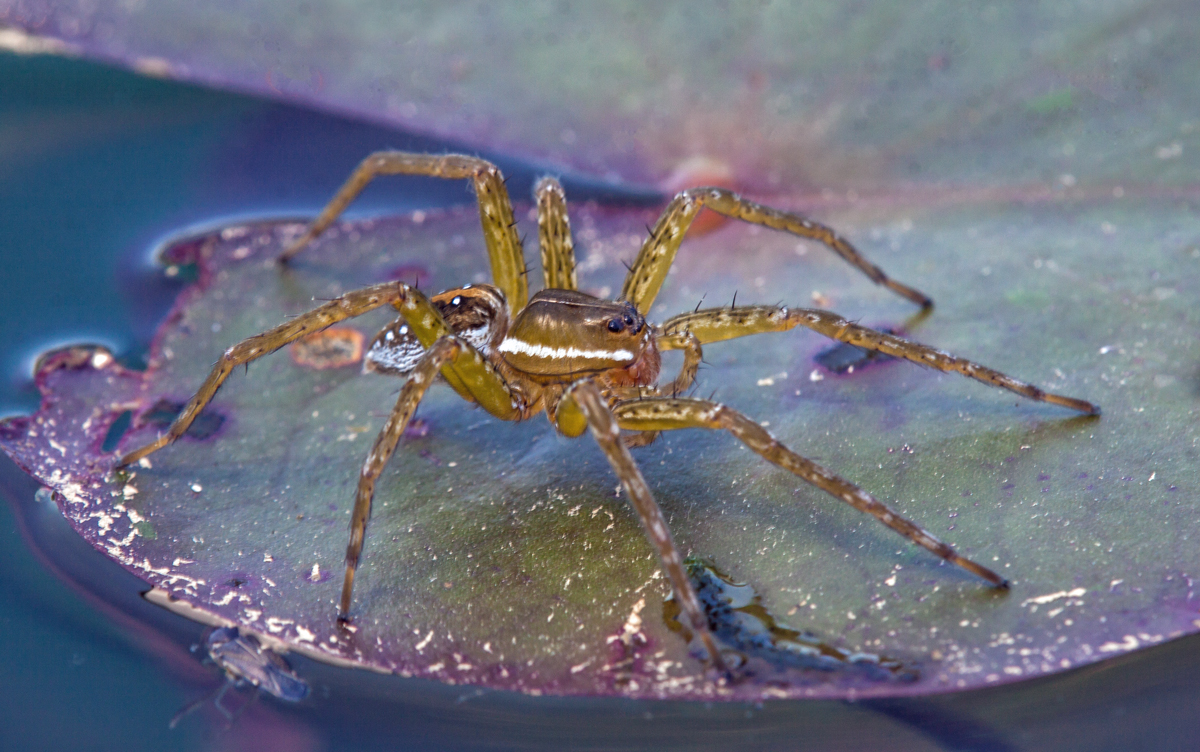
When shot from a relatively low angle, this Six-spotted Fishing spider (Dolomedes triton) looks especially fearsome, although it was actually pretty small, only about an inch (25 mm) or so in length. The spider was perched on a lily pad at Lilypons Water Gardens in Adamstown, Maryland.

Six-spotted Fishing spider

© Michael Q. Powell. All rights reserved.

Read Full Post »

I haven’t taken very many damselfly photos this summer, in part because often I have been attempting to shoot dragonflies with my long telephoto lens. That lens has a minimum focusing distance of almost nine feet (2.7 meters) and it’s hard to see and focus on a tiny damselfly at that distance.

This past weekend, however, I was using my 180mm macro lens and was happy to be able to capture some images of this beautiful female Fragile Forktail damselfly (Ischnura posita) during a trip to Lilypons Water Gardens in Adamstown, Maryland.

Damselflies are really small, but they pack a lot of beautiful details and colors into that tiny package. This particular species is special to me this year, because way back in April a female Fragile Forktail was the first damselfly that I spotted this season and presented in this posting.

Fragile Forktail

© Michael Q. Powell. All rights reserved.

Read Full Post »

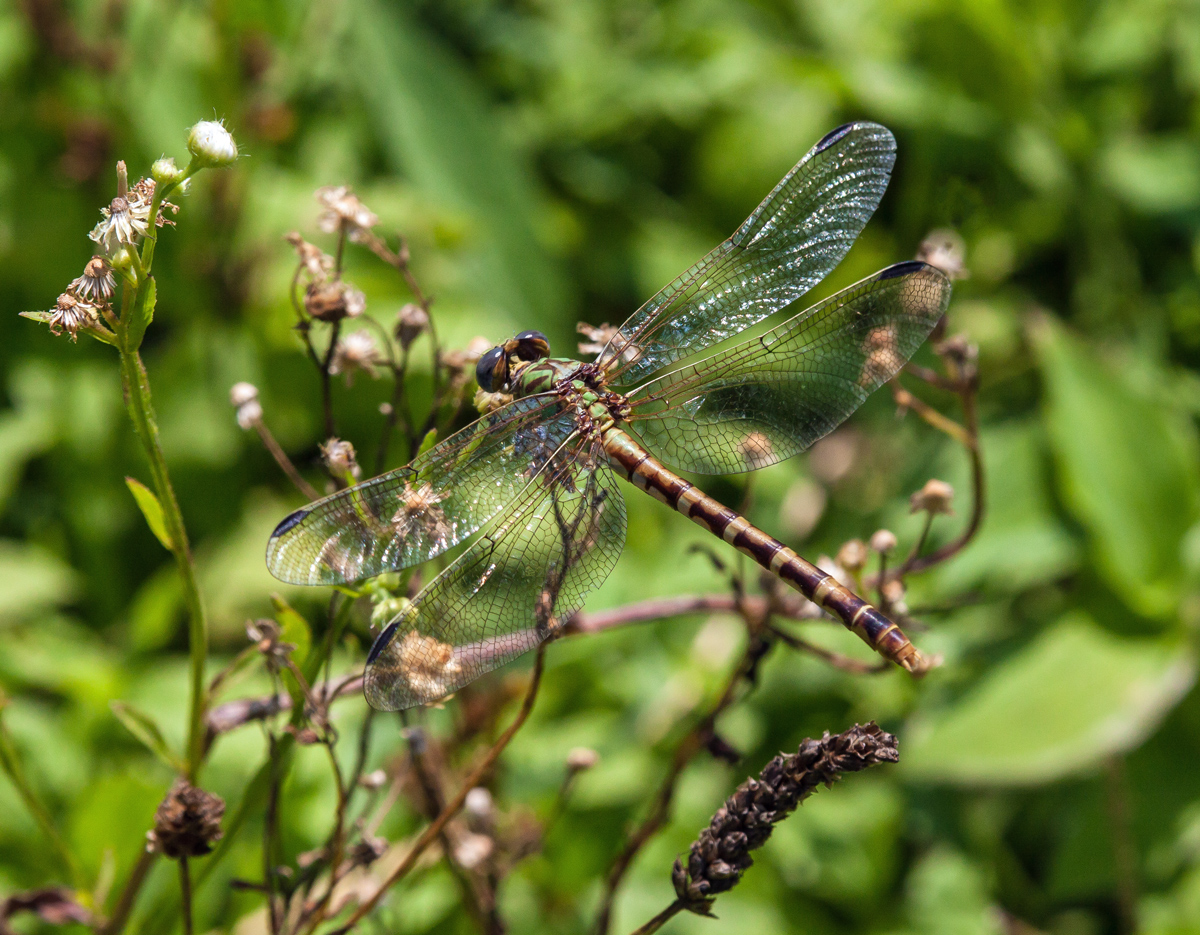
I really enjoy photographing familiar subjects, but there is still something really special about finding new ones, like this female Eastern Ringtail dragonfly (Erpetogomphus designatus) that I stumbled upon yesterday during a photo excursion with some friends to Adamstown, Maryland.

The goal of our visit was to explore Lilypons Water Gardens, a large facility that specializes in all kinds of aquatic plants and includes a series of interlocking ponds with waterlilies and lotuses. I suspected that there would be lots of dragonflies and I was not disappointed.

While my friends were photographing the flowers, I started walking along the barely trampled paths that had knee-high grass and other vegetation. Most of the dragonflies that I spotted were familiar friends: Widow Skimmers, Eastern Pondhawks, Slaty Skimmers, Common Whitetails, and Blue Dashers, but a couple that I saw immediately struck me as being new and different.

The very colorful and distinctive rings on the abdomen of today’s featured dragonfly, the Eastern Ringtail, really attracted my attention and somehow reminded me of the photos I had seen of a coral snake. Fortunately the dragonfly, unlike the snake, is not poisonous. I chased the dragonfly for quite a while but never managed to get a shot of it with an uncluttered background—it kept perching on vegetation low to the ground.

When I returned home, I didn’t have a clue where to start with identification, because I hadn’t gotten some of the kind of diagnostic shots that I need, as relative neophyte, to identify a dragonfly. So I did what I usually do in cases like this—I contacted Walter Sanford, my local dragonfly expert. He tentatively identified it as a female Eastern Ringtail and another expert in the Northeast Odonata Facebook group agreed with Walter.

I’m pretty happy with my newest dragonfly find, a species I might have trouble finding again. According to the Maryland Biodiversity Project, the Eastern Ringtail is designated S2, which means that it is rare in the state of Maryland.


Eastern Ringtail

Eastern Ringtail

© Michael Q. Powell. All rights reserved

Read Full Post »

On Monday I came across this really cool-looking moth while walking through the woods at Huntley Meadows Park in Alexandria, Virginia. The moth’s distinctive pattern reminds me of the shields used in the Middle Ages by the knights during the Crusades, which is why I want to call it the Crusader moth.

Officially, this is a Clymene Moth (Haploa clymene), a moth of the Tiger Moth family that is found in the eastern part of North America.

As I was doing research, I learned that 18-26 July is National Moth Week.

Go wild!

Clymene moth

Clymene moth

© Michael Q. Powell. All rights reserved

Read Full Post »

What do adventurous young grasshoppers do for fun? Hopping may be ok for the average grasshopper, but this little guy prefers the adrenaline rush he feels when he scales the sheer face of a rocky cliff with no ropes or other climbing gear.

grasshopper

The truth is a little less exciting than my fiction. The angle was not as steep as it looks in the shot and the “rock” is actually a rotten log.

I still choose to believe that grasshoppers like a little adventure in their lives. Who knows what they do when we are not watching?

© Michael Q. Powell. All rights reserved

Read Full Post »

Do you find yourself shooting the same subjects over and over? I often take repeated pictures of familiar subjects, knowing that the weather, the lighting conditions, the environment, and the subject’s pose will be different each time.  Although I try to control the exposure, the framing, and the angle of view, I am sometimes pleasantly surprised at the results.

I don’t see Spangled Skimmer dragonflies (Libellula cyanea) very often, so I was happy to spot this beautiful male last week. The markings on the wings are so distinctive that it is pretty easy to identify a member of this species when I do come upon one. (The second shot gives a really good view of those markings.)

I like the way that the background turned out in these shots and I have captured pretty detailed images of a Spangled Skimmer. I am confident, though, that I will be snapping away again if I stumble across another one. Who knows what kind of a photo I might be able to capture the next time?

Spangled Skimmer

Spangled Skimmer

© Michael Q. Powell. All rights reserved

Read Full Post »

When damselflies are connected in the tandem mating position, they are large enough to be noticed, especially when they fly right by me, as was the case this past Friday. They were pretty skittish, but I managed to get a couple of relatively clear shots.

My identification task was greatly eased by the fact that these were not one of the multiple blue species that inhabit my local marshland park—there was only a little blue on the tip of the male’s abdomen. Imagine my shock when I learned that these damselflies are Blue-tipped Dancers (Argia tibialis). In my experience, names generally are not that helpful when it comes to identification, but this is an obvious exception.

Sharp-eyed readers may notice that these damselflies look a bit like the one currently featured in the banner of my blog. That damselfly is a Violet Dancer, a subspecies of the Variable Dancer species (Argia fumipennis). Apparently damselflies do a lot of dancing!

If you are interested in seeing some photos and descriptions of the bluet family of damselflies at our local park, check out this recent posting by fellow blogger and photographer Walter Sanford entitled Blue for Bluets.

Blue-tipped Dancer

Blue-tipped Dancer

© Michael Q. Powell. All rights reserved


Read Full Post »

This young male Halloween Pennant dragonfly (Celithemis eponina) let me get close enough to use my macro lens to good effect, but an intermittent light breeze caused him to sway back and forth, greatly increasing the challenge of getting sharp shots.

Halloween Pennants are spectacular dragonflies with their two-toned eyes and patterned wings. They almost always choose to perch at the very tip of flimsy branches and blades of grass and often do look like pennant blowing in the wind.

I included a shot of the entire body of this dragonfly to give you a full appreciation of its wildly wonderful wings.

Halloween Pennant

Halloween Pennant

Halloween Pennant


© Michael Q. Powell. All rights reserved

Read Full Post »

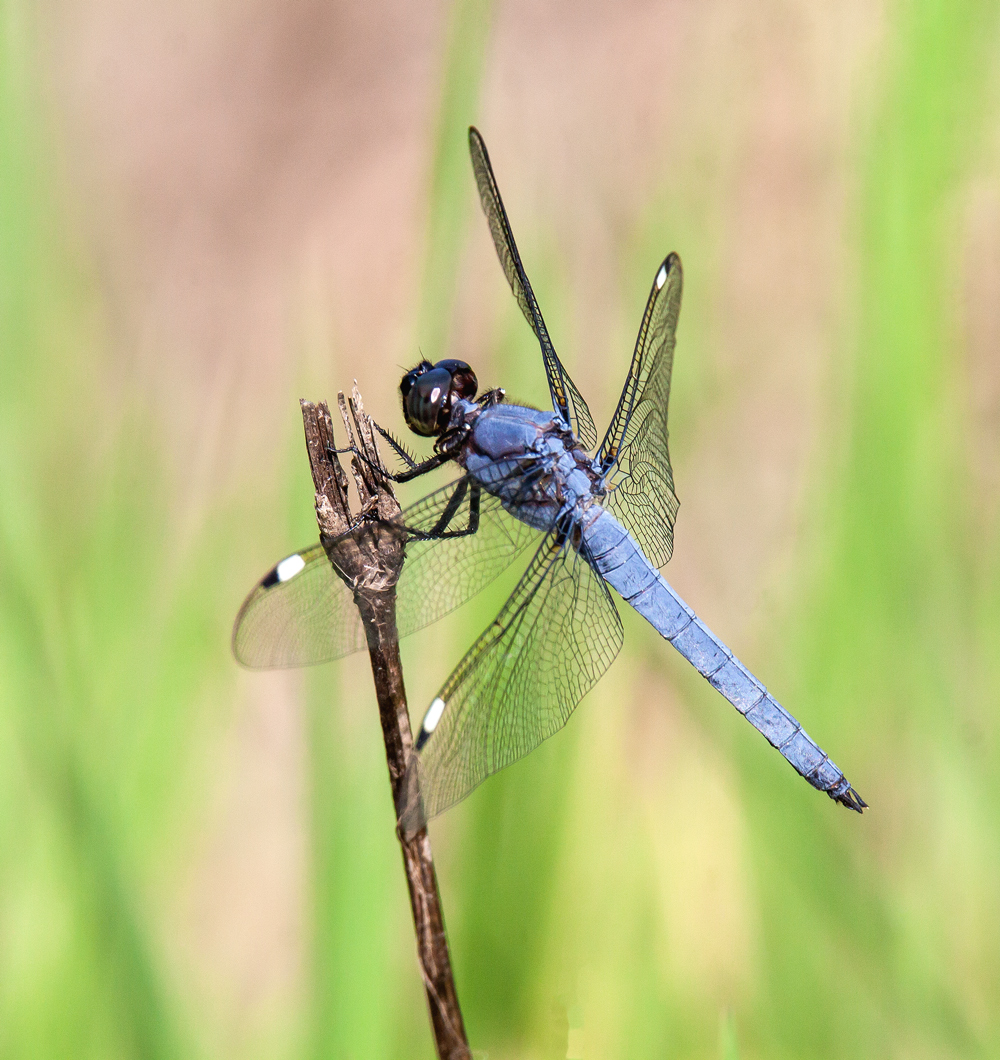
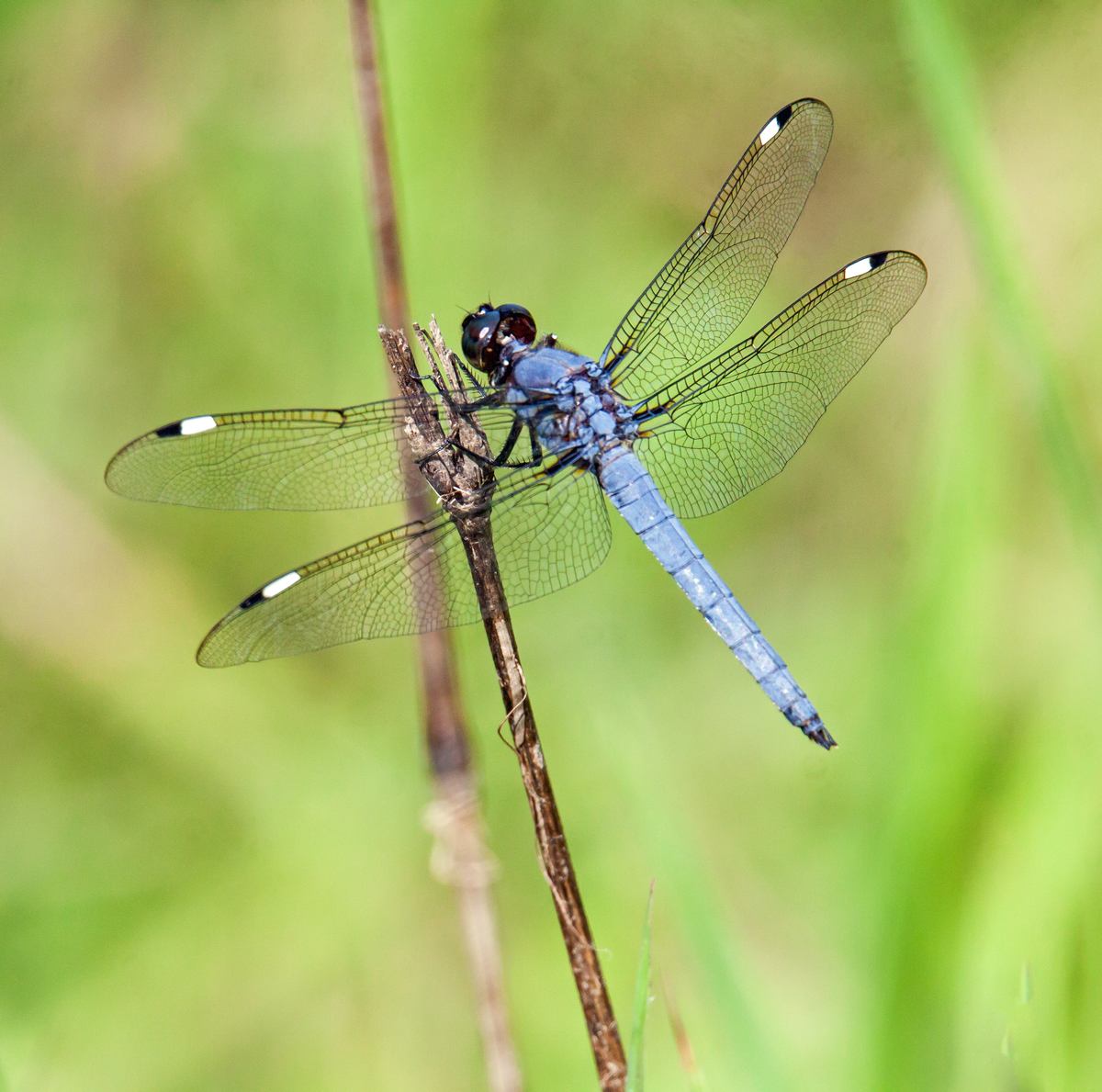
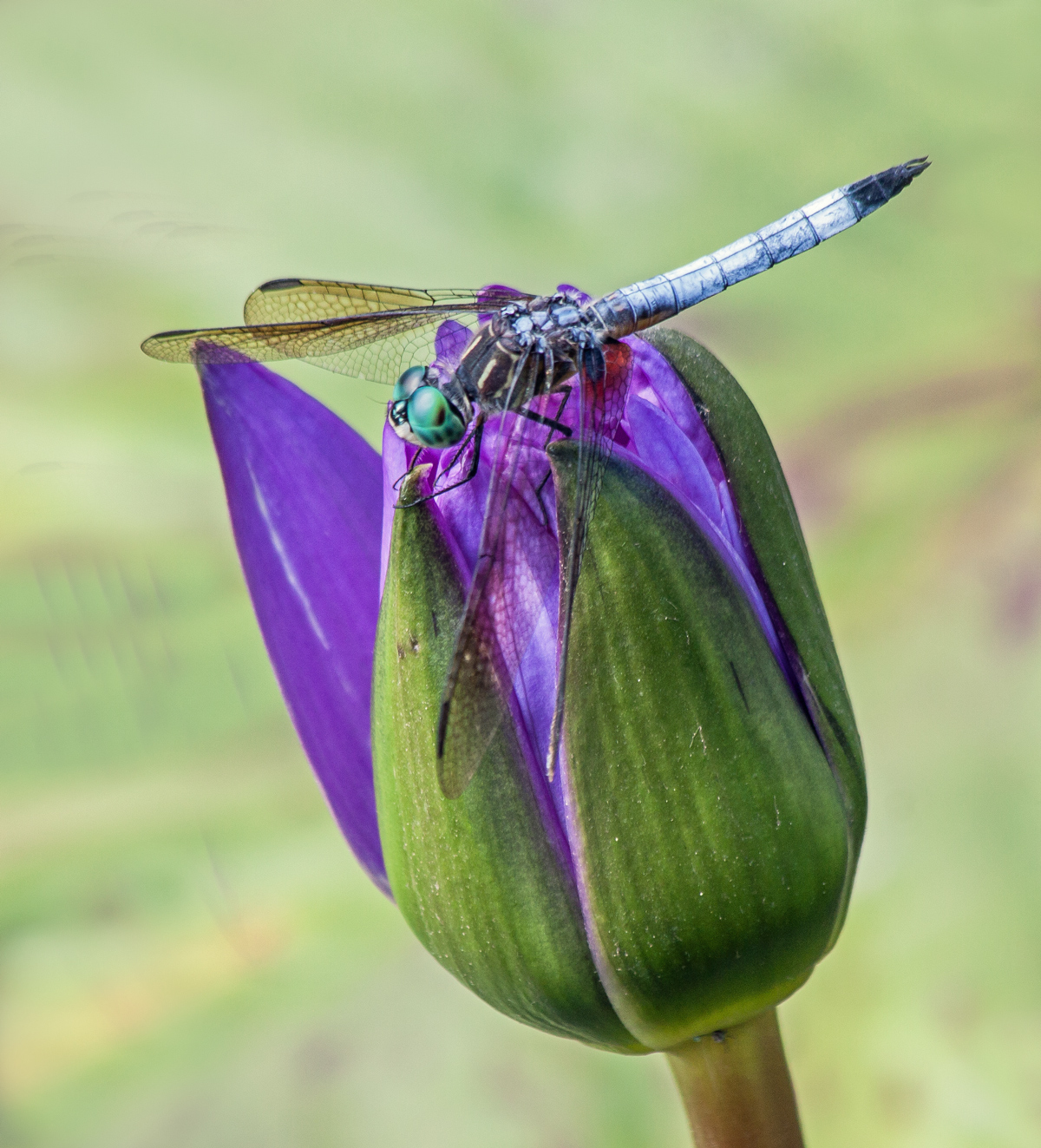
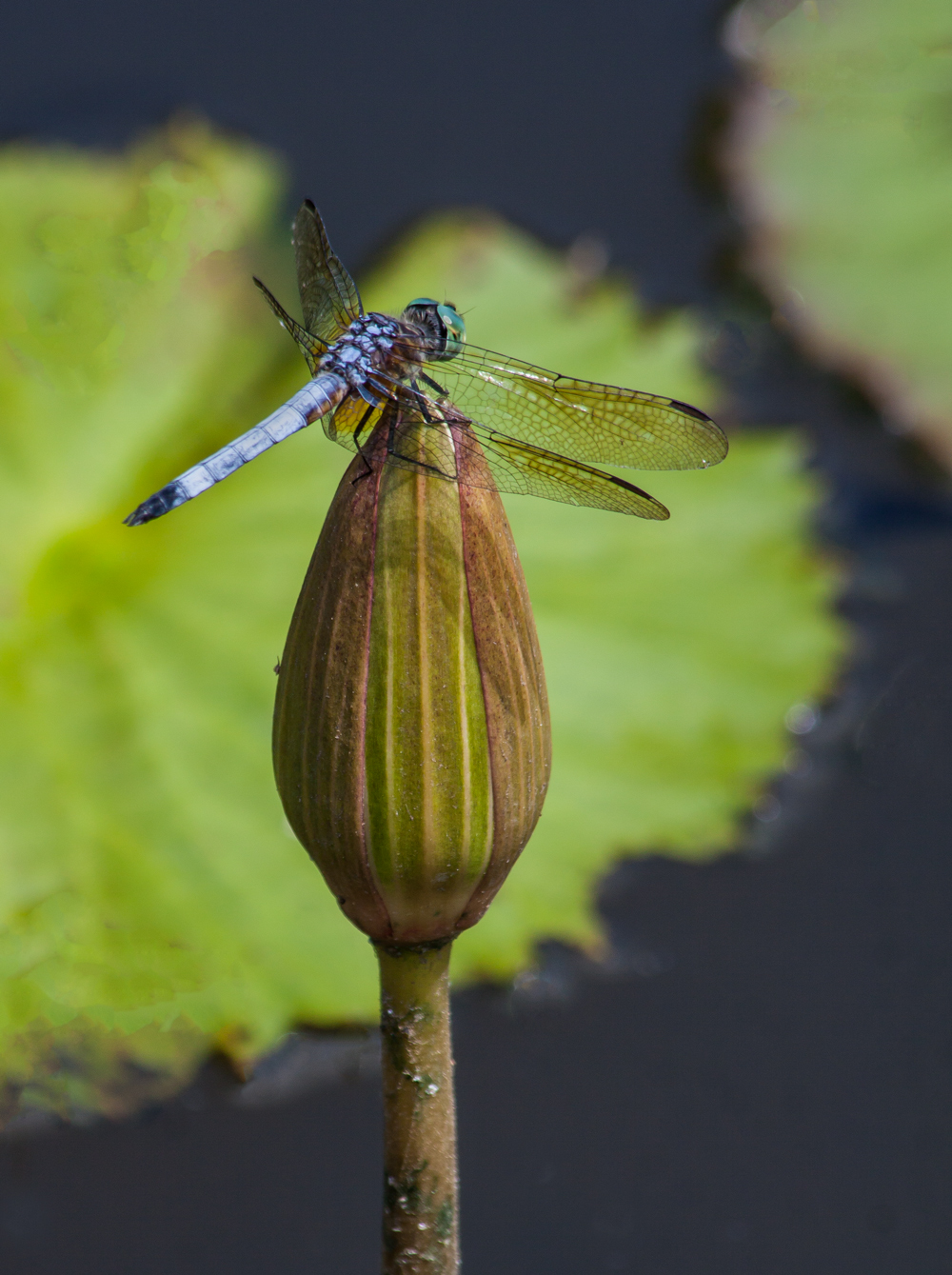
Yesterday I visited Kenilworth Park and Aquatic Gardens in Washington D.C. for the annual Lotus and Water Lily Festival and I was thrilled to be able to get some of my favorite kind of dragonfly images—dragonflies perched on the buds of colorful flowers. Generally I manage to get shots only of the Blue Dasher dragonfly (Pachydiplax longipennis), but this time I was also able to get a shot of a Slaty Skimmer (Libellula incesta) on a lotus flower bud.

Blue Dasher

Blue Dasher on purple water lily bud

Slaty Skimmer

Slaty Skimmer on lotus bud

Blue Dasher

Blue Dasher on water lily bud

© Michael Q. Powell. All rights reserved

Read Full Post »

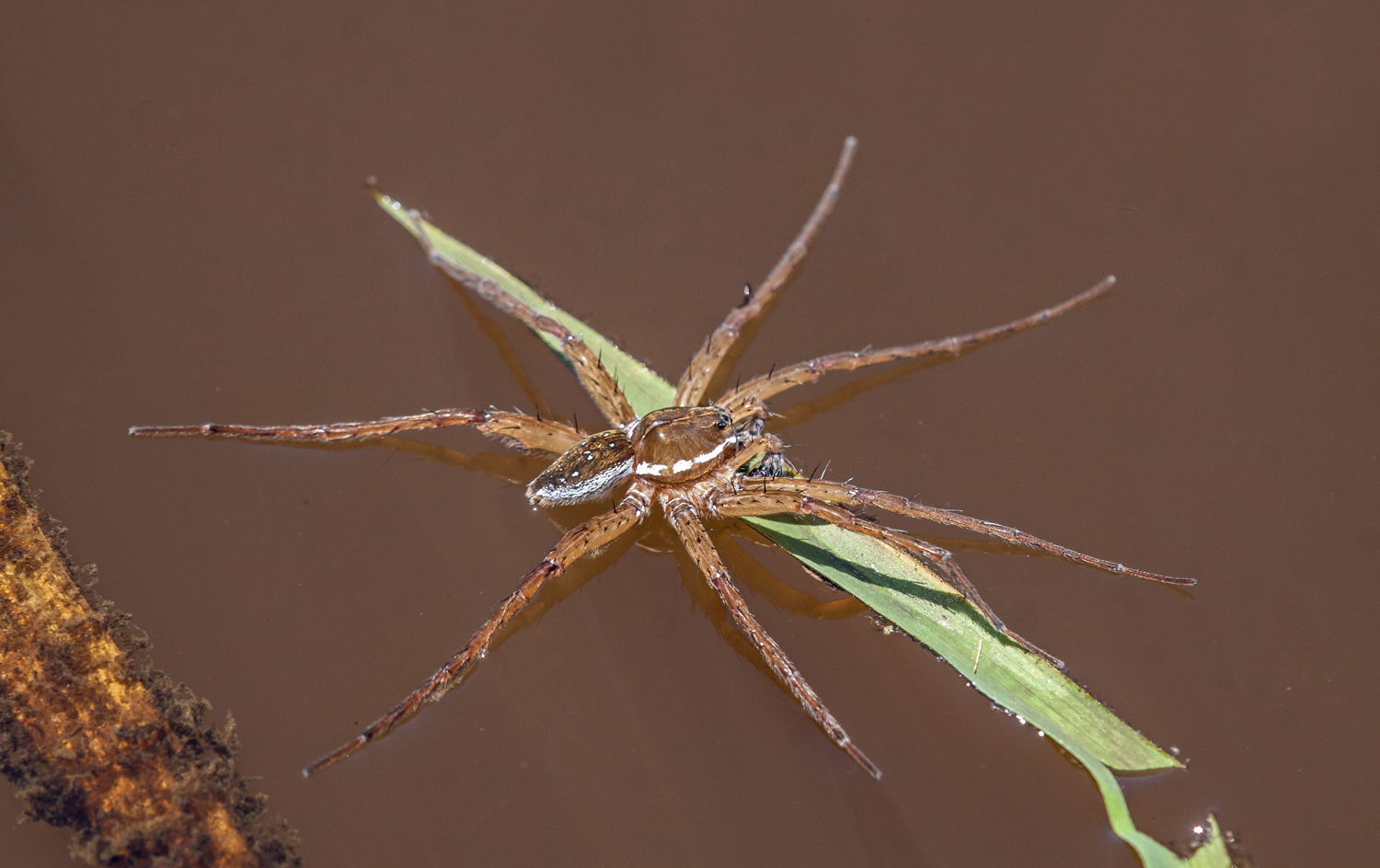
Some movement in the muddy water right below my feet caught my attention yesterday as I was standing at the edge of a small stream at Huntley Meadows Park observing a dragonfly. A Six-spotted Fishing spider (Dolomedes triton) was walking on the water with its legs fully extended.

The other times that I seen one of these fishing spiders, they always had a few legs hanging onto the shore, but this one was moving across the surface of the water pretty quickly, perhaps chasing a potential prey. Unfortunately, overhanging vegetation prevented me from tracking the spider’s movement, so I don’t know if the hunt was successful.

Six-spotted Fishing spider

© Michael Q. Powell. All rights reserved


Read Full Post »

Dragonflies are colorful and flowers are colorful too, but it’s rare that I get to see the two of them together. I was thus thrilled when fellow photographer Cindy Dyer spotted a colorful Blue Dasher dragonfly (Pachydiplax longipennis) perching on a beautiful purple water lily during our recent trip to Kenilworth Park and Aquatic Gardens in the District of Columbia.

I took some initial shots with the 180mm macro lens that I had on my camera at that moment, but wasn’t really able to fill the frame with my subject and the background was a little distracting. (The second photo below was one of those first shots and it does a pretty good job of highlighting the water lily, but the dragonfly is merely an added bonus.) I couldn’t physically move any closer, because the water lilies were in a cement pond, surrounded by a three foot high wire fence.

I decided to change to a longer lens, though I sincerely doubted that the dragonfly would stay in place. Almost all of the times that I have done a rapid lens change in the field, the subject has departed before I was ready to shot. In this case, however, I got lucky and the Blue Dasher held his perch long enough for me to get a few shots with my 70-300mm lens.

I simply love the color combination of the different shades of blue of the dragonfly and the purple and yellow of the water lily.

Blue Dasher

Blue Dasher

© Michael Q. Powell. All rights reserved


Read Full Post »

Like most guys, I have trouble remembering anniversaries, so it is a good thing that WordPress sent me a reminder that three years ago today I started my blog. I still recall my feelings of doubt and uncertainty when my mentor and muse Cindy Dyer sat me down in front of a computer and told me that I was starting a blog. We had just finished reviewing and editing some shots that I had taken earlier in the day at Kenilworth Park and Aquatic Gardens. Cindy helped me through the mechanics of setting up the blog and shortly thereafter I made my first posting, Blue Dasher dragonfly.

Once I started, I couldn’t stop. I grew to look forward to writing the postings and taking photos to feature. As of right now, I’ve made 1638 postings and had 78743 views—that’s a lot of words and a lot of photos.

I was struck from the outset by the sense of community and mutual support that exists in the blogging world and there is a small group of fellow photographers with whom I feel a particular affinity, including Sue, Gary, Leanne, Ed, Lyle, Emily, Allen, and Chris. The amount of encouragement that I receive from them and countless others is overwhelming. Closer to home, Cindy continues to be a constant source of inspiration and instruction and Walter and I help to push each other as we explore remote areas of our favorite marshland park.

When I started this blog, I didn’t really think of myself as a photographer. I was taking a lot of photos and knew that I was improving, but there was a kind of psychological barrier that kept me from thinking in those terms. Now, I can confidently say that I am a photographer.

My journey into photography has been full of highlights, but two moments from 2014 really stand out. In November, I witnessed the rescue of a bald eagle at my local marsh and my photos and links to my blog posting were featured on the websites of several Washington D.C. media outlets, resulting in a total of 3344 views of my posting Rescue of an injured Bald Eagle. A short time before that incident, I was really honored when I was featured in an Introductions post by noted Australian photographer Leanne Cole.

If you have read this far, you may be wondering about my reference to “cannibals” in the title of this posting. What do cannibals have to do with my blog? Well, if I set aside the abnormally high number of views of my eagle rescue post, for the longest time my most popular post was one with the innocuous title of Fuzzy white caterpillar. There is not a whole lot special about the prose or the photos, but it has had 489 views to date.

Earlier this week the caterpillar was passed in the stats by my post Red-footed Cannibalfly, with 492 views to date—the cannibals have taken over the lead. As a guy, I feel happier that a more macho sounding insect is now leading the field of “normal” posts. As far as I can tell, the post’s popularity is a function of the search engines. The post was not particularly popular when it first appeared and has only 36 likes. Now, though, it even shows up on the first page of Google results if you type in “Red-footed Cannibalfly.”

So what’s ahead? I hope to be able to keep improving my writing and my photography. I have certain aspirational shots in my mind of different subjects or different locations.

Yesterday, when I was taking photos of water lilies with Cindy Dyer, I mentioned that I had always imagined taking a shot a frog on a lily pad, but had never even seen a frog perching on one. A short time later, Cindy excitedly pointed out a partially submerged frog on a lily pad and I managed to snap a couple of shots before he dove into the water. (Check out Cindy’s blog posting to see her beautiful shot of this frog.) Dreams do come true.

Thanks again to all my readers and supporters, whose encouragement has helped motivate and sustain me this past three years. I look forward to sharing my journey with my fellow travelers.
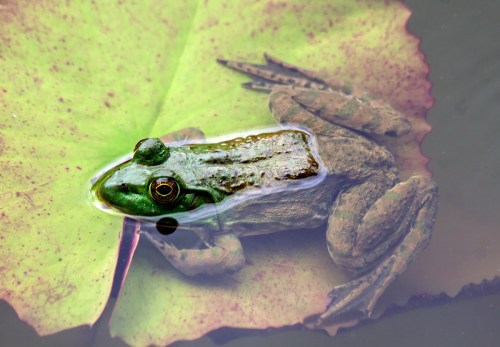
 

Frog on a lily pad

© Michael Q. Powell. All rights reserved

Read Full Post »

Everyone knows that Monarch butterflies love milkweed, but if you move in closer to the plants, you’ll discover a world of fascinating little creatures, like this Red Milkweed Beetle (Tetraopes tetrophthalmus) that I spotted this past weekend at Huntley Meadows Park in Alexandria, Virginia.

Almost three years ago I did a posting in which I acknowledged that I had become obsessed with shooting Red Milkweed Beetles. This weekend I realized that that my initial fascination with my colorful little friends has not diminished much over time when I saw this beetle in a small stand of swamp milkweed. I’m not sure if it is the long antennae or the bold pattern or the bright color that attracts me most—I just know that I love seeing them in all of their developmental forms (they go through several interesting instars as they grow).

The next time you see some milkweed, stop for a moment, examine it closely, and prepare to enter a fascinating little world as the scent of the flowers envelops you.


Red Milkweed Beetle

© Michael Q. Powell. All rights reserved


Read Full Post »

« Newer Posts - Older Posts »