Feeds:
Posts
Comments

Archive for the ‘Macro Photography’ Category

There are a lot of fallen leaves scattered all about my neighborhood and at first I thought this butterfly was merely one of them. Then it opened its wings, revealing its inner beauty. Wow!

I am pretty sure this is a Question Mark butterfly (Polygonia interrogationis), though there is also a chance that it might be an Eastern Comma butterfly (Polygonia comma). Yes, there are butterflies named after punctuation marks.

How do you tell them apart? Well. there is a little white marking on the wings and if it has a single part, it’s a comma, and if it has two parts, it’s a question mark. My challenge in this case was that the marking was not very distinctive. I looked through a lot of material and photos on the internet and the wing shape and coloration started to push me toward the Question Mark, but I still had questions. I came across a posting by TrekOhio.com that illustrated the differences in the spots on the inner wings and I convinced myself the spots in the second photo look like those of a Question Mark.

Whatever the case, the butterfly’s resemblance to a fallen leaf and its beautiful orange color are reminders to me that autumn is surely here, my favorite time of the year.

Question Mark butterfly

Question Mark butterfly

© Michael Q. Powell. All rights reserved.

Read Full Post »

I love to photograph insects with cool or unusual names, like this caterpillar known as the Smeared Dagger moth caterpillar (Acronicta oblinita). Who makes up these crazy names? (Photographed on Monday at Huntley Meadows Park.)

One of my other favorite names is the Twice-stabbed Stink Bug (Cosmopepla lintneriana). Yes, that’s a real insect. You can’t just make this stuff up, or maybe you can.

smeared dagger moth caterpillar

© Michael Q. Powell. All rights reserved.


Read Full Post »

The rays of sunshine illuminated her face and our eyes met and Katy and I shared a moment when time seemed to stand still. Alas, the spell was soon broken and she abandoned me. Yes, Katy did.

I took this shot last weekend at Jackson Miles Abbott Wetlands Refuge at Fort Belvoir, Virginia. I believe that “Katy” is a Handsome Meadow Katydid (Orchelimum pulchellum), although much of the katydid’s body remained in the shadows so I am not one hundred percent sure of the species identification, though the length of the antennae makes me confident that it is a katydid and not a grasshopper.

It was a fun challenge to get this shot, which I decided to post uncropped. I was sprawled on the ground, trying to get at eye level with the katydid and move in as closely as I could without disturbing the stalks of grass. For a shot like this, my 180mm macro lens was perfect, though I really have to focus on technique to make sure that my shooting position is steady, given that the lens does not have any built-in image stabilization (VR for Nikon folks).

Handsome Meadow Katydid

© Michael Q. Powell. All rights reserved

Read Full Post »

I can identify most of the large butterflies here in Northern Virginia, but the tiny ones continue to confound me. This past weekend I was able to get some shots of some tiny beauties with my macro lens, but I am not really confident in my identification of any of them.

The first image, I think, may be an Eastern Tailed-blue butterfly (Blue Everes comyntas) or it could be some kind of hairstreak butterfly. The second one looks to be a sulphur, but I can’t decide if it is clouded, cloudless, or some other kind of sulphur butterfly. As for the final shot, I don’t even have a guess.

Despite my confusion about identification, I can’t help but be overwhelmed by the delicate beauty of this tiny creatures.

Eastern Tailed-blue

sulphur butterfly

tiny butterfly

© Michael Q. Powell. All rights reserved

Read Full Post »

Have you ever gone eye-to-eye with a butterfly? Yesterday at Huntley Meadows Park this Great Spangled Fritillary butterfly (Speyeria Cybele) was so focused on feeding that it let me get pretty close, close enough to see its cool speckled eyes and its extended proboscis.

Great Spangled Fritillary

Great Spangled Fritillary

Great Spangled Fritillary

© Michael Q. Powell. All rights reserved

Read Full Post »

It’s grasshopper season and things are really hopping at Huntley Meadows Park. Every step that I took through the tall, dry grass earlier this week produced a small cloud of flying grasshoppers. Most of them settled back down in the tangled undergrowth, but occasionally one would perch on a stem for a moment, giving me an unobstructed view.
As I was going over my photos, I was struck by the diversity of sizes, shapes, and colors of the grasshoppers that I found in a single small meadow. Most of the time I try hard to identify the species of my subjects, but this time I simply want to celebrate their beauty and the amazing details of their bodies.
The word “grasshopper” is special to me also because it is the term of endearment that my photography mentor, Cindy Dyer, uses for me. You have to be pretty old to remember the old television series “Kung Fu” that was set in the Wild West that starred David Carradine as Kwai Chang Caine. As a child, Caine studied to be a monk at a Shaolin monastery, where Master Po referred to him as “Grasshopper,” in reference to this scene in the pilot episode, according to Wikipedia, a scene whose message I have always liked and try to remember.”
Master Po: Close your eyes. What do you hear?
 Young Caine: I hear the water, I hear the birds.
 Po: Do you hear your own heartbeat?
 Caine: No.
 Po: Do you hear the grasshopper which is at your feet?
 Caine: Old man, how is it that you hear these things?
 Po: Young man, how is it that you do not?”
grasshopper
grasshopper
grasshopper

© Michael Q. Powell. All rights reserved

Read Full Post »

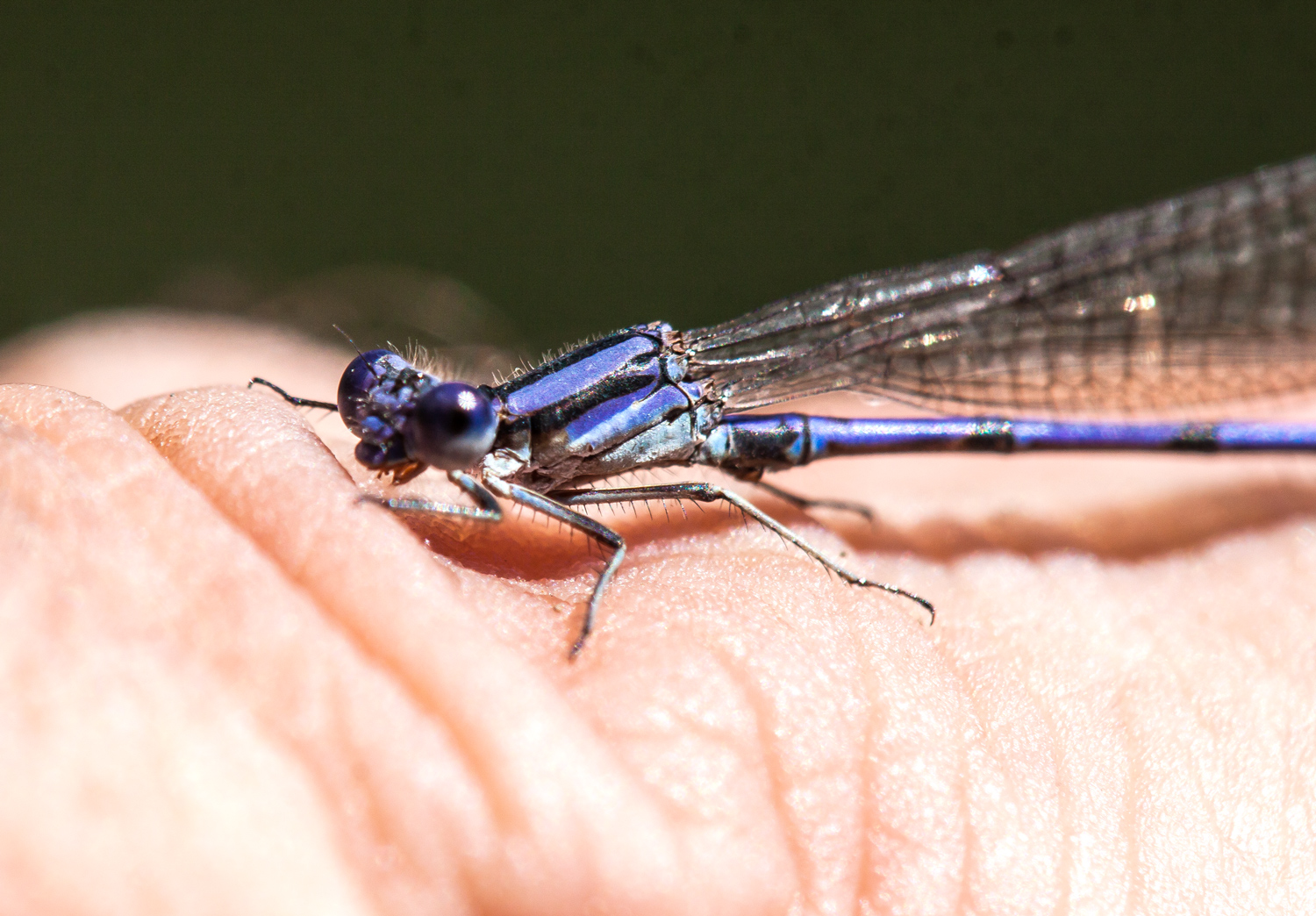
Not all people like to have insects perch on them, but I thought it was pretty cool when an inquisitive Variable Dancer damselfly (Argia fumipennis) landed on my hand Monday at Jackson Miles Abbott Wetlands Refuge. The real challenge was getting a photo of the damselfly shooting one-handed with my DSLR and 180mm macro lens.

Sharp-eyed readers may have recognized that this is the same species of damselfly as the one featured in my blog’s banner. I just love the beautiful purple markings of this damselfly, which is also known as a Violet Dancer (Argia fumipennis violacea), if you use the name of the sub-species.

It was interesting trying to get shots as I tried to hold my left hand still and slowly extended my arm out as far as it would go. The damselfly was relatively cooperative, but moved about a little as it explored my hand. Steadying my shooting hand was an even bigger challenge. Normally I like to try to get as close to parallel with a damselfly’s body as possible, so that most of it will be in focus, but that was not possible in this situation, given the anatomical limitations of the human body.

Looking at these images, I have reached a sad conclusion—I am going to have to give up on my dream of becoming a professional hand model.

Variable Dancer

Variable Dancer

Variable Dancer

© Michael Q. Powell. All rights reserved

Read Full Post »

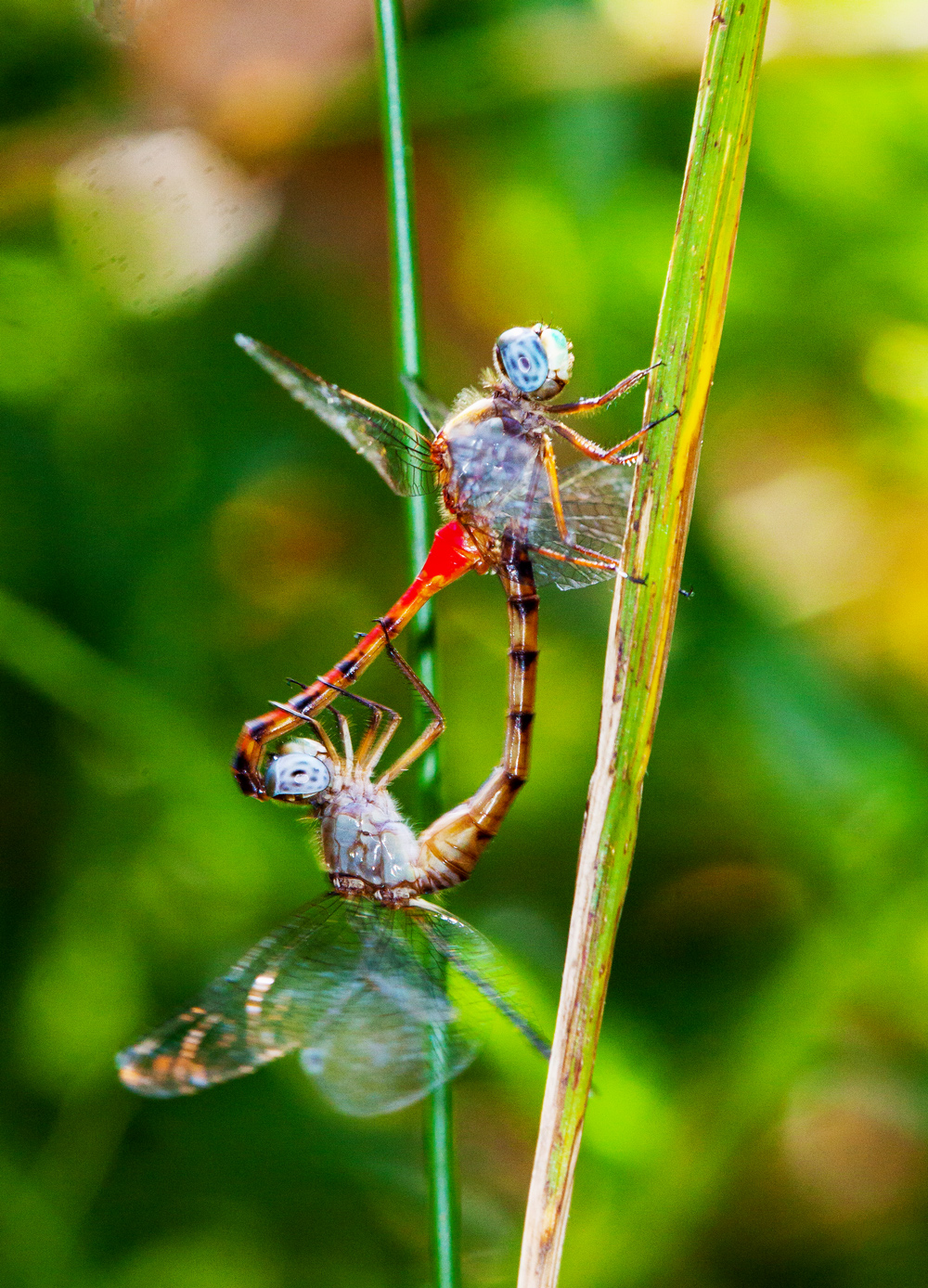
Most of the Blue-faced Meadowhawk dragonflies (Sympetrum ambiguum) yesterday at Huntley Meadows Park were perched alone in the bright sunlight, but some of them managed to find mates and were “getting busy.” No matter how many times I have seen this behavior, I continue to be amazed by the unusual and acrobatic method that dragonflies use when mating.

I usually start to see the brightly-colored Blue-faced Meadowhawks in early September, at a time when the overall number of dragonflies is declining and they are one of the signs for me of the end of the summer. This species seems to be generally tolerant of my presence, although some individuals are quite skittish, and I have managed to get some close-up shots of them in the past.

Don’t be surprised to see more photos of the Blue-faced Meadowhawks in upcoming weeks—they are one of my favorite species of dragonflies.

Blue-faced Meadowhawk


© Michael Q. Powell. All rights reserved

Read Full Post »

It doesn’t really matter where I am—if I see a butterfly, I am almost certainly going to chase after it with the hope of capturing an image. That was certainly the case last week in Brussels when I spotted this tiny butterfly and managed to take this shot of it.

As some of you may recall, I am now using a superzoom Canon SX50 when I am travelling. I haven’t used it very often, so I am still learning its capabilities and limitations. I am pretty happy with the way the camera was able to capture some of the small details of this butterfly, including its extended proboscis, and the way that it rendered the out of focus flowers in the background. I am not ready to give up my DSLR, but I will certain consider taking the SX50 with me on those occasions when I just don’t feel like hauling my DSLR and multiple lenses.

butterfly in Brussels

© Michael Q. Powell. All rights reserved

Read Full Post »

How do you measure popularity? WordPress keeps track of a lot of different statistics and one measure of a post’s popularity is the number of times that it has been viewed. For most of my blog postings, the majority of views come within a few days of the posting date. Occasionally I’ll have a few additional views when someone else posts a link to my post.

When I did a posting in November 2014 on the rescue of an injured bald eagle that I witnessed, a few news outlets in Washington D.C. ran a story with my photos and links to my blog. That posting has had 3396 view to date, far and away the most views for a single posting. In some ways I consider that post an anomaly, with much of the activity caused by the newsworthiness of the event that I photographed.

When it comes to “normal” posting, one that I did almost exactly three years ago stands head and shoulders above all others with 1327 views, including 244 within the last thirty days. The posting was simply called Red-Footed Cannibalfly and it has remained remarkably popular over an extended period of time. In fact, if you do a search for “Red-footed Cannibalfly” in Google, my posting has risen to the first page of results, occasionally rising as high as third place.

A lot of the spam I receive in WordPress informs me that  there is a secret to getting your material higher in Google search results using Search Engine Optimization and the senders undoubtedly want me to pay them to share the secret with me. Sorry, guys, I seem to have stumbled on it by myself, though I am not sure I could replicate that success.

I was thinking about all of this yesterday when I spotted a Red-footed Cannibalfly (Promachus rufipes) while wandering about Huntley Meadows Park. I’d hesitate to call a Red-footed Cannibalfly beautiful, but there is something fierce and distinctive about its appearance and I love its macabre moniker. I captured this image from a distance with a long telephoto lens and I am happy that I didn’t get close enough for one to land on me—I can’t help but remember that this insect paralyzes its victims, liquefies their insides, and then sucks up the liquefied material.

The Red-footed Cannibalfly may be a bit creepy, but seems to be quite popularwith a lot of folks, judging from my blog statistics.

Red-footed Cannibalfly

© Michael Q. Powell. All rights reserved

Read Full Post »

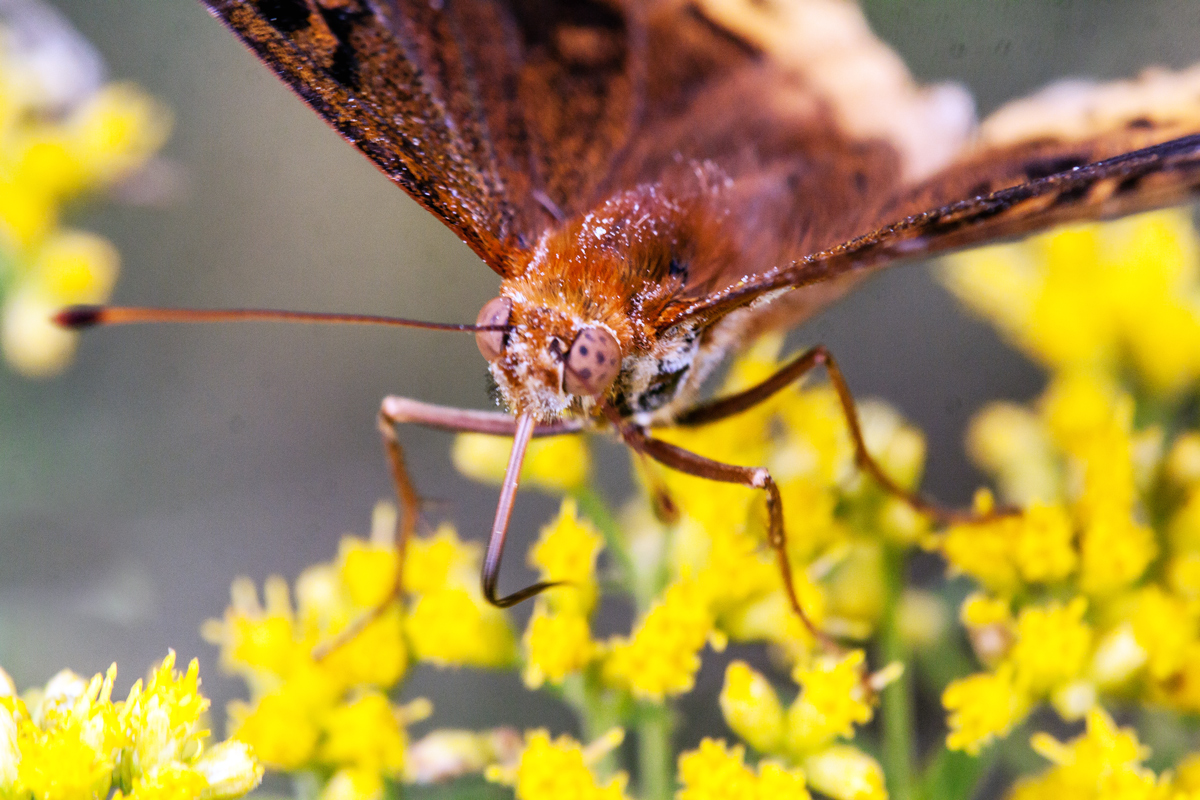
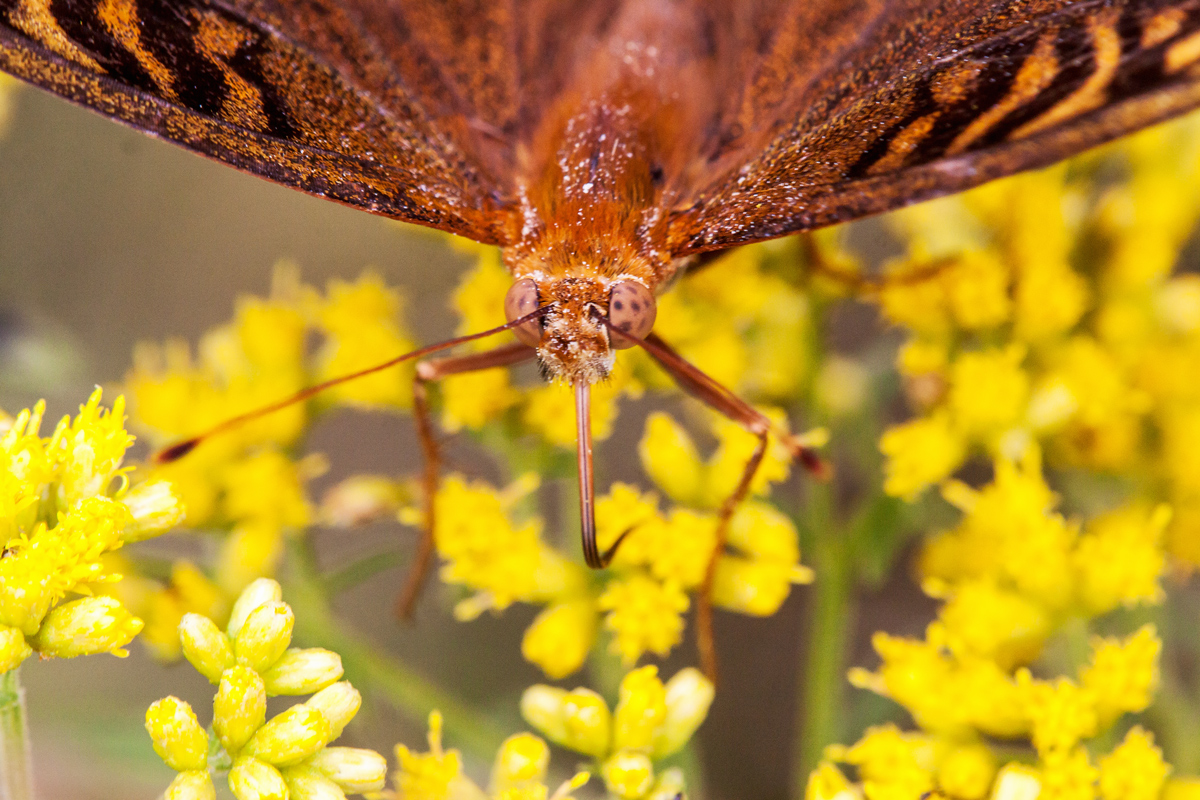
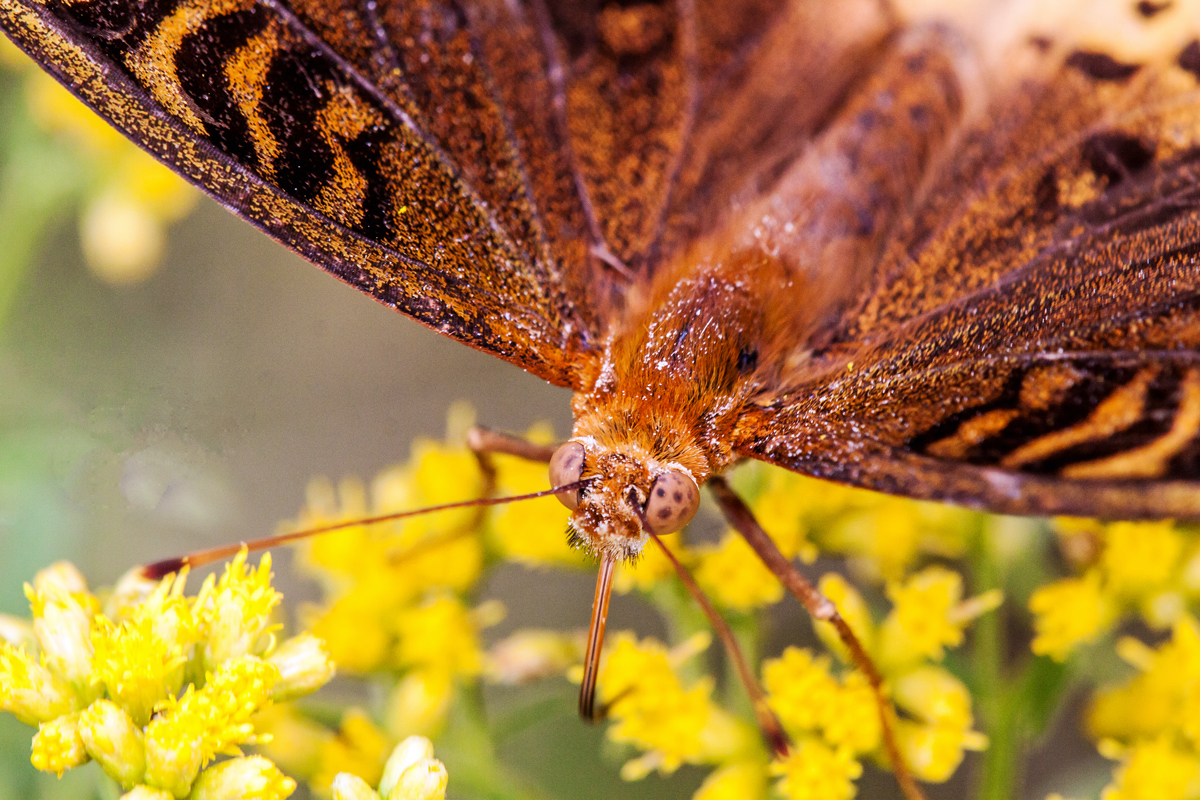
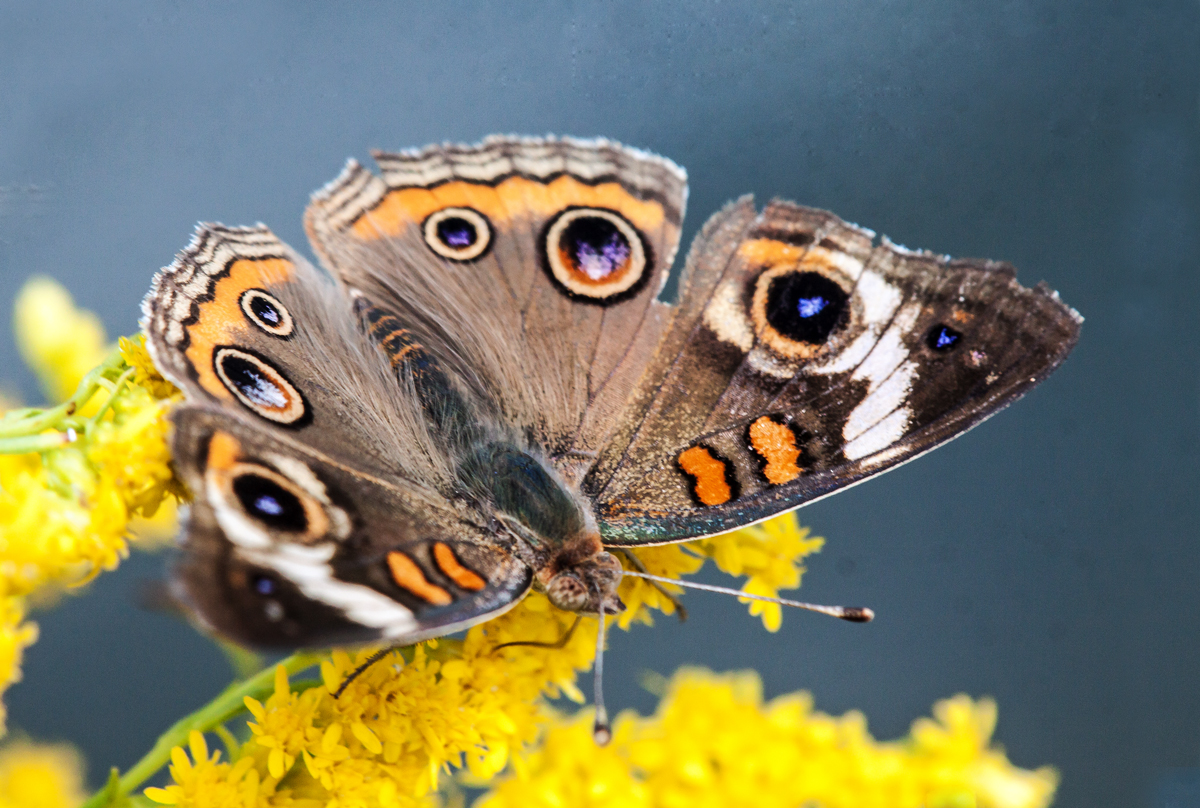
This Common Buckeye butterfly (Junonia coenia) was so focused on the goldenrod flowers that it was either unaware of my presence or simply didn’t care on Monday at Jackson Miles Abbott Wetlands Refuge. I was therefore able to capture the beauty of the butterfly from a somewhat unusual angle that lets us see some of the wonderful markings on the body as well as on the wings.

Common Buckeye

© Michael Q. Powell. All rights reserved.

Read Full Post »

My eyes were drawn yesterday to the bright yellow of a patch of goldenrod as I was exploring Jackson Miles Abbott Wetlands Refuge at nearby Fort Belvoir. From past experience I knew that goldenrod also attracts a wide variety of insects, so I moved in closer with my macro lens at the ready.

There were a lot of skipper butterflies, but what really caught my eye was a small, brightly patterned insect that was crawling around in the goldenrod. Based on its shape, I assumed that it was some kind of beetle, but I had not idea what kind it was. When I returned home and began to do a little research, I was a little shocked to learn that the insect in question was a moth, not a beetle. I am pretty sure that it is an Ailanthus Webworm moth (Atteva aurea).

The colors and patterns of this moth are so spectacular that I think it needs a name that is more descriptive and easier to remember. Any ideas?

Ailanthus Webworm moth

Ailanthus Webworm moth

© Michael Q. Powell. All rights reserved.

Read Full Post »

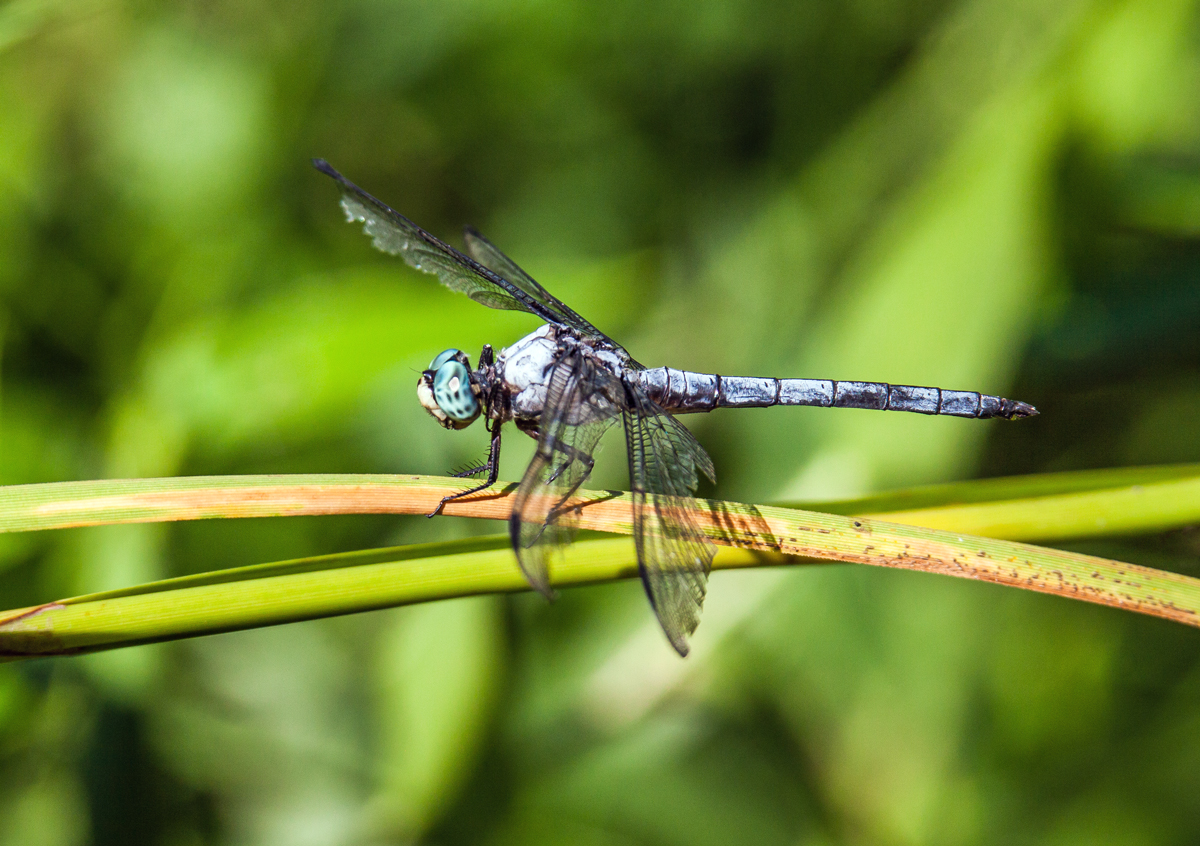
Many of the dragonflies that I see this late in the summer have wings that are torn and tattered, yet they seem to still fly perfectly well. The dragonflies clearly are survivors—survivors of encounters with predators and thorny vegetation or even of overly energetic mating sessions.

Last Friday I spotted this Great Blue Skimmer (Libellula vibrans) as it perched on some bent stalks of grass. He is not a perfect specimen, but I can’t help but be drawn in by his beautiful speckled blue eyes.

Yes, he still deserves to be called “great.”

Great Blue Skimmer

© Michael Q. Powell. All rights reserved.

Read Full Post »

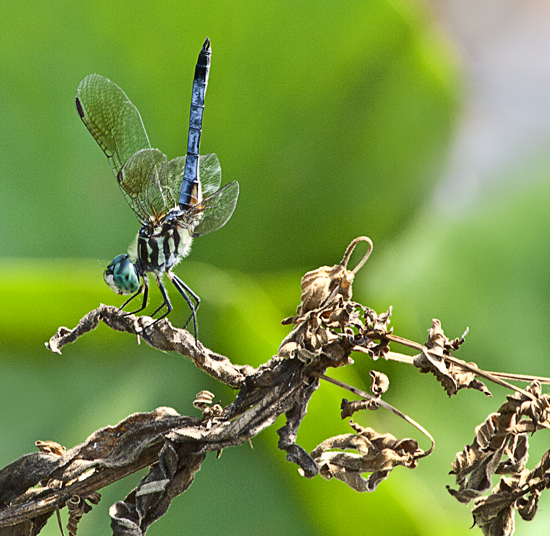
Blue Dashers (Pachydiplax longipennis) are one of my favorite summer dragonflies. I spotted this one recently at Huntley Meadows Park, perched on the railing of an observation deck in the obelisk pose.

The dragonfly was pretty cooperative and I was able to try few different angles and shooting positions. Although I had my camera’s aperture set to f/10, you can see that the depth of field was relatively shallow and I tried to take advantage of that to isolate the subject and the specific rail on which it was perched.

Blue Dasher

Blue Dasher

Blue Dasher

© Michael Q. Powell. All rights reserved.
Read Full Post »

Despite this summer’s scorching heat and high humidity, the bees of Green Spring Gardens were busy at work gathering pollen and sipping nectar during a recent visit to the gardens. I’m certainly no expert on bees, but it looks like there are several different varieties in the photos below.

I’m pretty confident that the bee in the final shot is a carpenter bee because its abdomen is bare and shiny, unlike that of the bumblebee, which has a hairy abdomen. If you look closely at that image, you’ll see that this bee appears to be a nectar robber—it is piercing the flower from the side to extract the nectar and thereby is not playing any role in pollinating the flower.

bee

bee

bee

© Michael Q. Powell. All rights reserved.
Read Full Post »

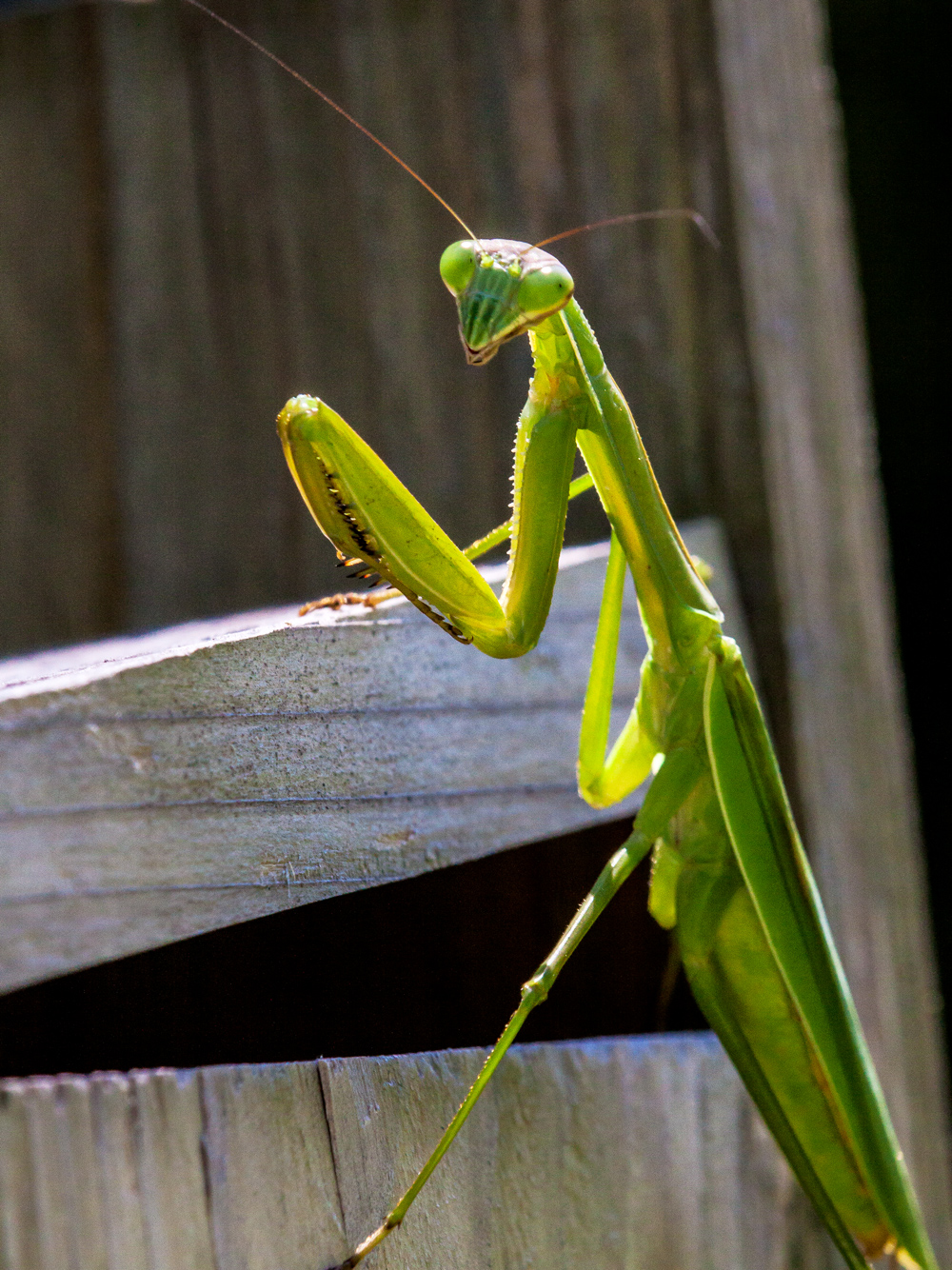
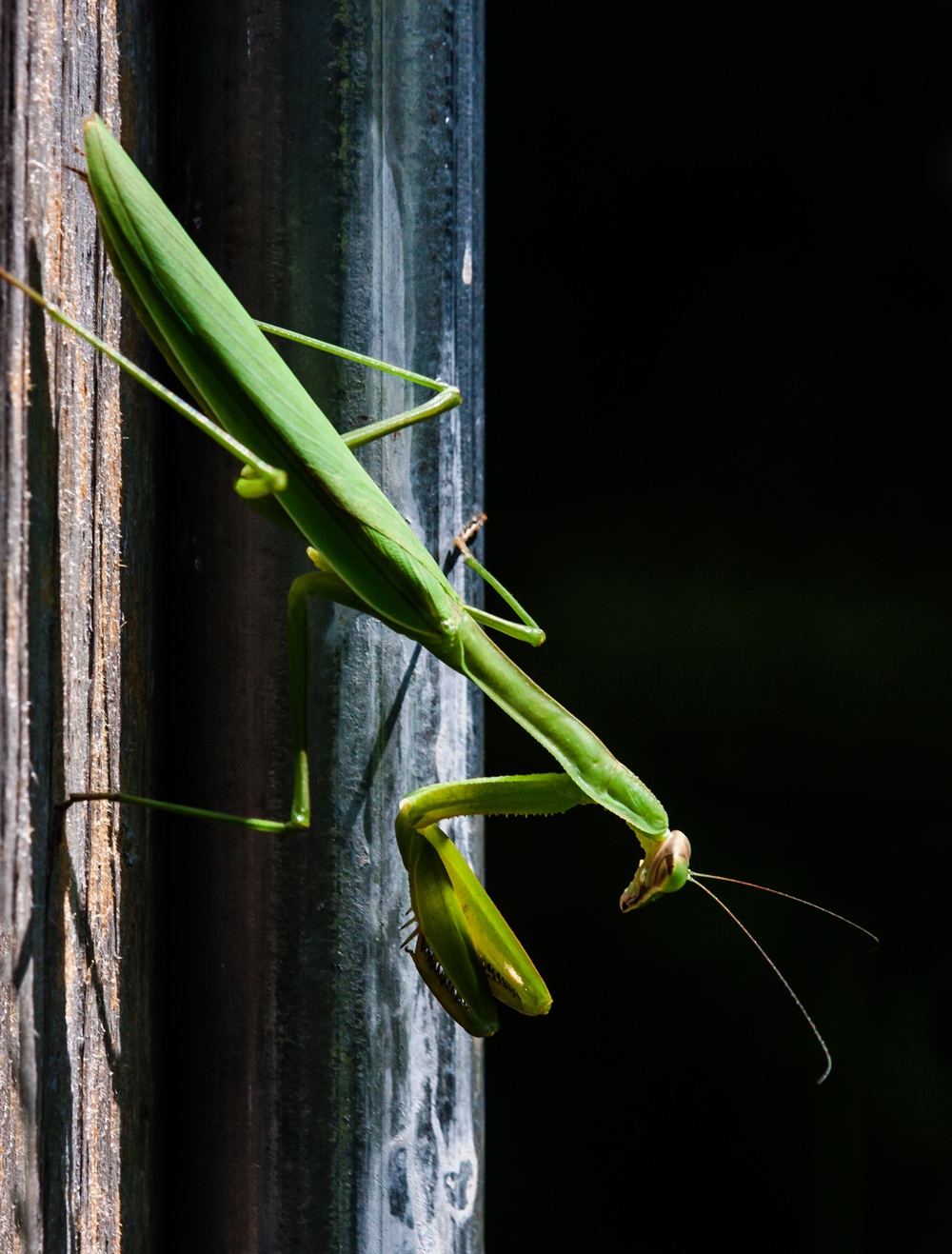
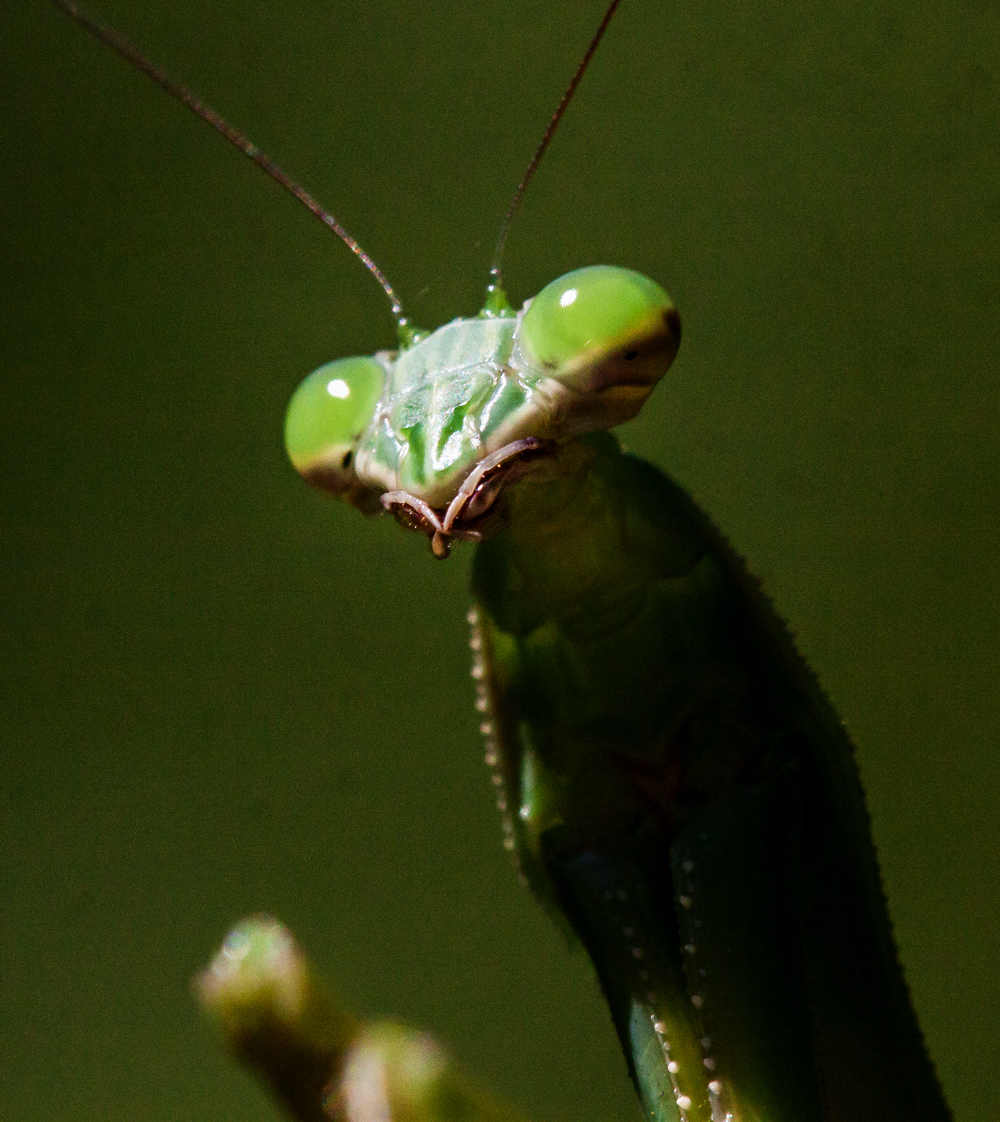
I spotted this Praying Mantis on Saturday at Huntley Meadows Park as it was crawling about on a nesting box for birds in one of the remote areas of the park. I am pretty confident that the nesting box, which was used by Tree Swallows earlier in the year, was no longer in active use—otherwise the mantis probably would not have survived for long. I was struck by the size of the insect, which seemed to be about six inches (15 cm) in length.

I think this may be a Mantis religiosa, one of the more common types of mantises, though Wikipedia notes that there are over 2400 species worldwide, so I could easily be incorrect in my identification.

Praying Mantis

Praying Mantis

Praying Mantis

© Michael Q. Powell. All rights reserved.
Read Full Post »

Yesterday afternoon at Huntley Meadows Park I captured this image of a female dragonfly as she hovered over the water, periodically dipping the tip of her abdomen into the water to lay eggs (and generate ripples).

hovering dragonfly

© Michael Q. Powell. All rights reserved.

Read Full Post »

I don’t often see dragonflies in a garden, but spotted this female Eastern Amberwing dragonfly (Perithemis tenera) amidst the flowers earlier this week at Green Spring Gardens. There were lots of male Eastern Amberwings buzzing around the small ponds in another location at the gardens in hopeful expectation of finding a mate.

I have the impression that female dragonflies like to hang out in a different area from the males and then make an appearance at a time of their own choosing.

Eastern Amberwing

© Michael Q. Powell. All rights reserved.

Read Full Post »

Normally Blue Dasher dragonflies (Pachydiplax longipennis) perch on plants growing upwards, but this one decided to be different by perching on hanging vegetation. I love how the lighting makes it look like the image  was shot in the studio. I think I will call his position the “downward-facing dragonfly.” (I captured the image this morning in Woburn, MA at a small canal just outside of my hotel.)

Blue Dasher

© Michael Q. Powell. All rights reserved.

Read Full Post »

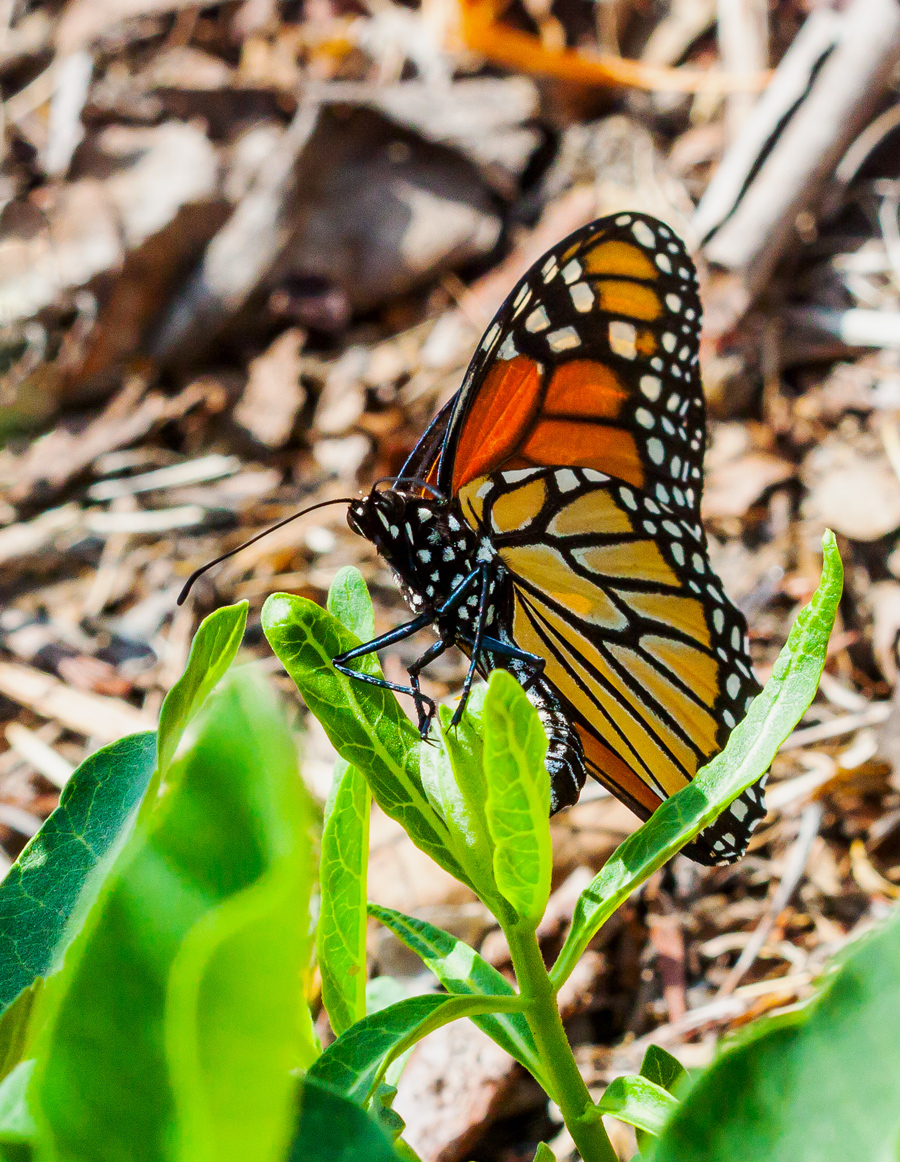
I was beginning to think that another year would go by without seeing a Monarch butterfly (Danaus plexippus) when yesterday I spotted one of them in the most unlikely of places—in the mulched plants at the back of the hotel where I am staying in Woburn, Massachusetts.

After a grueling eleven-hour ride from Northern Virginia, I arrived at the hotel yesterday afternoon ready to relax. Unfortunately, I was told that my room would not be ready for at least an hour. I grabbed my camera and decided to walk around the grounds of the hotel, which is adjacent to a small canal, to see what there might be to photograph.

As I was walking, I caught sight of an orange-and-black butterfly that kept landing momentarily on the low plants, never staying still long enough for me to get a good shot (I was shooting with a 100mm macro lens). I kept chasing and eventually got some shots. It has been such a  long time since I last saw a Monarch that any photo at all is a bonus, so it doesn’t bother me that these are far from being great shots.

My excitement at seeing a Monarch is tempered a bit by the fact that I did not get the right angle to conclusively exclude the possibility that this is a Viceroy butterfly. If that were to turn out to be the case, I’ll be out again chasing butterflies in search of the first Monarch of the season.

Monarch butterfly

Monarch butterfly


© Michael Q. Powell. All rights reserved.

Read Full Post »

How do you get your subject to smile when you want to take a picture? This Blue Dasher dragonfly (Pachydiplax longipennis) didn’t need any prompting at all when I went in for an extreme close-up shot yesterday at McKee-Beshers Wildlife Management Area in Maryland.

Start each day with a smile.

Blue Dasher

© Michael Q. Powell. All rights reserved.
Read Full Post »

During a quick trip to Jackson Miles Abbott Wetlands Refuge at Fort Belvoir, Virginia last weekend, I was thrilled to see that the spectacularly patterned Banded Pennant dragonflies are still around. This is the only location that I visit regularly where I have spotted this dragonfly species and I am never quite sure when an encounter will be the last one of the season.

As I was looking over the two shots that I chose to use with this posting, I realized that they represent two different approaches that I use when photographing dragonflies. Ideally I will try to position myself so that the camera’s sensor is parallel with the dragonfly’s wings and most of the dragonfly will be in focus. That was the case with the second shot and it really highlights the beautiful pattern of the wings. However, the image seems a bit too static for my taste. I prefer the first shot, in part because the pose is more dynamic and the direct eye contact with the dragonfly draws me in.

Banded Pennant

Banded Pennant

© Michael Q. Powell. All rights reserved.

Read Full Post »

Blue Dasher dragonflies (Pachydiplax longipennis) have become for me one of the signs of summer in the area in which I live. When the weather turns hot and humid, they can often be seen flying lazily over the marshes and ponds, perching frequently on vegetation growing out of the water.

On a recent trip to Green Spring Gardens, I captured some images perched male Blue Dasher dragonflies. In the first shot, the dragonfly was perched on the edge of a lotus leaf. I really like the curves and softness of the leaves, which contrast with the details of the dragonfly. I think too that the shadow cast on the lower leaf adds some additional visual interest to the  image.

The second image features a Blue Dasher in the obelisk pose. It is generally believed that some dragonflies assume this pose to dissipate heat by reducing the amount of their bodies that is exposed to direct sunlight. I was shooting partially into the sun, which forced me to overexpose the image a bit and accounts for the lighter background. However, the surface of the water was covered with a lot of duckweed and was not uniform in color. As a result, the background ended ended up with some ugly gray patches that I seemed to be impossible for me to remove.

Blue Dasher

Blue Dasher

© Michael Q. Powell. All rights reserved.
Read Full Post »

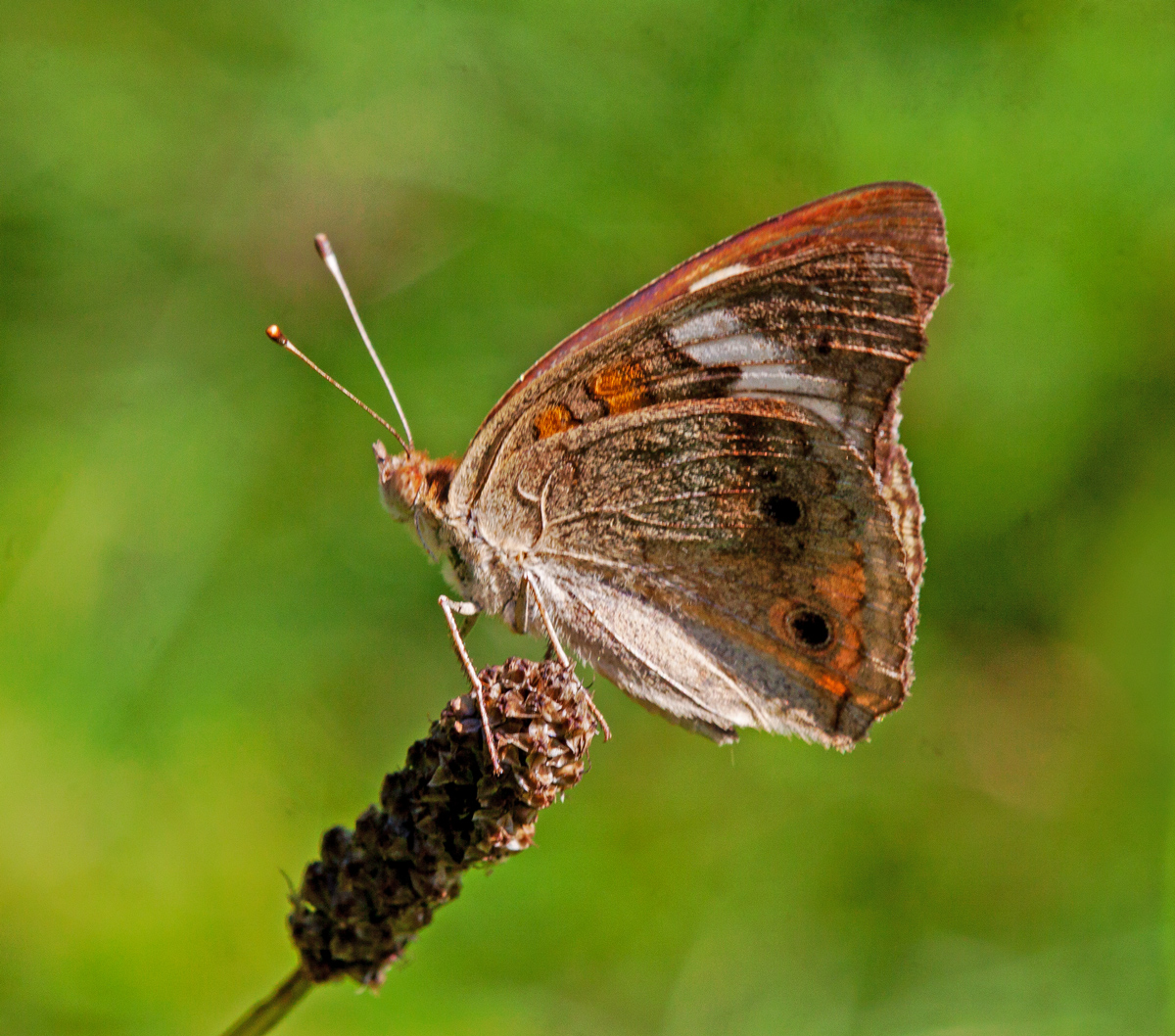
I first spotted this small Common Buckeye Butterfly (Junonia coenia) as it was flying low above a grassy patch at Jackson Miles Abbott Wetlands Refuge. Periodically it would stop and I would attempt to get a shot of it. It was probably hilarious to watch our little pas de deux—the butterfly would fly and perch and I would bend my knees and crouch, which served as a signal for the butterfly to take off again.

I’m pretty patient, so we danced this way for quite a while before the butterfly decided to perch on some low vegetation rather than on the bare ground. I was finally able to capture a shot, though the butterfly didn’t pose long before taking off again.

Common Buckeye

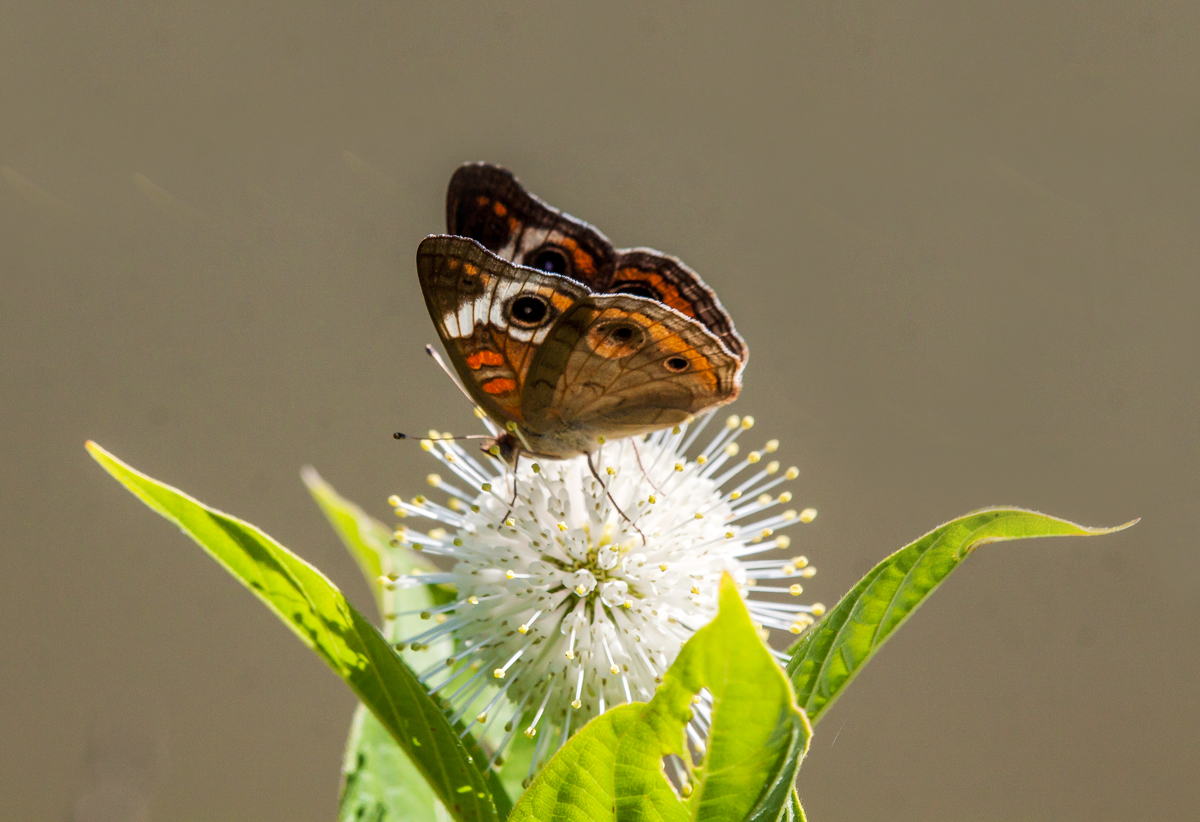
As I continued the chase, my knees started getting a bit sore. I was thinking of giving up the chase when suddenly the butterfly flew higher into the air and landed on a buttonbush (Cephalanthus occidentalis). These bushes are a virtual magnet for butterflies and I love the spiky spheres of the plant. I wasn’t able to get very close to the buttonbush, but captured this image that I really like.

Common Buckeye

The chase ended here and we went our separate ways. I hope that I never get too old or too self-conscious to chase butterflies, a pursuit that makes me feel like a carefree child again.

© Michael Q. Powell. All rights reserved.


Read Full Post »

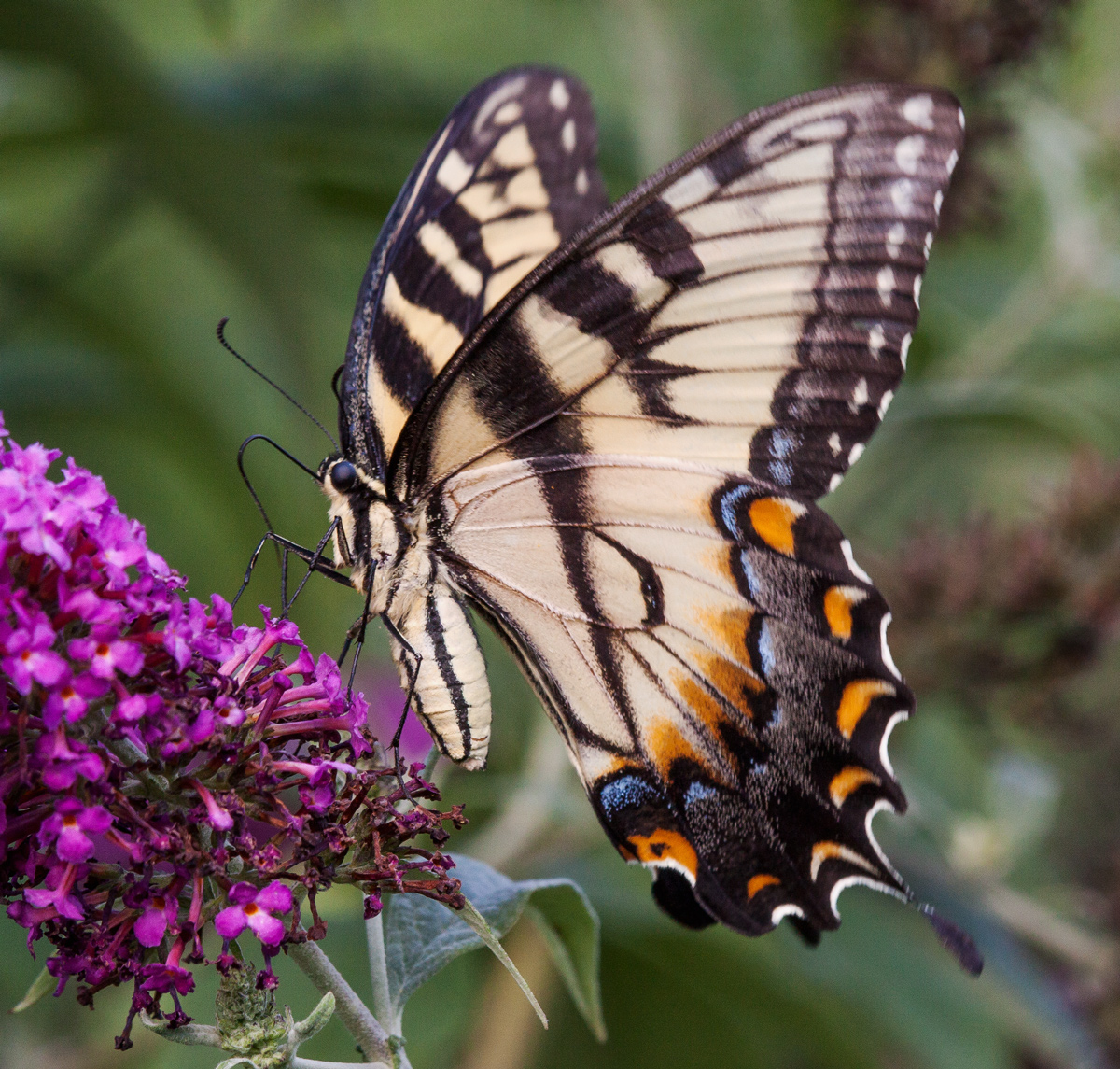
Some folks are really into chasing imaginary creatures with their cellphones. I prefer to chase living creatures with my camera and captured this image of a beautiful Eastern Tiger Swallowtail butterfly (Papilio glaucus) yesterday as it was feeding at Green Spring Gardens, a county-run historic garden in Northern Virginia.

The butterfly gave me multiple opportunities to get shots as it flew around a small area of the gardens, but it rarely gave me an obstructed view. Often it was partially buried in the flowers or turned away from me at an angle. When I took this shot, the butterfly had opened its wings and offered me a rare look at its body as well as its amazingly long proboscis.

Eastern Tiger Swallowtail

© Michael Q. Powell. All rights reserved.


Read Full Post »

I absolutely love the vibrant colors of the daylilies in the garden of my neighbor, Cindy Dyer. Cindy is best known for her photos of flowers that have appeared multiple times on U.S. postage stamps, but she photographs a wide variety of subjects. On a more personal level, she has served as my photography mentor over the past four years and has been a constant source of encouragement and inspiration for me.

As I was capturing some images of the daylilies, I thought back to one of my earliest lessons with Cindy in which she reassured me that I didn’t have to capture the entire flower when I photographed it. That simple insight helped me realize that I was doing something more than simply documenting reality—I was creating my own version of reality through a series of artistic and technical choices.

I learned a powerful and liberating lesson that day that has continued to shape the way I approach most of my photography.

daylily

© Michael Q. Powell. All rights reserved.
Read Full Post »

Yesterday I spotted this spectacular female Swamp Darner dragonfly (Epiaeschna heros) at Huntley Meadows Park. At almost 3 1/2 inches long (90 mm), Swamp Darners are one of the largest dragonflies in our area.

It was a rare treat for me to capture shots of one perching—usually I see them only in flight. Like most darners, Swamp Darners hand vertically from vegetation, often low to the ground. I was fortunate to see this beautiful dragonfly fly to the perch and it remained there long enough for me to maneuver into position for a clear shot with my long zoom lens. I actually had to pull back from the maximum 600mm focal length of the lens in order to be able to fit the dragonfly’s entire body in the frame.

If you want to get a higher-resolution look at some of the wonderful details of this dragonfly, including the amazing colors of its eyes, be sure to click on the image.

Swamp Darner

© Michael Q. Powell. All rights reserved.

Read Full Post »

How far do you usually travel when you want to take some photos? I capture a lot of my wildlife/nature images in my local area, but generally I get into my car and travel at least a few miles before I begin shooting.

Sometimes, though, I feel the urge to shoot, but don’t really want to travel far. In those moments I will usually walk over to the townhouse of my neighbor, fellow photographer Cindy Dyer, who always seems to have an assortment of photogenic flowers in bloom.

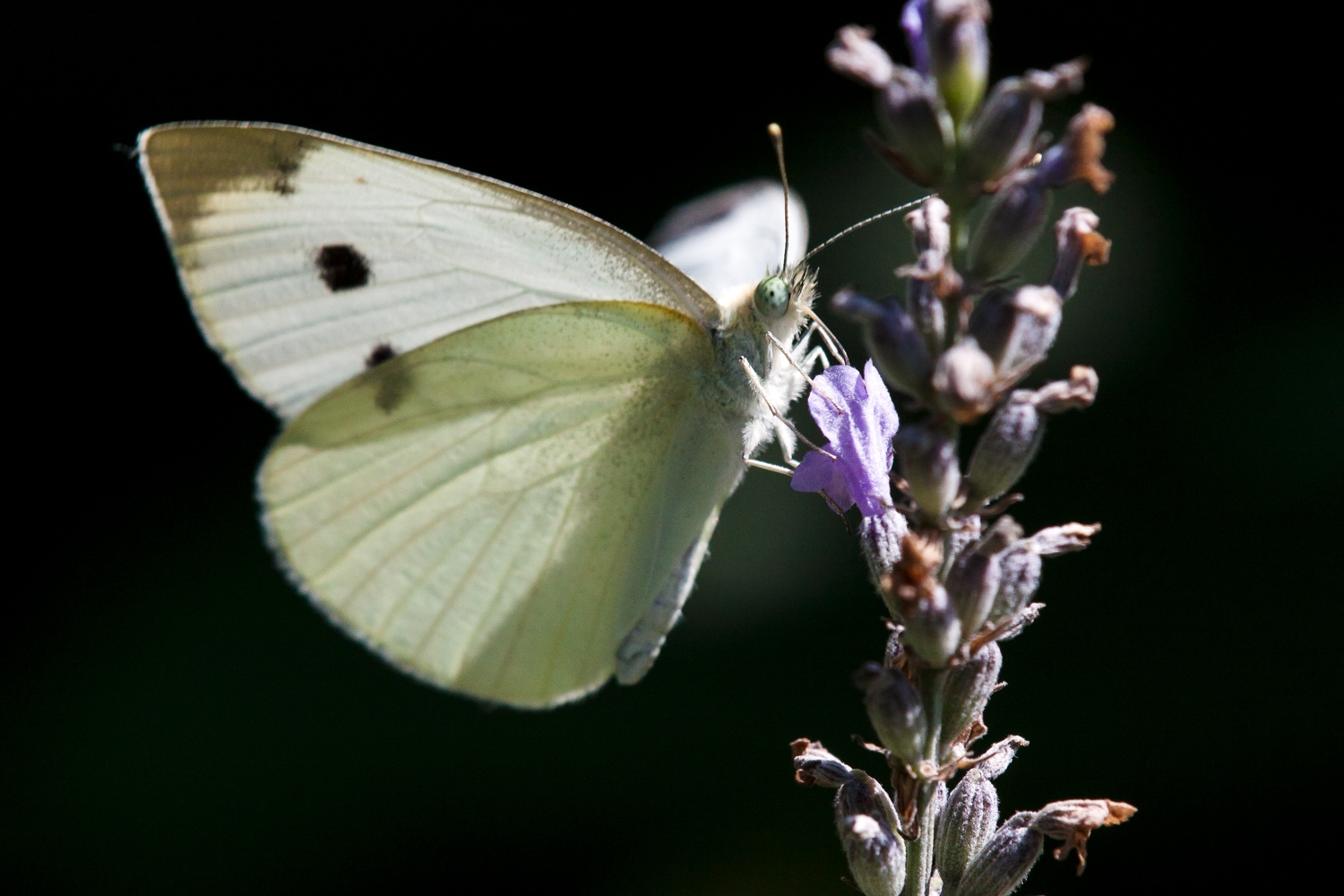
Last week I chased a Cabbage White butterfly (Pieris rapae) that I spotted fluttering about the flowers in garden. It passed by the globe thistles and the cone flowers and finally perched for a moment on a lavender plant. The sun was shining brightly, which I knew would create problems in getting a proper exposure of the dazzling white wings of the butterfly. I switched my metering to spot metering and the wings retained their details, but the background became really dark, creating a dramatic lighting effect that I really like. As always, I was thrilled to be able to see the beautiful green eye of this common butterfly that is often ignored or simply taken for granted.

Cabbage White

© Michael Q. Powell. All rights reserved.

Read Full Post »

Ebony Jewelwing damselflies (Calopteryx maculata) like to hide in the shadows, but they really do sparkle like jewels when the light hits them right.

I spotted the beautiful female damselfly in the first photo this past weekend at Huntley Meadows Park—only females have white spots on their wings. I really like the way that the tones of the background complement the colors of the damselfly.

Ebony Jewelwing

I captured this shot of a male Ebony Jewelwing damselfly only a few minutes later. The lighting was brighter and the stance seems almost confrontational, which gives this image a totally different feel from that of the female.

Ebony Jewelwing

I’ll leave it to others to make broader inferences about the mysteries of the fairer gender versus the in-your-face directness of the average male.

© Michael Q. Powell. All rights reserved.
Read Full Post »

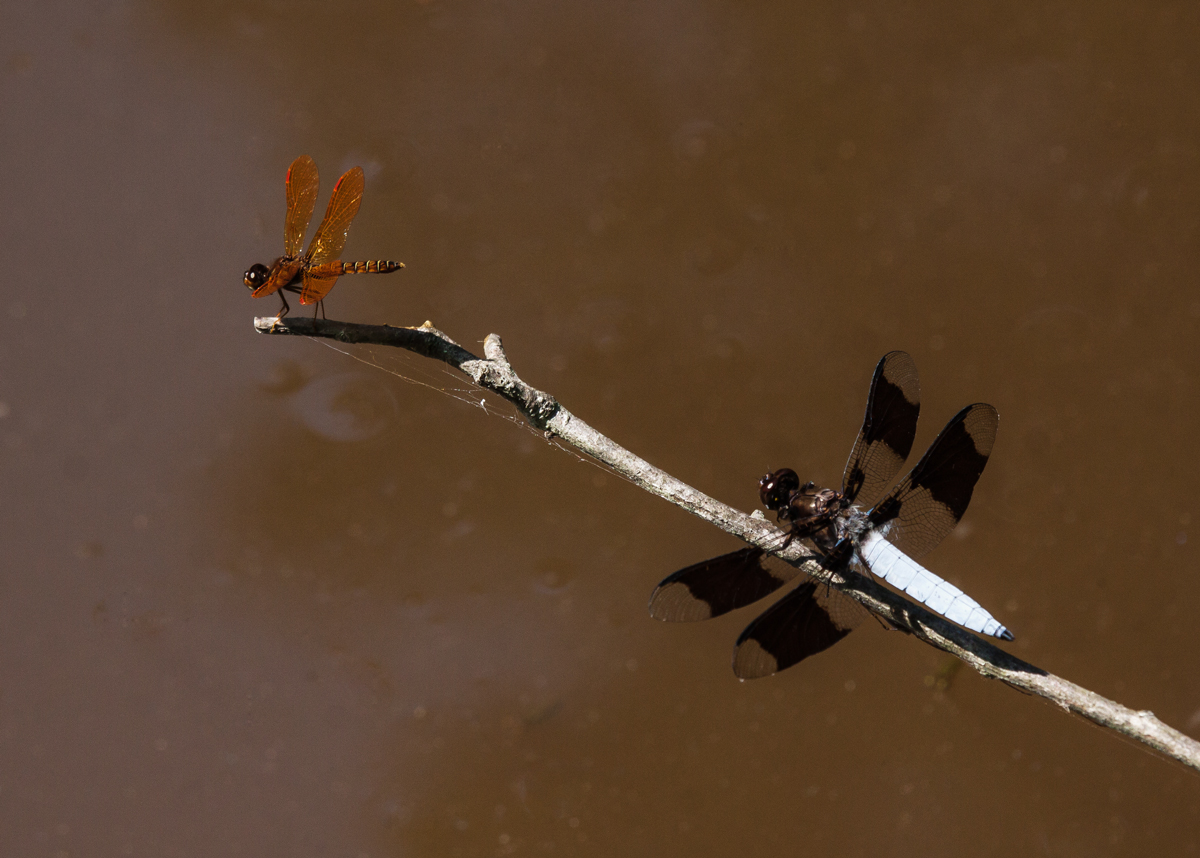
Despite their differences in size and appearance, the Eastern Amberwing (Perithemis tenera) and the Common Whitetail (Plathemis lydia) dragonflies were able to co-exist peacefully and both were able to enjoy the same perch this morning at Huntley Meadows Park.

Why is it so hard for us to do the same?

coexist1_8Jul_blog

© Michael Q. Powell. All rights reserved.

Read Full Post »

I should probably be able to remember my own anniversary, but I am a guy. Therefore I was caught a bit by surprise yesterday evening when WordPress notified me that it was the fourth anniversary of the start of my blog. Where has the time gone?

Blogging has become part of my daily life since I first started. I never suspected that I would get such joy and satisfaction from exploring my creativity in words and in photos and from sharing that journey with the wonderful folks that I have encountered through the blog. Thanks to all of you for your support, encouragement, and helpful tips. I sometimes like to say that I write this blog primarily for me, but I know that is not entirely true—I write it for all of you too. My photography mentor, Cindy Dyer, deserves special thanks. She helped me to start the blog and has been a continuous source of inspiration for me.

WordPress statistics indicate that I have made 2030 postings (which includes a dozen or more repostings of  posts written by friends) and have had 110749 views from well over 100 countries. Statistics are only a relative measure of success and I know that my best postings and my best photos are not necessarily the ones that have had the most views.

Over the past four years my skill and my confidence with my camera have grown. I now consider myself a photographer, albeit not a professional. My interests have expanded and my winters are now spent chasing birds, something I never imagined that I would find interesting. My fascination with dragonflies has remained constant and I have learned a lot about them. I think it is altogether appropriate to reprise today the short text and photo from my first posting

Text of my first posting in WordPress on July 7, 2012:

I photographed this Blue Dasher dragonfly (Pachydiplax longipennis) at Kenilworth Aquatic Gardens this morning.

© Michael Q. Powell. All rights reserved.


Blue Dasher

Read Full Post »

« Newer Posts - Older Posts »