Feeds:
Posts
Comments

Archive for the ‘Insects’ Category

When I spotted a red dragonfly in flight while exploring the botanical garden in Brussels, I immediately gave chase. Unfortunately the dragonfly chose to perch on a weathered wooden fence a good distance away. Unable to get any closer to the dragonfly, I did my best to incorporate the fence into the composition.

I kept looking later in the day for the elusive red dragonfly, which looks a little like the Autumn Meadowhawk dragonfly that I see in my home area, but I never saw it again.

dragonfly in Brussels

dragonfly in Brussels


© Michael Q. Powell. All rights reserved

Read Full Post »

Do you have a favorite insect? This is such a strange question that most folks would not have an immediate answer and would have to stop and think a bit before responding. The quickest responses would undoubtedly come from those who simply do not like insects at all. The most common positive answer, I suspect, might well be a Monarch Butterfly.

Many readers know that I see lots of beautiful dragonflies and butterflies, but my favorite insect is almost certainly the Handsome Meadow Katydid (Orchelimum pulchellum), like this one that I photographed on Monday at Occoquan Bay National Wildlife Refuge. I remember my sense of awe and amazement the first time that I spotted one—I couldn’t believe my own eyes, because the combination of colors seemed so bright and almost unreal. When I initially posted a photo of the Handsome Meadow Katydid, one of my friends thought that I had added the colors in Photoshop.

To this day, I never fail to marvel at a Handsome Meadow Katydid’s spectacular rainbow colors and incredible blue eyes and am always thrilled to discover again their amazing beauty when I am fortunate enough to find one.

Handsome Meadow Katydid

© Michael Q. Powell. All rights reserved

Read Full Post »

The biological clocks of some species seem to be ticking as the summer winds down, compelling them into frantically mating sessions, like this pair of Halloween Pennant dragonflies (Celithemis eponina) that I spotted this past weekend at Lilypons Water Gardens in Adamstown, Maryland. The challenge in photographing this type of activity is to present it in a way that is artistic rather than purely sexual.

halloween pennant

halloween pennant

© Michael Q. Powell. All rights reserved

Read Full Post »

Whenever I see bees buzzing around flowers, I keep an eye out for hummingbird moths. For some unknown reason, I have seen more of these colorful moths this summer than in past years.

Although you could argue about whether or not thistles are flowers, my vigilance was rewarded when I spotted this beautiful Hummingbird Clearwing Moth (Hemaris thysbe) feeding on this thistle bloom on Monday at Occoquan Bay National Wildlife Refuge.

Hummingbird Clearwing Moth

Hummingbird Clearwing Moth

© Michael Q. Powell. All rights reserved

Read Full Post »

As summer begins to wind down for those of us in the Northern Hemisphere, some of the dragonfly species in our area are starting to disappear. Fortunately, though, some new species appear late in the season to take their places, like this Russet-tipped Clubtail dragonfly (Stylurus plagiatus) that I spotted yesterday at Occoquan Bay National Wildlife Refuge in Woodbridge, Virginia.

Unlike many of the dragonflies that I see regularly that seem to prefer pole-like perches or perch flat on the ground, Russet-tipped Clubtails like to hang from the leaves of vegetation either at an angle, as this one is doing, or vertically. I was pretty excited to find this dragonfly, because I have seen a member of this species only once before, last year at a different location, Jackson Miles Abbott Wetland Refuge.

Russet-tipped Clubtail

© Michael Q. Powell. All rights reserved

Read Full Post »

When it comes to dragonflies, what catches your eye? Is it their bright colors or their acrobatic flying skills? When it comes to male Twelve-spotted Skimmers (Libellula pulchella), it is definitely the bold brown-and-white pattern on their wings that irresistibly attracts me. I somehow feel compelled to chase after one whenever I spot it.

Yesterday I made a brief trip to Lilypons Water Gardens in Adamstown, Maryland. This sprawling facility has over 150 acres of amazing ponds and water gardens with fantastic displays of water lilies, which are for sale. (I’ll feature some of the different colored water lilies in an upcoming post.) Although I saw a lot of dragonflies there, I saw only a few Twelve-spotted Skimmers.

Most of them were remarkably elusive, but one finally perched on some vegetation overhanging the water. The bank was fairly steep, so there was no way that I could get a side shot or a head-on shot, which is one of my favorite shots of a dragonfly. What was I going to do?

Then it dawned on me that I had a perfect view of the magnificent wing patterns as I looked straight down the body of the dragonfly, facing in the same direction that he was facing. Boldly I decided to commit what is normally a cardinal sin for a photographer—I intentionally chose not to focus on the subject’s eyes. Lightning did not strike me as I pressed the shutter and I captured an almost abstract portrait of the dragonfly. For me, there is a real beauty in the simplicity and minimalism of this image.

In case you get confused about counting the twelve spots, you’re supposed to count only the brown spots. According to Wikipedia, though,some folks prefer to count the white spots and therefore call this dragonfly a “Ten-spot Skimmer.”

Twelve-spotted Skimmer

© Michael Q. Powell. All rights reserved


Read Full Post »

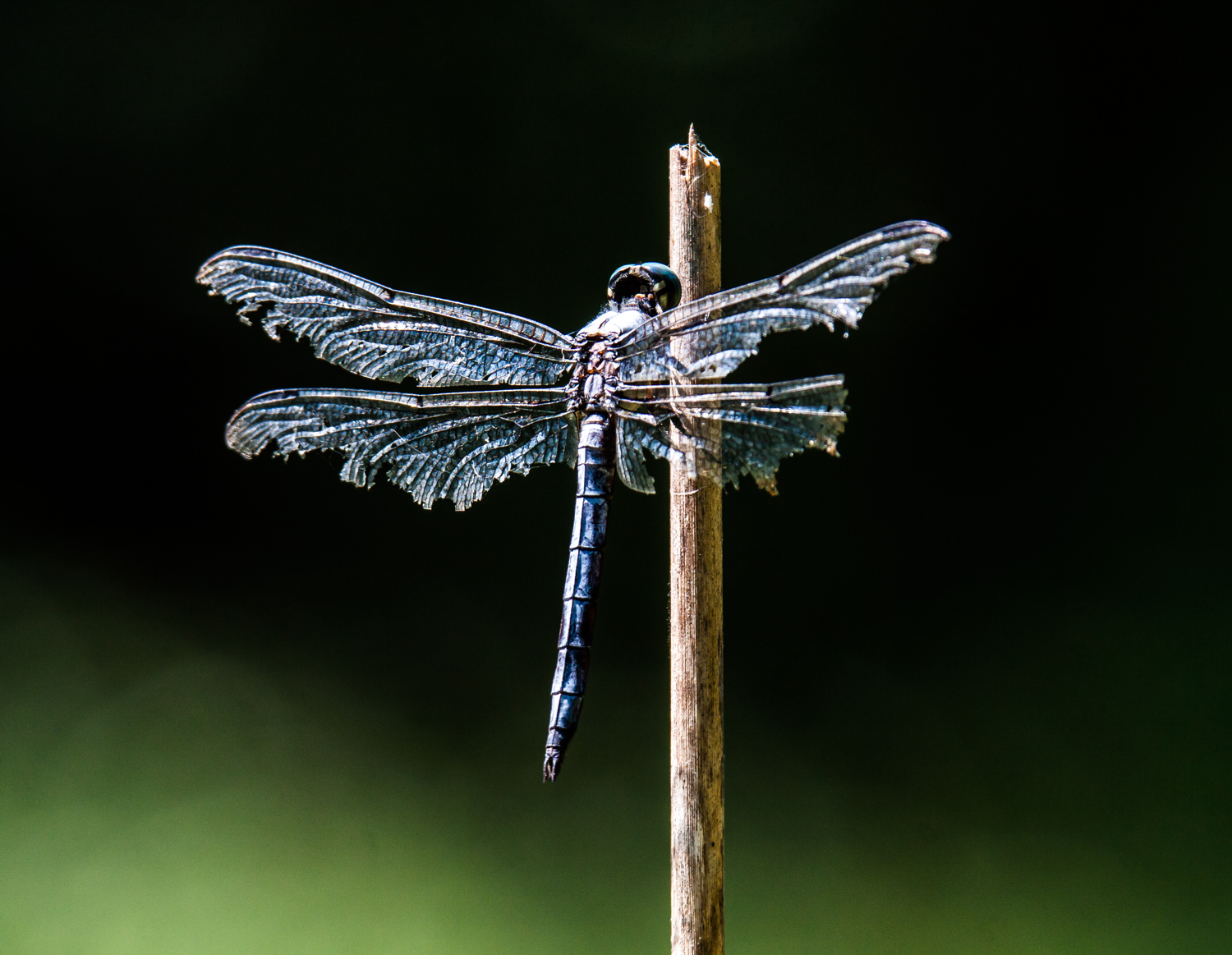
As the days of summer gradually wind down, I can’t help but notice a significant amount of wear and tear on the bodies and especially the wings of some of the dragonflies and butterflies that I see. Clearly it has been a long, tough season for some of them. Despite its tattered wings, this male Great Blue Skimmer dragonfly (Libellula vibrans) that I spotted on Monday at Huntley Meadows Park seemed to have no trouble flying, though I suspect that his days are numbered.

I hope that all of you have managed to survive this season well and that your “summer wear” refers to your clothes and not to the condition of your body.

Great Blue Skimmer

© Michael Q. Powell. All rights reserved

Read Full Post »

Different species of dragonflies fly in different ways. Some soar high in the air and some cruise just above the surface of the water. A dragonfly’s wings allow it to perform all kinds of aerial acrobatics that are entrancing to observe. Given their size and speed, it’s a significant challenge to try to capture them in flight, though frequent readers of this blog know that I will sometimes spend extended periods of time trying to meet that challenge.

During a recent trip to Occoquan Bay National Wildlife Refuge, I noticed a dragonfly flying above my head. Its flight reminded me of eagles and hawks that I have seen gliding effortlessly on thermal updrafts. I couldn’t make out the flight pattern that it was following, but it repeatedly flew over me. Each time that it returned, I would point my camera almost straight up and eventually I was able to capture this shot of an easy-to-identify Black Saddlebags dragonfly (Tramea lacerata)—the pattern of black blotches on the wings are very distinctive.

Black Saddlebags

Later that same day I spotted a dragonfly making repeated patrols above the water. The dragonfly never seemed to rest or to perch, so I tried and tried to capture some shots of it as it zoomed on by me. Most of my shots were out of focus, but I like the one below. The choppy water in the background reminds me of the clouds that I will sometimes see when I look out of the window of an aircraft that has reached its cruising altitude. In my mind’s eye, I can imagine this dragonfly flying high in the sky, peacefully soaring above the clouds and the turbulence below it.

Prince Baskettail

© Michael Q. Powell. All rights reserved


Read Full Post »

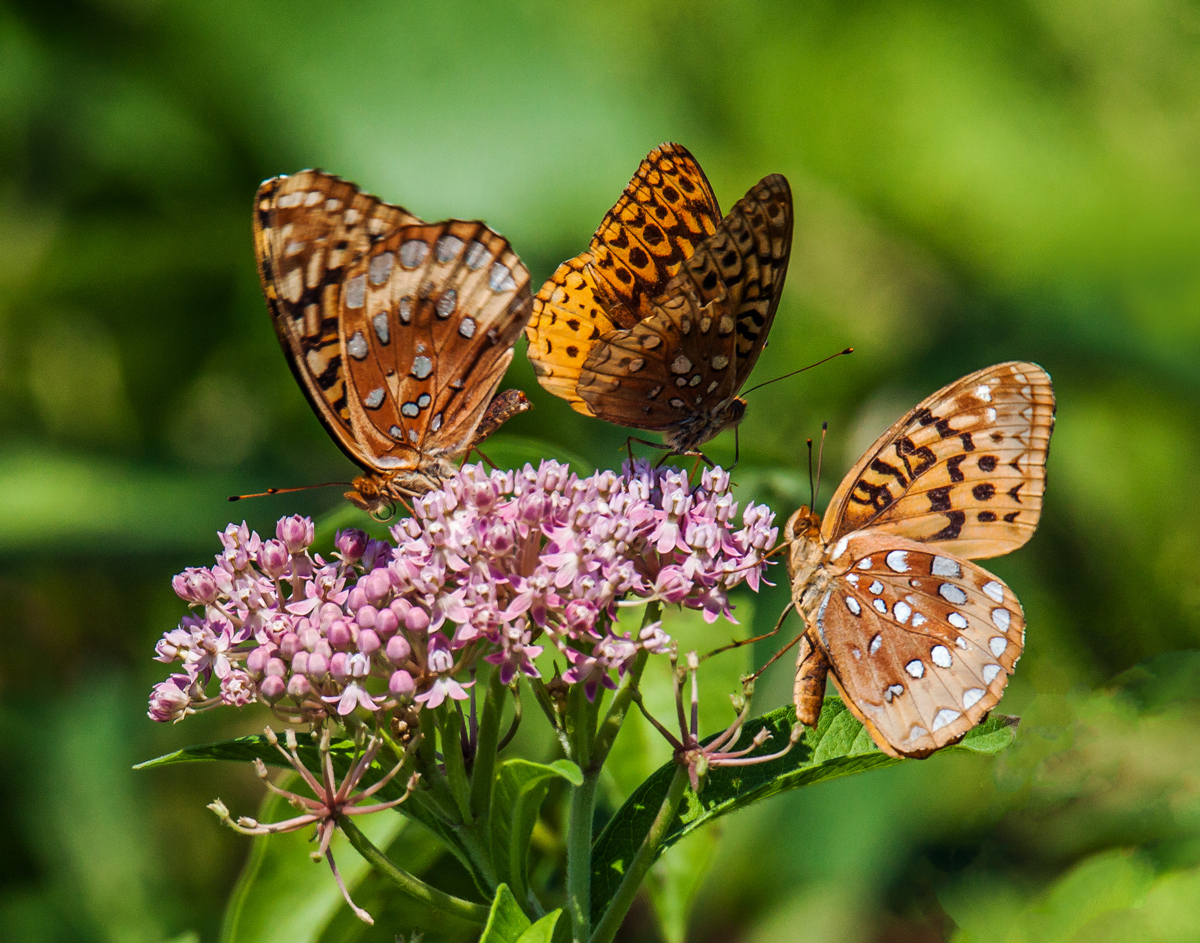
A clump of what I think is Swamp Milkweed (Asclepias incarnataseemed irresistible to a trio of Great Spangled Fritillary butterflies (Speyeria cybele) on Monday at Huntley Meadows Park. For a brief moment they coexisted peacefully, until one of them encroached into the territory of another and they all began to jostle each other for the prime spots.

I quickly snapped off a series of photos before the butterflies flew away. As is the case with almost any group, it was almost impossible to capture an image in which all of the subjects were more or less facing the camera and had interesting poses. It was roughly equivalent to trying to photograph a group of wiggly little children—single subjects seem easy by comparison.

Great Spangled Fritillary

© Michael Q. Powell. All rights reserved

Read Full Post »

The beautiful Monarch Butterfly (Danaus plexippus) is often featured in conservation efforts that focus on its dwindling numbers and shrinking habitat. It was therefore a little disconcerting to stumble upon a Monarch that had been ensnared in the web of a Black and Yellow Garden Spider (Argiope aurantia) during a visit this past weekend to Occoquan Bay National Wildlife Refuge.

I have no idea how long the butterfly had been in the web, but it appeared to be totally immobilized. Spiders like this one, known also as Yellow Garden Spiders or Writing Spiders, kill their prey by injecting venom and often wrap them up in web material for later consumption.

I considered cropping this image to focus more attention on the spider and the butterfly, but ultimately decided that I liked the context provided by the elements of the spider’s web and the murky, out-of-focus background.


spider and Monarch

© Michael Q. Powell. All rights reserved


Read Full Post »

One of the coolest looking butterflies in our area is the Zebra Swallowtail butterfly (Eurytides marcellus). In addition to having beautiful coloration, it has amazingly long “tails” that flutter when it is in flight. It is not a species that I see very often, so I will spend a lot of time chasing after one when I spot it, hoping, often in vain, that it will perch long enough for me to get a shot.

This Zebra Swallowtail, which I chased this past Friday at Occoquan Bay National Wildlife Refuge, was reasonably cooperative, though it refused to open its wings to give me a view of its entire wingspan.

Zebra Swallowtail

© Michael Q. Powell. All rights reserved

Read Full Post »

Predator or prey? Dragonflies are fearsome predators, but they can also become prey—it’s the whole circle of life cycle in the natural world.

This past Friday as I was walking around Occoquan Bay National Wildlife Refuge, I spotted the twisted body of a dragonfly suspended in the air against a backdrop of the sky. Instinctively I knew that there must be a spider web there, although it was not initially visible. The wing pattern of the dragonfly made it easy to identify as a Common Whitetail (Plathemis lydia).

As I got closer, I realized that a large spider was holding onto the body of the dragonfly. I am not totally certain of the spider identification, but it looks to me like it is a Spotted Orbweaver (Neoscona crucifera). Often when I approach a spider, it will scurry to the edge of its web, but this spider defiantly stayed in place—it looked like it was determined not to give up its prey.

As many readers know, I really like dragonflies, but spiders have to eat too. Undoubtedly this scenario plays out multiple times each day, but it is still a little unsettling to see it face-to-face.

spider and dragonfly

© Michael Q. Powell. All rights reserved


Read Full Post »

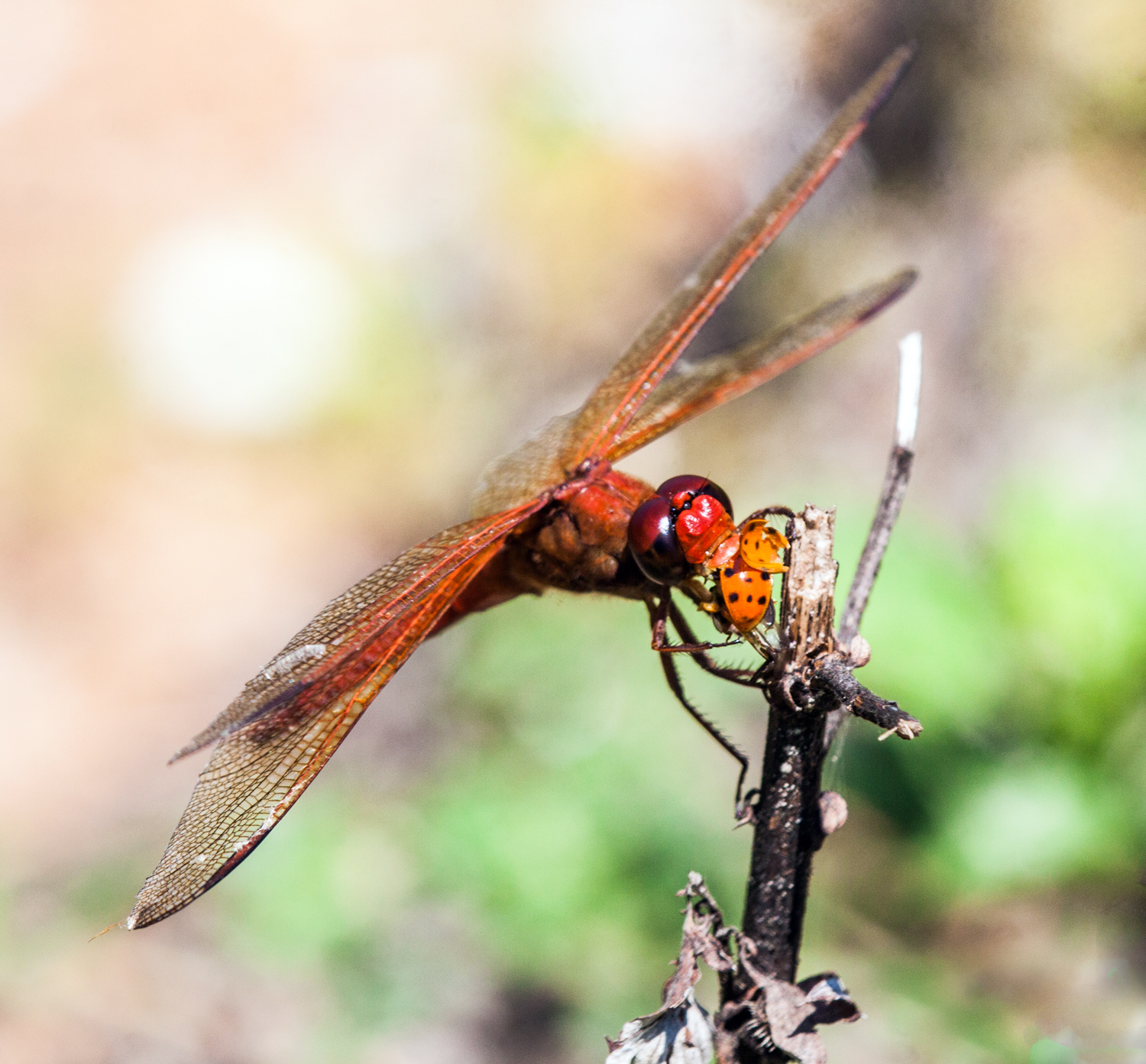
Dragonflies have to eat too, but I was a little shocked when I stumbled upon this Needham’s Skimmer dragonfly (Libellula needhami) munching on a ladybug or two yesterday at Occoquan Bay National Wildlife Refuge in Woodbridge, Virginia. Although I know that dragonflies are fearsome predators, I guess that I am not used to thinking of ladybugs as prey—they are usually depicted as cute, which is why they are seen so often on children’s clothing and furnishings.

dragonfly and ladybug

© Michael Q. Powell. All rights reserved

Read Full Post »

Although I tend to associate Monarch butterflies (Danaus plexippus) with milkweed, this Monarch was hungrily feeding on Queen Anne’s lace (Daucus carota) this past weekend at Huntley Meadows Park. I am not sure why, but I have seen significantly more Monarch butterflies this summer than in the past few years.

Monarch butterfly

© Michael Q. Powell. All rights reserved

Read Full Post »

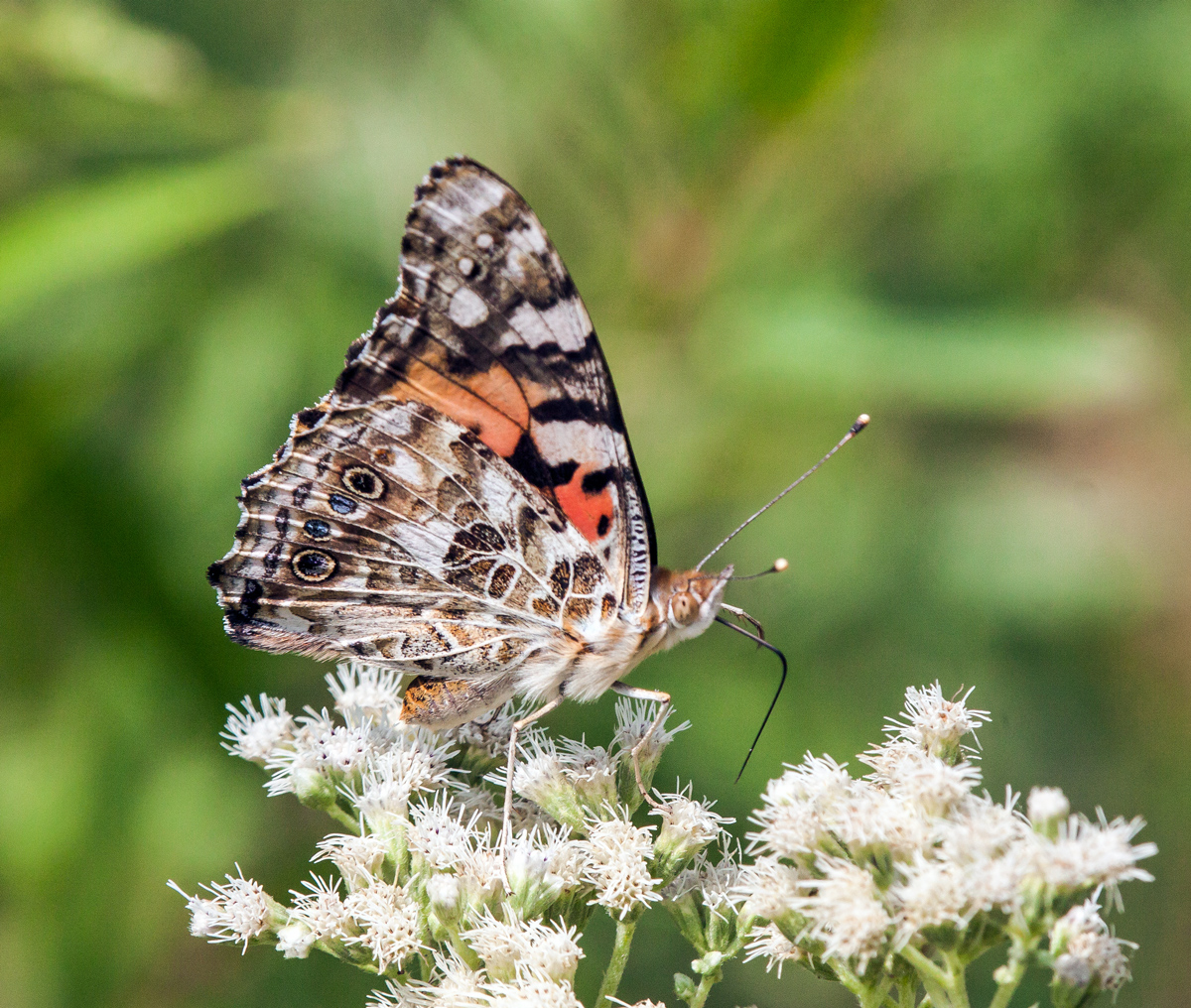
As I was exploring at Huntley Meadows Park this past weekend, I was thrilled to stumble upon this beautiful Painted Lady butterfly (Vanessa cardui), a species that I have not seen in several years. In the field, I couldn’t remember the differences between a Painted Lady and the similar-looking American Lady. Fortunately, there are plenty of resources on-line, including this helpful comparison page on bugguide.net that shows the differences between the two types. On the basis of the pattern of the eye spots, I concluded that this is almost certainly a Painted Lady.

Painted Lady

© Michael Q. Powell. All rights reserved

Read Full Post »

Several years ago, when I first started getting serious about photography, I probably would have called the insect in the photo a bee. My choices back then were simple—a black and yellow insect was either a bee or a yellowjacket. Now that I know a whole lot more about insects, I can readily identify the insect as a hoverfly (also referred to as flower fly) from the Syrphidae family.

When I spotted the hoverfly yesterday, I was struck by the way that its colors matched almost perfect those of the black-eyed Susans (Rudbeckia hirta) that were growing in abundance at Jackson Miles Abbott Wetland Refuge.

hover fly

© Michael Q. Powell. All rights reserved

Read Full Post »

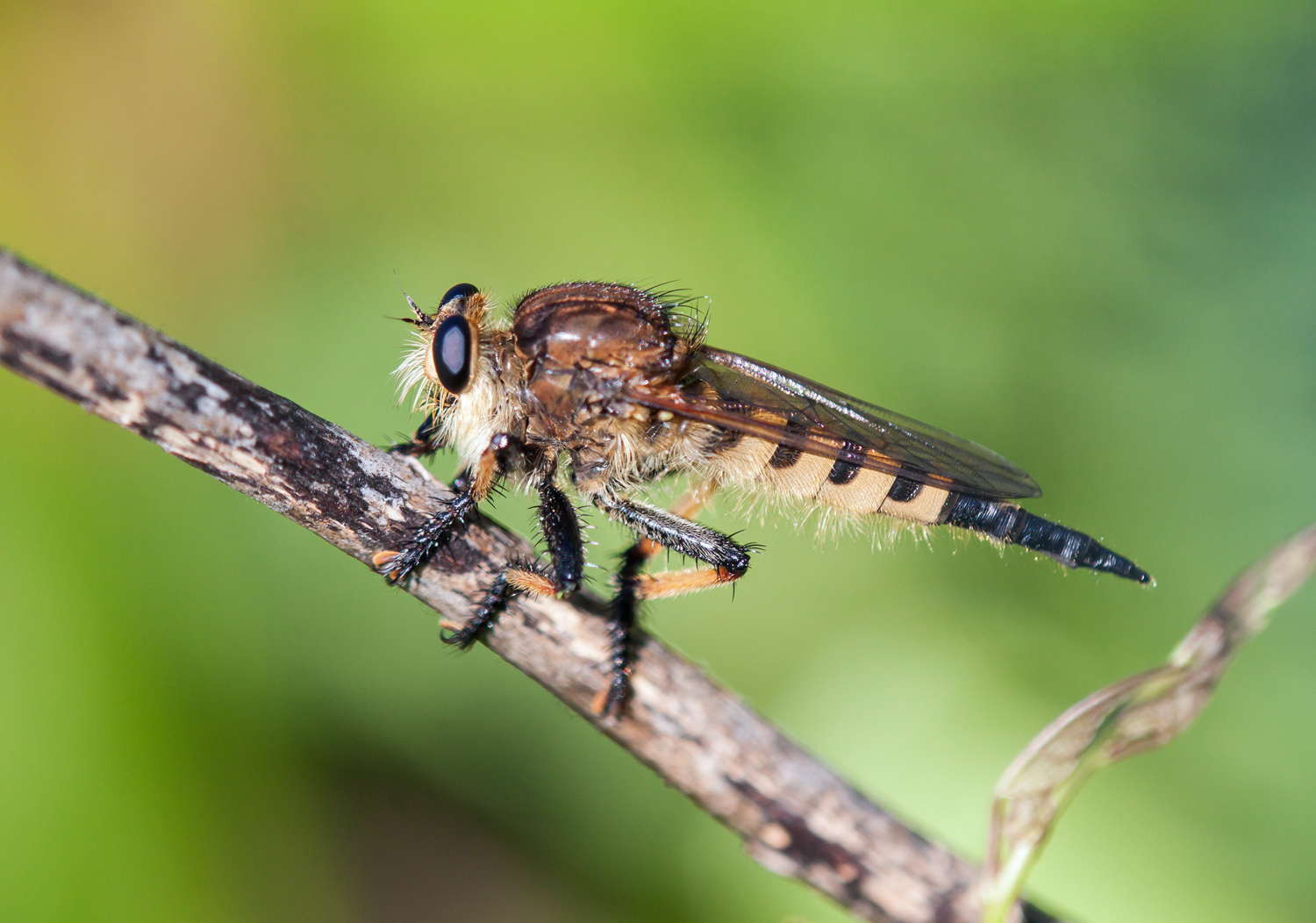
When I first encountered two insects this past weekend at Huntley Meadows Park, I thought they were mating. Looking a little closer, I realized it was a robber fly and its prey, which, after some research, I conclude is probably a Striped Horse Fly (Tabanus lineola). In addition to its unusual eyes, check out the sharp mouth parts of the horse fly that are used, I believe, for biting. Ouch!

There is a whole family of robber flies, known as Asilidae, of varying sizes and shapes, including the Red-footed Cannibalfly that I have featured several times recently. This robber fly was considerably smaller than a Red-footed Cannibalfly, but has many of the same general characteristics. They both grasp their prey with their long legs and inject it with saliva that paralyzes the victim. The saliva eventually liquifies the insides of the prey and the robber fly sucks out the liquified material through its proboscis. I think that the robber fly in the photo was in the middle of that process when I spotted it.

Robber Fly

© Michael Q. Powell. All rights reserved


Read Full Post »

One of the little woodland butterflies that I see only rarely is the Common Wood Nymph (Cercyonis pegala). I was therefore pretty excited when I spotted this beauty on Friday while it was perched on a tree at Huntley Meadows Park. The yellow patch is so distinctive that it was pretty easy for me to identify this one, unlike so many other woodland butterflies that are mostly brown with different patterns and colors of eye spots on their wings.

Common Wood Nymph

© Michael Q. Powell. All rights reserved

Read Full Post »

In the insect world, Red-footed Cannibalflies (Promachus rufipes) are fearsome predators. Yesterday I spotted one at Huntley Meadows Park in Alexandria, Virginia that appeared to be subduing a Hummingbird Clearwing Moth (Hemaris thysbe) that it had just captured.

What happens next? Wikipedia describes the tactics of a robber fly, the family to which the Red-footed Cannibalfly belongs, in these words:  “The fly attacks its prey by stabbing it with its short, strong proboscis  injecting the victim with saliva containing neurotoxic and proteolytic enzymes which very rapidly paralyze the victim and soon digest the insides; the fly then sucks the liquefied material through the proboscis.”

Yikes!

red-footed cannibalfly subdues hummingbird moth

© Michael Q. Powell. All rights reserved

Read Full Post »

Although it looks a bit like a tug of war, I think that these two Red-footed Cannibalflies (Promachus rufipes) actually were mating when I spotted them on Friday at Huntley Meadows Park. (Don’t ask me any anatomical questions–I am not sure how it works for them.)

This photo was taken from a pretty good distance away with my 150-600mm lens and is a little soft, but I thought I’d post it today as an accompaniment to my earlier macro shot of what I think is a female Red-footed Cannibalfly.

mating Red-footed Cannibalflies

© Michael Q. Powell. All rights reserved

Read Full Post »

A Red-footed Cannibalfly (Promachus rufipes) is one of the coolest and creepiest insects that you can encounter in the wild. A type of robber fly, Red-footed Cannibalflies usually feed on other insects, but they reportedly are capable of taking down a hummingbird. I spotted this “beauty” during a visit this past weekend to McKee-Beshers Wildlife Management Area in Poolesville, Maryland after a fellow photographer pointed it out to me.

Red-footed Cannibalflies are special to me for an unusual reason—a posting that I did about one in August 2013 has proven to be my most widely viewed normal blog posting over time. (I did have a couple of postings about the rescue of an injured bald eagle that received a huge boost in readership when linked in local media reports, but that spike was  a one-time occurrence and I tend to exclude those posts in my calculations.) The enduring popularity of that posting is a bit of a mystery to me. Yes, the subject is fascinating, but the accompanying photos are not really my best work.

Why then do I keep getting viewers for this posting? The posting, for example, had 512 views in 2015 and 612 views in 2016. During this year, there have already been 211 views, including 39 in August. I don’t know what kind of algorithms Google and the other search engines use in deciding how to rank order listings when searches are conducted, but somehow I have frequently made it onto the first page of the listings when a search is done for “red-footed cannibalfly.”

I receive offers all of the time for something called Search Engine Optimization (SEO) that promises me that, after I have paid a fee, my posting will rise higher on the Google results.  I am not sure that it would be possible for me to get any higher on the list than I already am—I think that my posting has on occasion been as high as fourth on the Google results.

I am a little amused that my name may have become associated with Red-footed Cannibalflies in the minds of some viewers after a Google search. On the whole, readership statistics remain a mystery to me. I can sometimes guess which of my postings will have a good number of viewers when originally posted, but I am clueless in figuring out which ones will have additional views after a couple of days have passed.

For better or for worse, my postings seem to have a life of their own. I never know when or how a viewer somewhere in the world may stumble across my words and images. Wow! How cool is that?

Red-footed Cannibalfly

© Michael Q. Powell. All rights reserved

Read Full Post »

Damselfly mating is, to say the least, unusual and acrobatic. Yes, I felt a little like a voyeur as I observed this pair of Ebony Jewelwing damselflies (Calopteryx maculata) on Monday at Huntley Meadows Park.

Did you notice the sideways heart that their bodies form during this process? Yeah, I am a bit of a romantic, even when it comes to mating insects in the wild. I would recommend, though, that you not try this position at home, but leave it to the professionally trained damselflies. You might otherwise require an unplanned visit to a chiropractor.

Ebony Jewelwing mating

© Michael Q. Powell. All rights reserved

Read Full Post »

Do you relax by hanging from a bar in the pull-up position? No, I don’t either, but this Mocha Emerald dragonfly (Somatochlora linearis) chose to do so on Monday when I spotted it at Huntley Meadows Park.

A couple of things really stand out whenever I am lucky enough to spot one of these beautiful dragonflies. Unlike many dragonflies, Mocha Emeralds don’t appear to like direct sunlight—they seem to hang out at small shaded streams, where the shadows and shade make photography difficult. Secondly, they often seem to hang vertically, which emphasizes their extraordinarily long slender bodies. Somehow they remind me of the super skinny young male models that many designers seem to favor, clothing them in garments that those of us with more normal physiques would never ever fit into—unlike those models, we have waists and hips.

Mocha Emerald

© Michael Q. Powell. All rights reserved

Read Full Post »

I love to watch bees and spotted this one recently at Green Spring Gardens. I was struck by the way it resembled a mountain climber (albeit with no ropes) as it hung upside-down from this shaggy flower—I have no idea how to effectively gather pollen from a flower like this one, but the bee seemed to be doing ok with its “tongue.”

bee

© Michael Q. Powell. All rights reserved

Read Full Post »

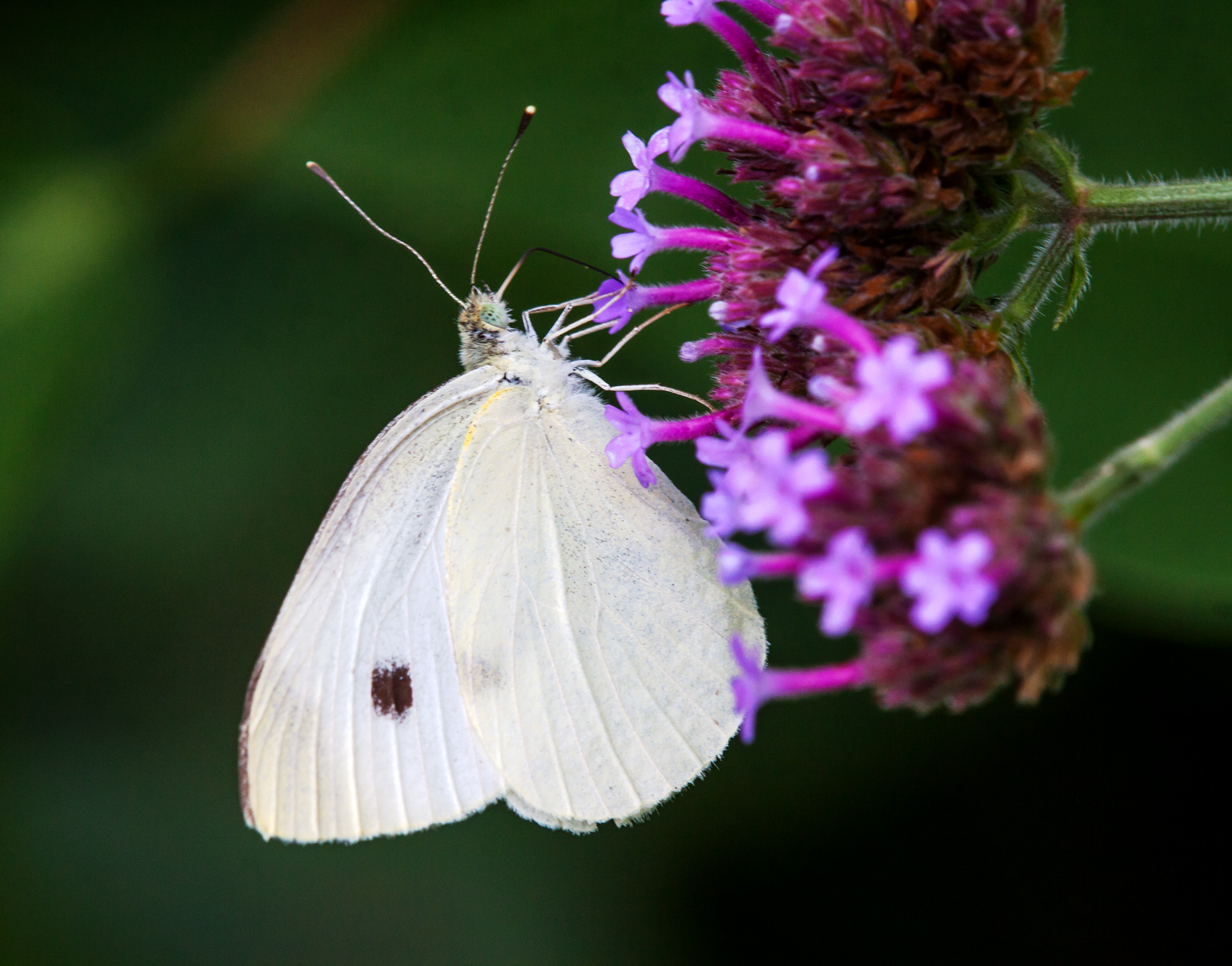
Cabbage White butterflies (Pieris rapae) are small and skittish and you probably don’t pay much attention to them—you might even think that they are merely moths. If you look closely, though, you’ll discover that they have beautiful, speckled green eyes.

I love the way that a macro lens reveals amazing details that are there, but that we never see or simply take for granted. I took these photos yesterday during a brief trip to Green Spring Gardens, a wonderful, county-run historic garden not far from where I live.

Cabbage White


Cabbage White

© Michael Q. Powell. All rights reserved

Read Full Post »

There is not denying that it is exciting to capture unusual moments, like a snake swallowing a catfish, or to photograph a new species, as I have done recently with dragonflies. For me, though, there is something equally satisfying about returning to a familiar location and observing ordinary subjects. It is a different kind of challenge to present the ordinary in an extraordinary way, in a way that makes people stop and realize that natural beauty surrounds them every single day.

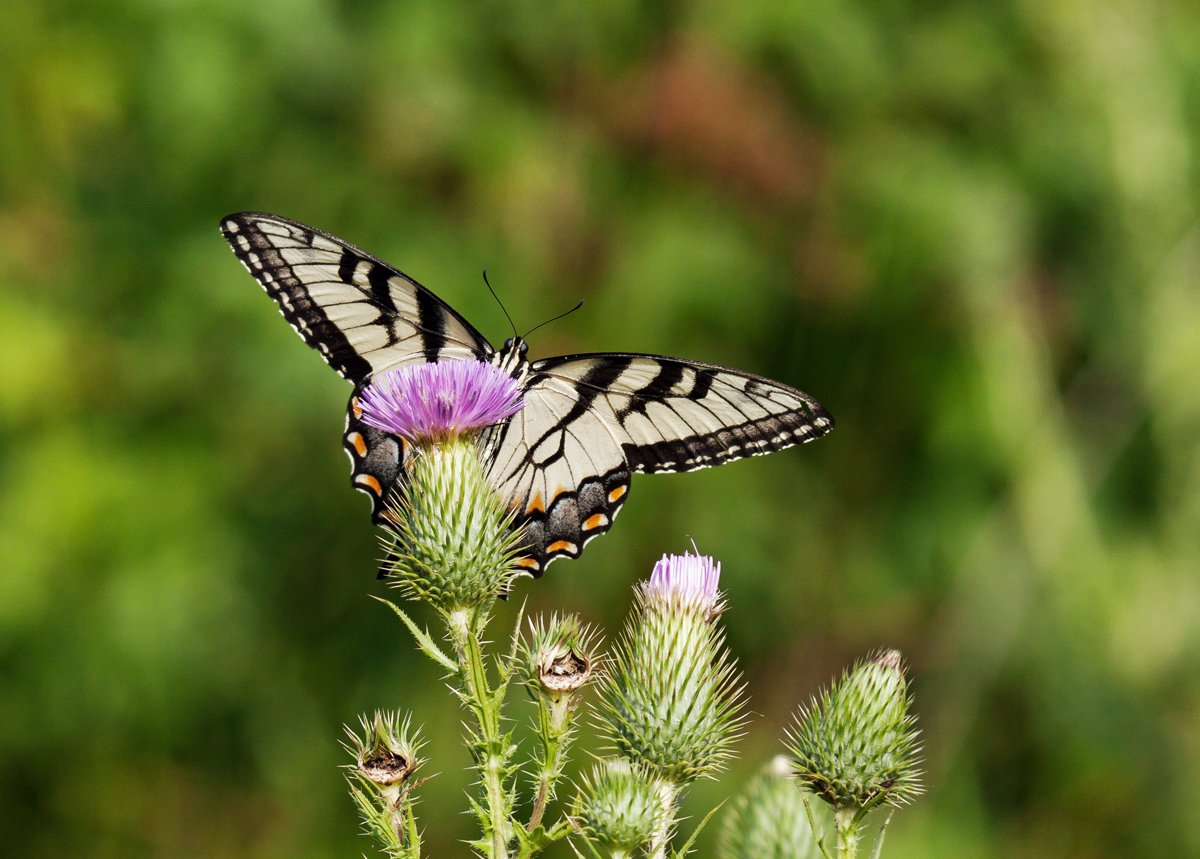
Last week, butterflies were really active at Huntley Meadows Park.  When I am in a garden, it is easier for me to guess where a butterfly will fly next, but in the wild, butterfly behavior is a little more unpredictable. When I noticed that a stand of what looks to be some kind of thistle was beginning to open, I hoped that the Eastern Tiger Swallowtail (Papilio glaucus) that was flying about would be attracted to it. Eventually it flew to the thistle and I was able to capture this image.

Spectacular? No, not really. Beautiful? I’d say so. The image works for me, because it has just enough stopping power to cause views to recall how beautiful ordinary butterflies can be, to rekindle the childhood memories of being excited by butterflies, and to remember how exciting it was abandon caution and simply and joyfully chase after butterflies.

Eastern Tiger Swallowtail

© Michael Q. Powell. All rights reserved

Read Full Post »

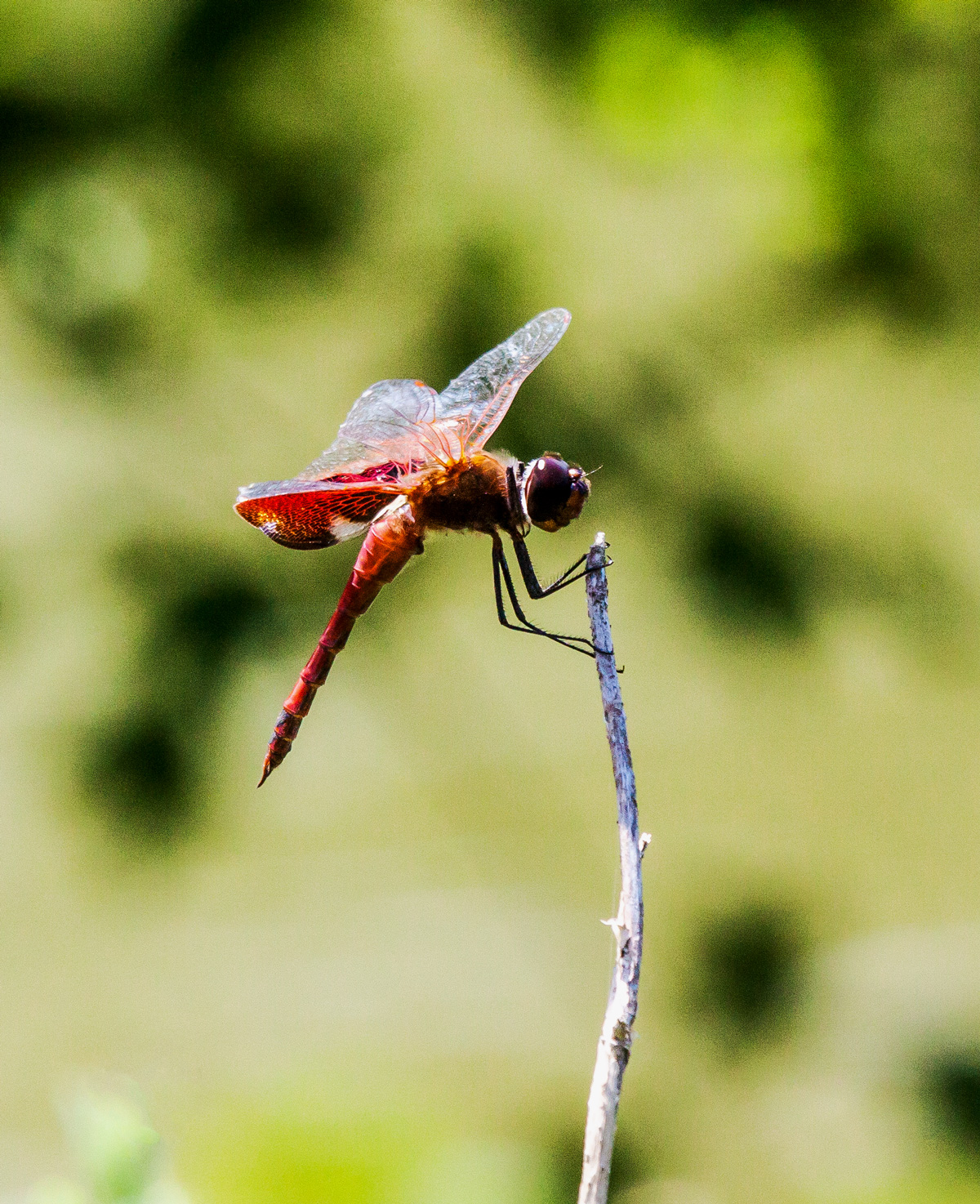
What are Carolina Saddlebags? Luggage for horseback or motorcycle riding? No, Carolina Saddlebags (Tramea carolina) are a species of bright red dragonflies with reddish-brown blotches of color on their hindwings. Why aren’t they Carolina Blue in color? Obviously the folks who named the dragonfly were not fans of the University of North Carolina (UNC) basketball team. (According to Wikipedia, the use of the light blue color at UNC dates back to 1795.)

I first became aware of the Carolina Saddlebags yesterday at Jackson Miles Abbott Wetland Refuge when a flash of red caught my eye. A dragonfly was patrolling over a section of the water and the adjacent grassy area. I tracked it visually and eventually realized it was a saddlebags dragonfly—those blotches of color stand out even when the dragonflies are flying. Most of the saddlebags dragonflies that we encounter in our area are Black Saddlebags (Tramea lacerata), but I was pretty confident that my eyes were seeing the red of the relatively rarer Carolina Saddlebags. I tried to capture some in-flight shots, including the first one below, but eventually lost sight of the dragonfly.

Carolina Saddlebag dragonflies, according to the information on the Dragonflies of Northern Virginia website, are powerful fliers and are one of only a few species that routinely migrate hundreds of miles. Additionally, according to that same website, they rarely perch.  As I continued to walk around the small pond of the wildlife refuge, imagine my surprise when I came upon one that was perching.

I didn’t dare approach too closely initially and may well have been holding my breath when I took some preliminary shots. My caution proved to be justified, because the dragonfly flew away when I tried to move forward, even though I was approaching as slowly and as stealthily as I could. Either the dragonfly was skittish or its short rest break was over.

Carolina Saddlebags was not a species that I had seen before at this location and it was not really on my radar. Fortunately I was able to react quickly enough and was lucky enough to get some shots, including the in-flight one as the dragonfly was zooming past me. As I learned in the Boy Scouts, it is always good to be prepared.

Carolina Saddlebags

Carolina Saddlebags

Carolina Saddlebags

© Michael Q. Powell. All rights reserved

Read Full Post »

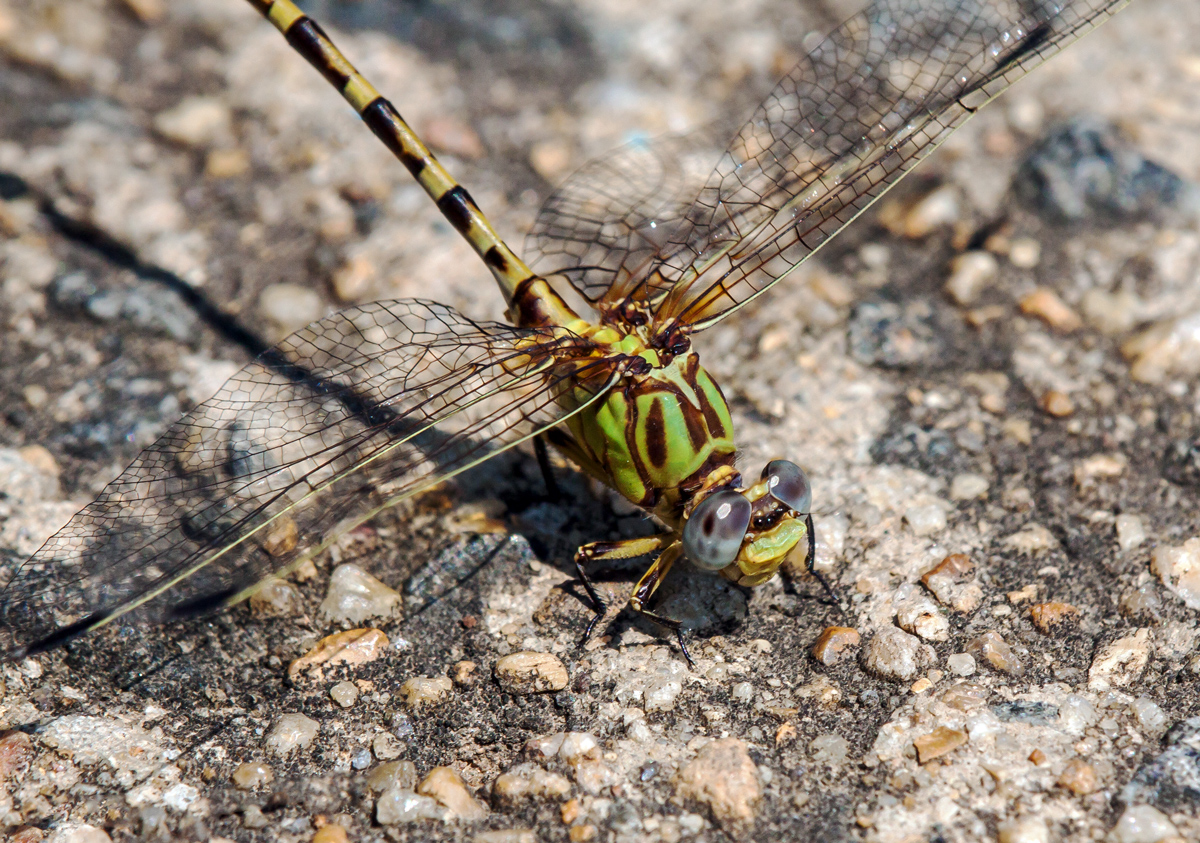
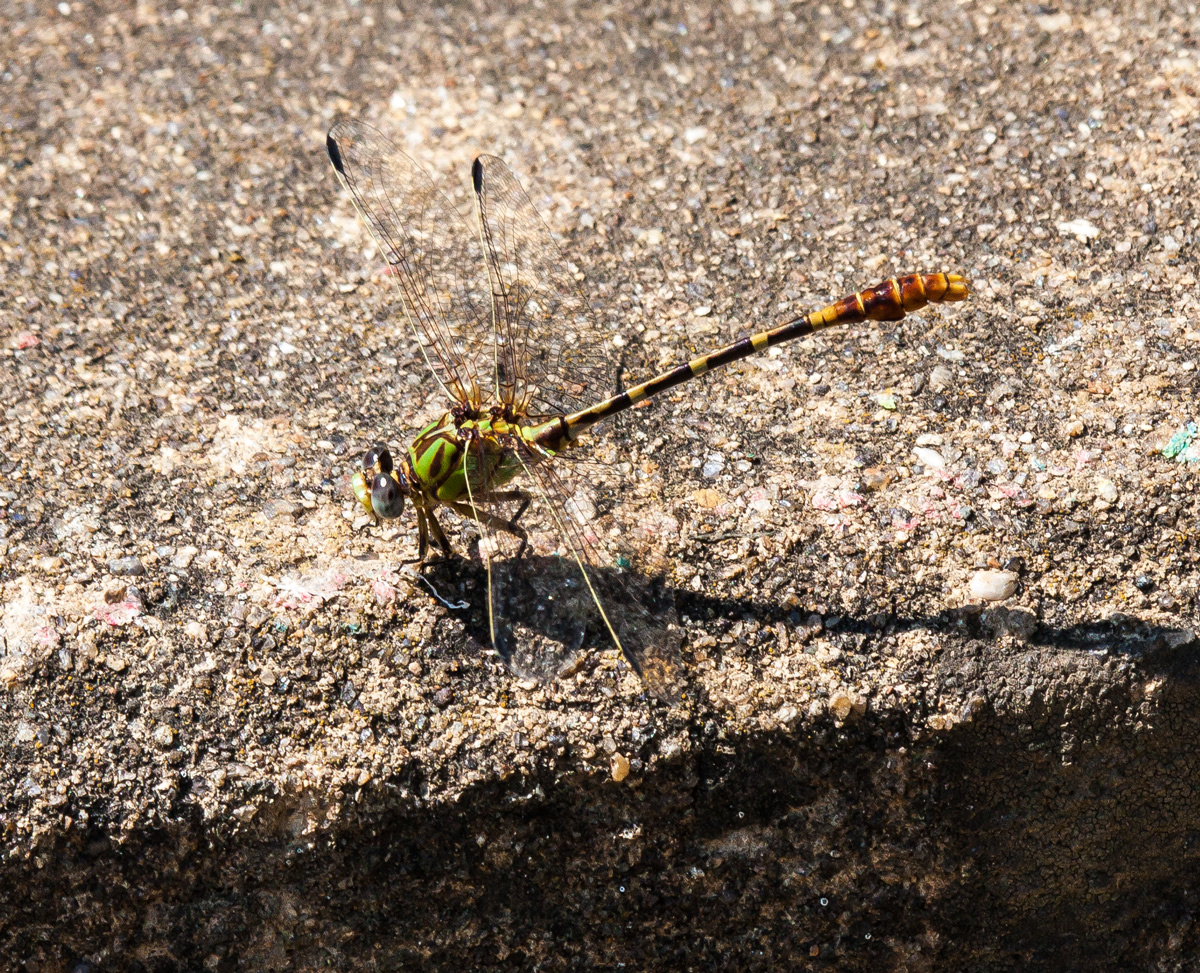
This past week I was excited to see several Eastern Ringtail dragonflies (Erpetogomphus designatus) while exploring Riverbend Park in Great Falls, Virginia. This species is relatively uncommon in our area and I had only encountered one once before at a location in Maryland. Fellow dragonfly enthusiast and photographer Walter Sanford had alerted me to the presence of these dragonflies at the park and their location, so I was fairly confident that I would be able to find some of them. (With wildlife photography there are few guarantees—you can never be sure how long a species will remain at a given location, particularly when it comes to insects like dragonflies that have a limited season.)

Well, I managed to find some Eastern Ringtails and was faced with the challenge of how to photograph them. The bad news was that this species likes to perch on the ground, but the good news was that the ground on which they chose to perch was uncluttered—it was a boat ramp made of some kind of aggregate concrete. The background of these shots is not natural, but it does allow you to see some of the beautiful details of this stunning dragonfly, especially their spectacular blue eyes.

Eastern Ringtail

Eastern Ringtail

Eastern Ringtail

© Michael Q. Powell. All rights reserved

Read Full Post »

When the Eastern Tiger Swallowtail butterfly (Papilio glaucus) that I was chasing at Riverbend Park flew into some vegetation, I thought that I had lost it. Suddenly and almost magically the butterfly’s shadow was revealed on a large leaf as it moved about. I was thrilled to be able to capture the swallowtail shadow as well as a small portion of the butterfly itself.

It’s usually best to shoot with the sun at your back, but it worked out well in this case for me to violate that “rule.”

Eastern Tiger Swallowtail

© Michael Q. Powell. All rights reserved

Read Full Post »

What in the world is that? That was my initial reaction when I spotted a mass of black, orange, and white fibers sitting atop a milkweed plant leaf. As I moved closer, I changed my mind and decided it was probably a cocoon. I was shocked when it started moving and I realized that it was a strange-looking caterpillar.

When it comes to finding insects, milkweed plants are one of my favorite locations. There are all kinds of bugs and butterflies that make their homes on these plants and I make a point to explore them whenever I find them growing. These particular milkweeds were growing in a wooded area of Wickford Park, a small park adjacent to Huntley Meadows Park, the marshland location where I shoot many of the photos featured in this blog.

After photographing the single caterpillar, I stumbled across a whole family of them devouring a leaf on a another milkweed plant. I didn’t know the species of the caterpillar, but it was easy to do a search on the internet, because I could identify the host plant. I learned that this is a Milkweed Tiger Moth caterpillar (Euchaetes egle), also known as a Milkweed Tussock Moth caterpillar.


Milkweed Tiger Moth caterpillar

Milkweed TIger Moth caterpillar

© Michael Q. Powell. All rights reserved

Read Full Post »
Is it possible that I am sharing too many dragonfly images, that I am oversaturating the market and taxing the patience and tolerance of my readers? I realize that not everyone is as drawn as I am to these amazing little creatures and that some folks are repelled by insects of any variety or are simply not interested in them.

An old adage asserts that beauty is in the eyes of the beholder and to a certain extent I agree with that statement. However, I would counterargue that beauty is not entirely subjective, that there are cases in which the majority of people would agree that something is beautiful.

I somehow think that this might be the case for an image I captured this past Friday of a spectacular female Halloween Pennant dragonfly (Celithemis eponina) at Huntley Meadows Park. Most of the Halloween Pennants that I have photographed this year have been males, which tend to be more visible, since they are trying to attract females, so it was a treat to spot a female. In the dragonfly world, females usually are the ones that choose the partner for mating and they frequently remain in the treeline or in open fields until they are ready.

I had my 150-600mm lens mounted on my camera, because I was hoping that I might see a bald eagle or a hawk, so I was able to shoot this dragonfly from a distance without disturbing her. I focused manually and was able to capture some beautiful details of the dragonfly, such as the two-toned eyes and the long, two-toned legs. I love the organic shape and feel of the cool-looking perch that the dragonfly had chosen. The background dropped out of focus so much that it almost looks like a studio shot and draws the eyes of viewers to the subject.

When you first read the title, you might have scratched your head in puzzlement, because the color palette is more subdued than oversaturated. By now, it should be clear that I was not referring to the colors, but to the question of whether or not I am posting too many images of dragonflies. Fear not, not all of my postings will be about dragonflies, but we are in the prime period for dragonflies, so stay tuned for more images of these amazing aerial acrobats. When it comes to the quantity of my dragonfly images, I feel like some Southerners do about sugar in their sweet tea—you can never have too much of a good thing.

Halloween Pennant

© Michael Q. Powell. All rights reserved


Read Full Post »

« Newer Posts - Older Posts »