Feeds:
Posts
Comments

Archive for the ‘Gardening’ Category

Shortly after waking up this morning, I walked over to my neighbor Cindy’s garden to see what was in bloom. The last time I checked, about a week ago,  there were lots of flowering day lilies, but I suspected that the recent heat had caused many of them to wilt and die. I am not sure if lilies close up at night, but I did not see any lilies in bloom in the early morning light—I was there about 6:15 today.

However, there were plenty of purple coneflowers and Shasta daisies open and I did my best to capture some their beauty with the short macro lens that I was using. I was delighted to spot a tiny insect creature crawling around on one of the daisies, as you can sort of see in the second photo. The limited light available forced me to open the aperture of the lens and created such a narrow depth of field that I could not get both the insect and the flower in focus.

Most of you know that I enjoy photographing wildlife and nature in more remote locations, but it is reassuring to know that I do not always have to travel far to find subjects—beauty is everywhere.

shasta daisy

Shasta daisy

coneflower

© Michael Q. Powell. All rights reserved.
Read Full Post »

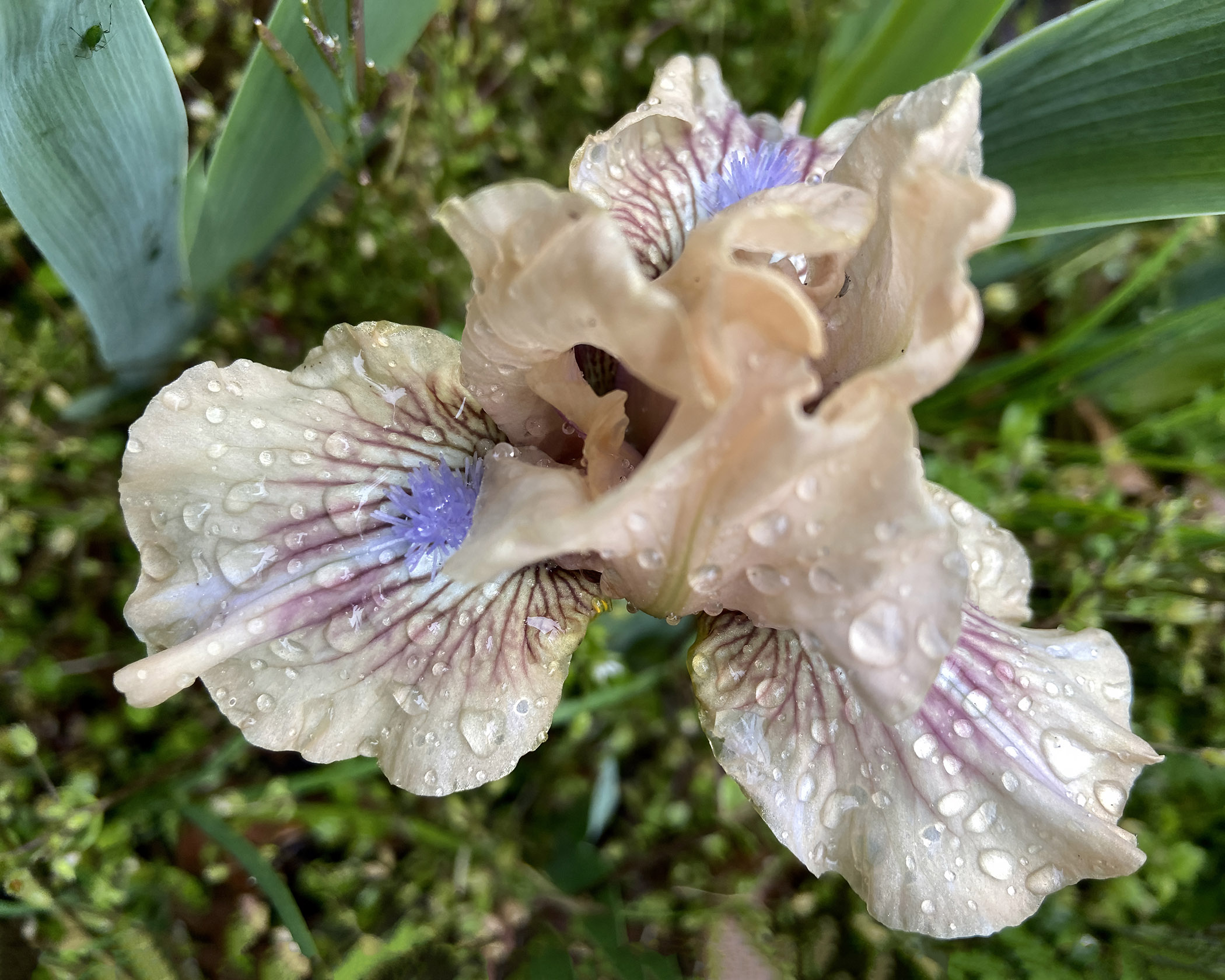
As I was preparing to go out to lunch yesterday with my dear friend and photography mentor Cindy Dyer, she glanced down at her garden and noticed that an iris was already in bloom, the first one of the spring. I suspect that this is some kind of dwarf iris, because it was nestled low in the vegetation and was only about six inches (15 cm) tall.

I thought about cropping the photo a little tighter, but wanted to retain the bug that is in the upper left corner of the image. As you might guess, I did not notice the little insect when I captured the photo with my iPhone. Cindy likes to call these “bonus bugs”—it is amazing how often I discover these “bonus bugs” in my photos when reviewing them on my computer.

Cindy has planted a wide variety of irises in her garden, so this is a sneak preview of the amazing beauty that is yet to come. I don’t know the name of this iris variety, but love the lavender color of its “beard.”

iris

© Michael Q. Powell. All rights reserved.

Read Full Post »

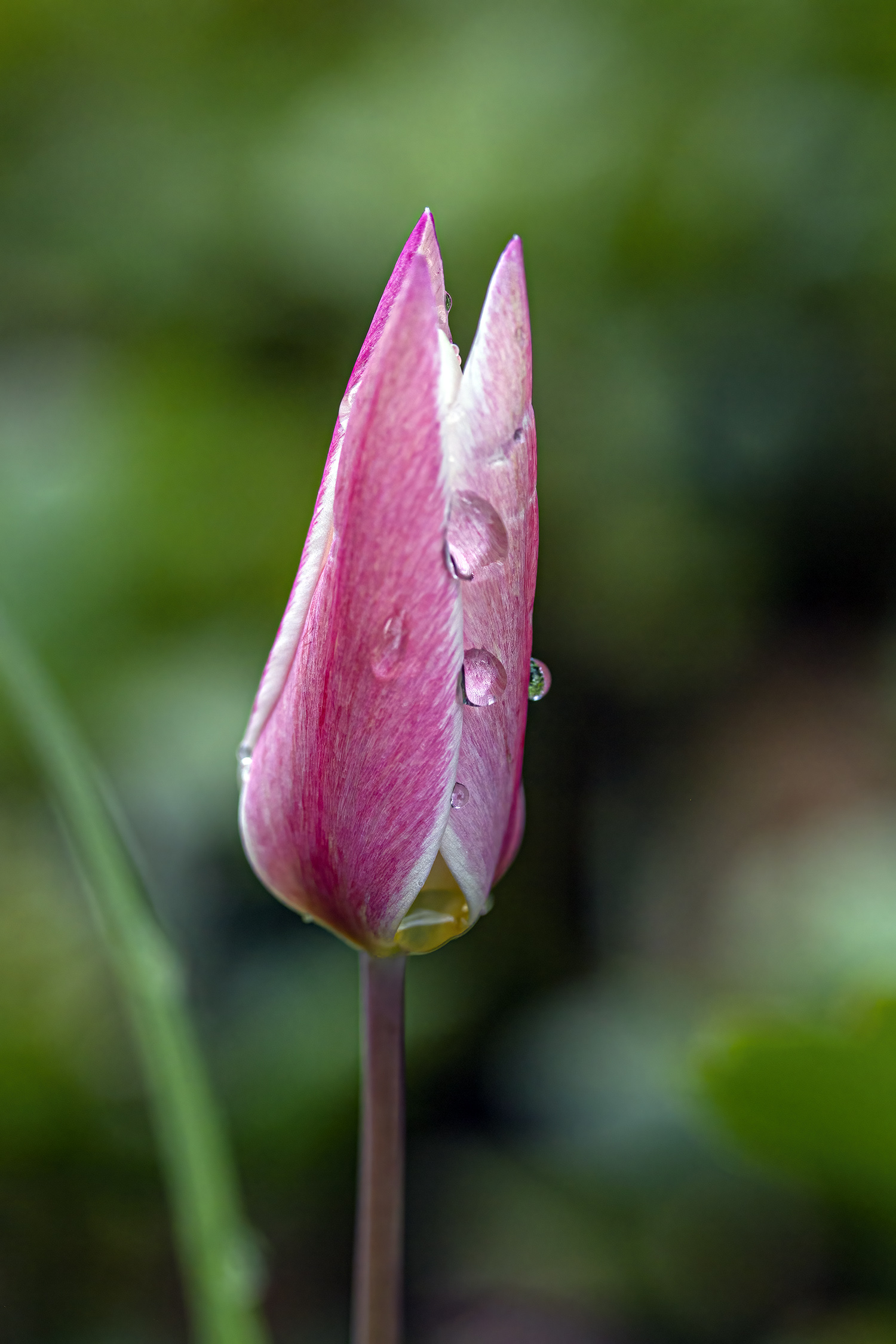
Raindrops on tulips are one of my favorite things. I photographed these different varieties of colorful tulips today in the garden of my dear friend and fellow photographer Cindy Dyer during a break in the rain.

I love spring flowers.

tulip

Lady Jane tulip

tulip

© Michael Q. Powell. All rights reserved.
 

Read Full Post »

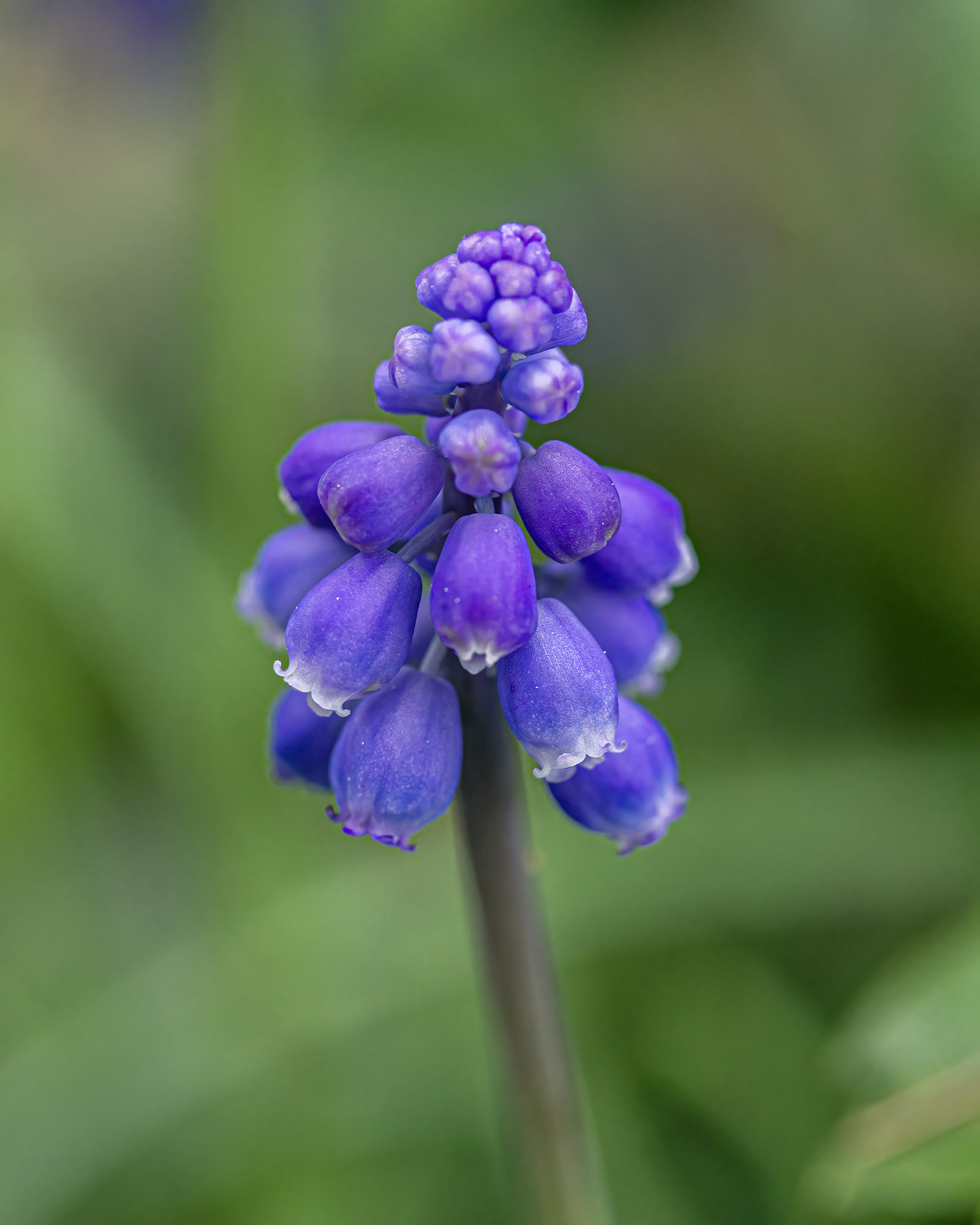
I love the shape of Grape Hyacinths (g. Muscari), one of the early-appearing flowers that I look forward to each spring. The names of species sometimes do not match their appearances, but in this case the name fits perfectly—the little flowers do indeed look like a bunch of grapes.

Our recent weather has been windy, which makes it challenging to go out hunting for wildlife to photograph, because most of my potential subjects use common sense and seek shelter from the wind. As a result, I have resorted to visiting the garden of my dear friend Cindy Dyer and photographing her flowers, like this Grape Hyacinth that I spotted earlier this week.

I used a macro lens to get really close to the tiny flower to capture details, but the wind made it tough to get a sharp shot—as you get closer to a subject, the effect of any movement of the camera or the subject is magnified. On the whole, though, I like this modest portrait of one of my favorite spring flower.

Grape Hyacinth

© Michael Q. Powell. All rights reserved.

Read Full Post »

As many of you know, I do not have a garden of my own. My dear friend and photography mentor Cindy Dyer, however, lives close to me and loves to plant photogenic flowers. At this time of the year I really enjoy passing by her garden to see what has popped up.

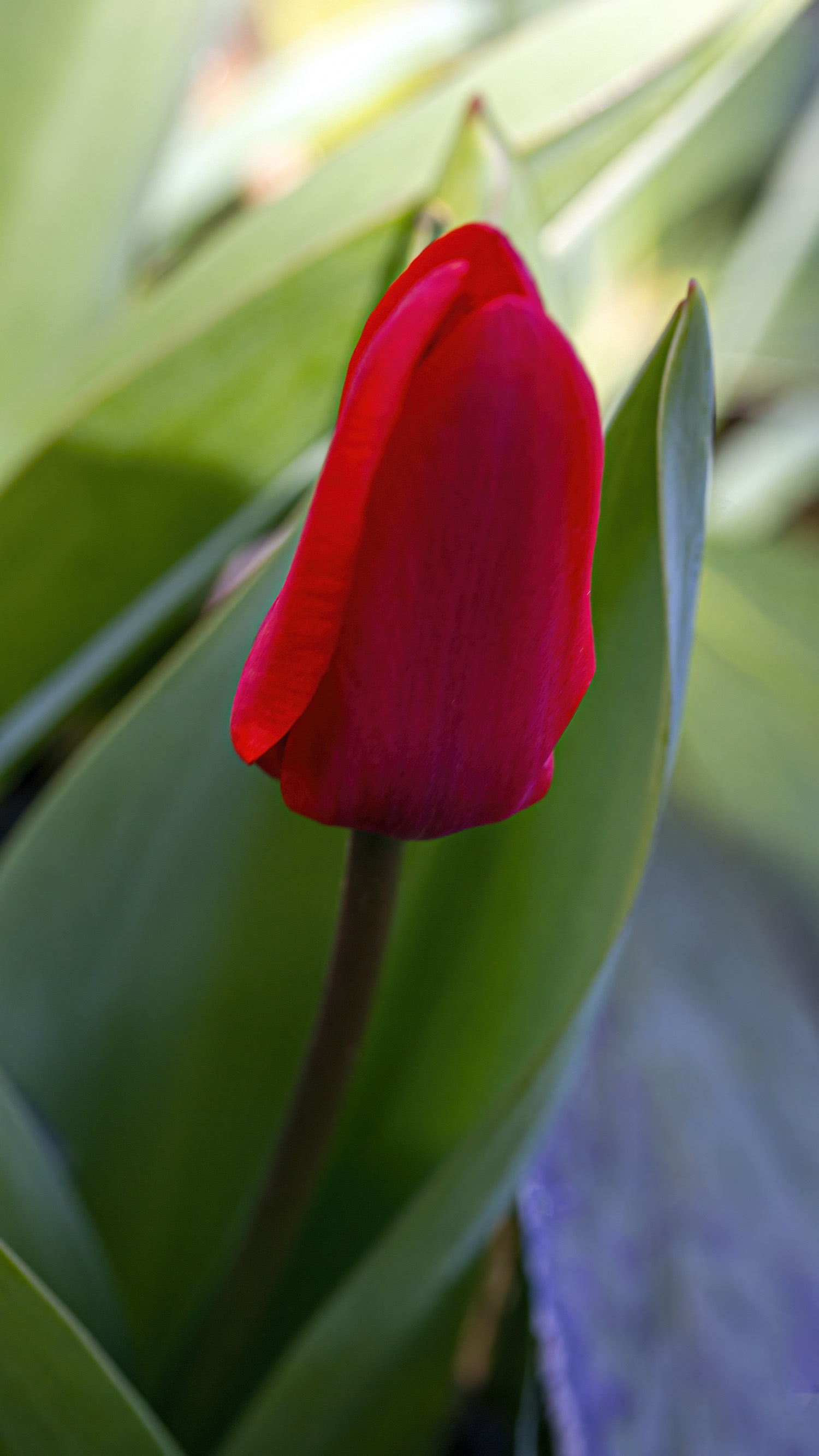
I was delighted yesterday to see a beautiful red tulip in bloom in the middle of the garden in front of her townhouse. There was only a single tulip blooming in the midst of some hellebore plants, but it was not hard to spot. I don’t know much about tulip varieties, but think that this might be a Lady Jane tulip (Tulipa clusiana var. ‘Lady Jane‘)—I recall Cindy mentioning this variety in previous years.

I thought I would be photographing flowers close up, so I had a 60mm macro lens on my camera. This tulip, alas, was farther away than I would have liked and I did not want to step on any vegetation to get closer or to get a better angle.

I contented myself with a few shots to record this beautiful flower, my first tulip of this spring (with many more to come).

UPDATE: My memory failed me. Cindy let me know that the Lady Jane tulip is pink and white and not red like this one. I should probably have checked with her before I posted the images.

tulip

tulip

© Michael Q. Powell. All rights reserved.


Read Full Post »

When does spring begin? Many of us in the Northern Hemisphere measure the seasons using the astronomical calendar and this year spring begins on the 19th of March, i.e. the vernal equinox. For those who use the meteorological calendar, however, spring began on the 1st of March.

I generally use something other than a calendar when I measure the change of seasons. I feel the beginning of spring when the weather starts to warm up and the daylight begins to linger a bit longer. I can feel nature stirring, preparing for new life in the animal and plant kingdoms.

One of the signs of spring that I look for is the emergence of early spring flowers. This weekend I am cat sitting for my friend Cindy and her husband Michael, who are out of town on a trip to Texas. Cindy, my photography mentor and fellow photographer, has a wonderful garden that I have featured in this blog numerous times. The last couple of weeks I have checked out her garden, waiting patiently for the first flowers to appear.

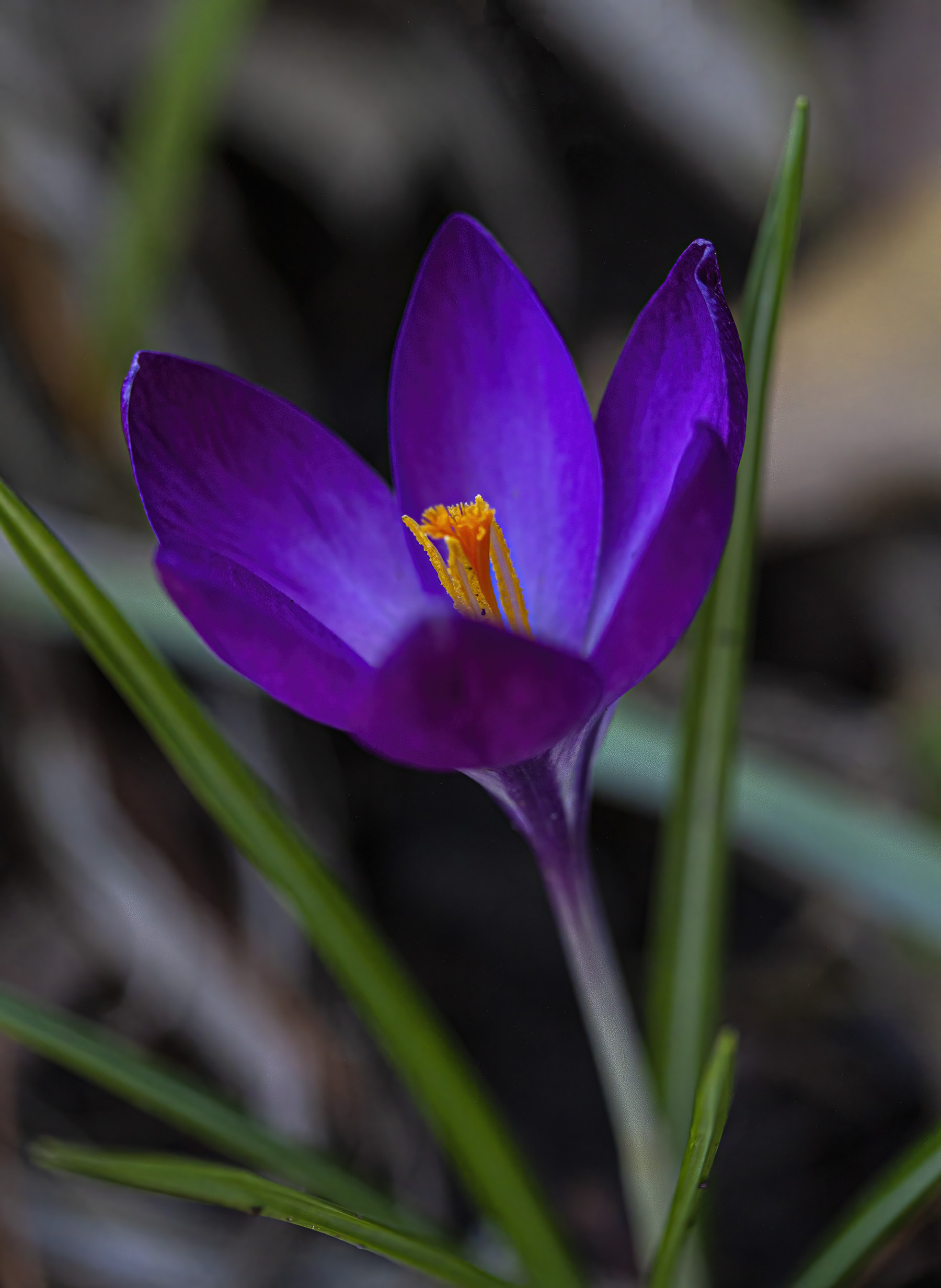
I was delighted on Thursday to see that a tiny purple crocus was blooming amid all of the leaf clutter. It was only a single bloom, but it somehow filled my heart with joy and excitement. For me, spring has begun.

crocus

crocus

© Michael Q. Powell. All rights reserved.


Read Full Post »

Flowers are beautiful when you look at them from the front, of course, but they can be equally beautiful when you look at them from behind, especially when they are backlit. That was certainly true for these colorful violas that I photographed last week at Green Spring Gardens, a county-run historical garden not far from where I live.

I especially like the first shot, which has an abstract quality to it, caused in part by photographing the flower at close range with my macro lens. The flower is reduced to a mass of shapes and color and of light and shadows to the point where the brain at first glance does not seem to be able to figure out what the subject is.

viola

violas

© Michael Q. Powell. All rights reserved.

Read Full Post »

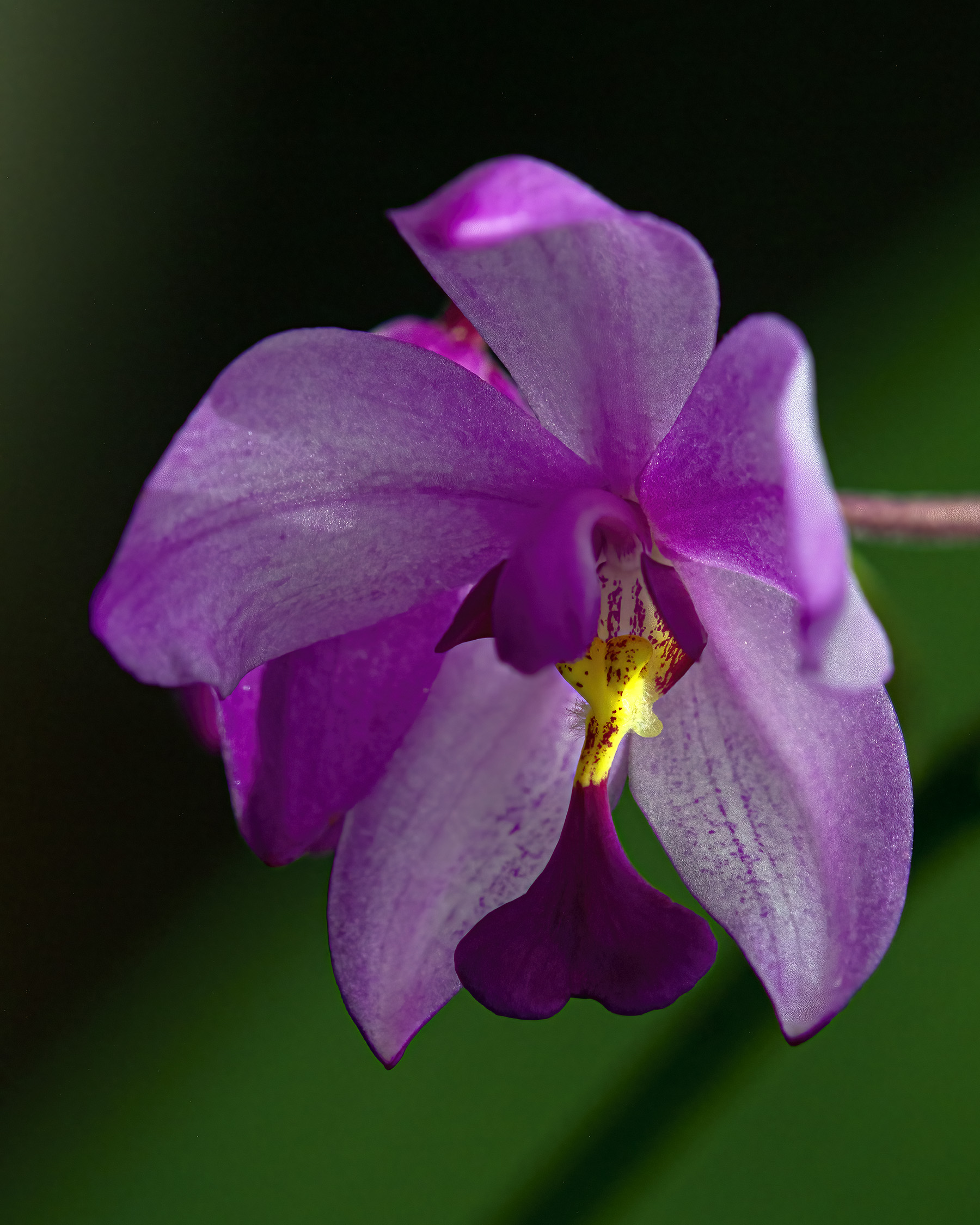
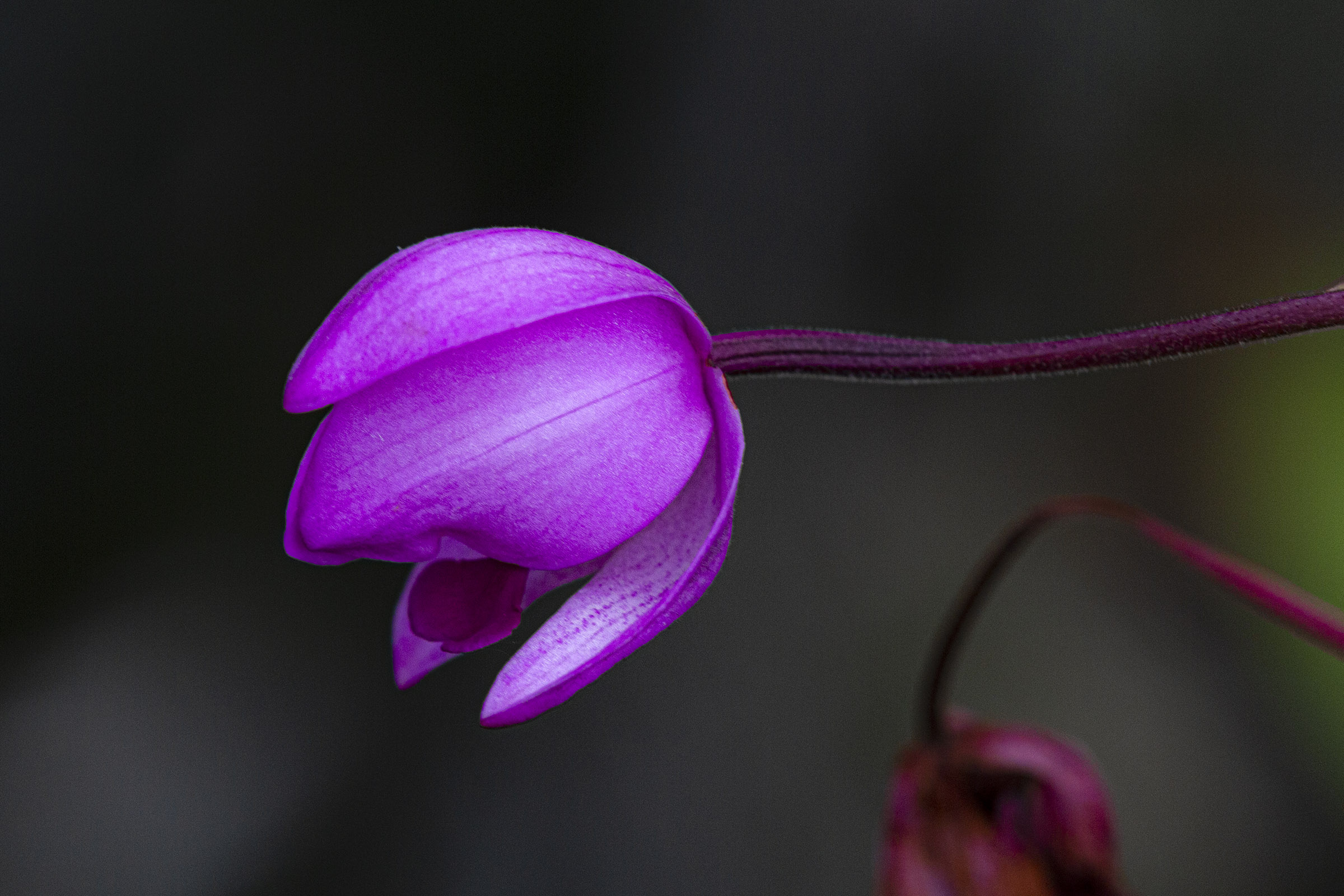
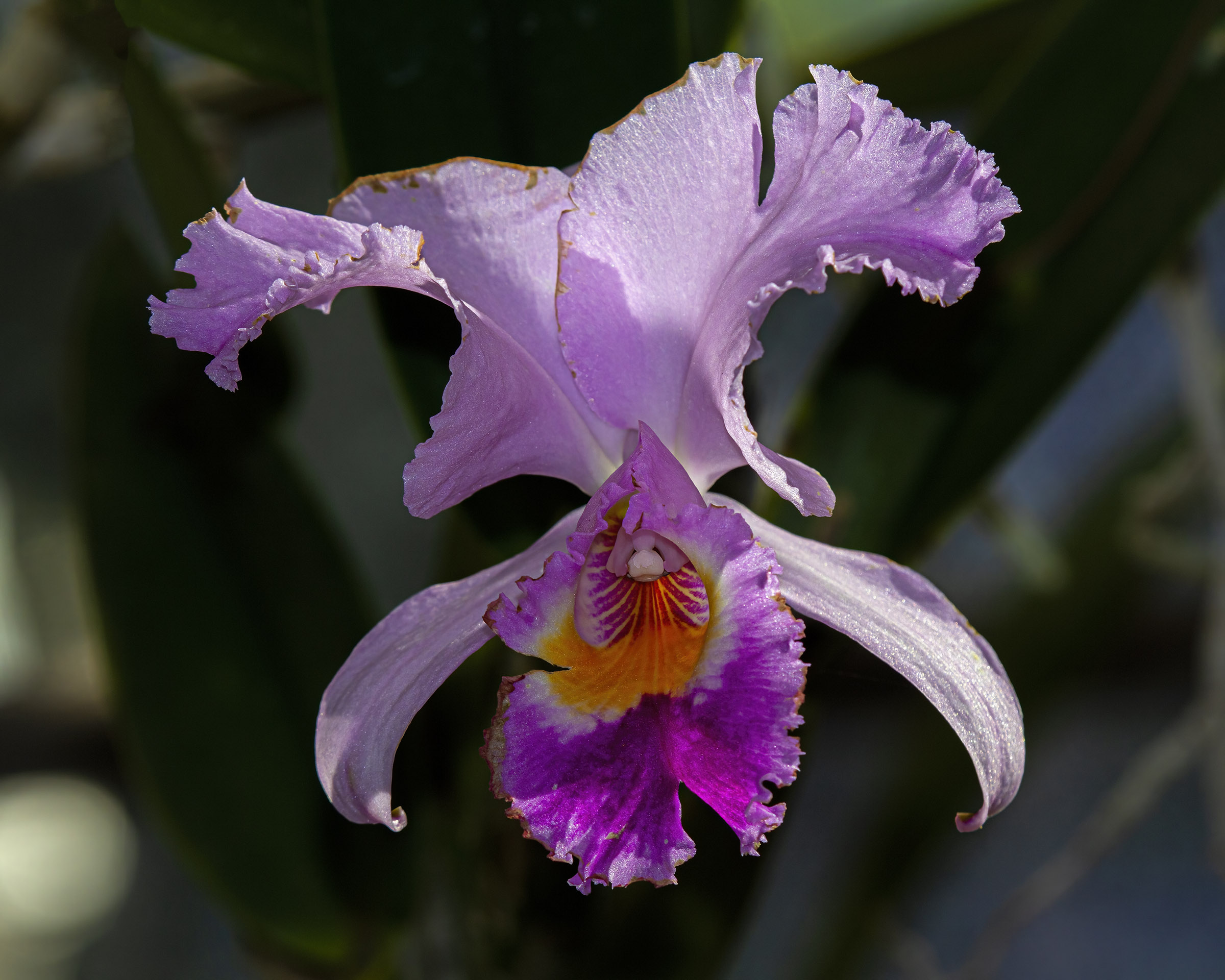
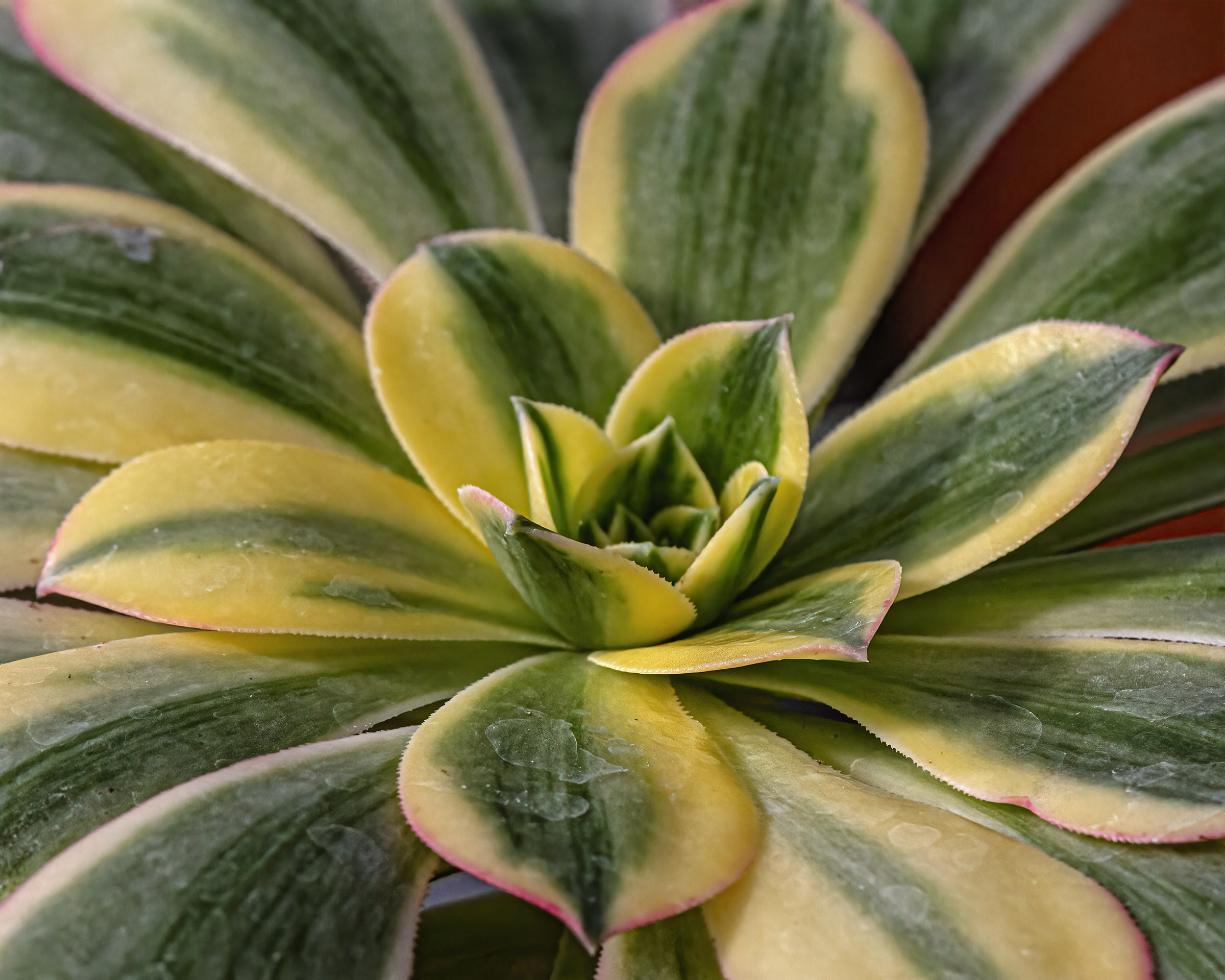
In addition to the stunning pink and purple bromeliad that I featured in an earlier posting, here are some shots of tropical plants that I observed in the “glasshouse” at Green Spring Gardens last week. The first two shots are of what I believe is a ground orchid—it may be a Phillippine Ground Orchid (Spathoglottis plicata), but there are a number of similar species, so I cannot be sure of the identification.

The third photo shows an orchid that is more typical of what I imagine when I think of an orchid. It is a little past its prime, but is still incredibly beautiful. The final photo is a close-up view of one of the many succulents that I observed. I love the geometric patterns of the multi-colored leaves in the image.

One of the nice things about taking photos indoors was that I did not have to worry about the wind creating movement. However, there was not a lot of space for maneuvering and the background was often cluttered, so I had to work hard to find pleasing angles for my photos.

This is a totally different style of photography that the bird photography I have been doing the past few months, but I think that it is good to mix things up a bit to keep from getting stuck in a rut photography-wise.

ground orchid

ground orchid

orchid

succulent

© Michael Q. Powell. All rights reserved.

Read Full Post »

During the gray days of winter my senses are starved for color as the world turns mostly monochromatic. Where can I find bright colors? For a few blissful moments I immersed myself in a tropical world this past Thursday when I visited the “glasshouse,” the small greenhouse at Green Spring Gardens in Alexandria, Virginia.

There were some orchids and succulents, but my eyes were immediately attracted to the amazing hot pink and purple colors of an unusual-looking plant. I had no idea what kind of plant it was, but was absolutely mesmerized by this bold colors and managed to capture a few close-up shots of it with my macro lens.

When I returned home I started my research and eventually figured out that it was some sort of bromeliad. What in the world is a “bromeliad?” Bromeliads are a group of mostly tropical plants that belong to the family Bromeliaceae. I read and re-read descriptions of the characteristics and got tangled up in the scientific jargon of plant anatomy. As I understand it, many bromeliads are able to store water in a structure formed by their tightly overlapping leaf bases—the pineapple is the only bromeliad that immediately comes to mind.

With the help of my dear friend and photography mentor Cindy Dyer, I determined that this colorful plant is probably a Blue Tango Bromeliad (Aechmea ‘Blue Tango’) or possible a Dwarf Blue Tango Bromeliad (Aechmea ‘Del Mar’). Both of these are hybrid cultivars of plants that are native to tropical areas and require high humidity levels to thrive—the glasshouse was humid, but not as steamy as some that I have previously visited.

Blue Tango Bromeliad

Blue Tango Bromeliad

© Michael Q. Powell. All rights reserved.


Read Full Post »

Yesterday I had the desire to photograph something different. For the past few months, my long 150-600mm telephoto zoom lens has remained on my camera and I have focused mostly on birds. I decided to switch back to my 180mm macro lens, the lens that I use most of the time during warmer months, and set off for Green Spring Gardens, a historic county-run park only a few miles from where I live.

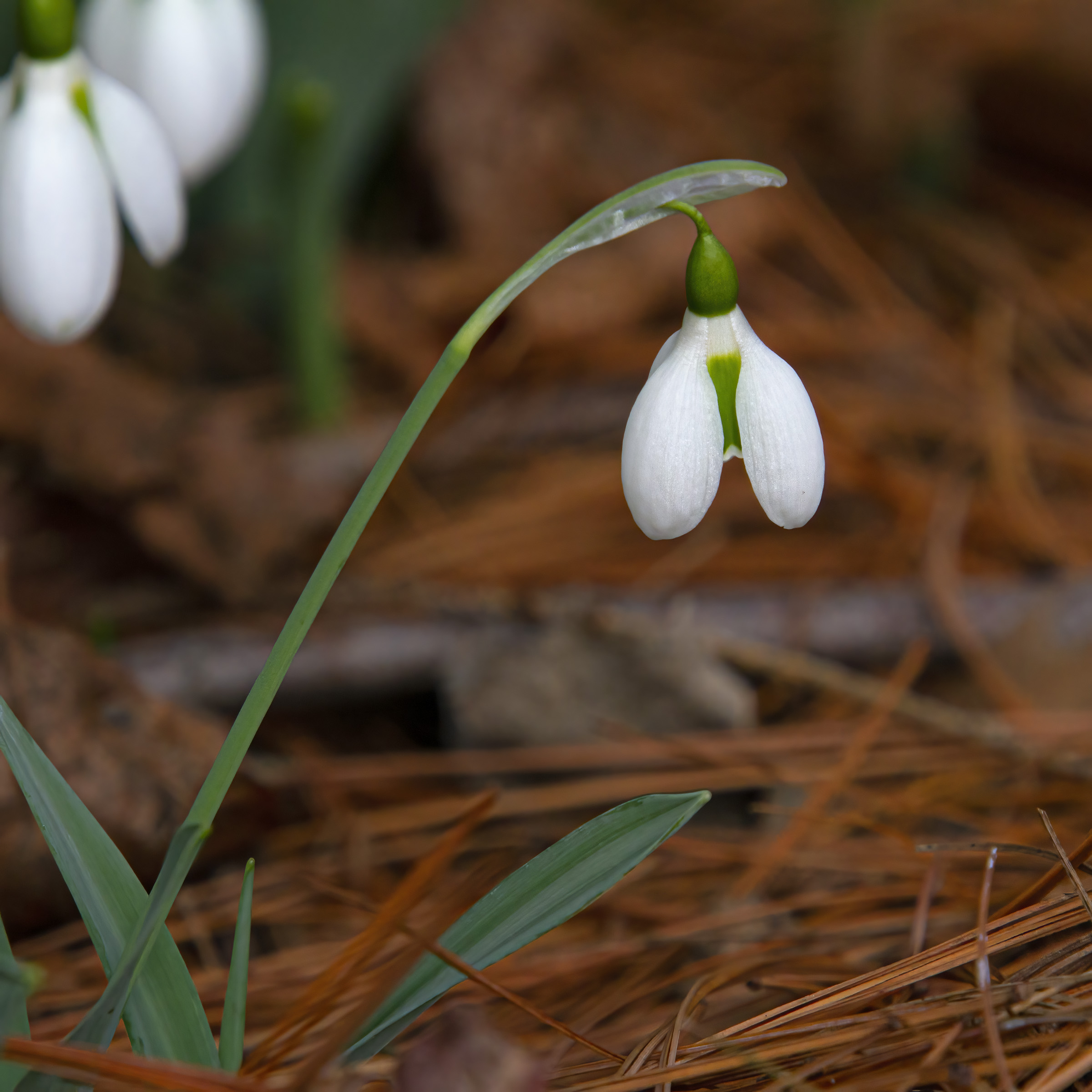
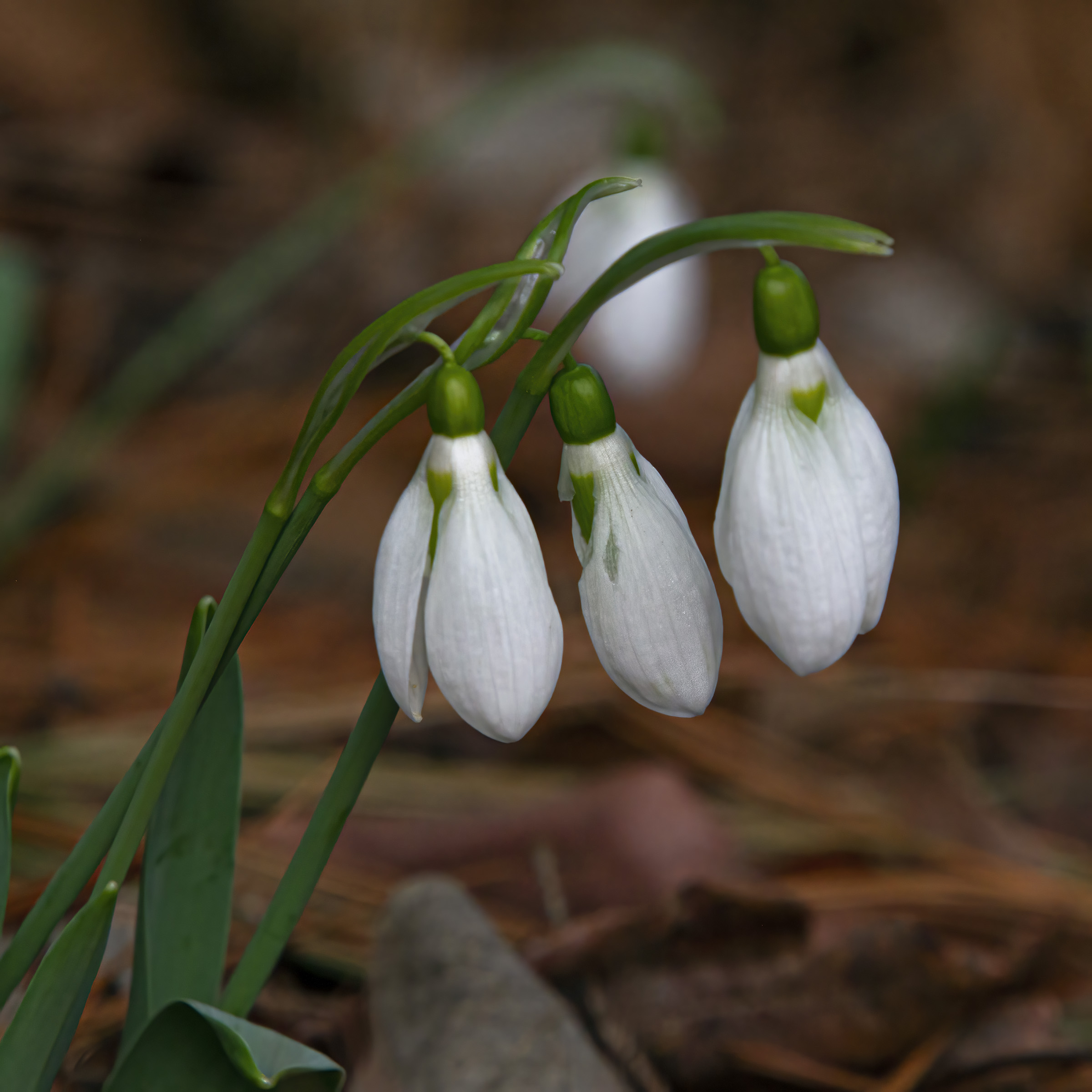
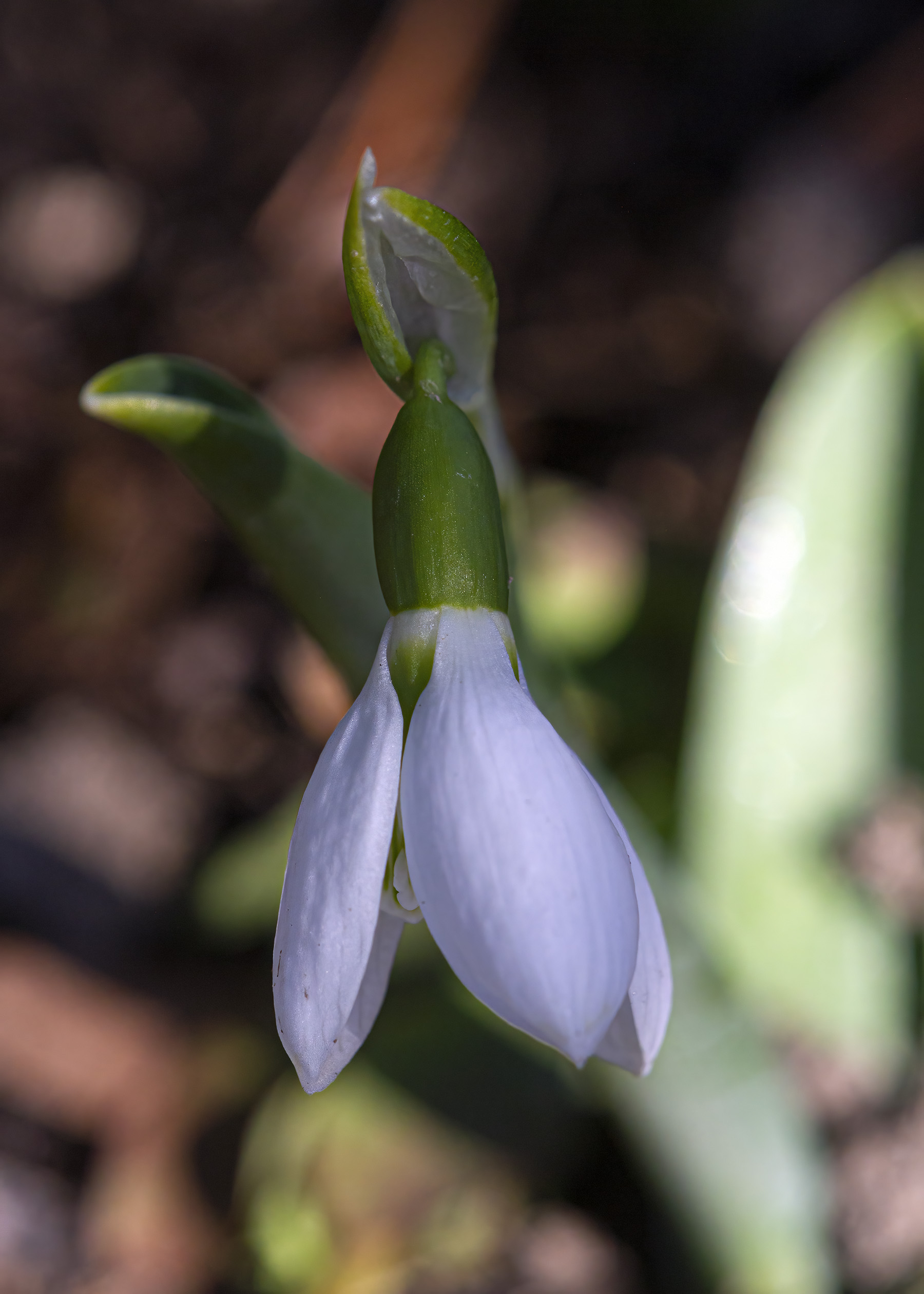
Not surprisingly, I did not spot any insects, but I was thrilled to find several patches of Snowdrop flowers (g. Galanthus) in bloom. I had a fun time trying to compose some  shots of these beautiful little flowers, though I did end up a bit muddy, because it had rained a lot the previous day.

At this time of the year the flower beds are mostly dirt and/or mulch, so it is impossible to get the smooth green backgrounds that I often strive for during the spring and summer months. However, I was able to blur the background some by carefully choosing my shooting angle and adjusting my camera settings.

During my time at the park, I also visited the “glasshouse,” a small greenhouse that houses tropical flowers, succulents, and bromeliads. It felt great to soak up the warmth of the sun in this enclosed environment and I managed to take a few photos there that I will share in a future blog posting.

Snowdrop

Snowdrop

Snowdrop

© Michael Q. Powell. All rights reserved.

Read Full Post »

Most of the beautiful lotus flowers that I photographed last week at Kenilworth Park and Aquatic Gardens in Washington D.C. were Sacred Lotuses (Nelumbo nucifera), a plant that is native to Asia. In one small area of the gardens, I spotted some American Lotuses (Nelumbo lutea), a species that is native to North America. Unlike Sacred Lotuses, which tend to be pinkish in color, the flowers of American Lotuses are white or pale yellow in color and the American Lotus is sometimes called a Yellow Lotus.

It was mid-morning when I took these shots and the sun was shining brightly, so I had to deliberately underexpose the shots to keep the white highlights from getting blown out—that is why the backgrounds look so dark. I like the effect and find that it adds a bit of drama to the images, especially the first one.

American Lotus

American Lotus

American Lotus

© Michael Q. Powell. All rights reserved.


Read Full Post »

Each time that I visit Lewis Ginter Botanical Garden in Richmond, Virginia, I spend some time in the glassed-in conservatory. At certain times of the year there is an indoor butterfly garden and there are always exotic orchids to see. Getting photos of the orchids is a challenge, because the light is limited, the shooting angles are constrained, and the room is hot and humid.

Here are a few of my attempts to capture the beauty of some of the orchids during a visit earlier in June. As you can see, I tried to vary my approach, sometimes going in close to focus on a single flower and sometimes pulling back to capture a cluster of them. I mostly avoided cluttered backgrounds—a large pot is visible in the final photo, but it is not very distracting

orchid

Orchid

Orchid

© Michael Q. Powell. All rights reserved.
Read Full Post »

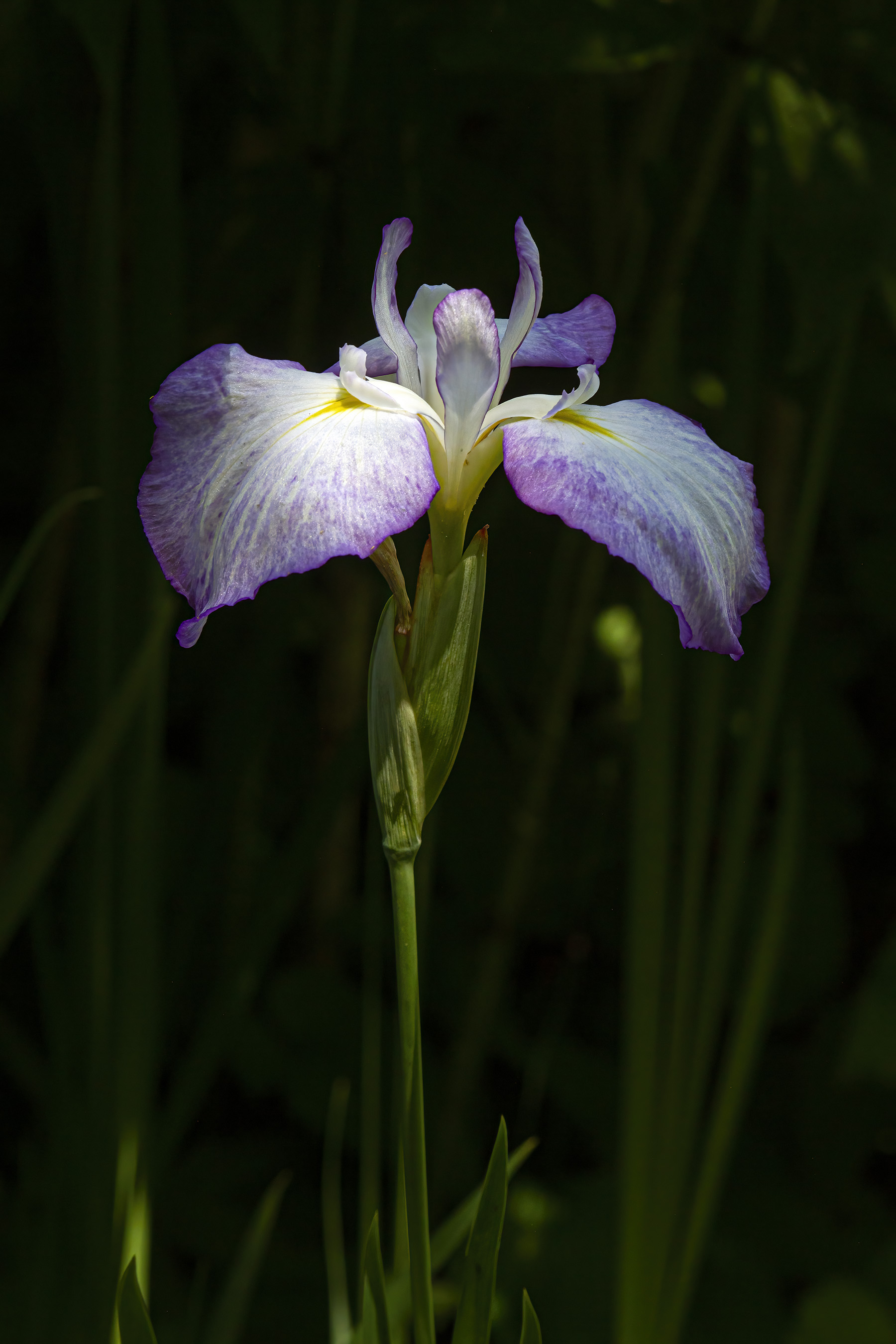
I was struck by the beauty of the Japanese Water Irises (Iris ensata) that I observed during a visit in early June to Lewis Ginter Botanical Garden with fellow photographer Cindy Dyer. Most of the irises, however, were either in the bright sunlight or in the deep shadows. I was delighted when I spotted one flower that was partially illuminated by the sun in a way that made it pop out of the shadows.

I tried to capture the effects of this beautiful lighting by moving in close and focusing on the petals (photo 1)  and by moving back and including more of the stem of the flower (photo 2). I was using my 180mm macro lens, so when I talk about “moving,” I was moving my feet and not merely adjusting a zoom lens. Initially I was most taken by the first image, but the second image is growing on me more and more—I think I like them equally now. Do you have a favorite of the two shots?

Japanese Water Iris

Japanese Water Iris

© Michael Q. Powell. All rights reserved.
Read Full Post »

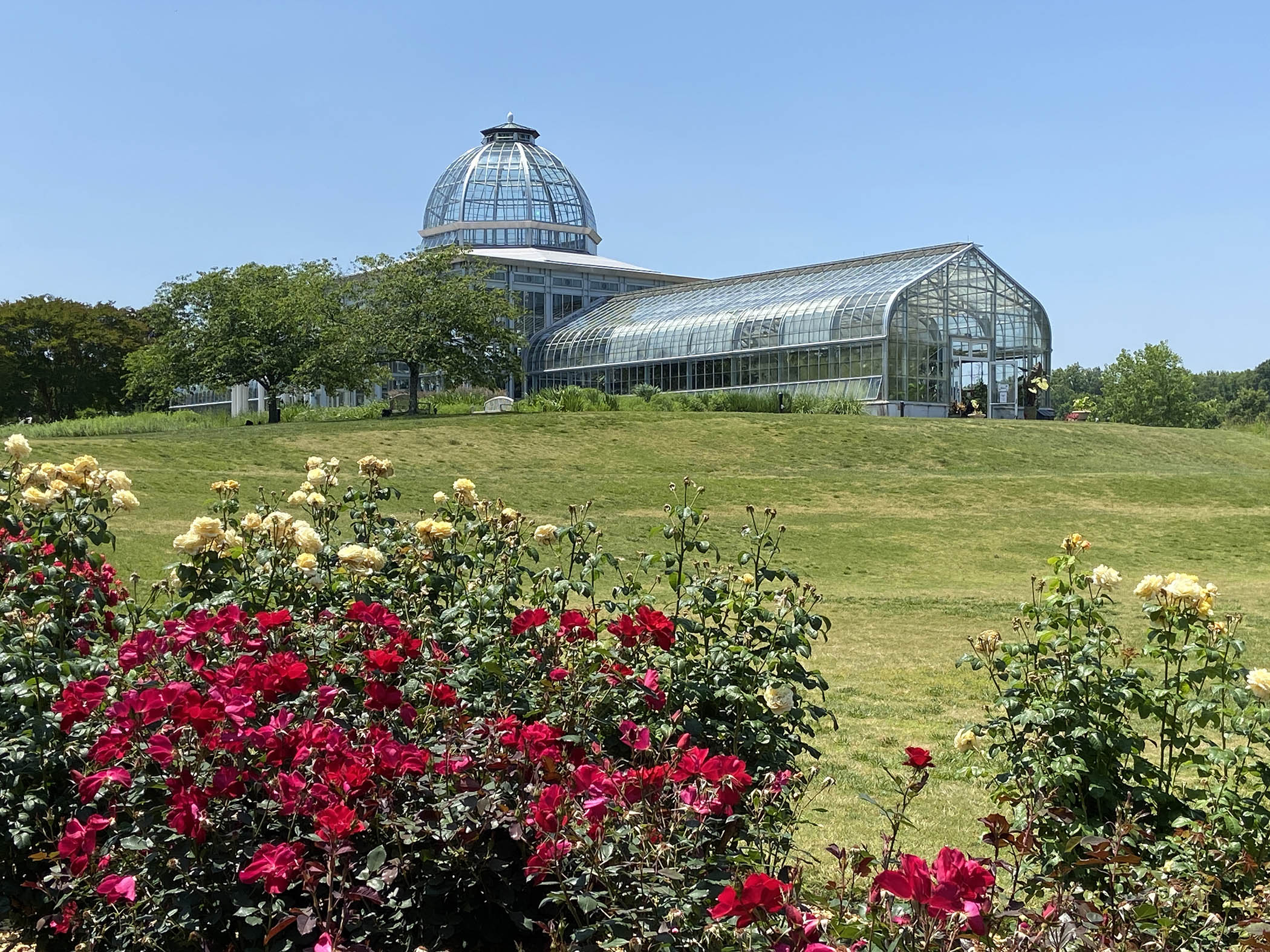
Earlier this month I made a trip to Lewis Ginter Botanical Garden, an amazing garden located outside of Richmond, Virginia, with my dear friend and photography mentor Cindy Dyer. Although I spent a lot of time enjoying the beauty of the flowers, I periodically paused to capture images with my iPhone of some of the structures and art through the garden that captured my attention.

Normally I try to get close to my subjects using either a telephoto or macro lens. In this case, however, I was focused on capturing more of the “big picture” and the wide angle of the iPhone was perfect for doing so.

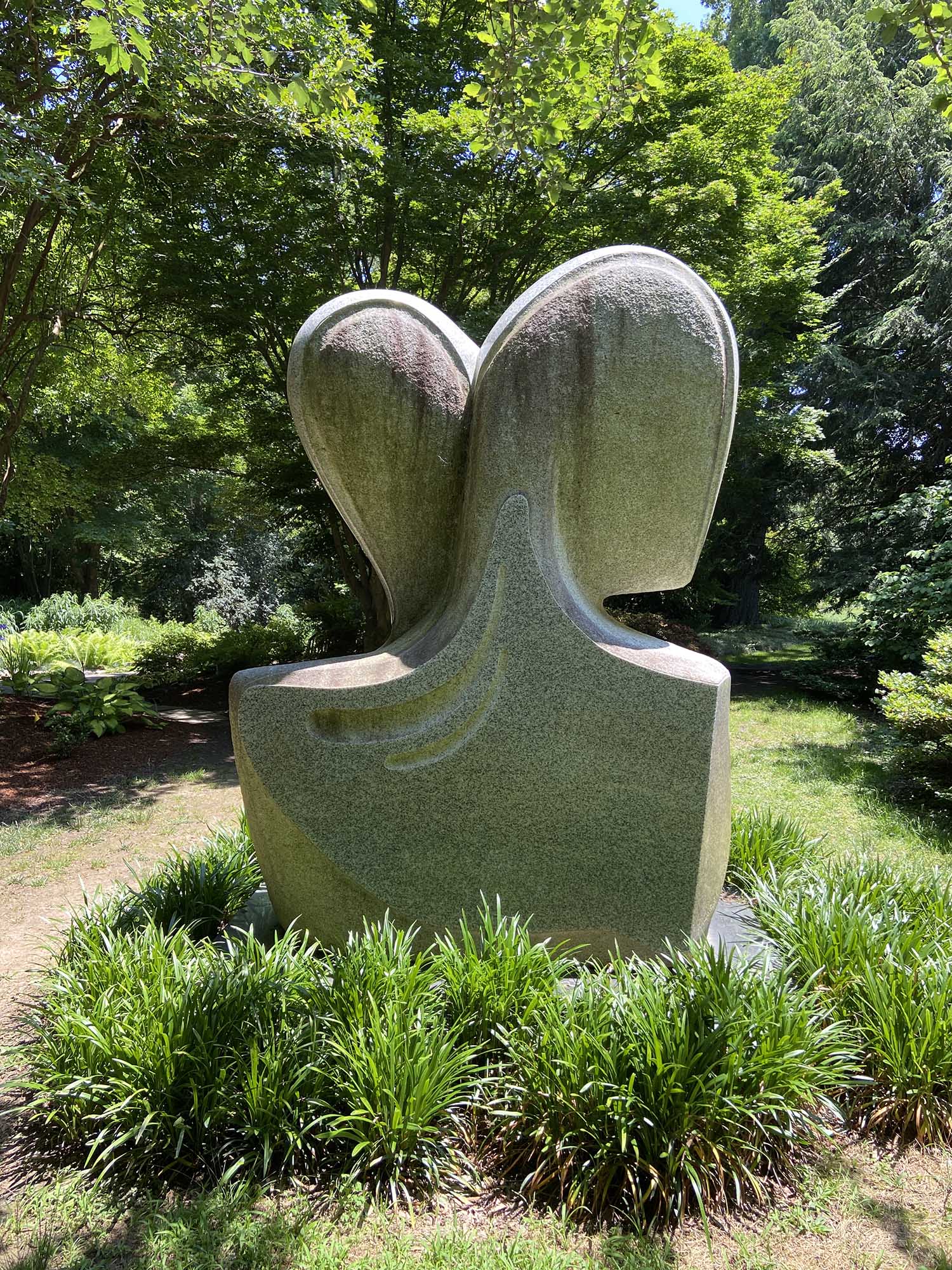
The sculptures in the second, fourth, and sixth images are part of a special exhibition called “Incanto: An Oasis of Lyrical Sculpture” by sculptor Kate Raudenbush and poetry by Sha Michele. Please check out this link for an explanation of the significance and meaning of these sculptures and the two others that make up the exhibition. “Five intricately designed, allegorical sculptures accompanied by poetry invite a journey of self-discovery and connection with others and the natural world.”

Lewis Ginter Botanical Garden

Lewis Ginter Botanical Garden

Lewis Ginter Botanical Garden

Lewis Ginter Botanical Garden

Lewis Ginter Botanical Garden

Lewis Ginter Botanical Garden

© Michael Q. Powell. All rights reserved.


Read Full Post »

I have always been fascinated by the color and texture of the centers of poppies and was delighted to see poppies in several different colors during a recent visit to Green Spring Gardens in Alexandria, Virginia, just a few miles from where I live. The tissue-paper texture of the petals quite unusual, reminding me of my childhood craft projects with tissue paper and crepe paper—we may even have created our own poppies.

Even when their petals have faded and fallen away, poppies continue to fascinate me (and birds love their seeds) and I really like the look of their seed pods, like the one in the final photo.

poppy

poppy

poppy

poppy

© Michael Q. Powell. All rights reserved.
Read Full Post »

On Wednesday at Green Spring Gardens, a county-run historic garden just a few miles from my home, I got a really good look at this bee’s proboscis, the long, straw-like tongue that it uses to collect nectar. From my angle, it looked more like a deadly weapon. Yikes! As you can probably tell, I have switched to using my macro lens most of the time now that the warmer weather has caused more insects to reappear.

One of my friends on Facebook named this bee the “Gene Simmons” bee, because it reminded him of an iconic pose by the singer from the band KISS in which his extended tongue reached to the tip of his chin. It is hard to know if it is true, but according to urban legend, Simmons had his tongue insured for a million dollars during the 1970’s, when KISS was at its height of popularity. The popular rumor at the time that he had a cow’s tongue grafted onto his own, however, has been disproven.

bee tongue

© Michael Q. Powell. All rights reserved.


Read Full Post »

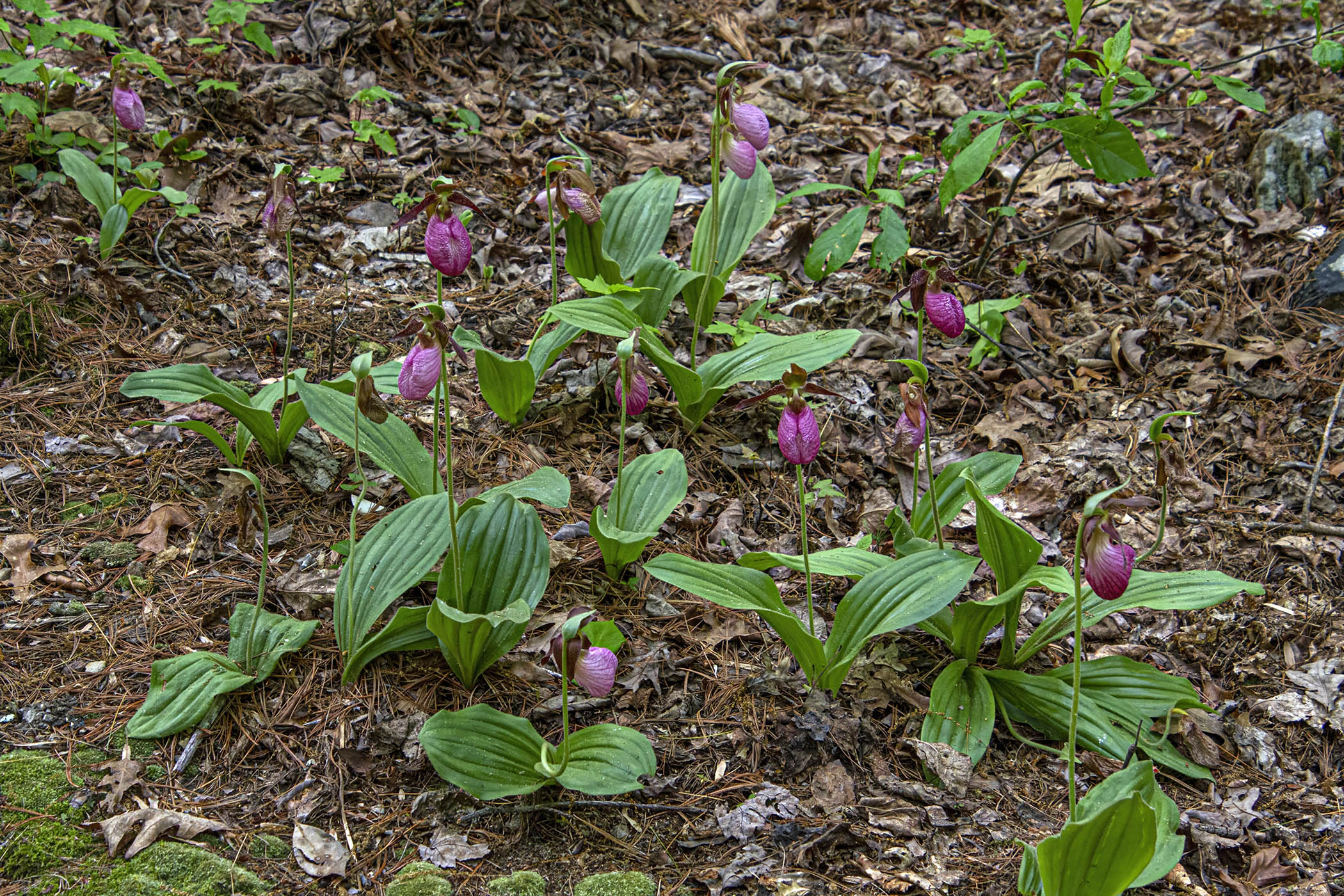
I was happy this past weekend to see that Pink Lady’s Slipper orchids (Cypripedium acaule) were still in bloom in Orkney Springs, Virginia during my recent church retreat at Shrine Mont. Last year at about the same time of the year I spotted a few of them and was successful in finding some when I searched that same general location. The retreat center is located in a mountainous and cooler area of the state, which means that the growing season for flowers is a little behind my area, where the lady’s slippers faded a few weeks ago.

At first I spotted only a few of these fragile little flowers, but eventually I came upon a large patch of almost a dozen of them, as you can see in the final photo. It was a bit of a challenge for me to compose photos of flowers, because I am so used to taking pictures of wildlife. I have to admit, though, that I enjoyed having the luxury of taking my time to compose my shots—with wildlife I often have to react quickly to capture a fleeting moment, so composition is not usually my top priority.

Pink Lady's Slipper

Pink Lady's Slipper

Pink Lady's Slipper

Pink Lady's Slipper

© Michael Q. Powell. All rights reserved.

Read Full Post »

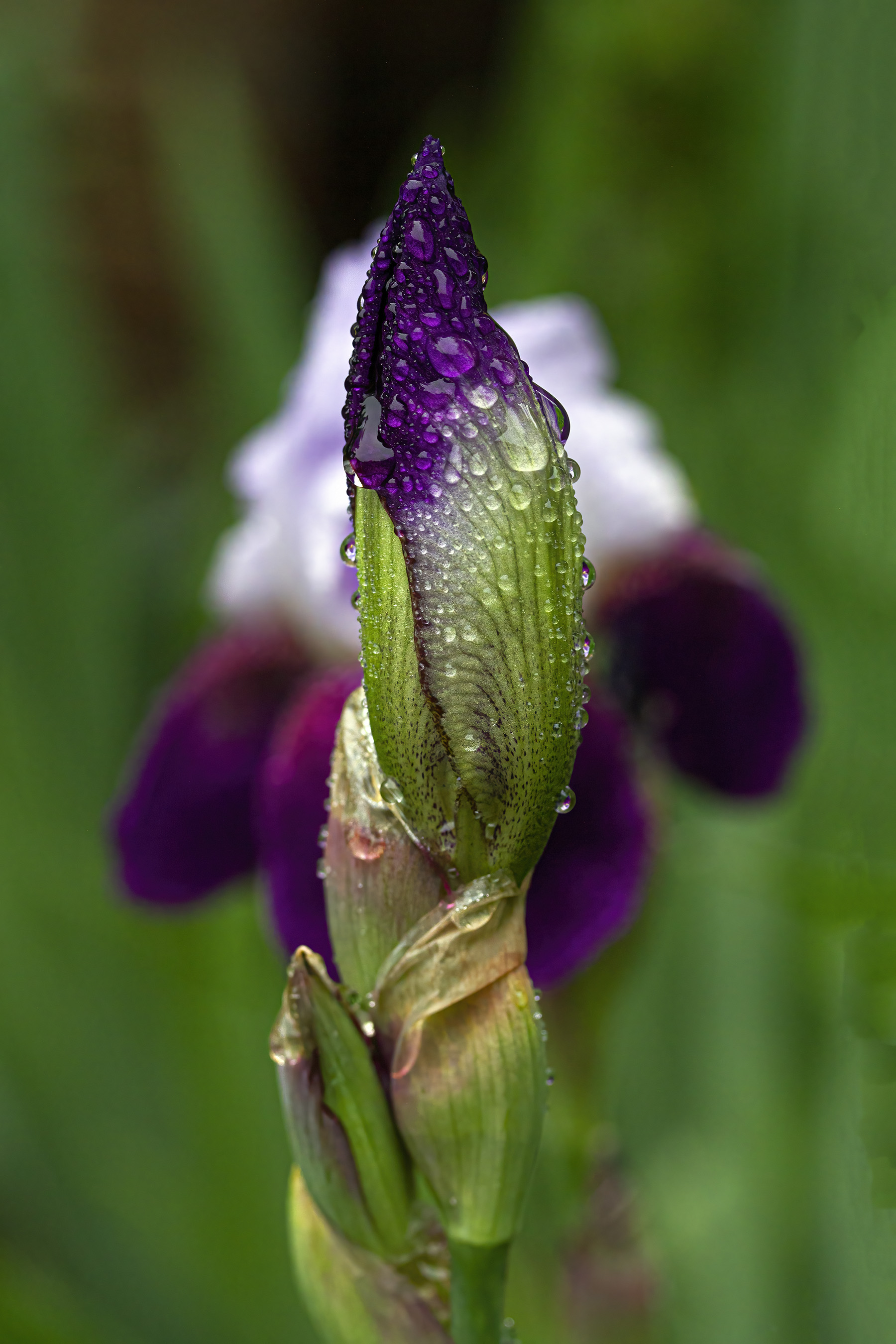
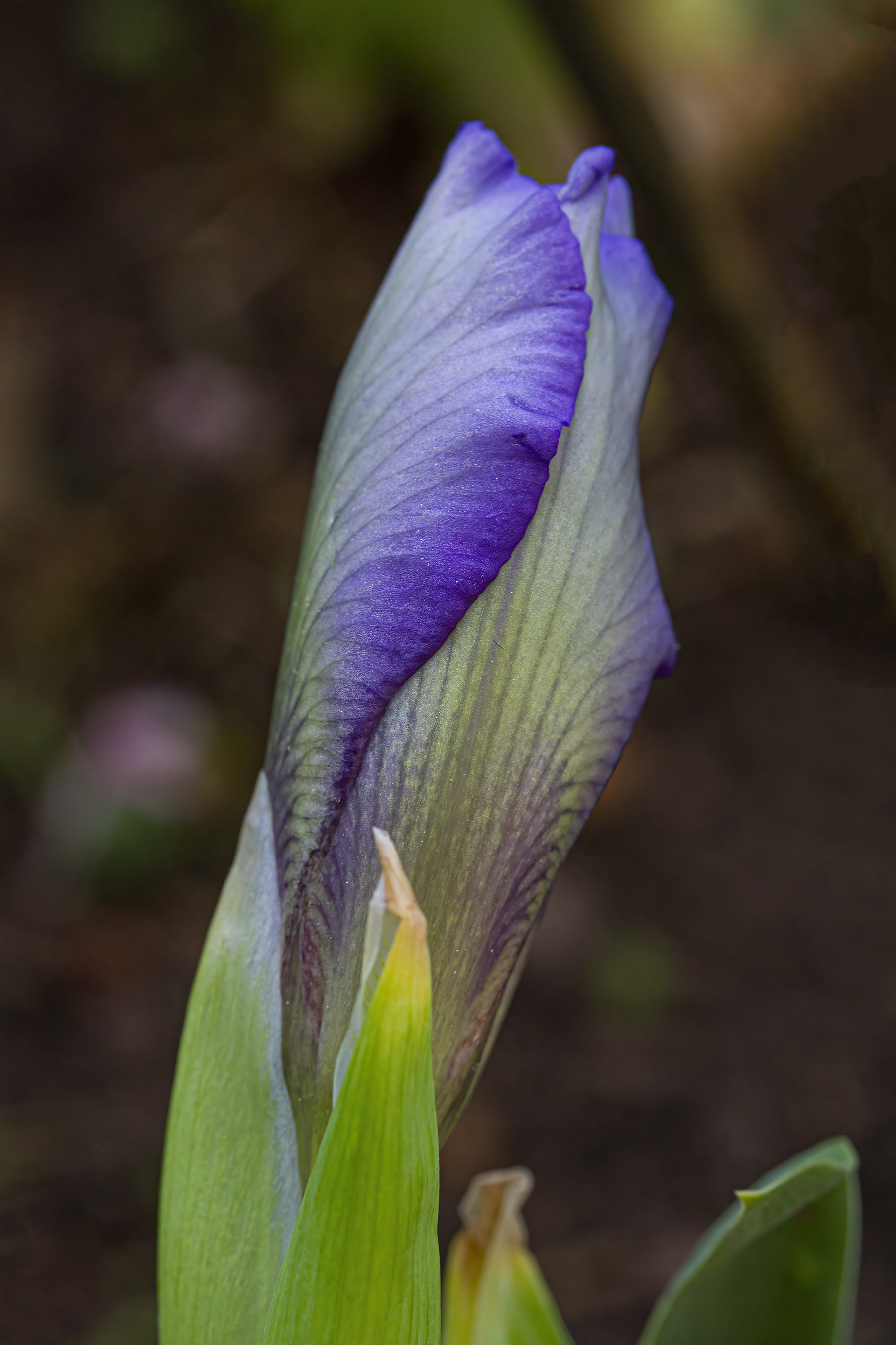
The rain has stopped for now, but some raindrops remain, sparkling like tiny jewels this morning on the bearded irises in the garden of my neighbor and fellow photographer Cindy Dyer. I tried to get creative with the framing of the first shot, with a blurred iris in the background of an unopened bud.

In the second shot, I was so close to the bearded iris that you almost can’t tell that the primary subject is a flower—I love my macro lenses. There third and fourth shows show a couple more varieties of irises that are currently in bloom in Cindy’s garden, with lots more still to come.

Iris

Iris

Iris

Iris

© Michael Q. Powell. All rights reserved.
Read Full Post »

What is the most unusual-looking flower that you have ever seen? For me, it would probably be the Japanese Jack-in-the-Pulpit (Arisaema sikokianum). There is something so alien and exotic about this plant that it stopped me in my tracks when I first spotted it last year in early May at Meadowlark Botanical Gardens in Vienna, Virginia. Check out my posting from last year if you would like more details of my first encounter with this plant species.

On Thursday I made a trip the botanical gardens with my friend and photography mentor Cindy Dyer. She was interested in photographing the tulips, peonies, and other flowers, but I made a beeline for the area where I had seen the Japanese Jack-in-the-Pulpit last year. Initially I could not find any, but I asked several of the folks working in the garden beds and one of the walked me to an area where there were two plants that were well past their prime.

As we were talking, another gardener overheard us and noted that she had spotted one further up the trail earlier in the week. I walked really slowly and looked carefully and eventually found the correct spot—there was one wilted Japanese Jack-in-the-Pulpit and one in bloom. The two photos below give you a sense of the beauty of this unusual plant. As you can probably tell, I varied the settings on my camera to give a different feel to each of the images. Although the first image provides a clearer view of the entire plant, I really like the moody feel of the second shot.

The Japanese Jack-in-the-Pulpit is closely related to the Jack-in-the-pulpit (Arisaema triphyllum), which is supposed to be common to the eastern United States, though I have never seen one. The American species looks fairly similar to the Japanese variant, but the spadix, the part that is the “Jack” in the name, is darker in color and the pitcher more closely matches the leaves. If you want to see a beautiful photo of a Jack-in-the-Pulpit growing wild in New England, check out this blog posting by fellow photographer Steve Gingold.

Japanese Jack-in-the-Pulpit

Japanese Jack-in-the-Pulpit

© Michael Q. Powell. All rights reserved.
 

Read Full Post »

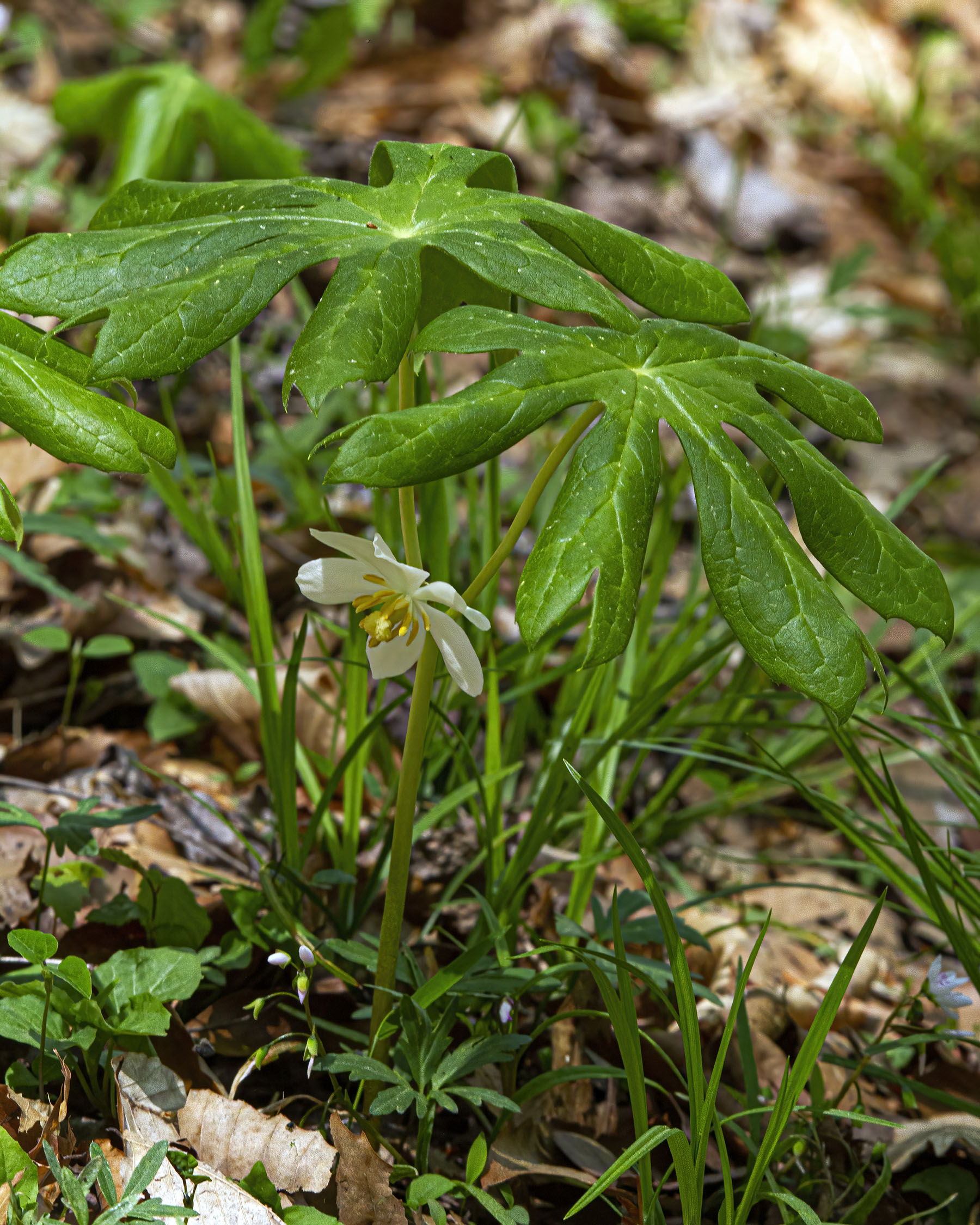
Mayapples (Podophyllum peltatum) are strange plants. Most of the time they grow in colonies and each plant has a stalk and a single umbrella-shaped leaf. Occasionally, though, the stem will branch off and there will be two leaves. In those cases, a single flower may emerge at the intersection of the two branches of the stem.

According to the Wisconsin Horticulture website, “The nodding, white to rose-colored flowers appear in April or May. Each flower is 2-3 inches wide, with 6 light green sepals, 6 to 9 waxy petals, and twice as many stamens with white filaments and yellow anthers. Although the flowers are quite showy, they are short-lived and usually hidden by the leaves. The flowers are fragrant, variously described as pleasant to putrid and are visited by bumblebees and other long-tongued bees.”

Yesterday I spotted a flowering Mayapple plant as I was exploring the area surrounding a creek in Prince William County, Virginia. I have been seeing Mayapple plants for the last couple of weeks as I have been searching for dragonflies, but this is the first one that I have seen in bloom this spring. You have to get pretty low to the ground to spot the flowers, and it was a bit of a challenge getting this shot.

There is something whimsical about a flower that has its own dual umbrella to provide it with shade—I can’t help but smile whenever I spot a Mayapple in bloom.

Mayapple

© Michael Q. Powell. All rights reserved.

Read Full Post »

Yesterday I stopped by the garden of my neighbor and fellow photographer Cindy Dyer. Her early-season tulips were well beyond their prime, but more tulips are getting ready to bloom. I was a little surprised to see that some of her irises are already starting to bloom too. I love to photograph flowers when they are at this stage of growth—they are already beautiful and give hints of the additional beauty that is to come.

Happy Easter to all of you who are celebrating this holy day. Christ is risen!

tulip

tulip

iris

© Michael Q. Powell. All rights reserved.


Read Full Post »

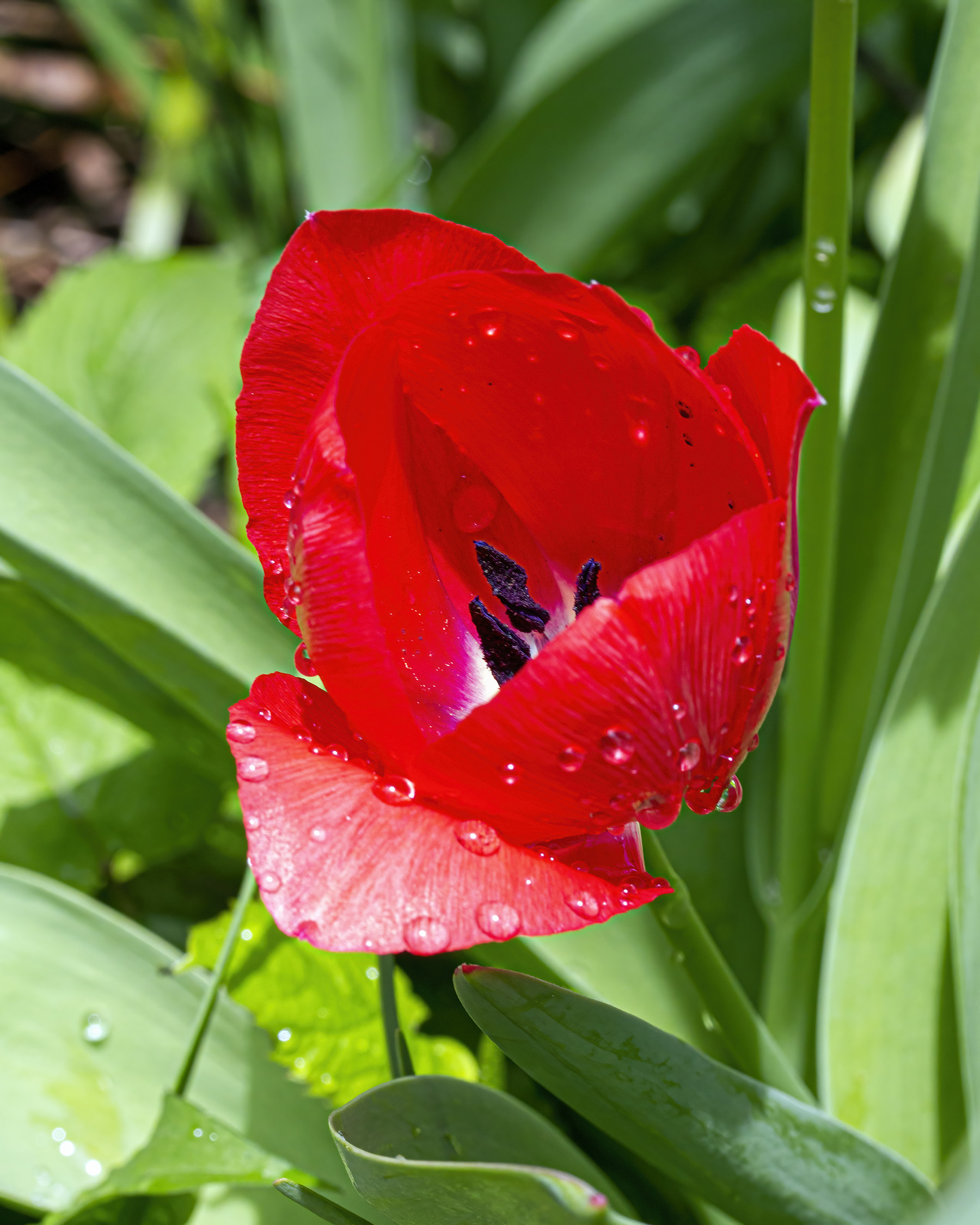
Raindrops were glistening in the sunlight after an April shower on Saturday, enhancing the beauty of these red tulips in the garden of my dear friend and photography mentor Cindy Dyer.

One of my favorite movies when I was growing up was “The Sound of Music” and I can still remember the words of many of the songs from the movie. In one delightful scene, Julie Andrews tells the children that when she is unhappy, she tries to think of nice things and begins a song with the words, “raindrops on roses and whiskers on kittens…these are a few of my favorite things.”

Raindrops seem almost magical, whether they are on roses, on tulips, or on any other vegetation. If you are not familiar with the song “My Favorite Things,” here is a link to a YouTube clip of that wonderful scene from “The Sound of Music.”

tulip

tulip

tulip

© Michael Q. Powell. All rights reserved.


Read Full Post »

Flowers are starting to bloom in the garden of my dear friend and fellow photographer Cindy Dyer. Yesterday I photographed several varieties of tulips and some cute little grape hyacinths.

As many of you know, I do not have my own garden. However, my photography mentor Cindy Dyer lives nearby and she has amazing gardens in her front, side, and back yards. She generally plants flowers that she knows are photogenic and I know that during the growing season that there will almost always be something to photograph.

Earlier this spring, I was able to photograph a few crocuses and a tiny red tulip, but now a whole lot more flowers are starting to appear. The multi-colored tulip in the first photo, I believe, is a variety known as the Lady Jane tulip (Tulipa clusiana var. ‘Lady Jane’). In the past, this tulip stood much taller—this one was growing close to the ground.

The red tulip in the second photo is a more traditional variety. I deliberately set my camera to have a shallow depth of field to blur out the background that at this time of the year is somewhat patchy and cluttered. As I processed the photos on my computer I noticed that I had inadvertently captured a shot of my first insect of the season, what Cindy likes to call a “bonus bug.” The weather yesterday was cloudy, so I did not have to worry about harsh shadows, which meant that the colors seemed especially vibrant and saturated.

The final photo shows a tiny grape hyacinth (g. Muscari), one of many that have popped up in Cindy’s garden. These colorful little flowers grow really close to the ground, so I was sprawled out a bit to get this low-angle shot that isolated the flower from the background.


Lady Jane tulip

tulip

grape hyacinth

© Michael Q. Powell. All rights reserved.


Read Full Post »

Although the weather the past few days has been cold and windy, it is beginning to look a lot like spring. Some trees have already started to blossom and pops of color are appearing in the front yards of many of my neighbors. In Washington D.C., the cherry blossoms are forecast to reach their peak flowering phase next week.

Yesterday I took my camera with me during a short walk through my neighborhood. Rather than toting the long telephoto zoom lens that I use to photograph birds, I carried the much lighter 60mm macro lens. When I am photographing flowers, I usually try to get up close to them in order to capture the maximum amount of detail.

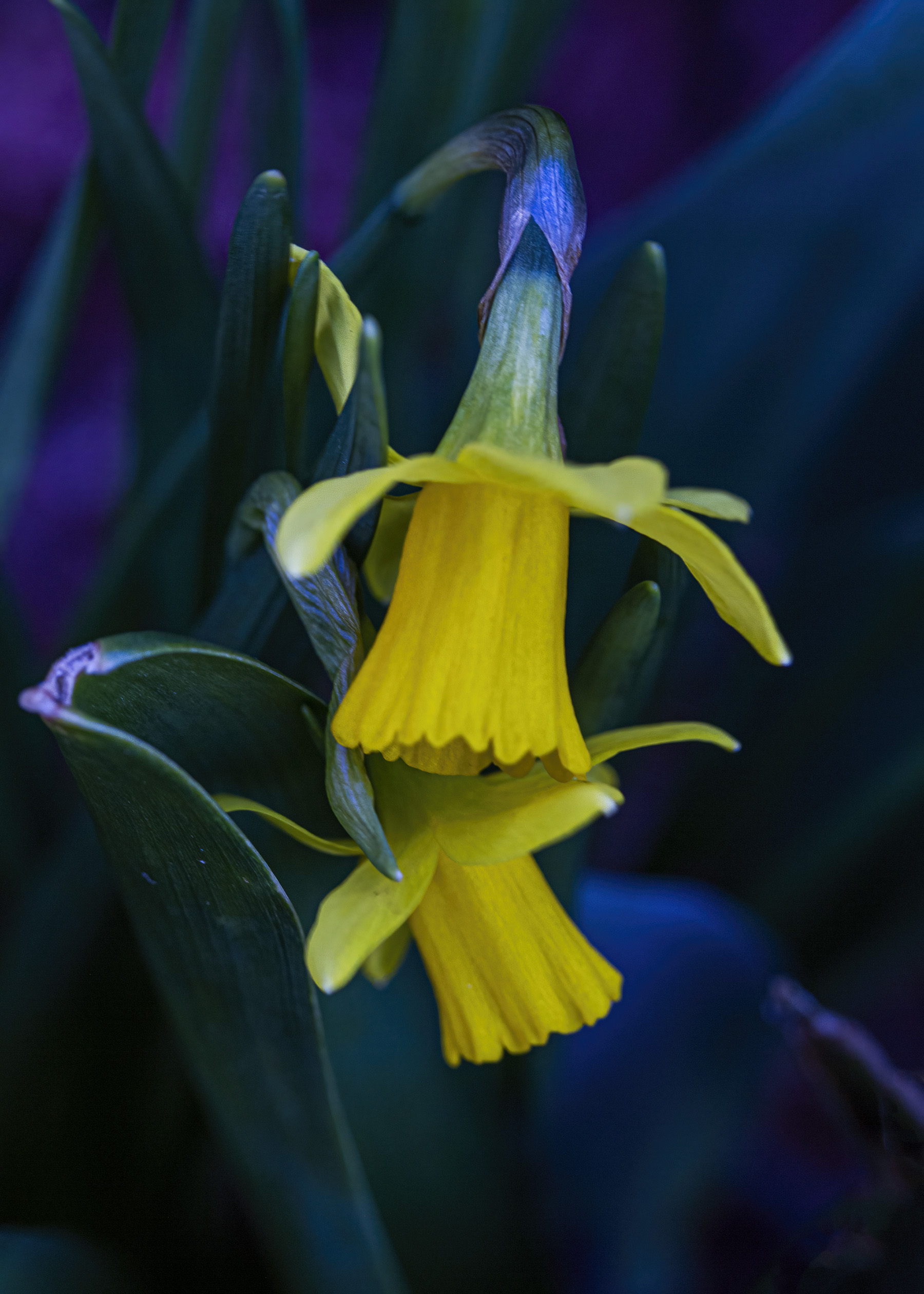
I spotted some small daffodils adjacent to the steps of my next-door neighbor and stopped to photograph them. Daffodils are probably the most prominent flowers at this moment and I have seen them in multiple sizes and shades of yellow, including some two-toned ones.

I next visited the front garden of fellow photographer Cindy Dyer. I was delighted to spot a few Spring Snowflakes (Leucojum vernum) in bloom. I used to have trouble distinguishing between snowdrop and snowflake flowers, but now I know that the ones with the green spots on each petal are snowflakes.

The last flower that I photographed in Cindy’s garden was a bright red tulip. This tulip was small and was not as showy as some of the other varieties that will appear in the coming weeks, but it seemed especially beautiful. It was the only tulip in bloom and did not have to share the stage with any of its siblings.

Those of you who see my photos regularly will definitely notice that these are not my “normal” shots. It is good, I think, to switch things up periodically and point my camera at some different subjects.

daffodils

snowflake


tulip

© Michael Q. Powell. All rights reserved.


Read Full Post »

Spring is almost here. This past weekend I spotted the first spring flowers—blooming in the garden of my friend and fellow photographer Cindy Dyer. Longtime readers of this blog are well aware that I am not a gardener, but often visit the Cindy’s garden during the flower season—Cindy deliberately plants flowers that are fun to photograph.

The first crocuses that I spotted were some purplish ones that in Cindy’s front garden. These are the type of crocuses that I encounter most frequently and I associate them with the arrival of spring. When I posted a photo of one on Facebook, Cindy alerted me to the fact that several yellow ones were blooming in her backyard garden.

I don’t recall ever having seem yellow crocuses before, so I was delighted to see them. I was really awkward trying to get a shot of them, so I resorted to getting a relatively close-up shot with my 60mm macro lens.

I have also noticed clusters of cheery yellow daffodils in bloom throughout my neighborhood. Our weather is still variable, but spring is on the way. On a side note, next Sunday we begin Daylight Savings Time, yet another sign of the changing seasons. If I am not mistaken, Europeans do not change their clocks until the last Sunday in March, which is 26 March in 2023.

crocus

crocus

© Michael Q. Powell. All rights reserved.

Read Full Post »

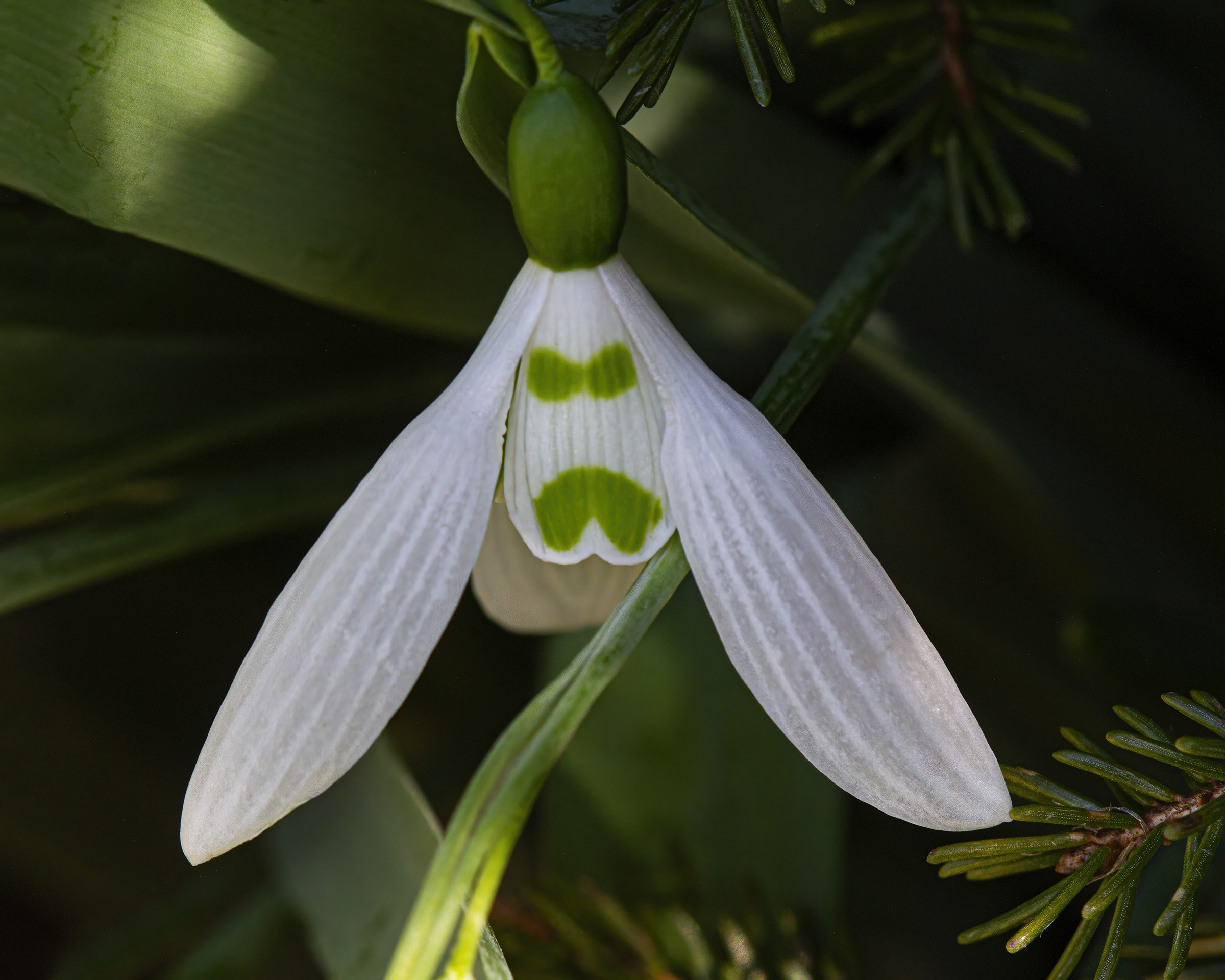
Although it may seem a little strange to make a trip to a garden to photograph flowers, I set off for Green Spring Gardens, a county-run historic garden last Friday. I suspected that snowdrops (g. Galanthus) would be in bloom and I was not disappointed. I spotted several large clusters of these small white flowers scattered throughout the garden beds.

Some years you can find snowdrops peeking out of a covering of snow, but we have not yet had any snow this winter. Instead I found the snowdrops poking out of the reddish-brown ground cover of fallen leaves and pine needles. I did not have my macro lens with me, but managed to get some decent close-up shots with my Tamron 18-400mm lens as well as an overview of one of the patches of snowdrops that I encountered.

When spring comes, I hope to see the somewhat similar-looking snowflake flower (g. Leucojum). The way that I usually tell them apart is to look at the individual petals. The snowdrop petals are pure white, but the petal of each of the snowflake flowers has a little green dot.


snowdrop

snowdrop

snowdrop

snowdrops

© Michael Q. Powell. All rights reserved.

Read Full Post »

Lilies are now blooming in the garden of my neighbor, Cindy Dyer, who is also my photography mentor and muse. There are all kind of lilies there, including daylilies, Asiatic lilies, and giant white ones. Cindy deliberately likes to plant flowers that she knows will be photogenic.

I always feel overwhelmed when trying to photograph groups of anything, so I naturally gravitate to close-ups of individual flowers, focusing in on details that grab my eyes. Sometimes it is shapes, while at other times it may be colors or textures. Here are a few photos from my visit on Tuesday to Cindy’s garden, my impressions of some of the beautiful lilies that I encountered.

lily

lily

lily

© Michael Q. Powell. All rights reserved.

Read Full Post »

I love the triangular shape of Spiderwort plants (genus Tradescantia). I tend to think of spiderworts as being a bluish-purple in color, but was delighted to discover them blooming in a variety of colors during a recent visit to Green Spring Gardens, a county-run historical garden near where I live. I think my favorite color combination may be the one in the middle photo, with the white flowers and the purple “fuzz” in the center.

Spiderwort

Spidewort

spiderwort

© Michael Q. Powell. All rights reserved.
Read Full Post »

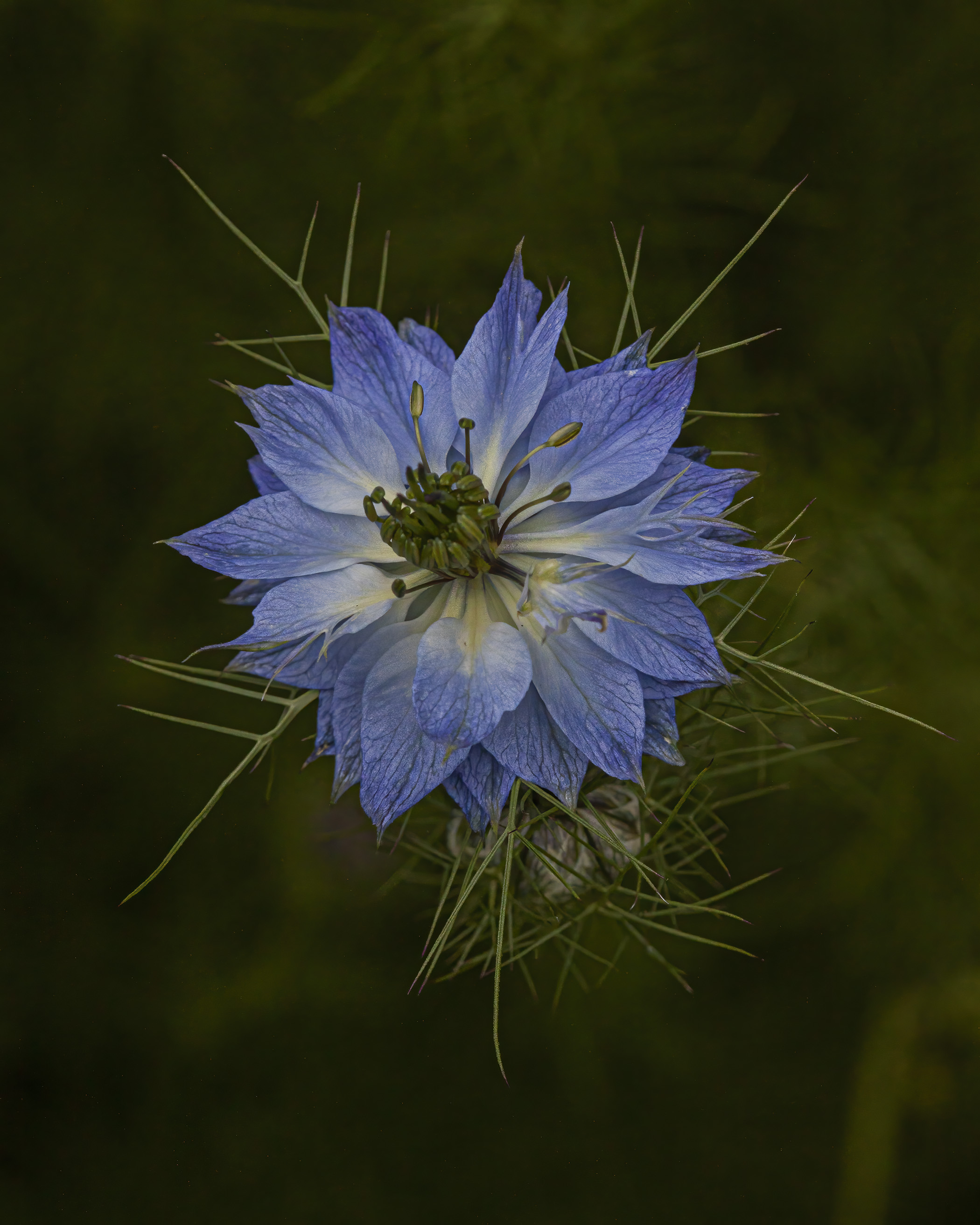
During a recent trip to Green Spring Gardens, a county-run historic garden near where I live, I was delighted to see that Love-in-a-mist (Nigella damascena) was in bloom. Love-in-a-mist  is a flower that looks like it came from outer space, with wild tendrils shooting out of its middle and green spiky vegetation surrounding it. Like many forms of love, the flower simultaneously looks to be both inviting and threatening.

I find this flower to be incredibly beautiful and exotic and it is one of my favorites. Typically Love-in-a-mist is blue, but it also comes in shades of white, pink, and lavender. Many flowers lose our interest after they have bloomed, but I find the seedpods of Love-in-a-mist to at least as intriguing as the flower itself, as you can see in the final photo.

When I did a little research I learned that the striped, balloon-shaped object that I call a seedpod, is actually an inflated capsule composed of five fused true seedpods, according to an article by Wisconsin Horticulture. I also discovered that the thorny-looking spikes that make up the “mist,” which are not sharp, despite their appearance, are technically bracts, a specialized kind of leaves.

I smile whenever I use the name of this flower—we can always use more Love, whether it comes in a mist, in the sunshine, or even in a downpour.


Love-in-a-mist

Love-in-a-mist

Love-in-a-mist

© Michael Q. Powell. All rights reserved.
Read Full Post »

It is prime time for the bearded irises in the garden of my dear friend and fellow photographer Cindy Dyer. There are several dozen irises in bloom now in multiple colors, including these beauties, and it looks like even more flowers will be blooming soon.

Beauty is everywhere.

bearded irises

Bearded Iris

Bearded Iris

© Michael Q. Powell. All rights reserved.

Read Full Post »

Some of the coolest looking plants that I saw last Saturday at Meadowlark Botanical Gardens were Japanese Jack-in-the-Pulpit flowers (Arisaema sikokianum). There is something so alien and exotic about this plant that it stopped me in my tracks when I first spotted it.

According to the Plant Delights Nursery, Inc. website, the dark pitcher and two five-lobed leaves of this plant emerge on a 12 inch tall (30 cm) fleshy stalk from an underground tuber in early spring. As the pitcher opens, it reveals a swollen, pure white, protruding spadix that provides a dramatic contrast to the purple of the pitcher.

The Japanese Jack-in-the-Pulpit is closely related to the Jack-in-the-pulpit (Arisaema triphyllum), which, according to Wikipedia, is common to the eastern United States. I checked the range map and the Jack-in-the-Pulpit can be found in Virginia where I live, though I have not yet spotted one. When I looked at photos of the American species, it looks fairly similar to the Japanese variant, but the spadix, the part that is the “Jack” in the name, is darker in color and the pitcher more closely matches the leaves. Check out this blog posting by Steve Gingold to see a beautiful photo of a Jack-in-the-Pulpit growing wild in his area of New England.


Japanese Jack-in-the-Pulpit

Japanese Jack-in-the-Pulpit

Japanese Jack-in-the-Pulpit

© Michael Q. Powell. All rights reserved.

Read Full Post »

Older Posts »