Feeds:
Posts
Comments

Archive for the ‘Flowers’ Category

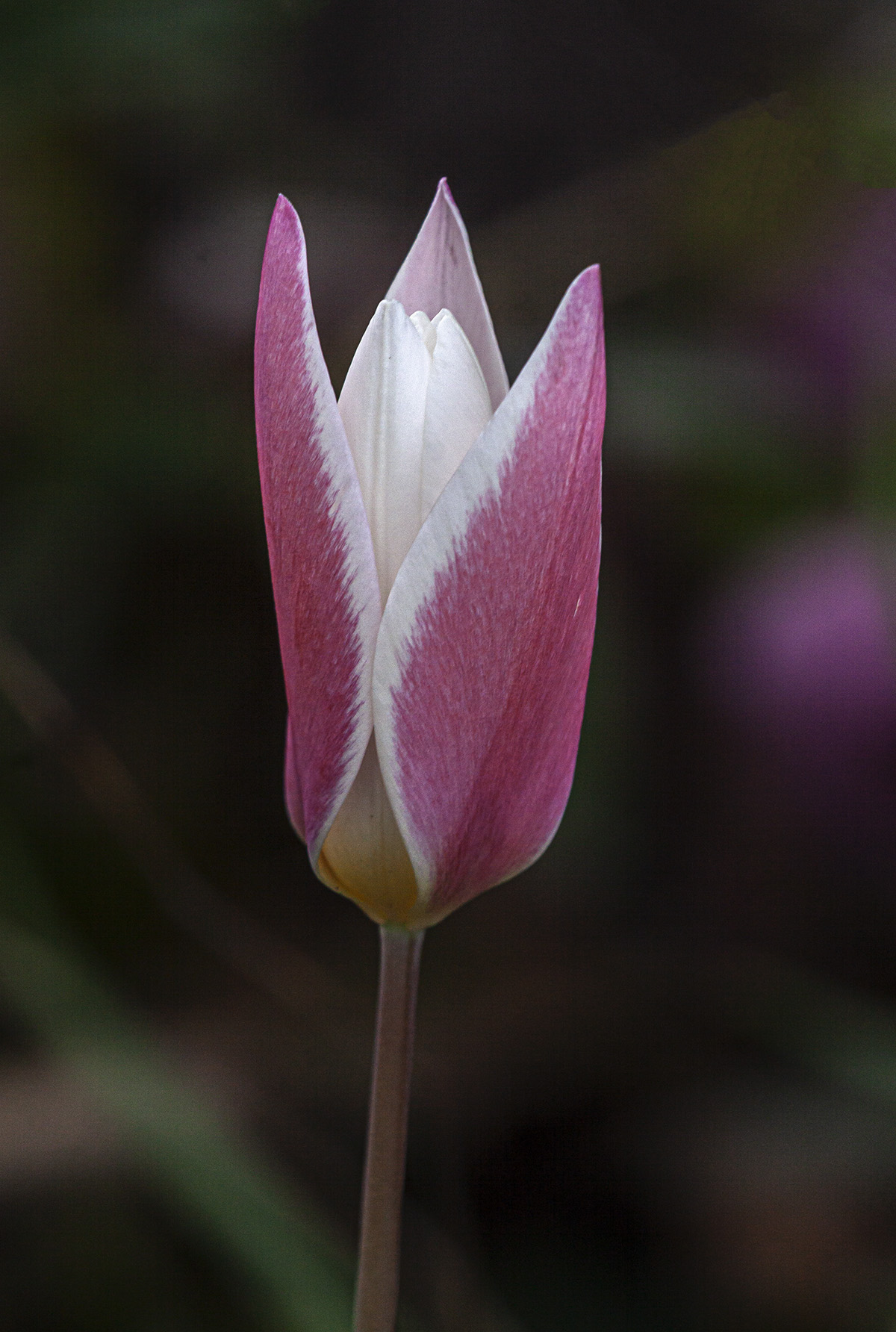
Though their petals may shrivel and fall away, these tulips remain beautiful and elegant in my eyes. Is beauty eternal?

I am convinced that, despite the popular adage that “beauty fades,” beauty is in fact eternal when we broaden our perceptions and allow ourselves to look more deeply. One of my favorite quotes from one of my favorite books Le Petit Prince (The Little Prince) says, “On ne voit bien qu’avec le cœur. L’essentiel est invisible pour les yeux.” (It is only with the heart that you can see well. That which is essential is invisible to the eyes).

Perhaps we need to change the familiar saying that “beauty is in the eyes of the beholder” to “beauty is in the heart of the beholder.”

tulip

Lady Jane tulip

© Michael Q. Powell. All rights reserved.

Read Full Post »

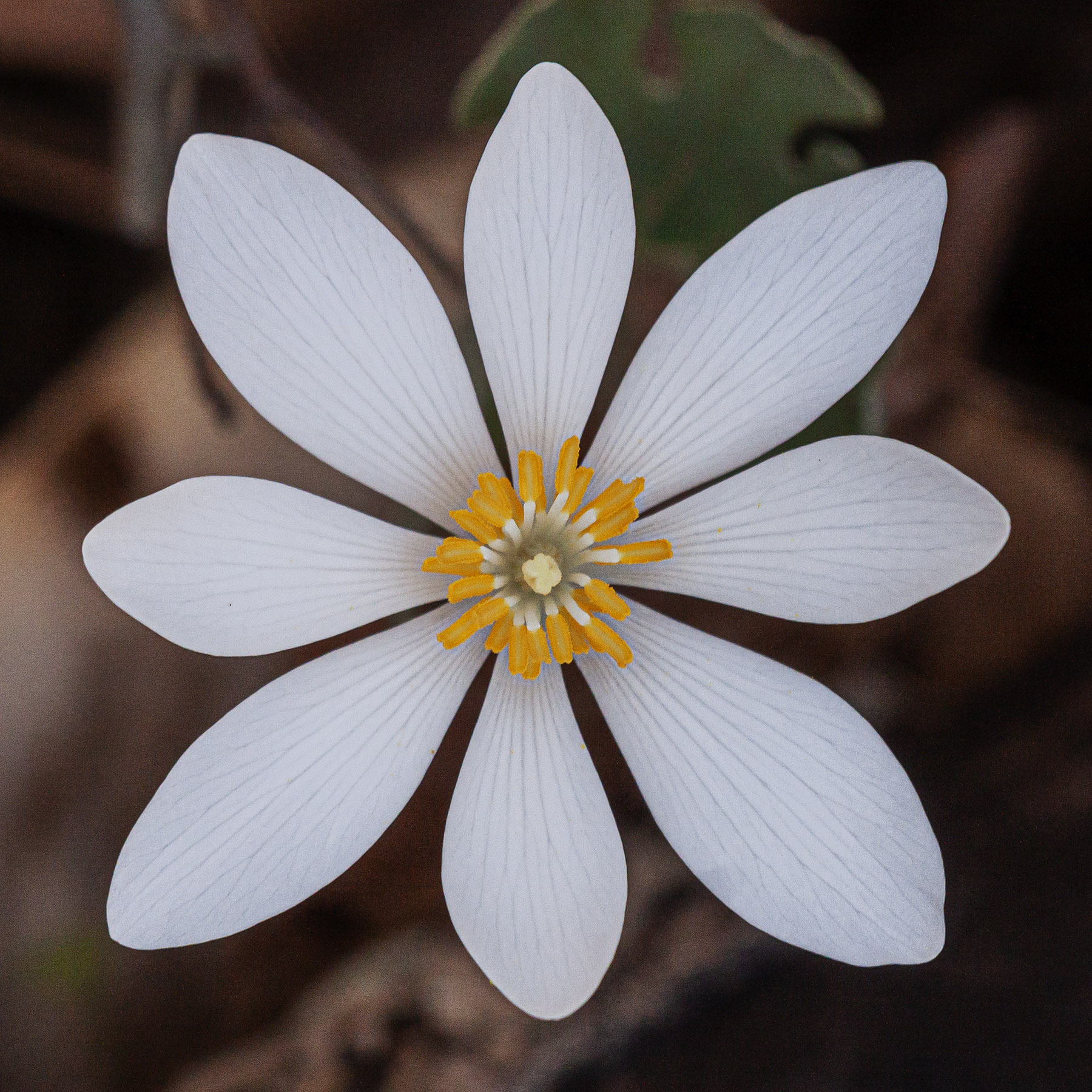
For a short time each spring, tiny wildflowers spring up from the forest floor, giving the forest a magical feel. Many of the forest flowers are white and at first glance they all look the same. When I looked more closely, though, I discovered a wide variety of petal shapes and patterns.

Within this group of three flowers, I can identify only the middle one, which I am pretty sure is a Star Chickweed (Stellaria pubera). If you happen to recognize the others, I would appreciate your help in identifying them. Thanks.

UPDATE:  Steve Gingold has identified the first flower as Bloodroot and the third one as Wood Anemone. Thanks, Steve.

forest flower

forest flower

forest flower

© Michael Q. Powell. All rights reserved.

Read Full Post »

The color and texture of this tulip reminded me of a ripe peach when I first saw it yesterday morning. Alas, it will be months before peaches will be in season and the canned cling peaches that I remember from my childhood can’t compare to the fresh ones.

Like so many of the wonderfully colorful flowers that I have featured recently, this beauty is from the garden of my neighbor and photography mentor Cindy Dyer. Thanks again, Cindy.

At this time of the year, I tend to shoot most often with my 180mm macro lens. With my APS-C crop sensor camera, I get an equivalent field of view of almost 300mm, which gives me some standoff distance for shooting live subjects like dragonflies. However, for shooting subjects like flowers, I found it difficult to frame the images because I was shooting from so far away. For this shot, I switched to a 60mm macro lens and shot with the aperture wide-open at f/2.8.

tulip

© Michael Q. Powell. All rights reserved.

Read Full Post »

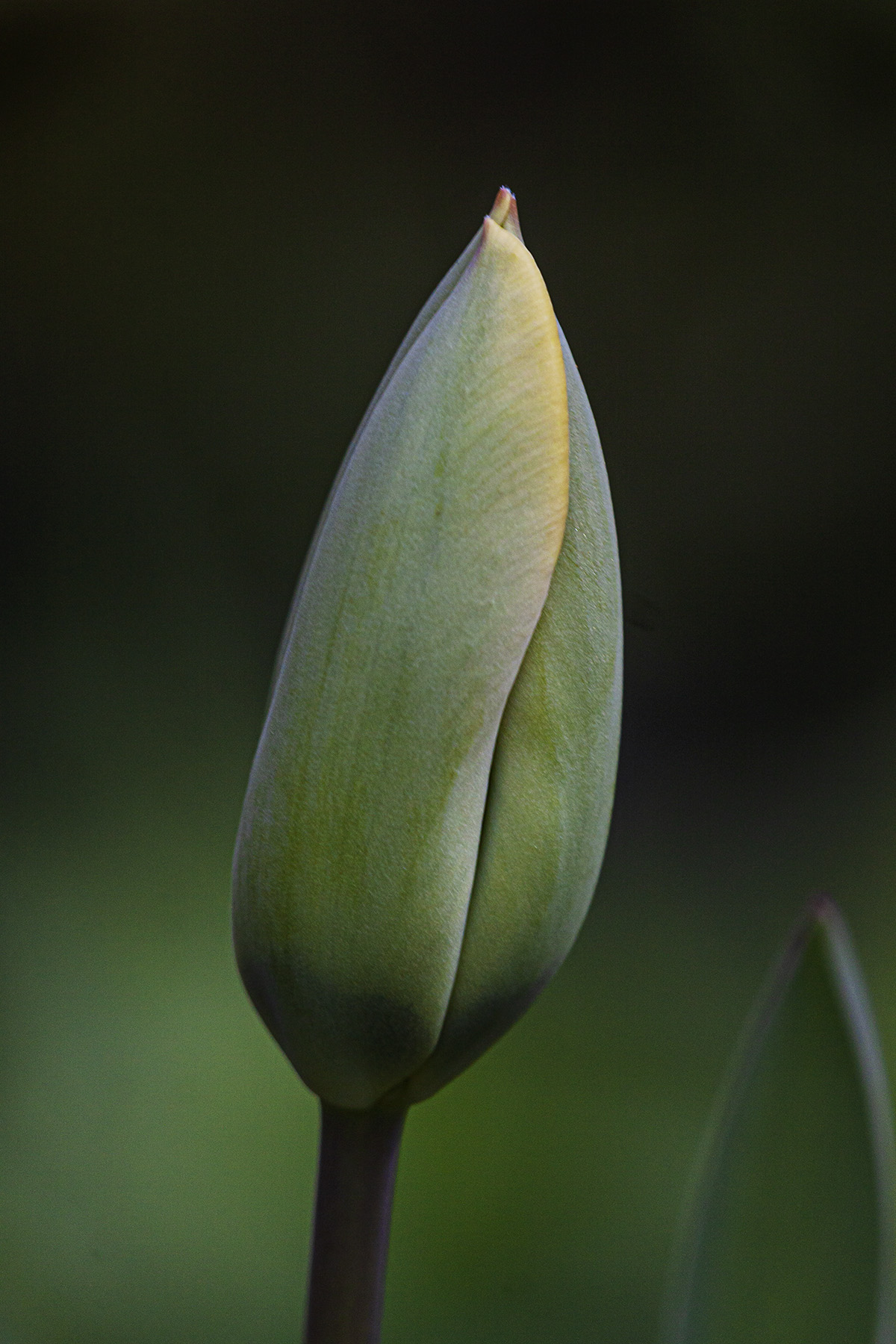
What are your feelings about the future? For me, they are like this tulip bud, full of the promise of new life and beauty that is yet to come. The challenge for us all is to be patient and wait with joyful expectation.

As with all of my other recent tulip shots, I photographed this bud in the garden of my neighbor and friend Cindy Dyer. Thanks, Cindy.

tulip bud

© Michael Q. Powell. All rights reserved.


Read Full Post »

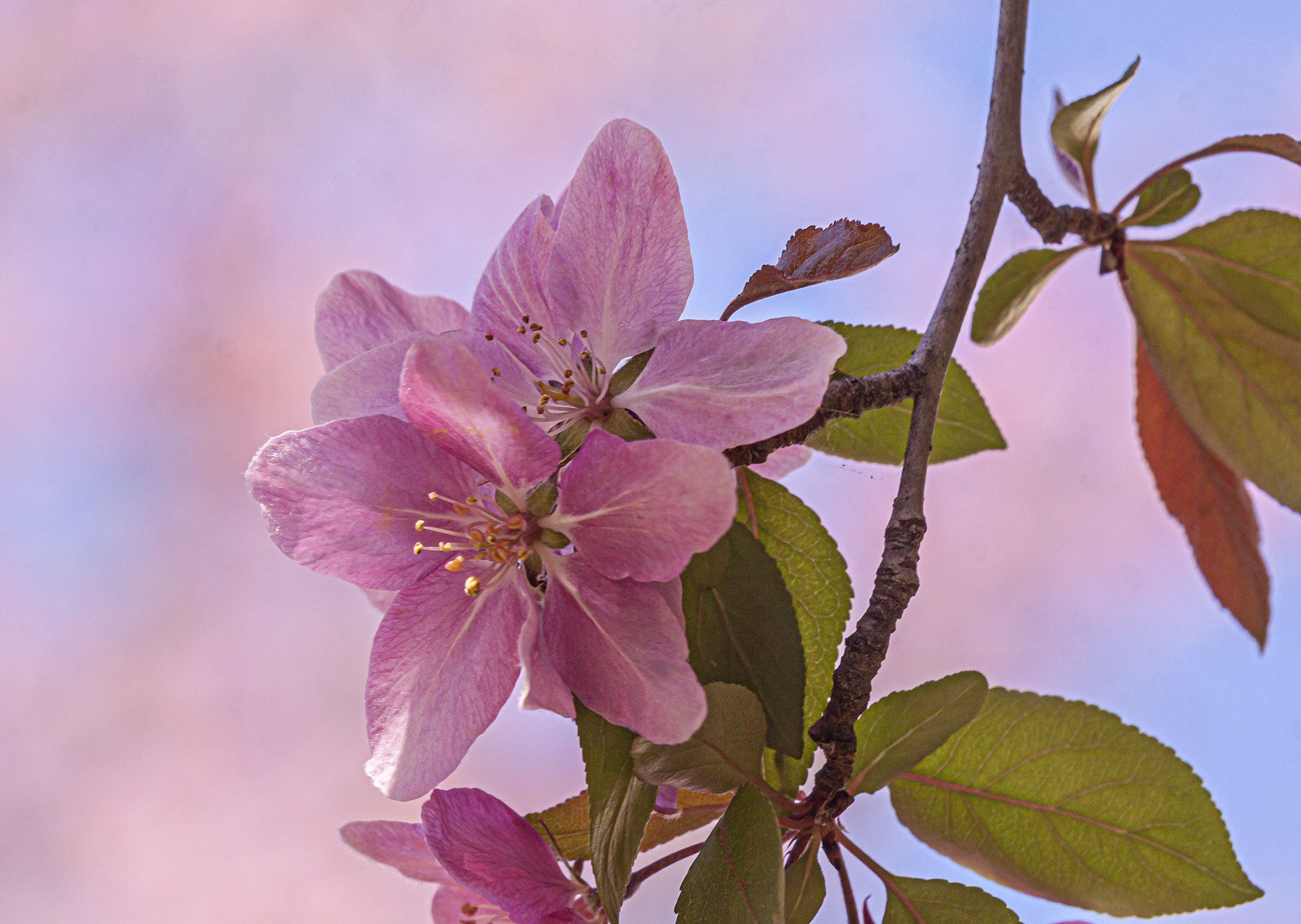
Beauty is everywhere. Thursday afternoon as I walked out of my suburban townhouse, I glanced at the crabapple tree in my front yard, now covered with blossoms. Realizing how beautiful it is, I captured this simple image.

You don’t always have to go to distant locations to find beauty—you can often find it in your back yard or, in my case, in your front yard.

crabapple

© Michael Q. Powell. All rights reserved.


Read Full Post »

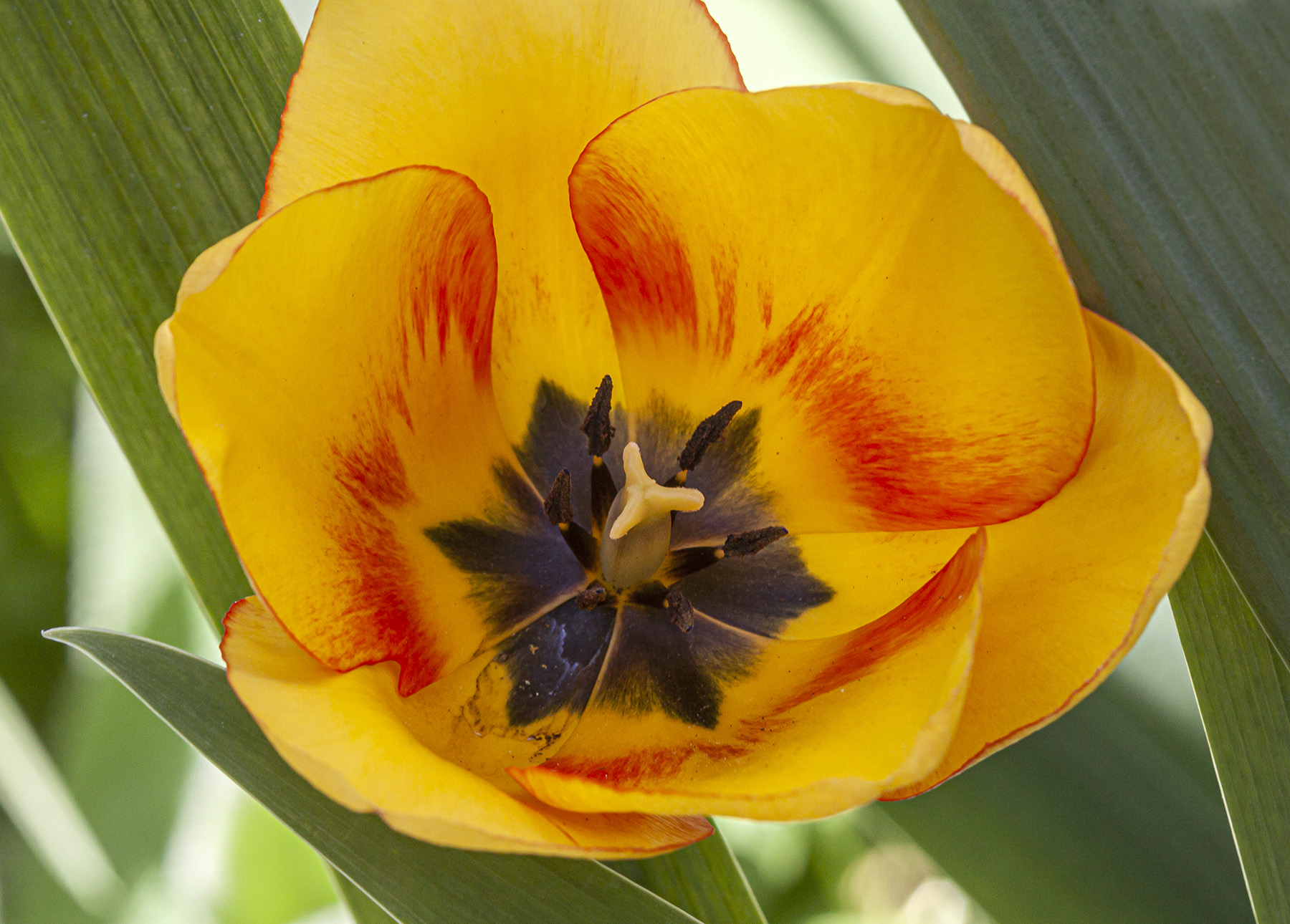
The two-colored tulips in the garden of my neighbor and friend Cindy Dyer were open yesterday and they are awesome. The first macro shot makes the tulip look almost like a little pinwheel. The second shot gives you a greater sense of the colors and patterns in these beautiful tulips—the delicate feathering of the red on the yellow petals is simply breathtaking.

tulip

tulip

© Michael Q. Powell. All rights reserved.

Read Full Post »

Nature is full of wonderful shapes, like the spiral of this curled-up fern—at this stage it is know as a fiddlehead—that I spotted on Monday while exploring in Prince William County. A few days afterwards, Gary Bolstad published a photo of a fiddlehead in New Zealand in his blog krikitarts.wordpress.com. Gary is an amazing photographer and you should really check out his wonderful blog.

In replying to a comment I made about his posting, Gary explained that “The Māori name for a fiddlehead is Koru, and the spiral shape is an essential part of their culture and probably the most common shape used in the design of their carved greenstone (jade) jewelry. It can represent creation, perpetual movement, return to a point of origin, equilibrium/harmony in life, and new life.”

I think we could all use more equilibrium and harmony in our lives during these unsettling times.

fiddlehead

© Michael Q. Powell. All rights reserved.


Read Full Post »

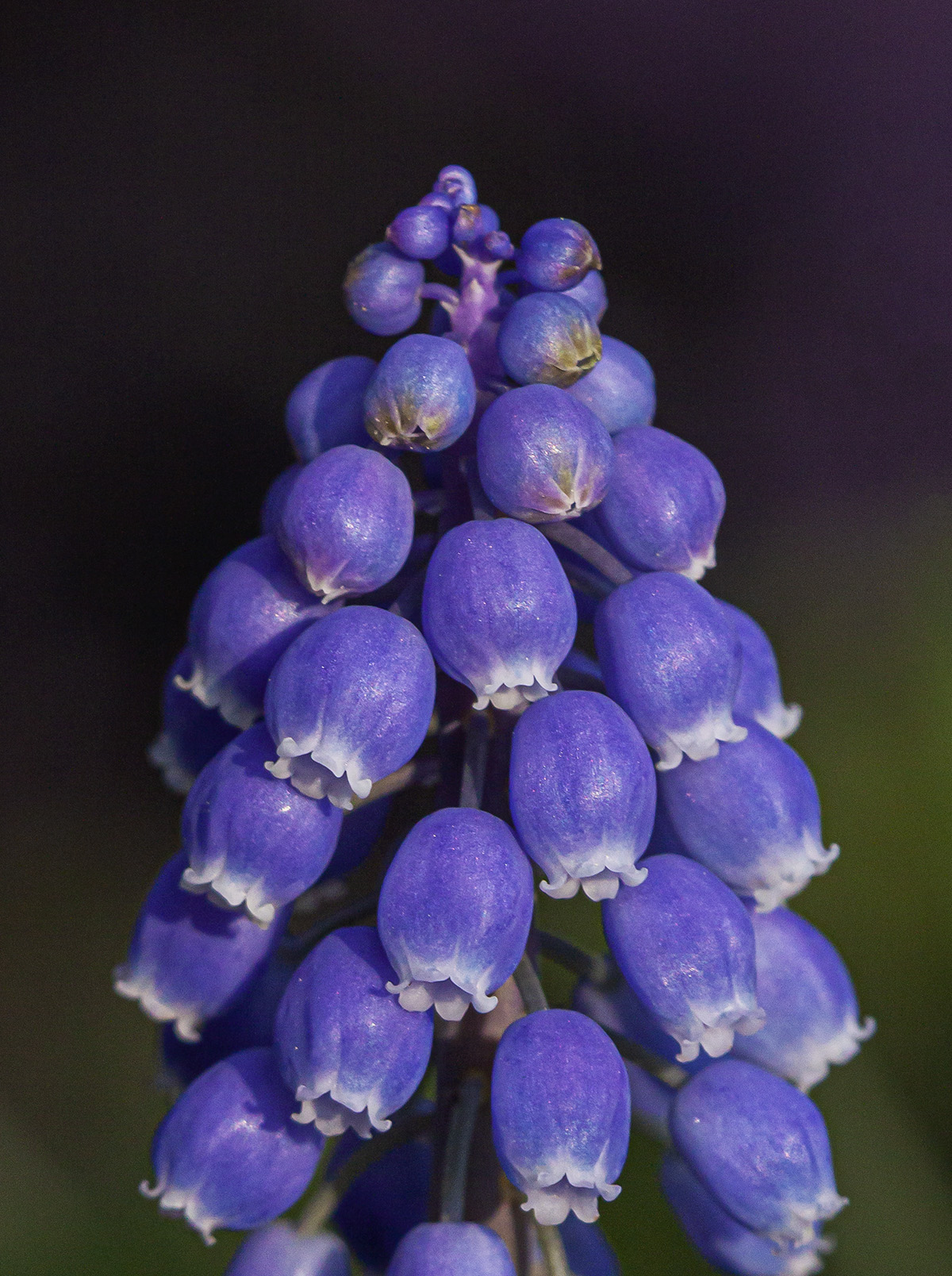
Beauty is everywhere. A few minutes ago I walked over to the garden of my friend and neighbor Cindy Dyer and captured this modest image of a little grape hyacinth (g. Muscari). I just love that vibrant violet color.
So often, taking photos is a multi-hour endeavor for me. Normally I pack my gear and head off to remote locations and walk and walk, watching and waiting for opportunities to arise. It definitely is not normal now, so I am relearning the joy of taking photos in small doses, a few minutes here and a few minutes there. Perhaps I won’t capture stunning action shots, but I am convinced that the words with which I began this posting are true—beauty is everywhere.
grape hyacinth
© Michael Q. Powell. All rights reserved.

Read Full Post »

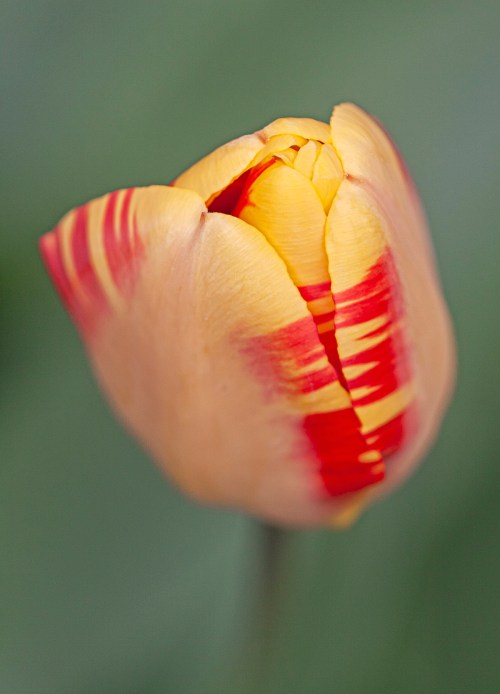
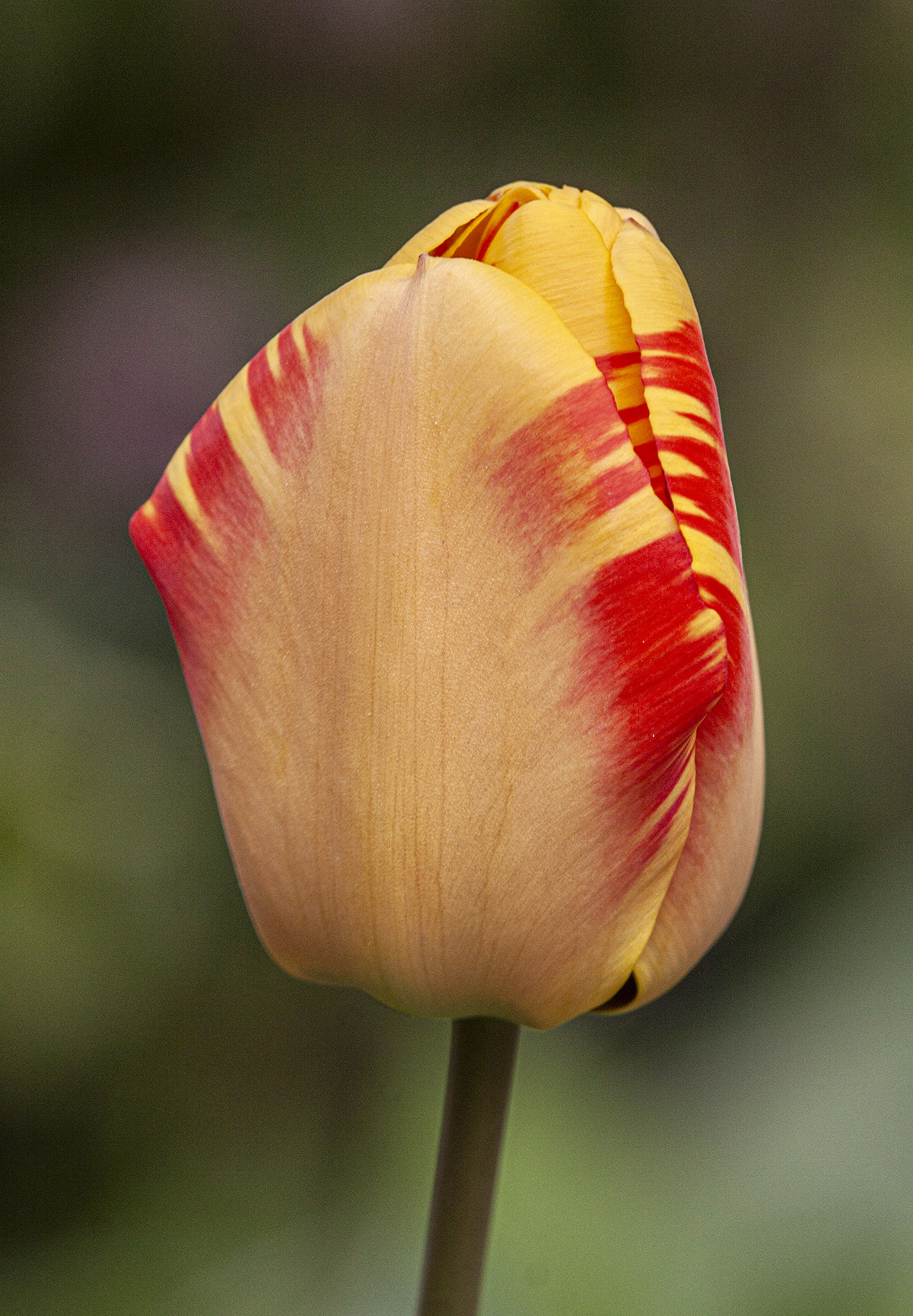
From a distance, I noticed yesterday that some yellow tulips were getting ready to bloom in the garden of my neighbor and photography mentor Cindy Dyer. Cindy deliberately chooses colorful, photogenic flowers for her garden, so I love visiting it frequently. As I got close, I noted the spectacular two-color patterns of these tulips. When I sent a photo to Cindy, she informed me that they are known as “broken tulips.”

Perhaps she told me some time in the past what “broken tulips” are, but I rushed to Google to find out why they are considered to be “broken.” This term refers to the dramatic color-breaking of these flowers, an effect highly sought after during the 17th-century Dutch “tulip mania,” according to Wikipedia. Historically, these changes are caused by a virus infects the tulip bulb and causes the cultivar to “break” its lock on a single color, resulting in intricate bars, stripes, streaks, featherings or flame-like effects of different colors on the petals.

Unfortunately, the virus weakens the bulbs and as a result some famous color-broken varieties no long exist. Today’s “broken tulips” are no longer caused by a viral infection, but are stable variants produced through breeding. Cindy noted to me that her tulips have been going strong for at least five years.

I was feeling creative yesterday when I took these photos and tried a lot of different angles and settings to get some unusual looks. I decided mainly to feature the areas with the different colors and deliberately shot with a shallow depth of field that causes the edges that are away from the center to be soft and out of focus. I think it worked out pretty well.

I decided to post these images today as a counterbalance to the photograph of a wolf spider that I posted earlier, a kind of “beauty and the beast” set of postings. I am guessing that almost everyone will like at least one of the two postings.
broken tulip

broken tulip

broken tulip

© Michael Q. Powell. All rights reserved.


Read Full Post »
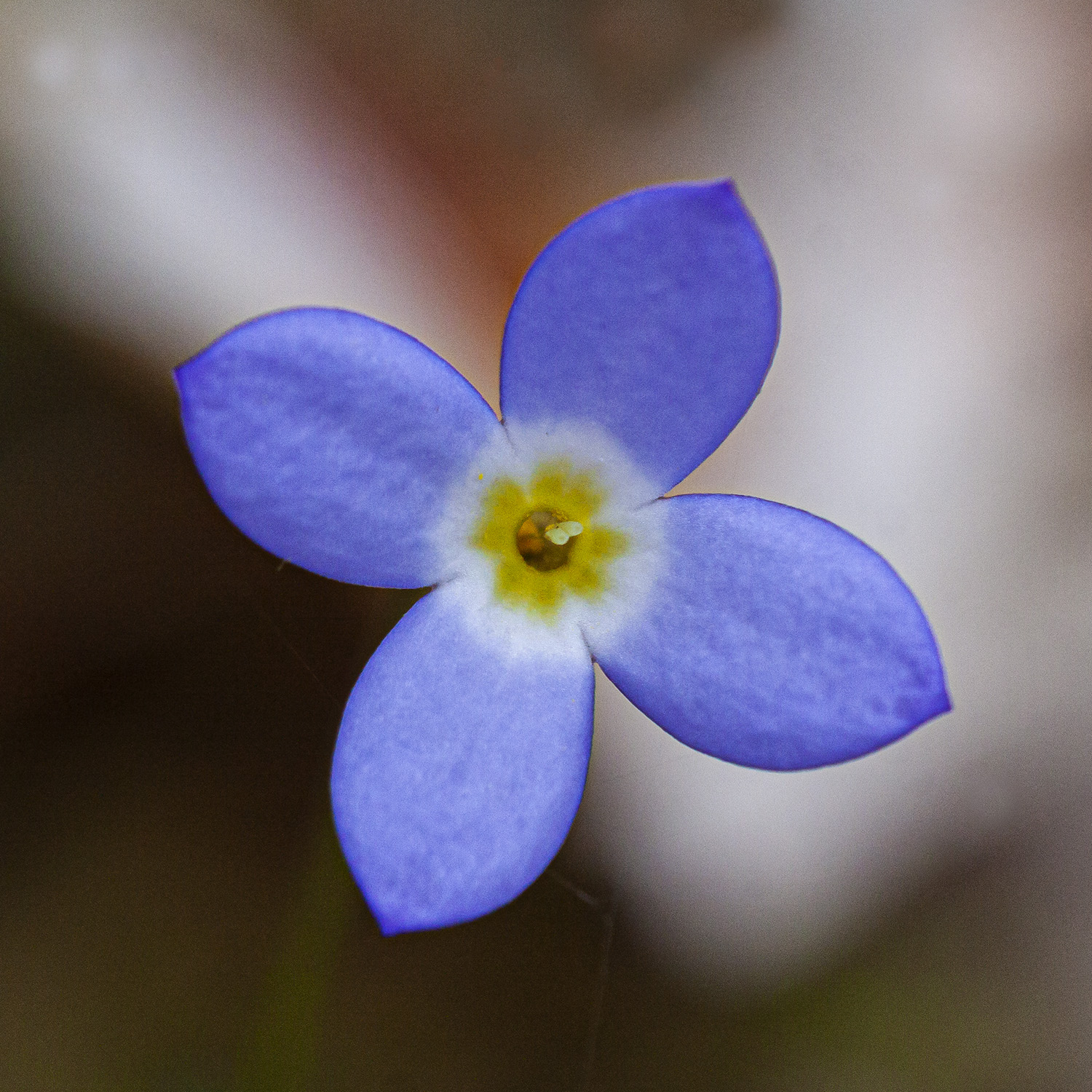
The Lady Jane tulips (Tulipa clusianaLady Jane”) in the garden of my neighbor and photography mentor Cindy Dyer are now fully in bloom. In a recent post called Two tulips, I featured a side view of a mostly closed flower, highlighting the tulip’s unusual shape and reddish-pink color. This time, I shot almost straight down from above and was struck by the geometric shapes in the petals, the stamen, and even the stigma (the little three-lobed part in the very center of the flower). For the middle shot, I shot from a slight angle to give a somewhat more natural perspective.

I hope that all of you are staying safe and healthy. I am remaining close to home most of the time and it has been a blessing for me to be able to find such beautiful subjects to photograph almost literally across the street—Cindy and I live at opposite sides of a suburban semi-circle.


Lady Jane tulip

Lady Jane tulip

Lady Jane tulip

© Michael Q. Powell. All rights reserved.


Read Full Post »

Need a blast of bright color? Here you go, a shot I took of the inside of a gorgeous red tulip blooming this morning in the garden of my neighbor and photography mentor Cindy Dyer.  This view straight down into the tulip reminds me of the kaleidoscopes that fascinated me endlessly when I was a youth. I managed to frame this shot almost exactly as I had envisioned, so I decided not to crop it at all, which is pretty unusual for me.

tulip

© Michael Q. Powell. All rights reserved.

Read Full Post »

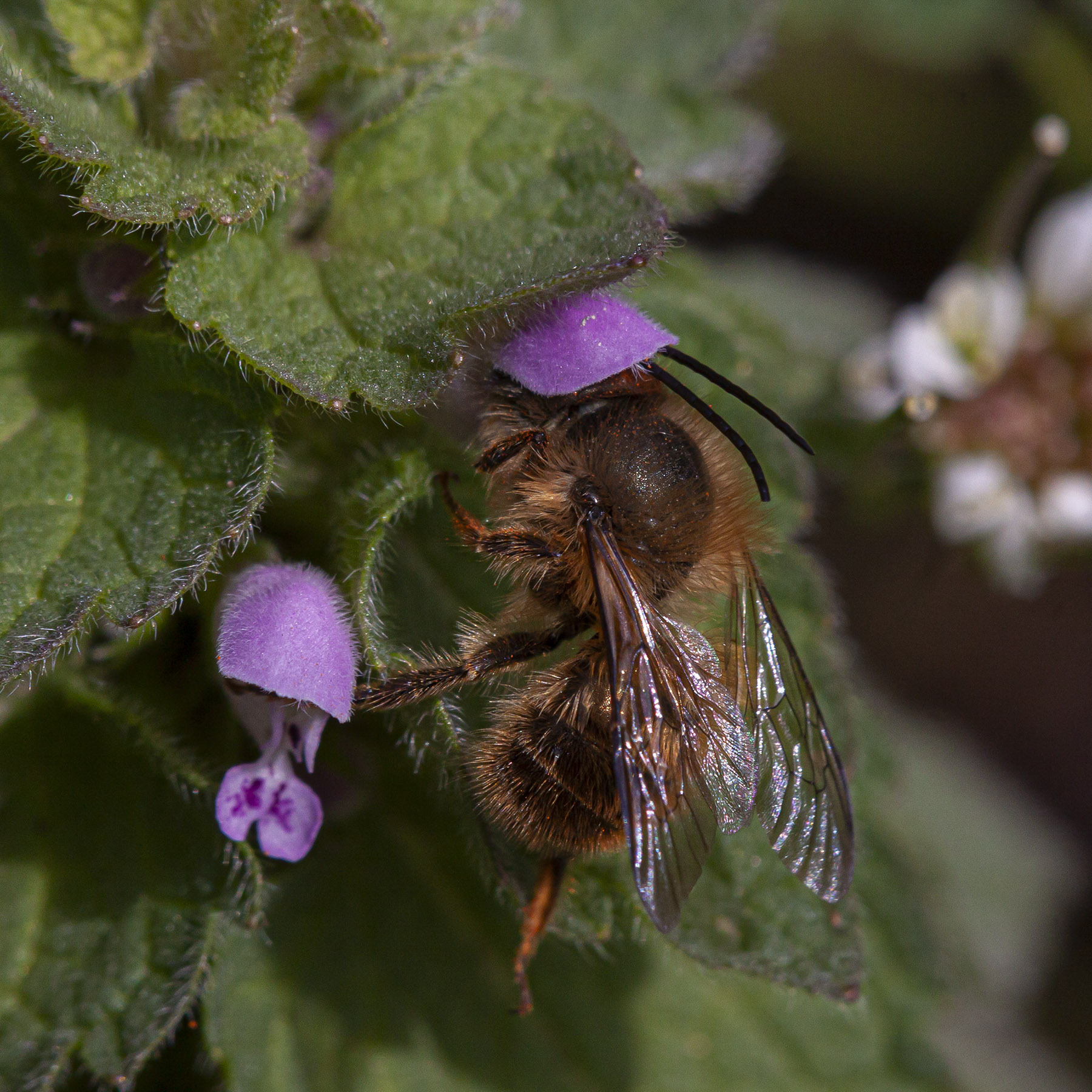
Although the temperatures were cool on Tuesday afternoon, this little bee was busy in the garden of my neighbor and friend Cindy Dyer. The plant on which the bee was feeding technically bight be considered to be a weed, and not a flower, but the bee surely did not mind.

Most of the pollen that I am used to seeing is bright yellow, but in this case it appeared to red in color. As you can see in the second photo, the bee was using a headfirst approach—for extended periods of time it would bury its head among the small petals of this plant.

I went searching around on internet trying to identify the plant and I think it might be Henbit (Lamium amplexicaule). I would welcome a confirmation or correction of this identification by someone more familiar with flowers than I am.

bee

bee

© Michael Q. Powell. All rights reserved.

Read Full Post »

You don’t have to go far to find beauty—it is all around us. I spotted this beautiful Lady Jane tulip yesterday afternoon in the garden of my neighbor and fellow photographer Cindy Dyer. Cindy loves to photograph flowers and has planted a wide assortment of photogenic flowers in her front and side gardens. I was delighted to see that about a dozen of these little tulips were starting to bloom.

Many of Cindy’s “normal” tulips are starting to form buds, but only one is blooming right now, the beautiful red one that is shown in the final photo. I have always been impressed by the photos that tourists take of broad swaths of colorful tulips in the Netherlands, but for me, I tend to find beauty in the individual flowers.

Lady Jane Tulip

tulip

© Michael Q. Powell. All rights reserved.

Read Full Post »

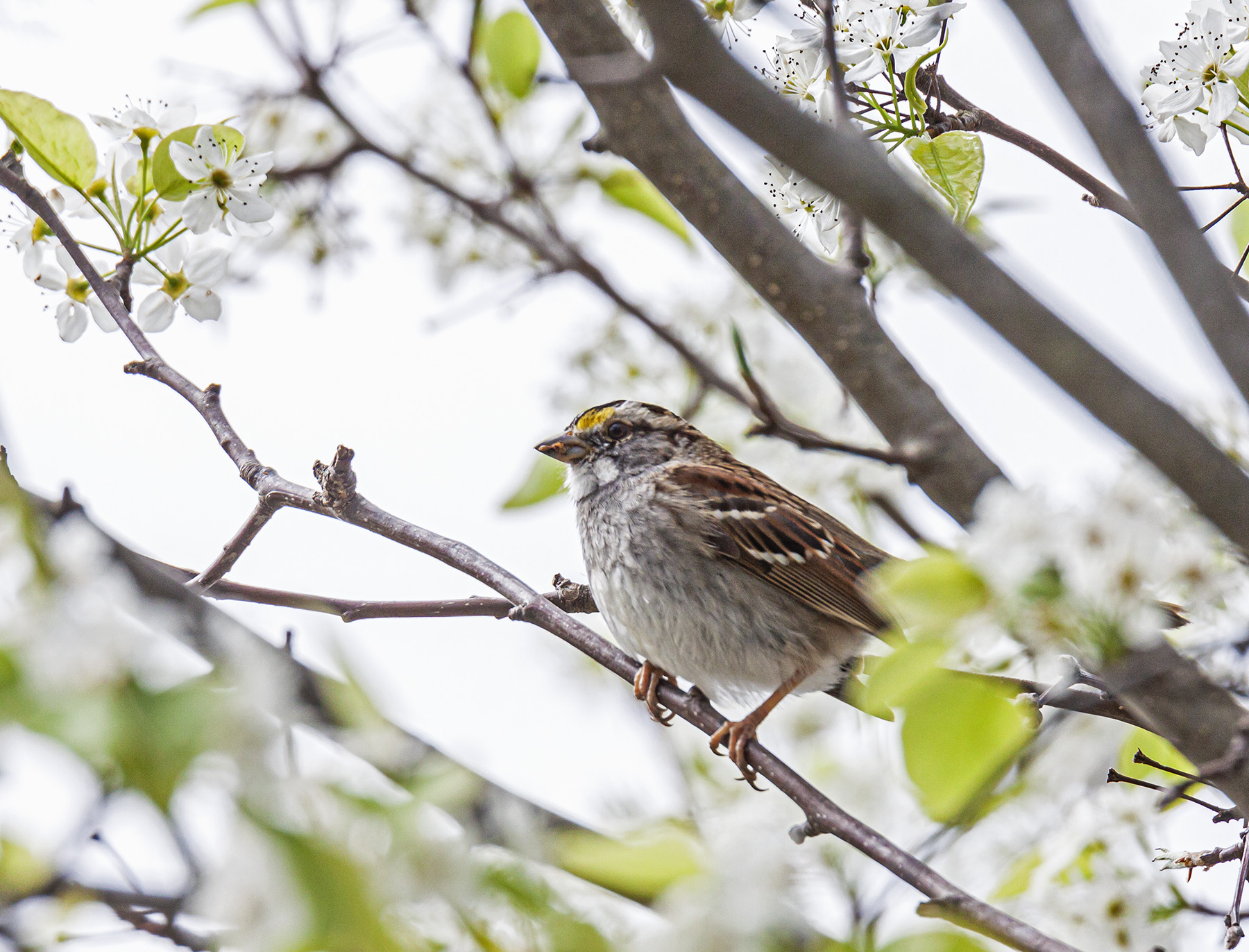
Each spring I try to get shots of birds perching in blossoming trees, but the birds rarely cooperate with me—they all seem more interested in foraging for food than in posing for me. On Saturday, though, a White-throated Sparrow (Zonotrichia albicollis) at Occoquan Bay National Wildlife Refuge paused for a moment and I was able to capture this image.

I chose not to crop this image any closer in order to give you a better view of the delicate white blossoms of a tree that I am not able to immediately identify.

White-throated Sparrow

© Michael Q. Powell. All rights reserved.

Read Full Post »
One of the highlights of my visit on Monday to Green Spring Gardens was photographing a blossoming Japanese Apricot tree (Prunus mume). It was a little strange to see a tree with blossoms during the winter, but apparently it is normal for this species to blossom in mid-winter and late winter. The flowers are commonly known as plum blossoms and are a frequent theme in traditional painting in China and in other East Asian countries—the blossoms were also a favorite with the honey bees.

According to Wikipedia, the plum blossom is “one of the most beloved flowers in China and has been frequently depicted in Chinese art and poetry for centuries. The plum blossom is seen as a symbol of winter and a harbinger of spring. The blossoms are so beloved because they are viewed as blooming most vibrantly amidst the winter snow, exuding an ethereal elegance, while their fragrance is noticed to still subtly pervade the air at even the coldest times of the year. Therefore, the plum blossom came to symbolize perseverance and hope, as well as beauty, purity, and the transitoriness of life.”

I do not use my macro lens very much during the winter months and usually leave it at home. However, the mild weather that we have been having made me suspect that some flowers would be in bloom, so I put the macro lens on my camera—the busy bees turned out to be a big bonus.

I especially admired the efforts of the bee in the first photo. This bee did not want to wait for the bud to open, but instead burrowed its way to the pollen-filled center of the blossom-to-be.

Japanese Apricot tree

Japanese Apricot tree

Japanese Apricot tree

© Michael Q. Powell. All rights reserved.

Read Full Post »

This winter has been usually mild and spring color is already starting to appear in our area. During a visit yesterday to Green Spring Gardens, a local county-run historical garden, I spotted crocuses in bloom at several locations. Finding crocuses was not too much of a surprise, since they are usually among the first flowers to appear each spring.  However, it was an unexpected bonus to be able to photograph a honey bee collecting pollen inside of one of the crocuses.

In many ways yesterday’s photography was a return to my roots. When I started getting more serious about photography seven years ago, I did a lot of shooting with my friend and mentor, Cindy Dyer. One of her many areas of specialization is macro photography of flowers and some of her flower images have even appeared on US postage stamps. From her I learned a lot about the technical aspects of photography, like composition and depth of field, but more importantly she encouraged and inspired me back then and continues to do so to this day. Thanks, Cindy.

I started off photographing flowers with a few insects, but gradually realized that I was more interested in shooting insects with a few flowers. I can appreciate the beauty of the crocuses in the second and third images below, but the first shot is more representative of my desired shooting style.

crocus

© Michael Q. Powell. All rights reserved.

Read Full Post »

The past few weeks I have been searching for patches of skunk cabbage (Symplocarpus foetidus). What exactly is skunk cabbage? The Gardening Know How website describes the plant in these words, “Skunk cabbage is a perennial wildflower that grows in swampy, wet areas of forest lands. This unusual plant sprouts very early in the spring, and has an odd chemistry that creates its own heat, often melting the snow around itself as it first sprouts in the spring.” In case you are curious, the plant gets its name from the fact that its leaves gives off a smell of skunk or rotting meat when they are crushed or bruised—I can’t personally vouch for that fact, but am willing to accept it at face-value.

So why am I looking for this curious plant that has already begun to sprout in my area? Several types of dragonflies, including the Arrowhead Spiketail dragonfly (Cordulegaster obliqua) that I featured last week, and the Gray Petaltail dragonfly (Tachopteryx thoreyi) can be found in the kind of forest seeps where skunk cabbage grows. The purpose of my recent trips to several parks has been to conduct advance reconnaissance of locations to explore when dragonfly season finally arrives.

For more information about skunk cabbage and how dragonflies are associated with this plant, check out this recent posting by Walter Sanford, my friend and fellow dragonfly enthusiast, with whom I have conducted some of these scouting expeditions.


skunk cabbage

skunk cabbage

skunk cabbage

© Michael Q. Powell. All rights reserved.


Read Full Post »

I thought it was too late in the season for lotuses, so I was thrilled to see them at Meadowlark Botanical Gardens earlier this week in bloom, as seed pods. and most surprisingly as buds.

I am fascinated by lotuses in all of their stages. I love the three-dimensional quality of the flowers and the way that you can look into the center of them. Lotus seed pods are a little creepy—from certain angles they look like a cluster of eyeballs that follow you around. By contrast, I always feel a sense of calm when I am enjoying the simple beauty of the lotus buds.

lotus

lotus seed pods

lotus buds

© Michael Q. Powell. All rights reserved.


Read Full Post »
I was excited to spot this Ruby-throated Hummingbird (Archilochus colubris) during a short visit yesterday to Meadowlark Botanical Gardens with some friends. The hummingbird was feeding on some distant orange jewelweed flowers (Impatiens capensis) and I was using a macro lens at that moment, so I was especially thrilled when I managed to capture this image.

I do not see hummingbirds very often, so it really is a treat for me to see one in action. It is absolutely mesmerizing to watch these little birds frenetically flying among the flowers, stopping from time to time to sip the nectar from one of them. Tracking the moving hummingbird was definitely a challenge with my 180mm macro lens. Strangely enough, though, I probably had an easier time in doing so with this lens than if I had been using my much longer telephoto zoom lens—it can be tough trying to track, focus, and zoom simultaneously when handholding a long lens.

This image is a significant crop of the original image, but the detail holds up fairly well, all things considered. Does equipment matter? It matters to some extent, but you can often get decent results by simply taking the shots with whatever camera and lens that you have at hand.

Ruby-throated Hummingbird

© Michael Q. Powell. All rights reserved.


Read Full Post »
As I was looking at a small patch of purple aster flowers yesterday at Jackson Miles Abbott Wetland Refuge, I noticed that the center of one of them was a different color than all of the rest. I moved closer and was thrilled to see this very cool-looking White-banded Crab Spider (Misumenoides formosipes) nestled in among the petals of the flower. This kind of spider does not build a web, but patiently perches, waiting to pursue passing prey.

crab spider

crab spider

© Michael Q. Powell. All rights reserved.

Read Full Post »

I spotted this beautiful American Lady butterfly (Vanessa virginiensis) during a quick visit this past Saturday morning to Green Spring Gardens, a county-run historic garden not far from where I live. A lot of butterflies were active that day, but my eyes were immediately drawn to this American Lady, a species that I do not see very often. I had to chase it a bit before it stopped to feed on this flower, which was so popular that the American Lady had to share it with a much smaller skipper butterfly. The flower was growing near a fenced in area of public plots where people grow vegetables and the fence caused the striped effect in the background.

Although I spend most of my time photographing subjects in the wild, it was nice to visit a more cultivated place that was still ablaze with summer colors. I am quite conscious of the fact that the summer is slowly slipping away.

American Lady

© Michael Q. Powell. All rights reserved.

Read Full Post »
As I was searching for butterflies last week at Jackson Miles Abbott Wetland Refuge, a flash of brilliant yellow suddenly crossed my field of view. It took a moment for me to figure out what it was and then I realized that several American Goldfinches (Spinus tristis) were diving into a field of Black-eyed Susan wildflowers (Rudbeckia hirta).

I waited for a long time, hoping in vain that the goldfinches would perch in the open on the flowers nearest me, but mostly they stayed buried deep in the vegetation. Here are a couple of long-distance shots that give you a sense of my experience with these colorful little birds.


American Goldfinch

American Goldfinch

© Michael Q. Powell. All rights reserved.

Read Full Post »

I was really thrilled to spot this spectacular Black Swallowtail butterfly (Papilio polyxenes) last week as it fed on some kind of thistle plant at Occoquan Bay National Wildlife Refuge. There are several dark swallowtail species in our area and I often have trouble telling them apart. In this case, though, I could see the distinctive back dot inside the orange dot which is telltale sign that this is Black Swallowtail. I highly recommend a helpful posting by Louisiana Naturalist that points out way to distinguish among four dark swallowtails—it is a reference that I repeatedly return to when I have a question about a dark swallowtail.

Black Swallowtail

© Michael Q. Powell. All rights reserved.

Read Full Post »
I haven’t seen many Monarch butterflies (Danaus plexippus) this season, so I was thrilled when I spotted this one on some goldenrod on Monday at Occoquan Bay National Wildlife Refuge.

The habitat of Monarch butterfly has been threatened in recent years both in the United States and in the areas to which Monarchs migrate. According to an article yesterday at oregonlive.com, the Monarch butterfly is currently under government consideration for listing under the U.S. Endangered Species Act.

Monarch butterfly

© Michael Q. Powell. All rights reserved.

Read Full Post »

I have seen birds and bees stick their heads inside tubular flowers, but I had never before seen a small butterfly do so. I watched this Cloudless Sulphur butterfly (Phoebis Sennae) yesterday at Occoquan Bay National Wildlife Refuge almost bury itself inside this flower as it searched for nectar. I love the way that the light was shining though its wings, illuminating some of the fine details of its tiny body.

I think that this is a Cloudless Sulphur butterfly, but I am easily confused because there is a similar-looking Clouded Sulphur butterfly. To borrow a line from Joni Mitchell, “I really don’t know clouds at all.”

Cloudless Sulphur

© Michael Q. Powell. All rights reserved.

Read Full Post »
Eastern Tiger Swallowtails (Papilio glaucus) were definitely enjoying this patch of Joe Pye Weed (Eutrochium purpureum) when I spotted them last Saturday at Riverbend Park. The butterfly in the foreground is a dark morph female and I believe the one in the background is a male. One of the cool things about Eastern Tiger Swallowtails is that females come in two varieties, one with coloration close to that of the male and one with the dark colors that you see in the image below.

This image is a a pretty straightforward presentation of a fairly common subject, but there is something about the composition that I really like. Maybe it’s the contrasting colors or the overlapping shapes. Who knows? So often I like what I like without being able to articulate the precise reasons why.

Eastern Tiger Swallowtail

© Michael Q. Powell. All rights reserved.


Read Full Post »

Last Saturday I spotted this Pearl Crescent butterfly (Phyciodes tharos) on what looks to be a Black-eyed Susan flower (Rudbeckia hirta) at Jackson Miles Abbott Wetland Refuge. Initially the butterfly’s wings were open, which made for an ok shot. When the butterfly partially closed its wings, however, the light coming from the back helped to illuminate one wing like a stained glass window.

It is amazing how a slight change in the position of a subject can radically change the feel of an image—that is one of the reason why I like to shoot in short bursts, hoping to capture a variety of poses in a short period of time.

Pearl Crescent

© Michael Q. Powell. All rights reserved.


Read Full Post »

During a visit yesterday to Meadowlark Botanical Gardens in Vienna, Virginia, I was reminded of my favorite artist—Claude Monet. During the last thirty years of his life, water lilies (Nymphéas in French) were the main focus of his artistic production. One of the museums that I most love visiting is the Musée de l’Orangerie in Paris, because it houses eight massive water lily murals by Monet in two specially-built oval rooms. It is incredibly peaceful to just sit in one of those rooms, surrounded by those amazing paintings.

I was delighted and a little surprised yesterday to see that some water lilies were already in bloom. There was a lot of vegetation surrounding the pond in which the beautiful flowers were floating, so there were some limits to my ability to compose my shots. Still, I am pretty happy with the images that I was able to capture.

Perhaps you will find yourself as captivated by the water lilies as I was.

Water lily

Water lily

water lily

© Michael Q. Powell. All rights reserved.


Read Full Post »

When I first started getting serious about photography almost seven years ago, I often went shooting with my photography mentor Cindy Dyer. Cindy is accomplished in many areas of photography, but she is particularly passionate about capturing the beauty of flowers with her trusty macro lens. I learned a lot about the art of photography by shooting flowers side by side with her and reviewing my images with her.

Yesterday she and I made a short visit to Green Spring Gardens, a historical, county-run garden not far from our neighborhood, and it was wonderful to see how many flowers were in bloom. I was especially attracted by the poppies that I saw growing in several areas of the gardens—the star-like centers of the poppies seemed to beckon me.

Here are a few photos of those wonderful poppies, which came in a surprising variety of colors.

purple poppy

white poppy

purple poppy

© Michael Q. Powell. All rights reserved.

Read Full Post »
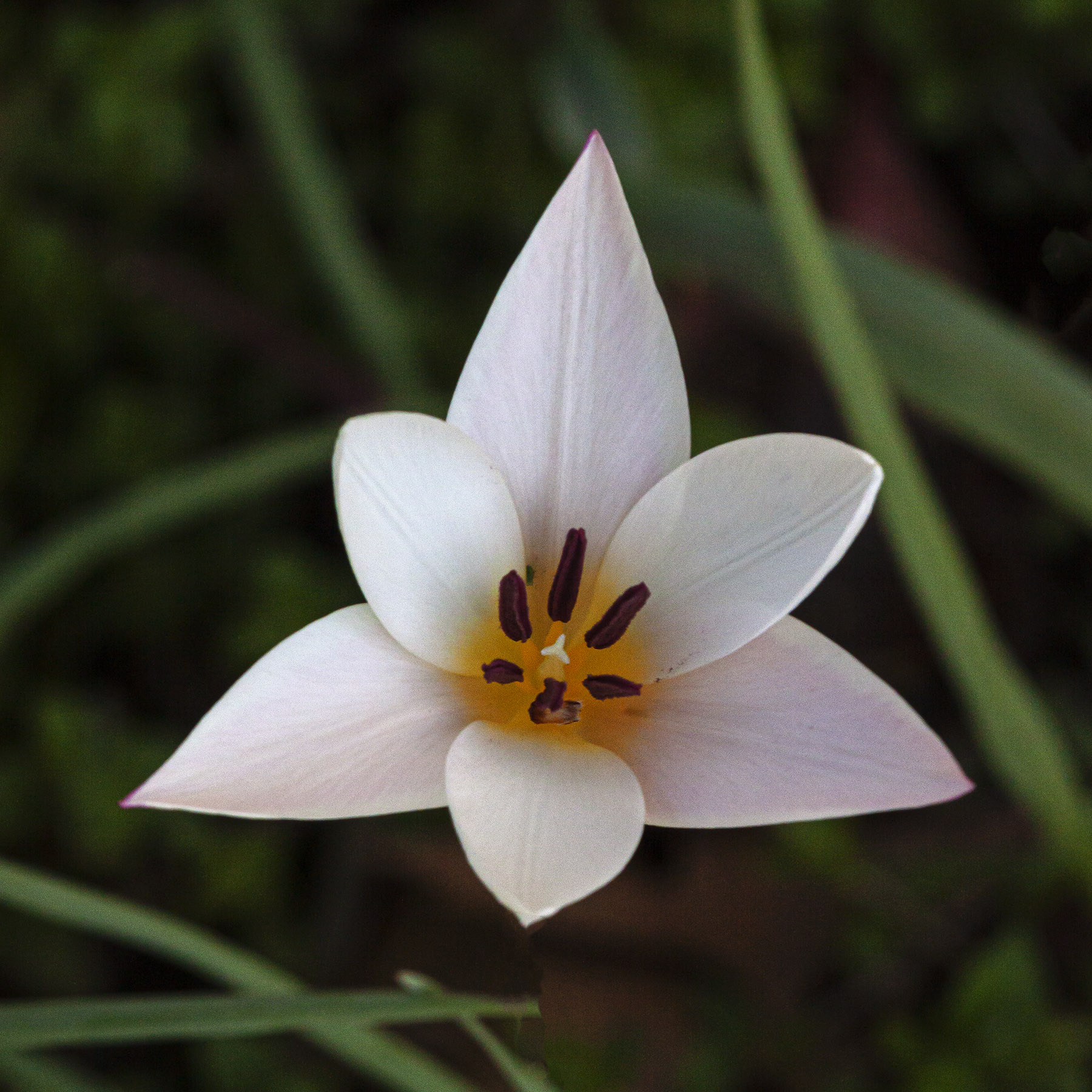
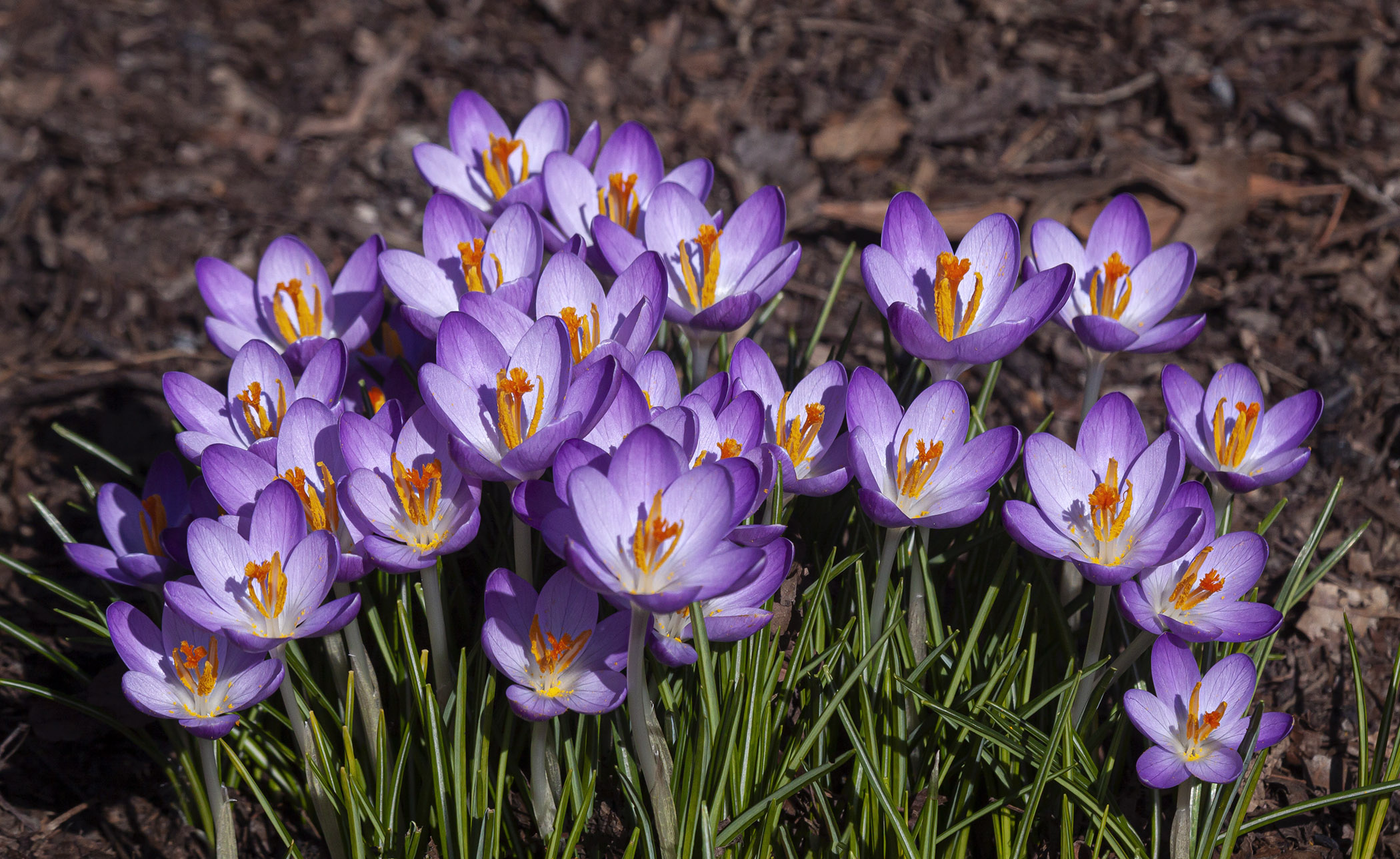
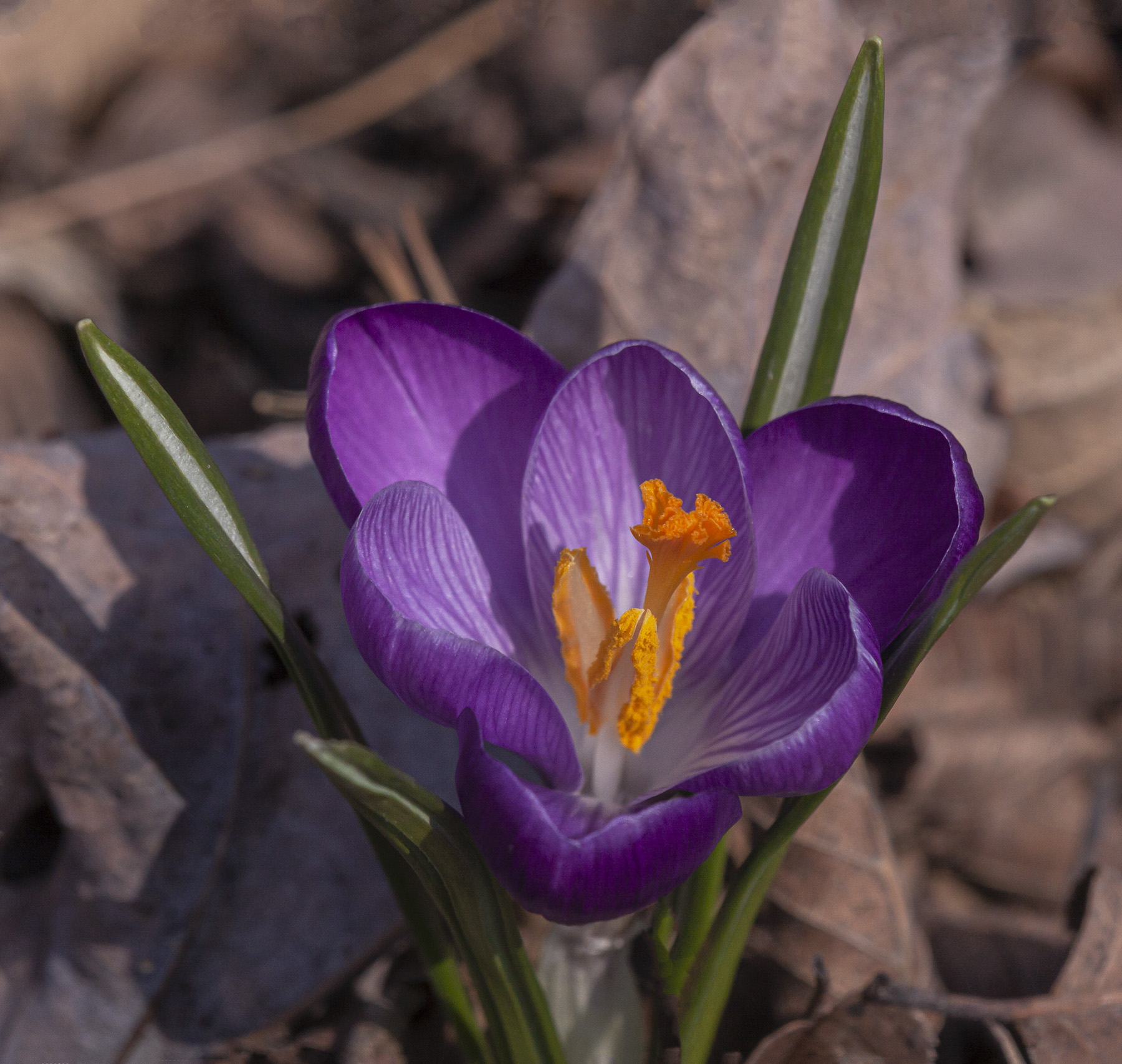
Daffodils have popped up all over my neighborhood the past few days, but none of them says Spring to me as much as this single crocus that I spotted in a neighbor’s yard last week. Backgrounds are always a big problem with flowers this early—it’s hard to avoid having mulch or fallen leaves in a shot. For this shot I used my 180mm macro lens and a really shallow depth of field. I like the softness that the settings gave the edges of the flower, while the center on which I was focusing was pretty sharp.

crocus

© Michael Q. Powell. All rights reserved.

Read Full Post »

As I look out my window today, piles of snow from the snowstorm earlier this week remind me that winter is not yet over. I discovered, however, that some plants are already in bloom (or almost in bloom) yesterday during a visit to Dumbarton Oaks, a historic museum, research center, and garden in Washington DC.

I am definitely not an expert when it comes to flowers, but if I had to guess, I’d say that the flower in the first image is a crocus, those in the second image are snowdrops, and those in the final image are forsythias. Even in I am incorrect in my identification, it was a real joy to see some colors and signs of life after so many long gray days this winter.

I can’t wait for spring to arrive.

crocus

snowdrops

forsythia

© Michael Q. Powell. All rights reserved.


Read Full Post »

« Newer Posts - Older Posts »