Feeds:
Posts
Comments

Archive for the ‘Flowers’ Category

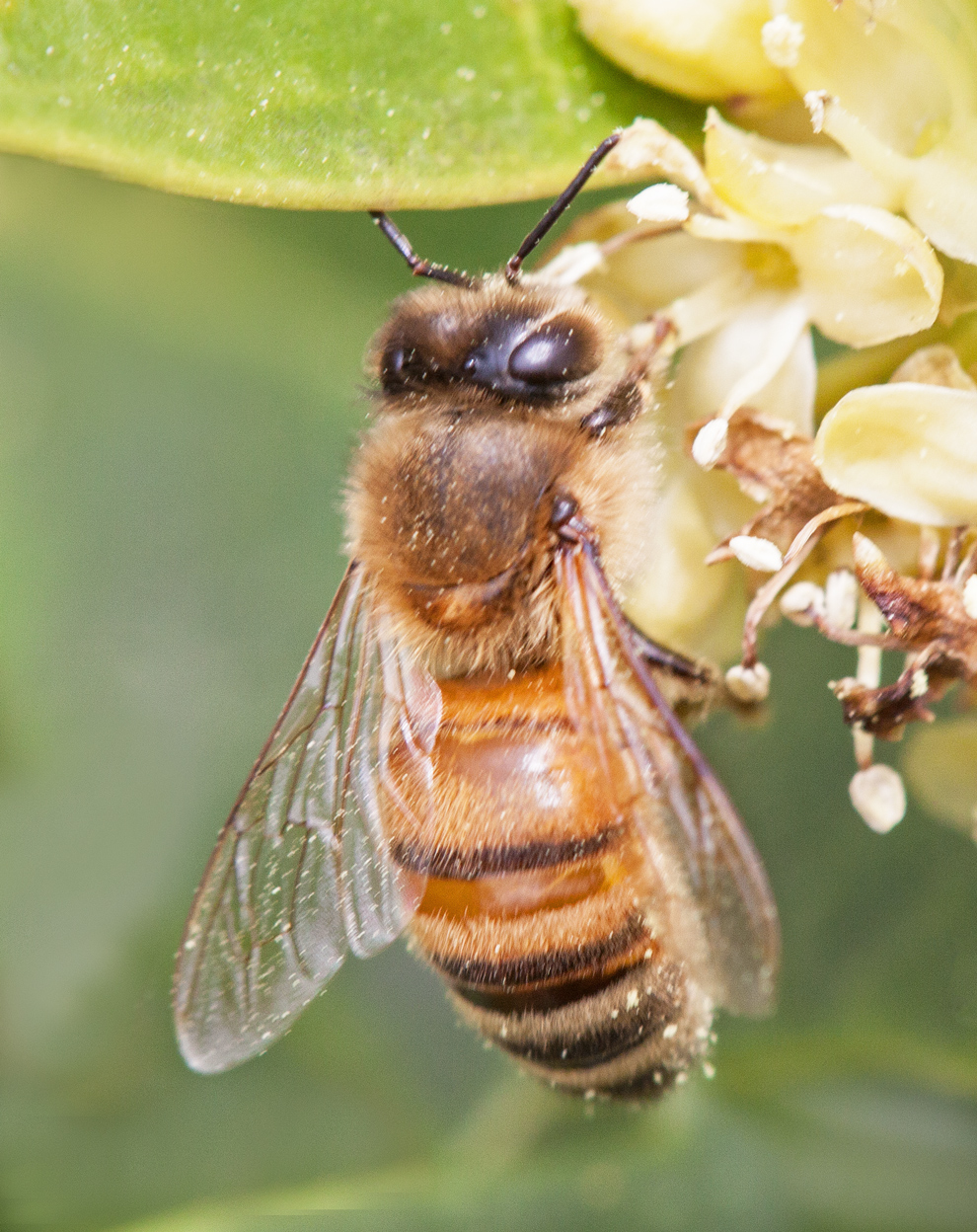
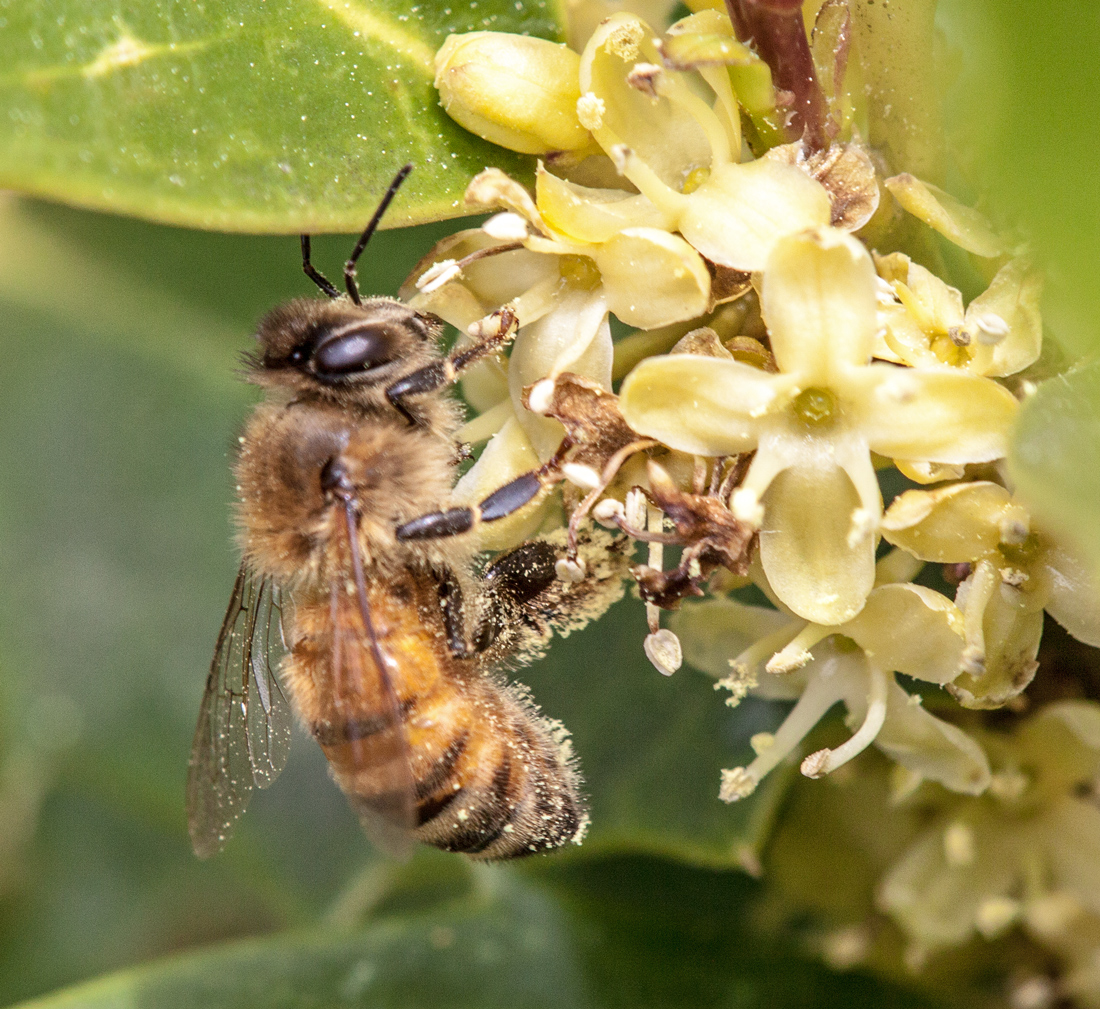
I usually think of pollen as being bright yellow, but this past weekend I observed a small multi-colored bee covered in white pollen from what appears to be a chicory flower. Who knew that pollen could have different colors?

multi-colored bee

© Michael Q. Powell. All rights reserved.

Read Full Post »

Can you name the most recognized Skipper butterfly in North America?  According to Wikipedia, it’s the Silver-spotted Skipper butterfly (Epargyreus clarus), like this one that I photographed recently at Brookside Gardens in Wheaton, Maryland.

I have been seeing a lot of skippers this month and many of them look so much alike that it is difficult for me to identify them  The Silver-spotted Skipper’s colors may be a little drab, but I am happy that it is easy to identify it, which makes me happy, given that there are over 3500 different species of skippers worldwide, according to a separate article in Wikipedia.

silver_blogsilver3_blog

© Michael Q. Powell. All rights reserved.

Read Full Post »

Sometimes, simple compositions of familiar subjects result in the best images, like this recent shot of an Eastern Carpenter Bee (Xylocopa virginica) on a purple coneflower (Echinacea purpurea).

It came out just as I imagined when I was looking through the viewfinder of my camera and required a minimum amount of tweaking and no cropping.

At times, it’s not complicated.

bee_cone_blog

© Michael Q. Powell. All rights reserved.

Read Full Post »

A handsome little skipper feeds on a gorgeous purple flower and the result is simply beautiful.

skipper_purple_blog

© Michael Q. Powell. All rights reserved

Read Full Post »

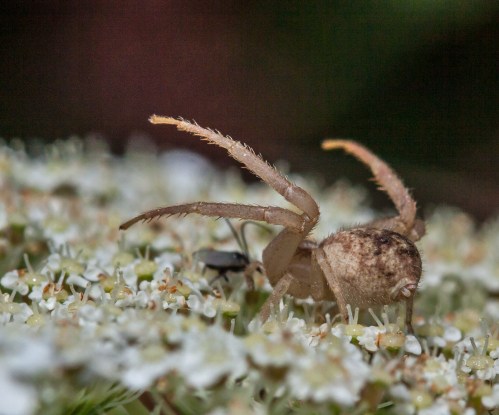
One of my fellow photographers pointed out this cool little crab spider on some Queen Anne’s Lace (Daucus carota) during a photo jaunt to Meadowlark Botanical Gardens in nearby Vienna, Virginia this past Saturday.

In this first shot, my favorite, the spider seemed to be expressing frustration that his prey had escaped his grasp (or simply wanted to show me his awesome biceps pose). Who knew that spiders have biceps?
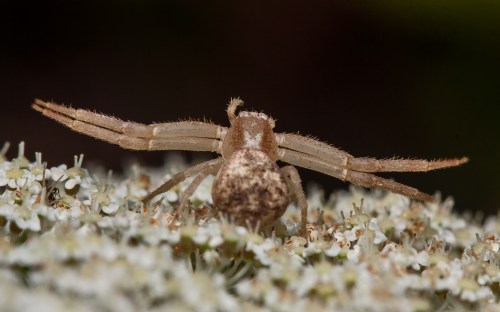
crab spider

Initially I tried to photograph the spider looking down at it, but I had trouble maintaining a steady pose and my shots were blurry. I decided to kneel down and get at eye level with the spider, looking across the plane of the flower, and that seemed to work a bit better. These shots look like they were done with flash, but the EXIF data shows a shutter speed of 1/320, which is higher than the synch speed of my flash, so these were actually done with natural light, with some exposure compensation dialed in.

The second shot, which preceded the first one in time, shows the spider trying to capture a small insect (I think).

crab2_blog

The little insect starts to run away.
crab3_web

In vain, the spider crawled after the small insect, but it was too late. When I left the spider, it was at the edge of the flower, looking off into the distance, pondering perhaps what might have been, thinking about the one that got away.

crab4_blog

© Michael Q. Powell. All rights reserved

Read Full Post »

When I started shooting regularly two years ago, I followed the lead of my mentor, Cindy Dyer, who specializes in flower photography, and spent a lot of time in gardens. (She photographs a wide range of  subjects, though, and I encourage readers to click on her name and check out the photos on her blog from a recent trip to Iceland.)

Last weekend I went back to my roots and visited a local garden with Cindy, where I spent some time with flowers and was only occasionally distracted by insects. Cindy helped me identify a toad lily and some zinnias, but we think the yellow flower is some kind of rudbeckia.

As I was shooting, I was particularly fascinated by the structure and patterns of the petals and by the amazing colors. The colors proved to be a challenge to render correctly and I am not entirely certain that I got the pinkish color of the zinnias true to life.

If you are viewing the original posting (and not it the Reader), click on any one of the thumbnail images to see the images in succession in larger size in slide show format. (I am still experimenting with using the Gallery options for displaying multiple images.)

toad_lily1_blog

© Michael Q. Powell. All rights reserved


Read Full Post »

Two years ago in a posting, I confessed to being obsessed with photographing Red milkweed beetles (Tetraopes tetraophthalmus). Inexorably I kept finding myself being drawn back to these bright red beetles.

I thought I had outgrown my obsession, until I encountered several of my little red friend this past weekend at Green Spring Gardens. I immediately reverted to my old behavior and began to stalk them like a paparazzo, trying to get a good shot or any shot at all.

My obsession continues.

Red Milkweed BeetleRed Milkweed BeetleRed Milkweed Beetle

© Michael Q. Powell. All rights reserved


Read Full Post »

Whenever I have my macro lens on my camera I seem to be irresistibly drawn to bees, like bees to honey. No matter what else I am shooting during the summer, I always seem to have some images of bees interspersed among my other photos. Here are some of my recent favorite bee shots.

bee_yellow_blogbee_white_blogbee_red_blog

© Michael Q. Powell. All rights reserved

Read Full Post »

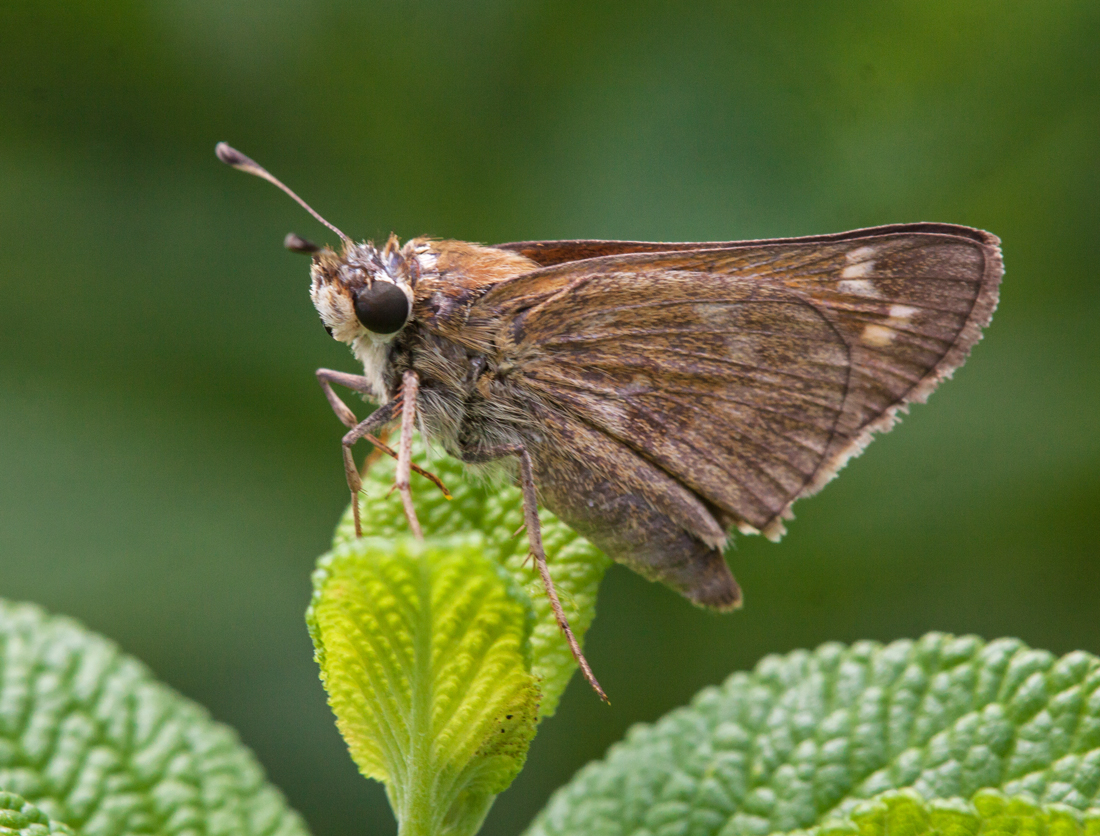
Small skipper butterflies don’t stand out as much as their larger, more colorful brethren, but they have an understated beauty that I find striking. It’s a daunting challenge, however, to identify them.

According to Wikipedia, there are more than 3500 recognized species of skippers worldwide, so I don’t feel too bad that my identification skills are weak in this area. As I looked through images on-line, I came across one identified as a Little Glassywing (Pompeius verna) that looks a bit like the one that I photographed, though my confidence level in this identification is pretty low.

I am confident, however, that I like the image I captured of the little skipper. There is a pretty good amount of detail, the background is blurred, and the leaves on which the butterfly is perched makes for an interesting pose.

UPDATE: A butterfly expert has definitively identified this as a female Sachem (Atalopedes campestris). Thanks to Joe Schelling and Jim Brock for their assistance in identifying this little skipper.

skipper1_blog

© Michael Q. Powell. All rights reserved.


Read Full Post »

Even before they have bloomed, the buds of the Lotus flower (Nelumbo nucifera) can be spectacularly beautiful, like this one I photographed this past Monday at Green Spring Gardens, just a few miles from where I live in Northern Virginia.

lotus bud

© Michael Q. Powell. All rights reserved.

Read Full Post »

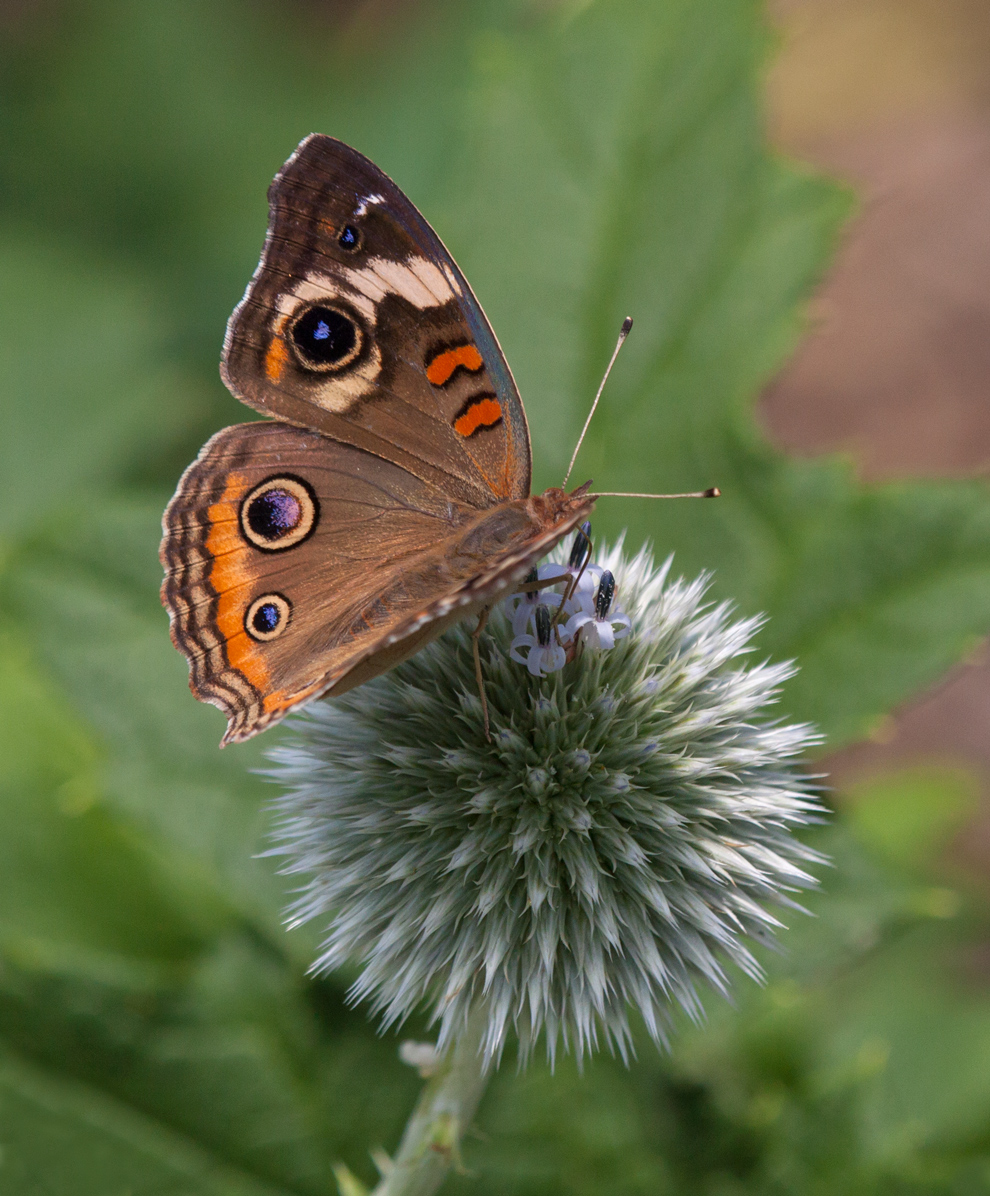
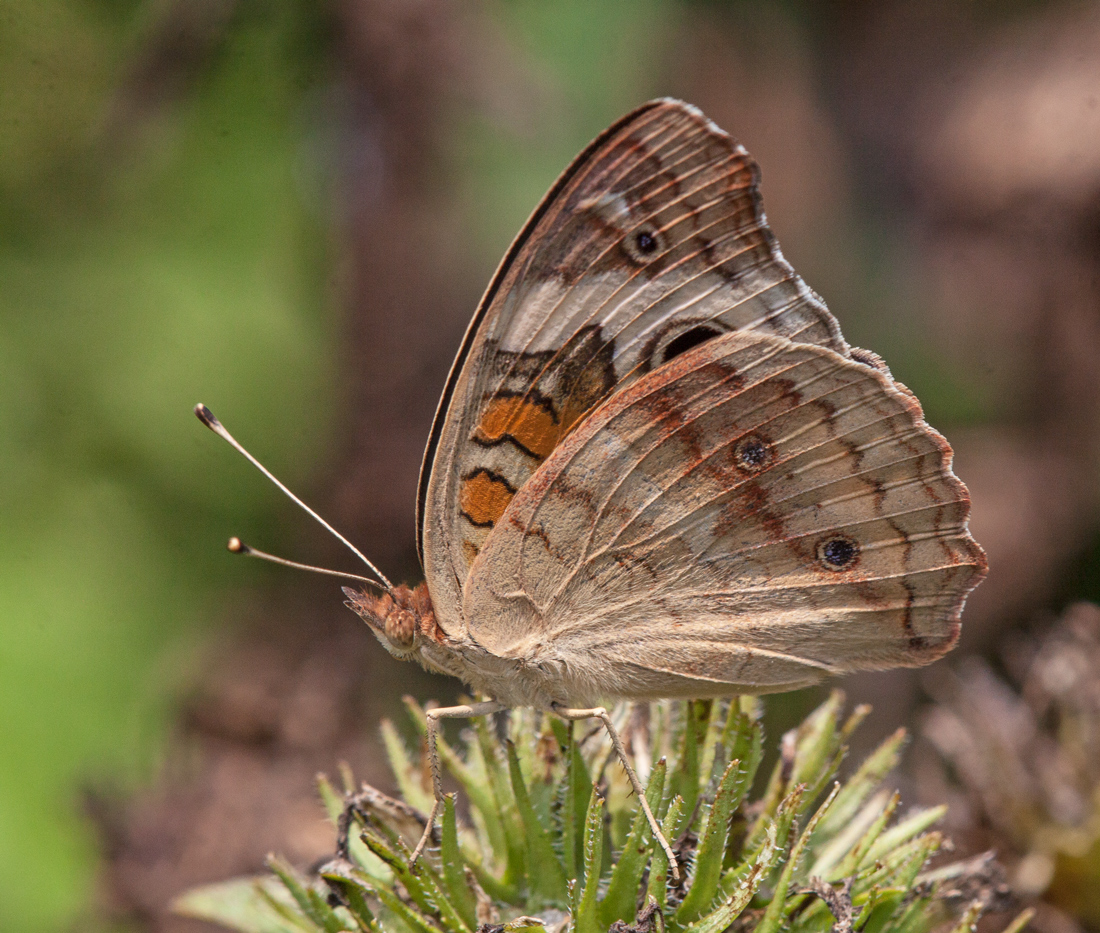
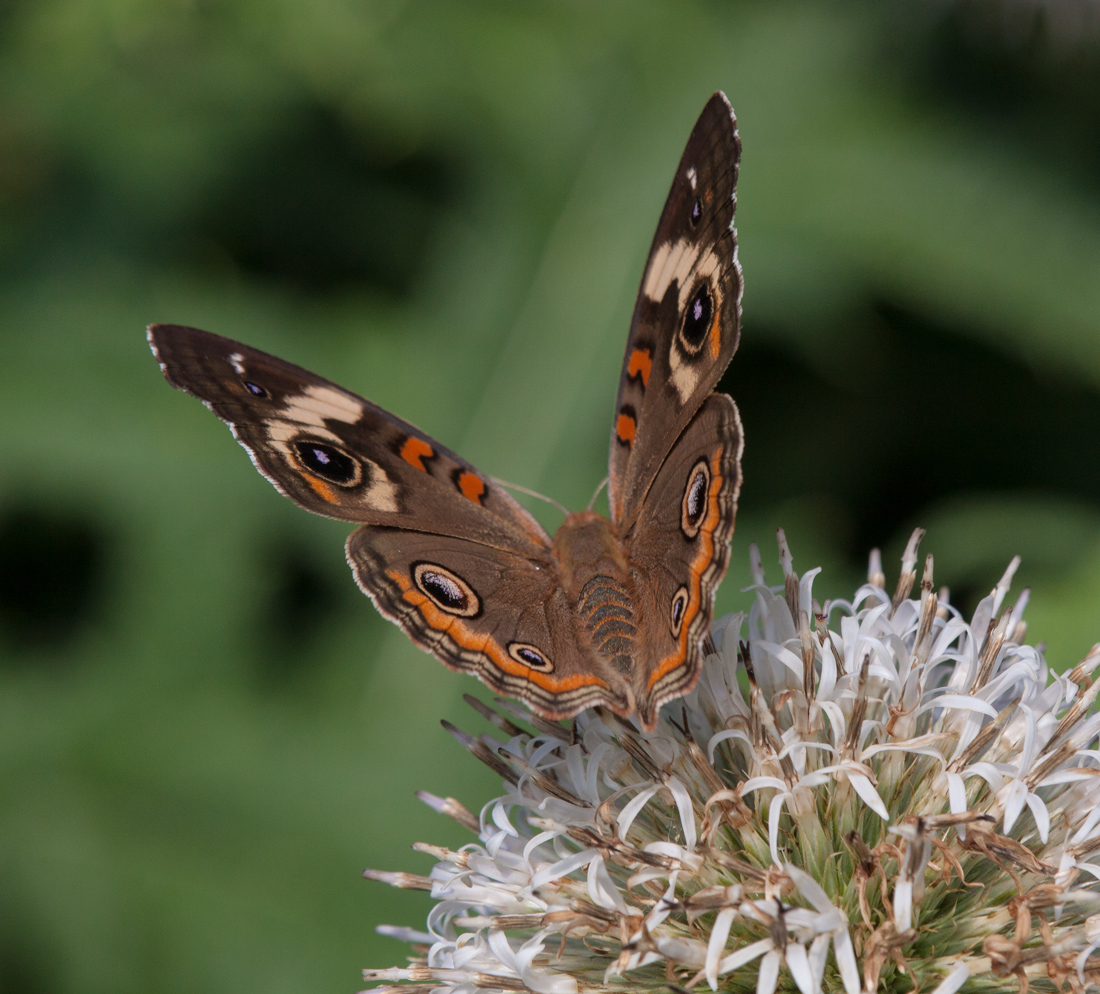
Although I don’t live in Ohio, nicknamed “The Buckeye State,” I think that I can claim that Virginia also is a Buckeye state, because we are a home to the uncommonly beautiful Common Buckeye butterfly (Junonia coenia).

Common Buckeye butterfly

I have seen few colorful butterflies so far this summer, besides the Great Spangled Fritillary butterflies that I featured in a posting in June. Where are all the Monarchs and Eastern Swallowtails? I don’t know if they were affected by the polar vortex of this past winter or if I am merely looking for them in all the wrong places, but their numbers seem to be unusually low this summer.

I was therefore thrilled this past Monday, when I caught sight of this Common Buckeye. Its coloration is so distinctive that I immediately recognized it and chased after it a bit. Fortunately I was able to capture several images of this beautiful creature before it flew out of sight.

Looking at these images, I am happy to proclaim that I live in a Buckeye state.

buckeye3_blog

buckeye2_blog

© Michael Q. Powell. All rights reserved.

Read Full Post »

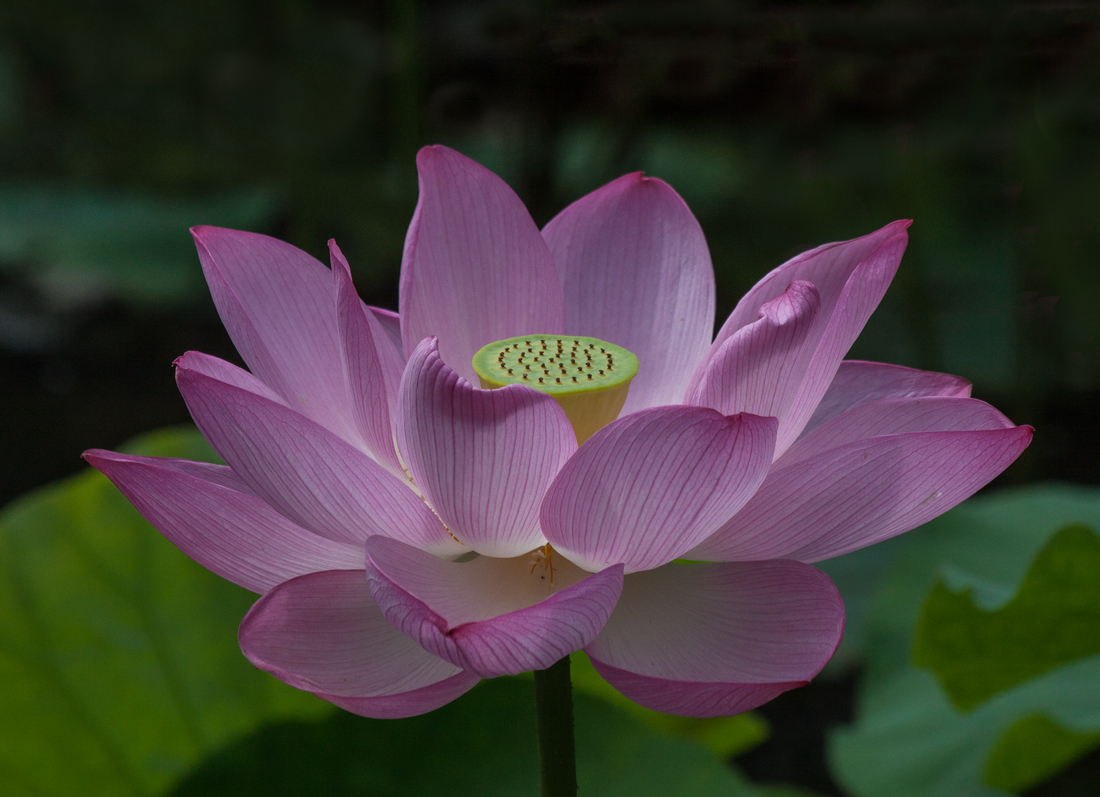
I simply love the exquisite beauty of lotus flowers.  A sense of tranquility seems to fill me during those moments when I am able to drink in their beauty, especially when I am alone.

I took these shots in mid-morning at Green Spring Gardens, a county-run facility that has two small, man-made ponds, in addition to the extensive gardens. The ponds are one of my favorite places to shoot when my time is limited and in the past I have captured some wonderful images of turtles, frogs, birds, and dragonflies. What makes the ponds really special for me, though, is that there are water lilies and lotuses at this time of the year.

I am experimenting with presenting my photos in the Gallery format. If you click on any one of the images, you can scroll through each of them in succession in full size. Let me know if  you think it works better than presenting each shot individually.

lotus3_blogWhen the lotus flowers are completely open, it is a real joy to be able to look inside the flower and glimpse the cylindrical seed pod, which contrasts wonderfully with the delicate pink petals in color as well as texture. I took these shots in the middle of the morning, which is usually a less than optimal time of day for lighting. In this case, though, the light, which was often coming from behind the flowers, helped to highlight the flowers and created some interesting shadows.

© Michael Q. Powell. All rights reserved.

Read Full Post »

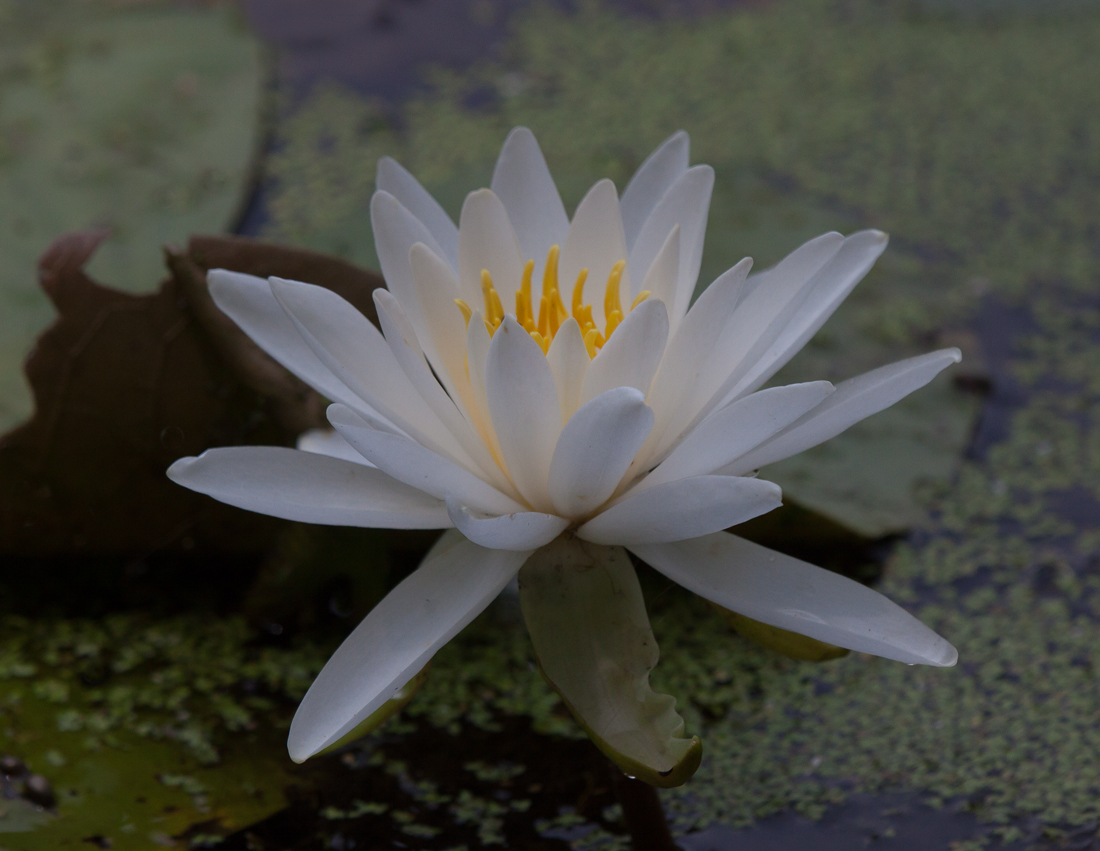
Some amazingly beautiful water lilies were in bloom at a local garden yesterday morning and seemed to be glowing from within.

Green Spring Gardens is a county-run historic garden just a few miles from where I live. I used to shoot there really often, but have been spending more time instead at my local marshland park. A couple of recent postings by Rob Paine on his blog I see beauty all around reminded me of the beauty of this garden and I spent several hours there yesterday, getting shots, primarily of the water lilies, lotus flowers, and dragonflies.

This image is a sneak preview of yesterday’s shoot, with more to follow in the near future.

lily1_blog

© Michael Q. Powell. All rights reserved.


Read Full Post »

Do your review your photos rapidly before you choose the ones to post or do you carefully and systematically evaluate them and only then select the best ones?

I am often in a hurry.  Sometimes I will stop to work on a shot that I like before I have even reviewed the complete set of images. I generally  don’t work up postings in advance and I’ll write up the posting and push the “Publish” button with out realizing that I may have unmined gold waiting to be discovered.

Only later, when I go through the entire set of shots do I realize that I have a better shot than the one I posted and realize I should have at least posted both of them. If the differences are only minor, I won’t do an additional posting, but sometimes, like today, I feel compelled to post a second image.

As was the case in yesterday’s posting, this is a shot of what I think is an Eastern Carpenter Bee (Xylocopa virginica)—or possibly a bumblebee— on a Purple Coneflower (Echinacea purpurea). The angle and the lighting helped me capture a significant amount of the detail and texture of both the bee and the flower and the colors came through with a beautiful vibrancy. The bee was in an unusual position, which adds to the visual interest of the image.

This is one of my favorites of my recent images. You might think that this experience will teach me a lesson about the value of a full review before choosing images to process, but I suspect that this will happen again from time to time. I know my habits too well.

bee2cone_blog

© Michael Q. Powell. All rights reserved.


Read Full Post »

Yesterday was a beautiful, sunny day, but it was very breezy, which made it tough for me to get decent shots of bees in my neighbors’ garden. I am still going through my photos (and deleting a lot of them), but I was immediately drawn to this image of an Eastern Carpenter Bee (Xylocopa virginica) on a Purple Coneflower (Echinacea purpurea).

Although the dark background suggests the use of flash, I wasn’t using any flash and the shutter speed of 1/400 in the EXIF data is faster than the synch speed of my flash. I was trying to get as close to the bees as I could and the height of the coneflowers made it possible to get at eye level with the bee and get this head-on shot.

bee1_cone_blog

© Michael Q. Powell. All rights reserved.

Read Full Post »

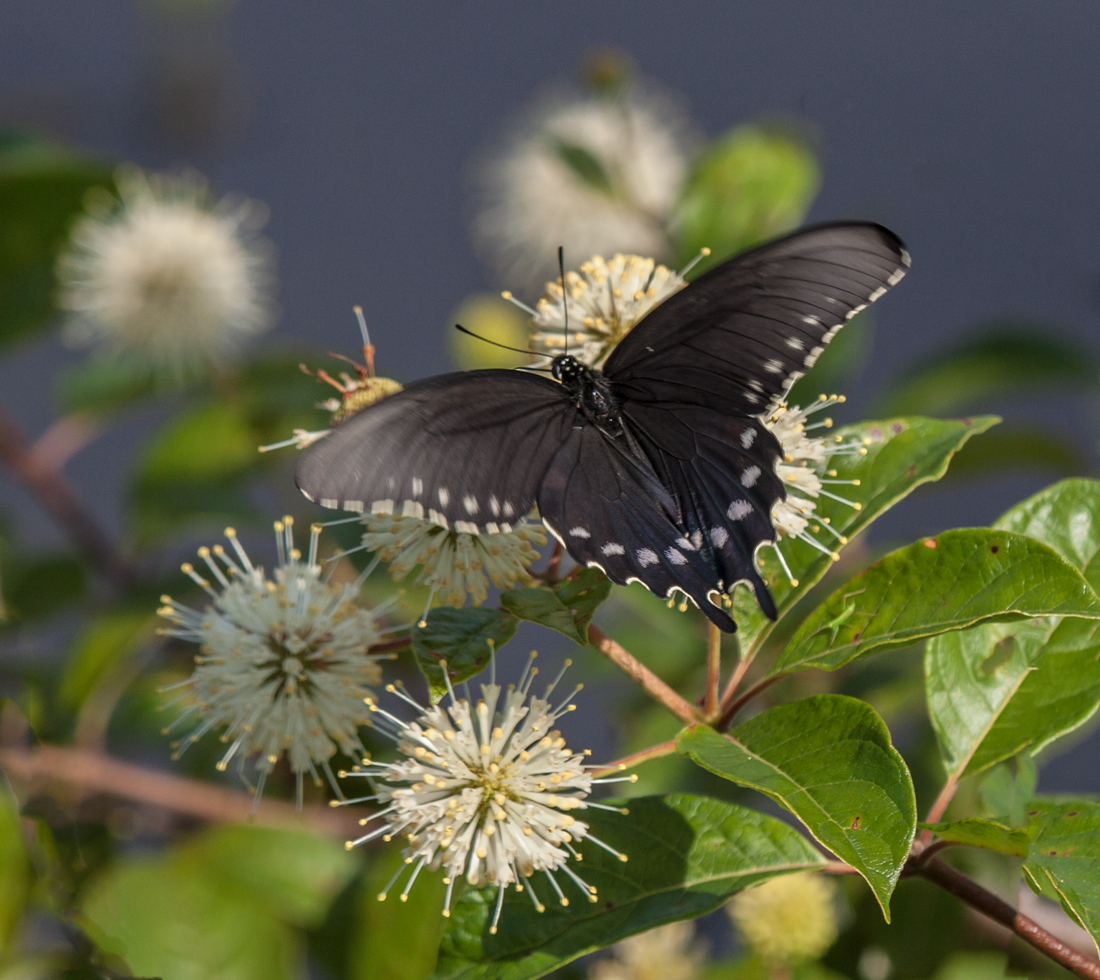
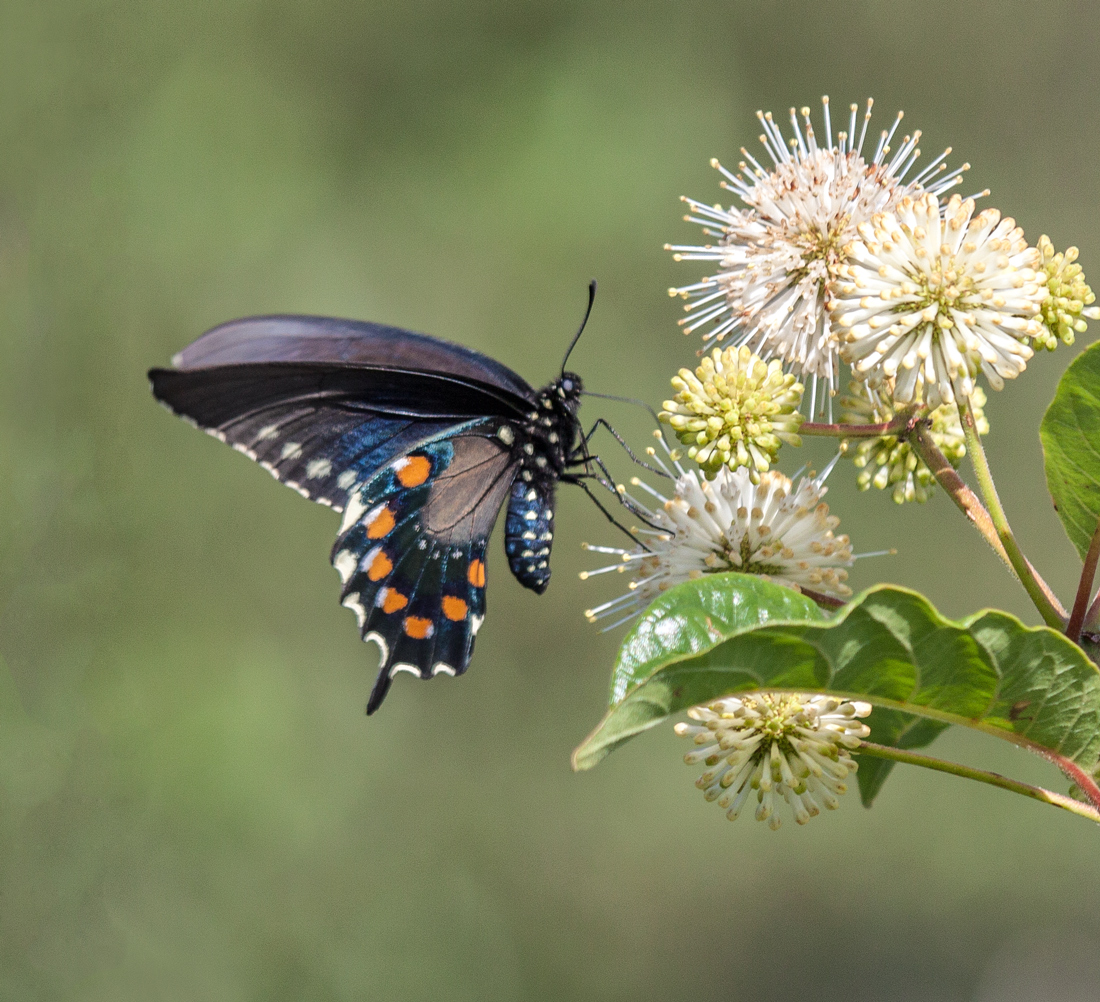
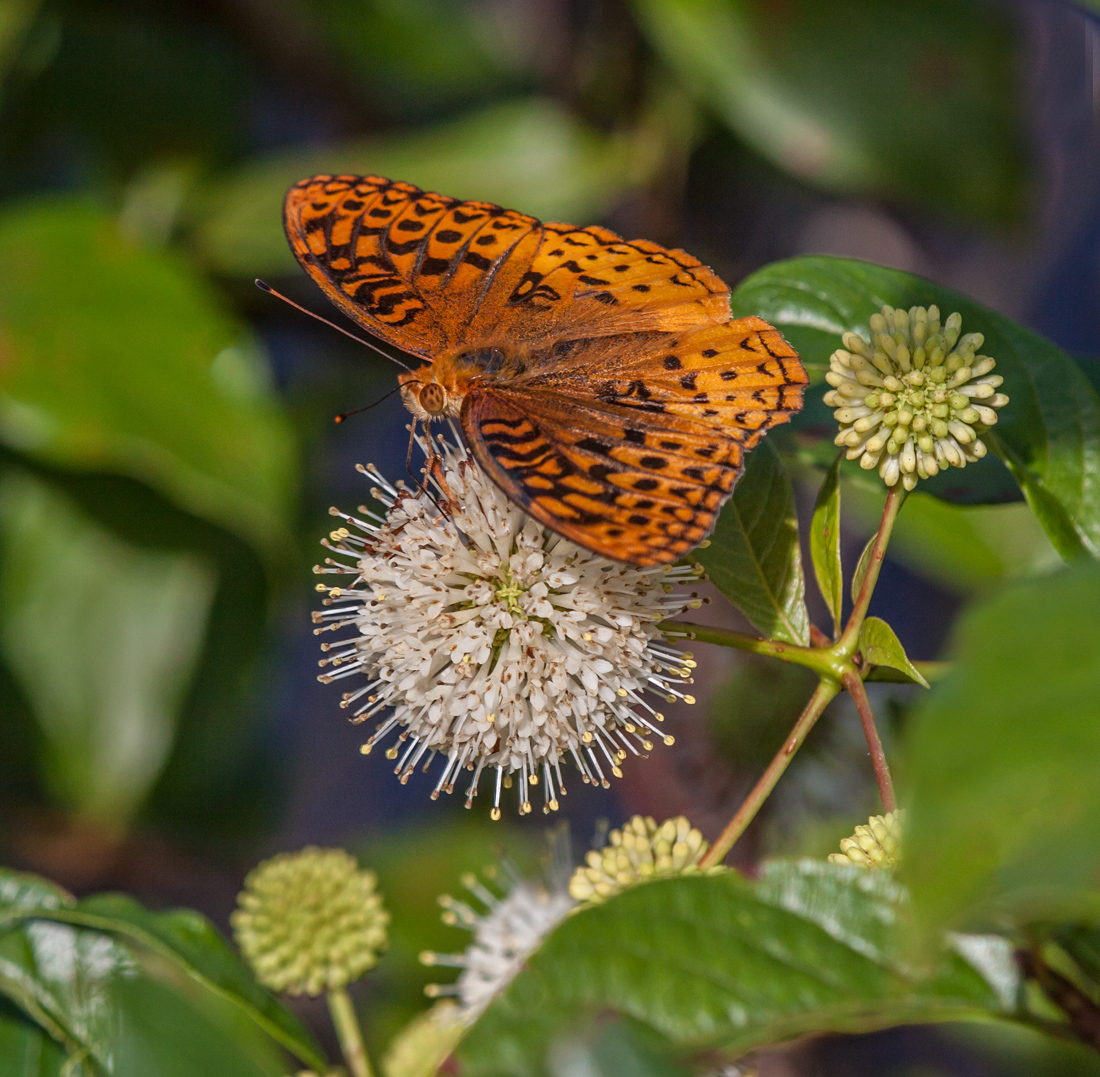
Buttonbushes are now blooming at my local marsh, attracting beautiful butterflies, including this Pipevine Swallowtail and this Great Spangled Fritillary.

I don’t know what it is about the Common Buttonbush (Cephalanthus occidentalis), but butterflies seem to find it irresistible. Several Pipevine Swallowtails (Battus philenor) flitted all around the bushes in frenetic motion, hardly every stopping to perch. The Great Spangled Fritillary (Speyeria cybele), however, seemed to take its time, lingering over each of the spiky spherical globes of the buttonbush.

pipevine2_blogpipevine1_blogspangled_bush_blog

© Michael Q. Powell. All rights reserved

Read Full Post »

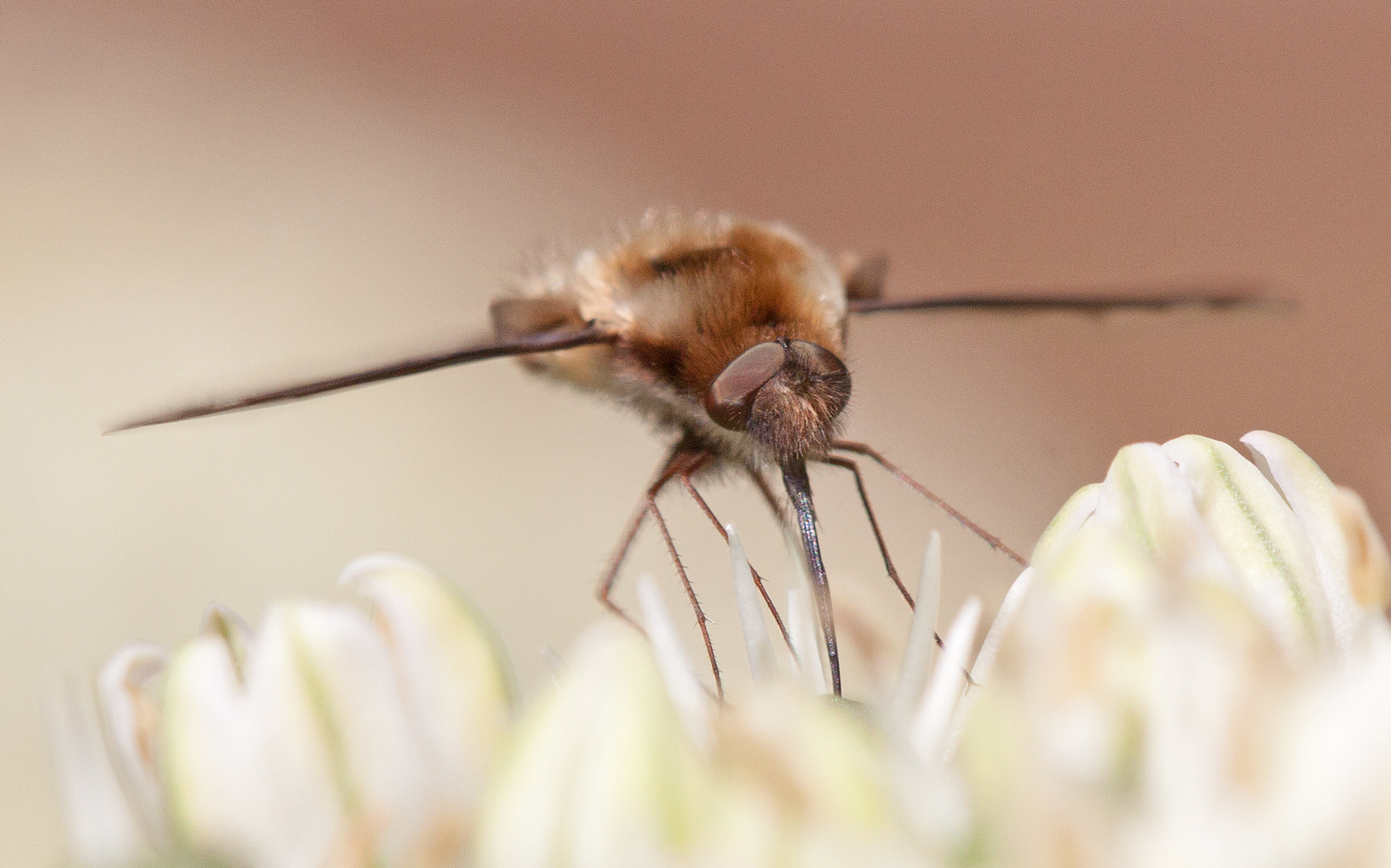
Is it a bee? Is it a fly? It’s a Greater Bee Fly (Bombylius major). What?

This bee fly has to be one of the strangest insects that I have ever seen—it looks like Doctor Frankenstein pieced together an insect from the parts of other insects. Its fuzzy body looks like that of a bee and it has a similar proboscis, though the bee fly’s proboscis seems to be outrageously long. Its long, spindly legs, however, are not bee-like and remind me of certain types of flies. The patterned wings and the way that it hovers are reminiscent of a hummingbird moth, though the bee fly is considerably smaller.

The bee fly is considered to be a bee mimic. Like a bee, it helps pollinate plants when gathering nectar.

I encountered this strange insect when I was examining the little flowers of some allium plants in the garden of my neighbor and fellow photographer and blogger Cindy Dyer. She always has interesting flowers to photograph and I have found an amazing assortment of insects in the garden too.

Greater Bee Fly on allium plant

Greater Bee Fly on allium plant


Head-on look at a bee fly

Head-on look at a bee fly

Bee Fly on allium with trellis in background

Bee Fly on allium with trellis in background

© Michael Q. Powell. All rights reserved.


Read Full Post »

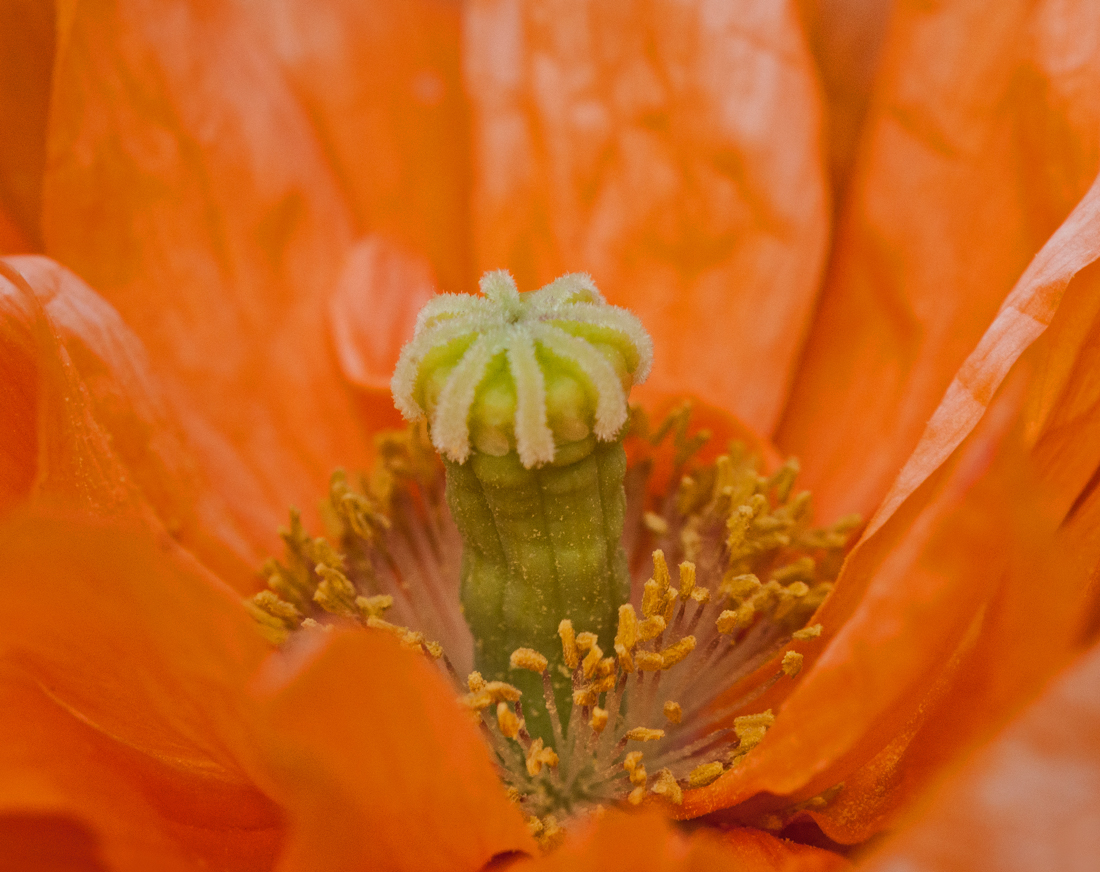
There is something about orange poppies that really draws my attention. Maybe it’s their bright color or maybe it’s the unusual looking central column topped by a star. I remember being mesmerized by their beauty last year and I felt the same when they reappeared this year. Roses are nice, but this flower attracts me even more.

poppy2_blogpoppy1_blog

© Michael Q. Powell. All rights reserved.

Read Full Post »

During a short visit to Green Spring Gardens this past weekend, I was thrilled to see that one of my favorite flowers is starting to bloom, Love-in-a-mist (Nigella damascena). I smile at its name and marvel at its delicate beauty.

love1_blog

© Michael Q. Powell. All rights reserved.

Read Full Post »

Whether you call it a ladybug or ladybird or lady beetle, everyone enjoys seeing these brightly colored members of the Coccinellidae family. Little kids love them, gardeners like the fact that they consume aphids, and there is something cute and cheery about their appearance.

My good friend and fellow photographer Cindy Dyer spotted this ladybug during a quick trip that we made to Green Spring Gardens, a county-run historical garden not far from where I live. Cindy has already posted images on her blog of some of the many flowers in bloom that we observed yesterday—I got sidetracked by searching for insects and didn’t get as many flower photos.

Later in the year, I will almost certainly see lots of ladybugs, but this was the first one of the spring, so it is special for me.

ladybug_may_blog

© Michael Q. Powell. All rights reserved.

Read Full Post »

I was on my hands and knees last Friday, trying to get a shot of a small wildflower growing on the forest floor, when a bee landed on the very flower on which I was focusing. What are the odds of that happening at the moment when my eye was glued to the viewfinder and I was focusing manually?

The flower was only about four inches (10 cm) tall, which gives you an idea of the low angle from which I was shooting. After a second or two on the first flower (shown in the second shot), the bee moved to an adjacent flower, and I took the image I presented first. It’s interesting to note the narrowness of the depth of field—in the first shot below, I managed to focus on the bee’s head, whereas in the second shot, the focus point was more on the center of its body. I like each of the images for somewhat different reasons, but I am still shocked that I managed to get them.

Sometimes it’s better to be lucky than skilled.

bee2_flower_blogbee_flower_blog

© Michael Q. Powell. All rights reserved

Read Full Post »

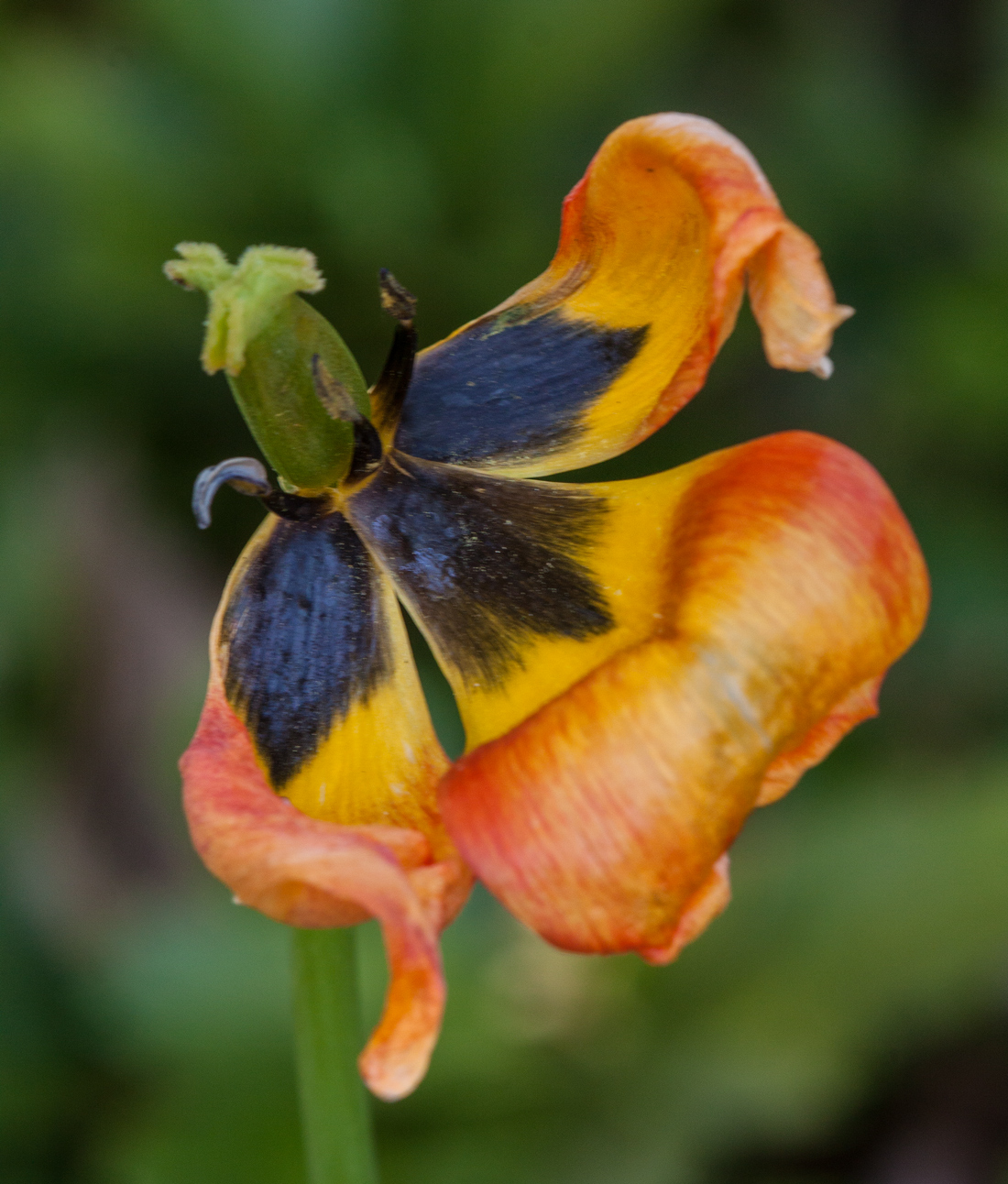
Do you pass by flowers that are past their prime? Their beauty is still visible in the fragments of their former glory.

tulip_memory2_blog

© Michael Q. Powell. All rights reserved

Read Full Post »

Memories of this past winter’s unusually heavy snowfall are beginning to fade, but were revived when I saw these beautiful little Snowflakes during a recent visit to Lewis Ginter Botanical Garden in Richmond, VA.

There are two varieties of Snowflakes—the Spring Snowflake (Leucojum vernum) and the Summer Snowflake (Leucojum aestivum)—and I am not absolutely certain which variety I photographed.

I love the simple beauty of this delicate flower and am happy that I was able to isolate a couple of the blooms to showcase that beauty.

snowdrop2_apr_blogsnowdrop1_apr_blog

© Michael Q. Powell. All rights reserved

Read Full Post »

Within minutes of seeing the elegant honey bee that I featured in a recent posting, I encountered this Eastern carpenter bee (Xylocopa virginica), which is built more like a sumo wrestler than a dancer, especially when viewed face-to-face, as in the second image below.


carpenter1_blog

carpenter2_blog

© Michael Q. Powell. All rights reserved


Read Full Post »

While visiting a garden during an event advertised as “A Million Blooms” I looked hard, but didn’t find any bees among the many tulips and other spring flowers. It was a bit ironic that I discovered this honey bee on a bush while waiting for my fellow photographers outside the gift shop of the Lewis Ginter Botanical Garden in Richmond, Virginia after seeing lots and lots of flowers.

I was hand-holding my 180mm macro lens for these shots, so I couldn’t close down the lens too far. In some of the shots, therefore, you can see that the depth of field was pretty narrow. Still, I am happy that I was able to capture some of the beautiful details of this honey bee, one of the first bees that I have observed this spring.

honeybee1_bloghoneybee2a_bloghoneybee3_blog

© Michael Q. Powell. All rights reserved

Read Full Post »

Blossoming trees get a lot of attention this time of year, but as I looked upward at the trees in my neighborhood, I was struck by the beauty of the seeds of what I believe are maple trees. When I was a child in New England, I loved to watch these seed spinning through the air like little helicopters as they fell from the maple trees.

According to Wikipedia, the US Army actually developed a special air drop supply carrier during World War II that could carry up to 65 pounds of supplies and was based on the maple seed.

It was fun trying to come up with different ways to highlight the beauty of these seeds by moving closer or farther away and by varying the background.

IMG_0691 webIMG_0597 webIMG_0731 web

© Michael Q. Powell. All rights reserved

Read Full Post »

A few dandelions have popped up recently, but I was surprised to see one yesterday that had already gone to seed. Despite the wind that kicked up from time to time, the dandelion remained a perfect sphere.

April continues to be a mass of contradictions, with a mixture of signs of winter, spring, and even summer.

unseasonable_blog

© Michael Q. Powell. All rights reserved

Read Full Post »

Sometimes the beauty of Easter reveals itself in subtle ways, like this delicate orchid that I photographed yesterday in the conservatory at Lewis Ginter Botanical Gardens in Richmond, VA.

orchid_april_blog

© Michael Q. Powell. All rights reserved

Read Full Post »

This brightly colored American goldfinch (Spinus tristis) reminds me of the marshmallow Peeps that I grew up with and the brightly colored spring outfits that people would wear to church to celebrate Easter (including some pretty outrageous hats).  Best wishes to all for a Happy Easter, no matter how you choose to celebrate it.

Finch and Blossoms web

© Michael Q. Powell. All rights reserved


Read Full Post »

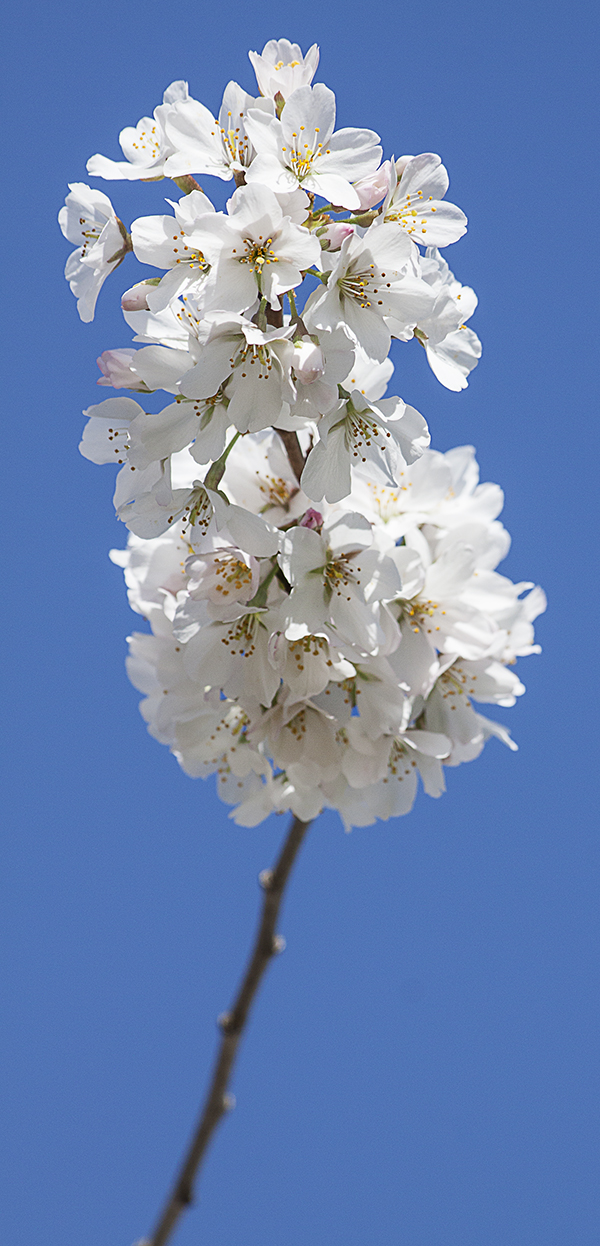
Although I live in the Washington D.C. area, I didn’t feel like fighting the crowds to get images of the iconic cherry blossoms. However, the blossoming trees in my neighborhood were pretty spectacular too, albeit on a smaller scale.

I think the first two images are Bradford pear trees, the third is a forsythia bush, and I am not sure what kind of tree the final one is. The shapes and colors and lighting make each of these shots quite different, but I think my favorite is the first one, which reminds me of a Japanese painting.

IMG_0426 webIMG_0555 webIMG_0600 webIMG_0609 web

© Michael Q. Powell. All rights reserved


Read Full Post »

After seeing three of my recent postings that featured unopened tulips, some readers might come to the erroneous conclusion that I don’t like the colorful flowers of blooming tulips. How could that be possible? Everyone seems to like the cheery colors of tulips.

My neighbor, and fellow photographer and blogger Cindy Dyer, has planted quite a variety of tulips in her garden and I recently took some photos of two very different species. The first is a small, delicate tulip know as the “Lady Jane” (Tulipa clusiana var. ‘Lady Jane’). I am not sure that I have every seen a more petite tulip and I really like its subtle colors.

The second tulip is big and bold and multi-colored, almost a visual equivalent of shouting. This style of tulip is known as a “broken” tulip, because of the way that the colors are broken, resulting in intricate bars, stripes, streaks, featherings, or flame-like effects of different colors on the petals. According to Wikipedia, this effect was originally produced by a tulip-breaking virus, and bulbs with this effect went for exorbitant prices in 17th century Netherlands, during a period known as “tulip mania.” Today, tulips displaying a “broken” effect are stable variants and the result of breeding, not viral infection.

IMG_0831 web

IMG_0860 web

© Michael Q. Powell. All rights reserved


Read Full Post »

« Newer Posts - Older Posts »