Feeds:
Posts
Comments

Archive for the ‘Flowers’ Category

Purple Milkweed (Asclepias purpurascens) is in bloom in multiple locations at Huntley Meadows Park and the butterflies are loving it, including this Silver-spotted Skipper (Epargyreus clarus) that I spotted this past Monday.
Generally I have trouble identifying little skipper butterflies and Wikipedia notes that there are more than 3500 species of skippers worldwide.  The Silver-spotted Skipper, though, is pretty easy to identify, given its distinctive colors and markings.
There are several species of milkweed in my favorite marshland park and I have noticed more Purple Milkweed this year than in the past. This is really good news, because Purple Milkweed is considered to S2 (“imperiled”) in the Commonwealth of Virginia, according to the 2016 plant list of the Virginia Department of Conservation and Recreation.
Silver-spotted Skipper

© Michael Q. Powell. All rights reserved.

Read Full Post »

At this time of the year I love seeing irises growing in the wild at Huntley Meadows Park. I think these all are Blue Flag Irises (Iris versicolor), though I am not absolutely certain of this identification. These irises are not as big and showy as the ones growing in my neighbors’ gardens, but I find them to be equally beautiful.

Blue Flag Iris

Blue FLag Iris

Blue FLag Iris

© Michael Q. Powell. All rights reserved.

Read Full Post »

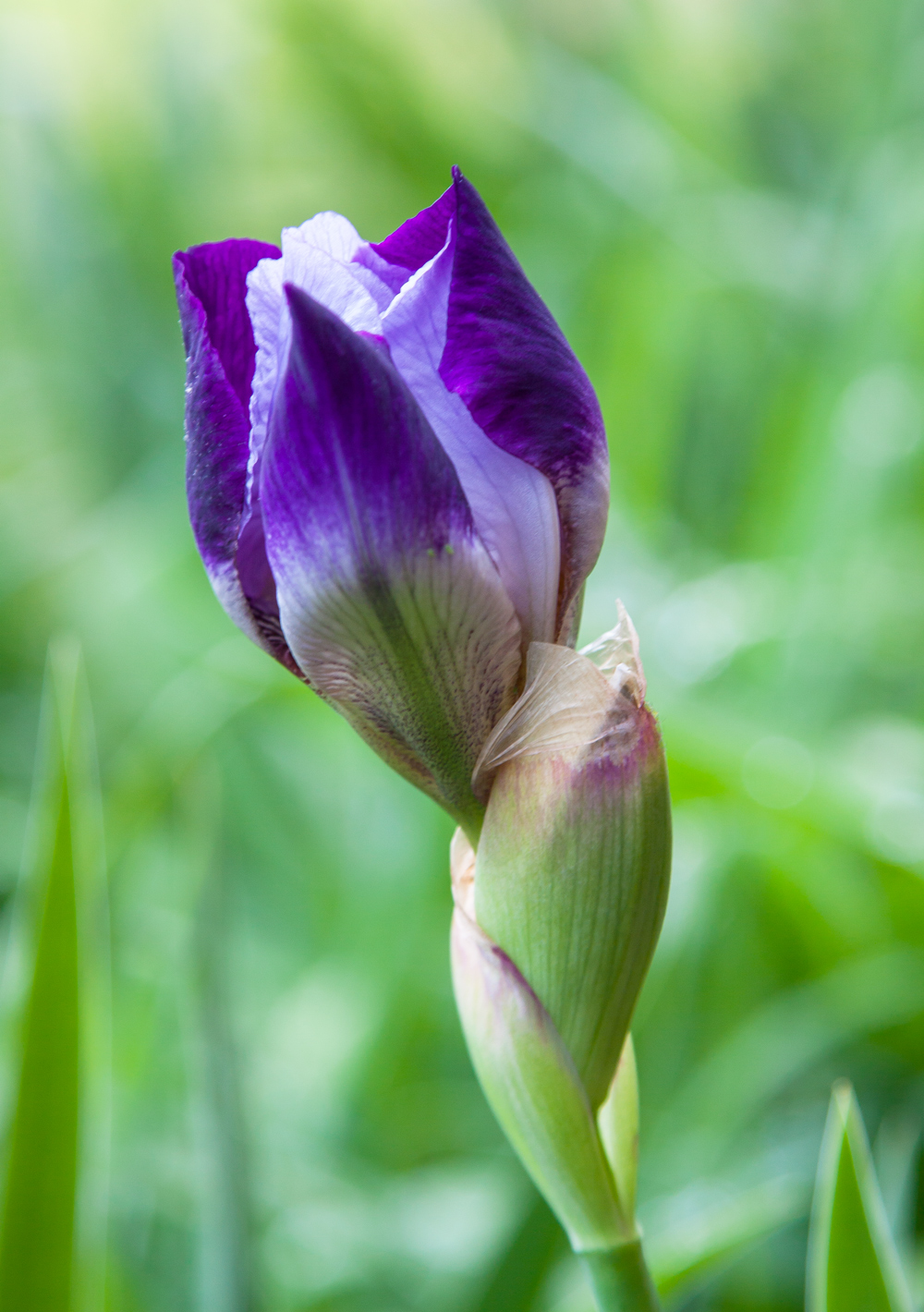
The past two weeks have been filled with intermittent rain and constant clouds, so I have not been able to chase dragonflies as I like to do at this time of year. The rain has been good for the flowers, however, and the garden of my photography mentor and neighbor Cindy Dyer is now full of beautiful bearded irises. Yesterday I attempted to capture some of the beauty of the purple ones in different stages of development. I particularly like the way the first image turned out, where the blurry image in the background gives a foretaste of the beauty that is to come when the bud opens up.

Speaking of Cindy Dyer, I was thrilled recently when I learned that another of her images will appear as a United States Postal Service (USPS) stamp. Her image of Sacred Lotuses at Kenilworth Aquatic Gardens will be part of a 16-stamp series celebrating the centennial of the National Park Service. The series will be officially unveiled in New York City on June 2. Check out this announcement from the USPS for more information and to see her beautiful image.

purple iris

purple iris

purple iris

purple iris

© Michael Q. Powell. All rights reserved.

Read Full Post »

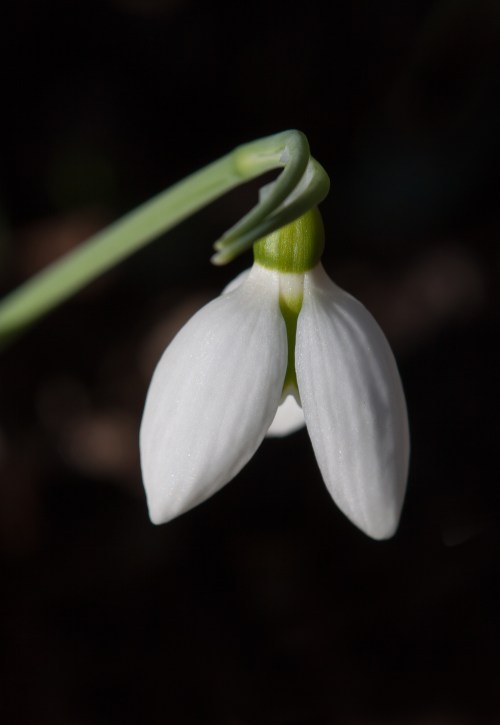
There is not much blooming during the frigid days of early January, so I was very happy to come across a small patch of Snowdrops (g. Galanthus) during a quick visit to Green Spring Gardens this past weekend. There is nothing complicated or showy about these small flowers and I find true beauty in their simplicity.

I somehow always feel like bursting into the words of the song Edelweiss from The Sound of Music whenever I see snowdrops:

“Small and white
Clean and bright
You look happy to meet me.

Blossom of snow
May you bloom and grow
Bloom and grow forever.”

snowdrop

© Michael Q. Powell. All rights reserved.

Read Full Post »

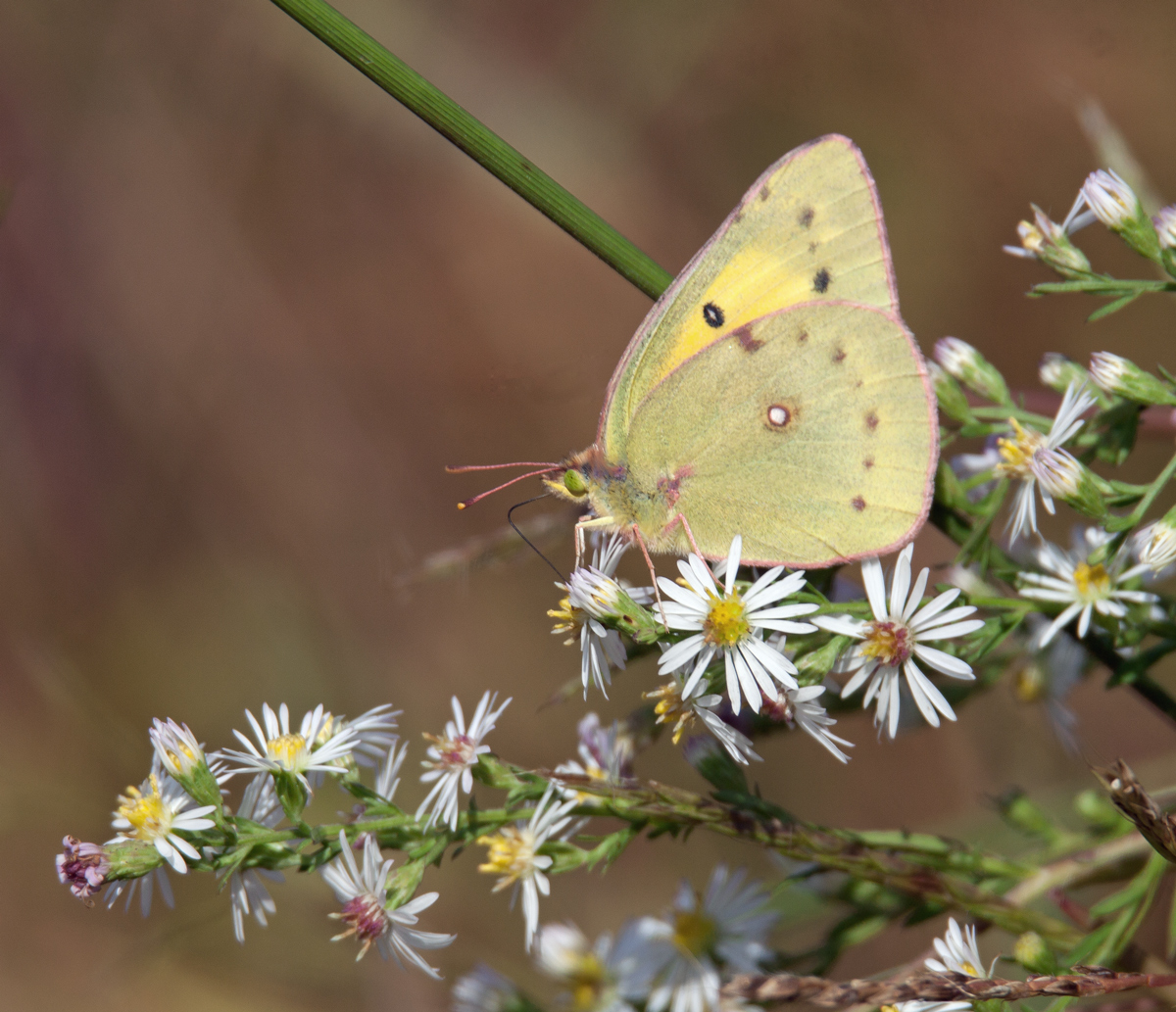
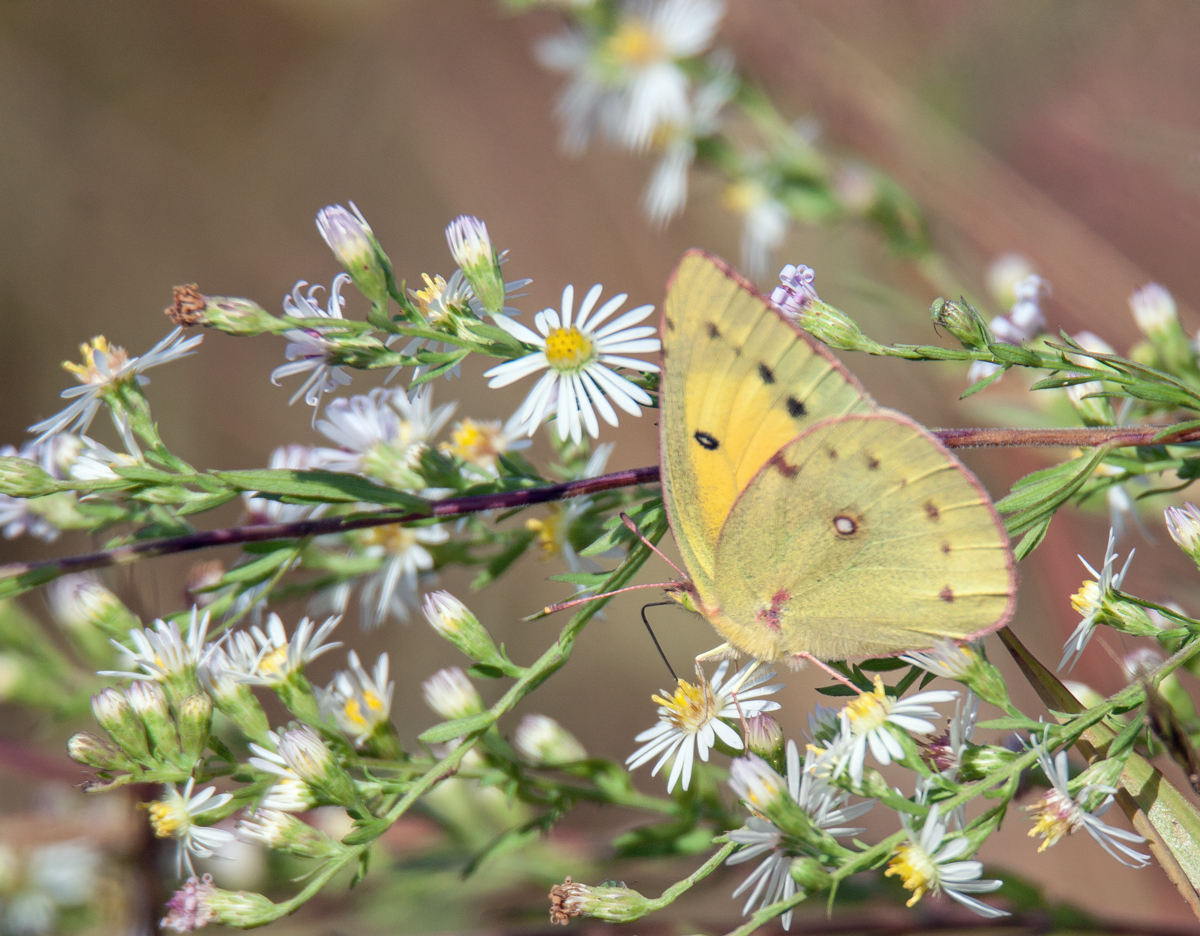
The large butterflies seem to be gone, but I continue to occasionally see smaller sulphur butterflies nectaring on late blooming flowers.

There are several different varieties of sulphur butterflies that look a bit alike, so I am not certain in identifying this butterfly. At first I thought that this might be a Pink-edged Sulphur (Colias interior), but the range maps suggest that we may not be in the correct geographic region for that species.

I think it is more likely that this is a Clouded Sulphur butterfly (Colias philodice). As for the flower, it looks to me to be some variety of aster.

The weather is definitely getting colder—I had to scrape frost off my car’s windshield earlier this week—so I don’t know how much longer I’ll be seeing these little beauties. Beauty so often is transitory; all we can do is enjoy it and appreciate it until it is gone.

Clouded Sulphur

Clouded Sulphur

Clouded Sulphur

© Michael Q. Powell. All rights reserved.

Read Full Post »

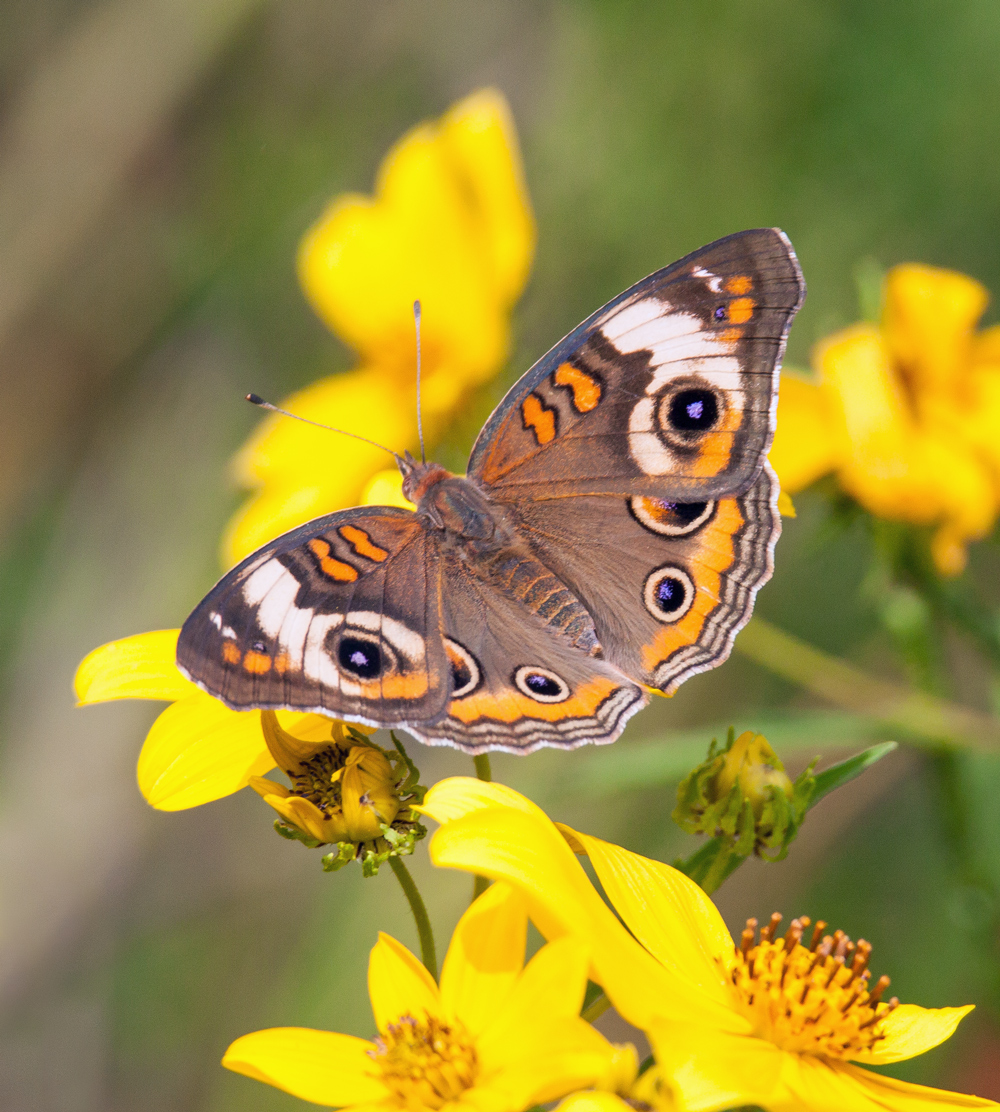
Though it is officially called “common,” the bright colors and patterns of this Common Buckeye butterfly (Junonia coenia) make it uncommonly beautiful in my eyes. (I should also note that it is not common for me to spot one—I’ve seen them only a few times this summer.)

Common Buckeye

© Michael Q. Powell. All rights reserved.

Read Full Post »

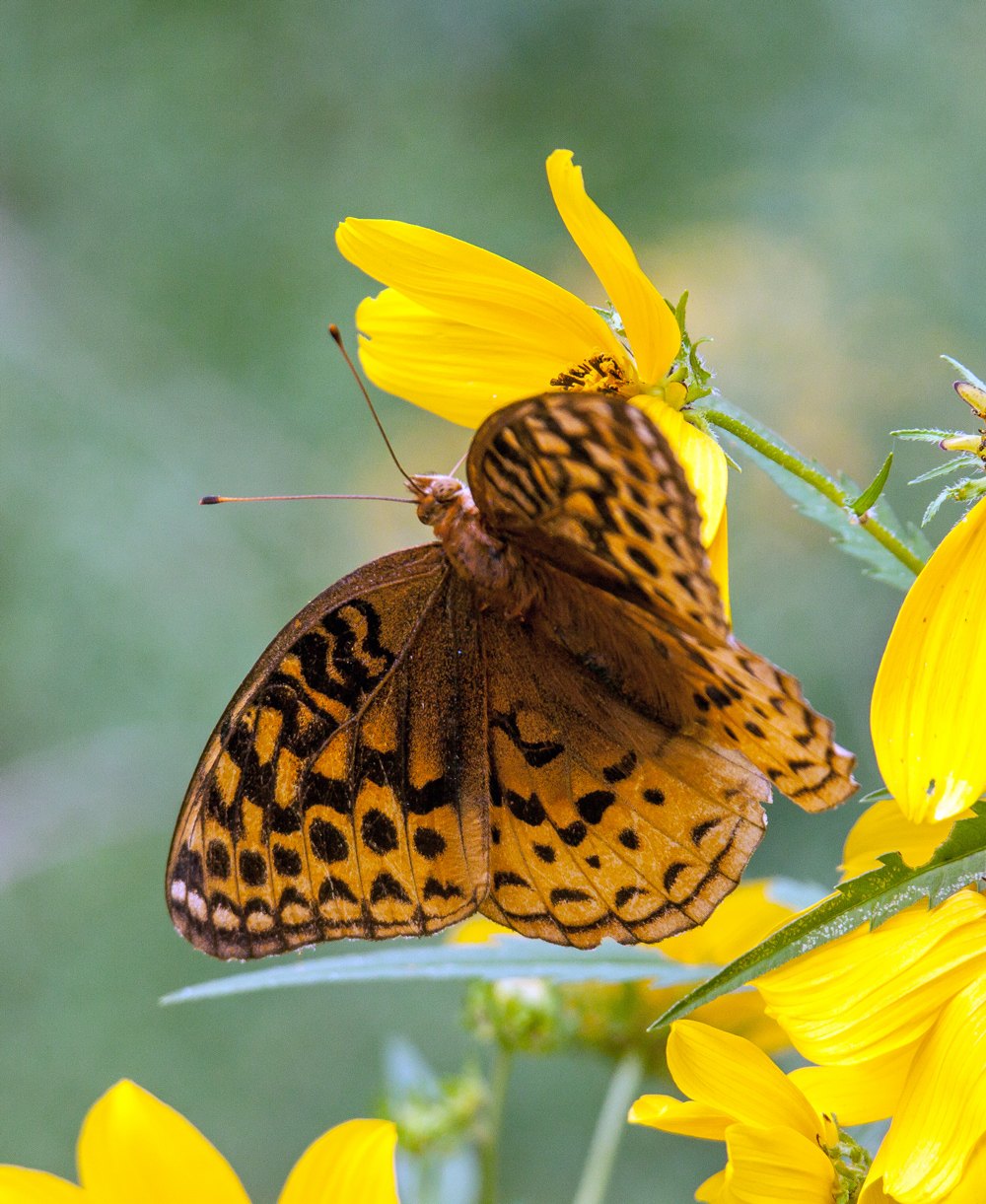
It’s amazing how a brightly colored butterfly can almost disappear from view merely by turning sidewards. Last week, I was observing a Great Spangled Fritillary butterfly (Speyeria cybele) feeding on a yellow flower when suddenly it seemed to disappear. I blinked my eyes and looked again and the butterfly looked almost like a grasshopper, because I could not see its wings.

Great Spangled Fritillary

A few seconds later, the butterfly shifted its position and its colorful wings once more came into view, providing the more conventional view of the butterfly that you see in the photo below.

Great Spangled Fritillary

I love trying to find unconventional views of familiar subjects, though it’s important not to forget that there is a lot of beauty in the familiar conventional views as well.

© Michael Q. Powell. All rights reserved.

Read Full Post »

My favorite marshland park is abloom with yellow flowers. This past Friday, I spotted a Monarch butterfly (Danaus plexippus) at the edge of a meadow feeding on one of those flowers. I thought the Monarchs had flown south for the season already, but was delighted to see they are still around.

I tried to frame the image so that there would be yellow flowers in the background and the results were even better than I had anticipated.

Yellow seems to be a happy color and somehow I can’t help but smile when I look at this image. I hope that it has the same effect on all of you.

Monarch butterfly

© Michael Q. Powell. All rights reserved.


Read Full Post »

I love looking at the world through my macro lens and finding beauty on a tiny scale, like this gorgeous green bee that I spotted this past weekend in the garden of my neighbors.

I am not certain of the exact identification of this bee, but I think it is part of the genus Agapostemon that includes a variety of green sweat bees.


green bee

© Michael Q. Powell. All rights reserved.

Read Full Post »

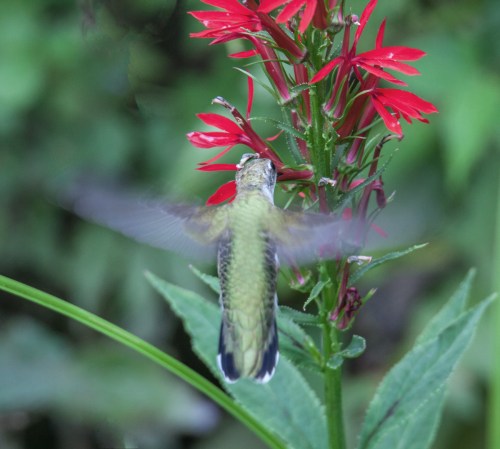
Yesterday as I was watching some Ruby-throated Hummingbirds (Archilochus colubris) buzzing around some distant trumpet flowers at Huntley Meadows Park, one of them suddenly flew closer to a small patch of cardinal flowers (Lobelia cardinalis).  The shutter speed was too slow to stop the action completely, but you can see how perfectly the hummingbird’s bill fits into the long tubular flower that is too narrow for most bees to reach.

Hummingbirds fly really fast, so I wasn’t too surprised that there was a lot of motion blur in my shots. I was a bit shocked, however, to see that my shutter speed had fallen to 1/100 of a second for these shots, which is, of course, way too slow for the subject, particularly because I was shooting with my zoom lens at 600mm handheld. When I was focusing on the sitting hummingbird that I included as the final shot here, there was considerably more light and the subject was stationary and I did not make any adjustments when the hummingbird flew to a darker area with the cardinal flowers.

If you look closely at the shot of the perched hummingbird, you may notice that it has tiny feet. According to the Cornell Lab of Ornithology website, “The extremely short legs of the Ruby-throated Hummingbird prevent it from walking or hopping. The best it can do is shuffle along a perch. Nevertheless, it scratches its head and neck by raising its foot up and over its wing.”

Ruby-throated Hummingbird

Ruby-throated Hummingbird

Ruby-throated Hummingbird

© Michael Q. Powell. All rights reserved.


Read Full Post »

Tracking a moving bird as it weaves its way in and of vegetation is a real challenge for a photographer and it seems almost miraculous when you manage to get any shots in focus. My skills were definitely tested last weekend when I spotted a female Ruby-throated Hummingbird (Archilochus colubris)  in a patch of trumpet vine (Campsis radicans) at my local marshland park.

I did manage to get a few clear shots in which there were no branches between me and the hummingbird, but mostly I tried to find little windows among the branches through which I could get a view of a part of the bird. I was standing on a boardwalk when I took these shots, so there was not much room for to maneuver to get better angles of view. Additionally, the trumpet vines were a pretty good distance away, so I had to crank out my telephoto zoom and even then had to crop the images.

I don’t often see hummingbirds, so I was happy to capture some shots of this beautiful bird as it flitted from flower to flower.

Ruby-throated Hummingbird

Ruby-throated Hummingbird

Ruby-throated Hummingbird

Ruby-throated Hummingbird

Ruby-throated Hummingbird

© Michael Q. Powell. All rights reserved.

Read Full Post »

Chasing after beautiful butterflies on a sunny summer day—it doesn’t get much better than that. I don’t know plants very well, but this appears to be some kind of thistle. I photographed this Eastern Tiger Swallowtail (Papilio glaucus) last Saturday at Huntley Meadows Park in Alexandria, Virginia.

Eastern Tiger Swallowtail

© Michael Q. Powell. All rights reserved.

Read Full Post »

The blooming Swamp Rose Mallows (Hibiscus moscheutos) at Huntley Meadows Park helped provide a beautiful backdrop for this Great Blue Heron (Ardea herodias) that I spotted there last Saturday.

Great Blue Heron

© Michael Q. Powell. All rights reserved.

Read Full Post »

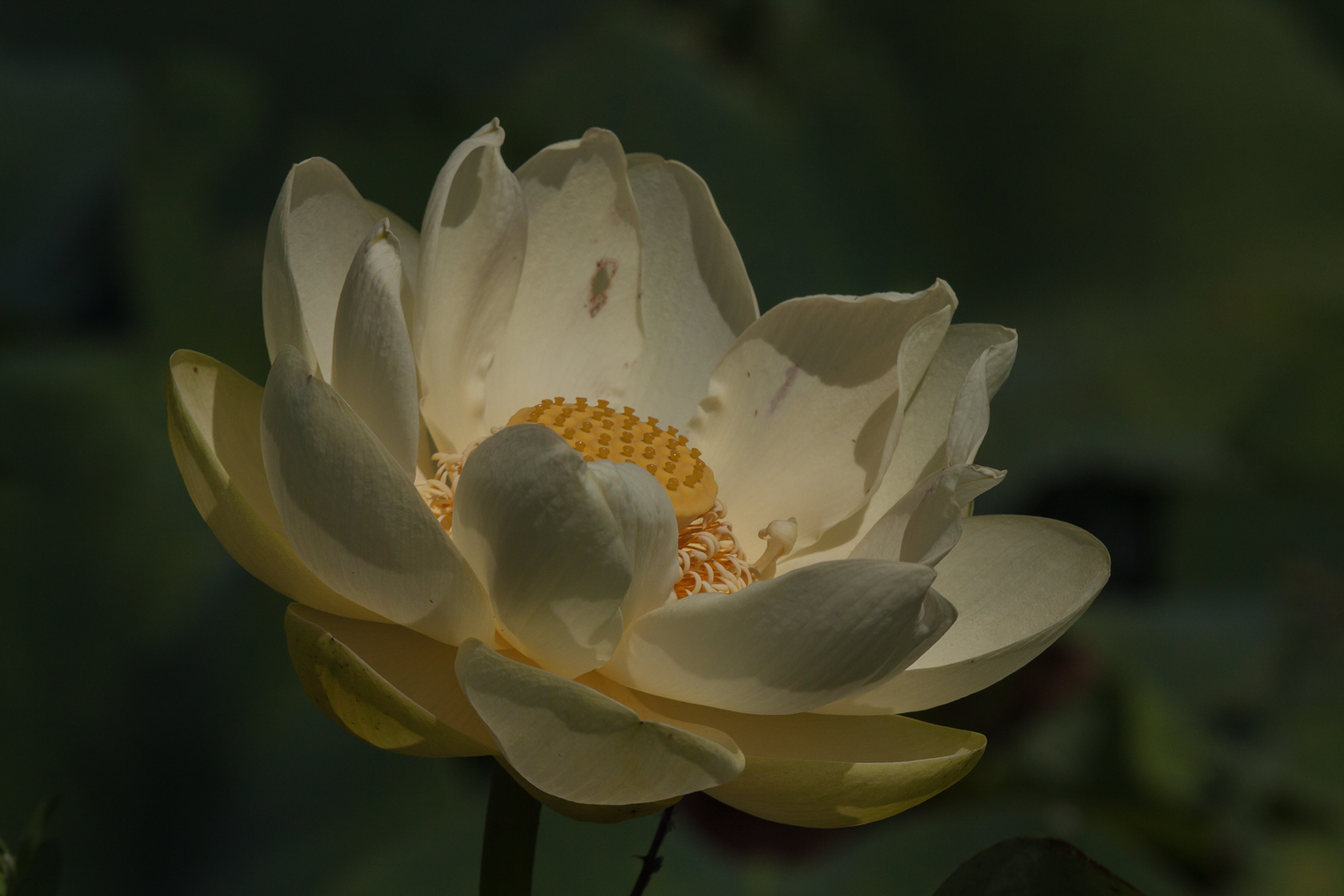
The lotuses were a bit faded and past their prime last weekend at Lilypons Water Gardens, but the beauty and elegance of the lotus flowers was undiminished in my eyes.

I love the look of the lotus throughout its life cycle—from the elegant simplicity of the bud to the showy outburst of petals to the alien-looking seedpods.

The beauty of the lotus never fades, though it is transformed and changes as the flower grows and matures.

Lotus

Lotus

Lotus

© Michael Q. Powell. All rights reserved.


Read Full Post »

Safe inside the confines of an enormous lily pad, this little frog calmly watched the crowds of people last weekend in Washington D.C. at the Lotus and Water Lily Festival at Kenilworth Park and Aquatic Gardens.

frog on a lily pad

You can’t help but noticed that this is not your average lily pad. I believe that it is a tropical variety that comes from the Amazon River basin of the genus Victoria, possibly Amazonica victoria. According to Wikipedia, the leaves of this species can grow as large as 10 feet in diameter (3 meters), although this one was probably less than three feet (one meter) in size. Clearly it had no problem supporting the weight of the little frog.

Readers who follow my photography know that I love to try to get in close to my subjects, irrespective of whether I am shooting with a telephoto lens or a macro lens, and this was no exception. There was a waist-high wire fence around the cement pond in which the water lilies were growing, so I had some limitations in framing my shots, but did manage to get this shot of the frog looking over the edge of lily pad.

frog on a lily pad

© Michael Q. Powell. All rights reserved


Read Full Post »

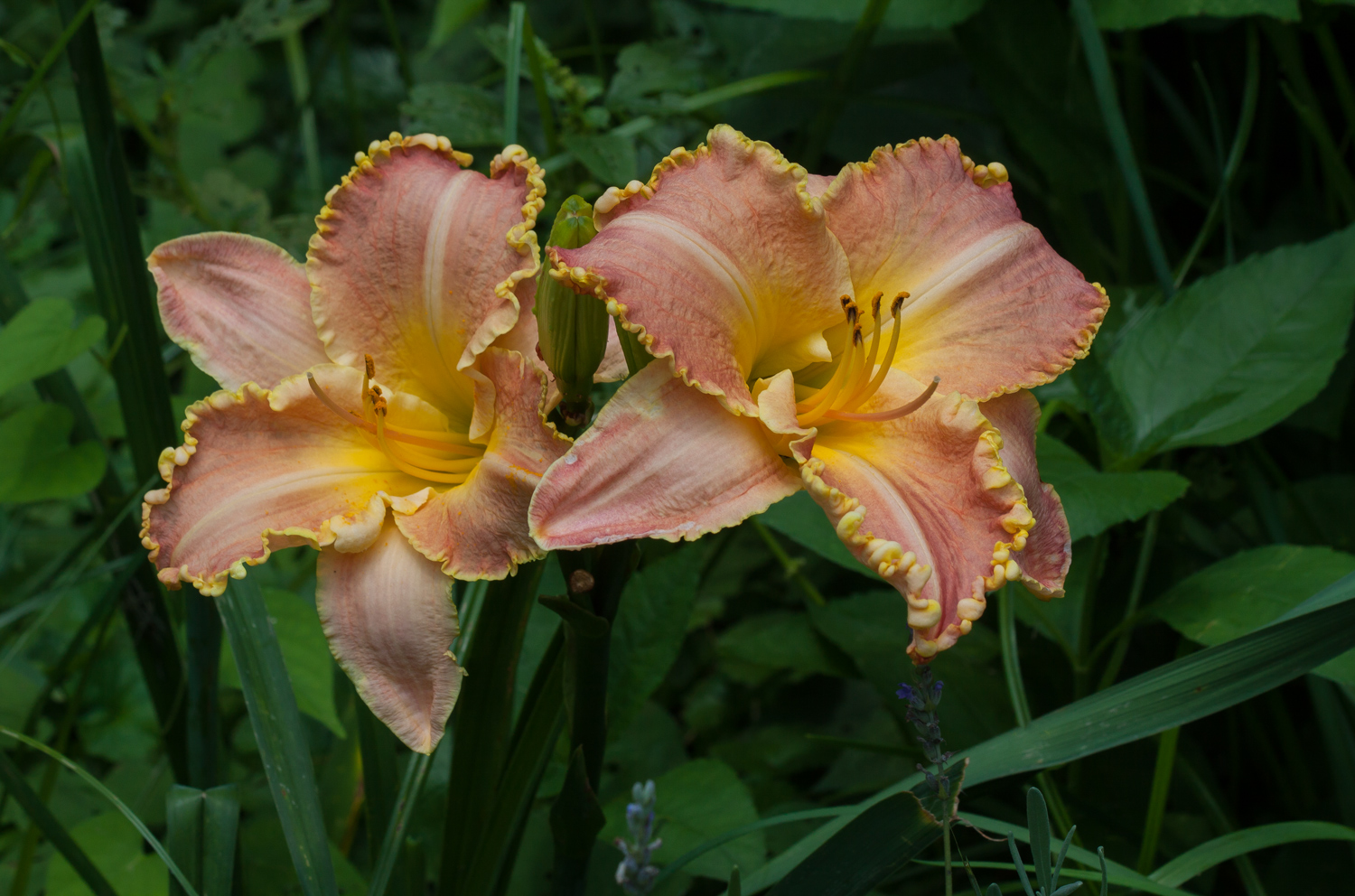
My neighbor, fellow photographer Cindy Dyer, always has such cool-looking flowers in her garden, like these frilly day lilies. Somehow they remind me of the ruffled tux shirts that were in style in the 70’s when I was growing up.

day lilies


© Michael Q. Powell. All rights reserved

Read Full Post »

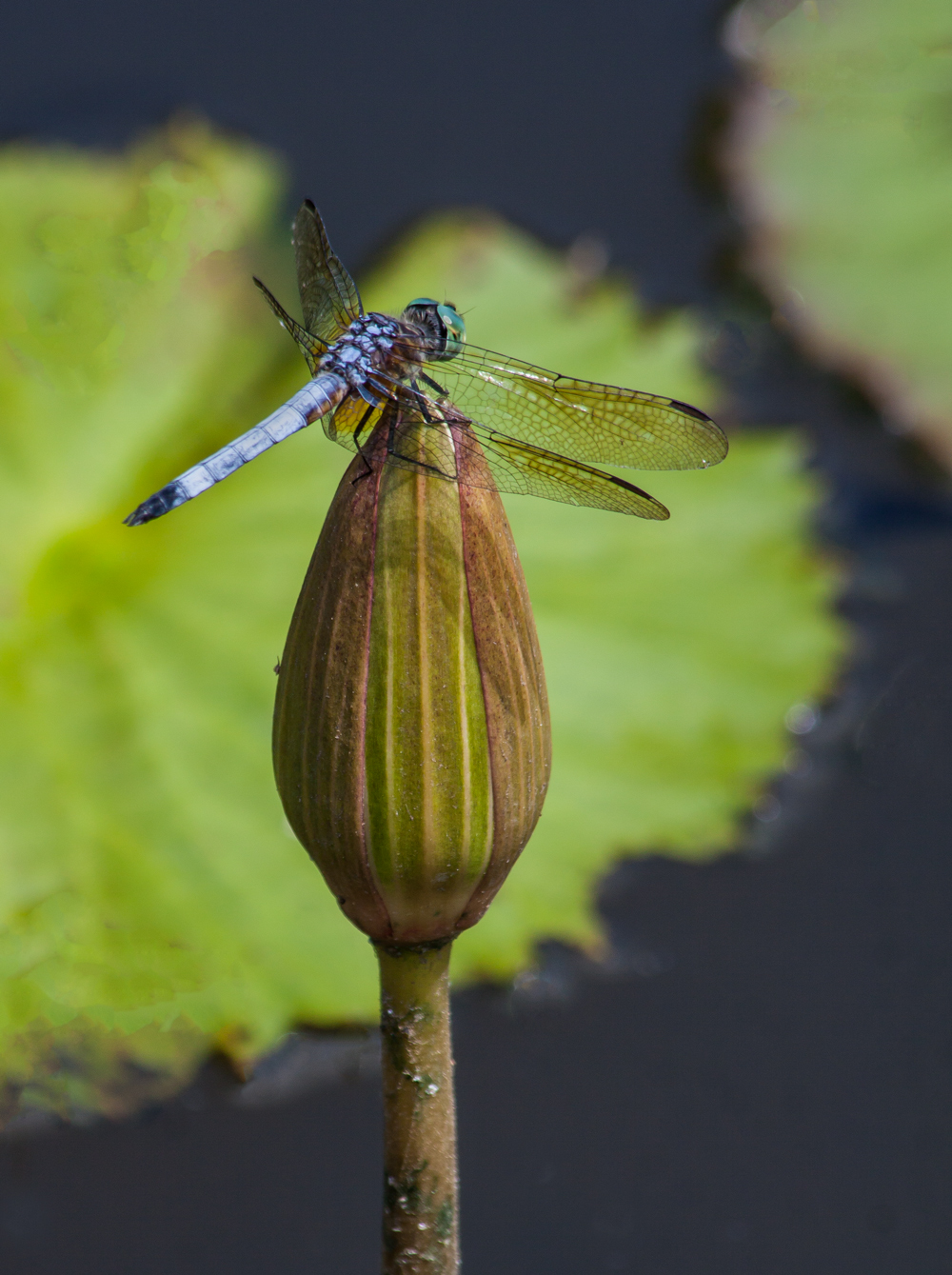
Yesterday I visited Kenilworth Park and Aquatic Gardens in Washington D.C. for the annual Lotus and Water Lily Festival and I was thrilled to be able to get some of my favorite kind of dragonfly images—dragonflies perched on the buds of colorful flowers. Generally I manage to get shots only of the Blue Dasher dragonfly (Pachydiplax longipennis), but this time I was also able to get a shot of a Slaty Skimmer (Libellula incesta) on a lotus flower bud.

Blue Dasher

Blue Dasher on purple water lily bud

Slaty Skimmer

Slaty Skimmer on lotus bud

Blue Dasher

Blue Dasher on water lily bud

© Michael Q. Powell. All rights reserved

Read Full Post »

Lotuses are gorgeous flowers when they are in bloom, but the lotus that really drew my attention was this bud that is just starting to open, full of hope and promise, clothed in a sense of mystery and expectation.

lotus bud

© Michael Q. Powell. All rights reserved

Read Full Post »

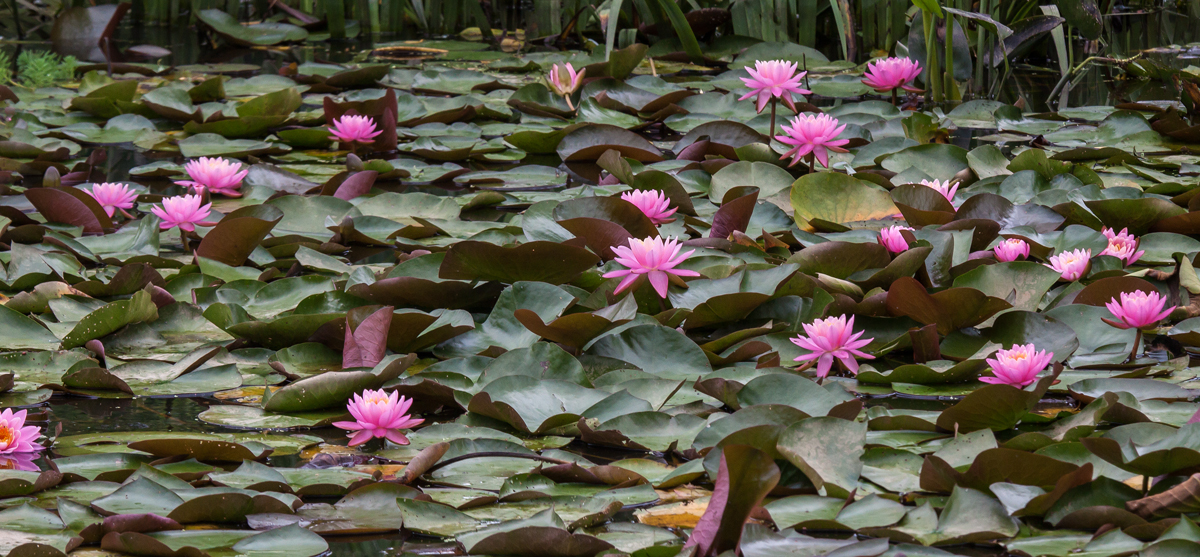
While I was at Kenilworth Park and Aquatic Gardens in Washington D.C. on Monday, it was easy to understand Monet’s endless fascination with water lilies. My opening image of a small wooden bridge brings to mind several of Monet’s paintings of the Japanese Bridge in his water garden at Giverny.

bridge at Kenilworth

Water lilies seem to draw me in and surround me with an overwhelming sense of beauty and tranquility. How can I possibly capture that feeling in a photo? Here are a few images to show you some of the different approaches that I used in attempting to show the irresistible attraction of water lilies.

water lily at Kenilworth

water lilies at Kenilworth

pink water lilies at Kenilworth

© Michael Q. Powell. All rights reserved

Read Full Post »

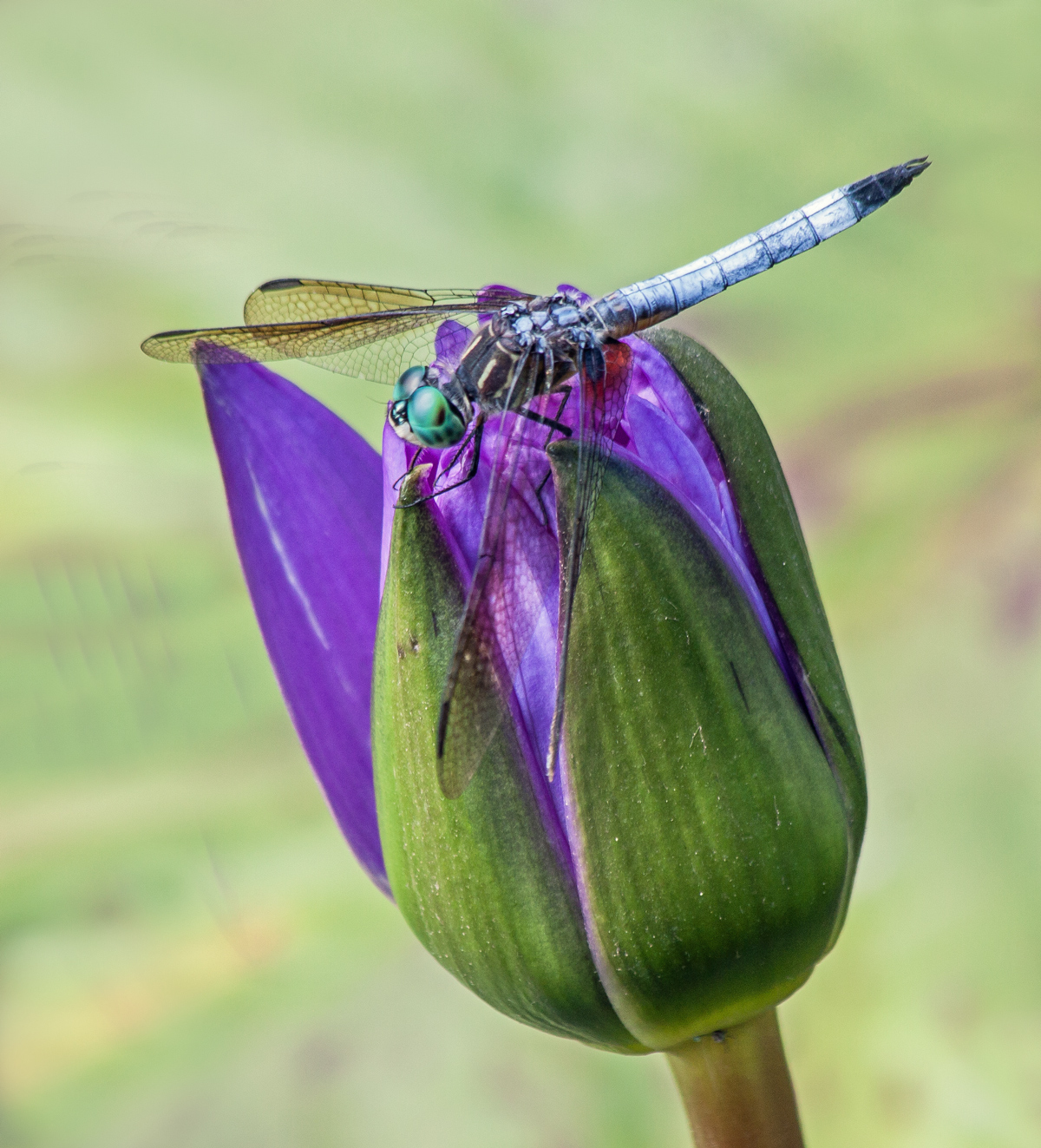
Dragonflies are colorful and flowers are colorful too, but it’s rare that I get to see the two of them together. I was thus thrilled when fellow photographer Cindy Dyer spotted a colorful Blue Dasher dragonfly (Pachydiplax longipennis) perching on a beautiful purple water lily during our recent trip to Kenilworth Park and Aquatic Gardens in the District of Columbia.

I took some initial shots with the 180mm macro lens that I had on my camera at that moment, but wasn’t really able to fill the frame with my subject and the background was a little distracting. (The second photo below was one of those first shots and it does a pretty good job of highlighting the water lily, but the dragonfly is merely an added bonus.) I couldn’t physically move any closer, because the water lilies were in a cement pond, surrounded by a three foot high wire fence.

I decided to change to a longer lens, though I sincerely doubted that the dragonfly would stay in place. Almost all of the times that I have done a rapid lens change in the field, the subject has departed before I was ready to shot. In this case, however, I got lucky and the Blue Dasher held his perch long enough for me to get a few shots with my 70-300mm lens.

I simply love the color combination of the different shades of blue of the dragonfly and the purple and yellow of the water lily.

Blue Dasher

Blue Dasher

© Michael Q. Powell. All rights reserved


Read Full Post »

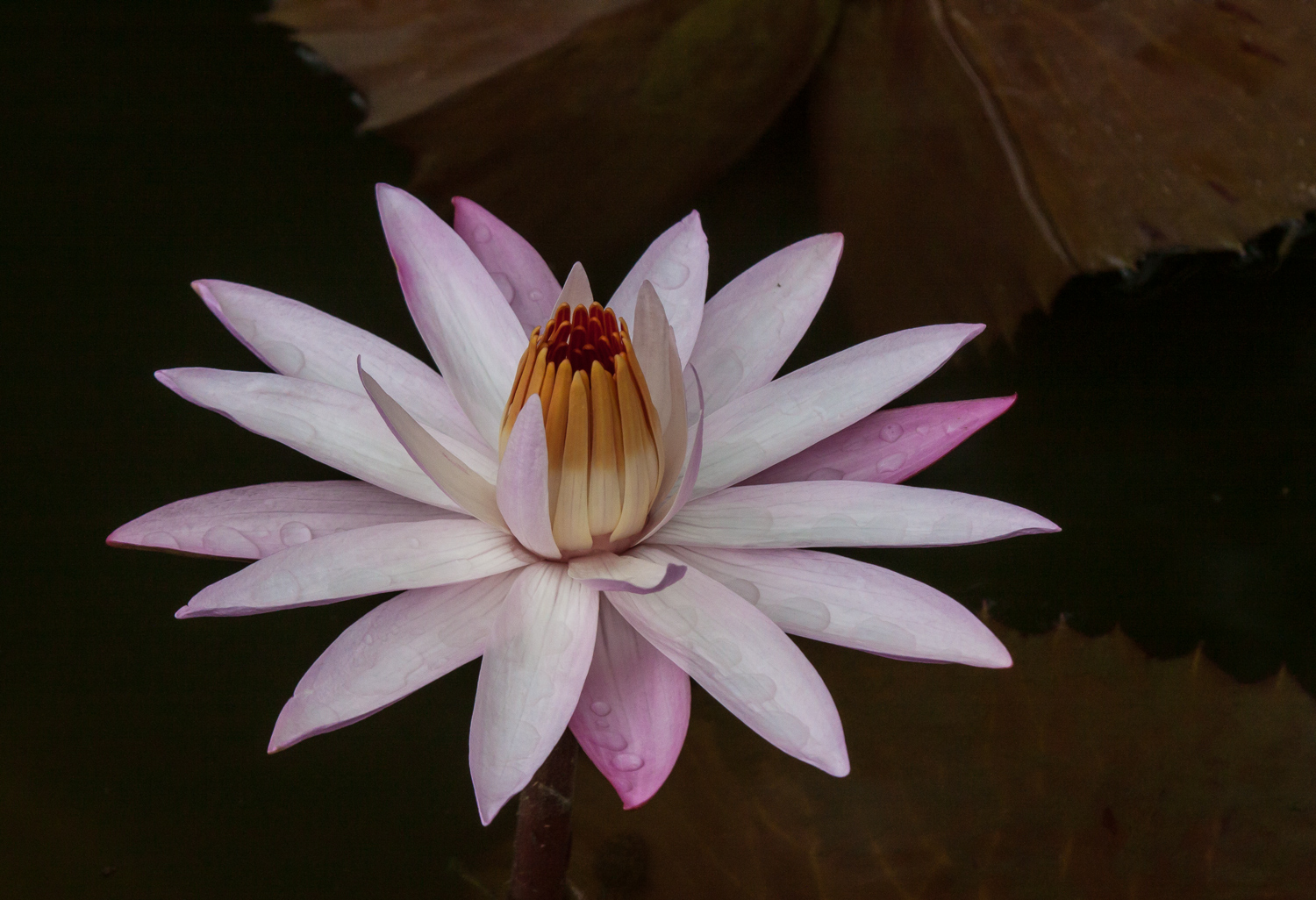
Yesterday morning I made a quick trip to Kenilworth Park and Aquatic Gardens in Washington D.C. with fellow photographer Cindy Dyer to check out the water lilies and lotuses. Many of the pathways in the park are flooded or muddy, thanks to a significant amount of recent rain. Wet feet, however, were a small price to pay to see so many beautiful flowers, including the two spectacular pink water lilies that I am featuring today.

Stay tuned for more water lily and lotus images later this week.

pink water lily

pink water lily


© Michael Q. Powell. All rights reserved

Read Full Post »

Everyone knows that Monarch butterflies love milkweed, but if you move in closer to the plants, you’ll discover a world of fascinating little creatures, like this Red Milkweed Beetle (Tetraopes tetrophthalmus) that I spotted this past weekend at Huntley Meadows Park in Alexandria, Virginia.

Almost three years ago I did a posting in which I acknowledged that I had become obsessed with shooting Red Milkweed Beetles. This weekend I realized that that my initial fascination with my colorful little friends has not diminished much over time when I saw this beetle in a small stand of swamp milkweed. I’m not sure if it is the long antennae or the bold pattern or the bright color that attracts me most—I just know that I love seeing them in all of their developmental forms (they go through several interesting instars as they grow).

The next time you see some milkweed, stop for a moment, examine it closely, and prepare to enter a fascinating little world as the scent of the flowers envelops you.


Red Milkweed Beetle

© Michael Q. Powell. All rights reserved


Read Full Post »

Photography seems so complicated when I worry too much about lighting, camera settings, and a myriad of other technical concerns. It’s nice sometimes to put those cares in the back of my mind and just shoot as I did yesterday—me, my camera, a bee, and a flower.

It can be that simple and that enjoyable.

bee

© Michael Q. Powell. All rights reserved.

Read Full Post »

Where do you find beauty in your daily life? I often feel a sense of awe and wonder when I simply contemplate the gorgeous flowers in the garden of my neighbors.

I think the white flowers are a variety of coneflowers and the purple sphere in the upper right corner is a globe thistle.

Coneflowers

© Michael Q. Powell. All rights reserved.

Read Full Post »
Globe Thistles (Echinops ritro) are among the coolest plants in my neighbors’ garden. They have a wonderful texture and stand tall, topped with fantastic balls of tiny flowers tinged with blue, purple, and pink.

It’s Friday and I figured for fun that I’d take a short break from insects and feature a few photos of fantastic flowers.

Globe Thistle

Globe Thistle

Michael Q. Powell. All rights reserved.

Read Full Post »

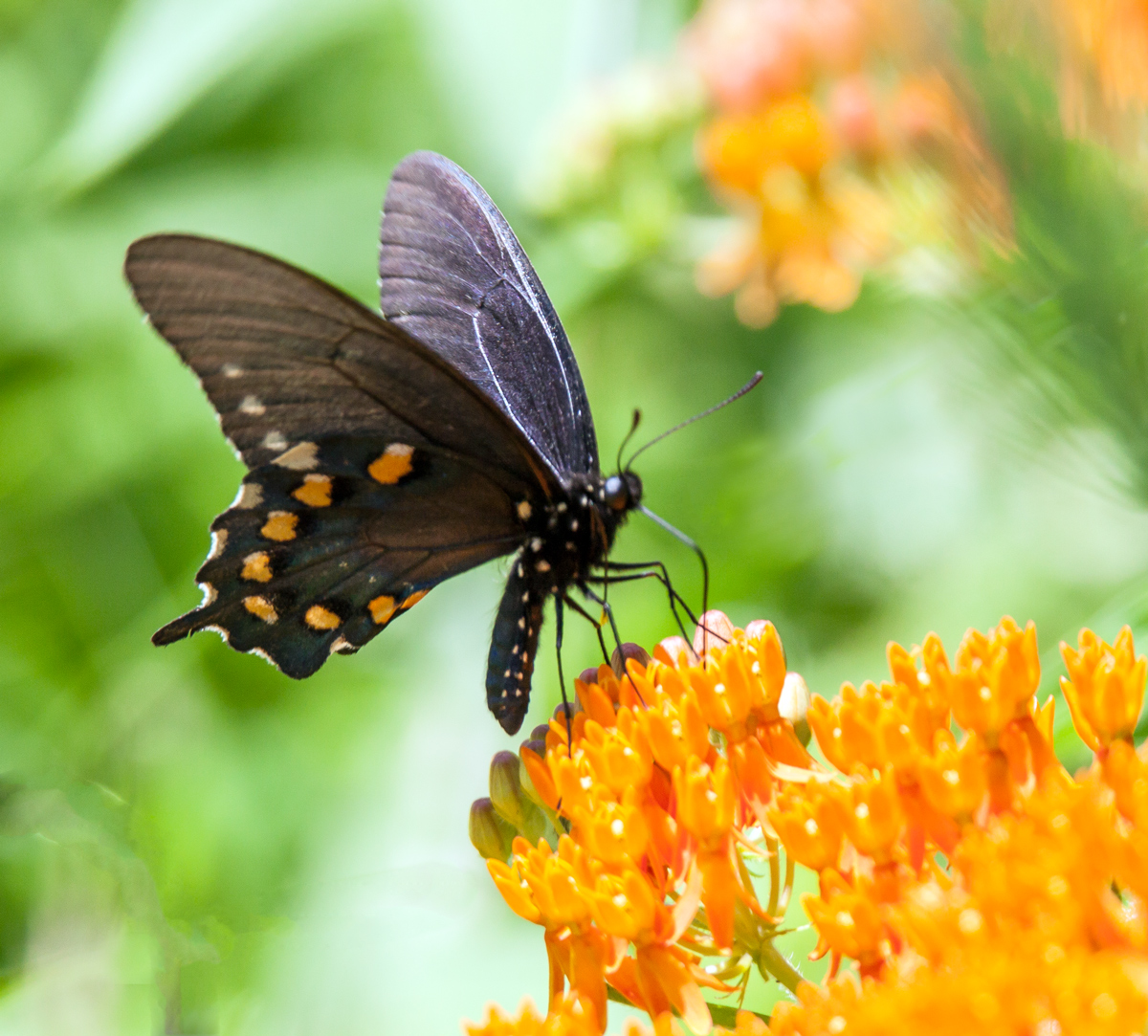
This past weekend I spotted a black swallowtail fluttering about some bright orange flowers, never stopping for more than a split second. Could I get a shot before it flew away?

Well, I managed to get some shots and then came the tough part—figuring out which black-colored swallowtail I had captured. How hard can that be? For a casual observer like me, there were at least three candidates that immediately came to mind—the black version of the Eastern Tiger Swallowtail, the Spicebush Swallowtail, and the Pipevine Swallowtail. I recalled that one of the key indicators is the pattern of the orange spots, but I couldn’t remember which one had which pattern.

After some quick research, I’ve concluded this is probably a Pipevine Swallowtail butterfly (Battus philenor). I was also really taken by the orange plant and think it might be butterfly weed (Asclepias tuberosa), a type of milkweed that, as its name suggests, attracts butterflies.

Pipevine swallowtail

Michael Q. Powell. All rights reserved.

Read Full Post »

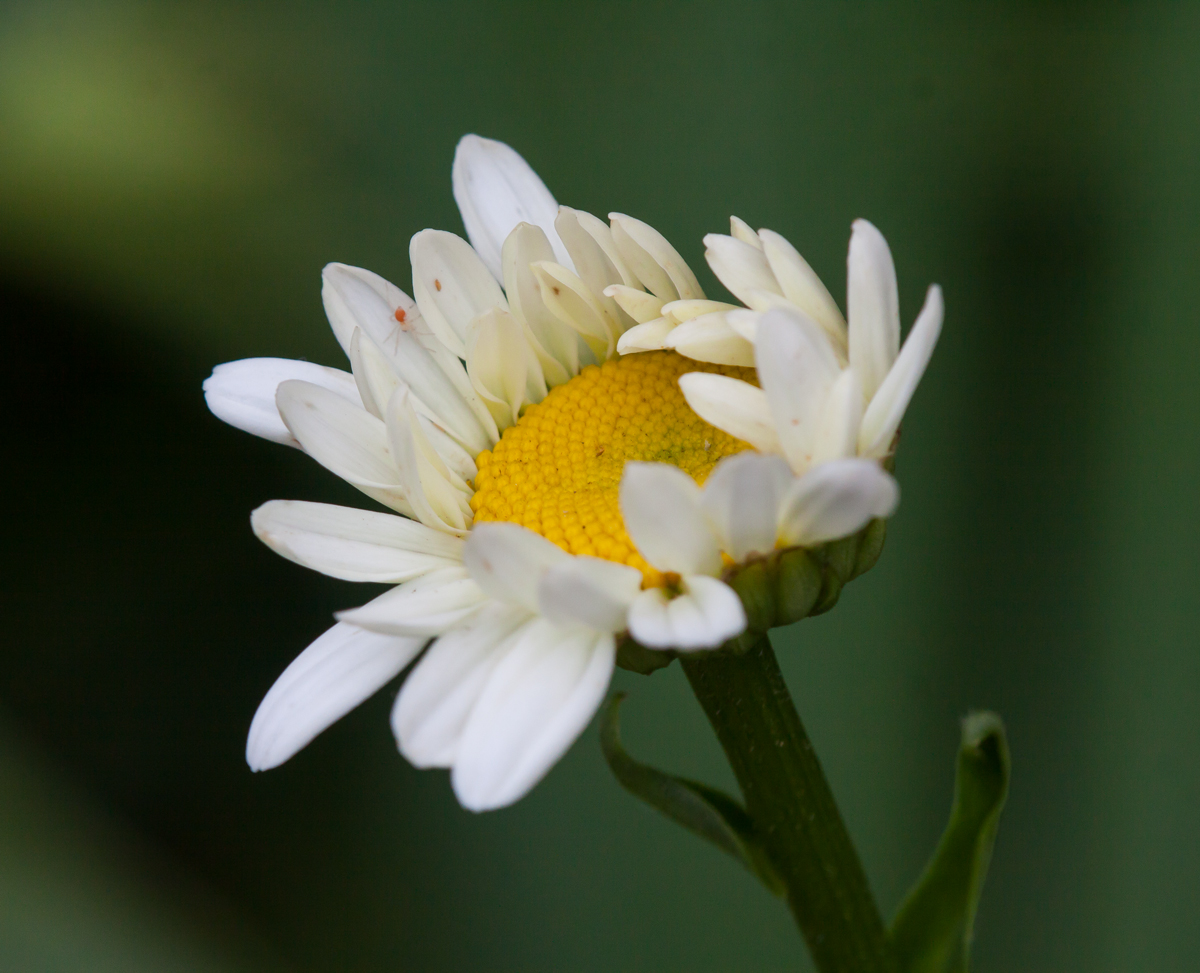
Shy or coy? Whatever the reason, this Shasta daisy seemed reluctant to reveal its whole self to the world and kept a row of petals raised like a fan to add protection and/or mystery.

Sharp-eyed viewers may note that this image has a “bonus bug,” i.e. an insect that you find when processing a photo that you didn’t notice when taking the shot. In this case there looks to be a tiny red insect on one of the white petals to the left of the tallest petal in the uppermost row of petals. (You may need to click on the photo to get a higher-resolution view.)

This is another photo that I took in my neighbor’s garden. Thanks, Cindy.

shy1_june_blog

Michael Q. Powell. All rights reserved.

Read Full Post »
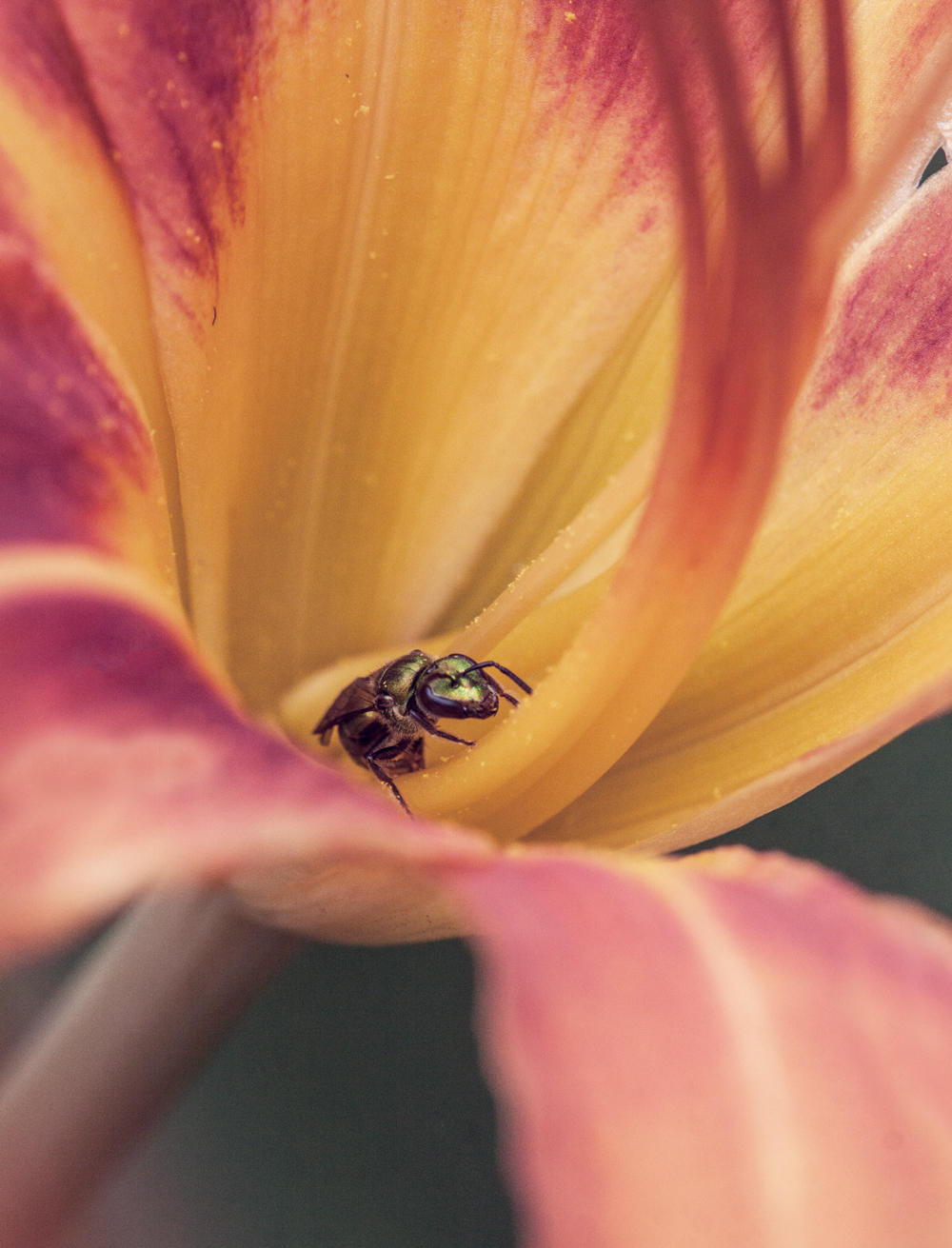
I don’t have a garden, but fortunately my neighbor and fellow photographer Cindy Dyer has a wonderful one. Earlier today I photographed this green metallic sweat bee (genus Agapostemon) coming out of one of her orange daylilies.

green metallic sweat bee

Michael Q. Powell. All rights reserved.

Read Full Post »

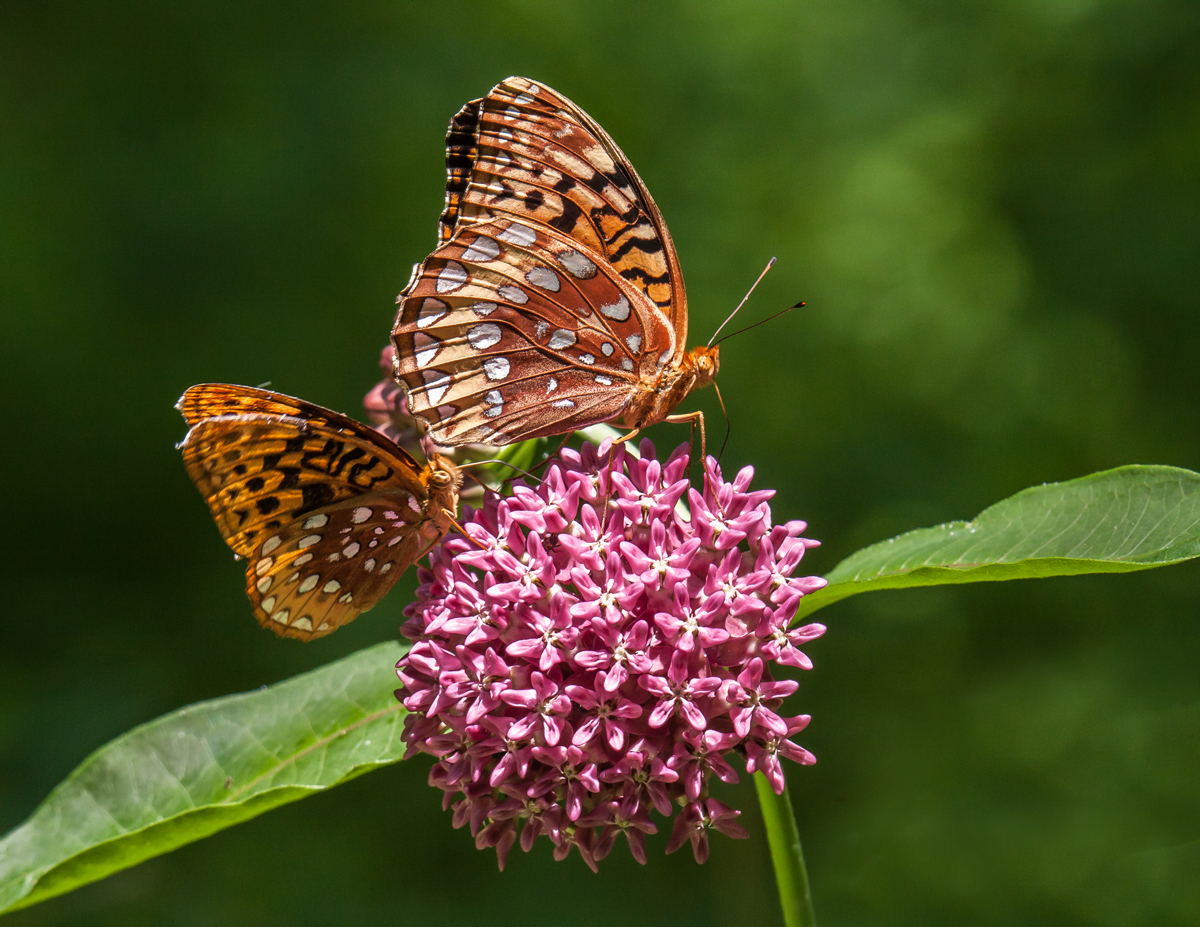
Swamp Milkweed (Asclepias incarnata) is now in bloom at my local marshland park and the Great Spangled Fritillary butterflies (Speyeria cybele) are loving it.

Great Spangled Fritillary

Michael Q. Powell. All rights reserved.

Read Full Post »
A Silver-spotted Skipper butterfly (Epargyreus clarus) kept returning to these purple flowers yesterday at the edge of a small pond at Brookside Gardens in Wheaton, Maryland. I am not sure what kind of flower this is, but the Silver-spotted Skipper, the only skipper that I can reliably identify, really seemed to like it.

Some of my fellow photographers with whom I traveled to the gardens really enjoy photographing flowers—I seem to have reached a point at which I enjoy shooting flowers primarily as a beautiful backdrop for showcasing insects.

There are a lot of gardens in the Washington D.C. area that provide for wonderful photographic opportunities, many of which, like this one, have no admission fee. Although I really enjoy shooting at the marshland park that I feature here so often, it’s nice to venture out a little for a bit of variety.

Silver-spotted Skipper

Michael Q. Powell. All rights reserved.


Read Full Post »
Earlier this week I caught a glimpse of my favorite moth, the spectacular Hummingbird Clearwing moth (Hemaris thysbe). Normally these little beauties hover at high speeds as they collect nectar, but this one kept perching on leafy plants, permitting me to capture its wings at rest. I wonder if the moth was laying eggs.

I am always fascinated by the names of species and found this interesting bit of information about this moth’s Latin name on the bugguide.net website. “Pyramus and Thisbe were lovers who died tragically. Pyramus found Thisbe’s blood-stained scarf, assumed she had been killed, and committed suicide with his sword. It seems likely the reference to the story of Thisbe is a reference to the rusty, somewhat blood-like coloration of this moth.”

Hummingbird Clearwing

© Michael Q. Powell. All rights reserved.


Read Full Post »
« Newer Posts - Older Posts »