Feeds:
Posts
Comments

Archive for the ‘Butterflies’ Category

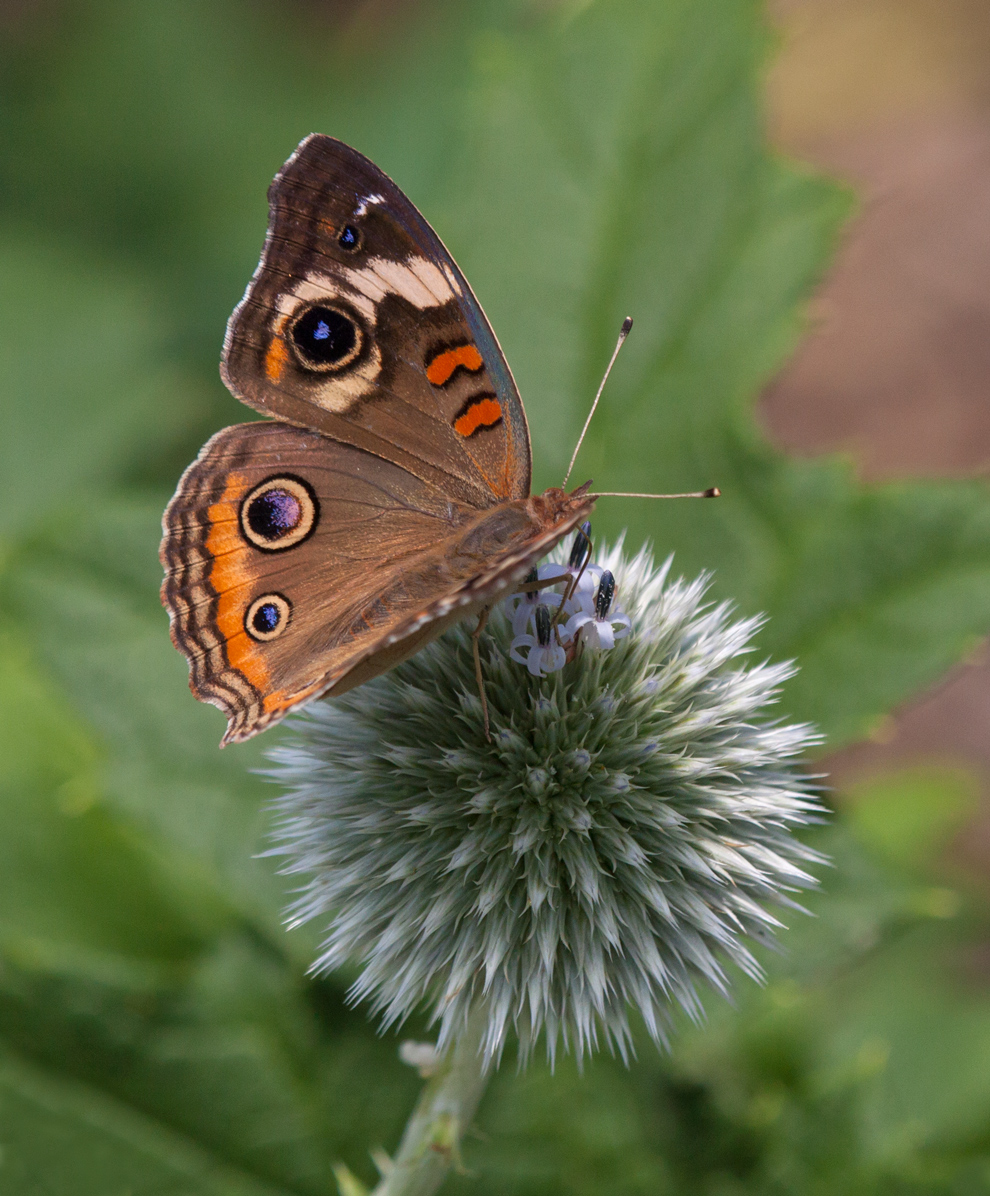
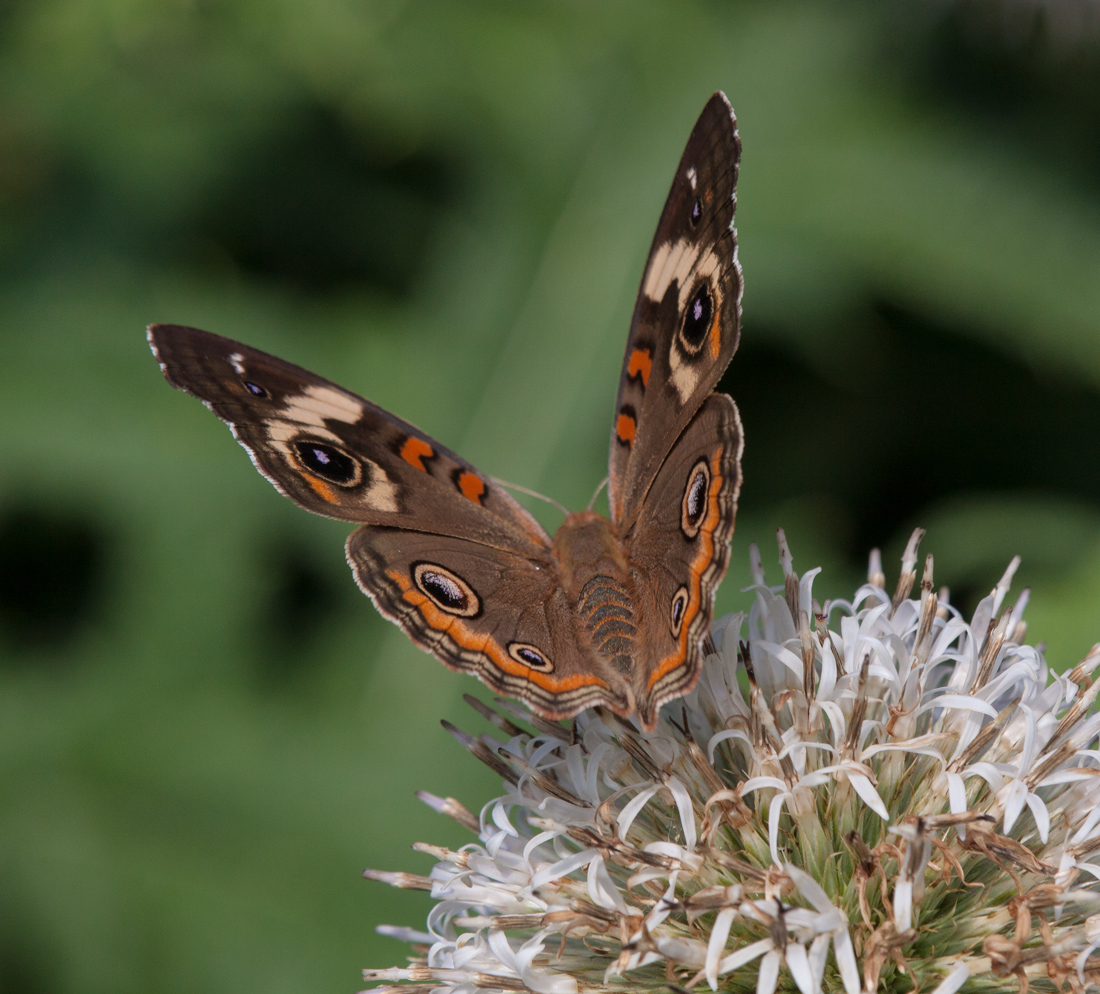
Although I don’t live in Ohio, nicknamed “The Buckeye State,” I think that I can claim that Virginia also is a Buckeye state, because we are a home to the uncommonly beautiful Common Buckeye butterfly (Junonia coenia).

Common Buckeye butterfly

I have seen few colorful butterflies so far this summer, besides the Great Spangled Fritillary butterflies that I featured in a posting in June. Where are all the Monarchs and Eastern Swallowtails? I don’t know if they were affected by the polar vortex of this past winter or if I am merely looking for them in all the wrong places, but their numbers seem to be unusually low this summer.

I was therefore thrilled this past Monday, when I caught sight of this Common Buckeye. Its coloration is so distinctive that I immediately recognized it and chased after it a bit. Fortunately I was able to capture several images of this beautiful creature before it flew out of sight.

Looking at these images, I am happy to proclaim that I live in a Buckeye state.

buckeye3_blog

buckeye2_blog

© Michael Q. Powell. All rights reserved.
Read Full Post »

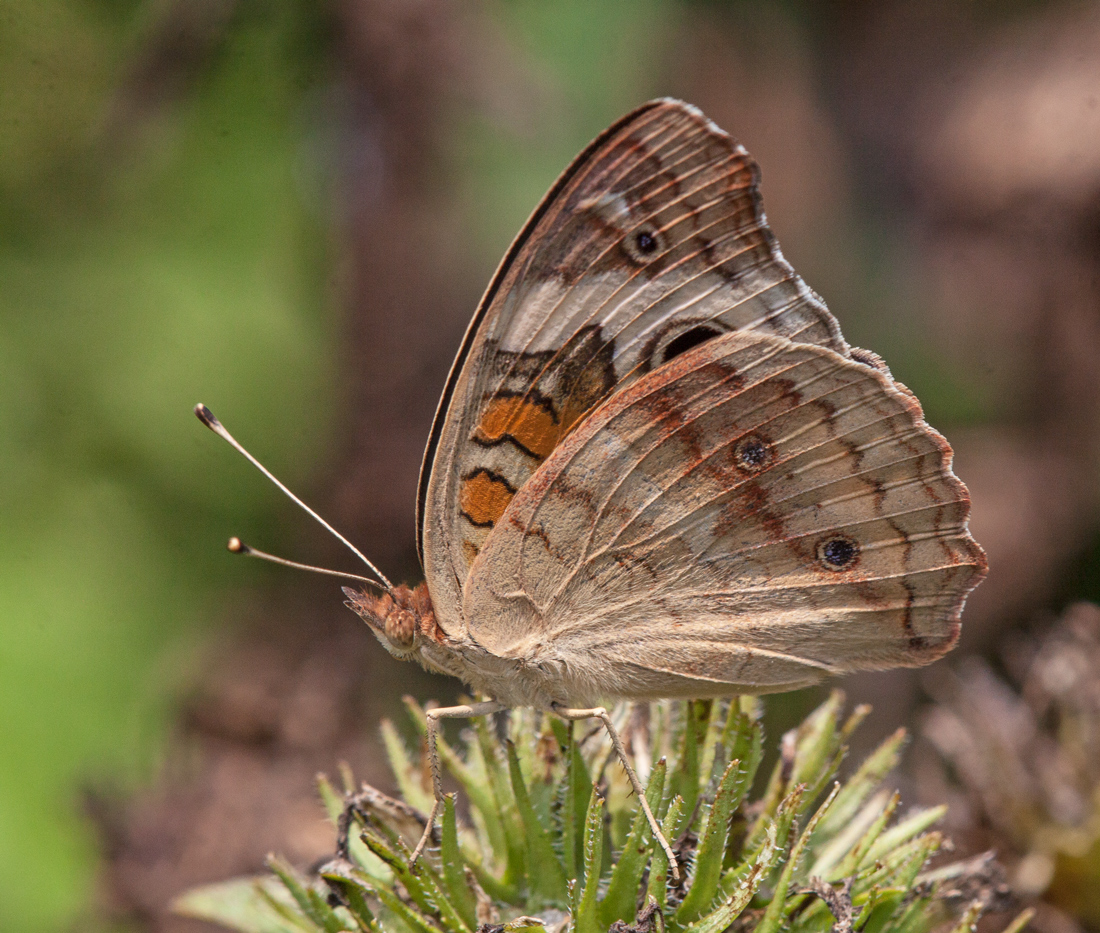
When I am walking through the woods adjacent to the marsh, I often see small brown butterflies flitting about, but it’s rare that one lands in a place where I can photograph it. Last week, however, I got lucky and I was finally able to get some shots of one of these elusive butterflies.

Now that I have the images, I am faced with the difficult task of trying to identify the butterfly. There are a lot of brown butterflies with a numerous eye spots on the wings and to my untrained eyes, they all look pretty much the same. I think this one may be of the genus Lethe, but is it a Pearly Eye, an Appalachian Brown, an Eyed Brown, or something entirely different?

For now, I’ll fall back on an old habit and make up my own name for the butterfly and call it the Beautiful Woodland butterfly.

butter2_blog

butter1_blog

© Michael Q. Powell. All rights reserved.


Read Full Post »

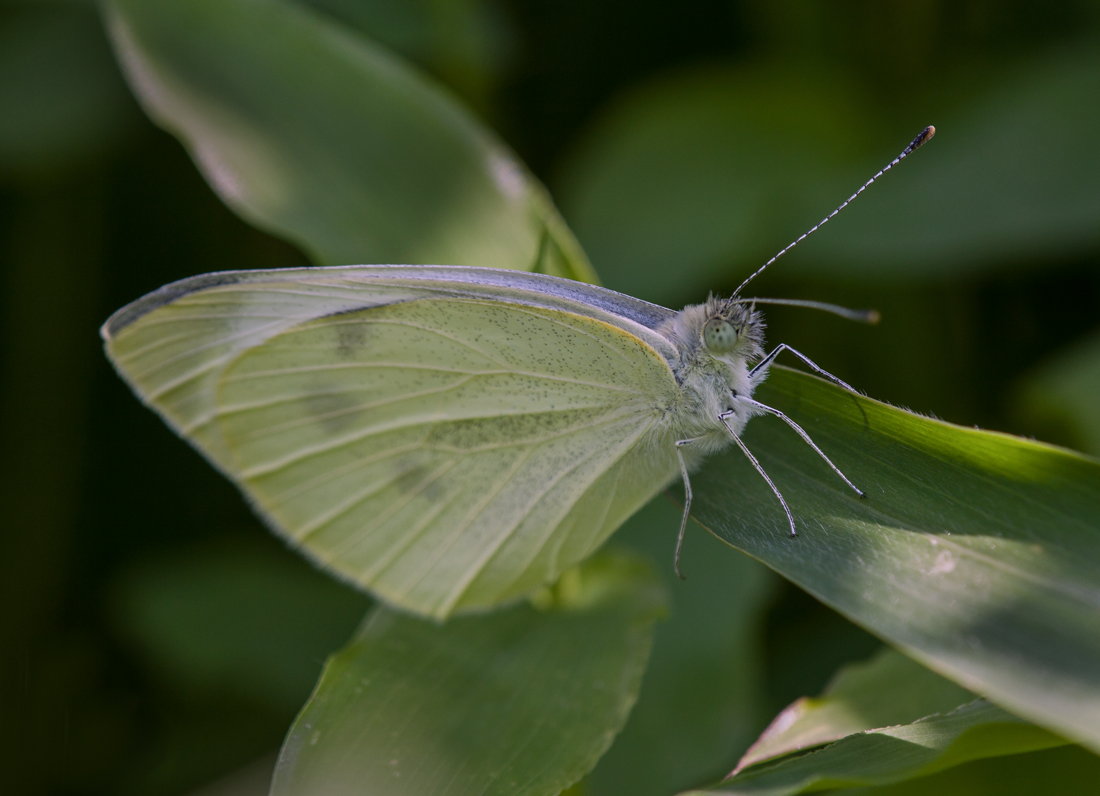
When the weather turns hot and humid, even the insects seem to enjoy the shade, like this Cabbage White butterfly (Pieris rapae) that I encountered recently while searching for dragonflies. I never fail to be amazed at the speckled green exotic eyes of this common butterfly.

The Cabbage White’s almost pure white body, though, is often a real challenge for me, because it seems to confuse my camera’s metering system and images are often severely overexposed. In this image. I think I used spot metering to try to get the correct exposure, which seemed to help. However, there was a greenish color cast in the initial shot, probably caused by the light filtering through the leaves, that I had to fix in post-processing.

The Cabbage White does not have the spectacular colors of many other butterflies, but nonetheless possesses an understated elegance that I find really attractive.

cabbage_eye_blog

© Michael Q. Powell. All rights reserved.
 

Read Full Post »

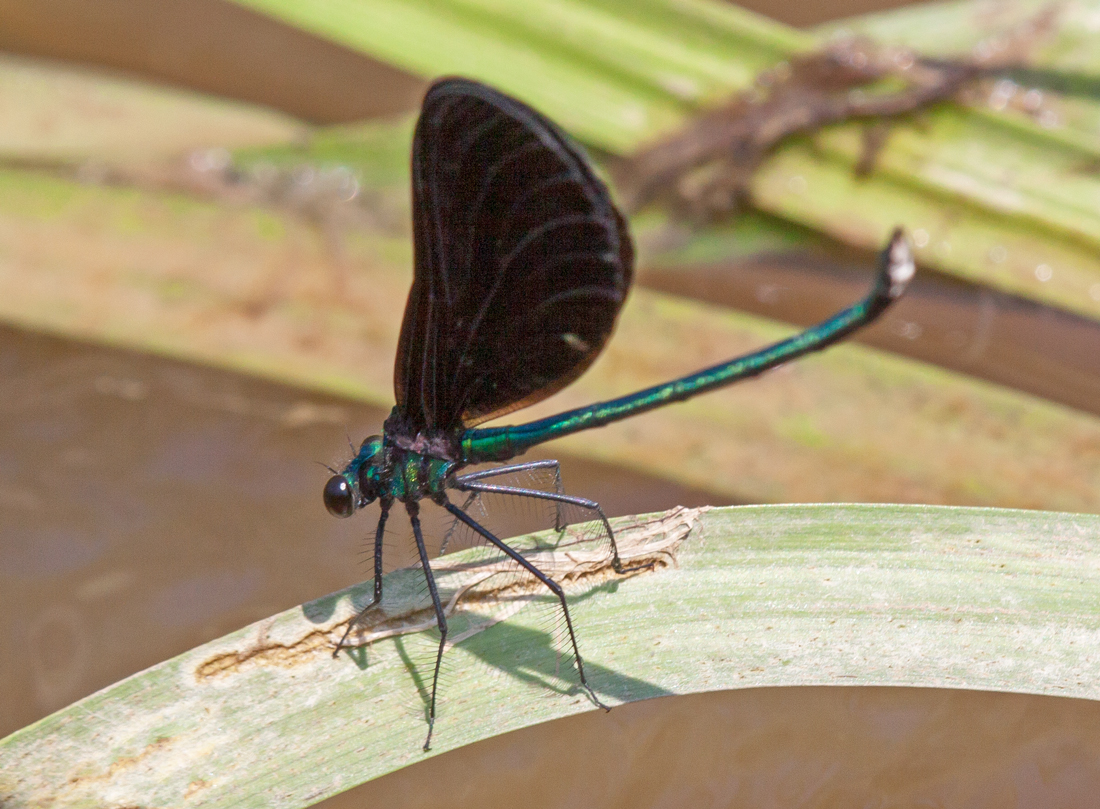
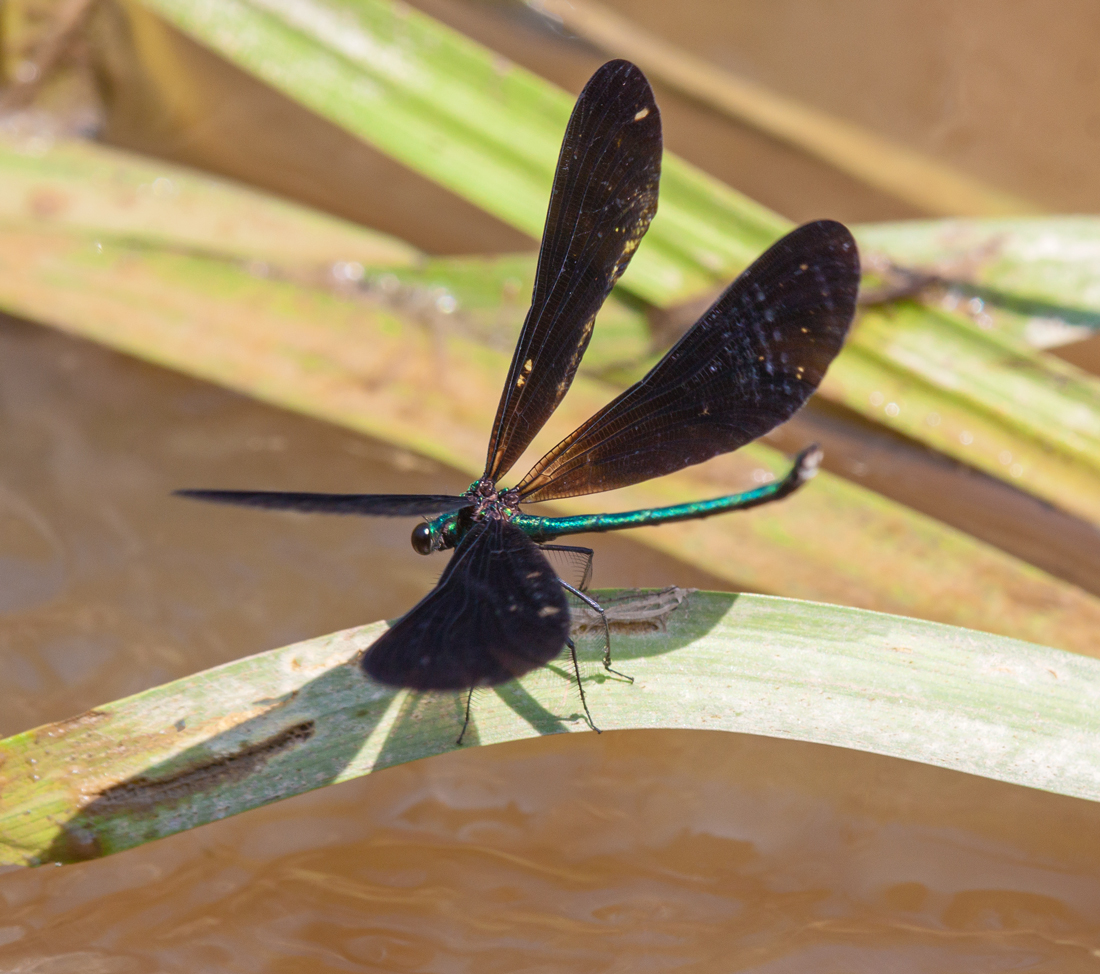
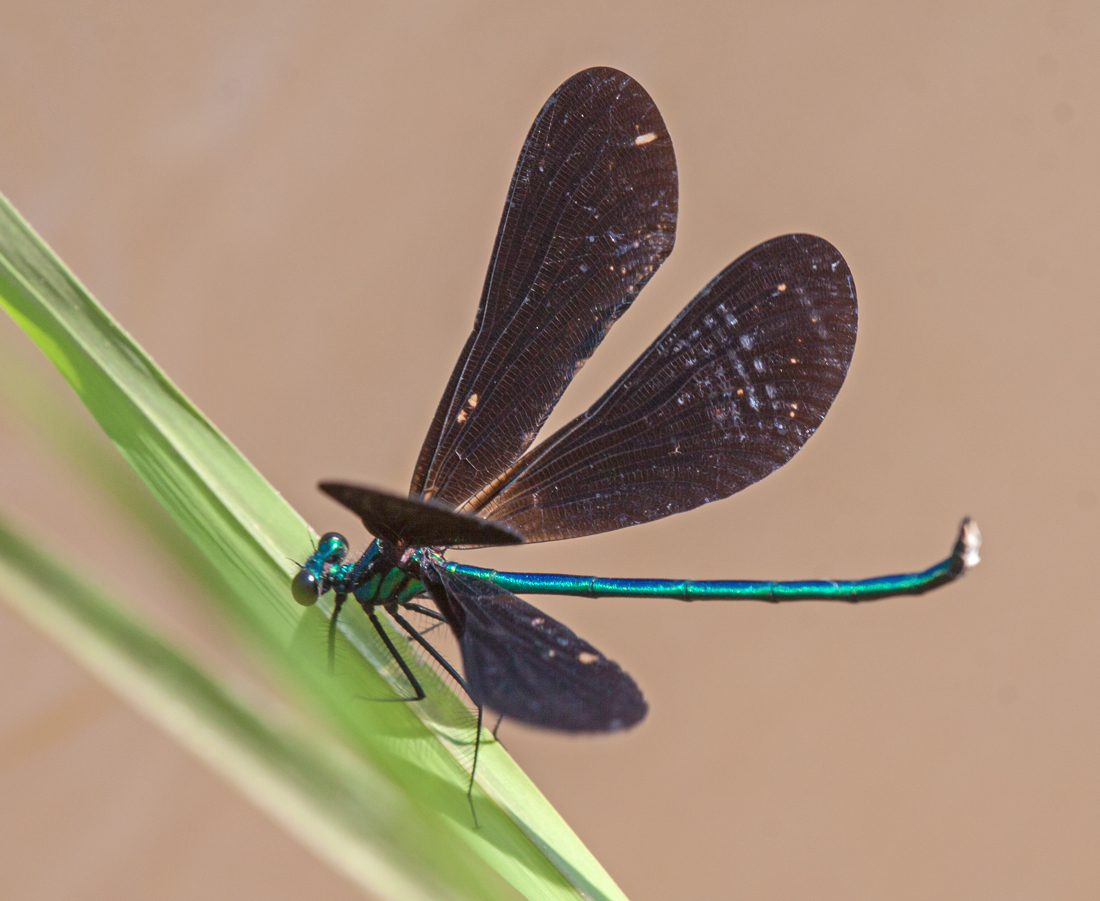
When you first catch sight of the fluttering flight of an Ebony Jewelwing damselfly (Calopteryx maculata) from a distance, it’s easy to think that it is a butterfly.

These damselflies are really weak fliers and they flutter slowly from one location to another nearby spot. Although they perch, they tend to do so on low vegetation and they don’t remain in one spot for very long, which makes it a challenge to get a decent photograph of one of them.

Their dark wings make them unusual and distinctive—all of the other damselflies that I have seen had clear wings—and help to set off the beautiful emerald color of their bodies.

According to bugguide.com, the Ebony Jewelwing’s scientific name Calopteryx maculata comes from the Greek “kalos” (beautiful) + “pteron” (wing or feather) and “macula” (a spot), a reference to the white spot near the tip of the female’s wing.

ebony1_blog

Ebony Jewelwing damselfly with opened wings

Ebony Jewelwing damselfly with opened wings

Ebony Jewelwing damselfly in a raised position with closed wings

Ebony Jewelwing damselfly in a raised position with closed wings

© Michael Q. Powell. All rights reserved


Read Full Post »

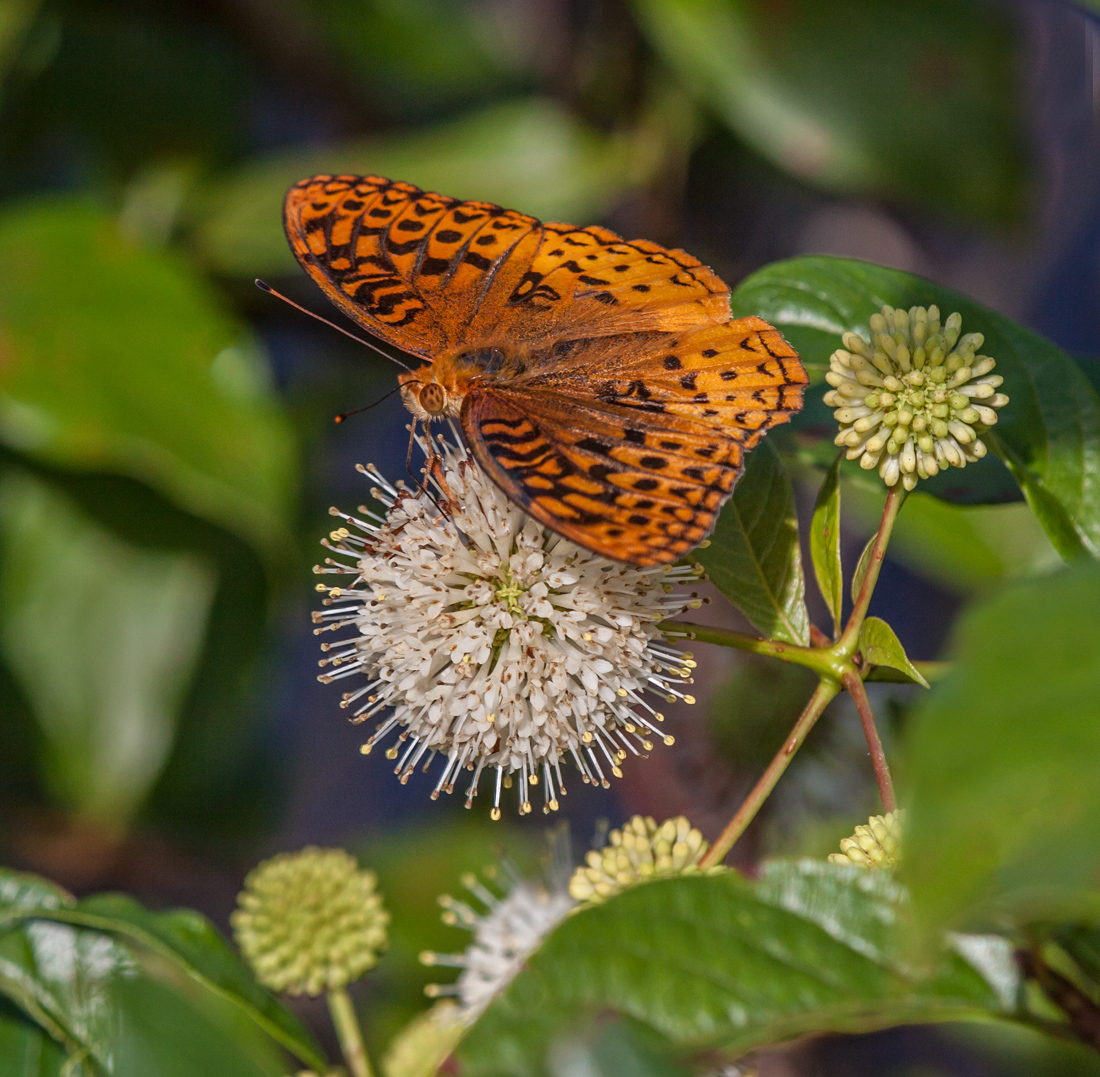
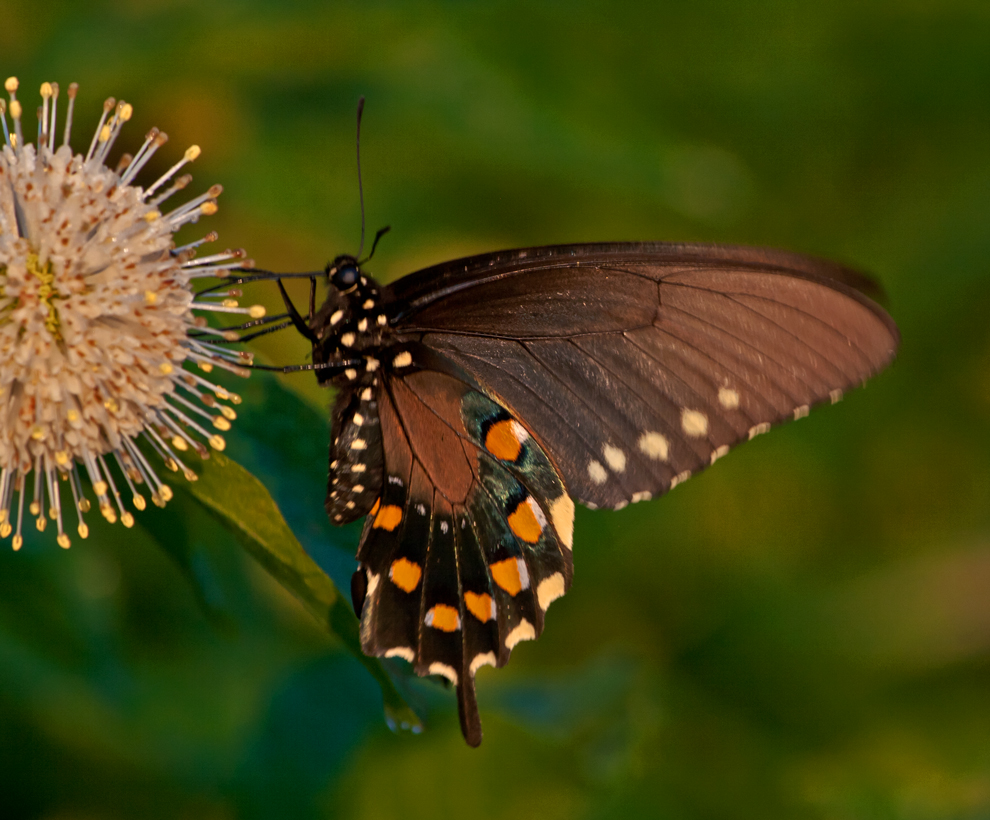
Buttonbushes are now blooming at my local marsh, attracting beautiful butterflies, including this Pipevine Swallowtail and this Great Spangled Fritillary.

I don’t know what it is about the Common Buttonbush (Cephalanthus occidentalis), but butterflies seem to find it irresistible. Several Pipevine Swallowtails (Battus philenor) flitted all around the bushes in frenetic motion, hardly every stopping to perch. The Great Spangled Fritillary (Speyeria cybele), however, seemed to take its time, lingering over each of the spiky spherical globes of the buttonbush.

pipevine2_blogpipevine1_blogspangled_bush_blog

© Michael Q. Powell. All rights reserved

Read Full Post »

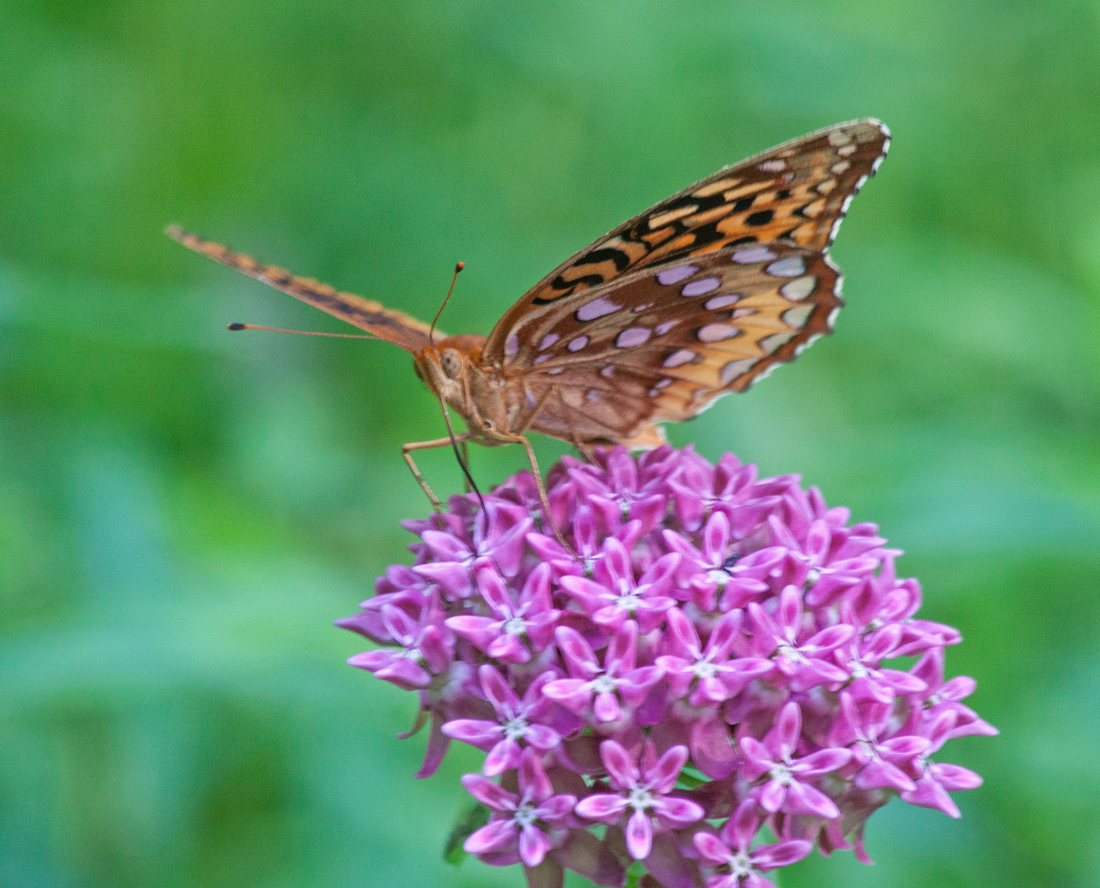
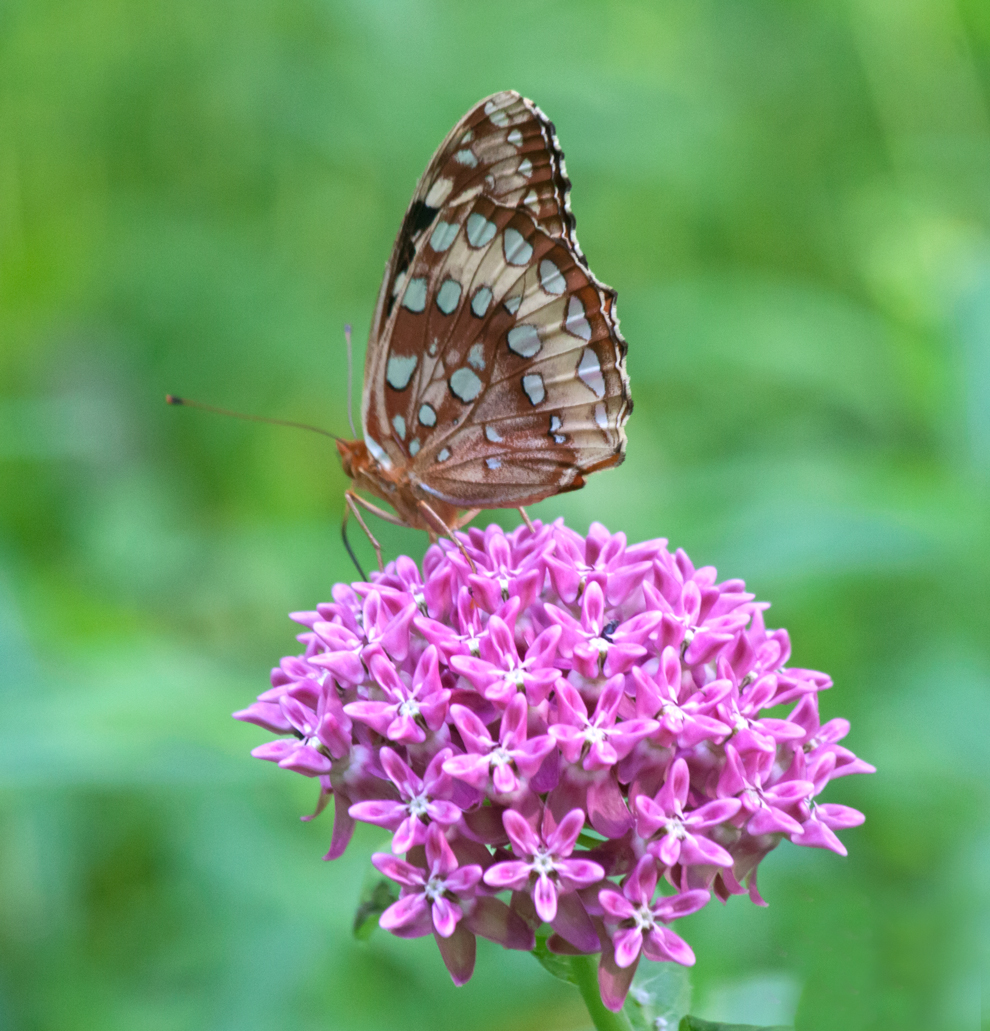
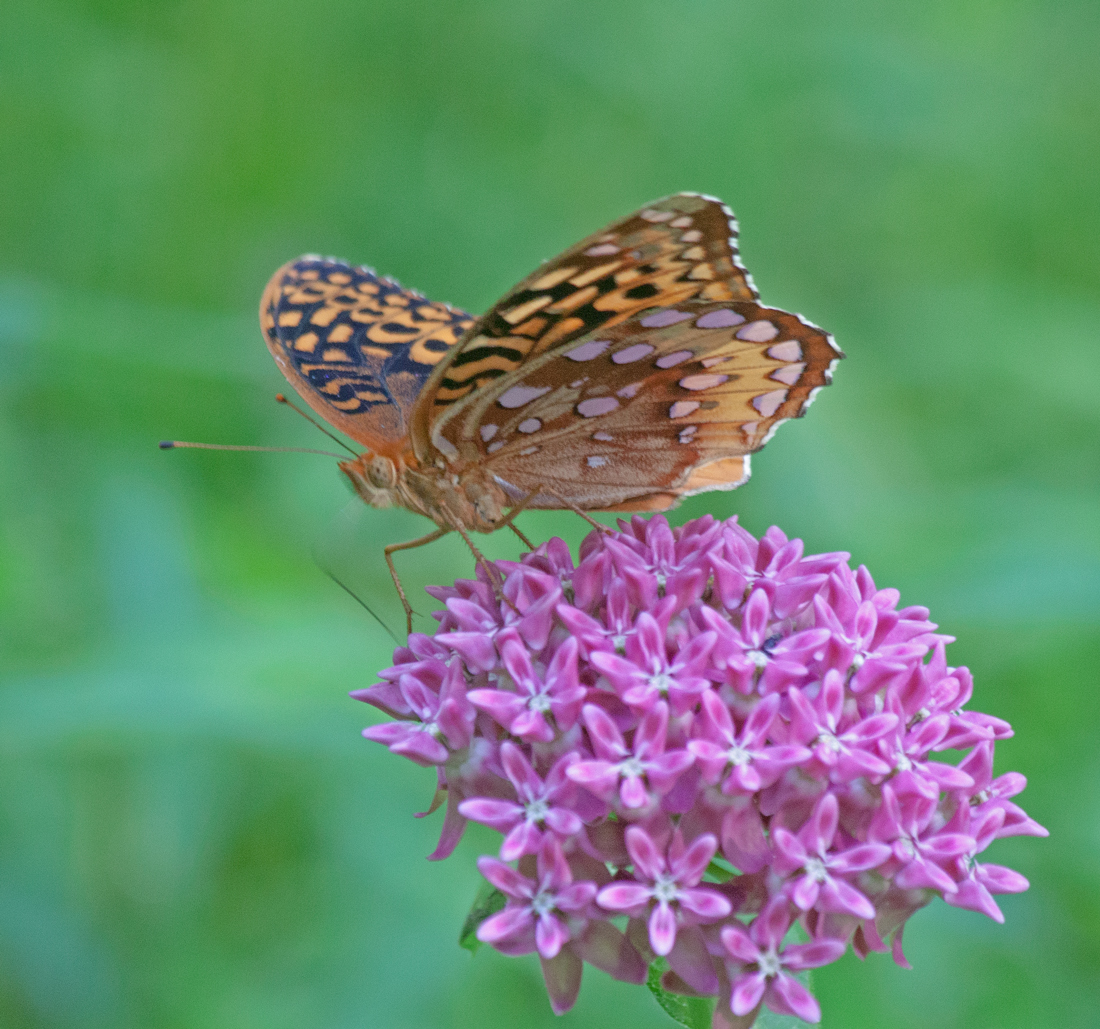
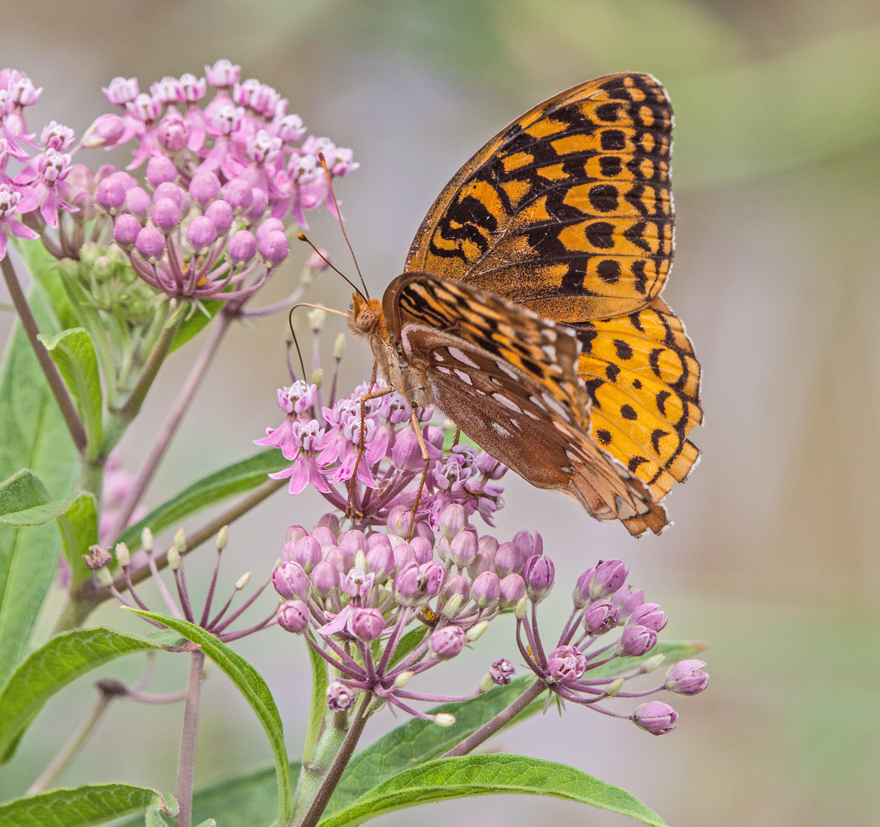
After a week and a half on the road, it was great for me to be able to return to my local marshland yesterday. I was thrilled to see that butterflies have reappeared, including Great Spangled Fritillary butterflies (Speyeria cybele). A group of about a half dozen or so of them kept returning to clusters of a pink-flowered plant that looks like a kind of milkweed, permitting me to get shots of the butterflies in various positions on the flowers.

spang_frit3_blogspang_frit1_blogspang_frit2_blog

© Michael Q. Powell. All rights reserved.

Read Full Post »

I chased this little orange butterfly through the woods for quite some time this past weekend in an effort to get my first butterfly image of the season, a Pearl Crescent butterfly (Phyciodes tharos). It may not be as big and brightly colored as some of the butterflies that I may encounter later in the season, but I find a real beauty in its minimal color palette and intricate design.

butterfly_may_blog

© Michael Q. Powell. All rights reserved.

Read Full Post »

Do you still look at the clouds and see shapes as you did when you were a child? Sometimes the shadows and light and my imagination combine and cause me to see new things, like the leaves in this ginkgo tree that remind me of a flock of bright yellow butterflies.

Ginkgo trees are endlessly fascinating for me. Check out my earlier posting to see additional photos of my journey to a ginkgo grove a few weeks ago, including some close-up shots of ginkgo leaves and the fleshy seeds produced by the female ginkgo trees.

ginkgo_butterflies_blog

© Michael Q. Powell. All rights reserved.
Read Full Post »

A familiar subject can look quite different when viewed from an unusual angle. It’s a lesson that every photographer is taught early on, but I need constant reminders to vary my approach.

I took this shot of a Viceroy butterfly (Limenitis archippus) yesterday while lying on the ground and pointing my telephoto lens up toward the sky. The perspective caused the shape of the wings to be different and permitted me to see the butterfly’s legs in a way that was completely new.

Not all such experiments are successful, of course, but I think that this one worked out pretty well.

looking_up_blog

Click on the photo to see a higher resolution view.

© Michael Q. Powell. All rights reserved

Read Full Post »

The days are getting cooler and leaves are starting to wither and fall, but there are still signs of the lingering summer, like this beautiful Viceroy butterfly (Limenitis archippus) that I photographed this past weekend. viceroy_bokeh_blog

© Michael Q. Powell. All rights reserved.
Read Full Post »

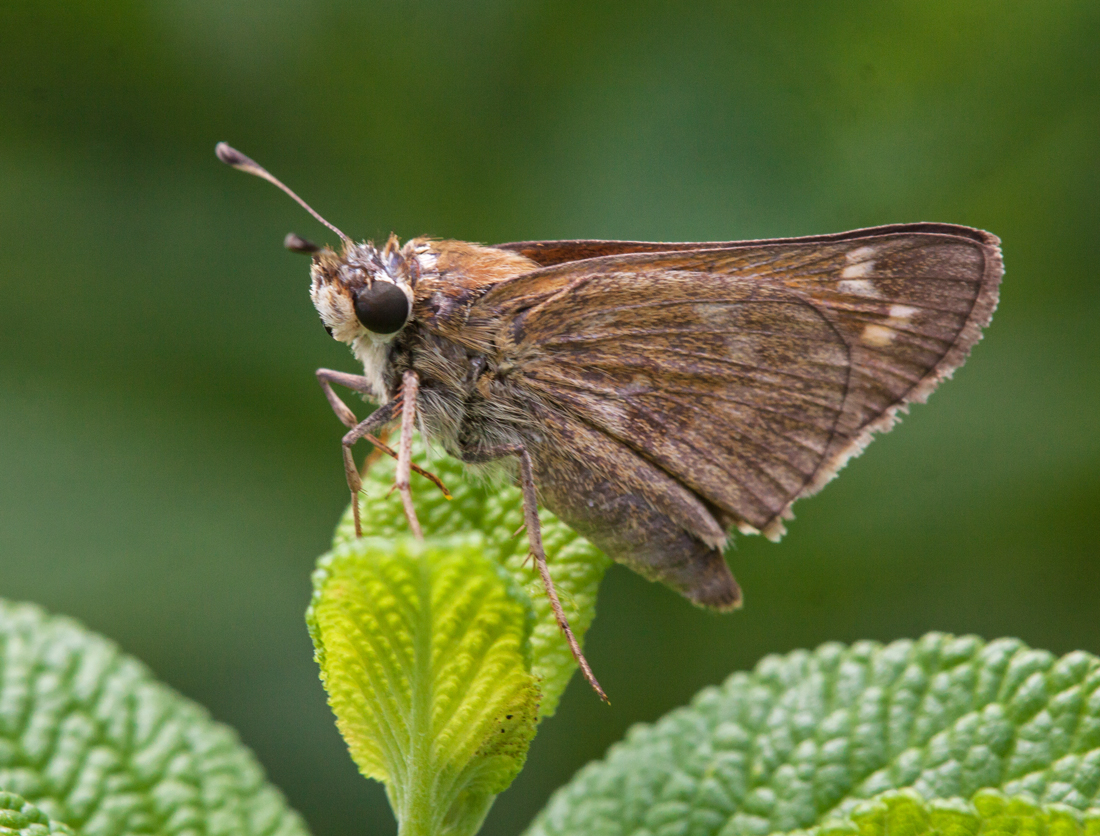
I always seem to have real problems making positive identification of the smaller, nondescript butterflies, like this little orange skipper butterfly that I photographed recently at my local marshland park.

If I had to go out on a limb, I’d hazard a guess that this is a Delaware Skipper (Anatrytone logan), although with more than 3500 recognized species of skippers, the odds are not in my favor.

tiny_orange_blog

© Michael Q. Powell. All rights reserved.
Read Full Post »

It’s rare that I actually welcome an insect landing on me, which is usually a prelude to it biting me, but I was really happy when this Eastern Comma butterfly (Polygonia comma) decided it like the way that I tasted.
It initially landed right on my chest and began to lick my shirt and then moved over to the messenger bag in which I carry my camera gear. I carefully removed the bag and was able to get these shots while the Eastern Comma kept busy licking away my accumulated sweat (my apologies to those with delicate sensibilities, but these butterflies don’t land on pretty flowers and instead generally feed on the less photogenic sap, rotting fruit, and dung).

Normally this butterfly blends in well with its environment and is hard to see, but I guess that we would all agree that a blue Adidas bag is not its natural environment. It was also surprisingly easy to identify the butterfly. Last year I agonized in trying to decide if a butterfly I had photographed was a Question Mark or a Comma—the difference is in the shape of the white marking. Yes, those are actually the names of the butterflies. Who makes up these names? It’s the kind of job that I would enjoy.

I haven’t found any other insects named for punctuation marks, but won’t be surprised to find that there is an Asterisk caterpillar or an Ampersand beetle.

comma1_blogcomma2_blog

© Michael Q. Powell. All rights reserved

Read Full Post »

Small butterflies have a special, delicate beauty all their own, like this Gray Hairstreak butterfly (Strymon melinus) that I photographed in mid-August at Lewis Ginter Botanical Gardens in Richmond, Virginia.

BugGuide states that this is the most common hairstreak in North American, but this is only the second time that I have seen one. Based on my limited observation of American women, I would assert that the blond hairstreak is the most common one, though, as a bald guy, I realize that hair is not my area of expertise.

hairstreak2_bloghairstreak1_blog

© Michael Q. Powell. All rights reserved

Read Full Post »

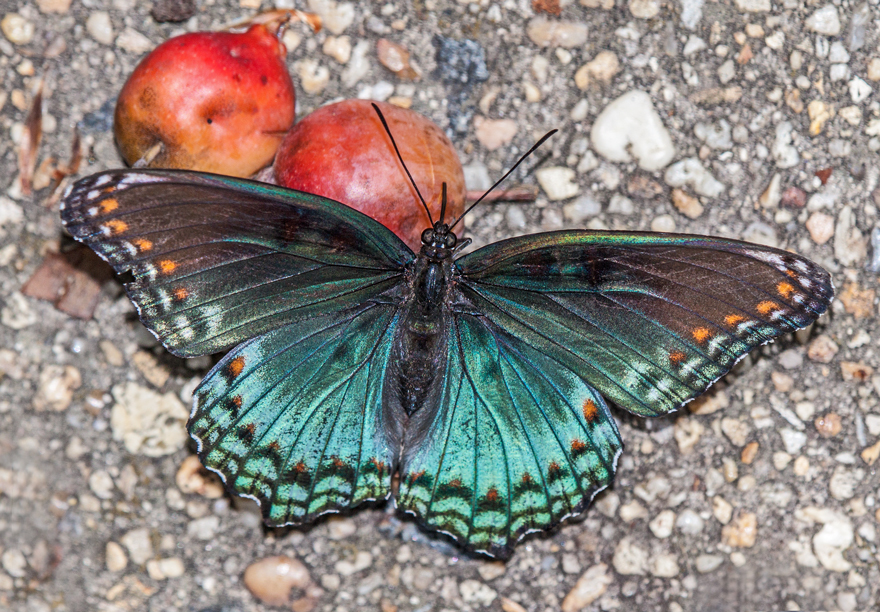
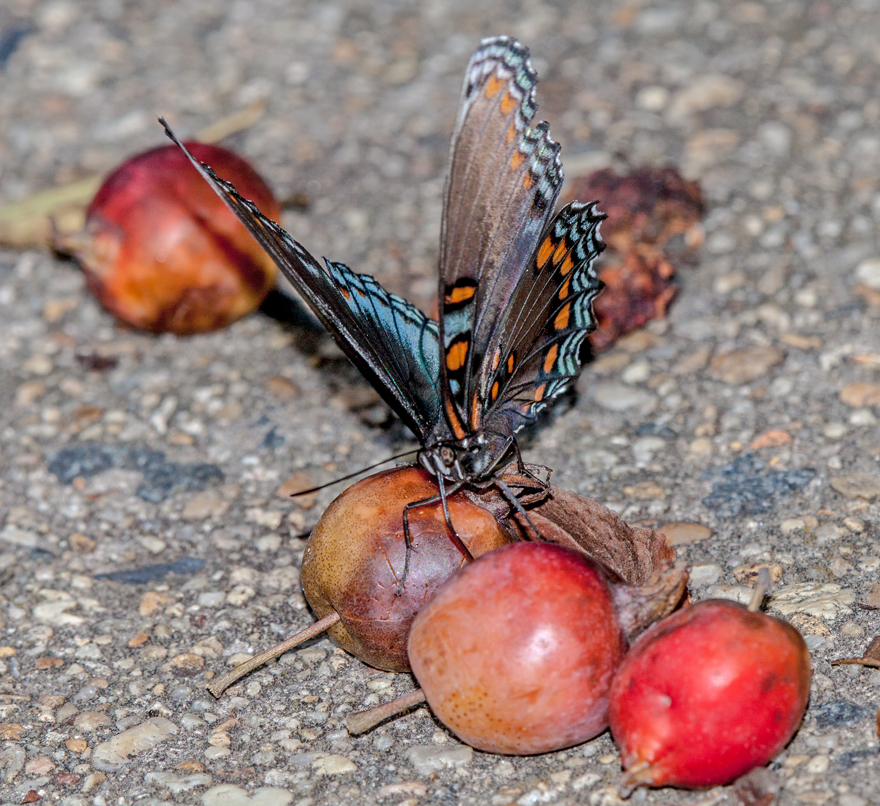
In the townhouse community in which I live in Northern Virginia, many of us have crabapple trees in our front yards, and the fallen crabapples are a nuisance at this time of the year. However, they do provide food for certain butterflies that prefer rotten fruit to flower nectar, like this Red-spotted Purple butterfly (Limenitis arthemis astyanax) that I photographed this morning.

crabapple2_blogcrabapple_blog© Michael Q. Powell. All rights reserved

Read Full Post »

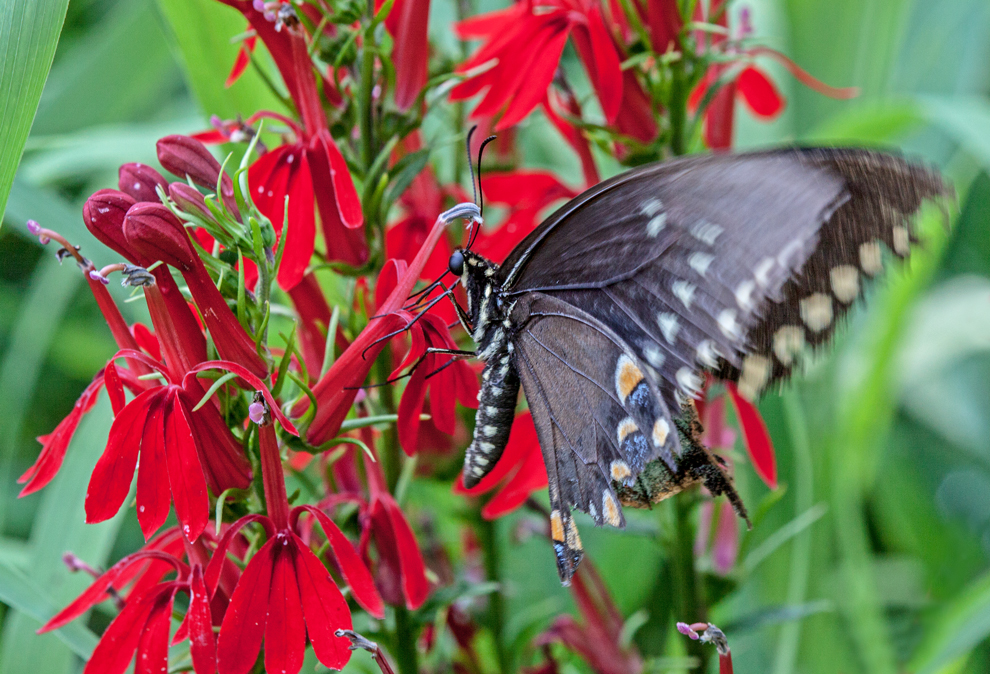
I love the look of this black-colored swallowtail butterfly feeding on a cardinal flower (Lobelia cardinalis) in the marsh—I just wish that I could identify the butterfly with greater certainty.

I used to think that there were only a few varieties of black-colored swallowtails, but as I learn about more species, I get more confused when trying to identify them. Most of the time I think that this is a Pipevine Swallowtail, but at other moments I convince myself that this is a Spicebush Swallowtail or even a Black Swallowtail. Whatever species it is, this butterfly kept its wings flapping pretty quickly as it was feeding, which accounts for the motion blur in the wings.

I really like the color and shape of the cardinal flower and wanted to show some of the buds and petals, so I decided not to crop the shot any tighter. I was a little surprised to find this butterfly on the cardinal flower, because I read in one document on the internet that these flowers are pollinated almost exclusively by hummingbirds.

swallowtail_cardinal_blog

© Michael Q. Powell. All rights reserved

Read Full Post »

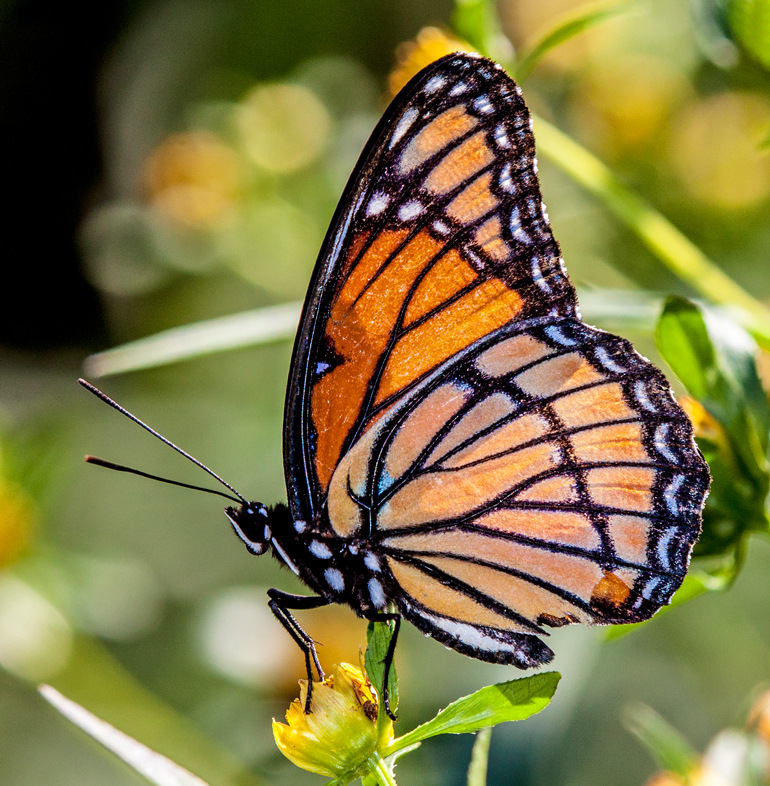
I love backlit subjects, especially when the light shines through from behind and provides a stained glass effect, as was the case with this Viceroy butterfly (Limenitis archippus).

backlit_viceroy_blog

© Michael Q. Powell. All rights reserved

Read Full Post »

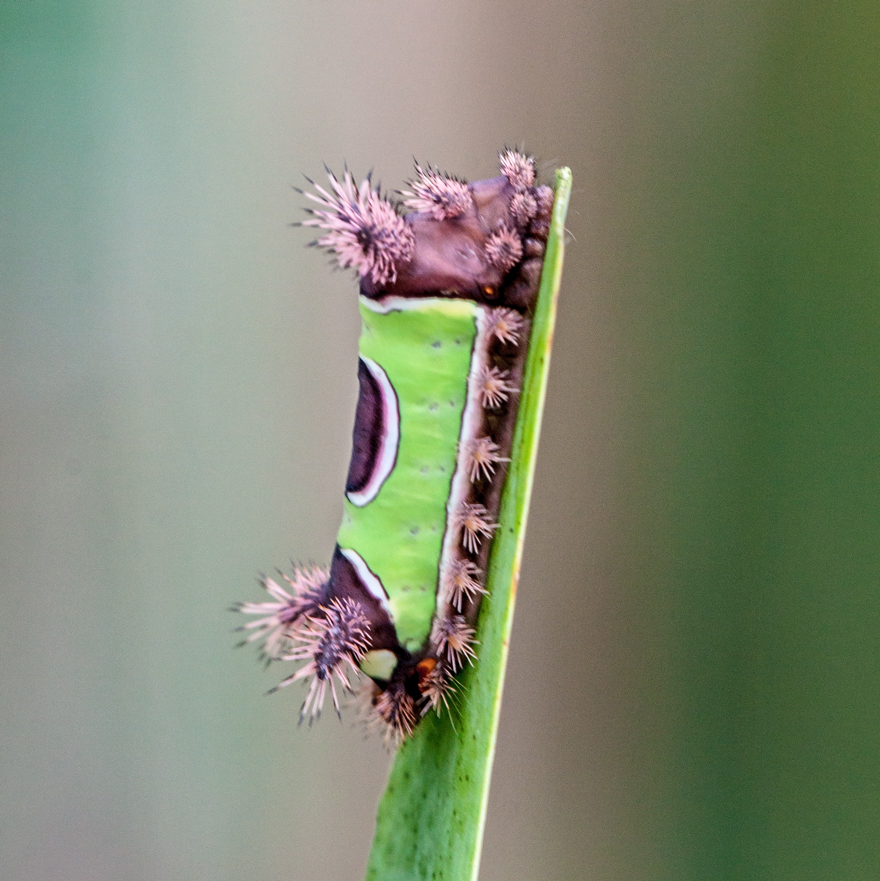
It was just starting to rain when some fellow photographers and I encountered a very strange-looking caterpillar. I couldn’t believe my eyes and was immediately reminded of the dogs in my neighborhood that sometimes wear colorful raincoats in inclement weather.

It turns out that this is a Saddleback caterpillar (Sibine stimulea), the larva of a type of moth. Once you get past the green “saddle,” it’s hard to miss all of the spines, which happen to be venomous. According to Wikepedia, stings by this caterpillar can cause swelling, nausea, and leave a rash that can last for days. Yikes! If I had known that in advance, I might not have leaned in to get a close-up shot of the head, though fortunately my 180mm macro lens allowed me to stay at a safe distance.

I can safely say that this is the most bizarre caterpillar I have ever seen. It’s hard to imagine that I can possibly encounter anything stranger than this, but my local marsh continues to surprise and amaze me.

saddleback_catterpillar1_blogsaddleback_caterpillar2_blog

© Michael Q. Powell. All rights reserved

Read Full Post »

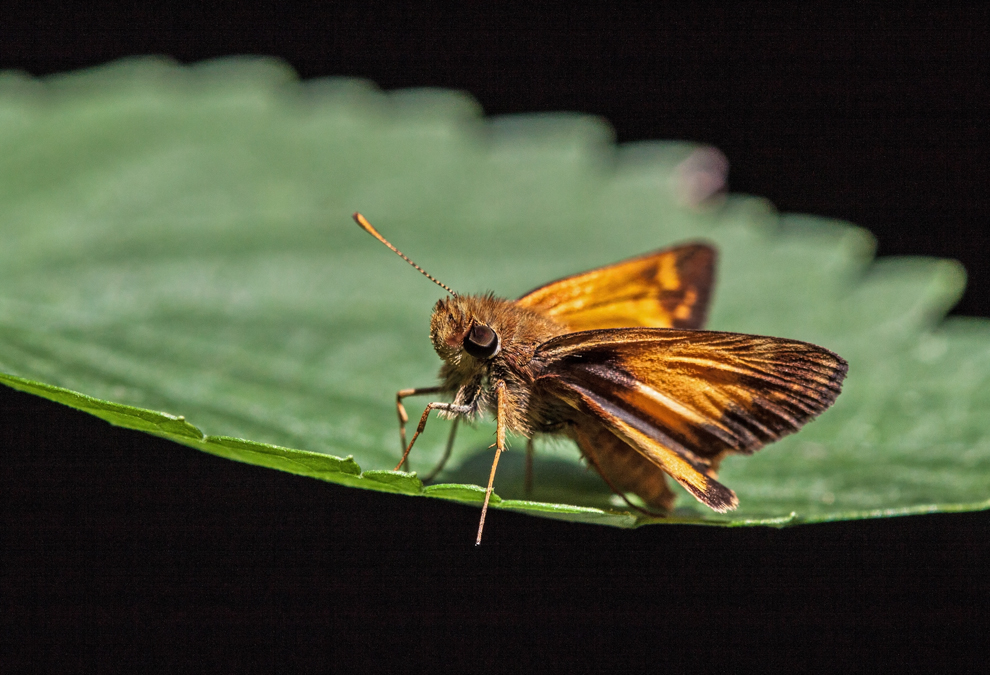
Every now and then I take a photograph and I am not really sure how I achieved the effect in the shot, like this one of a Fiery Skipper butterfly (Hylephila phyleus) on a jagged leaf.

With the exception of a few minor adjustments of the RAW image and a tiny bit of cropping, this looks just like the image I started with. When I first examined the image, I was pretty sure that I had used flash, but the EXIF data indicate that flash was not used. I took the shot handheld at ISO 400, f/6.3, and 1/500 sec. The depth of field was pretty shallow, but I did get the eye pretty much in focus, and I like the way the sharpness falls off so quickly.

I especially like the blurry jagged back edge of the leaf and the sharper near edge. The triangular shape of the wings seems to mirror those jags. Even the butterfly’s pose seems to work well, with the one leg dangling over the edge. If you click on the image, you get a higher resolution view of the photo.

I think that this is a Fiery Skipper, though I confess that I am not very good at identifying these little butterflies. Let me know if you can help in further identifying the butterfly.

skipper_leaf_blog

© Michael Q. Powell. All rights reserved

Read Full Post »

Normally I don’t think of orange and pink as colors that work well together, but I really like the result when I captured a shot of a Great Spangled Fritillary butterfly (Speyeria cybele) feeding on an unidentified pink flower.

spangled_pink_blog© Michael Q. Powell. All rights reserved

Read Full Post »

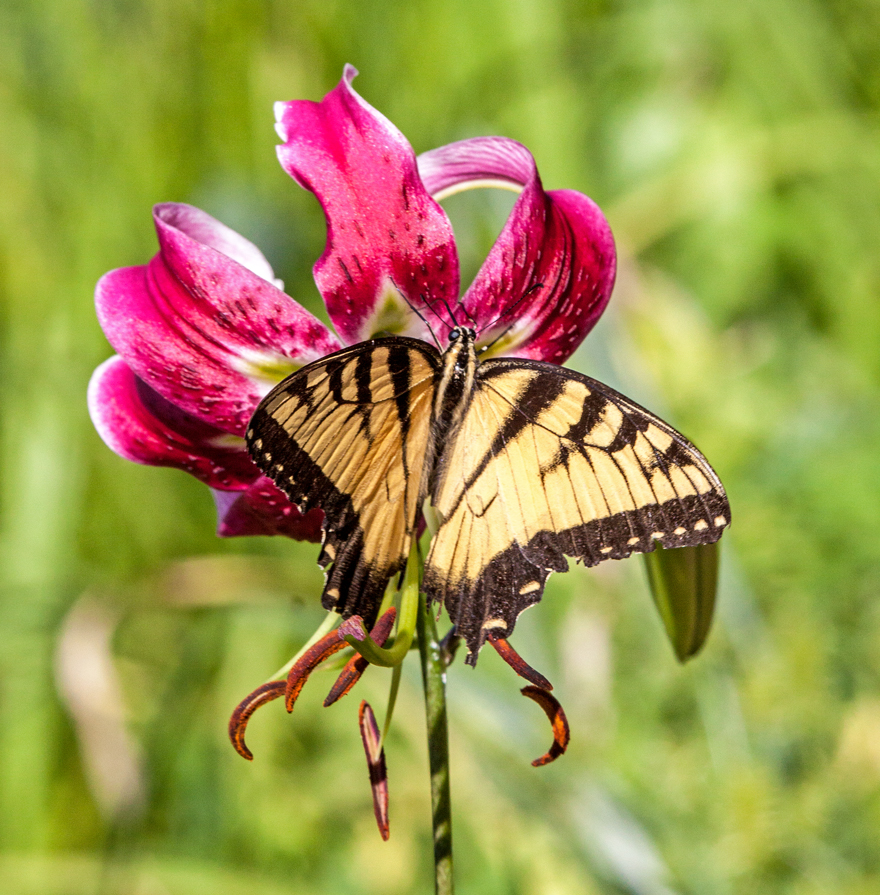
I don’t know my flowers very well, but I think that this Eastern Tiger Swallowtail (Papilio glaucus) is feeding on some kind of tiger lily (Lilium columbianum). Tiger on tiger—I like the way that sounds. Whatever the case, I love the gorgeous colors of the flowers, providing a gorgeous contrast to those of the butterfly.

tiger_blog

© Michael Q. Powell. All rights reserved

Read Full Post »

The weather this week has been mostly gray and dreary and I felt the need for a burst of bright colors, so I am posting this image from last week of a two Eastern Tiger Swallowtail butterflies (Papilio glaucus) feeding on an unidentified flower against the backdrop of a brilliant blue sky. The butterflies were even cooperative enough to place themselves at different angles to add  visual interest to the shot.

swallowtails_blog

© Michael Q. Powell. All rights reserved

Read Full Post »

When I am chasing after little butterflies, it’s rare that I manage to get a shot of them with their wings open—I am lucky if I can get a side view.

This little brown butterfly, which I think is an Appalachian Brown (Satyrodes appalachia), perched in a location, however, which allowed me to shoot downward, catching its wings wide open. The muddy, brown water of the marsh normally would not be optimal for an image, but seem to work well here, almost matching the colors of the butterfly.

I also was able to get a shot from the side, the second image, showing the butterfly’s beautiful brown eyes. There was intermittent rain the day that I was shooting and you can see a few raindrops on the leaves of the plant on which the butterfly is perched.

brown_butterfly1_blogbrown_butterfly2_blog

© Michael Q. Powell. All rights reserved

Read Full Post »

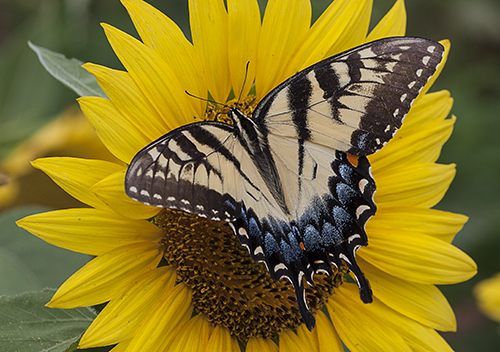
Different flowers affect me differently—some attract me with their beauty or their fragrance or their colors. Others produce an emotional response, like sunflowers, which invariably make me feel happy.

The sunflower’s large size, bright colors, and bold graphic design appeal to me. The sunflower virtually shouts its presence to the world—there is nothing soft and delicate and hidden about a sunflower.

Like this Easter Tiger Swallowtail butterfly (Papilio glaucus), I sometimes enjoy the flowers one at a time. It was really fun, though, to visit a large field of sunflowers last month with some friends and to see row after row of these cheery flowers. I wanted to capture a group shot of the sunflowers, but I struggled to find a way to do so effectively (even though we had even brought along a little stepladder to give us a perspective from above the flowers).

In the end, my favorite shot (the second one below) focuses on a single sunflower, with other flowers a blur in the background. I used a simple 50mm lens (often called the “nifty fifty”) on my camera to make sure that I could control the aperture and throw the background out of focus.

EasternTigerSwallowtail lorez

sunflowers_blog

© Michael Q. Powell. All rights reserved

Read Full Post »

As I was ending a photo shoot of sunflowers last month with some fellow photographers, one of them noticed a pretty butterfly perched on a leg of one of our tripods.

The butterfly remained on the tripod leg for a long time and appeared to be licking the leg, prompting us to speculate that there might be residual salt from sweaty hands on the leg. Of course, we all gathered around the tripod and tried to snap photos of the butterfly. Eventually the butterfly flew off to some nearby vegetation, where I got this shot of a butterfly that I have not been able to identify.

As we go ready to walk back to our vehicle, the butterfly perched on the pant leg of one of the other photographers and then on my shirt before flying away again. After stowing our gear in the trunk, we figured that we had seen the last of the butterfly.

However, as we were slowly driving away, we noticed that the butterfly was inside the car, eventually moving to the windshield, right in front of the driver. We helped the butterfly out of the car with the aid of a CD cover, but had to admire its persistence—the butterfly really seemed to want to go home with us.

SpottedButterfly lorez

© Michael Q. Powell. All rights reserved

Read Full Post »

Tiny butterflies seem to be constantly in motion and their size and speed normally make them difficult to photograph.

However, this butterfly, which I think may be a Summer Azure butterfly (Celastrina neglecta), stayed perched on a Black-eyed Susan (Rudbeckia hirta) long enough to allow me and my fellow photographer, Cindy Dyer, to take multiple shots, including some with flash. There is a whole family of small Azure butterflies, which have a wingspan of about one inch (25mm) and look pretty similar, so please correct me if I have misidentified this insect.

We encountered this little butterfly on a recent trip to Meadowlark Botanical Gardens in Vienna, Virginia. (You can check out Cindy’s image of this butterfly, along with her amazing photographs of other flowers and insects on her blog.)

I love large, colorful butterflies, like the Eastern Tiger Swallowtails that were virtually omnipresent in the garden that day, but there is something really special too about the delicate beauty and simple colors of this tiny butterfly. In this image, I like the way in which the muted tones of the butterfly provide a nice visual counterbalance to the bold colors of the flower.

azure1_blog

© Michael Q. Powell. All rights reserved

Read Full Post »

As the beautiful afternoon light illuminated the wings of this Eastern Tiger Swallowtail butterfly (Papilio glaucus) from behind, I couldn’t help but think of a stained glass window. I love backlighting and these subjects seemed perfect to showcase the effect—I didn’t even have to worry about using fill flash to avoid shadows, because of the translucency of the wings.

I took this image yesterday at Meadowlark Botanical Gardens in Vienna, Virginia, yet another wonderful local spot for photographing flowers and insects.

stained_glass_butterfly_blog

© Michael Q. Powell. All rights reserved

Read Full Post »

As I waited outside my neighbors’ townhouse so that we could travel to an indoor butterfly exhibit, I tried out my new macro lens in their garden and ended up with of my best butterfly shots of the day.

Cabbage White butterflies (Pieris rapae) are very common, but they are elusive when you try to photograph them. I managed to squeeze off only two shots before the butterfly flew away, but this shot illustrates why I love my 180mm macro so much. The small butterfly filled up much of the frame without me having to get right on top of it. The lens also captured a pretty good amount of detail too. If you click on the image, you can see some of the details of the butterfly’s green eye, for example.

Almost exactly a year ago, my photography mentor and muse,  Cindy Dyer, in whose garden I photographed this butterfly, challenged me to get a good image of a Cabbage White butterfly. A year later, I feel pretty confident in saying that I have met that particular challenge.

cabbage_yellow_blog© Michael Q. Powell. All rights reserved

Read Full Post »

The sunflower was big enough that an Eastern Tiger Swallowtail butterfly (Papilio glaucus) and a bumblebee could peacefully coexist, though it looks like they had each carved out their individual spheres of influence and kept a respectful distance from each other.

coexistence_blog

© Michael Q. Powell. All rights reserved

Read Full Post »

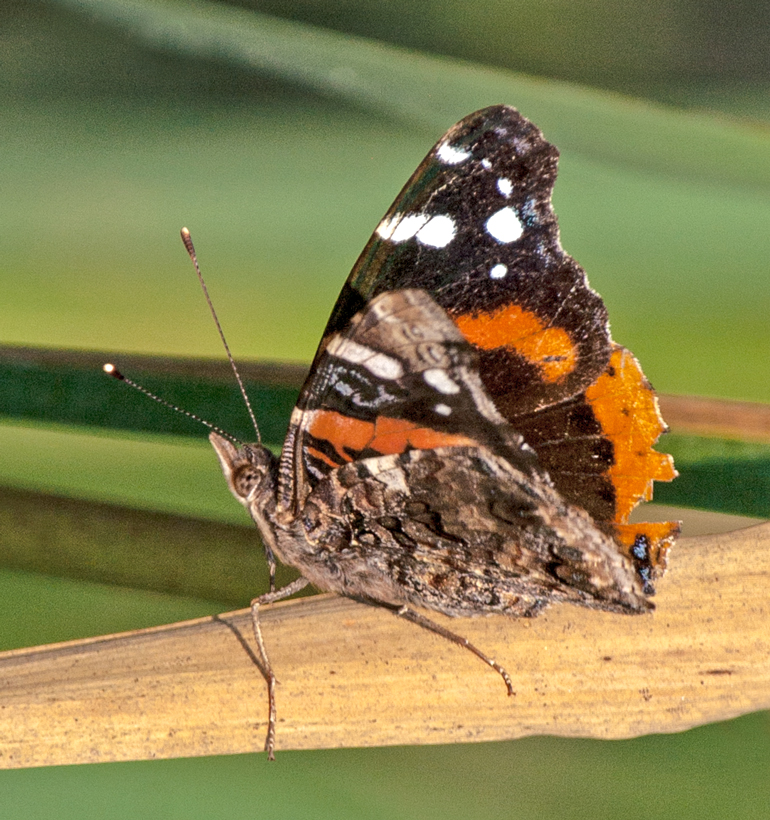
I am finally starting to see more butterflies, like this Red Admiral butterfly (Vanessa atalanta) that I spotted recently in the cattails at my local marsh.

It seems like we had a slow start this year with butterflies compared with last year and I had been fearful that I would not be treated to their colorful displays that I enjoy so much. Gradually my concerns are disappearing as I see different varieties appear and I am happy that I can even identify some of them.

Sharp-eyed readers might notice that something does not look quite right with this photo. I rotated the image ninety degrees, because I found myself cocking my head when the butterfly was pointing downward.

admiral_blog

© Michael Q. Powell. All rights reserved

Read Full Post »

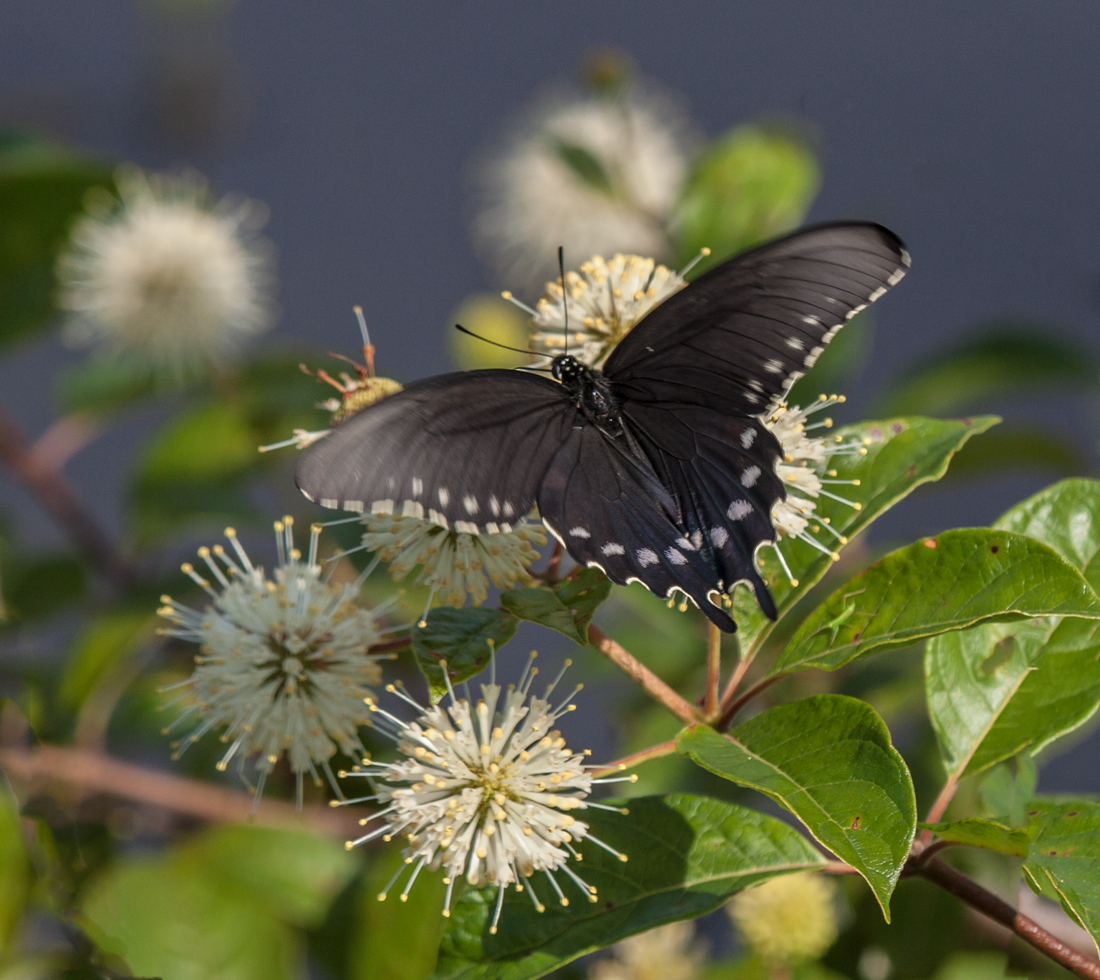
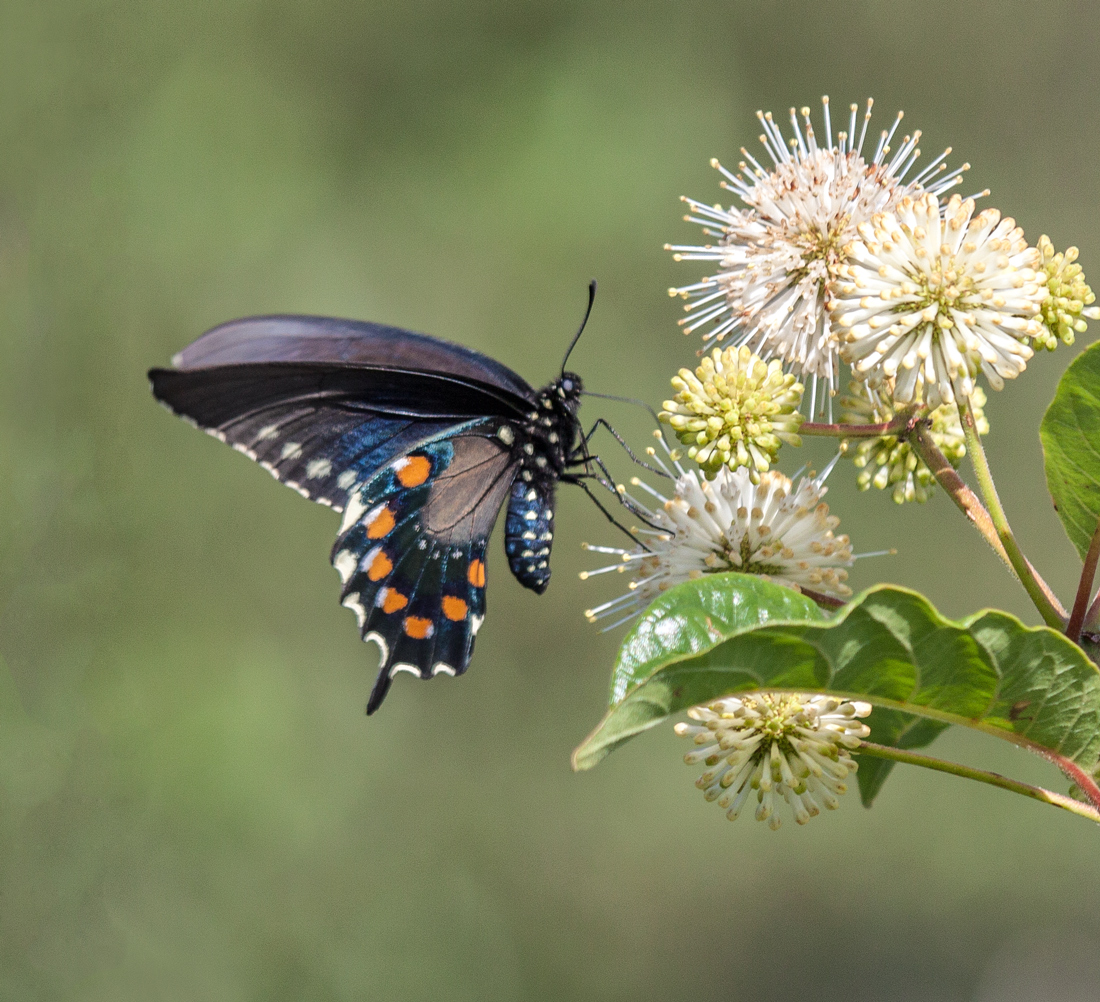
How many kinds of black swallowtail butterflies can there possibly be? Until yesterday, the only black swallowtail that I had ever encountered was the black variant of the female Eastern Tiger Swallowtail. (Check out my posting from last year to see the two variants of the female Eastern Tiger Swallowtail, a characteristic known as dimorphism.)

Yesterday, while walking along the boardwalk at my local marshland park, I came across a black butterfly feeding on a Buttonbush. Clearly it was a swallowtail and it was equally obvious that it was not an Eastern Tiger Swallowtail. I remembered that there was another black swallowtail called a Spicebush, so I figured that was what it had to be. When I checked out the photos of the Spicebush Swallowtail on-line, though, none of them seemed to match my butterfly exactly.

It was only today, when I was looking through photos with my photograph mentor, Cindy Dyer, that I realized that there was yet another black swallowtail and have concluded that the unknown butterfly is almost certainly a Pipevine Swallowtail butterfly (Battus philenor). It looks a lot like the Spicesbush, but the pattern of the orange dots are different, as pointed out in this posting by Don Lambert on the Earth Science Picture of the Day blog.

pipevine1_blogpipevine2_blog

© Michael Q. Powell. All rights reserved

Read Full Post »

Although I enjoy chasing after large, colorful insects, I also will try to get shots of the smaller ones too, like this tiny butterfly that I think is a Least Skipper (Ancyloxypha numitor). Somehow this little butterfly struck me as having an attitude—maybe it’s because it looks like he is wearing a pair of Ray-Ban aviator sunglasses, like an insect Tom Cruise.

tiny_orange_blog

© Michael Q. Powell. All rights reserved

Read Full Post »

« Newer Posts - Older Posts »