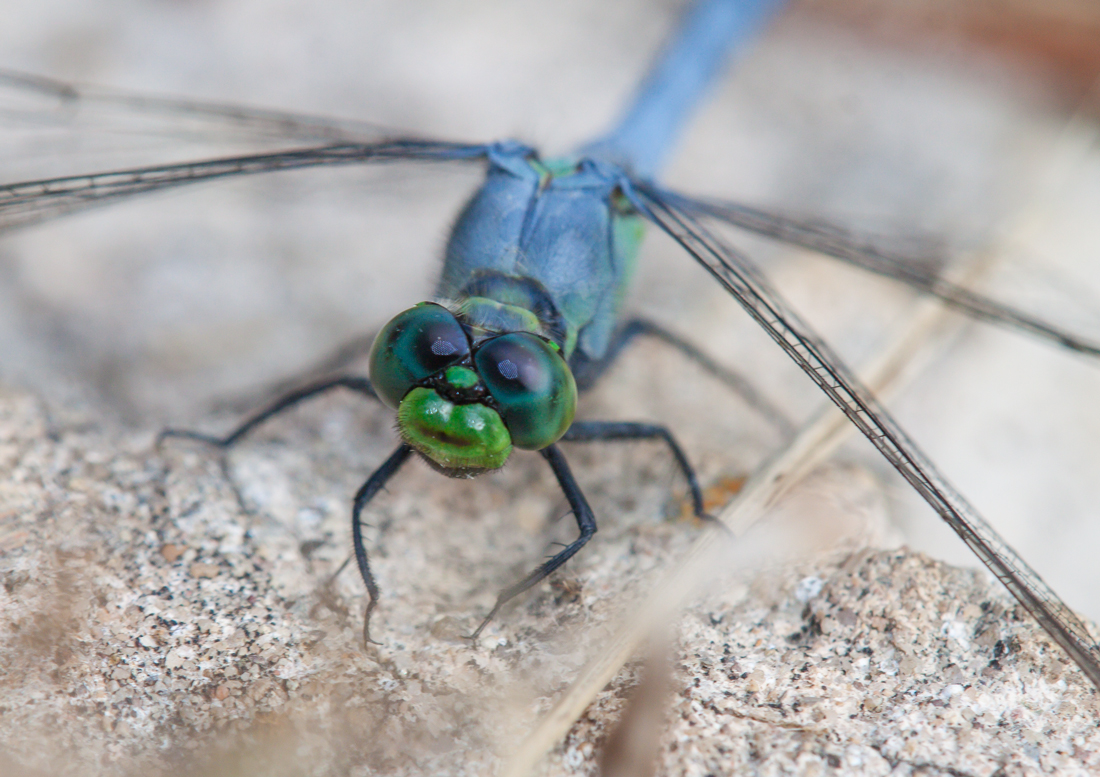
Feeds:
Posts
Comments

Archive for the ‘Art’ Category


The weather has not been very cooperative and outdoors there are not yet many flowers blooming. Yesterday I went to the US Botanic Garden in Washington D.C. to get my “fix” of flowers in a more temperate setting. Among the many beautiful flowers that I observed was this Madeira Cranesbill geranium (Geranium maderense).

Madeira Cranesbill geranium

© Michael Q. Powell. All rights reserved.

Read Full Post »

Imagine what it would be like to have a half billion miniature copies of some your images making their way across the country in the form of postage stamps. Last week I was thrilled to travel to Cleveland, Ohio with my mentor and friend, Cindy Dyer and her husband for the first day ceremony for the Water Lily stamps that feature four of her photos.

cindydyer's avatarCindy Dyer's Blog

Last week my water lily FOREVER stamps were unveiled at the Garfield-Perry March Stamp Show in Cleveland, Ohio. First photo: digital postmark first day covers and booklet of stamps; second photo: autographed program and cancelled stamps from First Day Ceremony: autographed by Jay Bigalke, American Philatelic Society, Editor of The American Philatelist; Paul Davis from U.S. Postal Service, who sang the National Anthem; Harold Chapman, President of the Garfield-Perry Stamp Club, who gave the welcome; remarks by Cynthia Druckenbord, Vice President of the Cleveland Botanical Garden; (then me!); and then Melvin J. Anderson, U.S. Postal Service Northern Ohio District Manager, and I got to unveil a giant poster with the water lily stamps (Third photo, shot by my dear friend Michael Powell).

The water lily stamps are available in booklet form at post offices across the U.S. You can also order them online.

Stamps in…

View original post 56 more words

Read Full Post »

One of the butterflies that I observed this past weekend at the Franklin Park Conservatory and Botanical Gardens in Columbus, Ohio was this spectacular Blue Morpho (Morpho peleides), a species whose normal habitat is the tropical forests of Latin America.

In the past when I have visited butterfly exhibitions, I have found it amazingly difficult to catch this butterfly with its wings open, but this one was surprisingly cooperative and posed for a moment to let me get this shot.

Blue Morpho butterfly

© Michael Q. Powell. All rights reserved.

Read Full Post »

One of the many highlights of my trip this past weekend to Ohio was a visit to the Franklin Park Conservatory and Botanical Gardens in Columbus, where I was able to observe butterflies and orchids in a wonderful indoor setting.

I am still going through a backlog of photos, but this gorgeous pink orchid is one of my initial favorites. It was great to have macro lens back in my hands after a winter in which it mostly stayed on the shelf.

Orchid

© Michael Q. Powell. All rights reserved.

Read Full Post »

I don’t paint, but if I did, I’ve love to be able to paint graphic images like this American Robin (Turdus migratorious) that I photographed in the snow earlier this month at Huntley Meadows Park in Alexandria, Virginia.

Robin in the snow

© Michael Q. Powell. All rights reserved.

Read Full Post »

I don’t consider myself to be a birdwatcher, but I have to admit that there is something pretty exciting about seeing (and photographing) a new species. Early yesterday morning, I spotted a small bird swimming in a pond at my local marsh that looked unfamiliar.

I had no idea what it was, but took some photos so I could check when I returned home. If I hadn’t been a birdwatcher, I would have examined it more closely with binoculars or ideally a spotting scope and consulted a guidebook that I would have been carrying with me (and carried on a conversation with my fellow birdwatchers).

It looks to me like this might be a Red-necked Grebe (Podiceps grisegena), a species that I have never before encountered. With a name like “redneck,” I thought it might be a rural Southern bird, but it actually is found mostly in the north during summer months.

I am looking forward to seeing more new birds this spring and can’t wait to see what other birds decide to visit my local marshland park.

Red-necked Grebe

Red-necked Grebe

© Michael Q. Powell. All rights reserved.

Read Full Post »

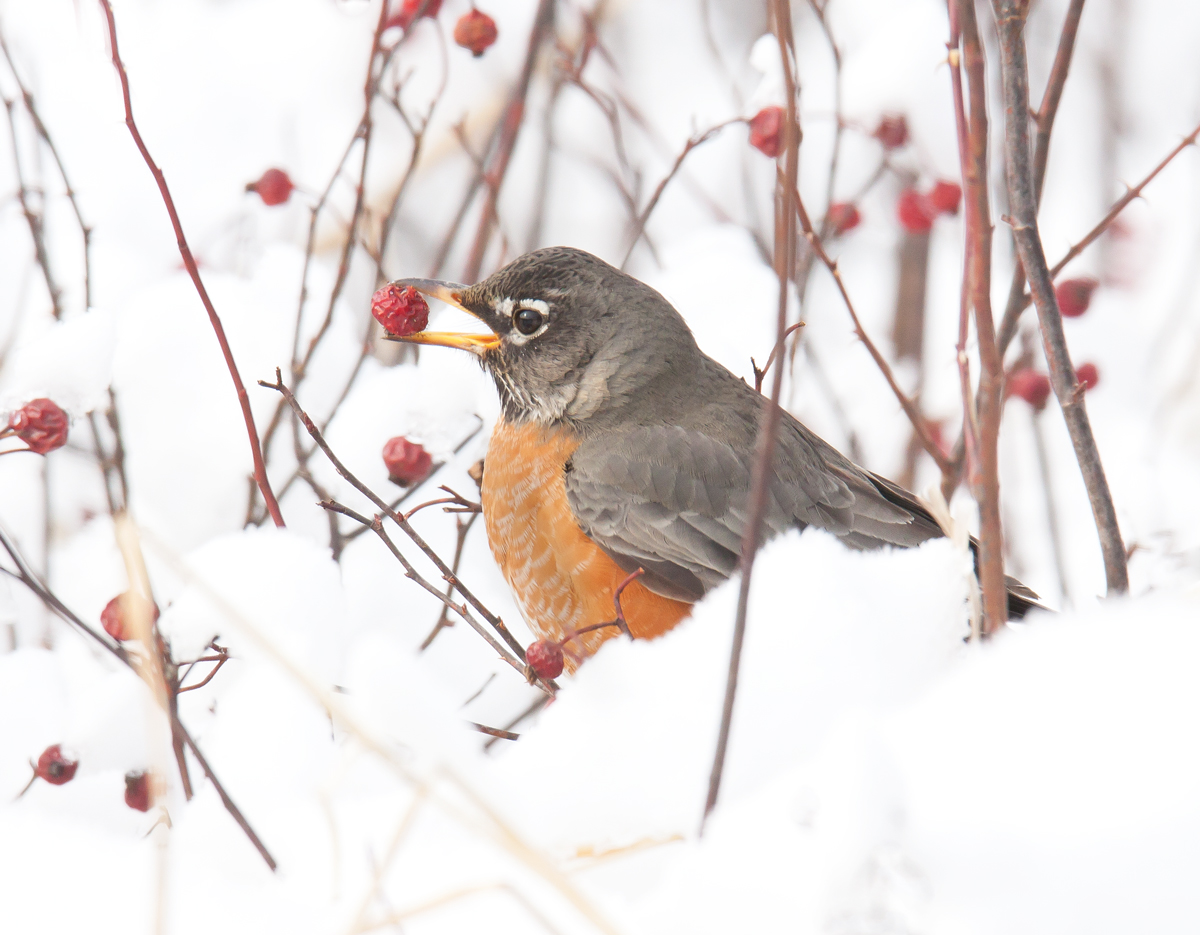
The snow is melting quickly and soon will be nothing but a memory. Fortunately I was able to capture some fun shots when the snow covered my marshland park, like this image of an American Robin (Turdus migratorius) enjoying an undoubtedly frozen berry—I think it is a rose hip from a Swamp Rose.

American Robin

© Michael Q. Powell. All rights reserved.

Read Full Post »

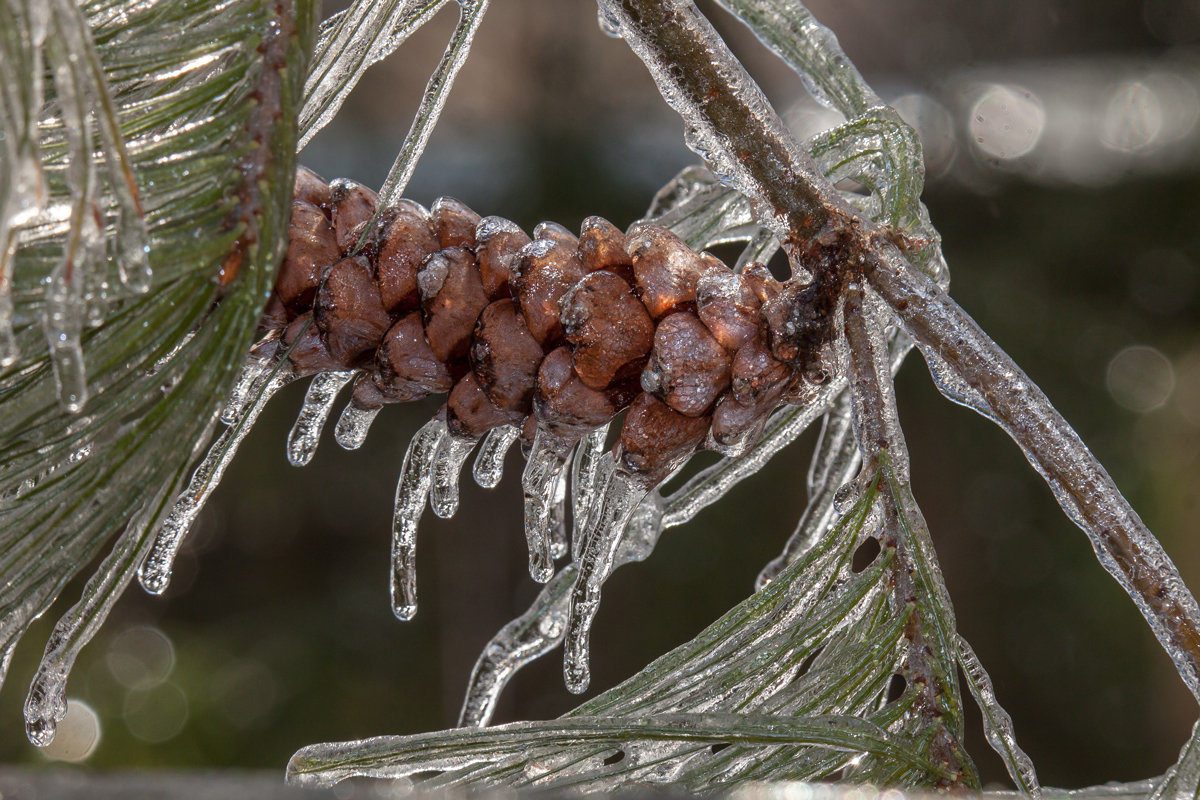
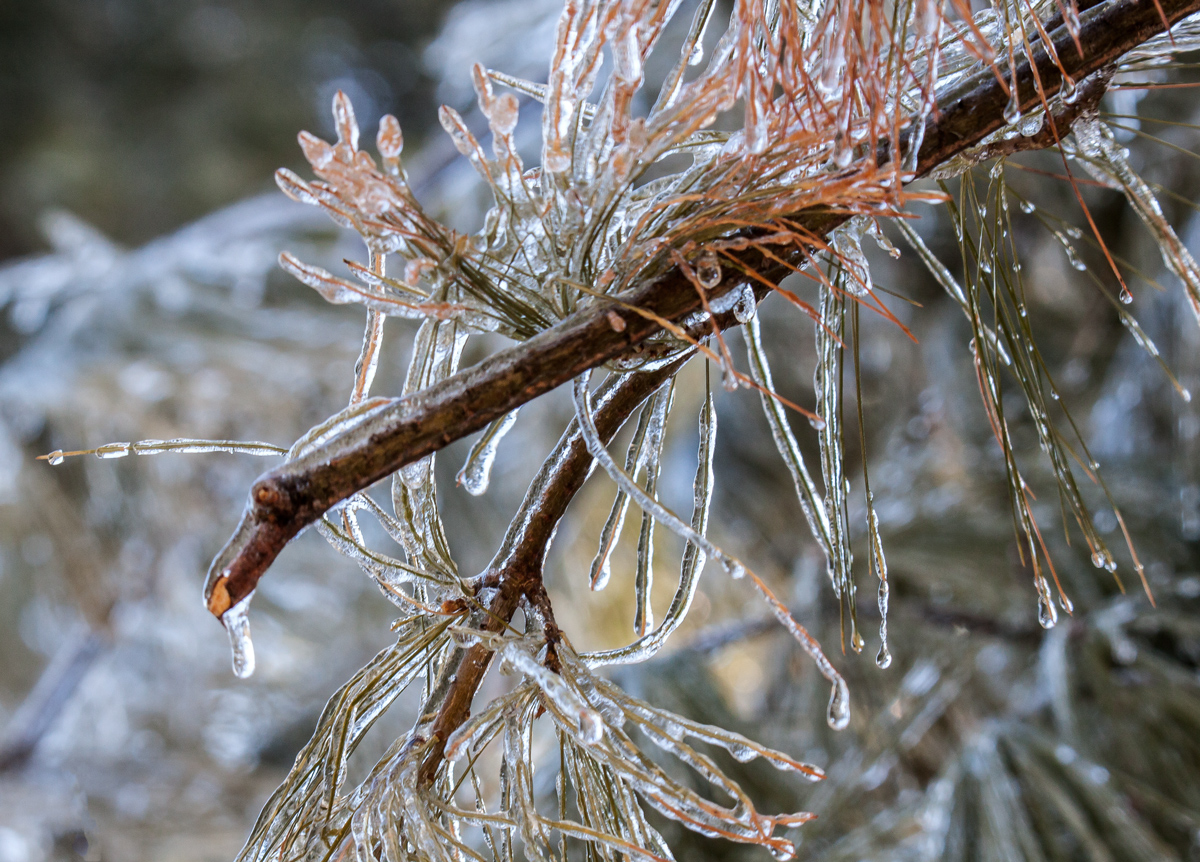
The Washington D.C. area is virtually shut down today as we await a winter snowstorm—the federal and local government offices and schools are all closed. With a little extra time on my hands, I was able to go over some of my photos from Monday’s storm and thought I’d post a couple more images from that event, which covered all surfaces, including the pine trees, with a coating of ice.

I find there is a fragile, transitory beauty in these abstract images—an hour later, when the sun’s rays hit the ice, the effect was gone.

icy2_blogicy1_blog

© Michael Q. Powell. All rights reserved.

Read Full Post »

I awoke yesterday to a world covered in ice, the aftermath of a storm of sleet and freezing rain. Peering out the sliding glass doors, I could see the branches of a pine tree bent over, heavy with the weight of the ice, and almost touching the boards of my backyard deck.

I took a number of shots as the morning sun started to melt the ice. Somehow I keep coming back to this almost abstract image of the pine needles. It’s definitely not my usual style of shooting, so it’s hard to explain why it appeals to me.

It’s probably a good thing to shoot things differently from time to time and try out unusual approaches. At a minimum, you’ll have fun and you may end up with crazy images that you like.

icy pine

© Michael Q. Powell. All rights reserved.

Read Full Post »

The colors were not spectacular, but the sky still seemed to be amazingly beautiful as I prepared to depart from Huntley Meadows Park yesterday just after sunset. A long-range telephoto zoom may not be the lens of choice for capturing this kind of a scene, but it was the one that was on my camera at the time and I am pretty happy with the results.

We’ve had so many gray, dull days this winter that a day with the sun shining seemed like a real blessing and I wanted to take advantage of every moment of that sunshine.

Huntley Meadows Park

© Michael Q. Powell. All rights reserved.

Read Full Post »

Out of the corner of my eye I caught sight of some moment in the cattails. At first I thought it was a Downy Woodpecker, which I have sometimes observed pecking on the cattails in search of insects, but I quickly saw that this was a smaller bird. When it finally climbed higher on a cattail stalk, it became clear that it was a Carolina Chickadee (Poecile carolinensis).

Initially I had trouble finding this tiny bird in my viewfinder with the zoom fully extended, but eventually I was successful. I am really happy with the effect that I managed to achieve, with the darker-colored bird really standing out from the lighter-colored backdrop of the cattails. Normally I like to crop to focus attention on the subject, but in this case I like the images better with a considerable amount of open space around the chickadee.

I couldn’t decide which of these two image I liked more, so decided to include both of them. Sometimes I like the horizontal pose of the first shot, but at other times the open bill in the second shot draws me in.

It’s always fun to try to get shots of owls and eagles and hawks, but my moments with this little chickadee reminded me that the little birds have their own special kind of beauty.

Carolina ChickadeeCarolina Chickadee

© Michael Q. Powell. All rights reserved.

Read Full Post »

Shortly after I spotted some deer on a little ridge immediately in front of me, they started to run toward the treeline. Without thinking about my camera settings, I pressed the shutter button, hoping to capture the action. If I had been paying more attention, I would have realized that a shutter speed of 1/100th of  a second would not freeze the motion, especially when shooting at the far end of my 70-300mm lens.

When I reviewed my images on my computer, it was pretty obvious what had happened without even looking at the EXIF data. Many of the shots were blurry, but I really liked this image. Instinctively I had panned as I had tracked the deer, blurring the background, and I managed to capture the deer with its hind legs in the air. In many ways, this slightly out of focus shot captures a sense of motion even better than if I had been able to freeze the action by using a higher shutter speed.

I try to be conscious about the settings on my camera at any given moment, but I am happy in this case that my inattention caused the wrong settings to be just right.

White-tailed Deer

© Michael Q. Powell. All rights reserved.

Read Full Post »

There is something about sculptures that often affects me more deeply than other types of art. I love the way that a three dimensional sculpture lets you look at a piece from different angles and see it in different ways. I especially enjoy outdoor sculptures and I spent longs hours at the outdoor garden of the Rodin Museum during a trip to Paris a few years.

As I was wandering along an informal trail at my local marshland park recently, I came upon a piece of bone that a beautiful organic shape. As I held it in my hands, it reminded me of an abstract sculpture. It may be from a deer and is perhaps a vertebra, though I must confess that I don’t know animal anatomy at all and could be completely wrong.

The shapes and the textures of this miniature organic sculpture really fascinate me as I view them from different angles.

© Michael Q. Powell. All rights reserved.

Read Full Post »

On Friday, as I was walking toward a group of ducks, I saw a flash of white, a white that was brighter than that of a mallard duck. In the midst of the mallards, there was a couple of Northern Pintail ducks (Anas acuta) and I managed to get this shot of the male.

Before he swam away, the duck extended his neck and looked all around. I was amazed to see how long his neck was—it appeared to be almost as long as a goose’s neck.

Once again, I was reminded of the value in closely examining a group of birds. Others might have passed by the group of common ducks without bothering to notice this beautiful Northern Pintail amidst the mallards.

Northern Pintail

Northern Pintail

© Michael Q. Powell. All rights reserved.

Read Full Post »

Whenever I am walking through beautiful cities in Europe, I spend a lot of time with my eyes pointed upward, marveling at the amazing architecture. I’ve learned the hard way, though, that it is also important to look downward in order to avoid potentially unpleasant situations.

down1_blog

Dogs seem to be welcomed in many places in Europe and it is not rare for me to see them on public transportation and even in restaurants. Unfortunately, the dogs have to periodically answer the call of nature and not all owners seem to fulfill their civic responsibility to clean up after their dogs.

I ran across this sign in one section of pavement here in Brussels near the Bourse (Stock Exchange). I am sometimes confused by signs without words and often hesitate when confronted by symbols on public bathroom doors representing genders. In this case, I think it means that dogs should do their business elsewhere, though I suppose it could also be a warning that there are guard dogs present or that dogs should not even be in that area.

One other reason to look down from time to time is that there are sometimes beautiful things to be seen, like this artistic grate in one of the streets near the Grand-Place, the main square of Brussels. I don’t know the background of this little piece of art, but I am always happy to rediscover it each time that I return to Brussels.

down2_blog

© Michael Q. Powell. All rights reserved.

Read Full Post »

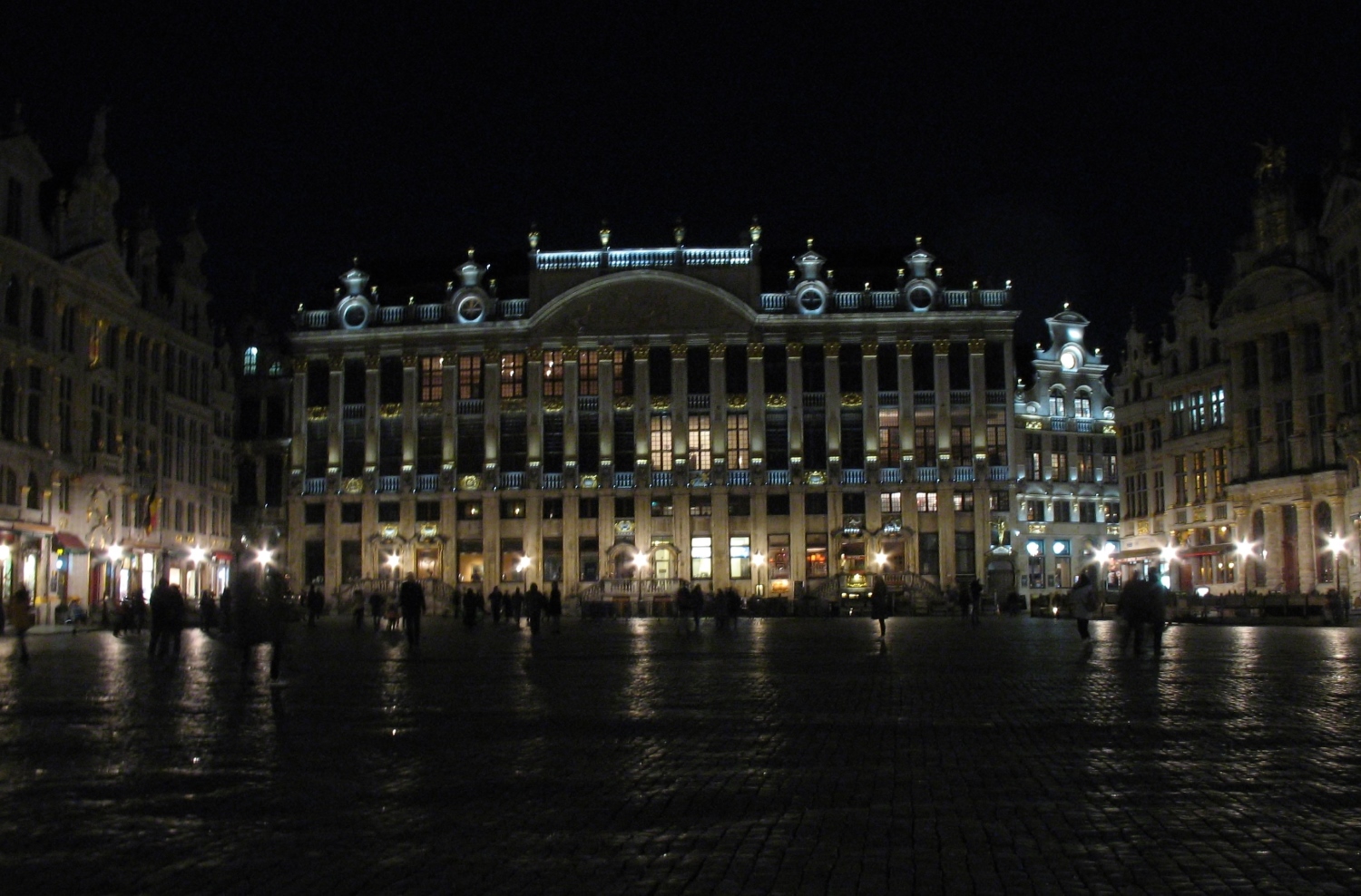
The skies finally cleared a little and yesterday evening I had a chance to take a walk in the Grand-Place, Brussel’s central square, one of my favorite locations in this city. The cobblestone pavement was still wet, helping to create nice reflections in some of the shots and the crowds were somewhat sparse, so I was able to get relatively unobstructed shots of some of the buildings that surround the square..

As is usually the case when I am traveling for work, I used my old Canon A620 point-and-shoot camera and used a variety of railings, posts, and other objects to steady myself for these nighttime photos.

Grande-Placenight3_blognight4_blog

© Michael Q. Powell. All rights reserved.

Read Full Post »

I am back in the beautiful city Brussels, Belgium for a short work trip and so far my opportunities to take photos have been limited. I am struck by the limited number of daylight hours and it’s been cloudy, windy, and occasionally rainy.

I hope to get some new images, but in the mean time decided to post one from my trip here almost exactly a year ago. It is a night shot of the main tower of the Town Hall, the tallest building in the famous Grand-Place, the central square of Brussels. If you are interested in the history of the Grand-Place, check out this Wikipedia article.

The weather may not improve much—this is what I consider to be typical European winter weather, but I’ll be out and about a bit later today trying to capture some of the sights of Brussels.

Brussels Town Hall

© Michael Q. Powell. All rights reserved.

Read Full Post »

There is something really special about the moment when the darkness of the night finally gives way to the early light of the dawn and the sky is tinged with delicate shades of pink and orange. The silence is broken by the sounds of awakening birds as their day begins.

It’s not an optimal time for wildlife photography—there is simply not enough light to reveal all of the colors and the details of the subjects. Recently, though, I managed to capture a sense of the dawn in this image of a duck ascending into the air, heading for an unknown destination.

Early bird

© Michael Q. Powell. All rights reserved.

Read Full Post »

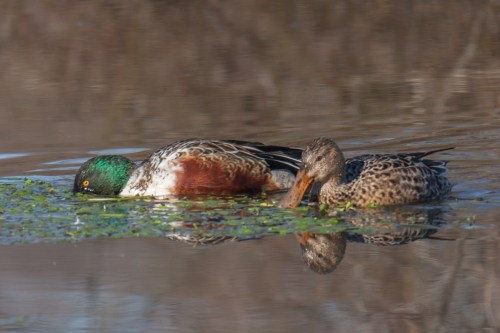
Last week, when the weather was a bit warmer and the ponds had not yet frozen over at my local marshland park, I managed to get some shots of a pair of Northern Shovelers (Anas clypeata) in action.

I quickly realized that trying to photograph two birds, rather than a single one as I usually do, significantly magnified the difficulty in getting a good shot. The two North Shovelers rarely would stay together and would wander in and out of the frame. Even worse, one of them would move closer or farther away, challenging my ability to keep them both in focus.

Northern Shovelers forage by swimming along with their bills in the water, straining out food, and never seem to completely submerge their heads. I was happy that I was able to capture some shots in which the eyes are visible, even though the bills are in the water.

I really like the first image, because the positions of the male and the female are synchronized, yet I also really like the second image, because the positions are completely out of synch. I may be confused, or perhaps a lot of different things appeal to me, depending on how I consider them.

Northern Shoveler

Northern Shoveler

© Michael Q. Powell. All rights reserved.

Read Full Post »

One of the Great Blue Herons (Ardea herodias) that has been hanging around the boardwalk at my local marshland park was amazingly cooperative yesterday morning and posed for this portrait. I think the white background was caused by the very cloudy sky—it makes the shot look almost like it was taken in a studio setting.

I really like the way that you can see the wispy feathers on the top of the heron’s head. I can’t help but notice, though, that this heron has the same kind of growth pattern on the top of his head as I do.

I wonder if he would consider shaving his head (and I really hope that he does not opt for a comb-over hairstyle a bit later in life).

Is there a Hair Club for herons?

Great Blue Heron

© Michael Q. Powell. All rights reserved.

Read Full Post »

Do you prefer the bold color of the iconic male Northern Cardinal (Cardinalis cardinalis) to the more subtle coloration of the female cardinal or are you on the fence?

Yes, I am beginning today’s posting with the same question that I used in yesterday’s posting that featured a fierce-looking female cardinal, but today am featuring a male cardinal. Not far from where yesterday’s female was perched on the fence wire, her male partner was calmly sitting on a green fencepost, seemingly surveying his surroundings.

Some of yesterday’s responses suggested that many viewers prefer the bright red color of the male cardinal, a visible and welcome sight at this time of the year, when the landscape seems to be dominated by shades of gray.

The combination of the red cardinal and the green fencepost give this image a definite feeling of Christmas. Somehow I feel like it would be good to emulate this cardinal during this pre-holiday season and stop all our frantic activity for a moment, take a deep breath, and look and listen, remembering the true meaning of Christmas.

Northern Cardinal

© Michael Q. Powell. All rights reserved.

Read Full Post »

We all like to believe in happy endings, but unlike fairy tales, real life does not always turn out that way. I was saddened this afternoon to learn that the female Bald Eagle (Haliaeetus leucocephalus) that was rescued on Monday at Huntley Meadows Park had to be euthanized.

The dislocation of her elbow was chronic and so severe that eventual release was not a possibility.  The doctors at The Wildlife Center of Virginia determined that humane euthanasia was the best treatment.

I was happy that the work of the Fairfax County Animal Control Services officer that I chronicled in an earlier posting were featured today in the on-line editions of local media, including the Washington Post, WJLA (ABC television), WTOP radio, and Inside NOVA. The sad ending in no way diminishes my respect and thanks to Officer Kathy Prucnal for her extraordinary efforts to rescue the injured eagle.

This photo that I took during the rescue is how I want to remember the female Bald Eagle, appearing strong and alert.

RIP, beautiful eagle.

Bald Eagle

© Michael Q. Powell. All rights reserved.

Read Full Post »
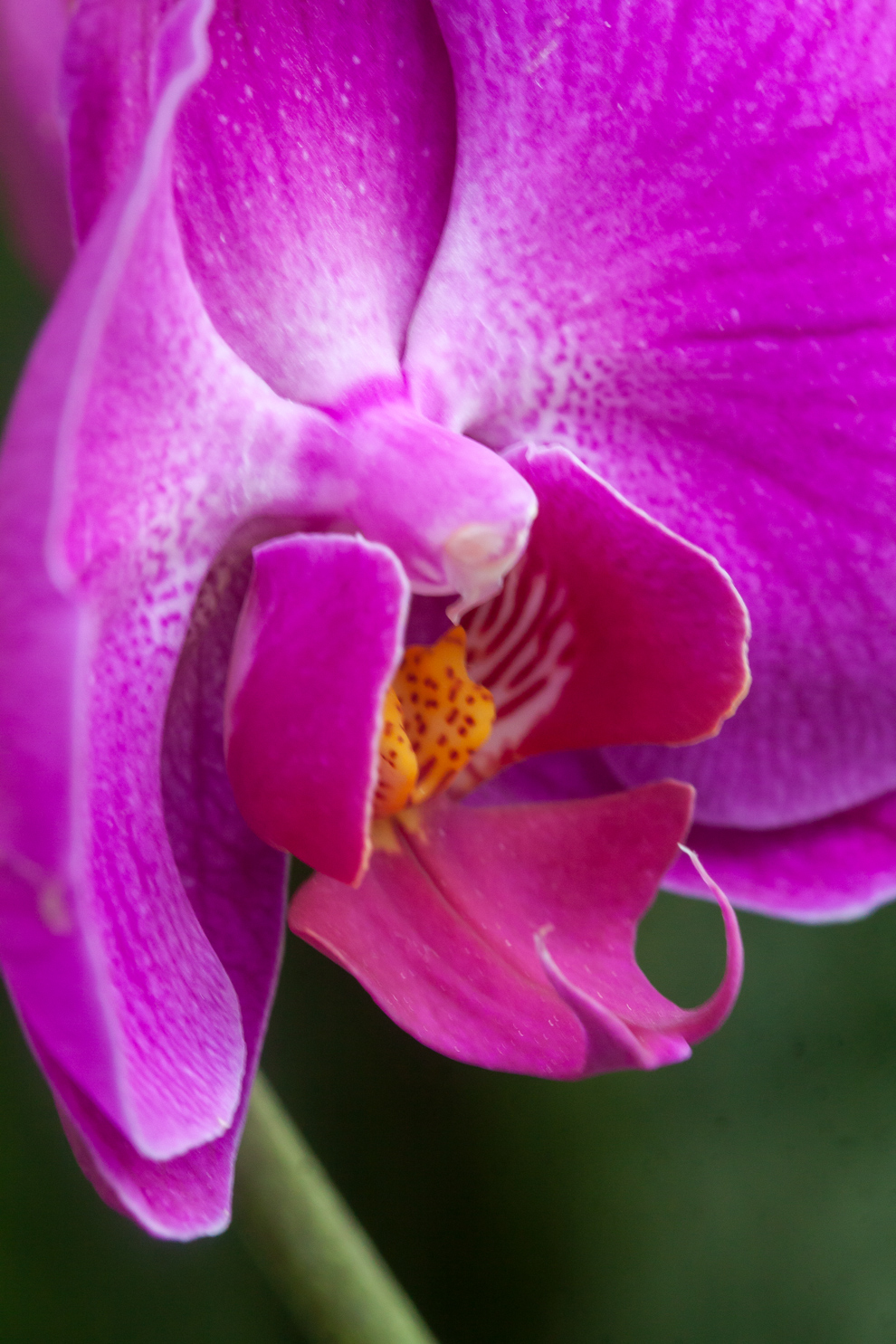
I received an update from the Animal Control Officer who rescued the Bald Eagle (Haliaeetus leucocephalus) featured in yesterday’s posting and the prognosis looks positive.

The eagle had a low heart rate, according to the attending veterinarian, likely from pesticide poisoning, and they treated it with atropine. The eagle, an 8 pound (3.6 kg) female, also had a dislocated joint in one wing, which is treatable as well. It is likely they will be able to release her after some rehabilitation at a specialized facility in southern VA, which I assume is The Wildlife Center of Virginia in Waynesboro, Virginia.

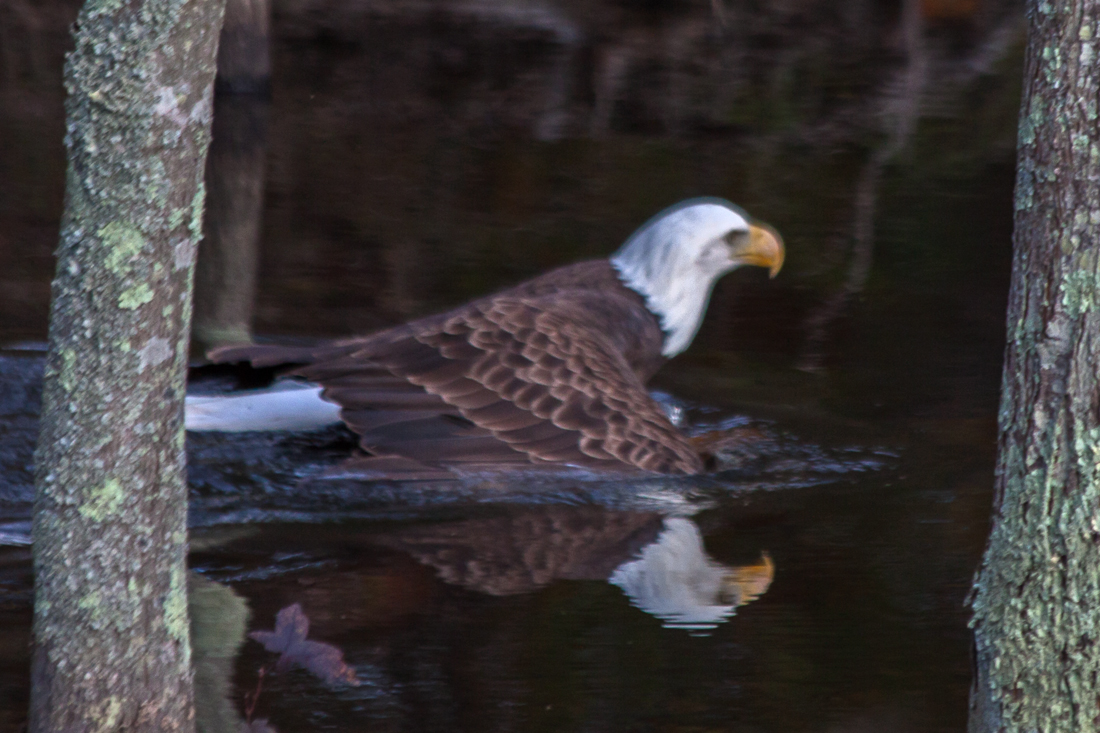
I took the first photo when the eagle was trying to swim away while being rescued. The image is not quite as sharp as the photos from yesterday, but I just love the reflection of the eagle in the water as it struggles to swim. This was in a wooded area of Huntley Meadows Park, my favorite venue for photography, that is now flooded as part of a wetland restoration project. The second photo shows the eagle as it was when I first came upon it, perched on a pile of brush, unable to fly away.

Bald Eagle

Bald Eagle

© Michael Q. Powell. All rights reserved.

Read Full Post »

November arrived as a cold, overcast, windy day and there was not much wildlife moving around (and no insects at all). All around me I noticed signs of autumn and I decided to try to capture the feeling of the changing season at my local marsh. I took lots of photos of the fall foliage, but somehow I liked this image best as a graphic depiction of autumn at my favorite marsh.

autumn cattail

© Michael Q. Powell. All rights reserved.

Read Full Post »

As the days grow colder, I am trying to capture images of almost any insect that I can find.

I was particularly happy this weekend when I came across this little flower fly (also called a hoverfly or syrphid fly) on a beautiful reddish-purple leaf. The leaf made for a simple backdrop that lets you see some of the details of the fly’s body, including the incredible compound eyes and the antennae.

I was also pleased that the out-of-focus area behind the lead is a orange-red color that seems appropriate for this autumn season.

flower fly

© Michael Q. Powell. All rights reserved.

Read Full Post »
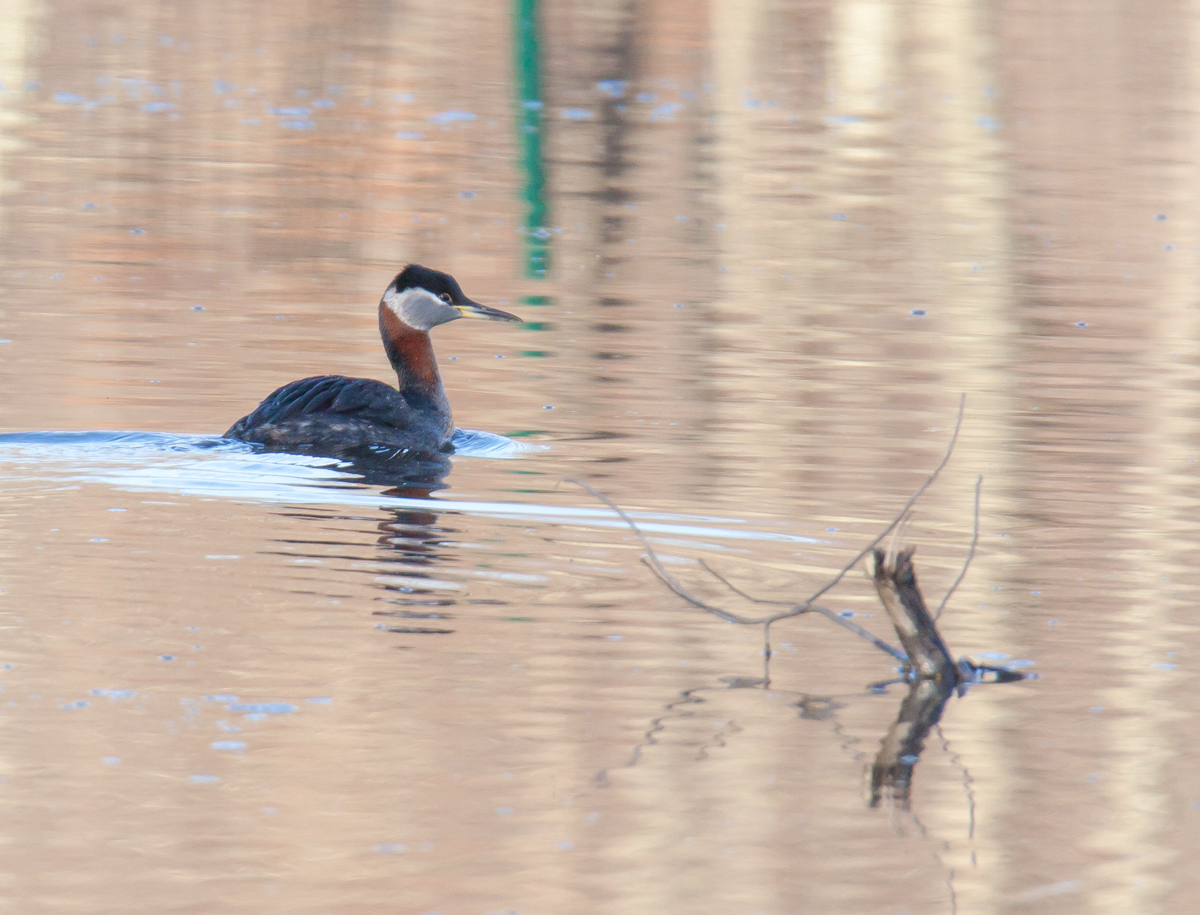
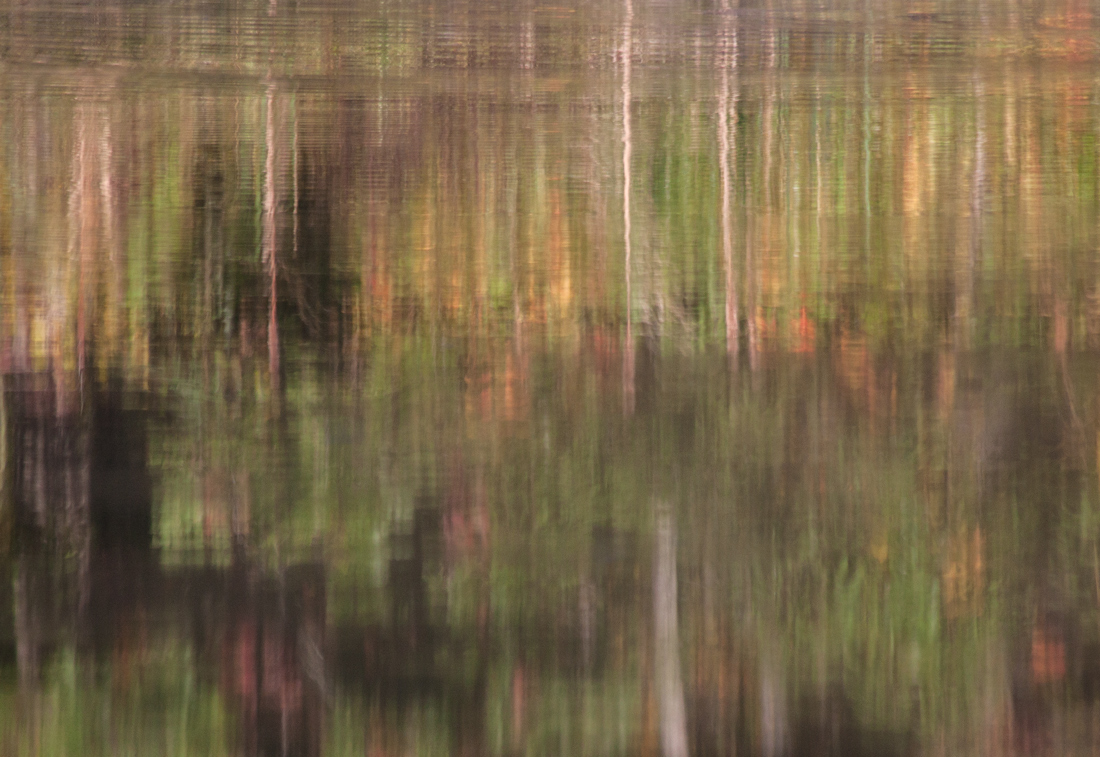
How can I show the beauty of the autumn foliage? As I was pondering that question, I glanced down into the waters of a small pond at my local marshland park and found my answer.

Impressionist autumn

The combination of the light, the reflections, and the ripples enveloped me in an impressionist world, where the forms were blurred, but recognizable. I love the art of Monet, and somehow the autumn reflections brought his works to mind.

Impressionist autumn

As i moved about, the scene would change, as different elements were reflected in the water.

Impressionist autumn

I’m often at a loss when trying to photograph landscapes—I am so used to focusing on the details of a subject that I have trouble seeing the big picture. Somehow it seemed easier when I concentrated my attention on the limited expanse of the water in the pond.

Impressionist autumn

Here in Northern Virginia, we usually don’t have the really vivid colors that I remember from my childhood days in New England, but the subdued colors are beautiful nonetheless. I find in these more restrained shades a kind of melancholic reminder that the days are gradually fading into winter.

Impressionist autumn

© Michael Q. Powell. All rights reserved.


Read Full Post »
As their name suggests, Autumn Meadowhawks (Sympetrum vicinum) appear later in the year than most other dragonflies. This past weekend I spotted quite a number of mating pairs, including this couple that I captured in an acrobatic position worthy of the Cirque du Soleil. The dramatic lighting and colorful background added to the theatrical feel of the image, as all the elements worked together to focus our attention on the performance.

Autumn Meadowawk

© Michael Q. Powell. All rights reserved.


Read Full Post »
When I am trying to take a close-up shot of a dragonfly, I know that I have succeeded when I manage to capture some of the details of the ommatidia. What are ommatidia? Ommatidia are the up to 30,000 hexagonal facets that make up the incredible compound eyes of a dragonfly. For more information and a more scientific explanation, check out a posting entitled “Super-predators” that Sue did in June 2013 in her Backyard Biology blog.

Rather than think about science, today I would prefer to simply bask in the beauty of the blue-eyed Blue-faced Meadowhawk dragonfly (Sympetrum ambiguum) that I photographed yesterday as it perched on a fallen leaf at my favorite marshland park. The color of the dragonfly’s eyes completely captivate me.

As for the ommatidia, I’ve cropped a portion of the image and added it to the posting as a second image to make it even clearer what they look like. I chuckled a little when I examined the cropped image, because this dragonfly, like some others that I have photographed, has the sparsely distributed mustache and chin hairs that never fail to remind me of human teenagers who refuse to shave in a vain attempt to look older.

Blue-faced MeadowhawkBlue-faced Meadowhawk

© Michael Q. Powell. All rights reserved.

Read Full Post »
Although it is already October and the weather is getting cooler, the local bees have not yet called it quits for the season. I am not sure what kind of purple flower this is, but the bumblebee was busily burrowing its head into its open blossoms.

I was happy to be able to catch the bee in action, capturing an “artsy” image of the moment.

October bee

© Michael Q. Powell. All rights reserved.

Read Full Post »

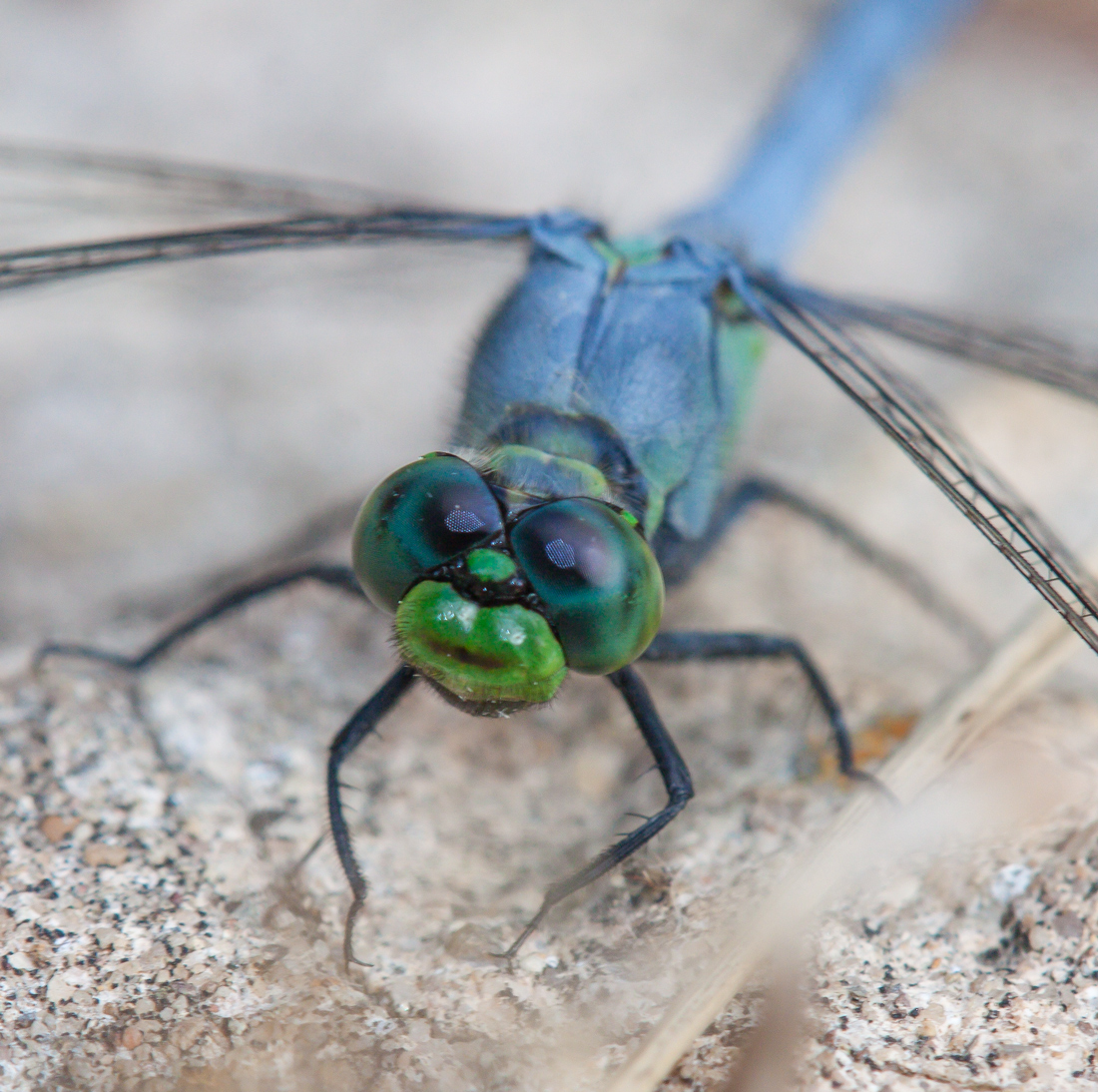
One of the main reasons why I love having a macro lens is that it that it lets me capture photos like this extreme close-up image of a male Eastern Pondhawk dragonfly (Erythemis simplicicollis) that I took yesterday at Green Spring Gardens, a historical, county-run garden in Alexandria, Virginia.

I have always been fascinated by the multi-faceted compound eyes of dragonflies and the blue-green eyes of the Eastern Pondhawk are particularly stunning. When I first caught sight of this dragonfly, he was sunning himself on a rock near the edge of a small pond. I kept low to the ground and approached him slowly. He didn’t fly away and seemed more curious about my presence than afraid.

For these shots, I rested the lens hood of the camera on the edge of the rock ledge to get this low, eye-to-eye perspective. This technique served to steady my camera, so I was able to capture a good deal of detail of the dragonfly’s face. In the initial photo, for example,which is a cropped version of the second image, you can see that the dragonfly has stubble on his chin. The third shot is a cropped version of the last photo, again to show greater detail and to draw the attention of viewers more directly to the eyes.

Do you think the shots are more effective when cropped or do you prefer the larger perspective images?

Eastern Pondhawk

Eastern Pondhawk

Eastern Pondhawk


pondhawk1_closeupb

© Michael Q. Powell. All rights reserved.


Read Full Post »

Many dragonflies species have disappeared by now as we move deeper into autumn, but some especially beautiful ones have taken their place, like these male Blue-faced Meadowhawks (Sympetrum ambiguum) that I photographed yesterday at my local marshland park.

According to the Dragonflies of Northern Virginia website, this species peaks in September to October and is the rarest and hardest to find meadowhawk in our area. I was walking through a meadow at the park with one of my fellow photographers when she spotted the Blue-faced Meadowhawk in the second photo perched on a log. At that moment, I happened to have a 70-300mm telephoto lens on my camera and I was happy  to be able to get a shot that shows the spectacular colors of this dragonfly. Little did I know that I would have an even better opportunity a few minutes later.

As we continued into an area with thigh-high growth, my friend stopped for a moment and said she had spotted a spreadwing damselfly. I looked in the direction that she was pointing and didn’t see the damselfly, but I did spot another Blue-faced Meadowhawk perched atop one of the plants.

In a whispered voice, I asked my friend to freeze and I quickly changed lenses to my 180mm macro lens. Amazingly, the dragonfly stayed in place and I was able to get a number of shots, including the first one below. Given that these dragonflies are less than two inches in size (50mm), I am thrilled with the results. There is something almost magical about the combination of red, blue, and turquoise on this dragonfly.


Blue-faced Meadowhawk Blue-faced Meadowhawk.

© Michael Q. Powell. All rights reserved.

Read Full Post »

« Newer Posts - Older Posts »