Feeds:
Posts
Comments

Archive for the ‘Art’ Category

The biological clocks of some species seem to be ticking as the summer winds down, compelling them into frantically mating sessions, like this pair of Halloween Pennant dragonflies (Celithemis eponina) that I spotted this past weekend at Lilypons Water Gardens in Adamstown, Maryland. The challenge in photographing this type of activity is to present it in a way that is artistic rather than purely sexual.

halloween pennant

halloween pennant

© Michael Q. Powell. All rights reserved

Read Full Post »

When it comes to dragonflies, what catches your eye? Is it their bright colors or their acrobatic flying skills? When it comes to male Twelve-spotted Skimmers (Libellula pulchella), it is definitely the bold brown-and-white pattern on their wings that irresistibly attracts me. I somehow feel compelled to chase after one whenever I spot it.

Yesterday I made a brief trip to Lilypons Water Gardens in Adamstown, Maryland. This sprawling facility has over 150 acres of amazing ponds and water gardens with fantastic displays of water lilies, which are for sale. (I’ll feature some of the different colored water lilies in an upcoming post.) Although I saw a lot of dragonflies there, I saw only a few Twelve-spotted Skimmers.

Most of them were remarkably elusive, but one finally perched on some vegetation overhanging the water. The bank was fairly steep, so there was no way that I could get a side shot or a head-on shot, which is one of my favorite shots of a dragonfly. What was I going to do?

Then it dawned on me that I had a perfect view of the magnificent wing patterns as I looked straight down the body of the dragonfly, facing in the same direction that he was facing. Boldly I decided to commit what is normally a cardinal sin for a photographer—I intentionally chose not to focus on the subject’s eyes. Lightning did not strike me as I pressed the shutter and I captured an almost abstract portrait of the dragonfly. For me, there is a real beauty in the simplicity and minimalism of this image.

In case you get confused about counting the twelve spots, you’re supposed to count only the brown spots. According to Wikipedia, though,some folks prefer to count the white spots and therefore call this dragonfly a “Ten-spot Skimmer.”

Twelve-spotted Skimmer

© Michael Q. Powell. All rights reserved


Read Full Post »

Eastern Amberwing dragonflies (Perithemis tenera)  are tiny, less than an inch (20-25mm) in length, but they are distinctive and stunningly beautiful. According to information on the wonderful Dragonflies of Northern Virginia website, Eastern Amberwings are the smallest dragonflies in our area and the second smallest in the United States—only Elfin Skimmers are smaller.

I spotted this perching male this past weekend at Jackson Miles Abbott Wetland Refuge in the vegetation surrounding a small pond. I was happy to be close enough that I was able to capture so many of the details of the dragonfly, including its captivating eyes and segmented body.

Eastern Amberwing

© Michael Q. Powell. All rights reserved.

Read Full Post »

With most of my dragonfly shots, I try to get as close as I can to the dragonfly, either my moving or by zooming, in order to highlight my subject. If I am not able to do so, I will often crop the image during post-processing.

Sometimes, though, I will intentionally keep my distance and will carefully compose the image to include more environmental elements. That was the case yesterday during a quick trip to Kenilworth Park and Aquatic Gardens with my photography mentor Cindy Dyer. Cindy needed to drop off some prints at the gift shop and I had a few minutes to grab a few shots.

Dragonfly perches generally are not very interesting, often just dried-out branches sticking out of the water. I was excited, therefore, when I spotted a male Slaty Skimmer dragonfly (Libellula incesta) perching on a purple Pickerelweed plant (Pontederia cordata).  I positioned myself to capture an additional pickerelweed plant in the background, pretty sure that it would be out of focus and not be too distracting. The cool colors and the sinuous curves of the plants in the background combine to create an “artsy” image that I really like.


Slaty Skimmer

© Michael Q. Powell. All rights reserved.

Read Full Post »

Most of us have probably tried to frame a shot by using an archway, foliage, or other natural or man-made object to draw the attention of our viewers to our main subject. Yesterday I decided to try something a little more elaborate  during a visit to Meadowlark Botanical Gardens in Vienna, Virginia.

The Korean Bell Pavilion at Meadowlark Botanical Gardens in Vienna,VA is an amazing structure. It was made by hand using traditional methods and houses an enormous bell. How could I highlight its beauty? I started off by taking some conventional shots of the structure and they were ok, but probably the same as hundreds of other visitors have taken.

Korean Bell Pavilion

As I was exploring some of the other buildings in the Korean Bell Garden, I noticed some beautiful carved wooden openings that faced the bell pavilion. By half-kneeling and half-standing, I realized that I could frame a view of the pavilion through the opening.

Korean Bell Pavilion

I liked the shots that I was getting, but the “frame” seemed to be a bit too dark, so I decided to see what would happen if I used my pop-up flash. As I expected, the flash helped to reveal some of the beautiful grain and color of the wood without affecting the rest of the image.

Korean Bell Pavilion

As I stood up, I saw another wooden opening and tried a similar approach, resulting is a panoramic-style shot.

Korean Bell Pavilion

Of course, it is always possible to add a frame to a shot after it has been taken, but for me it’s a lot more fun to try to frame the image while I am taking it. At a minimum, it’s worth the extra effort to try to find new angles and perspectives for a shot.

© Michael Q. Powell. All rights reserved


Read Full Post »

With so much water currently in the central wetlands area of Huntley Meadows Park, I don’t see many shorebirds at this time of the year. The shorebirds seem to prefer to wade in shallow water. This past weekend, however, I spotted this one as it surveyed the marshland from atop a log. I think it is a Greater Yellowlegs (Tringa melanoleuca), although I admit that I have troubles identifying the different shorebirds, many of which look almost identical to me.

As you can see, the yellowlegs was a long way away. Usually I try to get close-up shots with either a telephoto or a macro lens and am a little disappointed if I can not fill a substantial part of the frame with my primary subject. In this case, however, I was never tempted to crop the image more severely, because  the surrounding landscape is an important element of making this image appealing to me.

Greater Yellowlegs

© Michael Q. Powell. All rights reserved

Read Full Post »

Basking in the rays of yesterday’s early morning sunlight, this female Hooded Merganser (Lophodytes cucullatus) seemed to be caught up in a moment of reverie as she contemplated the start of a new day at Huntley Meadows Park.

Hooded Merganser

© Michael Q. Powell. All rights reserved.

Read Full Post »

During the winter months, my macro lens doesn’t get used much, but I was happy to have it with me during my recent trip to Georgia when I spotted this beautiful flower in bloom at the Oxbow Meadows Environmental Learning Center in Columbus. I’m pretty sure that it is a variety of spiderwort ( g. Tradescantia), a commonly seen flower where I live, but not in February

I grew to love this kind of shot when I first started shooting with Cindy Dyer, my photography mentor and muse. She infused me with a love for macro photography and for botanical subjects that is re-energized each spring. As I look at this image, I imagine her telling me how much she likes it, but also gently reminding me that I should have shot it with a tripod to get the extra degree of sharpness and more precise framing.

spiderwort

© Michael Q. Powell. All rights reserved.

Read Full Post »

This past Thursday I made a quick trip to Wheeling, West Virginia and fell in love with the signs that had been painted long ago on the sides of some of the brick buildings in the downtown area. Here are a few of my favorite ones.

Wheeling

Wheeling

Wheeling

© Michael Q. Powell. All rights reserved.

Read Full Post »

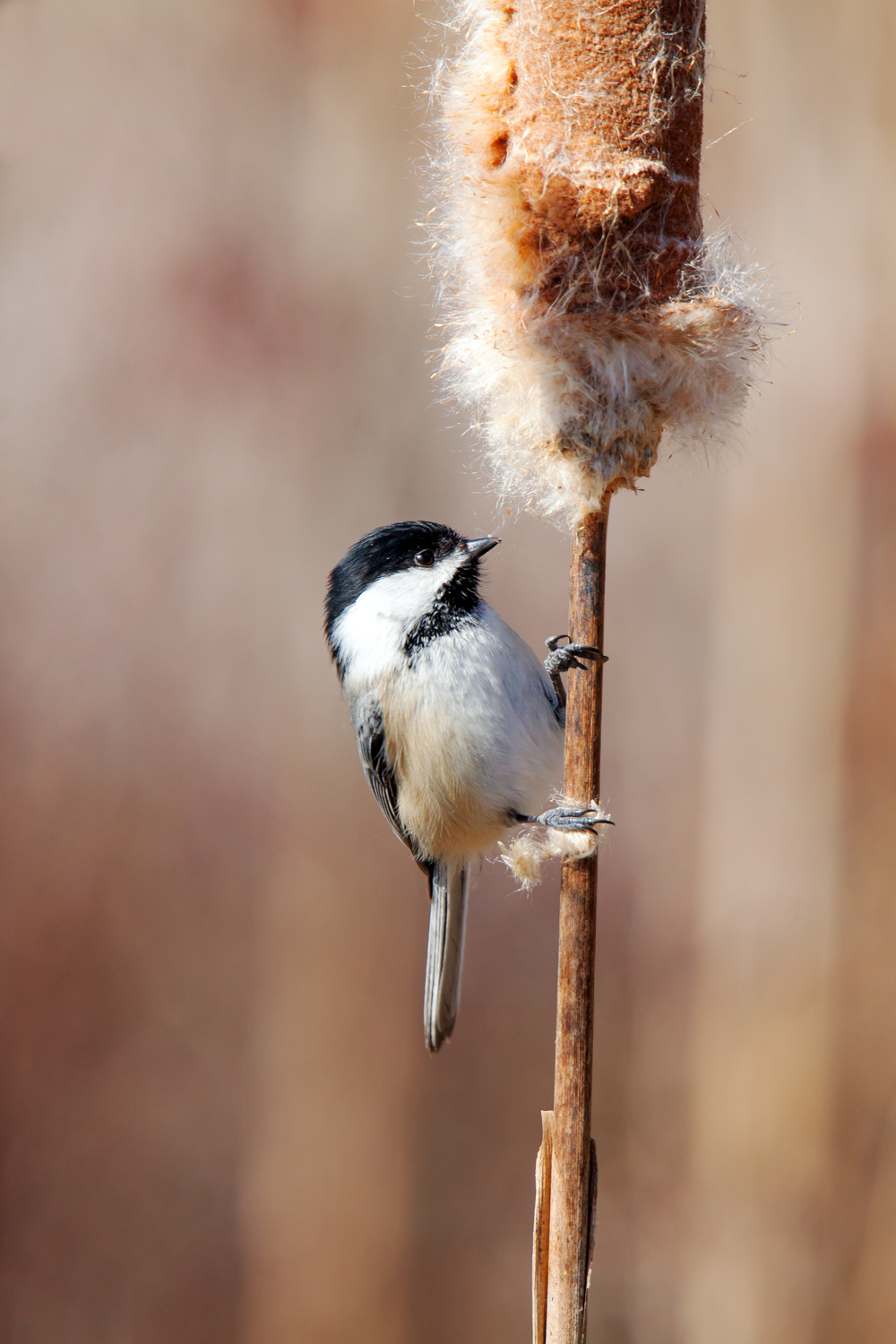
My little chickadee—spotted yesterday afternoon in the cattails at Huntley Meadows Park. In our area, most of the chickadees are Carolina Chickadees (Poecile carolinensis), but we do get some Black-capped Chickadees (Poecile atricapillus) too. The species are so similar that I am never completely sure which one I am looking at. This one, for example, looks like some of the images that I see of the Black-capped Chickadee.

When it came to presenting this image, I was a little bothered by the large amount of negative space on the left side. However, I really like the way that the image emphasizes the tallness of the cattail. The more I looked at the image, the more I grew to like the composition, so I ended up not cropping it at all.

chickadee

© Michael Q. Powell. All rights reserved.

Read Full Post »

On a visit yesterday to Lake Cook, a tiny body of water not far from where I live in Northern Virginia, I was thrilled to spot an immature Double-crested Cormorant (Phalacrocorax auritus). These prehistoric-looking water birds have feathers that are not completely waterproof, so periodically they have to extend their impressively large wings to dry them out.

Most of the cormorants that I have seen in the past have been on the much larger Potomac River, but this solitary one seemed content to paddle about among the geese and ducks that had congregated on this small pond. It was nice finally to have a day with some sunshine and I spent a pretty long time observing the cormorant. One of the coolest things for me about these birds is their spectacular blue eyes, which you can just make out in the image below, especially if you double click it to view it at a higher resolution.

Double-crested Cormorant

© Michael Q. Powell. All rights reserved.

Read Full Post »

Here’s a photo of another wall mural that I came across here in Brussels. This one I recognizes as a scene from The Adventures of Tintin, a comic book series by Belgian cartoonist Georges Remi, who wrote under the pen name Hergé. This scene shoes Tintin, his dog Snowy (Milou), and Captain Haddock, his best friend, a seafaring Merchant Marine Captain.

It’s a little sad to see the ugly graffiti that has defaced the bottom part of this beautiful mural, but that is the unfortunate reality in many parts of this city.

Tin-TIn mural

© Michael Q. Powell. All rights reserved.


Read Full Post »

One of the cool things about wandering through the narrow winding streets in the center of Brussels is that I will occasionally come upon wall murals that cover the entire side of a narrow building. They most often appear to depict scenes from comic book series like Tin-Tin, but most of them are unfamiliar to me.

This past weekend I stumbled upon this funny little scene on the side of a building. I am clueless about its context, but it made me smile as I stopped to examine it.

UPDATE:  I did a little research and think this may be a depiction of Nero, the title character of a Belgian comic book series The Adventure of Nero.

Brussels mural

© Michael Q. Powell. All rights reserved.

Read Full Post »

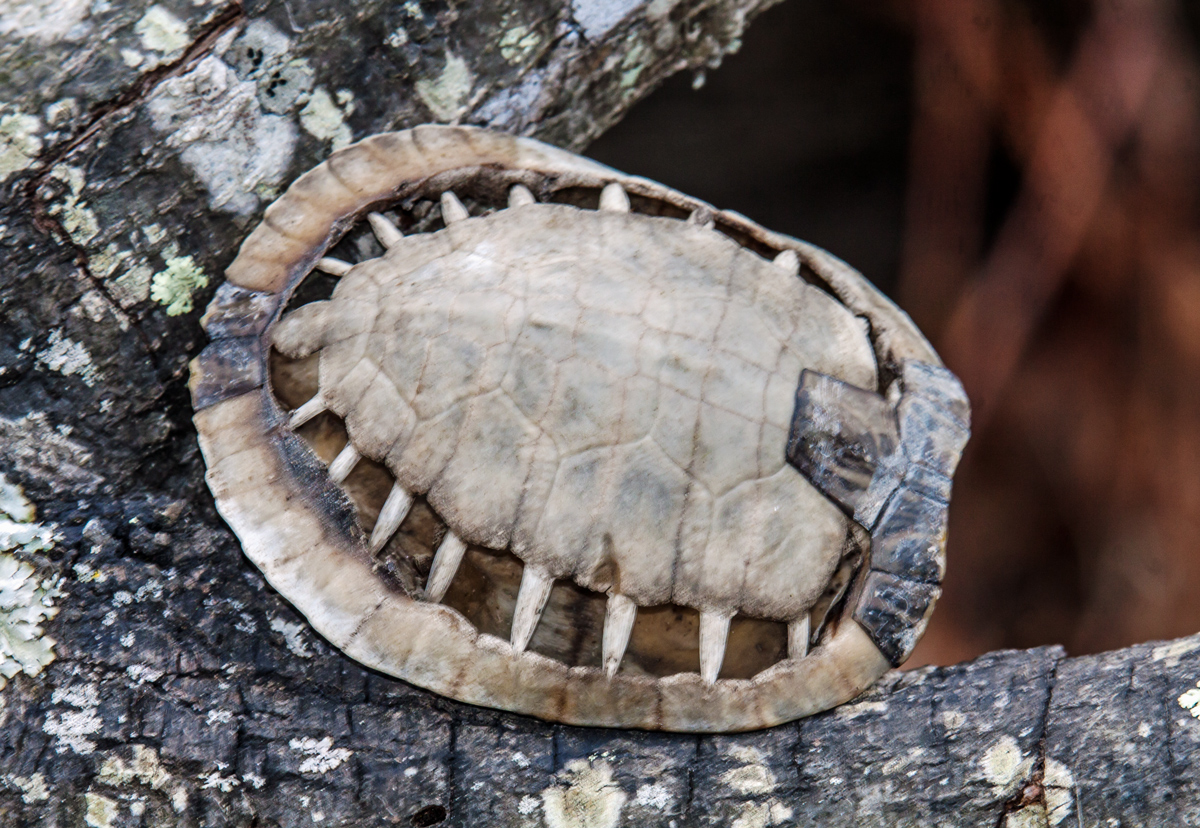
I never quite know what I will see when I wander about in the back areas of Huntley Meadows Park. This past Monday I came upon this partially deteriorated turtle shell. Initially it was in a muddy area adjacent to a beaver pond, but I moved it onto branches of a fallen tree to take the photos.

I just love the organic shapes and designs of the shell and the way that you can see some of its underlying structure.

turtle shell

turtle shell

© Michael Q. Powell. All rights reserved.

Read Full Post »

Late in the afternoon I was walking along a stream when I suddenly heard some splashing at the edge of the water. Full of curiosity I peered though the bushes to see what was going on. I was looking almost directly into the sun, so all I could see was the silhouette of a bird that was bathing in the shallow water. I knew that I would not be able to capture the details of the bird, but what I really wanted to do was to capture the mood of that intimate moment.

I hesitated a little to post this image, because its flaws are evident, but somehow it speaks to me emotionally through its simple color palette, through the shadowy unidentified bird, and through the concentric ripples in the water. My usual rule of thumb is to post the images that I like, so here it is. I realize that my views of the image are really subjective and are tied to my memories of the moment—you had to be there.

bird bath

© Michael Q. Powell. All rights reserved.

Read Full Post »

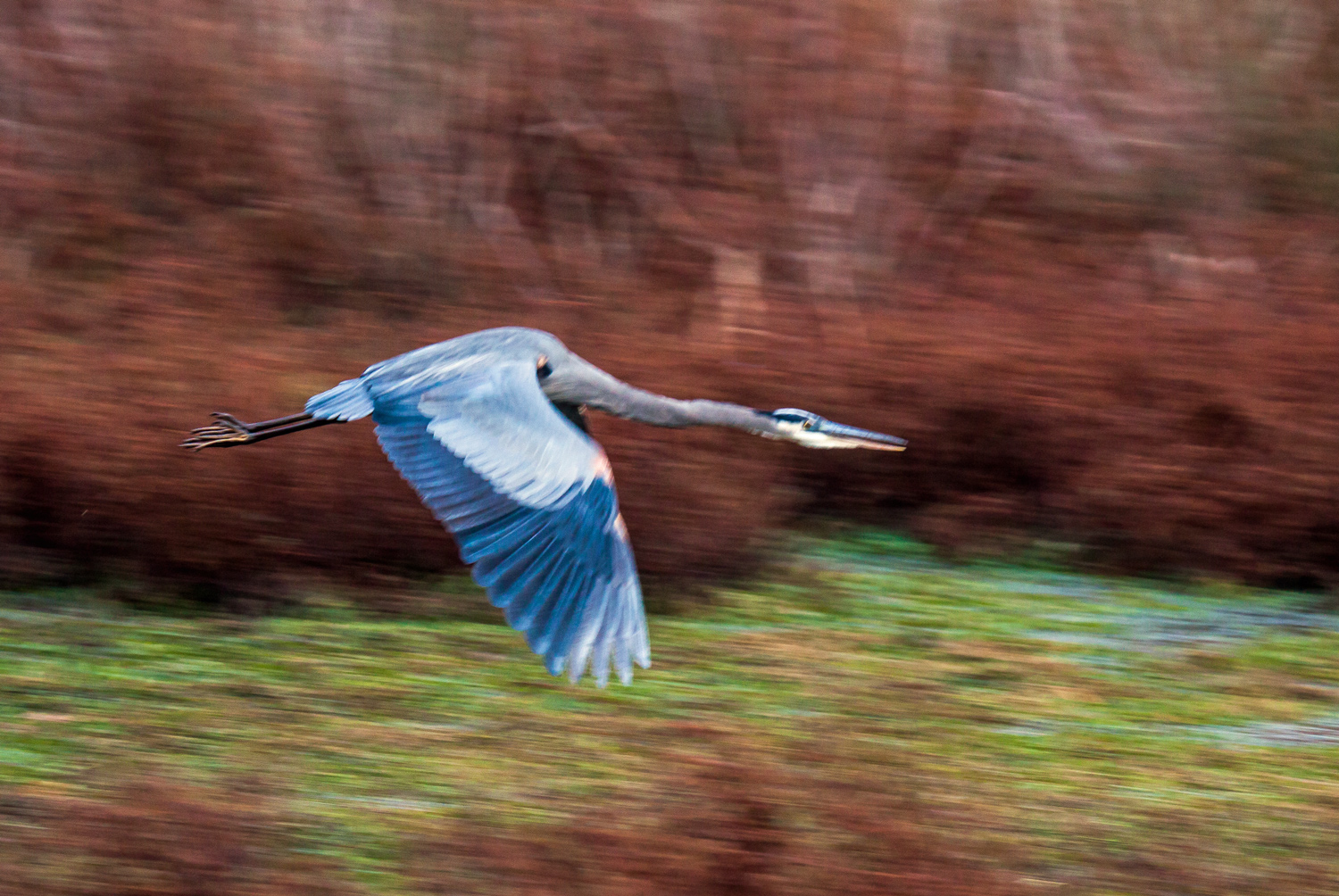
Sometimes I will intentionally use a slow shutter speed when I am panning a moving subject to blur the background and give a sense of motion, but that was not the case with these photos—I was shooting in aperture-priority mode and simply wasn’t paying attention to the shutter speed that the camera was giving me. In all three of these images, the shutter speed was 1/100 of a second, which is really too slow for handholding my 150-600mm zoom lens.

As the old saying goes, though, sometimes it is better to be lucky than good. I really like the way the background was rendered and am not at all bothered by the somewhat soft focus on parts of the moving heron.

Great Blue Heron

Great Blue Heron

Great Blue Heron

© Michael Q. Powell. All rights reserved.


Read Full Post »

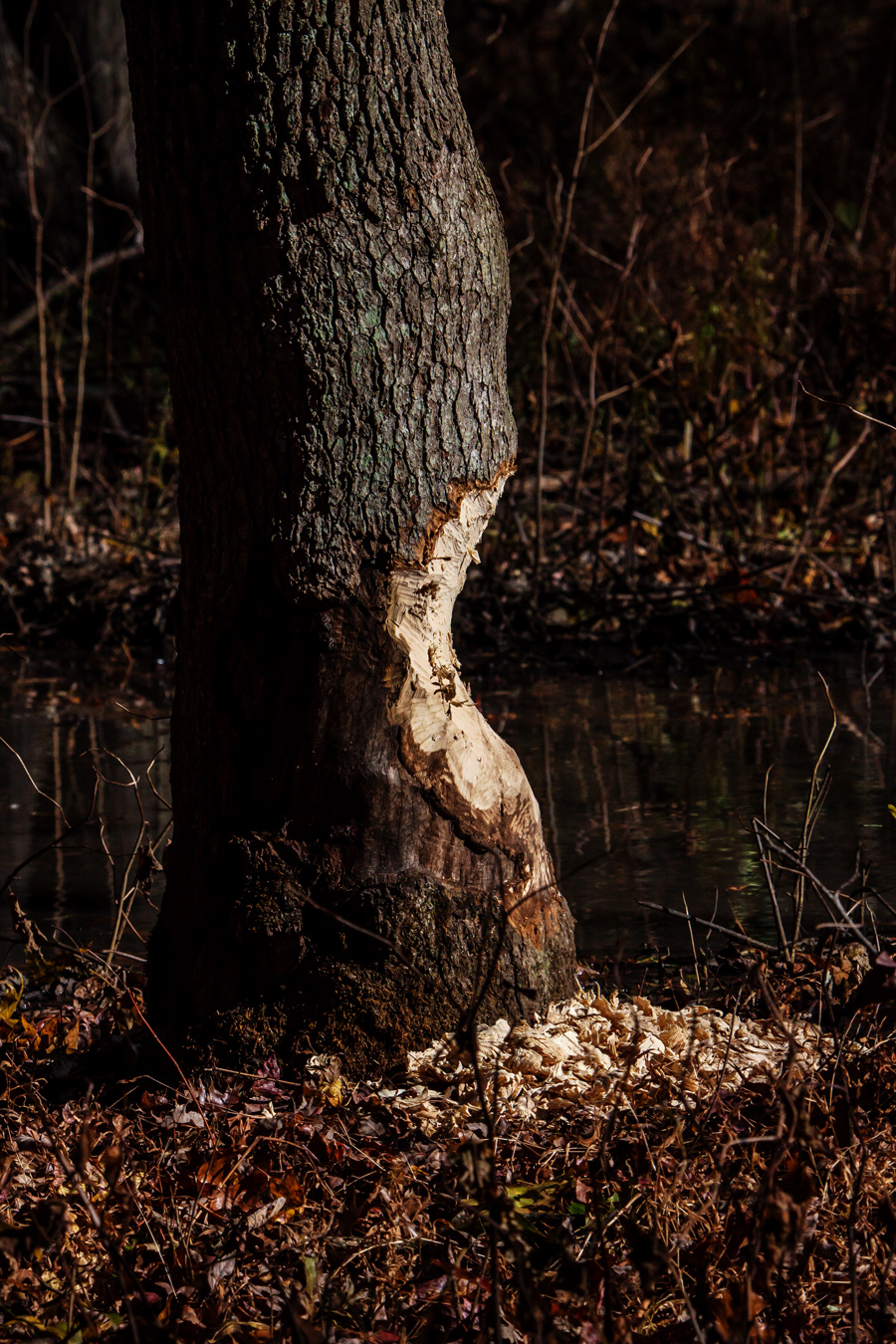
As I wander about in Huntley Meadows Park, I see lots of signs that winter is on its way, including this tree that I encountered in what seemed to be the middle of the woods. Clearly the beavers have been as busy as, well, beavers. I am hoping to be able to capture them in action in the upcoming months.

If you read this blog frequently, you probably noticed that this image is quite different from my “normal” wildlife close-ups. When I stumbled upon this tree on which a beaver had been gnawing, I was struck by the interplay of light and shadows. As I framed this shot, which is uncropped here, I was trying to capture the almost monochromatic look of the scene in a very simple composition. I’m pretty pleased by the different textures that I was also able to capture in the shot.

North American Beaver

© Michael Q. Powell. All rights reserved.

Read Full Post »

I love the way that the folks at Nalls Produce Center chose to display their wide variety of autumn produce—it is almost like a work of art. It was a challenge to photograph the wall of produce and I never did get the angles quite right. so all my photos were crooked to one degree or another. I thought about trying to photograph individual boxes, but decided to photograph them in multiples of varying numbers.

As I look overt the images I continue to marvel at the differences in size, shape, color, and texture of the fruits and vegetables on display.

autumn produce

autumn produce

autumn produce

© Michael Q. Powell. All rights reserved.

Read Full Post »

Great Blue Herons (Ardea Herodias) are so motionless when they are fishing that they look almost like statues. The Great Blue Heron that I spotted this morning at the edge of a pond at Green Spring Gardens actually was a statue that looked pretty realistic from a distance.

I’ve noticed that dragonflies are not fooled at all and I sometimes see them perching on the heron.

Great Blue Heron


© Michael Q. Powell. All rights reserved

Read Full Post »

The leaves of the lotuses at Green Spring Gardens were well past their prime, but they turned out to be fascinating subjects for a series of abstract images.

lotus leaf

lotus leaf

lotus leaf

© Michael Q. Powell. All rights reserved.

Read Full Post »

There is a whole family of damselflies called bluets that all look similar and the pattern of the males is generally some combination of black and blue (though there is one family member called an Orange Blue, which sure sounds like an oxymoron to me). On Saturday as I was exploring Pohick Creek in Springfield, Virginia, I came across two damselflies in tandem position that looked to be bluets. I suspect that they had just mated and were getting ready to deposit the eggs.

I managed to get a decent angle for a shot that allowed most of their bodies to be in focus and figured that identification would be simple. I was wrong. I went back and forth over a series of images and drawings in two guidebooks before deciding that they were probably Stream Bluets (Enallagma exsulans). The habitat was right and the markings seemed to be almost right, but I waffled for a long time.

Am I correct in my identification? I’m still not really confident, but so far one person has agreed with me in a Facebook group in which I posted the photo. The creative side of me, though, is really happy with the image, irrespective of the correctness of my identification.

Stream Bluet

© Michael Q. Powell. All rights reserved.

Read Full Post »
I love the serene beauty of the early morning. The light is soft, often tinged with pastel shades of pink and orange, and colors are especially saturated. The water is frequently still and mirror-like, providing for the possibility of perfect reflections.

On Monday I spotted this male Northern Shoveler (Anas clypeata) as he slowly made his way across one of the ponds at Huntley Meadows Park. The special characteristics of the post-dawn period made this striking bird even more spectacular than normal.

This photo is a visual response to those who occasionally ask me why I enjoy getting up so early in the morning—words are not necessary.

Northern Shoveler

© Michael Q. Powell. All rights reserved.

Read Full Post »

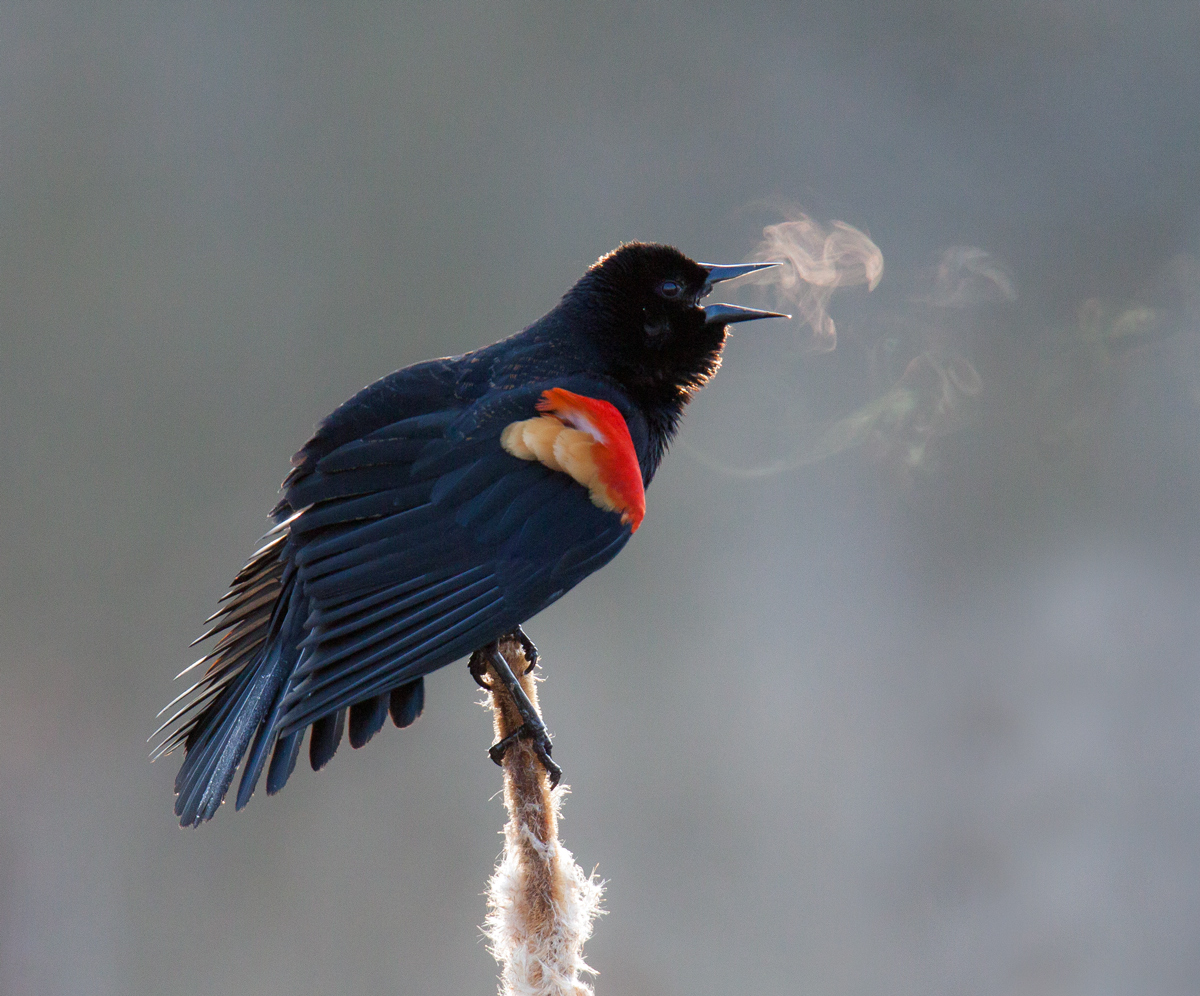
It was so cold yesterday morning at Huntley Meadows Park that the breath of a Red-winged Blackbird (Agelaius phoeniceus) was visible as he sang out from atop a cattail.

Spring is definitely in the air and potentially record high temperatures are forecast for later in the week. However, it was right about at the freezing level when I arrived at the local marshland park where I spent so much of my free time wandering with my camera in hand.

I’ve photographed Red-winged Blackbirds lots of times, but I rarely pass up an opportunity to shoot them again—I just never know when I may capture an unusual moment. The sun had risen and light was starting to reach the cattails. I turned toward the light when I heard a blackbird call out.

As I zoomed in on the bird, I was amazed to see that the blackbird’s breath was visible as he forcibly exhaled when singing. In the still morning air the visible breath swirled about and the bird looked like a smoker getting his early morning nicotine fix.

I was fascinated by the differing patterns of the condensation as the blackbird moved his head or body position and was thrilled to be able to capture several different views of the blackbird’s visible song.

As I went to bed last night, I noticed that the counter for my blog was right at a hundred thousand views. Thanks to so many of you for helping me to reach this milestone and for encouraging me and supporting me as I journey on into photography.

Red-winged Blackbird

Red-winged Blackbird

Red-winged Blackbird

© Michael Q. Powell. All rights reserved.


Read Full Post »

For a few magical moments Monday morning the sun was shining through the trees at Huntley Meadows Park with a gorgeous golden light. At first I was a little disappointed that there were no birds or animals for me to photograph, but gradually I was drawn deeper and deeper into the simple abstract beauty of the trees themselves.

The varied colors, shapes, and textures of this intimate landscape enveloped me and filled me with a kind of reverent awe and inner sense of peace. I would have liked to freeze that moment and experience it in slow motion, but all too quickly the golden light faded and reality returned.

golden1_29Feb_blog

© Michael Q. Powell. All rights reserved.

Read Full Post »
Some of my favorite photos are ones with a common subject and a simple composition, like these shots I took this past weekend of a male Red-winged Blackbird (Agelaius phoeniceus) at Huntley Meadows Park. The blackbird was perched in a field of cattails and the morning light was beautiful.

Sometimes photography seems so uncomplicated—it just works.

Red-winged Blackbird

Red-winged Blackbird

© Michael Q. Powell. All rights reserved.

Read Full Post »

I’ve been fortunate to have had the opportunity to visit Brussels, Belgium at least twice a year in recent years. I’ve seen many of the primary tourist attractions, but what I enjoy most is wandering through the narrow, cobblestoned streets in the center of the city, where the details of the human and architectural landscape endlessly fascinate me.

One of my favorite elements is a storm drain cover on a side street near the Grand-Place. All of the other drain covers are simple metal grates, but this one is more elaborate and beautiful, depicting a man and a woman in mid-embrace.

How did this grate come to be placed here? Is it merely art or is it an extravagant expression of love? I’m romantic by nature and like to imagine that it is a public proclamation of the eternal love of this couple, a visual invitation to stop for a moment and celebrate the power of that love.

love1_blog


© Michael Q. Powell. All rights reserved.


Read Full Post »

Some mornings when I am out with my camera at Huntley Meadows Park, I am simply entranced by the colors, shapes, and patterns of the reflections of the trees in the water. For extended periods of time I will become lost in the ever changing abstract world of reflected beauty.

Any wildlife that happens to come into the frame is a bonus.

reflect1_2Jan_blog

reflect3_2Jan_blog

reflect2_2Jan_blog

© Michael Q. Powell. All rights reserved.


Read Full Post »

As I was trekking about at Huntley Meadows Park on Saturday, I was thrilled to spot this Cedar Waxwing (Bombycilla cedrorum), a species that don’t see very often at the park. Normally when I do see one, it is buried in the branches or is far away, but this bird posed for a moment on a branch and I was able to get an unobstructed shot of it. The Cedar Waxwing was in the shade, but its silhouette is unmistakable and I could identify it immediately.

Cedar Waxwing

© Michael Q. Powell. All rights reserved.

Read Full Post »

As I was walking along the Danube Canal in Vienna, a small yellow boat caught my eye. Bright colors, of course, almost always attract our attention, but there is something that I really like about the way that this boat fits into its surroundings.

You can see some of the graffiti that I have featured in recent postings, as well as some undecorated areas of the walls that separate the higher street level from the much lower canal. I am not sure what that yellow structure is used for, but it is an almost perfect color match for the boat. Initially I was disappointed when I saw that there was a cyclist entering into the frame in the upper left, but I changed my mind and now think it adds some additional interest to the shot.

This is not an image that would be easily associated with Vienna, but I like the “artsy” feel of the urban landscape that I was able to capture.

yellow boat

© Michael Q. Powell. All rights reserved.

Read Full Post »

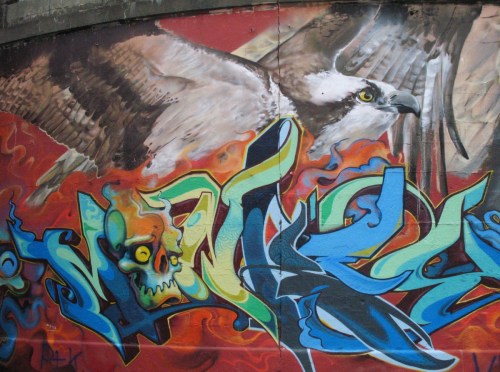
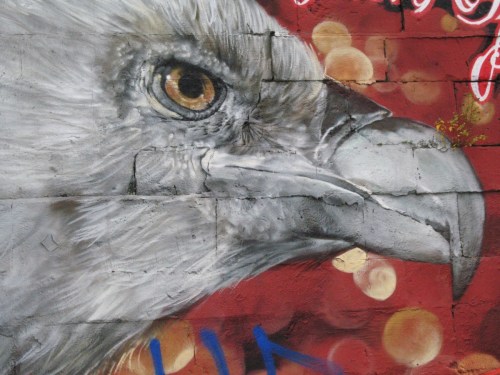
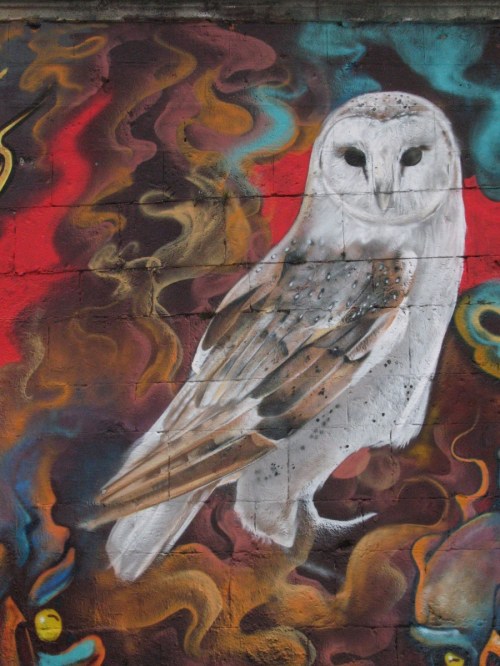
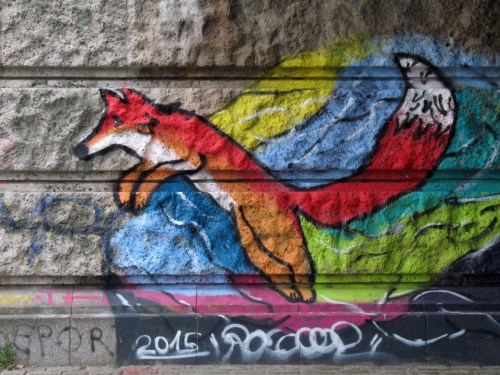
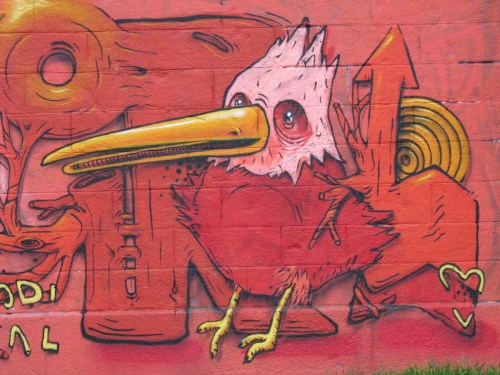
Where do you find wildlife when you are in an urban area like Vienna, Austria, which I am visiting for work this week? I had some free time this past weekend and I took a long walk along the Donaukanal (Danube Canal). The natural landscape along the canal was not very inspiring, but I couldn’t help but notice the colorful graffiti everywhere. Much of this “art” was poorly done and consisted on tags that had been crudely executed by some individual or group, sometimes defacing a much more beautiful piece.

I came across several wildlife-themed pieces that were really well done that I wanted to share. Some of the wildlife depicted is realistic, while other creatures are more fanciful.

Osprey

Osprey

Osprey close-up

Osprey close-up

Owl

Owl

Graceful bird

Graceful bird

Fox

Fox

Tiger

Tiger

Imaginary bird

Imaginary bird

© Michael Q. Powell. All rights reserved.

Read Full Post »

As we move toward winter, the natural landscape seems increasingly drab. Flashes of bright colors are particularly welcome now, like this American Goldfinch (Carduelis tristis) that I spotted this past weekend foraging in one of the fields at Huntley Meadows Park in Alexandria, Virginia.

American Goldfinch

© Michael Q. Powell. All rights reserved.

Read Full Post »

« Newer Posts - Older Posts »