Feeds:
Posts
Comments

Archive for May, 2021

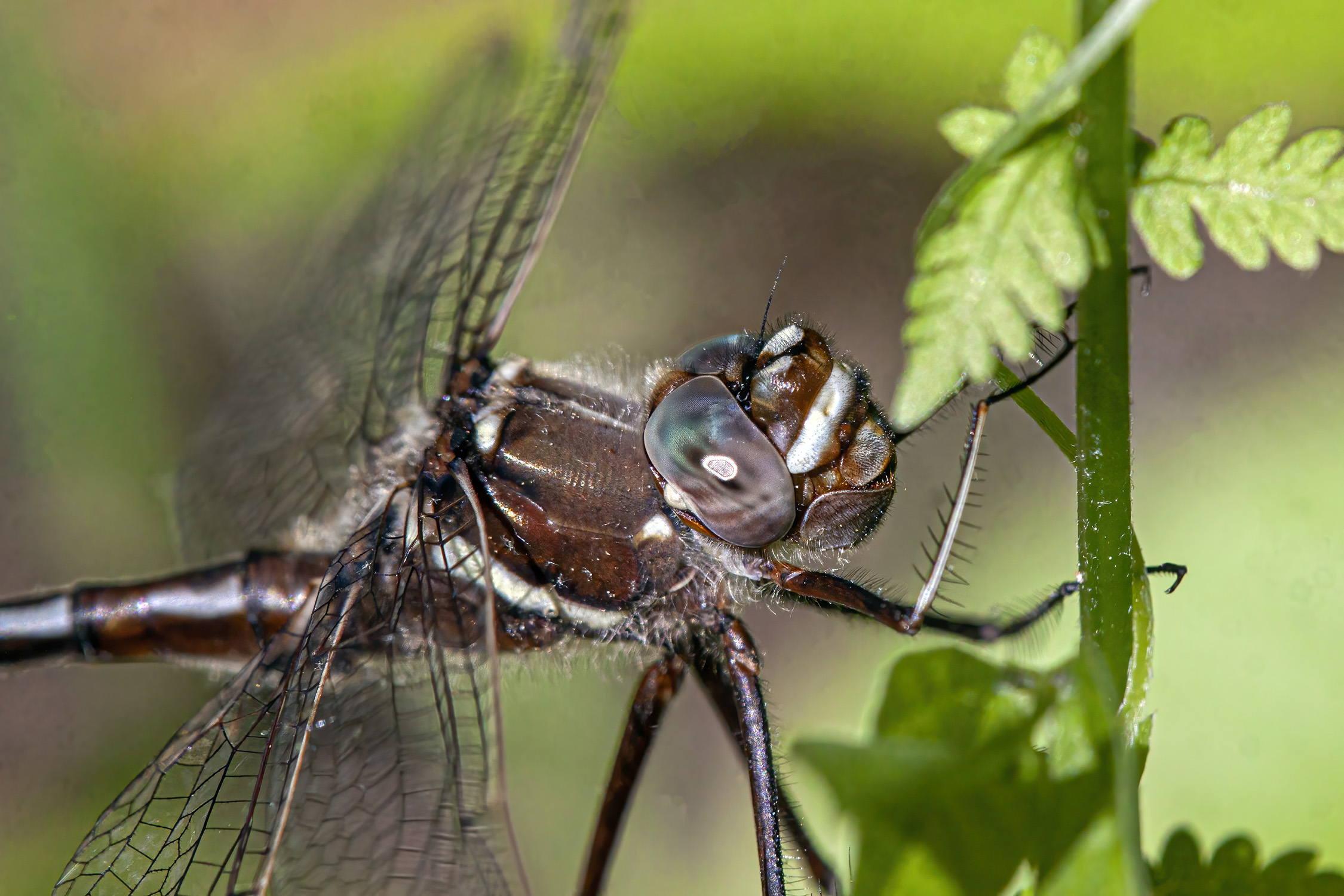
Can a dragonfly smile? I seemed to detect a cocky little smile when I moved in close for this shot of a handsome male Stream Cruiser (Didymops transversa) last Thursday in Prince William County. The macro view also allowed me to appreciate the beauty of his two-toned eyes and to note the curious-looking “chin strap.”

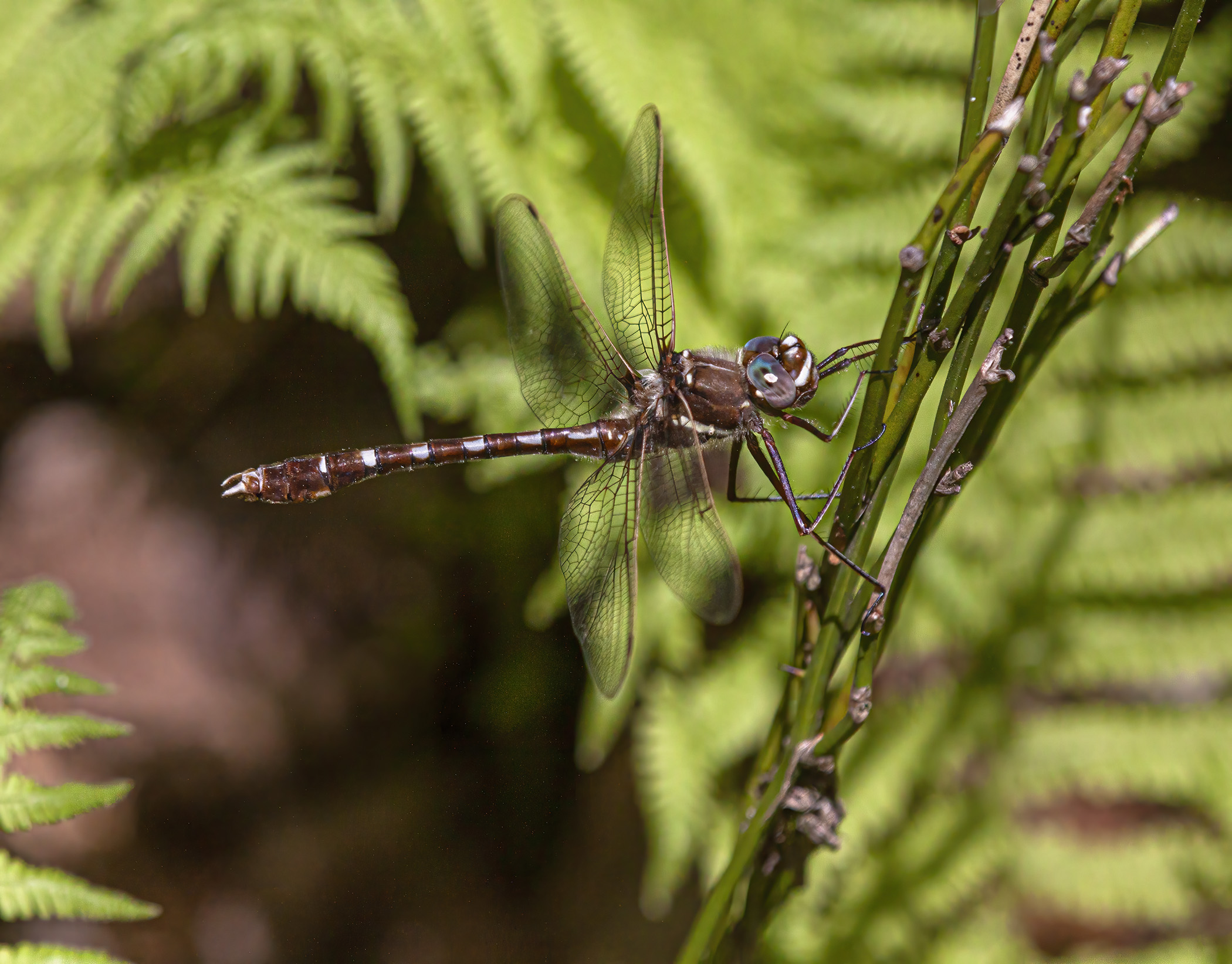
The second shot shows the entire body of the Stream Cruiser, a medium-sized dragonfly that is about 2.2 inches (56 mm) in length. The image also gives you a sense of the environment in which I spotted him—a large expanse of interrupted ferns adjacent to a stream.

Stream Cruiser

Stream Cruiser

© Michael Q. Powell. All rights reserved.

Read Full Post »

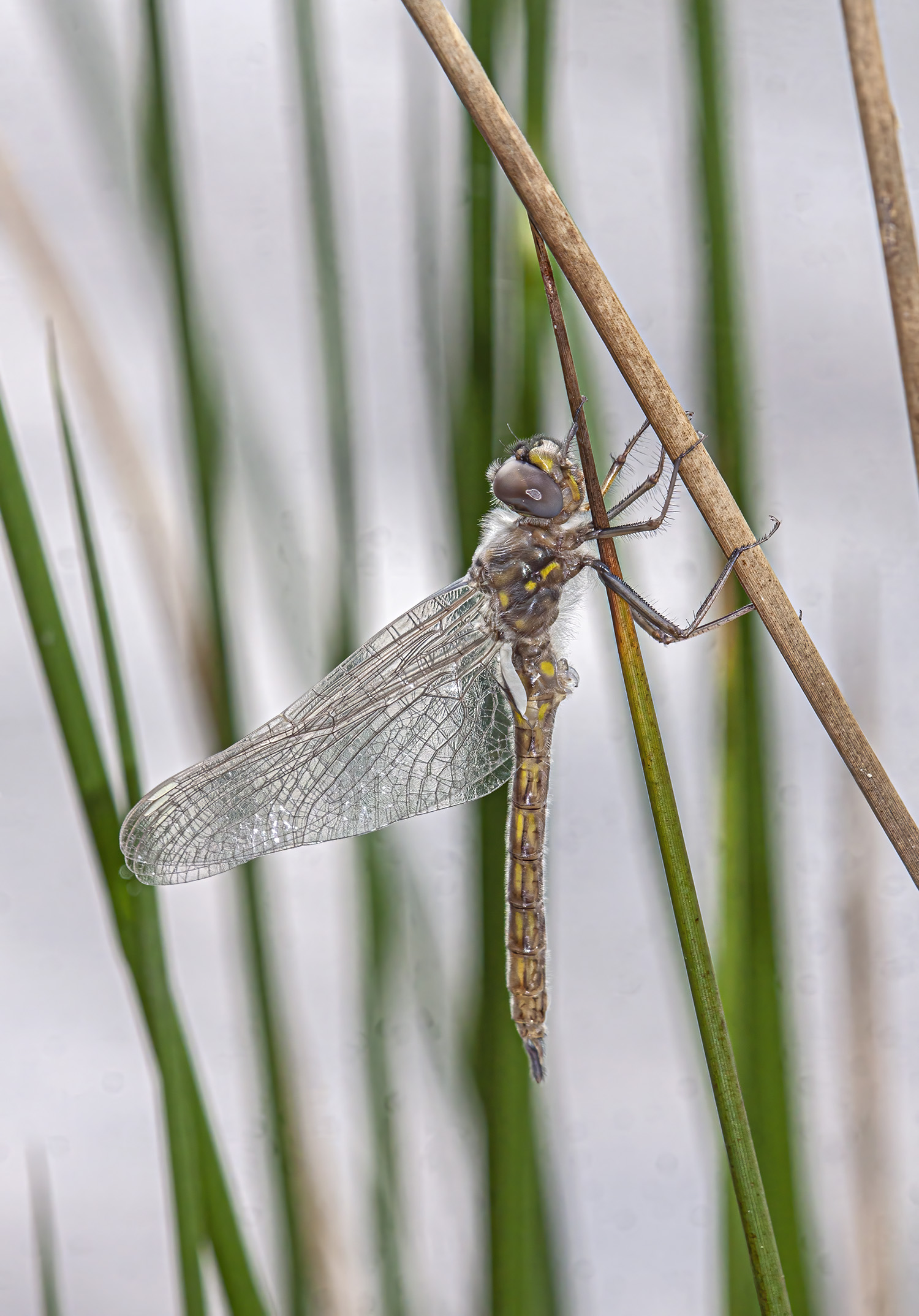
Almost a month ago, fellow dragonfly enthusiast Walter Sanford spotted a Selys’s Sundragon dragonfly (Helocordulia selysii), the first time that one had been spotted in Prince William County, Virginia where we were searching for dragonflies. This is an early spring dragonfly that is quite uncommon and we were both happy to get shots of it, though as I noted in my blog posting about the encounter, we did not realize until after the fact that this was a new discovery—we thought that it was a Uhler’s Sundraagon, a closely related species that I had previously seen at that location.

Whenever I encounter a brand new species in a location, I wonder if it is a one-off sighting, a vagrant who has wandered out of its normal territory, or if perhaps there is an established population. I may have gotten a partial answer to that question on Thursday when I spotted several Selys’s Sundragons a couple of miles upstream on the same creek where Walter made his initial discovery.

I managed to photograph two of these beautiful dragonflies while they perched on interrupted ferns that were growing in abundance in the area, including the dragonfly featured in the first two photos. The markings on the dragonfly’s body were quite distinctive and unfamiliar to me, given that this was the first time that I had seen this species at close range. Whenever I am out in the field, I tend not to worry about identification of my subjects and instead focus on getting the best shots that I can—I can sort things out when I get home and pull up the images on my computer screen.

A short time later, I also was able to capture some in-flight images of a Selys’s Sundragon when he cooperated for me by hovering a bit over the water. That made things marginally easier, but it is still a challenge to focus on a moving subject that is only 1.6 inches (40 mm) in length. Perhaps it is my imagination, but the dragonfly in the final photo seems to be glancing up at me, as though he was wondering if we were done yet with the photo shoot.

So, it looks like we may have at least a small established population of Selys’s Sundragons in this county. What is the flight season for the species? Walter and I were recently joking about that—as Walter pointed out, we are the baseline. We know that the season for this species in our area lasts at least from 13 April, when Walter had his initial sighting, to 6 May, when I took these photos. According to available information, the flight season for this species in our home state of Virginia lasts from 17 March to 23 May.

I hope to be able to make a return trip to this location to add another data point (and hopefully some new photos) to our information about this species or maybe some additional dragonflies are waiting to be discovered.

Selys's Sundragon

Selys's Sundragon

Selys's Sundragon

© Michael Q. Powell. All rights reserved.

Read Full Post »
I spent a lot of time tracking this Common Green Darner (Anax junius) as it patrolled over a field of vegetation yesterday in Prince William County and was thrilled when it finally perched for a moment. Like most darners, this one was hanging vertically and as I got closer, I was immediately struck by the muted color of its abdomen.

I could tell from its terminal appendages that it was a female and I suddenly realized that most of the Common Green Darners I have photographed in the past have been males that often have bright blue abdomens. It had never really struck me that female Common Green Darners have tan-colored abdomens. It is not that surprising, though, because, as is the case in much of the animal kingdom, female dragonflies generally tend to have more subdued colors than their more ostentatious male counterparts.

Common Green Darner

© Michael Q. Powell. All rights reserved.

Read Full Post »
Last week I was delighted to spot several more Stream Cruiser dragonflies (Didymops transversa) while wandering about in Prince William County. This handsome male Stream Cruiser  looked like he could have starred in the well-known “got milk?” publicity campaign in the United States that featured photos of celebrities with milk mustaches and was designed to make milk more interesting and to emphasize its wholesomeness.

The print campaign with the the milk mustaches was started by the Milk Processor Education Program (MilkPEP) as a follow-on to a very popular series of television commercials in which people went to extraordinary lengths to make sure they did not run out of milk, according to this Fast Company article about the history of the Got milk? campaign.

Celebrities almost literally lined up to participate in this campaign and famous photographer Annie Leibovitz photographed more than 180 of the advertisements, according to the aforementioned article. One of the few requirements for participation in the campaign was that the celebrities had be milk-drinkers—I think they might have waived that requirement for Kermit the Frog—which was a problem for Whoopi Goldberg, who is lactose-intolerant. However, she was featured when the campaign ran an advertisement for lactose-free milk.

I don’t drink very much milk these days, but have fond memories of growing up with milk in my cereal bowl each morning. Got milk?

Stream Cruiser

© Michael Q. Powell. All rights reserved.

Read Full Post »

Raindrops on flowers are among my favorite things. Yes, I am a huge fan of The Sound of Music and as soon as I see drops of rain on the petals of a flower—it doesn’t have to be roses—Julie Andrews starts singing in my mind the memorable song “My Favorite Things” that begins with the words, “Raindrops on roses and whiskers on kittens…”

I captured these iris images yesterday morning in the garden of my dear friend and neighbor Cindy Dyer during a break in the rain. Right now there are probably at least thirty irises of various colors in the process of blooming in her wonderful garden, an endless source of delight for me when I feel a need to take some photos or just desire to lift my spirits.

“I simply remember my favorite things and then I don’t feel so bad.”

bearded iris

bearded iris

© Michael Q. Powell. All rights reserved.

Read Full Post »

It is still relatively early in the dragonfly season, but already I am running across dragonflies with tattered wings, like this Carolina Saddlebags (Tramea carolina) dragonfly that I spotted yesterday at Occoquan Regional Par. Despite the extensive damage to all of its wings, the dragonfly did not appear to have any problems flying. In fact, I tracked it for a lengthy period of time as it patrolled over a small pond, waiting and hoping that it would finally land.

When the dragonfly decided to take a break, it perched on several pieces of vegetation that were covered with old spider webs. The vegetation was about as tall as I am, so I was able to shoot at a slight upwards angle that let me capture the wing patches that reminded someone of “saddlebags” when they were naming the species.

I was shooting almost directly into the sun, which gave a nice effect by illuminating the dragonfly’s wings from behind, but I kept having to adjust my camera to keep the body from appearing as a silhouette. I experimented with a number of different techniques, including using my pop-up flash for the final photo, which gives the image an almost studio-like appearance.

Carolina Saddlebags

Carolina Saddlebags

Carolina Saddlebags

© Michael Q. Powell. All rights reserved.


Read Full Post »

On a recent visit to Occoquan Bay National Wildlife Refuge I stumbled upon a Common Baskettail dragonfly (Epitheca cynosura) at the edge of a pond that was in the final stages of the process of emergence. The first photo shows the dragonfly only seconds after it popped open its wings for the first time—note how shiny and clear the fragile wings are at this stage. The second photo shows the dragonfly a few minutes earlier, when its wings were still closed and its markings were just beginning to appear.

The dragonfly remained in place for a few minutes as its wings began to harden. It then made a short fluttering flight to some nearby vegetation, a safer and less exposed location to rest and complete its amazing metamorphosis.


Common Baskettail


Common Baskettail

© Michael Q. Powell. All rights reserved.

Read Full Post »

Although I don’t have my own garden, I am blessed to have a neighbor and friend, Cindy Dyer, who loves to plant photogenic flowers, like these beautiful bearded irises that are now in bloom. Cindy is a self-employed photographer and graphic designer who I consider to be my photography mentor and muse. She and her husband Michael make up the rest of my “pod” that has helped to sustain me through this past pandemic year.

What else does Cindy do? Here is a little extract from the “Stuff About Me” page of her blog.

“Oil and acrylic painting, photography (portraits, glamour shots, nature, macro, floral/botanical, travel), cement leaf casting, crocheting hats like crazy come winter time (what else can a gardener do when it’s cold out?), needle felting, sewing, murals, faux painting, Polaroid transfers (if it’s something crafty, I’ve probably at least tried it once), biblioholic (any topic, you name it—we probably have at least one book on the subject…don’t even begin to guess how many gardening books I’ve amassed!), animal lover—currently three cats…”

You can get a look at some of Cindy’s photography and writing on her blog at cindydyer.wordpress.com. If you want a real treat, though, you should check out the slide show of her portfolio at cindydyer.zenfolio.com, where your eyes will be delighted as you see an amazing series of stunning images.

bearded iris

bearded iris

bearded iris

© Michael Q. Powell. All rights reserved.


Read Full Post »

If you want a fun photographic challenge, try to photograph a dragonfly in flight. It is definitely a test of your skill and patience to track and photograph a subject this small (about 1.6 inches (41 mm) in this case) while it is flying past you. I captured this image of a male Common Baskettail dragonfly (Epitheca cynosura) last Thursday at Occoquan Bay National Wildlife Refuge.

Longtime readers of this blog know that I will try to photograph dragonflies in flight at least several times every season. Some dragonfly species, like this one, will hover a little at times, which gives me a slightly better chance of getting a shot that is in focus. My camera does not focus quickly and accurately enough for me to use autofocus, so I end up focusing manually most of the time.

This shot is unusual in that I managed to freeze all of the motion of the wings—most of the time the wings are blurry. If you click on the image to see it in higher resolution, you will also note the way that the Common Baskettail (and many other species) folds its legs up under its “chest” (technically it is called the “thorax”) while flying to minimize wind resistance.

For those of you who might be curious, I ended up cropping the original image significantly, because I took the photograph with “only” my 180 mm macro lens and the dragonfly was flying over the water—I would have to have been in the water to get any closer.

Common Baskettail

© Michael Q. Powell. All rights reserved.

Read Full Post »

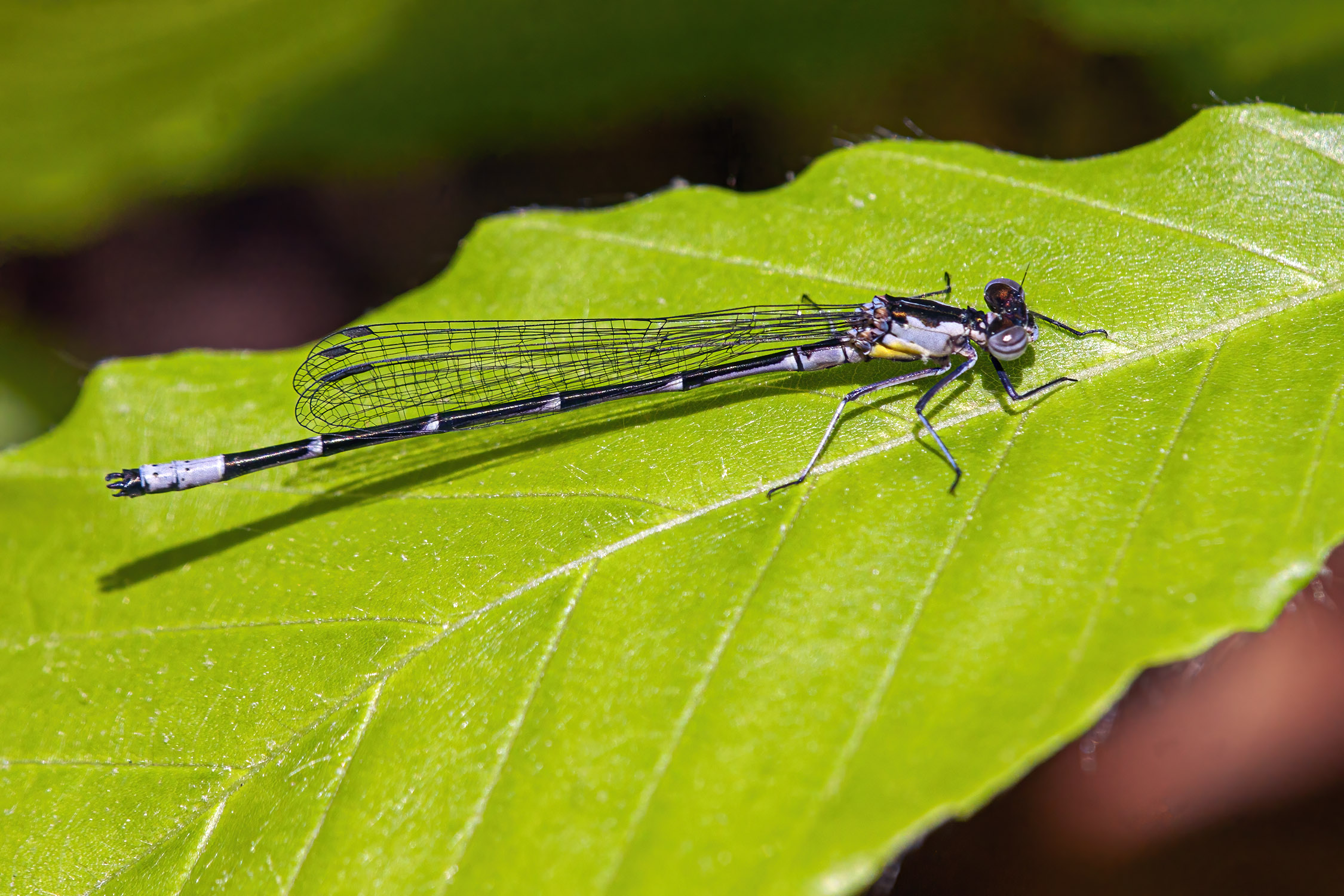
It was pretty cool to spot this male Aurora Damsel damselfly (Chromagrion conditum) on Friday while I was exploring in Prince William County. I love the accents of brilliant yellow on the sides of its upper body that make this damselfly stand out from many others that are also black and blue.

I also managed to get a shot of an Aurora Damsel couple in what is known as the “tandem” position. The female of this species, the lower damselfly in the second photo, also has the yellow accents, although her body coloration is more subdued, as is often the case with damselflies and dragonflies.

When they are mating, damselflies join together in a heart-shaped position, known as the “wheel position,” and afterwards the male will often remain attached to the female, including while flying, as she lays her eggs. He does this by retaining his grip on the front part of the female’s thorax, as you can see in the second photo, using claspers located at the tip of his abdomen.

If you have never seen the distinctive sidewards-heart that damselflies make when mating, check out a posting that I did last year entitled Sidewards heart that shows a pair of Ebony Jewelwing damselflies forming the aforementioned heart.

aurora damselfly

aurora damselfly

© Michael Q. Powell. All rights reserved.

Read Full Post »

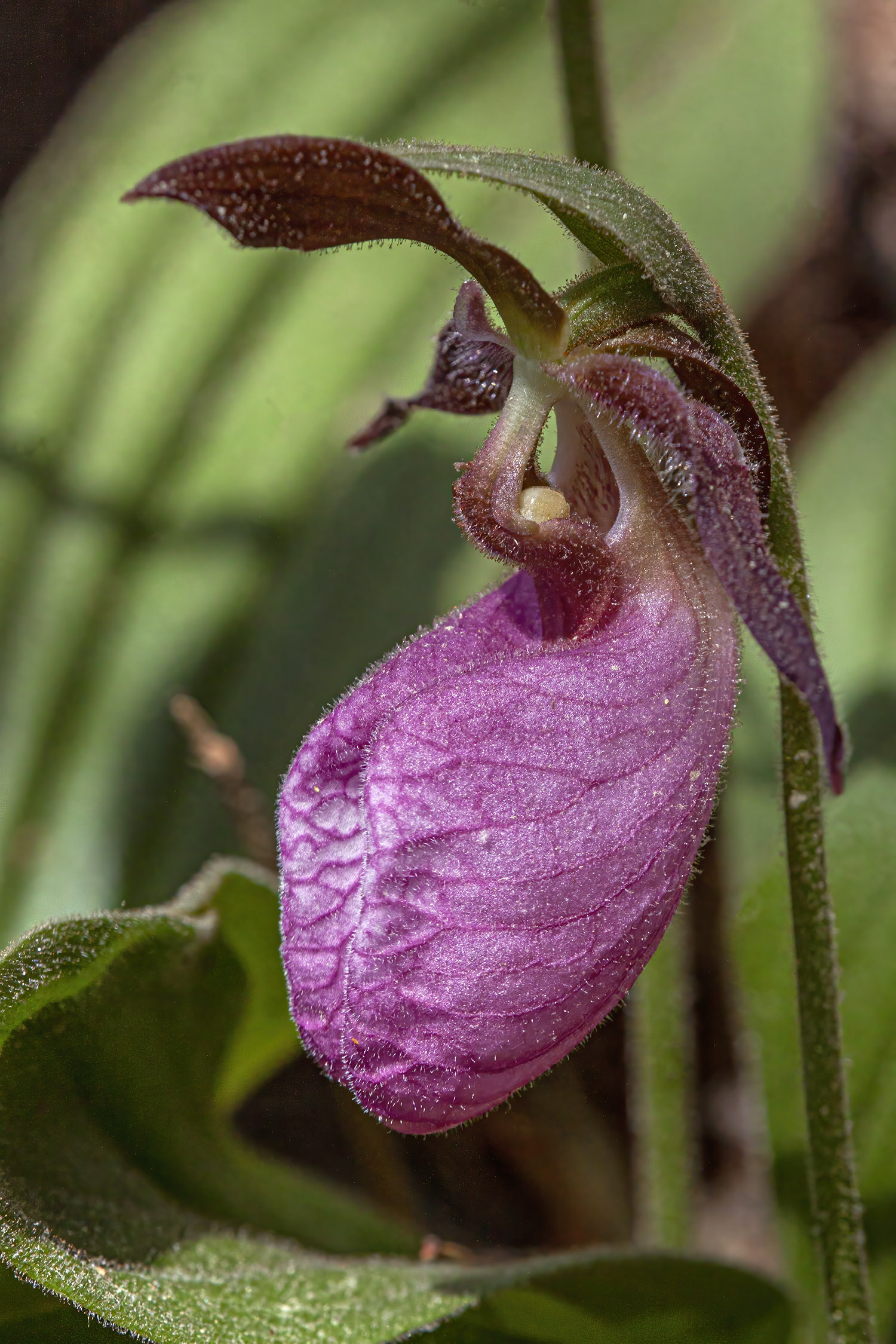
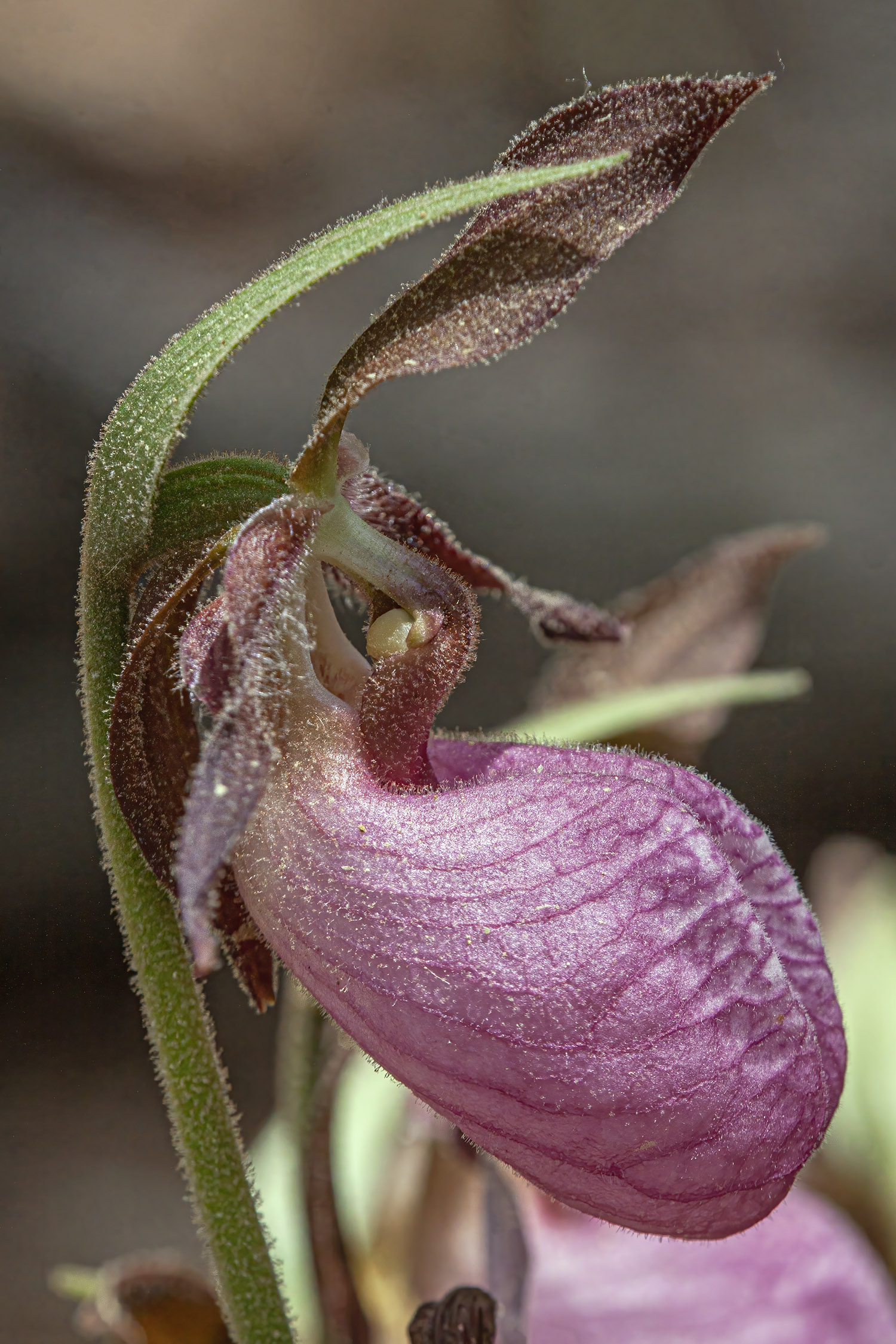
I was really excited yesterday to spot some Pink Lady’s Slippers (Cypripedium acaule), a type of native orchid, while exploring in Prince William County. Last year I saw some for the first time in the wild and managed to find the same spot again this year. When I posted the first photo in Facebook a number of people noted that it brought back memories of their childhoods.

Happy May Day. There are a lot of different types of celebrations on this day throughout the world, many devoted to celebrating spring.  Best wishes to you all however you choose to celebrate this day, perhaps with a walk in the woods to discover or re-discover hidden treasures like these little orchids.

Pink Lady's Slipper

Pink Lady's Slipper

Pink Lady's Slipper

© Michael Q. Powell. All rights reserved.

Read Full Post »

« Newer Posts