Feeds:
Posts
Comments

Posts Tagged ‘Woodbridge VA’

This immature Bald Eagle (Haliaeetus leucocephalus) certainly was aware of my presence on Monday at Occoquan Bay National Wildlife Refuge, judging by the intensity of the stare it directed toward me. I am guessing that the eagle is about three years old—it takes almost five years for its head feathers to turn completely white and for its beak to turn yellow. At this stage of development, bald eagles look a little scruffy and have not yet acquired the majestic look that I associate with this species.

If you are interested in seeing images of the developmental stages of the bald eagle, check out this posting from onthewingphotography.com that shows an eagle’s age progression from one to five years old.

Bald Eagle

Bald Eagle

© Michael Q. Powell. All rights reserved.

Read Full Post »

Yesterday I was thrilled to observe a group of White-tailed Deer (Odocoileus virginianus) fording a stream at Occoquan Bay National Wildlife Refuge. The activity level of all kinds of creatures seems to be picking up as we move closer to or deeper into spring, depending on how you calculate the start of spring. The bottom of the body of water they were crossing seemed to be uneven and the deer had to move carefully. At one point it looked like they even had to swim a few steps, especially the smaller deer.

As I watched the deer, I was reminded of the lyrics of one of the songs from The Sound of Music that included the words “ford every stream.” Folks of my generation may well remember the inspirational message of the song “Climb Every Mountain,” which I have included below, as found at metrolyrics.com.

Here’s hoping that you will find your dreams, irrespective of whether or not it involves fording streams or climbing mountains.

“Climb every mountain,
Search high and low,
Follow every byway,
Every path you know.

Climb every mountain,
Ford every stream,
Follow every rainbow,
‘Till you find your dream.

A dream that will need
All the love you can give,
Every day of your life
For as long as you live.”

White-tailed Deer

White-tailed Deer


White-tailed Deer

© Michael Q. Powell. All rights reserved.

Read Full Post »

Sunny days have been relatively rare this winter, so it is almost a special occasion when we do have one. Although it is nice to capture images of rare subjects on those special days, it is equally pleasurable to photograph the common species, like this Great Blue Heron (Ardea herodias) that I spotted recently at Occoquan Bay National Wildlife Refuge. The additional light from the sun helps to make the heron’s wonderful colors “pop” much more than they do on gray cloudy days.

Great Blue Heron

© Michael Q. Powell. All rights reserved.

Read Full Post »

This past week I was thrilled to spot a Northern Harrier (Circus hudsonius) on two separate occasions at Occoquan Bay National Wildlife Refuge. Northern Harriers are slim, long-tailed hawks. One of the things that distinguish these raptors from others is that, “unlike other hawks, they rely heavily on their sense of hearing to capture prey,” which is why they often fly low and slowly over the ground, according to the Cornell Lab of Ornithology .

During my first encounter, the harrier was flying low over a field. The first photo below gives you an idea of how close to the ground the bird was flying. It reminded me of my military training and the concept of “nap-of-the-earth” flight, a very low-altitude flight course used by military aircraft to avoid enemy detection and attack in a high-threat environment.

A few day later I spotted a Northern Harrier in the same general location. This time the harrier was soaring high above my head. I could not tell for sure if it was hunting, but it sure seemed to be keeping watch over things on the ground and appeared to be looking right at me.

I am not sure how much longer this harrier will be hanging around, so I will be returning to the same location within the next few days with a hope of another encounter with a harrier.


Northern Harrier

Northern Harrier

© Michael Q. Powell. All rights reserved.


Read Full Post »

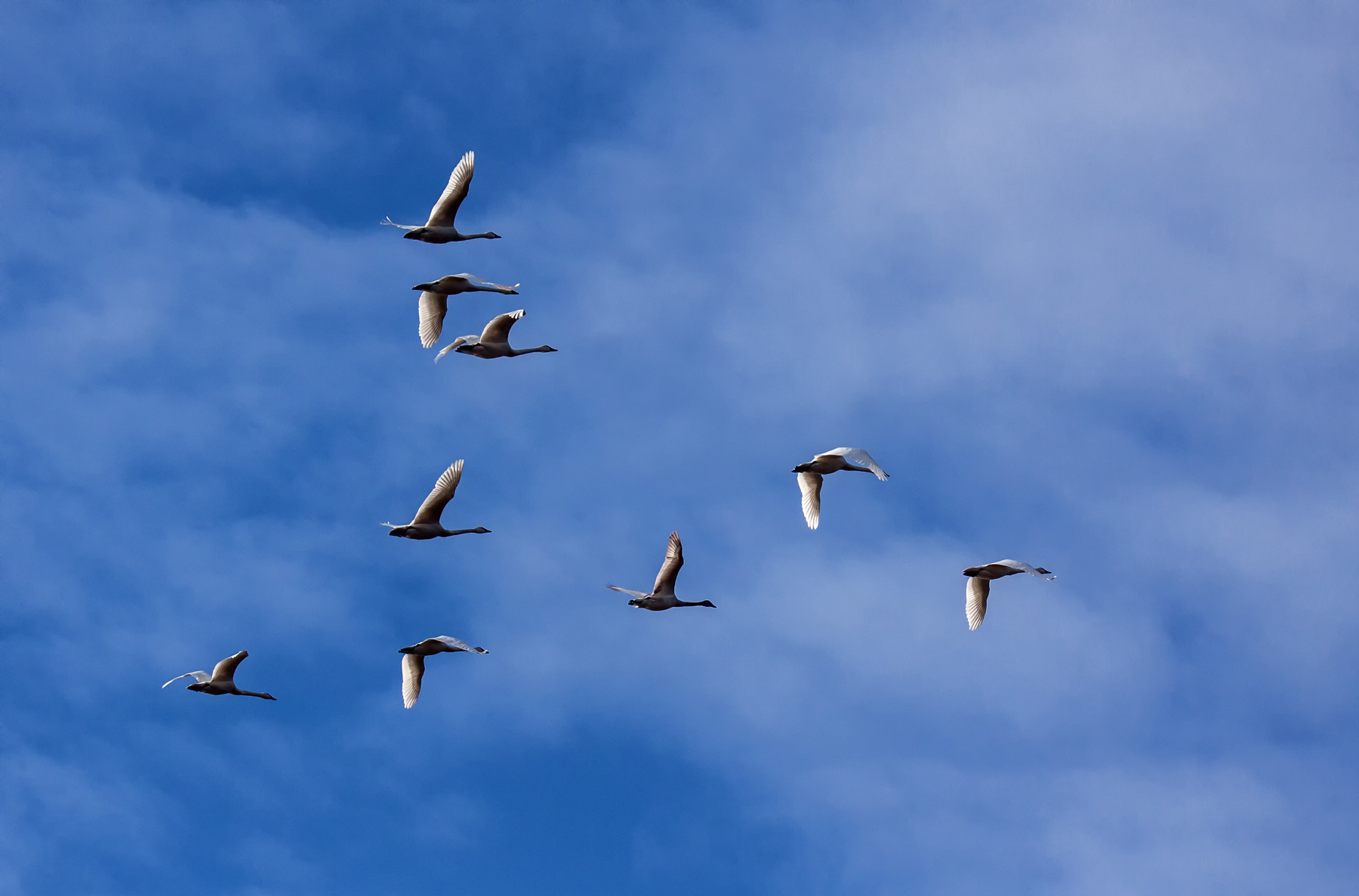
I was thrilled on Thursday when a small flock of Tundra Swans (Cygnus columbianus) flew overhead while I was at Occoquan Bay National Wildlife Refuge. It is rare for me to see swans of any kind in this area. When I spotted the formation approaching, I initially thought they were Canada Geese, but as they got closer I could tell that they looked different and sounded different.

Tundra Swan

© Michael Q. Powell. All rights reserved.

Read Full Post »

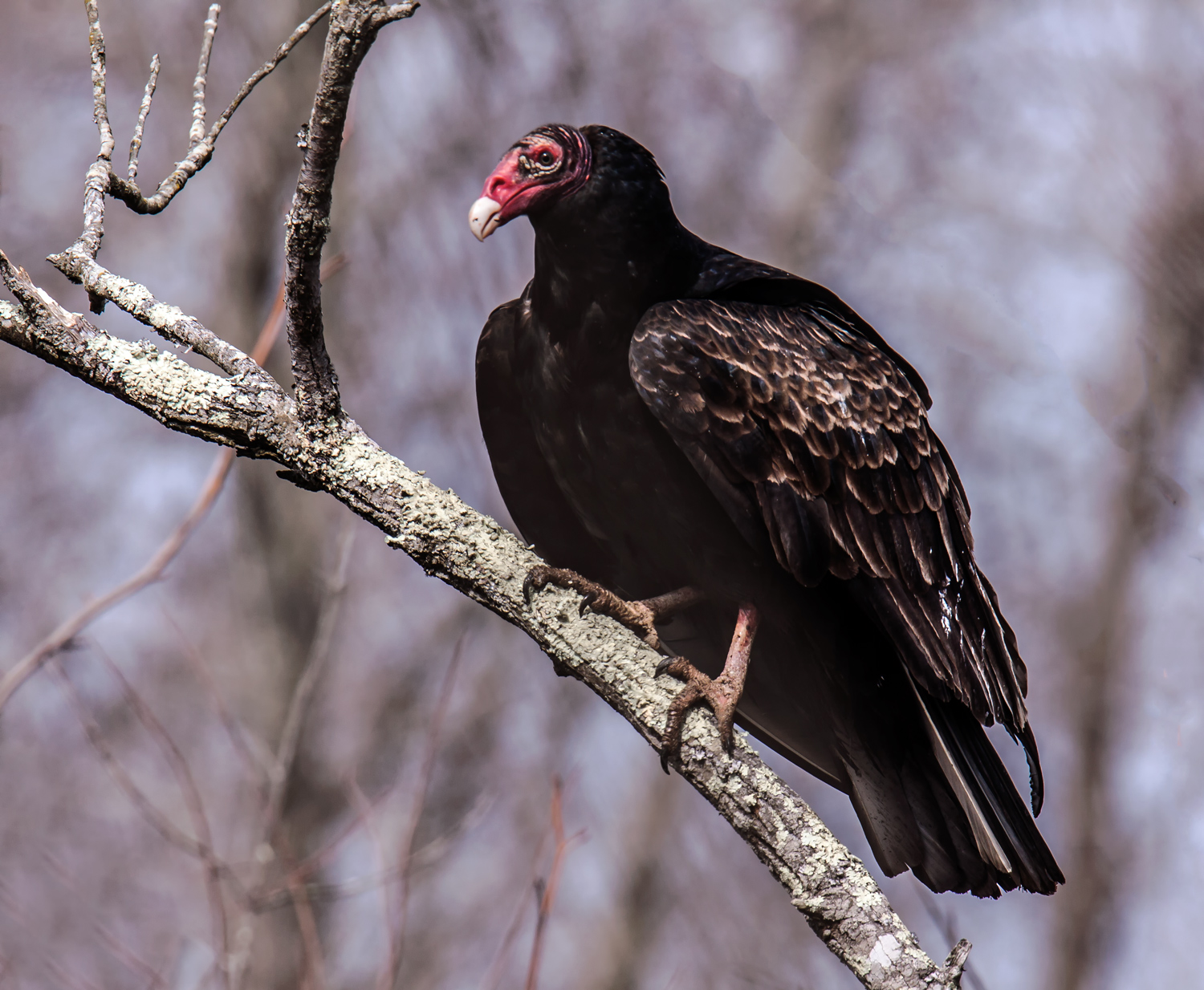
It’s tough to get a Turkey Vulture (Cathartes aura) to smile. This was the best we could manage during our portrait session on Thursday at Occoquan Bay National Wildlife Refuge.

Turkey Vulture

© Michael Q. Powell. All rights reserved.

Read Full Post »

Golden-crowned Kinglets (Regulus satrapa) are tiny, but they can be mighty fierce. This one that I spotted yesterday at Occoquan Bay National Wildlife Refuge seemed to be sending me a definite  “Don’t mess with me” message with its intense glare in my direction.

Golden-crowned Kinglet


© Michael Q. Powell. All rights reserved.

Read Full Post »

When I first spotted this bird perched on a distant piece of floating driftwood, I assumed that it was a cormorant. The more I looked at it, though, the more I thought that the body proportions were wrong for a cormorant.

I was a bit shocked when I zoomed in and discovered that it was a Bald Eagle (Haliaeetus leucocephalus). Why was the eagle perched like this? Was it looking for a moment of solitude?

Somehow the solitary eagle reminded me of a shipwrecked sailor, adrift in the vast expanses of the ocean.

Bald Eagle

© Michael Q. Powell. All rights reserved.

Read Full Post »

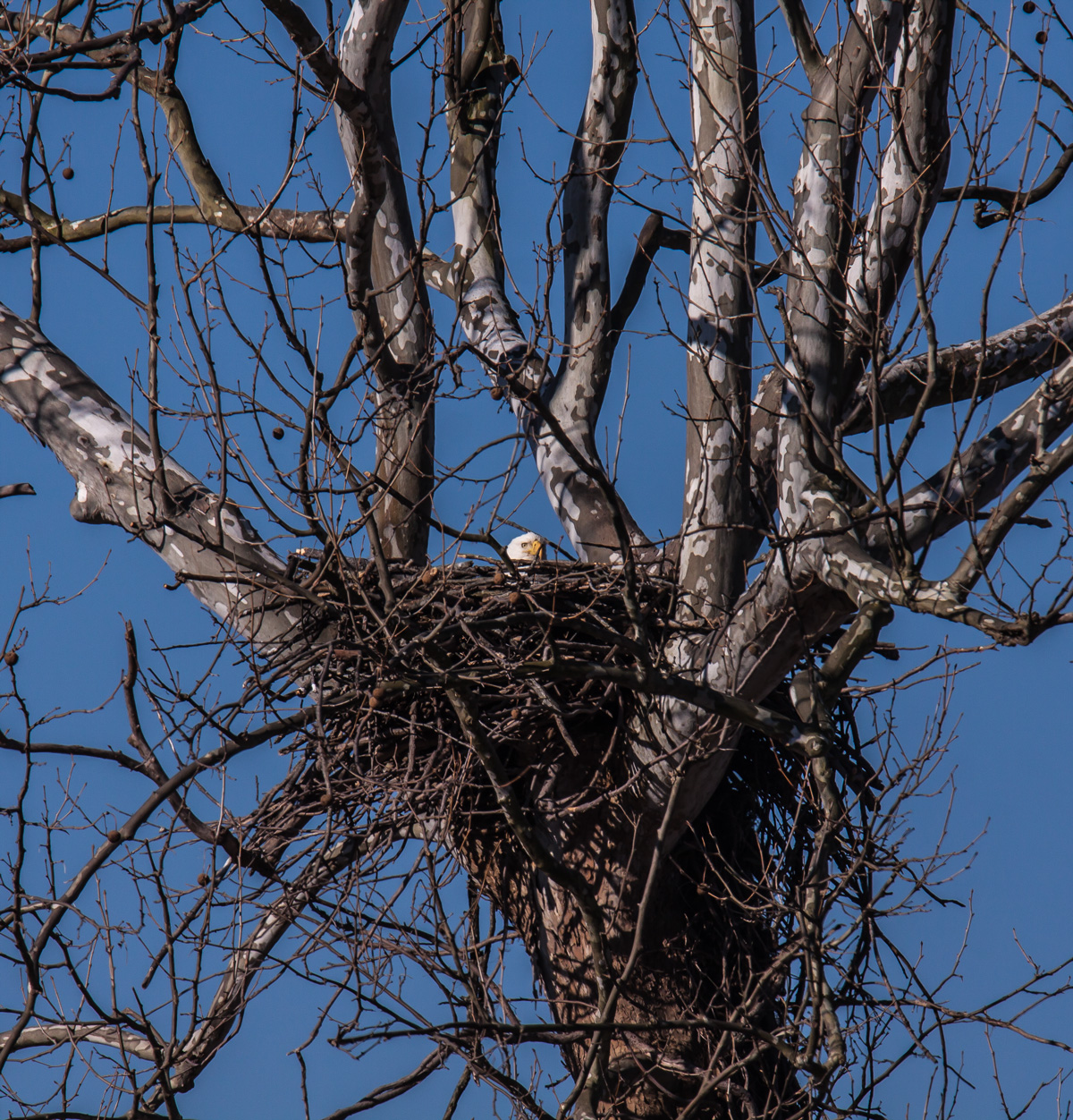
There are barriers on several roads to protect the nesting eagles at Occoquan Bay National Wildlife Refuge from human interference, but with a long lens I was able to confirm on Tuesday that one of the Bald Eagles (Haliaeetus leucocephalus) was sitting on the nest. With a little luck, we will have eaglets again this year—last year there were two of them at this nesting site.

The two images below are actually different versions of the same photo. Initially I was going to post just the second image, but then decided to crop it a bit to give viewers a slightly better view of the eagle. I have also noticed that images in a landscape format display better in the WordPress Reader than those in a portrait or square format.

nesting Bald Eagle

nesting Bald Eagle

© Michael Q. Powell. All rights reserved.


Read Full Post »

Carolina Wrens (Thryothorus ludovicianus) are small birds that often remain hidden, but their loud songs let you know when they are near. I caught a glimpse of this one from an unusual angle last week at Occoquan Bay National Wildlife Refuge.

Carolina Wren

© Michael Q. Powell. All rights reserved.

Read Full Post »

As I was walking along one of the trails last week at Occoquan Bay National Wildlife Refuge, I glanced to the side and spotted this Red-shouldered Hawk (Buteo lineatus) perched at eye level on a tree that was really close. There was a lot of vegetation between us, but I managed to get this shot that did not have to be cropped at all.

Initially I did not think that I would be able to capture a usable image, because there was no way that I could get an unobstructed shot. I crouched down a bit and managed to find a kind of visual tunnel that provided a clear view of the head. The out-of-focus branches are a little distracting, but they provide the viewer with a sense that they are peering into the world of the hidden hawk.

Red-shouldered Hawk

© Michael Q. Powell. All rights reserved.


Read Full Post »

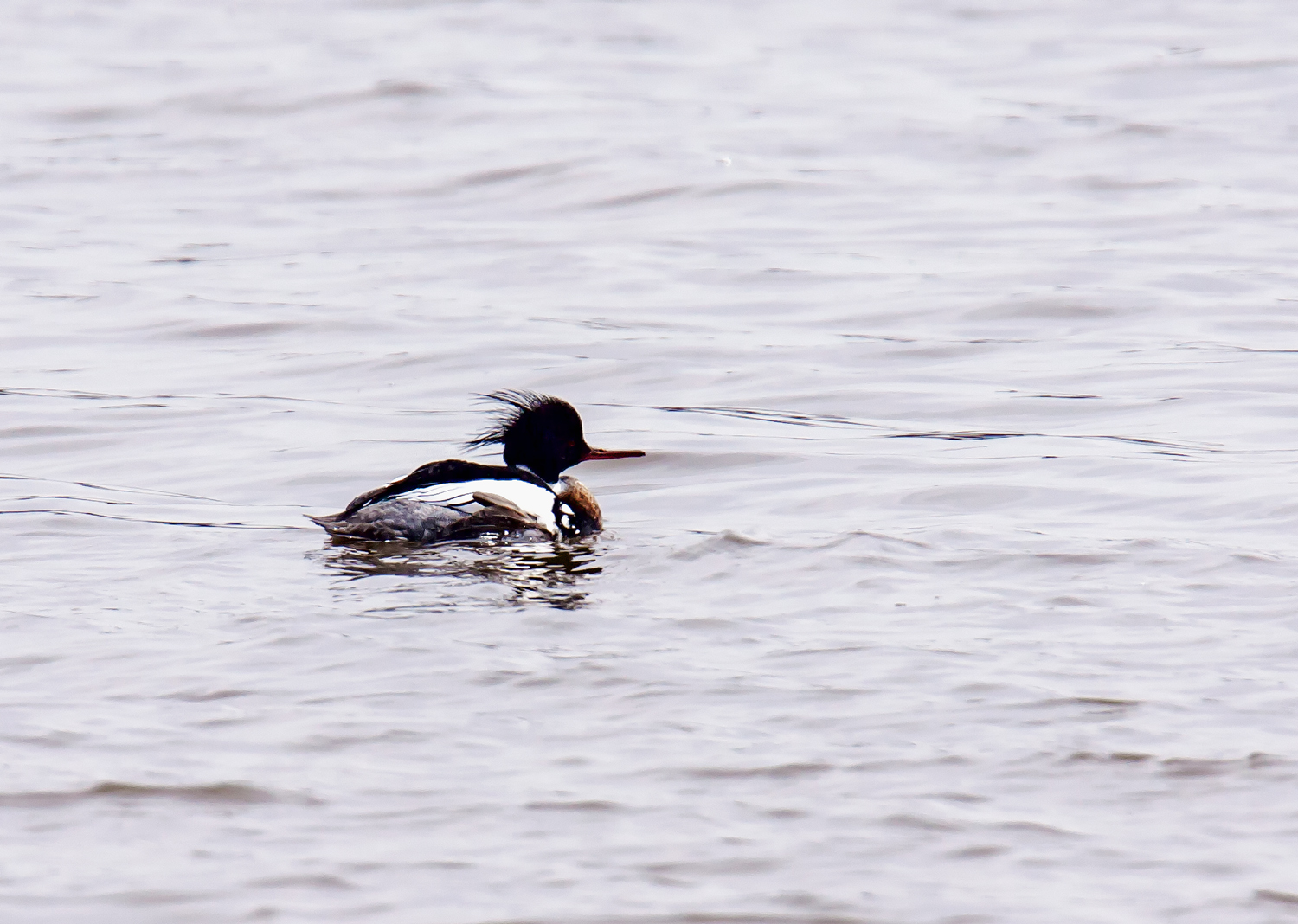
This male Red-breasted Merganser duck (Mergus serrator) that I spotted last week in the waters off of Occoquan Bay National Wildlife Refuge seemed to be having a bad hair day (or was going for a punk look). At this stage of my life, I’d be happy just to have a hair day.

According to the Cornell Lab of Ornithology, “Red-breasted Mergansers are among the fastest flying ducks, clocking speeds of up to 81 miles per hour.” Wow!

Red-breasted Merganser

Red-breasted Merganser

© Michael Q. Powell. All rights reserved.


Read Full Post »

“Environmental bird portraits” is a fancy way of saying that I was not able to get close enough to my subjects to isolate them and fill the frame. Although that is true, I like the way that these three images give you a sense of the environment in which the birds were found. Often I try to get so close enough to my subjects with a telephoto or macro lens that I lose sight of the “big picture.” These images, all of which were taken last week at Occoquan Bay National Wildlife Refuge, give you some sense of the variety of birds and environments that I encounter when I am out with my camera.

The first image shows a pair of colorful Wood Ducks (Aix sponsa) that took off as soon as they detected my presence (and I was a long way off from them). The male is the one that is in front, with the female just behind him.

The second image shows a Sharp-shinned Hawk (Accipiter striatus), the smallest hawk in the United States. This bird was the toughest one for me to identify and I had to seek assistance from some experts in a Facebook bird forum. There was some discussion about whether this was a Sharp-shinned Hawk or a Cooper’s Hawk, another small hawk, but prevalent view was the it was the former.

The final image shows a male Red-winged Blackbird (Agelaius phoeniceus) as he sang out loudly from atop a tree. Male blackbirds are definitely not shy and the volume of their enthusiastic songs and calls is amazing, i.e. really loud.

Wood Duck

Sharp-shinned Hawk

Red-winged Blackbird

© Michael Q. Powell. All rights reserved.

Read Full Post »

Last year several of my most popular postings featured Eastern Bluebirds (Sialia sialis). In response to one of those postings, one of my youngest followers, Benjamin, asked his grandmother why they were not called Orange Bluebirds, because the birds’ bodies seemed to have as much orange as blue. I appreciate all of the comments that viewers make, but that one comment has particularly stuck with me and it comes to mind whenever I see a bluebird.

On the last day of February, I spotted several bluebirds at Occoquan Bay National Wildlife Refuge, my first sighting of the species in 2019. I was pleased to capture this image that shows some of the subtle coloration of one of those bluebird, with wonderfully varying shades of blue and orange.

As I was poking about on the internet looking for information on bluebirds, I came across a sweet little song by Paul McCartney and Wings called Bluebird. The song was on the album Band on the Run—I remember the album, but don’t recall having heard the song. If you want to hear the song, check out this link to the song on YouTube. As a sneak preview to the song, here are the lyrics to the first couple of stanzas, as found on the website of The Paul McCartney Project.

“Late at night when the wind is still
I’ll come flying through your door
And you’ll know what love is for,
I’m a bluebird
I’m a bluebird
I’m a bluebird

Touch your lips with a magic kiss,
And you’ll be a bluebird too,
And you’ll know what love can do,
I’m a bluebird
I’m a bluebird
I’m a bluebird…”

Eastern Bluebird

© Michael Q. Powell. All rights reserved.

Read Full Post »

I wouldn’t exactly say that this Turkey Vulture (Cathartes aura) was handsome, but you have to admit that it has an impressive wingspan display. I spotted this vulture earlier this week at Occoquan Bay National Wildlife Refuge.

Its spread wing position reminded me of a cormorant, which pens its wings like that to dry them out. I have no idea why the vulture felt the need to do so, but it held its wings open for an extended period of time.turkey vulture

© Michael Q. Powell. All rights reserved.


Read Full Post »

“Brown Thrasher” sounds like it could be the name of a heavy metal band.  I was therefore startled by the melodious sounds of the Brown Thrasher (Toxostoma rufum) that I encountered this past Tuesday at Occoquan Bay National Wildlife Refuge. I was entranced by its beautiful song as well as by its stunning yellow eyes. According to the Cornell Lab of Ornithology, “Brown Thrashers, like catbirds and mockingbirds, are mimics with extremely varied repertoires consisting of more than 1,100 song types.” If you click on the link for the Cornell Lab of Ornithology, you will find some samples of the thrasher’s sounds.

In case you are curious, the bird’s name comes from its foraging behavior. Brown Thrashers typically feed on the ground, often in heavy undergrowth, and sweep their bills through the leaf litter and soil with quick, sideways motions.

Brown Thrasher

© Michael Q. Powell. All rights reserved.

Read Full Post »

Today I saw my first butterfly of the year, an Eastern Comma butterfly (Polygonia comma) that was flying about at Occoquan Bay National Wildlife Refuge. Members of this species overwinter as adults and may emerge form their hibernation for brief periods during winter warm spells.

It is not yet spring, but more and more signs point to the fact that it is just around the corner.

Eastern Comma

© Michael Q. Powell. All rights reserved.

Read Full Post »

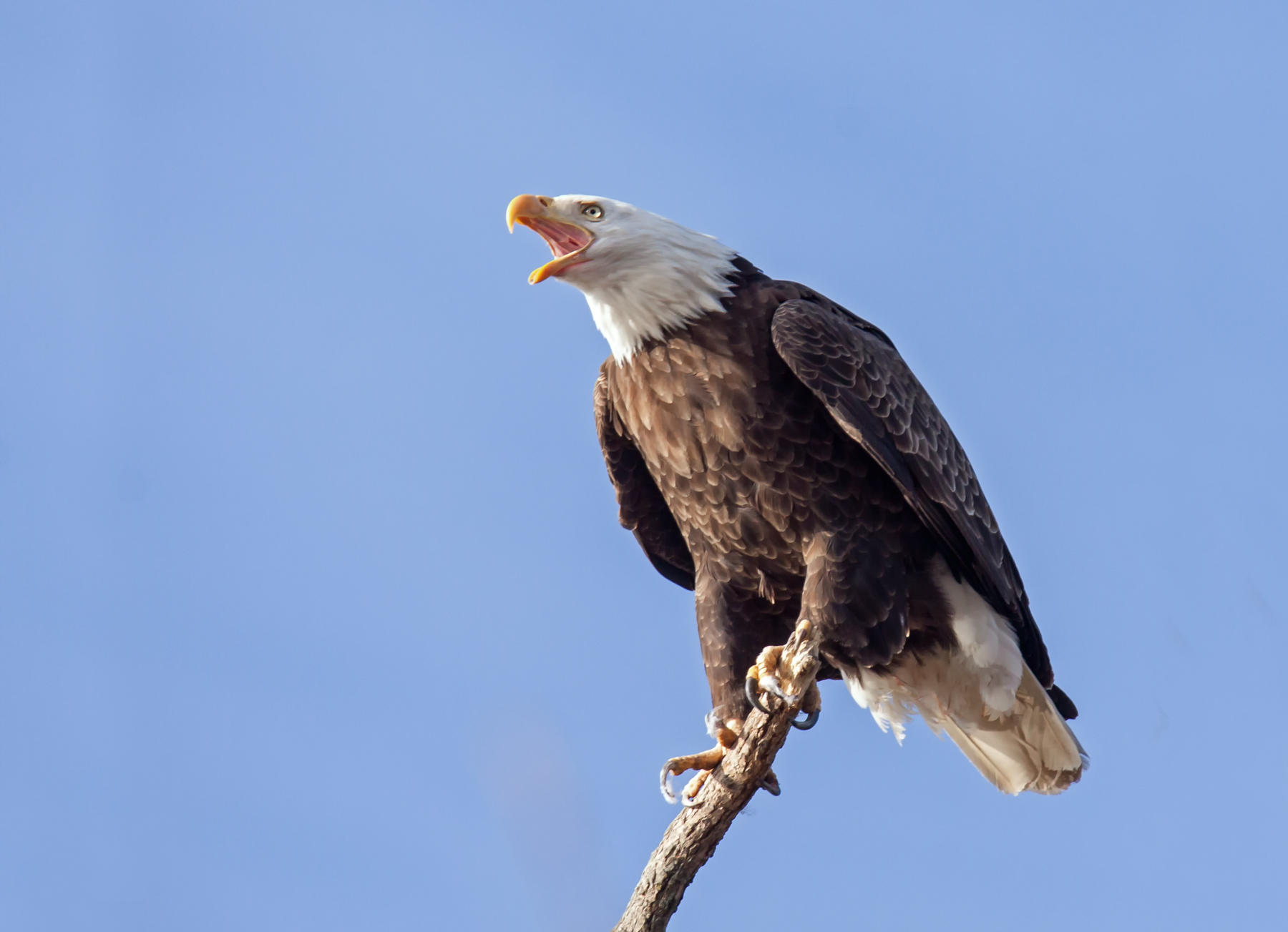
As many of you know, I love to photograph Bald Eagles (Haliaeetus leucocephalus). There is something about the majesty and strength of these birds that never fails to impress and inspire me.

On Tuesday, a beautiful sunny day. there were several eagles flying about in the skies over Occoquan Bay National Wildlife Refuge. I am not sure if they were motivated by love or by competition, but it was definitely fun to watch them in action. I had lost sight of a pair that I had been tracking when suddenly I heard the sound of an eagle’s cry that seemed to be really close. I glanced upwards and saw an eagle on an exposed branch in a nearby tree.

My heart was pumping and I probably was holding my breath, but I managed to capture a few shots that may well be the my best shots ever of a Bald Eagle. I was very fortunate to have been presented a situation and I was thrilled to be able to take advantage of it so well. (If you click on the images, you can see more amazing details, like the pink color of the inside of the eagle’s mouth.)

It is moments like this that help to keep me motivated as a wildlife photographer. These may be my best shots of an eagle so far, but who knows, there may be more and better images in the future.

bald eagle

bald eagle

© Michael Q. Powell. All rights reserved.


Read Full Post »

On Monday I was really surprised at Occoquan Bay National Wildlife Refuge to photograph my first insect of 2019, a Woolly Bear caterpillar (Pyrrharctia isabella). This species overwinters in its caterpillar form and survives being frozen by producing a cryoprotectant in its tissues that protects its cells from damage. It can even be found in Arctic regions.

This caterpillar was unfrozen and moving about, but it is probably too early for it to become a moth. Most of us are used to seeing this caterpillar, which is also known as the Banded Woolly Bear, in the autumn. There is quite a bit of American folklore associated with predicting the severity of the upcoming winter on the basis of the colors and sizes of the stripes on the caterpillar.

Eventually this caterpillar will become an Isabella Tiger Moth, though I suspect few people know its name or could identify it—I think folks are more attracted to the fuzzy caterpillar stage of the insect and its cool name of “Woolly Bear.”

If you want to learn more about how the overwintering Woolly Bear caterpillar and how it survives the winter weather, check out this fascinating article at infinitespider.com entitled The Woolly Bear Caterpillar in Winter.

Woolly Bear

© Michael Q. Powell. All rights reserved.


Read Full Post »

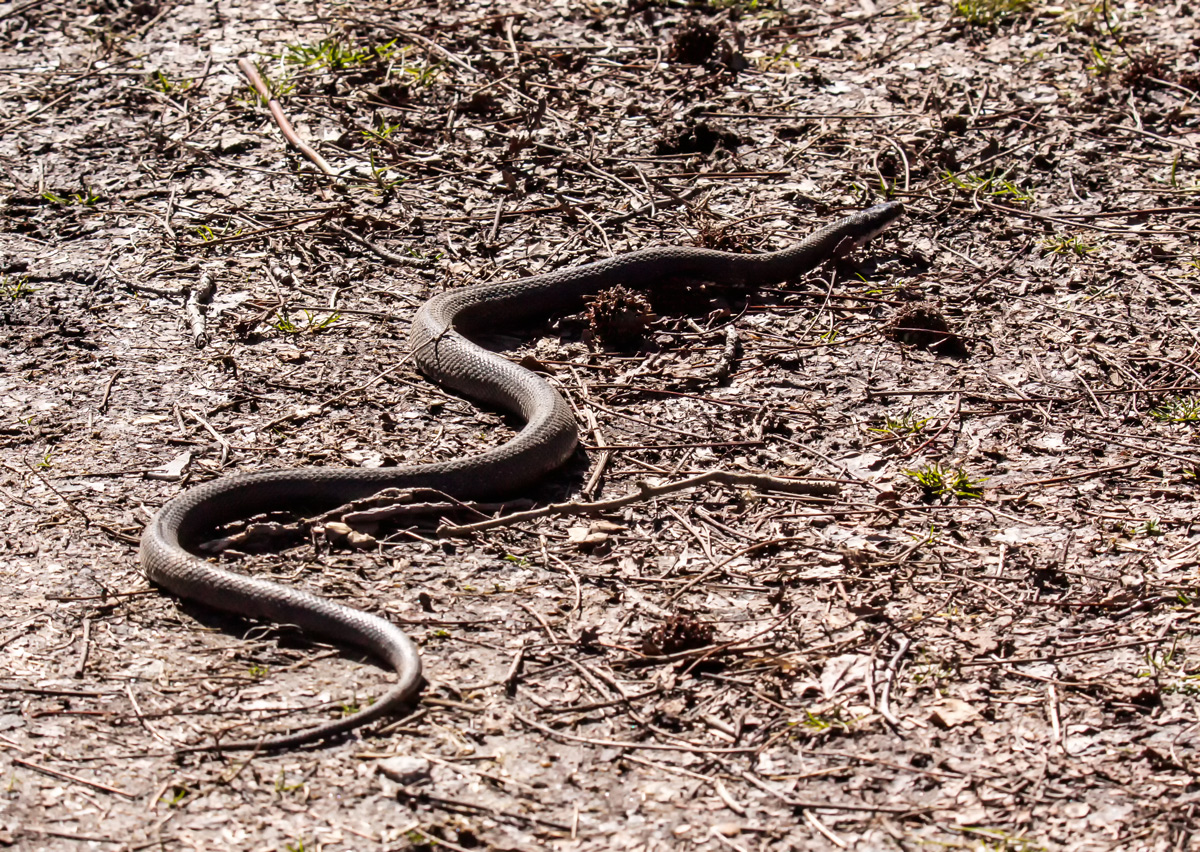
Yesterday was sunny, but not particularly warm—about 48 degrees F (9 degrees C)—so I was shocked when I encountered a snake. My eyes were pointed upwards as I scanned the trees for birds, but a slight movement just in front of my feet caught my attention and when I looked downward, I saw the sinuous curves of a snake (as shown in the second image below).

The snake, which I think may be an Eastern Ratsnake (Pantherophis alleghaniensis), moved to the side of the path and into the brush. It stopped moving long enough, however, for me to capture the close-up image image below. I know that some folks will find the image to be creepy or even frightening, but I like the way that it shows some of the wonderful details of the snake’s markings and its body.

Although it may look like I was really close to the snake, I was actually a good distance away and was shooting with a long telephoto lens.

Eastern Ratsnake


Eastern Ratsnake

Eastern Ratsnake

© Michael Q. Powell. All rights reserved.

Read Full Post »

Do you wait for optimal light conditions when you are taking photographs? This past weekend I watched a number of videos of landscape photographers in action. “Action” might be a slight exaggeration, because it seemed like they spent a lot of time waiting for the perfect lighting conditions before they took their shots. The landscape photographers had pre-scouted their locations and watched the weather forecasts and knew the kind of images they hoped to capture.

Yesterday I did a posting that talked about the importance of shooting with whatever gear you have. My approach to weather and lighting is similar. I go out whenever I can and try to make the best of whatever conditions I find myself in. As I have mentioned before, I also tend to be an opportunistic shooter, so I never know what I will see and therefore can’t pre-plan my shots.

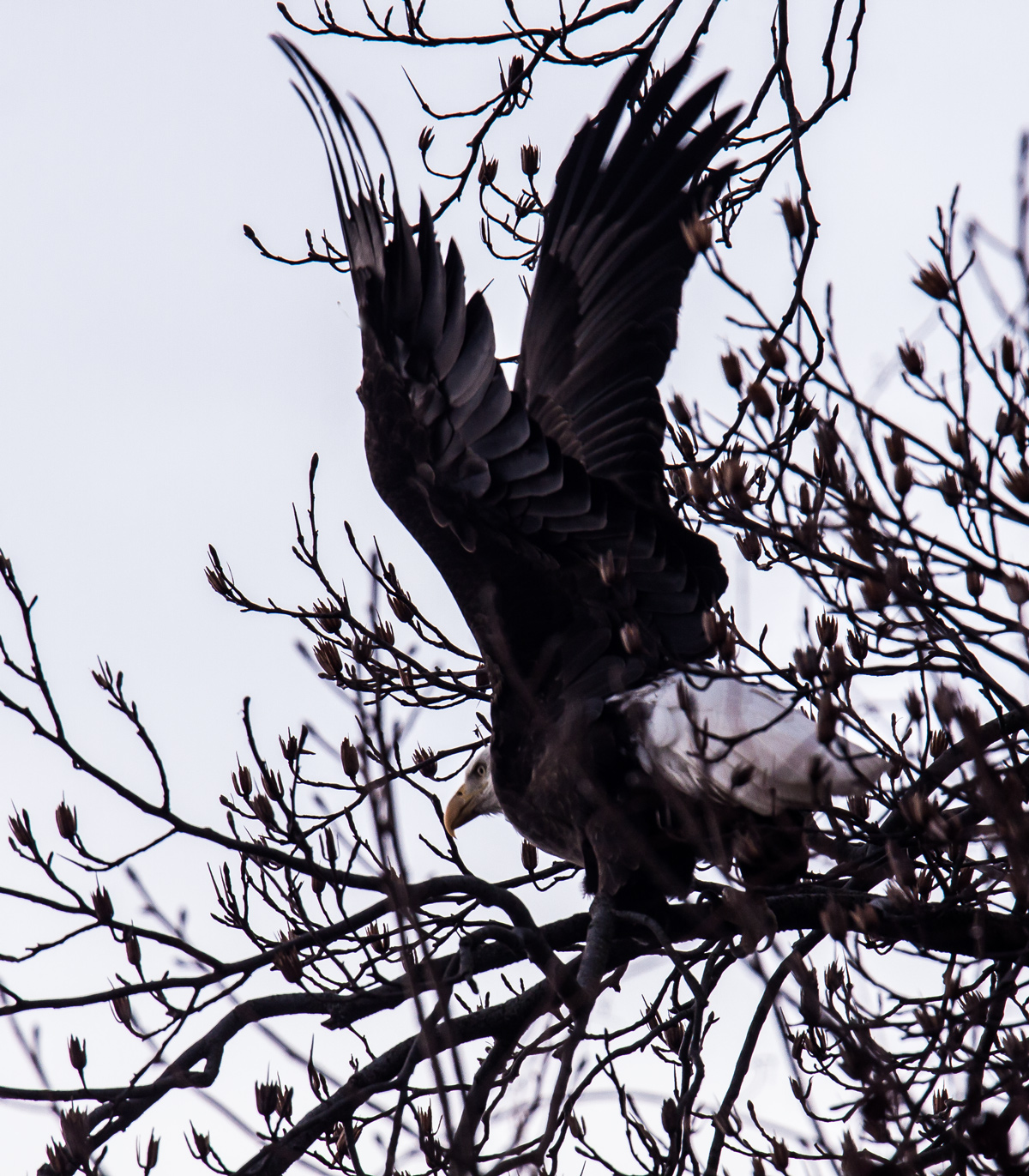
That was the situation early one morning last week as I wandered the trails at Occoquan Bay National Wildlife Refuge. The skies were heavily overcast and the Bald Eagle (Haliaeetus leucocephalus) that I spotted in a tree was far away.

So what did I do? I tried to capture some of the different poses of the eagle from as many different angles as I could. I worked the scene, knowing full well that none of my photos would be great.

Some say that if you want to be a professional photographer, you only display your best work. That may be true, but that is one of the reasons why I don’t particularly aspire to be a professional. As the subheading of my blog suggests, I’m on a creative journey with photography—I am content to share with others the images that I am able to capture.

As a child, I remember begin told repeatedly to do the best that I can and I continue to follow that advice to this day.

Bald Eagle

Bald Eagle

Bald Eagle

© Michael Q. Powell. All rights reserved.

Read Full Post »

I love the delicate and deliberate way that Great Blue Herons (Ardea herodias) place their large feet when walking in shallow water, like this heron that I spotted on Monday at Occoquan Bay National Wildlife Refuge.

Great Blue Heron


© Michael Q. Powell. All rights reserved.

Read Full Post »
It looks like Bald Eagles (Haliaeetus leucocephalus) follow a pre-flight checklist before takeoff. They stretch their wings, crouch down and lean forward, and then they fully extend their wings and push off with their legs.

I spotted this eagle on Monday at Occoquan Bay National Wildlife Refuge. I had been observing it for quite a while when suddenly it looked like it was going to take off. I am not sure exactly what the signs were, but I correctly anticipated its actions and was able to capture this sequence of shots.

Most of the time birds take off so quickly that we don’t know exactly how they did it—one second they are in a tree and the next second they are in the air. It was nice to be able to get a sense of the process that a bird goes through as it takes off. As I have seen with ducks, however, the process varies by species and is probably affected by factors such as the weight of the bird and the length of their wings.

Bald Eagle

Bald Eagle

Bald Eagle

© Michael Q. Powell. All rights reserved.

Read Full Post »
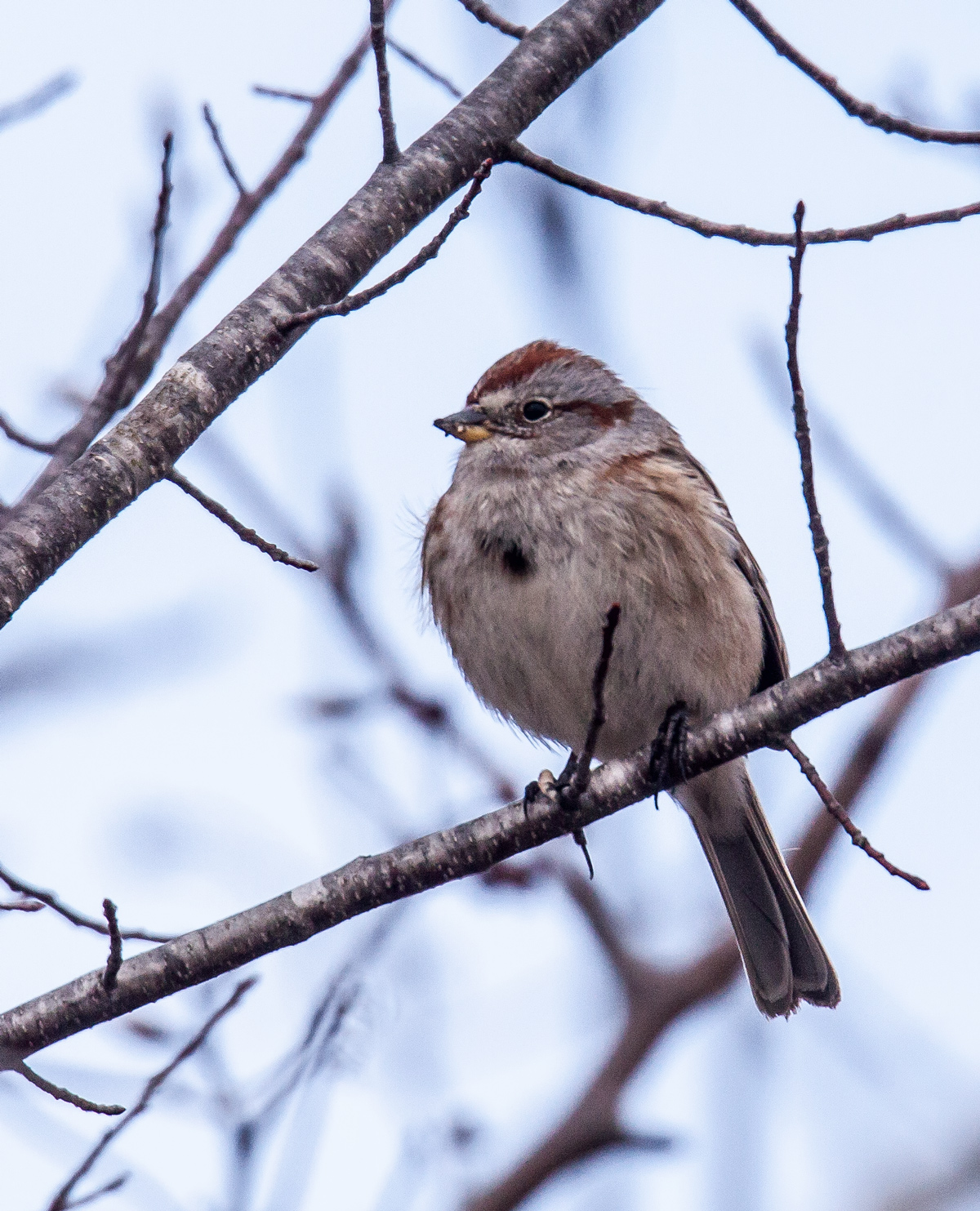
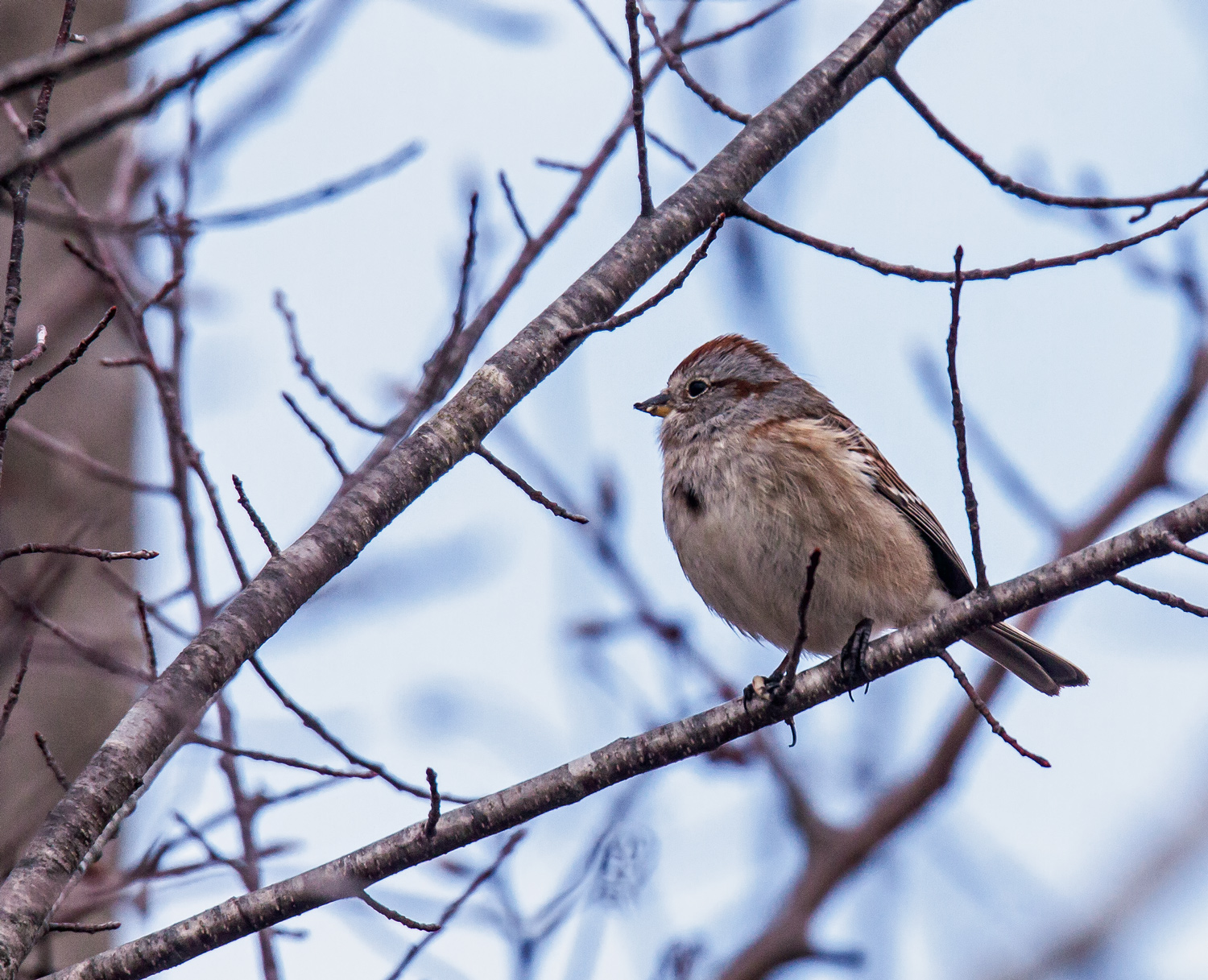
Do all sparrows look the same to you? I am definitely no bird expert, but I could immediately see that the sparrow that I spotted yesterday at Occoquan Bay National Wildlife Refuge was different from the ones that I am used to seeing. The first thing that I noticed was that it was lighter in color than the usual sparrows and that the cap on its head was red, rather than the typical brown.

When I returned home and looked at the images on my computer, I also noted the two-toned bill and the black spot in the middle of its chest. All of these characteristics made it relatively easy to identify it as an American Tree Sparrow (Spizella arborea). I could not remember if I had seen this species before, so I checked my blog postings and found that it has been more than five years since I last photographed one.

It is easy to dismiss commonplace subjects, like sparrows, as not worthy of your time and attention. If you do so, though, you will miss the chance to discover their beauty. Like people, birds are not merely members of their species—they are unique individuals. I recommend spending time with them and getting to know them better.

American Tree Sparrow

American Tree Sparrow

© Michael Q. Powell. All rights reserved.

Read Full Post »

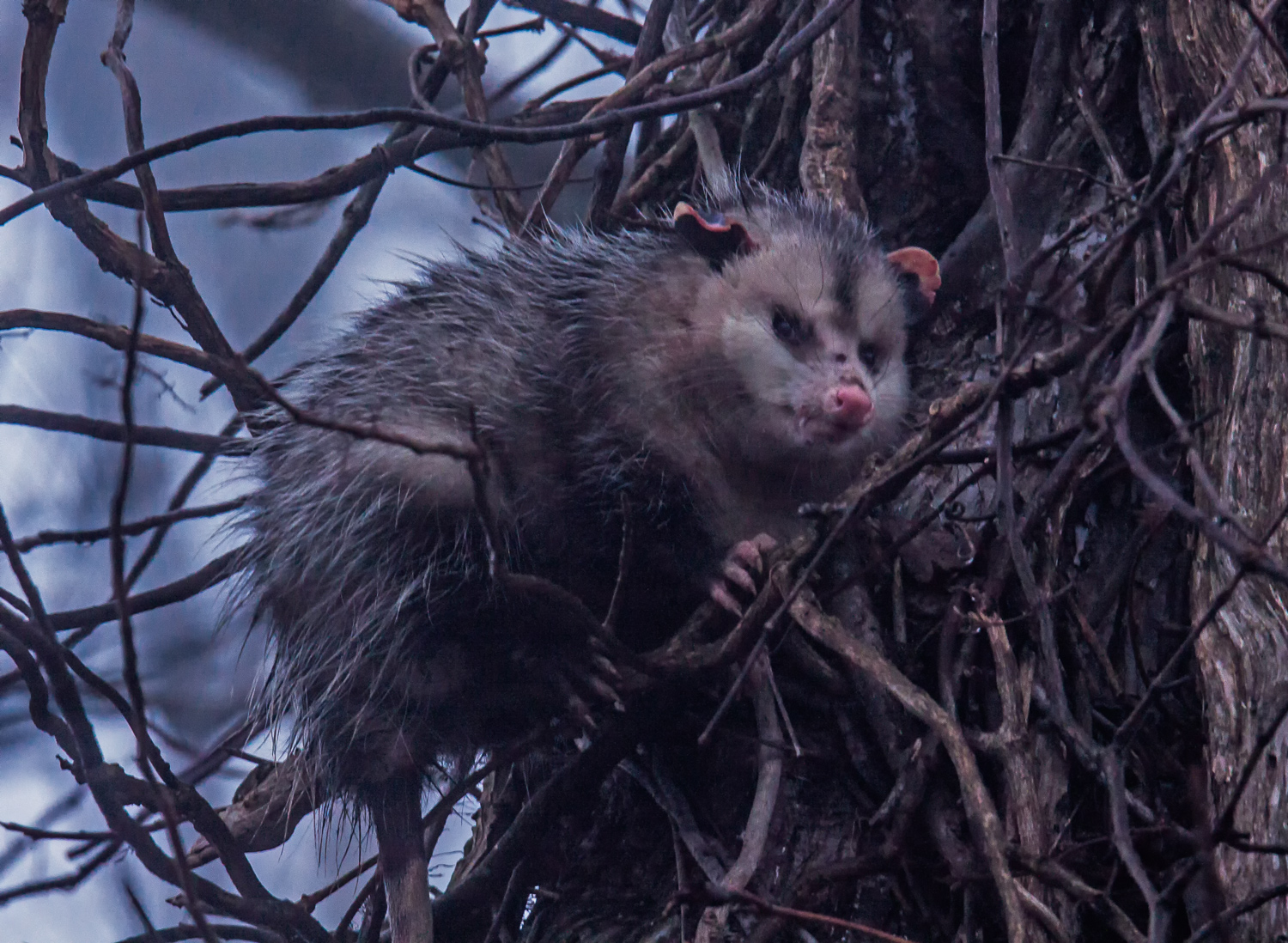
I have been to Occoquan Bay National Wildlife Refuge dozens and dozens of times, but had never seen an opossum there until yesterday. I am pretty sure that I would not have seen this one almost hidden in the trees if fellow photographer Ricky Kresslein had not pointed it out to me. Initially I was incredulous, suspecting that he had misidentified a raccoon, but as soon as I looked closely at the animal, I realized he was right.

The Virginia Opossum (Didelphis virginiana), the animal that I photographed, is the only marsupial found in North America north of Mexico. I had to double-check, but was able to confirm my remembrance that a marsupial is an animal with a pouch, like a kangaroo or a koala.

The connection to Australia and New Zealand is occasionally a source of some confusion, because the “possums” in those locations are entirely different species. Here in North American, “opossum” and “possum” are used interchangeably.

One of the most common references to this animal is the expression “playing possum.” In the literal sense, it refers to the Virginia Opossum’s reaction sometimes when threatened—it may roll over, become stiff, drool, breathe slowly and shallowly, and appear to be dead. In a more general sense, the expression has come to mean pretending to be dead or asleep to avoid having to deal with a problem.

Virginia Opossum

© Michael Q. Powell. All rights reserved.


Read Full Post »

Normally I plan my photo expeditions so that I arrive after the sun has already risen. After all, if I want to photograph wildlife subjects, I need to have enough light to be able to see them. Recently, however, I have been trying to get there before sunrise in order to capture images of the color in the sky. This is becoming a problem for me, because the gates of the wildlife refuge where I like to explore do not open until 7:00 in the morning and we have almost reached the point in the year where the sun rises even earlier than that.

On Tuesday, I arrived at Occoquan Bay Wildlife Refuge at about 7:05 and the color in the sky was amazing, a beautiful red color tinged the clouds. My view of the most colorful parts of the sky was blocked by trees, so I did my best to frame the sky with those trees. My the time I reached the water, the most saturated colors had disappeared, but in some directions I could still see some glorious pastel colors and I captured the second image. I love the abstract quality of that image, a depiction of nature at its simplest, a series of wonderful shapes and colors.

colorful dawn

colorful dawn

© Michael Q. Powell. All rights reserved.

Read Full Post »

I watched and waited for an extended period of time yesterday as this Bald Eagle (Haliaeetus leucocephalus) groomed itself in a tree overlooking one of the trails at Occoquan Bay National Wildlife Refuge. I was pretty much in the open at the edge of the trail and did not dare to move forward for fear of spooking the eagle. Fortunately I had my camera and long telephoto zoom lens on a monopod, because I know from experience that I would not have been able to hold it pointed upwards for that long a period of time.

I tried to stay as alert and ready as I could, which can be quite a challenge after a while. Sometimes a bird will signal its intent to take off, but this eagle took off without a warning. Acting on instinct mostly, I managed to capture the first image when the eagle was just clearing the edge of the branches. In the second shot, I clipped off the edge of the wings, but decided to include it to give you an idea of the challenge of trying to track the speed a bird when it first takes off. The final image shows you what the eagle looked like when it was perched in the tree before the takeoff.

bald eagle

Bald Eagle

Bald Eagle

© Michael Q. Powell. All rights reserved.

Read Full Post »
This Red-shouldered Hawk (Buteo lineatus) was so puffed up early last Saturday morning at Occoquan Bay National Wildlife Refuge trying to stay warm that I couldn’t even see its feet—it was about 18 degrees (minus 8 degrees C) when I captured the image. The hawk seemed to be hunched over a bit and it looks like some of its lower feathers were draped over its feet.

Red-shouldered Hawk

© Michael Q. Powell. All rights reserved.


Read Full Post »

The sun had risen before I reached the water at Occoquan Bay National Wildlife Refuge this past Saturday morning, but there still was some color in the sky that was reflected by the ice along the shoreline, imparting blue and orange tinges to the ice.

In the second shot, I used the wide-angle capabilities of my Canon SX50 superzoom camera to give you an overall feel for the moment. As you can see, the sun was not yet very high in the sky and the clouds helped to direct the sun’s rays directly down onto the distant water, giving it a kind of shimmer. I am now accustomed to carrying both my DSLR and the SX50 to give me greater flexibility in capturing different situations.

winter sunrise

winter sunrise

© Michael Q. Powell. All rights reserved.

Read Full Post »

The sun was rising as I pulled into Occoquan Bay National Wildlife Refuge early yesterday morning. My view to the east was obstructed, but I did manage to capture this image of the fiery sun through the trees.

It was a fun challenge trying to choose settings for the camera that let me capture both the sun and the shapes of some of the individual trees. In some of my images, the trees became one dark indistinct mass, so I kept making adjustments as quickly as I could, because the sun seemed to be moving amazingly fast.

winter sunrise

© Michael Q. Powell. All rights reserved.

Read Full Post »
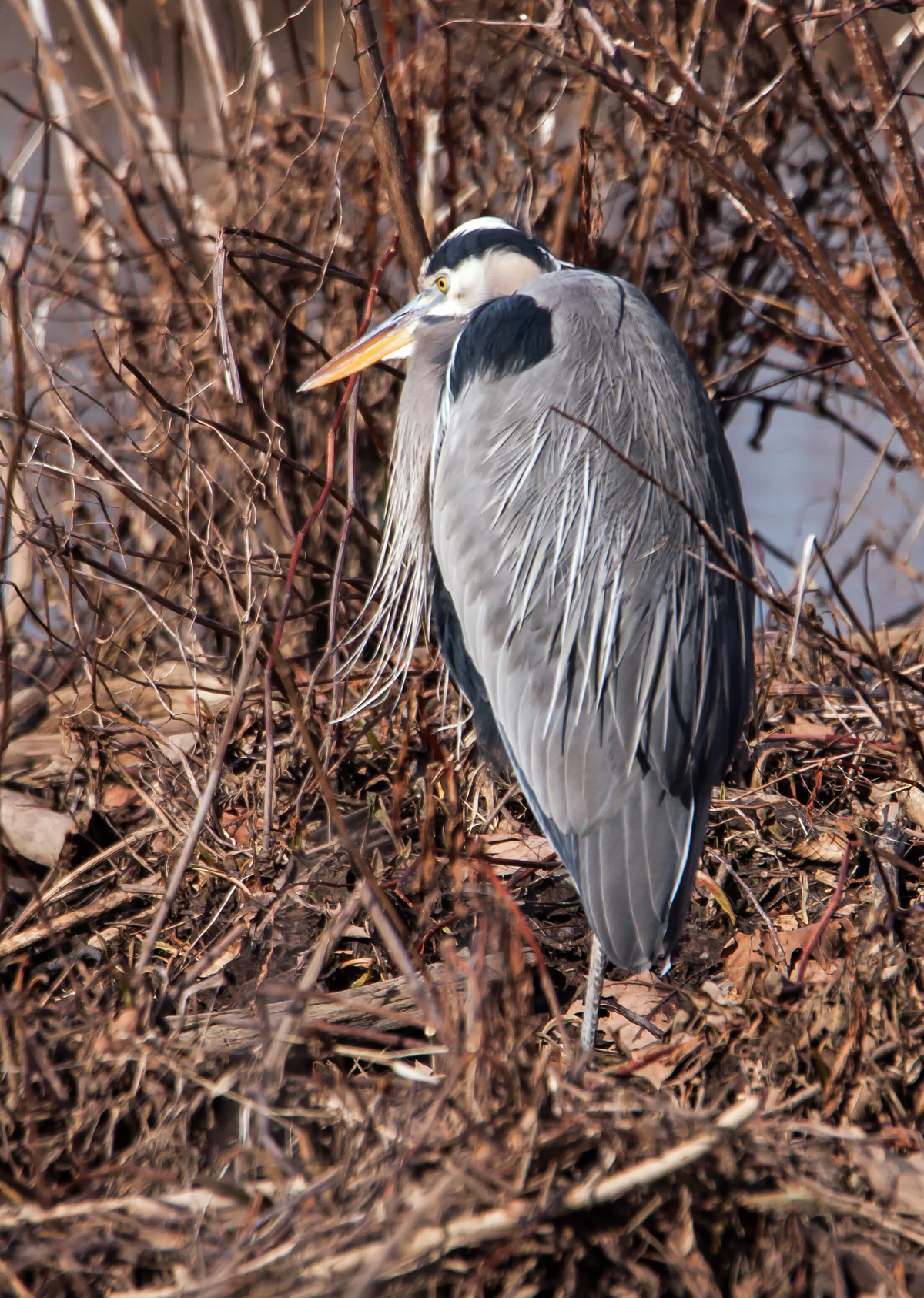
It was not as bitterly cold on Monday as it is today, but this Great Blue Heron (Ardea herodias) nonetheless seemed to be hunkered down at the edge of a pond as it sought to stay warm at Occoquan Bay National Wildlife Refuge. It almost looks like the heron is wrapped in a cloak of fluffed-up feathers with only a minimum amount of its body exposed to the elements.

Great Blue Heron

© Michael Q. Powell. All rights reserved.

Read Full Post »

« Newer Posts - Older Posts »