Feeds:
Posts
Comments

Posts Tagged ‘Tamron 180mm’

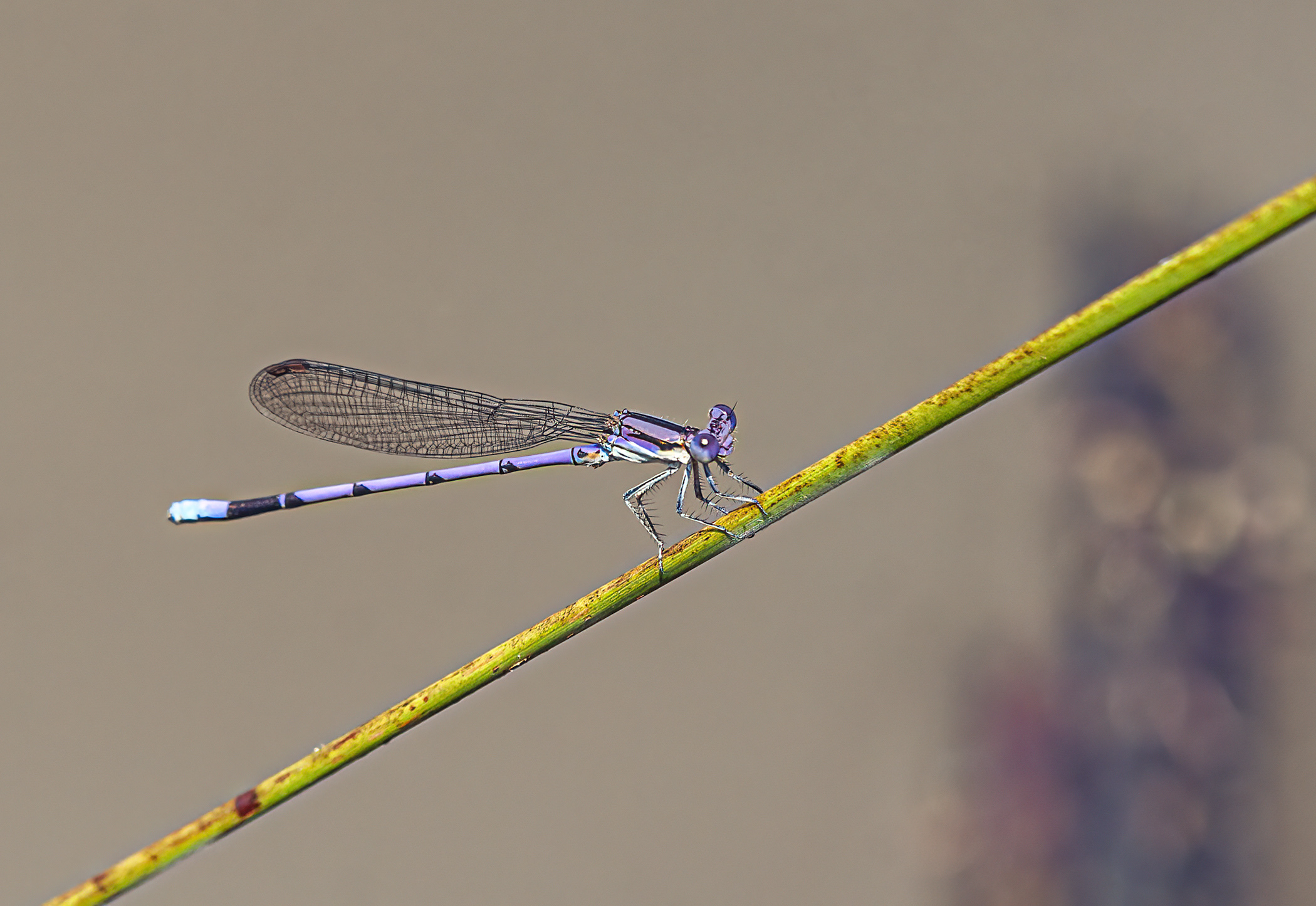
Do you have a favorite damselfly? I have photographed some pretty spectacular damselflies, but I have to admit that I am irresistibly attracted to the unique coloration of the Violet Dancer damselfly (Argia fumipennis violacea), a subspecies of the Variable Dancer damselfly (Argia fumipennis). As some of you may know, the normal banner photo for my blog page includes a photo of a beautiful Violet Dancer, so my fondness for this species is not exactly a secret.

Some of you may be thinking that I am a little weird for having a favorite damselfly. If so, you may have forgotten what it is like to view the world as a child as I try to do. A recent edition of Reader’s Digest included the following Tweet that captured this feeling perfectly, “I like having conversations with kids. Grown-ups never ask me what my third favorite reptile is.”

I spotted this colorful little damselfly on Tuesday as I was exploring a small pond at Jackson Miles Abbott Wetland Refuge. After some recent rainstorms, the waters of the pond were quite muddy, which accounts for the unusual color of the background of the image. I though about cropping in a little closer on the damselfly, but I like the blurred vegetation on the right side of the image.

Violet Dancer

© Michael Q. Powell. All rights reserved.

Read Full Post »

How close should I try to get to my subject? How much attention should I pay to environmental elements when composing a shot? When is the decisive moment to grab a shot when the subject is in motion? These were some of the thoughts swirling through my head when I spotted this Black Swallowtail butterfly (Papilio polyxenes) last Friday at Occoquan Bay National Wildlife Refuge.

There are several dark swallowtails in our area, including the Spicebush Swallowtail, the Pipevine Swallowtail, the dark morph of the Eastern Tiger Swallowtail, and the Black Swallowtail. Sometimes it is hard to tell them apart, but in this case I spotted the black dots inside of the orange dots in the area between the wings, one of the identifying marks of a Black Swallowtail.

The first shot was one of the earliest shots that I took and I remember staying far enough away from the butterfly to be sure that I included the curl of the leaf coming out of the stalk of vegetation. I also tried to time my shot to catch the butterfly with its wings spread wide and was mostly successful.

I moved in closer and captured the second image, which shows more of the details of the butterfly. Although the camera settings remained the same, the background is more out of focus than in the first shot, because depth of field tends to get shallower when you get closer to a subject. I also tried to shoot from a slightly higher angle by standing on my tiptoes—you can see more of the vegetation over the butterflies left eye in the second image than in the first.

I chased this butterfly around as it flew about and waited patiently for it to perch again. I captured the final image when it landed on a different kind of plant. Normally a shot like this when the subject is facing away from you is not a good shot and is derisively referred to as a “butt shot” by many photographers. In this case, however, I was struck by the way that the angle of the butterfly’s wings complemented the angular shape of the plant’s leaves and I like the abstract feel of the image that I captured.

Black Swallowtail

Black Swallowtail

Black Swallowtail

© Michael Q. Powell. All rights reserved.


Read Full Post »

I am always excited to see the brightly colored bodies and patterned wings of Calico Pennant dragonflies (Celithemis elisa). Calico Pennnants are small in size, with a length of only 1.1 to 1.3 inches (29-34 mm), and often perch in dense vegetation of fields adjacent to the water, so they are often difficult to spot. I can usually plan on getting scratched up a bit when photographing them and sometimes come away with chigger bites.

Last Friday I was particularly happy when I managed to get shots of both a male and a female Calico Pennant at Occoquan Bay National Wildlife Refuge. Males have a red and black pattern on their bodies, while females (and juvenile males) are yellow and black—the Calico Pennant in the first photo is a male and the one in the second is a female. Both genders have exquisitely detailed patterns on their wings that also help to distinguish them from other dragonflies.

Calico Pennnant

Calico Pennant

© Michael Q. Powell. All rights reserved.


Read Full Post »

Halloween Pennant dragonflies (Celithemis eponina) are among the most photogenic dragonflies that I am blessed to photograph. The way that they perch at the extreme tips of vegetation makes it relatively easy to separate them from the background and highlight the beautiful patterns of their wings. Often I am able to move relatively close and shoot upwards with the sky as the background, as in the second image, though at other times I enjoy including the green shades of vegetation instead.

I spotted this striking dragonfly, which I believe is a female Halloween Pennant, last Friday as I was exploring a field at Occoquan Bay National Wildlife Refuge. Unlike many dragonflies that are found at the edge of a pond or a marsh, the Halloween Pennants that I see are usually perched in the tall vegetation at the edge of fields away from the water.

My final photo was my attempt to see eye-to-eye with the dragonfly. I really like the unusual perspective in the resulting photo and the way that the angle of view causes the wings, which usually play a dominant role in photos of dragonflies, to almost disappear from view.

Halloween Pennant

Halloween Pennant

Halloween Pennant

© Michael Q. Powell. All rights reserved.

Read Full Post »

The dragonfly was high in the tree and almost completely silhouetted when I spotted it on Friday at Occoquan Bay National Wildlife Refuge. Conditions did not seem optimal for capturing an image, but as I looked through the viewfinder of my camera, my eyes were attracted to the curlicue shape of the branch on which the dragonfly was perched. The branch, I realized, was actually the main subject of the image that I wanted to create.

I was far enough away that I could move about freely without fear of spooking the dragonfly, so I tried a number of different angles of view and shooting positions. As I later looked through the images on my computer, the placement of the sky and the clouds in the frame made me decide to feature this particular shot.

As for the dragonfly, I believe that it is a female Great Blue Skimmer (Libellula vibrans). Despite the shadowy silhouette created by shooting into the sun, there are just enough details for me for me to identify the dragonfly with a reasonable degree of certainty, though, as I noted earlier, my primary goal was to draw the viewer’s attention to the spiral shape of the curlicue branch.

Great Blue Skimmer

© Michael Q. Powell. All rights reserved.

Read Full Post »

I have encountered Black-shouldered Spinyleg dragonflies (Dromogomphus spinosus) several times in two different locations over the past week. As you can tell by looking at the enlarged end of their abdomens, these rather large dragonflies (about 2.5 inches (65 mm) in length) are part of the Clubtail family. I spotted the dragonflies in the first and third photos in the vegetation adjacent to a river and the one in the middle photo on a rocky ledge that jutted into a mountain stream.

I must confess that most of the time I have difficulties seeing the “black shoulders” of this species, but the spiny legs can be quite visible. If you click on the final image and look closely at the dragonfly’s back legs, you can’t help but notice the sharp spines that look to be as large and pointed as the thorns in the vegetation that frequently tear at my trousers. The large leg spines of the Black-shouldered Spinyleg help the dragonfly to capture and to hold on to prey.

Balck-shouldered Spinyleg

Black-shouldered Spinyleg

Black-shouldered Spinyleg

© Michael Q. Powell. All rights reserved.

Read Full Post »

As I was exploring a stream in Prince William County on Tuesday, I spotted a fallen tree at the edge of a rocky beach. I am not very good at identifying trees, but could not help but notice that this one had a lot of nuts on it. Someone or some creature had gathered a small pile of these green-skinned nuts at the edge of the water for unknown reasons. I think that these may be some kind of hickory nuts, judging from photos that I have seen on the internet, but I am really uncertain about that identification.

As I was examining that little pile of hickory nuts, a male Powdered Dancer damselfly (Argia moesta) flew by and landed on one of the nuts. I am always interested in photographing interesting perches for my dragonflies and damselflies and this perch is definitely out of the ordinary.

I love the graphic shape and color of the nuts and the way the image is bisected on an angle into distinct halves, each with its own distinctive colors and textures. The powdery coloration of the Powdered Dancer helps it to stand out and the damselfly helps to unify the two halves of the photo. My main subject takes up a comparatively small part of this image compared to most of my other shots, but I think the composition really works. I encourage you to click on the image to see the beautiful coloration of this little damselfly that is approximately 1.5 to 1.7 inches (38 to 43 mm) in length.

Powdered Dancer

© Michael Q. Powell. All rights reserved.

Read Full Post »

Our weather recently has been hazy, hot, and humid and we have even had some smog that prompted an air quality alert yesterday as a result of fires in the western part of the United States. From a dragonfly perspective, we are in a kind of summer doldrums period, where the summer dragonflies have been buzzing around for quite some time, and it is too early for the autumn species to appear.

On Tuesday I went exploring in Prince William County and was delighted to spot this handsome Dusky Dancer damselfly (Argia translata) alongside a small stream. I think that this is only the second time that I have managed to photograph this species. Although many damselflies have touches of blue, the dark body and the distinctive markings near the tip of the abdomen (the “tail”) make this pretty easy to identify as a Dusky Dancer.

The rock on which the damselfly was perching is not a great background, but at least it draws the viewer’s eyes to the damselfly and is not at all distracting. Be sure to click on the image to see the wonderful details of the damselfly, including the blue markings on its body and its entrancing eyes.

Dusky Dancer

© Michael Q. Powell. All rights reserved.

Read Full Post »

I have previously featured water lilies and lotuses that I photographed during a trip earlier in July to Kenilworth Park and Aquatic Gardens. Those flowers were beautiful, of course, but the flower that really grabbed my attention was this alien-looking one that looks like a spider or a Portuguese man o’ war. From what I have been able to find on the internet, I believe that this is a Cahaba lily (Hymenocallis coronaria), an aquatic, perennial flowering plant species that is also known as a shoal lily, or shoals spider-lily.

I was quite a challenge to try to figure out how to photograph this wild-looking flower that spreads out in all directions. I think that this angle gives you a pretty good look at all of the plant parts without being too distracted by the busy background. In many ways the image becomes an almost an abstract one, because the viewer initially takes in the shapes and colors without immediately being able to tell what the main object is.

Cahaba lily

© Michael Q. Powell. All rights reserved.


Read Full Post »

Here’s a glimpse of a pretty little Eastern Comma butterfly (Polygonia interrogationis) that I spotted last Friday while visiting Riverbend Park on the Potomac River in Virginia. The Eastern Comma is one of a pair of woodland butterflies sometimes referred to as the punctuation butterflies—the other butterfly is the Question Mark butterfly.

The easiest way to distinguish between the two butterflies is to look at the white markings in the middle of the hind wings. If, as is the case here, there is a single curved line, then it is an Eastern Comma butterfly. If, on the other hand, there is a curved line and a dot, it is a Question Mark butterfly. (Check out my September 2020 posting Question Mark in September if you are interested in comparing the two sets of markings.)

Eastern Comma

© Michael Q. Powell. All rights reserved.


Read Full Post »

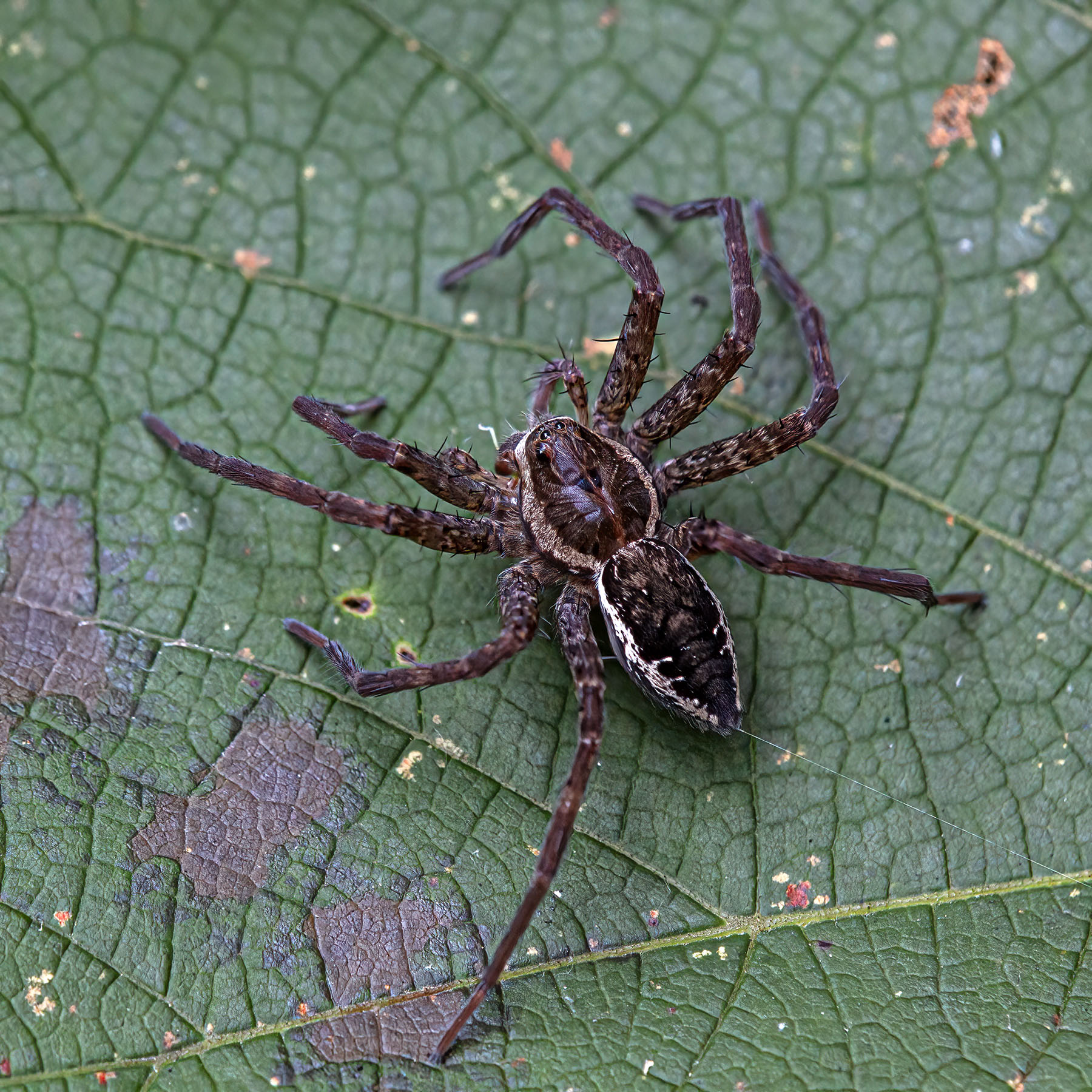
I spotted this large spider last Thursday at Occoquan Regional Park perched atop some leafy vegetation and watched as it captured a small moth that made the mistake of landing on the same leaf. The spider assumed a defiant pose when I started to photograph it—obviously it did not want to share its lunch with me—and I captured the first photo as I stared straight into its multiple eyes.

I initially thought that this was a fishing spider because of its large size and overall shape, but I am beginning to wonder if it might actually be a wolf spider. Most of the fishing spiders that I have seen have been in the water and this one was a foot (30 cm) in the air, although it was overhanging the edge of a small stream. I included a shot of its body that shows its markings, in case any of you are expert enough to identify its species.

I know that people have mixed reactions to spiders, but I encourage those of you who do not find them to be totally creepy to click on the first photo. Doing so will allow you so see some wonderful details of the spider, especially its eyes, and the remains of the hapless moth.

spider

spider

© Michael Q. Powell. All rights reserved.


Read Full Post »

I was thrilled to spot this cool-looking Crusader Moth last week during a visit to Occoquan Regional Park. The distinctive pattern on the wings of this moth, technically a Clymene Moth (Haploa clymene), brings to mind the shields used by knights during the Crusades.

Although the context is completely different, it somehow brought to mind the opening word of one of the hymns that I grew up singing at a small Baptist church in Massachusetts—”Onward Christian soldiers! Marching as to war, with the cross of Jesus going on before.” My personal beliefs grew more tolerant as I grew up and the words of that hymn today seem overly militaristic and strident, just as the cartoons of my childhood now seem incredibly violent.

Crusader Moth

© Michael Q. Powell. All rights reserved.


Read Full Post »

Water lilies always bring to mind the paintings of Claude Monet, my favorite artist. Monet produced a series some 250 paintings of water lilies (Nymphéas in French) that were the main focus of his artistic production over the last thirty years of his life. One of the museums that I most love visiting is the Musée de l’Orangerie in Paris, because it houses eight massive water lily murals by Monet in two specially-built oval rooms. It is an incredible, meditative experience to just sit in one of those rooms, surrounded by those amazing paintings. (For more details on the water lily murals, including a virtual visit, click here.)

Conditions were considerably more chaotic than calm on 10 July when I visited  Kenilworth Aquatic Gardens in Washington D.C. with several photographer friends. The weather was comparatively cool and comfortable, a welcome respite from the heat and humidity of recent days, and bustling throngs of people had gathered at the park to view the lotuses and water lilies. Fortunately the crowds concentrated in clusters at a few spots and I was able to explore many of the other lily ponds in peace.

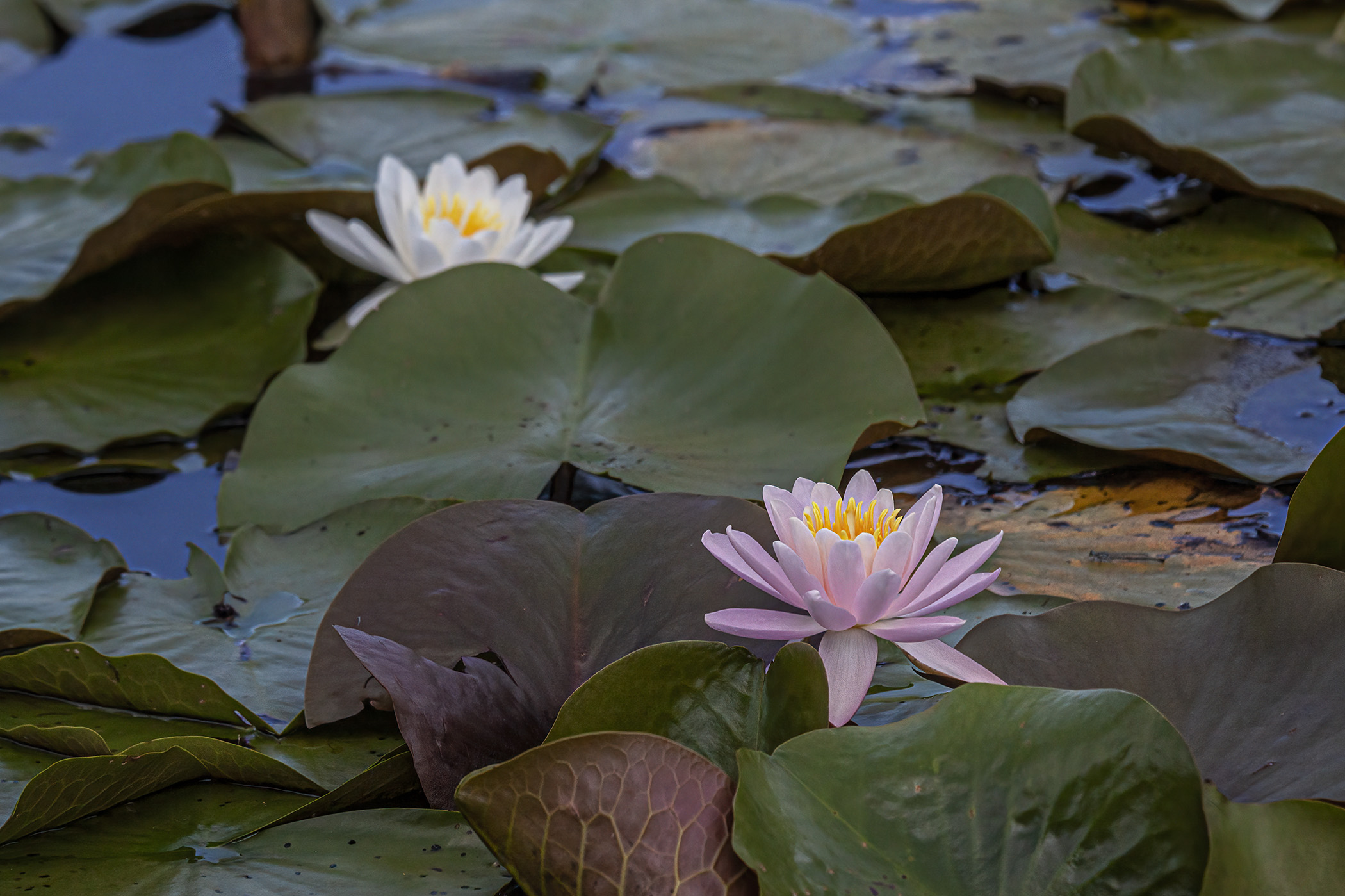
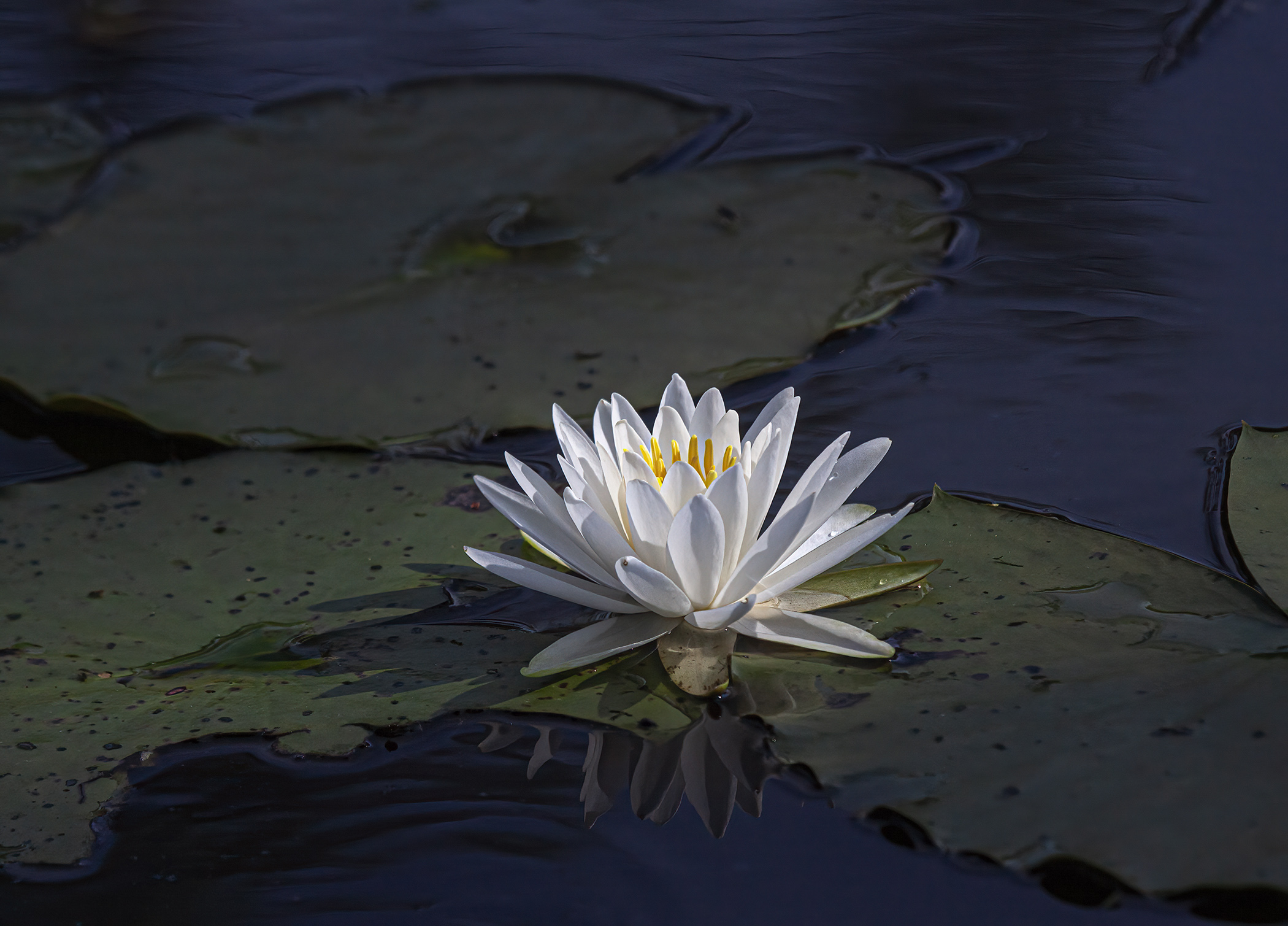
One of the things that I love most about water lilies is the way that they seem to glow from within with a soft, warm light. It is always a challenge to figure out how to capture the beauty of the water lilies. Normally I concentrate on individual flowers, but for the first photo I decided to capture a wider view with two flowers in the midst of a carpet of lily pads.

As you can see, lily pads were inevitably a component in all of my compositions. Sometimes the lily pads make me smile. Why? Maybe it is just me, but when I look at the final photo, I can’t help but think of Pac-Man, a beloved video game of my younger days. I never really got into the complicated video game systems as technology advanced, but really enjoyed the relative simplicity of Pong and Pac-Man.


water lilies

water lily

water lily

water lily

© Michael Q. Powell. All rights reserved.


Read Full Post »

Most of the time the photos in my postings were taking during a single trip to a particular location, but today I decided to mix things up a little. There is really nothing that links these three photos together, except perhaps the fact that they are all simple graphic images.

The first image shows a Banded Pennant dragonfly (Celithemis fasciata) perched on a curved piece of vegetation. Some Facebook viewers stated that they thought of the golden arches of McDonald’s, while others thought of the enormous Gateway Arch in St. Louis. I had no such thoughts and simply liked the curved shape of the vegetation as well as the rest of the compositional elements in the shot.

The second image shows a Cabbage White butterfly (Pieris rapae) with proboscis extended as it feeds on a plant that I think is Queen Anne’s Lace. I really like the minimal range of colors in the image and the way that the veins of the butterfly mirror the structure of the plant.

The final image is perhaps the most simple and the most abstract. A damselfly was perched on a leaf just above eye-level, its shape clearly evident in the shadow that it was casting. I was seized with an irresistible impulse to photograph the semi-hidden insect. If you click on the image, you will discover that one of the damselfly’s eyes was curiously peering over the edge of the leave and one tiny foot was sticking out too.

Banded Pennnant

Cabbage White

damselfly

© Michael Q. Powell. All rights reserved.


Read Full Post »

I captured this image last Saturday at Kenilworth Aquatic Gardens and love the way that it shows lotuses at various stages of development, from budding to flowering to turning into seed pods. I have included a close-up shot of a seed pod, in case you have never looked closely at one. These seed pods always get a mixed reaction from my friends—some find them to be fascinating, while others find them to be creepy.

lotus

Lotus seed pod

© Michael Q. Powell. All rights reserved.


Read Full Post »

What is the most common dragonfly that you see in the summer? One of the most frequently seen dragonflies where I live is the Blue Dasher (Pachydiplax longipennis). As some of you know, I have long had a “thing” for Blue Dashers and my very first posting on this blog over nine years ago featured a Blue Dasher.

Blue Dasher dragonflies can be quite striking in appearance, especially when they choose photogenic perches. This past Saturday I visited Kenilworth Aquatic Park and Gardens in Washington D.C. with some friends and noted that there were lots of Blue Dashers buzzing about amidst the lotuses and water lilies. One of my goals for the day was to photograph these cool little dragonflies in as interesting a way as I could.

Dragonfly photographers and bird photographers often have a common problem—their subjects like to perch on bare branches and there is only so much they can do to make the photos interesting. I tried hard to capture images of Blue Dashers when they perched, often momentarily, in an unusual spot. In these three images, I think the vegetation and backgrounds add visual interest to the shots without taking attention away from the primary subject.

Blue Dasher

Blue Dasher

Blue Dasher

© Michael Q. Powell. All rights reserved.

Read Full Post »

On Saturday I traveled with a few fellow photographers to Kenilworth Park and Aquatic Gardens, a National Park Service site in Washington D.C. whose main attractions are the the numerous water lilies and lotuses in a series of interlocked cultivated ponds. It was tough for me to figure out how to tackle photographic subjects like these and I must confess that I spent a fair amount of time chasing after the numerous dragonflies that were present at the park.

Here are a few shots of some of the lotuses that I encountered that day. The first image is a peek through the petals at the distinctive seed pod in the center of one lotus. The second shot shows a lotus in full bloom. Only about half of the lotus plants that I encountered were flowering and many of them were beyond the reach of the lens that I was using or were in harsh, direct sunlight, so I was happy to capture this one so well. The final photo shows a lotus bud with petals that are just beginning to open.

I think it is good to push myself sometimes to photograph different subjects and to step outside of my comfort zone. It forces me to think creatively about what I am doing and how I am approaching the subject. Flexibility is a key ingredient in all of this, which seemed appropriate as I was trying to get into the lotus positions.


lotus

lotus

lotus

© Michael Q. Powell. All rights reserved.

Read Full Post »

Each summer I look forward to seeing Swift Setwing dragonflies (Dythemis velox) at Jackson Miles Abbott Wetland Refuge. These little dragonflies perch in a very distinctive pose with their wings pulled forward, which looked to some scientist like the “ready-set-go” position of a sprinter and is reportedly the reason for the name of the species.

Five years ago I spotted my first Swift Setwing dragonfly at this same location and it turned out that this primarily southern species that had never before have been documented in Fairfax County, Virginia, the county where I live. (You can see details of that first sighting in my 25 June 2016 posting Swift Setwing dragonfly.)

It seems pretty clear that there is now at least a small population of Swift Setwings now established at the small pond at this refuge. This past Thursday I spotted several Swift Setwings, all of which were male, and captured these images. As you can see, members of this species like to perch at the very top of the vegetation, usually facing the water. It can be quite a challenge to get profile shots like these and almost impossible to get the kind of head-on shots that I love to take.


Swift Setwing

Swift Setwing

© Michael Q. Powell. All rights reserved.

Read Full Post »

I was absolutely delighted to spot some clearwing moths among the flowers on Thursday at Jackson Miles Abbott Wetland Refuge. These cool moths look and act a lot like  hummingbirds as they hover among the flowers and sip nectar. Unlike the hummingbirds that use a needlelike beaks, these moths have a long proboscises that look like tongues but function more like straws that permit them to suck in nectar from a distance, as you can see in the second image.

There are several related species of clearwing moths in our area and I sometimes have trouble telling them apart. I am pretty sure that the one in the first image is a Snowberry Clearwing moth (Hemaris diffinis) because of its yellow coloration and dark-colored legs. The moth in the second image might be a Hummingbird Clearwing moth (Hemaris thysbe), judging from its more olive coloration and light-colored legs.

These moths are in constant motion, moving quickly from flower and flower and I had to chase them around quite a bit to capture these shots. Occasionally I was able to almost freeze the motion, as in the first image, but in most of my images the wings are somewhat blurry. I really like the blurry bright red wings in the second image in which we are looking head-on at the moth. The blurred wings provide a nice contrast with the rest of the body that is in relative sharp focus and we get a good look at the proboscis in action.

Snowberry Clearwing

Hummingbird Clearwing

© Michael Q. Powell. All rights reserved.

Read Full Post »

I was excited to spot some Banded Pennant dragonflies (Celithemis fasciata) yesterday at Jackson Miles Abbott Wetland Refuge. It has been a few years since I last saw them at this location, the only local spot where I had reliably seen them in the past, and I was afraid that they were gone forever.

Like so many dragonflies that I see, adult male Banded Pennants are blue, but the distinctive pattern on their wings make them easy to distinguish from the others. However, they are small in size—about 1.3 inches (34 mm) in length—and perch in vegetation right at the edge of the water, so you have to look carefully to spot them. Most of the time Banded Pennants, like other pennant dragonflies, perch on the very tip of grasses and other stalks of vegetation, where they are easily blown about and flap like pennants in the slightest breeze, which can make them a challenge to photograph.

The third image shows the pose in which I photograph pennant dragonflies most frequently. I was delighted, therefore, when one Banded Pennant chose a more photogenic perch and I was able to capture the colorful first image.

Banded Pennant

Banded Pennant

Banded Pennant

© Michael Q. Powell. All rights reserved.

Read Full Post »

Quite a few dragonfly species in my area are blue in color, so I have to pay a lot of attention to other details to identify them, such as the patterns on the thorax (the “chest”) and on the wings. I was thrilled to photograph the male Yellow-sided Skimmer (Libellula flavida) in the second photo in mid-June while I was exploring a small pond in Prince William County, my first sighting ever of the male of this species.

I had previously been alerted to the presence of this relatively uncommon species there by a fellow photographer, who happened to show up while I was searching. When a dragonfly perched on a distant fallen tree in the water, my friend pulled out his binoculars, looked at it, and said it was a Yellow-sided Skimmer. I remarked to him that I had photographed a dragonfly on that very same perch earlier in the day.

He told me the critical thing to look for was the yellow on the leading edges of the wings. When I returned home and checked my photos, I saw the yellow on the wings and was a little embarrassed t0 realize that I had photographed my first male Yellow-sided Skimmer without knowing it at the moment I had taken the shot.

Two days later I returned to the same pond with fellow dragonfly enthusiast Walter Sanford and we spotted male and female Yellow-sided Skimmers, including the handsome male that is featured in the first photo. If you want more details of my adventures that day, including a shot of a female Yellow-sided Skimmer, check out my recent posting Yellow-sided Skimmer (female).

Yellow-sided Skimmer

Yellow-sided Skimmer

© Michael Q. Powell. All rights reserved.

Read Full Post »

On July 7, 2012 my photography mentor Cindy Dyer told me that I needed to start a blog. She had been blogging for several years already and was familiar with WordPress. She helped me choose a theme, craft an “About Me” page, and prepare my first posting. That posting was entitled Blue Dasher dragonfly, featured a single photo, and had a short text that simply stated, “I photographed this Blue Dasher dragonfly (Pachydiplax longipennis) at Kenilworth Aquatic Gardens this morning.”

I remember feeling a mixture of excitement and fear when I pressed the “Publish” button for the first time. Inside I had all kinds of concerns about my inadequacies as a photographer and about not being ready to share my images with a broad audience. Was I ready? Perhaps I was not, but having been pushed into the deep end of the pool, I quickly learned to swim.

From the very beginning, I found myself surrounded by a community of people who have been overwhelmingly supportive of my efforts and that has pushed me to to improve my skills and to find my “voice.” I started this blog at a time in my life when I had decided to stop working full-time—for the first seven years I worked three days a week and now I am fully retired. This blog and my photography have helped me to forge an identity separate from my job, to reignite a curiosity about the natural world, and to unlock a creative side of me that had long been dormant. My blog has become an integral part of my daily life, though I no longer freak out if life circumstances cause me to miss an occasional day.

According to WordPress, over the lifespan of my blog I have published 4068 postings (a few of which have been re-blogs of postings by others) that have had a total of 306,436 views. Is that a lot? Like most things in life, it depends on what you use as a measuring stick.

I do not write my blog to make money or to grow a large audience or following. My goals are much more modest—my blog is a tool to express myself as authentically as possible by sharing my thoughts and photos and connecting with others. I appreciate all of the support, feedback, and encouragement that so many of you have provided to me throughout this lengthy journey. Thanks. It is overwhelming to think about the diversity of the group of people who read my posts, people from all walks of life scattered throughout the world. Wow.

Today I am featuring a photo of a Gray Petaltail dragonfly (Tachopteryx thoreyi) that I encountered yesterday in a seepy area in Fairfax County, my home county in Virginia. This species of dragonfly originates in this kind of perpetually wet habitat, where skunk cabbage is likely to be growing. I like to visit seeps with the hope that someday I will come across a Gray Petaltail as it is emerging.

As you can see from the photo, the coloration of the Gray Petaltail allows it to almost disappear in this kind of habitat. I spotted this perched dragonfly because I know that many dragonflies are drawn to sunny spots, so whenever I am in the forest or other dark locations, I will look for sunlit patches to explore.

So, I am now starting my tenth year. I suppose that I should update the WordPress theme of the blog, which I have not changed since I chose it nine years ago, and my “About me” page, which also has not been touched in a really long time. Beyond those possible cosmetic changes, I expect to continue on in my journey into photography, wandering about and sharing my experiences with all of you. Thanks again for sharing in this experience with me.

Gray Petaltail

© Michael Q. Powell. All rights reserved.

Read Full Post »
When Americans hear the word “spangled,” they are likely to think of our flag and our national anthem, especially this past weekend as we celebrated Independence Day. I think too of Spangled Skimmer dragonflies (Libellula cyanea), like this handsome male that I photographed this past Saturday in Fairfax County, Virginia. While the “spangles” in the Star-Spangled Banner refer to the stars on the flag, the “spangles” of this species refer to the little white patches, known as stigmas, on their wings.

Spangled Skimmer

© Michael Q. Powell. All rights reserved.

Read Full Post »

The ponds and marshes are alive with the sight of flying dragonflies. As the summer weather has grown increasingly hot and humid, the number of dragonflies has increased —we are probably nearing the peak of dragonfly activity.

One of the species that I encounter most frequently is the Eastern Pondhawk (Erythemis simplicicollis). When male Eastern Pondhawks are immature, they sport the emerald  coloration and striped abdomens of their female siblings, but as they get older they turn into a beautiful shade of blue that is a perfect complement to their bright green faces and bluish-green eyes.

I spotted these two adult male Eastern Pondhawks last Saturday during a visit to Occoquan Regional Park. Unlike some species that always perch in the same way, Eastern Pondhawks will perch in a variety of different ways almost anywhere. I selected these two photos today because I like the way that they show off the coloration of these handsome dragonflies.

Eastern Pondhawk


Eastern Pondhawk

© Michael Q. Powell. All rights reserved.


Read Full Post »

Some of you may remember my excitement from my blog posting a week ago when I photographed an Eastern Least Clubtail dragonfly (Stylogomphus albistylus) for the first time in my life. Yesterday I returned to the same location in Fairfax County and explored several branches of the stream in which I had previously seen the Eastern Clubtail perched on a rock.

I mostly paid attention to the sunny spots in the stream and to the stones in the middle of them, which they are supposed to prefer, but came up empty-handed. Eastern Least Clubtails are only 1.2 to 1.4 inches (31-36 mm) in length, so it was a bit like looking for a needle in a haystack. I returned several times to the exact location where I previously photographed the dragonfly—I can actually identify the precise rock on which he perched—and on one of those occasions I visually tracked a dragonfly as it landed in some nearby vegetation.

Imagine my shock when I realized that the dragonfly perched only a few feet away was a male Eastern Least Clubtail—the shapes and brightness of the appendages at the tip of the abdomen (the “tail”) are unmistakeable. I captured a few images before the dragonfly flew off again and I was able to resume my breathing. I am not sure what kind of vegetation this is, but it made for a cool-looking landing pad for this handsome dragonfly.

According to the Dragonflies of Northern Virginia website, this species should be around until almost the end of July, so I will probably return a few more time to this spot to see if I can spot this tiny dragonfly again and, with some luck, will manage to spot a female—both of the Eastern Least Clubtails that I have photographed have been males.

Eastern Least Clubtail

© Michael Q. Powell. All rights reserved.


Read Full Post »

Sometimes the shadows are at least as interesting as the subject in my wildlife photos, as was the case with this Ebony Jewelwing damselfly (Calopteryx maculata) that I spotted last week while exploring a stream in Fairfax County. Initially the dragonfly was perched on the rock with its wings closed and I merely observed it. As soon as it flared its wings, though, I knew I had to take a shot and am pretty happy at the way that it turned out.

Ebony Jewelwing

© Michael Q. Powell. All rights reserved.


Read Full Post »

Have you even examined dragonfly wings really closely? I tend to think of dragonfly wings as being made up lots of individual “cells” that are uniform in size and shape, like the squares on piece of graph paper. The reality, however, is that the wings are incredibly complex and are full of intricate designs and shapes that presumably help the dragonfly to maneuver its way so masterfully through the air.

Last week I captured this image of an immature male Needham’s Skimmer (Libellula needhami) while I was exploring in Occoquan Regional Park. I managed to position my camera so that I was almost perfectly parallel to the plane of the wings that are consequently in sharp focus. I highly encourage you to click on the image to see the breathtaking wing details that form such complex mosaic-like patterns. Wow!

It is no wonder that it is so hard for me to draw or paint dragonfly wings that look realistic.

Needham's Skimmer

© Michael Q. Powell. All rights reserved.

Read Full Post »

I was happy to spot these handsome Powdered Dancer damselflies (Argia moesta) in mid-June as I was exploring a rocky stream in Prince William County. Most of time when I see a damselfly it is at a pond or marshy area, but this large, distinctive damselfly seems to prefer rivers and streams. Although I occasionally spot them perched in vegetation, as in the second photo, Powdered Dancers quite often perch on bare ground or on flat stones.


Powdered Dancer

Powdered Dancer

© Michael Q. Powell. All rights reserved.


Read Full Post »

I enjoy wearing camouflage when I am traipsing about in the wild. It is not so much that I am trying to hide, but somehow it connects me to my past life as an Army officer. One of the patterns that I sport from time to time is an urban pattern that is a mixture of white, black, and gray rather than the greens and browns of traditional camouflage patterns.

When I spotted this Gray Petaltail dragonfly (Tachopteryx thoreyi) last Sunday as I was exploring in Fairfax Country, I had this strange thought that the drab colors of this dragonfly would blend in perfectly in an urban environment (though he is more likely to be found in a seep than in a city). Part of that thought might have come from the fact that the dragonfly was perched on a manmade trail sign rather than on the side of a tree where I usually find Gray Petaltails.

Normally I prefer natural perches for my wildlife subjects, but somehow this one really works for me. The large wire staples at the top of the post help to add to the industrial vibe of the images. I really like the textures and colors of the post and they serve as an interesting backdrop of the dragonfly. The shadows from the wings add a final bit of visual interest to the images, especially the second one.

Gray Petaltail

Gray Petaltail

© Michael Q. Powell. All rights reserved.

Read Full Post »

We are coming to the end of the season for the Sable Clubtail (Stenogomphurus rogersi), so it was really exciting to spot Sable Clubtails last Wednesday as I was exploring a small stream in Fairfax County. As some of you may recall, the Sable Clubtail is an uncommon dragonfly species in my area.  A month ago I was really concerned that the increase of silt and vegetation in the stream where they have previously been seen seem might have caused them to disappear.

I am somewhat more optimistic now that I have seen them several times over the past month. During my most recent trip, I think I may have spotted at least two individual Sable Clubtails. If you compare the front wing tips of the dragonflies in the second and third images, they appear to be different. I photographed the dragonfly in the first photograph later that same day in the same general area, so it could have been one of the others that I photographer earlier or a third individual.

It is always fun to try to figure out the best way to photograph a dragonfly when I encounter it. To a certain extent my options are dictated by the way the dragonfly perches and the habitat in which it is found. In the case of the Sable Clubtail, I usually find them perched low on leafy vegetation overhanging the stream. If I am lucky, I’ll find myself in a position to attempt a close-up shot like the first image—I was crouched low as I straddled the stream to capture that image.

Although the Sable Clubtail will soon be gone, other dragonflies will be appearing on the scene before long. I expect to be busy chasing after these newcomers as we move deeper into the summer.

Sable Clubtail

Sable Clubtail

Sable Clubtail

© Michael Q. Powell. All rights reserved.

Read Full Post »

Six-spotted Fishing Spiders (Dolomedes triton) sense their prey through vibrations in the water, so generally when I see them they have several legs lighting touching the surface of the water. When I spotted this one yesterday at a small pond in Fairfax County, however, it was perched on top of some vegetation several inches above the water.

I have no idea why it was there, though there were plenty of dragonflies buzzing around that would occasionally perch on the same type of vegetation. Could it possibly be hoping to catch a dragonfly? I have included a photo of a male Blue Dasher dragonfly (Pachydiplax longipennis) from a previous day that was perched in the same area to give you an idea of the spider’s potential prey. I would think that a dragonfly’s excellent vision would allow it to spot the spider and avoid it—I can’t imagine that a dragonfly would deliberately choose to land on top of the spider, but who knows?

If you look closely at the first photo, you may also notice what appear to be several spider legs poking out from underneath the edge of the vegetation. Was there another spider there and if so, why? Nature is full of mysteries and intrigue, with lots of unanswered questions.

Six-spotted Fishing Spider

Blue Dasher

© Michael Q. Powell. All rights reserved.


Read Full Post »

« Newer Posts - Older Posts »