Feeds:
Posts
Comments

Posts Tagged ‘Tamron 180mm’

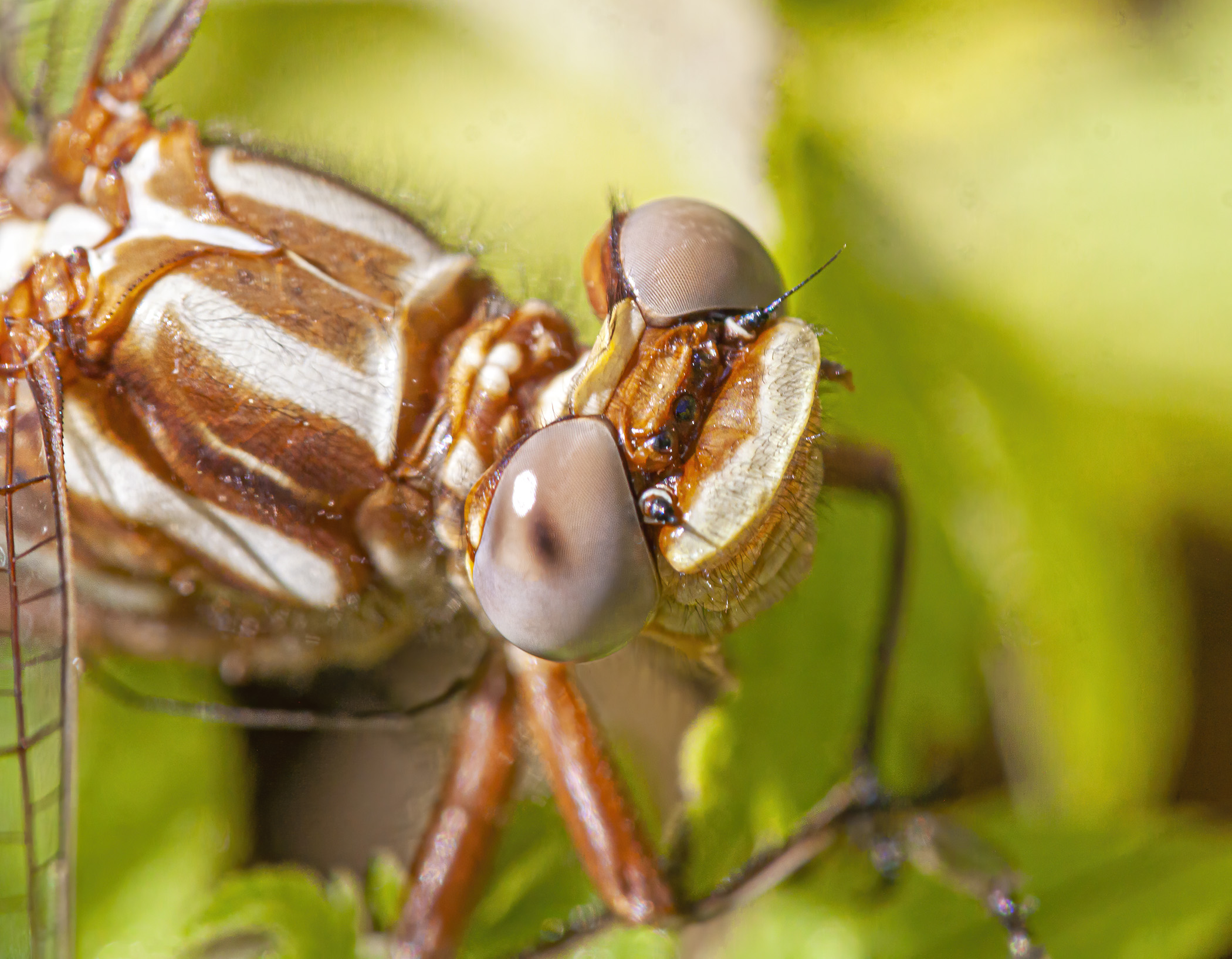
I wasn’t sure if Uhler’s Sundragon dragonflies (Helocordulia uhleri) would still be around when I set out exploring in Prince William County earlier this month. This species of dragonfly is one of the first to appear in the spring and generally is flying for only a month or so. I had spotted several females on the third of April—see my posting Female Uhler’s Sundragons for details and photos—so I knew that the clock was ticking.

I scoured all of the locations where I had seen them in the past and was about to give up hope when some movement low in the vegetation caught my eye. I was excited to see that it was a Uhler’s Sundragon, my target species. As I tried to control my racing heart and slow down my breathing, I maneuvered into position and was able to capture this image of a handsome male Uhler’s Sundragon. As it turned out,  this dragonfly was the only one of its species that I would see that day and I have not seen one since. In this case, though, one was more than enough.

Uhler's Sundragon

© Michael Q. Powell. All rights reserved.

Read Full Post »

When I posted a photograph last week of a skink with a bright blue tail, I noted that a skink can shed its tail if a predator grabs onto it. I never suspected that two days later I would encounter a skink with a missing tail. When I first spotted it, I was so drawn to the detailed scallop pattern on its body that I did not even notice its really short tail. (Click on the image to get a closer view of that wonderful texture.) The coloration suggests to me that this is a Broad-headed Skink (Plestiodon laticeps), not the more common Five-lined Skink that I featured last week.

I was also drawn to the orange coloration of the head. According to the Virginia Herpetological website, the head in male Broad-headed Skinks becomes bright orange and enlarged in the temporal region during the spring mating season. Perhaps the skink lost its tail during a fight with a rival—the website cited above notes that adult males are particularly aggressive to other males during the mating season.

In case you need a reminder about how long a skink’s tail should be, check out the posting from last week Young skink in May. Some of you may have read my bad joke about skinks in the comment section of that posting, but it seems so appropriate that I can’t help but repeat it here. “Do you know what skinks do when they lose their tails? They go to a retail store.” Sorry. 🙂


Broad-headed Skink

© Michael Q. Powell. All rights reserved.

Read Full Post »

On Friday, temperatures in my area soared to 84 degrees (29 degrees C), which I thought might trigger the emergence of new dragonflies. However, when I arrived at Jackson Miles Abbott Wetland Refuge, a nearby park with a small pond, the only dragonflies that I could find were a half-dozen Common Baskettail dragonflies (Epitheca cynosura) patrolling over various parts of the pond.

I walked around the perimeter of the pond multiple times, searching in vain in the undergrowth and in the vegetation at water’s edge. Periodically I stopped and attempted to photograph the dragonflies in flight. Their flight paths were somewhat predictable, which gave me hope, but the dragonflies varied their distances from the shore and changed their altitude unexpectedly.

Here are a few of my favorite shots from the photo excursion. As a frame of reference, Common Baskettail dragonflies are about 1.6 inches (41 mm) in length, so I think you can appreciate the challenge of photographing one on the fly.

Common Baskettail

Common Baskettail

Common Baskettail

© Michael Q. Powell. All rights reserved.

Read Full Post »

Many beetles are dark-colored and go about their business in the underbrush, unseen by human eyes. Six-spotted Tiger Beetles (Cicindela sexguttata), on the other hand, are hard to miss—their metallic-green bodies sparkle as they perch in the middle of the sun-lit forest trails on which I have been hiking in recent weeks.

The beetle’s common name refer to the six small white spots on the beetle’s metallic-green elytra (the beetle’s hardened wing cases), although the number of spots is somewhat variable—I think I count eight spots on this individual. As I was doing a bit of research, I stumbled upon the fact that elytra is the plural form of elytron—I think that I have almost always seen the word used in the plural form and the spell-check highlights elytron as an unknown word.

It is often hard to get a shot of one of these beetles, because they are skittish and often fly away as I bend down to photograph them. For this photo, I was fortunate that the beetle chose to perch on a trunk of a tree at eye-level and no contortions were therefore required on my part.

Six-spotted Tiger Beetle

© Michael Q. Powell. All rights reserved.

Read Full Post »

I often feel a bit overwhelmed when I visit a public garden—there are so many flowers all around vying for my attention. I am rarely attracted to large clusters of flowers, but instead tend to gravitate toward individual flowers that I can photograph up close with my macro lens.

Here are three of the flowers that I photographed during a recent photographic foray to nearby Green Spring Gardens with my friend Cindy Dyer. The first is a spiderwort (g. Tradescantia), a flower that I love for its simple geometric shape. I am not sure if the plant in the second photo, some species of allium, counts as a flower, but I love the way that the partially open “bud” reveals the complex structure inside. The final flower is a simple viola that I spotted amidst a bed of green ground cover—like pansies, violas always make me smile.

spiderwort

allium

viola

© Michael Q. Powell. All rights reserved.


Read Full Post »

During a recent dragonfly hunting trip with my friend and fellow dragonfly enthusiast Walter Sanford, I was thrilled when we stumbled upon several Springtime Darner dragonflies (Basiaeschna janata). As their name suggests, they are in flight early in the dragonfly season and are gone well before many of the summer dragonfly species arrive.

I first spotted one flying low over the vegetation in an overgrown field. It dropped down into the vegetation, but I was fortunately to be able to find where it was perched. As you can see in the first photo, Springtime Darners perch vertically, making it hard to see them amid all of the nearby stalks and stems. The female in the first photo was relatively cooperative and I was able to position myself well enough to have most of her body in focus. I encourage you to click on the image to see all of the wonderful details and colors of this beautiful dragonfly.

Although we had several more encounters with Springtimes Darners, all of those individuals were very skittish and it was tough to get any good shots. I included the second shot below because it shows really well the body of a male Springtime Darner, although the head is a bit out of focus because of the way he was perched.

Walter also did a blog posting on our encounter with these beautiful dragonflies. Be sure to check it out at this link and you will find more information about this dragonfly species and his photos and “take” on our dragonfly adventure.


Springtime Darner

Springtime Darner

© Michael Q. Powell. All rights reserved.

Read Full Post »

I spotted these beautiful Bleeding Heart flowers (Lamprocapnos spectabilis) during a brief trip to Green Spring Gardens last Tuesday with my friend Cindy Dyer. The colors of the pink ones are stunning, especially against the lime-green leaves in the background. However, I was particularly struck by the white ones, a variant that was new to me.

Bleeding Hearts

Bleeding Hearts

Bleeding Heart

© Michael Q. Powell. All rights reserved.

Read Full Post »

I really love the look of young Common Five-lined Skinks (Plestiodon fasciatus), when their tails are bright blue, like this one that I spotted last Thursday while exploring in Prince William County. The blue color gradually fades as the skinks mature and as a result it becomes a bit harder to spot the adults in the wild.

We do not have very many lizards where I live, so I am always happy to see one of these skinks. They are generally about 5 to 8.5 inches in length (13 to 21 cm), including their tails, and tend to be very skittish. I have read that a skink can shed its tail if a predator grabs onto it and then regenerate somewhat imperfectly the lost portion of the tail, but I have never knowingly seen a skink with a regrown tail.

Common Five-lined Skink

© Michael Q. Powell. All rights reserved.

Read Full Post »

It was probably my imagination, but the Wolf Spiders (Tigrosa georgicola) that I spotted last weekend while exploring in Fairfax County seemed huge. In the first image, the shadow makes the spider look even larger and gives it a somewhat menacing appearance. I am not sure why the spider in the second shot was out in the open, but its exposed condition allowed me to examine it closely—even relatively large spiders spark my curiosity.

wolf spider

wolf spider

© Michael Q. Powell. All rights reserved.

Read Full Post »

Columbines are one of my favorite spring flowers and I was excited to have the chance to capture images of some different varieties during a short visit to Green Spring Gardens, a county-run historical garden, this past Tuesday with my friend and photography mentor Cindy Dyer. When I started working with Cindy almost eight years ago, flowers were often our target subjects and this garden was our favorite location to photograph them.

columbine

columbine

columbine

© Michael Q. Powell. All rights reserved.

Read Full Post »

On Thursday I was excited to spot these two Stream Cruiser dragonflies (Didymops transversa), one female and one male, in a sunny area adjacent to a creek that I was exploring in Prince William County, Virginia. Authorities have closed the park that I was visiting to vehicular traffic, so I had to hike in to reach my target area, which took over an hour and a half each way.

It was the end of a long and tiring day and I had already begun the trek back to my car. By 4:00 in the afternoon, much of the trail along the creek was in the shade. Periodically, though, I would pass patches of sunlit vegetation and I stopped to explore them, knowing that many dragonflies like to bask in the sunlight. I was searching one such spot when my eyes detected a dragonfly in flight. I was able to track the dragonfly in the air and to see it land. The male Stream Cruiser (shown in the second photo below) perched at an odd angle on some low-hanging vegetation, but I managed to get a shot of it before it took off again.

I decided to stay in that spot and wait and after a while another dragonfly flew by, landing this time much higher in the vegetation. Initially I thought that it might be the same dragonfly that I had already photographed, but when I got closer, I could see that the second one (shown in the first photo below) was a female. The female Stream Cruiser chose to perch about chest-high, so I was able to get a much better angle for this shot than for the first one and compose the image more carefully.

This experience is a good reminder for me to stay alert at all times when I have my camera in my hands until I am actually back to my car. I had not even been thinking of Stream Cruisers, a species that I have seen only a couple of times previously, when I decided to make this trip. However, I was ready when this opportunity unexpectedly presented itself to me.

I cringe a little sometimes when well-meaning folks see my photos and say, “You are so lucky.” Yes, I have more than my share of good fortune, but it often takes hours and hours of effort for a decisive moment to arrive and even then I have to be quick enough and skillful enough to get a shot. Rather than going to the trouble to explain all of that, though, I will usually nod my head and agree that I was lucky to get my shots.


Stream Cruiser

Stream Cruiser

© Michael Q. Powell. All rights reserved.


Read Full Post »

I was really excited yesterday to spot some Pink Lady’s Slippers (Cypripedium acaule), a type of wild orchid, while exploring in Prince William County, Virginia. I was hunting for dragonflies adjacent to a hiking trail when two young ladies with a large dog came walking in my direction. I moved further back into the vegetation to increase our distance. One of the young ladies, noticing my camera, asked me if I was interested in photographing some “rare kind of orchids” and gave me some rather general directions for a place a couple of miles down the trail.

I have been to orchid shows before, so I had a general idea that the hikers were talking about lady’s slippers when they described the flowers, but I did not really know what they looked like in the wild. So I set off down the trail and eventually found three small clusters of Pink Lady’s Slippers. The midday sunlight was harsh, but I managed to find some angles from which the light was mostly diffused. I included the final shot to give you an idea of what the whole flower looks like when it is growing.

After doing some research, I learned that the Pink Lady’s Slippers, also known as “moccasin flowers,” are actually not “rare.” This flower is found in many places in the eastern third of the United States and in all Canadian provinces except for British Columbia. Whether the lady’s slipper is rare or not, I was happy to have the chance to see and photograph this fascinating flower, which somehow reminds me of a human heart.

Pink Lady's Slipper

Pink Lady's Slipper

Pink Lady's Slipper

© Michael Q. Powell. All rights reserved.


Read Full Post »

How close can you get to a dragonfly when trying to photograph it? As with most things in life, the vexing answer is that  “it depends.” In my experience, some dragonfly species tend to be more skittish than others and will fly away for good at the first indication of your presence. Other species will fly away, but return to the same perch a short time later. Occasionally I will encounter a dragonfly that remains in place and permits me to get as close as I want, although I still have to pay close attention to where I place my feet, so that I do not disturb its perch, and to the location of the sun, so that I do not cast my shadow on the dragonfly.

Last Saturday I went hunting for dragonflies with my friend and fellow dragonfly enthusiast Walter Sanford at a remote location in Fairfax County, Virginia, the county in which we live. Under normal circumstances, we probably would have made multiple excursions together by this time of the year, but this was our first trip of the season.

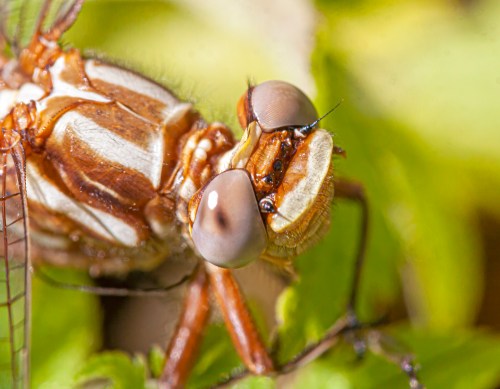
The first dragonfly that we encountered was a female Ashy Clubtail dragonfly (Phanogomphus lividus) and she proved to be remarkably cooperative. Why? I think that the dragonfly was a little distracted because she was in the process of consuming a cranefly. In some of my photos I could see remnants of the legs, wings, and other body parts of the victim.

The three photos show in inverse chronological order how I started out photographing the entire body of the dragonfly and them moved in closer and closer. Each of shows some pretty remarkable details of the dragonfly’s anatomy and it is definitely worth clicking on them to get a better look. For example, the third photo shows the beautiful coloration of the body; the second shot shows the spines on the legs and the hook-like tips of the feet; and the first image draws your attention to the dragonfly’s amazing compound eyes.

I took all of the photos below handheld with my Canon 50D DSLR and Tamron 180mm macro lens. My partner in this adventure used totally different gear and his approach to capturing images was definitely not the same as mine. In the past Walter and I have done companion postings on our respective blogs when we have taken photos together and we decided to continue the tradition.

Walter and I have different backgrounds, writing styles, and shooting styles and it has always been fascinating to contrast our “takes.” Even though we were shooting the same subject under the same conditions, I can almost guarantee that the images we post will be quite different. Be sure to check out Walter’s blog at waltersanford.wordpress.com for all kinds of wonderful postings, mostly about dragonflies.

I will include a link to his posting on our encounter with this Ashy Clubtail dragonfly after I publish this posting—I have not yet seen how he described our adventures.

UPDATE: Here, as promised, is a link to Walter’s posting about our encounter with this female Ashy Clubtail dragonfly.
Ashy Clubtail

Ashy Clubtail

Ashy Clubtail

© Michael Q. Powell. All rights reserved.


Read Full Post »

Do you like to challenge yourself? I like to try to photograph moving subjects. It is not easy, even when it is a large bird like a Great Blue Heron (Ardea herodias), but it is even more difficult when it is a small dragonfly, like this Common Baskettail (Epitheca cynosura) that I photographed last Wednesday at Ococoquan Bay National Wildlife Refuge.

The dragonfly was patrolling over a small pond and at certain moments would hover for a split second before continuing. It took quite a few attempts, but eventually I was able to capture this image, which is cropped from a much larger image that came out of my camera.

Different photographers use different techniques to capture shots of flying dragonflies. I personally use my 180mm macro lens and focus manually, because the autofocus on the lens is notoriously slow and has trouble achieving focus with such a small subject. Every year I try this same challenge, often multiple times, so with a little luck and a lot of patience and persistence, I hope to be able to do more postings of dragonflies in flight in the upcoming months.

Common Baskettail

© Michael Q. Powell. All rights reserved.

Read Full Post »

I tend to think of pollen as yellow, but it comes in other colors too. This past weekend I captured this shot of a bee covered in bright red pollen from the Purple Deadnettle flowers (Lamium purpureum) on which it was feeding. Earlier this spring I did a posting with a somewhat similar shot, but misidentified the plant as the closely-related Henbit (Lamium amplexicaule).

Purple Deadnettle is in the mint family and seems to be everywhere at this time of year. I was in a fairly remote area when I took this shot, but I have seen large patches of it in gardens, where it is considered to be a weed. According to an article entitled “Foraging for Purple Dead Nettle: an edible backyard weed,” the plant is not only a wild edible green, but a highly nutritious superfood. The leaves are edible, with the purple tops being even a little sweet. It can also be used in combination with other “weeds” like chickweed and dandelion greens to make pesto and can also be added to soups, salads, or blended into smoothies.

But wait, there is more. Purple Dead Nettle also has purported medicinal benefits. It is known in the herbal world as being astringent, diuretic, diaphoretic and purgative. It’s also anti-inflammatory, anti-bacterial, and anti-fungal and can be used to make salve, poultices, and teas.

As an interesting aside, in Great Britain this plant is apparently known as Red Deadnettle. Why is there a difference in names? I do not know why, but it is not all that surprising considering the number of different words the British use for common objects and the different spellings for common words.

bee

© Michael Q. Powell. All rights reserved.


Read Full Post »
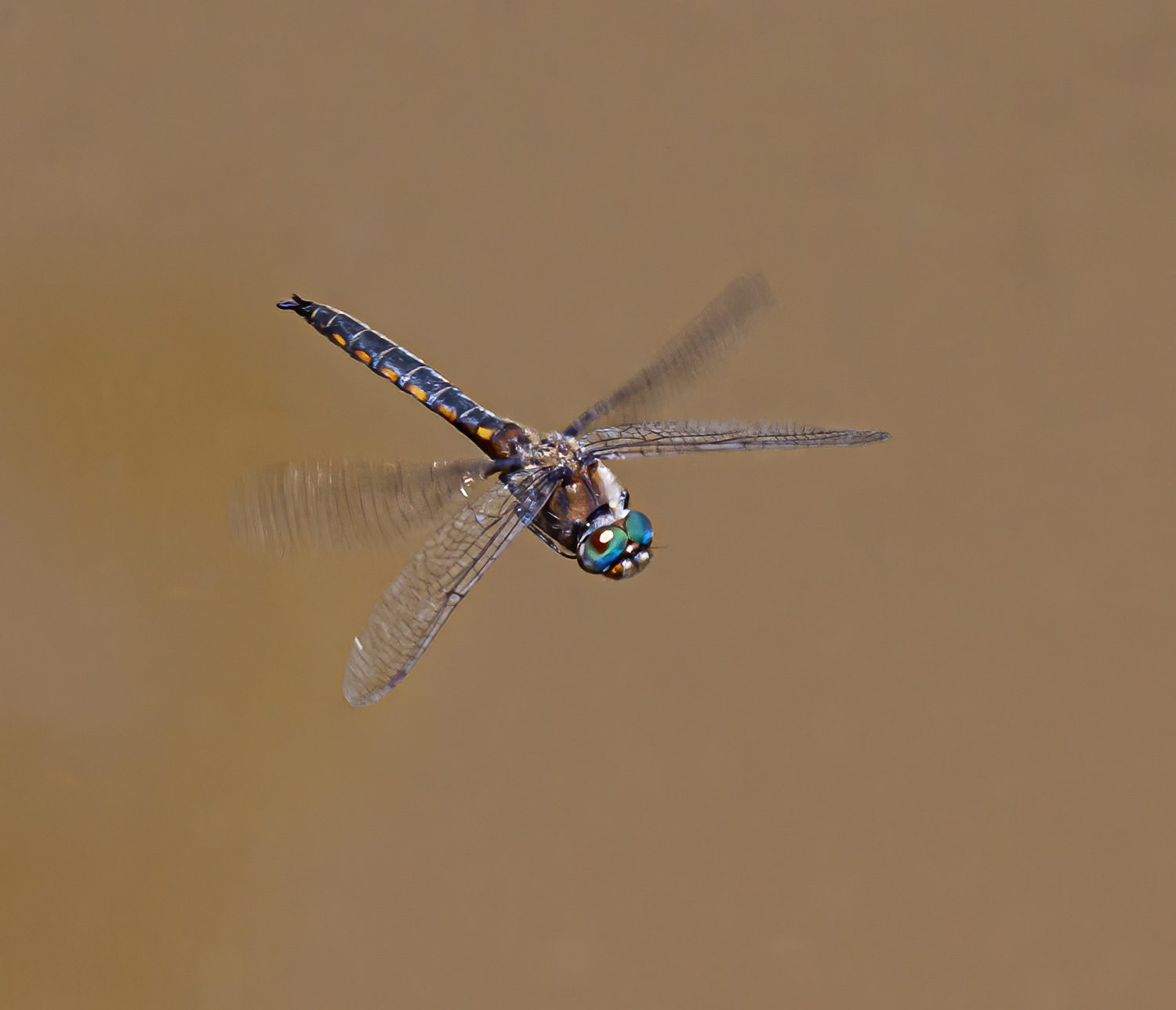
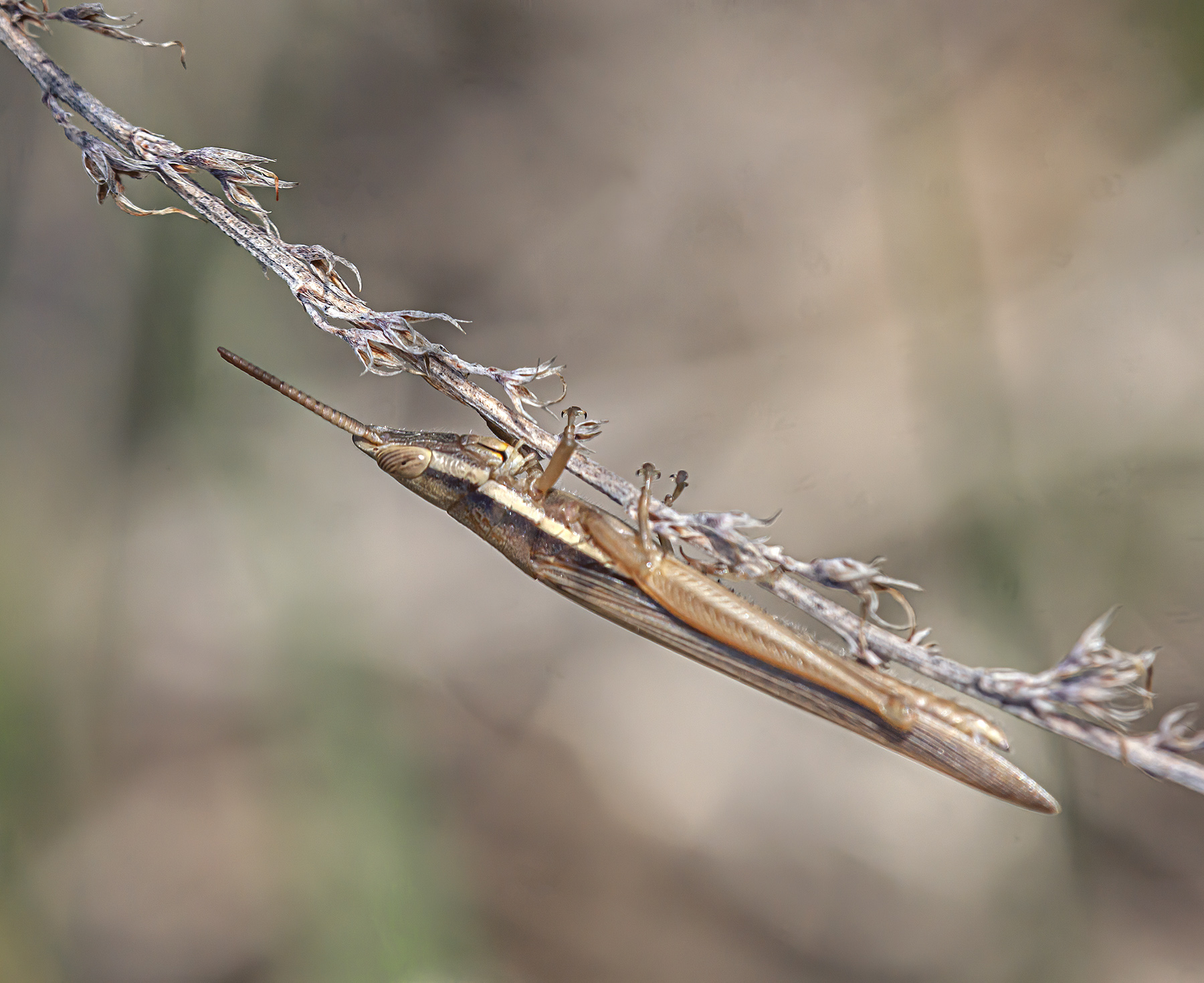
Have you ever stopped to look closely at grasshoppers? They come in all shapes, sizes, and colors. I spotted this elongated one with fluted, unicorn-like antennae this past week at Occoquan Bay National Wildlife Refuge. I knew that I had seen one like this before, but could not recall its name. After some research, I rediscovered that it is the colorfully-named Cattail Toothpick Grasshopper (Leptysma marginicollis).

If you try chasing grasshoppers, you will discover that they often stay in place after the first hop, giving you a chance to examine them for a moment before they hop away.

So whether you are in your backyard or in a park, be sure to check out the grasshoppers. You might be surprised by what you discover.

Cattail Toothpick Grasshopper

© Michael Q. Powell. All rights reserved.

Read Full Post »

One of the earliest dragonflies to emerge in the spring in our area is the Blue Corporal (Ladona deplanata). Adult males are bluish in color and both the male and the female have two white stripes on their thoraxes in an area that you might think of as their shoulders. In the military of the United States, the rank insignia for corporals is two stripes, which accounts for that portion of the common name for the species.

The dragonfly in the first photo is a female Blue Corporal. She will remain that tan color for her entire life. If you look closely at the very tip of her abdomen (the “tail”) and compare it with the same area of the dragonfly in the second image, you can probably see some physiological differences. This is often the best way to tell the gender of a dragonfly.

The dragonfly in the second photo is a newly emerged male Blue Corporal, a stage known as teneral. During this stage, the wings are very clear and shiny and are very fragile. As the male matures, he will gradually turn bluish in color. His corporal stripes may turn light blue and eventually fade away.

You probably noted that the male Blue Corporal is perched flat on the ground—this is the most frequent perching position for this species. I was a little surprised that the female in the first photo was perching vertically a few inches above the ground, but I am not complaining, because it gave me a better chance to get a photo of her wings.

It is still a bit early in the season for dragonflies, so I was really happy to spot these two on Wednesday at Occoquan Bay National Wildlife Refuge. The refuge is still open and there were a number of other cars in the parking lot when I arrived. All of the other visitors, though, seemed to be either birding or walking in other areas of the refuge, leaving me the chance to muck about at the edge of a small pond all by myself, safely distanced from human contact.

Blue Corporal

Blue Corporal

© Michael Q. Powell. All rights reserved.


Read Full Post »

This beautiful dwarf bearded iris was almost hidden by the weeds and the undergrowth when I first discovered it early in April. Cindy, my neighbor in whose garden I have been taking flower photos this spring, recalls planting it a couple of years ago, but was a little surprised when I alerted her to it—she does nor remember seeing it bloom last year. The iris never grew very tall and was repeatedly been beaten down by the rain, but it was still strikingly beautiful.

There are so many different irises that specific cultivars are hard to identify. I looked through a lot of photos on-line, though, and think that I have identified it as a variety called “Love Bites.” Stout Gardens at Dancingtree described its characteristics in these words, “Rosy red standards over rich, dark carmine red falls with lavender beards” and added “Velvety carmine red falls with big lavender beards make this one a standout.”

I am curious about the name of the iris, because in my mind it can be interpreted in at least two different ways. Perhaps it refers to romantic little nibbles between lovers.  Maybe, though, it is a bitter commentary on love, an homage to the song by the same name by Def Leppard that ends with the words, “If you’ve got love in your sights, watch out, love bites. Yes it does, it will be hell.”

dwarf iris

dwarf iris

dwarf iris

© Michael Q. Powell. All rights reserved.


Read Full Post »

This insect is fuzzy like a bee and acts as a pollinator as it sips nectar, but it is not a bee, it is a fly, a Greater Bee Fly (Bombylius major). Are you confused yet? Unlike bees, bee flies have only two wings instead of four, large eyes, skinny long legs and very short antennae. Bee flies also seem hyperactive, hovering in midair rather than landing as they suck up the nectar with a really long proboscis and thereby avoiding potential predators like crab spiders.

When I did a little research, though, I learned that bee flies have a dark side. According to an article entitled “A Pollinator With a Bad Reputation” by Beatriz Moisset, “The reason why it diligently hovers over bare ground early in the spring is that it is looking for bee nests, probably the same ones with which they compete for nectar. The bees dig tunnels and lay their eggs at their bottoms after collecting enough pollen to feed the larvae. This requires numerous trips, thus the bee fly takes advantage of the mother’s absence and lays its eggs in such nests. Making use of its flying prowess, it does not even need to land but it flicks its abdomen while hovering over the open burrow, letting one egg fall in or near it. The fly larva finds its way to the chamber where the mother bee has laid the provisions and the egg and proceeds to feed on the stored pollen. Afterwards it devours the bee larvae; when it is fully grown, it pupates and stays inside the nest until next spring.”

I was inspired to post this image by a recent posting by Pete Hillman entitled “Dark-edged Bee Fly” that featured a similar bee fly. In my zeal to post photos of all of the ephemeral wildflowers I had seen this spring, like the Virginia Spring Beauties in this photo, I had forgotten about this bee fly.

You may notice that the bee fly’s wings are blurred in this— image and assume that I was shooting with a slow shutter speed. I checked the EXIF data for the shot and found that the shutter speed was 1/2500 second—I think that it had consumed as much coffee as I had that late March morning. I recommend that you click on this image to see all of the amazing details of this fascinating insect, the Greater Bee Fly.


Greater Bee Fly

© Michael Q. Powell. All rights reserved.

Read Full Post »

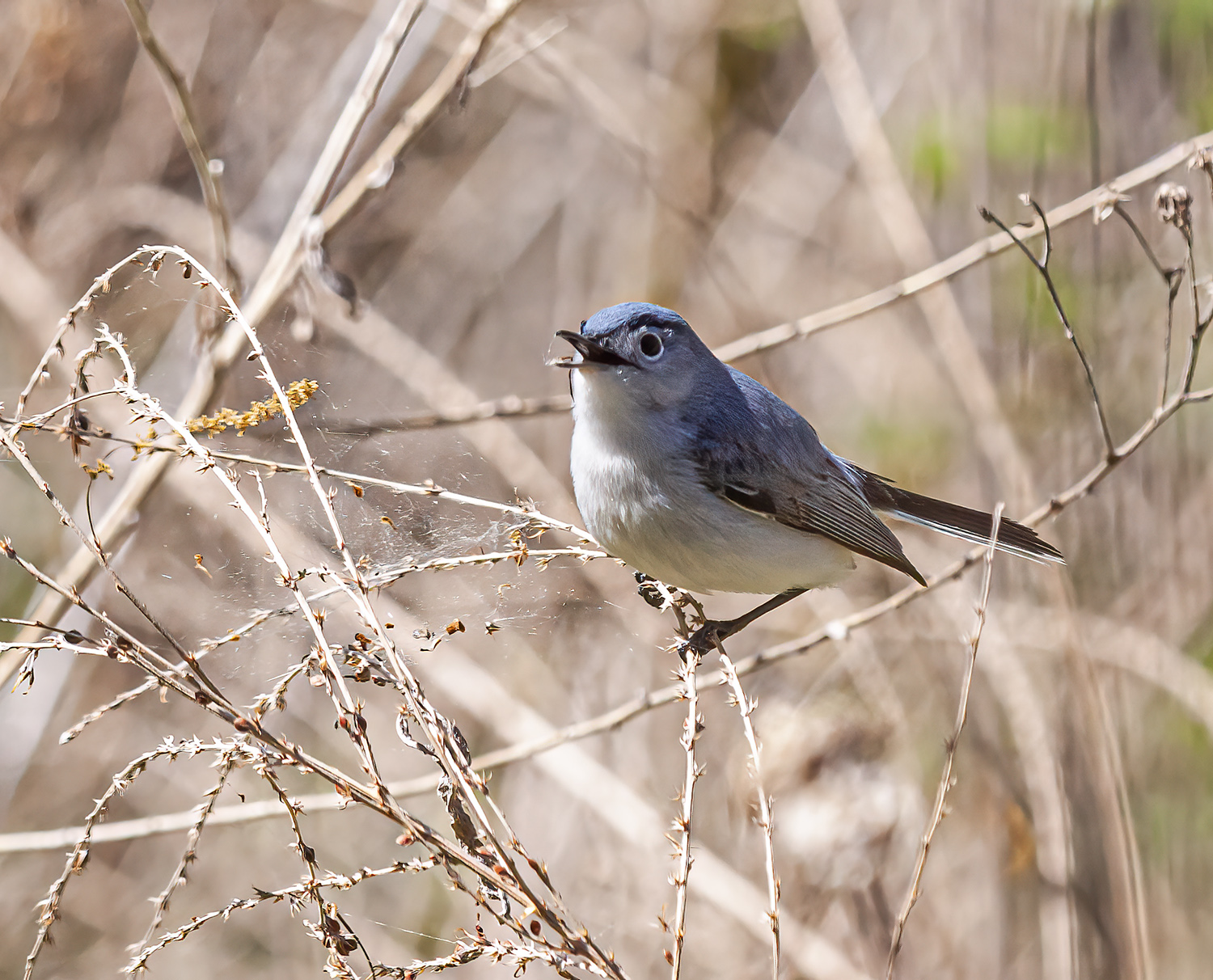
As I was searching in a small field of eye-height vegetation for dragonflies last Wednesday at Jackson Miles Abbott Wetland Refuge, my eyes detected a flash of blue and white and I realized that a bird had joined me in the field. I was shocked to see that it was a male Blue-gray Gnatcatcher (Polioptila caerulea). During my previous encounters with a Blue-gray Gnatcatcher, the bird has always been moving about in the foliage high in a tree.

I sprung into action and managed to get some decent shots of this tiny bird, despite the fact that I was shooting with my 180mm macro lens, the one that I generally use for the macro shots of insects that you see on this blog. The coolest image, I think, is the first one and it was mostly a matter of luck. I had just taken the second shot below when the gnatcatcher took off and I instinctively pressed the shutter release and captured a fun action shot.

So what was the gnatcatcher doing at ground level? As I was was processing my images I noticed that there were old spider webs in most of them. It is most obvious in the final photo, but if you click on the other images, you will see webs to the left of the bird in the penultimate shot (and in its mouth, I think), and also to the right of the bird and a little lower in the second shot (and possibly in the corner of its mouth).

Why would they be messing with spider webs? According to the Cornell Lab of Ornithology website, Blue-gray Gnatcatcher pairs use spiderwebs and lichens to build small, neat nests on top of tree branches and may build up to seven nests in a breeding season.  The website also notes that breeding males have a black V above their foreheads extending above their eyes, which you can see quite clearly in the second shot. I wonder if breeding season is begining

I have not spotted any gnatcatcher nests yet this year, but two years ago in late May I took some shots of a nest at the same refuge that show the amazing construction abilities of these little birds. Check out the posting called Baby gnatcatchers? by clicking on the title of the posting or clicking here. The nests are fascinating to examine.

Blue-gray Gnatcatcher

Blue-gray Gnatcatcher

Blue-gray Gnatcatcher

Blue-gray Gnatcatcher

© Michael Q. Powell. All rights reserved.

Read Full Post »

I finally photographed my first damselflies of the spring on Wednesday during during a brief visit to Jackson Miles Abbott Wetland Refuge. I spotted the female Eastern Forktail damselfly (Ischnura verticalis) in the first image as she perched on a log in a mini-wetland area adjacent to a small pond. In addition to capturing the damselfly itself, I am really happy with the way that the texture of the bark and the interplay of the light and shadows turned out in the shot.

The second shot shows a male Fragile Forktail damselfly (Ischnura posita), one of the few damselflies that I am able to identify with a relatively high degree of confidence. On males of this species (and most females too), the shoulder stripe is interrupted and looks like an exclamation point. I like the way that the muted colors of the dried-out vegetation on which this damselfly was perched  help to make its colors stand out and draw a viewer’s eyes to the main subject.

I will almost certainly get more and better shots of damselflies in the upcoming months, but there is something special about stopping for a moment to celebrate images of my first damselflies each year.

Eastern Forktail

Fragile Forktail

© Michael Q. Powell. All rights reserved.

Read Full Post »

Yesterday I was excited to spot several tiny Eastern Tailed-Blue butterflies (Everes comyntas) during a brief visit to Jackson Miles Abbott Wetland Refuge. What was particularly striking was that these delicate butterflies were perched with their wings partially open, revealing a spectacular blue color. I maneuver to position myself almost directly above one perched close to the ground, waited for it to open its wings fully, and captured this shot.

If you click on this image, you can get a better look at the marvelous details of this male Eastern-Tailed Blue, including the tiny “tails” and the little orange chevrons at the bottom of the hind wings. I was struck by the apparent asymmetry of the butterfly’s wings—the right wings look bigger than those on the left—but wonder if that is simply a consequence of the angle at which I took the shot or perhaps the wings were not fully open and were at slightly different angles.

Eastern Tailed-Blue

© Michael Q. Powell. All rights reserved.

Read Full Post »
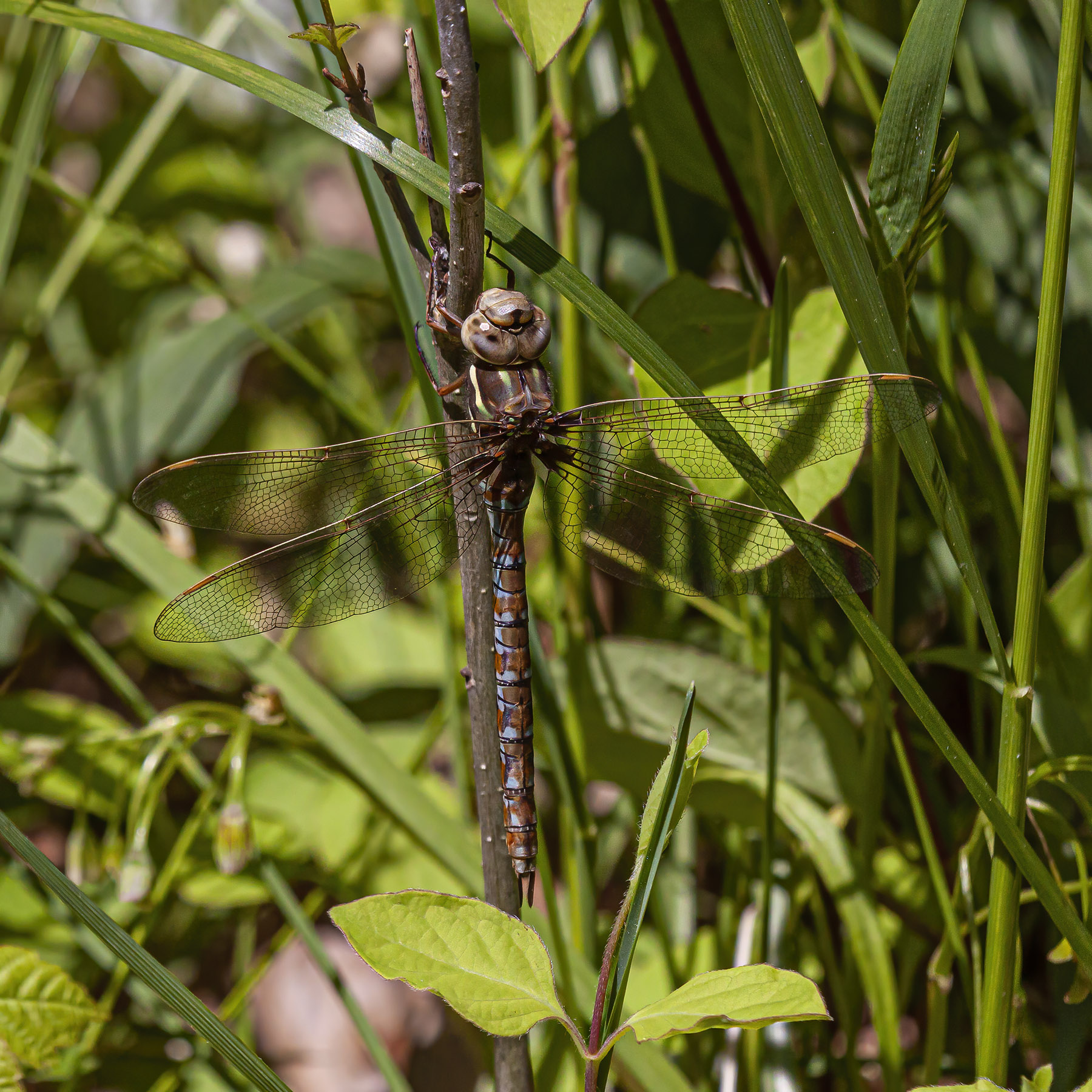
When I saw this insect sipping nectar from a Spring Beauty wildflower on Tuesday, I was sure that it was some kind of wasp or hornet. Bees, I thought, do not have such narrow waists. I was wrong. Some of the experts at bugguide.net identified my insect as a male Nomad Bee (genus Nomada).

Nomad Bees are the largest genus of kleptoparasitic “cuckoo bees,” according to Wikipedia. “Kleptoparasitic bees are so named because they enter the nests of a host and lay eggs there, stealing resources that the host has already collected.” Nomad bees do sip nectar like other bees, as you can see in my photos, but do not collect pollen to feed their offspring.

I remember being shocked the first time that I read about cuckoos and cowbirds deliberating laying their eggs in the nests of other birds to avoid having to build their own nests and raise their own babies. I guess I can add nomad bees to the list of deliberately delinquent parents.


nomad bee

nomad bee

© Michael Q. Powell. All rights reserved.

Read Full Post »

I love the beautiful curves a fiddlehead forms as it gradually unfurls into a full-fledged fern frond. I have no idea how long this entire process takes, but it was amazing to see the various stages of development of the many fiddleheads that I spotted on Tuesday while exploring in Prince William County.

The clouds in the sky and the unseasonably cold temperatures seemed to have prompted all of the dragonflies to remain in secluded spots and I did not spot a single one that day.

fiddlehead fern

fiddlehead fern

fiddlehead fern

© Michael Q. Powell. All rights reserved.

Read Full Post »

Most of the time when I see spiders, it is because I spot their webs first.  Some spiders, though, rely exclusively on speed to capture unsuspecting prey, like this Six-spotted Fishing Spider (Dolomedes triton) that I spotted on Monday at Jackson Miles Abbott Wetland Refuge.

Fishing spiders sit at the edge of the water with some of their long legs fully extended. When they sense vibrations of a potential prey on the surface of the water, fishing spiders can walk on the water to seize insects, vertebrates, tadpoles and occasionally small fish or even dive underwater up to 7.1 inches (18 cm), according to Wikipedia.

When I first spotted this fishing spider, it was perched on a semi-submerged log, as shown in the second image below. The spider somehow sensed my presence and ran towards some vegetation at the edge of the water. I was able to maneuver to a position from which I was looking almost directly down at the spider and captured the first image which makes the spider look rather large and menacing, which is why I selected the photo as the featured image.

six-spotted fishing spider


six-spotted fishing spider

© Michael Q. Powell. All rights reserved.

Read Full Post »

I love ladybugs and was thrilled to spot this one on Monday at Jackson Miles Abbott Wetland Refuge. When I posted this photo on Facebook, one viewer noted that this is a Multicolored Asian Lady Beetle (Harmonia axyridis), a non-native species that has become the most common species in the United States since it was deliberately introduced into the country in 1916 in an attempt to control the spread of aphids.

How can you tell a native ladybug from the Asian ladybug? Several sources on-line note that the Asian ladybug has a white marking behind its head in the openings of what looks like a black M, as you can see on the ladybug in my photo. If you are interested in learning more about the differences, check out this fascinating article at thespruce.com, The Differences Between Ladybugs and Asian Lady Beetles.

Whether native or not, this ladybug in my eyes is beautiful. If you want to see something really cool, click on the photo and check out the details on the ladybug’s front foot. I never knew that ladybugs have two tiny toes.


ladybug

© Michael Q. Powell. All rights reserved.

Read Full Post »

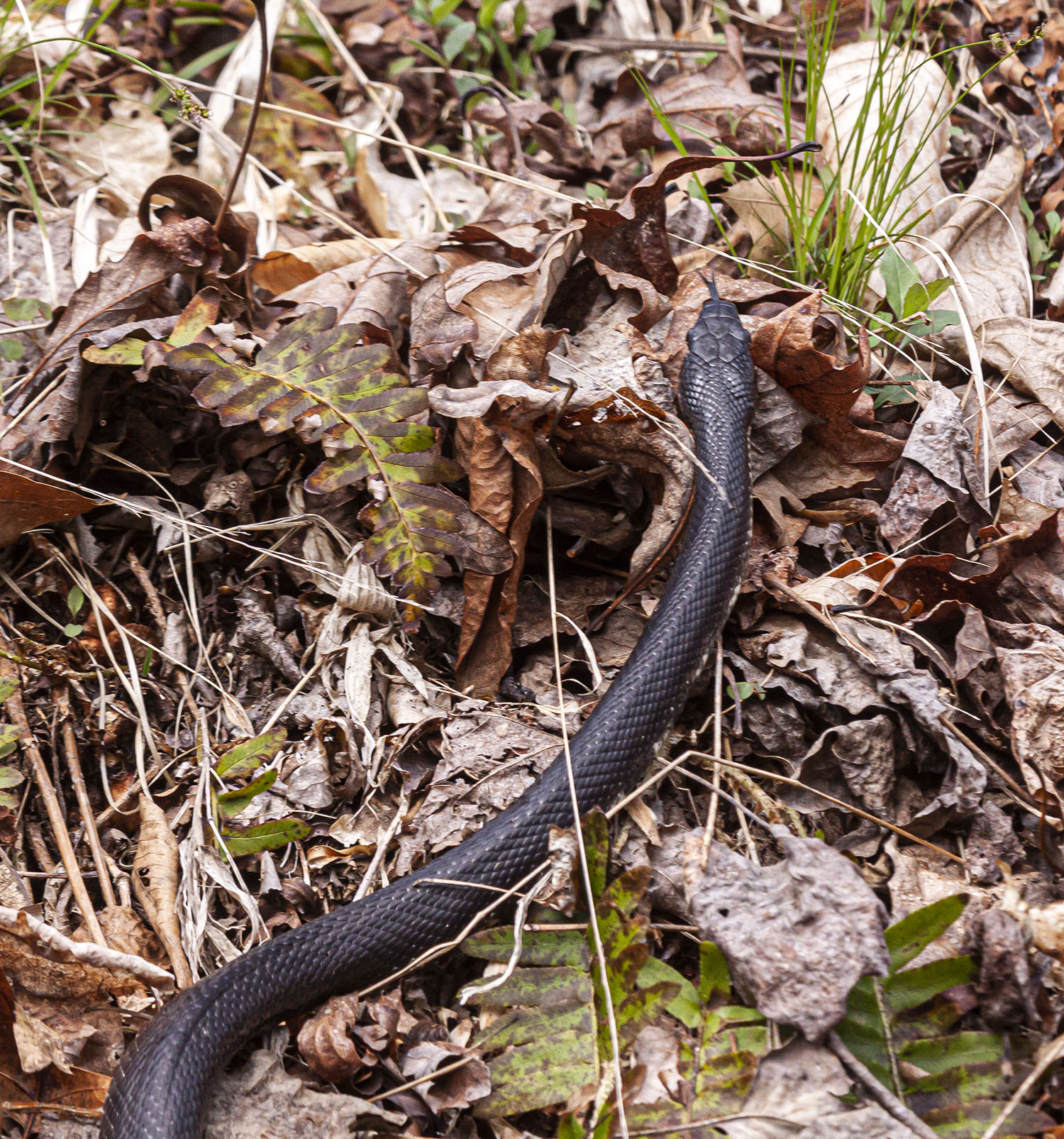
So many of the creatures that I encounter blend in so well with their environments, that I detect them only when they move. That was the case with this Eastern Ratsnake (Pantherophis alleghaniensis) last week that I spotted while I was exploring in Prince William County, Virginia.

I was a bit startled when the leaves started to rustle almost directly beneath my feet and my eyes detected the form of a large black snake slowly slithering away from me. The snake apparently had been sunning itself before I inadvertently disturbed it.

After the snake had moved some distance up the side of a small hill covered with fallen leaves and vegetation, it paused and turned to the side, allowing me to capture the first shot below. As those of you who know me might suspect, I too had been making my way up the hill parallel to the snake, waiting for such an opportunity to arise to get a shot of the snake’s head, which explains why I was able to take the shot from relatively close range.

Eastern Ratsnake

Eastern Ratsnake

© Michael Q. Powell. All rights reserved.

Read Full Post »

When they are mating, many dragonflies adopt a very conspicuous heart-shaped “wheel” position, like this pair of Common Green Darner dragonflies (Anax junius) that I spotted last week at Occoquan Bay National Wildlife Refuge. The process begins when the male, in this case the dragonfly with the blue abdomen, grabs a female by the back of her neck with claspers at the end of his abdomen that fit into species-specific grooves in the female. The two dragonflies are then hooked together, often for extended periods of time.

I couldn’t help but notice the sharp thorns on the branch that these dragonflies had selected for their encounter. Yikes—that is living life on the edge. After I took some photos, feeling a little like a voyeur, I decided to give the couple some privacy. When I circled back a short time time later, the dragonflies were gone, presumably having done their part to perpetuate the species.

common green darner

© Michael Q. Powell. All rights reserved.


Read Full Post »

Here are some bright colors to kickstart your day as you look into the center of one of the spectacular tulips in the garden of my friend and neighbor Cindy Dyer. Have a wonderful day!

tulip

© Michael Q. Powell. All rights reserved.

Read Full Post »

Many Easter traditions will be put to the side this year. No boisterous crowds filling the churches, no special clothes or big hats, no joyful greeting of  “Alleluia. Christ is risen” to all we meet and the equally joyful response of “The Lord is risen indeed. Alleluia.” A good number of us instead will celebrate alone in front of a computer screen.

Yes, Easter will be celebrated differently this year, but for many of us there will be even greater beauty and meaning in our more simple celebrations. At a time when most of the world news is full of doom and despair, today is a joyful reminder that God loves us and will have the final victory.

So what do we do? I recall some words from a sermon that I heard on Good Friday—the priest cited the opening line of a prayer by Pierre Teilhard de Chardin, “Above all, trust in the slow work of God.” It will take time for things to return to any sense of normalcy, but we should never give up hope.

My hope and prayer for all today, whether you celebrate Easter or not, is that you can put aside at least some of your incessant worries and seek to find joy in whatever way you can. For me, joy and beauty can be found in small things, like this tiny flower that I photographed recently in the garden of my neighbor. I have no idea what it is, but I know that it sparked joy in me the moment I spotted it.

Happy Easter.

flower

flower

© Michael Q. Powell. All rights reserved.


Read Full Post »

The frog in the photo does have a few spots, but the spots on the leaves are what really draw my attention to this image—they provide an almost visually perfect background for the main subject. I spotted this little frog earlier this week while hunting for dragonflies in Prince William County, Virginia.

I believe that this is an Eastern Cricket Frog (Acris crepitans crepitans), but was a little confused when I saw repeated references to a Northern Cricket Frog.  I think I finally sorted it out in my mind and if I understand it correctly the Eastern Cricket Frog is one of the subspecies of the Northern Cricket Frog (Acris crepitans). Logically it seems odd that east would be a subset of north, but that seems to be the case here.

Eastern Cricket Frog

© Michael Q. Powell. All rights reserved.

Read Full Post »

« Newer Posts - Older Posts »