Feeds:
Posts
Comments

Posts Tagged ‘Tamron 180mm’

I spotted this beautiful female Turquoise Bluet damselfly (Enallagma divagans) on 27 May as I was exploring the edge of the woods adjacent to a small pond in Prince William County, Virginia. While I was out in the field, I recognized that it was a bluet, but could not determine its species. Even when I returned home and consulted resources in print and on-line, I quick became confused as I assesed the relative size of the eyespots on the the top of the damselfly’s head, the width of the occipital bars (the band that joins the eyespots), and the placement and size of the blue areas on the abdomen (the “tail”).

Fortunately I am a member of several Facebook groups focused on dragonflies and damselflies and the experts in those groups came to my rescue and identified this as a female Turquoise Bluet, a species that I had never before encountered. I was happy that I was able to capture a lot of detail in my photo and encourage you to click on it to see those details. For reference, Turquoise Bluets are 1-1.4 inches (25-36 mm) in length.

Turquoise Bluet

© Michael Q. Powell. All rights reserved.


Read Full Post »

I love to see dragonflies with patterned wings and it is a real bonus when they have two different colored patterns, like this young male Twelve-spotted Skimmer (Libellula pulchella) that I spotted last week at Occoquan Regional Park. I can tell that it is a male, because females do not have the white spots, and that it is young, because as the males get older, their bodies develop a waxy blue powder called pruinescence.

Some of you who are mathematically inclined may have tried to count the dragonfly’s spots and come up with a number higher than twelve. It is a little confusing, but someone in the past decided to count only the dark spots, three on each wing, to come with the name Twelve-spotted Skimmer. It many not make complete sense, but I have long ago given up trying to understand the “logic” of some of the names of species that I have encountered.

This dragonfly seemed quite skittish and flew around a lot over the pond before it settled for a moment on some vegetation close to me. The multiple spots on the dragonfly’s wings make it easy to track visually, making it look almost like a butterfly. When I took my shots and afterwards in post-production, I tried a few different ways to present the butterfly. For the first image, I shot from a front angle and cropped to a square to give greater emphasis to the dragonfly.

For the second image, I moved a little more to the side and shot from a higher angle so that more of the surface area of the wings was visible. I also used a portrait aspect ratio to show more of the interesting vegetation on which the dragonfly was perched.

I like each of the two images for different reasons. Is there one of the two that stands out to you more than the other?


Twelve-spotted Skimmer

Twelve-spotted Skimmer

© Michael Q. Powell. All rights reserved.

Read Full Post »

Whenever I go out searching for dragonflies in the early morning or after a rainstorm, I am hoping to photograph a dragonfly covered with drops of water. It has not happened yet, but it remains as one of my aspirational goals.

There were plenty of raindrops on the vegetation on Thursday morning when I began my adventures in Prince William County. I was happy to spot this tiny male Fragile Forktail damselfly (Ischnura posita) peering over the edge of the water-spattered leaf on which he was perched. I really like the simplicity of the image that I captured, with its limited number of shapes, colors, and patterns.

Photography does not have to be complicated to be effective—minimalistic images are often the most powerful.

Fragile Forktail

© Michael Q. Powell. All rights reserved.


Read Full Post »

I can’t help myself—whenever I see a dragonfly moving through the air, I feel compelled to try to capture an image of the dragonfly in flight. It is an almost impossible challenge and success is often dependent as much on luck as it is on skill. Last Thursday as I was exploring in Prince William County, I was feeling particularly patient and repeatedly spotted dragonflies flying.

Early in the day at a small pond, I spotted a Carolina Saddlebags dragonfly (Tramea carolina) and a Common Green Darner (Anax junius) that were patrolling over the water. In situations like this when the dragonflies are flying at a constant height, it is marginally easier to get shots, because there is one fewer variable than when the dragonfly is moving up and down.The Carolina Saddlebags was flying a little closer to the shore, but I had to contend with all of the vegetation that wanted to grab my camera’s focus, so I focused manually (first photo). The Common Green Darner was flying over the open water that presented a less obstructed background, but it filled such a small part of the frame that again I was forced to focus manually—my camera’s auto-focus had trouble focusing quickly on the moving dragonfly (second photo).

My greatest challenge, however, came later in the day. If I were to assign a degree of difficulty to my photos, the final photo would be near the top of the list. When I moved to a new location and got out of my car, I immediately spotted a group of large dragonflies frenetically flying through the air, feasting on insects as they flew. The dragonflies were moving in unpredictable ways, constantly changing their flight altitude and speed. Unlike some dragonflies that hover a bit when patrolling, these dragonflies were in constant high-speed motion.

I did my best to track the dragonflies visually, but it was tough to even get one in my viewfinder. I was ecstatic when I finally managed to capture a more or less in-focus image of one of the Swamp Darners (Epiaeschna heros) as it zoomed past me relatively low to the ground, as you can see in the final photo.

When it comes to wildlife photography, some shots are easy and straightforward—I see something and take the shot and that is it. At other times, I have to work really hard and take a lot of shots before I can get a potentially good one. Last Thursday definitely fell in the latter category more than in the former one. Was all that effort worth it? I think so, but I must confess that at times I felt like Don Quixote tilting at windmills.

If you want to get a more detailed look at the details of the three flying dragonflies, be sure to click on the images.


Carolina Saddlebags


Common Green Darner

Swamp Darner

© Michael Q. Powell. All rights reserved.

Read Full Post »

Generally I like to photograph dragonflies on natural perches, not on manmade ones. However, every time I visit Jackson Miles Abbott Wetland Refuge I always check a piece of rebar that sticks out of the water of Mulligan Pond, because I have found that dragonflies love this perch. On Wednesday I spotted this young male Common Whitetail dragonfly (Plathemis lydia) on that perch, the third dragonfly species that I have photographed there—I have also photographed a Slaty Skimmer and an Eastern Amberwing at that spot.

I really like the juxtaposition of the natural and manmade elements in this image and the ways that the markings of the rebar seem to mirror those on the abdomen of the dragonfly. As this young male Common Whitetail matures, his body will grow whiter as he develops a white powdery substance often referred to as “pruinosity.”

Although Common Whitetails are the most common dragonfly species in my area, I never get tired of trying to get shots of them.

Common Whitetail

© Michael Q. Powell. All rights reserved.


Read Full Post »

I have always been fascinated by the intricate patterns of spider webs and I love to attempt to photograph them. Of course, the first challenge is to spot them. In the past I have had some success in early morning hours when the webs were covered in dew—see, for example, my posting from September 2012 called More spider art. In more recent years, though, I have most frequently encountered spider webs when I have run into them stretched head-high across trails.

I was pretty excited therefore when I spotted this backlit spider in its web last Thursday as I was exploring a forested area in Prince William County. I loved the way that the light was shining through the body of what I recognized to be an Orchard Orbweaver spider (Leucauge venusta). I toyed around with ideas on how to compose the image and decided to include only the upper half of the web—I wanted to make sure that the viewer’s eyes would be drawn to the spider.

Orchard Orbweaver spiders are quite common in my area and I encountered another one later that same day and captured the close-up image below that shows some of the spider’s beautiful coloration. I know that some people find spiders to be creepy and threatening, but hopefully these spider shots can help to convince at least a few of those viewers that spiders can also be quite beautiful.

Orchard Orbweaver

Orchard Orbweaver

© Michael Q. Powell. All rights reserved.


Read Full Post »

Many of the early spring dragonflies are now gone, but the summer species are starting to show up in force. On Tuesday, for example, I spotted a large number of Eastern Amberwing dragonflies (Perithemis tenera), including the handsome male in the photo below, buzzing about the pond at Jackson Miles Abbott Wetland Refuge. Eastern Amberwings are quite common during the summer and are the smallest dragonflies in our area at about one inch (25 mm) in length—it is easy to confuse them with wasps when you see them flying.

According to the Dragonflies of Northern Virginia website, “Amberwings are reported to have the most intricate courtship of any dragonfly. After the male selects several possible egg-laying sites for a mate, he flies off to find a female and leads her back to his potential nursery. To attract her, he sways back and forth, and hovers with his abdomen raised. Mating only occurs if the females approves—making this one of the few dragonflies where females choose the males.”

I love the warm tones of this dragonfly and the way the background colors of this image complement them.

Eastern Amberwing

© Michael Q. Powell. All rights reserved.


Read Full Post »

Even though I have learned to identify many dragonflies pretty well, I often feel clueless when it comes to damselflies. The differences between damselfly species are often subtle and difficult to see. I often get lost in trying to look at the relative size of eye spots or the length of various markings.

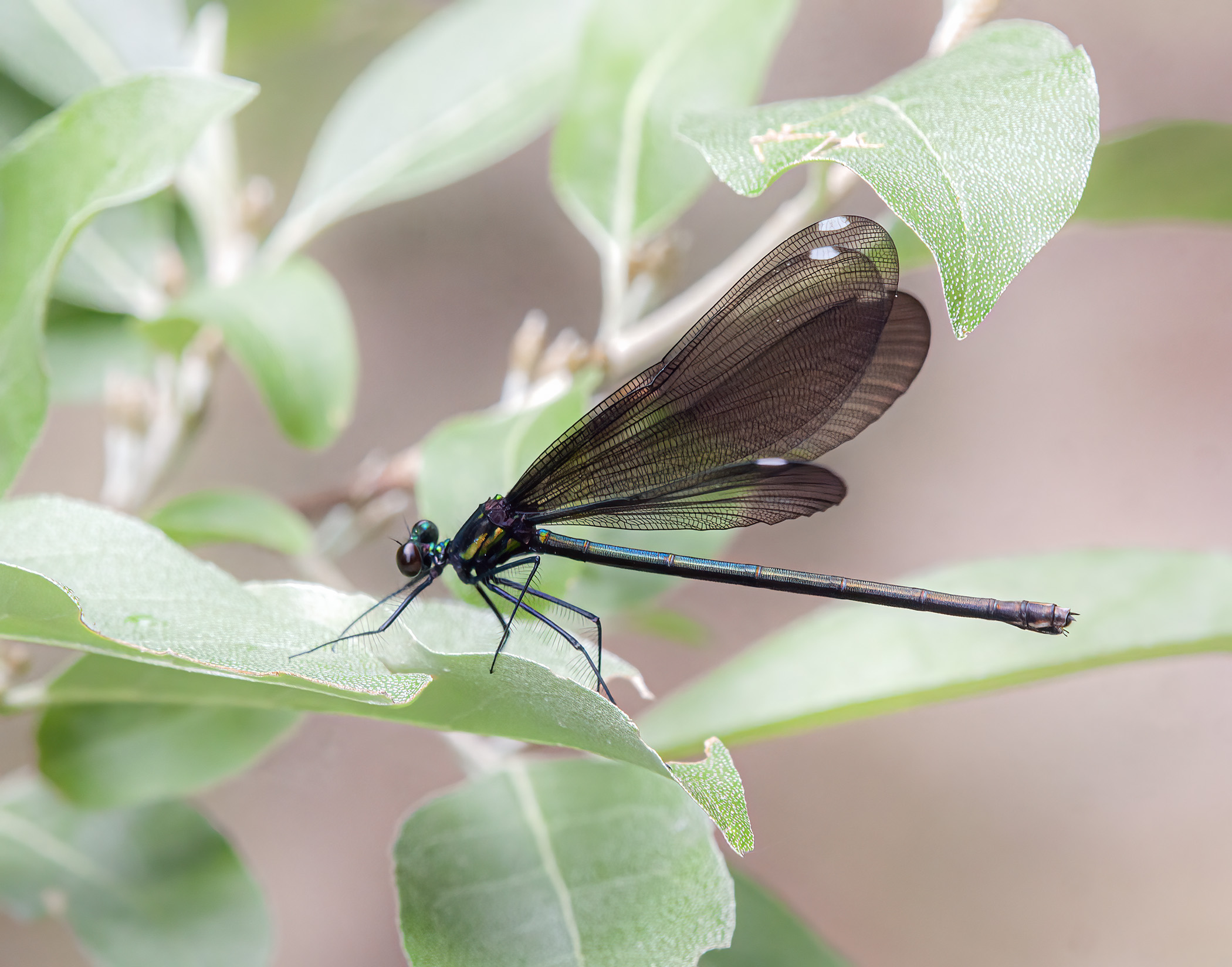
Fortunately for my self-esteem, there are some damselflies that I can confidently identify, like this female Ebony Jewelwing damselfly (Calopteryx maculata) that I spotted on Tuesday at Occoquan Regional Park. Ebony Jewelwings are the only damselfly species in our area with distinctively dark wings. It is even easy to distinguish the genders too, because only the females have white stigmas on each of their wings.

I was a little surprised this morning to learn that the male Ebony Jewelwings also have stigmas on their wings, but the stigma are black and do not show up very well on their black wings. According to a posting on the Nature Watch blog, “All damselflies (and dragonflies) have stigmas on their wings. A stigma (pterostigma) is a large, thick cell on the leading edge of the wing near the tip which helps stabilize the wing while the dragonfly or damselfly is in flight. It holds down vibration allowing increased speed during gliding flight. In many species the stigma is pigmented, in others, it is clear. Each wing has a stigma.”

I previously knew about stigmas, of course, but somehow thought of them as primarily decorative rather than functional elements. It is really cool to learn more about the physics of how that my magical little friends are able to fly. What really blows my mind, though, is thinking about how the world looks to them when viewed through their large, multi-faceted compound eyes. Wow!

Ebony Jewelwing

© Michael Q. Powell. All rights reserved.

Read Full Post »

How do dragonflies decide where to perch? Sometimes I can guess in advance where a dragonfly will choose to perch—many dragonflies like exposed stalks of vegetation at the water’s edge and will often return to the same perch over and over again.

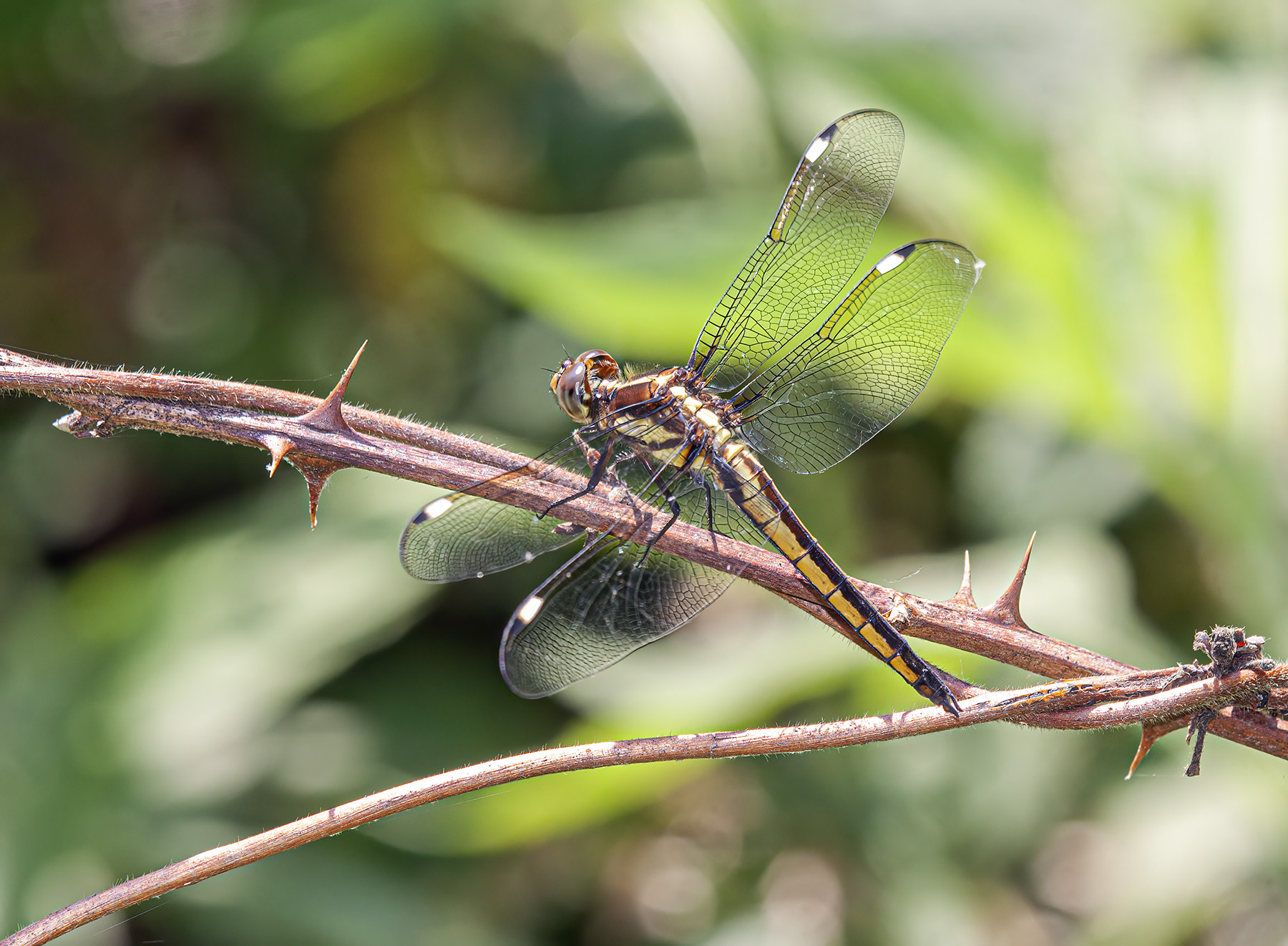
Some dragonflies, though, will choose to perch in unexpected places. I was a little shocked yesterday during a short visit to Jackson Miles Abbott Wetland Refuge to spot this juvenile Spangled Skimmer dragonfly (Libellula cyanea) perched on a thorny vine. The sharp thorns seemed to be larger than the dragonfly’s head and the distance between them seemed smaller than the dragonfly’s wingspan.

What was the point of his choice of perches? Is it pointless to talk of safer perches? Perhaps the dragonfly is a young thrill seeker who simply likes to live life on the edge—many of us did some things in our youth that in hindsight were incredibly risky if not outright stupid. Maybe instead he calculated that the risk of damage to his delicate wings was outweighed by the additional protection that the thorns provided him from potential predators.

Rather than ponder these deep questions of intent, I focused on photographing the handsome little dragonfly. I really like the way that I captured him in an environmental portrait.

Spangled Skimmer

© Michael Q. Powell. All rights reserved.


Read Full Post »

Last week I photographed my first Eastern Pondhawk dragonfly (Erythemis simplicicollis) of the season, a stunning female that I spotted while exploring in Prince William County. I really like all of the different shades of green in this image and the linear stalks of grass that provide a perfect perching place for the pondhawk.

Before long Eastern Pondhawks will become a frequent sight in my area, but it is always special for me to greet the first member of a species each year.

Eastern Pondhawk

© Michael Q. Powell. All rights reserved.

Read Full Post »

This past Saturday I spotted this unusual insect—an Eastern Eyed Click Beetle (Alaus oculatus)—while I was exploring in Prince William County. The large eye spots on its thorax are a kind of defensive adaption designed to confuse or frighten potential predators into thinking the beetle is much larger than it really. In addition to the distinctive eye spots, the beetle has some really cool looking antennae that you can see more clearly if you click on the image to enlarge it.

Eastern Eyed Click Beetle

© Michael Q. Powell. All rights reserved.

Read Full Post »

I was thrilled last week to stumble upon some Brown Spiketail dragonflies (Cordulegaster bilineata) while I was exploring a stream in Prince William County. When I spotted them, they were patrolling really low, moving in and out of the stalks of the grass and other plants only inches above the ground. I was able to track several of them and capture multiple shots, including an in-flight shot when one of the Brown Spiketails decided to hover momentarily right in front of me.

According to the wonderful website Dragonflies of Northern Virginia, Brown Spiketails are considered “rare” in our area. Their preferred habitat is “clean, small sunlit, forest streams and seepages, ” an almost perfect match for the location where I spotted these dragonflies. The flight season lasts only about six weeks and peaks in mid-May.

Sometimes “my” Brown Spiketails would perch high enough above the ground that I could isolate the dragonfly from the background, as I did in the second image. Most of the time, though, they would perch low on grasses and shrubs, which meant that I too had to get low too to capture images like the third one. The background in that image is somewhat cluttered, but I think that it gives you a good sense of the habitat and the challenge of finding and focusing on such a narrow target.

Brown Spiketail

Brown Spiketail

brown spiketail

© Michael Q. Powell. All rights reserved.


Read Full Post »

The newspapers in our area are full of apocalyptic stories about Brood X periodical cicadas (Magicicada septendecim) that are starting to emerge in my neighborhood and in other parts of the United States after a seventeen-year stint underground. I have not seen many live cicadas, but there are dozens of discarded exoskeletons on my backyard fence and in my front yard tree, a few of which you can see in the second and third photos. I am not paranoid, but it does feel like they are surrounding me.

On Tuesday I photographed one cicada that was in the process of emerging. If you look closely at the first photo you will note that the cicada’s wings are not yet fully formed. They will eventually lengthen and become transparent. So far the cicadas have remained silent, but before long I expect to hear their deafening chorus, as the males compete to attract females by belting out their mating calls.

Yesterday the Washington Post had a story with the sensationalist title A fungus could turn some cicadas into sex-crazed ‘salt shakers of death.’  According to the authors of this article, “Yellow-white fungus grows inside the cicadas, filling their insides and pushing out against their abdomens. One by one, the rings that compose the back halves of their bodies slough off and fall to the ground. Driven by a chemical compound in the fungus — and now lacking butts and genitals — the bugs try to mate like crazy. Some researchers call these infected cicadas “flying salt shakers of death.” And they’re lurking among Brood X.” There is even a warning in the article, “Despite the amphetamine’s ability to control cicadas, no one should expect to feel a high from eating a fungus-infected insect.”

Yes, things are a little crazy here as we await the full-scale onslaught of the cicadas. I will try do an update posting in the upcoming weeks with more photos of these brooding, red-eyed insect invaders.


cicada

cicada

cicada

© Michael Q. Powell. All rights reserved.


Read Full Post »

I was delighted to spot these beautiful Calico Pennant dragonflies (Celithemis elisa) on Tuesday at Occoquan Bay National Wildlife Refuge. The one with the yellow markings is a female and the one with the red markings is a male.

The combination of bright colors and intricate wing patterns makes Calico Pennants one of the most stunning dragonflies species that I am blessed to see and photograph. They sure do pack a lot of beauty into their tiny bodies that are only 1.3 inches (33 mm) in length.

Calico Pennant


calico pennant

calico pennant

© Michael Q. Powell. All rights reserved.

Read Full Post »

The shell of the Eastern Snapping Turtle (Chelydra serpentina) must have looked as big as the deck of an aircraft carrier to the Common Whitetail dragonfly (Plathemis lydia) that was circling around the pond, looking for a place to land yesterday at Occoquan Regional Park. I am pretty sure that the turtle, who was semi-submerged in the shallow water, basking in the sun, did not notice the temporary additional weight of the dragonfly.

When I first noticed the motionless snapping turtle in the water, I wondered if it was still alive. I kept a healthy distance from the turtle, because, as their name suggests, snapping turtles may snap with their powerful jaws when they feel threatened. I continued to observe the turtle and noticed the ever-changing pool of bubbles around its mouth that suggested that to me it was alive and breathing.

A number of Common Whitetail dragonflies were patrolling over the pond and I mused to myself that it would be really cool if one of them landed on the turtle. I was shocked when that scene unfolded in front of me just as I had imagined. Fortunately, I was not so shocked that I forgot to capture the moment with my camera.

Common Whitetail


© Michael Q. Powell. All rights reserved.

Read Full Post »

Yesterday I spotted this beautiful little Silver-spotted Skipper butterfly (Epargyreus clarus) while I was wandering about at Occoquan Regional Park. There are more than 3500 species of skippers worldwide, but fortunately this one is pretty easy to identify. Many of the other skippers in our area are similar in appearance, with only slight differences in the patterns on their wings.

When I was doing a little research on this species, I came across this curious comment on the Butterflies and Moths of North America website, “The Silver-spotted Skipper almost never visits yellow flowers but favors blue, red, pink, purple, and sometimes white and cream-colored ones.” I am not sure whether the fact that this butterfly species has a color preference surprises me more or the fact that some scientist obviously studied and catalogued its behavior.

Silver-spotted Skipper

© Michael Q. Powell. All rights reserved.

Read Full Post »

I have been seeing the flowers of tulip trees (Liriodendron tulipifera) on the ground during some recent photo excursions and yesterday I finally found a tree at Occoquan Regional Park where the flowers were low enough for me to get a shot of one of them. I like to call it a tulip tree because of the shape of these flowers, but it has lots of other names by which it is known including American tulip tree, tulipwood, tuliptree, tulip poplar, whitewood, fiddletree, canoewood, and yellow poplar.

Tulip trees are fast-growing and can get to be really tall. According to the Arbor Day Foundation, a tulip tree can have height increases of more than 24 inches (61 cm) per year. George Washington is reported to have planted some tulip trees at Mount Vernon that are now 140 feet (43 meters) tall. They can grow even taller than that—according to Wikipedia, the current tallest tulip tree on record in North America is 191.9 feet (58 meters) in height. Wow!

You may notice that I managed to capture an insect in this image, one that I cannot immediately identify. My friend Cindy Dyer like to call them “bonus bugs,” when you discover them only after you have taken the photo. In this case, I was watching the insect crawl around as I was composing the shot, so it does not qualify as a “bonus bug.”

tulip tree

© Michael Q. Powell. All rights reserved.


Read Full Post »

Earlier today I did a posting that discussed perching behavior and featured shots of two male Ashy Clubtail dragonflies (Phanogomphus lividus) that I had photographed last Thursday on a rocky area along a stream in Prince William County, Virginia. As I was going through my shots from this past Saturday, I came upon this image of a female Ashy Clubtail that serves as a nice complement to the photos in the earlier posting.

The most obvious differences is that this female dragonfly chose to perch on this interrupted fern that was much higher off of the ground. Note, however, that like her male counterpart, she is perching horizontally and not grasping onto a stalk or a branch, as some other dragonflies are prone to do. This image gives you a partial view of the terminal appendages at the tip of her abdomen (the “tail”) that make it clear that this is a female. If you compare those appendage with the same area of the males, you may be able to tell that they are different.

There are other ways to tell the gender of dragonflies, but I will save those explanations for a later posting, or leave them to my dragonfly-hunting friend Walter Sanford, who is much more of an expert on this topic than I am.

Ashy Clubtail

© Michael Q. Powell. All rights reserved.

Read Full Post »

Where do dragonflies like to perch? Different species perch in different ways and in different places (and some species spend most of their time flying and rarely seem to perch). Some dragonflies perch horizontally or at an angle, while others hang vertically. Some species perch on trees or in vegetation, while others perch on the bare ground or on the sand. When I am out hunting for dragonflies, their perching behavior is often my first clue to their identities.

When I spotted these two dragonflies perched in the rocks and sand at the edge of a stream in Prince William County that I was exploring with fellow dragonfly enthusiast Walter Sanford last Thursday, I guessed immediately that they were Ashy Clubtails. When I got a little closer, I was able to confirm that they both are male Ashy Clubtails. Ashy Clubtail dragonflies (Phanogomphus lividus) are an early-spring species that generally perch flat on bare-soil, fallen logs, rocks, or leaf litter. Sometimes I have even found them perching right in the middle of a sunlit hiking trail.

When dragonflies are perched higher, I like to try to get eye-level shots of them, but that is almost impossible to do when they are flat on the ground. I suppose that I could have tried the limbo approach—how low can you go? However, in this case, I stood as directly over them as I could and shot downwards in an attempt to get as sharp a shot as possible of their entire bodies.

Ashy Clubtail

Ashy Clubtail

© Michael Q. Powell. All rights reserved.

Read Full Post »

More dragonfly species are beginning to reappear as we move deeper in spring. On Thursday as I was exploring in Prince William County with fellow dragonfly enthusiast Walter Sanford, Walter spotted this female Spangled Skimmer dragonfly (Libellula cyanea) perched low in the vegetation, the first member of this species that either of us had seen this season.

There are several different species in which the females and immature males are yellow and brown in color like this dragonfly. Once we got a good look, however, we knew immediately that this was a Spangled Skimmer. How did we know? Spangled Skimmers are the only dragonflies in our area that have a small white patch, known as a stigma, beside a black patch on the outer leading edge of each of its wings. With most other dragonflies, the stigmas are a single color if they are present.

Female Spangled Skimmers retain this yellow and brown coloration throughout their lives, while immature males eventually transition to a blue color, which is presumably why the Latin name for the species is Libellula cyanea.

I expect that I will soon photograph a mature male this season, but if you would like a sneak preview of what one looks like, check out my posting from last year called Spangled Skimmer in June. If you want to search for a Spangled Skimmer dragonfly yourself, they tend to be found in shallow, vegetated, marshy areas.

Spangled Skimmer

Spangled Skimmer

© Michael Q. Powell. All rights reserved.

Read Full Post »

On Tuesday I was excited to spot this pretty Red-banded Hairstreak butterfly (Calycopis cecrops) while visiting Occoquan Regional Park. These tiny butterflies are only about an inch (25mm) in length, so I had to get pretty close to photograph one. Fortunately this butterfly seemed preoccupied with feeding, so it tolerated my presence pretty well.

My macro lens allowed me to capture an image that reveals many of the butterfly’s wonderful colors and patterns. It is also nice to be able to see the little “tails” protruding from the hind wings that are responsible for the name “hairstreak” and the pattern of colors on the antennae.

Red-banded Hairstreak

© Michael Q. Powell. All rights reserved.

Read Full Post »

When I am intently searching for dragonflies, my eyes are drawn to anything that is moving through the air. Once I detect movement, I will try to track the subject until I am able to identify it. Early in the season, things were a bit easier, because there were not many insects around, but as the weather has warmed out, it has gotten tougher and the air now seems filled with grasshoppers, bees, and other flying creatures as I move about in the fields and forests.

As I was wandering about last Thursday in Prince William County, I detected a black and yellow insect and tracked it until it landed on some vegetation. Ten years ago, I might have simply called it a “bee”—my knowledge of insects was so limited that I would have divided insects into broad categories like bees and butterflies. If pushed for more specificity, I might have called this a “small bee.”

My identification skills and my knowledge of insects has grown exponentially over the years. As soon as I saw the way that the insect was flying, I could tell that it was a hover fly, a member of a group of flies that you may know as flower flies, because of where they can be found most often. I was immediately attracted to the beautiful, elaborate patterns on the insect’s body and recalled that I had seen a similar one last year in the garden of my friend Cindy Dyer.

I believe that this cool-looking hover fly belongs to a species known as the Eastern Calligrapher Fly (Toxomerus geminatus), though there are over six thousand hover fly species worldwide, so it could also be a related species. Nevertheless, I love the thought of someone hand drawing the delicately etched pattern with pen and ink, creating a miniature work of art.

As I was composing a shot, I grew fascinated with the details of the leaf on which the hover fly was perched—it is easy for me to lose myself when looking at the world through a macro lens. It appears that some other insect had been chewing on the leaf before the Calligrapher Fly arrived and I like the way that I was able to capture the holes in the gnawed-on leaf.

Eastern Calligrapher Fly

© Michael Q. Powell. All rights reserved.

Read Full Post »

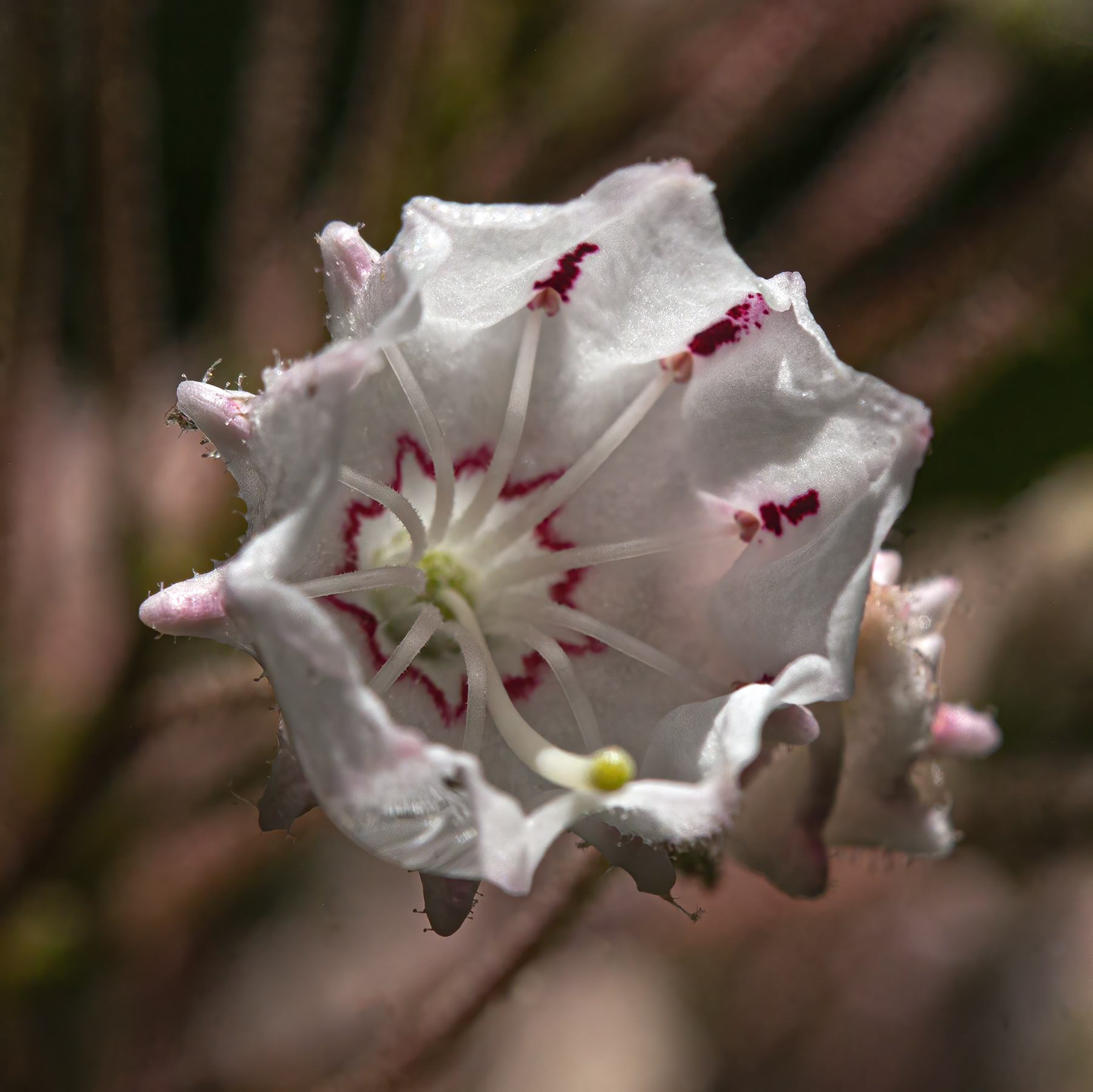
As I was wandering about last Saturday in Prince William County, I was thrilled to spot my first flower on a Mountain Laurel shrub (Kalmia latifolia). I had been noticing lots of buds during recent trips, but this was the first one that I spotted that was open. I think there may be cultivated versions of mountain laurel, but it is naturally found on rocky slopes and in mountain forest areas, which was exactly the environment that I was exploring.

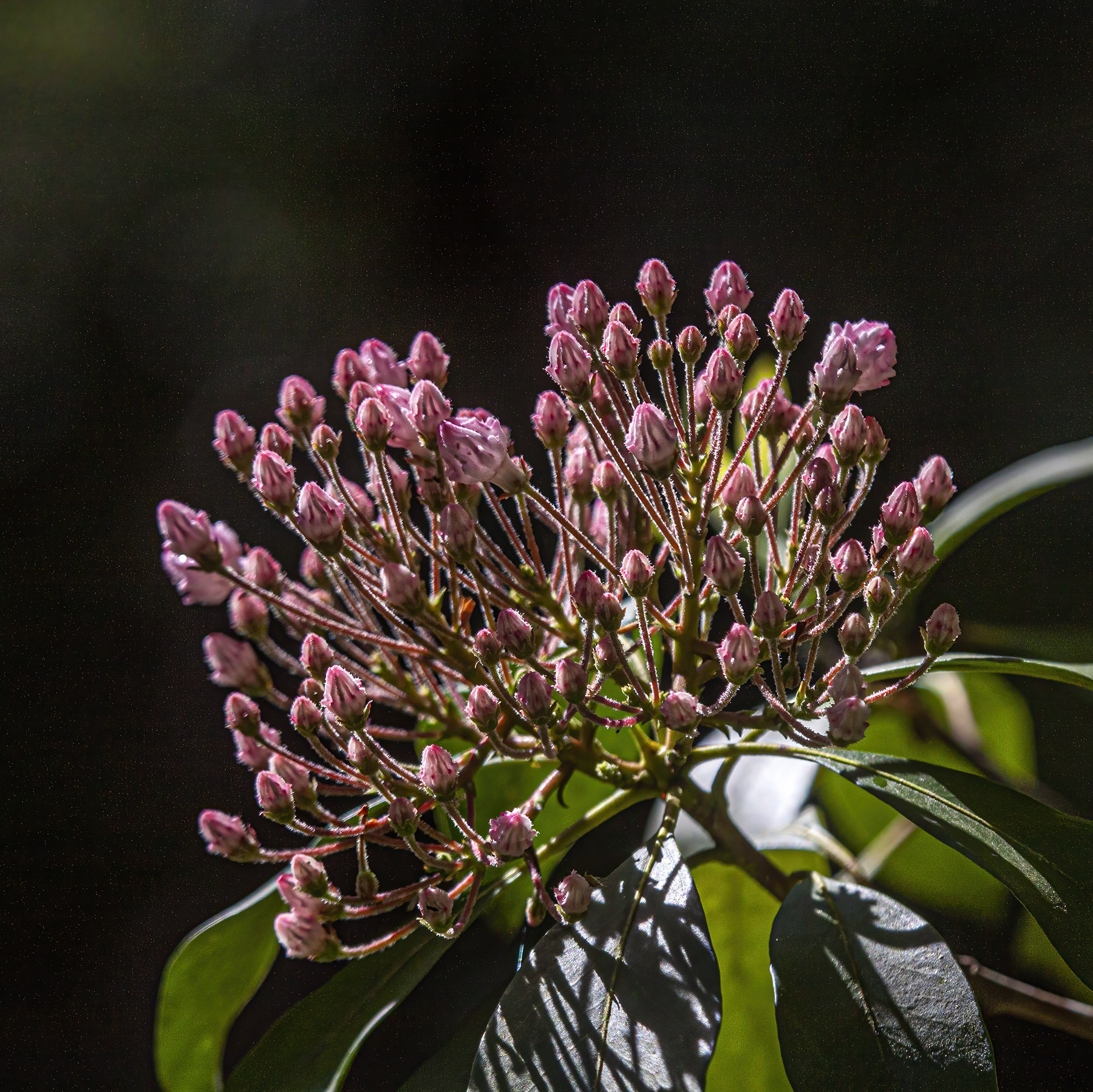
I simply love the shape, colors, and pattern of the gorgeous flowers of this plant. After I published this post, I decided to add a second photo, one that shows the unopened buds of a mountain laurel, their additional beauty waiting to be revealed.

mountain laurel

mountain laurel

© Michael Q. Powell. All rights reserved.


Read Full Post »

Whenever I can, I like to give a sense of the environment in which I find a dragonfly by including natural elements in the image. For example, I really like the fern in this photo of a female Painted Skimmer dragonfly (Libellula semifasciata) that I spotted last Thursday while wandering about in Prince William County.

Many of you know that I enjoy taking photos at Occoquan Bay National Wildlife Refuge, a grassland and wetland habitat at the confluence of the Potomac and Occoquan Rivers where I am able to find an amazing assortment of birds, animals, and insects. This past month, however, I have been spending a lot of time in a different habitat.

I have traded the coastal plains for a hilly, forested area in Prince William County and replaced the broad river expanses with small mountain creeks and streams. Why? Many of the early spring dragonflies are found only in very specific habitats and the area that I have been exploring meets the requirements of several of those species.

It is difficult to describe these “new” areas, so I have included a couple of photos to give you a few indications of what I see and feel there. The second photo shows a relatively flat area adjacent to a stream. The forest floor is covered completely in ferns and dragonflies can sometimes be found perching in that vegetation, as you can see in the first photo.

The final photo shows one of the streams that I love to explore. Sometimes there will be dragonflies flying over the water or perching on the banks. I don’t want to give you the false impression, though, that there are lots of dragonflies here. My sightings are infrequent, but it is easy for me to spend hours on end in places like this—any photos that I manage to take are a bonus.

Last Saturday, for example, I explored for little over six hours and covered 10.8 miles (17 km) on a day when I knew the weather was too cool and cloudy to find many dragonflies. Yeah, I am a bit of a fanatic sometimes.

Painted Skimmer

forest ferns

creek

© Michael Q. Powell. All rights reserved.


Read Full Post »

Can a dragonfly smile? I seemed to detect a cocky little smile when I moved in close for this shot of a handsome male Stream Cruiser (Didymops transversa) last Thursday in Prince William County. The macro view also allowed me to appreciate the beauty of his two-toned eyes and to note the curious-looking “chin strap.”

The second shot shows the entire body of the Stream Cruiser, a medium-sized dragonfly that is about 2.2 inches (56 mm) in length. The image also gives you a sense of the environment in which I spotted him—a large expanse of interrupted ferns adjacent to a stream.

Stream Cruiser

Stream Cruiser

© Michael Q. Powell. All rights reserved.

Read Full Post »

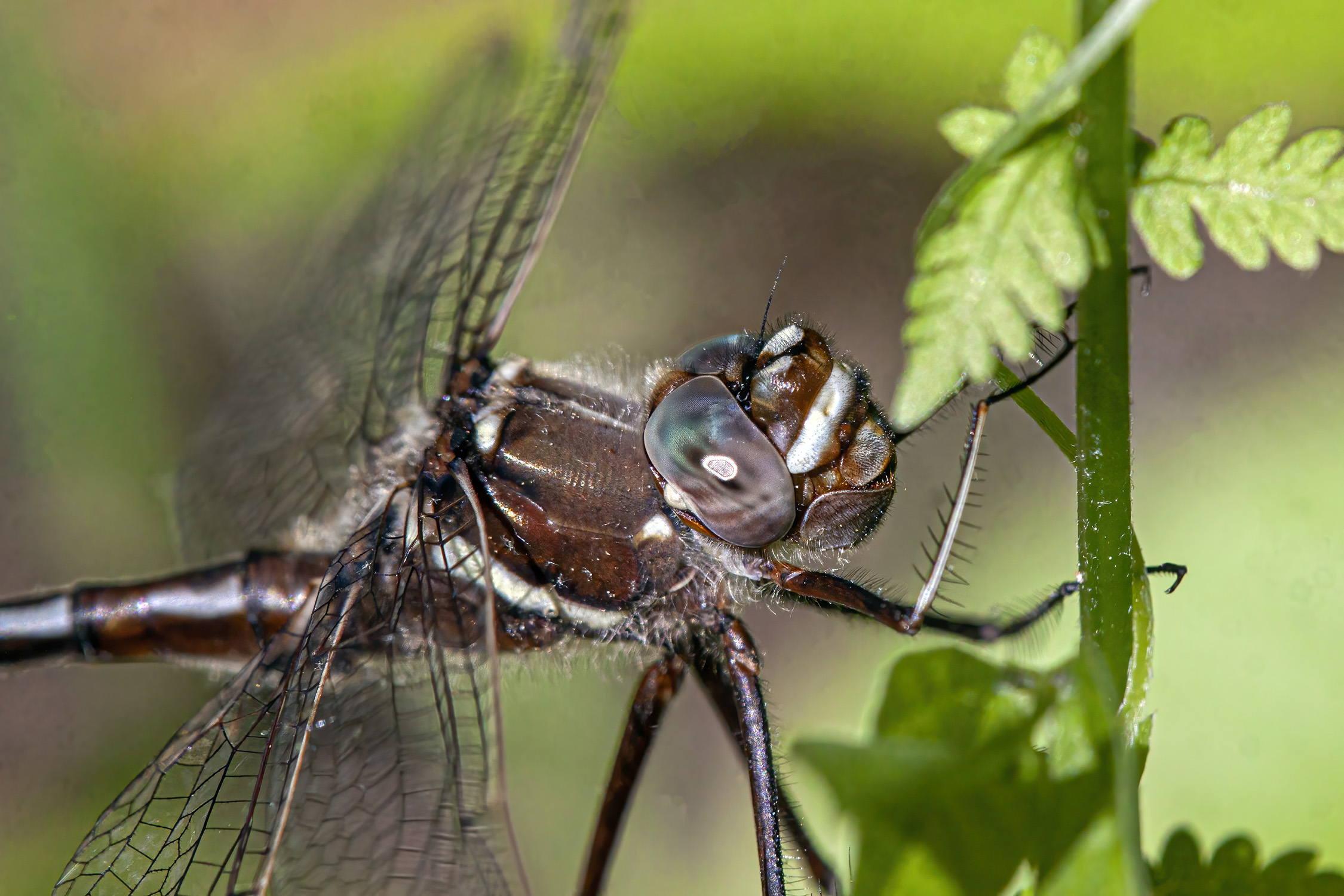
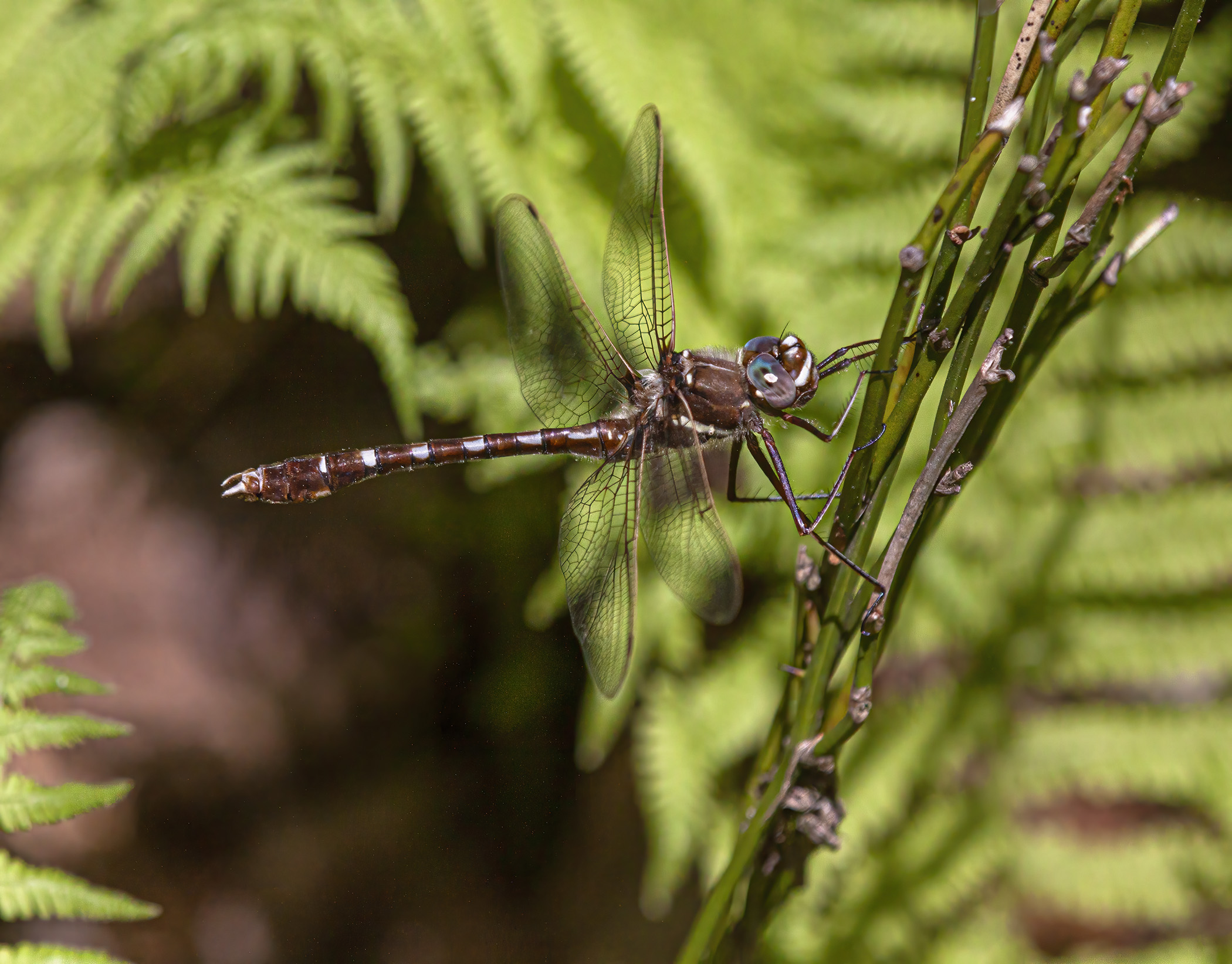
Almost a month ago, fellow dragonfly enthusiast Walter Sanford spotted a Selys’s Sundragon dragonfly (Helocordulia selysii), the first time that one had been spotted in Prince William County, Virginia where we were searching for dragonflies. This is an early spring dragonfly that is quite uncommon and we were both happy to get shots of it, though as I noted in my blog posting about the encounter, we did not realize until after the fact that this was a new discovery—we thought that it was a Uhler’s Sundraagon, a closely related species that I had previously seen at that location.

Whenever I encounter a brand new species in a location, I wonder if it is a one-off sighting, a vagrant who has wandered out of its normal territory, or if perhaps there is an established population. I may have gotten a partial answer to that question on Thursday when I spotted several Selys’s Sundragons a couple of miles upstream on the same creek where Walter made his initial discovery.

I managed to photograph two of these beautiful dragonflies while they perched on interrupted ferns that were growing in abundance in the area, including the dragonfly featured in the first two photos. The markings on the dragonfly’s body were quite distinctive and unfamiliar to me, given that this was the first time that I had seen this species at close range. Whenever I am out in the field, I tend not to worry about identification of my subjects and instead focus on getting the best shots that I can—I can sort things out when I get home and pull up the images on my computer screen.

A short time later, I also was able to capture some in-flight images of a Selys’s Sundragon when he cooperated for me by hovering a bit over the water. That made things marginally easier, but it is still a challenge to focus on a moving subject that is only 1.6 inches (40 mm) in length. Perhaps it is my imagination, but the dragonfly in the final photo seems to be glancing up at me, as though he was wondering if we were done yet with the photo shoot.

So, it looks like we may have at least a small established population of Selys’s Sundragons in this county. What is the flight season for the species? Walter and I were recently joking about that—as Walter pointed out, we are the baseline. We know that the season for this species in our area lasts at least from 13 April, when Walter had his initial sighting, to 6 May, when I took these photos. According to available information, the flight season for this species in our home state of Virginia lasts from 17 March to 23 May.

I hope to be able to make a return trip to this location to add another data point (and hopefully some new photos) to our information about this species or maybe some additional dragonflies are waiting to be discovered.

Selys's Sundragon

Selys's Sundragon

Selys's Sundragon

© Michael Q. Powell. All rights reserved.

Read Full Post »

I spent a lot of time tracking this Common Green Darner (Anax junius) as it patrolled over a field of vegetation yesterday in Prince William County and was thrilled when it finally perched for a moment. Like most darners, this one was hanging vertically and as I got closer, I was immediately struck by the muted color of its abdomen.

I could tell from its terminal appendages that it was a female and I suddenly realized that most of the Common Green Darners I have photographed in the past have been males that often have bright blue abdomens. It had never really struck me that female Common Green Darners have tan-colored abdomens. It is not that surprising, though, because, as is the case in much of the animal kingdom, female dragonflies generally tend to have more subdued colors than their more ostentatious male counterparts.

Common Green Darner

© Michael Q. Powell. All rights reserved.

Read Full Post »

Last week I was delighted to spot several more Stream Cruiser dragonflies (Didymops transversa) while wandering about in Prince William County. This handsome male Stream Cruiser  looked like he could have starred in the well-known “got milk?” publicity campaign in the United States that featured photos of celebrities with milk mustaches and was designed to make milk more interesting and to emphasize its wholesomeness.

The print campaign with the the milk mustaches was started by the Milk Processor Education Program (MilkPEP) as a follow-on to a very popular series of television commercials in which people went to extraordinary lengths to make sure they did not run out of milk, according to this Fast Company article about the history of the Got milk? campaign.

Celebrities almost literally lined up to participate in this campaign and famous photographer Annie Leibovitz photographed more than 180 of the advertisements, according to the aforementioned article. One of the few requirements for participation in the campaign was that the celebrities had be milk-drinkers—I think they might have waived that requirement for Kermit the Frog—which was a problem for Whoopi Goldberg, who is lactose-intolerant. However, she was featured when the campaign ran an advertisement for lactose-free milk.

I don’t drink very much milk these days, but have fond memories of growing up with milk in my cereal bowl each morning. Got milk?

Stream Cruiser

© Michael Q. Powell. All rights reserved.

Read Full Post »

It is still relatively early in the dragonfly season, but already I am running across dragonflies with tattered wings, like this Carolina Saddlebags (Tramea carolina) dragonfly that I spotted yesterday at Occoquan Regional Par. Despite the extensive damage to all of its wings, the dragonfly did not appear to have any problems flying. In fact, I tracked it for a lengthy period of time as it patrolled over a small pond, waiting and hoping that it would finally land.

When the dragonfly decided to take a break, it perched on several pieces of vegetation that were covered with old spider webs. The vegetation was about as tall as I am, so I was able to shoot at a slight upwards angle that let me capture the wing patches that reminded someone of “saddlebags” when they were naming the species.

I was shooting almost directly into the sun, which gave a nice effect by illuminating the dragonfly’s wings from behind, but I kept having to adjust my camera to keep the body from appearing as a silhouette. I experimented with a number of different techniques, including using my pop-up flash for the final photo, which gives the image an almost studio-like appearance.

Carolina Saddlebags

Carolina Saddlebags

Carolina Saddlebags

© Michael Q. Powell. All rights reserved.


Read Full Post »

If you want a fun photographic challenge, try to photograph a dragonfly in flight. It is definitely a test of your skill and patience to track and photograph a subject this small (about 1.6 inches (41 mm) in this case) while it is flying past you. I captured this image of a male Common Baskettail dragonfly (Epitheca cynosura) last Thursday at Occoquan Bay National Wildlife Refuge.

Longtime readers of this blog know that I will try to photograph dragonflies in flight at least several times every season. Some dragonfly species, like this one, will hover a little at times, which gives me a slightly better chance of getting a shot that is in focus. My camera does not focus quickly and accurately enough for me to use autofocus, so I end up focusing manually most of the time.

This shot is unusual in that I managed to freeze all of the motion of the wings—most of the time the wings are blurry. If you click on the image to see it in higher resolution, you will also note the way that the Common Baskettail (and many other species) folds its legs up under its “chest” (technically it is called the “thorax”) while flying to minimize wind resistance.

For those of you who might be curious, I ended up cropping the original image significantly, because I took the photograph with “only” my 180 mm macro lens and the dragonfly was flying over the water—I would have to have been in the water to get any closer.

Common Baskettail

© Michael Q. Powell. All rights reserved.

Read Full Post »

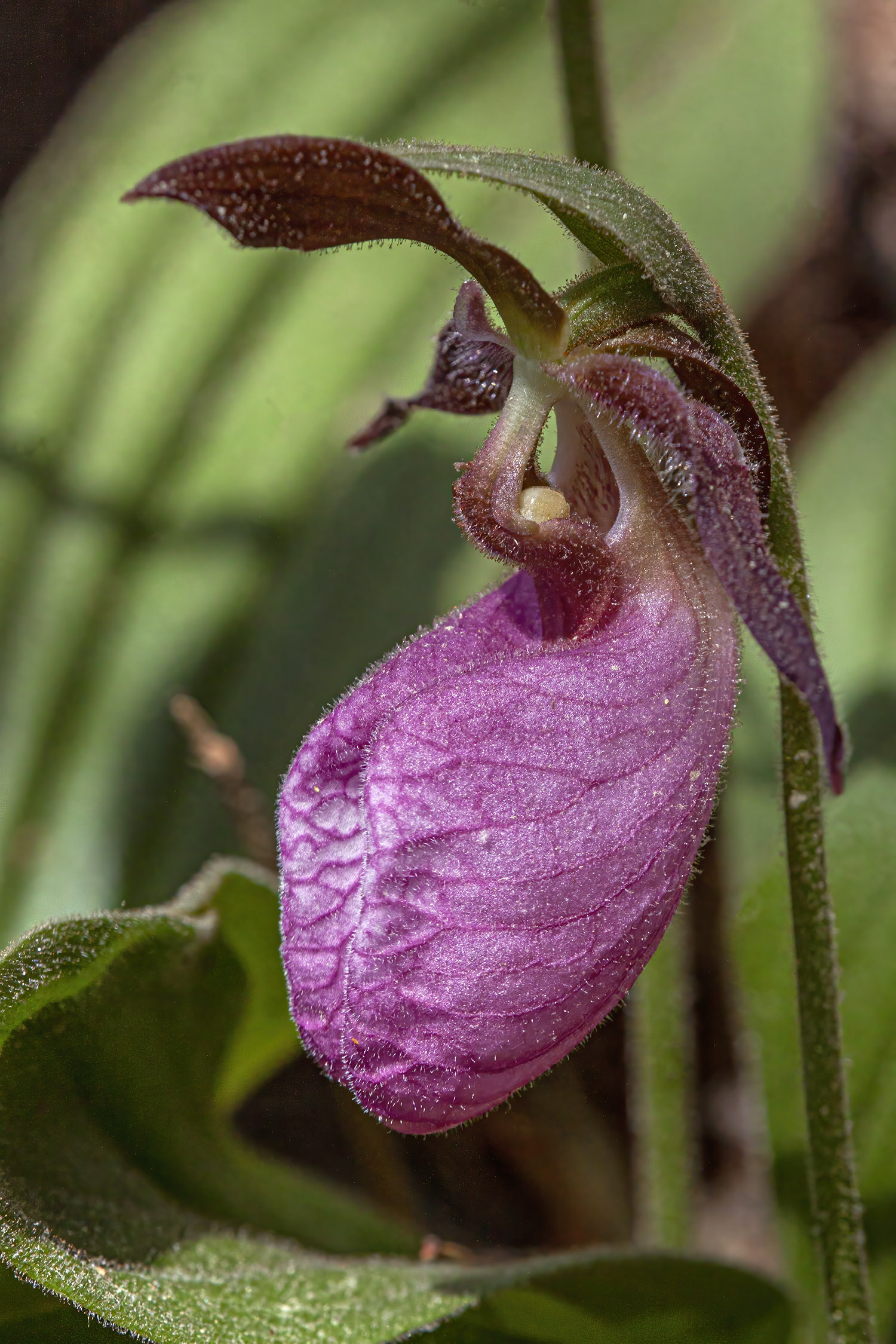
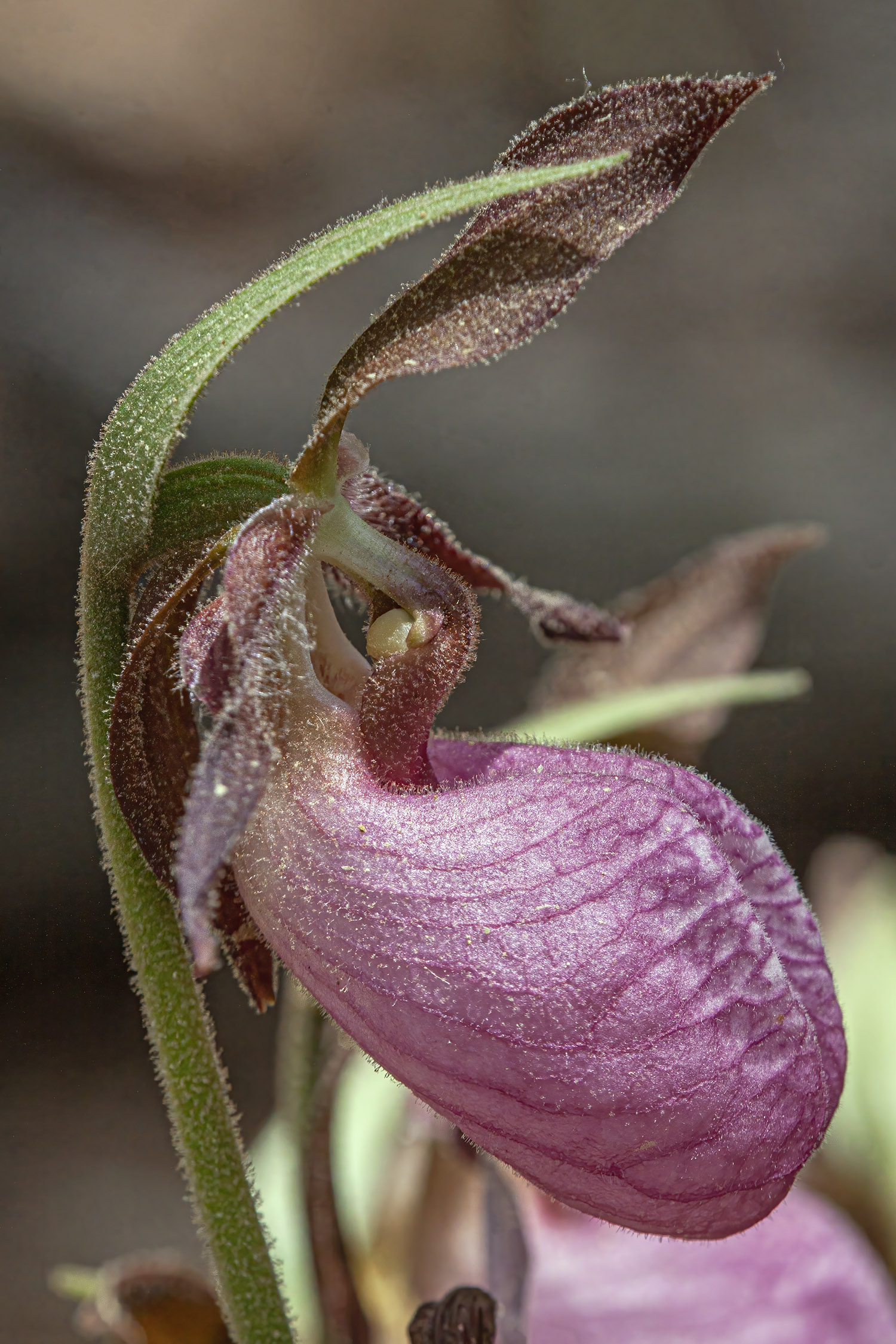
I was really excited yesterday to spot some Pink Lady’s Slippers (Cypripedium acaule), a type of native orchid, while exploring in Prince William County. Last year I saw some for the first time in the wild and managed to find the same spot again this year. When I posted the first photo in Facebook a number of people noted that it brought back memories of their childhoods.

Happy May Day. There are a lot of different types of celebrations on this day throughout the world, many devoted to celebrating spring.  Best wishes to you all however you choose to celebrate this day, perhaps with a walk in the woods to discover or re-discover hidden treasures like these little orchids.

Pink Lady's Slipper

Pink Lady's Slipper

Pink Lady's Slipper

© Michael Q. Powell. All rights reserved.

Read Full Post »

« Newer Posts - Older Posts »