Feeds:
Posts
Comments

Posts Tagged ‘Tamron 18-400mm’

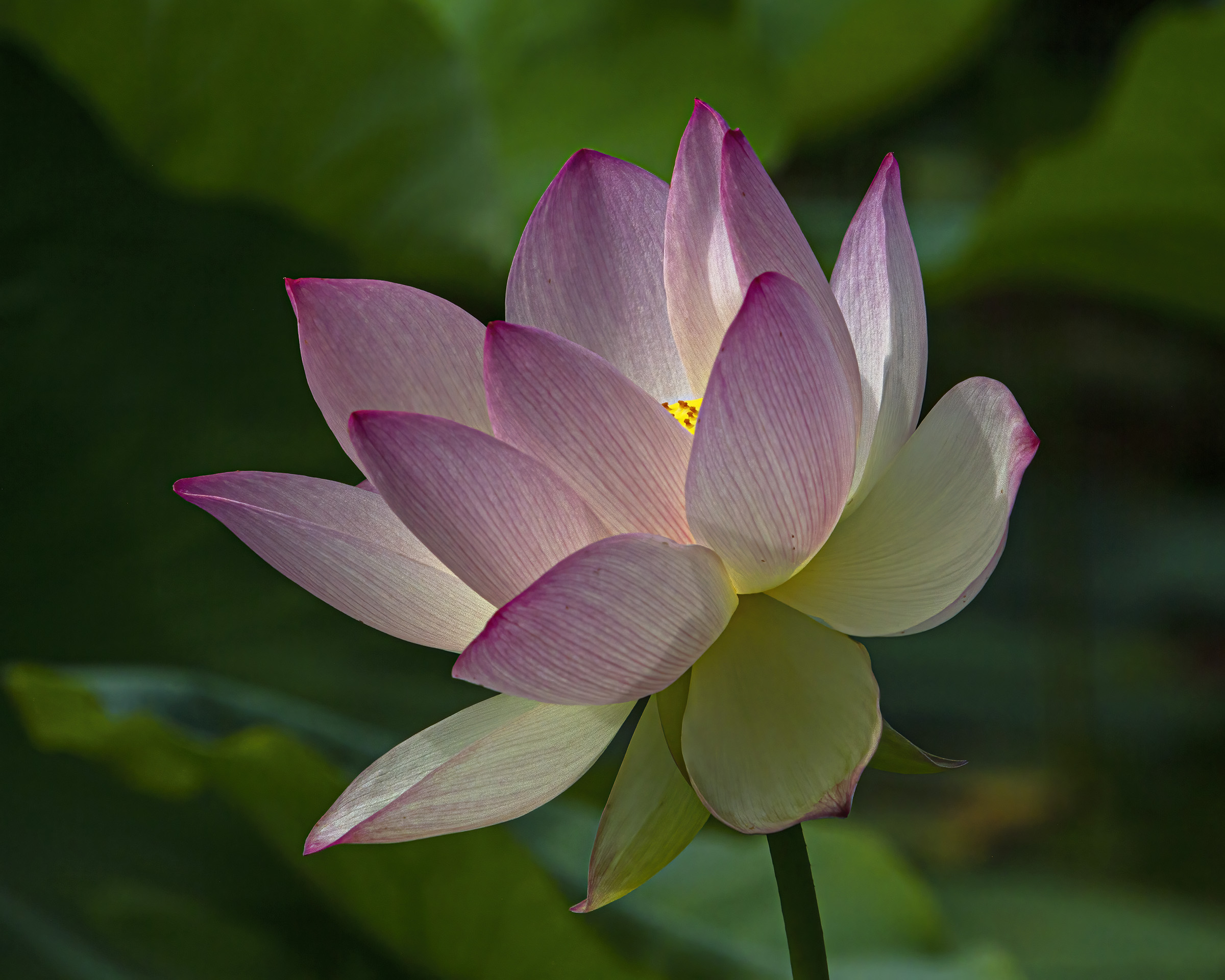
Most of the beautiful lotus flowers that I photographed last week at Kenilworth Park and Aquatic Gardens in Washington D.C. were Sacred Lotuses (Nelumbo nucifera), a plant that is native to Asia. In one small area of the gardens, I spotted some American Lotuses (Nelumbo lutea), a species that is native to North America. Unlike Sacred Lotuses, which tend to be pinkish in color, the flowers of American Lotuses are white or pale yellow in color and the American Lotus is sometimes called a Yellow Lotus.

It was mid-morning when I took these shots and the sun was shining brightly, so I had to deliberately underexpose the shots to keep the white highlights from getting blown out—that is why the backgrounds look so dark. I like the effect and find that it adds a bit of drama to the images, especially the first one.

American Lotus

American Lotus

American Lotus

© Michael Q. Powell. All rights reserved.


Read Full Post »

I was delighted to spot several frogs sitting on lily pads during my recent trip to Washington D.C. to visit Kenilworth Park and Aquatic Gardens. In the first photo, the cute little frog was perched on some large lily pads from a water lily species from South America. These lily pads have raised edges that always remind me of a tart pan. Reportedly this type of lily pad can grow to as much as 10 feet (3 meters) in diameter and can support a considerable amount of weight if it is evenly distributed.

The second and third photos show the same frog perched on a flatter-style lily pad. I think that this frog is a Green Frog (Lithobates clamitans), although I must confess that I have trouble telling green frogs from bullfrogs. I really like the eye-to-eye pose in the final photo in which the frog’s face reminds me a lot of Kermit the Frog from the Muppets.

frog on lily pad

frog on lily pad

frog on lily pad

© Michael Q. Powell. All rights reserved.

Read Full Post »

Last Thursday I visited Kenilworth Park and Aquatic Gardens in Washington D.C. with my photography mentor Cindy Dyer to photograph the lotuses and waterlilies that we knew would be in bloom. This facility is the only national park site devoted to cultivated water-loving plants and features over 45 ponds filled with a variety of water lilies and lotuses, according to the Friends of Kenilworth Aquatic Gardens website. Sacred Lotus (Nelumbo nucifera)

The official website of the park describes it more poetically as a place “where water and wind dance.” “Deep within Kenilworth lies an oasis, hidden behind trees and cattails. It’s a place where beavers build their homes and turtles sleep on logs. Lotus blooms rise from the muck and lilies sit on the water. The wind dances with the dragonflies, rustling through the trees, carrying the song of the birds until it brushes across your face, fading to a whisper, saying “come join.” ”

One of the “stars” of the aquatic gardens is the Sacred Lotus (Nelumbo nucifera) and I spent a good amount of time trying to capture images of these spectacular flowers. We arrived at the gardens relatively early, but it was still a challenge to photograph the flowers without getting harsh highlights. I particularly like the first photo in which I managed to capture both a flower and the showerhead-like seedpod that remains after the petals have fallen away.

In my final photo, I zoomed in to create a Georgia O’Keeffe-like vibe. My friend Cindy used a handheld diffuser to block some of the sunlight, which allowed me to capture the saturated color of this particular flower—most of the other flowers were a lighter pink, like the ones in the first and second photos.

Sacred Lotus

Sacred Lotus

Sacred Lotus

© Michael Q. Powell. All rights reserved.

Read Full Post »

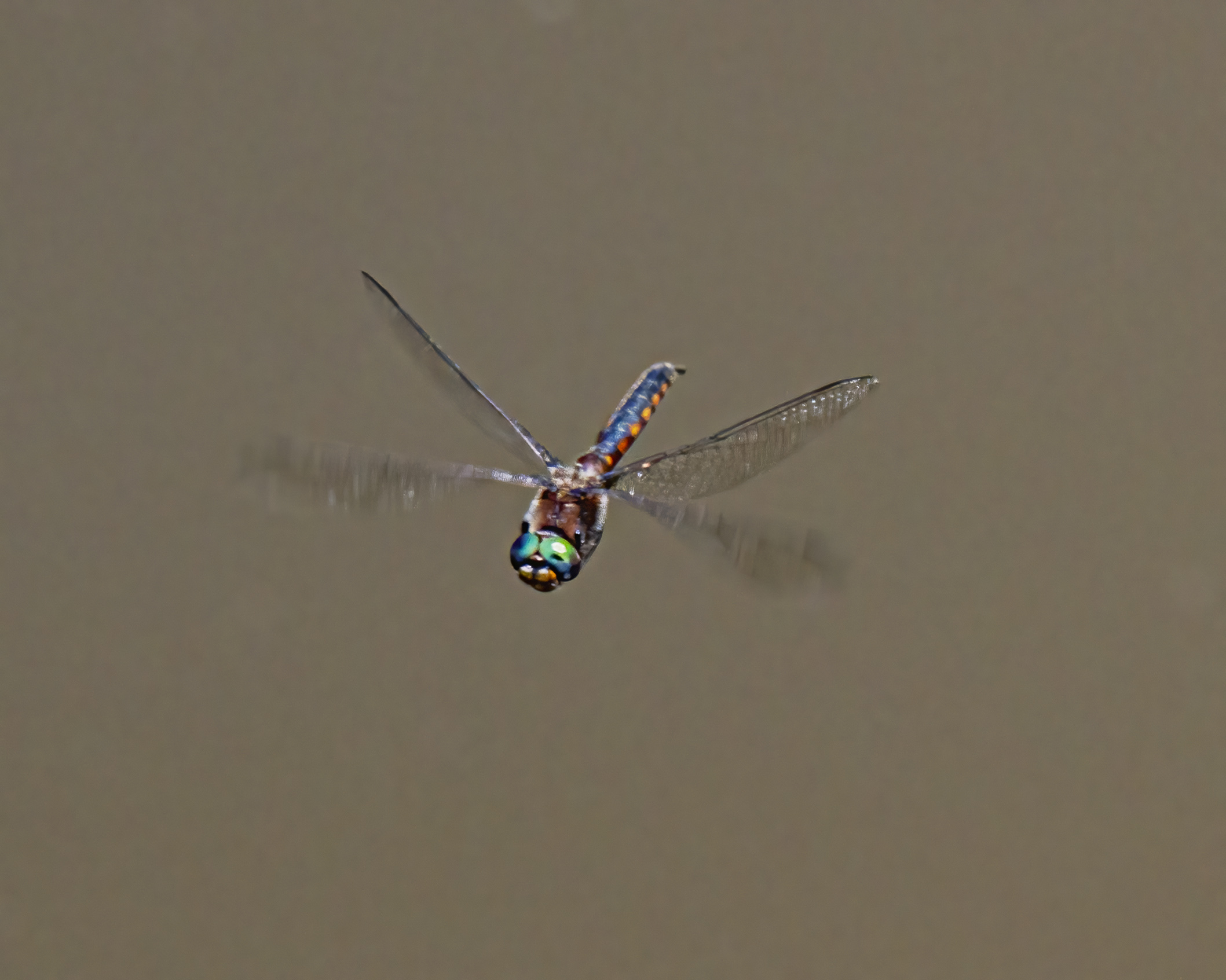
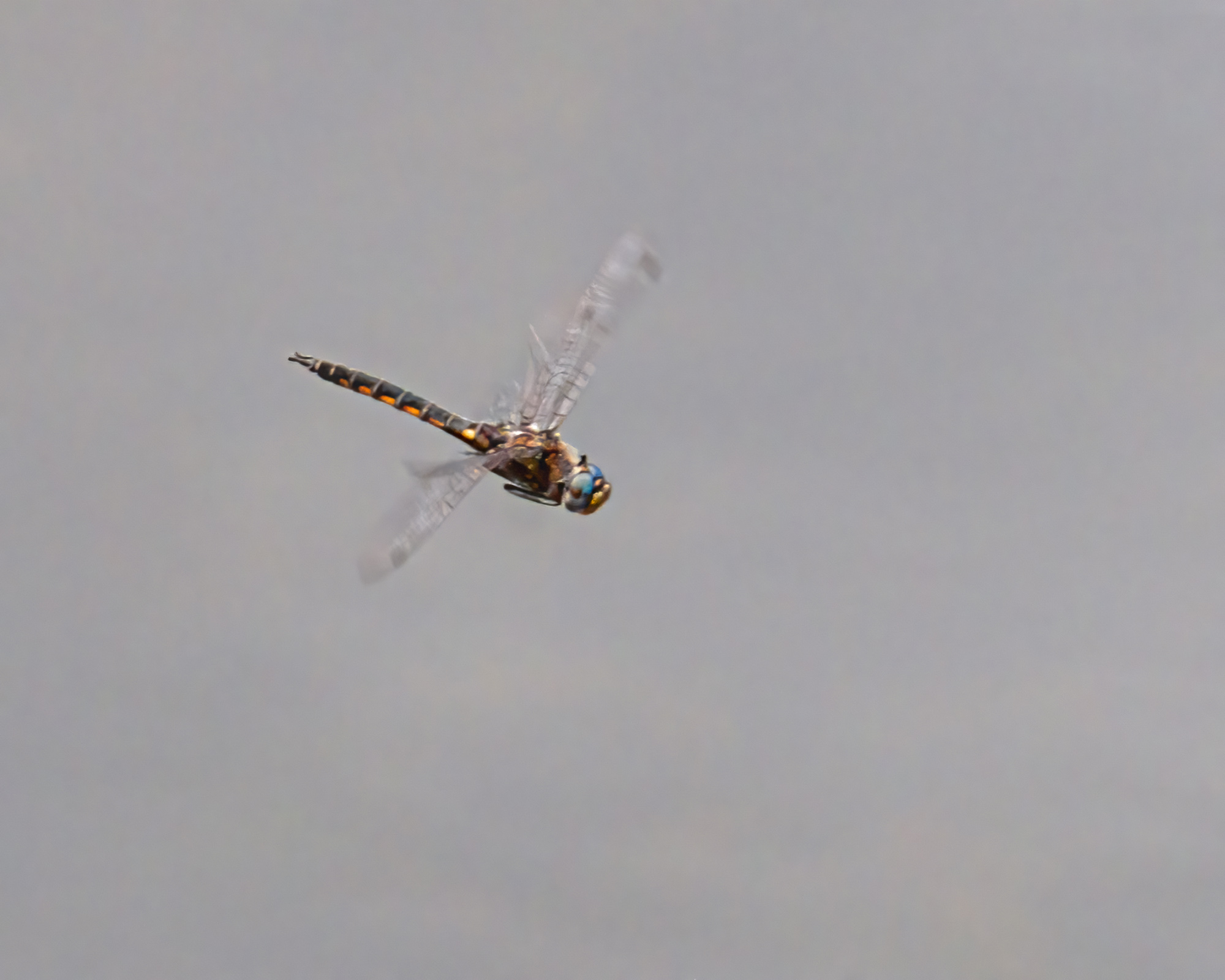
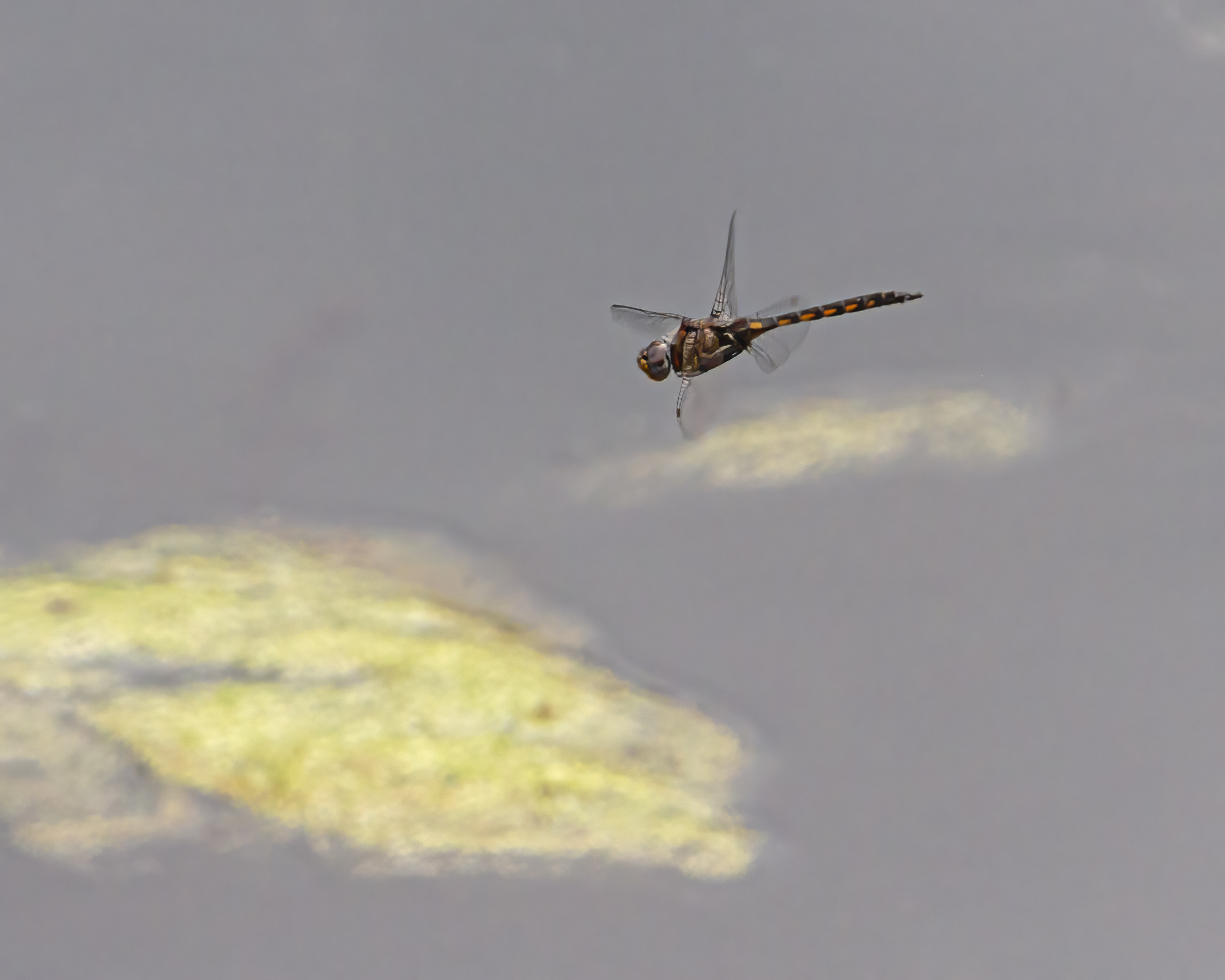
Several Common Baskettail dragonflies (Epitheca cynosura) were patrolling over the pond at Jackson Miles Abbott Wetland Refuge last Thursday and I spent a lot of time trying to capture images of one of them as they zoomed by me. I made attempts with both my 180mm macro lens and my 18-400mm zoom lens, sometimes using focusing manually and sometimes using auto focus. Needless to say, there is also a lot of luck involved in getting a somewhat sharp photo of a dragonfly in flight

I spent a lot of time trying to track the dragonflies. They didn’t exactly fly in a pattern, but they seemed to have a territory that they were patrolling, so they came by me at irregular intervals. In the first two shots below, I was able to get a bit of the habitat in the photo, but most of the time I was focusing solely on the dragonfly and there is nothing in the background but the somewhat muddy water of the pond.

I was happy that I was able to get some shots from a number of different angles. In some of the shots, the dragonfly was flying by me, but in other cases I manage to capture images in which the dragonfly was flying towards me or away from me. The angle was often dependent on the speed with which I was able to acquire my target in the viewfinder of my camera and successfully track it as I tried to focus on it—hand-t0-eye coordination is critical.

I used to think that it was impossible to get shots like these. It has gotten a little easier over time as I have gained experience, but it still is pretty hard. No matter how skilled I get, patience and persistence are still the most critical factors in this type of photography.

Common Baskettail

Common Baskettail

Common Baskettail

Common Baskettail

© Michael Q. Powell. All rights reserved.

Read Full Post »

I can’t help myself. Whenever I see dragonflies flying over the water, I feel compelled to try to photograph them in flight. This past weekend I spotted several Common Baskettail dragonflies (Epitheca cynosura) flying patrols over a small pond in Orkney Springs, Virginia. The dragonflies flew by numerous times, giving me a lot of opportunities to take shots.

As is usually the case, most of my shots were out of focus or included only a portion of the dragonfly at the edge of the frame. However, as most of you know, I am quite persistent and eventually I managed to get some decent shots of the dragonflies.

Several of my sharpest shots show the dragonfly against a gray background, but lack a sense of the environment. The last three shots include patches of algae and give you a really cool perspective that reminds me of the view that you get from an airplane window when you look out and see another airplane along with the ground below.

Common Baskettail

Common Baskettail

Common Baskettail

Common Baskettail

Common Baskettail

© Michael Q. Powell. All rights reserved.


Read Full Post »

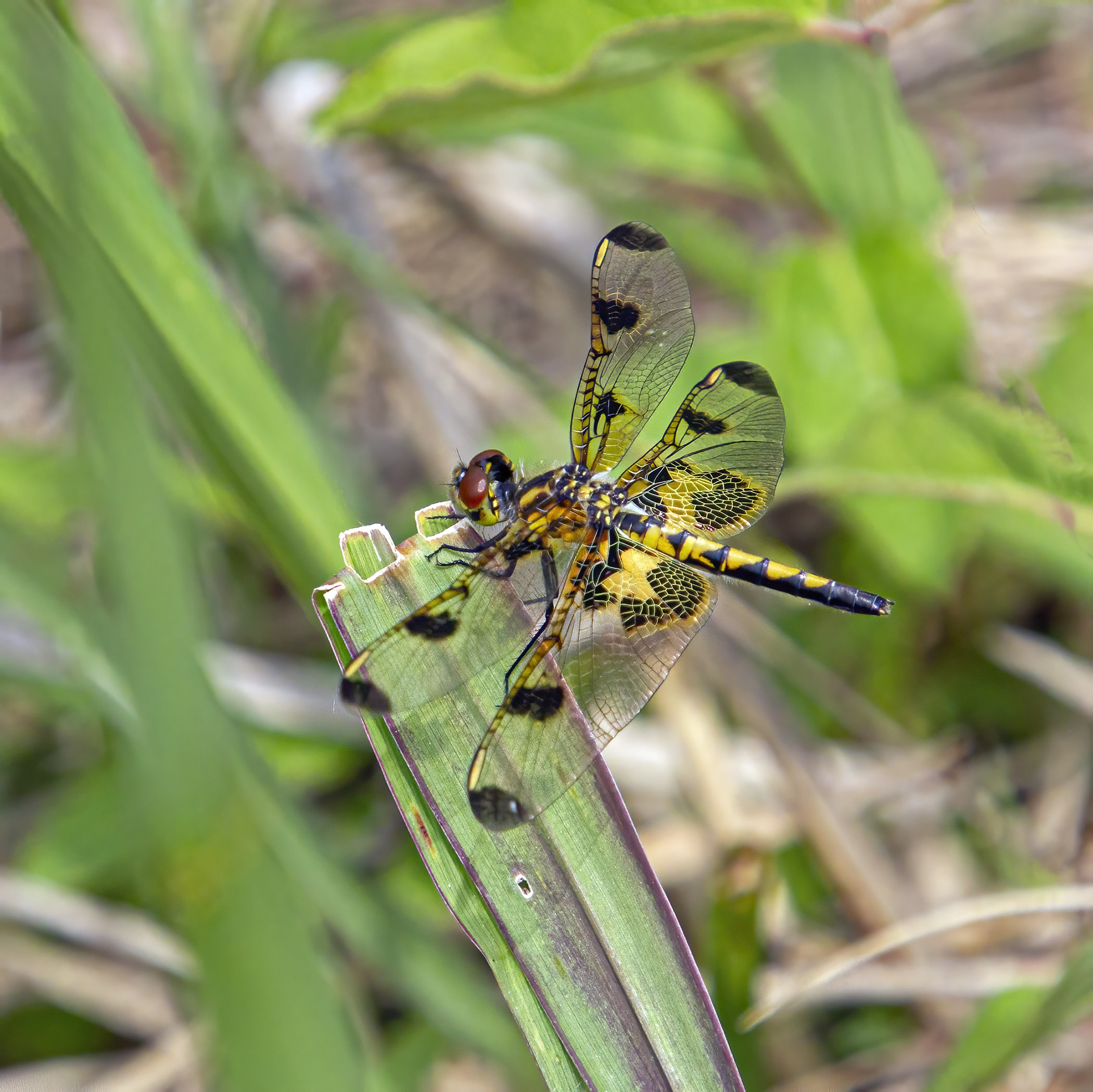
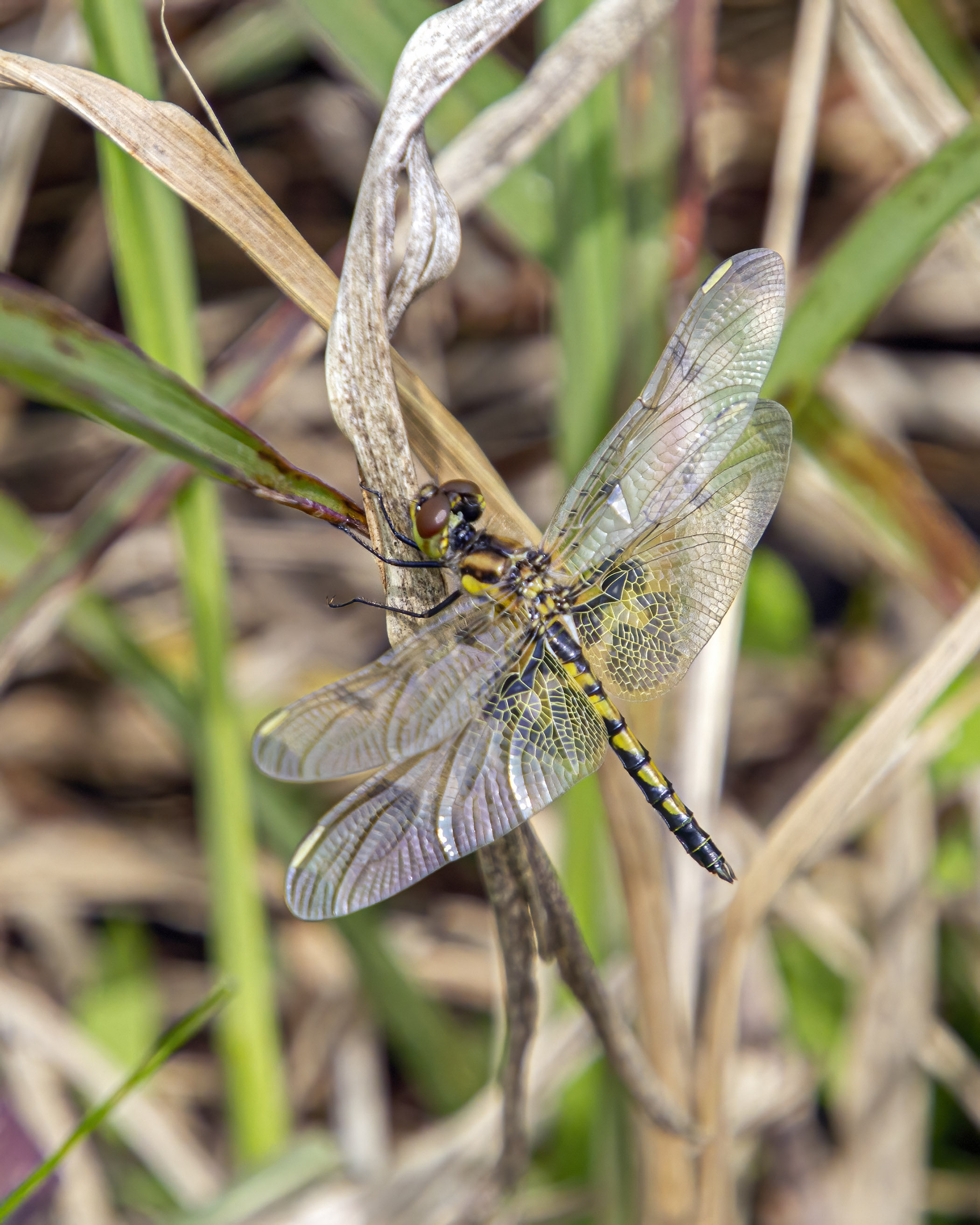
I was delighted last Thursday to see quite a few Calico Pennant (Celithemis elisa) dragonflies during a visit to Occoquan Bay National Wildlife Refuge. The markings and wing patterns on this species are really striking, making this one of the most attractive species that I see during the dragonfly season.

Some of the Calico Pennants appeared to have newly emerged—when dragonflies initially break through the exoskeleton of their water-dwelling larvae selves, their wings are really shiny and fragile and their coloration is often pale. The dragonfly in the first photo appears to be in that stage of development, which is sometimes referred to as “teneral.” It you look closely at the place where the dragonfly is grasping the vegetation, you can see what is quite probably its discarded exoskeleton from which it had recently emerged.

The Calico Pennants in the second and third photo are females, as was the one in the first photo. The patterns on the wings of these more mature females are more distinct and their yellow coloration is somewhat brighter. How do I know that they are females? If you look closely at the ends of their abdomens (the “tails”) you can see the terminal appendages that indicate their gender.

Female Calico Pennants have yellow markings on their abdomens, but that is not a reliable indicator of their gender, because immature males have that same coloration. The dragonfly in the fourth photo, for example, is an immature male Calico Pennant. If you compare the tip of the abdomen of this dragonfly with the one in the third photo, you may be able to see that there are differences.

What does a mature male Calico Pennant look like? I managed to spot only a single mature male that day, but fortunately was able to capture a shot of it. As you can see in the final photo, adult male Calico Pennants have red marking on their abdomens and the veining on their wings is pinkish in color.

We are gradually transitioning to the summer dragonfly species and some of the early spring ones are starting to disappear. I’ll be keeping my eyes open for the “new” species, so don’t be surprised to see more dragonfly photos in the upcoming months.

Calico Pennant

Calico Pennant

Calico Pennant

Calico Pennant

Calico Pennant

© Michael Q. Powell. All rights reserved.

Read Full Post »

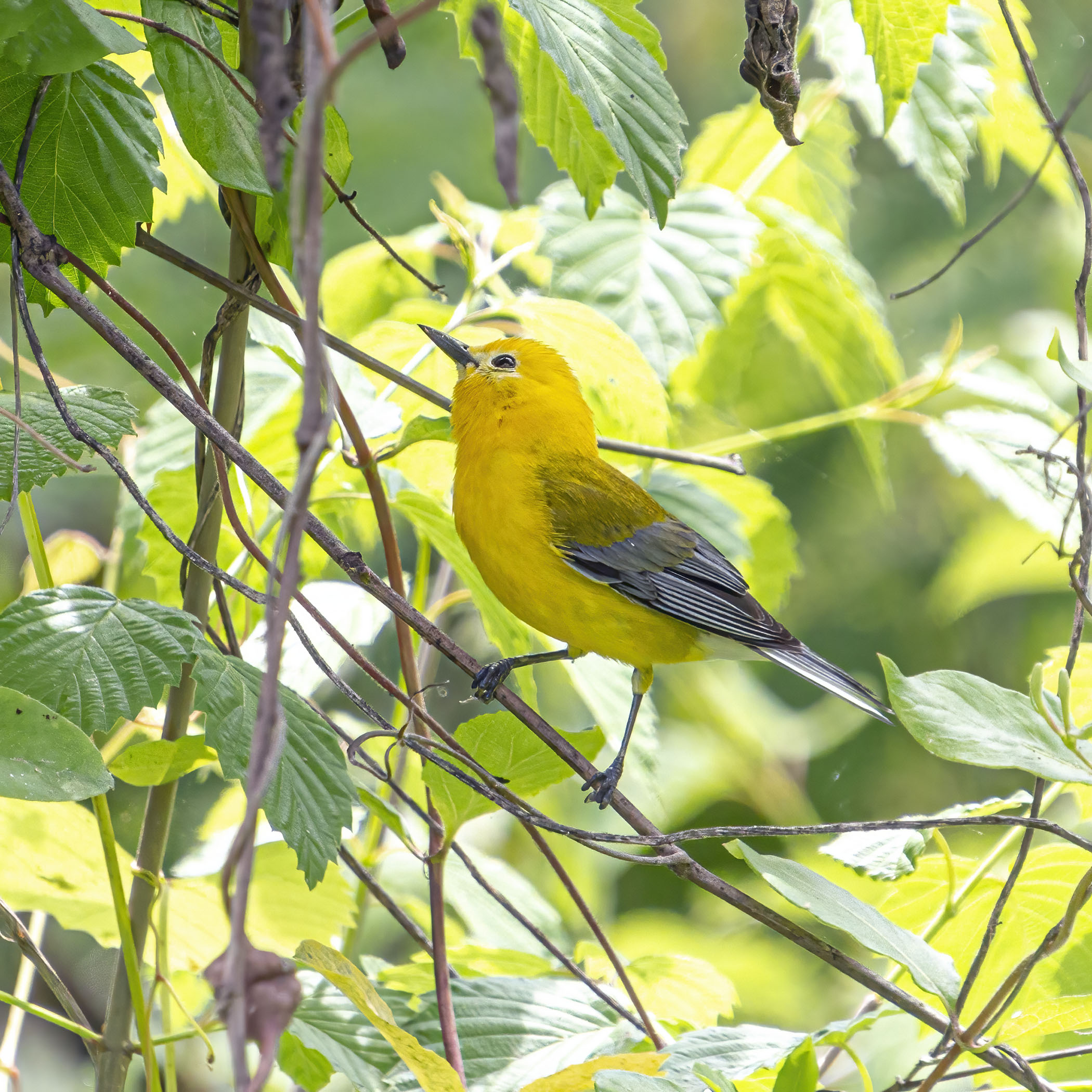
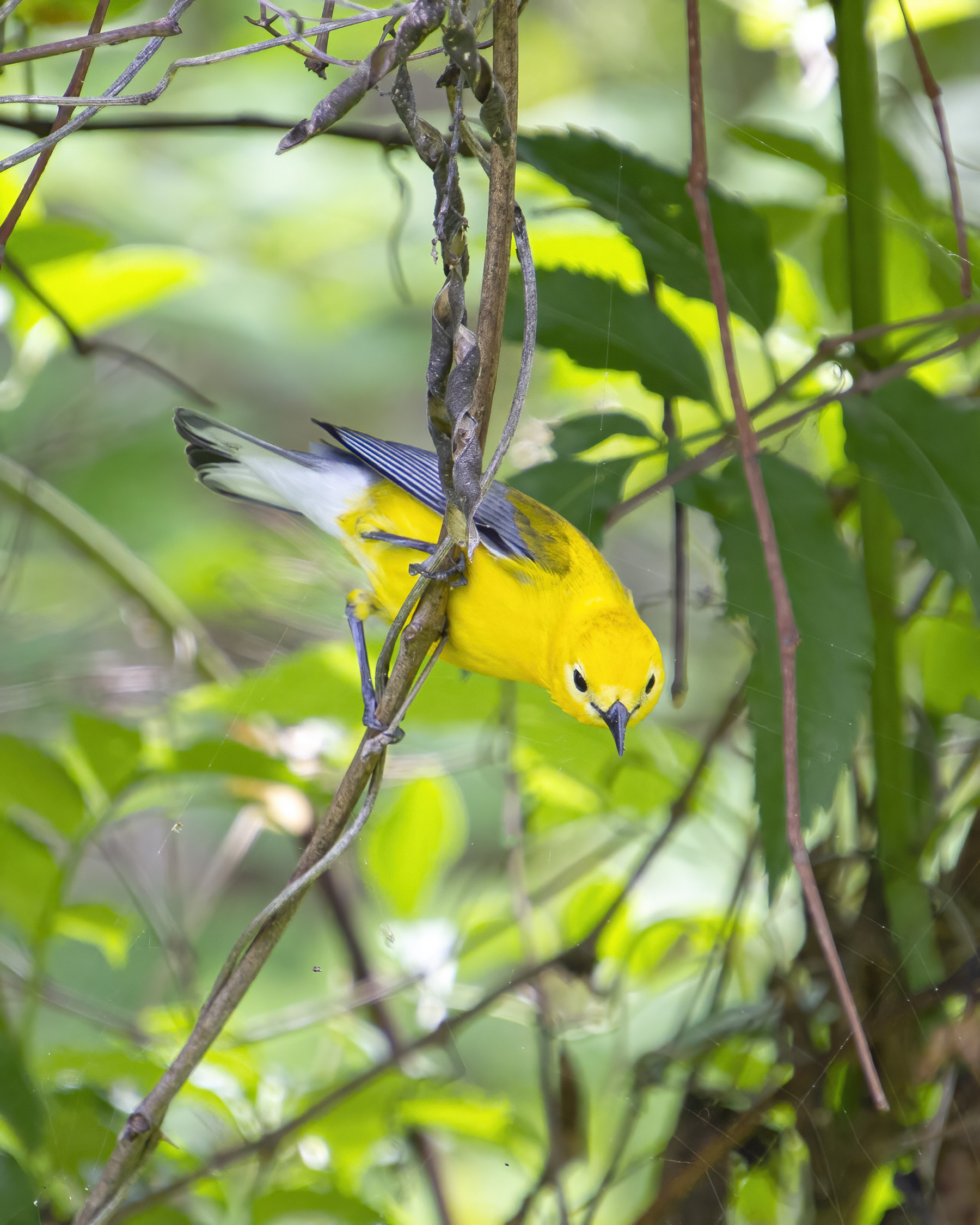
I love the poses of this bright yellow Prothonotary Warbler (Protonotaria citrea) that I spotted last Thursday at Occoquan Bay National Wildlife Refuge. The warbler was actively twisting, turning, and stretching as it foraged for food and amazingly was perched quite low in the vegetation—most of the times in the past I have seen Prothonotary Warblers high in the trees and was forced to shoot them from an unflattering sharp upward angle.

Quite often when I am focusing on a wildlife subject, it moves. Most of the time the result is a blurry image, but sometimes I end up with a really cool shot. The Prothonotary Warbler took off just as I pressed the shutter release and I was lucky to capture it in action, as you can see in the final photo.

The yellow plumage of a Prothonotary Warbler is startlingly bright and cheerful. Invariably the sight of a Prothonotary Warbler makes me think of Tweety Bird, a character from Warner Brothers Looney Tunes cartoons that I remember from my childhood. I think that Tweety was supposed to be a canary, but he didn’t really look like a canary. Often Tweety had adventures with Sylvester the cat, the subject of Tweety’s signature line, ” “I tawt I taw a puddy tat!””


Prothonotary Warbler

Prothonotary Warbler

Prothonotary Warbler

Prothonotary Warbler

© Michael Q. Powell. All rights reserved.

Read Full Post »

As I was scanning the trees for small birds last Thursday at Occoquan Bay National Wildlife Refuge, I spotted this Great Blue Heron (Ardea herodias) surveying its surroundings from its high perch. I have occasionally seen herons roosting in the trees in the past, but it has usually been earlier in the day—this heron might have decided that it wanted a mid-afternoon nap or at least a few peaceful moments.

Now that I am retired, I have rediscovered the pleasure of naps and a Sunday afternoon nap has become part of my weekly routine.

Great Blue Heron

© Michael Q. Powell. All rights reserved.

Read Full Post »

I patiently watched the large Bald Eagle (Haliaeetus leucocephalus) nest last Thursday at Occoquan Bay National Wildlife Refuge and eventually caught a glimpse of an eaglet. As some of you may recall, I have been keeping an eye on three eagle nests at this refuge and have already seen eaglets at the other two nests. This nest is significantly larger than the other two nests, as you can see in the second photo, and it is difficult to see activity in the nest.

I was zoomed in as close as I could with my telephoto lens and still had to crop the image in the first photo quite a bit so you can see the eaglet with its open mouth—I suspect it wanted to be fed. As you can see, one of the parents was in the nest with the eaglet and the other parent was perched in a nearby tree. It is possible that there are more eaglets in the nest, but I was really happy to spot one.

In case you are curious, I did not have my longest telephoto lens with me that day. Normally I use my Tamron 150-600mm lens when I know that I will be photographing birds. I was anticipating that I would be focusing on both large and small creatures, so I was using my Tamron 18-400mm lens on this occasion.  This lens gives me a great deal of flexibility in photographing dragonflies as well as birds and in capturing landscape shots like the shot of the nest—I was standing in the same spot for both photos in this blog posting.

Bald Eagle

eagle nest

© Michael Q. Powell. All rights reserved.

Read Full Post »

On Thursday I was blessed to photograph a beautiful little Prairie Warbler (Setophaga discolor) as it was singing in a small tree at Occoquan Bay National Wildlife Refuge. At this time of the year I can often hear the birds, but have trouble spotting them amidst the abundant foliage. Even when I am able to locate a warbler, it is usually perched really high in a tree, out of range of my telephoto lens. In this case, the warbler was almost at eye level when I took these photos.

Despite its name, the Prairie Warbler is not found on a prairie. According to the Cornell Lab of Ornithology, “Finding this bird during the breeding season is often as simple as finding the scrubby second-growth forests, young pine stands, and overgrown pastures that it prefers. In spring, listen for males singing from a mostly exposed perch in one of the tallest trees in its territory, a distinctive sputtering buzz that starts low and climbs high up the scale, beyond human hearing.”


Prairie Warbler

Prairie Warbler

© Michael Q. Powell. All rights reserved.

Read Full Post »

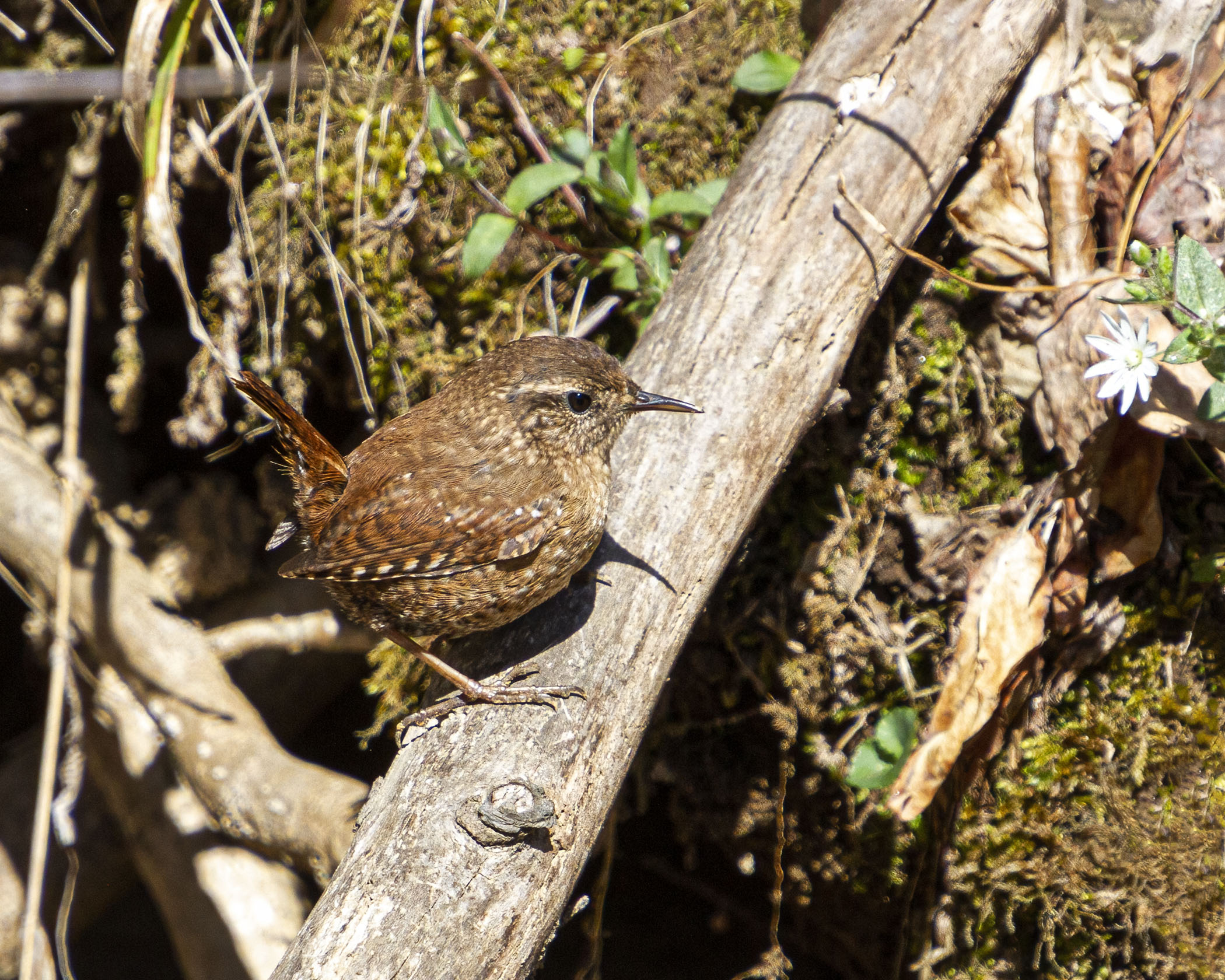
Throughout the winter I searched in vain for a Winter Wren (Troglodytes hiemalis), but finally managed to spot one last Thursday as I was exploring a stream in Prince William County, Virginia on a sunny spring day. According to the Audubon Field Guide, the Winter Wren is “A secretive little bird of dense woods. It often creeps about among fallen logs and dense tangles, behaving more like a mouse than a bird, remaining out of sight but giving an occasional kimp-kimp callnote.”

When I took these photos, I was standing in a dried-up stream bed, so I was almost at eye-level with this tiny bird. This angle of view allowed me to get much better shots that I would have gotten if I had been shooting downwards at the subject. I recommend that you click on the images to get a closer look at the beautiful details on this wren, including its speckled feathers, upturned tail, large feet, and sharp bill.

Winter Wren

Winter Wren

© Michael Q. Powell. All rights reserved.

Read Full Post »

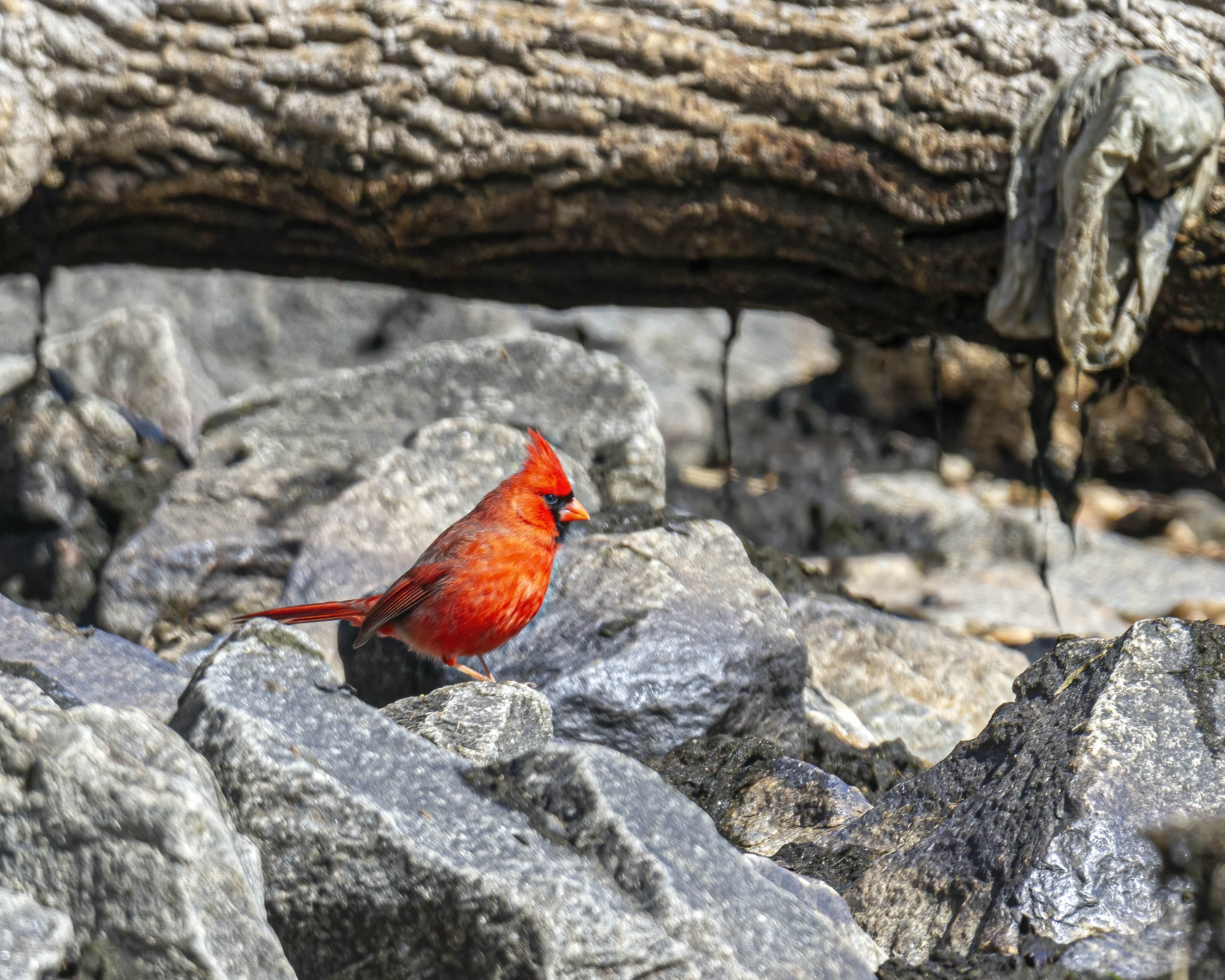
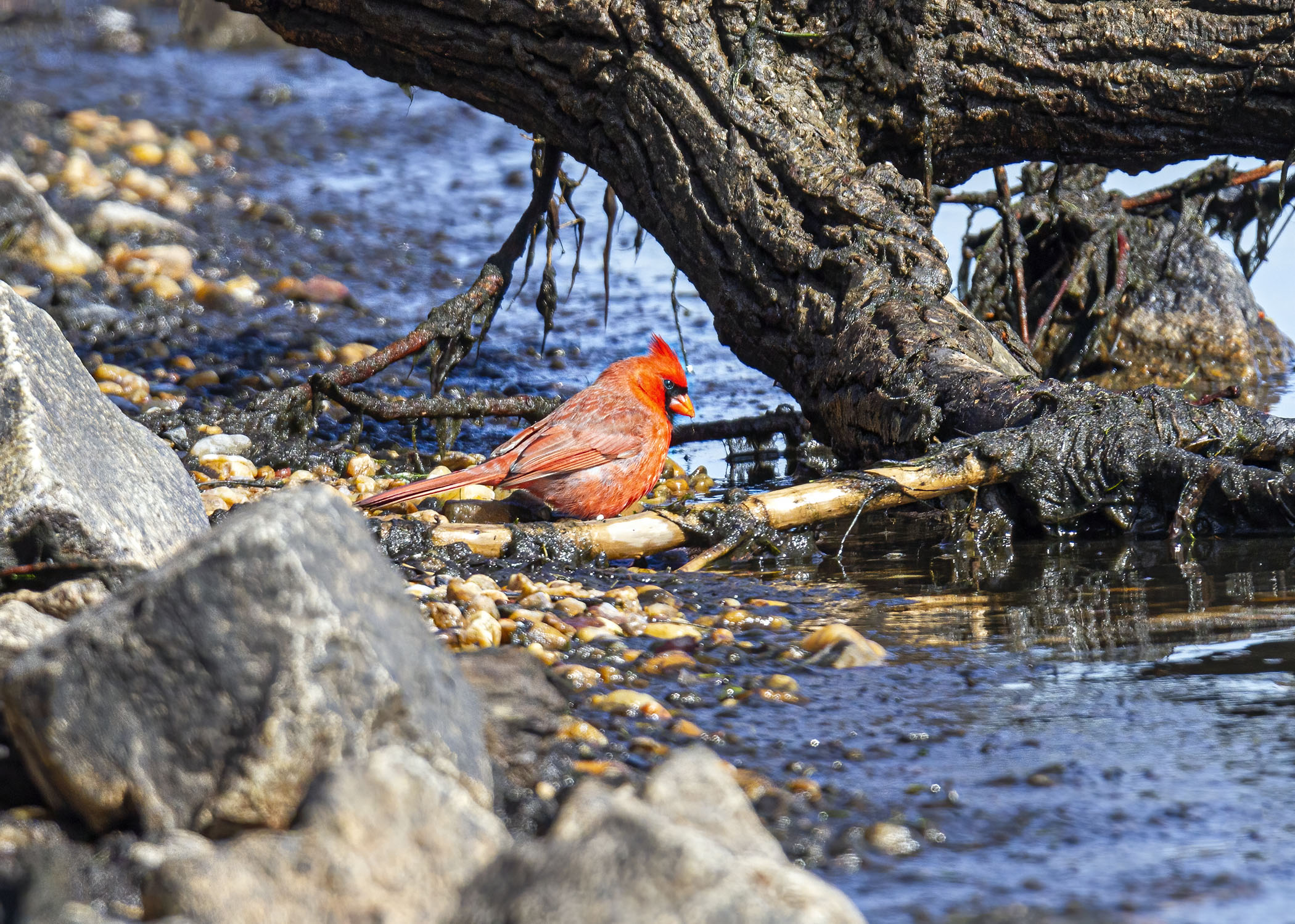
It is always fun to photograph familiar subjects in an unexpected environment. This past week I spotted a male Northern Cardinal (Cardinalis cardinalis) amidst the rocks and other debris at the edge of the water at Occoquan Bay National Wildlife Refuge rather than in the vegetation where I normally see cardinals.

I was delighted to be able to capture a series of images as the cardinal moved about on the rocks and eventually made his way to the water. He dipped his head to take a drink, but his face was completely hidden from view, so I was not able to capture that moment.

On the whole, though, I really like the balance I was able to achieve in showing both the primary subject and the environment in which I found him—the brightness of the cardinal’s red body definitely helped him to stand out from the somewhat cluttered background and foreground despite the fact that he filled only a small part of the frame.

Northern Cardinal

Northern Cardinal

Northern Cardinal

Northern Cardinal

© Michael Q. Powell. All rights reserved.

Read Full Post »

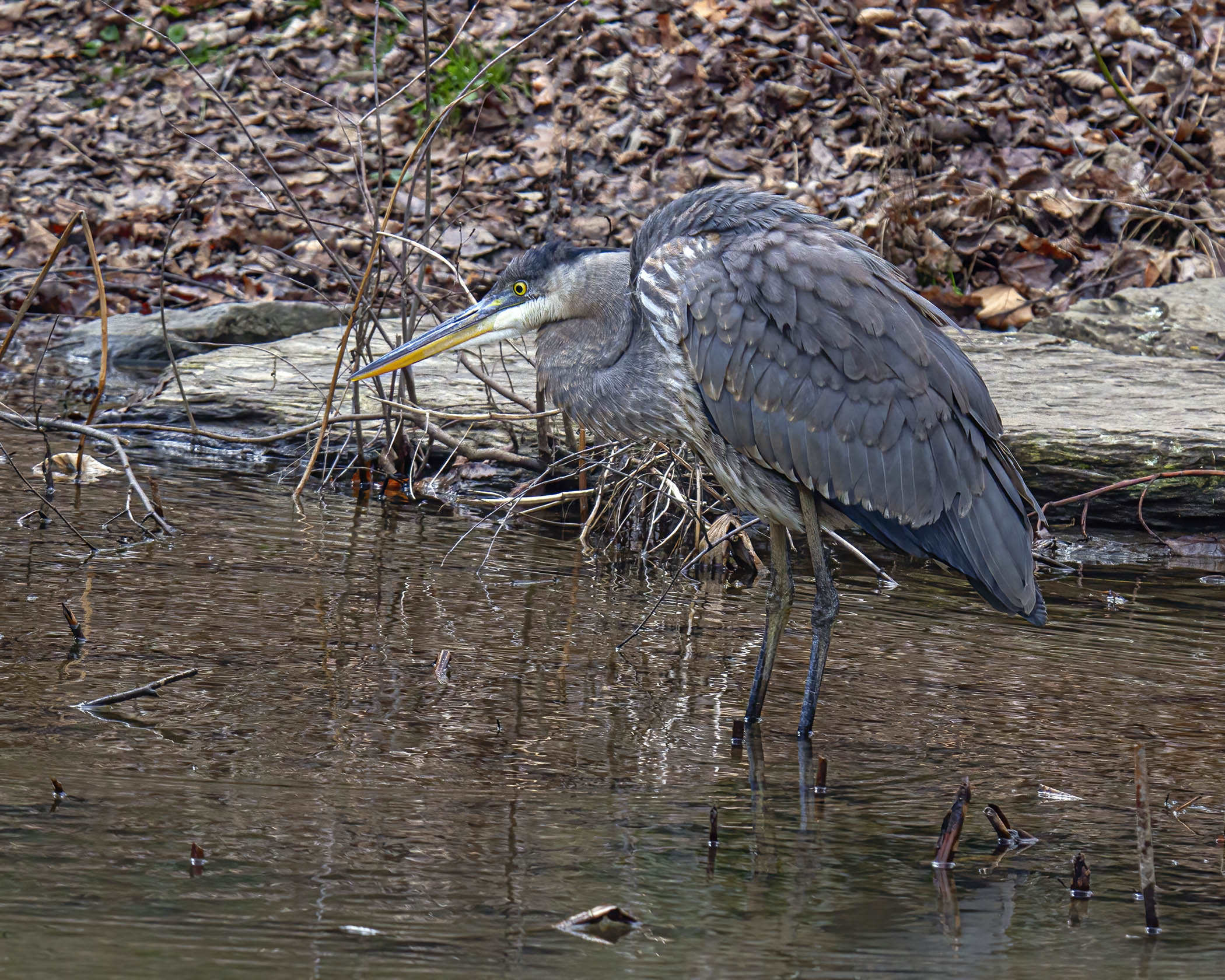
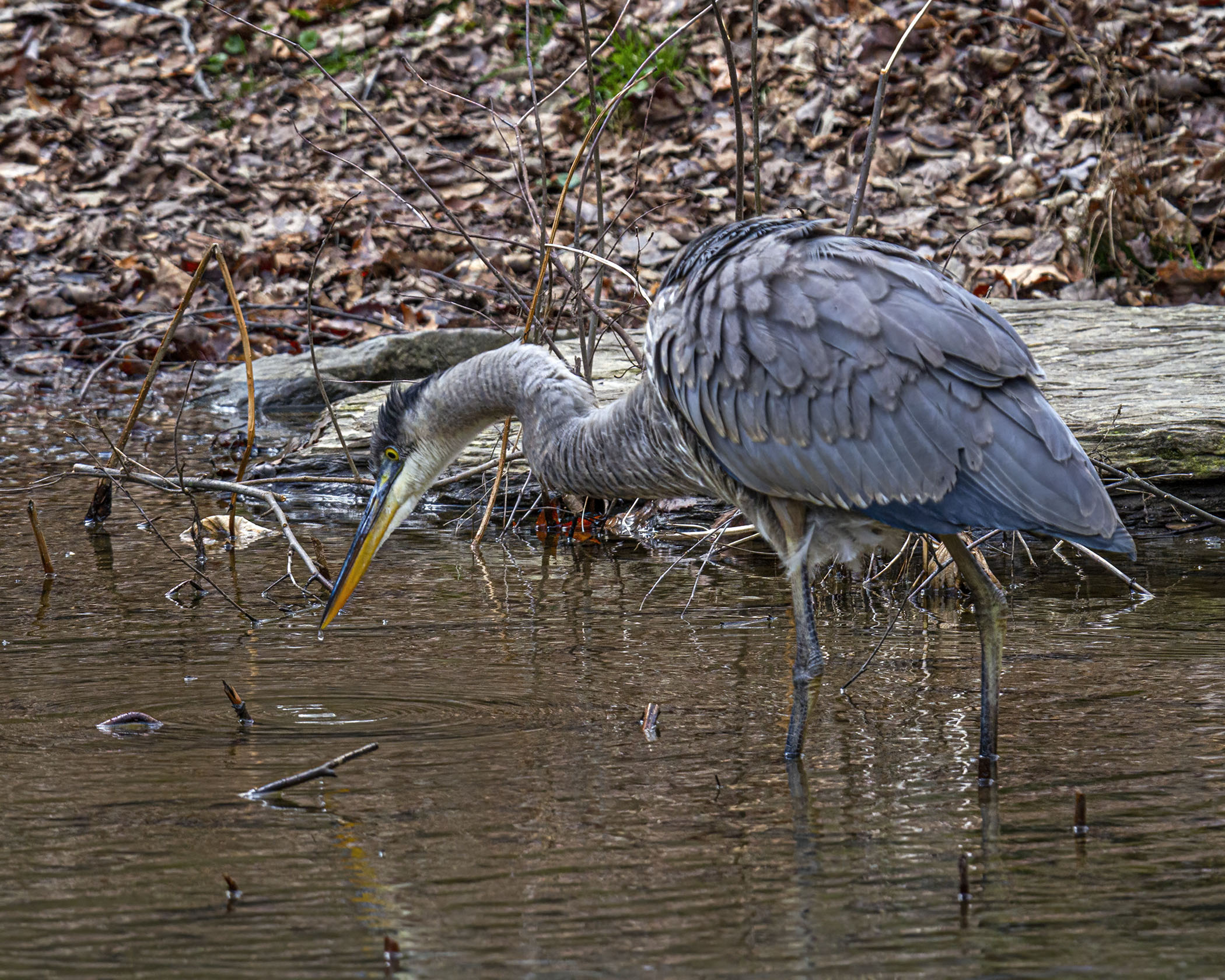
During a recent visit to Green Spring Gardens, a county-run historic garden in my area, I spotted a Great Blue Heron (Ardea herodias) that looked extra fluffy. I suspect that the heron had just fluffed up its feathers in an effort to stay warm.

Despite the cold weather, the heron was standing in the shallow water of a small, man-made pond, attempting to catch something to eat. The heron seemed to be carefully tracking some prey and plunged its beak into the water several times. During the time that I was observing it, however, the heron was unsuccessful in its fishing efforts.

Great Blue Heron

Great Blue Heron

© Michael Q. Powell. All rights reserved.

Read Full Post »

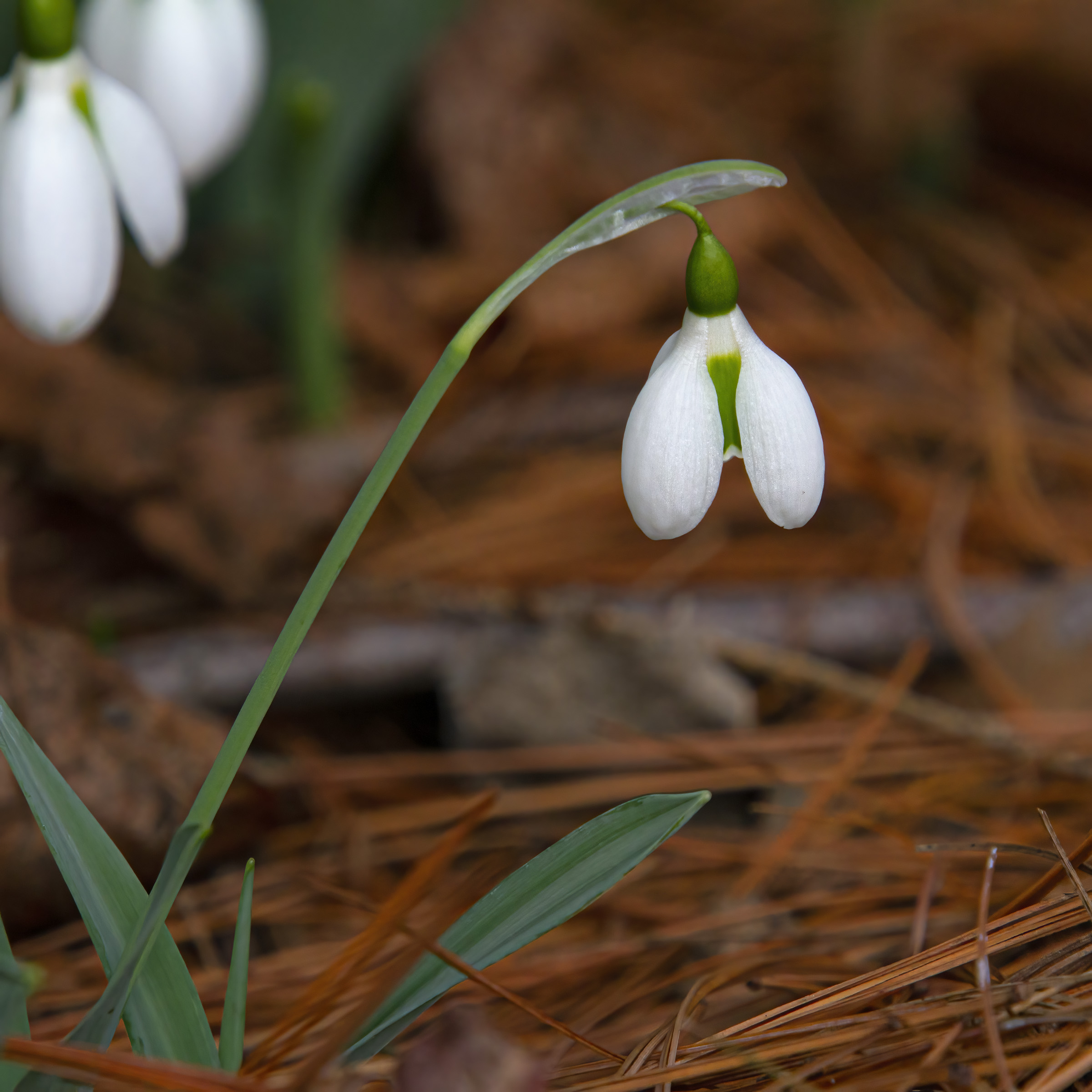
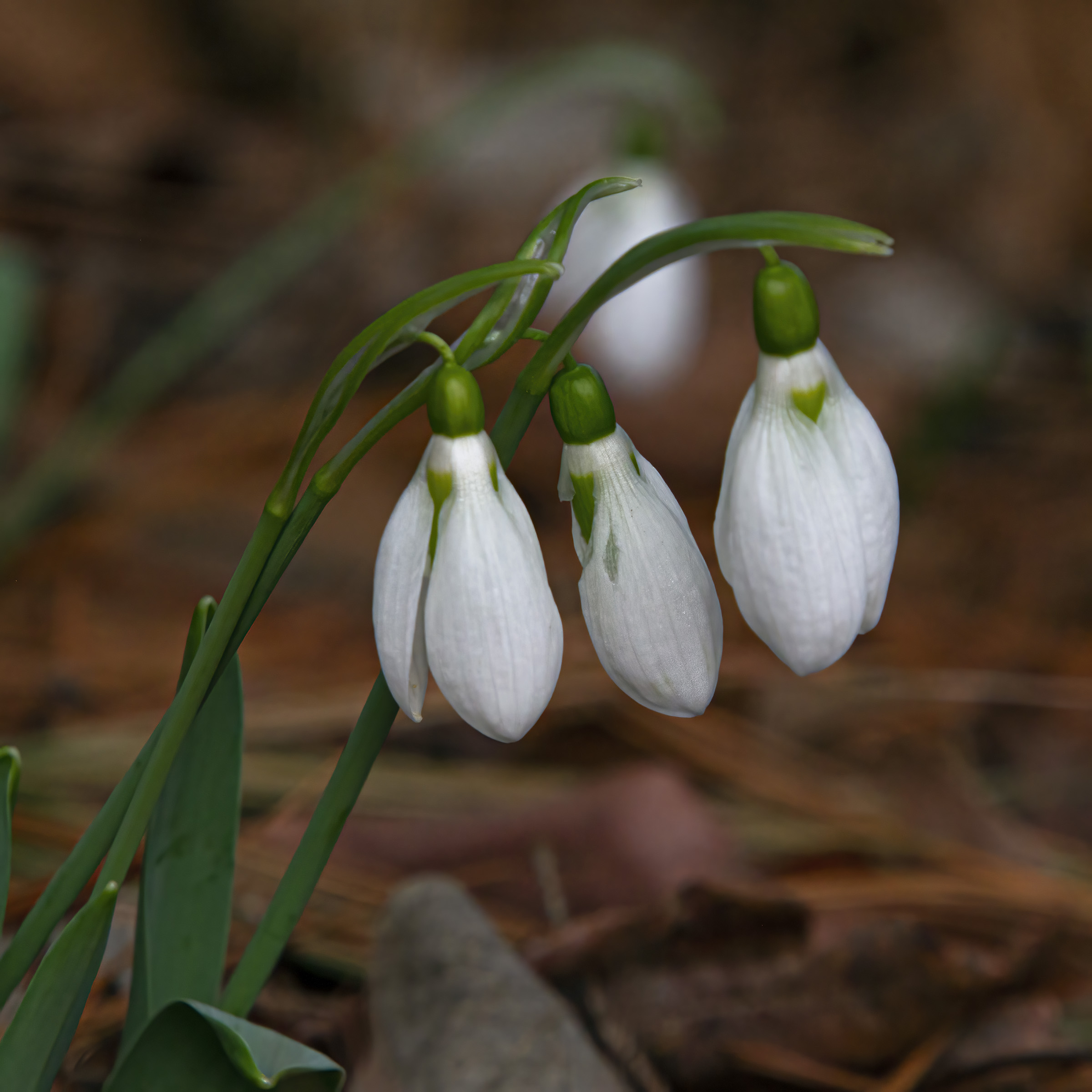
Although it may seem a little strange to make a trip to a garden to photograph flowers, I set off for Green Spring Gardens, a county-run historic garden last Friday. I suspected that snowdrops (g. Galanthus) would be in bloom and I was not disappointed. I spotted several large clusters of these small white flowers scattered throughout the garden beds.

Some years you can find snowdrops peeking out of a covering of snow, but we have not yet had any snow this winter. Instead I found the snowdrops poking out of the reddish-brown ground cover of fallen leaves and pine needles. I did not have my macro lens with me, but managed to get some decent close-up shots with my Tamron 18-400mm lens as well as an overview of one of the patches of snowdrops that I encountered.

When spring comes, I hope to see the somewhat similar-looking snowflake flower (g. Leucojum). The way that I usually tell them apart is to look at the individual petals. The snowdrop petals are pure white, but the petal of each of the snowflake flowers has a little green dot.


snowdrop

snowdrop

snowdrop

snowdrops

© Michael Q. Powell. All rights reserved.

Read Full Post »

I suspect that the species is gone for the season by now, but here are a couple of shots of a female Blue-faced Meadowhawk dragonfly (Sympetrum ambiguum) that I spotted at Occoquan Bay National Wildlife Refuge on 21 October 2022, before my trip to Texas. Many of the females are tan in color, like the one in these shots, which makes them hard to spot among the fallen leaves.  Some female Blue-faced Meadowhawks, however, are male-like in color, i.e. they are red, and are sometimes referred to as andromorphs.

Since my return from Texas, we have had cold temperatures that have often dipped below the freezing level. This week I will be out looking for some late season dragonflies. In the past I have sometimes seen Autumn Meadowhawks in November and occasionally even in December. It is quite possible, though, that I have seen my final dragonflies of the season and will switch to photographing birds most of the time.

Blue-faced Meadowhawk

Blue-faced Meadowhawk

© Michael Q. Powell. All rights reserved.

Read Full Post »

Last Sunday I encountered this young buck in the woods while I was exploring a trail in Bastrop, Texas. I think that we spotted each other about the same time and we eyed each other with curiosity. After the deer had checked me out, it slowly walked into the woods and disappeared from sight.

I believe that this is a Texas White-tailed Deer (Odocoileus virginianus texana). According to the Texas Parks and Wildlife website, there are estimated to be some three to four million white-tailed deer in the state.

Texas white-tailed deer

Texas white-tailed deer

© Michael Q. Powell. All rights reserved.

Read Full Post »

As I begin my final preparations for hitting the road for my long drive home, it somehow seemed appropriate to post this image of a Wandering Glider dragonfly (Pantala flavescens) that I spotted on Sunday in Bastrop, Texas. Wandering Gliders, also know as Globe Skimmers or Globe Wanderers, are considered to be the most widespread dragonfly on the planet, with a good population on every continent except Antarctica, although they are rare in Europe, according to Wikipedia.

My drive will be a bit over 1500 miles (2414 km), which sounds like a long distance to travel. However, Wandering Gliders “make an annual multigenerational journey of some 18,000 km (about 11,200 miles); to complete the migration, individual Globe Skimmers fly more than 6,000 km (3,730 miles)—one of the farthest known migrations of all insect species,” according to Wikipedia. Yikes!

Wandering Glider

© Michael Q. Powell. All rights reserved.

Read Full Post »

I spotted this unfamiliar dragonfly on 13 November in a meadow adjacent to the Colorado River in Bastrop, Texas. Its shape reminded me of the Swift Setwing (Dythemis velox) that I have seen in Northern Virginia, where I live, but its coloration looks more like that of photos of the Black Setwing (Dythemis nigrescens) that I discovered while doing some research.

Was I right? I have had some difficulties correctly identifying some of the dragonflies that I have seen in Texas, but in this case I was right. Setwing dragonflies perch in a distinctive pose with their wings pulled forward, which looked to some scientist like the “ready-set-go” position of a sprinter and is reportedly the reason for the name of the species. When I spotted this dragonfly, I immediately recognized that pose.

In a few hours,  I am starting my long drive back to Virginia from Texas. I suspect that I will not be doing any blog postings for the next few days. I have had a wonderful stay in Texas, with a beautiful wedding, a fun time dogsitting for two delightful dogs while the couple was away on their honeymoon, and plenty of time for exploring nature and extending my dragonfly season.

Black Setwing

© Michael Q. Powell. All rights reserved.


Read Full Post »

I was a little shocked to encounter this fuzzy little North American Opossum (Didelphis virginiana) yesterday while walking on a trail through the woods in Bastrop, Texas. The opossum, which is also known as a Virginia Opossum, was in the middle of the trail, walking slowly in my direction.

We spotted each other at about the same time, I think, and we both stopped and looked closely at each other. Fortunately I had the presence of mind to bring my camera up to my eye and take a few shots. Having decided that I was a potential threat, the opossum turned its back to me and slowly waddled into the underbrush, giving me a good look at its hairless tail.

opossum

opossum

© Michael Q. Powell. All rights reserved.


Read Full Post »

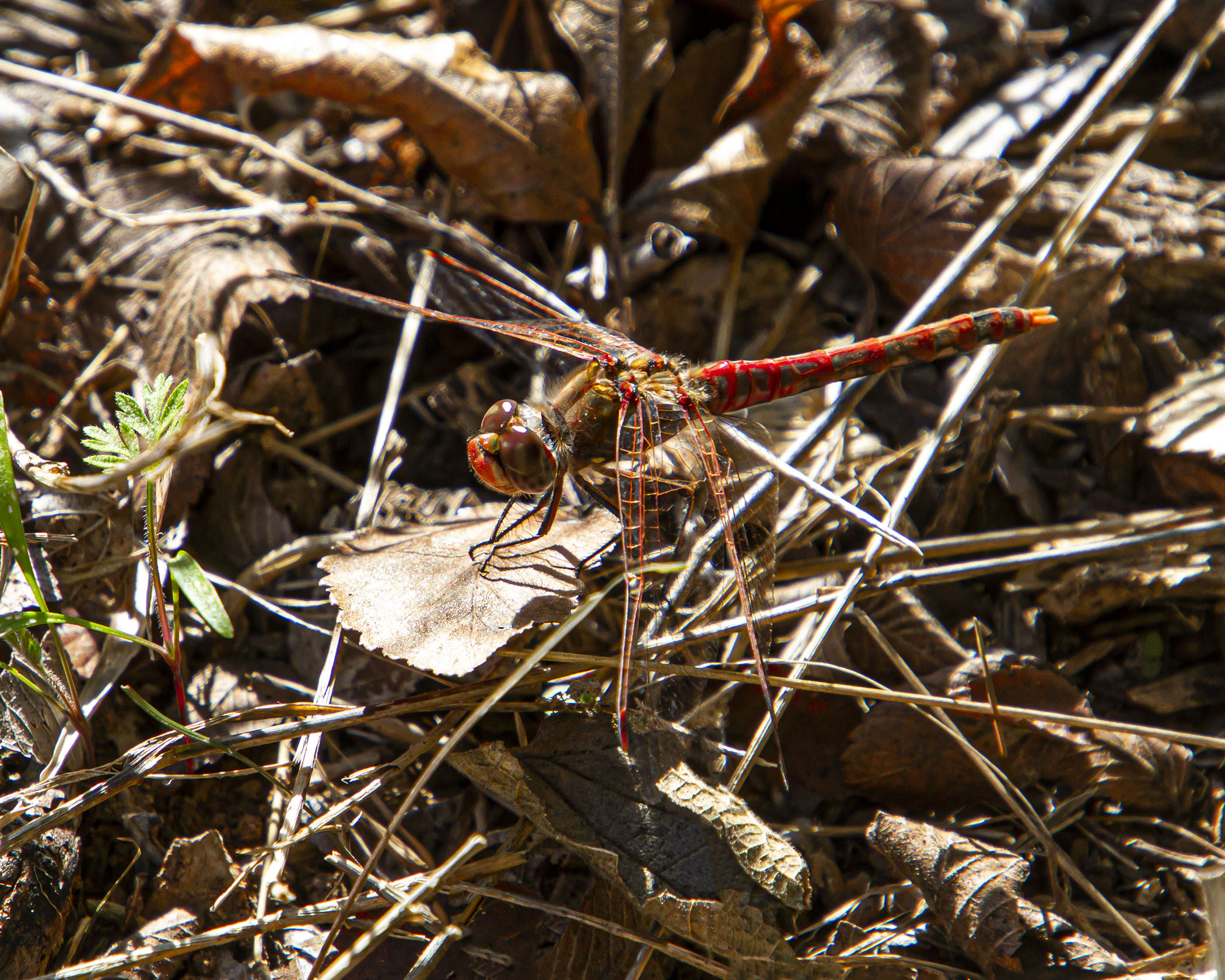
I am continuing to find cool-looking dragonflies here in Bastrop, Texas, including these handsome ones that I think are Variegated Meadowhawks (Sympetrum corruptum). I spotted them yesterday as I was exploring a meadow adjacent to the Colorado River.

The first two photos show the same dragonfly on two different perches. As you can see, this species, like other meadowhawk species, likes to perch low on the ground, which makes it tough to get a clear shot.

The coloration of this species is very similar to that of the Autumn Meadowhawk that I am used to seeing in Northern Virginia. However, the dark banding on the abdomen and the red veining on the wings are quite distinctive, leading me to judge that this may instead be a Variegated Meadowhawk.

The final photo shows an immature dragonfly. I am a little less confident of my identification of this one, but I think that it might be an immature Variegated Meadowhawk. I am used to the dragonflies in my home area and feel a lot less confident with my identifications when I am traveling.

Variegated Meadowhawk

Variegated Meadowhawk

Variegated Meadowhawk

© Michael Q. Powell. All rights reserved.

Read Full Post »

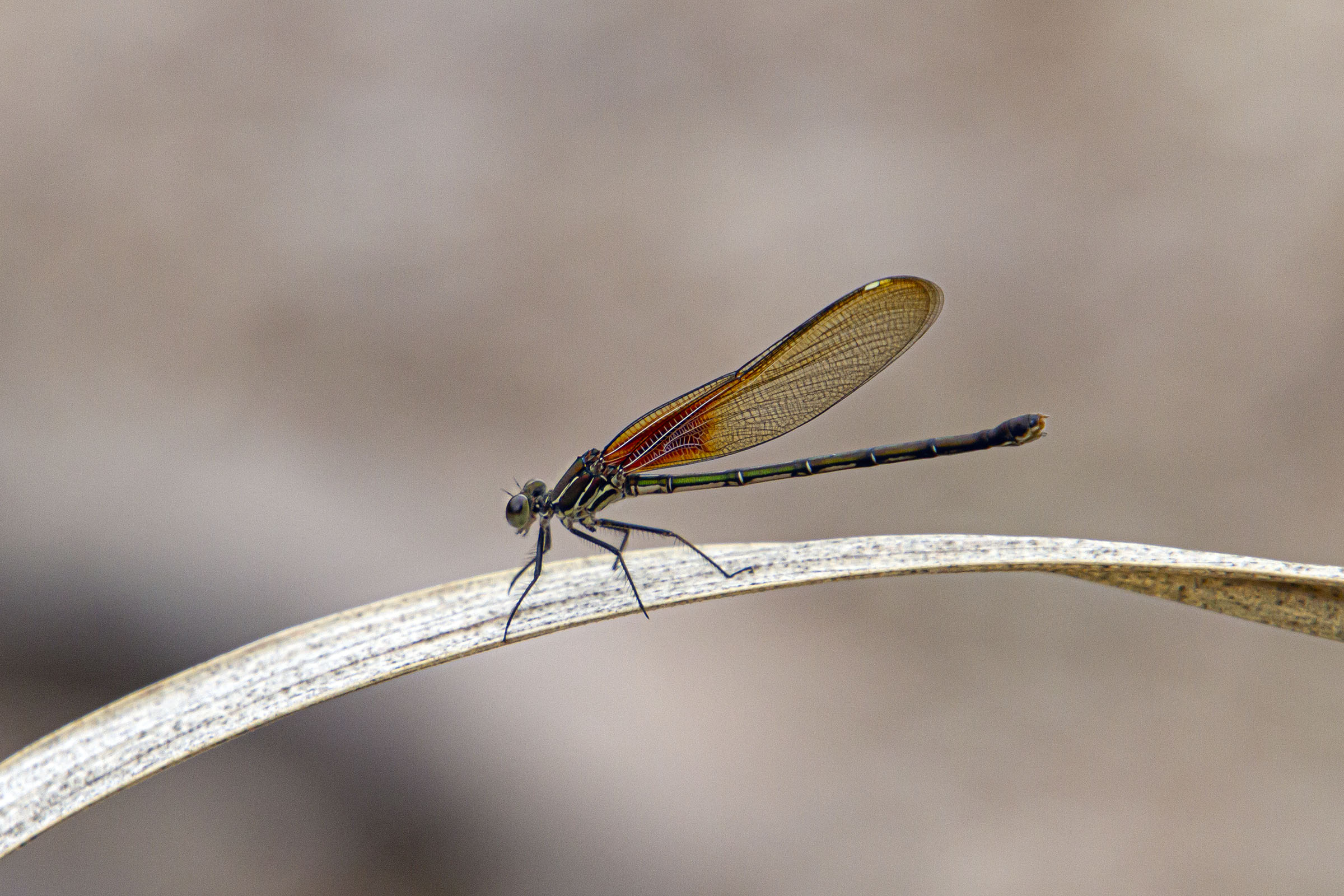
This past week I managed to get some more shots of American Rubyspot damselflies (Hetaerina americana) along the Colorado River in Bastrop, Texas. The sun was shining that day, unlike during my previous encounter with this species when the weather was overcast. This extra light helped to bring out the amazing colors and patterns on these spectacular damselflies.

The male in the first image displays well the bright ruby patch for which this species is named. Though they do not have such a distinctive red spot, the females in the second and third images are equally beautiful. I encourage you to click on the images to get a closer look at the wonderful details of these damselflies.

American Rubyspot

American Rubyspot

American Rubyspot

© Michael Q. Powell. All rights reserved.

Read Full Post »

I have always admired photos of Roseate Skimmers (Orthemis ferruginea), a spectacular dragonfly species in which mature males are bright pink in color. There have been a handful of sighting over the years of Roseate Skimmers at one of the parks I visit in Northern Virginia, but until last week I had never seen one.

A little over a week ago, when I spotted the dragonfly in the first photo, I knew almost immediately that it was a Roseate Skimmer, because of the shockingly pink color of its body. Later that day and on a subsequent walk along the Colorado River in Bastrop, Texas, I spotted other Roseate Skimmers, but did not realize that was what they were until much later.

Why did I have such trouble with their identification? When it comes to dragonflies, mature males tend to be brighter in color and have more distinctive markings than their female counterparts that have drab colors that are somewhat similar across species. Additionally, immature males often have the same coloration as the females.

So, when I posted the second photo below in an earlier posting and thought is might be a Variegated Meadowhawk, I was absolutely wrong. According to some experts in Facebook groups and at Odonata Central, the dragonfly is an immature male Roseate Skimmer.

The dragonfly in the final photo is a female Roseate Skimmer that I photographed a few days ago. Note how the coloration is similar to that of the dragonfly in the second photo. How do you tell them apart? If you look closely at the terminal appendages at the end of the abdomen (the “tail”) of the two dragonflies, you should be able to see that they are quite different in shape. Most often, those terminal appendage are key in distinguishing immature male dragonflies from females.

In a few days I will be heading home from Texas. It has been fascinating to see quite a few dragonflies, some of which have been new for me. Even here, though, I suspect that the season may be coming to a close soon. Earlier in the week temperatures were in the mid-80’s (29 degrees C), but I awoke this morning to a temperature of 41 degrees (5 degrees C) and we will drop even closer to the freezing level over the next couple of days.

Roseate Skimmer

Roseate Skimmer

Roseate Skimmer

© Michael Q. Powell. All rights reserved.

Read Full Post »

I have been a bit befuddled by the dragonflies that I have seen here in Bastrop, Texas and have misidentified about half of them. I was therefore delighted on Wednesday when I managed to get a few shots of a familiar species—a Common Green Darner.

The Common Green Darner dragonfly (Anax junius) had been patrolling overhead and I managed to track it when it came down to earth and perched low in the vegetation. I only had a little latitude in trying to frame my shot, because I know from experience that Common Green Darners can be very skittish. I varied my angle a little between shots by moving slightly, but most of the shots ended up looking pretty similar.

Common Green Darners are a migratory species and are one of the most common and abundant dragonfly species in North America. I love the beautiful colors of this species and am happy when I can get a shot, like the first one, in which you can see the bullseye marking on the “nose” of the dragonfly.

Common Green Darner

Common Green Darner

© Michael Q. Powell. All rights reserved.

Read Full Post »

Yesterday I spotted this really cool-looking dragonfly as I was exploring a meadow area beneath some power lines just off a trail along the Colorado River in Bastrop, Texas. My primary purpose for coming to Texas was to participate in a wedding last Saturday, but I am staying a few extra days to watch the couple’s two dogs while they are away on their honeymoon.

In a recent post, I featured photos of some dragonflies that I had spotted here in Bastrop last week. I identified one as a Russet-tipped Clubtail, a species I am used to seeing, but when I posted a photo in Odonata Central, an expert informed me that it was a female Narrow-striped Forceptail dragonfly (Aphylla protracta)

I believe that the dragonfly in this image is from that same species, possibly a male. I am not at all familiar with forceptail dragonflies, so I can’t tell if the terminal appendages (the “tail”) are the right shape. Whatever its identity, I love the image that I managed to capture of this beautiful dragonfly as it was briefly perching.

Narrow-striped Forceptail


© Michael Q. Powell. All rights reserved.

Read Full Post »

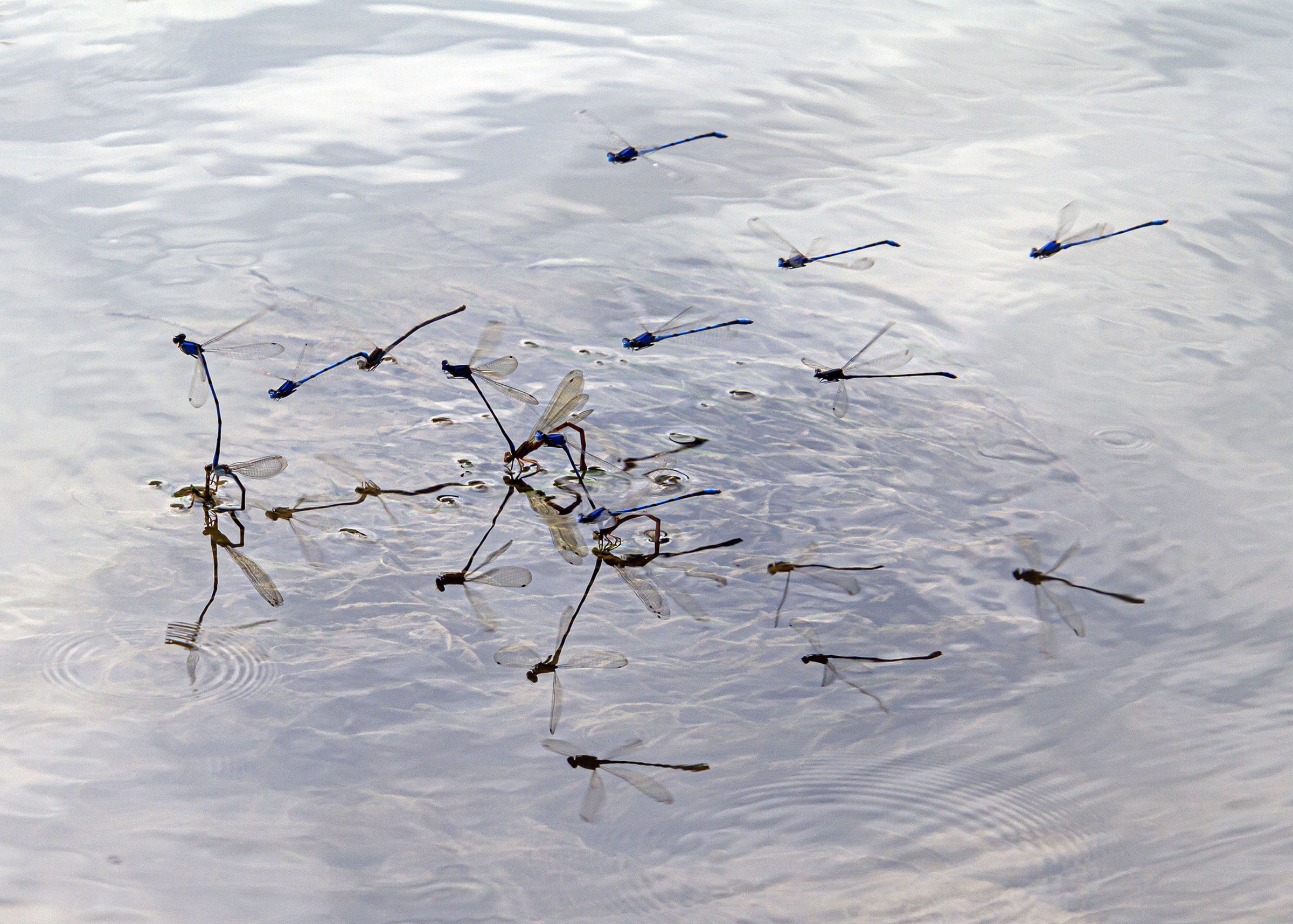
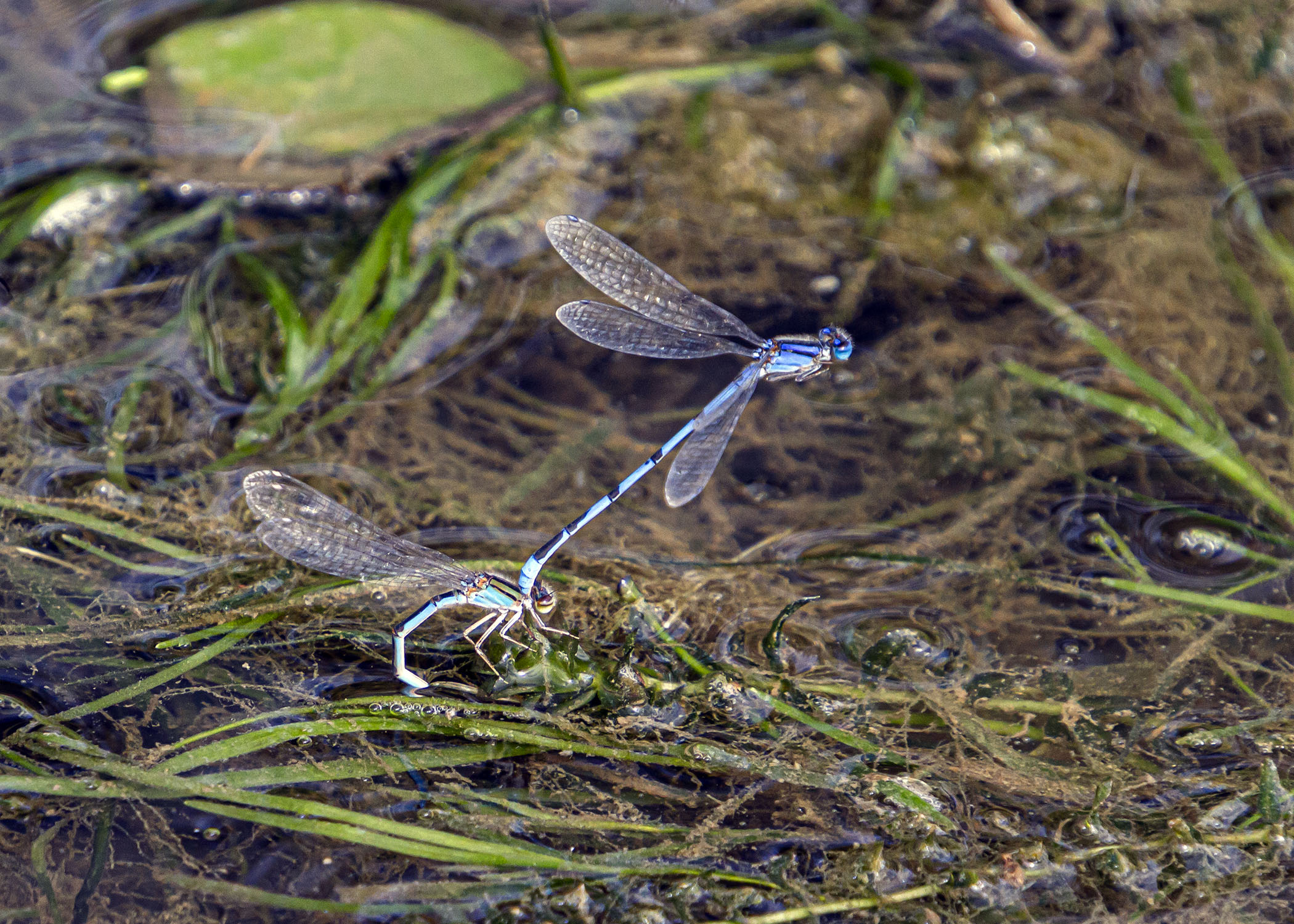
I don’t know what was so special about this spot on the Colorado River in Bastrop, Texas, but lots of couples in tandem as well as some single damselflies were concentrated in one small area last week. I love the way that the reflections in the water of the various flying damselflies makes it look like there were twice as many damselflies as were actually present.

The couple in the second image found a somewhat more private spot where the female can deposit her eggs underwater in the vegetation, while the male continues to grasp her head.

damselflies

damselflies

© Michael Q. Powell. All rights reserved.


Read Full Post »

I spotted this colorful Gulf Fritillary butterfly (Agraulis vanillae) perched on a cactus last week as I was exploring some trails along the Colorado River in Bastrop, Texas. This is the kind of shot that it would be impossible to capture in my home area, since neither the butterfly nor the cactus is found in the wild in Virginia.

Gulf  Fritillary

© Michael Q. Powell. All rights reserved.

Read Full Post »

Here are a couple of shots of what I believe are American Snout butterflies (Libytheana carinenta) that I spotted on 2 November in Bastrop, Texas. Although you can’t see the butterfly very well in the first shot, I really like the “artsy” feel of the image. The second shot has a completely different feel to me, perhaps because of the coolness of the green background vice the warmth of the yellow in the first image.

American Snout

American Snout

© Michael Q. Powell. All rights reserved.

Read Full Post »

Last Wednesday, 2 November, I took a walk along the Columbia River in Bastrop, Texas, not far from where I am staying, and was delighted to spot a number of different dragonflies. As I have found in the past, it is difficult to identify dragonflies (and birds) when I am outside of my home area. Sometimes the species are the same, but there may be regional variations. At other times, though, I have found species that are not present at all where I live.

The dragonfly in the first image looks like a female Russet-tipped Clubtail (Stylurus plagiatus), but I must admit that I am not very confident about that call. In the second, the dragonfly looks a bit like a female Eastern Ringtail (Erpetogomphus designatus). When it comes to the third dragonfly, I am not sure that I can even make a guess, other than the fact that it looks like some kind of skimmer.

It was really nice to extend my dragonfly season by traveling briefly to a warmer southern location. By early November, there will only a few dragonflies left in Northern Virginia when I return home next week.

Russet-tipped Clubtail

Eastern Ringtail

Eastern Ringtail dragonfly

© Michael Q. Powell. All rights reserved.

Read Full Post »

I was delighted on Tuesday to spot some damselflies along the edge of the Colorado River in Bastrop, Texas. I believe that they are American Rubyspot damselflies (Hetaerina americana), with a female in the first photo and males in the other two photos.

Normally I prefer natural perches vice manmade ones when photographing wildlife, but I really like the texture and color of the rusty corrugated drainage pipe on which the damselfly chose to perch for the final photo.

American Rubyspot

American Rubyspot

American Rubyspot

© Michael Q. Powell. All rights reserved.


Read Full Post »
I was thrilled yesterday afternoon to spot this Barred Owl (Strix varia) as I was walking on a trail along the Colorado River in Bastrop, Texas, within walking distance of my friends’ house where I am staying. The owl  appeared to be busy eating something when I first spotted it, as you can see in the second photo below, and may have been a little distracted.

I am not at all certain what was in owl’s mouth. Any ideas?

Barred Owl

Barred Owl

© Michael Q. Powell. All rights reserved.

Read Full Post »

On Thursday I visited Shenandoah National Park with a friend and we drove a section of Skyline Drive to see the colorful fall foliage. I love the patchwork pattern of colors that we observed on the slopes of the  mountains. The predominant color seemed to be a bright rusty orange, with only small patches of bright yellow and red. In some directions, the sky was hazy, so the successive layers of mountains gradually faded out, as you can see in the final photo.

My blog posting schedule will be a little erratic during the next two to three weeks. I will be driving from Virginia to Texas for a wedding and don’t expect that I will be doing any posting on the days when I will be traveling. I hope that I will be able to do a few postings while I am in Texas—I will be just outside of Austin for about a week or maybe a little longer.

Shenandoah National Park

Shenandoah National Park

Shenandoah National Park

© Michael Q. Powell. All rights reserved.


Read Full Post »

« Newer Posts - Older Posts »