Feeds:
Posts
Comments

Posts Tagged ‘Tamron 150-600mm’

The foliage partially blocked my approach to this Bald Eagle (Haliaeetus leucocephalus) this past Tuesday at Occoquan Bay National Wildlife Refuge and I was able to sneak up pretty close to it. In fact, I was standing almost directly below the tree in which the eagle was perched when I captured the second shot. Although my view was partially obstructed, I was thrilled to capture these images of this majestic bird.

Bald Eagle

Bald Eagle

© Michael Q. Powell. All rights reserved.

Read Full Post »

The female Belted Kingfisher (Megaceryle alcyon) that I spotted last Friday at Huntley Meadows Park was too quick and too far away for me to photograph in flight when she took off several times to try to catch a fish. I did manage, though, to capture a short sequence of shots when she was returning to her perch after an unsuccessful attempt. Unlike many birds that would have approached the perch horizontally, the kingfisher came up out of the water vertically, appearing almost to levitate as she rose to her perch.

Normally I lead a blog post with my favorite or my best image, but this time I decided to leave the shots in the correct time sequence. The middle image in which the kingfisher was fully spread her wings is my clear favorite of the three, though I like the way that each shot shows the different body and wing positions as she stuck her landing–I would give her a perfect score of 10.


Belted Kingfisher

Belted Kingfisher

Belted Kingfisher

© Michael Q. Powell. All rights reserved.

Read Full Post »

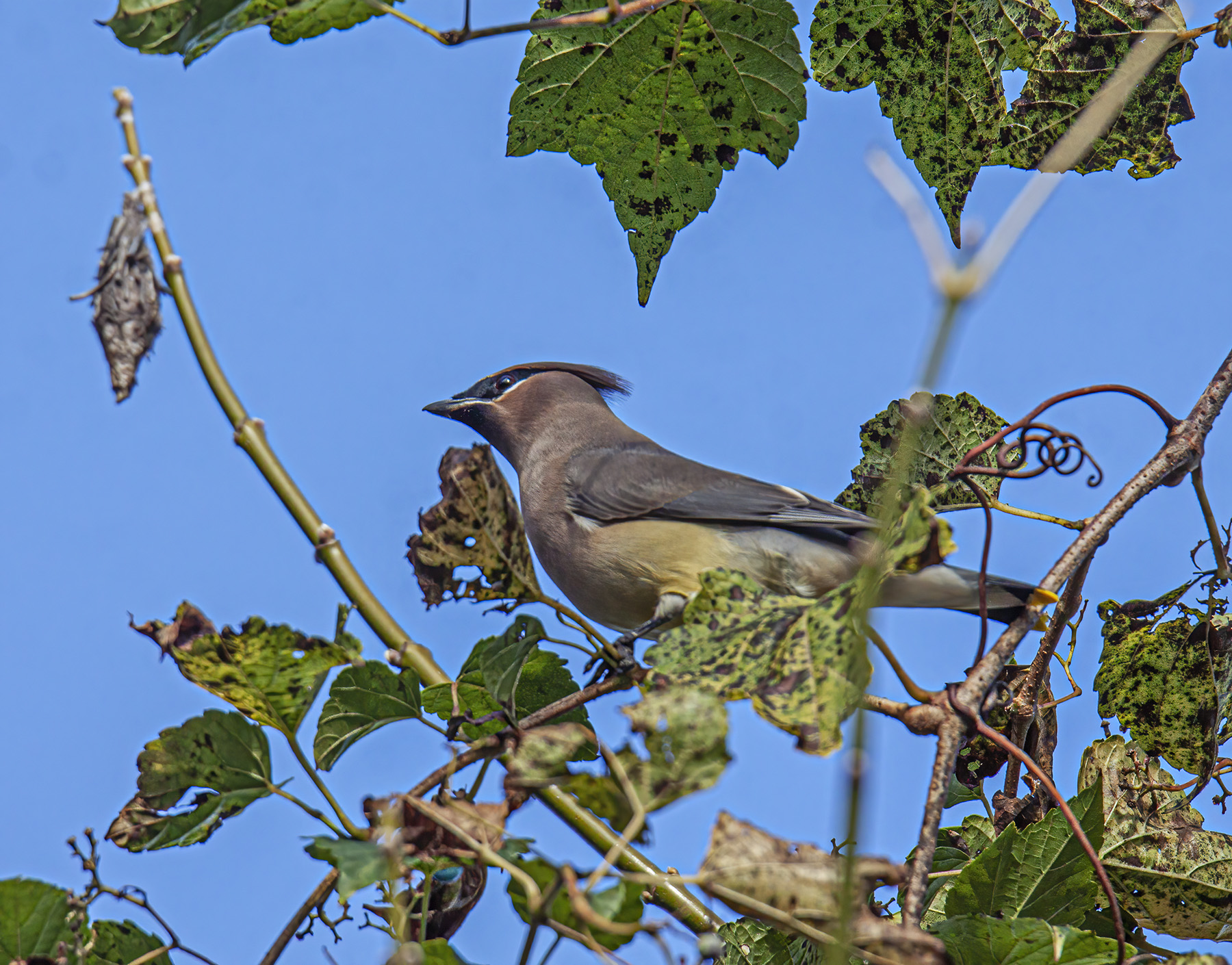
Many birds are pretty, but few are as sleek and stylish as Cedar Waxwings (Bombycilla cedrorum). I love their rakish black masks, slicked-back hair, and yellow-tipped tails.

I spotted a small flock of these wonderful birds on Tuesday at Occoquan Bay National Wildlife Refuge, acrobatically snagging berries high in the trees. In the final photo, a Cedar Waxwing was upside-down as it reached for some colorful porcelain berries, a plant that is considered an invasive species in our area.

Cedar Waxwing

Cedar Waxwing

Cedar Waxwing

© Michael Q. Powell. All rights reserved.

Read Full Post »

Normally when I see a Bald Eagle (Haliaeetus leucocephalus) catch a fish, it is a grab-and-go affair. The eagle reaches out with extended talons, pulls the fish from the surface of the water, and keeps flying.

Yesterday at Occoquan Bay National Wildlife Refuge, the scene was quite different. I spotted an eagle flying low over the water and watched as the eagle went deep into the water feet-first. I was shocked when the eagle was briefly submerged. It made multiple unsuccessful attempts to lift itself out of the water before it ultimately managed to fly away.

What was the problem? I have heard of cases when the eagle snagged a fish that was too heavy to lift. I have also seen videos of eagles swimming to shore with large fish. This eagle was far from shore, so that was not really an option here. I wonder if perhaps the fish was stuck in vegetation and the eagle had somehow gotten its talons entangled. As I look at the final photo, I am not able to tell if the eagle has its prey, but by the time the eagle was airborne, the talons were empty.

Bald Eagle

Bald Eagle

Bald Eagle

© Michael Q. Powell. All rights reserved.

Read Full Post »

When I caught a glimpse of the body of this bird at Occoquan Bay National Wildlife Refuge last week, I initially thought it was some kind of sparrow. However, even though I was shooting into the light, I could see that its head was read. What could it possibly be?

Some experts in a Facebook birding forum informed me that it is an immature male House Finch (Haemorhous mexicanus). According to Wikipedia, this species was originally only a resident of Mexico and the southestern United States. It was introduced to eastern North America in the 1940s when the birds were sold illegally in New York City as “Hollywood Finches.” To avoid prosecution under the Migratory Bird Treaty Act of 1918, vendors and owners released the birds into the wild and they have since become naturalized in largely unforested land across the eastern U.S.

House Finch

© Michael Q. Powell. All rights reserved.

Read Full Post »

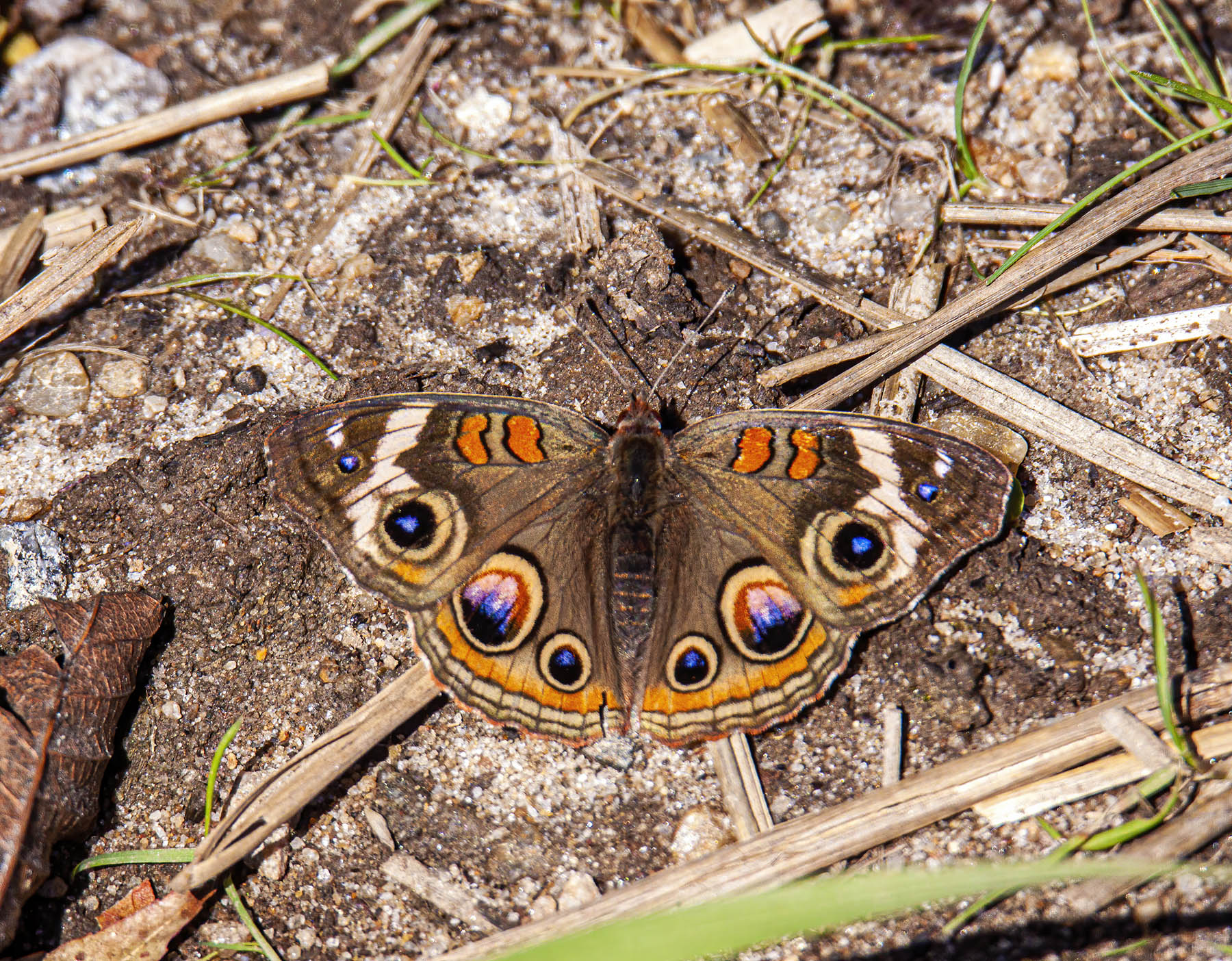
There are still a few butterflies flying around, like this beautiful Common Buckeye (Junonia coenia) that I spotted last week at Occoquan Bay National Wildlife Refuge. Unlike most other butterflies that I have seen late in the season that were faded and tattered, this one seemed to be in perfect condition. As several of my Facebook friends noted, there is nothing “common” about the beauty of this butterfly.

Common Buckeye

© Michael Q. Powell. All rights reserved.

Read Full Post »

As I was exploring in Huntley Meadows Park last Friday, I heard the unmistakeable rattling call of a kingfisher. After a bit of searching, I located this female Belted Kingfisher (Megaceryle alcyon) on a perch high above an osprey nesting platform jutting out of the water. I watched and waited and eventually kingfisher flew down from the perch in an attempt to catch a fish.

The kingfisher was successful and returned to the perch with a sizable fish. The first challenge for the kingfisher was to subdue the fish and it beat the fish repeatedly against the perch. At the same time it adjusted the fish in order to swallow the fish headfirst, in the same way that a great blue heron does. In the second image, you can see that the kingfisher has maneuvered the fish into almost the proper position.

I am a bit more used to watching ospreys and eagles consume fish, which they accomplish by tearing away pieces of the fish with their sharp beaks while holding down the fish with their equally sharp talons. Kingfishers have differently-shaped bills and talons, so they have to swallow their fish in a single gulp.

The kingfisher has little margin for error as it makes its forceful movements while balancing itself on a narrow perch high above the water. The final photo shows that mistakes can happen—the fish slipped out of the kingfisher’s bill when she lifted her head upwards to swallow it.

I am able to happily report that the kingfisher was able to fly down to the water, retrieve the fish, and eventually consume it. As always, I encourage you to double-click on the images to get a closer look at the wonderful details of the photos.

Belted Kingfisher

Belted Kingfisher

Belted Kingfisher

© Michael Q. Powell. All rights reserved.

Read Full Post »

This Eastern Bluebird (Sialia sialis) was totally focused on a single remaining berry when I spotted it last Wednesday at Occoquan Bay National Wildlife Refuge. The “prize” seems modest, but this little bird was determined. I believe it was successful in achieving its goal.

Eastern Bluebird

© Michael Q. Powell. All rights reserved.

Read Full Post »

In addition to the large raft of American Coots (Fulica americana) that I spotted in the waters off of Occoquan Bay Wildlife Refuge last week and featured in a posting entitled A raft of coots, I also saw three coots near to the shore swimming around in a little circle like they were lost. I do not know if they had somehow gotten separated from the group, but they struck me as being very vulnerable—as several readers have noted, coots are vulnerable to being picked off by bald eagles.

This close-up shots highlight some of the notable characteristics of this species, including their red eyes and their legs that are placed rather far back on their bodies, making walking a bit of a challenge.

American Coot

© Michael Q. Powell. All rights reserved.

Read Full Post »

It is a bit of a cliché, but I have to admit that bluebirds really do make me feel happy. I was therefore absolutely delighted to spot a small flock of them flitting in and out of the vegetation on Wednesday at Occoquan Bay National Wildlife Refuge. The rusty color on the breasts of these Eastern Bluebirds (Sialia sialis) fit in well with the fall foliage palette.

These three images show different approaches I used in trying to capture images of these beautiful little birds. Sometimes I tried to take shots when the blue birds were almost imbedded in the vegetation; sometimes I tried to get an unobstructed angle with the natural landscape providing a visual backdrop for the bird; and sometimes I tried to isolate the bird and use an uncluttered background such as the sky in the final photo.

I am not sure that any of these three approaches is necessarily better than the others. Instead I personally like the visual variety that comes from using somewhat different approaches when shooting a subject. What do you think?

Eastern Bluebird

Eastern Bluebird

Eastern Bluebird

© Michael Q. Powell. All rights reserved.


Read Full Post »

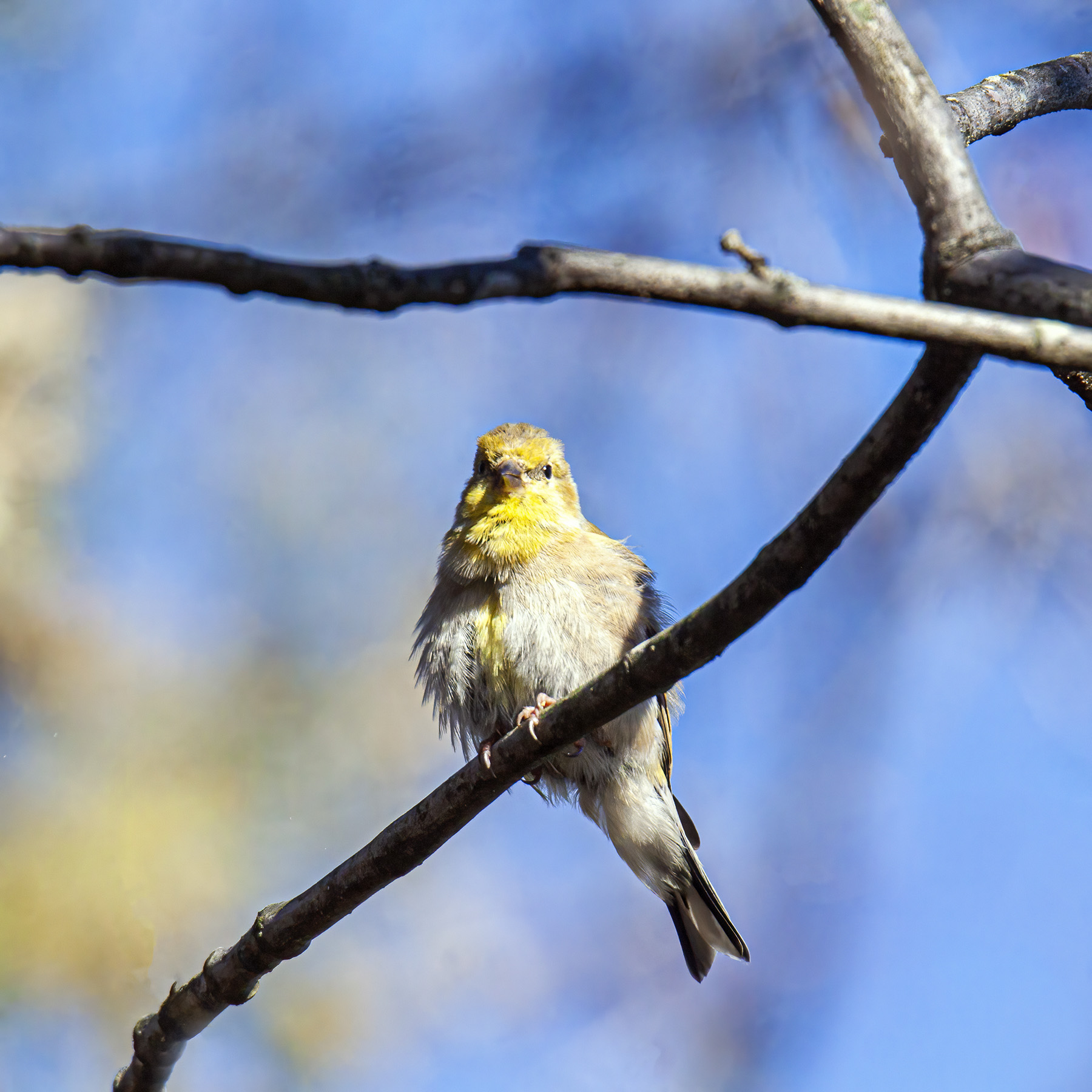
I was happy to spot this somewhat scruffy looking American Goldfinch (Spinus tristis) as I wandered the trails at Occoquan Bay National Wildlife Refuge yesterday seeking a respite from election news coverage. As is often the case, nature served as a soothing balm to calm my anxieties and reestablish my internal balance.


American Goldfinch

American Goldfinch

© Michael Q. Powell. All rights reserved.


Read Full Post »

I was excited to spot this beautiful Palm Warbler (Setophaga palmarum) last Friday at Occoquan Bay National Wildlife Refuge. I had more or less given up on seeing any warblers except for Yellow-rumped Warbler, which will remain with us for a while, so this was a pleasant surprise. The little bird was full of energy and shortly after it leaned forward a little, as you can see in the second image, it flew to a more distant part of the field in which it was foraging.

Palm Warbler

Palm Warbler

© Michael Q. Powell. All rights reserved.

Read Full Post »

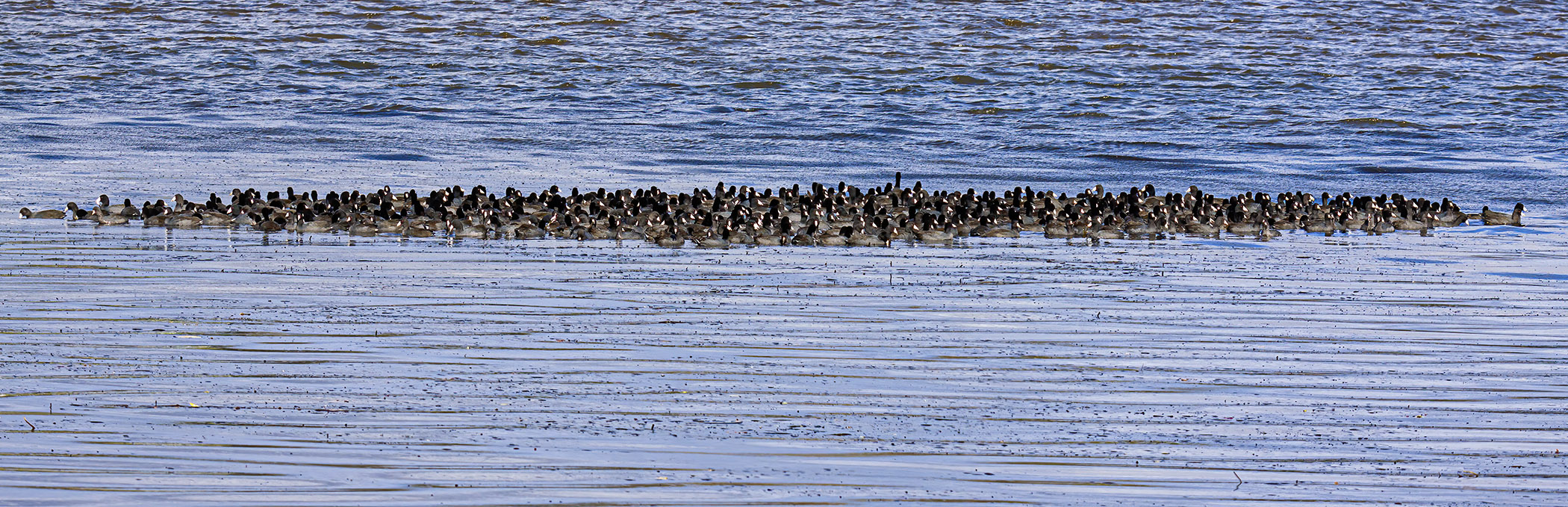
Normally when I see American Coots (Fulica americana) I see only a few of them at a time, but last Friday I spotted a whole raft of them in the waters off of Occoquan Bay National Wildlife Refuge. They seemed to be of mixed ages, not just old coots like me.

I zoomed out with my 150-600mm lens to capture the whole raft and then zoomed in to capture some details. I recommend that you double-click on the images, especially the second one, to see wonderful details, like all of the red eyes. There seem to be a number of different colored beaks in the group, suggesting the possibility that there are some other species mixed in, though it appears to be mostly coots.

American Coots

American Coots

© Michael Q. Powell. All rights reserved.

Read Full Post »

I spotted this bird from a distance on Friday at Occoquan Bay National Wildlife Refuge when it was perched and when it took to the air. The tail struck me as being exceptionally long and the wings seemed relatively short in length, so I decided it was probably not a Red-shouldered Hawk or a Red-tailed Hawk, the two most common hawks where I live. Was it a falcon or one of the smaller hawks?

As I usually do in situations like this, I asked for help in a Facebook group devoted to birding in Virginia. Some experts there identified this as a mature Cooper’s Hawk (Accipiter cooperii). The Cornell Lab of Ornithology described the species with these words, “Among the bird world’s most skillful fliers, Cooper’s Hawks are common woodland hawks that tear through cluttered tree canopies in high speed pursuit of other birds…Finding a Cooper’s Hawk is typically a matter of keeping your eyes peeled – they’re common but stealthy, and smaller than other common hawks like the red-tailed, so your eye might skip over them in flight.”

Cooper’s Hawks are about the size of crows, although males are significantly smaller than their mates. Mating can therefore be a tricky proposition for a male Cooper’s Hawk, given that females Cooper’s Hawks specialize in eating smaller birds.

Cooper's Hawk

Cooper's Hawk

© Michael Q. Powell. All rights reserved.


Read Full Post »

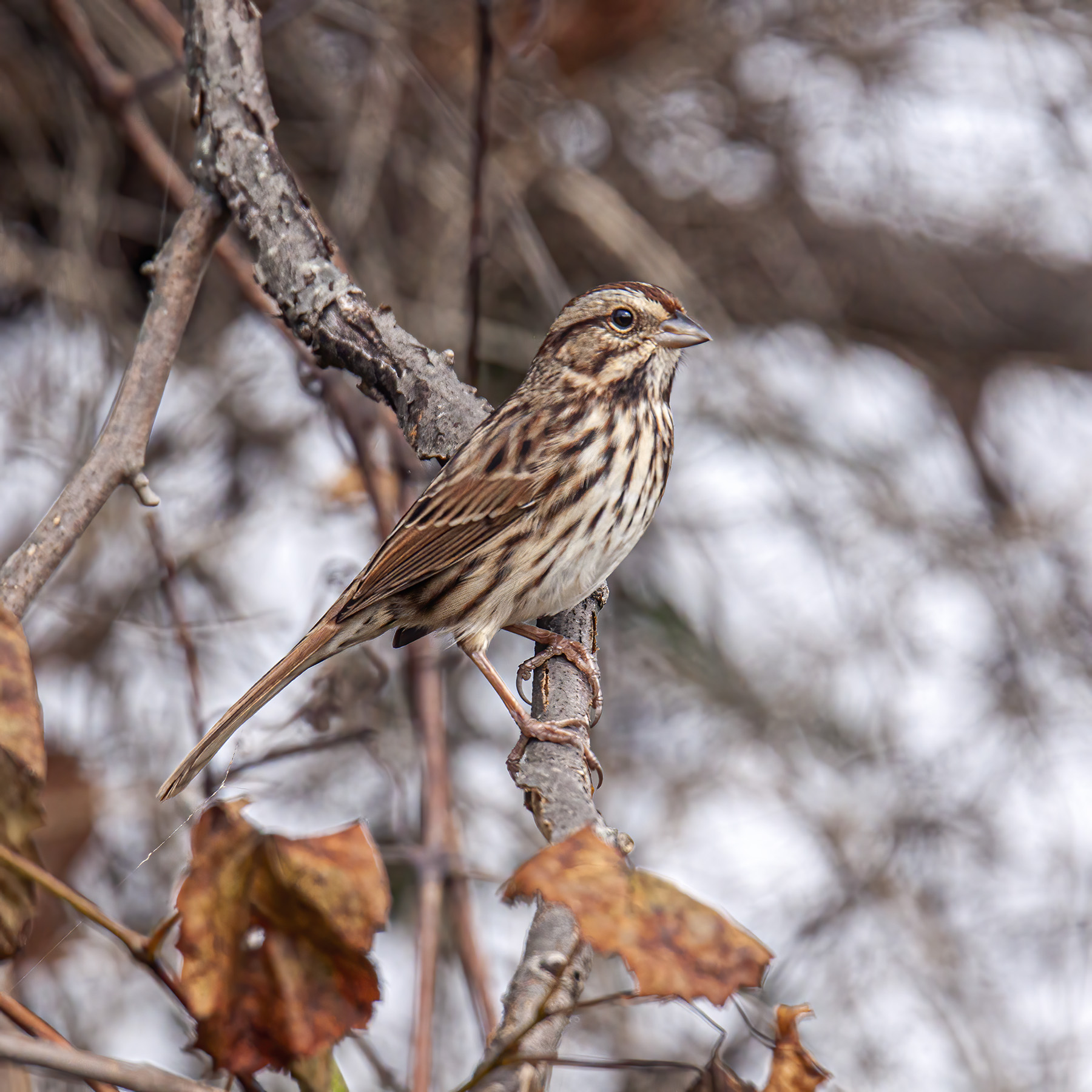
When I first started photographing birds, all sparrow looked the same to me—they were all nondescript little brown birds. Over time I have come to appreciate the subtle variations in color and markings that help to differentiate the species, although identification is still a bit of a hit-or-miss proposition for me.

I spotted this handsome sparrow on Monday as I was exploring at Occoquan Bay National Wildlife Refuge. I believe that it is a Song Sparrow (Melospiza melodia), one of the relatively common sparrow species where I live. I really like the sparrow’s perch and the fact that it includes some of the dried leaves that will soon be falling from the branch. The white skies in the background give this image an almost wintry feel, though it is way too early for me to be even thinking of snow.

Song Sparrow

© Michael Q. Powell. All rights reserved.

Read Full Post »

It is hard to appreciate the length of the wings of a Great Blue Heron (Ardea herodias) when it is standing in the water. When it takes off, however, the heron extends its wings fully and the sight is amazing, especially when the heron is flying away from you. This Great Blue Heron that I spotted on Monday at Occoquan Bay National Wildlife Refuge initially was standing on a small sandbar, but took to the air when it detected my presence. It started out heading away from me and gradually turned to my right as it gained altitude.

In case you are curious, the wingspan of a Great Blue Heron is 65.8-79.1 inches (167-201 cm), according to the Cornell Lab of Ornithology website. Wow!

Great Blue Heron

Great Blue Heron


Great Blue Heron

© Michael Q. Powell. All rights reserved.


Read Full Post »

With Halloween on the horizon, I thought I would share an image today of a Rusty Blackbird (Euphagus carolinus) that I spotted on Monday at Occoquan Bay National Wildlife Refuge. The bird’s wide-open pale eyes give it an eerie look that fits in well with other Halloween icons like black cats, witches, and skeletons.

According to the Cornell Lab of Ornithology website, “Rusty Blackbird is one of North America’s most rapidly declining species. The population has plunged an estimated 85-99 percent over the past forty years and scientists are completely puzzled as to what is the cause.” Needless to say, I was thrilled to see this Rusty Blackbird that appeared to part of a small flock high in the trees.

Rusty Blackbird

© Michael Q. Powell. All rights reserved.

Read Full Post »

On Monday at Occoquan Bay National Wildlife Refuge I spotted Yellow-rumped Warblers (Setophaga coronata) multiple times.  However, there is a huge difference between getting a glimpse and getting a shot of one of these hyperactive little birds, particularly when many of the trees still have their leaves.

I captured the first image when one of the warblers was feasting on clusters of poison ivy berries. I definitely was not complaining when he did not offer to share his “treats.” I was surprised to learn several years ago that these berries are a primary food source for a number of small birds during the winter months.

In the second image, I believe the warbler was getting ready to move to a new perch or may have just arrived at this one. In either case, I think it looks pretty cool to see the one wing partially extended.

The composition of the final photo is the simplest—it is just a shot of the perched warbler. However, I really like the way that some of the foliage shows through in the blurry background. You may have noted that the backgrounds are light-colored. On the day when I took these shots, the skies were completely overcast and appeared to be a solid white.


Yellow-rumped Warbler

Yellow-rumped Warbler

Yellow-rumped Warbler

© Michael Q. Powell. All rights reserved.

Read Full Post »

Some birds are with us for only a season or two before they migrate to new locations. Great Blue Heron (Ardea herodias), however, stay in our area throughout the year and I can generally find one if I look hard enough. When I spotted this one recently at Huntley Meadows Park, it was perched on a single leg on a wood pile near the edge of the forest.

The heron was in the process of preening and if you look closely, you can see what I think are tiny feathers in its long bill. I noticed that the heron’s eyeswere only half-open, almost like the heron was still half-asleep as it prepared for the new day.

Great Blue Heron


© Michael Q. Powell. All rights reserved.

Read Full Post »

The end of the season has come for most species of dragonflies, with only a few hardy survivors still flying. However, I am delighted that to note that I am still seeing plenty of Autumn Meadowhawk dragonflies (Sympetrum vicinum) and expect to continue see them for at least a number of months. For me, the appearance of these bright red dragonflies is one of the signs of the change of the seasons.

I love trying to capture images of Autumn Meadowhawks perching on colorful fall foliage, but they are rarely as cooperative as the dragonfly featured in the first two photos. I’ll be trying to capture similar shots as the season progresses. The final photo provides a somewhat more isolated view of the stunning brown eyes of this male Autumn Meadowhawk and the beautiful red tones of its body.

The dragonfly season may be winding down, but from my perspective it is far from being over.

Autumn Meadowhawk

Autumn Meadowhawk

Autumn Meadowhawk

© Michael Q. Powell. All rights reserved.


Read Full Post »

Whenever I see a Green Tree Frog (Hyla cinerea), the frog appears to be sleeping. Why is that the case? Many frogs spend their time in the water and have an easy way to regulate their body temperatures. Tree Frogs probably need to avoid direct sunlight and I suspect they are more active earlier and later during the day.

I photographed these beautiful tree frogs on consecutive days last week during trips to different parts of Huntley Meadows Park. I love the simplified V-shaped tree crotch that makes a photogenic perch for the frog in the first photo. I am sure that I am imagining things, but the frog appears to be pensive or possibly daydreaming.

The previous day I was on the boardwalk with my friend Walter Sanford on the boardwalk when a passing woman with two young children, Dante and Aria, asked us if we wanted to see a tree frog. It had been a slow day for us photographically, so of course we said yes. The kids were really excited to talk with us and to show us their find.

Walter asked them to come up with a name for the frog and Aria chose the name “Sleepy.” Unlike the frog in the first photo that seemed semi-alert, the second frog seemed to be sound asleep, so the name certainly fit. Check out Walter’s posting on the encounter in his recent blog posting called “Sleepy” for more info and another photo of the sleeping tree frog.


Green Tree Frog

Green Tree Frog

© Michael Q. Powell. All rights reserved.

Read Full Post »

I was absolutely delighted to spot this Handsome Meadow Katydid (Orchelimum pulchellum) last week when I visited Huntley Meadows Park with fellow dragonfly enthusiast Walter Sanford. Some of you may recall that this colorful katydid is my favorite insect. The katydid, which appears to be a female, was sunning herself on the raised edge of the boardwalk that runs through the marshland at this park. I love the way she is sprawled out with her body fully extended, forcing me to take a panorama-style shot to capture her portrait.

If you look carefully, you may note that “wood” of the boardwalk is actually an artificial composite material. For me this is a real benefit, because I don’t get splinters when I lie down on the boardwalk, as I am wont to do to get certain shots. However, I have learned from past experience that this surface gets really slick when there is frost or ice.

Handsome Meadow Katydid

© Michael Q. Powell. All rights reserved.


Read Full Post »

We do not have many lizards where I live, so it is always fun to spot one. The lizard that I see most often is the appropriately named Common Five-lined Skink (Plestiodon fasciatus). The adults are cool-looking, but they are no match in appearance for the juveniles that sport a brilliantly blue tail.

I spotted this handsome little skink last week while exploring Huntley Meadows Park. The skink was spread out wide on the trunk of a tree in an apparent attempt to warm up in the sunlight. I snapped off a few quick shots with my long telephoto zoom lens before I stealthily moved forward to improve my shooting position. However, as is usually the case, the skink was skittish and disappeared from sight as soon as it detected my presence.

Common Five-lined Skink

© Michael Q. Powell. All rights reserved.

Read Full Post »

My idea of a perfect bird shot during this autumn season would be to capture a pretty bird perfectly posed against a background of colorful foliage. Alas, things don’t often work out that well in the real world, so I have to make the best of what I am able to find.

In this case, it was a Gray Catbird (Dumetella carolinensis) that I spotted during a recent visit to Occoquan Bay National Wildlife Refuge. The feathers of this catbird are muted in color, as are the colors of the dying leaves that surround it. Nonetheless, I like this rather pleasing portrait of a bird that has a vocal repertoire equal to that of a mockingbird.

Gray Catbird

© Michael Q. Powell. All rights reserved.

Read Full Post »

On Wednesday I travelled to Huntley Meadows Park with fellow dragonfly enthusiast Walter Sanford in search of some late-season species. A vernal pool in the woods, where we had seen them in the past, unfortunately has largely filled in with dense vegetation over the course of the last few years. The changed habitat appears to have caused out target species to disappear and we left that area empty-handed.

Fortunately, though, there are other areas in the park to explore, including a boardwalk that runs through a wetland areal, and we did manage to get some shots of other subjects. The day was starting to come to a close and we started down a gravel-covered trail heading for the parking lot. As I was scanning the vegetation on the side of the trail I suddenly caught sight of a spreadwing damselfly perching in a patch of greenbrier vines.

I was not sure what species it was, but Walter initially identified it as a female Southern Spreadwing damselfly (Lestes australis), but a closer examination of the photos of the dragonfly by an even more experienced dragonfly revealed that it is a female Slender Spreadwing (Lestes rectangularis). The damselfly was reasonably cooperative and perched in a couple of different places on the vines before it flew away.

Walter and I shoot with very different gear configurations and we often like to do complementary blog postings to show how two photographers shooting the same subject can produce somewhat different results. I was shooting with my Canon 50D and Tamron 150-600mm zoom lens, which has a minimum focusing distance of 8.9 feet (2.7 meters), so I had to be pretty far from the damselfly to get a shot and focused manually. I was also using a monopod for stability. Walter was shooting with a Panasonic Lumix DMC-FZ300 superzoom camera and a full-sized flash and was able to get a bit closer to our subject and composed his shots from different angles.

Be sure to check out Walter’s blog posting today entitled “Slender Spreadwing damselfly (female)” to read his narrative and see his excellent photos of this beautiful female Slender Spreadwing damselfly.


Southern Spreadwing

Southern Spreadwing

© Michael Q. Powell. All rights reserved.

Read Full Post »

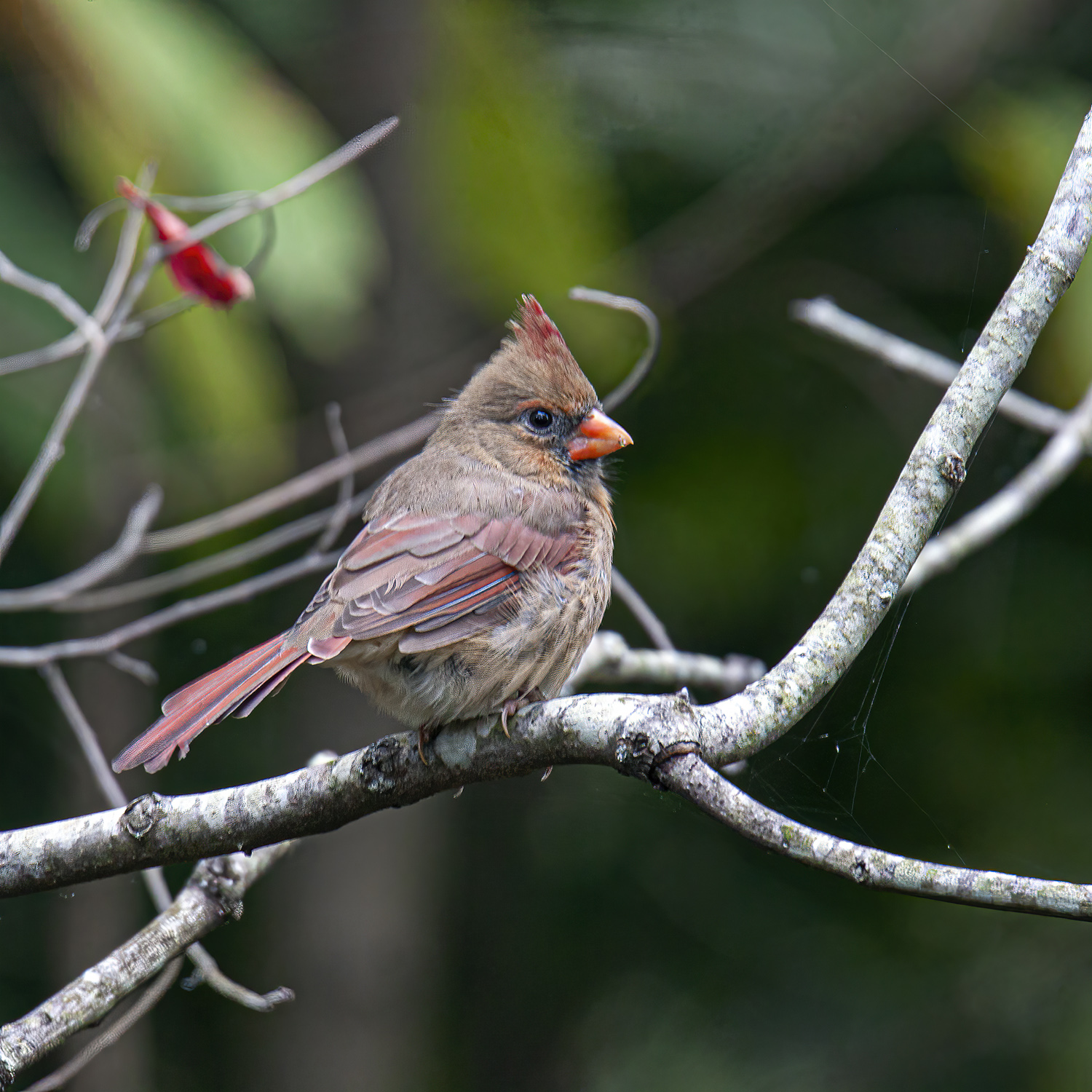
Although I really like the bright red color of the male Northern Cardinal (Cardinalis cardinalis), there is something even more special about the subtle beauty of a female cardinal, like this one that I spotted last week at Occoquan Bay National Wildlife Refuge. The muted colors of this bird seem particularly appropriate for autumn in this area. The changing foliage here rarely has the brilliant yellows and reds found in other parts of the country, but transitions to paler shades before the leaves all fall to the ground.

Northern Cardinal

© Michael Q. Powell. All rights reserved.

Read Full Post »

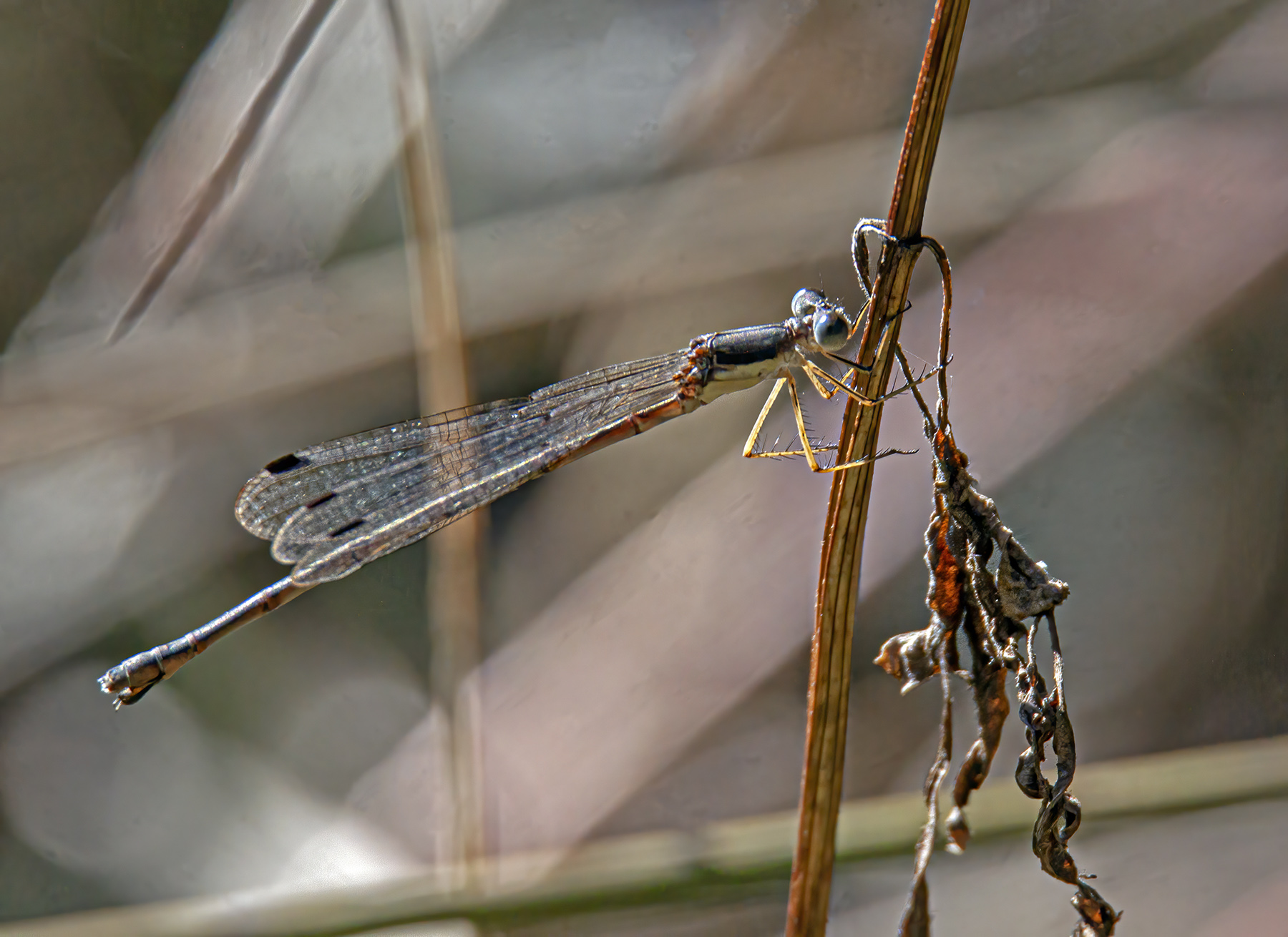
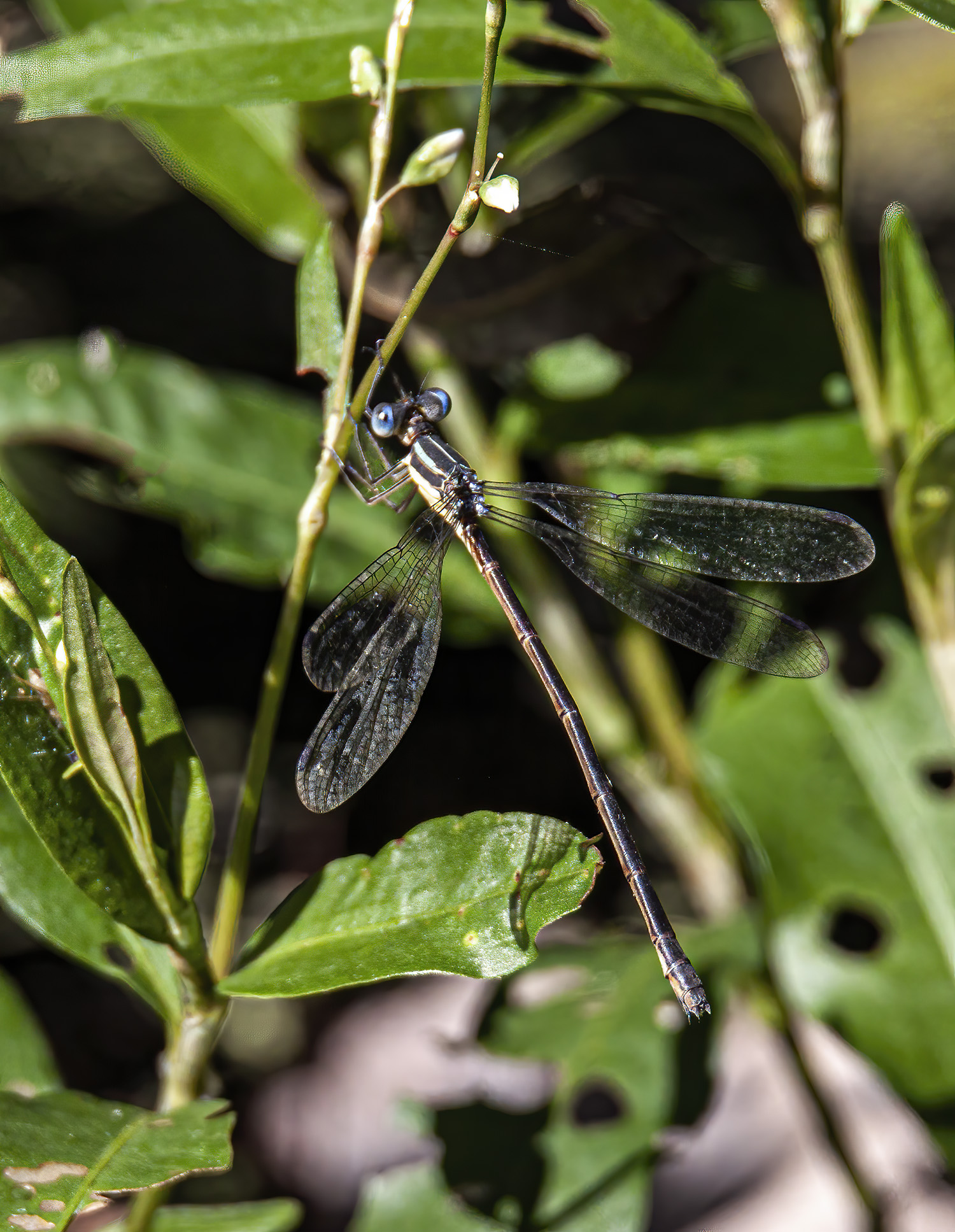
I was excited to spot several female Slender Spreadwing damselflies (Lestes rectangularis) during a visit to Huntley Meadows Park this past Thursday. As damselflies go, Slender Spreadwings are quite large, up to 2 inches (51 mm) in length, and are very striking in appearance. Normally spreadwings, as their name indicates, perch with their wings outstretched, though the one in the first photo has its wings mostly closed above its body like a “normal” damselfly—its paler coloration suggests to me that it may have emerged relatively recently.

The middle photo shows well the typical perching style of a spreadwing, with its body held at an angle and several legs grasping a thin stem. The final photo shows a female Slender Spreadwing depositing eggs in the leafy stem of a plant.

I have noted several times my dismay at the winding down of the dragonfly/damselfly season, so it is particularly gratifying for me to spot species like this one that I rarely see.

Slender Spreadwing

Slender Spreadwing

Slender Spreadwing

© Michael Q. Powell. All rights reserved.


Read Full Post »

The beautiful colors on this dragonfly that I spotted yesterday at Huntley Meadows Park are so amazing that it it hard for me to call it “common,” even though I know that it is a Common Green Darner dragonfly (Anax junius). I initially spotted this dragonfly when it was patrolling over a field and was thrilled when I saw it land nearby.

Although my telephoto lens zooms out to 600mm, I needed to extend it to only 450mm, because Common Green Darners are so large, about 3 inches (75 mm) in length. As a result, the images were sharper and I was able to capture a lot of detail. I encourage you to double-click on the images to see those details, like the bullseye pattern on the top of the “nose” and the spectacular rainbow colors of this dragonfly.

Common Green Darners are a migratory species that flies in swarms so big that they can be picked up on weather radar. This dragonfly seemed to be alone, so it could be a migratory straggler or simply a part of the local population.

Common Green Darner

Common Green Darner


© Michael Q. Powell. All rights reserved.

Read Full Post »

I have always admired Downy Woodpeckers (Picoides pubescens), the smallest woodpeckers in our area, because they are so energetic, hard-working, and focused. They are fun to watch as they move all around in a tree, poking and probing as they search for a tasty treat. I spotted this Downy Woodpecker, which looks to be a female because it does not have a patch of red on the back of its head, last week as I was exploring Occoquan Bay National Wildlife Refuge.

Downy Woodpecker

Downy Woodpecker

© Michael Q. Powell. All rights reserved.


Read Full Post »

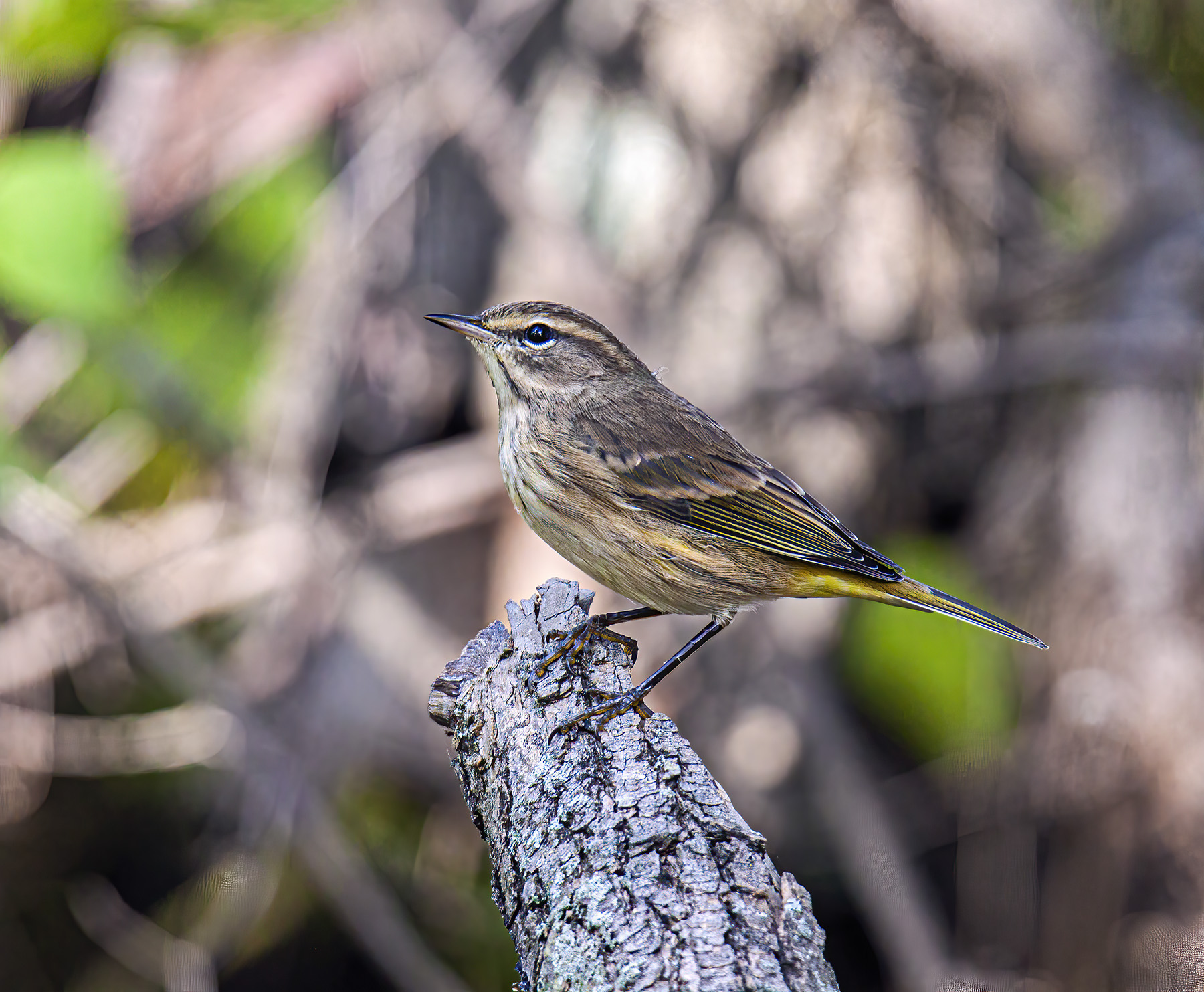
When I first saw this bird bouncing around on the ground on Monday at Occoquan Bay National Wildlife Refuge, I thought that it might be a sparrow. Then I caught a flash of yellow as the bird wagged its tail and I realized that it was a Palm Warbler (Setophaga palmarum).

Most warblers forage high in the trees, where they are difficult to see. The Palm Warbler, however, forages mainly on open ground or in low vegetation, making it marginally easy to spot and to identify.

Palm Warbler

© Michael Q. Powell. All rights reserved.

Read Full Post »
I was fortunate when the Black Saddlebags dragonfly (Tramea lacerata) that I was tracking finally landed on Monday at Occoquan Bay National Wildlife Refuge and I was able to capture this image. Black Saddlebags spend most of their time gliding and circling overhead and it is rare for me to see one perching. This species is one of only a handful of dragonfly species in North America that migrate and this dragonfly may have been merely visiting the refuge on a southward journey.

As I noted in my posting yesterday, I have now switched to my 150-600mm telephoto zoom lens as my walkaround lens and I captured this image with that lens. The lens was fully extended to 600mm for this shot and I was using a monopod for some additional stability. It is a little unusual for me to try to photograph such a small subject with my long lens, but this shot shows that it is possible to get a reasonably sharp image if I pay a lot of attention to my technique.


Black Saddlebags

© Michael Q. Powell. All rights reserved.

Read Full Post »

« Newer Posts - Older Posts »