Feeds:
Posts
Comments

Posts Tagged ‘Tamron 150-600mm telephoto’

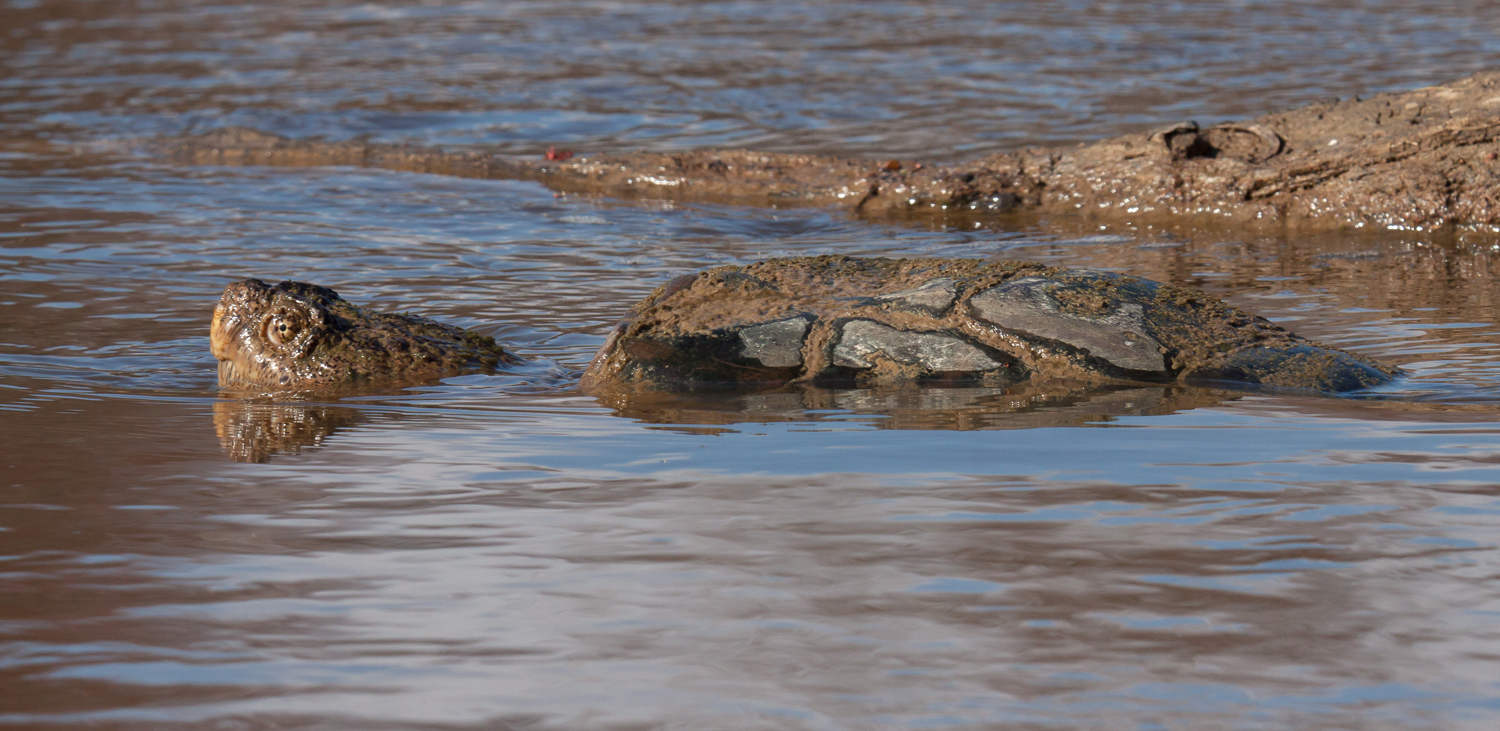
Creatures of all sorts are stirring in the marsh now that the weather has warmed up, including this particularly fierce-looking one with amazing eyes. What is it? It’s an Eastern Snapping Turtle (Chelydra serpentina serpentina), a species that is pretty common in my local marsh.

snapping turtlesnapping turtle

© Michael Q. Powell. All rights reserved.

Read Full Post »

Most of the time I try to fill the frame of my camera with my wildlife subjects, but sometimes it’s nice when they are part of a larger landscape, like this shot of a Great Blue Heron (Ardea herodias) in the rain from last Friday.

Great Blue Heron

© Michael Q. Powell. All rights reserved.

Read Full Post »

Sometimes I’m out with my camera even when it’s raining, which lets me capture shots like this Red-winged Blackbird (Agelaius phoeniceus) that I spotted this past Friday at Huntley Meadows Park.

Red-winged Blackbird

© Michael Q. Powell. All rights reserved.

Read Full Post »

Eventually the Osprey (Pandion haliaetus) that I featured yesterday decided to fly away, with its modest fish still tightly clutched in its talons. I thought that the bird was going to consume the fish while perched, but perhaps the osprey prefers to lunch in privacy or needs to share the prize with its mate.

Osprey

© Michael Q. Powell. All rights reserved.

Read Full Post »

When an Osprey (Pandion haliaetus) flew in my direction this morning at Huntley Meadows Park and landed in a tree, I had no idea that it was clutching a small fish. It was raining and I was trying to keep my gear dry, but the osprey was so close that I knew I had to try to get some shots. In fact, I was so close that when the bird opened its wings, I couldn’t fit the entire wingspan within the frame.

I noticed the fish in the talons of the right foot only later when I was reviewing the shots on my computer.

Osprey

© Michael Q. Powell. All rights reserved.

Read Full Post »

This past Monday at Huntley Meadows Park I was thrilled to see one of my favorite ducks, the colorful male Wood Duck (Aix sponsa), weaving its way with its mate among the trees in one of the flooded area of the marsh.

This was one of the few times when I have actually had the opportunity to observes a Wood Duck swimming around—normally they take to the air as soon as they sense my presence.

The natural world is gradually moving away from the monochromatic tones of the winter to the brighter colors of spring, a transformation that I welcome with open arms.

Wood Duck wood2_blog

© Michael Q. Powell. All rights reserved.

Read Full Post »

Bird identification should be easier.  Once again I have photographed a bird and I am not sure of its identity. I am confident that it is a woodpecker, but beyond that, doubts begin to creep in and none of the pictures in my identification guide really match the bird in my photos.

The woodpecker is a lot bigger than the Downy Woodpeckers that I frequently see, but smaller than the Pileated Woodpeckers that I see less often. The black-and-white pattern on its back seems different from any that I have seen before. In some of the photos, I detect a little bit of red just above the bill, especially in the last image.

So what is it? Well, if I were to hazard a guess, I’d say it might be an immature Yellow-bellied Sapsucker (Sphyrapicus varius).

I’d welcome assistance from more experienced birders in identifying my mystery woodpecker.

Yellow-bellied SapsuckerYellow-bellied SapsuckerYellow-bellied Sapsucker

© Michael Q. Powell. All rights reserved.

Read Full Post »

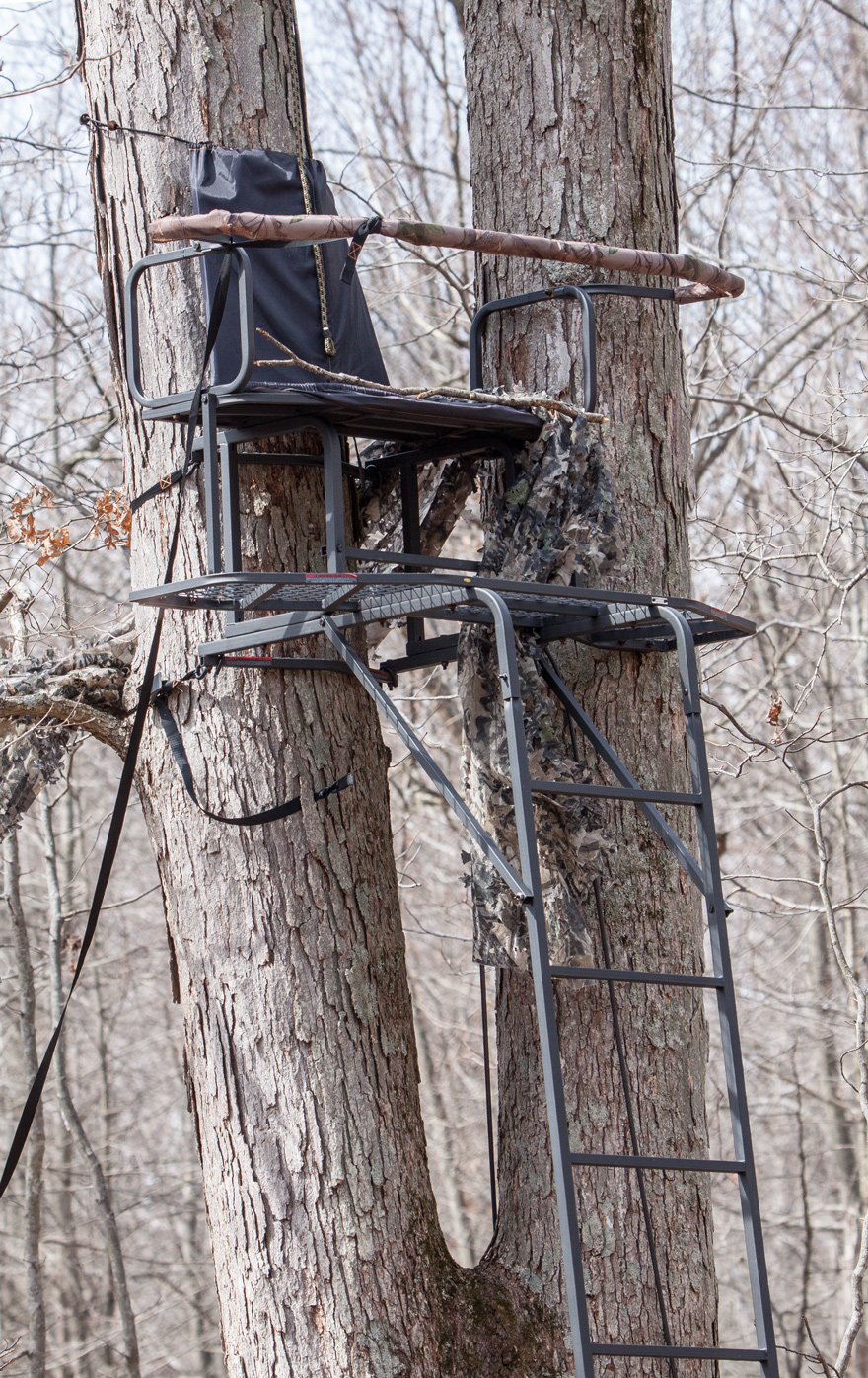
As I was wandering through remote areas of my local marshland park earlier this week searching for dragonflies, I was reminded of the need to be cautious when I came upon this hunter’s tree stand. At various times there is controlled archery hunting of deer at the park. I have not yet seen anyone with a bow, but this is the third location at which I encountered a tree stand. I was tempted to climb up into the stand and check out the view, but decided it was a bit too much trouble.

I have a bright orange stocking hat that I wear sometimes in the winter—it may not be a bad idea to get an orange baseball cap too.

reminder1_blog reminder2_blog

© Michael Q. Powell. All rights reserved.

Read Full Post »

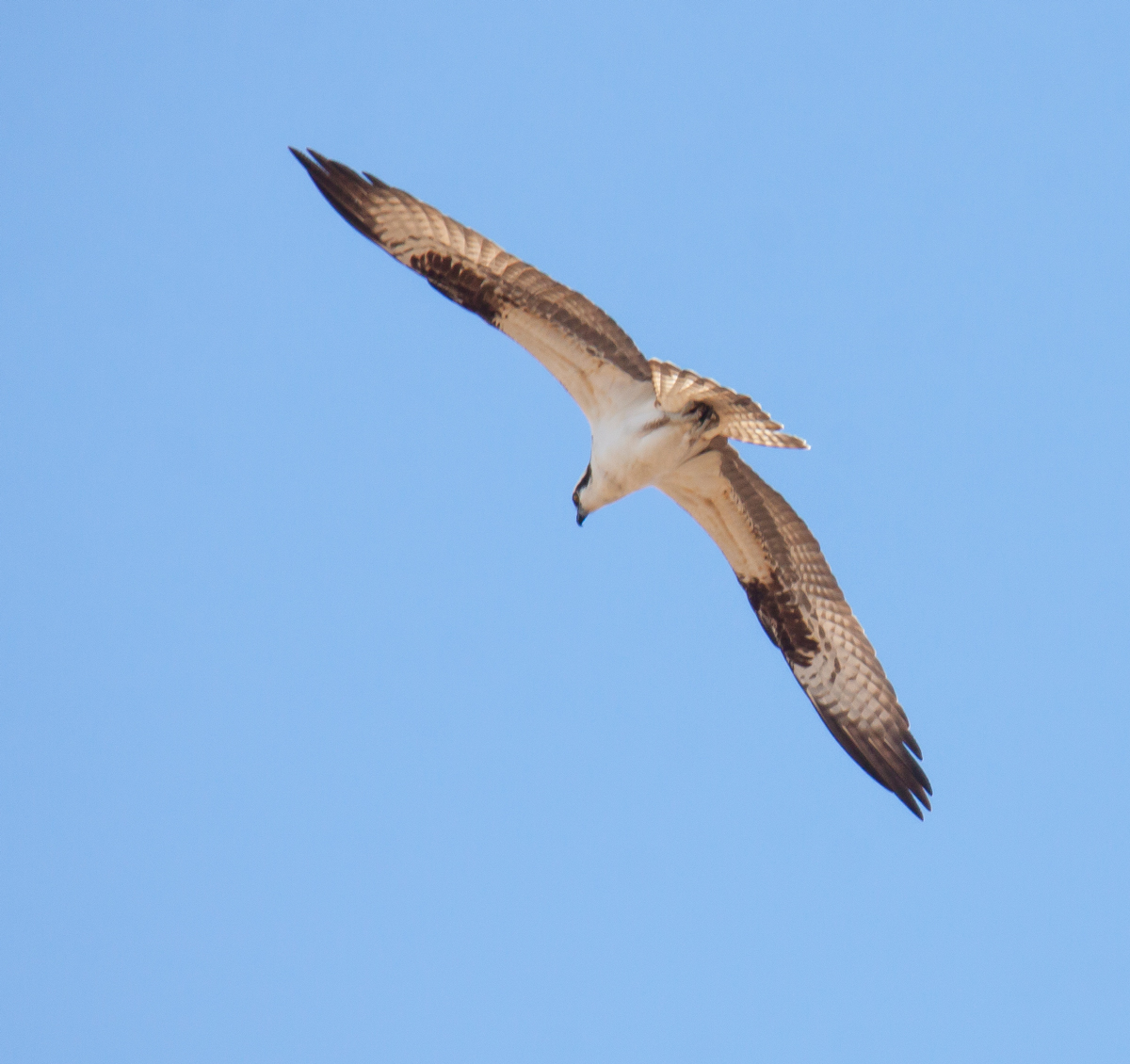
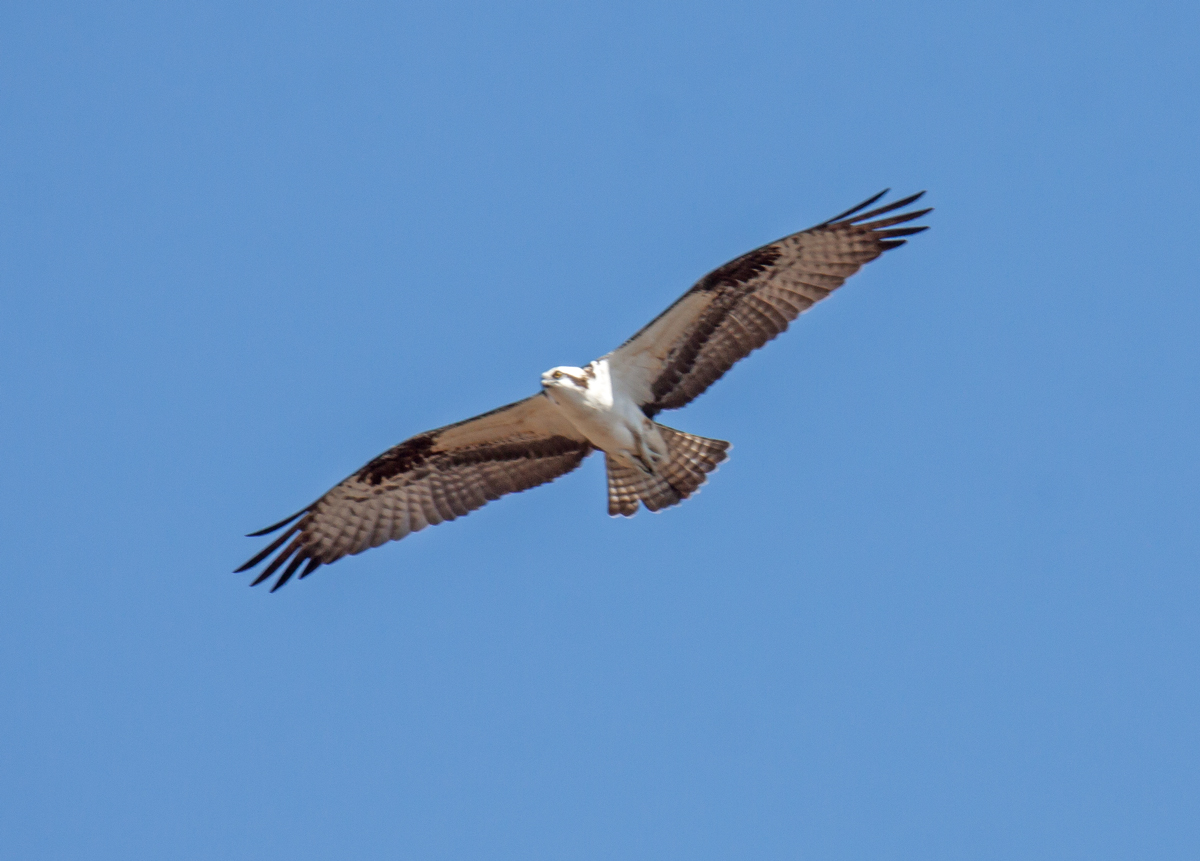
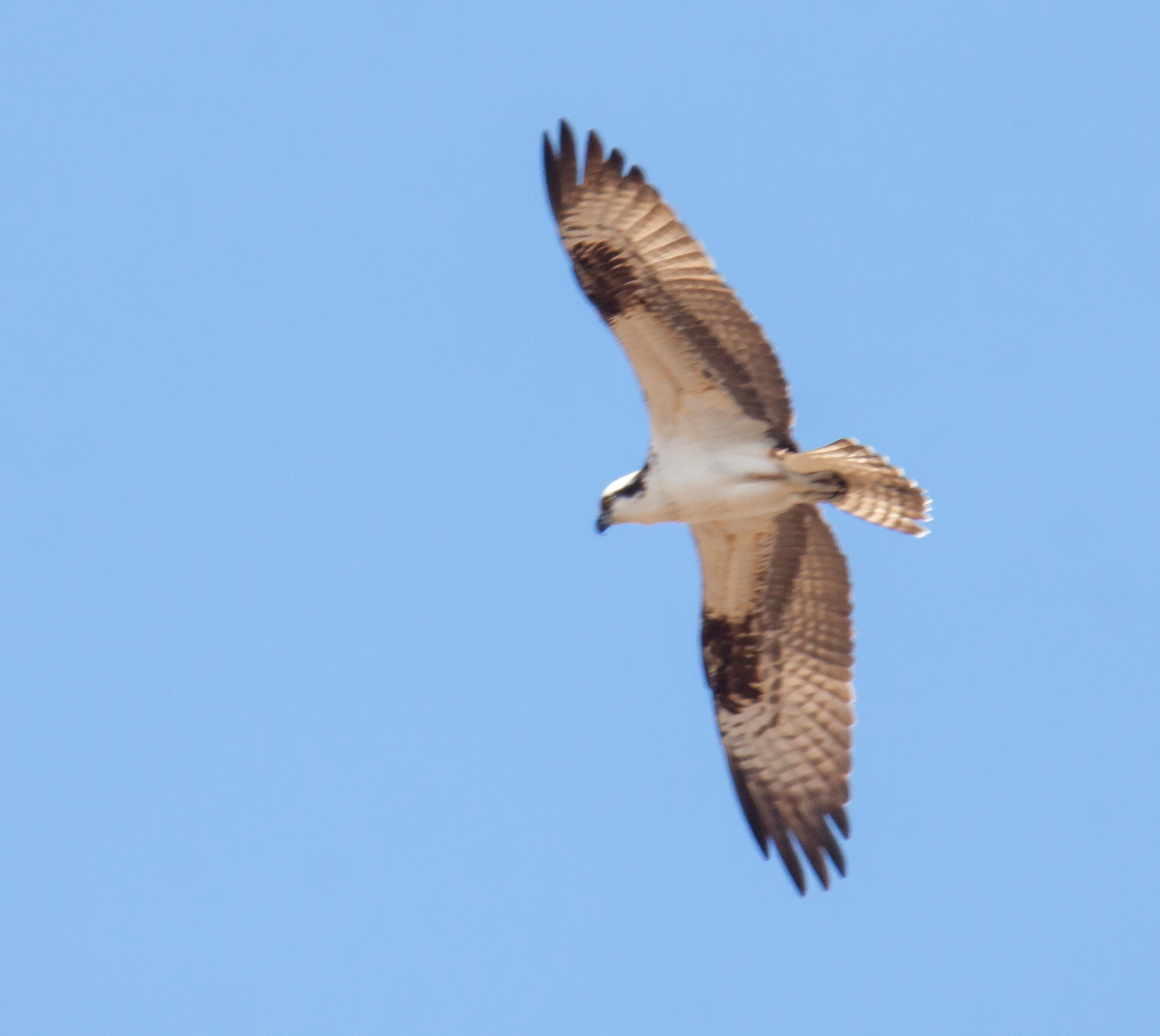
I was surprised this past Monday to see that Ospreys (Pandion haliaetus) have already returned to our area. I don’t often see ospreys at my local marshland park and was somewhat shocked to look up into the sky and see one soaring high above me. Actually I thought it was a hawk at first and then concluded that it must be a bald eagle, because of the white head. It was only when I looked more closely at the photos that I realized that it was an osprey.

In the past I have taken some closer shots of ospreys and on those occasions I was struck by the amazing yellow eyes and the incredible talons. This time, however, I was struck by the surprisingly wide wingspread of the osprey. The sunlight was coming from the right direction to illuminate and highlight the bird’s wing feathers.

There are a number of locations in our area where ospreys generally nest and I guess that it is not too early to check them out. Somehow I thought the ospreys wouldn’t be back here for another month or so, but I confess that this is not one of the birds that I have kept track of very closely in the past.

OspreyOspreyOsprey

© Michael Q. Powell. All rights reserved.

Read Full Post »

Yesterday the marsh was alive with the sound of music—frog music. As the temperatures soared to 65 degrees F (18 degrees C), the high-pitched sound of the frogs grew to almost deafening levels at some of the shallow vernal pools.

It was obvious that there were hundreds, if not thousands of frogs present in the area, but they seemed to be invisible. I managed to spot only a single one, this little Southern Leopard Frog that was partially submerged in the water at the edge of one of the pools.

In a few days the vernal equinox will arrive here in the Northern Hemisphere, marking the start of spring (according to the astrological calendar). The frogs obviously decided to get jump ahead a bit or are using the meteorological calendar, which calculates the start of spring as the beginning of the month of March.

Yesterday the frogs were loudly proclaiming that spring is here, and I am thrilled at the prospect of warmer weather and new life springing up everywhere.

Southern Leopard Frog

© Michael Q. Powell. All rights reserved.

Read Full Post »

Love is in the air and this female Hooded Merganser duck (Lophodytes cucullatus) chose to chase after her male suitors rather than wait for them to come to her.

She’s looks to be a feminist duck of the 21st century, determined to upend the traditional gender roles of the past. Who says you have to wait for the guy to make the first move?

Hooded Merganserchase1_blog

© Michael Q. Powell. All rights reserved.

Read Full Post »

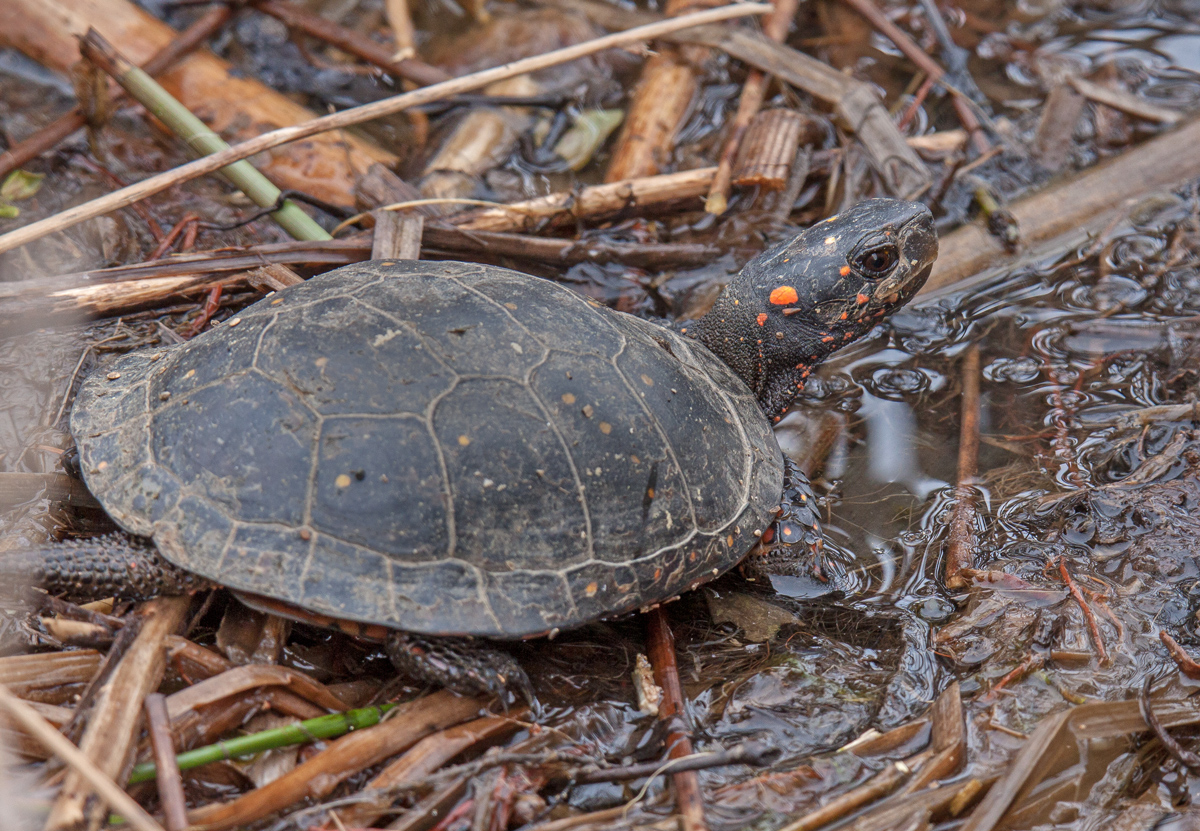
Now that the ice on the ponds has melted, the turtles have resurfaced, including this relatively uncommon Spotted Turtle (Clemmys guttata) that I photographed yesterday at Huntley Meadows Park.

According to the Virginia Herpetological Society, “Extinction or extirpation is possible. Populations of these species are in decline or have declined to low levels or are in a restricted range. Management action is needed to stabilize or increase populations.”

I was very happy to spot this turtle and tried hard not to disturb it too much in getting a few shots.

Spotted Turtle

© Michael Q. Powell. All rights reserved..

Read Full Post »

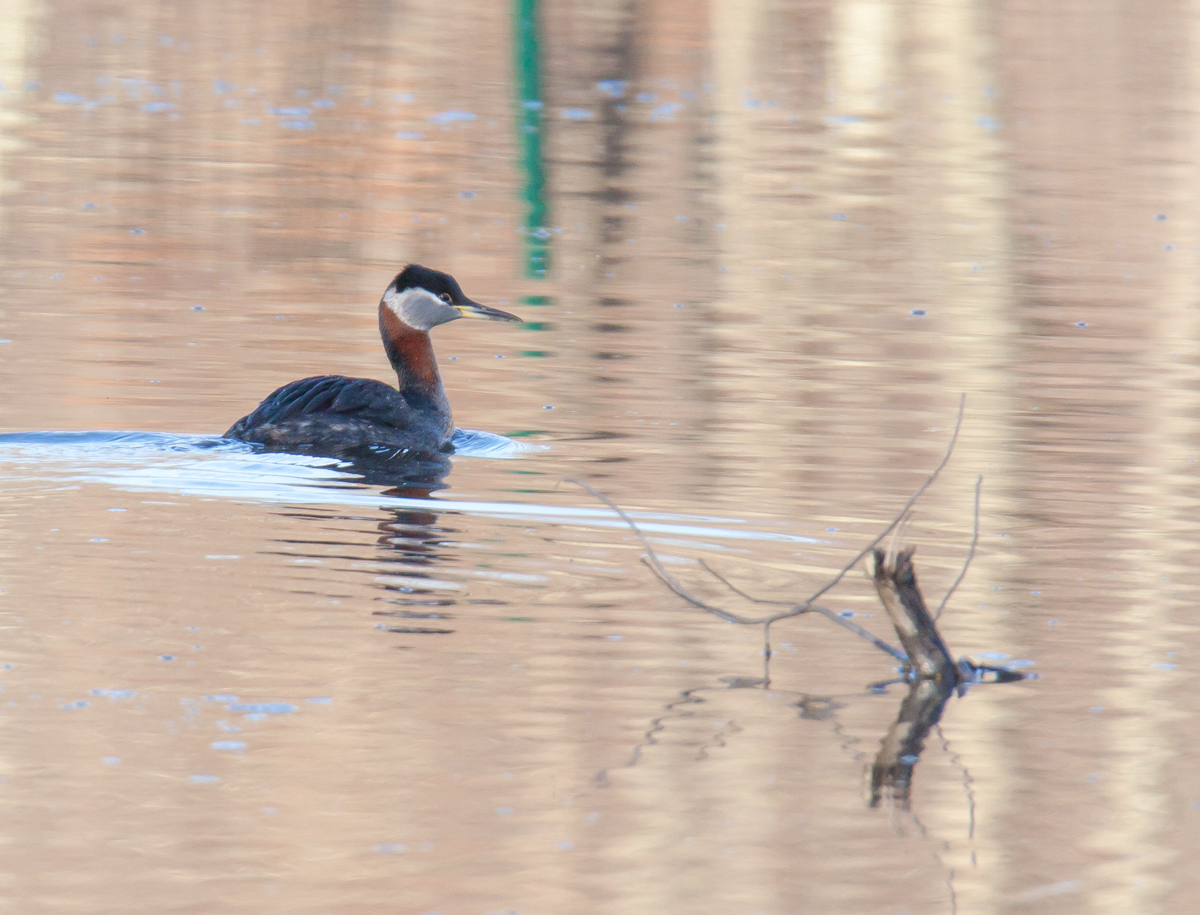
I don’t consider myself to be a birdwatcher, but I have to admit that there is something pretty exciting about seeing (and photographing) a new species. Early yesterday morning, I spotted a small bird swimming in a pond at my local marsh that looked unfamiliar.

I had no idea what it was, but took some photos so I could check when I returned home. If I hadn’t been a birdwatcher, I would have examined it more closely with binoculars or ideally a spotting scope and consulted a guidebook that I would have been carrying with me (and carried on a conversation with my fellow birdwatchers).

It looks to me like this might be a Red-necked Grebe (Podiceps grisegena), a species that I have never before encountered. With a name like “redneck,” I thought it might be a rural Southern bird, but it actually is found mostly in the north during summer months.

I am looking forward to seeing more new birds this spring and can’t wait to see what other birds decide to visit my local marshland park.

Red-necked Grebe

Red-necked Grebe

© Michael Q. Powell. All rights reserved.

Read Full Post »

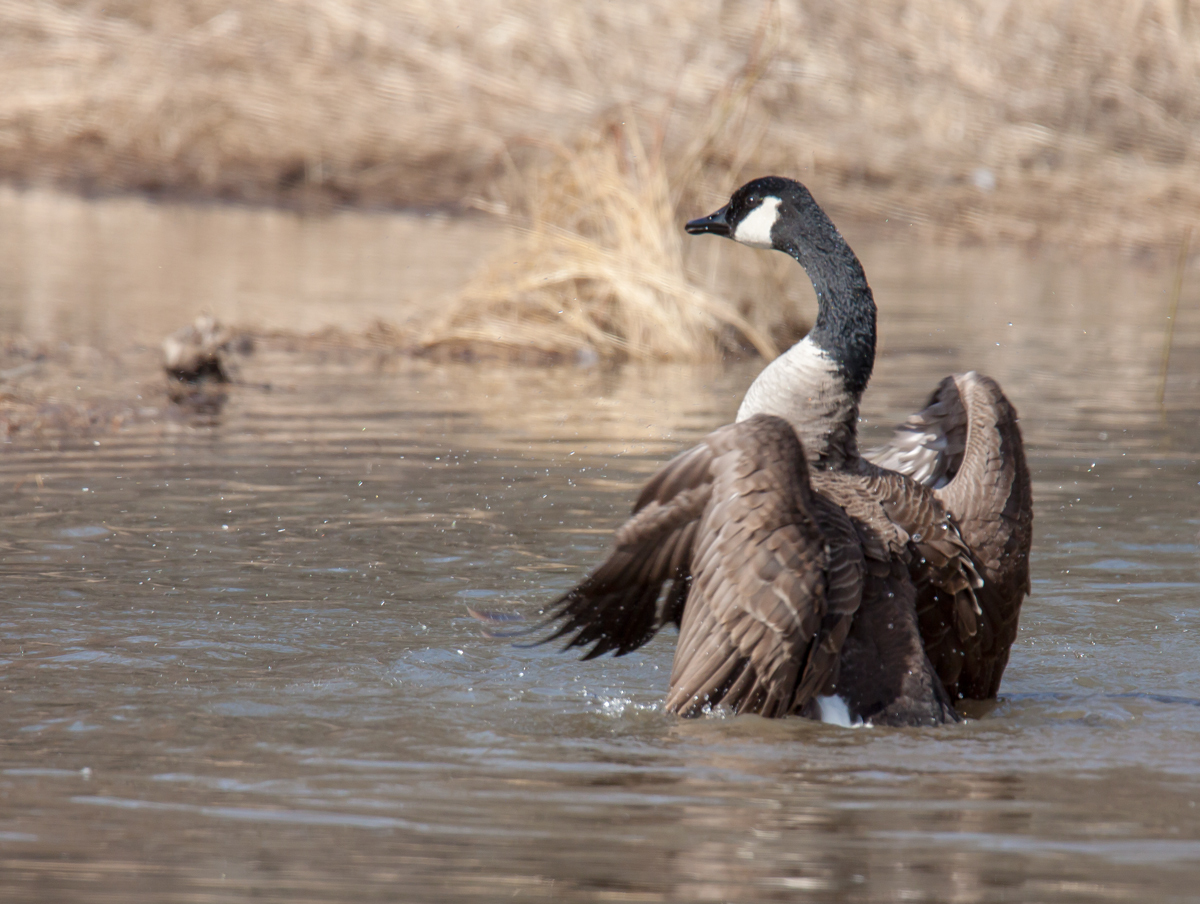
The Canada Geese at my local marsh seemed thrilled that the ice on the ponds had finally melted and they splashed about happily in what looked to be a group bathing session. Their exuberance and excited splashing reminded me of a children’s pool party. Previously I had seen geese dip their heads underwater to get wet, but these geese took it another step and appeared to be doing complete flips underwater. There was so much activity that it was virtually impossible to isolate and capture the action in a still shot.

Eventually they needed to dry off and I got this shot as one Canada Goose (Branta canadensis) rose up out of the water and vigorously flapped its wings. There is something about the goose’s pose that I really like, with the curved wings almost mirroring the curved neck.

Canada Goose bath

© Michael Q. Powell. All rights reserved.

Read Full Post »

Do woodpeckers ever make noise just for fun? Usually when I hear a Pileated Woodpecker at work, it sounds like a jackhammer as the bird drives its bill deep into the tree, but earlier this week I hear a more resonant, drumming sound coming from a hollow tree.

I spotted the Pileated Woodpecker (Dryocopus pileatus) just before it spotted me and I was able to snap only a couple of photos before it flew away. As I looked at the tree afterwards, it was easy to see that it had essentially served as a musical instrument for the bird, allowing the woodpecker to send its rhythmic music out a long distance.

What was not clear, however, was whether the actions had been related to searching for insects, because it sure didn’t look like the long dead tree housed any insects.

Was the woodpecker sending messages? The message I received was that I should hurry to that spot for a great photos opportunity.

Pileated Woodpecker

© Michael Q. Powell. All rights reserved.

Read Full Post »

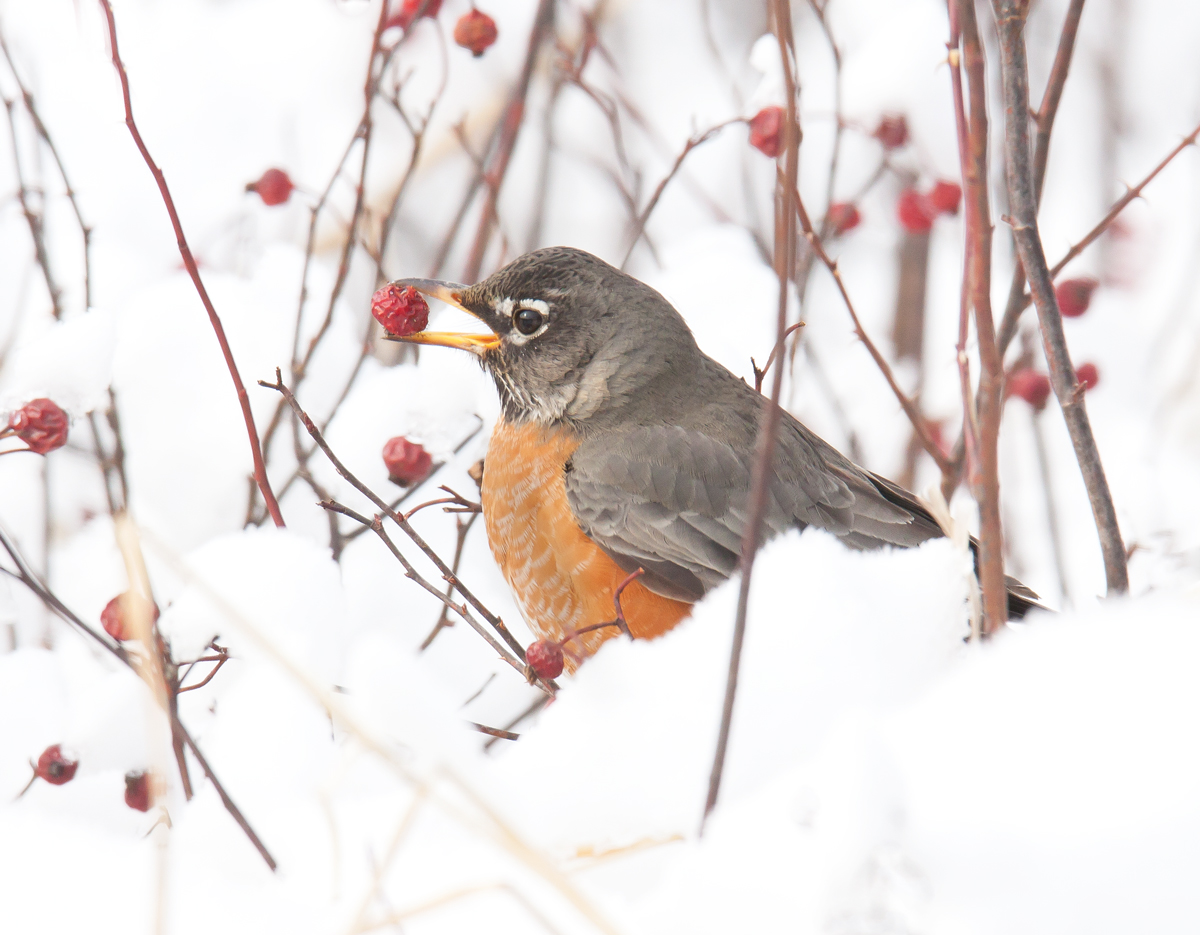
The snow is melting quickly and soon will be nothing but a memory. Fortunately I was able to capture some fun shots when the snow covered my marshland park, like this image of an American Robin (Turdus migratorius) enjoying an undoubtedly frozen berry—I think it is a rose hip from a Swamp Rose.

American Robin

© Michael Q. Powell. All rights reserved.

Read Full Post »

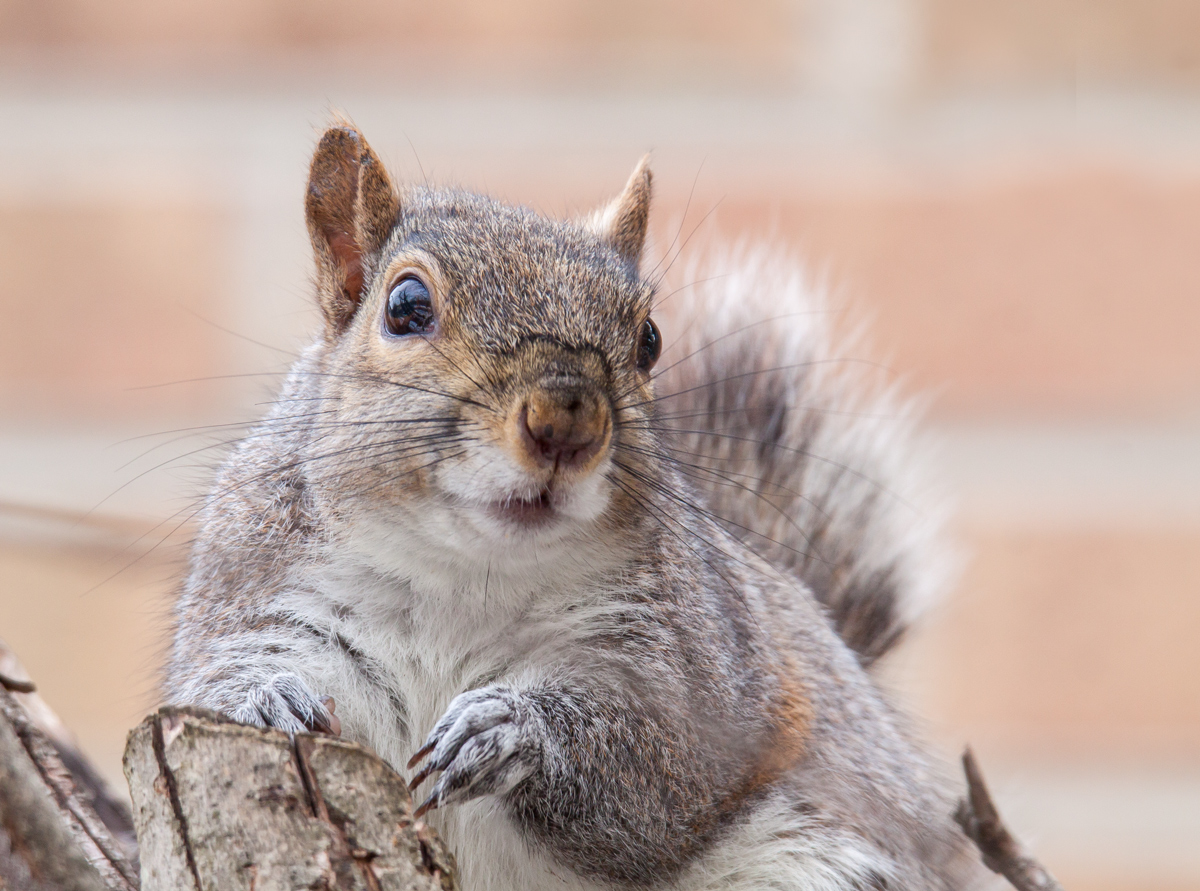
On a beautiful spring-like morning, even the squirrels in my suburban townhouse neighborhood today looked amazingly photogenic.

Eastern Gray Squirrel

© Michael Q. Powell. All rights reserved.


Read Full Post »

This is clearly a male Mallard duck (Anas platyrhynchos), but the unusual coloration of its head makes me wonder if it might be a hybrid, or perhaps is simply not yet mature. I have read on the internet that Mallards will sometimes mate with American Black Ducks, but this one doesn’t really look like any of the photos that I saw of the resulting hybrid ducks.

As I was pondering this question, the duck started to laugh, or so it seemed. Judging from the second photo, do you think that the duck may be laughing at one of his own wise quacks? I have a low tolerance for jokes, so I confess that it quacked me up completely.

Mallard

Mallard

© Michael Q. Powell. All rights reserved.


Read Full Post »

There were only a few Red-winged Blackbirds at my local marsh yesterday morning, but the loud volume of their calling made up for the smallness of their numbers. The morning light was quite beautiful, which makes these images look almost like they were shot in a studio. It sure helps when you have a cooperative subject, like this male Red-winged Blackbird (Agelaius phoeniceus), who enjoys being in the spotlight.

Red-winged Blackbird

Red-winged Blackbird

Red-winged Blackbird

© Michael Q. Powell. All rights reserved.


Read Full Post »

I haven’t seen one for a while, so I was happy this morning when I spotted this male Green-winged Teal (Anas crecca) at Huntley Meadows Park, the local marshland park where I take many of my wildlife photos.

Green-winged Teal

© Michael Q. Powell. All rights reserved.

Read Full Post »

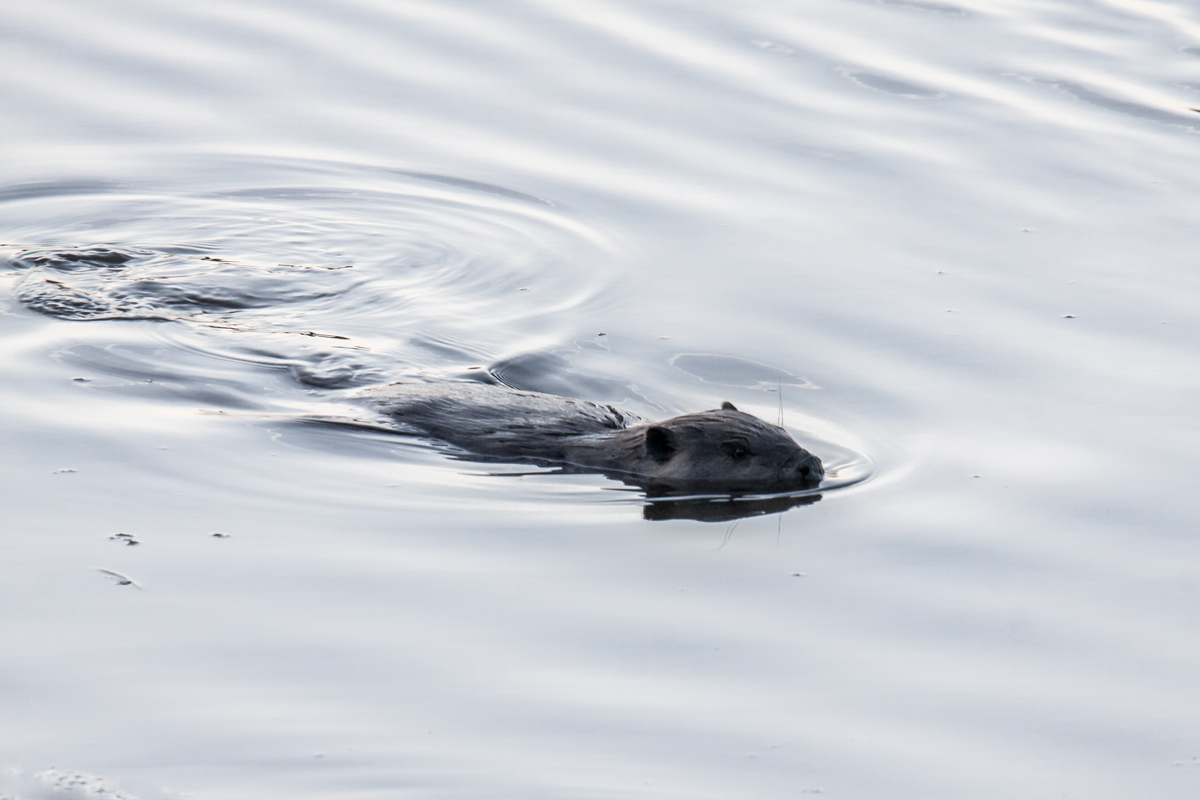
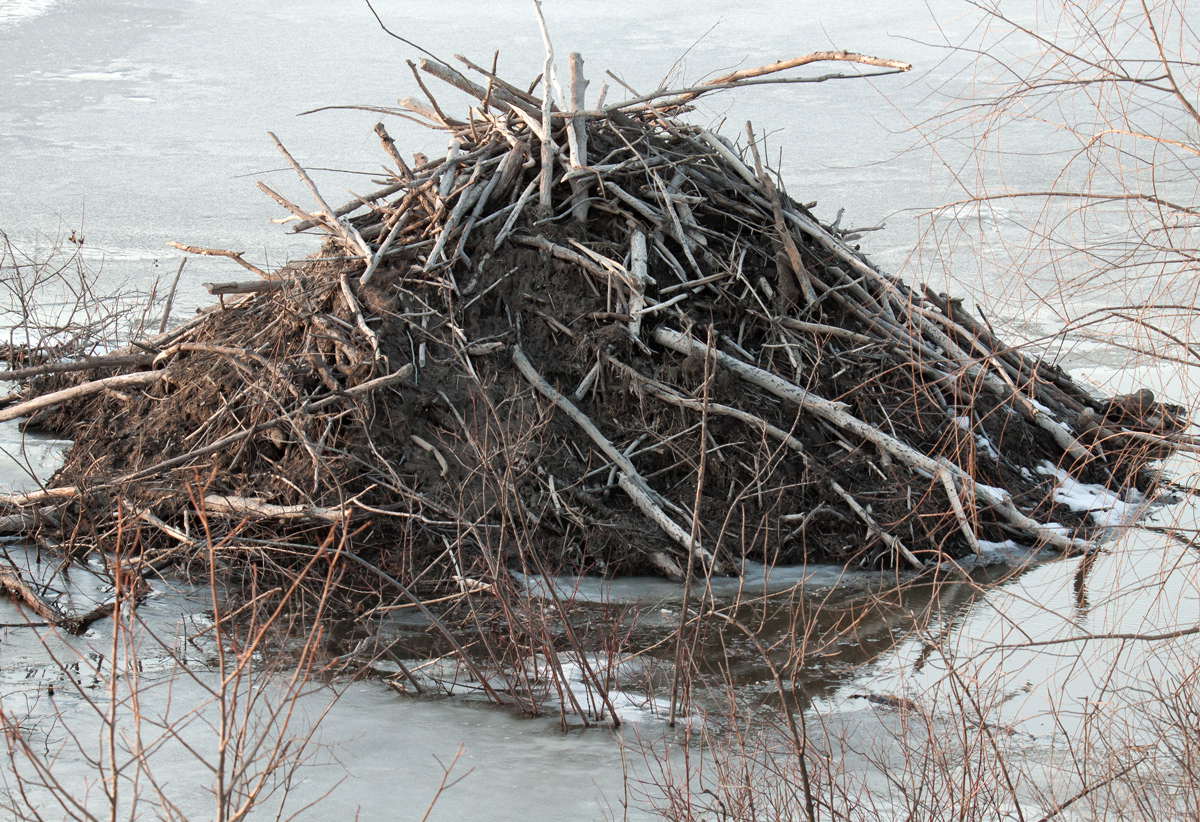
About eighteen months ago the beavers at my local marsh moved out of the lodge right under the boardwalk to a more inaccessible location. Since then I’ve tried several times to catch sight of them at dusk and at dawn, but have been largely unsuccessful.

However, this past Monday I got lucky when one of the resident North American Beavers (Castor canadensis) appeared an hour or so before sunset and chewed on some sticks for a short time before returning to the warmth of its lodge.

I waited and waited as the sun dropped lower on the horizon to see if any other members of the beaver family would make an appearance. Eventually another beaver emerged and started swimming around the small area of open water outside of the lodge—most of the rest of the pond was still frozen. The limited light made it difficult to capture a shot of the swimming beaver and in the third shot it almost looks like the shadowy beaver is swimming in the clouds.

Unfortunately the beaver had to end its swim prematurely when it was dive bombed by a small flock of ducks that had spotted the open water and decided it was the perfect place to make a landing. Alas, I did not get shots of the beaver’s reaction—I suspect that the beaver was a bit surprised to be attacked from the air.

The final shot shows the beaver lodge, which can be seen through the bushes from the boardwalk. Fortunately there is a nearby two-story observation deck that overlooks the pond and gives a clearer line of sight to the lodge. It was from that deck that I was able to take these shots.

beaver2_march_blog

North American Beaver

North American Beaver

North American Beaver

© Michael Q. Powell. All rights reserved.


Read Full Post »

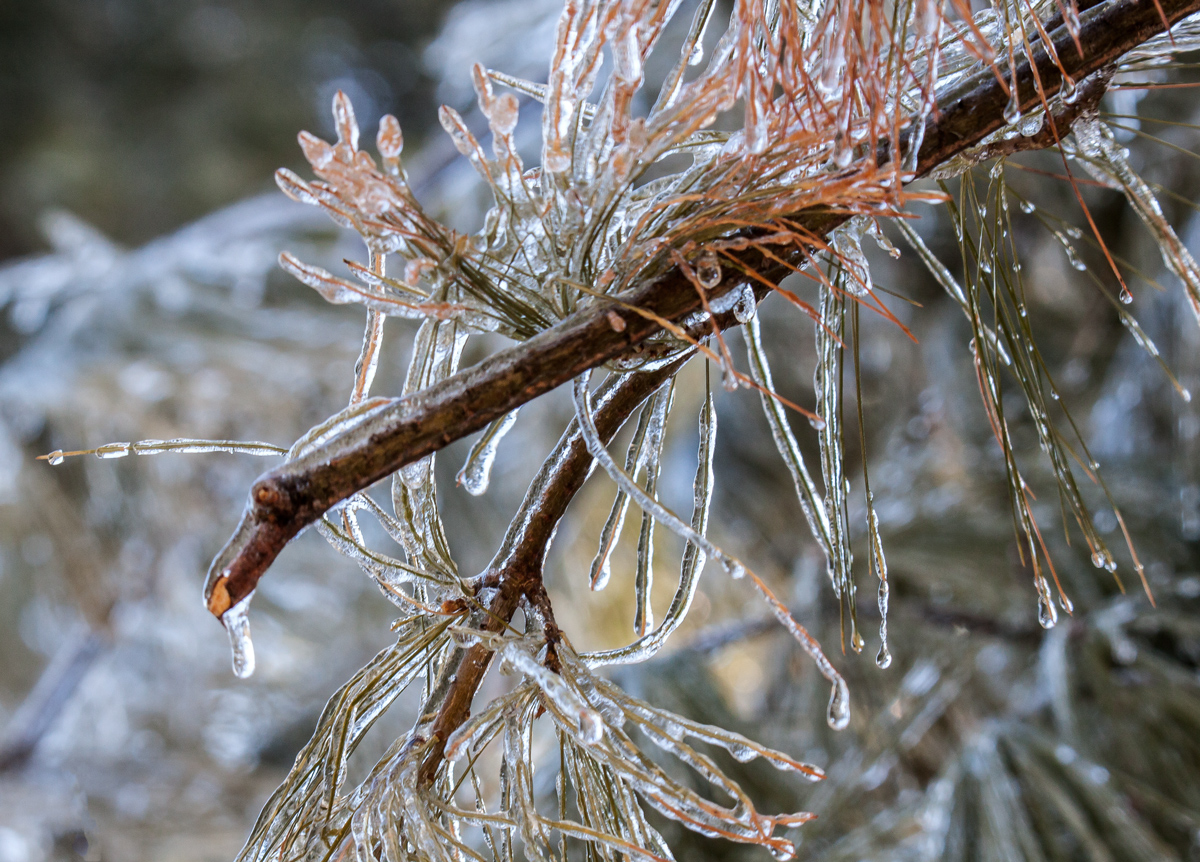
The Washington D.C. area is virtually shut down today as we await a winter snowstorm—the federal and local government offices and schools are all closed. With a little extra time on my hands, I was able to go over some of my photos from Monday’s storm and thought I’d post a couple more images from that event, which covered all surfaces, including the pine trees, with a coating of ice.

I find there is a fragile, transitory beauty in these abstract images—an hour later, when the sun’s rays hit the ice, the effect was gone.

icy2_blogicy1_blog

© Michael Q. Powell. All rights reserved.

Read Full Post »

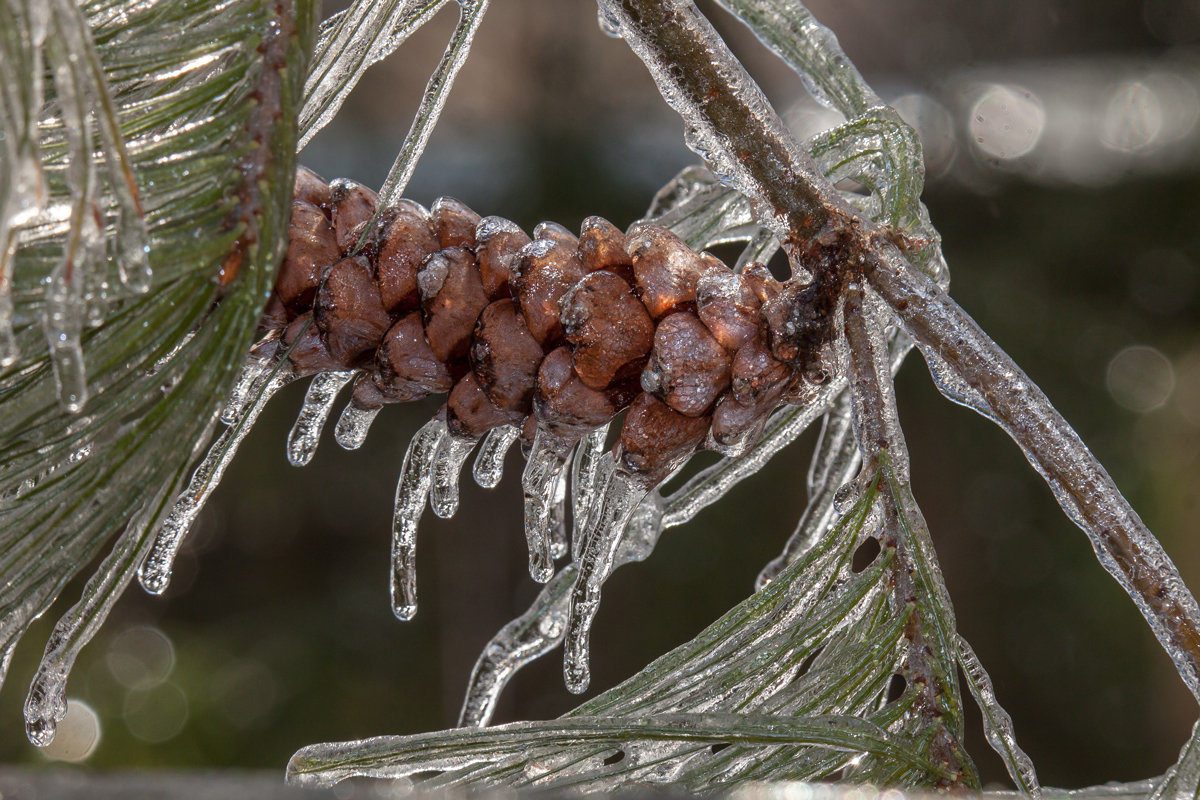
I awoke yesterday to a world covered in ice, the aftermath of a storm of sleet and freezing rain. Peering out the sliding glass doors, I could see the branches of a pine tree bent over, heavy with the weight of the ice, and almost touching the boards of my backyard deck.

I took a number of shots as the morning sun started to melt the ice. Somehow I keep coming back to this almost abstract image of the pine needles. It’s definitely not my usual style of shooting, so it’s hard to explain why it appeals to me.

It’s probably a good thing to shoot things differently from time to time and try out unusual approaches. At a minimum, you’ll have fun and you may end up with crazy images that you like.

icy pine

© Michael Q. Powell. All rights reserved.

Read Full Post »

The colors were not spectacular, but the sky still seemed to be amazingly beautiful as I prepared to depart from Huntley Meadows Park yesterday just after sunset. A long-range telephoto zoom may not be the lens of choice for capturing this kind of a scene, but it was the one that was on my camera at the time and I am pretty happy with the results.

We’ve had so many gray, dull days this winter that a day with the sun shining seemed like a real blessing and I wanted to take advantage of every moment of that sunshine.

Huntley Meadows Park

© Michael Q. Powell. All rights reserved.

Read Full Post »

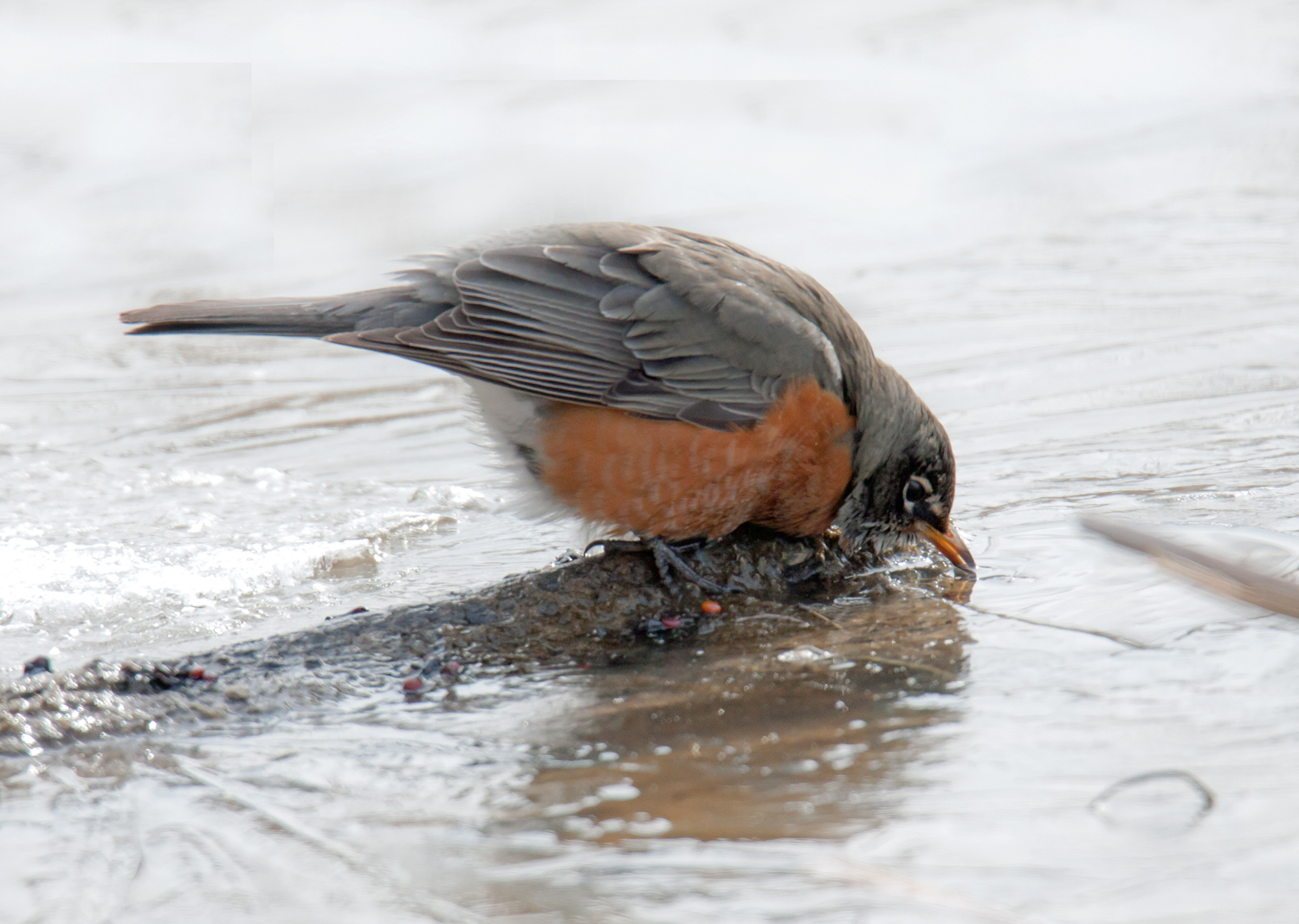
A flock of American Robins (Turdus migratorius) was feverishly foraging in the bushes, but one solitary robin felt a need to satisfy its thirst. Perching on a fallen branch mostly submerged in the frozen pond, the robin gently leaned forward and dipped its bill in a small pool of open water. It must be tough for birds in the wild to get water to drink during the cold days of winter.

As I was processing the photo, I couldn’t help but notice that it was mostly monochromatic, except for the orange in the breast and bill, so I played around a little with converting it to black and white. It still doesn’t pop as much as I would like, but I thought it would be fun to include it for comparison with the original.

American RobinAmerican Robin

© Michael Q. Powell. All rights reserved.

Read Full Post »

What’s going on here? Normally, it’s the male Hooded Merganser duck (Lophodytes cucullatus) that engages in courting behavior to attract a female, but in this case it looks like the situation was reversed. The female seems to be trying to get the attention of the male, who is playing hard to get and ignoring her antics.

Hooded Merganser

I took these shots this past Friday at my local marshland park. After a week of several snowstorms and frigid temperatures, there was not much open water for the water birds. I managed to find an area where a small number of them, mostly mallards and Canada Geese, were congregated and moved forward toward them, painfully aware that the crusty snow was crunching under my feet. I was thrilled when I saw that a pair of Hooded Mergansera mixed in with the other, bigger birds.

As a few snow flurries started falling, I was able to get some individual shots of the Hooded Mergansers, as well as the opening shot of them swimming together.
Hooded Merganser

Hooded Merganser

The first photo seems to be calling out for a clever caption and I welcome any creative ideas from readers. I used the title of a Toby Keith song as the title of the posting, imaging the female duck was trying to impress the male, who had ignored her in the past. (Check out this video from Vevo if you are not familiar with the song.)

What scenario do you imagine when you see the initial photo?

© Michael Q. Powell. All rights reserved.

Read Full Post »

Out of the corner of my eye I caught sight of some moment in the cattails. At first I thought it was a Downy Woodpecker, which I have sometimes observed pecking on the cattails in search of insects, but I quickly saw that this was a smaller bird. When it finally climbed higher on a cattail stalk, it became clear that it was a Carolina Chickadee (Poecile carolinensis).

Initially I had trouble finding this tiny bird in my viewfinder with the zoom fully extended, but eventually I was successful. I am really happy with the effect that I managed to achieve, with the darker-colored bird really standing out from the lighter-colored backdrop of the cattails. Normally I like to crop to focus attention on the subject, but in this case I like the images better with a considerable amount of open space around the chickadee.

I couldn’t decide which of these two image I liked more, so decided to include both of them. Sometimes I like the horizontal pose of the first shot, but at other times the open bill in the second shot draws me in.

It’s always fun to try to get shots of owls and eagles and hawks, but my moments with this little chickadee reminded me that the little birds have their own special kind of beauty.

Carolina ChickadeeCarolina Chickadee

© Michael Q. Powell. All rights reserved.

Read Full Post »
Angry bird? I don’t know for sure if this American Robin (Turdus migratorius) was angry, but it sure did not look happy when I started walking toward it on the boardwalk this morning at Huntley Meadows Park.

American Robin

© Michael Q. Powell. All rights reserved.

Read Full Post »

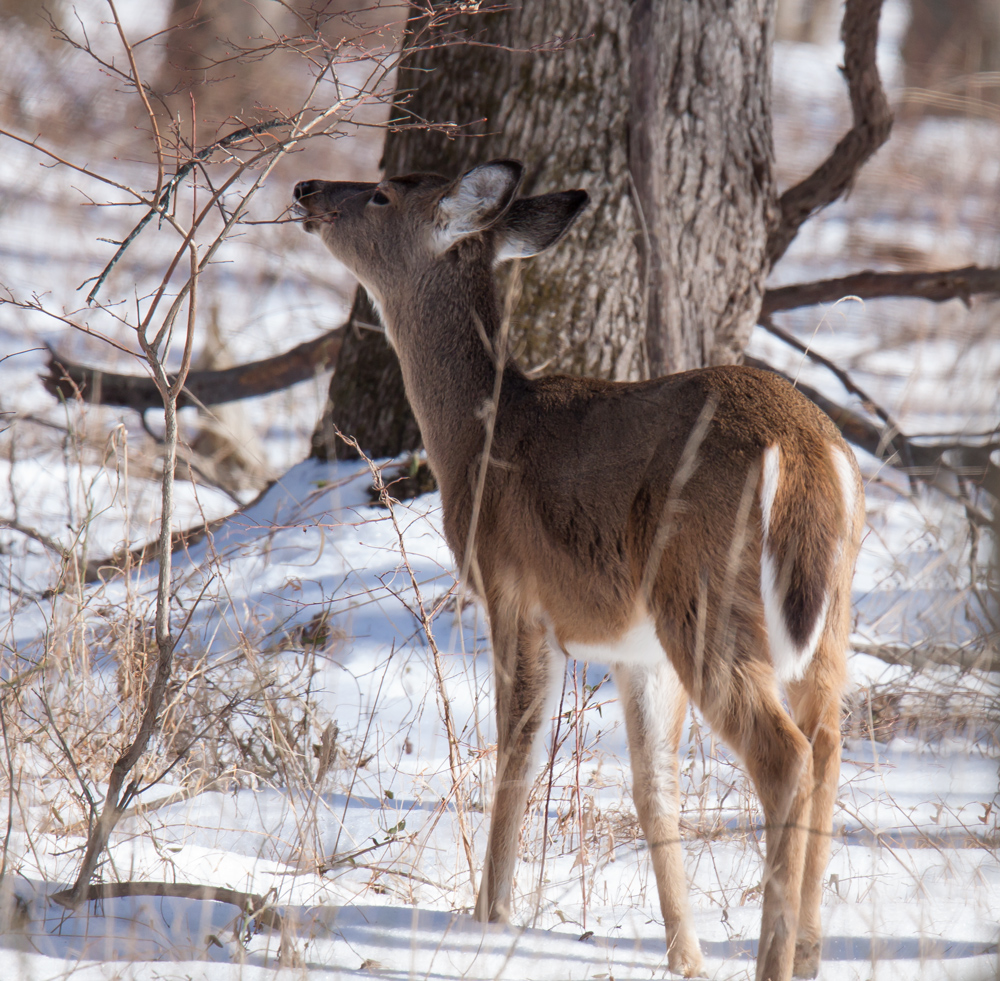
Through the trees I spotted a small group of White-tailed Deer (Odocoileus virginianus) consisting of a larger doe and some smaller deer—there seemed to be no buck. The deer were foraging for food, picking a few remaining berries from some thorny bushes and poking about on the ground. One of the deer appeared to be keeping watch and periodically would stare right at me. After a few minutes at that one spot, the deer moved on and so did I.

White-tailed DeerWhite-tailed DeerWhite-tailed DeerWhite-tailed Deer

© Michael Q. Powell. All rights reserved.

Read Full Post »

I felt like a goalie in a penalty shot situation, waiting for my opponent to act. Would he go to the right or to the left, go high or go low? Could I react quickly enough to capture the shot? Time seemed to stand still as I waited and watched.

In this case, my “opponent” was a Red-shouldered Hawk (Buteo lineatus) perched in a tree at my local marshland park. Once I spotted the hawk, I slowly moved as close as I could get, walking quietly on the boardwalk. The hawk was facing in the opposite direction, so my initial shots showed the details of the back of its head. Scanning the area, the hawk periodically looked to the sides and I managed to get some profile shots, the second and third shots below.

Finally, the hawk took off, diving quickly to my left. I reacted and managed to get a few shots of the hawk in mid-air.  Although my  trigger finger reacted well, I didn’t move the lens fast enough and failed to keep the hawk centered in the frame. I barely managed to capture the entire body of the hawk in the photo below and the composition of the shot is less than optimal. However, I like the overall feel of the image and the fact that you can see details like the underside of the tail feathers and the talons.

Red-shouldered Hawk

Red-shouldered Hawk

Red-shouldered Hawk

© Michael Q. Powell. All rights reserved.

Read Full Post »

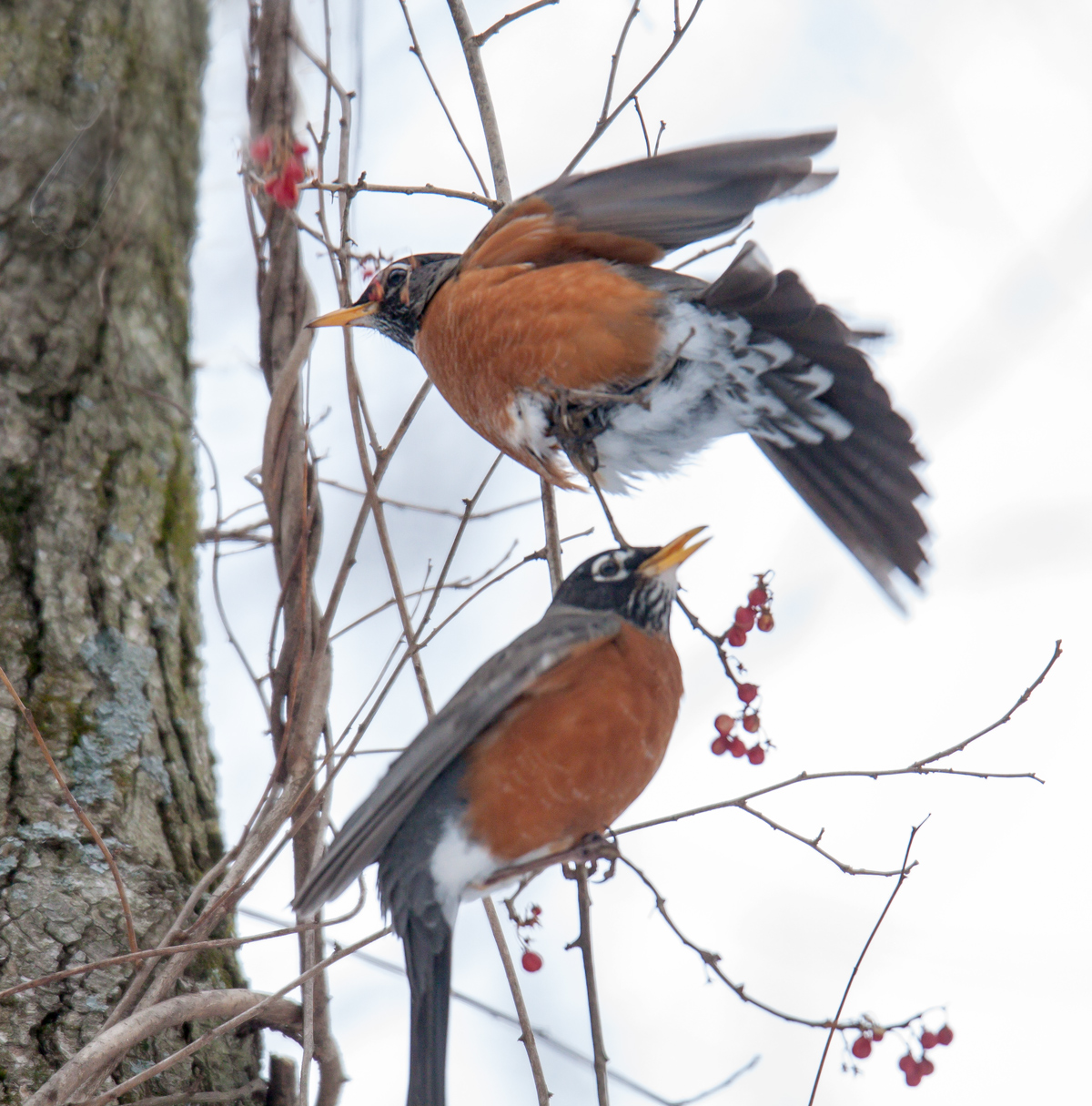
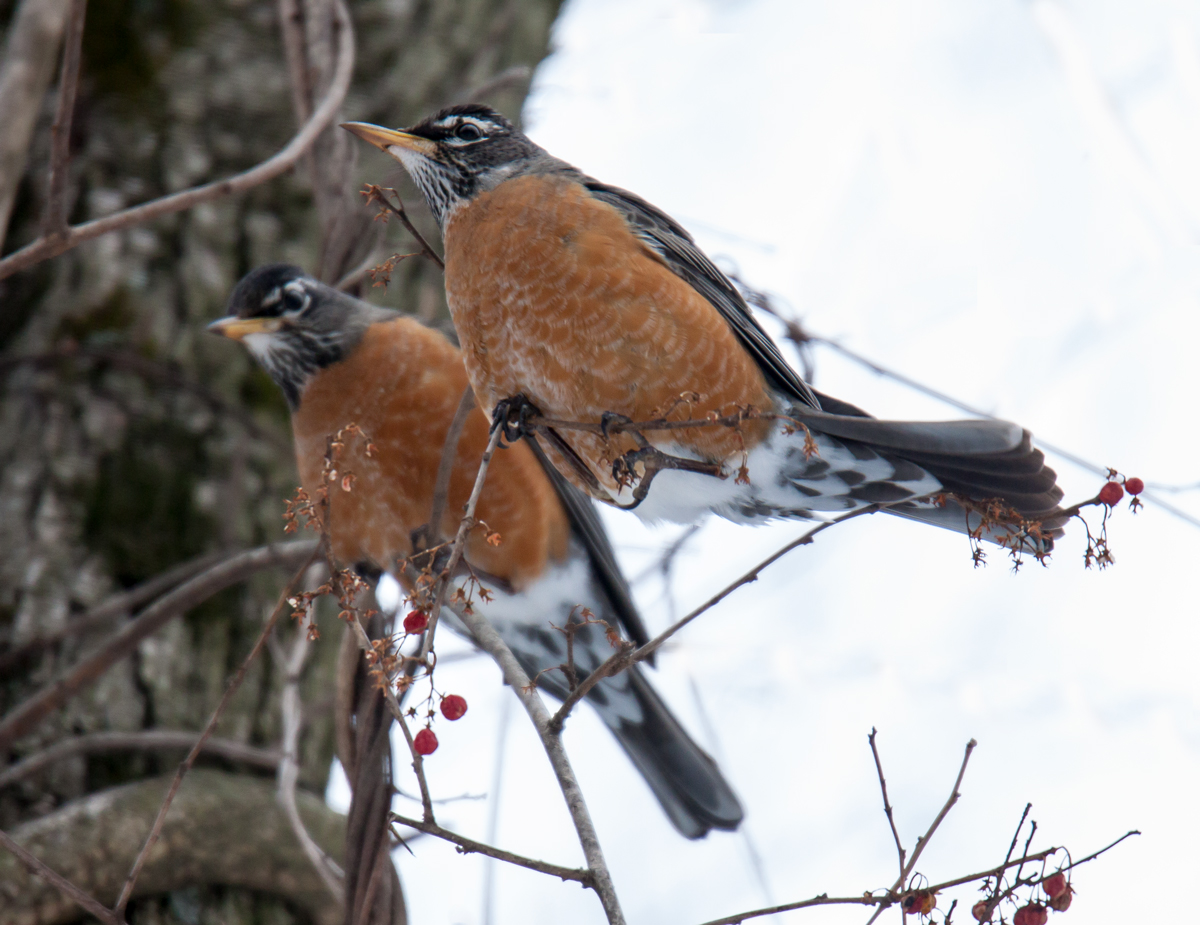
Earlier this week American Robins (Turdus migratorius) were very active at my local marshland park, mostly fluttering about high in the trees, apparently foraging for food.

I have a mental picture of robins poking about in the ground and pulling out juicy worms. Clearly they were not looking for worms in the trees, but seemed instead to be focusing their attention on some little red berries. The robins, which are present in our area throughout the year, manage to survive by switching their diets to one of primarily fruit during the winter.

Sue of the Backyard Biology blog helped to explain this change in the a robin’s diet in a posting last year that she titled “The Robin in Winter…or why Robins don’t migrate.” Be sure to check out her blog for wonderful images and fascinating discussions of the science behind some of nature’s mysteries and conundra.

American Robin American RobinAmerican Robin

© Michael Q. Powell. All rights reserved.

Read Full Post »

« Newer Posts - Older Posts »