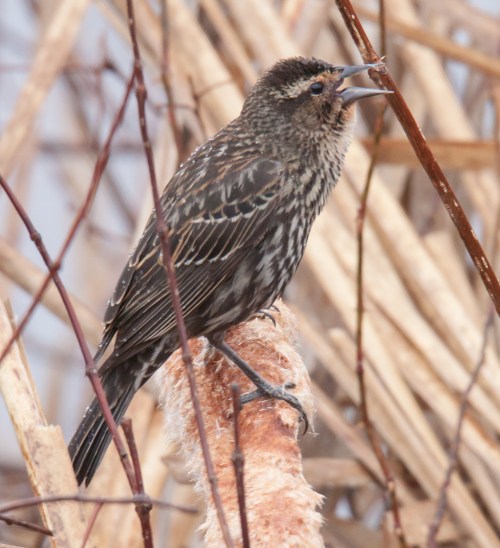
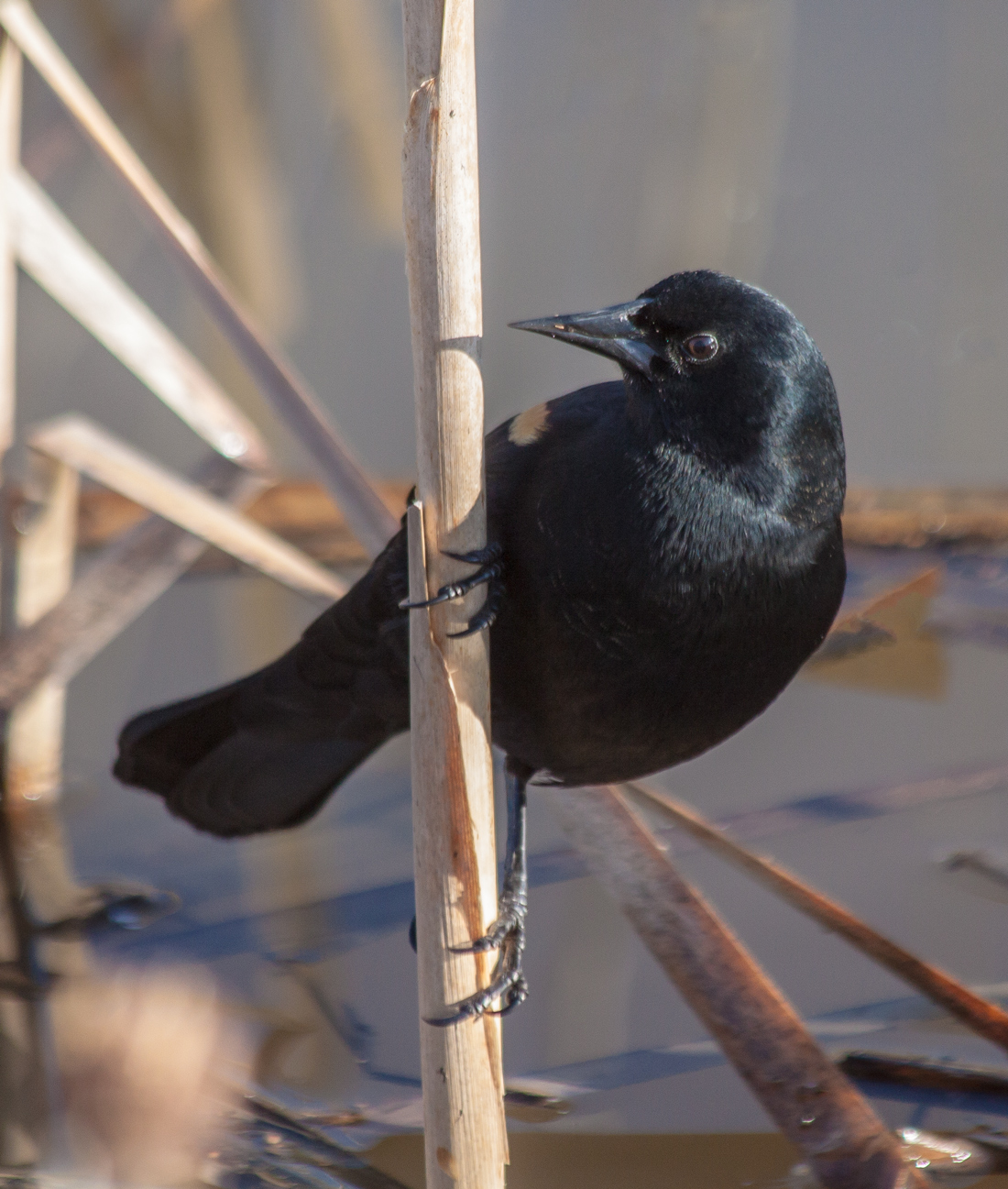
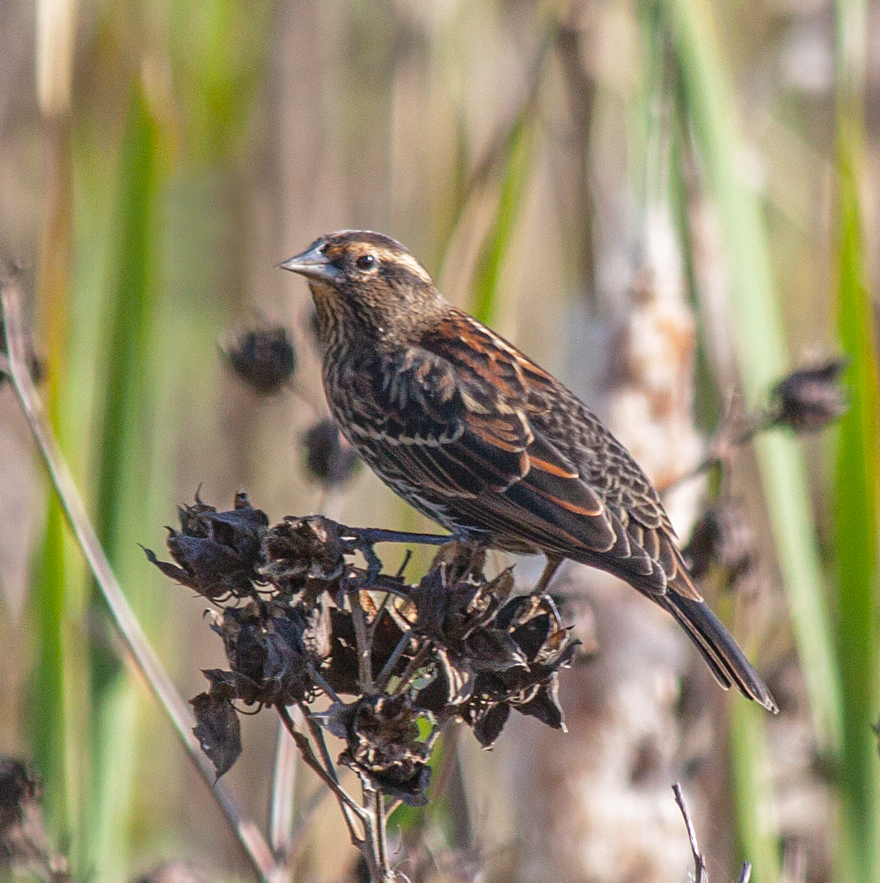
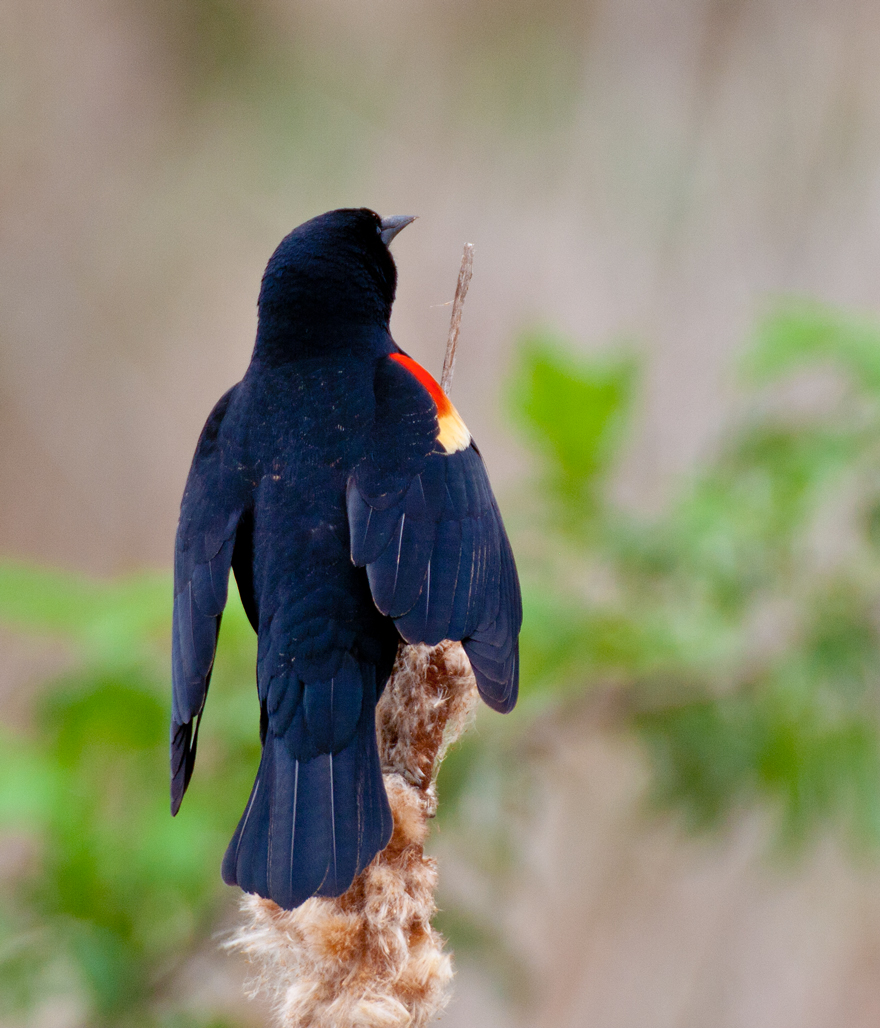
My life was much simpler before I started to photograph birds. I naively assumed that all Red-winged Blackbirds were black and had red wings. There is no way in the world that I would have even guessed that the bird in this photograph is a female Red-winged Blackbird, but I know now that’s what it is.
With experience comes wisdom, perhaps, but I generally feel more confused than wise when it comes to identifying birds. There are so many variables to consider, including the geographic location, the time of the year, the age of the bird, and, of course, its gender. Sure, there are lots of resources available over which to pore, but I’m often left with a certain degree of uncertainty about a bird’s identification. Apparently I am not alone, because I have overheard heated discussions among experience birds trying to identify a distant bird that they can barely see in their spotting scopes.
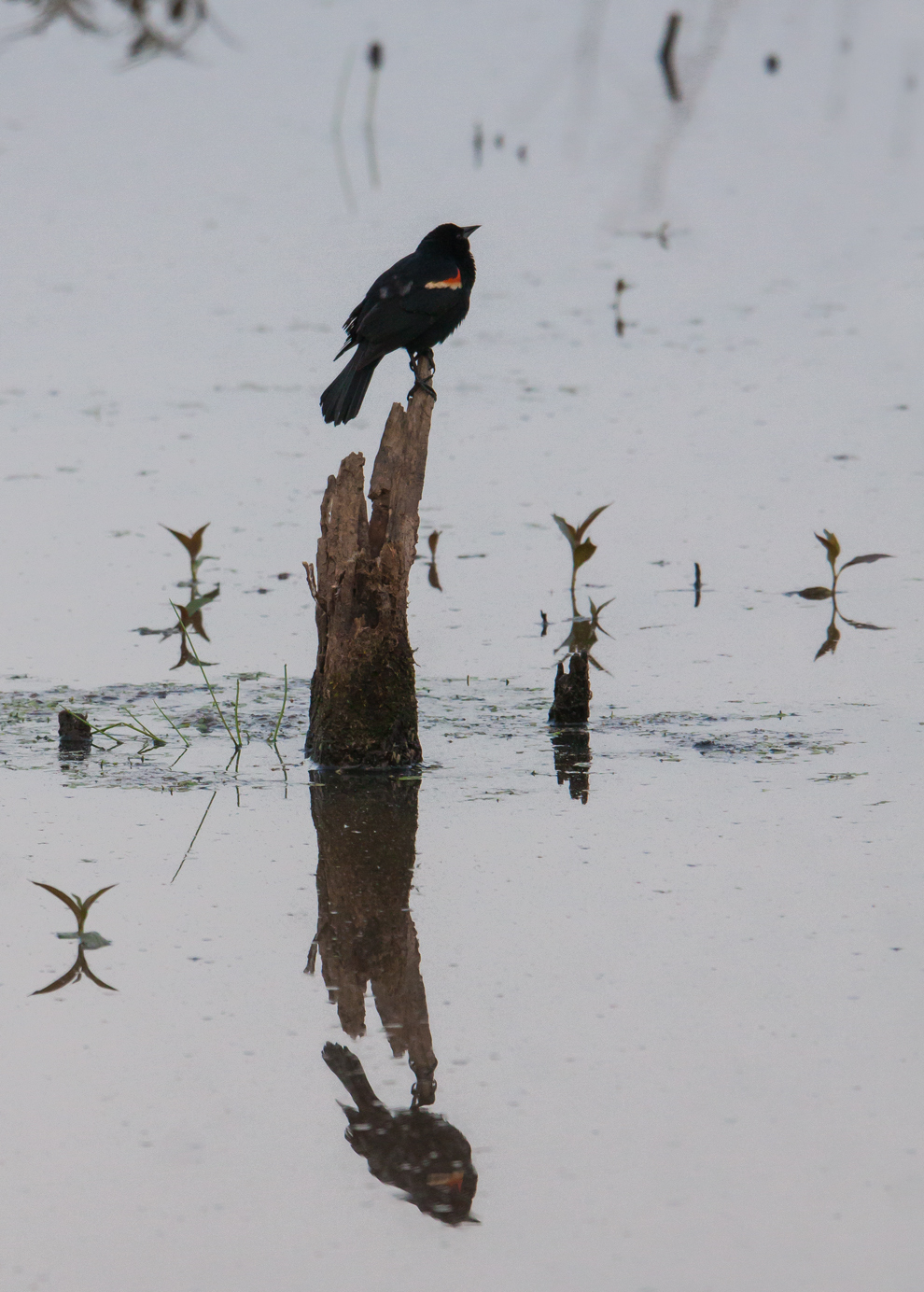
Female Red-winged Blackbirds (Agelaius phoeniceus) are amazingly beautiful and I would love to feature them more often in this blog, but I find them to be unusually difficult to photograph. Unlike their male counterparts, who are visible and vocal to the point of being a bit obnoxious, the females tend to spend their time pecking about industriously in the undergrowth, rarely coming out into the open.
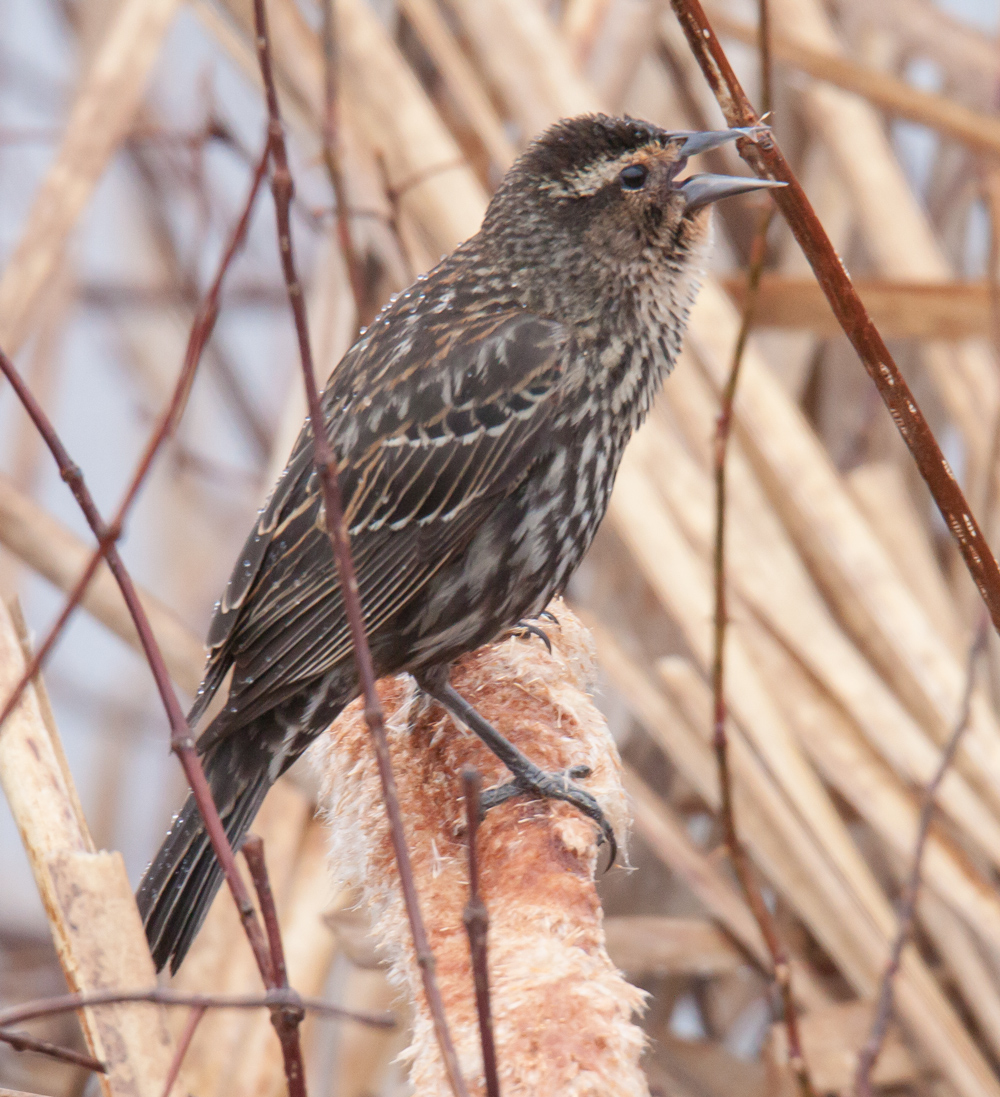
I was pleased to be able to get this mostly unobstructed shot of this female blackbird recently as she was singing in the rain. If you look closely, you can see a series of raindrops beading up on her back. Other birds may have been seeking shelter from the rain, but she kept working.
As the foliage reappears on the trees and bushes, it’s going to get tougher and tougher for me to spot birds. I’ll still be trying to photograph them for a while longer until I switch to macro mode and focus more on insects and flowers, which have their own identification challenges.
© Michael Q. Powell. All rights reserved.
Read Full Post »













 Mike Powell
Heron and blackbird
Posted in Birds, commentary, Nature, Photography, wildlife, tagged Agelaius phoeniceus, Ardea herodias, Canon 55-250mm zoom lens, Canon Rebel XT, confrontation, Great Blue Heron, Huntley Meadows Park, interaction, red-winged blackbird, territoriality on June 8, 2013| 12 Comments »
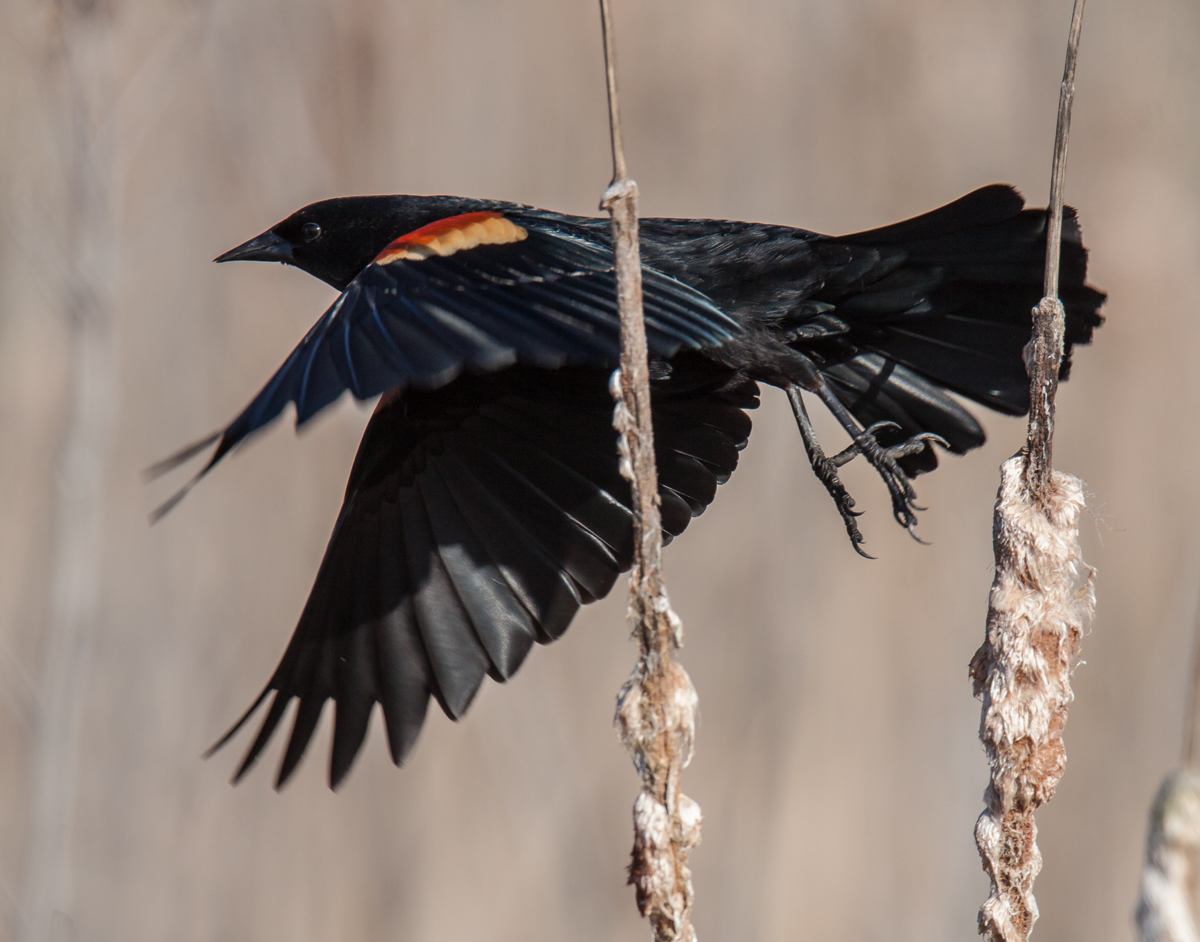
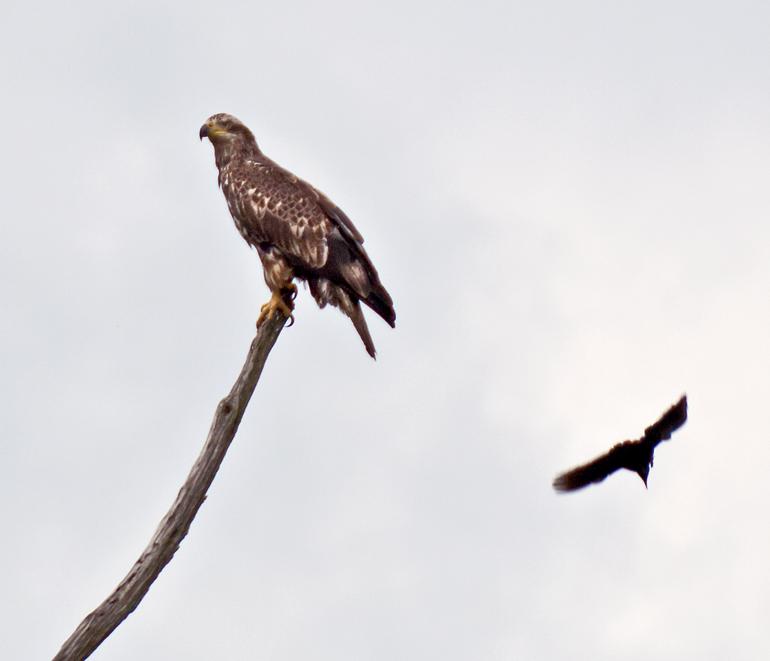
Yesterday, I was observing a Great Blue Heron (Ardea herodias) as he flew to a new location. As soon as the heron landed, a male Red-winged Blackbird (Agelaius phoeniceus) started buzzing him, obviously feeling possessive of the territory. I captured this photo as the heron took off in search of a more peaceful fishing spot.
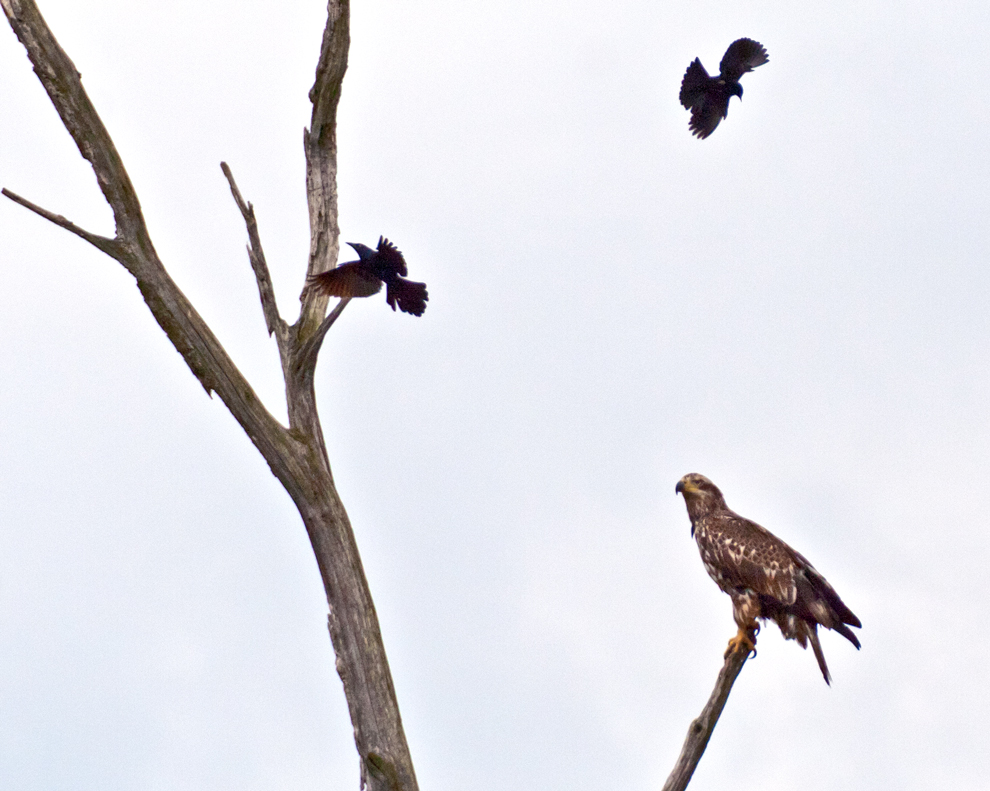
I love watching the interaction between different species, whether it be birds, reptiles, animals, or insects. Sometimes there is a kind of peaceful coexistence and sometimes, as was the case here, there is confrontation. Previously, I observed a group of blackbirds harassing a juvenile eagle, but this time the blackbird seemed to be alone.
One of my favorite bloggers, Sue of Back Yard Biology, did a wonderful posting recently on the Red-winged Blackbird’s sense of territoriality that is worth checking out. She called it “Angy Bird” and the post includes some cool photos that illustrate her main point.
I tend to think of blackbirds as aggressive and herons as peaceful and prone to avoid confrontation. Another one of my favorite bloggers, Phil Lanoue, who posts gorgeous shots of birds and alligators in his local marsh, has shown me, however, that Great Blue Herons will harass other birds and sometimes steal their catches, including this posting that he called “Stolen Treasure.”
Initially I was focused on catching this heron in the air, but I am glad that I kept my eyes and camera trained on the bird after he landed, for it turned out that the most exciting action was just starting.
Michael Q. Powell. All rights reserved
Share this:
Read Full Post »