Feeds:
Posts
Comments

Posts Tagged ‘Huntley Meadows Park’

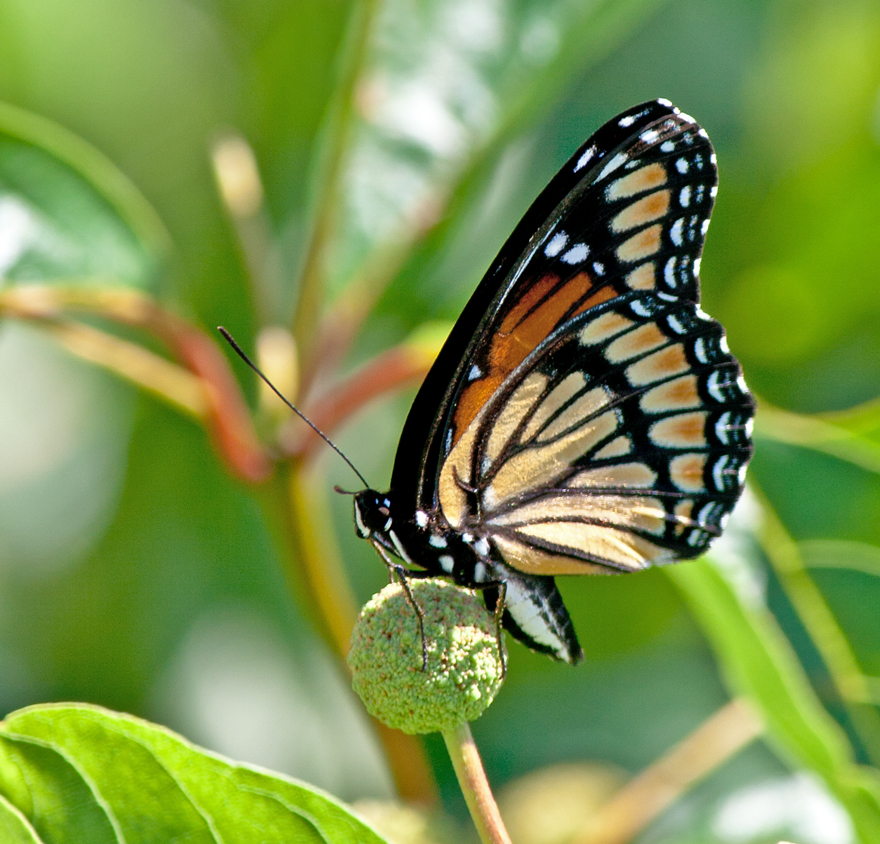
I haven’t seen a huge number of butterflies this summer, so I was happy to see a colorful butterfly this past weekend, which I believe is a Monarch butterfly (Danaus plexippus).

UPDATE: My tentative identification as a Monarch was not correct. Thanks to Jeremy Sell at The Life of Your Time for his help in identifying this as a Viceroy butterfly (Limenitis archippus archippus).

monarch_blog

© Michael Q. Powell. All rights reserved

Read Full Post »

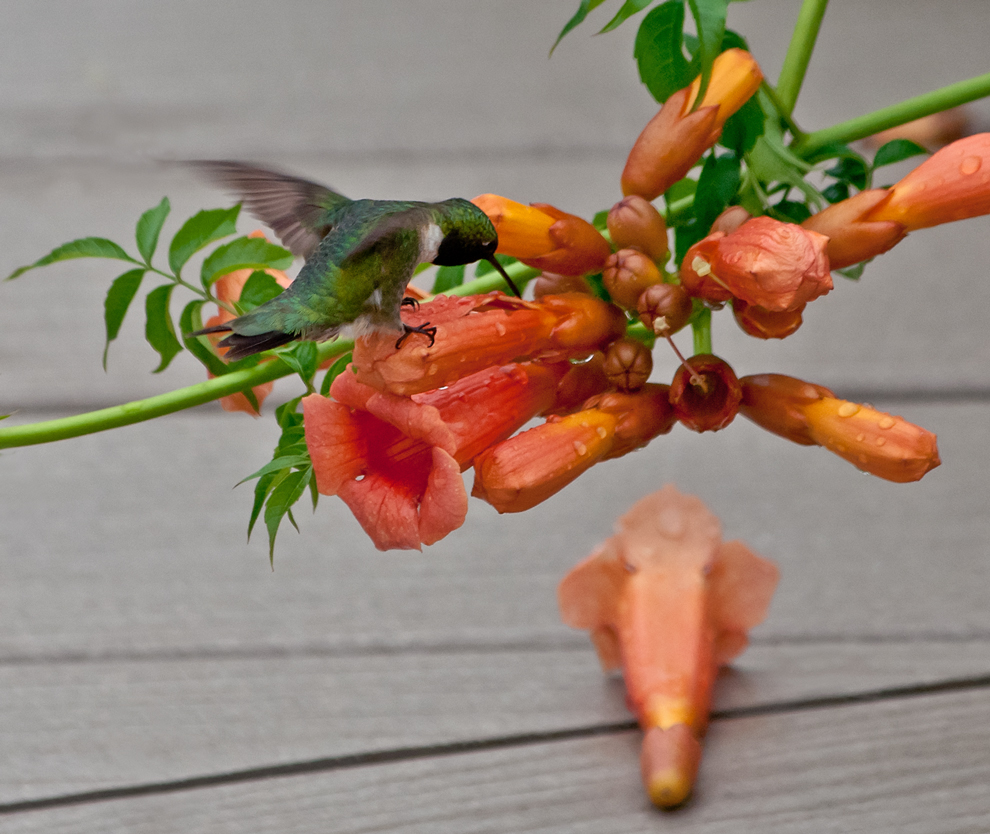
How do you get a sharp photo of a hummingbird’s wings? Apparently, if a hummingbird is hungry enough, it will extract the nectar from a flower before it has bloomed, and the leverage required may force it to perch on the flower, doing away with the necessity to fly its wings rapidly.

hummingbird1_blog

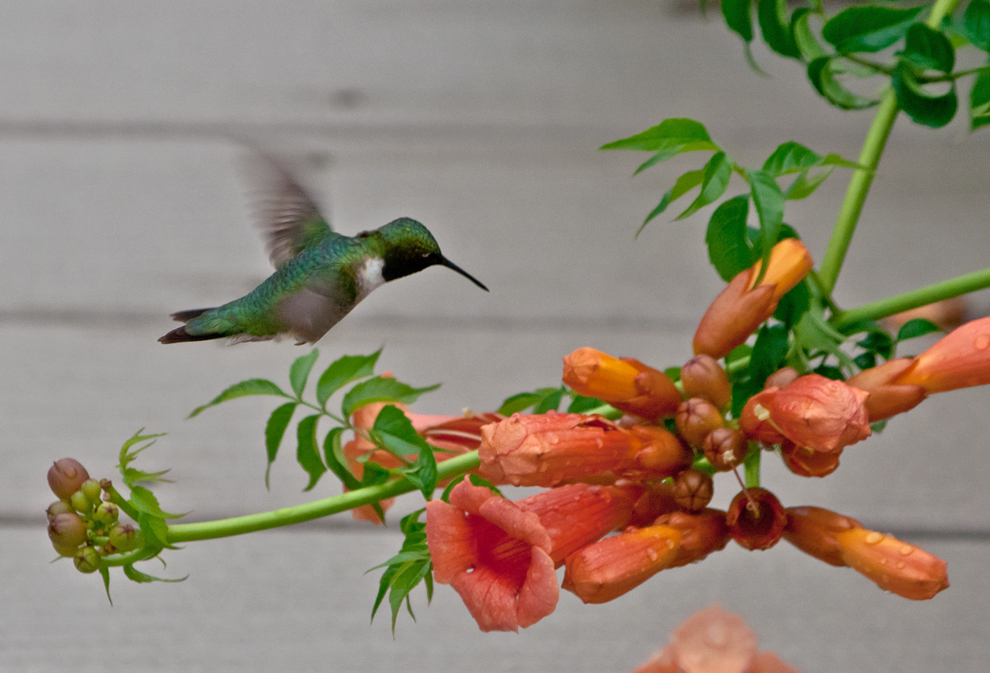
Walking on the boardwalk at my local marshland park, the last thing on my mind was a hummingbird—I was searching for butterflies and dragonflies.  As I turned a corner, I saw a flash of color and figured it was a butterfly. I took a closer look and realized it was a hummingbird, a Ruby-throated Hummingbird (Archilochus colubris).

hummingbird4_blog

The hummingbird was circling around a plant with red, trumped-shaped flowers that was partially hanging over the boardwalk. Most of the flowers had not yet bloomed, so the bird seems to have decided to use its bill to drill into the side of the unopened flowers to extract the nectar. That decision was largely responsible for me being able to get some shots, because it caused the hummingbird to hang around longer.

hummingbird2_blog

I realized that I had a limited window of opportunity and made a quick adjustment to my camera to increase the shutter speed of my camera, although that meant I had to narrow my depth of field. I also ended up shooting downward, with the gray composite boards of the boardwalk as the background. It was definitely a challenge to keep the camera focused on the hummingbird.

hummingbird3_blog

The photos are not perfect, but I am pretty happy that I was able to get photos at all, given that this is only the second time that I have seen a hummingbird in the wild. Next time, perhaps I’ll manage to get a more traditional shot of a hummingbird hovering in the air.

© Michael Q. Powell. All rights reserved

Read Full Post »

It was bound to happen. No more than I few days ago I lamented that I had never seen a dragonfly eating, in responding to a wonderful posting by Sue of Backyard Biology about dragonflies as super predators—you should check out her posting, unless you are squeamish about things like headless dragonflies.

Sure enough, this past weekend I was able to get some photos of a female Eastern Pondhawk dragonfly (Erythemis simplicicollis) with a bee that she had captured. Initially, I was just trying to get a photo of the beautiful emerald-colored dragonfly on the plant in the second photo. I didn’t even realize that she was cuddling a bee in her front legs, almost like a little baby.

Eventually she flew down from the plant to the edge of the boardwalk to enjoy her meal and I got the first shot. I had to lean over the edge of the boardwalk to get the photo and just barely avoided falling into the bushes below.

My usual experience is that I am so excited about photographing a subject the first time that I not very concerned about the quality of the images. I will keep my eyes open and hope to capture some more images of dragonflies feeding.

dragonfly_bee1_blogdragon_bee2_blog

© Michael Q. Powell. All rights reserved

Read Full Post »

As I was walking along the boardwalk at my local marsh in the early afternoon of a very hot and humid day this weekend, I spotted a deer in the brush, my closest encounter with a deer in a long time.

Immediately I stopped, fearful that I would spook the deer. The deer was close enough that I figured that I could get a good shot. I was wrong. The strong, harsh midday light was coming directly from the side, and despite my efforts to adjust my settings, virtually all of my shots had one side of the deer’s face with blown out highlights and the other side in deep shadows. It might sound artistic, but it wasn’t.

I slowly began to move toward the deer, hoping to get a more favorable lighting situation, when, sure enough, the deer turned around and ran away from me. I thought that all was lost, but then the deer stopped and turned to look back at me. Somehow, the deer had moved to a spot where there was a little shade and I managed to get this shot.

Frankly, my deer, I don’t give a damn that you chose to move away from me—I love you more from a distance.

deer1_blog

© Michael Q. Powell. All rights reserved

Read Full Post »

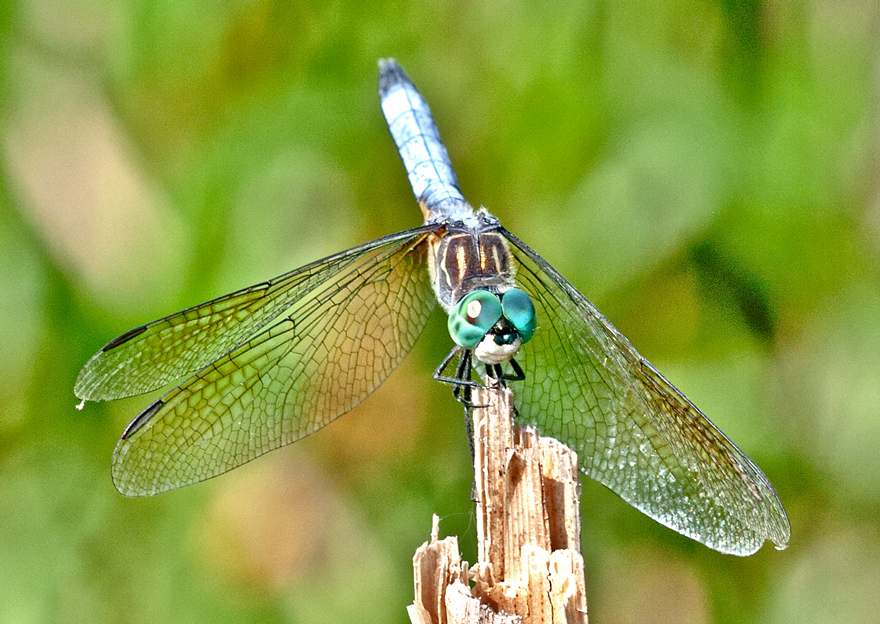
Male Blue Dasher dragonflies (Pachydiplax longipennis) assume this handstand-like position, called the obelisk posture, when they feel threatened or want to minimize exposure to the sun. I was leaning a little closer than normal to this dragonfly, because I had a 100mm lens attached to the camera and not a longer zoom lens, so maybe that caused him to be a little alarmed. As the weather warms up and more dragonflies appear, I am sure that I will be getting a lot more shots of Blue Dashers, which were my favorite dragonflies to photograph last summer.

dasher1a_blog

© Michael Q. Powell. All rights reserved

Read Full Post »

Dragonflies are super-predators, according to a posting today by one of my favorite bloggers, Sue of Back Yard Biology, thanks to their agile flying ability and incredible eyesight, but predators can also become prey. You should check out that posting for a wonderful explanation of dragonflies’ visual acuity and some beautiful dragonfly images.

The Tree Swallow (Tachycineta bicolor) in this photo has captured a male Blue Dasher dragonfly (Pachydiplax longipennis) that appears to be struggling to extricate itself from the grip of the bird. In the second shot, the swallow is offering its prize to its mate, which pokes its head of the nesting box and takes a bite of one of the wings. (If you look carefully at the first shot, you’ll see that it was taken after the second shot and part of one of the dragonfly’s wing seems to have been bitten off.)

Predator or prey? There always seem to be some creature above you on the food chain. It’s no wonder that so many of the birds, animals, and insects are so hyper-vigilant and skittish when we try to take photographs of them—their survival may depend on it.

breakfast1_blogbreakfast2_blog

Michael Q. Powell. All rights reserved

Read Full Post »

As you walk through certain areas of my local marsh, the air is filled with the fragrance of the wild roses, probably Virginia Roses (Rosa virginiana), which, according to Wikipedia, are native to eastern North America.

I stooped down closer to draw in the perfumed air and my eyes were attracted to the bold pattern of a beetle that was gathering nectar from the flower.  It appears to be a kind of Flower Longhorn beetle,  which I have tentatively identified as a member of the species Strangalia luteicornis. 

Check out the entry in Bugguide, one of my favorite on-line sources of information on insects, if your want additional information on this species.

long_beetle1_blog

Michael Q. Powell. All rights reserved

Read Full Post »

I chased around this beautiful female Eastern Pondhawk dragonfly (Erythemis simplicicollis), hoping in vain that she would land on something more natural-looking than the composite boards of the marsh boardwalk. Several times she took off and circled around a bit, but returned each time to the boardwalk.

Shooting from a high angle, I was able to capture some of the details of the dragonfly that I do not usually see, like the little hooks at the end of the hairy legs. I really like her pose as she seemed to lean toward me, without seeming threatening in any way.

As always, I was struck by the strikingly beautiful emerald color of the females of this species. It’s even more impressive in real life.

green_blog

Michael Q. Powell. All rights reserved

Read Full Post »

Continuing my quixotic quest to photograph dragonflies in flight, I went boldly out into the wild, armed with my trusty 100mm macro lens, and managed to capture this cool image of a dragonfly as it hovered over the water.

In previous attempts, I used longer telephoto zoom lenses, which increased the number of potential subjects but gave only mixed results. Using a shorter, fixed focal-length lens, I had to change my strategy a little and try to get closer to the subject.

I noticed this dragonfly hovering about the water to the side of the boardwalk on which I was walking. I crept as close as I could and tried to shoot as close to straight down as I could (the boardwalk was at least a foot (30 cm) above the level of the water and it looked like the dragonfly was hovering almost level with the boards of the boardwalk). I was really sensitive to my shadow, because I have learned that nothing scares away an insect faster than casting a shadow on it.

I used autofocus and was a little surprised to see that my dragonfly is in pretty clear focus, although the shutter speed was not fast enough to stop the action of  the wings. I shot this handheld and really tried to pay attention to my technique, because my macro lens does not have any built-in image stabilization. As I thought about it afterwards, I realized that the auto focusing on the macro lens (using what Canon calls an ultrasonic motor) is much faster and better than the focusing on my Canon 55-250 or my Sigma 135-400mm zoom lens.

I have been having some difficulties identifying this dragonfly. The coloration of the tail looks a little like a female Blue Dasher, but the beautiful blue eyes do not seem right for the female. The tip of the tail should be a help, but I can’t seem to find one that matches it.

Although I can’t identify the dragonfly, it’s my best shot to date of a dragonfly in flight and I’m pretty content with it today, though my quixotic quest is likely to continue this weekend.

hover1_blog

Michael Q. Powell. All rights reserved

Read Full Post »

With my macro lens on my camera on Monday, I was happily scouring every plant and flower for insects to photograph when I came upon this unusual-looking spider. Instead of having a rounded body like most spiders, it had a really elongated body and what appeared to be legs of varying lengths.

I have purposely attached a clickable higher resolution image to give you a better look at the details of this strange spider. For example, I think I can see at least two rows of tiny eyes in the middle of the photo.

Last year, I photographed a similar spider and I think that it is probably a kind of Long-jawed Orbweaver, though I can’t make a more definite identification.

What mental image do you have when you think of a spider? Perhaps this photo will help you broaden your perspective about what a spider might look like.

long_spider_blog

Michael Q. Powell. All rights reserved

Read Full Post »

As I was checking out the cattails that are growing like crazy at my local marsh, I spotted this little beetle chewing on the soft insides of a broken cattail.  I immediately recognized him as a Spotted Cucumber beetle (Diabrotica undecimpunctata), a species that I encountered numerous times last summer when photographing flowers.

I really like the texture of the immature cattail, both on the outside as well as on the inside, and the bold design of the beetle.  I think that those elements and the varied shades of green make for a cool, graphic image.

cucumber1_blog

Michael Q. Powell. All rights reserved

Read Full Post »

Generally when I encounter Great Blue Herons (Ardea herodias), they are very focused. They seem willing to stand in one place for a long period of time, staring intently at the water, waiting for the optimal moment to strike.

In contrast, this heron seemed to be almost daydreaming as he gazed off into the distance. Had something caught his attention there? Was he merely taking a break? Was he thinking about something else, or imagining he was somewhere else?

I’ll never know the answer to those question, but I can be happy that he was willing to stay in one place long enough for me to get this shot.

pensive_heron_blog

Michael Q. Powell. All rights reserved

Read Full Post »

Looking for spiders to photograph, I came across this one, which I think may be a Lattice Orbweaver spider (Araneus thaddeus). I tried a number of different techniques to get a shot of this little spider and think that this may be one of the ones on which I used my pop-up flash.

I especially like the way in which part of the web is visible against the dark background and the way the light seems to be shining through the jelly-like front part of the spider’s body.

spider_drops_blog

Michael Q. Powell. All rights reserved

Read Full Post »

When an unfamiliar dragonfly zoomed by me, one of my fellow photographers told me it was a unicorn, at least that is what I thought he said.

Sometimes when I am concentrating on a shot, I shut out my surroundings and I had had to ask him to explain his comment. It turns out that he said that it was a Unicorn Clubtail dragonfly (Arigomphus villosipes), a type that he had rarely seen in our local marsh.

I extended my 135-400mm zoom to almost maximum range and it still was tough to get a clear shot. The dragonfly flew off and returned to his perch a couple of times, but the log on which he posed was so far away that my shot doesn’t permit me to say with great certainty that it is a Unicorn Clubtail. It is clear, though, that it not a Common Whitetail or Blue Dasher, the two types of dragonflies that I see most often.

Overall, I like the effect of the triple view of the dragonfly—the dragonfly, its shadow on the log, and its reflection in the water, which, for me, helps to compensate for the softness of the focus.

unicorn_blog

Michael Q. Powell. All rights reserved

Read Full Post »

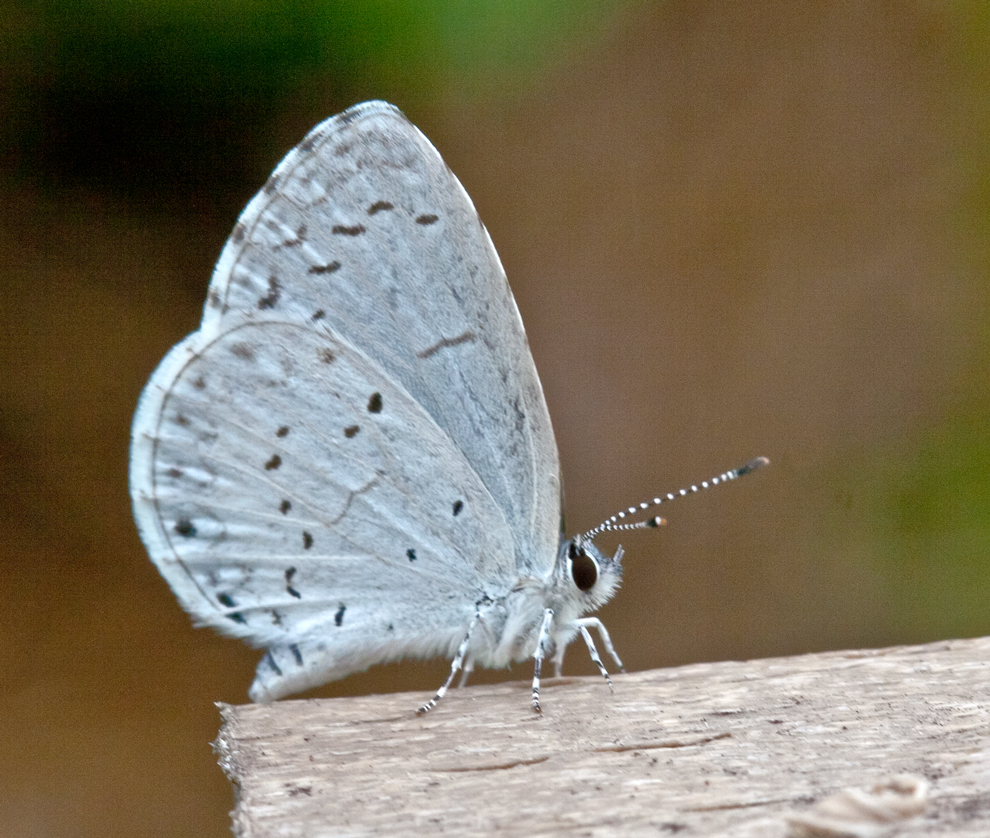
This past weekend I chased around this little butterfly—which I think may be a Summer Azure butterfly (Celastrina neglecta)—for quite some time until it finally landed.

This butterfly was really tiny, with a wing span of only about an inch (2.5 cm), so it was hard to get close enough to get a decent shot without spooking it. It took flight a couple of times, but landed nearby so I could continue the hunt.

It is always fun to photography the larger, more colorful butterflies like the Eastern Swallowtail or the Monarch, but I find that these little butterflies have a simple beautiful of their own.

little_white1_blog

Michael Q. Powell. All rights reserved

Read Full Post »

As I was going over my images from the last few weeks, I came across this image of a daddy longlegs (also known as a harvestman) that I really like, in part because of the way that the photo shows its eyes.

Previously I posted  what I had characterized as an artistic shot of this arachnid that showed mostly its bottom side. In this shot, the harvestman had turned toward the camera and the eyes, which grow on a stalk in the middle of its back are visible.

They are a huge contrast with the eyes of a jumping spider that I featured recently in a posting, which had multiple sets of large eyes.  

daddy2_blog

Michael Q. Powell. All rights reserved

Read Full Post »

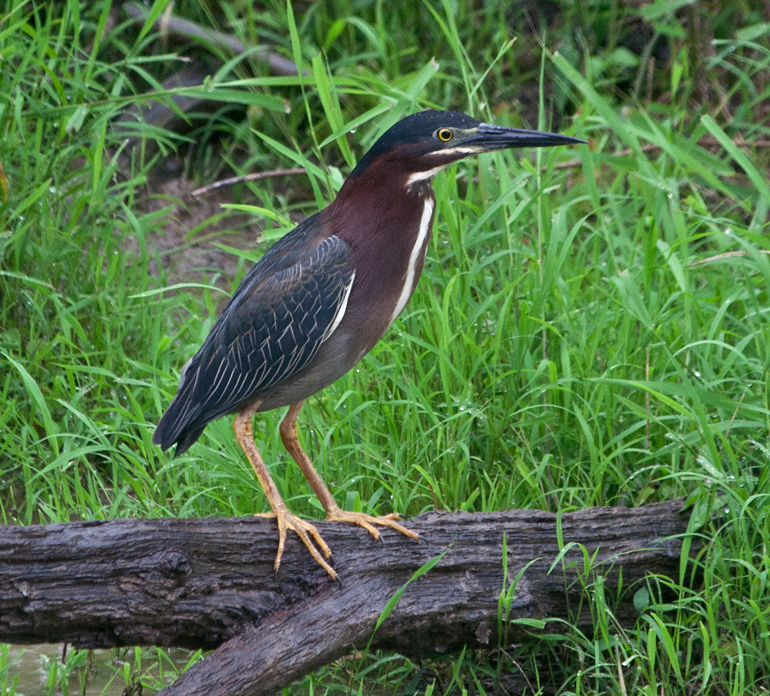
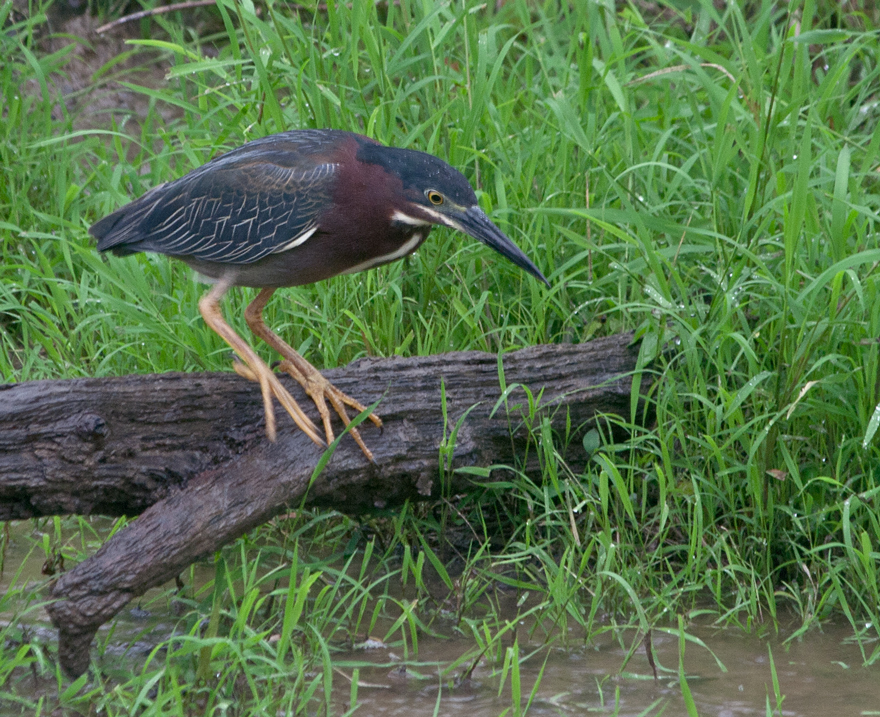
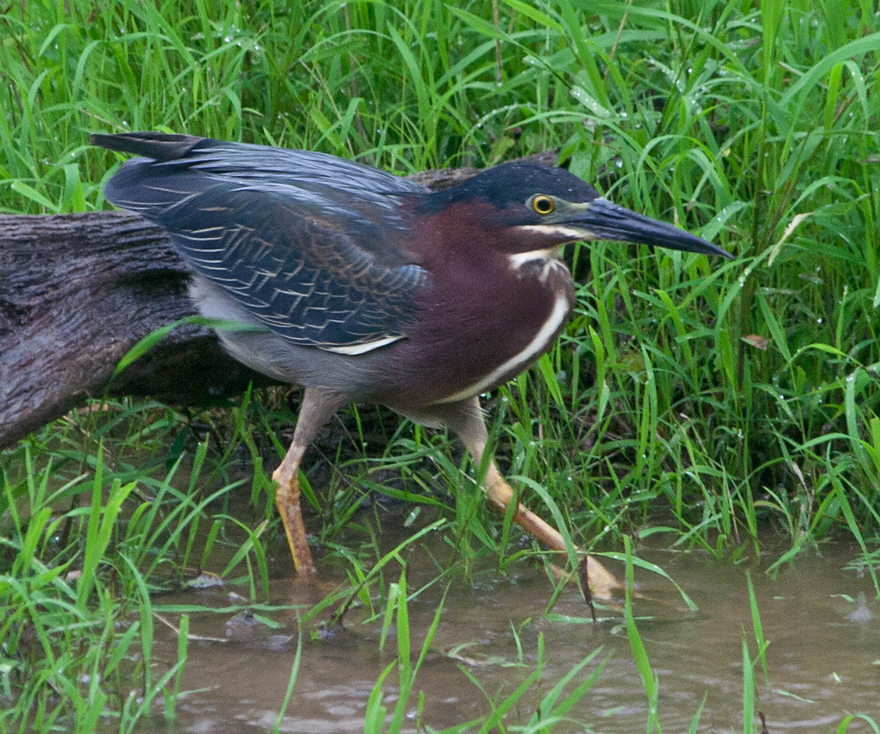
One of the advantages to taking photos in the rain is that the birds and animals seem a little less sensitive to my presence and there are fewer other people around to spook them. This past weekend I came across this Green Heron (Butorides virescens) at relatively close range while it was raining.

The heron was perched on a log, just about the level of the water and I had an unobstructed view of him.  Despite the sound on my shutter as I snapped off some shots, the heron seemed oblivious to the fact that I was there.

Initially, the little Green Heron stood on the log, surveying the situation. Eventually, he bent over a bit to look more attentively at the water for potential prey. After a little while, he hopped off the log and I lost sight of him in the plant-filled water.

This is one of the few times that a Green Heron has not taken off immediately when I saw it or,  as is often the case, before I even saw it. As a result I was able to get my clearest shots of a Green Heron to date, though, of course, I’ll continue to be on the lookout for even better shots.

heron_log1_blogheron_log2_blogheron_log3_blogMichael Q. Powell. All rights reserved

Read Full Post »

As I watch Barn Swallows (Hirundo rustica) flying, I am amazed at their aerial acrobatic skills. They change direction in such unpredictable ways and swoop up and down so quickly that I thought that I would never be able to capture them in flight.

However, one day this past weekend I spent some time observing them more closely and eventually I decided to try to get some in-flight shots. Most of my shots were either blurry or the swallow was only partially visible in the frame, but I was able to get a few decent (or at least recognizable) shots of a swallow swooping down over the water.

flying_swallow2_blogflying_swallow1_blog

Michael Q. Powell. All rights reserved

Read Full Post »

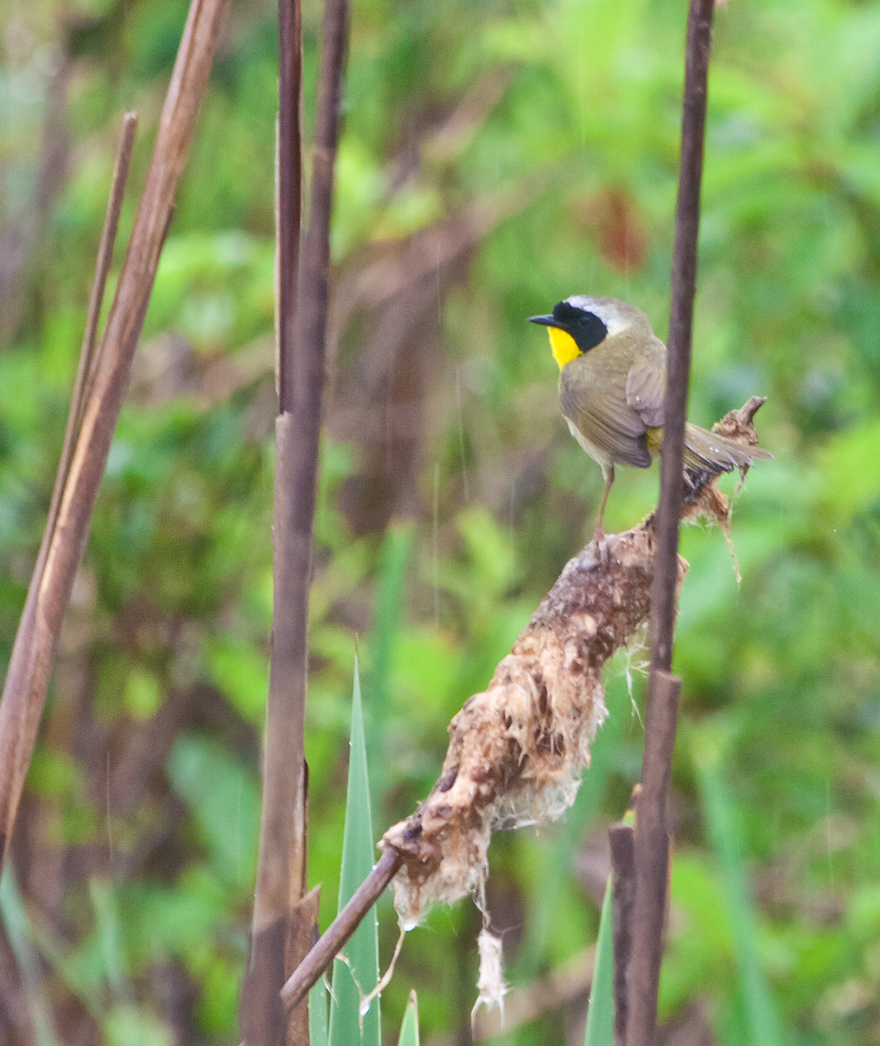
Normally I see (or hear) CommonYellowthroat warblers (Geothlypis trichas) in the upper reaches of trees, generally obscured by leaves.

I was really happy when I spotted this male yellowthroat perched on cattails, in an area in which I normally see only red-winged blackbirds. As a result, I was able to get a relatively unobstructed shot of this beautiful little bird.

yellowthroat_cattail_blog

Michael Q. Powell. All rights reserved

Read Full Post »

As I was searching for dragonflies and butterflies in the vegetation overlooking a small pond this past weekend, I spotted this little patch of yellow on the leaf of a small tree, which turned out to be a tiny tree frog.

The frog appears to still be in a developmental stage, with indistinct feature and a substantial amount of the tail that it had as a tadpole. The frog was yellowish in color and it is a little tough for me to figure out what kind of a frog it is.

I should note that this it the first tree frog that I have ever seen and I was amazed at how small it was. It is not much bigger than some of the insects that I have been photographing, but it is definitely a whole lot cuter.

little_frog1_bloglittle_frog2_blog

Michael Q. Powell. All rights reserved

Read Full Post »

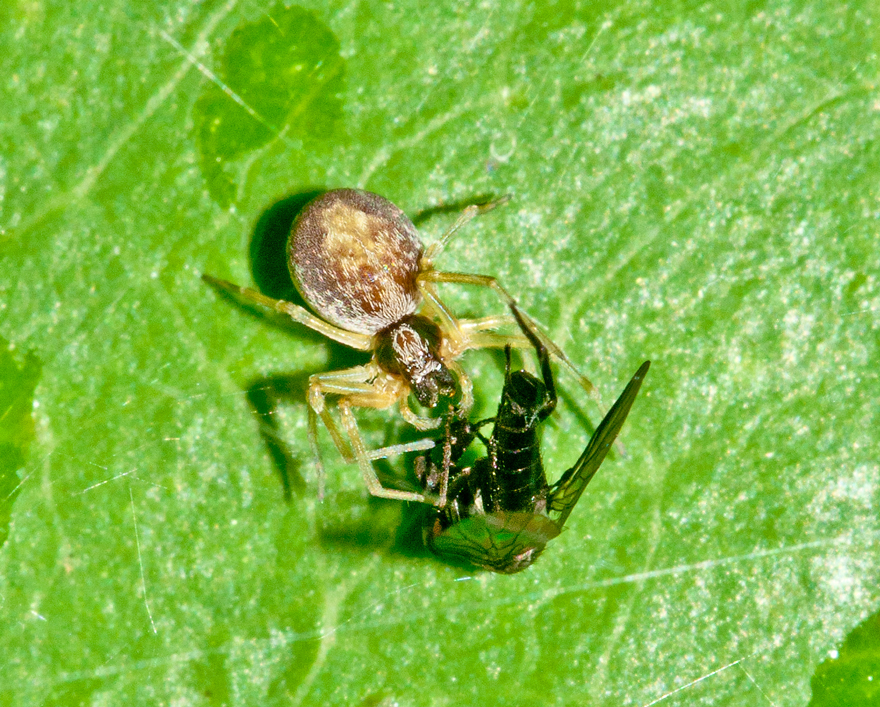
This past weekend I was off in search of spiders again and came across this little spider perched on a leaf, munching on a flying insect.

The lighting was poor, so I used the pop-up flash on my camera to provide a little extra light. Generally I don’t like it if the flash causes a shadow, but in this case it seems to add a somewhat more menacing and sinister look to the spider.

I am still trying to identify the spider and would welcome assistance. The patterns on its body, and especially the front section, are particularly cool and should assist me in finally being able to identify it.

spider_fly_blog

Michael Q. Powell. All rights reserved

Read Full Post »

Thanks to Tropical Storm Andrea, it rained all day this past Friday, and this juvenile Tree Swallow (Tachycineta bicolor) was wet and hungry and decided to express its unhappiness in a very vocal way.  Shooting from under an umbrella, I was able to capture this moment of pique.

Swallows eat flying insects and I have to believe that the rainy weather made foraging tough for them. Fortunately, the continuous rain last for only a single day and this little bird probably was able to survive its day of reduced rations.

wetbird1_blog

Michael Q. Powell. All rights reserved

Read Full Post »

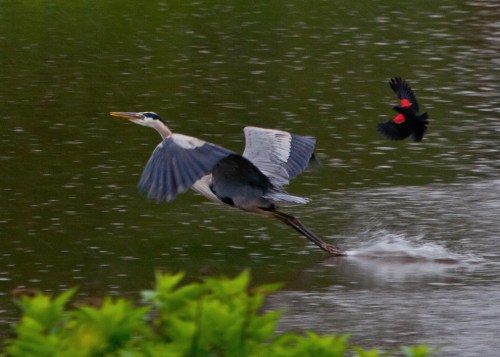
Yesterday, I was observing a Great Blue Heron (Ardea herodias) as he flew to a new location. As soon as the heron landed, a male Red-winged Blackbird (Agelaius phoeniceus) started buzzing him, obviously feeling possessive of the territory. I captured this photo as the heron took off in search of a more peaceful fishing spot.

I love watching the interaction between different species, whether it be birds, reptiles, animals, or insects. Sometimes there is a kind of peaceful coexistence and sometimes, as was the case here, there is confrontation. Previously, I observed a group of blackbirds harassing a juvenile eagle, but this time the blackbird seemed to be alone.

One of my favorite bloggers, Sue of Back Yard Biology, did a wonderful posting recently on the Red-winged Blackbird’s sense of territoriality that is worth checking out. She called it “Angy Bird” and the post includes some cool photos that illustrate her main point.

I tend to think of blackbirds as aggressive and herons as peaceful and prone to avoid confrontation. Another one of my favorite bloggers, Phil Lanoue, who posts gorgeous shots of birds and alligators in his local marsh, has shown me, however, that Great Blue Herons will harass other birds and sometimes steal their catches, including this posting that he called “Stolen Treasure.”

Initially I was focused on catching this heron in the air, but I am glad that I kept my eyes and camera trained on the bird after he landed, for it turned out that the most exciting action was just starting.
chase1_blackbird

Michael Q. Powell. All rights reserved

Read Full Post »
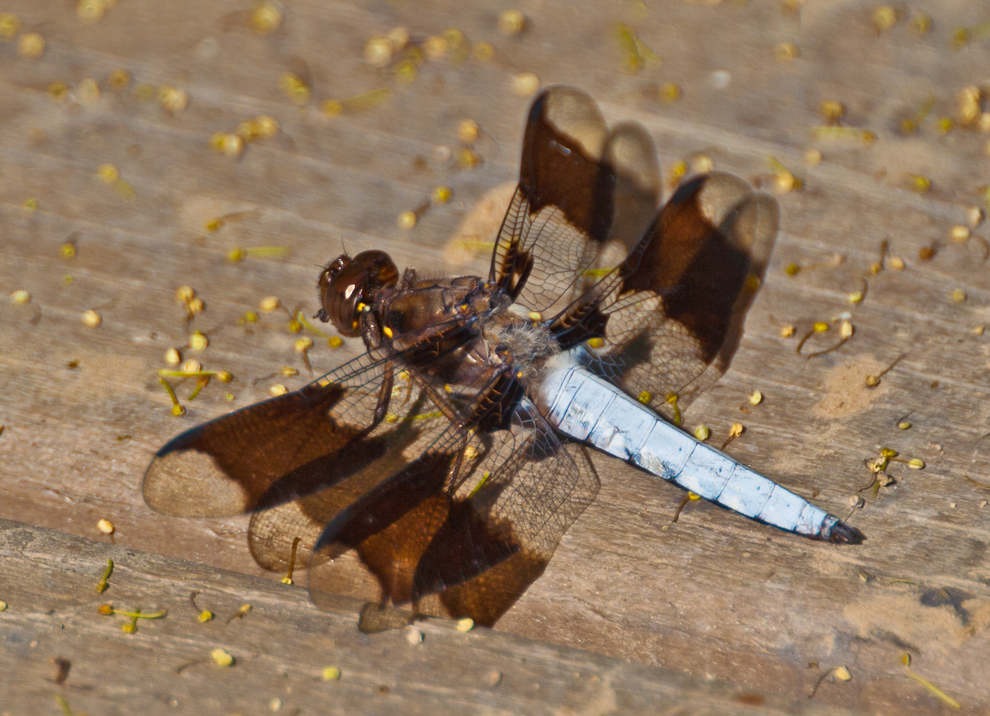
Although I usually try to get close-up shots of dragonflies, there is something really peaceful about this longer distance shot of a male Common Whitetail dragonfly (Plathemis lydia) from this past weekend. I really like the arc of the branch and the reflection of both the branch and the dragonfly in the still water of the marsh. If you click on the image, you’ll see that there is a pretty good amount of detail in the dragonfly—I chose not to highlight those details in this posting.

Click the photo to see a higher resolution view.

Click on the photo to see a higher resolution view.

Michael Q. Powell. All rights reserved

Read Full Post »
Who hasn’t wished for an extra set of hands to get more done in this multi-tasking world?

When I first looked at this photo that I took of a male Common Whitetail dragonfly (Plathemis lydia), it looked like he had grown two extra sets of wings. Had a genie granted one of his wishes? Could he now fly faster than his friends (he is a male, after all)? Will this impress the ladies?

A close look at the image, however, reveals that the extra wings are merely illusions, shadowy reflections of a more ordinary reality.

That doesn’t mean, though, that he has ceased to dream and to wish from time to time for those extra wings.

wings_blog

Michael Q. Powell. All rights reserved

Read Full Post »
What happened to this swallow to cause it to be so drab looking? That was my first thought when I looked at these images.

The bird was perched at a location where I had previously seen a lot of Barn Swallows (Hirundo rustica), but it looked more like a Tree Swallow (Tachycineta bicolor). However, all of the Tree Swallows that I have seen before have been a shiny bluish-green in color. Was this a different kind of sparrow?

It turns out that the answer to my mini-mystery is quite simple—juvenile Tree Sparrows are not the same color as the adults. I guess that I had been assuming that the young Tree Sparrows would be miniature versions of their parents.

The little swallow seemed quite content to pose for me and allowed me to get profile shots and head-on shots without any instructions. Perhaps a modeling career is in its future.

swallow1_blogswallow2_blog

Michael Q. Powell. All rights reserved

Read Full Post »

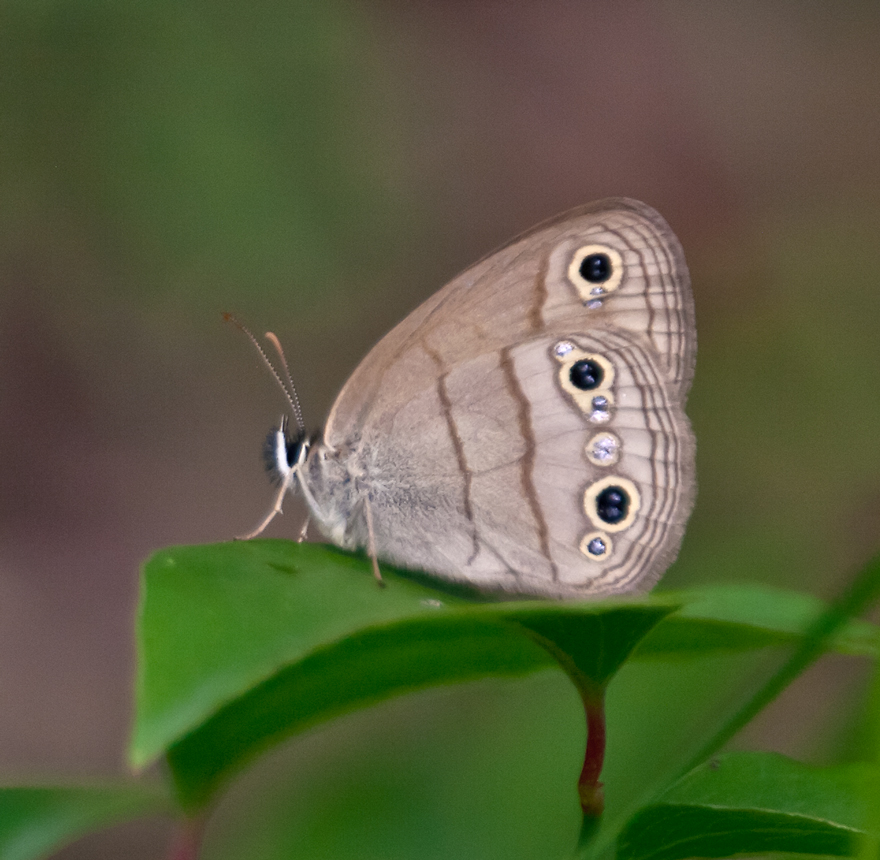
I have been seeing little brown butterflies (or moths) flitting about in the woods recently, but have not gotten a good look at any of them, so I was thrilled when a Little Wood Satyr butterfly (Megisto cymela) landed on a nearby leaf this past Monday and remained long enough for me to get some shots.

I am not a hundred percent certain of my identification, because there are a lot of similar butterflies and the distinctions seem pretty subtle to me at the moment. Please let me know if you can identify this little butterfly with greater precision.

This is another photo in which I took the time to use my tripod and to focus carefully, shooting at a focal length just short of 400mm. The focus is a little soft, particularly for the leaf, but I think that it helps to give the image a kind of dreamy feel, though it’s a little early for a midsummer night’s dream.

brown1_blog

Michael Q. Powell. All rights reserved

Read Full Post »

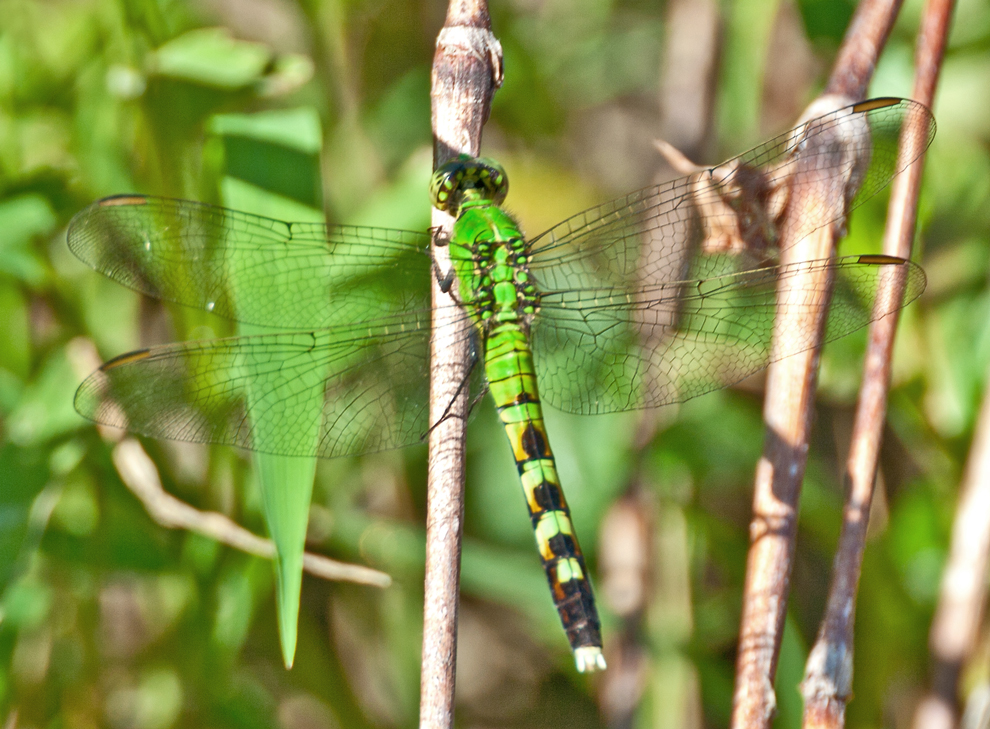
Normally, I try to have an uncluttered background for my dragonfly shots, but the brilliant green body of this female Eastern Pondhawk (Erythemis simplicicollis) really helps it to stand out (and this was the first pondhawk that I saw this spring).

Most of the dragonflies that I observe at my local marsh are either Blue Dashers or Common Whitetails, so I was really excited when a flash of emerald green caught my eye—the color is distinctive enough that I knew immediately what it was. Without paying too much attention to my surroundings, I moved forward to try to get a better angle on the dragonfly.  The next thing I knew, I was ankle-deep in marsh mud, but did manage to get some shots.

I haven’t yet seen any male Eastern Pondhawks, which are mostly blue, but I am keeping my eyes open and hope that it is only a matter of time until I photograph one this spring.

pondhawk1_blog

pondhawk2_blog

Michael Q. Powell. All rights reserved

Read Full Post »

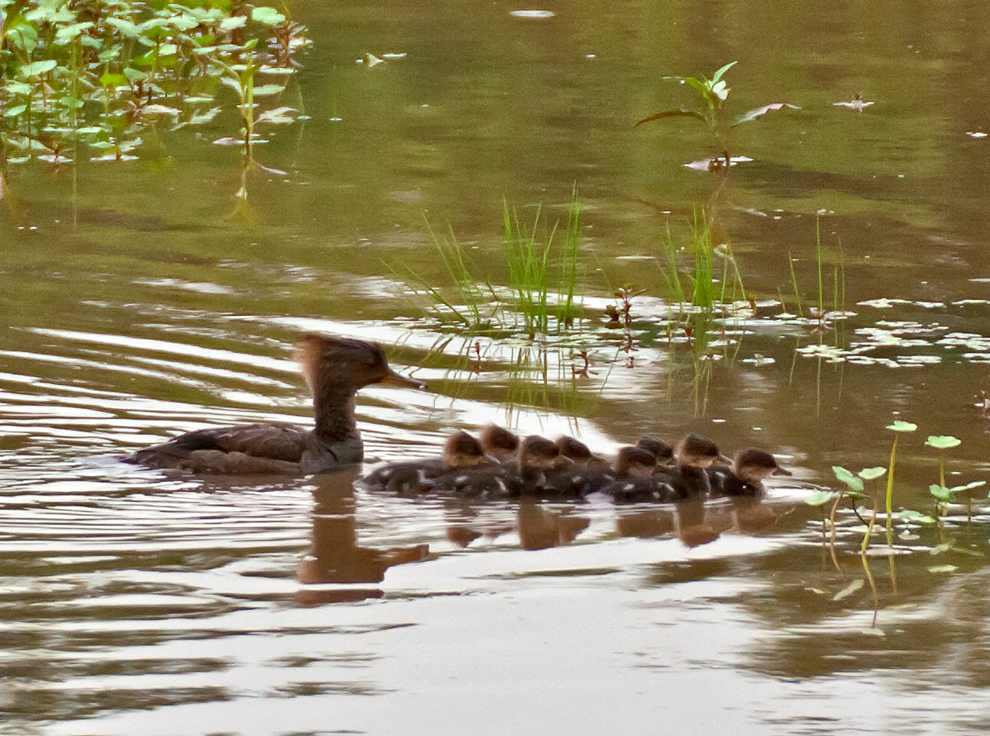
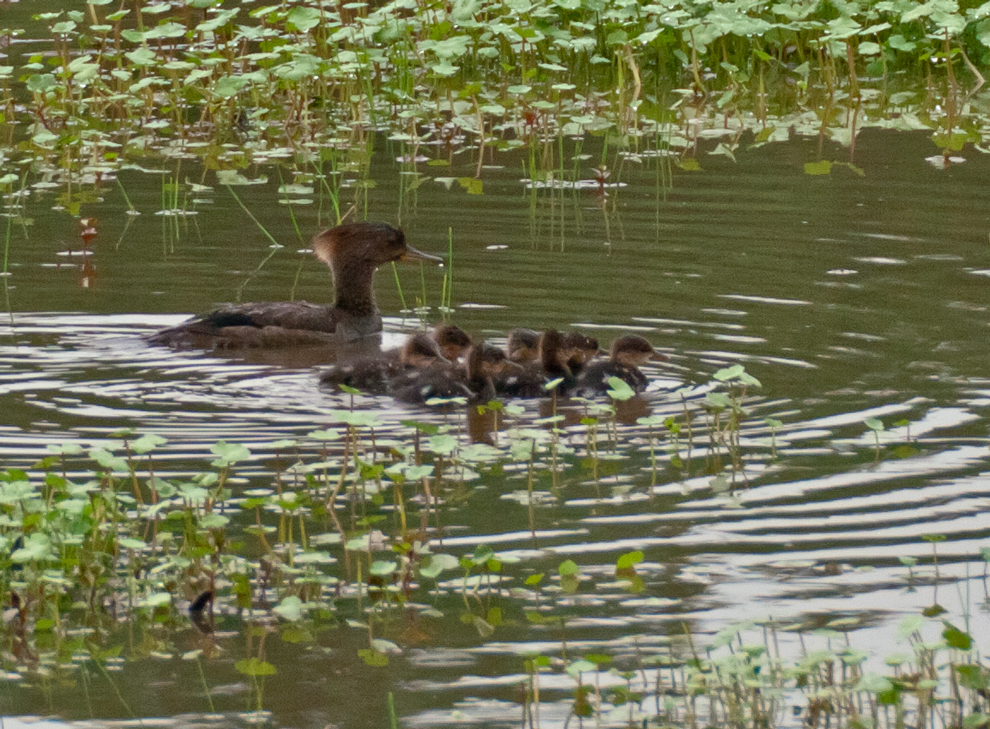
Walking along the boardwalk at my local marsh yesterday morning, scanning the surface of the water, I noticed some movement and suddenly a female Hooded Merganser (Lophodytes cucullatus) with eight little ducklings swam into view. They were pretty far away in the shallow water, amidst the plants that have sprung up, but I managed to get a few shots of the family. The female Hooded Merganser ducks cares for the young alone, unlike the Canada Geese families that I see at the marsh, in which both parents are present.

I was heartened to see this group of ducklings, because I had heard from others at the marsh of dwindling number of ducklings earlier in the season. I have no idea how many of these little ones will survive—they seem so small and vulnerable (not to mention cute) and the snapping turtles are huge in comparison.

mergansers2_blog

mergansers1_blog

Michael Q. Powell. All rights reserved

Read Full Post »

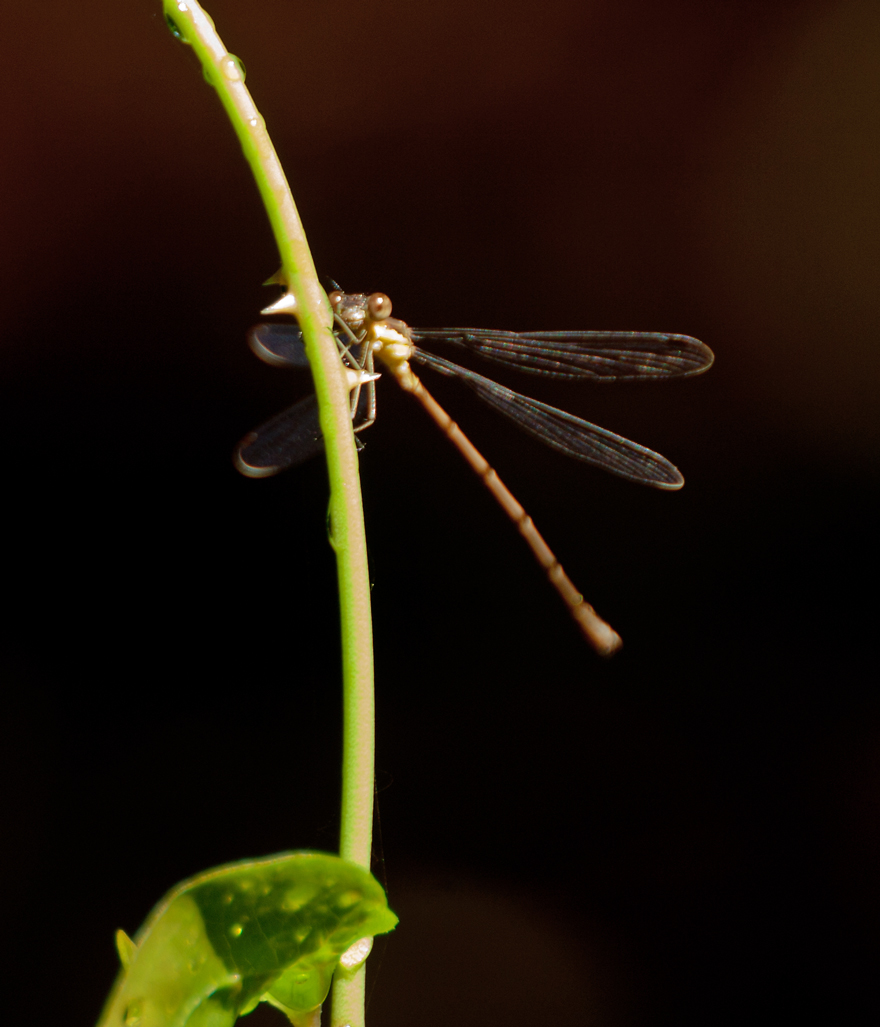
Walking through the woods today at my local marshland park, I managed to photograph my first damselfly of the spring, what appears to be some type of spreadwing damselfly, possibly a Slender Spreadwing (Lestes rectangularis).

My camera was already on my tripod, with my 135-400mm zoom lens attached, when the damselfly flew by and perched on a thorny vine right in front of me. I decided to try to get a shot and the first thing that I had to do was to back up, because the minimum focusing distance of the lens at full extension is 7.2 feet (2.2 meters). Secondly I had to switch to manual focus—the damselfly is so slender that my camera refused to autofocus on it. Finally, I had to adjust the aperture manually, when I realized that there was a lot of direct light falling on the vine and on the damselfly.

The two shots that I am posting may look like they were taken using flash, with an almost black background, but the damselfly was in a little pocket of light and the rest of the area was pretty heavily shaded.

damselfly_blog

damselfly2_blog

Michael Q. Powell. All rights reserved

Read Full Post »

Arriving at the marsh really early in the morning, I was finally able to get a relatively well-exposed shot of a Great Egret (Ardea alba) in breeding plumage, with wispy plumes on its back and a bright green color between its eye and bill (an area known as the “lore”).

Generally I have trouble photographing this beautiful bird, because its brilliant white color gets blown out pretty easily when there is a lot of light and using exposure compensation is often not sufficient. One obvious solution to the problem of too much light is to come at a time of reduced light. I switched to manual mode and, after a bit of experimentation, found a setting that seemed to work pretty well. I also had my camera on a tripod, which is a good practice any time I can manage to use it, which permitted me to use a slower shutter speed.

morning_egret2_blog

Michael Q. Powell. All rights reserved

Read Full Post »
« Newer Posts - Older Posts »