Feeds:
Posts
Comments

Posts Tagged ‘Huntley Meadows Park’

I was attracted initially by the bright red color of a cardinal flower (Lobelia cardinalis), but then I noticed a small amount of movement. When I looked more closely, I realized there was a tiny bee—the smallest that I have ever seen—busily gathering pollen. Rather than gathering pollen in little sacs, as I had seen other bees do, this bee seemed to be collecting it on his abdomen.

I don’t know much about plant anatomy, but as I searched on the internet, I learned some fascinating things about the cardinal flower, especially from a blog posting by Eye on Nature dealing with the way in which hummingbirds pollinate cardinal flowers. That posting contains some detailed images of the cardinal flower as well as some fantastic shots of a hummingbird.

I shot these images handheld with my 180mm macro lens. Ideally I should have used my tripod to get clearer shots, but the bee was so active that I feared that it would be gone if I had taken the time to set up the tripod.

It’s hard to appreciate the small size of the “bearded” section of the cardinal flower, so I enclosed an overall look at the flower as a final photo.

tiny_bee_blogtiny_bee2_blogtiny_bee-3_blogcardinal_flower_blog

© Michael Q. Powell. All rights reserved
Read Full Post »

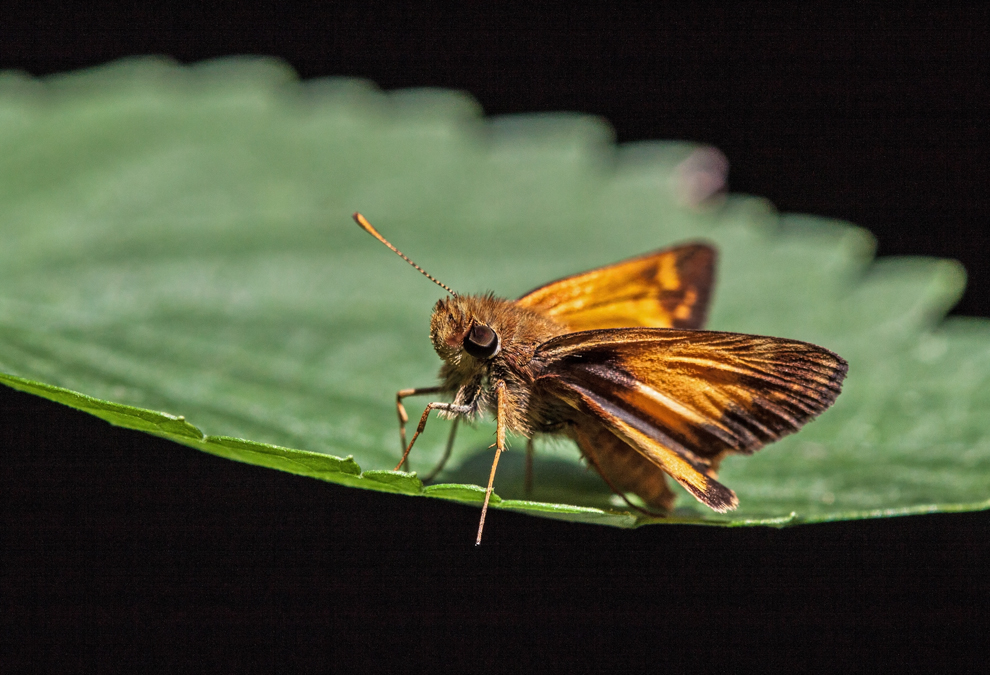
Every now and then I take a photograph and I am not really sure how I achieved the effect in the shot, like this one of a Fiery Skipper butterfly (Hylephila phyleus) on a jagged leaf.

With the exception of a few minor adjustments of the RAW image and a tiny bit of cropping, this looks just like the image I started with. When I first examined the image, I was pretty sure that I had used flash, but the EXIF data indicate that flash was not used. I took the shot handheld at ISO 400, f/6.3, and 1/500 sec. The depth of field was pretty shallow, but I did get the eye pretty much in focus, and I like the way the sharpness falls off so quickly.

I especially like the blurry jagged back edge of the leaf and the sharper near edge. The triangular shape of the wings seems to mirror those jags. Even the butterfly’s pose seems to work well, with the one leg dangling over the edge. If you click on the image, you get a higher resolution view of the photo.

I think that this is a Fiery Skipper, though I confess that I am not very good at identifying these little butterflies. Let me know if you can help in further identifying the butterfly.

skipper_leaf_blog

© Michael Q. Powell. All rights reserved
Read Full Post »

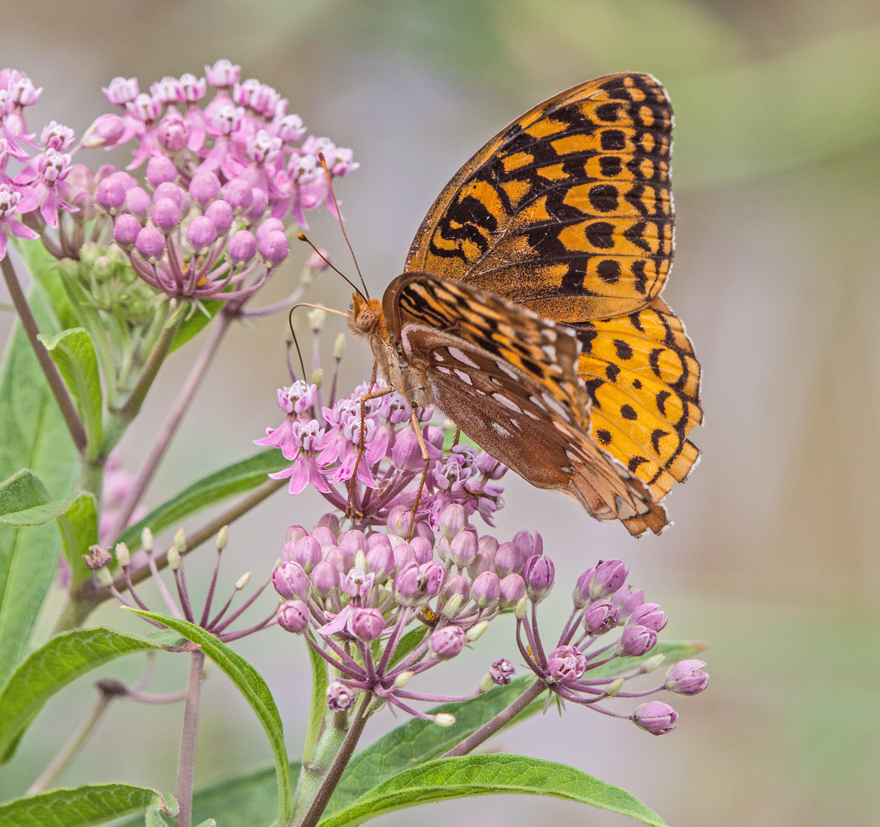
Normally I don’t think of orange and pink as colors that work well together, but I really like the result when I captured a shot of a Great Spangled Fritillary butterfly (Speyeria cybele) feeding on an unidentified pink flower.

spangled_pink_blog© Michael Q. Powell. All rights reserved

Read Full Post »

The water has gone down in some parts of my local marsh and I encountered this Green Heron (Butorides virescens) in a little tree that overlooked one of the dried out areas.

I am not sure if the heron was hunting or resting, although it looked more like the former than the latter, because he seemed to be looking from side to side. Perhaps he was searching for frogs or some other terrestrial prey.

I did not have my longest telephoto lens on my camera, but I was happy that to get some several decent shot of the little heron in a number of different poses.

limb1_bloglimb3_bloglimb2_blog

© Michael Q. Powell. All rights reserved

Read Full Post »

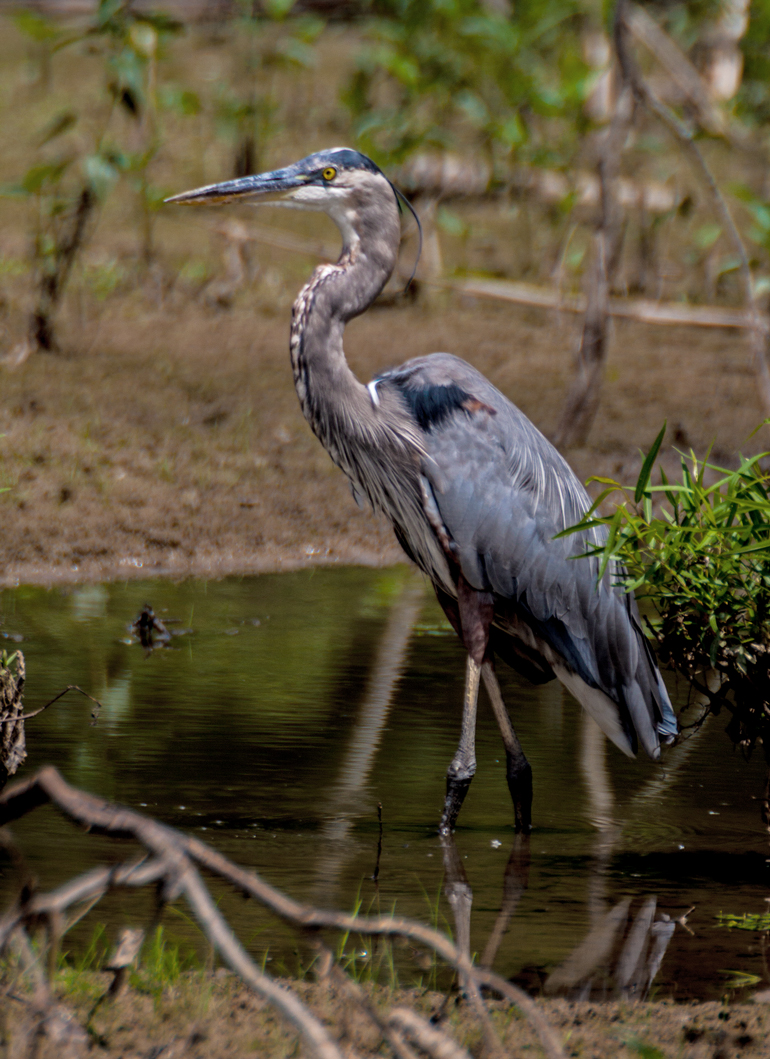
I had zoomed all the way in on this Great Blue Heron (Ardea herodias), when suddenly he took a big stride, a stride that almost took him out of the frame.

Something must have caught his attention, because he started moving quickly after having been still for quite some time. Normally when a blue heron moves, he is striking, reaching down to pull (or spear) some hapless prey out of the water. His lateral movement caught me a little by surprise.

One of the challenges of taking photos of wildlife is to be ready for the unexpected. I’m learning that the more I study subjects like this blue heron, the more I can anticipate some of their action. It’s a whole lot easier to be ready for the expected than for the unexpected.

stride_blog

© Michael Q. Powell. All rights reserved

Read Full Post »

It has been a while since I featured a mammal in my blog, so I thought that I would post a photo of this little muskrat (Ondatra zibethicus) that I encountered this past weekend at my local marsh. I observes muskrats there fairly often, but most of the time they are swimming away or are submerging themselves by the time my camera is ready.

This muskrat was poking about at the edge of a formerly inhabited beaver lodge when I first caught sight of him. He did not immediately perceive my presence, so I was able to creep close enough to him to get this shot using my 55-250mm zoom lens.

Unlike the beavers, which sleep during daylight hours, muskrats are active when it its light—in theory it should be easy to get a good shot of a muskrat. The reality, though, is that muskrats are small, fast, and elusive, so I have not yet been able to get many good shots of them.

muskrat1_blog

© Michael Q. Powell. All rights reserved

Read Full Post »

When I am chasing after little butterflies, it’s rare that I manage to get a shot of them with their wings open—I am lucky if I can get a side view.

This little brown butterfly, which I think is an Appalachian Brown (Satyrodes appalachia), perched in a location, however, which allowed me to shoot downward, catching its wings wide open. The muddy, brown water of the marsh normally would not be optimal for an image, but seem to work well here, almost matching the colors of the butterfly.

I also was able to get a shot from the side, the second image, showing the butterfly’s beautiful brown eyes. There was intermittent rain the day that I was shooting and you can see a few raindrops on the leaves of the plant on which the butterfly is perched.

brown_butterfly1_blogbrown_butterfly2_blog

© Michael Q. Powell. All rights reserved

Read Full Post »

Let me introduce you to the coolest-looking insect I have ever encountered, the Handsome Meadow Katydid (Orchelimum pulchellum), an insect that I photographed this past weekend at my local marsh. The name just seems to fit the insect perfectly, unlike so many other insects that seem to have been named almost randomly.

I still recall the first time that I encountered a Handsome Meadow Katydid last summer and the resulting double take—I could not believe what my eyes were seeing. The bright colors of the body were astonishing and seemed so unreal that one of my friends wondered if I had colorized the photo.

It’s the eyes, though, that make this insect so attractive for me. There is just something so alluring about those blue eyes, eyes that I don’t expect to see in an insect.

I got some pretty good shots of Handsome Meadow Katydids last year, but was growing concerned that I would not see many this year (you can tell it’s a katydid, in part, because of the length of the antennae). I actually heard this katydid before I saw it. I was passing by a small bush and hear a kind of vibrating sound. I put my ear closer and closer to the plant and finally spotted the source.

I had to go pretty wide in cropping the shot, because the katydid was stretched out along the small branch. Click on the image if you want see a higher resolution view of the photo, including those amazing eyes.

rainbow1_blog

© Michael Q. Powell. All rights reserved

Read Full Post »

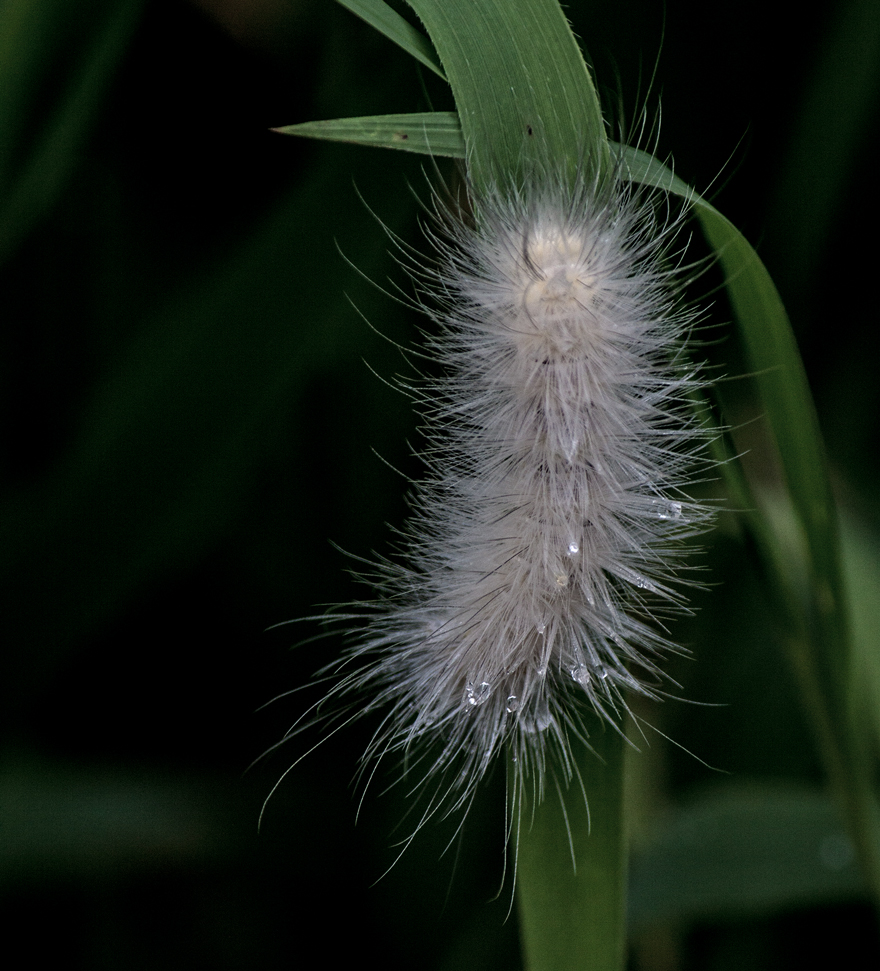
It’s hard enough to identify moths and butterflies when they are fully grown—it seems almost impossible to do so when they are caterpillars, like this fuzzy white caterpillar that I encountered today at my local marshland park.

The caterpillar had so much long hair that it was hard to see the actual body, which might have been quite small for all I could tell. It was crawling around in the cattails on a day that featured intermittent rain. If you look closely at the first shot, you can see little water drops near what I think is the area of the head.

The second shot may look like it was done with flash, but the darker background was caused merely by changing the settings on my camera and deliberately overexposing the image.

fuzzy2_blogfuzzy1_blog

© Michael Q. Powell. All rights reserved

Read Full Post »

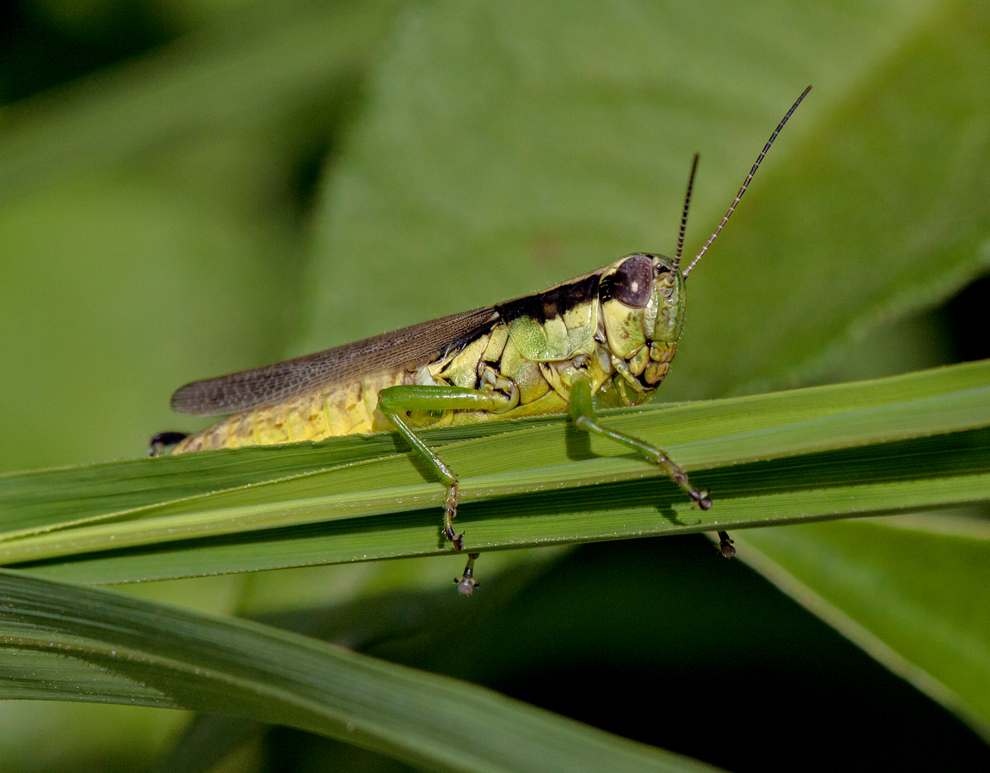
I haven’t seen many grasshoppers this summer, so I was happy to get a few shots of this one before he hopped off the leafy stalk for a new destination. I especially like the details of the eyes and the mouth.

Grasshoppers are special to me, in part because “grasshopper” is the term that my photograph mentor, Cindy Dyer, uses for me, her student. Some of you may be old enough to remember the television series Kung Fu from the 1970’s, in which Master Po, the blind monk, called his young pupil “grasshopper.”

I often wondered why he used that particular word and today I came across an explanation in Wikipedia. Apparently it stemmed from an exchange between the Master Po and the student, Caine, in the pilot episode of the series.  There is a lot of wisdom in that final response.

Master Po: Close your eyes. What do you hear?
Young Caine: I hear the water, I hear the birds.
Po: Do you hear your own heartbeat?
Caine: No.
Po: Do you hear the grasshopper which is at your feet?
Caine: Old man, how is it that you hear these things?
Po: Young man, how is it that you do not?

grasshopper1_blog

© Michael Q. Powell. All rights reserved

Read Full Post »

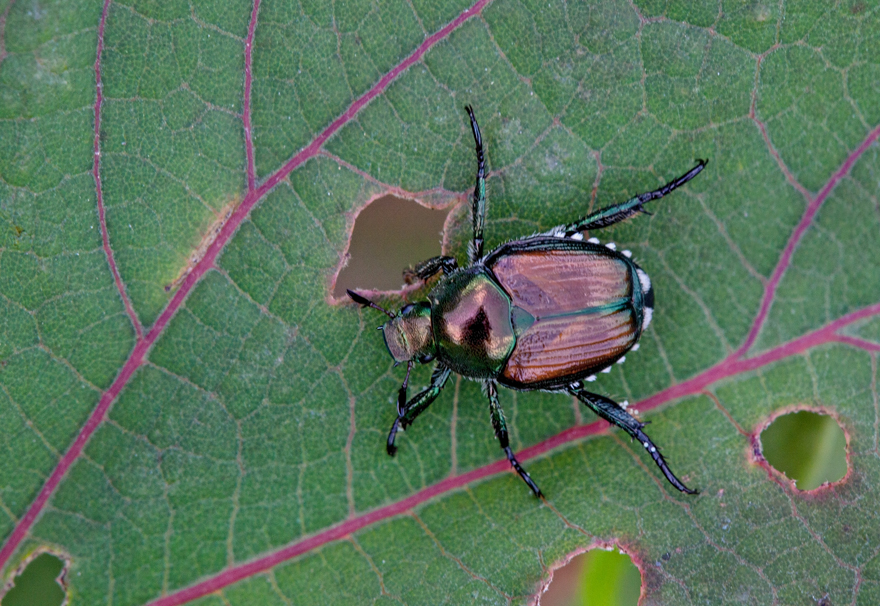
Japanese beetles (Popillia japonica) are very destructive, but also very beautiful and I sought to highlight both of these aspects in this image.

There were quite a few plant with holes chewed in them in one area of the marsh and I suspect that Japanese beetles were the culprits (this one sure looks guilty). I like the coloration and the reflectiveness of the insect’s body.  I’m not completely sure, but  I think that I see my own reflection as well as the sky in the part of the shell near the beetle’s head.

This was a situation in which I really enjoyed having my new 180mm macro lens. It allowed me to frame it the way in which I wanted without scaring away the beetle (and I did not have to do much cropping at all).

beetle_chew_blog© Michael Q. Powell. All rights reserved

Read Full Post »

I have always thought that Great Blue Herons (Ardea herodias) look a bit awkward on the ground, tall and gangly, but they are exceptionally beautiful in the air.

As I approached this blue heron yesterday at my local marshland park, it decided to take off. I often try to capture photos of birds in flight, though generally I’ve had only limited success.

I was pretty happy with this shot, taken shortly after the heron had taken to the air. The shaded woods make a decent backdrop and I like the blooming mallow flowers in the foreground. The focusing is a little soft, but I was able to capture some of the magnificent details of the visible wing.

heron_flying_blog

© Michael Q. Powell. All rights reserved
Read Full Post »

Can you spot the heron in this photo?

I think that you probably can pick out the Green Heron (Butorides virescens), which blends in pretty well with the vegetation, a little easier than I was able to do, when I visited my local marshland yesterday. The heron, which I think might be a young one, was foraging about in the marsh plants, unlike other Green Herons that I have seen in the past, which tended to stand near the edge of the water awaiting prey. If the heron had not moved, I might not have seen him, because it was so close to the ground.

I really like the colors of the Green Heron and its distinctive yellow eyes. The Green Heron may not be as big in size as a Great Blue Heron, but it has its own beauty—maybe I should begin a campaign to change its name to Great Green Heron.

heron_grass1_blog

© Michael Q. Powell. All rights reserved
Read Full Post »

Praying mantises blend in so well with their surroundings that it is extremely rare for me to see one. This past weekend I spotted one as I was scanning the undergrowth while I was walking along the boardwalk in my local marsh.

The challenge for me was to figure out how to get a good shot of the praying mantis, which was sitting among some green leaves just about level with the boardwalk itself. I first tried shooting from directly above the insect, but I didn’t like the results very much, because I could not seem to make the praying mantis stand out from the background.

The second basic approach that I tried was to shoot at eye level with the insect. This produced some good results, like the second photo below, because I was able to capture a lot of details of the mantis and the shadows add interest to the shot.

I got my favorite image, the first one, when I shot from below the level of the insect, by hanging over the edge of the boardwalk. Framing the shot was a bit tricky because I had to place myself in the middle of the vegetation without disturbing the praying mantis (you should never disturb an insect when it is praying). I also had to shoot from an awkward angle in which it was difficult to steady the camera, so many of my shots were blurry.

Why is the first image my favorite? I like the simplicity of the color palette in the image−mostly green and black—and the pose of the praying mantis staring into the shadows from the edge of the leaf, which has wonderful details. (If you click on the image you can see a higher resolution view, which includes some details of insect’s head.)

praying2_blogpraying1_blog

© Michael Q. Powell. All rights reserved
Read Full Post »

Every since I got my new 180mm macro lens, it seems like the spider population has increased. That’s an exaggeration, of course, but somehow my new lens has caused me to be hypersensitive to spiders and insects within range of the new lens and I find myself filled with an almost irresistible urge to photograph them when I encounter them.

I saw this spider alongside a path at my local marshland park and gave in to the urge. As you can probably tell, I used flash to add a little light to the spider. I probably need to diffuse the flash more, so there is not quite as much glare, but I am happy with the way the background turned  out—I think the combination of black and green works well with the colors of the spider.

spider_with_web1_blog

© Michael Q. Powell. All rights reserved

Read Full Post »

I enjoy watching Great Blue Herons (Ardea herodias) fishing—they seem so patient and so focused—and observed one recently in the beaver pond at my local marsh.

I was a little surprised to see the heron at that location, because the water level in the pond has dropped as the weather has gotten hotter and some areas are even exposed. As the heron plunged his bill into the shallow water, I expected him to pull out a frog or perhaps a small fish. I was too far away to tell for sure what he had caught, but I kept shooting. When I looked at the images, it looks like he may have caught a crayfish, but I am not really sure. Do herons even eat crayfish? I took the photos in the middle of the day, so the colors are washed out a bit, but some more knowledgeable reader may still be able to tell me for sure if it is a crayfish in the heron’s mouth. (You can get a higher resolution view if you click on the image.)

GBH2_blog

The second photo was taken before the heron began fishing and gives you an idea of how shallow the water is in the beaver pond. In post processing, I made a number of tweaks to the image to try to increase the contrast and saturation of the colors and may have gone over the top a little. What do you think?

GBH1_blog

© Michael Q. Powell. All rights reserved

Read Full Post »

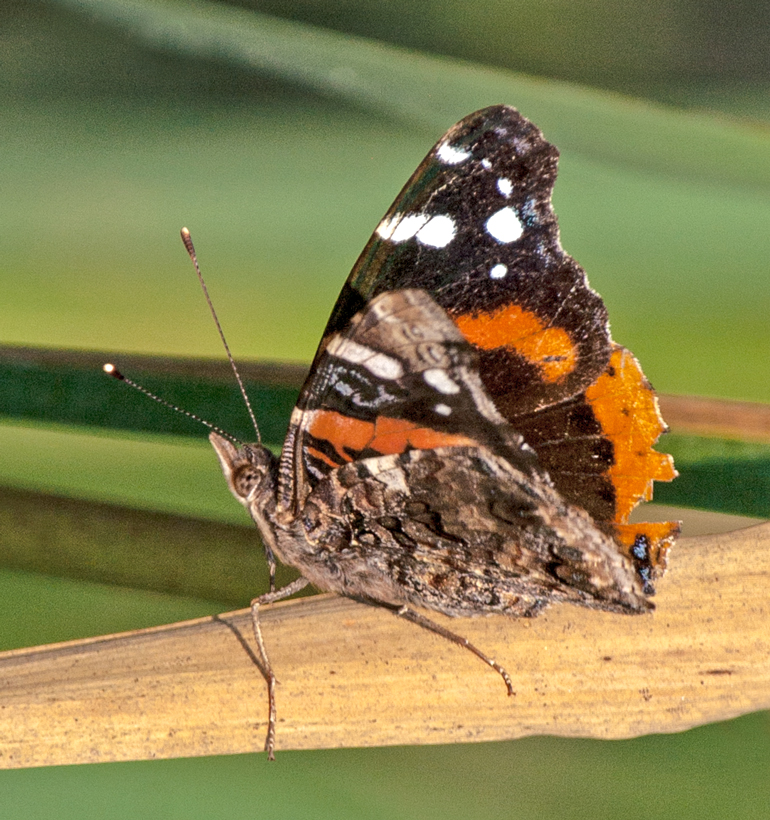
I am finally starting to see more butterflies, like this Red Admiral butterfly (Vanessa atalanta) that I spotted recently in the cattails at my local marsh.

It seems like we had a slow start this year with butterflies compared with last year and I had been fearful that I would not be treated to their colorful displays that I enjoy so much. Gradually my concerns are disappearing as I see different varieties appear and I am happy that I can even identify some of them.

Sharp-eyed readers might notice that something does not look quite right with this photo. I rotated the image ninety degrees, because I found myself cocking my head when the butterfly was pointing downward.

admiral_blog

© Michael Q. Powell. All rights reserved

Read Full Post »

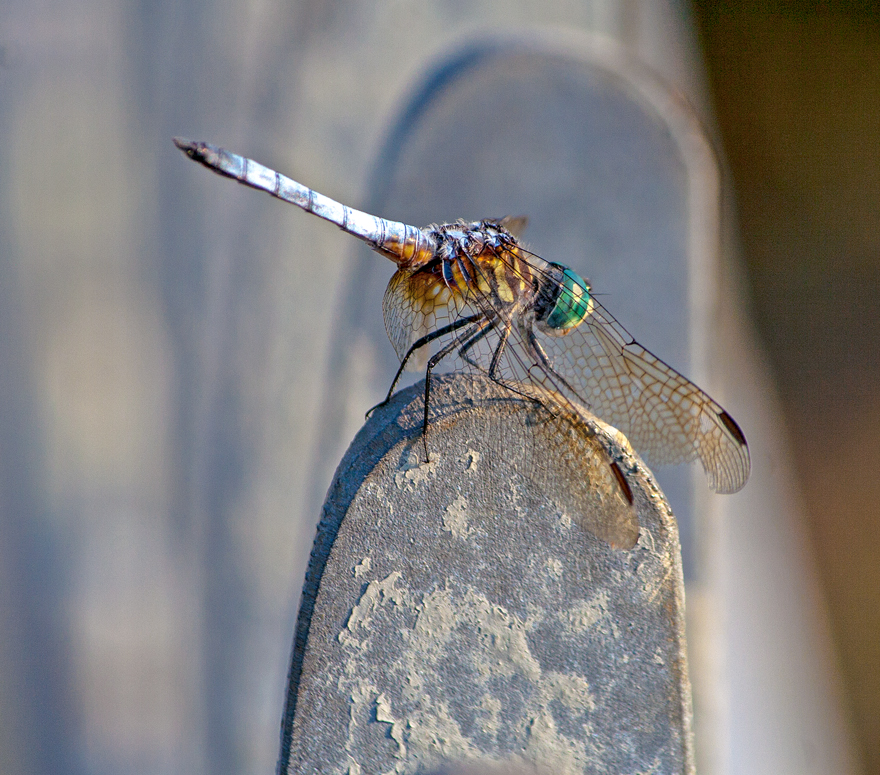
What do you do when the wildlife subject that you are attempting to photograph puts itself in a man-made setting, rather than a more natural environment? That was my dilemma when a Blue Dasher dragonfly (Pachydiplax longipennis) landed on one of the slats of a railing surrounding part of the boardwalk at Huntley Meadows Park, the local marshland where I take a lot of my photographs.

As I looked down the railing at the dragonfly, my eye was attracted to the repeating pattern of the slats, and I decided to try a creative approach to an image using that pattern. I chose camera settings that would give me a relatively shallow depth of field. Then I carefully composed the shot so that some other slats would appear in the background in a blurry form, but the one on which the dragonfly perched would be in sharp focus.

Although I generally prefer a more natural setting for my wildlife subjects, I think I managed to achieve a pretty cool effect that was relatively close to what I had in mind. I especially like the detail that I was able to capture of the weathered metal slat in the foreground (click on the photo to see a higher resolution view).

railing_blog

© Michael Q. Powell. All rights reserved

Read Full Post »

Only a tiny, lightweight dragonfly, like this Eastern Amberwing (Perithemis tenera), could assume this pose and hold it for an extended period of time. I have watched other dragonflies land near the end of a leaf like this, but gravity forced them to quickly give up their perch.

I was able to take a lot of photos of this dragonfly and this is one of my favorites, because its abdomen is raised, its wings are spread, and its head is cocked a little to the side—a near perfect pose.

amber_grass_blog

© Michael Q. Powell. All rights reserved

Read Full Post »

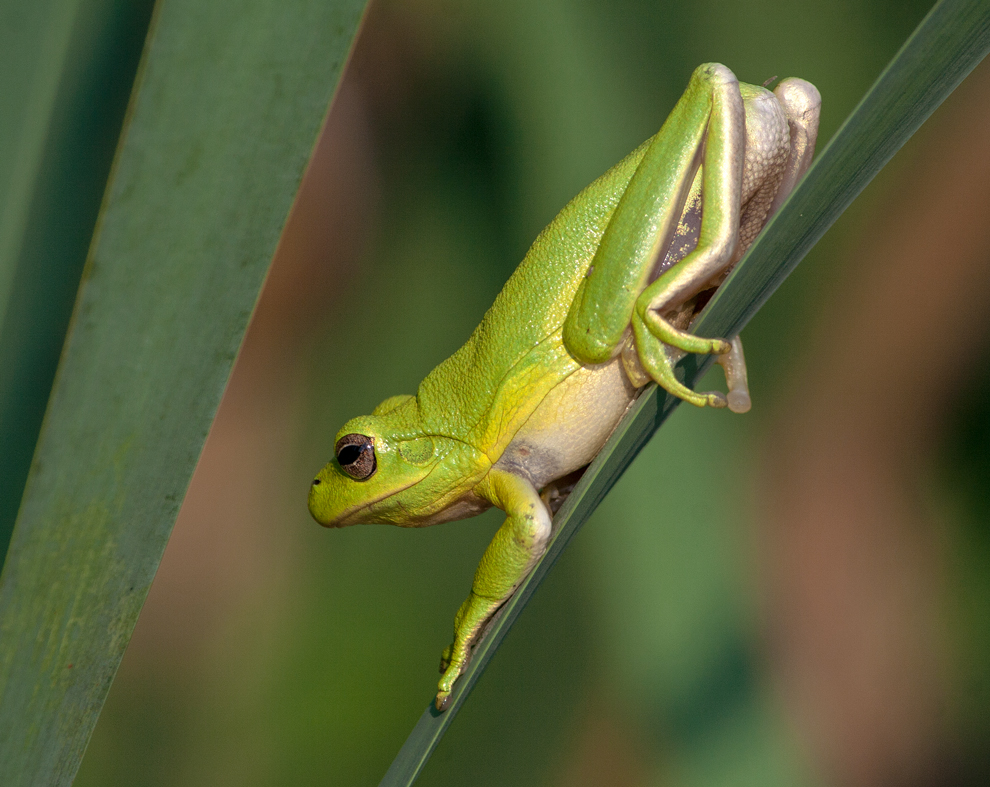
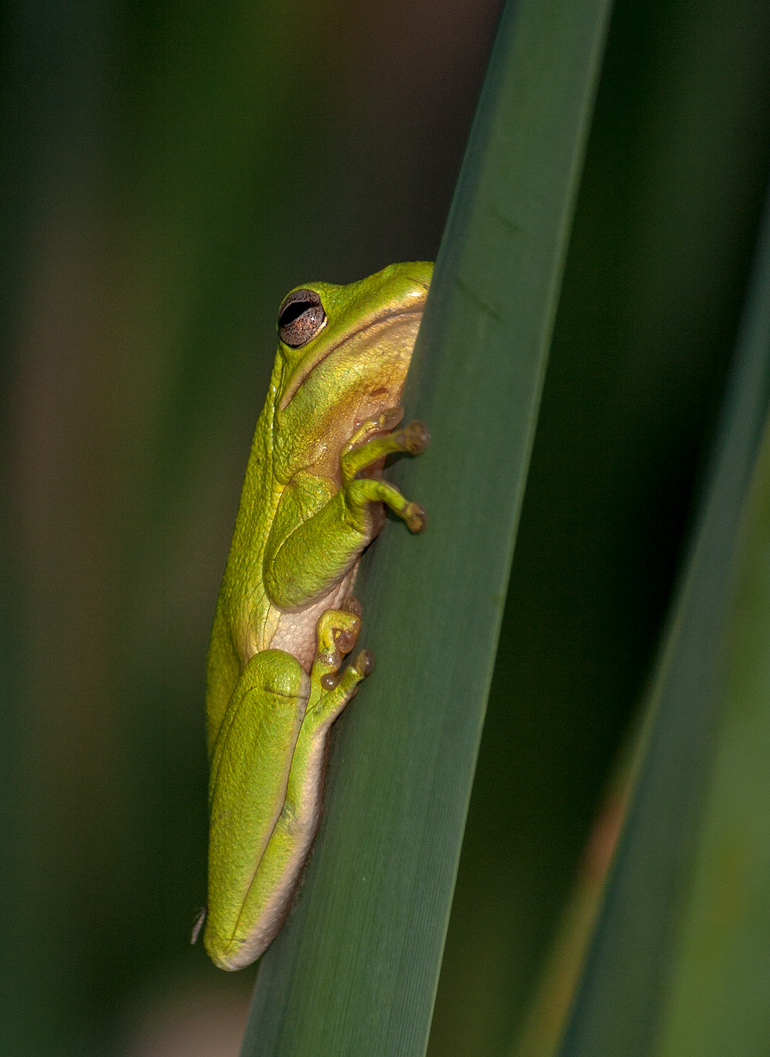
I spotted this little Green Treefrog (Hyla cinerea) in the cattails in the marsh at my local marshland park this past weekend and was pretty excited, because I had never before seen an adult tree frog up close.

I was amazed by its long toes with sticky pads, but it was the golden eyes that won my heart. I observed it for quite some time and managed to get some shots of it in different poses as it changed its position on the green leaves of the cattail.

Normally I think of tree frogs, I think of the ones with big red eyes that have been featured in National Geographic and other publications. It would be really cool some day to be able to photograph those tree frogs—for now I am content to explore the wildlife in my local area.

little_green_frog1_bloglittle_green_frog3_bloglittle_green_frog2_bloglittle_green_frog4_blog

© Michael Q. Powell. All rights reserved

Read Full Post »

Although I tend to use either my macro or my shorter telephoto zoom lens most at this time of the year, yesterday I decided to walk around with my longest zoom (135-400mm) and was happy about that decision when I encountered this juvenile Hooded Merganser duck (Lophodytes cucullatus).

When I first saw it, the duck was sitting on a semi-submerged log  in the beaver pond of my local marshland pond, basking in the sun. I expected for the duck to be part of a group, but it appeared to be alone.

Merganser1_blog

I guess that I got a little too close, because the juvenile duck then slipped quietly off the log into the brown, muddy water of the pond and swam away a short distance. I like the concentric ripples in this shot of the duck slowly paddling away.

Merganser2_blog

I backed off and continued to observe the young duck, which decided to take advantage of being in the water to do a little grooming. After submerging itself, the duck rose up out of the water to dry off. The duck flapped its wings and I clicked my shutter and got this shot.

Merganser3_blog

There is a kind of playful feel to this shot that I really like. Somehow the duck reminds me of a friendly little dragon in this shot, with its feathers looking almost like scales and its wings and tail in an unusual position. I almost expected it to breathe a tiny burst of fire.

Maybe I should name the little duck “Puff.”

© Michael Q. Powell. All rights reserved
Read Full Post »

Every time that I look at a dragonfly head-on, I can’t help but think of the biplanes of World War I, like the Sopwith Camel that Snoopy famously imagined piloting in his battles with the Red Baron.

Considering the colors of this Needham’s Skimmer dragonfly (Libellula needhami), I guess that he would have to represent the Red Baron, not Snoopy. Aerial dogfights are not without danger, and it looks like this dragonfly has survived several encounters with the enemy, with all of his wings showing some damage.

red_dragonfly_headon_blog© Michael Q. Powell. All rights reserved
Read Full Post »

In an effort to avoid the unbearable summer heat, this past Friday I went out to my local marsh just as the sun was rising and watched as the sun slowly illuminated the flowers and vegetation and burned off the mist that lingered above the fields.

marsh_dawn_blog

I don’t have a lot of experience shooting landscapes, but am relatively content with the composition I chose. I am also happy that I was able to capture the orange shade of the sky and some of the mist. A lot of the details are lost in the shadows, but that was the way it looked in the limited dawn light. In case you are curious, the flowers in the foreground are a kind of hibiscus that grow in the marsh—I think they are known as Swamp Rose Mallows (Hibiscus moscheutos).

© Michael Q. Powell. All rights reserved
Read Full Post »

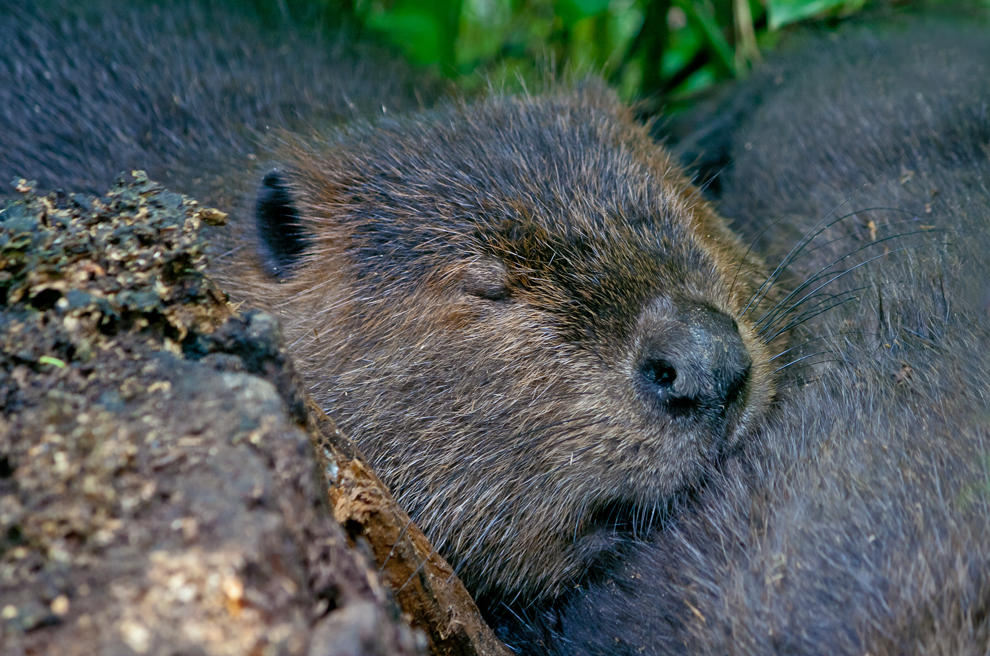
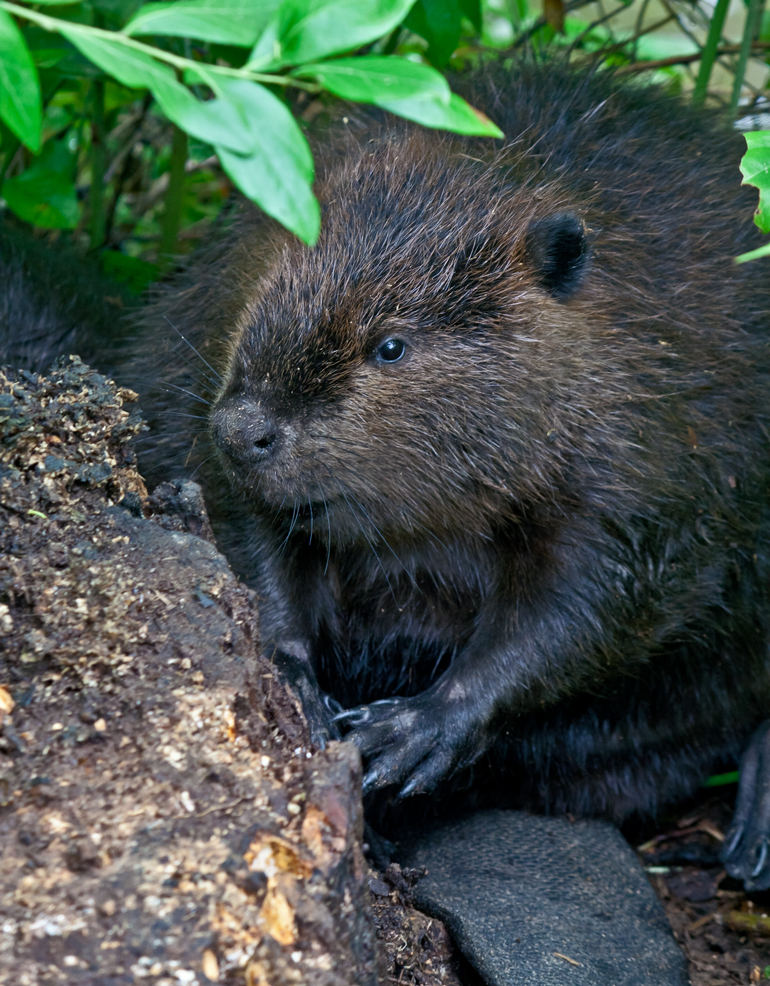
To conclude my mini-series on the three local beavers who were temporarily flooded out of their lodge, I am posting an extreme close-up of one of them sleeping and a shot in which I zoomed out enough to show the entire body of a sleeping beaver.

This first shot is probably my favorite of the entire series. The beaver, of course, is really cute, but the slightly open mouth gives it an extra little whimsical touch of personality.

The second shot shows one of the beavers sound asleep, curled up in a ball, leaning against a stump. At the moment of the shot, the beavers were not snuggling as much as they would do a bit later (as in the first photo). I like the way in which you can see the beaver’s feet and tail in this image.

If you missed the earlier postings on my amazing close-up encounter with the three sleeping North American Beavers (Castor canadensis), check out my earlier postings—Snuggling beaver and Restive beaver. If you want to see a higher resolution view of the images (the first one has lots of fine details), click on the photos.

beaver5_blogbeaver3_blog

© Michael Q. Powell. All rights reserved

Read Full Post »

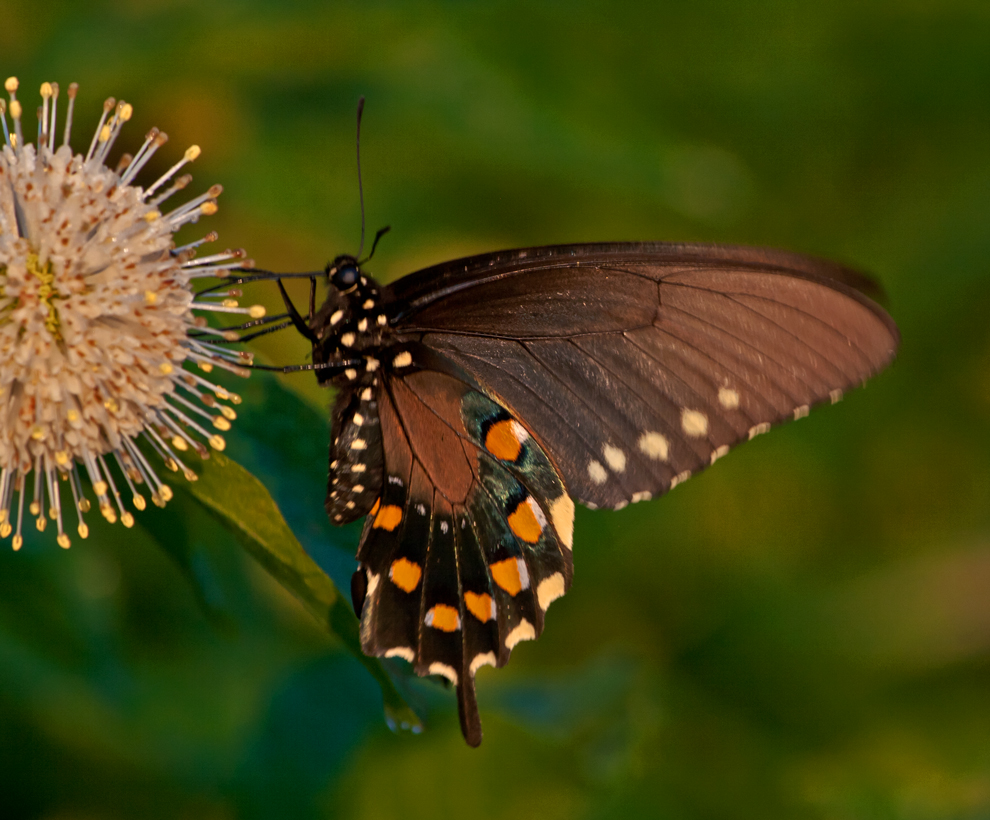
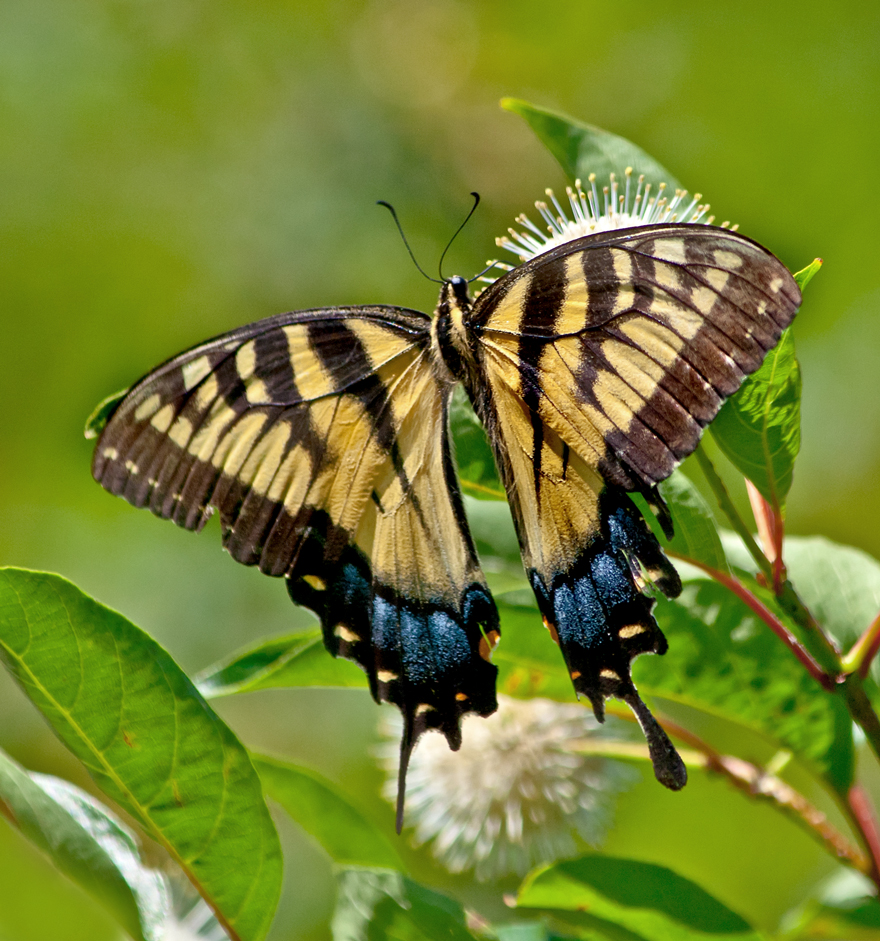
How many kinds of black swallowtail butterflies can there possibly be? Until yesterday, the only black swallowtail that I had ever encountered was the black variant of the female Eastern Tiger Swallowtail. (Check out my posting from last year to see the two variants of the female Eastern Tiger Swallowtail, a characteristic known as dimorphism.)

Yesterday, while walking along the boardwalk at my local marshland park, I came across a black butterfly feeding on a Buttonbush. Clearly it was a swallowtail and it was equally obvious that it was not an Eastern Tiger Swallowtail. I remembered that there was another black swallowtail called a Spicebush, so I figured that was what it had to be. When I checked out the photos of the Spicebush Swallowtail on-line, though, none of them seemed to match my butterfly exactly.

It was only today, when I was looking through photos with my photograph mentor, Cindy Dyer, that I realized that there was yet another black swallowtail and have concluded that the unknown butterfly is almost certainly a Pipevine Swallowtail butterfly (Battus philenor). It looks a lot like the Spicesbush, but the pattern of the orange dots are different, as pointed out in this posting by Don Lambert on the Earth Science Picture of the Day blog.

pipevine1_blogpipevine2_blog

© Michael Q. Powell. All rights reserved

Read Full Post »

Have you ever watched an animal sleep? I used to watch my dog sleep. He slept soundly, but sometimes a sound or a smell or a dream would wake him up. He would look around a little to reassure himself that all was well and then would put down his head and go back to sleep.

Yesterday, I did a posting on a trio of North American beavers (Castor canadensis) that had been temporarily flooded out of their lodge and were sleeping on dry land a short distance from their home. The general response to the photo in that posting was that the beaver seemed peaceful and content (and cute!) when sleeping.

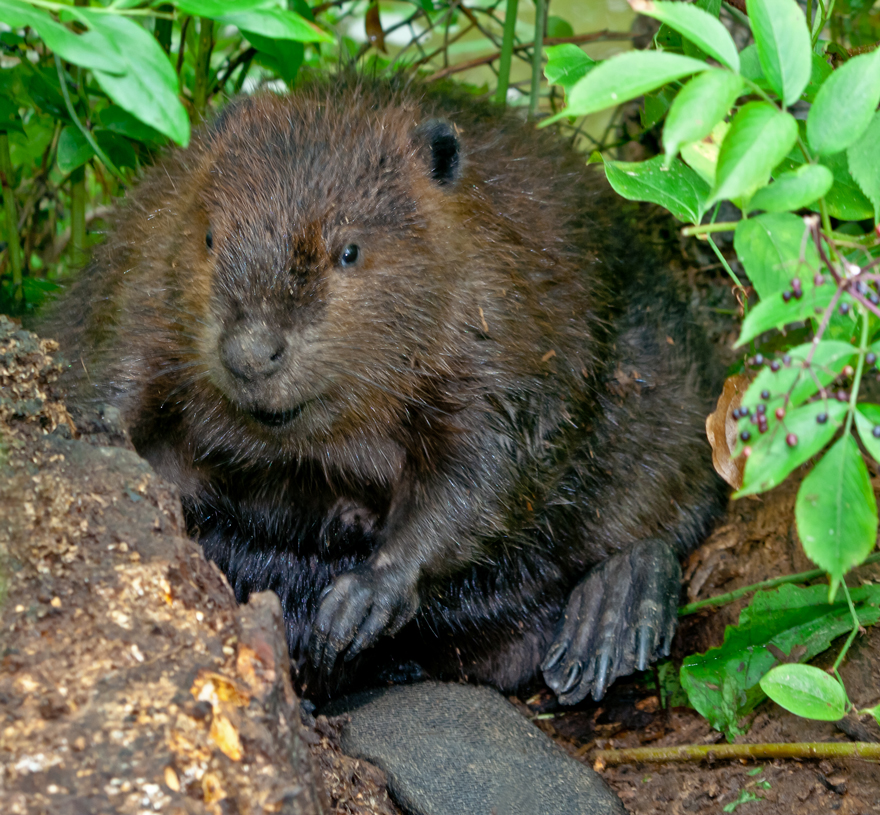
Today, I am posting a few photos of the occasions when one of the beavers woke up and looked around, much like my dog used to do.  This is actually not the same beaver that was featured yesterday, although part of this beaver was visible in the photo yesterday. This beaver was the one on which the other beaver was leaning as it snuggled.

The first photo shows a pretty alert beaver, leaning on a stump around which the beavers were sleeping. I like the details that you can see of the fur and of the front paw. I was on a boardwalk at my local marshland park when I took these photos and was looking slightly down at the beavers. I was so close that I did not even have to use the full length of my zoom lens and, for example, shot the first photo with my lens at a focal length of 135mm.

beaver1_blog

The second shot is somewhat similar to the first, but it shows part of the beaver’s tail. It was interesting to see how the beaver’s tail was tucked under the beaver when it was sleeping. I somehow had always assumed the tail was rigid—it seems to be reasonably flexible.

beaver2_blog

The final image today is not quite as sharp as the first two, but I like it because of the way that it shows both a front and back paw, as well as the tail. The beaver also has a tousled look and somehow unfocused eyes, looking a lot like most of us do when we first wake up.

beaver4_blog

I am still going over my photos and may post a few more, so stay tuned. I feel really lucky that I was able to see these beavers in this kind of situation in the wild and managed to capture it well enough in photos to be able to share part of the experience with all of you.

© Michael Q. Powell. All rights reserved

Read Full Post »

Last Friday, after some violent thunderstorms, I visited my local marshland park, where the staff alerted me that three beavers were sleeping on a patch of dry land near their lodge, which apparently had flooded. The three North American Beavers (Castor canadensis) were all snuggled together and reminded me a little of puppies. I am working up some more images, but thought that I would give a sneak preview of coming attractions.

beaver6_blog

© Michael Q. Powell. All rights reserved
Read Full Post »

Can you name the most recognized Skipper in North America?  According to Wikipedia, it’s the Silver-spotted Skipper butterfly (Epargyreus clarus), shown here clinging to a Buttonbush (Cephalanthus occidentalis) in a shot I took recently at my local marshland park.

I love the spiky look of the Buttonbush and it seems to attract a lot of butterflies. The skipper’s colors may be a little drab, but I am happy that it is easy to identify, given that there are over 3500 different species of skippers, according to a different article in Wikipedia.

spotted_skipper_blog

© Michael Q. Powell. All rights reserved
Read Full Post »

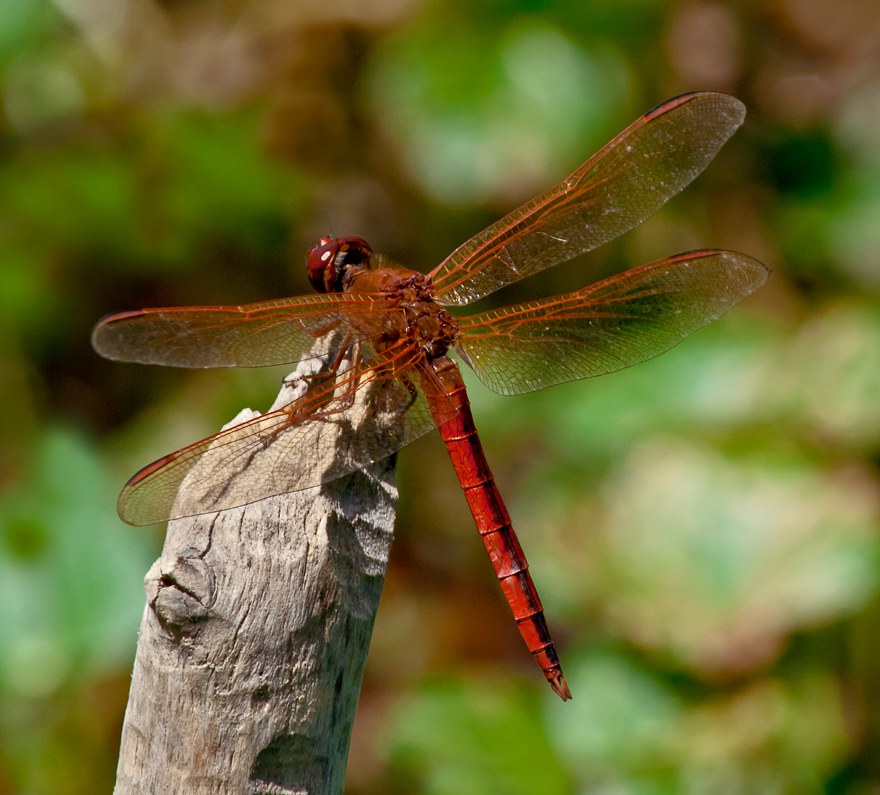
It’s unusual for me to see a red dragonfly, so yesterday I chased around several of them and have concluded that they are probably Needham’s Skimmer dragonflies (Libellula needhami), a species that I have never before encountered.

In addition to the red-orange bodies, these dragonflies have reddish-brown veins in their wings, which make them very striking. There is another species, Golden-winged skimmers (Libellula auripennis), that is supposed to look like the Needham’s Skimmers, so I may be off in my identification—I will leave the final call to experts.

I’m keeping my eyes open and hope that I’ll be able to find a few more species that are new to me before the summer ends, though it’s tough right now to go outdoors with temperatures in the daytime around 95 degrees F (35 degrees C) and very humid.

red_dragonfly2_blog

© Michael Q. Powell. All rights reserved

Read Full Post »

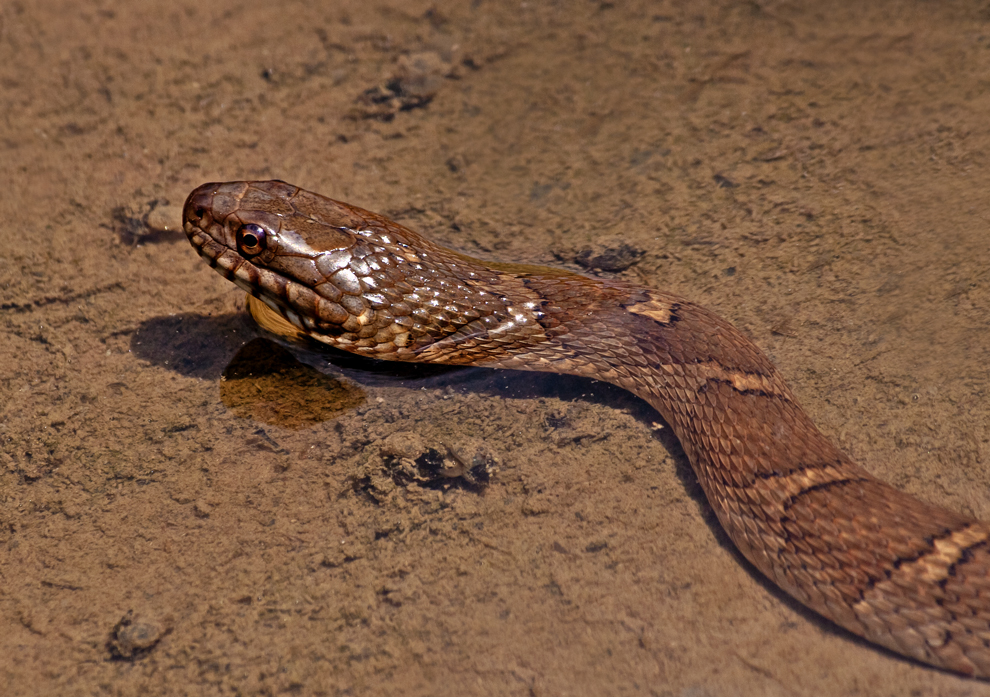
Soaring summer temperatures have caused the water level in some areas of my marshland park to drop and Northern Water snakes (Nerodia sipedon) can now be seen trolling these shallow waters for prey. Yesterday, in one small area I saw three of these snakes and managed to get shots of two them.

Sometimes the snakes will sit on brush and logs just above the level of the water, as in the first photo, while in other cases they submerge their bodies in the water, with their heads sticking out of the water, as in the second photo.

I like the way that the first image shows the details of the snake’s scales and like how the second photo highlights the marking on the snake’s body (and realize that some folks may find both images to be creepy).

snake2_blogstriped_snake_blog

© Michael Q. Powell. All rights reserved

Read Full Post »

I am always amazed that butterflies can fly with wings that are severely damaged. This morning I encountered this beautiful female Eastern Tiger Swallowtail butterfly (Papilio glaucus) that had suffered some major damage to the area where the wings attach to the body. Despite the tears to the wings, the butterfly seemed unhindered in its flight and was busily at work, flying from bush to bush.

wounded_blog

© Michael Q. Powell. All rights reserved

Read Full Post »
« Newer Posts - Older Posts »