Feeds:
Posts
Comments

Posts Tagged ‘Huntley Meadows Park’

There were only a few Red-winged Blackbirds at my local marsh yesterday morning, but the loud volume of their calling made up for the smallness of their numbers. The morning light was quite beautiful, which makes these images look almost like they were shot in a studio. It sure helps when you have a cooperative subject, like this male Red-winged Blackbird (Agelaius phoeniceus), who enjoys being in the spotlight.

Red-winged Blackbird

Red-winged Blackbird

Red-winged Blackbird

© Michael Q. Powell. All rights reserved.


Read Full Post »

I haven’t seen one for a while, so I was happy this morning when I spotted this male Green-winged Teal (Anas crecca) at Huntley Meadows Park, the local marshland park where I take many of my wildlife photos.

Green-winged Teal

© Michael Q. Powell. All rights reserved.

Read Full Post »

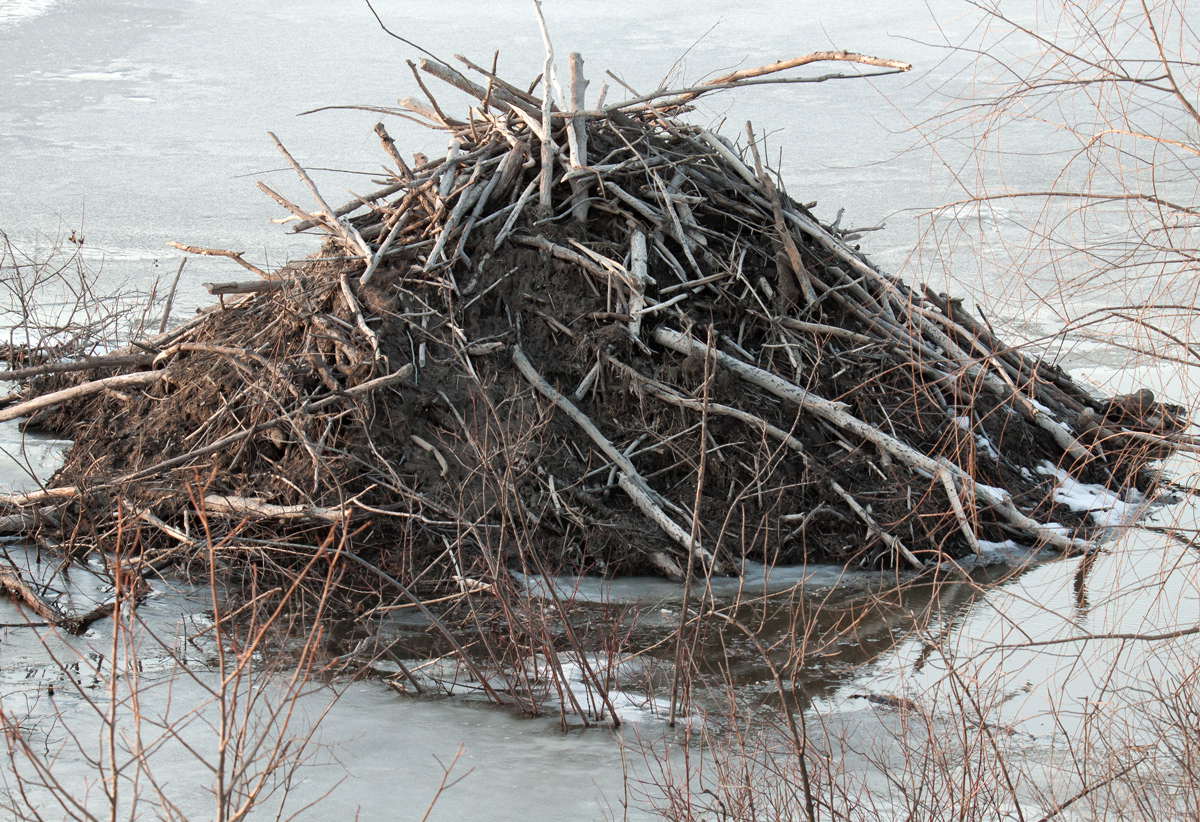
About eighteen months ago the beavers at my local marsh moved out of the lodge right under the boardwalk to a more inaccessible location. Since then I’ve tried several times to catch sight of them at dusk and at dawn, but have been largely unsuccessful.

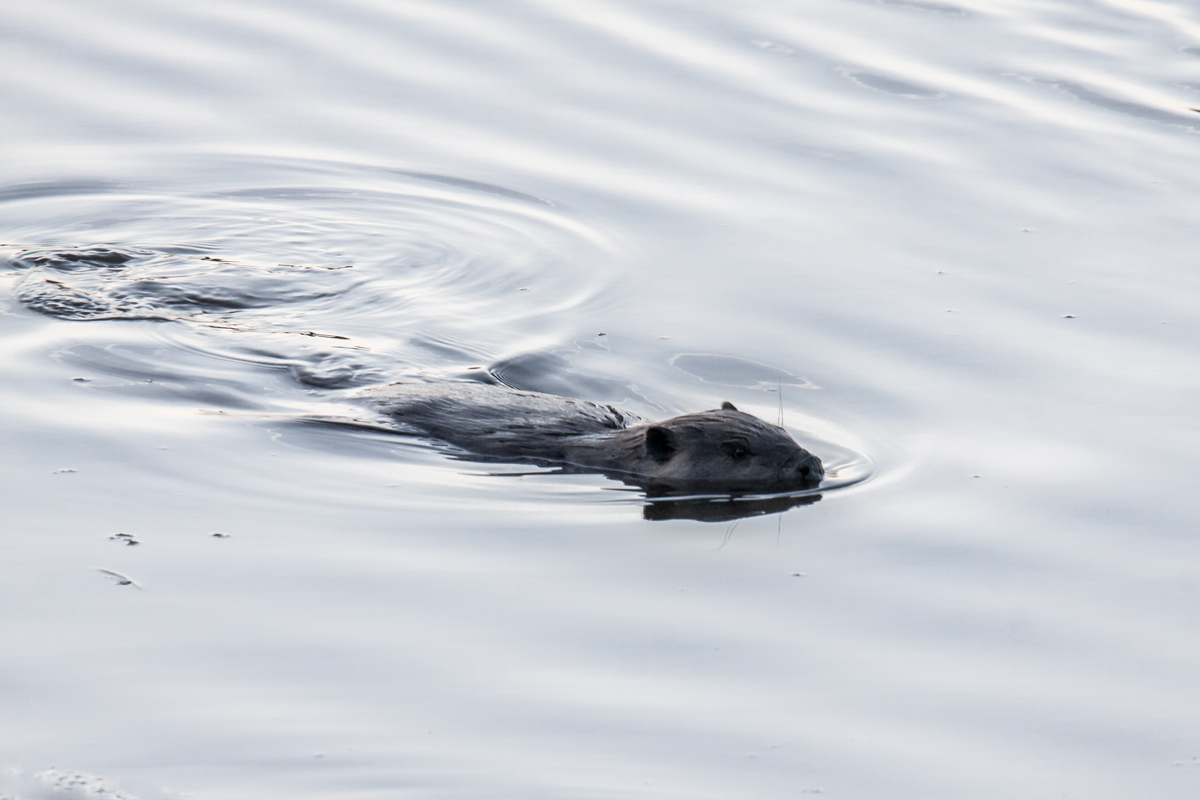
However, this past Monday I got lucky when one of the resident North American Beavers (Castor canadensis) appeared an hour or so before sunset and chewed on some sticks for a short time before returning to the warmth of its lodge.

I waited and waited as the sun dropped lower on the horizon to see if any other members of the beaver family would make an appearance. Eventually another beaver emerged and started swimming around the small area of open water outside of the lodge—most of the rest of the pond was still frozen. The limited light made it difficult to capture a shot of the swimming beaver and in the third shot it almost looks like the shadowy beaver is swimming in the clouds.

Unfortunately the beaver had to end its swim prematurely when it was dive bombed by a small flock of ducks that had spotted the open water and decided it was the perfect place to make a landing. Alas, I did not get shots of the beaver’s reaction—I suspect that the beaver was a bit surprised to be attacked from the air.

The final shot shows the beaver lodge, which can be seen through the bushes from the boardwalk. Fortunately there is a nearby two-story observation deck that overlooks the pond and gives a clearer line of sight to the lodge. It was from that deck that I was able to take these shots.

beaver2_march_blog

North American Beaver

North American Beaver

North American Beaver

© Michael Q. Powell. All rights reserved.


Read Full Post »

The colors were not spectacular, but the sky still seemed to be amazingly beautiful as I prepared to depart from Huntley Meadows Park yesterday just after sunset. A long-range telephoto zoom may not be the lens of choice for capturing this kind of a scene, but it was the one that was on my camera at the time and I am pretty happy with the results.

We’ve had so many gray, dull days this winter that a day with the sun shining seemed like a real blessing and I wanted to take advantage of every moment of that sunshine.

Huntley Meadows Park

© Michael Q. Powell. All rights reserved.

Read Full Post »

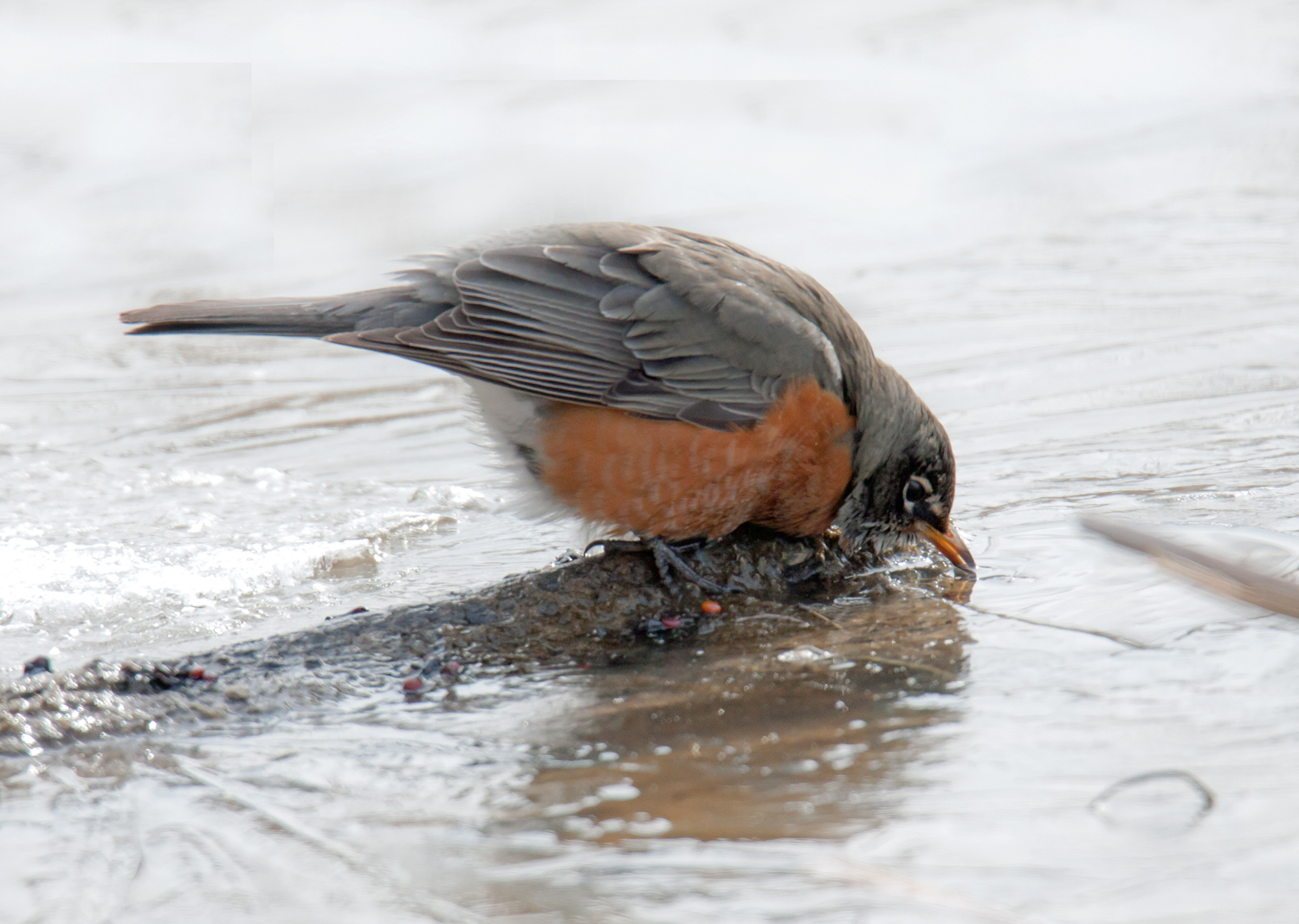
A flock of American Robins (Turdus migratorius) was feverishly foraging in the bushes, but one solitary robin felt a need to satisfy its thirst. Perching on a fallen branch mostly submerged in the frozen pond, the robin gently leaned forward and dipped its bill in a small pool of open water. It must be tough for birds in the wild to get water to drink during the cold days of winter.

As I was processing the photo, I couldn’t help but notice that it was mostly monochromatic, except for the orange in the breast and bill, so I played around a little with converting it to black and white. It still doesn’t pop as much as I would like, but I thought it would be fun to include it for comparison with the original.

American RobinAmerican Robin

© Michael Q. Powell. All rights reserved.

Read Full Post »

What’s going on here? Normally, it’s the male Hooded Merganser duck (Lophodytes cucullatus) that engages in courting behavior to attract a female, but in this case it looks like the situation was reversed. The female seems to be trying to get the attention of the male, who is playing hard to get and ignoring her antics.

Hooded Merganser

I took these shots this past Friday at my local marshland park. After a week of several snowstorms and frigid temperatures, there was not much open water for the water birds. I managed to find an area where a small number of them, mostly mallards and Canada Geese, were congregated and moved forward toward them, painfully aware that the crusty snow was crunching under my feet. I was thrilled when I saw that a pair of Hooded Mergansera mixed in with the other, bigger birds.

As a few snow flurries started falling, I was able to get some individual shots of the Hooded Mergansers, as well as the opening shot of them swimming together.

Hooded Merganser

Hooded Merganser

The first photo seems to be calling out for a clever caption and I welcome any creative ideas from readers. I used the title of a Toby Keith song as the title of the posting, imaging the female duck was trying to impress the male, who had ignored her in the past. (Check out this video from Vevo if you are not familiar with the song.)

What scenario do you imagine when you see the initial photo?

© Michael Q. Powell. All rights reserved.

Read Full Post »

Out of the corner of my eye I caught sight of some moment in the cattails. At first I thought it was a Downy Woodpecker, which I have sometimes observed pecking on the cattails in search of insects, but I quickly saw that this was a smaller bird. When it finally climbed higher on a cattail stalk, it became clear that it was a Carolina Chickadee (Poecile carolinensis).

Initially I had trouble finding this tiny bird in my viewfinder with the zoom fully extended, but eventually I was successful. I am really happy with the effect that I managed to achieve, with the darker-colored bird really standing out from the lighter-colored backdrop of the cattails. Normally I like to crop to focus attention on the subject, but in this case I like the images better with a considerable amount of open space around the chickadee.

I couldn’t decide which of these two image I liked more, so decided to include both of them. Sometimes I like the horizontal pose of the first shot, but at other times the open bill in the second shot draws me in.

It’s always fun to try to get shots of owls and eagles and hawks, but my moments with this little chickadee reminded me that the little birds have their own special kind of beauty.

Carolina ChickadeeCarolina Chickadee

© Michael Q. Powell. All rights reserved.

Read Full Post »

Angry bird? I don’t know for sure if this American Robin (Turdus migratorius) was angry, but it sure did not look happy when I started walking toward it on the boardwalk this morning at Huntley Meadows Park.

American Robin

© Michael Q. Powell. All rights reserved.

Read Full Post »

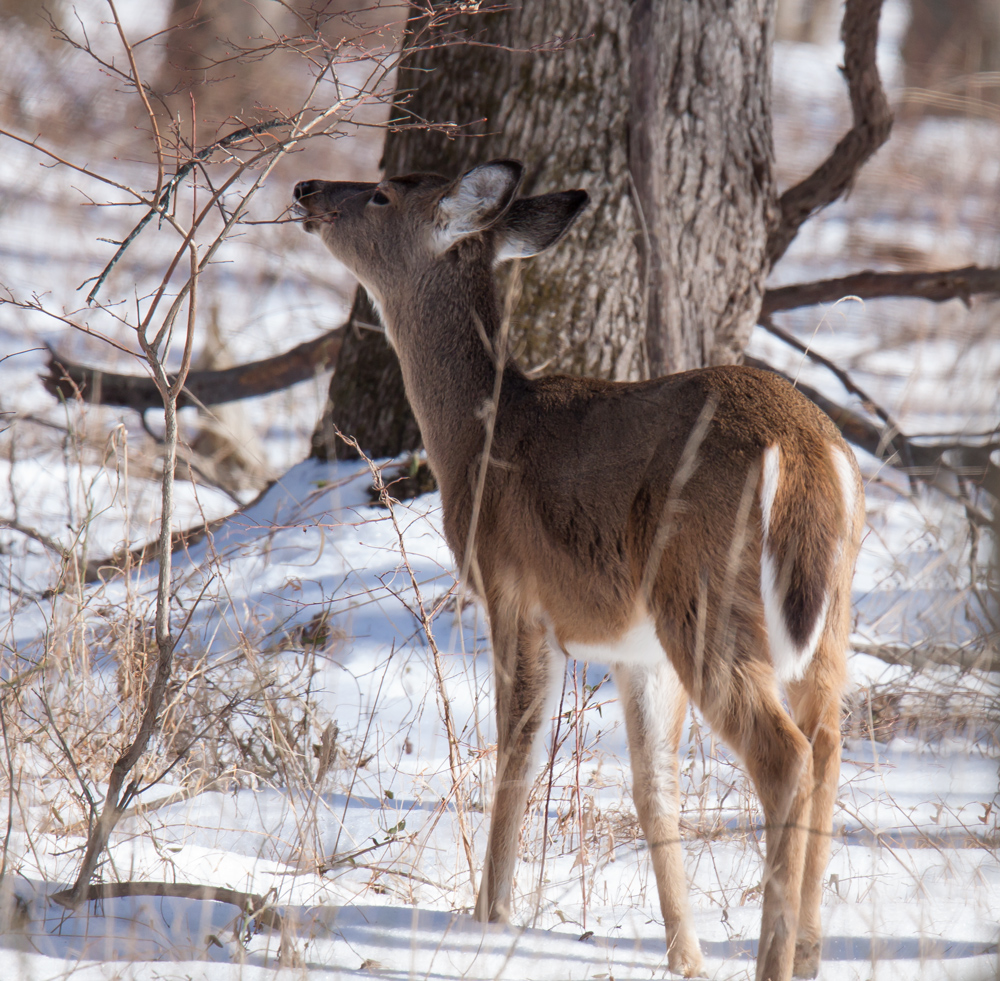
Through the trees I spotted a small group of White-tailed Deer (Odocoileus virginianus) consisting of a larger doe and some smaller deer—there seemed to be no buck. The deer were foraging for food, picking a few remaining berries from some thorny bushes and poking about on the ground. One of the deer appeared to be keeping watch and periodically would stare right at me. After a few minutes at that one spot, the deer moved on and so did I.

White-tailed DeerWhite-tailed DeerWhite-tailed DeerWhite-tailed Deer

© Michael Q. Powell. All rights reserved.

Read Full Post »

I felt like a goalie in a penalty shot situation, waiting for my opponent to act. Would he go to the right or to the left, go high or go low? Could I react quickly enough to capture the shot? Time seemed to stand still as I waited and watched.

In this case, my “opponent” was a Red-shouldered Hawk (Buteo lineatus) perched in a tree at my local marshland park. Once I spotted the hawk, I slowly moved as close as I could get, walking quietly on the boardwalk. The hawk was facing in the opposite direction, so my initial shots showed the details of the back of its head. Scanning the area, the hawk periodically looked to the sides and I managed to get some profile shots, the second and third shots below.

Finally, the hawk took off, diving quickly to my left. I reacted and managed to get a few shots of the hawk in mid-air.  Although my  trigger finger reacted well, I didn’t move the lens fast enough and failed to keep the hawk centered in the frame. I barely managed to capture the entire body of the hawk in the photo below and the composition of the shot is less than optimal. However, I like the overall feel of the image and the fact that you can see details like the underside of the tail feathers and the talons.

Red-shouldered Hawk

Red-shouldered Hawk

Red-shouldered Hawk

© Michael Q. Powell. All rights reserved.

Read Full Post »

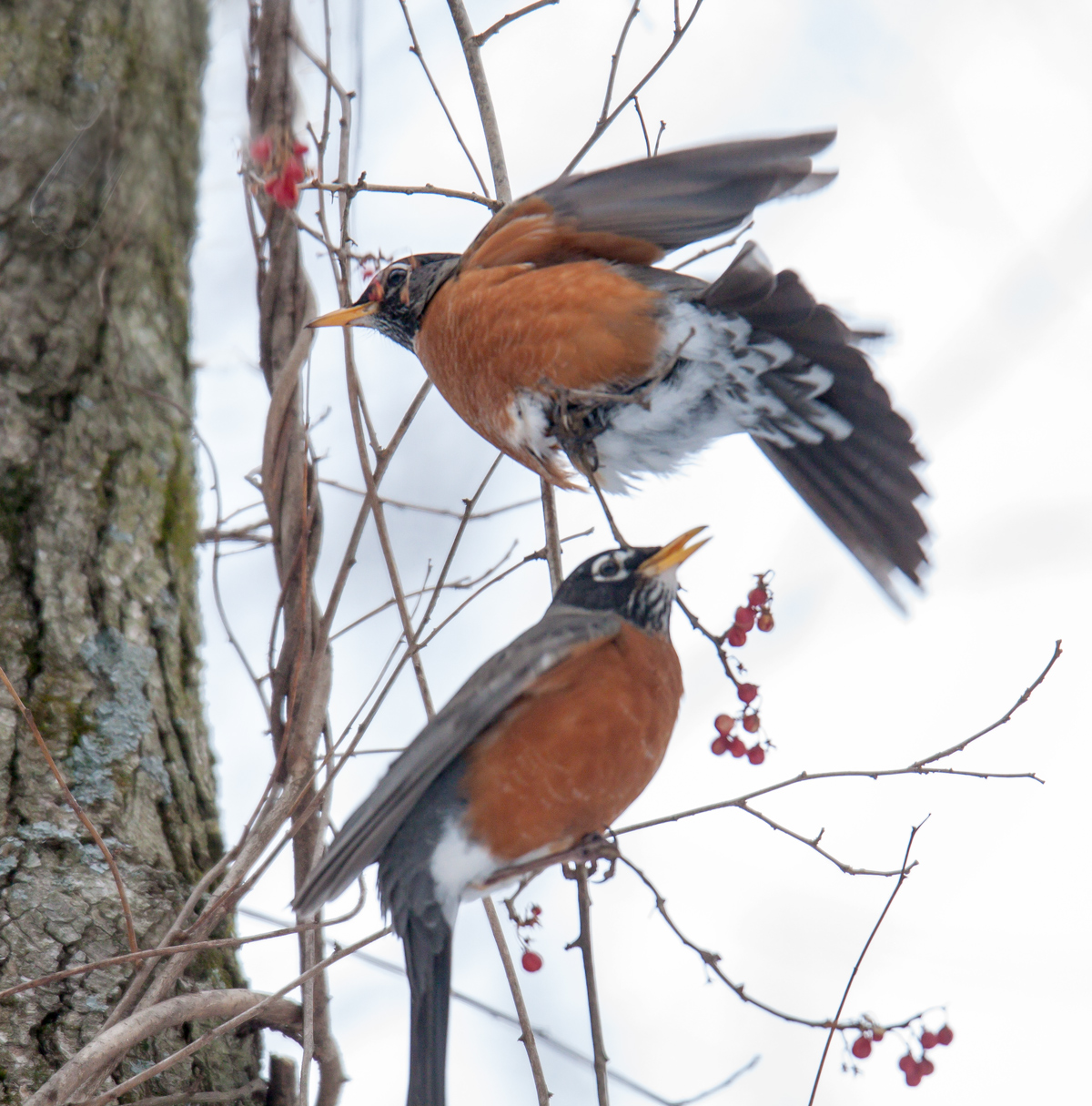
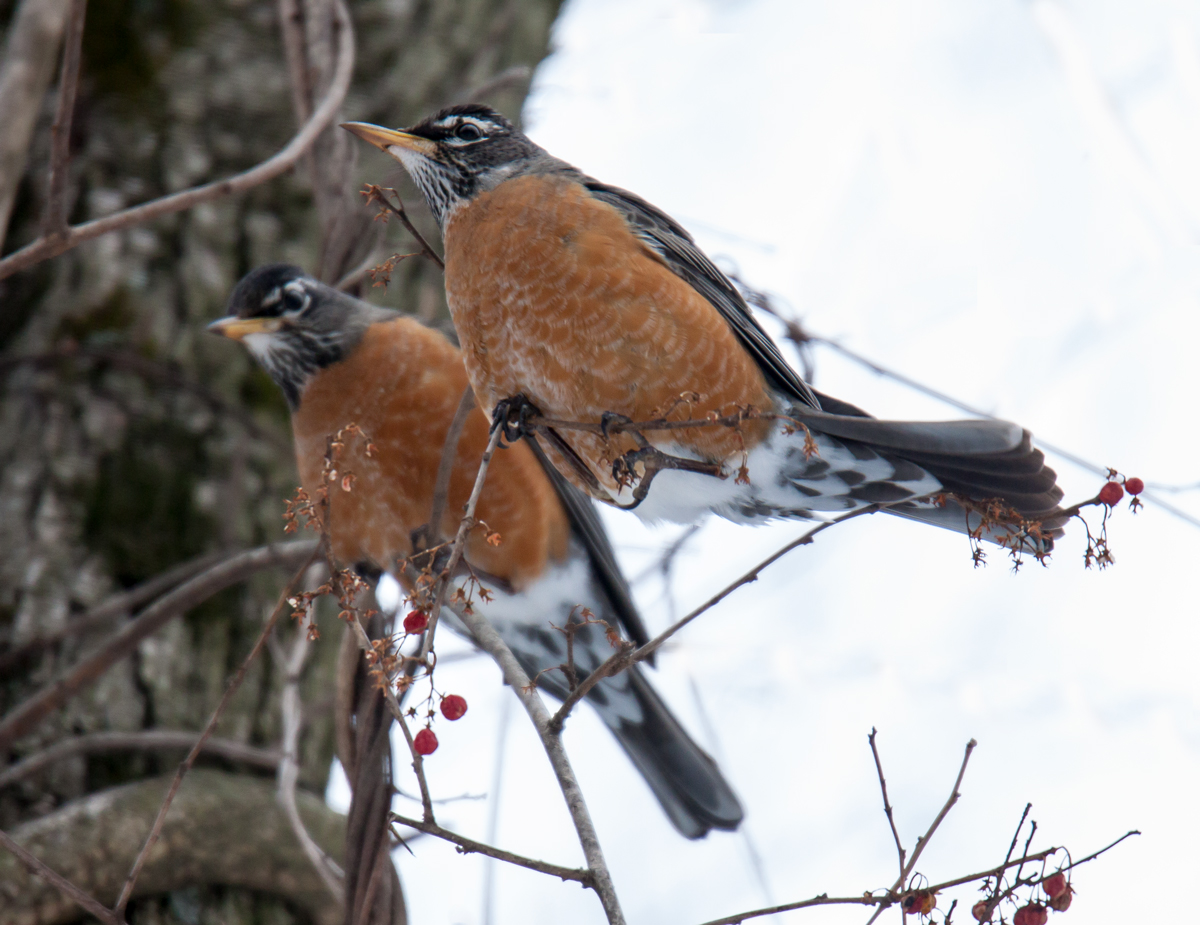
Earlier this week American Robins (Turdus migratorius) were very active at my local marshland park, mostly fluttering about high in the trees, apparently foraging for food.

I have a mental picture of robins poking about in the ground and pulling out juicy worms. Clearly they were not looking for worms in the trees, but seemed instead to be focusing their attention on some little red berries. The robins, which are present in our area throughout the year, manage to survive by switching their diets to one of primarily fruit during the winter.

Sue of the Backyard Biology blog helped to explain this change in the a robin’s diet in a posting last year that she titled “The Robin in Winter…or why Robins don’t migrate.” Be sure to check out her blog for wonderful images and fascinating discussions of the science behind some of nature’s mysteries and conundra.

American Robin American RobinAmerican Robin

© Michael Q. Powell. All rights reserved.

Read Full Post »

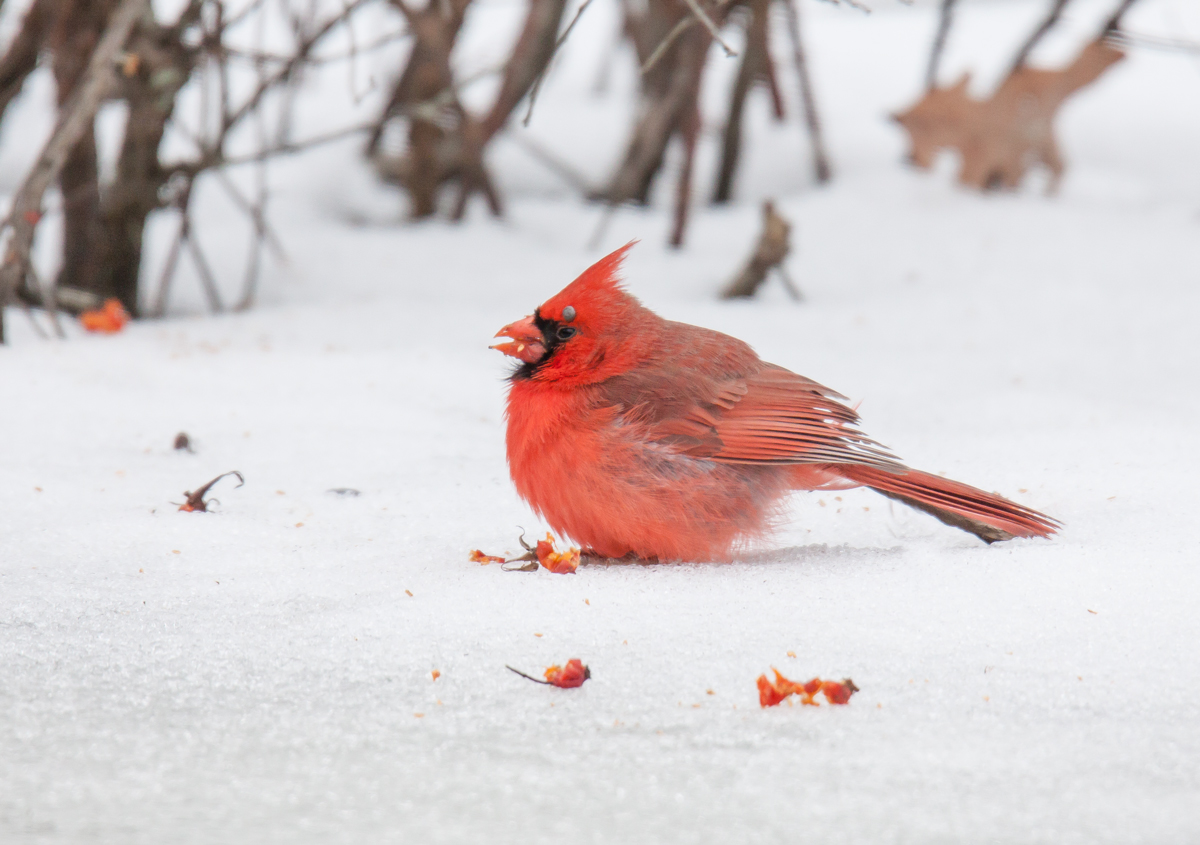
Many colorful birds leave us in the winter or have a more muted plumage, but the Northern Cardinal retains its bright, bold color and remains in our area throughout the entire year. I am always happy to spot a cardinal and the snowy white background really helps to showcase this male Northern Cardinal (Cardinalis cardinalis) that I spotted yesterday at Huntley Meadows Park, the local marshland where I take many of my wildlife and nature photos.

On a cold, windy day, the cardinal was busily extracting seeds from what I think are rose hips of the Swamp Roses (Rosa palustris) that grow in the wet areas of the park.

Northern Cardinal

© Michael Q. Powell. All rights reserved.

Read Full Post »

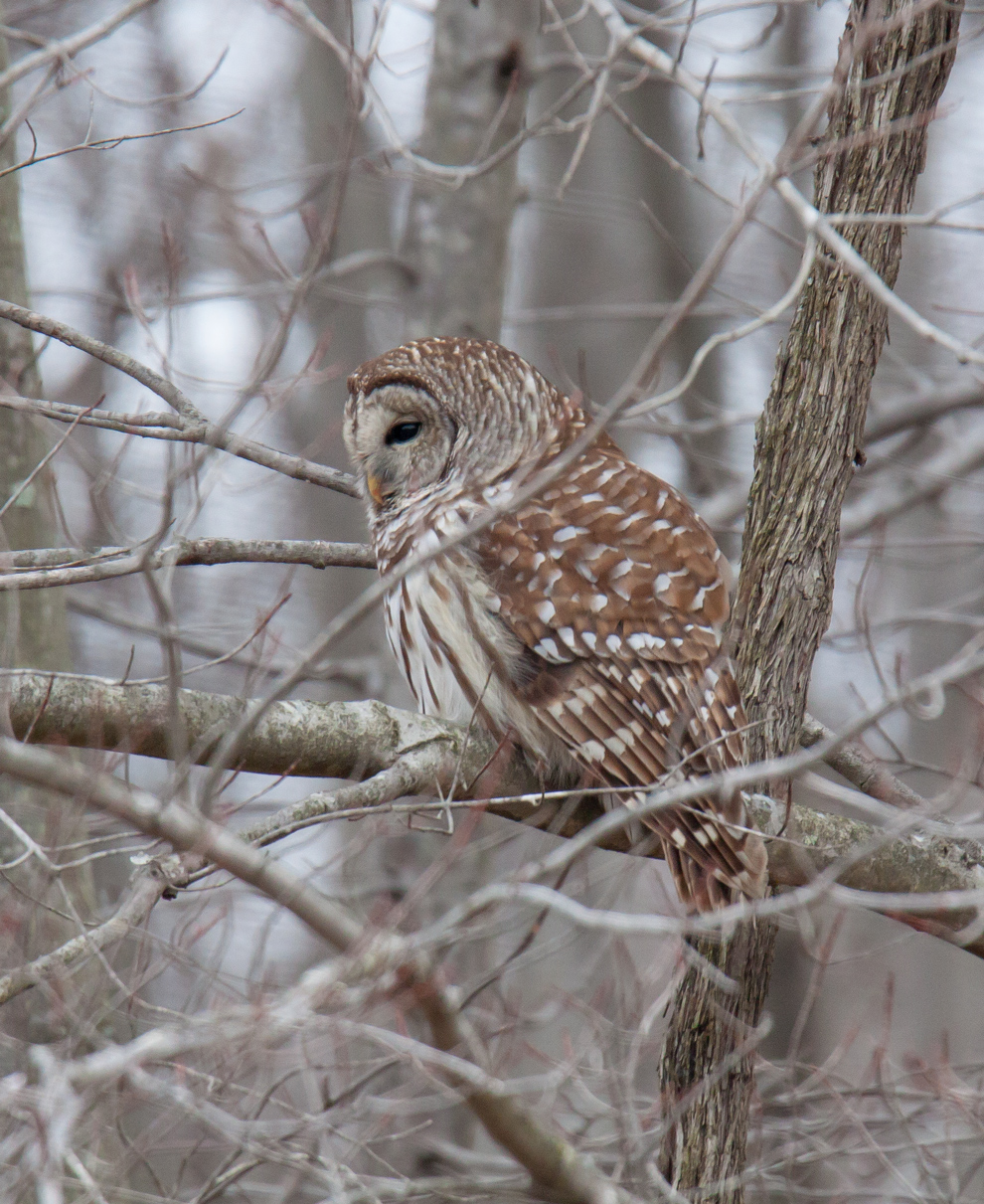
After a couple of years of searching unsuccessfully for owls, it’s hard for me to believe that I have had three separate encounters with Barred Owls in a little over a week, all during daylight hours. I realize that we are in nesting/mating season and these owls are more active in the day than at other times of the year, but I have been amazingly fortunate to have spotted these owls, especially this most recent one that was perched in a tree when I caught sight of it.

Yesterday I posted an image of this Barred Owl (Strix varia) flying away, which was an artsy kind of shot, but I decided to post some shots of the owl in the tree today, because this was one of the cleanest looks I have gotten to date of a Barred Owl (although I was a pretty good distance away and had to work to find a clear line of sight to the owl).

As you can see from these images, the owl’s head was in almost constant motion as it surveyed the entire area, possibly searching for prey. I am searching the trees as I hike about the back areas of my marshland park, hoping to spot an owl nesting site. The chances of finding one are really slim, of course, but I have been unusually lucky recently, so I’m not excluding that possibility.

Barred OwlBarred OwlBarred OwlBarred Owl

© Michael Q. Powell. All rights reserved.

Read Full Post »

I managed to see yet another Barred Owl (Strix varia) yesterday.  Unlike my other recent encounters, I spotted this owl while it was perched high in a tree—the other times I was able to catch sight of the owl only when I flew in front of me.  I got some shots of it while it was stationary and will probably post a couple of them, but surprisingly I was able to get a few shots of it when it started flying. The previous times, the owl flew away so swiftly and silently that I wasn’t able to snap a single photo.

This is my favorite image of the ones I took. The owl’s body is in the shadows, but some of the beautiful details of its feathers are visible in a wonderful semi-circle of extended wings.

Barred Owl

© Michael Q. Powell. All rights reserved.

Read Full Post »

As I look at this image from last week of a couple of Hooded Mergansers (Lophodytes cucullatus) swimming together, they somehow remind me of a young adolescent couple out for a date on Valentine’s Day. There is an awkwardness in their body language, but the gawky male seems to have a smile on his face, content that he has found someone with whom to share these special moments.

Hooded Merganser

© Michael Q. Powell. All rights reserved.

Read Full Post »

Even in Northern Virginia, where temperature are relatively mild, winter must be difficult for Great Blue Herons, because many of their favorite ponds freeze over from time to time and fishing is not possible. After a recent period of temperatures above freezing, the ice melted and I was happy to see a heron return to a familiar location at my local marshland park.

I encountered this Great Blue Heron (Ardea herodias) early on a Saturday and had an extended period of time with this photogenic bird. The heron seemed to be willing to pose for me and gave me a number of different looks.

At times, as you can see in the final shot, the heron would look straight at me with apparent curiosity. After I had taken my shots, I moved along the boardwalk, leaving the heron to continue in his efforts to catch something to eat for breakfast.

Great Blue Heron

Great Blue Heron

Great Blue Heron

Great Blue Heron

© Michael Q. Powell. All rights reserved.

Read Full Post »

For months I have observed this large screw-like tool partially buried in the ground at my local marshland park and gradually rusting with the passage of time. Was it deliberately abandoned during a construction project? Was it accidentally left behind?  Will it be used in the spring to bore more holes into the earth?

Is it a symbol of abandoned hopes and plans, of dreams that never came to fruition? I leave the interpretation to others.

screwed

© Michael Q. Powell. All rights reserved.

Read Full Post »

After record-breaking warm weather this past Sunday, the ice on the ponds at my local marshland park melted and I suspected that there might be a Bald Eagle there on Monday. On a gloomy, overcast day, I spotted one in the trees and captured some shots as the eagle took off and flew away.

Bald Eagles (Haliaeetus leucocephalus) frequently hang out in a remote area of Huntley Meadows Park, and I think that that there may be a nest in that general area. When the ponds started to freeze over, not surprisingly the eagles seem to have disappeared from view.

I initially caught sight of the eagle in flight and watched it land on a distant tree. I had an unobstructed view of the eagle, because I was looking over a small body of water. My telephoto lens is too heavy to hold for long periods of time when it is pointing upwards, but I was fortunate that I was looking through the viewfinder when the eagle took off from the tree.

I have been working on tracking birds in flight and managed to keep the eagle pretty much in focus as it flew over the trees. When the lens is extended to 600mm, it’s quite a challenge to keep a moving subject in the viewfinder. Normally I also like to keep my ISO as low as possible to avoid grainy images, because my Canon 50D is a little dated and doesn’t handle higher ISO levels as well as newer cameras. Taking into account the limited light on the overcast day, I was shooting at ISO 1000, which let me stop the action at 1/1000 of a second.

I actually enjoy shooting on days when the weather is marginal, because it keeps many others away. When the weather is sunny and warmer, the park tends to be crawling with people, which tends to decrease my chances of getting shots like these.

Bald EagleBald EagleBald EagleBald Eagle

© Michael Q. Powell. All rights reserved.

Read Full Post »

I can’t believe it, but I observed a Barred Owl (Strix varia) again, only a day after my first sighting and in the same general vicinity in my local marshland park. The circumstance were similar—it was during daylight hours (about 9 o’clock in the morning this time) and I first caught sight of the bird when it was flying.

The most recent encounter was a little more unusual, because the owl flew across my path from ground level and perched briefly on the branches of a fallen tree only about eight to ten feet (less than 3 meters) above the ground. The best shots that I managed to take on this occasion were mainly profile shots that give a good view of the almost human-shaped eyes as well as the small yellow bill. Many of my other shots showed the back of the owl’s head—it never looked directly at me.

I suspect that this is the same owl that I observed the previous day. One of my friends warned me that this is nesting/mating season for these owls and that they can get aggressive at this time of year. According to media sources, a Barred Owl attacked four joggers at a park in Salem, Oregon in separate incidents earlier this month and snatched the cap off the head of one of them. The park has posted warning signs that actually recommend hard hats. Check out this video from TV station KOIN for details about the owl attacks.

After watching that video, I am walking a bit more cautiously now when I am in the area where I spotted the owl, but have not yet taken to wearing a hard hat.

Barred Owl Barred Owl

© Michael Q. Powell. All rights reserved.

Read Full Post »

I have been told that rose hips are an excellent source of Vitamin C. They don’t seem to be the favorite food of the birds in my local marsh, however,  and there are lots of the rose hips still around in mid-February. Northern Cardinals, though, will sometimes smash them against the railing of the boardwalk in order to get to the seeds inside, leaving behind a trail of discarded outer skins.

This past weekend, I watched a male Northern Cardinal (Cardinalis cardinalis) patiently extract the seeds from a small pile of rose hips. There were plenty more available, but he seemed content to snack on only a few of them—maybe their taste is too strong or acidic to consume a large quantity of them.

I believe that these rose hips are from Swamp Roses (Rosa palustris), which covered parts of the marsh during the summer and were amazingly fragrant.

Northern Cardinal

Northern Cardinal

Northern Cardinal

© Michael Q. Powell. All rights reserved.


Read Full Post »

One of my goals this winter was to get some shots of an owl in the wild. Every time that I have visited my local marsh early in the day or near dusk, I have looked and listened for an owl, but have come up empty-handed, except for one owl that I saw flying away from me.

Yesterday morning I finally spotted one when it flew from one tree to another as I approached. I initially assumed that it was a hawk, given that it was 11:00 in the morning. I thought it was unusual that the bird had not simply flown into the air, as hawks seem to do when I get too close.

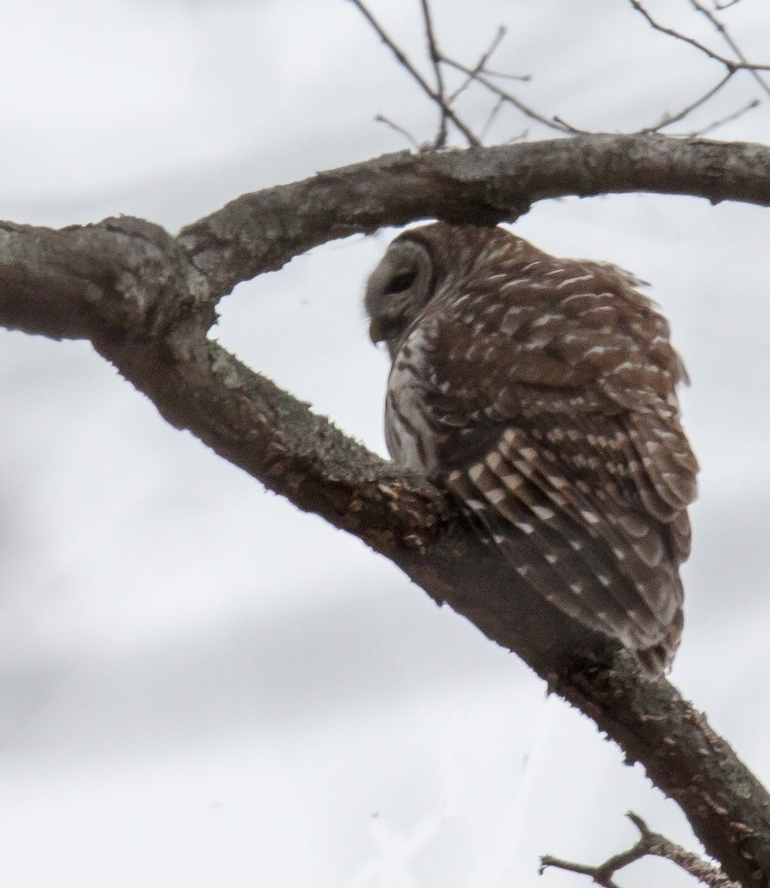
Once I managed to spot the bird amid all of the branches, I was shocked to see that it was an owl. I was able to take a few photos of the Barred Owl (Strix varia) in its initial perch before it flew away deeper into the woods and even got a slightly blurry shot of it on a more distant perch.

Whenever I get a shot of a new species, I am so excited about it that I want to share my photos immediately. Now that I have met one of my goals for the winter, I’ll be looking to see if I capture some better images of this owl and maybe even find Great Horned Owls, which are reportedly present in my local marshland park.

Barred Owl

Barred Owl

© Michael Q. Powell. All rights reserved.

Read Full Post »

There is something about sculptures that often affects me more deeply than other types of art. I love the way that a three dimensional sculpture lets you look at a piece from different angles and see it in different ways. I especially enjoy outdoor sculptures and I spent longs hours at the outdoor garden of the Rodin Museum during a trip to Paris a few years.

As I was wandering along an informal trail at my local marshland park recently, I came upon a piece of bone that a beautiful organic shape. As I held it in my hands, it reminded me of an abstract sculpture. It may be from a deer and is perhaps a vertebra, though I must confess that I don’t know animal anatomy at all and could be completely wrong.

The shapes and the textures of this miniature organic sculpture really fascinate me as I view them from different angles.

© Michael Q. Powell. All rights reserved.

Read Full Post »

When you are walking or driving around, looking for subjects to photograph, which ones will actually cause you to stop, grab your camera, and take some shots? Does it take an impressive and relatively rare subject like the bald eagle that I featured in yesterday’s posting? Would you stop to photograph a sparrow?

Over the past few years, I’ve read a lot of blog postings and seen some amazing photos, but I must confess that only a few of them have made such an impression that I remember their content. In a memorable posting in July 2013, Lyle Krahn, an amazing photographer and thought-provoking blogger, put forward a concept called “stopping power. Here’s an extract from that posting:

“I think every beautiful scene has stopping power. That’s my term for the ability of a scene to make a person stop hiking or driving in order to pull out a camera and make images. Did you ever wonder what makes you stop? Do you ever hear the music?”

I hear the music almost all of the time and the threshold for my “stopping power” is really low—almost any sound or color or movement is enough to cause me to stop when I have my camera with me.

Do I really need more shots of sparrows? Last week, I spent some time watching and photographing this sparrow, which I think is probably a Song Sparrow (Melospiza melodia), as it pecked about in the shallow water at my local marsh. The light was coming in from the side and I had to wait and wait for the bird to lift its head to a position where it would not be in the shadows.

In the end, I got a couple of shots that I really like, images that show some of the beautiful details of this little sparrow, a bird that has “stopping power” for me.

Be sure to check out Lyle’s website, Krahnpix, for some incredible wildlife shots that are guaranteed to stop you in your tracks. His quirky humor and provocative prose will both entertain you and prompt you to think a little more critically about your photography and maybe even your life.
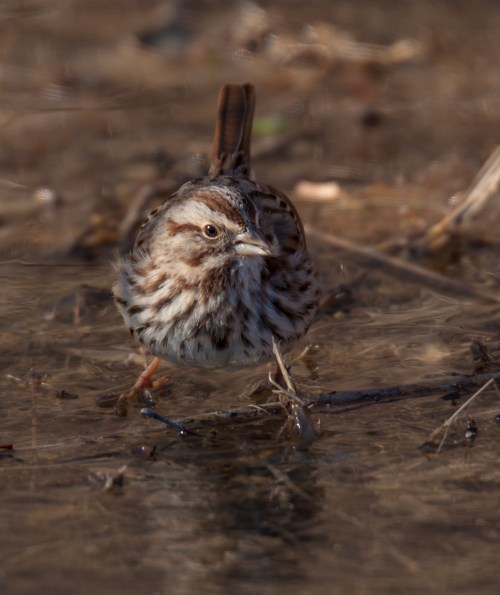
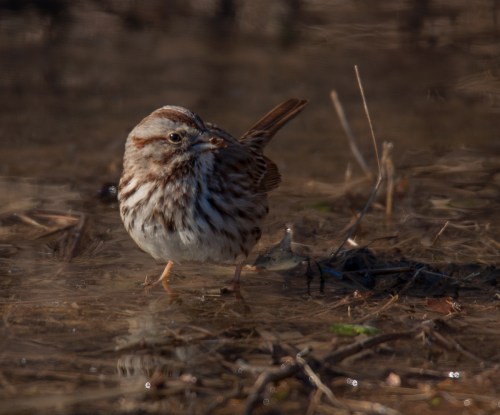
Song Sparrow

Song Sparrow

© Michael Q. Powell. All rights reserved.

Read Full Post »

During the dead of the winter, it’s sometimes difficult for me to find birds to photograph. The birds seem to be using common sense when it’s cold, gray, and windy outside and take shelter to stay warm. At times like this, I pay more attention than usual to the details of the birds that I do manage to photograph, like this White-throated Sparrow (Zonotrichia albicollis) that I observed last week.

At first glance there is nothing particularly special about this sparrow. As you look more closely, though, do you notice the silvery gray of its bill or the yellow lores? What are lores? I don’t know many technical terms about bird anatomy, but several years ago I learned that the lore is the region between the eye and bill of a bird. I love the beautiful shade of brown of this bird’s eyes and its little white “beard,” with a few spiky dark hairs sticking out from its chin.

Yes, it’s “only” a sparrow, a bird that you may see so often that you don’t even notice it, but I challenge you to take a closer look and you may lose yourself in the beauty of the sparrow details.

White-throated Sparrow

© Michael Q. Powell. All rights reserved.

Read Full Post »

In the distance I could hear the sound of a woodpecker busily at work. It took a little while for me to finally spot the woodpecker, but eventually I caught sight of him and watched him as he pecked away.

I was happy to be able to identify the bird as a Red-bellied Woodpecker (Melanerpes carolinus), a fairly common species in my marshland park. I was surprised, however, to note that the woodpecker was excavating a cavity that was already large enough to contain its entire head.

I know that Red-bellied Woodpeckers make their nests in cavities and wonder if this might be an early stage of building a nest. Could the bird merely be building a storage area for food? I have lots of questions and multiple possible explanations for what I saw but don’t really have any answers. I think that I remember where I saw the woodpecker and may try to find the tree again and check to see if I can tell whether the woodpecker has worked more to enlarge the cavity in the tree.

Red-bellied Woodpecker

Red-bellied Woodpecker

Red-bellied Woodpecker

Red-bellied Woodpecker

© Michael Q. Powell. All rights reserved.

Read Full Post »

On Friday, as I was walking toward a group of ducks, I saw a flash of white, a white that was brighter than that of a mallard duck. In the midst of the mallards, there was a couple of Northern Pintail ducks (Anas acuta) and I managed to get this shot of the male.

Before he swam away, the duck extended his neck and looked all around. I was amazed to see how long his neck was—it appeared to be almost as long as a goose’s neck.

Once again, I was reminded of the value in closely examining a group of birds. Others might have passed by the group of common ducks without bothering to notice this beautiful Northern Pintail amidst the mallards.

Northern Pintail

Northern Pintail

© Michael Q. Powell. All rights reserved.

Read Full Post »

Yesterday, I was walking through the woods when I noticed pieces of bark falling through the air. I assumed that this activity was caused by hyperactive squirrels and was shocked when I looked up to see a Pileated Woodpecker high in the trees.

Pileated Woodpeckers (Dryocopus pileatus) are really loud when they are foraging for food and their forceful drumming often sounds like a jackhammer. This woodpecker, however, seemed to be in stealth mode and he was removing sections of bark by putting his bill underneath the bark and twisting his head a little.

There were quite a few branches between me and the woodpecker, so it was interesting challenge trying to find a visual  tunnel that would permit me to photograph him without too many obstructions. As anyone who photographs birds knows well, focusing was also an issue and I ended up with some photos of a blurry woodpecker, but beautifully in-focus branches. I was pretty happy, though, that I managed to get a a couple of relatively clear shots.

The woodpecker was undoubtedly searching for something to eat. According to the Cornell Lab of Ornithology, a Pileated Woodpecker’s primary food is carpenter ants, supplemented by other ants, woodboring beetle larvae, termites, and other insects such as flies, spruce budworm, caterpillars, cockroaches, and grasshoppers.

I have no idea what delicacy this woodpecker was seeking, but in the second photo it looks like he might have found some tasty little snack. Bon appétit!

Pileated WoodpeckerPileated Woodpecker

© Michael Q. Powell. All rights reserved.

Read Full Post »

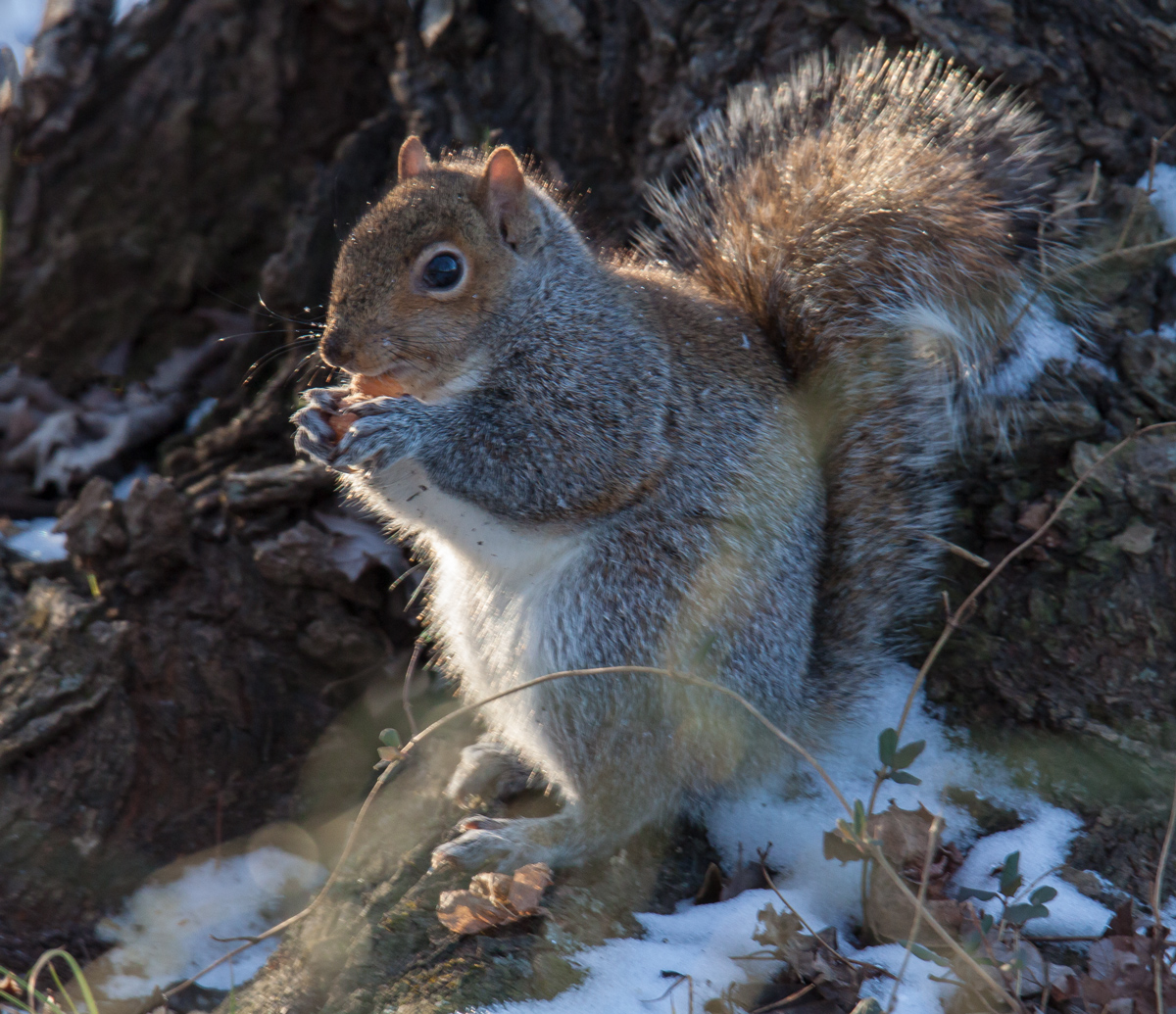
Squirrels scurry about so fast or hide in the shadows of the trees so often that it is frequently tough for me to get clear shots of them. This Eastern Gray Squirrel (Sciurus carolinensis) took a break from his work to bask in the sun and enjoy a snack (I think it was an acorn) and I was able to snap a few shots of him.

I particularly like the way the light fell on the squirrel and how it illuminated the fluffy tail. In addition, I can’t help but like the squirrel’s cute pose and facial expression. He seemed to be enjoying his little snack.

Eastern Gray Squirrel

© Michael Q. Powell. All rights reserved.

Read Full Post »

It’s been quite a while since I have seen a mammal in the wild bigger than a squirrel, so I was pretty happy when I spotted a group of four deer foraging in a wooded area of my marshland park late in the day. The four White-tailed Deer (Odocoileus virginianus) were rooting about in the undergrowth and surprisingly did not run away immediately when they sensed my presence. Several of them looked in my direction at times, but then resumed their activity.

I was easily within range to get some shots, but the trees and the grassy growth made it tough to get unobstructed photos. This image of what is undoubtedly a young deer is my favorite of the ones that I was able to shoot that day.

For me, this little deer qualifies as “big game.”

White-tailed deer

© Michael Q. Powell. All rights reserved.

Read Full Post »
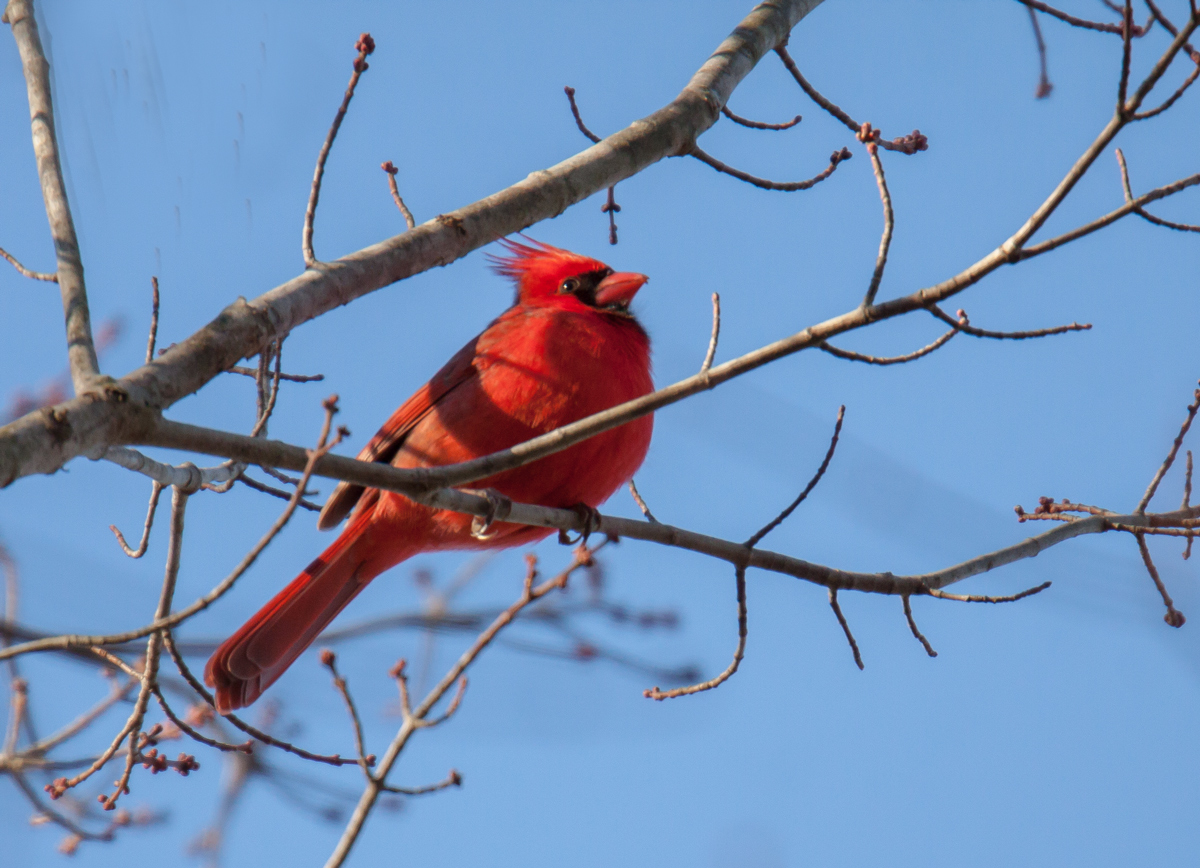
During these gray days of winter, bright colors are hard to find, so I jumped at the chance to photograph this male Northern Cardinal when I spotted him Monday high in a tree at Huntley Meadows Park, the local marshland where I take many of my nature photos.

For another burst of color, check out today’s posting “Winter Blues…” by fellow photographer and blogger, Walter Sanford, with gorgeous images of Painted Skimmer dragonflies that he photographed last June at the same park.

Northern Cardinal

© Michael Q. Powell. All rights reserved.


Read Full Post »
Many people in my area were off from work in honor of Martin Luther King Day and my marshland park was full of families enjoying the cool, sunny winter day. Not surprisingly, there was not a lot of wildlife to be found, but after a week overseas and a weekend away at a wedding, it was nice to return to familiar surroundings.

I was able to capture some interesting images of a White-throated Sparrow (Zonotrichia albicollis) perched on a branch. The little bird had puffed up its feathers and was amazingly round. and almost looks like he is dozing, with his eyes  half closed.

Can sparrows close their eyes?

White-throated Sparrow

© Michael Q. Powell. All rights reserved.

Read Full Post »

« Newer Posts - Older Posts »