Feeds:
Posts
Comments

Posts Tagged ‘green spring gardens’

How does the Google search engine work? What causes information that you post to show in the first page of Google results? There are plenty of people on-line who claim to understand the Google algorithm and are willing to sell you there services for something called Search Engine Optimization, but for most of us, Google is a bit of a mystery.

When I do a daily blog posting, I expect that most of my views for that day will be from that posting, primarily from subscribers to my blog, or maybe for postings from the previous few days. Over the past ten years, I have learned that other viewers may be drawn to my site as a result of searches using Google or other search engines. In 2023, for example, 34 percent (14,473) of my 43,661 total views came from Google searches.

In the last couple of months, however, I have noticed a rise in daily views that seems to be driven largely by an increase in Google searches. I have a modest goal for my blog of about 120 daily views and in May and June the daily views have averaged over 200. I’d like to think that my blog postings have been better than average recently, but the numbers don’t bear that out.

So far this month, 59 percent of my 4,074 views came from Google searches, including 562 views of a 2013 posting called Fuzzy White Caterpillar and 217 views of a 2019 posting called Groundhog in a tree. In the case of the latter posting, when I do a Google search of “Groundhog in a tree,” my posting shows up as the first result. Yikes!

I really don’t care that much about the number of views that my blog gets, but my analytic mind is fascinated by the data. As I have noted repeatedly in the past, I use the words and images in my blog postings to share a bit of the world as I experience it, showcasing with a sense of wonder and curiosity the amazing world in which we live, as filtered through my eyes and through my brain.

In case you are curious, this white water lily was one of several that I encountered during a recent visit to Green Spring Gardens. Somehow this simple image conveys a sense of the peace and serenity that I felt as I captured the image. My hope is that we can all experience a bit more of that peace in our daily lives.

As for Google, I am somewhat perplexed and a little amused that Google seems to like me a bit more recently and is sending additional viewers my way and suspect that it is only a passing fancy. As Andy Warhol is reported to have said, “In the future, everyone will be famous for 15 minutes.”

water lily

© Michael Q. Powell. All rights reserved.


Read Full Post »

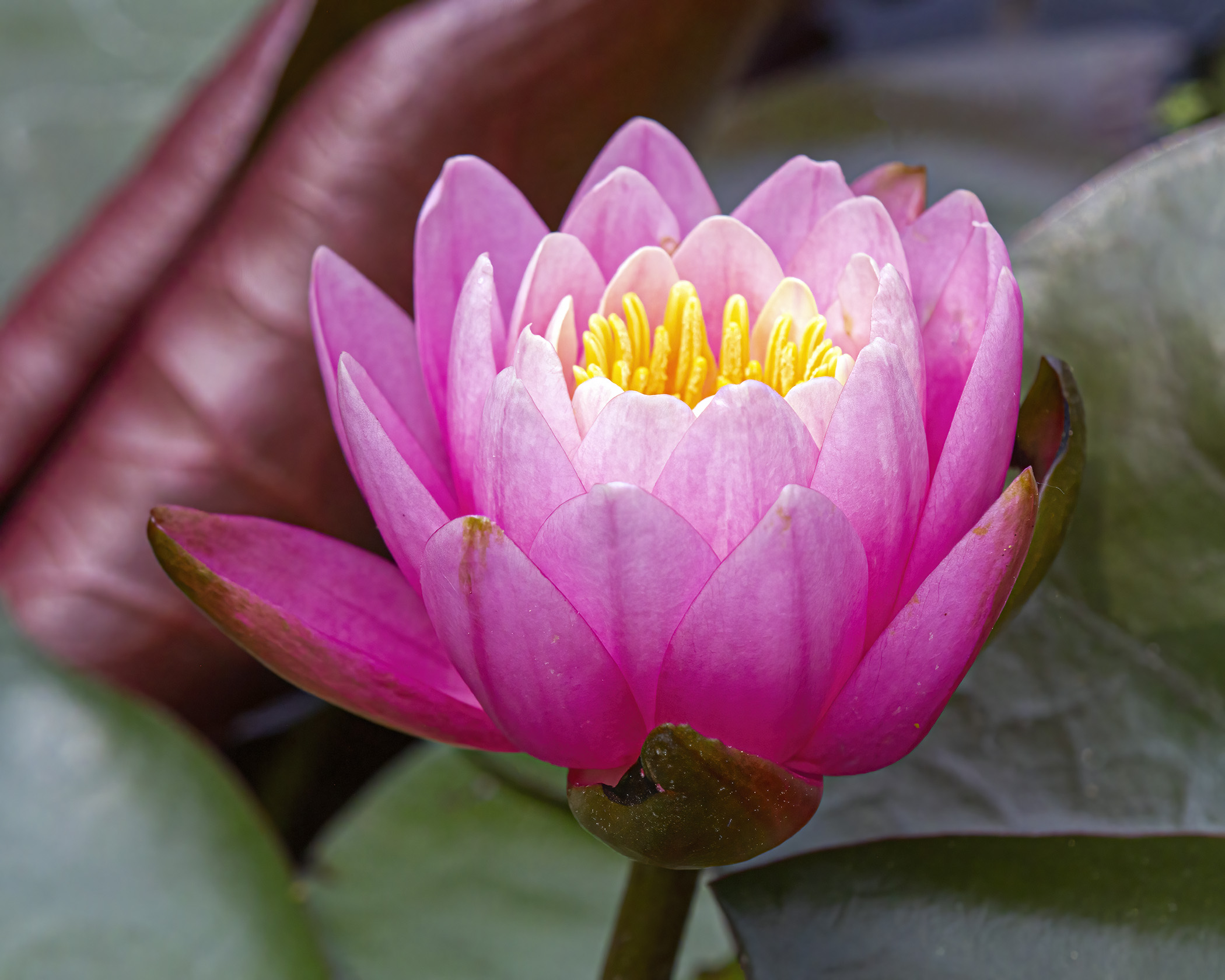
I love the way that water lilies seem to glow, as though there were a light emanating from their centers. I photographed this pretty pink water lily during a recent visit to Green Spring Gardens, a county-run historical garden not far from where I live. Several white water lilies were also in bloom, but somehow I was drawn to the solitary pink one that was surrounded by lily pads.

Whenever I see Water Lilies in bloom, I immediately think of one of my favorite artists—Claude Monet. During the last thirty years of his life, water lilies (Nymphéas in French) were the main focus of his artistic production.

water lily

© Michael Q. Powell. All rights reserved.


Read Full Post »

The poppies at Green Spring Gardens were well past their prime when I spotted them during a visit last week. Nonetheless I was drawn in by the shapes and colors of these cool flowers and captured some fun photos. The images have a kind of abstract feel to them that I really enjoy, a departure from my normal realistic style.

If you look closely at the final photo, you will notice that a bee really liked the flower too and was busily collecting pollen.

poppy

poppy

poppy

© Michael Q. Powell. All rights reserved


Read Full Post »

Most people know that Monarch butterflies love milkweed, but if you move in closer to the plants, you’ll discover a world of fascinating little creatures, like this Red Milkweed Beetle (Tetraopes tetrophthalmus) that I spotted last week at Green Spring Gardens, a county-run historical garden not far from where I live.

I first encountered these little red beetles a dozen or so years ago and became a bit obsessed with them. I am not sure if it is their “longhorn” antennae or the bold pattern on their bodies or the bright color that attracts me most—I just know that I love seeing them in all of their developmental forms (they go through several interesting instars as they grow).

This milkweed beetle was crawling around a lot, so it was hard to get a shot of it. Fortunately, it stopped for a moment when it reached the end of the leaf and I was able to capture this simple environmental portrait..

The next time you see some milkweed, stop for a moment, examine it closely, and prepare to enter a fascinating little world as the scent of the flowers envelops you.

Red Milkweed Beetles

© Michael Q. Powell. All rights reserved

Read Full Post »

I love photographing dragonflies as they perch on lotus flowers and lotus buds. Alas, the lotuses were not yet in bloom last week when I visited Green Spring Gardens, a nearby county-run garden that has a small pond with a few lotuses and water lilies.

Fortunately quite a few dragonflies were buzzing around the pond and I managed to capture this image of a male Blue Dasher dragonfly (Pachydiplax longipennis) as he perched on the tip of a rolled-up lotus leaf. I like the way that the texture of the leaf adds visual interest to the image, something that would be absent if the dragonfly had perched on a bare branch.

I will probably return to the gardens in a few weeks to see if I can get some shots of the lotuses when they are blooming. As I recall, lotuses seem to enjoy the hazy, hot, and humid days that are far too common during the summer in the Washington D.C. area.

Blue Dasher

© Michael Q. Powell. All rights reserved.

Read Full Post »

Flowers are beautiful when you look at them from the front, of course, but they can be equally beautiful when you look at them from behind, especially when they are backlit. That was certainly true for these colorful violas that I photographed last week at Green Spring Gardens, a county-run historical garden not far from where I live.

I especially like the first shot, which has an abstract quality to it, caused in part by photographing the flower at close range with my macro lens. The flower is reduced to a mass of shapes and color and of light and shadows to the point where the brain at first glance does not seem to be able to figure out what the subject is.

viola

violas

© Michael Q. Powell. All rights reserved.

Read Full Post »

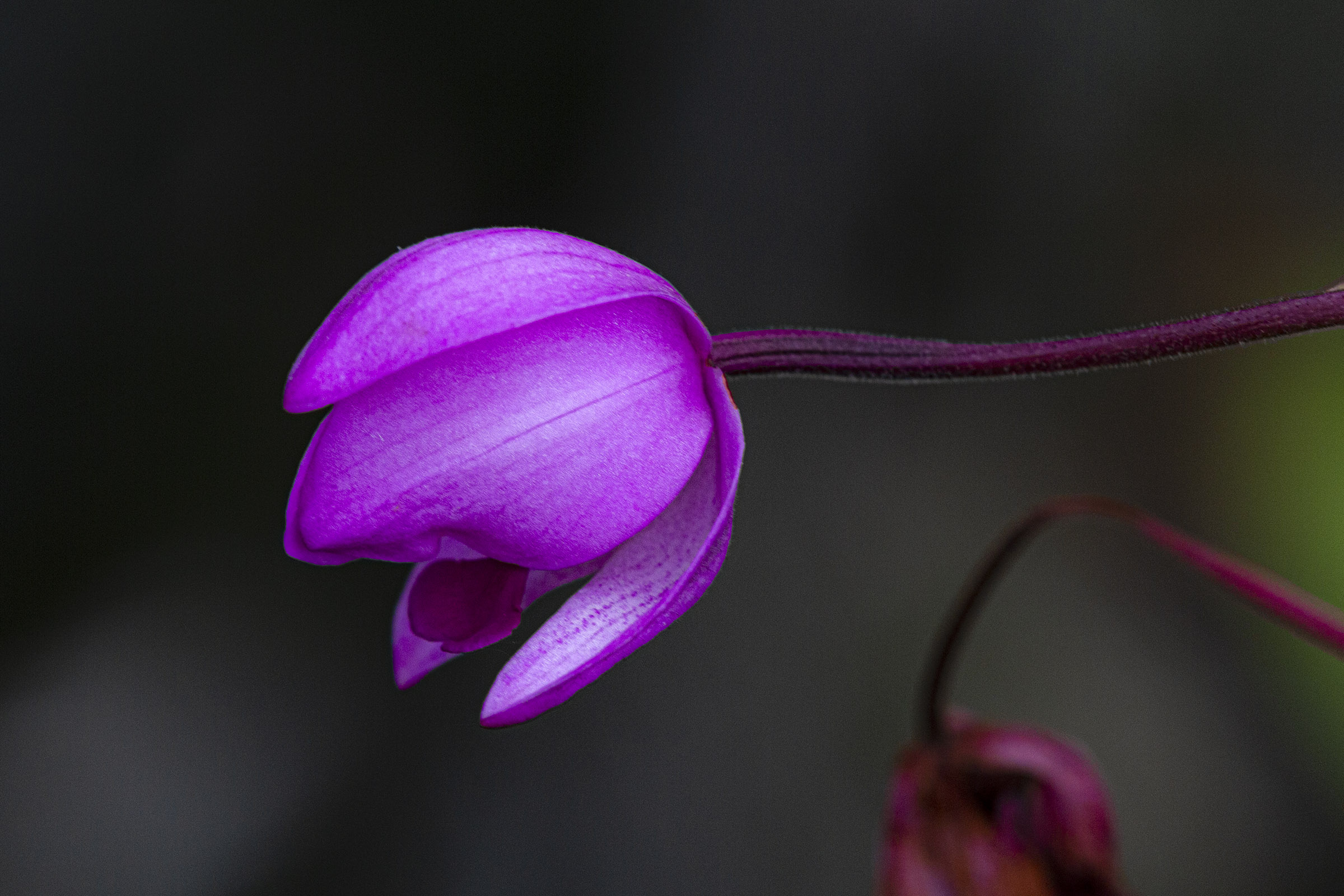
In addition to the stunning pink and purple bromeliad that I featured in an earlier posting, here are some shots of tropical plants that I observed in the “glasshouse” at Green Spring Gardens last week. The first two shots are of what I believe is a ground orchid—it may be a Phillippine Ground Orchid (Spathoglottis plicata), but there are a number of similar species, so I cannot be sure of the identification.

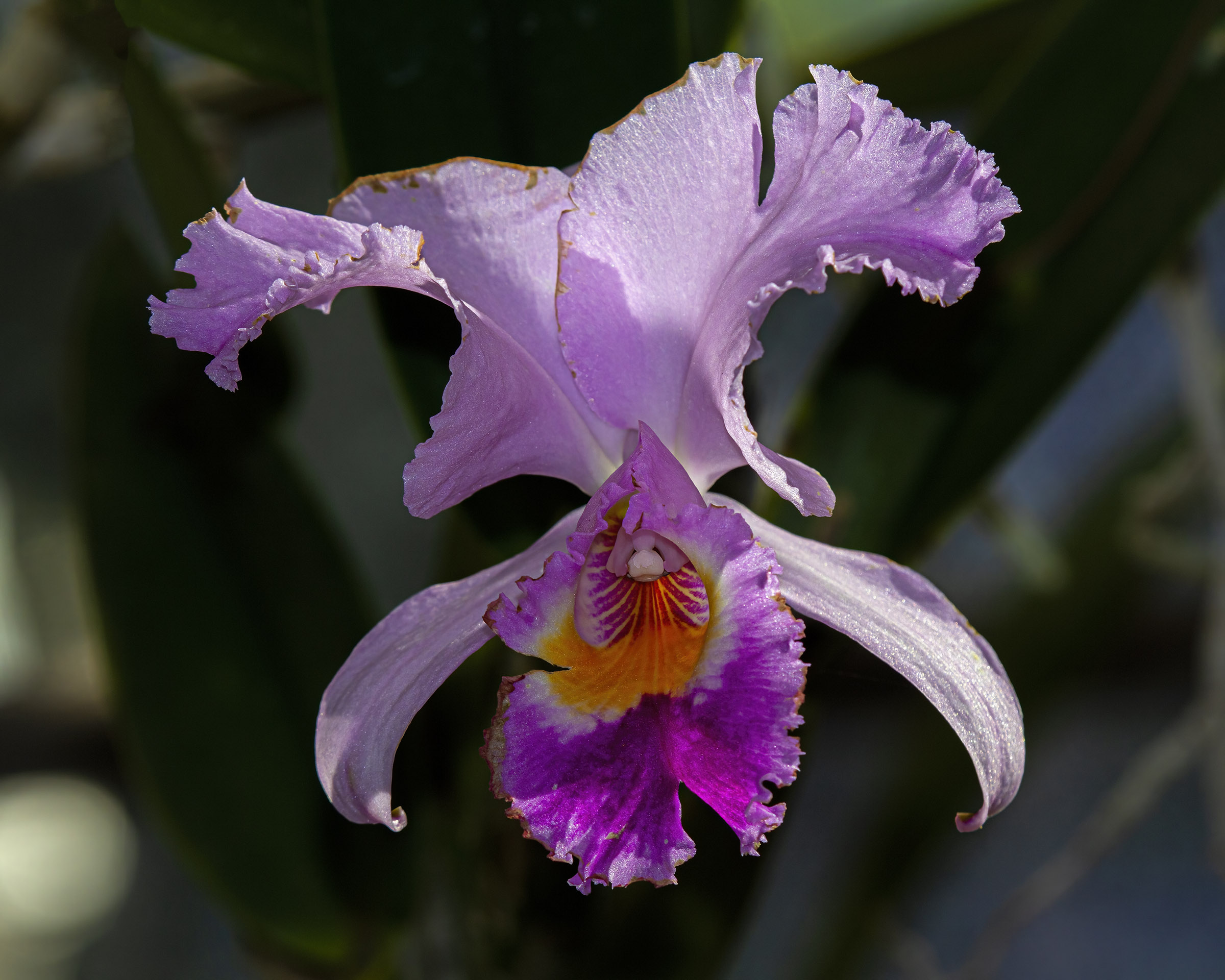
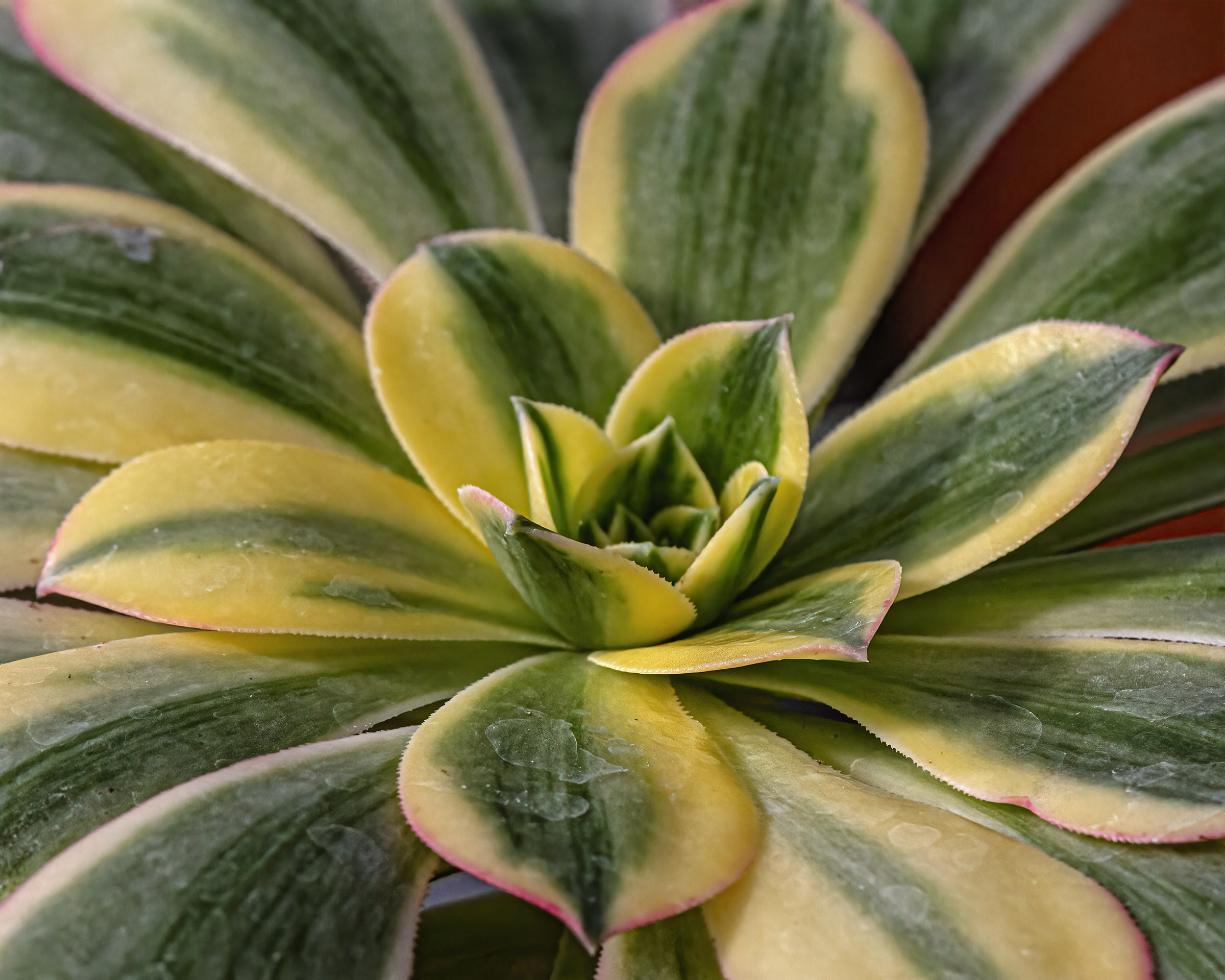
The third photo shows an orchid that is more typical of what I imagine when I think of an orchid. It is a little past its prime, but is still incredibly beautiful. The final photo is a close-up view of one of the many succulents that I observed. I love the geometric patterns of the multi-colored leaves in the image.

One of the nice things about taking photos indoors was that I did not have to worry about the wind creating movement. However, there was not a lot of space for maneuvering and the background was often cluttered, so I had to work hard to find pleasing angles for my photos.

This is a totally different style of photography that the bird photography I have been doing the past few months, but I think that it is good to mix things up a bit to keep from getting stuck in a rut photography-wise.

ground orchid

ground orchid

orchid

succulent

© Michael Q. Powell. All rights reserved.

Read Full Post »

During the gray days of winter my senses are starved for color as the world turns mostly monochromatic. Where can I find bright colors? For a few blissful moments I immersed myself in a tropical world this past Thursday when I visited the “glasshouse,” the small greenhouse at Green Spring Gardens in Alexandria, Virginia.

There were some orchids and succulents, but my eyes were immediately attracted to the amazing hot pink and purple colors of an unusual-looking plant. I had no idea what kind of plant it was, but was absolutely mesmerized by this bold colors and managed to capture a few close-up shots of it with my macro lens.

When I returned home I started my research and eventually figured out that it was some sort of bromeliad. What in the world is a “bromeliad?” Bromeliads are a group of mostly tropical plants that belong to the family Bromeliaceae. I read and re-read descriptions of the characteristics and got tangled up in the scientific jargon of plant anatomy. As I understand it, many bromeliads are able to store water in a structure formed by their tightly overlapping leaf bases—the pineapple is the only bromeliad that immediately comes to mind.

With the help of my dear friend and photography mentor Cindy Dyer, I determined that this colorful plant is probably a Blue Tango Bromeliad (Aechmea ‘Blue Tango’) or possible a Dwarf Blue Tango Bromeliad (Aechmea ‘Del Mar’). Both of these are hybrid cultivars of plants that are native to tropical areas and require high humidity levels to thrive—the glasshouse was humid, but not as steamy as some that I have previously visited.

Blue Tango Bromeliad

Blue Tango Bromeliad

© Michael Q. Powell. All rights reserved.


Read Full Post »

Yesterday I had the desire to photograph something different. For the past few months, my long 150-600mm telephoto zoom lens has remained on my camera and I have focused mostly on birds. I decided to switch back to my 180mm macro lens, the lens that I use most of the time during warmer months, and set off for Green Spring Gardens, a historic county-run park only a few miles from where I live.

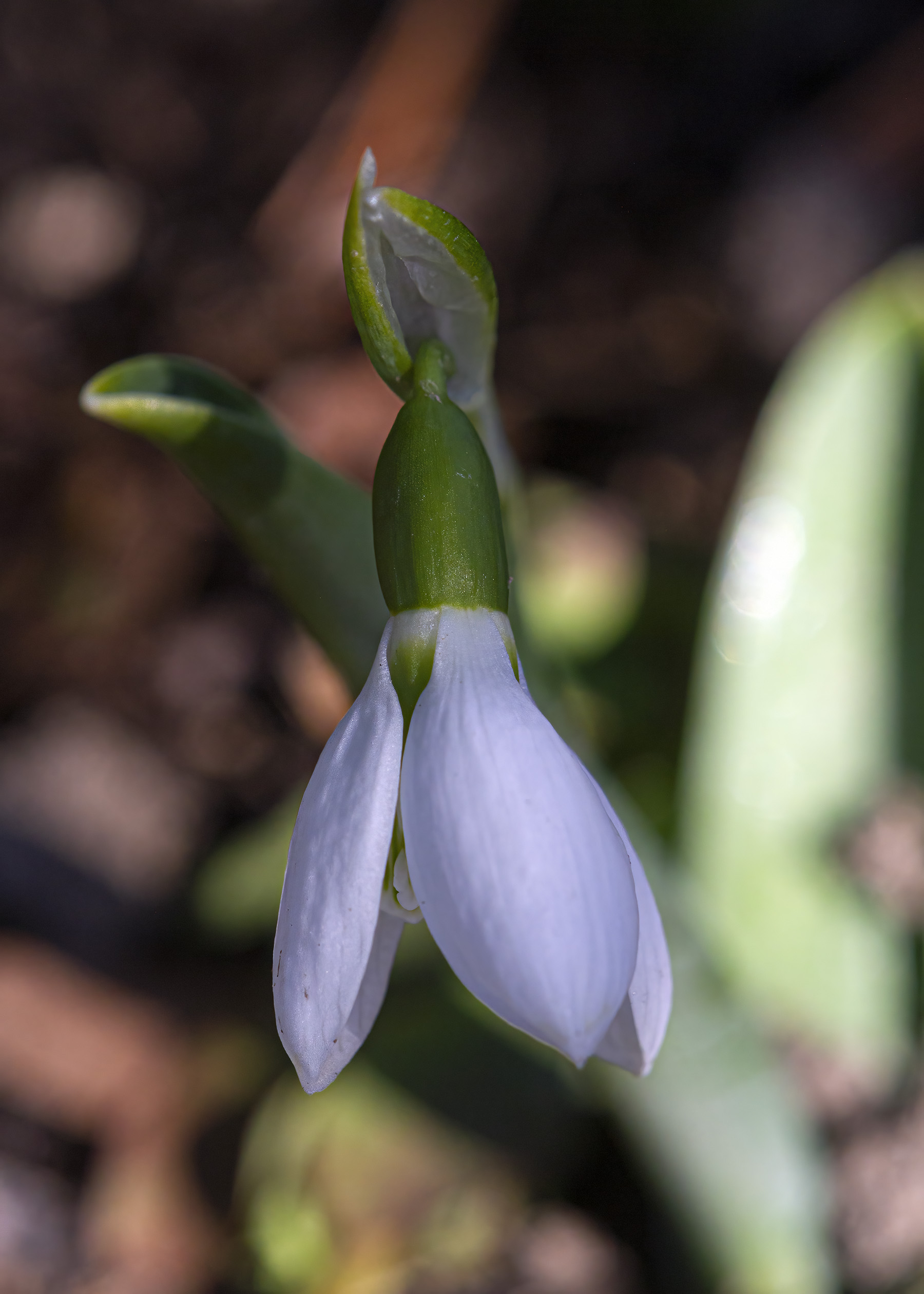
Not surprisingly, I did not spot any insects, but I was thrilled to find several patches of Snowdrop flowers (g. Galanthus) in bloom. I had a fun time trying to compose some  shots of these beautiful little flowers, though I did end up a bit muddy, because it had rained a lot the previous day.

At this time of the year the flower beds are mostly dirt and/or mulch, so it is impossible to get the smooth green backgrounds that I often strive for during the spring and summer months. However, I was able to blur the background some by carefully choosing my shooting angle and adjusting my camera settings.

During my time at the park, I also visited the “glasshouse,” a small greenhouse that houses tropical flowers, succulents, and bromeliads. It felt great to soak up the warmth of the sun in this enclosed environment and I managed to take a few photos there that I will share in a future blog posting.

Snowdrop

Snowdrop

Snowdrop

© Michael Q. Powell. All rights reserved.

Read Full Post »

I have always been fascinated by the color and texture of the centers of poppies and was delighted to see poppies in several different colors during a recent visit to Green Spring Gardens in Alexandria, Virginia, just a few miles from where I live. The tissue-paper texture of the petals quite unusual, reminding me of my childhood craft projects with tissue paper and crepe paper—we may even have created our own poppies.

Even when their petals have faded and fallen away, poppies continue to fascinate me (and birds love their seeds) and I really like the look of their seed pods, like the one in the final photo.

poppy

poppy

poppy

poppy

© Michael Q. Powell. All rights reserved.

Read Full Post »

Water lilies are one of my favorite flowers and I was delighted this past Wednesday to see that several of them are already in bloom at a small man-made pond at Green Spring Gardens, including a couple of pink ones. Later in the season there will also be lotuses at this pond, but it appears to be too early for them right now. It is also a bit early for most of the dragonflies—I love to take photos of dragonflies perching on lotuses and water lilies.

Since there are so few water lilies blooming, I could not get the wider shots that remind me of the paintings of Claude Monet, one of my favorite artists, so I focused instead on capturing individual portraits of several of the flowers. It has always seemed to be that water lilies glow with an inner light and I was happy to capture a hint of that light in several of these photos.

water lily

water lily

water lily

© Michael Q. Powell. All rights reserved.
Read Full Post »

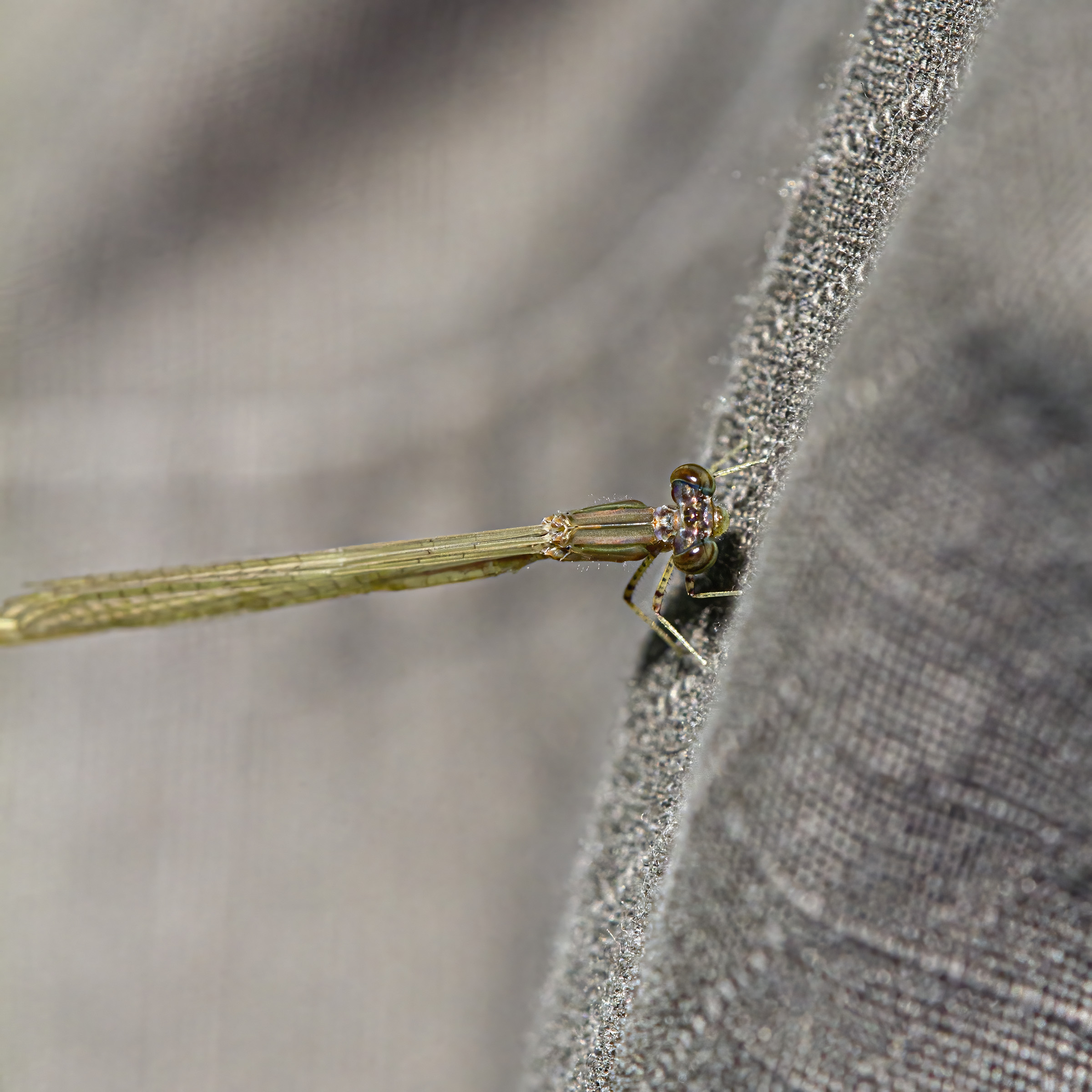
I did not get a close enough look at it to identify its species, but a teneral damselfly decided to momentarily hitch a ride on my pant leg last Wednesday at Green Spring Gardens in Alexandria, VA. A teneral damselfly is one that has only recent emerged and is therefore pale and does not yet have its full adult coloration.

It turns out that a 180mm macro lens is less than optimal for a selflie, even of my leg—I could not get far enough away to include the whole damselfly in the frame. The only other alternative is for me to become a lot more flexible, which at my age does not seem very likely.

teneral damselfly

© Michael Q. Powell. All rights reserved.
 

Read Full Post »

There are lots of different species of skipper butterflies in my area and it is hard for me to tell them apart. I spotted this beautiful little butterfly last Wednesday at Green Spring Gardens, just a few miles from where I live. I think that it is a Zabulon Skipper (Poanes zabulon), although it might possibly be the similar-looking Peck’s butterfly. I’d like to say that there is a scientific reason why I chose Zabulon over Peck’s, but it really is because I think that Zabulon is the cooler name of the two—I love the exotic sound of the word “Zabulon.”

I tried to get down to eye-level with the butterfly when I photographed it so that the background would fall away into a pleasant green blur and was largely successful. I like too that I was able to capture some of the green striations in the leaf on which the butterfly is perched and those little lines help to lead the viewer’s eyes to the butterfly.

Zabulon Skipper

© Michael Q. Powell. All rights reserved.


Read Full Post »

This tiny Cabbage White butterfly (Pieris rapae) paused for only a moment on a pink flower, but I managed to get a shot of it on Wednesday at Green Spring Gardens. If you look closely, you can just make out the butterfly’s stunning green eyes.

The composition of this image is pretty simple, but I think it is effective. I would have liked to blur out the background a bit more, but even though it is cluttered, it is not distracting. I think that is because the pink and white are so bright and distinctive that they “pop” against the green background.

Cabbage White

© Michael Q. Powell. All rights reserved.
Read Full Post »

On Wednesday at Green Spring Gardens, a county-run historic garden just a few miles from my home, I got a really good look at this bee’s proboscis, the long, straw-like tongue that it uses to collect nectar. From my angle, it looked more like a deadly weapon. Yikes! As you can probably tell, I have switched to using my macro lens most of the time now that the warmer weather has caused more insects to reappear.

One of my friends on Facebook named this bee the “Gene Simmons” bee, because it reminded him of an iconic pose by the singer from the band KISS in which his extended tongue reached to the tip of his chin. It is hard to know if it is true, but according to urban legend, Simmons had his tongue insured for a million dollars during the 1970’s, when KISS was at its height of popularity. The popular rumor at the time that he had a cow’s tongue grafted onto his own, however, has been disproven.

bee tongue

© Michael Q. Powell. All rights reserved.


Read Full Post »

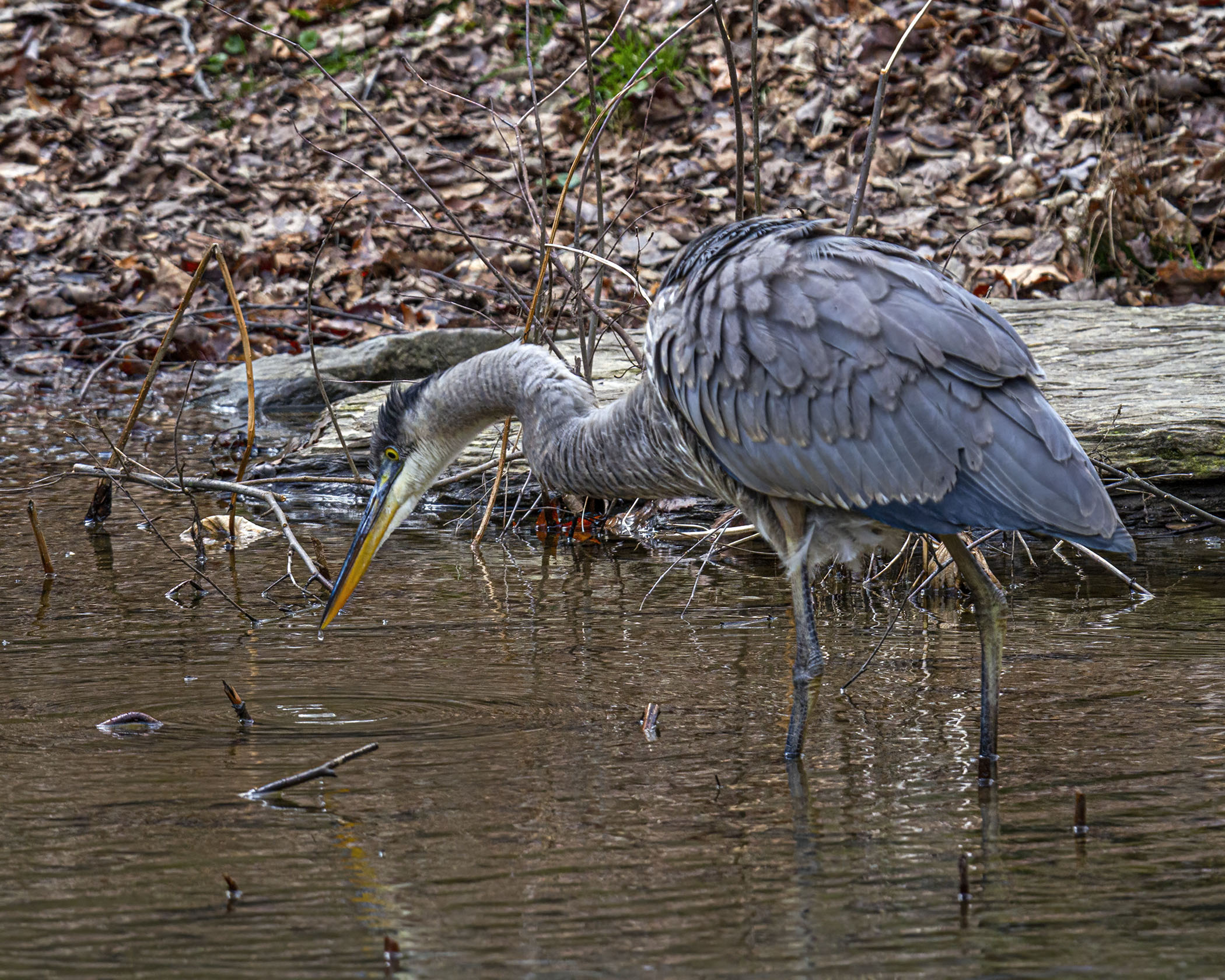
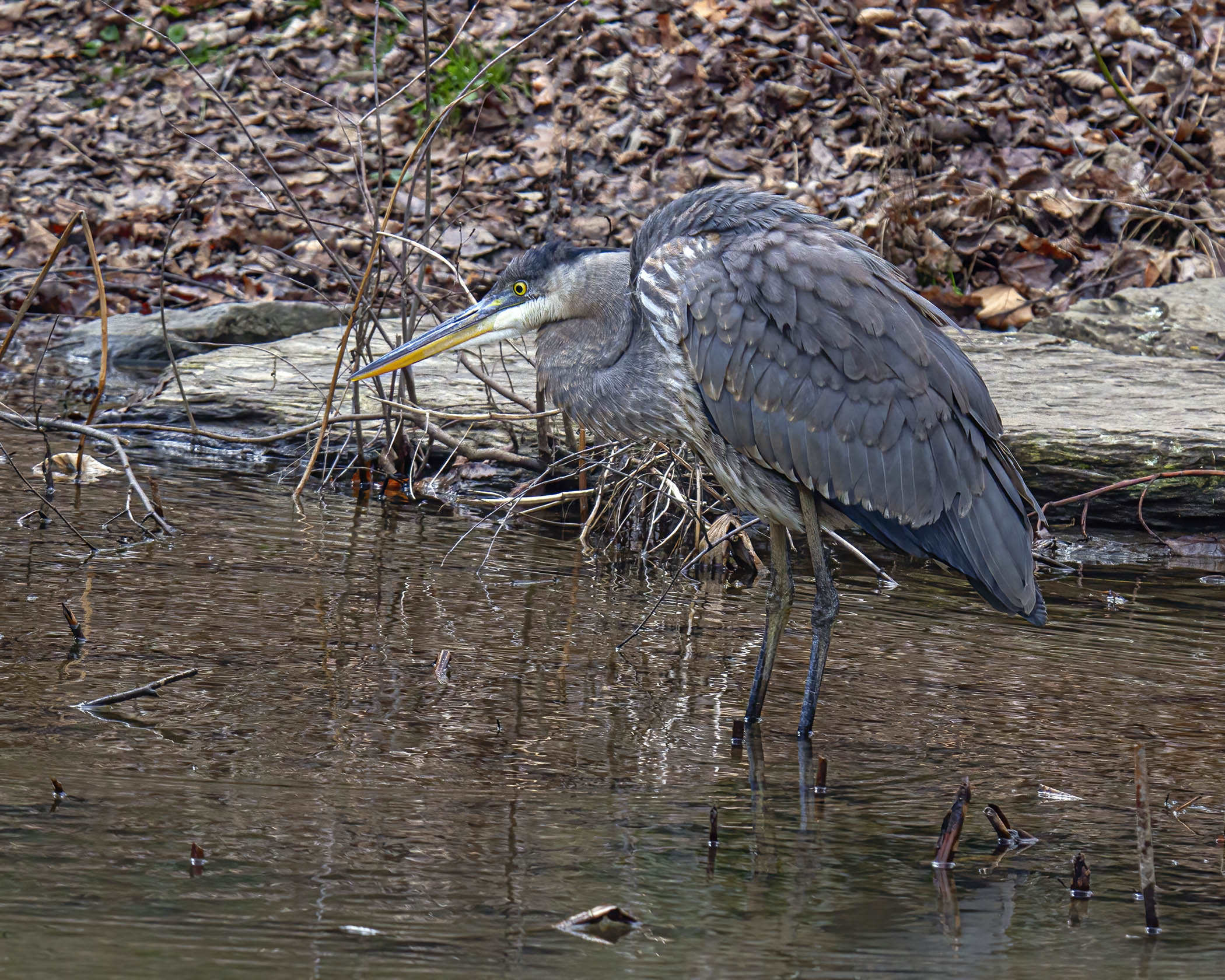
During a recent visit to Green Spring Gardens, a county-run historic garden in my area, I spotted a Great Blue Heron (Ardea herodias) that looked extra fluffy. I suspect that the heron had just fluffed up its feathers in an effort to stay warm.

Despite the cold weather, the heron was standing in the shallow water of a small, man-made pond, attempting to catch something to eat. The heron seemed to be carefully tracking some prey and plunged its beak into the water several times. During the time that I was observing it, however, the heron was unsuccessful in its fishing efforts.

Great Blue Heron

Great Blue Heron

© Michael Q. Powell. All rights reserved.

Read Full Post »

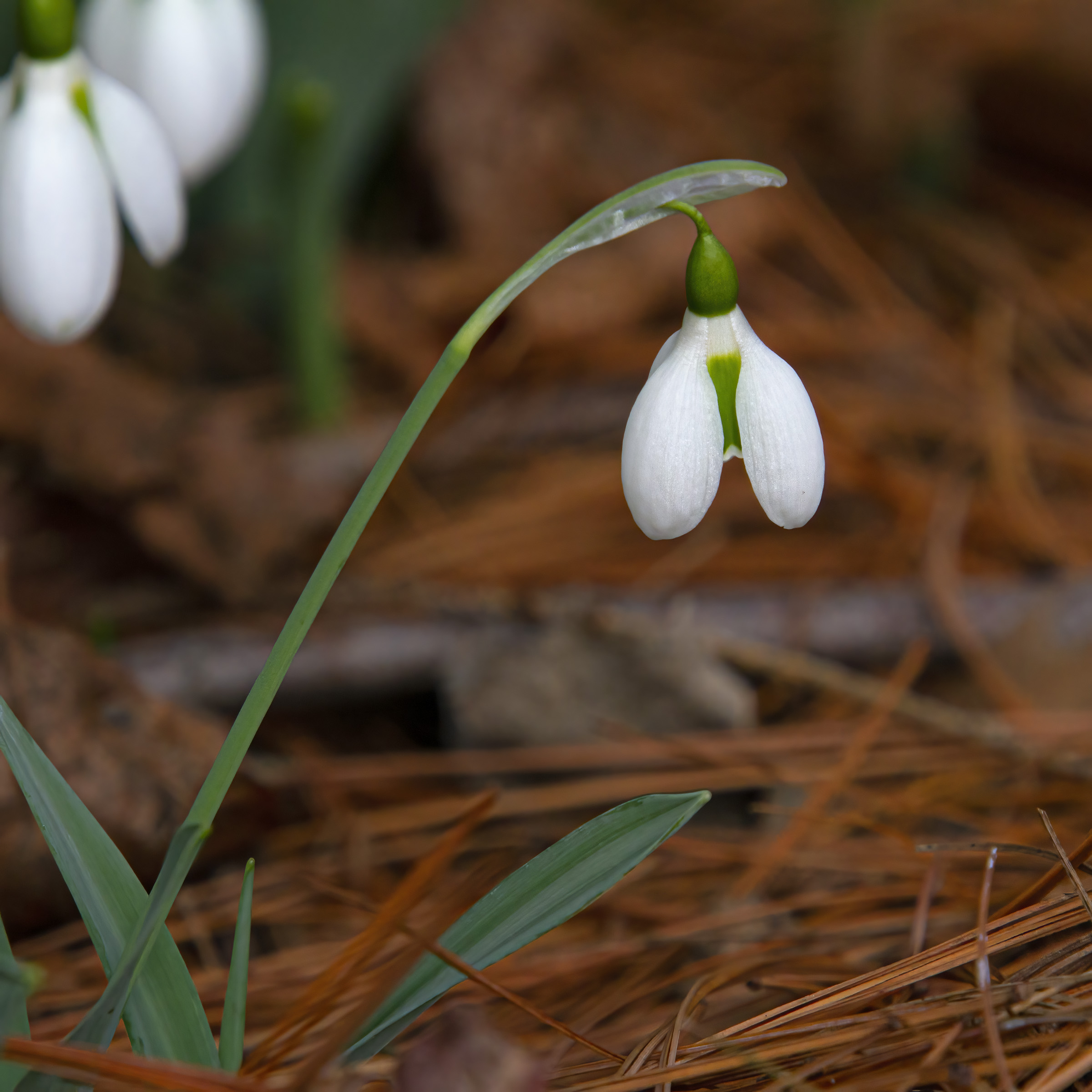
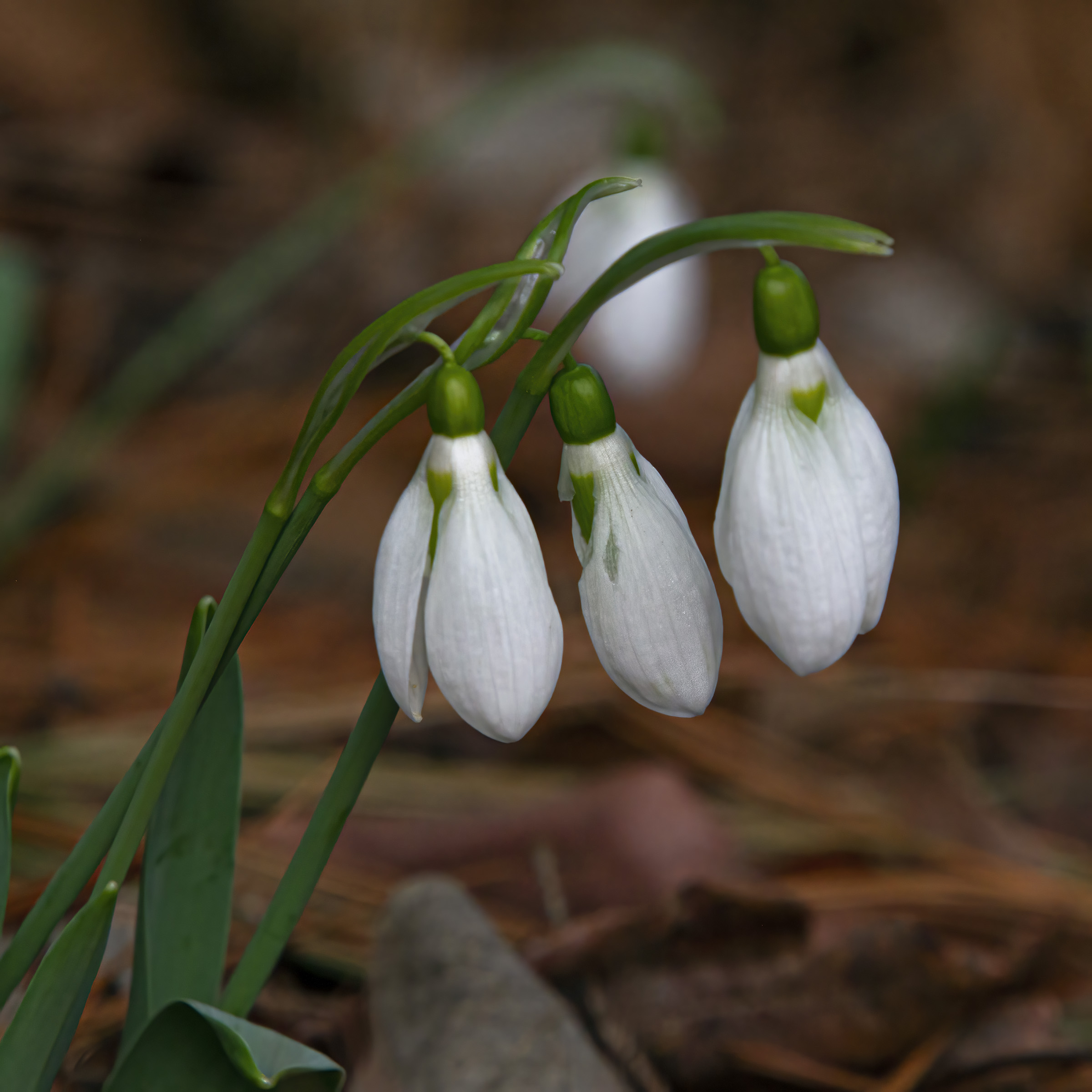
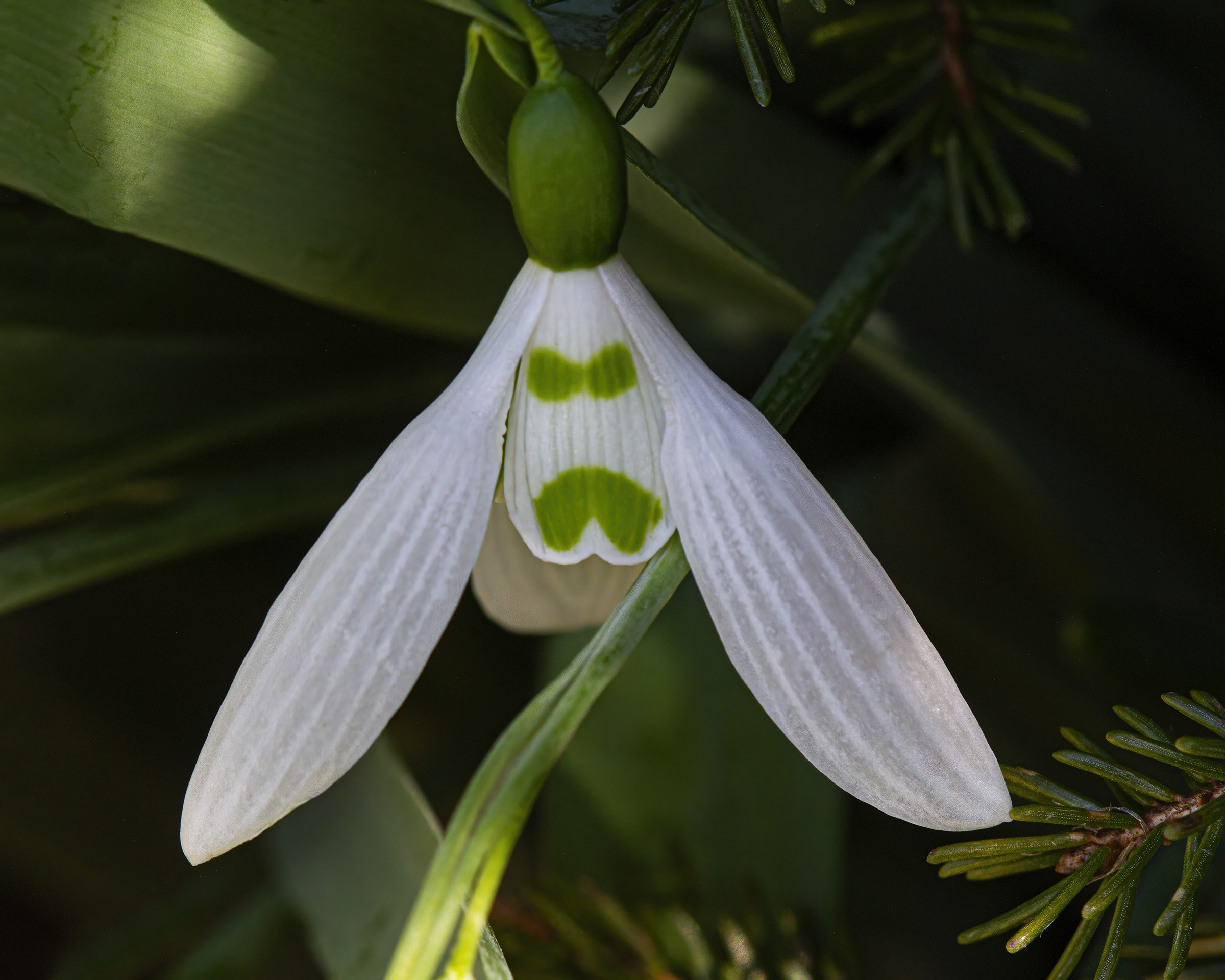
Although it may seem a little strange to make a trip to a garden to photograph flowers, I set off for Green Spring Gardens, a county-run historic garden last Friday. I suspected that snowdrops (g. Galanthus) would be in bloom and I was not disappointed. I spotted several large clusters of these small white flowers scattered throughout the garden beds.

Some years you can find snowdrops peeking out of a covering of snow, but we have not yet had any snow this winter. Instead I found the snowdrops poking out of the reddish-brown ground cover of fallen leaves and pine needles. I did not have my macro lens with me, but managed to get some decent close-up shots with my Tamron 18-400mm lens as well as an overview of one of the patches of snowdrops that I encountered.

When spring comes, I hope to see the somewhat similar-looking snowflake flower (g. Leucojum). The way that I usually tell them apart is to look at the individual petals. The snowdrop petals are pure white, but the petal of each of the snowflake flowers has a little green dot.


snowdrop

snowdrop

snowdrop

snowdrops

© Michael Q. Powell. All rights reserved.
Read Full Post »

When the winter weather warms up a little and there is abundant sunlight, turtles will sometimes come up out of the mud at the bottom of the pond to bask in the sun. Last Friday I made a short visit to Green Spring Gardens, a historic county-run garden in Northern Virginia, and spotted this turtle at the edge of a small pond. I think it may be a Red-eared Slider (Trachemys scripta elegans), although the turtle was so far away and covered in mud that I am not sure of the identification.

Turtles enter into a period of dormancy know as “brumation” when the weather gets cold. According to the ReptileKnowHow website, “When red-eared sliders brumate, they do not eat or defecate and they remain almost completely motionless for long periods. Their metabolic rate reduces to a minimum, reducing all vital functions – even breathing to the strictly necessary.” I don’t know all of the technical differences between hibernation and brumation, but I believe that the former term is reserved for warm-blooded creatures and the latter term for cold-blooded ones.

winter turtle

© Michael Q. Powell. All rights reserved.
 

Read Full Post »

Today I am featuring the Blue Dasher dragonfly (Pachydiplax longipennis), one of the most common dragonflies in my area. The Blue Dasher is special to me because my very first posting on this blog in July 2012 included a shot of a Blue Dasher. Click on this link if you are curious to see what my photography looked like ten years ago.

I took these shots at two different locations in July, prior to my road trip, and am only now catching up on some of my backlog of shots. Blue Dashers seem to be quite adaptable and can be found in a wide variety of habitats, so it is not hard to find one.

These images show Blue Dashers in a variety of poses, including the “obelisk” pose in the final image, one of the signature poses of this species.

Blue Dasher

Blue Dasher

Blue Dasher

© Michael Q. Powell. All rights reserved.

Read Full Post »

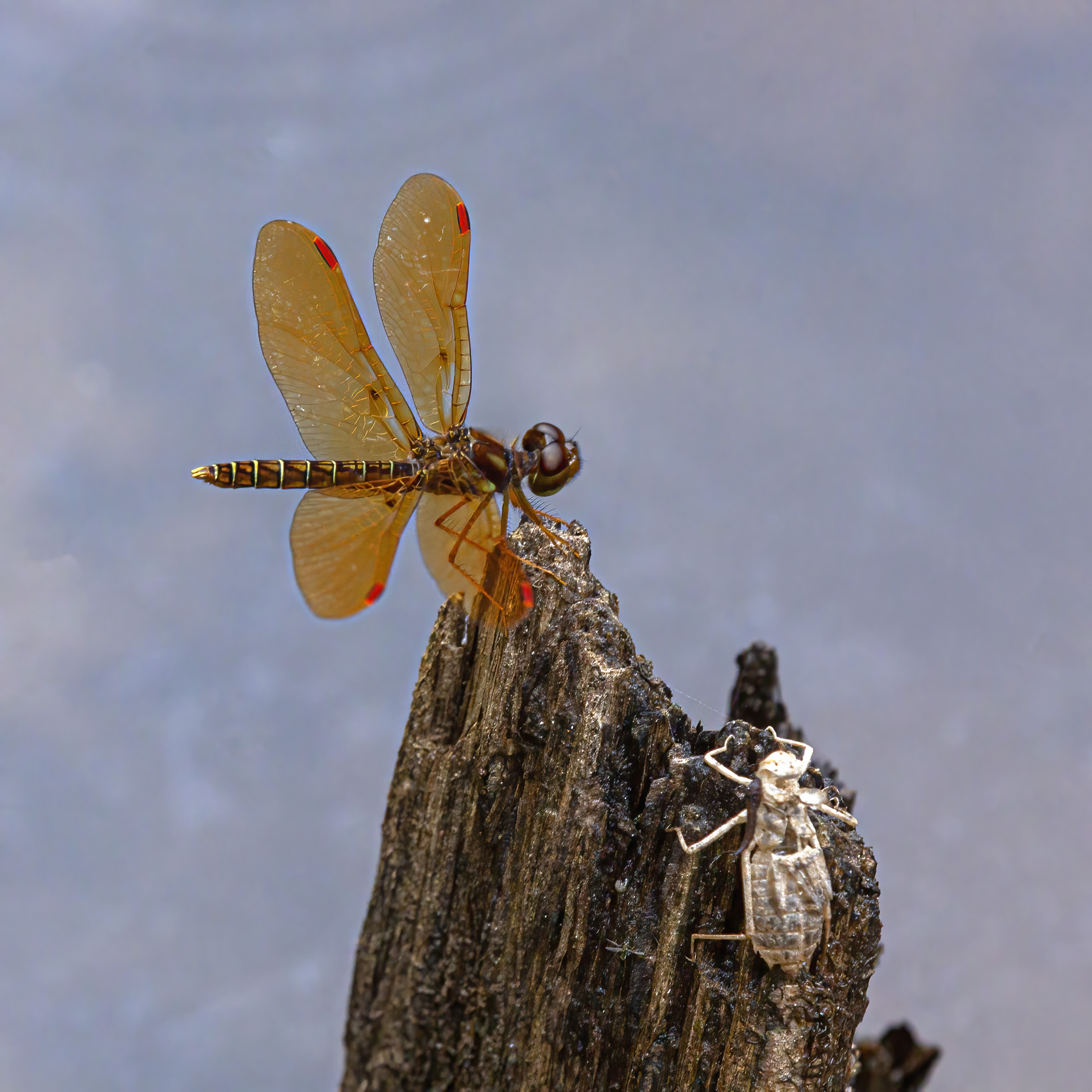
Dragonflies are amazing creatures. They spend most of their lives underwater as nymphs. When the time is right, they crawl out of the water and begin an incredible transformation. They burst out of their exoskeletons and in a short period of time their bodies lengthen and their wings unfurl. Suddenly they are breathing air and can fly. Six years ago I was able to document this entire process in a posting called Metamorphosis of a dragonfly, which you may want to check out.

If you wander along the edge of a pond, you may spot some of the discarded exoskeletons, often referred to as exuviae—they look sort of like desiccated bugs. Earlier this month during a visit to Green Spring Gardens, I was able to capture this image of a Eastern Amberwing dragonfly (Perithemis tenera) perched alongside an exuvia. I am not certain that the exoskeleton is from the same species as the dragonfly, but I suspect that it is.

Although it is hard to see very many details of the exuvia, you can’t help but notice how much smaller it is than the adult dragonfly and how the shape of the body is different. It you look closely, you can see the shape of little wing pads that eventually turn into wings. The only body parts that appear to remain the same are the legs.

Eastern Amberwing

© Michael Q. Powell. All rights reserved.


Read Full Post »

I have not yet made it to Kenilworth Aquatic Gardens this year, so I was especially happy to see that a dozen or so lotuses were in bloom last week at Green Spring Gardens. Kenilworth Aquatic Gardens in Washington D.C. is a National Park Service site with several dozen ponds with a variety of water lilies and lotuses—it is the go-to place in my area to see this kind of aquatic vegetation.

However, I am pretty content with the smaller selection at Green Spring Gardens, which is only a couple of miles from my home. Every time that I see lotuses, I am faced with the dilemma of how to photograph them. Should I try to get a group shot or should I photograph a single flower? Should I try to capture an image of a whole flower or of some of its parts? When I am trying to photographic birds and insects, I usually do not have the luxury of thinking about all of these compositional considerations, so it feels a little strange to be so intentional when photographing flowers.

Here are three photos from my outing that day that represent several different ways that I approached my subject. The first image is a kind of traditional portrait of a lotus that I took when the sun had slipped behind the clouds and softened the harshness of the light. For the second shot, I moved in closer and focused on the center of a lotus, creating an image that simultaneously realistic and abstract. For the final photo, I moved even closer and tried to emphasize the texture of a lotus leaf and all of its interlocking veins.

It’s fun to play around with my camera and try some different creative approaches that I do not regularly use in photographing wildlife.

Have a wonderful weekend and consider trying a new approach to something you regularly do. It may not necessarily work, but it will undoubtedly be fun.


lotus

lotus center

lotus leaf

© Michael Q. Powell. All rights reserved.


Read Full Post »

I was not sure of the species of these damselflies when they flew by me in tandem last week at Green Spring Gardens, but I managed to track them visually until they landed on some floating vegetation. As some of you may recall, when damselflies mate, their bodies form a shape that resembles a sidewards heart, a position sometimes referred to as the “wheel” position. When mating is completed, the damselfly couples fly off together with the male still grasping the female by the back of her head and the male stays attached as the female deposits her eggs—that may have been why they landed on this vegetation.

When I returned home and was able to examine the damselflies closely, I was delighted to see that they were Dusky Dancers (Argia translata), a species that I rarely see. If you click on the photos, you can get a closer look at the stunning eyes and beautiful markings of these damselflies. I am particularly drawn to the pattern of thin blue rings around the abdomen of the male, the damselfly on the left that is perched almost vertically.

Dusky Dancer

© Michael Q. Powell. All rights reserved.

Read Full Post »

I love the way that this acrobatic bee was able to position its antennae for optimized access to the nectar in this bee balm flower last Friday at Green Spring Gardens. The bee was so focused on the flower that it paid me no attention, allowing me to get really close to it to capture this image.

I believe that the bee is an Eastern Carpenter Bee (Xylocopa virginica). As for the flower, there was quite a variety of flowers in different colors that looked like this one. I think that it is a type of bee balm (g. Monarda), though I really do not know flowers very well.

bee

© Michael Q. Powell. All rights reserved.

Read Full Post »

I love the simple beauty of Cabbage White butterflies (Pieris rapae). They are mostly white with a few touches of black, but if you get a close-up look, you discover that they have stunningly speckled green eyes. Cabbage Whites, in my experience, tend to be pretty skittish and do not stay in one place for very long. If you were to track my movements, you would probably discover that I spend a good amount of time chasing after these little beauties.

Last Friday I was able to capture these images of a Cabbage White butterfly as it flitted about some pretty purple flowers at Green Spring Gardens. The first shot is my clear favorite of the three thanks to its saturated colors, out-of-focus background, and interesting composition. The other two images, however, are interesting in their own ways, showing a more dynamic view of the butterfly at work.

I am not a gardener, so I tend to view this butterfly almost exclusively from the perspective of its beauty—the same is true with invasive species of animals and insects. I fully recognize that this butterfly is considered to be an agricultural pest and can cause damage to crops, but that, in my eyes, does not diminish its beauty.

Cabbage White

Cabbage White

Cabbage White

© Michael Q. Powell. All rights reserved.


Read Full Post »

I am always fascinated by interactions between species. It is impossible to know exactly what is going on in the minds of the participants, but sometimes the behavior is one of curiosity, co-existence, or confrontation.

As I was preparing to photograph a pretty pink water lily at Green Spring Gardens last Friday, a honey bee flew into the frame. The bee dove right into the center of the flower, so I waited for it to emerge and continued to watch through the viewfinder of my camera.

I was just getting ready to finally take a shot when suddenly a small hover fly flew into the frame. I timed it right and managed to captured this image when the hover fly was right above the honey bee.

The hover fly seemed to be on a reconnaissance mission and the honey bee seemed to be telling him to buzz off. Somehow the posture of the bee reminded me of that of a policeman at the scene of a crime as he repeatedly tells onlookers, “Move along, there is nothing to see here.” Was this a confrontation? I don’t think that it rose to that level, but it was clear to me (and probably to the hover fly) that the bee did not want to share his golden treasure with anyone else.

water lily

© Michael Q. Powell. All rights reserved.
 

Read Full Post »

I had no idea that Eastern Gray Squirrels (Sciurus carolinensis) liked mushrooms, but this squirrel certainly seemed to be nibbling on one when I spotted him on Wednesday at Green Spring Gardens. I love the way that he was holding the mushroom in his “hands” as he gently chewed on the stem—I think he may have already consumed the mushroom cap.

Squirrel and mushroom

© Michael Q. Powell. All rights reserved.

Read Full Post »

I love the distinctive coloration of Orange Bluet damselflies (Enallagma signatum), whose name always causes me to smile at the apparent oxymoron. How can a bluet be orange? As the name “bluet” suggests, most of the 35 members of the genus American Bluet (Enallagma), the largest damselfly genus in North America, are blue. However, certain species come in other colors including red, orange, and green and the Rainbow Bluet combines red, yellow, and green.

I spotted this handsome male Orange Bluet last Wednesday as he was perching on a lily pad in a small pond at Green Spring Gardens. He posed beautifully for me and I was able to capture quite a few details of this little damselfly. I recommend that you click on the image to get a closer look at this Orange Blue, including his wonderful orange markings.

Orange Bluet

© Michael Q. Powell. All rights reserved.
Read Full Post »

Eastern Amberwings (Perithemis tenera) are very small dragonflies, with an overall length of no more than one inch (25 mm). Males of this species are easy to identify because of their amber-colored wings. Males are quite common and I ofter see them buzzing around the edges of the ponds that I visit. Females have brown patches on their clearer wings and often hunt far from the water, so I do not see them very often.

Despite their small size, Eastern Amberwings are one of the easiest dragonflies to photograph in flight. They often hover low, close to the water surface near the shore, which gives me a fighting chance to focus on them. It requires a steady hand and quick reactions, but the first two images show the kind of results you can get. The second shot is a little quirky, but I like the way that it shows two male Amberwings passing each other, flying in opposite directions.

The final shot is an “artsy” shot of a perched Amberwing. The dragonfly was flying among the lotus flowers last Wednesday at Green Spring Gardens and perched for a moment on a lotus leaf that had not yet unfurled. I tried to compose the image so that the viewer gets a sense of the habitat, which gives the shot a completely different feel from the first two photos in which the subjects are completely separated from their environment.

Eastern Amberwing

Eastern Amberwing

Eastern Amberwing

© Michael Q. Powell. All rights reserved.

Read Full Post »

I was absolutely thrilled on Wednesday when I streaks of bright yellow flashed in front of my eyes while walking among the flowers at Green Spring Gardens—goldfinches were present. Few other birds in my area can match the brilliant yellow color of the male American Goldfinch (Spinus tristis) in breeding plumage. It is easy to spot these birds, but it is a challenge to photograph them, because they are small, fast, and skittish.

My camera was equipped with my 180mm macro, which can also serve as a short telephoto lens, so I had to use all of my stalking skills to get as close as possible. Fortunately, the goldfinches were preoccupied with feeding and I was able to capture these images. I had to be quite patient, though, because the goldfinches spent most of their time with their heads buried in the flowers and only rarely gave me a good view of their faces

Together with the goldfinches, the abundance of blooming flowers helped me to create images that have a happy feel to them, a welcome antidote to the gloom of these troubled times.

American Goldfinch

American Goldfinch

American Goldfinch

© Michael Q. Powell. All rights reserved.


Read Full Post »

Ten years ago today I started this blog. After reviewing some of my photos from earlier that fateful day, my dear friend and photography mentor Cindy Dyer told me I needed a blog. I was a little skeptical, but we sat down at a computer and she helped me to set up this blog. I could not come up with a cute or creative name, so I simply called it “Mike Powell—My journey through photography.”

My first posting was a modest one that showcased a single photo of a Blue Dasher dragonfly (Pachydiplax longipennis). In case you are curious, here is a link to that first posting that was entitled “Blue Dasher dragonfly.”

I figured that my blog would be primarily a place to display my photos. I rapidly realized, however, that I enjoyed expressing myself with my words as much as with my images. My postings are often a direct reflection of my thoughts or feelings at the very moments when I am composing the post. I do not compose them in advance, so my postings sometimes ramble around a bit, but I have found that many of my readers enjoy this conversational, stream-of-consciousness style.

According to WordPress statistics, I have done 4462 postings, with almost three hundred sixty thousand total views. I have written most of these postings myself, though occasionally I have reblogged the postings of others. My favorite subjects over the years have been insects and birds, but I have also done postings on a wide range of other topics including animals, travel, poetry, and painting.

Today it seemed appropriate to post a photo of a male Blue Dasher—the dragonfly that started it all—that I photographed yesterday at Green Spring Gardens, a local, county-run historical garden. When I was starting to get more serious about photography ten years ago, Cindy and I would often photograph flowers and insects at this garden.

I owe a special debt of gratitude to Cindy for the initial push to start this blog and for her continued encouragement and inspiration. However, I am equally indebted to so many readers who have provided thoughtful comments, support, and motivation as we have made this journey together. Thanks to all of you—I could not have done it without you.

Blue Dasher

© Michael Q. Powell. All rights reserved.

Read Full Post »

We have had rain and clouds the last few days and I feel the need for a pop of color today. This blanket flower (g. Gaillardia) provided a wonderfully colorful backdrop for a little bee that I spotted during a recent trip to Green Spring Gardens. I think that it may be some kind of sweat bee, but I did not get a close enough look at it to be able identify it.

bee

© Michael Q. Powell. All rights reserved.
 

Read Full Post »

Older Posts »