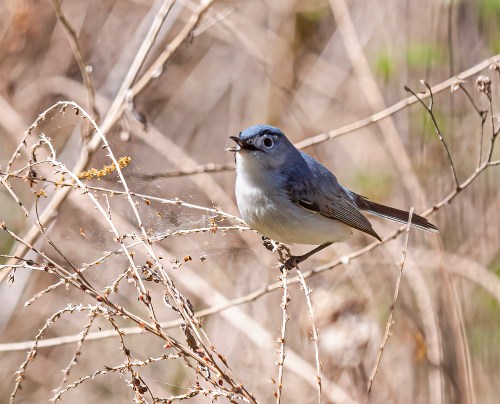
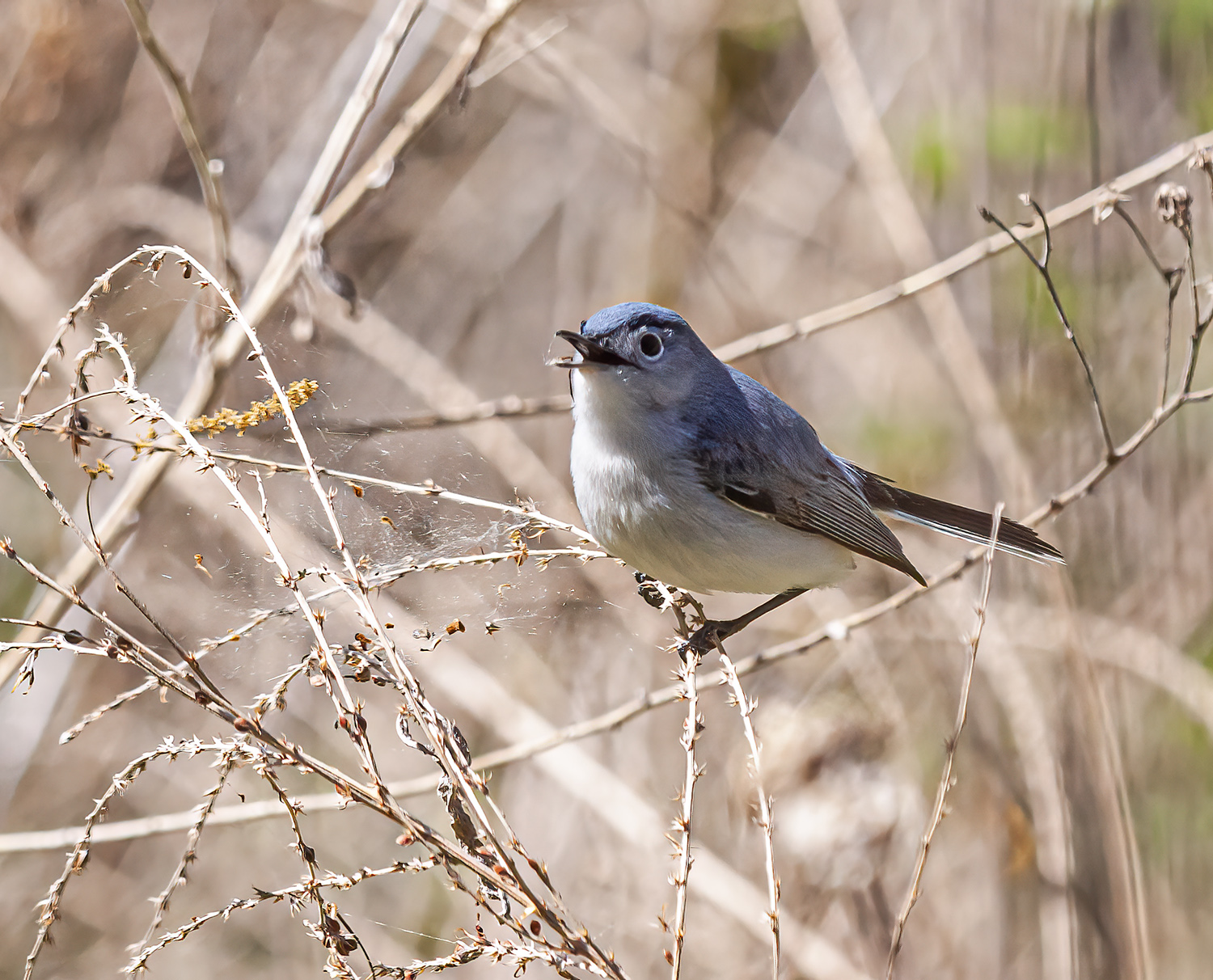
As I was searching in a small field of eye-height vegetation for dragonflies last Wednesday at Jackson Miles Abbott Wetland Refuge, my eyes detected a flash of blue and white and I realized that a bird had joined me in the field. I was shocked to see that it was a male Blue-gray Gnatcatcher (Polioptila caerulea). During my previous encounters with a Blue-gray Gnatcatcher, the bird has always been moving about in the foliage high in a tree.
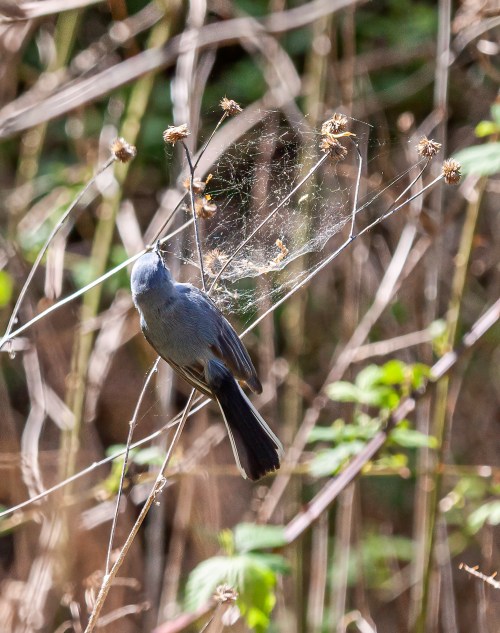
I sprung into action and managed to get some decent shots of this tiny bird, despite the fact that I was shooting with my 180mm macro lens, the one that I generally use for the macro shots of insects that you see on this blog. The coolest image, I think, is the first one and it was mostly a matter of luck. I had just taken the second shot below when the gnatcatcher took off and I instinctively pressed the shutter release and captured a fun action shot.
So what was the gnatcatcher doing at ground level? As I was was processing my images I noticed that there were old spider webs in most of them. It is most obvious in the final photo, but if you click on the other images, you will see webs to the left of the bird in the penultimate shot (and in its mouth, I think), and also to the right of the bird and a little lower in the second shot (and possibly in the corner of its mouth).
Why would they be messing with spider webs? According to the Cornell Lab of Ornithology website, Blue-gray Gnatcatcher pairs use spiderwebs and lichens to build small, neat nests on top of tree branches and may build up to seven nests in a breeding season. The website also notes that breeding males have a black V above their foreheads extending above their eyes, which you can see quite clearly in the second shot. I wonder if breeding season is begining
I have not spotted any gnatcatcher nests yet this year, but two years ago in late May I took some shots of a nest at the same refuge that show the amazing construction abilities of these little birds. Check out the posting called Baby gnatcatchers? by clicking on the title of the posting or clicking here. The nests are fascinating to examine.


© Michael Q. Powell. All rights reserved.
Read Full Post »



















 Mike Powell