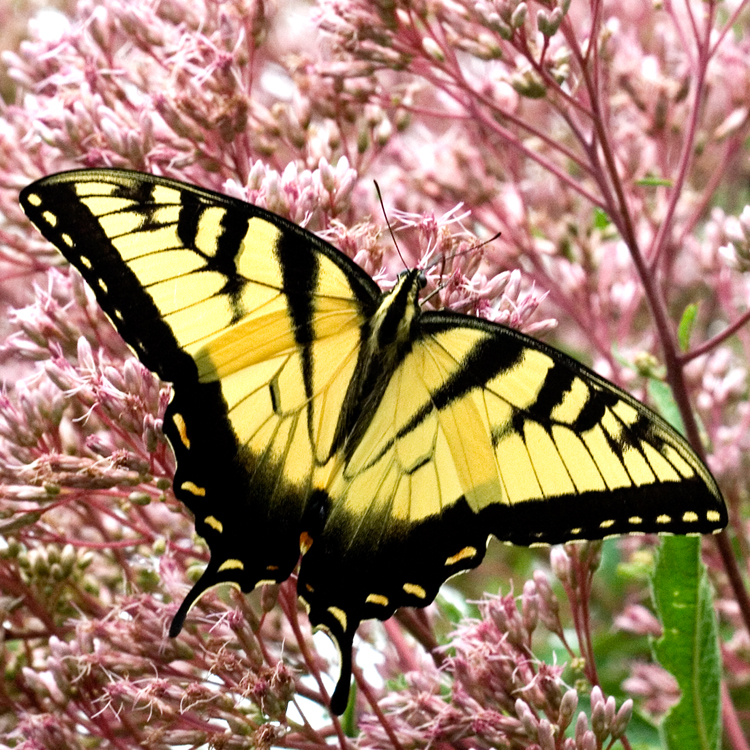
Feeds:
Posts
Comments

Posts Tagged ‘Eastern Tiger Swallowtail butterfly’

When the Eastern Tiger Swallowtail butterfly (Papilio glaucus) that I was chasing at Riverbend Park flew into some vegetation, I thought that I had lost it. Suddenly and almost magically the butterfly’s shadow was revealed on a large leaf as it moved about. I was thrilled to be able to capture the swallowtail shadow as well as a small portion of the butterfly itself.

It’s usually best to shoot with the sun at your back, but it worked out well in this case for me to violate that “rule.”

Eastern Tiger Swallowtail

© Michael Q. Powell. All rights reserved

Read Full Post »

Brightly-colored flowers and butterflies—-what a wonderful combination for a summer’s day. I spotted these beauties this past weekend at Meadowlark Botanical Gardens in Vienna, Virginia.

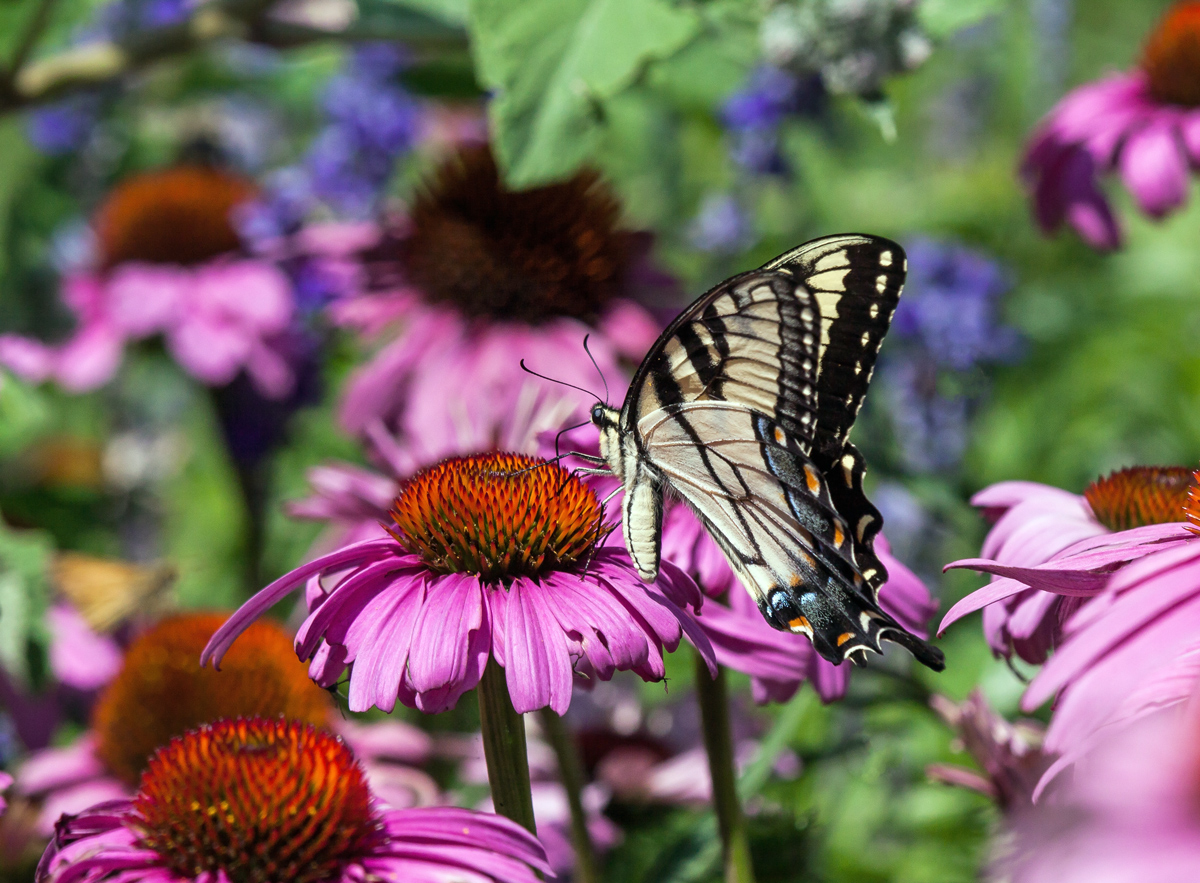
The first shot features a little skipper butterfly on a spectacular, orange-red coneflower. The other two shots highlight the beauty of an Eastern Tiger Swallowtail (Papilio glaucus) in a patch of the more frequently observed purple coneflowers.

skipper on a coneflower

Eastern Tiger SwallowtailEastern Tiger Swallowtail

© Michael Q. Powell. All rights reserved

Read Full Post »

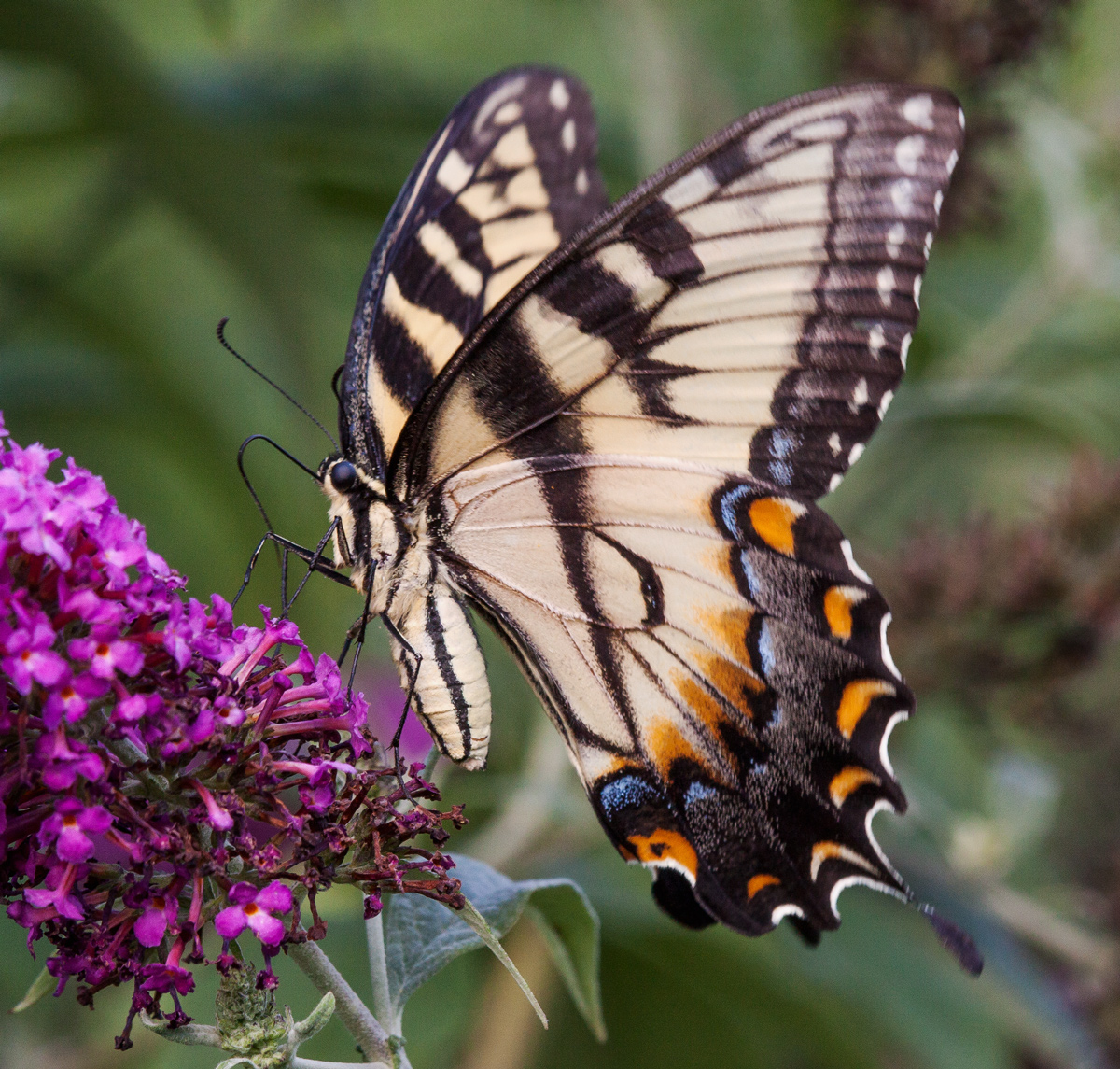
I’ll often try to get shots of butterflies with their wings wide open, but when they turn sideward, you can sometimes get an equally spectacular view of them slowly sipping nectar. I can’t identify the flower, but the butterfly definitely is an Eastern Tiger Swallowtail (Papilio glaucus) that I chased about this past weekend at Green Spring Gardens.

Eastern Tiger Swallowtail

© Michael Q. Powell. All rights reserved

Read Full Post »

Butterflies are always beautiful no matter what their condition, but there is something really special about seeing a perfect specimen with its wings wide open, like this Eastern Tiger Swallowtail (Papilio glaucus) that I spotted this past weekend at Green Spring Gardens.

Eastern Tiger Swallowtail

© Michael Q. Powell. All rights reserved

Read Full Post »

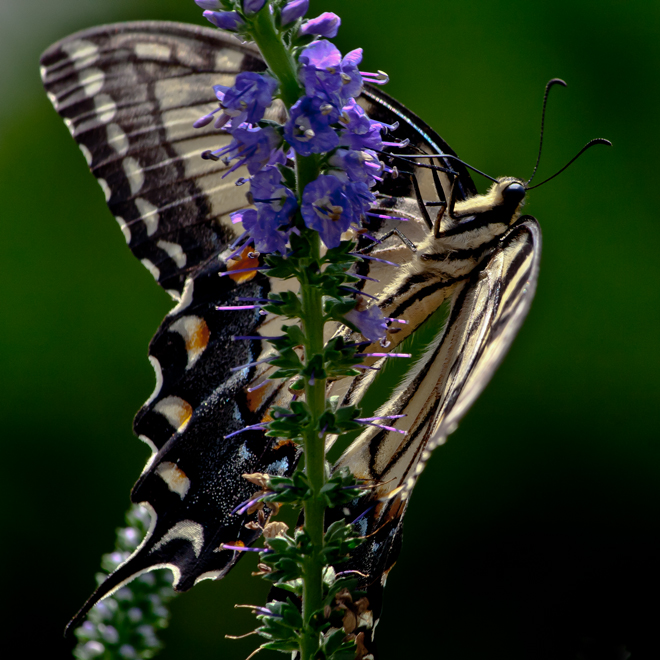
Hot, humid summer days may be a little tough on us, but butterflies seem to love them. I captured this shot of a spectacular Eastern Tiger Swallowtail (Papilio glaucus) this past weekend at Huntley Meadows Park as it sipped nectar from what I think is Joe-Pye weed (g. Eutrochium). (I am a bit uncertain about the plant identification and wonder if it might instead be a kind of milkweed, but “Joe Pye” rhymes with butterfly and sounds cooler, so I’ll go with that as a possible identification.)

Unlike many butterflies that I see at this time of the year whose wings are tattered and torn, this butterfly seemed to be in perfect condition. The sun was shining brightly when I took these shots and I was really afraid of blowing out the highlights of this lightly-c0lored butterfly. I switched the metering on my camera to spot metering and was able to get a good exposure of the butterfly and the background went really dark, adding a bit of drama to the images.

Eastern Tiger Swallowtail

Eastern Tiger Swallowtail

Eastern Tiger Swallowtail

© Michael Q. Powell. All rights reserved.

Read Full Post »

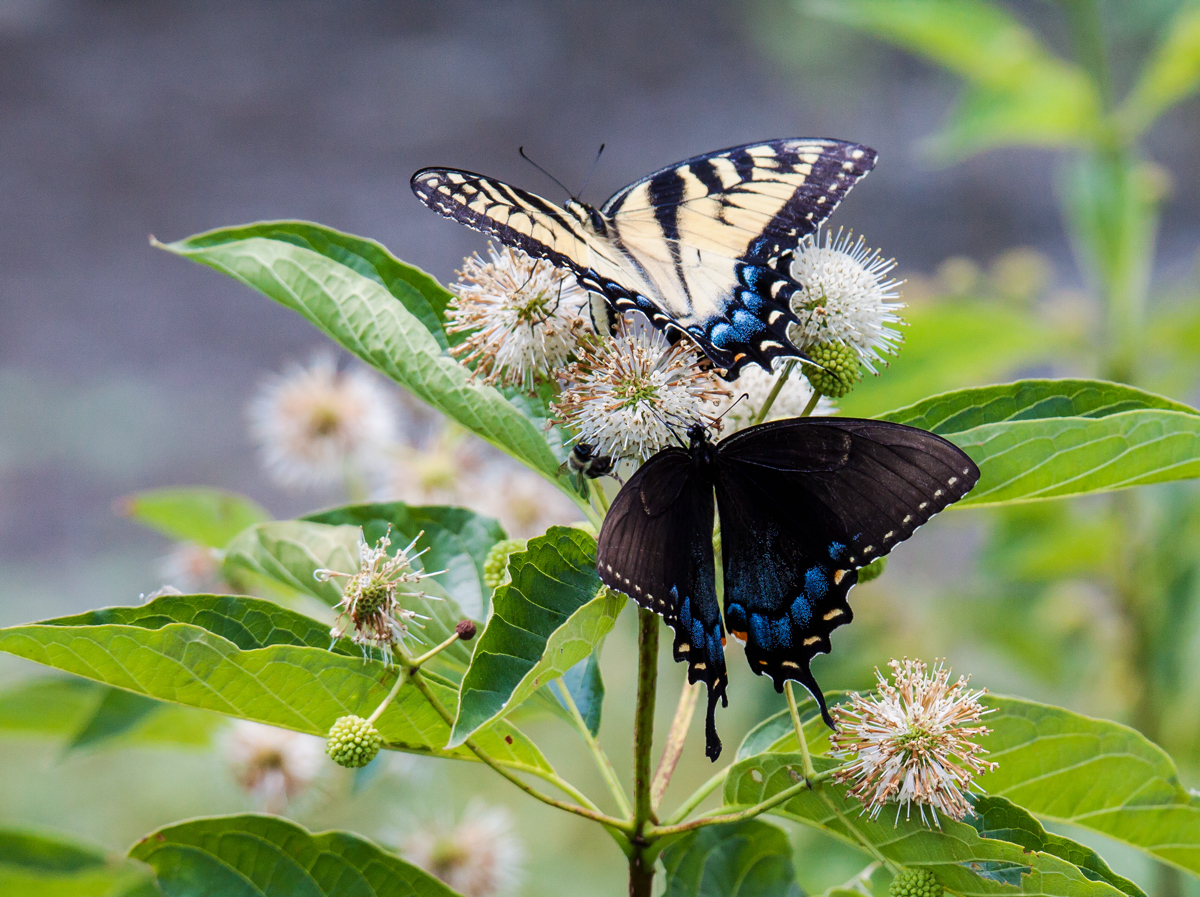
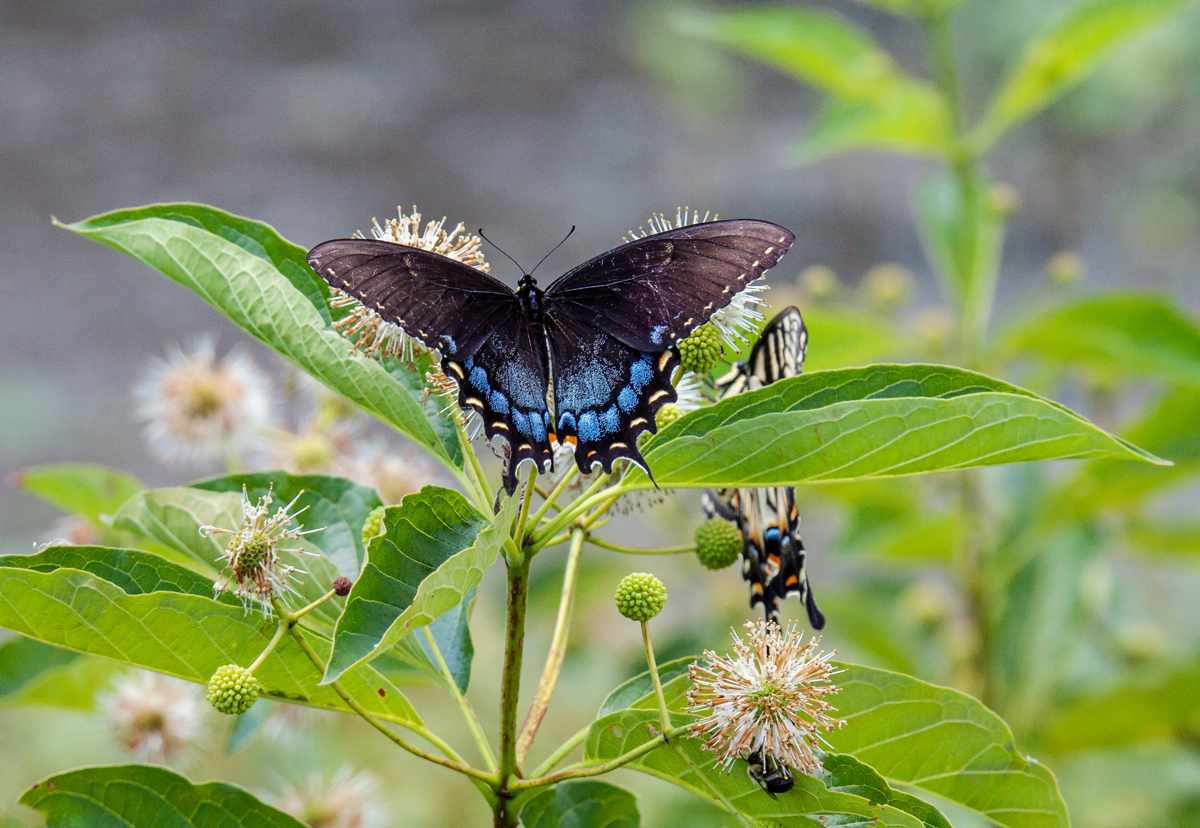
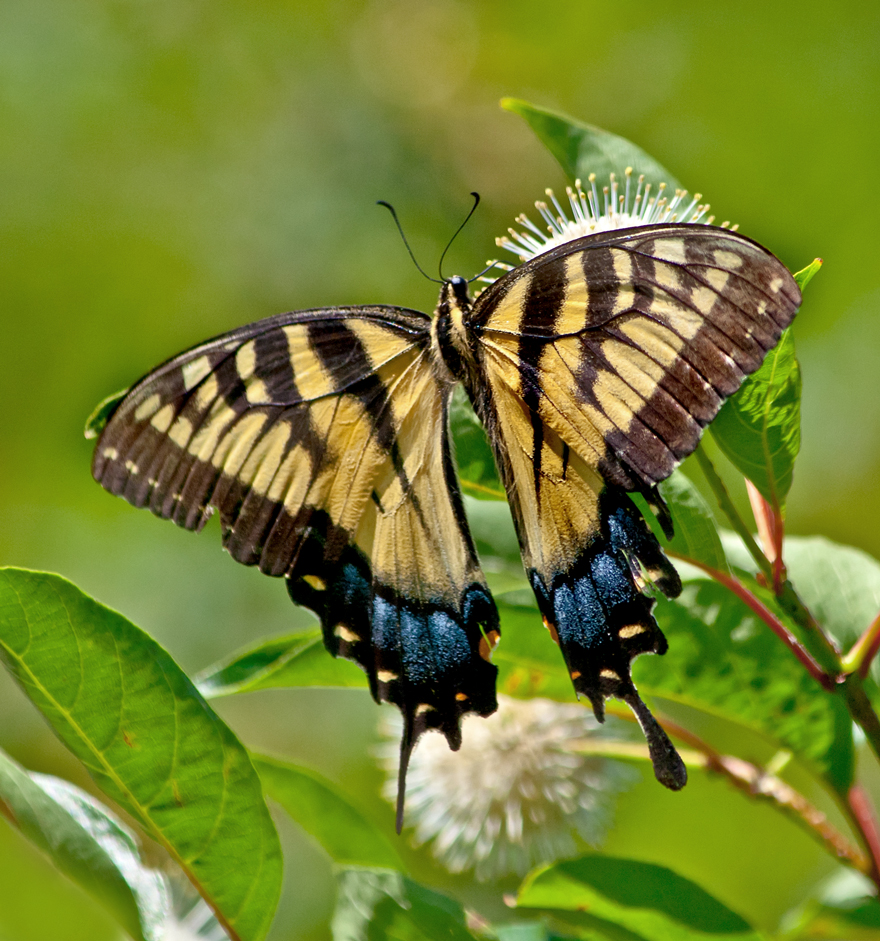
Eastern Tiger Swallowtail butterflies (Papilio glaucus) were really busy on the buttonbushes (Cephalanthus occidentalis) at Huntley Meadows Park recently, including what looks to be a dark morph female. Females of this species are dimorphic—there are both yellow morphs and dark morphs—but males are only yellow.

If you look closely at the second image you’ll see that I managed to capture a “bonus bug.” a bee that is also feeding on the buttonbush. My photography mentor likes to use the term “bonus bug” to refer to insects  in our photos whose presence was unknown at the time the photos were taken.

Eastern Tiger Swallowtail

Eastern Tiger Swallowtail

© Michael Q. Powell. All rights reserved.

Read Full Post »

Some folks are really into chasing imaginary creatures with their cellphones. I prefer to chase living creatures with my camera and captured this image of a beautiful Eastern Tiger Swallowtail butterfly (Papilio glaucus) yesterday as it was feeding at Green Spring Gardens, a county-run historic garden in Northern Virginia.

The butterfly gave me multiple opportunities to get shots as it flew around a small area of the gardens, but it rarely gave me an obstructed view. Often it was partially buried in the flowers or turned away from me at an angle. When I took this shot, the butterfly had opened its wings and offered me a rare look at its body as well as its amazingly long proboscis.

Eastern Tiger Swallowtail

© Michael Q. Powell. All rights reserved.


Read Full Post »

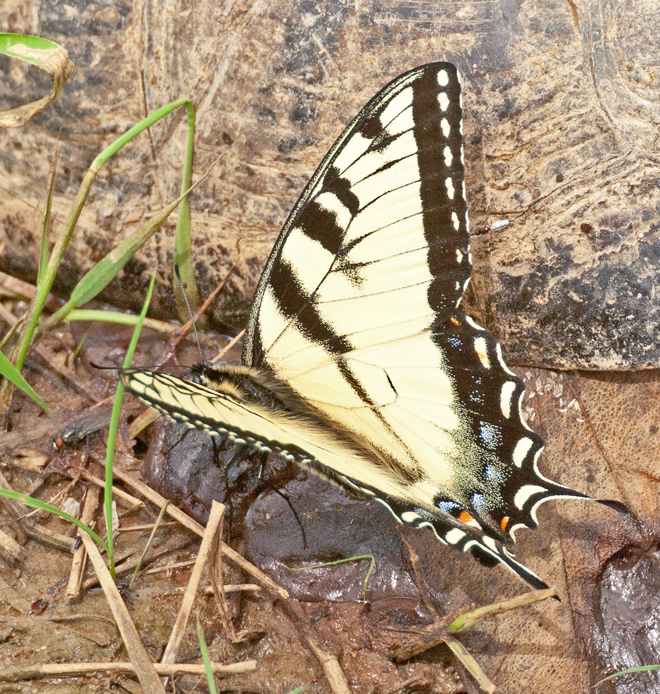
Spring has definitely arrived in our area, but I was still quite surprised this past Saturday to see an Eastern Tiger Swallowtail butterfly (Papilio glaucus) at Huntley Meadows Park—it seems so early for butterflies like this.

I chased after the butterfly several times, to the extent that you can chase something while on a boardwalk, but each time the butterfly flew away. I had more or less reconciled myself to the likelihood that I was unlikely probably not going to get a shot of this early spring butterfly when I caught sight of it again.

The butterfly landed in a muddy open area where a flock of Canada Geese had previously been feeding.  There were no flowers around from which to get nectar, so the butterfly resorted to an organic source of nutrients.

This is definitely not the prettiest shot of a butterfly that I have ever taken, but it’s the first butterfly that I have photographed this season. Like the butterfly in the photo, I am content to settle for what I can find, hopeful that better things are to come as we move deeper into spring.

Eastern Tiger Swallowtail

© Michael Q. Powell. All rights reserved.

Read Full Post »

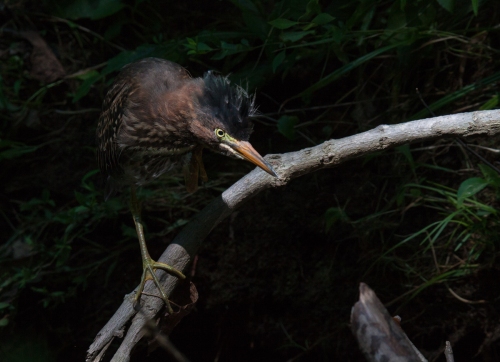
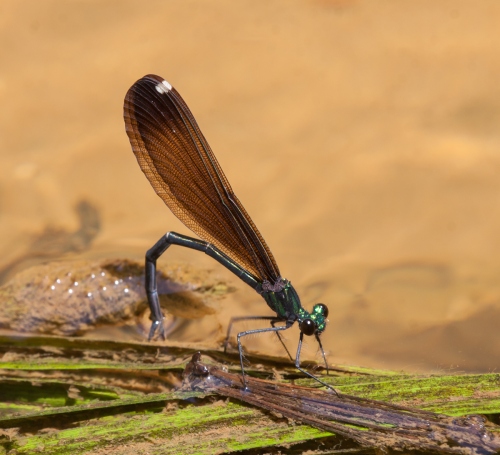
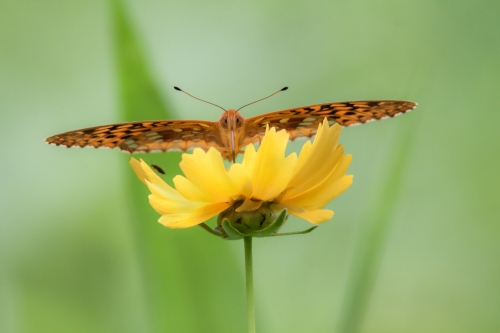
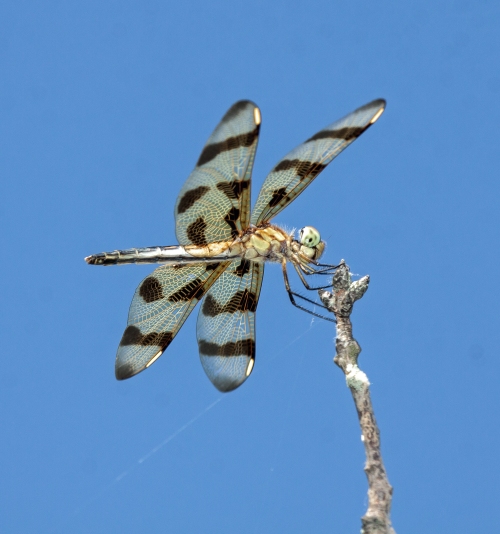
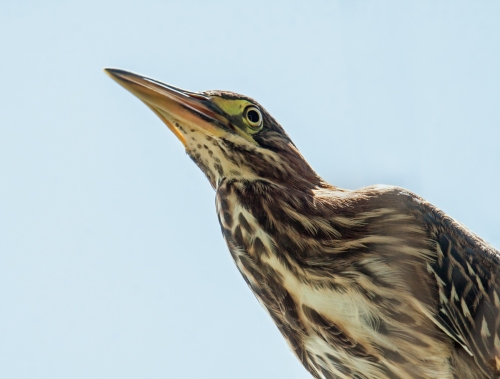
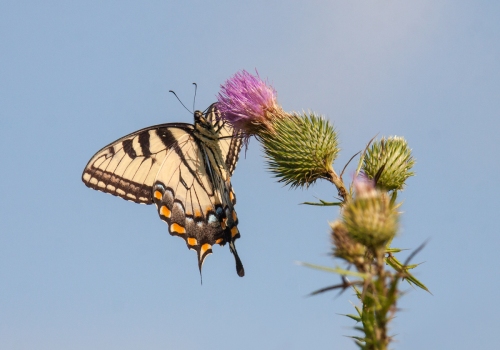
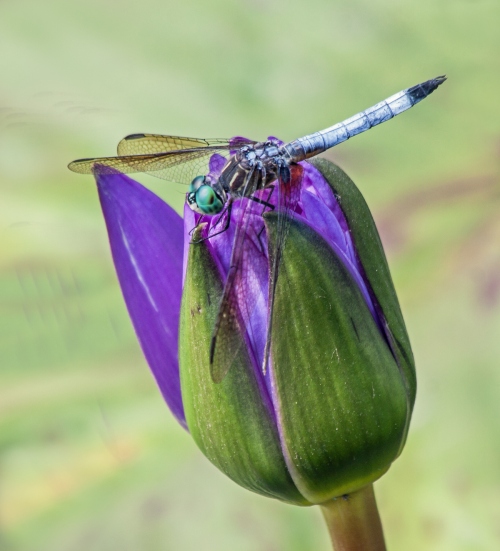
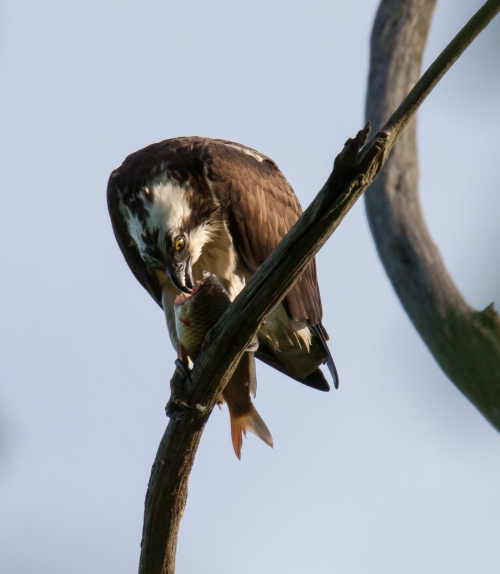
WordPress tells me I posted 851 photos during 2015 in 395 blog posts. I’ve forgotten many of those photos, but I want to share ten of my favorites with you today as we start the new year.

I used a very unscientific approach in selecting them—I simply chose ones that I really liked without looking at numbers of likes or views or comments. So often I am focused on getting new shots that I sometimes forget how wide a spectrum of subjects I like to shoot. These images remind me of my varied approaches and techniques.

I didn’t include any of the fox photos or contest entries that I featured recently, figuring that you were already familiar with them. I should note that this selection of favorites is representative and not exhaustive—there are probably some awesome shots that I have neglected to include. I haven’t tried to put the images in any kind of rank order, but if forced to choose, my favorite image of the year is probably the first one, the Green Heron with a kind of Rembrandt lighting.

Thanks to all of you who have supported and encouraged me so much in 2015. Best wishes for a wonderful 2016.

Green Heron

Ebony Jewelwing

Great Spangled Fritillary

Banded Pennant

Green Heron

Eastern Tiger Swallowtail

Blue Dasher

Osprey

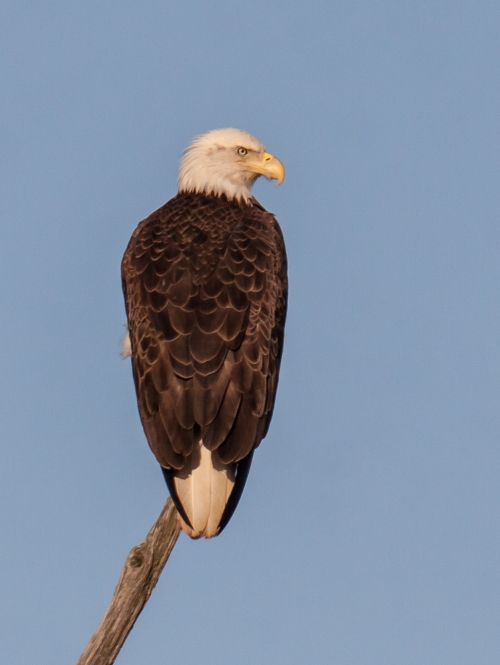
Bald Eagle

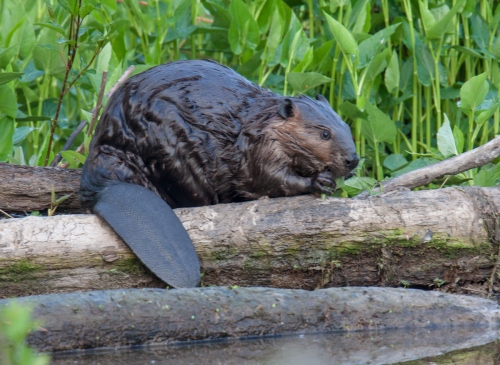
North American Beaver

© Michael Q. Powell. All rights reserved.

Read Full Post »

I’m back from a brief overseas trip and it’s time to switch back from shooting in urban surroundings to my more typical nature images. In the meantime, here’s a shot of a beautiful Eastern Tiger Swallowtail (Papilio glaucus) from a pre-trip visit to Huntley Meadows Park in Alexandria, Virginia.

Eastern Tiger Swallowtail

© Michael Q. Powell. All rights reserved.

Read Full Post »

There were lots of other available thistle plants yesterday at Huntley Meadows Park, but an Eastern Tiger Swallowtail (Papilio glaucus) and a Great Spangled Fritillary (Speyeria cybele) kept jockeying for position on this single flower, each seemingly determined to gain the upper hand.

Who knew that butterflies were so competitive?

Competitive butterflies

© Michael Q. Powell. All rights reserved.

Read Full Post »

Chasing after beautiful butterflies on a sunny summer day—it doesn’t get much better than that. I don’t know plants very well, but this appears to be some kind of thistle. I photographed this Eastern Tiger Swallowtail (Papilio glaucus) last Saturday at Huntley Meadows Park in Alexandria, Virginia.

Eastern Tiger Swallowtail

© Michael Q. Powell. All rights reserved.

Read Full Post »

Last week I turned 60, but I am happy to confess that I still chase butterflies with much of the exuberance (if not quite the energy) of a child. There is something really special about the delicate beauty of butterflies that draws me in and the idea of their metamorphosis inspires me.

During a recent trip to Meadowlark Botanical Gardens in Vienna, Virginia, I was thrilled to spot this female Eastern Tiger Swallowtail butterfly (Papilio glaucus). She was feeding on an identified plant that must have been tasty, because she kept moving from spot to spot on the plant, offering me multiple opportunities to get some shots.

I especially like the fact that I was able to get the sky into some of the images, reinforcing for me the idea of butterflies flying freely and lightly through the open air. Now that’s the way to live a life.

swallowtail1_blogswallowtail2_blogswallowtail3_blogswallowtail4_blog

© Michael Q. Powell. All rights reserved.

Read Full Post »

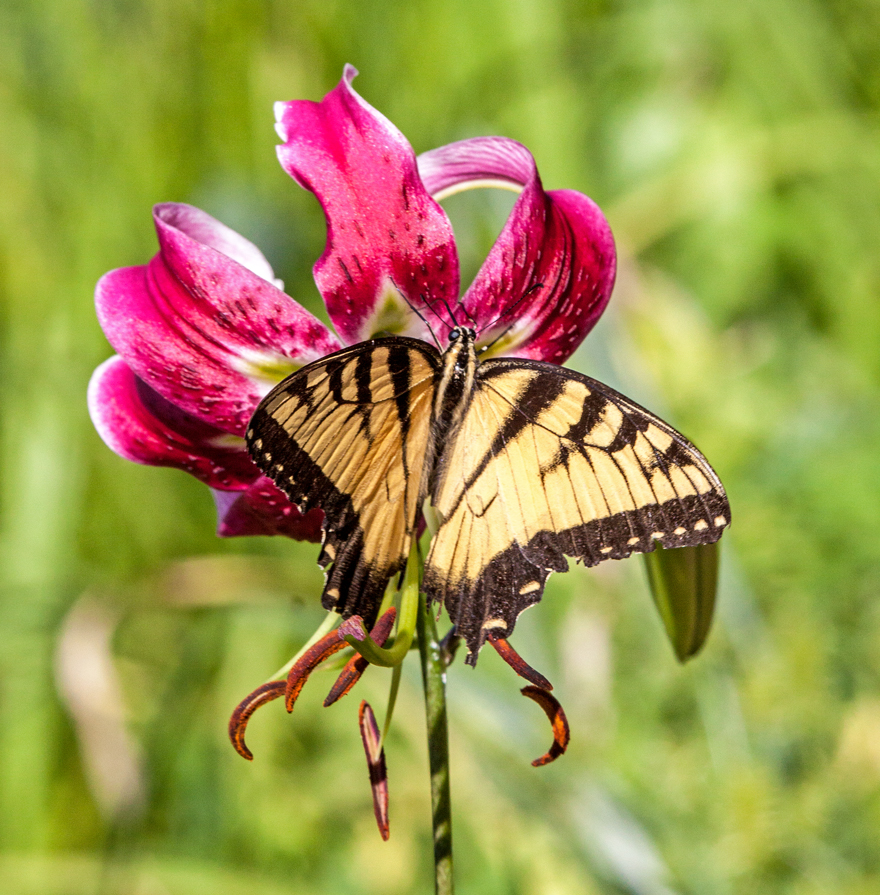
I don’t know my flowers very well, but I think that this Eastern Tiger Swallowtail (Papilio glaucus) is feeding on some kind of tiger lily (Lilium columbianum). Tiger on tiger—I like the way that sounds. Whatever the case, I love the gorgeous colors of the flowers, providing a gorgeous contrast to those of the butterfly.

tiger_blog

© Michael Q. Powell. All rights reserved

Read Full Post »

The weather this week has been mostly gray and dreary and I felt the need for a burst of bright colors, so I am posting this image from last week of a two Eastern Tiger Swallowtail butterflies (Papilio glaucus) feeding on an unidentified flower against the backdrop of a brilliant blue sky. The butterflies were even cooperative enough to place themselves at different angles to add  visual interest to the shot.

swallowtails_blog

© Michael Q. Powell. All rights reserved

Read Full Post »

Different flowers affect me differently—some attract me with their beauty or their fragrance or their colors. Others produce an emotional response, like sunflowers, which invariably make me feel happy.

The sunflower’s large size, bright colors, and bold graphic design appeal to me. The sunflower virtually shouts its presence to the world—there is nothing soft and delicate and hidden about a sunflower.

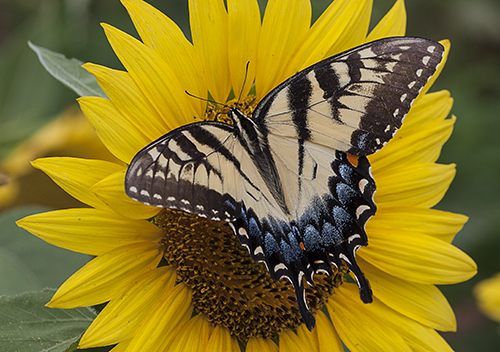
Like this Easter Tiger Swallowtail butterfly (Papilio glaucus), I sometimes enjoy the flowers one at a time. It was really fun, though, to visit a large field of sunflowers last month with some friends and to see row after row of these cheery flowers. I wanted to capture a group shot of the sunflowers, but I struggled to find a way to do so effectively (even though we had even brought along a little stepladder to give us a perspective from above the flowers).

In the end, my favorite shot (the second one below) focuses on a single sunflower, with other flowers a blur in the background. I used a simple 50mm lens (often called the “nifty fifty”) on my camera to make sure that I could control the aperture and throw the background out of focus.

EasternTigerSwallowtail lorez

sunflowers_blog

© Michael Q. Powell. All rights reserved

Read Full Post »

As the beautiful afternoon light illuminated the wings of this Eastern Tiger Swallowtail butterfly (Papilio glaucus) from behind, I couldn’t help but think of a stained glass window. I love backlighting and these subjects seemed perfect to showcase the effect—I didn’t even have to worry about using fill flash to avoid shadows, because of the translucency of the wings.

I took this image yesterday at Meadowlark Botanical Gardens in Vienna, Virginia, yet another wonderful local spot for photographing flowers and insects.

stained_glass_butterfly_blog

© Michael Q. Powell. All rights reserved

Read Full Post »

The sunflower was big enough that an Eastern Tiger Swallowtail butterfly (Papilio glaucus) and a bumblebee could peacefully coexist, though it looks like they had each carved out their individual spheres of influence and kept a respectful distance from each other.

coexistence_blog

© Michael Q. Powell. All rights reserved

Read Full Post »

I am always amazed that butterflies can fly with wings that are severely damaged. This morning I encountered this beautiful female Eastern Tiger Swallowtail butterfly (Papilio glaucus) that had suffered some major damage to the area where the wings attach to the body. Despite the tears to the wings, the butterfly seemed unhindered in its flight and was busily at work, flying from bush to bush.

wounded_blog

© Michael Q. Powell. All rights reserved

Read Full Post »

I have not yet seen many colorful butterflies this summer, so I was thrilled this past weekend when I observed a female Eastern Tiger Swallowtail butterfly (Papilio glaucus) feeding on a Buttonbush (Cephalanthus occidentalis) and managed to get a couple of good shots.

The first image has a dreamy quality and a softness that I like, with a background that is almost pastel. The body of the butterfly is clearly visible, with its proboscis fully extended.

In the second shot, the colors are more vivid and the butterfly’s head is obscured. However, the wings are open wide and in a beautiful position.

My favorite is the first one. Is there one that you prefer?

swallowtail_blogswallowtail2_blog

© Michael Q. Powell. All rights reserved

Read Full Post »

I was really surprised today when I saw the the familiar shape and color of a female Eastern Tiger Swallowtail butterfly (Papilio glaucus). Somehow I had expected to see them much later in the spring.

Normally I like to try to get photos of these beautiful butterflies perched on colorful flowers, but there are no colorful flowers yet in the marsh. Unfortunately, the butterfly that I was able to photograph decided to perch on the decomposing carcass of a snapping turtle (as you can see in the first photo). Most of my other shots were at least partially obscured by the grass.

Gradually the cast of characters is coming together that will probably play leading  roles in my blog postings in the upcoming months, the birds and beasts, and the reptiles and amphibians, not to mention the plants and flowers. I can hardly wait.

swallowtail1_blogswallowtail2_blog

Michael Q. Powell. All rights reserved

Read Full Post »

It felt good to have my Canon DSLR back in my hands after a week-long trip with only a point-and-shoot camera. After I arrived home from the airport this afternoon, I grabbed my camera and headed off to Green Spring Gardens, a local garden that is one of my favorite places to shoot.

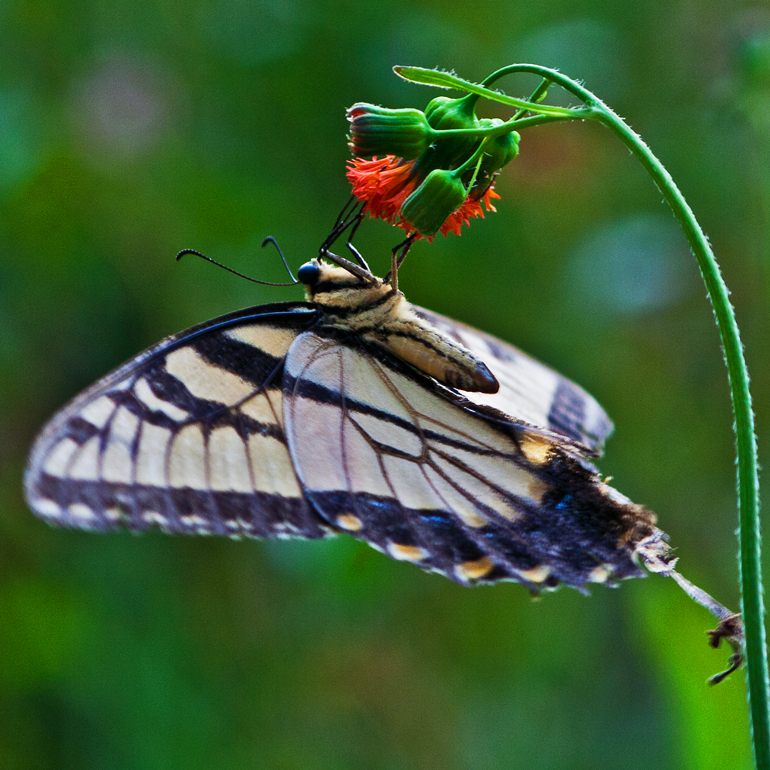
There were only some diehard flowers blooming, but there were quite a number of Eastern Swallowtail butterflies. I watched (and chased) several of them, but the one you see below was my favorite. He attacked this flower from below repeatedly, seemingly defying gravity. It just was not clear to me how he was able to suspend himself in mid-air like that. He must have been hanging on with his feet, though he seemed to be moving them constantly.

Eastern Tiger Swallowtail butterfly defying gravity

© Michael Q. Powell. All rights reserved.

Read Full Post »

Almost everywhere that I have seen flowers the last few weeks I have seen skippers. One of the few varieties that I can identify is the Silver-spotted Skipper butterfly (Epargyreus clarus) which I feature in my first photo.

Silver-spotted Skipper

Many of the other skippers, however, look almost the same to me. Wikipedia says that there are more 3500 recognized species of skippers, so I don’t feel too bad about my identification difficulties. Here’s a photo of one of the 3499 non-Silver-spotted Skippers on a sunflower.

Unidentified skipper on a sunflower

This must be the season for the Eastern Tiger Swallowtail (Papilio glaucus), because I see them almost everywhere too. I’ve posted lots of photos of swallowtails recently, but I figure that the bright color of the swallowtails will complement the more muted tones of the skippers. Besides, the different lighting and angles of the shots makes them very different photos for me, even when the subject is the same.

Male Eastern Tiger Swallowtail against the sky

Looking downward at a female Eastern Tiger Swallowtail

© Michael Q. Powell. All rights reserved.

Read Full Post »

The angle of the lighting and the unusual framing of this photograph of a female Eastern Tiger Swallowtail butterfly (Papilio glaucus) set it apart from other photos I have taken of the same species. (See my postings from 8 August and 21 July for other shots of the Eastern Tiger Swallowtail.)

The light is uneven and there are areas that are not sharp, but I like the overall effect of the photograph.

Click on the image to see more details.

© Michael Q. Powell. All rights reserved.

Read Full Post »

Usually my photos are realistic, almost hyper-realistic in their macro details. Sometimes, though, I get excited by a portion of an image and the patterns and lines contained therein.

Yesterday I took some close-ups of a male Eastern Tiger Swallowtail butterfly. Thanks to my telephoto lens the butterfly more than filled the frame. After a bit of tweaking I ended up with an image that is almost abstract, with lots of interesting lines and shapes. You can still tell that it is a butterfly and a flower, but it has a different feel than my other butterfly shots.

I find it fun to try something completely different from time to time.

© Michael Q. Powell. All rights reserved.

Read Full Post »

One of the coolest things about female Eastern Tiger Swallowtail butterflies (Papilio glaucus) is that they come in two distinctly different colors, black and yellow. According to Wikipedia, that characteristic makes them dimorphic. I’m no scientist, so I had to do some research  to see what “dimorphic” means. If I understand it right, it means that there are two different phenotypes (called morphs) that exist in the same population of a species and they have to be in the same habitat at the same time to qualify.

I was thrilled yesterday to observe and photograph both variants at a local garden. The yellow ones resemble the male, although the male is only yellow and black and has no additional orange and blue markings. I have seen a lot of the yellow female swallowtails this summer. The black swallowtails, which have black bodies as well as black wings, seem to be more rare, or at least I have seen them only rarely this summer.

Which one is more beautiful? I’ll leave that call to each of you.

black_swallowtail1_6x8blog

Female Eastern Tiger Swallowtail butterfly (black variant) UPDATE in 2020: I think that I misidentified this as an Eastern Tiger Swallowtail and now think it might be a Black Swallowtail, though the angle keeps me from being sure about the identification

© Michael Q. Powell. All rights reserved.

Read Full Post »

Is it really possible to find inspiration and motivation in an insect?

Take a really close look at this photo of an male Eastern Tiger Swallowtail butterfly (Papilio glaucus).
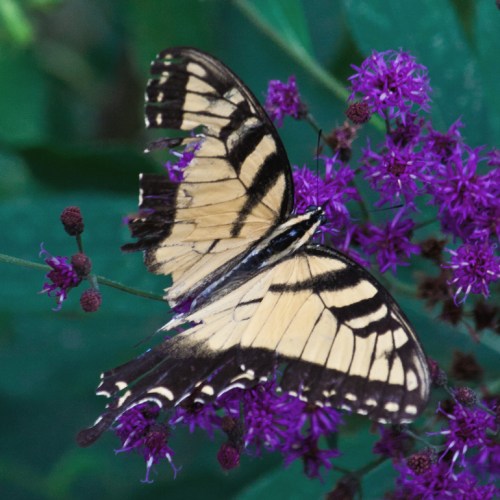
Do you see the delicate beauty of his colors and shapes or are your eyes drawn immediately to his infirmity? His wings are virtually shredded and there is a large portion of one of them missing.

Somehow, despite all of those limitations, he can still fly. He can defy gravity and the laws of aerodynamics.

I don’t know how he does it, but he is able to overcome adversity.  Some of the lyrics of the song “Defying Gravity” from the musical “Wicked” come into my head as I think about it.

“I’m through accepting limits ’cause someone says they’re so. Some things I cannot change but til I try I’ll never know….I’d sooner buy defying gravity. Kiss me goodbye I’m defying gravity and you can’t pull me down.”

Inspiration and motivation can come from many places, I would posit, even from insects.

Take these broken wings and learn to fly…

© Michael Q. Powell. All rights reserved.

Read Full Post »

Female Eastern Tiger Swallowtail butterfly (Papilio glaucus) photographed today at Green Spring Gardens, Alexandria, Virginia.

© Michael Q. Powell. All rights reserved.

Read Full Post »
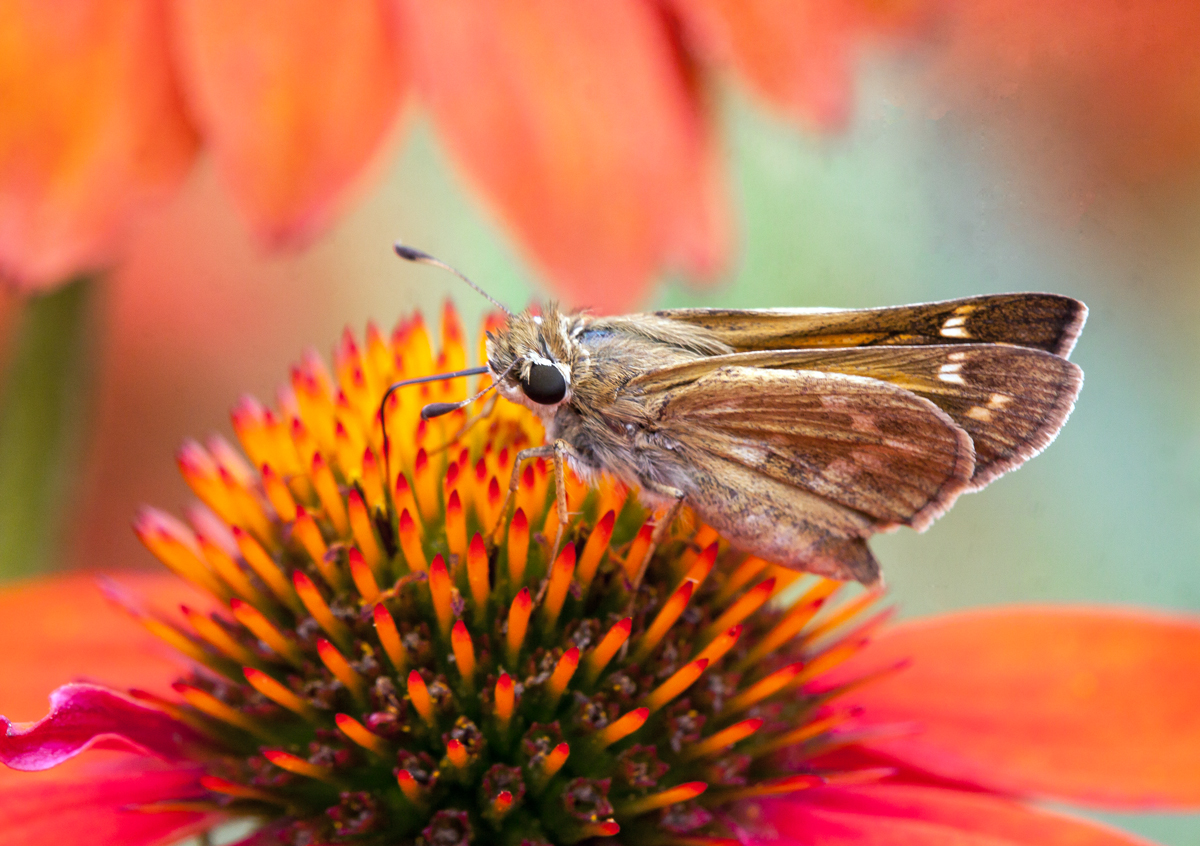
I haven’t seen too many butterflies yet this season so I was happy yesterday to encounter several Eastern Tiger Swallowtail (Papilio glaucus) butterflies at a local garden. The few that I have seen during the past few weeks have been pretty damaged but the male I photographed was in great condition. The female had some damage to one of her “tails” but otherwise was almost perfect.

Eastern Tiger Swallowtail male in perfect condition

Eastern Tiger Swallowtail female with damaged tail

© Michael Q. Powell. All rights reserved.

Read Full Post »

« Newer Posts