Feeds:
Posts
Comments

Posts Tagged ‘Canon SX50’

One of my faithful viewers, Jet Eliot, commented on a recent posting that she was glad to get some views of the wildlife refuge where I take so many of my photos. (Jet has a wonderful blog that focuses on travel and wildlife adventures that is definitely worth checking out.) The problem is not that I don’t take shots of Occoquan Bay National Wildlife Refuge, it is simply that I get so excited about posting photos of the wildlife that I forget about the more static shots of the land and water.

Here are a few shot of the refuge from this past Monday that help give you a better idea of the environment in which I am operating. The first image shows you what part of the shoreline at the refuge looks like during low tide. The refuge is located where Occoquan Bay meets the Potomac River and during tidal surges, some of the shoreline paths are underwater. Those surges tend to bring lots of debris onto the shore, including trash, like the beer bottle that you can see in the photo.

The second shot gives you an idea of how close some of the trees are to the shore. After big storms, downed trees often block some of the paths. As you probably noticed, there was a full moon visible that morning as the sun was rising and adding a little color in the sky.

The final image shows one of the streams that runs through the refuge. It is not unusual to see herons or ducks in these streams and at certain times, when I am really lucky, I have managed to spot muskrats, beavers, and otters.

So that is a brief introduction to “my” wildlife refuge. I used to most of my shooting at another nearby location, Huntley Meadows Park, but it became really popular and crowded. I prefer the solitude of this location—I am overjoyed sometimes when I arrive at the refuge and find that my car is the only one in parking lot.

Occoquan Bay National Wildlife Refuge

Occoquan Bay National Wildlife Refuge

Occoquan Bay National Wildlife Refuge

© Michael Q. Powell. All rights reserved.


Read Full Post »

We won’t see them for a few months in Northern Virginia, but I got a sneak preview of daffodils in bloom here in Brussels, Belgium near a small pond at the botanical gardens yesterday morning.

daffodil

© Michael Q. Powell. All rights reserved.
 

Read Full Post »

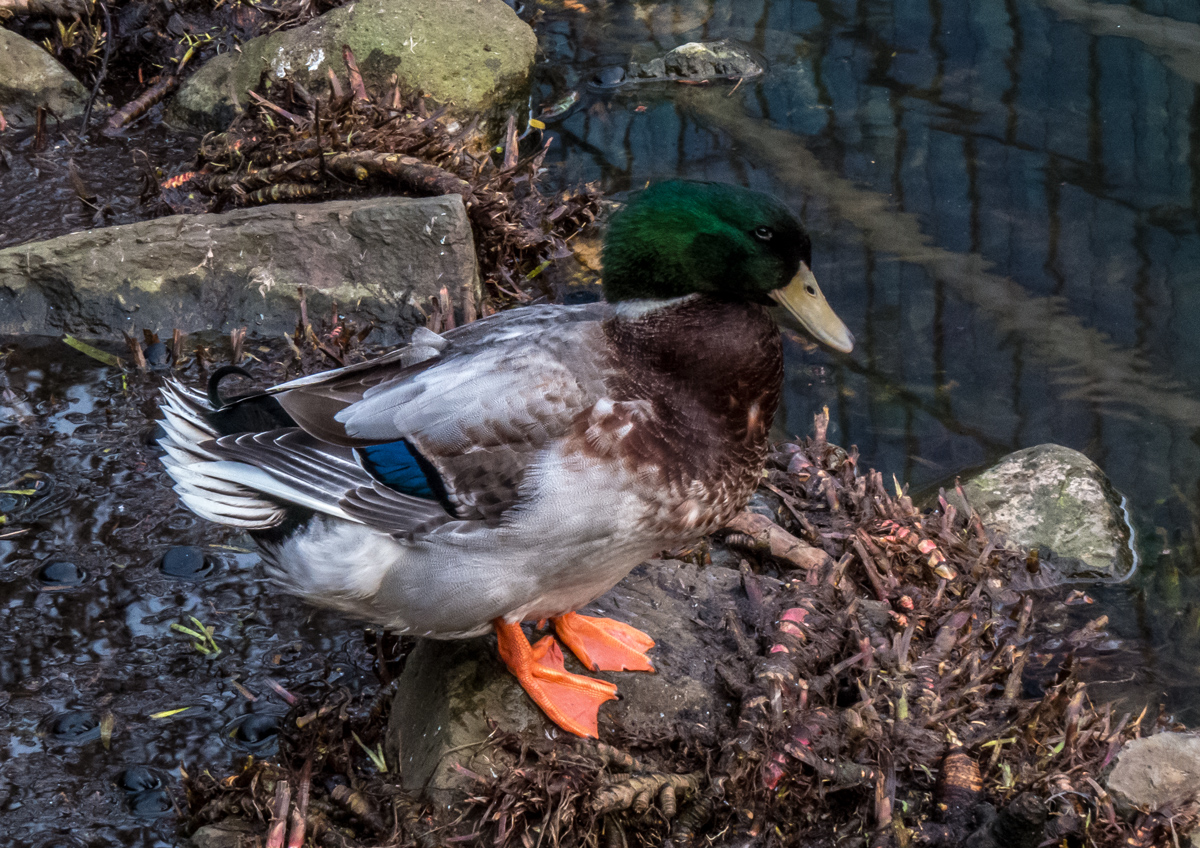
Finding wildlife to photograph in early January in Brussels, Belgium is pretty tough. There are very few hours of daylight at this time of the year and the skies are mostly covered with gray clouds during the day (when it is not actually raining). During a quick trip to the botanical gardens in Brussels this morning, I spotted a few birds and was able to capture shots of a Common Moorhen (Gallinula chloropus) and a male Mallard duck (Anas platyrhynchos).

The moorhen was swimming and my camera took the shot at 1/13 of a second, which means that the focus is not super sharp, but I like the soft, impressionist feel of the image. The mallard was more or less stationary as he groomed himself at the edge of the pond, but seemed to be keeping an eye on me.

I am here in Brussels for a brief business trip and as is usually the case on such trips, I like to try to fit in a little wildlife photography, even in the center of a city.

Common Moorhen

mallard

© Michael Q. Powell. All rights reserved.
Read Full Post »

As another year in my journey through photography comes to a close, I decided to share a few of my favorite photos of the past year. I initially planned to choose one image for each month and that was doable for the first few months of the year. Once I moved into the prime seasons for shooting, though, there were so many good photos I couldn’t select a single one, so I chose multiples for those months and ended up with these thirty photos.

If you want to see the images in a larger size, all you need to do is click on one of them and they will then be displayed in a slide show format.

Thanks so much to all of you who have followed my blog postings and supported and encouraged me in so many ways. It has been a wonderful year and I look forward to more photos and new adventures in the upcoming new year.

Happy New Year to you all and best wishes for a blessed 2019.


© Michael Q. Powell. All rights reserved.

Read Full Post »

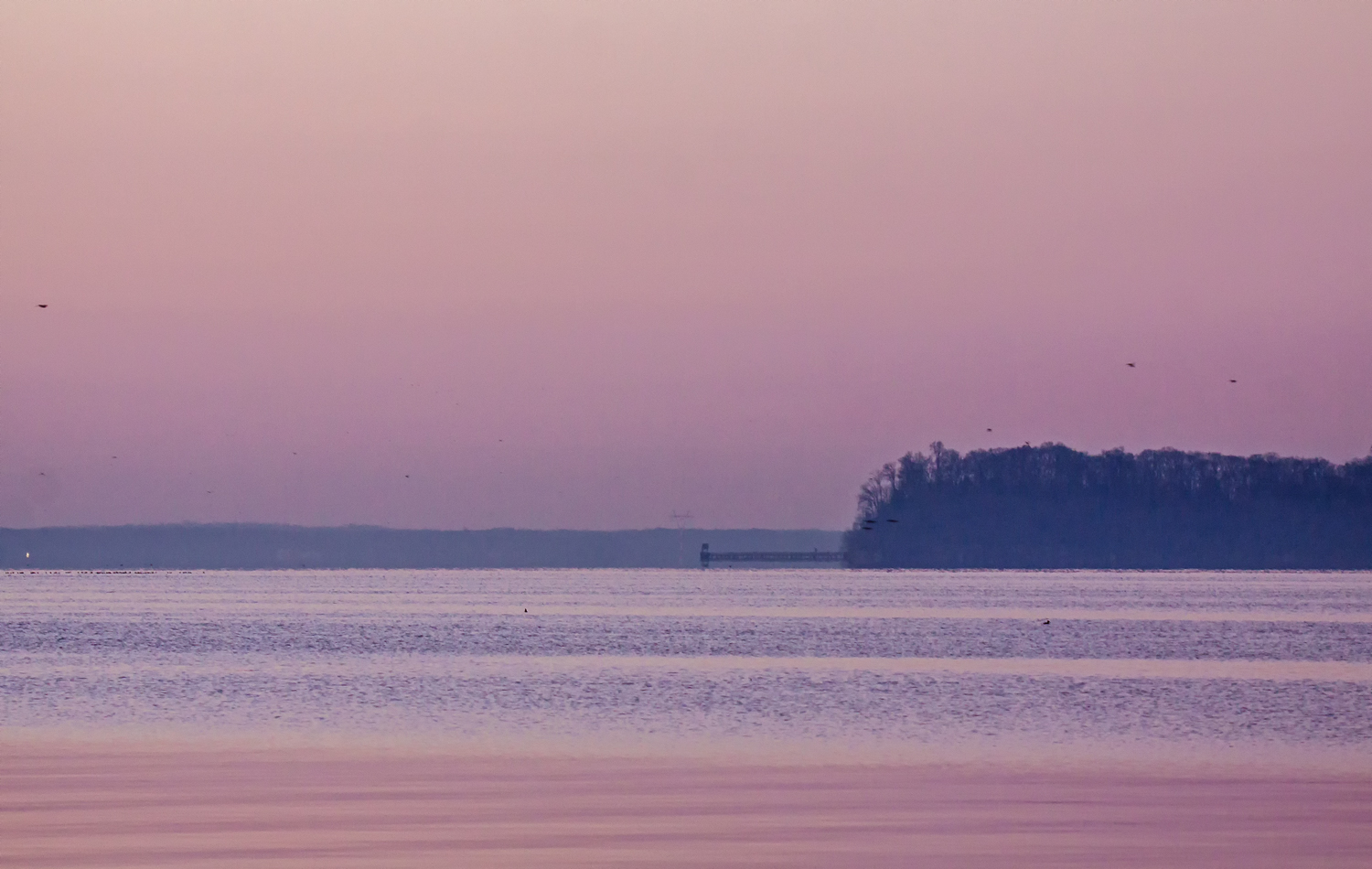
A few days ago I posted a shot of a sunrise over Occoquan Bay and I remember waiting somewhat impatiently for the sun to rise. Fortunately I took some shots as I was waiting and as I finally went over those shots today, I was happy that they showed some of the beautiful colors as the night finally turned into day.

The sunrise was by no means spectacular—its beauty was more subdued and subtle. You’ll probably notice that the color changes a bit in each of the images. I think that the colors were influenced by the direction in which I was pointing my camera and the amount of light present in the scene.

pre-dawn light

pre-dawn light

pre-dawn light

© Michael Q. Powell. All rights reserved.

Read Full Post »

I have returned from my week-long trip to Vienna, Austria, but thought that I would share images of some of the night lights of the city on my final night. On a cold winter evening when snow was lightly falling, Vienna gleamed like one of the brilliant crystals from Swarovski.

As you can see from the first photo of one of the streets in the central pedestrian zone of Vienna, the city lights are amazing. The second shot is of of the clock tower in one of the inner courts of the Hofburg Palace. The final image shows the elegant storefront of the Swarovski store.

Thanks to my readers who have stayed with me this past week as I deviated from my normal wildlife and nature photography. It is enjoyable to mix things up a bit and a fun challenge to photograph entirely different subjects. I am heading out in a short while and with a little luck will have some new wildlife images to share tomorrow.

night lights in Vienna

night lights in Vienna

night lights in Vienna

© Michael Q. Powell. All rights reserved.


Read Full Post »

Last night, my final night in Vienna this trip, I had a chance to walk by Stephansdom (St. Stephen’s Cathedral), an incredible building in the center of the city.

The beauty of Vienna is magnified at this time of the year by wonderful decorations and lights everywhere.

Stephansdom

© Michael Q. Powell. All rights reserved.

Read Full Post »

My short trip to Vienna, Austria is rapidly coming to a close and I want to leave you with this image of the entrance to the outdoor Christmas market at the Rathaus (City Hall), the tall building in the background.

My busy work schedule and the rainy weather this year have conspired against me and kept me from getting new photos. I decided to reprise a photo from a similar posting that I did in 2016. I did have a chance earlier in the week to visit this Christmas market and, as always, it was amazingly beautiful, despite the bustling crowds and often commercialized decorations and merchandise.

Best wishes to all for a “Frohe Weihnachten,” German for “Merry Christmas.”

Christmas 2018

© Michael Q. Powell. All rights reserved.

Read Full Post »

Sometimes the most mundane scenes capture my eye and prompt me to photograph them. On Monday morning, I looked out of my hotel window and was captivated by the way that the early sunlight was falling on the dome of a building in the distance. As I started exploring the scene I saw lots of wonderful details, a wonderful juxtaposition of elements of the old and the new, of historical buildings and new construction.

This is not my normal style of photography, but I thought it would be fun to share with you a couple of images that give you a sense of the feel of that early morning in Vienna, Austria. I had hoped to take some additional photos of the city, but the last couple of days have been cold, wet, and windy. With a little luck I will be able to take a few photos of the Christmas markets to share with you before I depart this beautiful old city.

Vienna Austria

Vienna Austria

© Michael Q. Powell. All rights reserved.


Read Full Post »

Whenever I am traveling for work I try to find some local wildlife to photograph. I am currently in Vienna, Austria and yesterday morning I went for a short walk in the Stadtpark, a park in central Vienna that is not far from my hotel. In the small pond there I found mostly mallard ducks (Anas platyrhynchos), a species with which I am quite familiar.  One duck, however, really stood out because it had such unusual markings.

I focused my attention and my camera on this particular duck. Its shape looked to be similar to that of normal mallards and I wonder if this might be some kind of hybrid. I suppose that it could be another species altogether, though it did not look like any of the species in the photographic list I found on-line of the birds of Austria.

Whatever the case, this bird struck me as being a bit of an odd duck.

duck in Vienna

duck in Vienna

© Michael Q. Powell. All rights reserved.

Read Full Post »

Yesterday we were blessed with a sunny, warm day. The temperatures rose to over 60 degrees (16 degrees C) and my hopes that I might see some dragonflies increased correspondingly.

This autumn season we have already had some sub-freezing temperatures and even a couple of inches of snow. However, my past experience has shown that Autumn Meadowhawk dragonflies (Sympetrum vicinum) are unusually hardy.

Autumn Meadowhawks are small, about 1.3 inches (33 mm) in length and tend to perch on the ground, which is now covered with fallen leaves and other debris. As a result, it is pretty hard to spot these little dragonflies, despite their bright red coloration.

I searched and searched and eventually found a few of them at Occoquan Bay National Wildlife Refuge. I was able to capture a number of images and decided to feature this one, because it gives you a good look at the dragonfly’s beautiful two-toned eyes.

Today we are back to cooler temperatures and there is snow in the forecast for this weekend. Will this be my last dragonfly of the season? I will continue to search for dragonflies for another month or so, though I know that my chances of finding one of these beautiful aerial acrobats will continue to drop.

Autumn Meadowhawk

© Michael Q. Powell. All rights reserved.


Read Full Post »

The gentle paddling of this Pied-billed Grebe (Podilymbus podiceps) produced such wonderful patterns in the water that it was easy to fight the temptation to crop this image more closely. This is another one of the waterbirds that appeared recently at a pond in a nearby suburban neighborhood.

Virtually all of the visiting birds are skittish enough that they will swim away toward the center of the pond as I approach. Fortunately for me they swim a lot more slowly than they fly, so I generally have a chance to track them as they swim, hoping they will turn their heads periodically to the side.

Pied-billed Grebe

© Michael Q. Powell. All rights reserved.

Read Full Post »

This male Ruddy Duck (Oxyura jamaicensis) and I spotted each other at almost the same time and we both immediately sprung into action. As I was bringing my camera up to my eye, the duck was swimming away. I thought that I had lost the photo opportunity when suddenly the duck turned his head to the side and I was able to capture this image.

This Ruddy Duck, like the Hooded Merganser duck that I featured yesterday, has taken up residence in a small pond in a suburban neighborhood not far from where I live. I am thrilled, because it gives me a place where I can experience wildlife without having to travel too far. Things can get busy sometimes, especially at this time of the year, and I cannot always spend hours on end in the wild with my camera as I prefer to do.

Ruddy Duck

© Michael Q. Powell. All rights reserved.

Read Full Post »

I have occasionally been described as a bit of an “odd duck,” which Wiktionary defines as “an unusual person, especially an individual with an idiosyncratic personality or peculiar behavioral characteristics.” That definition certainly fits me (and most other wildlife photographers too, I suspect).

In a more literal sense, “odd duck” is a great way to describe the unusual-looking Hooded Merganser duck (Lophodytes cucullatus). There are no other ducks in my area that look anything like these ducks, so identification is never a problem. Getting good photographs of one, though, can be a problem, because Hooded Mergansers are small and often skittish.

I spotted this handsome male Hooded Merganser yesterday at a suburban pond not far from where I live in Northern Virginia. He was part of a group of about a dozen or so Hooded Mergansers. Most of the members of the group were out in the middle of the pond, but this one hanging out nearer the shore and I was able to get off a few shots before he swam away to link up with the rest of his group.

hooded merganser

© Michael Q. Powell. All rights reserved.

Read Full Post »

When I entered Occoquan Bay National Wildlife Refuge early one morning last week, a layer of ground fog was hanging over the fields, giving the landscape an eerie feel that somehow seemed appropriate for the Halloween season.

As I made my way to the water’s edge, the skies brightened a bit and the fog seemed to lift a little. I was filled with a peaceful and serene feeling as I enjoyed the early morning moments with a Great Blue Heron in the distance.

morning fog

morning fog

morning fog

© Michael Q. Powell. All rights reserved.

Read Full Post »

As the early sunlight pierced the foliage at Occoquan Bay National Wildlife Refuge, it created a magical world, filled with visible rays of light in the misty morning air.

The word “breathtaking” is perhaps overused, but it perfectly describes my physical reaction when I came upon this scene as I was walking a path that runs parallel to the water of Occoquan Bay. I knew that the light was coming from in front of me, so I wasn’t really expecting to take any photos until the path curved a bit and the sun was in a better position.

I marveled at the visible rays of sunlight and wondered if there was any way that I would be able to capture the incredible scene in front of me. My 150-600mm lens was affixed to my DSLR and even at 150mm, there was no way I could use it to capture the “big picture.”

Fortunately I have taken to carrying my Canon SX50 camera that has a zoom lens that goes all the way from wide angle to super zoom (an equivalent angle of view of 24-1200mm). I was able to frame the image as you see in the image below and the camera did a decent job in rendering the scene.

It is moments like this that keep me going out in the early morning, traipsing the trails at a time of the day when many folks would prefer to be sleeping.

rays of sunlight

© Michael Q. Powell. All rights reserved.


Read Full Post »

It seems like we are at a time in the year when the number of birds has increased. I can hear them everywhere when I walk along the wooded trails of Occoquan Bay National Wildlife Refuge. The problem, though, is that most the leaves are still on the trees, so I am having huge problems spotting the birds and if I can’t see them, I can’t photograph them.

Earlier this week, I heard the familiar knocking sound of a woodpecker at work. I could see some movement in a tree amidst the foliage. I tracked the movement until suddenly the woodpecker popped into the open for a brief moment as it reached the top of the dead tree. I was able to capture this one shot of what appears to be a male Downy Woodpecker (Picoides pubescens)—only males have the red patch of feathers on the back of their heads. (The Hairy Woodpecker is similar in appearance to the Downy Woodpecker, but is larger and has a longer bill—the angle of this shot makes it tough for me to be absolutely certain of my identification.)

Downy Woodpeckers are the smallest woodpeckers in Northern America, but what they lack in size, they seem to make up in energy. They always seem to be super energetic and industrious and are one of the birds that I am able to spot throughout most the entire year.

downy woodpecker

© Michael Q. Powell. All rights reserved.

Read Full Post »

I love Wood Ducks (Aix sponsa), but haven’t seen any for quite some time. I was therefore really happy when I spotted this pair swimming in the distance in a  creek at Occoquan Bay National Wildlife Refuge earlier this week.

The male Wood Duck, as shown in the first image, is one of the most colorful and distinctively patterned birds in our area—there is no other bird that looks even vaguely similar. The duck stopped swimming for just a moment and I was able to capture this shot of him getting a drink of water.

The female Wood Duck shown in the second image is not quite as colorful as her male counterpart, but has an equally distinctive look with her windswept “hair” and prominent white eye ring.

wood duck

wood duck

© Michael Q. Powell. All rights reserved.

Read Full Post »

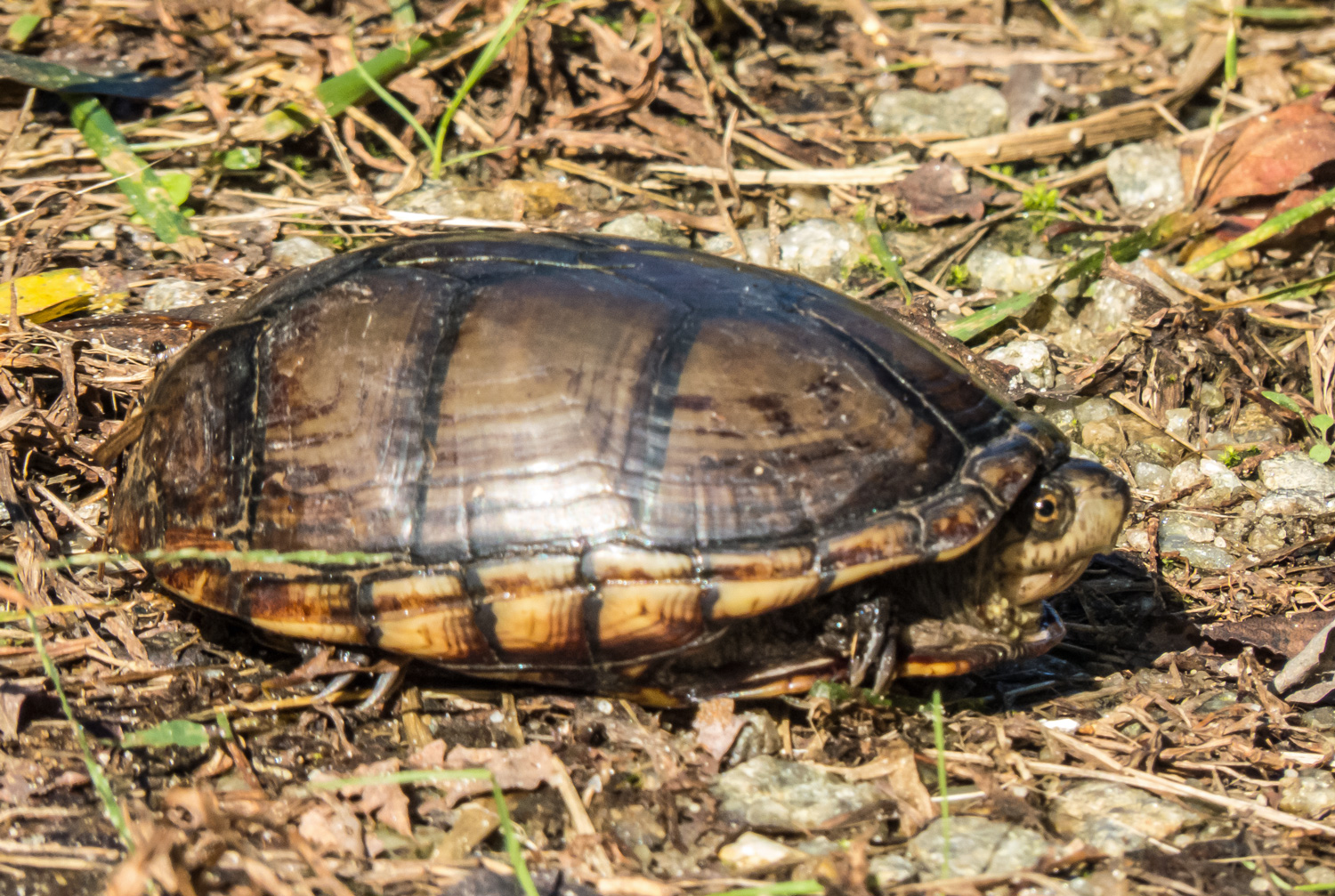
As I was exploring Occoquan Bay National Wildlife Refuge earlier this week, I stumbled upon this cute little Southeastern Mud Turtle (Kinosternon subrubrum subrubrum). It looks like the little turtle had attempted to withdraw its head into its shell, but it does not quite fit.

I’ve only spotted this species of turtle, also known an Eastern Mud Turtle, a few times, so I decided to do a little research. Among other things, I learned on the website of the Virginia Herpetological Society that Southeastern Mud Turtles are ominvores, eating, among other things, insects, crustaceans, mollusks, amphibians, carrion, and aquatic vegetation.

Here are a few more fun facts about these turtles from the same website: “Southeastern Mud Turtles are bottom walkers, spending most of their active time in water on the bottom. A substantial but unknown portion of their annual activity period is terrestrial. They seldom bask. Southeastern mud turtles are pugnacious when caught and many will try to bite, causing a minor wound from the curved beak.”

I am glad that I felt no desire to pick up the turtle.

Southeastern Mud Turtle

© Michael Q. Powell. All rights reserved.


.

Read Full Post »

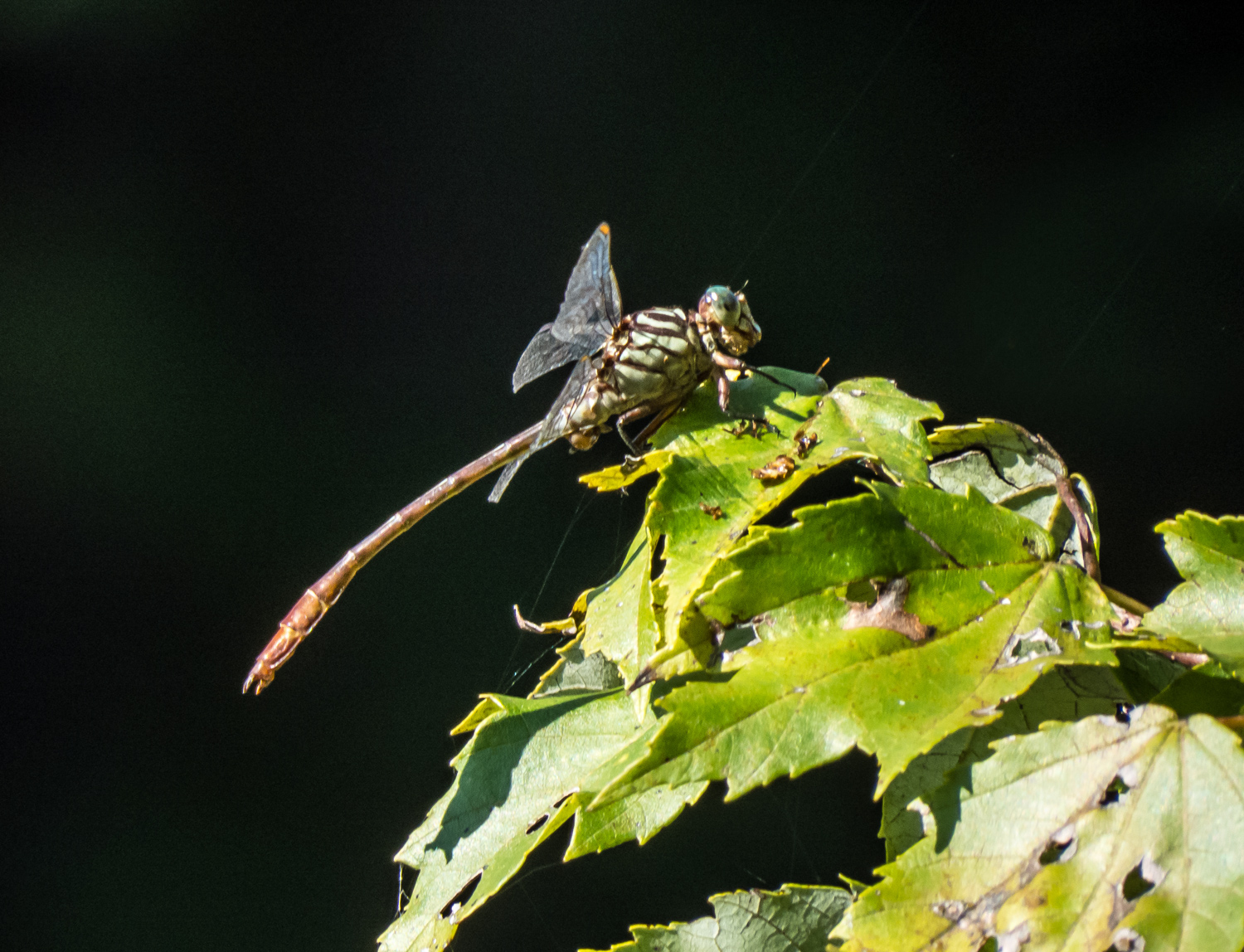
Although we are well into autumn, there are still dragonflies around, including some stunning Russet-tipped Clubtail dragonflies (Stylurus plagiatus) that I spotted earlier this week at Jackson Miles Abbott Wetland Refuge. As you can see from the photos Russet-tipped Clubtails like to perch on somewhat exposed leaves, which makes them a bit easier to spot than some species of dragonflies, though they are not common in my experience

I was able to capture images of Russet-tipped Clubtails (there were at least two individuals that I saw, both males) on several leafy perches in a tree overhanging a pond. My angle of view and the direction of the light gave each of these images a very different feel, primarily because of the way that the background was captured.

Depended on my mood, any one of these three images can be my favorite. Is there one that particularly appeals to you?

Russet-tipped Clubtail

Russet-tipped Clubtail

Russet-tipped Clubtail

© Michael Q. Powell. All rights reserved.

Read Full Post »

I spotted this little Ruddy Duck (Oxyura jamaicensis) all by itself on Wednesday morning at the far end of Painted Turtle Pond at Occoquan Bay National Wildlife Refuge. He must have been feeling a little lonely, however, and tried to strike up a conversation with the mallard decoy that is a permanent feature at this pond. The mallard remained silent.

I was trying to capture a shot of the Ruddy Duck by itself, as in the second image, but I like the eye contact in the first image so much that I decided to make it my lead photo for the posting. The shot simply makes me smile.

Have a wonderful Friday.

Ruddy Duck

Ruddy Duck

© Michael Q. Powell. All rights reserved.

Read Full Post »

Autumn is a prime season for migration. It is almost impossible to ignore the sounds of the Canada Geese as they pass overhead and thousands of other birds pass by unheard, heading south to warmer locations.

Some dragonflies migrate too and at this time of the year it is not unusual to see some of them patrolling high in the air. A good number of dragonflies spend a lot of time perching, and they tend to be easiest to photograph. Other dragonflies, like the species that migrate, spend most of their time in flight. Their stamina is amazing and your patience has to be equally amazing if you try to wait for them to land to photograph them. The alternative is to try to photograph them in flight.

Yesterday I spotted a couple of Wandering Gliders (Pantala flavescens) flying patrols over a small pond at Occoquan Bay National Wildlife Refuge. Wandering Gliders are the most widespread dragonflies on the planet and have an almost worldwide distribution.

I watched the Wandering Gliders for a while to see if I could figure out the patterns that they were flying. Gradually I realized that they often would pass by a certain part of the shore  and hover a little and that became my target zone. With my Canon SX50 superzoom camera in hand, I visually tracked the dragonflies in the air and attempted to photograph them. Mostly I was unsuccessful, but I did get a few decent shots.

In the first shot below, the sharpest that I was able to manage, the Wandering Glider was flying above eye level, so the beautiful blue sky served as a backdrop. In the second image, the dragonfly was flying below eye level and the ripples in the water create a beautiful pattern in the background. When I consider the two images, I am torn between two competing impulses—technically the first shot is superior, but artistically the second shot appeals to me more. Fortunately, I don’t have to choose one over the other and can post both of them.

Wandering Glider

Wandering Glider

© Michael Q. Powell. All rights reserved.

Read Full Post »

Beavers are nocturnal creatures and consequently the best times to see them generally are at dawn and at dusk. Dragonflies, on the other hand, mostly like bright sunlight and they are often most visible during the hottest part of the day.

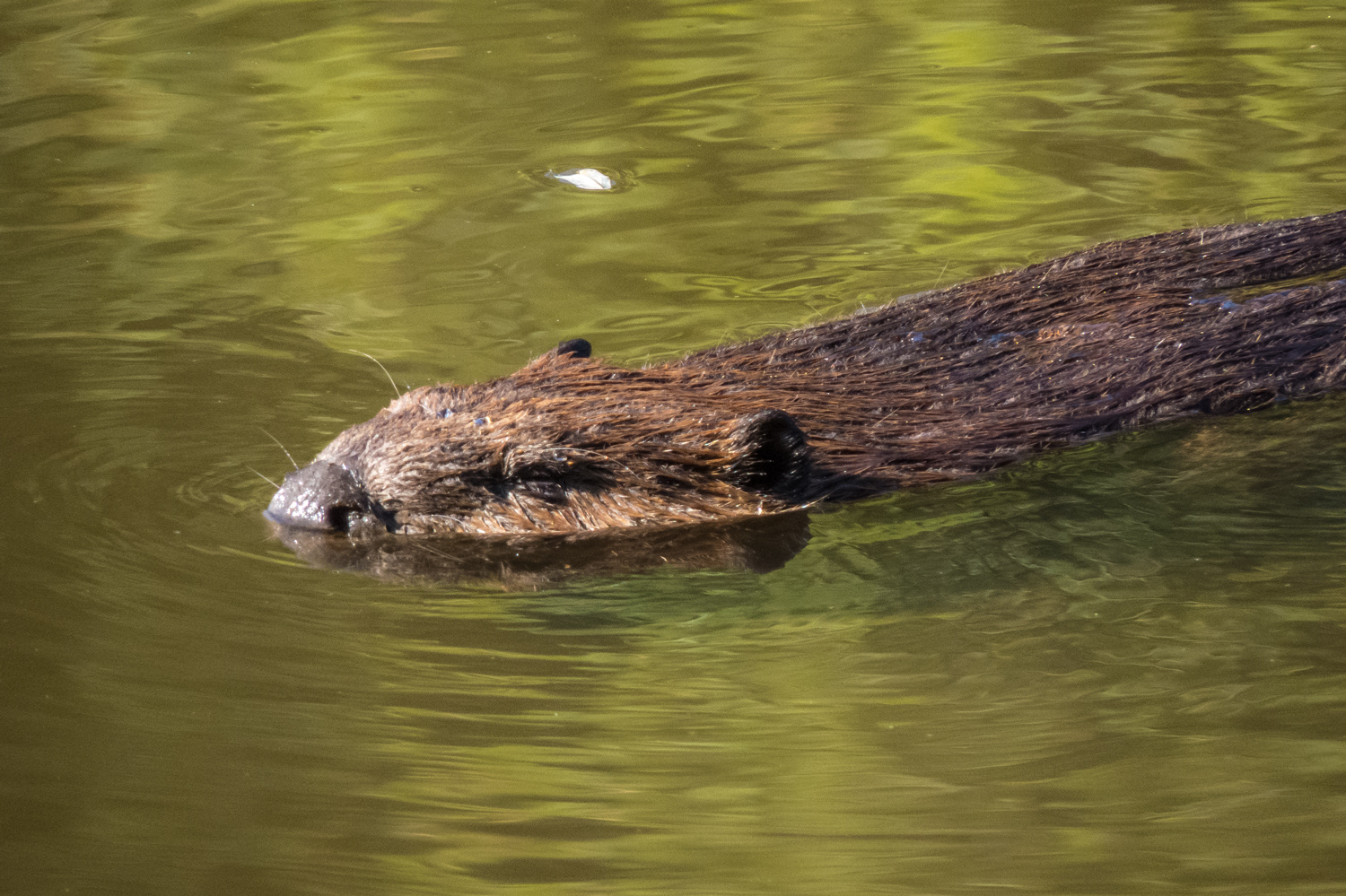
When I was walking around the small pond at Jackson Miles Abbott Wetland Refuge yesterday morning around 10:00, therefore, I was expecting to see dragonflies. Imagine my shock when some motion in the water caught my eye and I spotted a North American Beaver (Castor canadensis) lazily swimming by parallel to the shore on which I was standing.

The light on the water was amazing and gave it a golden glow, as you can see in the first image. The beaver made a gentle u-turn and I was able to capture the ripples and the wake it created in the second image. The beaver was then swimming  toward the light and that is why you can see some of the details of the eye in that second image.

I then decided to switch from my DSLR with my 180mm macro lens that I used for the first two shots to my Canon SX50 superzoom camera. The third image is framed just as it came out of the camera with no cropping and it lets you see some of the texture of the beaver’s fur and the little hairs that stick out of its face. I also love the way the patterns of the water look in this image.

This little incident was a reminder to be eternally vigilant. Wild creatures don’t always follow the rules and may turn up in unexpected places at unanticipated times.

beaver

beaver

beaver

© Michael Q. Powell. All rights reserved.

Read Full Post »

I hear cicadas all of the time—it is hard to ignore that background buzzing noise. It is rare, however, for me to get an unobstructed view of one.

I spotted this cicada perched on a branch overhanging a pond on Friday at Occoquan Bay National Wildlife Refuge. I couldn’t tell for sure if it was still alive. It was not moving, but it simply may not have detected my presence. While it was great to capture an image of this cool insect, I particularly like how the water in the background turned out—those wispy cloud-like whites were a nice bonus.

cicada

© Michael Q. Powell. All rights reserved

Read Full Post »

Despite the light rain that was falling, I decided to go on a photo walk yesterday morning at Occoquan Bay National Wildlife Refuge. Most of the smaller birds seemed to have taken shelter in the trees, but I was thrilled to catch a glimpse of a couple of raptors that were perched prominently in the open. It was an interesting contrast to spot an American Kestrel (Falco sparverius), one of the smallest raptors in our area, and a Bald Eagle (Haliaeetus leucocephalus), one of the largest.

The sky was really overcast, so there was not enough light to reveal all of the wonderful detail of these powerful birds. Still, it was nice to be able to capture some images of birds.

Before too long the number of insects will start to diminish and my blog will become increasingly populated by birds. I figure that for another month or so, though, insects will continue to be featured most often, which is good news for some viewers and bad news for others.

American Kestrel

Bald Eagle

© Michael Q. Powell. All rights reserved


Read Full Post »

Normally I don’t do consecutive blog posts of the same subject, but I got such an overwhelmingly positive response yesterday to my images of Ruby-throated Hummingbirds (Archilochus colubris) that I decided to post a few more. All of these hummingbirds, the only species found in the eastern part of the US, will probably depart soon to winter in a warmer climate, so I figure I better take advantage of this opportunity while I have it.

The best chance to snap a photo of a hummingbird is when it hovers to gather nectar (or when it is perched), but I managed to capture the first image as the hummingbird was zooming on by. I love its body position.

From an artistic perspective, the second image is my favorite. The background is simplified and less cluttered than in other images and the bright color of the flowers really grabs the viewer’s eyes. The slightly blurred wings are in a wonderful position and help to emphasize the sense that the hummingbird is in motion.

The final shot was taken with a different camera. As I noted yesterday, I was shooting with my 180mm macro lens, but I also had my Canon SX50 superzoom camera with me. It has a long reach, but doesn’t handle fast action very well, so it mostly stayed in the camera bag. When one of the hummingbirds perched in a distant tree, however, I was able to pull it out and use it for this static portrait.


Ruby-throated Hummingbird

Ruby-throated Hummingbird

Ruby-throated Hummingbird

© Michael Q. Powell. All rights reserved

Read Full Post »

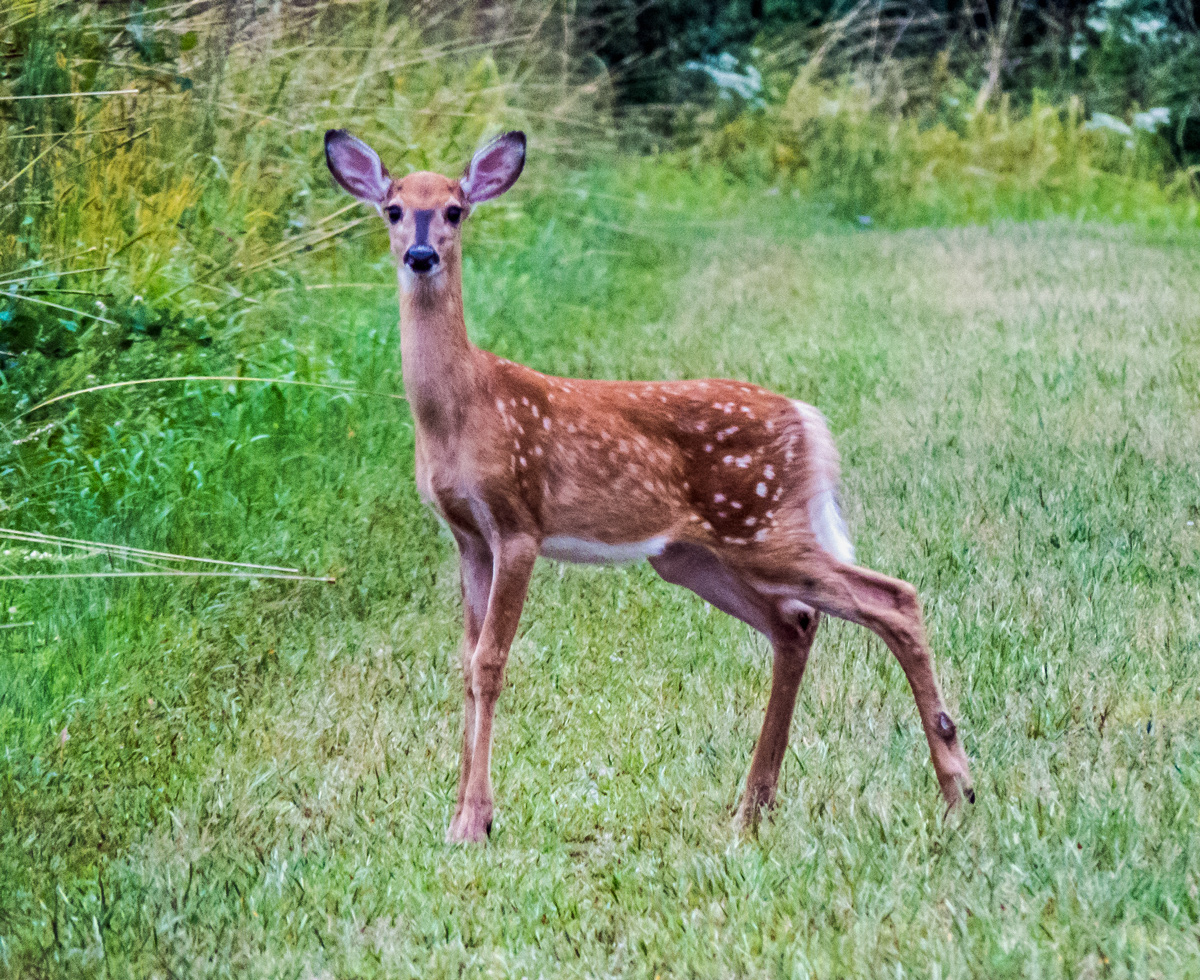
I spotted this curious little White-tailed Deer (Odocoileus virginianus) on Monday at Occoquan Bay National Wildlife Refuge.  The deer appears to have moved out of the cute little Bambi phase and seemed more like a gawky adolescent to me (though I confess I know very little about deer development).

I like the fact that you can still see some of its white spots, which look to be a little faded.

white-tailed deer

© Michael Q. Powell. All rights reserved

Read Full Post »

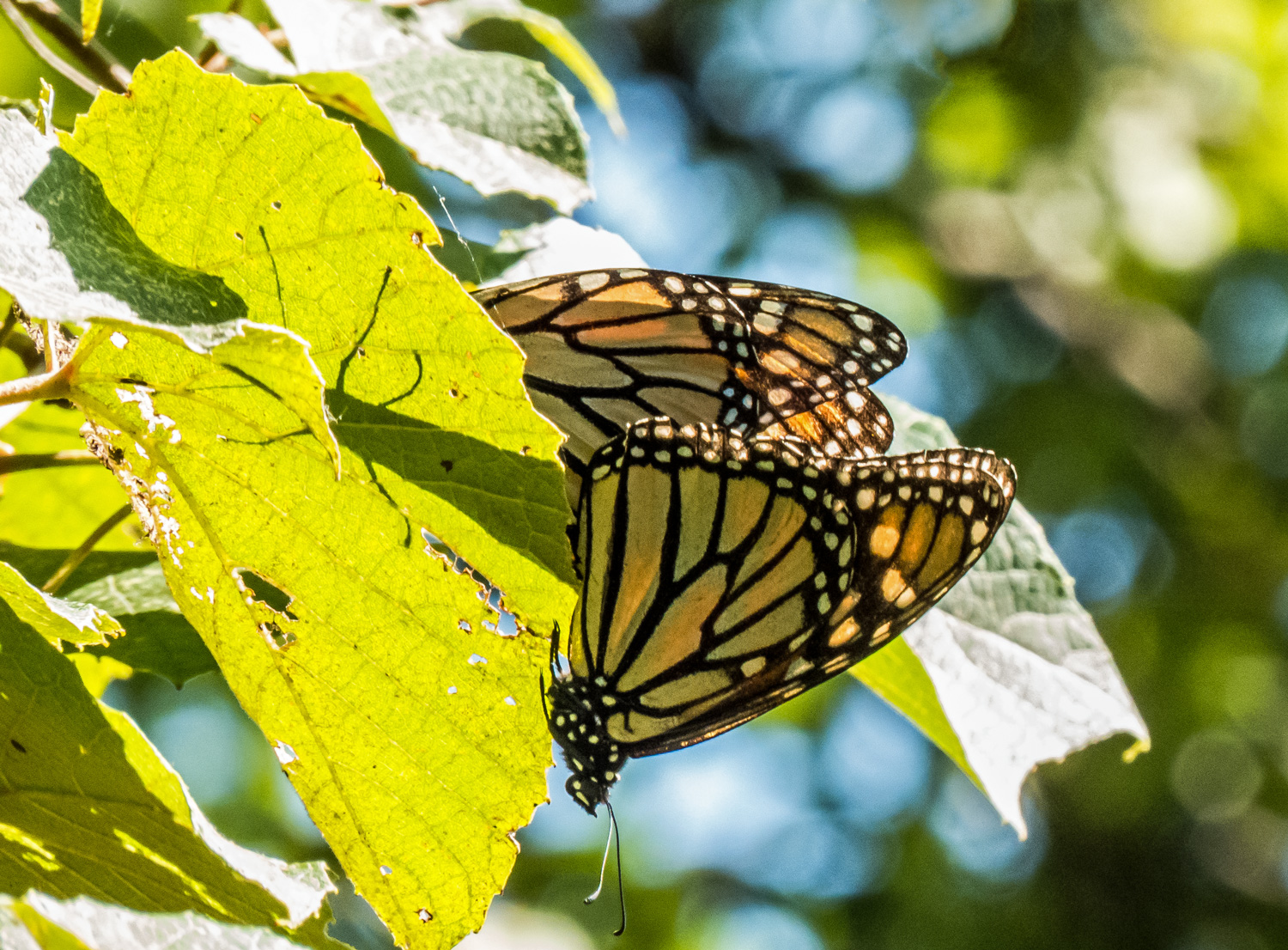
Nestled gently in the leaves of a tall tree, these two Monarch butterflies (Danaus plexippus) were mating, doing their part to perpetuate a species often considered at risk. I captured this image in late August at Occoquan Bay National Wildlife Refuge and re-discovered it yesterday when I was going through my photos from the week before my recent trip to Brussels.

I love the way that the upper butterfly is discreetly hidden by the leaves, but is revealed in its shadow. I find the colors in this image to be especially beautiful. with a wonderful contrast between the warmth of the orange and the coolness of the blue. Most of all, though, I love the way that the background turned out, with its soft circles of out-of-focus highlights.

This is the kind of image that I strive to capture, one that gently draws in viewers and speaks to them softly, reminding them of the undiscovered beauty that surrounds them all of the time.

mating monarchs

© Michael Q. Powell. All rights reserved

Read Full Post »

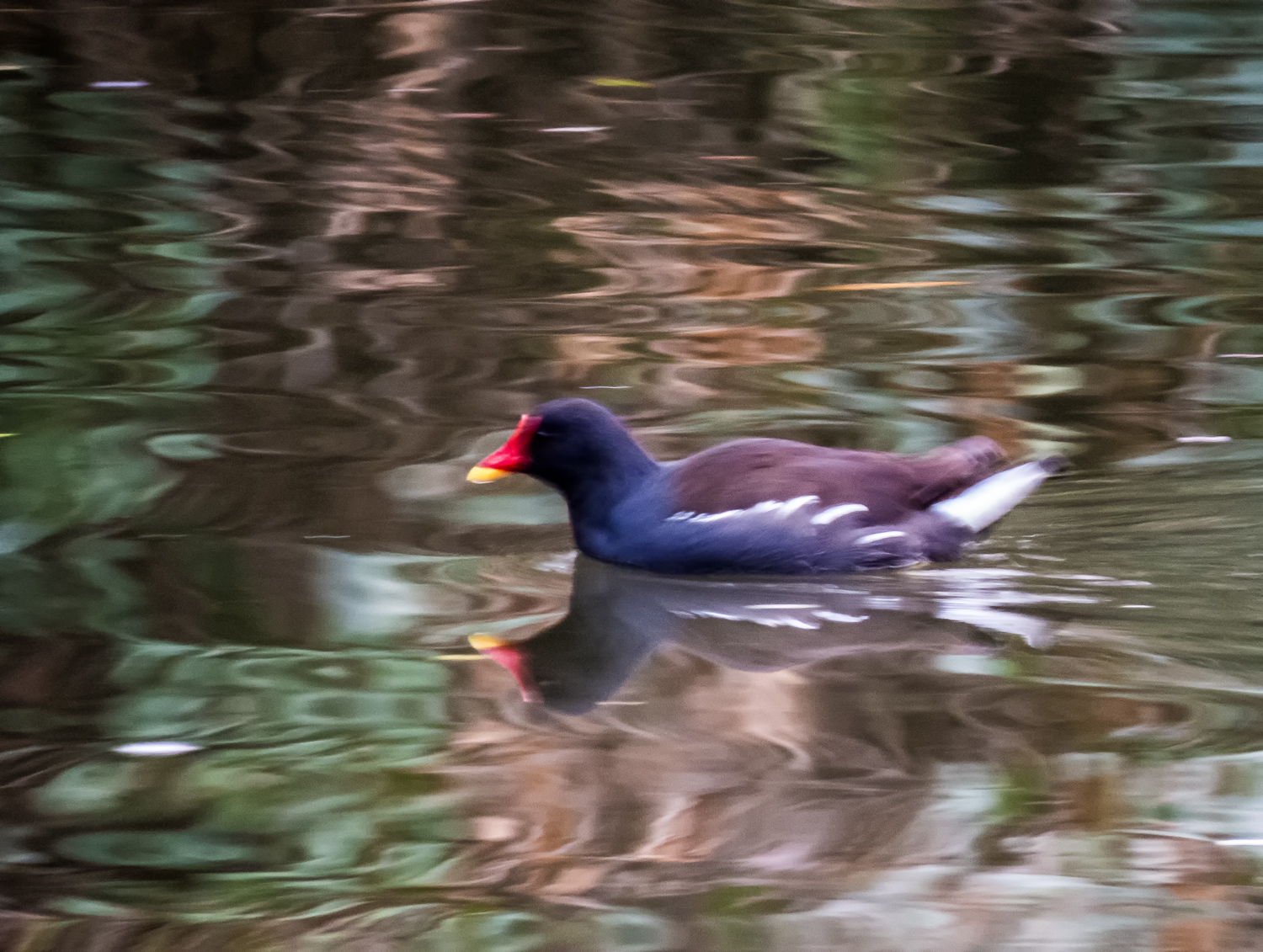
I am back now in the USA, but thought I’d post one last image from my recent trip to Brussels. I spotted this young Common Moorhen (Gallinula chloropus) swimming around in the small pond at the botanical garden. There were several other moorhens, but they all stayed in the reeds and I was not able to get a good shot of them. I really like the spiky feathers of young moorhens. When they become adults, their feathers appear to be much smoother in appearance.

Common Moorhen

© Michael Q. Powell. All rights reserved

Read Full Post »

Later today I will board an airplane and fly across the Atlantic Ocean with the assistance of a significant amount of sophisticated machinery. I can’t help but marvel at the way that dragonflies and damselflies, by contrast, maneuver through the air so skillfully and effortlessly. Wouldn’t it be cool to be able to fly like that?

This past weekend I spent a good amount of time in one of my favorite photographic pursuits—trying to capture images of a dragonfly in flight. When I am traveling I usually don’t have my best camera gear with me and opt instead to use a Canon SX50, a superzoom point-and-shoot camera. It gives me a lot of reach, but is sometimes slow to focus and has a low frame rate. What that means is that I have to be even more careful than usual, because I can’t capture a lot of shots in an extended burst.

Mostly I was trying to photograph Migrant Hawker dragonflies (Aeshna mixta) at the botanical garden in Brussels. The good news is that Migrant Hawkers are relatively large in size and will sometimes hover a bit over the water. That increases slightly my chances of getting a shot, though many of my attempts resulted in cut-off or out-of-focus shots of the dragonflies.

This was probably my best shot of the session. I like the way that I captured a pretty clear view of the body, including the legs that are tucked in during the flight and managed to get the eyes in relatively sharp focus. One of my Facebook friends commented that it would make a handsome piece of jewelry made with gold, turquoise and onyx—I totally agree with her.

Migrant Hawker


© Michael Q. Powell. All rights reserved

Read Full Post »

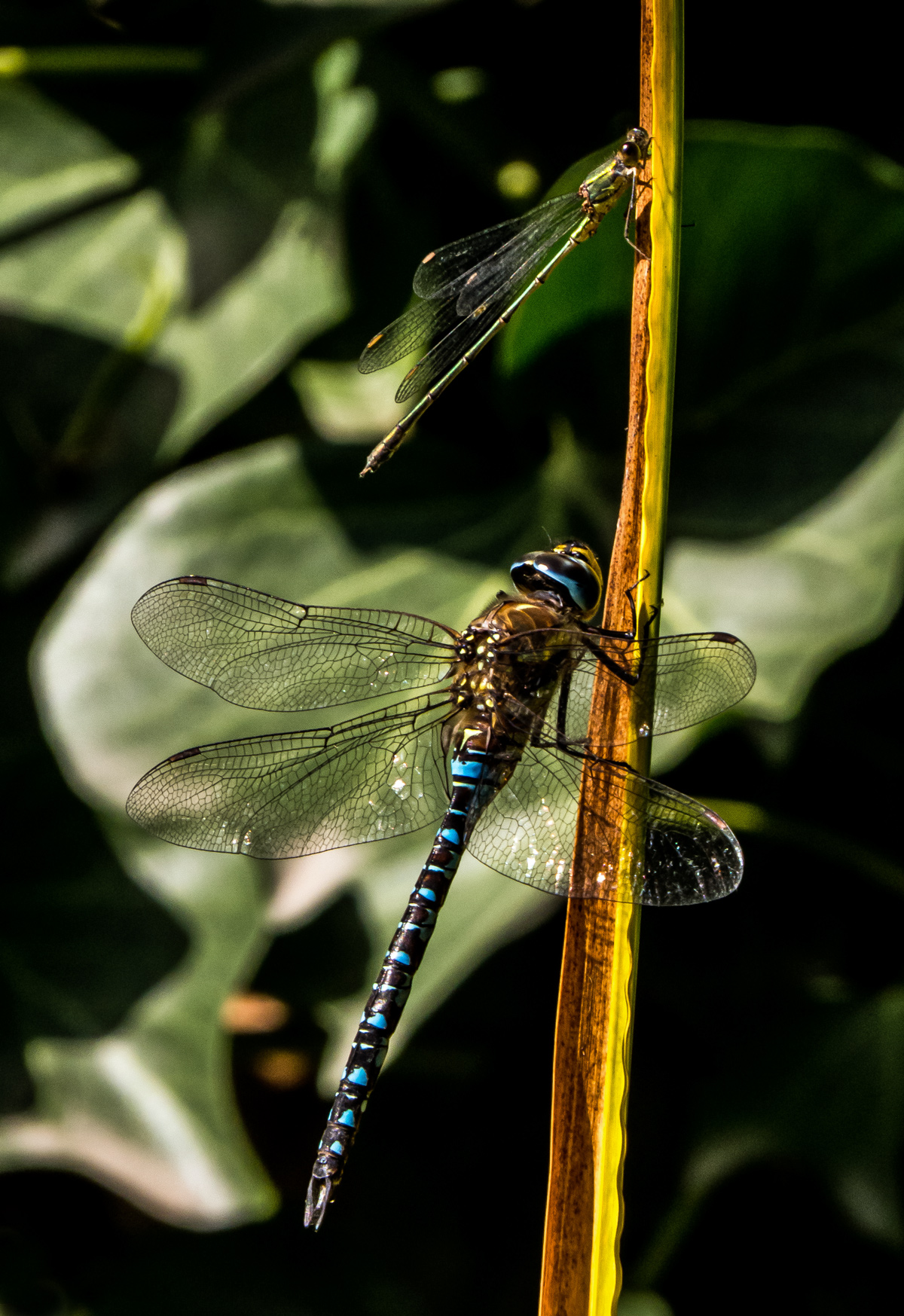
I can’t help but wonder what was going through the minds of these two insects as they perched on the same stalk of vegetation this past weekend at the botanical garden in Brussels, Belgium. Their postures suggest to me a heightened sense of alertness and a kind of wariness. The much smaller damselfly at the top seems to be cautiously looking down over its shoulder at the Migrant Hawker (Aeshna mixta), who appears to be focusing his attention upward. Was it a sign of curiosity or one of hunger? There was never any sign of direct aggression, but I note that the damselfly was the first one to take off and the dragonfly did not pursue it.

For those of you who are not as hooked on dragonflies as I am, this image shows pretty clearly some of the differences in the body shape and eye positions of a damselfly versus a dragonfly. It is important, though, to keep in mind the amazing diversity within the community of dragonflies and damselflies in terms of color, size, and behavior—these are some of the reasons why I am drawn to them as subjects for my photography.

friend or foe

© Michael Q. Powell. All rights reserved

Read Full Post »

« Newer Posts - Older Posts »