Feeds:
Posts
Comments

Posts Tagged ‘Canon 70-300mm telephoto zoom lens’

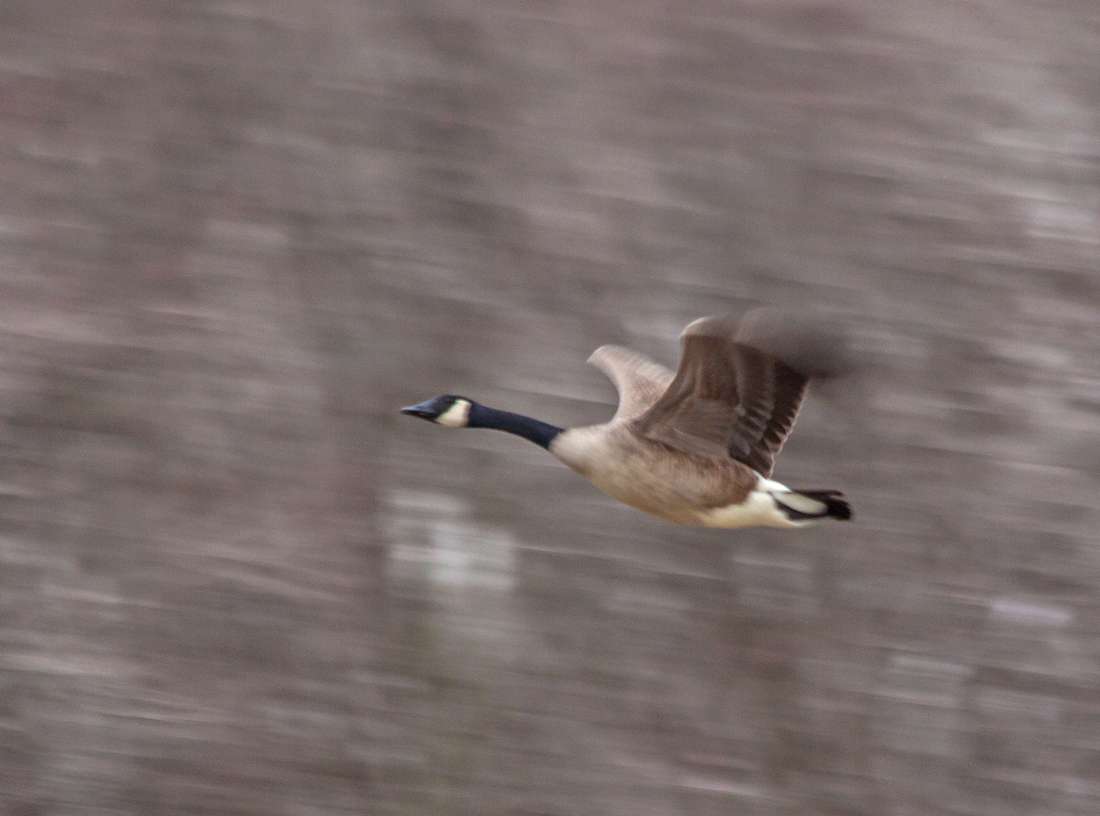
What happens if you try to photograph a bird in flight with a shutter speed of 1/100 second? Under most circumstances, you get a really blurry image. However, if you can track your subject by panning the camera, you can freeze (or in this case, almost freeze) the action and as a bonus you get a really cool background.

It was pretty early in the morning and there was not a lot of light when I took this shot. Even though my camera was at ISO 400 and f/6.3 aperture, I knew that the shutter speed was not going to be fast enough to stop the action, given that I was in aperture-priority mode. That’s the main reason that I resorted to trying this panning technique. Getting the right speed for a pan is little hit-or-miss and I never know for sure how well it will work until I look at the results.

I’m pretty happy with this result, because I managed to capture a sense of motion in a still shot, a sense that is accentuated by the motion blur of the wings, as well as by the feeling of movement in the background.
goose_pan_blog

© Michael Q. Powell. All rights reserved
Read Full Post »

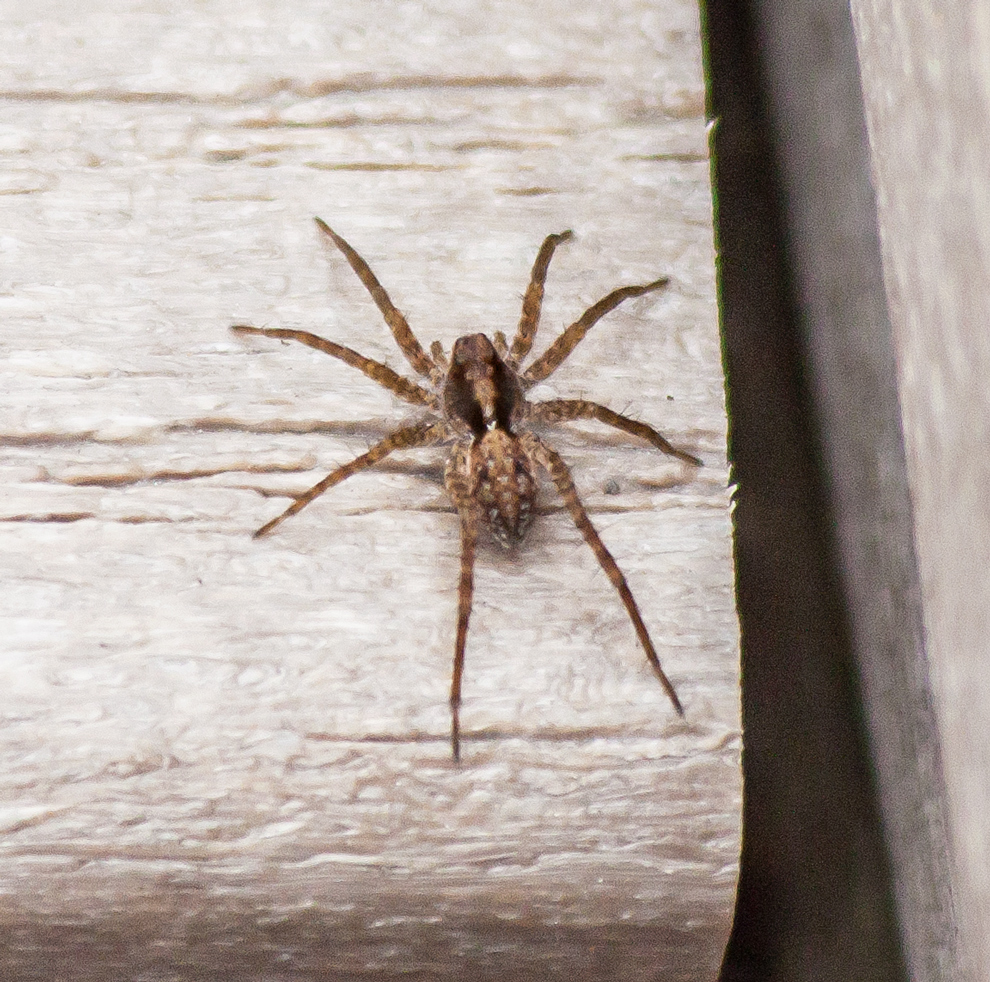
I was a little surprised yesterday when a small spider crossed my path when I was walking on the boardwalk at my local marsh. Sure, temperatures had warmed up and it was over 50 degrees outside (10 degrees C), but I didn’t think there were any spiders around at this time of the year. This is definitely my first spider of 2014.

Expecting to photograph birds, not bugs (yes, I know a spider technically is an arachnid, not a bug), I had equipped my camera with a telephoto lens, not a macro lens, and wasn’t even carrying my macro lens. The spider was moving too, so I used what I had and shot these photos at 300mm and cropped them.

You can probably tell that the boardwalk at the marsh is made of a synthetic material and not real wood, which means that I am not at risk of getting splinters when I kneel on it as I often do.  This spider, whose species I cannot identify, was pretty small. The visible head of a screw used to hold in place the planks of boardwalk help to give you an idea of the relative size of the spider.  Eagle-eyed readers may notice that the third photo is the same image as the first one, but cropped less severely.

In a few short months, I hope to see (and photograph) a whole lot more spiders in even greater detail, but the first one of the year is always special.

spider2a_blogspider1_bblogspider2_blog

© Michael Q. Powell. All rights reserved

Read Full Post »

Early yesterday morning, I was so focused on a Great Blue Heron that I spotted high in a tree that I didn’t even notice that there was a Bald Eagle in an adjacent tree until it took off almost right in front of me. Nearby, a female Belted Kingfisher loudly announced her presence with her unmistakable rattling call.

The sky was covered with heavy clouds and the forecast called for thunderstorms, which meant that lighting conditions were less than optimal for taking photos in a wooded area. Still, it felt great to be outdoors on the trails after a week of constrained activity thanks to our recent snowstorm.

I hadn’t seen a live Great Blue Heron (Ardea herodias) at my local marsh in quite some time, so I was excited when I caught sight of the heron, perched on broken-off tree at the edge of one of the marshy fields. The heron was almost a silhouette against the sky, but its shape is very easy to recognize when you see it in profile.

heron_early_blog

As I was creeping forward to get a clearer shot, I was startled when a large bird flew right across my field of view—I knew almost immediately that it was a Bald Eagle (Haliaeetus leucocephalus), although it too was mostly a shadowy silhouette as I viewed it through the branches of the trees. I was able to react quickly enough to get off a few shots before the eagle flew out of sight.

eagle_early_blog

A short distance away, a female Belted Kingfisher (Megaceryle alcyon) was perched on the trunk of a rotted tree, intently staring down at the shallow water of the marsh, looking for prey. That water prevented me from getting closer to her, but I did manage to capture her distinctive pose through the branches.

kingfisher_early_blog

I am an early bird by habit and it was great to be outdoors in the “wilds” of my suburban marsh to see what other early birds I could find.

© Michael Q. Powell. All rights reserved

Read Full Post »

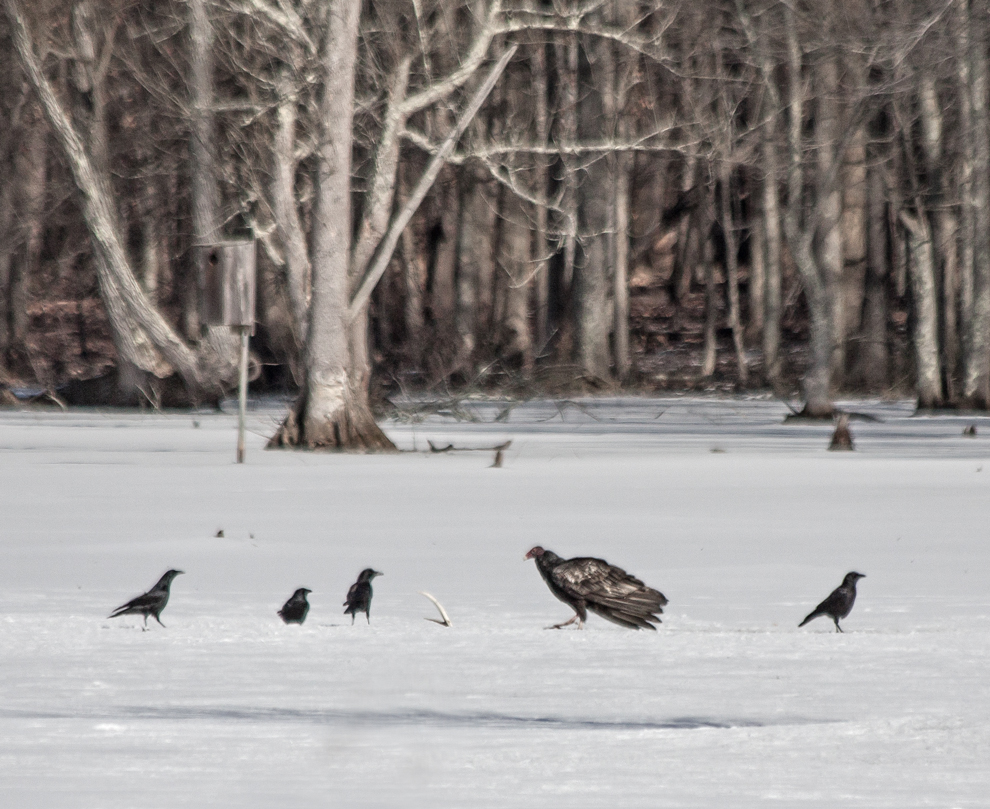
Trying to avoid an all-out turf war, the leaders of the Crows and Vultures agreed to meet, but the negotiations quickly started to break down.  What happened?vulture_crow4_blog

The leaders had agreed to meet alone in the middle of a snow-covered field.

vulture_crow2_blog

However, the Crow leader had brought reinforcements with him and the Vulture found himself outnumbered.

vulture_crow1_blog

Not wanting to show any fear, the Vulture leader decided to flex his muscles and extended his mighty wings. The Crows were not impressed and would not agree to any compromises.vulture_crow3_blogThe Vulture leader started to feel a little uncomfortable as he felt someone creeping up behind him and turned quickly to face the potential Crow assassin.

vulture_crow5_blog

Clearly, these negotiations were not going anywhere and the Vulture leader headed back to announce to his subordinates that a full-scale turf war with the Crows was about to begin.vulture_crow7_blog

© Michael Q. Powell. All rights reserved

Read Full Post »

As many of you know from my posting last week, I recently came upon a dead body of a Great Blue Heron (Ardea herodias)  and several of us who regularly visit this marsh have wondered if perhaps this was the young blue heron who hung around the boardwalk throughout the fall and early winter. We had previously noted that this heron was not very proficient at catching food and worried that it seemed to lack basic survival skills.

I took a lot of photos of that young heron, whom I encountered repeatedly during my early morning visits to the marsh, and decided to post a few photographs from late December and early January. I’ll never know for sure if this heron survived the winter, but these images help remind me of some of the special moments that we shared.

heron_mem3_blogheron_mem3a_blogheron_mem2_blog

© Michael Q. Powell. All rights reserved

Read Full Post »

Valentine’s Day is past, a holiday that celebrates romantic love through the giving of cards, flowers, and candy.  Yesterday, though, I was witness to a deeper, more intimate sense of love and devotion as I observed a couple of Mallard ducks (Anas platyrhynchos).

Side by side, almost touching, they moved slowly though the water in synchronized movements, with one dipping its bill in the water and the other keeping watch. They seemed so happy together, alone in their own little world, amidst a flock of loudly honking Canada geese.

It may be my imagination, but they look like they are smiling in this photo.

duck_couple_blog© Michael Q. Powell. All rights reserved

Read Full Post »

There may not have been a lot of seeds in the dried-out marsh plants, but this little chickadee, which I am pretty sure is a Carolina Chickadee (Poecile carolinensis), seemed determined to get every last one.

chickadee_feeding_blog

© Michael Q. Powell. All rights reserved

Read Full Post »

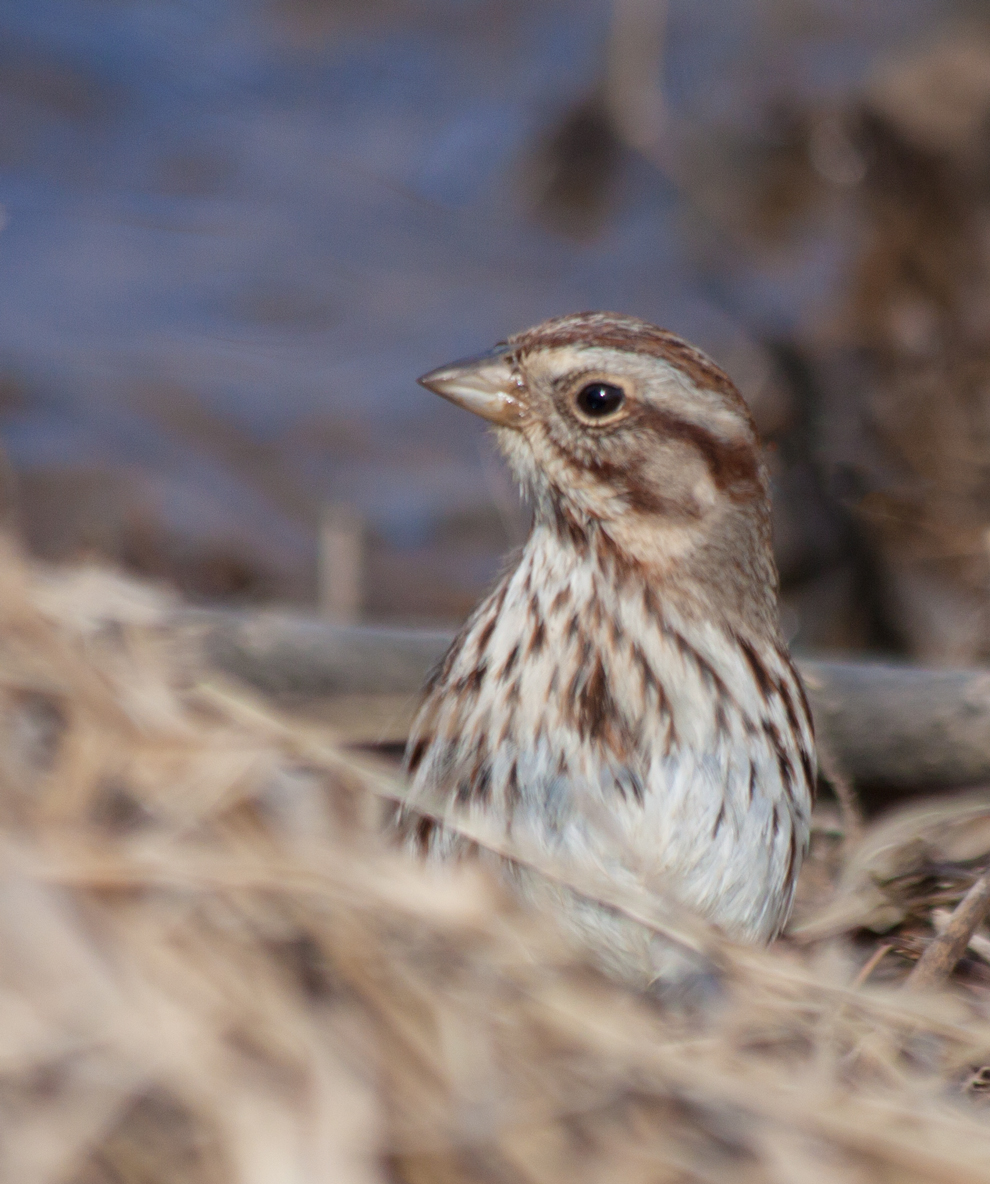
Sometimes the birds play games with me as I try to photograph them—usually it is “hide and seek.” This little Song Sparrow (Melospiza melodia), though, seemed to be playing “peekaboo,” as the bird would hide its head and then pop up and look at me, as if to announce, “Here I am.”

peekaboo1_blogpeekaboo2_blog

© Michael Q. Powell. All rights reserved

Read Full Post »

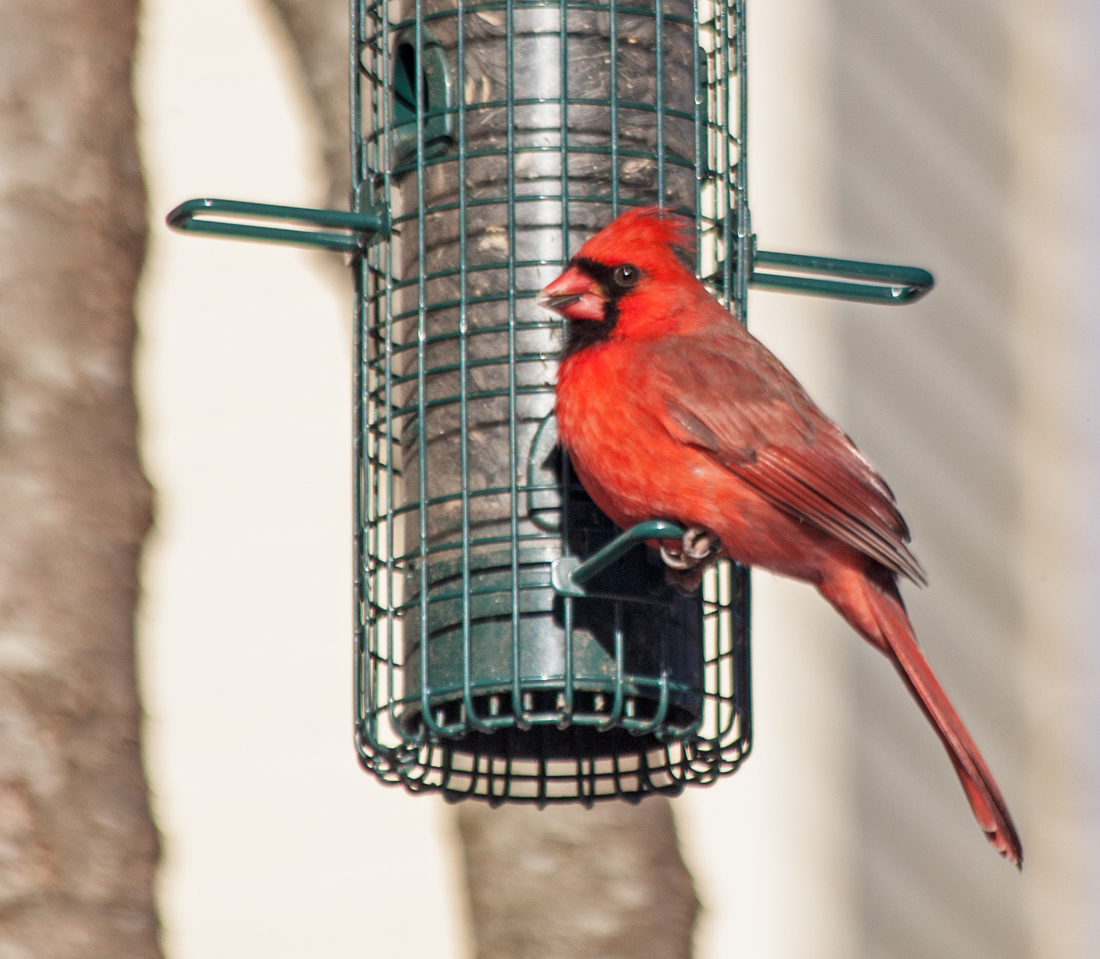
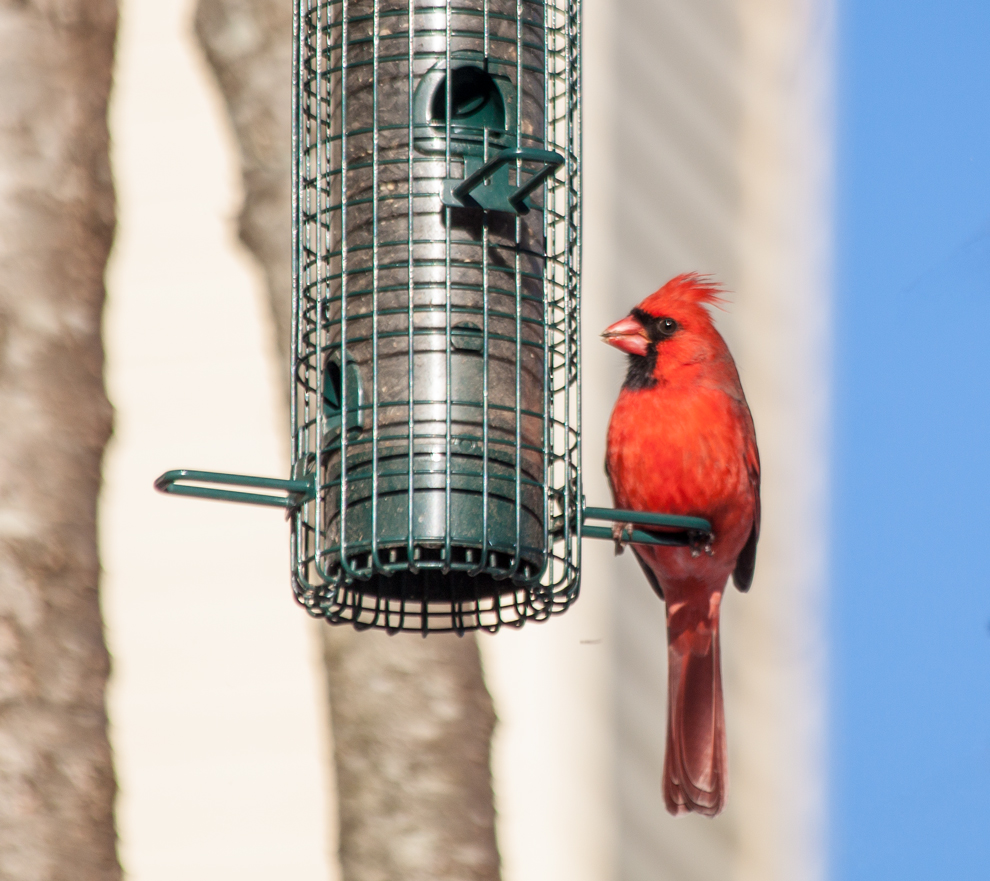
As I was walking through the snow in a wooded area behind some of the townhouses in my neighborhood, a flash or bright red caught my eye and I knew immediately that it was a male Northern Cardinal (Cardinalis cardinalis), one of my favorite birds.

I stalked him as he moved from tree to tree until he eventually landed on this feeder that was hanging from the second-story deck of one of my neighbors. I really like the industrial look of the feeder and think it adds a nice contrast to softer, less distinct feathers of the cardinal.

cardinal_feeder2_blogcardinal_feeder1_blog

© Michael Q. Powell. All rights reserved
Read Full Post »

The window sills in my kitchen are just the right height for Freckles, a year-old Cocker Spaniel, to stand on her back legs and monitor the parking spot, waiting and hoping for her owner to return from work. The light streaming in the windows this afternoon illuminated Freckle’s face beautifully, permitting me to take this rather formal-looking portrait of her. Someday I’ll try a similar lighting situation with a human subject, but somehow it’s easier with a dog, even if it’s hit-or-miss getting her to pose for me.

freckles_window_blog

© Michael Q. Powell. All rights reserved

Read Full Post »

Whenever I am at my local marsh at sunset, I am alert for ducks and geese in the air. I have a goal of catching them in silhouette against the backdrop of the colorful sky. I still haven’t gotten the shot I am looking for, but here is one of my recent attempts.

duck_sunset_blog

© Michael Q. Powell. All rights reserved

Read Full Post »

For the second time in two weeks I spotted a muskrat (Ondatra zibethicus) at my local marshland park this past Monday and I was able to get some shots at even closer range that the last time.  (At my closest, I was well within ten feet (three meters) of the little muskrat). I was on a boardwalk above the level of the water and I hung over the edge in an effort to get some shots at close to eye level.

The muskrat was a really small one and paid very little attention to me. It concentrated in pulling some of the vegetation out of the plants at water’s edge and them chewing on them while in the water. Once again, I was amazed at the dexterity of the front paws, which functioned as hands to get the food into the muskrat’s mouth.

muskrat_close1_blogmuskrat_close2_blogmuskrat_close3_blog

© Michael Q. Powell. All rights reserved
Read Full Post »

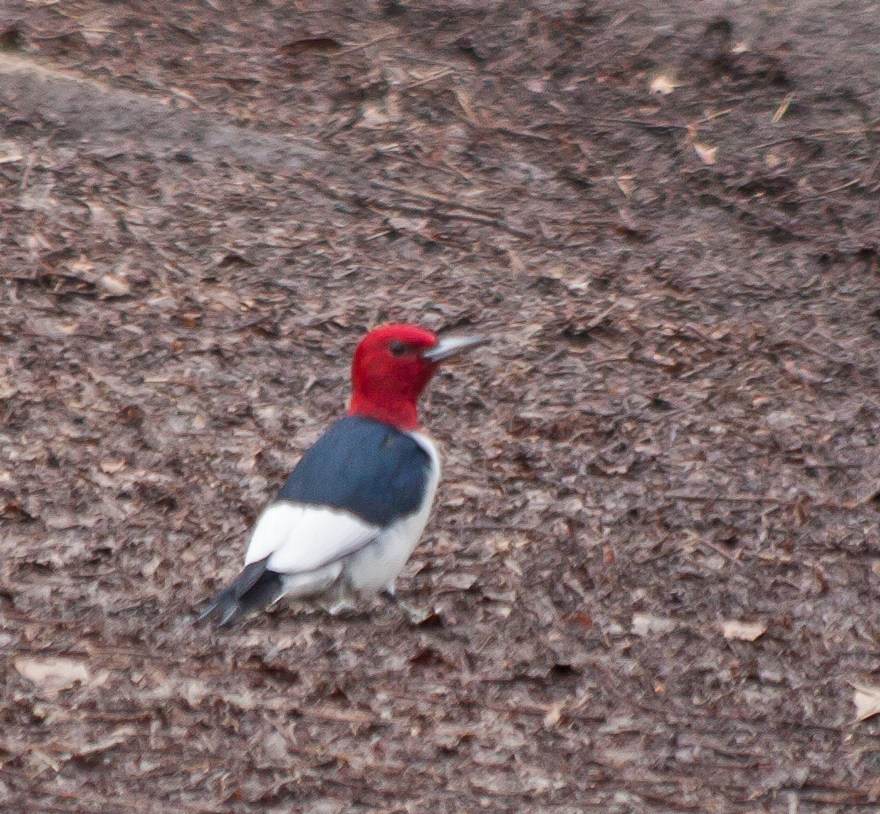
All winter long I have been trying to get a clear shot of a Red-headed Woodpecker (Melanerpes erythrocephalus) at my local marshland park. I have seen them from time to time, high in the trees in the shadows, and have even managed to get some photos of them, but I had never really gotten a good look at the red head.

This past weekend I came across one pecking away on the ground, permitting me at last to get some photos that highlight its beautiful coloration. These shots were taken from a pretty good distance away, but I think you would all agree—this redhead is stunning.

red2_feb_blogred1_feb_blog

© Michael Q. Powell. All rights reserved

Read Full Post »

As I was observing some mallard ducks paddling around the shallow waters of a former beaver pond yesterday, I noticed one much smaller duck in their midst that looked out of place—it was a male Green-winged Teal (Anas crecca). The little duck was acting just like the mallards, foraging for food in the water and occasionally on land as well. Had the Green-winged Teal been adopted by this group of mallards or was he merely lost and separated from his own group?

I couldn’t help but notice that most of the mallards were paired off, but the Green-winged Teal seemed to be all alone. He’s going to have to act quickly if he wants to find a sweetheart before Valentine’s Day later this week.

green-winged1_feb_blog

green-winged2_feb_blog

© Michael Q. Powell. All rights reserved

Read Full Post »

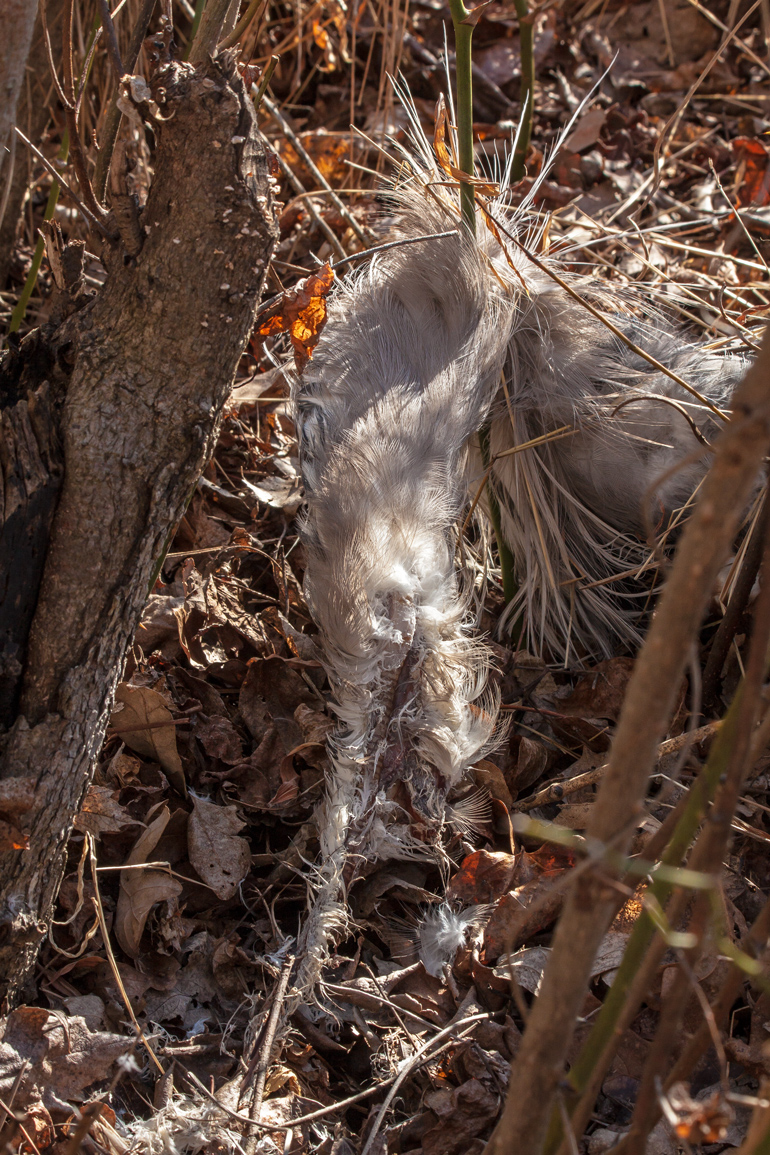
As I was walking about in a remote area of my local marsh, I came across a dead Great Blue Heron (Ardea herodias), with its body partially hidden in the undergrowth and its large feet prominently displayed. I couldn’t help but wonder about the cause of its death, though my sense of reverence for this beautiful bird kept me from poking about its body and examining it more closely.

According to a University of Michigan website , the average lifespan for a blue heron in the wild is 15 years, although 69 percent of those born in a given year die before they are a year old. Was this heron a young one who was unable to survive in our recent cold weather?  Was it perhaps an older one which had lived a long life and died of natural causes? Was it killed by a predator? Known predators of young (and sometimes adult) blue herons include eagles, raccoons, turkey vultures, and red-tailed hawks, all of which I have seen in this marsh.

I struggled a bit in determining how to present these photos to avoid offending those who might find the subject too morbid or gruesome. In the end, I decided to lead with the photo of the large, weathered feet with the small talons. The next two shots pull out progressively to give a sense of the surroundings in which I found the heron. I took the final shot from the side, looking directly at the area where the head should be and quite frankly I am not sure what I am seeing in that image.

Life is a constant struggle for animals and birds in the wild and this little encounter reminded me of that sometimes harsh reality.

heron_dead1_blogheron_dead2_blogheron_dead4_blogheron_dead3_blog

© Michael Q. Powell. All rights reserved

Read Full Post »

I waited for the sunset yesterday at my local marshland park and was treated to some cool effects as the last rays of the sun made their way through the trees onto the icy pond, creating some beautiful reflections.

My eye is really attuned to this effect because of a recent series of images by Stephen Pitt in his blog “Le temps d’un Soupir…” that show early morning rays of sun illuminating the forest floor. Check out his most recent posting by clicking on the name of his blog.

pre_sunset1_blog

© Michael Q. Powell. All rights reserved

Read Full Post »

Have sparrows become my favorite bird? This winter, I’ve spent more time with them than with any other birds and I’ve featured them repeatedly in my blog postings. I tend to be more at ease with the familiar and the comfortable, rather than the exotic and extreme. and sparrows fit well into my world, like this Song Sparrow (Melospiza melodia) in the snow.

Photographing these small birds is a challenge, though, because it is unusually tough to isolate them from their often cluttered background and they are in constant motion. I like the way that I was able to capture this sparrow, with the small patch of exposed grass amidst the snow. The light was pretty strong and blew out a few details in the chest feathers, but if cast an interesting shadow.

Perhaps sparrows are not my favorite birds, but we are good friends who spend a lot of time together.

sparrow_shadow_blog

© Michael Q. Powell. All rights reserved

Read Full Post »

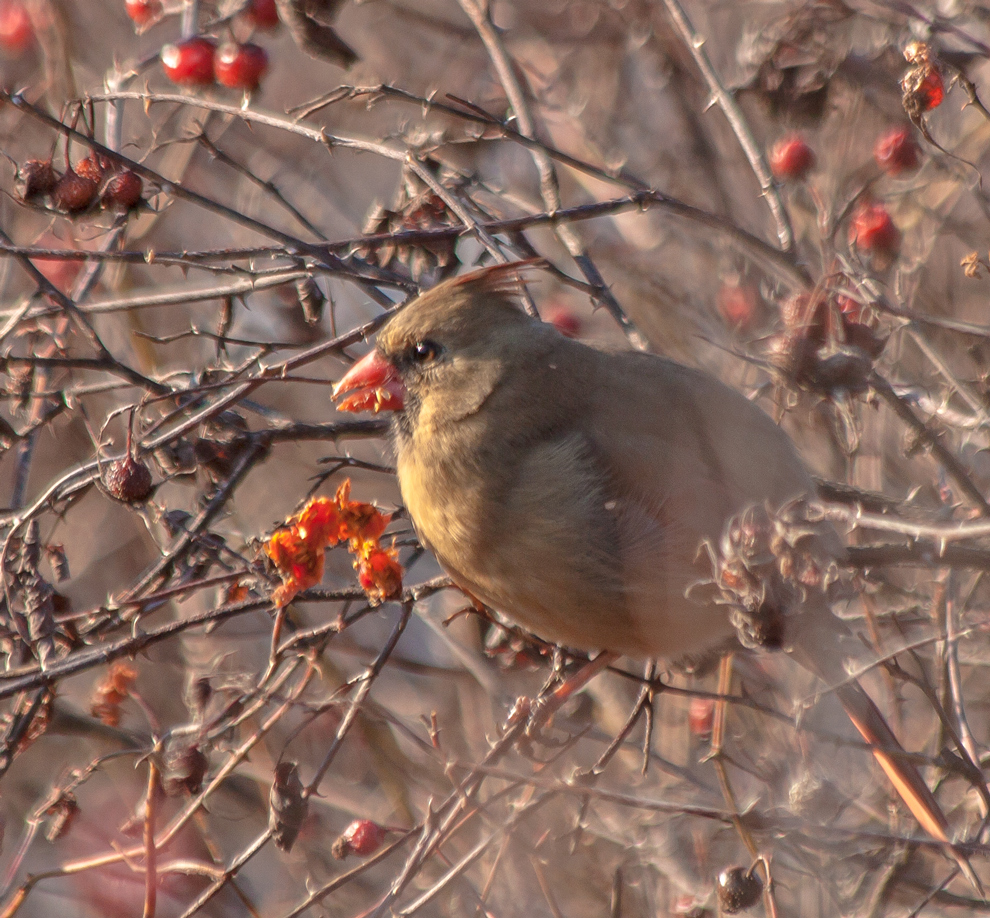
If berries/fruits are still around on a bush in February, I have to believe that they are not a bird’s favorite food. If you are hungry, enough, I guess you make do with what is there, as this female Northern Cardinal (Cardinalis cardinalis) was doing yesterday when I took this photo.

I am not certain, but I think that the red berries may be rose hips and the cardinal was trying to get to the seeds in the center, as the evidence on her bill suggests.  Although I have heard that rose hips are a great source of Vitamin C, I doubt that they provide much nourishment to the birds.

I really like the way that this female cardinal almost disappears into the background in this image—the colors of her body and her bill are almost a perfect match for her surroundings.

cardinal_feb_blog

© Michael Q. Powell. All rights reserved
Read Full Post »

As promised, here are some additional images of the muskrat (Ondatra zibethicus) that I was able to observe one day last weekend at dusk, as it was foraging for food. I posted one photo in an initial blog entry entitle Muskrat at dusk—preview, but I knew that there were other shots that I wanted to share.

The muskrat would dig around a bit in the cattails and marsh grass and then would drag its food into the water to gnaw on it. I was struck by the muskrat’s dexterity and the way that it used its front paws, which looked remarkably like little hands. In some shots, the muskrat might be mistaken for a beaver, but in other shots you can clearly see the tail, which lets you know immediately that it is not a beaver.

muskrat2_feb_blogmuskrat4_feb_blogmuskrat3_feb_blogmuskrat5_feb_blog

© Michael Q. Powell. All rights reserved

Read Full Post »

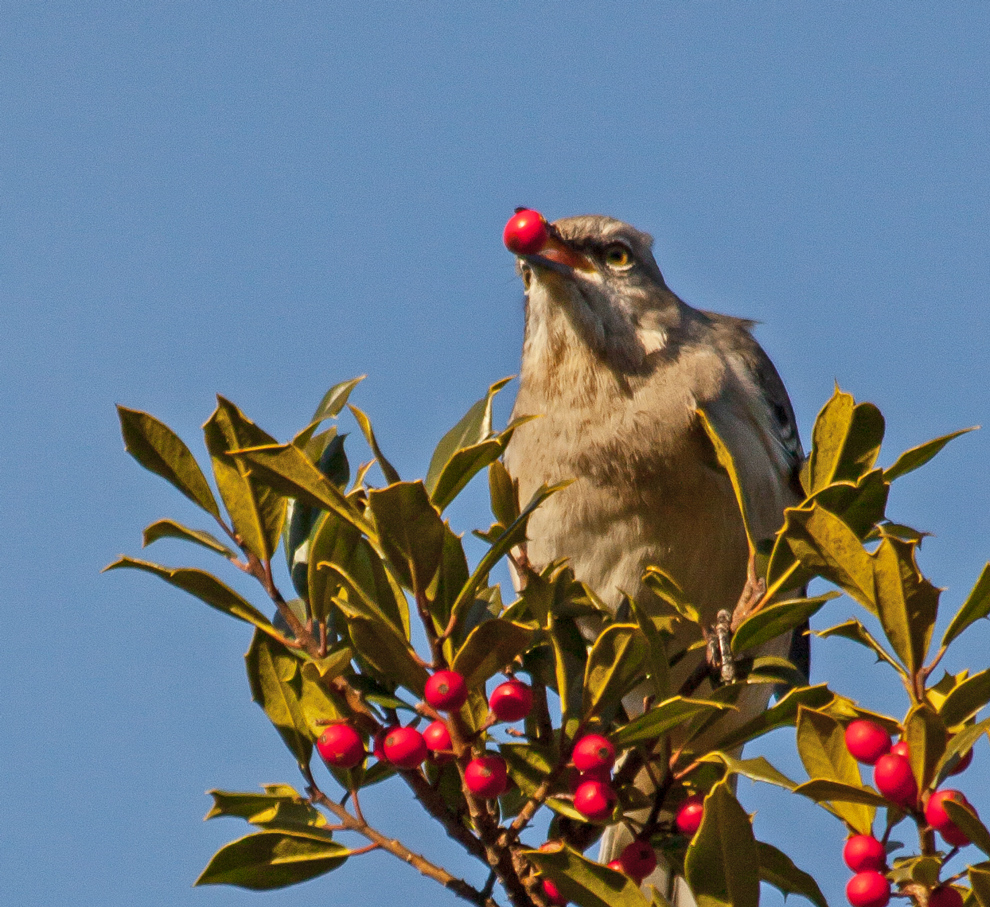
Mockingbirds always strike me as bold and defiant, often perching in the highest point of a tree or bush and singing loudly, heedless of the weather.  On a recent sunny day, a rarity for us, I spent quite some time observing this Northern Mockingbird (Mimus polyglottos).

Most of the time, the mockingbird seemed to be just soaking up the warmth of the sun, but occasionally the bird would reach down and grab and swallow a bright red berry so quickly that it seemed to be inhaling the berry. In this shot, I managed to capture the berry before it disappeared.

mocking_winter_blog

© Michael Q. Powell. All rights reserved
Read Full Post »

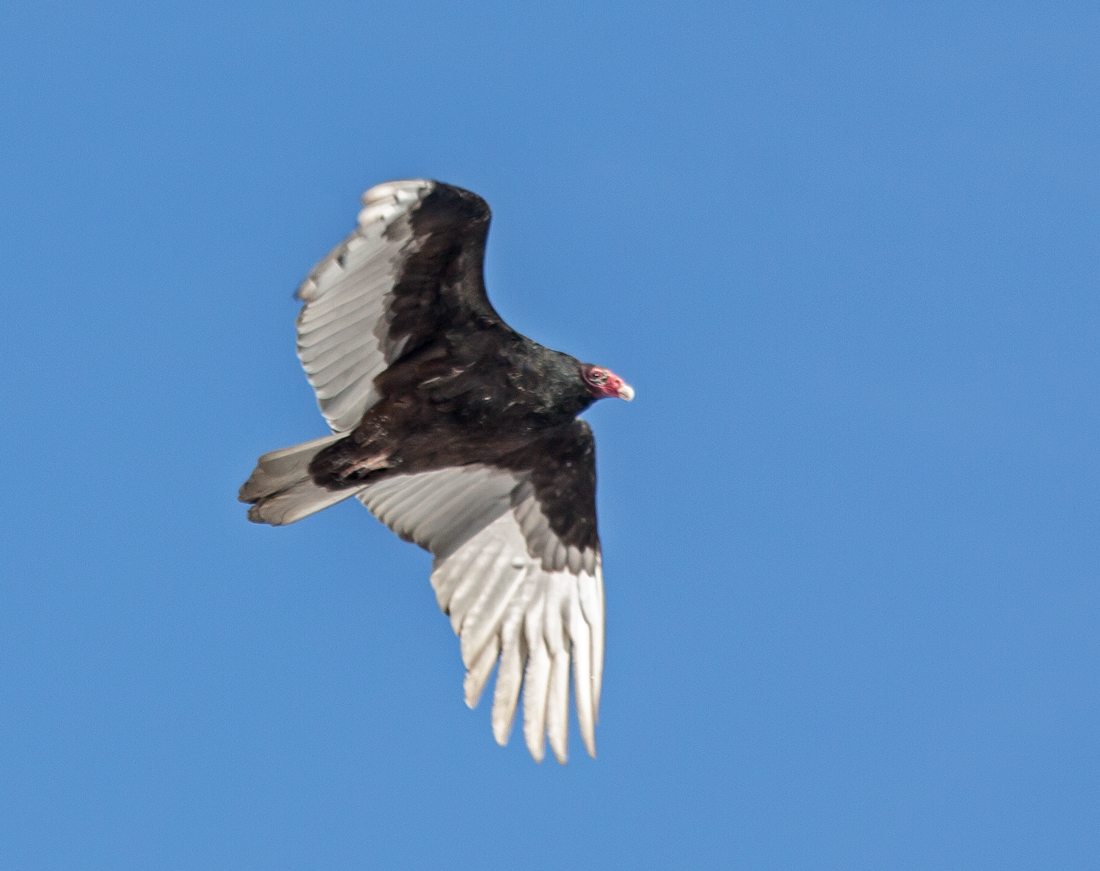
A Turkey Vulture (Cathartes aura) will never look as fierce as a hawk or an eagle and I am pretty sure that “Eye of the Vulture” won’t ever be a featured song in a Rocky movie, but there is still something disconcerting when a vulture circles close overhead, staring down in your direction.

In most of my previous shots of a Turkey Vulture, the eyes have not been visible, but on a recent sunny day, the light was good enough and the vulture came close enough for me to see the eyes, which look a little creepy. Click on the photo to see a higher resolution view of this big bird, with an impressive wingspan.

vulture_look_blog

© Michael Q. Powell. All rights reserved
Read Full Post »

Winter landscapes often have a stark, black-and-white look that I really enjoy, like this shot I took last week of part of the boardwalk at Huntley Meadows Park, the local marshland park where I take a lot of my wildlife images.

It was late afternoon when I took this shot, and the sun cast a golden light on part of the surface of the boardwalk (which is made of a synthetic material) and created beautiful shadows beneath it. I really like the contrast between the straight lines and geometric shape of the boardwalk and the wild, irregular shapes of the natural environment.

I often forget to look for the “big picture” in my zeal to get in closer and closer to my subject, but in this case I am happy that I took the effort to pull back and take in my surroundings.

landscape_blog

© Michael Q. Powell. All rights reserved

Read Full Post »

When I was a college student in the 1970’s a cheap sparkling wine known as “Cold Duck” was really popular (along with Zapple, Annie Greensprings, and Boone’s Farm). Do they still produce those wines?

The title of this posting, however, refers to a bird that I observed on the ice this past weekend, not to a retro beverage.

I was struck by the contrast between the vivid colors of the male mallard duck (Anas platyrhynchos) and the drab gray and white of the frozen pond. The duck seemed to be getting into a yoga-like pose, with one foot flat on the ice and the pointed toe of the other foot providing additional stability. Wait a minute, do ducks have toes?

I also couldn’t help but notice that ducks look a lot more graceful when swimming or flying—walking looks like it would be awkward for a duck. I suspect that no composer will every produce a ballet entitled “Duck Pond,” which would scarcely provide any competition for “Swan Lake.”

In the first few days of February, our temperatures have soared over the freezing mark, but there has been little melting on the surface of the pond and I did not detect any quacks in the ice.

duck_walk_crop_blog

© Michael Q. Powell. All rights reserved

Read Full Post »

It’s a little too early for most flowers to be blooming, although I did find flowering snowdrops yesterday at Green Spring Gardens, a local county-run historic garden. I like the way that the white of the flower shines in the shadows, a reminder that the brightness of spring will eventually come.

snowdrop_feb_blog

© Michael Q. Powell. All rights reserved

Read Full Post »

At dusk yesterday as I was preparing to leave Huntley Meadows Park, my local marshland park, I stumbled upon this muskrat enjoying its dinner. The sun was setting, but it provided just enough warm light for me to capture some images of this elusive little animal.

Muskrats (Ondatra zibethicus) generally are skittish and the most common view that I get of them is when they are swimming away from me. I was fortunate that this muskrat was concentrating on feeding, so its guard might have been down a little, and I was able to approach it without startling it.

I was snapping away in an effort to take advantage of the disappearing light and my moment of solitude with the muskrat, when my camera alerted me that my memory card was full. I backed away slowly and surprisingly was able to change memory cards and resume shooting.

Suddenly I started to feel vibrations in the boardwalk on which I was kneeling and I realized that I was not alone. I tried to concentrate as much as I could, knowing that my time was limited as I felt and heard the approach of a young family with both a stroller and a toddler. The noise and movement was too much for the muskrat and after a bit of hesitation, it scrambled under the ice and swam away.

I haven’t yet downloaded and looked through all of my shots, but wanted to share an initial image. I really like that the last rays of sunlight were able illuminate the muskrat’s fur and add a little catch light in the eyes. (As you can probably tell, the light was coming from camera right and shining right on the muskrat.)  Stay tuned, as I am sure that I will post at least a few more photos of my encounter with this little muskrat.

muskrat1_jan_blog

© Michael Q. Powell. All rights reserved

Read Full Post »

Another photo of a chickadee? Chickadees are so common that they fade into the background to the point where we no longer notice them. Nobody would travel a great distance to see a Carolina Chickadee (Poecile carolinens) like this one and there were no throngs of curious spectators to ask me what I was photographing.

What was the attraction for me? One of my fellow bloggers, Mr. K.A. Brace, a thoughtful and insightful poet who writes in a blog called The Mirror Obscura, posted a poem today entitled “The Brilliance” that really resonated with me. In the poem, he spoke of the “brilliance of the ordinary.” I encourage you to check out this poem and other wonderful poems—one of the cool features of most of the blog postings is that they feature an audio clip of the poet reading the featured poem.

“The brilliance of the ordinary”—I love that combination of words. Children (and pets) approach life with boundless curiosity and endless fascination with the most mundane, ordinary aspects of our everyday world. I want to regain more of that childlike sense of wonder.

chickadee_winter_blog

© Michael Q. Powell. All rights reserved

Read Full Post »

Although I rarely see them, the animals in the woods at my local marsh were out and about after our recent snowstorm and their tracks made fascinating patterns in the fresh snow. What animals made the tracks and what were they doing?

I took these photos in a remote area of my local marshland park, near what I believe to be an active beaver lodge, the location at which I have previously spotted a fox, an otter, and a raccoon.

I suspect that there are resources on the internet that would help me identify these tracks, but for the moment I am content with the reminder that I am a visitor in the home of these unseen woodland creatures.

tracks3_blogtracks2_blogtracks1_blog

© Michael Q. Powell. All rights reserved
Read Full Post »

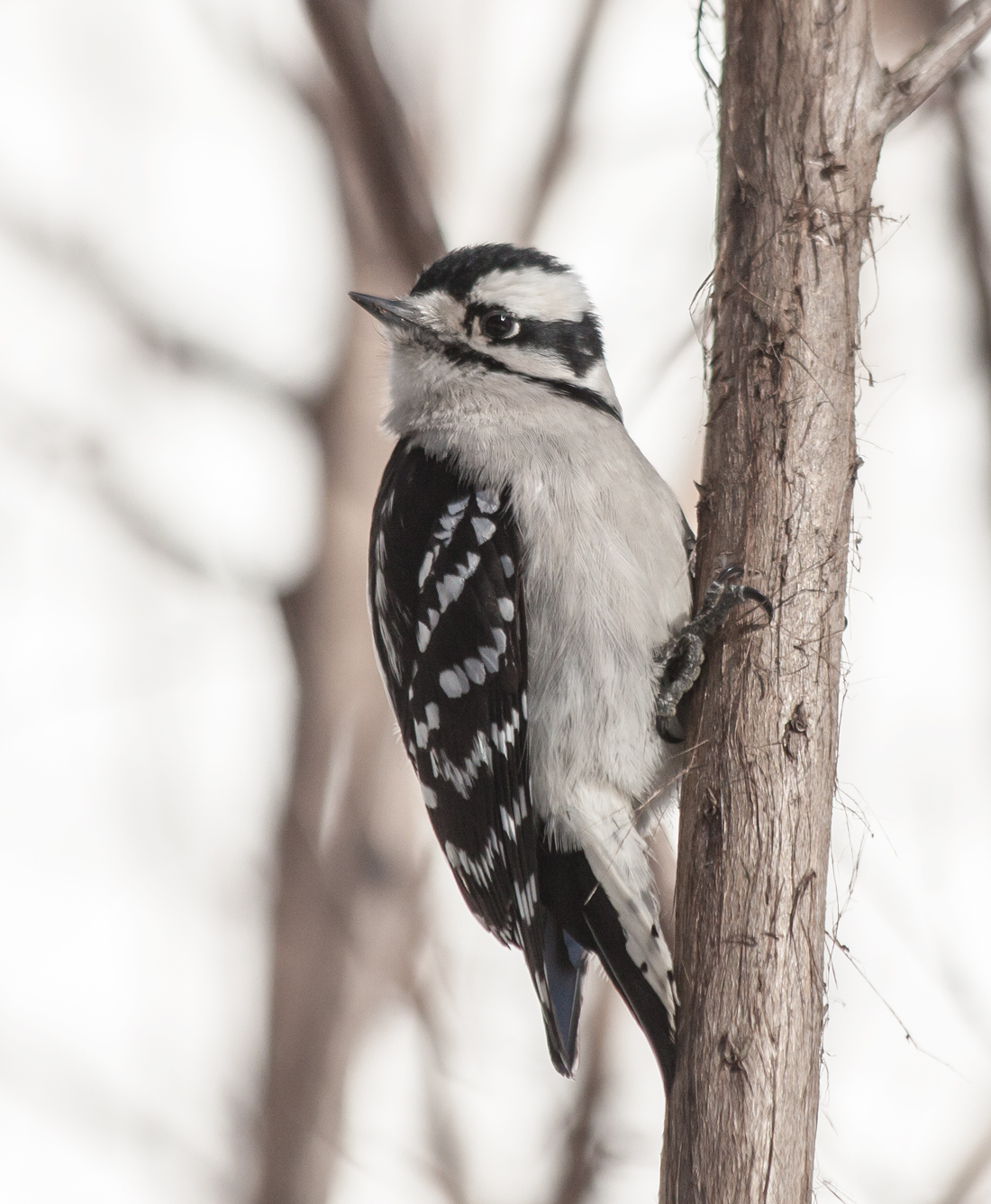
I love to watch energetic little Downy Woodpeckers (Picoides pubescens) at work, like this one that I observed last week in my own neighborhood.

Most of the time these little powerhouses are in constant motion or are obscured by branches, so it’s difficult to get a clear shot of them. This one, however, was in a location where I could get an unobstructed photograph and the woodpecker even cooperated by lifting its head for a moment (though it did appear to be a little irritated at the interruption).

As soon as I was done with the brief photo shoot, the woodpecker went back to work, pounding away at the wood in search of some tasty morsels of food.

downy_neighbor_blog

© Michael Q. Powell. All rights reserved

Read Full Post »

When you see a white, rounded object in a bird’s nest, your minds tends to assume that it is an egg. Of course, when it is the middle of the winter and the temperature is well below the freezing point, you know that it can’t be an egg (unless it’s from a snowbird, but I think they have already migrated south to the beaches of Florida).

I came across this little nest as I was making my way through the thorny vines at the edge of one of the ponds at my local marshland park. I still have trouble identifying many birds and I haven’t the slightest clue about what kind of bird would use a nest like this.

Still, this nest caught my eye as a kind of visual reminder that spring will arrive in just a few months, full of the promise of new life.

nest_blog

© Michael Q. Powell. All rights reserved

Read Full Post »

I finally made it out to my local marsh this past weekend to check out the wildlife activity following our recent snowstorm and protracted period of cold weather. The boardwalks are still mostly slippery and covered with packed snow and almost all of the water in the ponds is frozen solid, which means that most of the geese and ducks have relocated. The cold spell is forecast to continue this week, so I don’t expect to see the water fowl returning any time soon.

The sparrows seemed even more active than normal, though, in constant motion as they moved from one set of vegetation to another. Often it seemed that they chose to hop from place to place, rather than fly, and I caught this Song Sparrow (Melospiza melodia) in mid-hop. (It looked like they would extend their wings a bit when they would hop down from a higher point on a plant to a lower spot).

sparrow_hopping_blog

© Michael Q. Powell. All rights reserved

Read Full Post »

Another unexpected bird that I sighted during a recent walk around my neighborhood was this American Goldfinch (Spinus tristis). I don’t think that I have seen one before during the winter—during the spring and the summer the goldfinch’s bright yellow plumage makes it easier to spot one.

I guess I need to pay more attention to the birds of the neighborhood, for it appears that more of them overwinter than I originally thought. What else is out there, waiting to be seen and photographed?

goldfinch1_blog

© Michael Q. Powell. All rights reserved

Read Full Post »

« Newer Posts - Older Posts »