Feeds:
Posts
Comments

Posts Tagged ‘birds in flight’

What it would be like to fly like a bird? When I look at this photo I took recently of a Canada Goose (Branta canadensis) in flight, I feel almost like I am flying in formation with a gaggle of geese and have glanced over to look at one of my flying companions. The sad reality, of course, was that my feet were firmly planted on the ground and this goose flew by me at a relatively low altitude.

I’d still like to fly—perhaps in my dreams I can take flight.

goose_flying_blog

© Michael Q. Powell. All rights reserved

Read Full Post »

The soundtrack to my recent visits to the marsh has been the constant cacophony of a chorus of countless cawing crows.  The crows seem to be everywhere, swooping in large groups from one grove of trees to another.

I have tried numerous times to get some shots of these American Crow (Corvus brachyrhynchos) without much success, but recently I took an image that I like. The day was cloudy and heavily overcast when photographed this crow in flight. When I started working on the image the sky turned almost white. Normally, I would not have been happy with that result, but somehow this stark background works for me for this crow.

I thought about going completely black-and-white for this image, but I like the way that some of the feathers appear to be a lighter shade of brown. Is the crow molting, perhaps?

crow_flying_blog

© Michael Q. Powell. All rights reserved

Read Full Post »

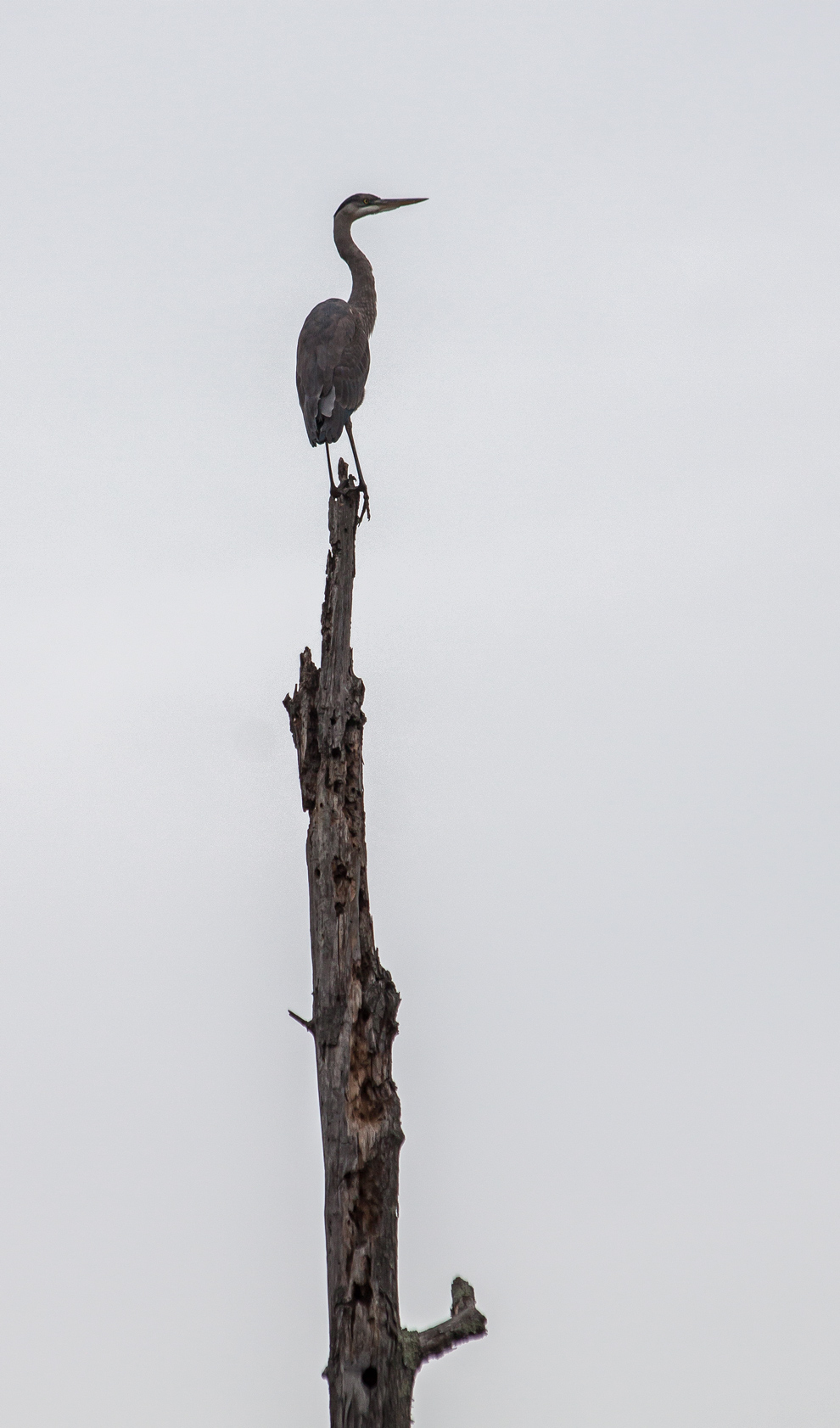
When the Great Blue Heron landed high in a limbless, skinny tree, I suspected he would not be there long—it was like he was perched on top of a flagpole. I managed to capture of series of action shots as he pushed off from the tree and launched himself into a dive.

heron_takeoff4_blogThe shot below give you an idea of the height of the tree in which he was perched. It looked to be dead and mostly rotted and was in the center of a marshy field. It was early in the morning and there was heavy cloud cover, which is why the sky looks so white. The photos were mostly silhouetted, but I tried to lighten the shadows a bit to reveal some details.

heron_takeoff3_blog

The next shot shows the Great Blue Heron (Ardea herodias) a split second before he took off. He has extended his wings and is leaning forward. Obviously he had received the call from the control tower that he was cleared for takeoff.

heron_takeoff1_blog

This final shot suggests that the heron propelled himself forward with his legs before using his wings, ending up in a somewhat unusual position.heron_takeoff2_blog

I was able to track the heron until he disappeared into the trees, which let the buffer in my camera catch up with me—as you might suspect, I was shooting as fast as my camera would fire.

© Michael Q. Powell. All rights reserved

Read Full Post »

Whenever I am at my local marsh at sunset, I am alert for ducks and geese in the air. I have a goal of catching them in silhouette against the backdrop of the colorful sky. I still haven’t gotten the shot I am looking for, but here is one of my recent attempts.

duck_sunset_blog

© Michael Q. Powell. All rights reserved

Read Full Post »

A Turkey Vulture (Cathartes aura) will never look as fierce as a hawk or an eagle and I am pretty sure that “Eye of the Vulture” won’t ever be a featured song in a Rocky movie, but there is still something disconcerting when a vulture circles close overhead, staring down in your direction.

In most of my previous shots of a Turkey Vulture, the eyes have not been visible, but on a recent sunny day, the light was good enough and the vulture came close enough for me to see the eyes, which look a little creepy. Click on the photo to see a higher resolution view of this big bird, with an impressive wingspan.

vulture_look_blog

© Michael Q. Powell. All rights reserved

Read Full Post »

Do you like long walks in the rain? Although this sounds like a question for an on-line dating service, it’s really about your style of photography.

I enjoy taking wildlife photos in the rain, if the rain is not coming down too hard and if it is not too windy. Of course, I can’t control the intensity of the rain, so I have various levels of protection. Generally, I’ll try to hold an umbrella in one hand and shoot one-handed, steadying my shot by leaning against the umbrella handle, if possible. If the rain starts to fall harder I’ll cover up my camera inside my raincoat or sometimes will pull out a plastic trash bag for additional protection until the rain slows down.

Last week, I was walking in the rain at Huntley Meadows Park, my local marshland park, when I came upon a Great Blue Heron (Ardea herodias), standing on the boardwalk. I approached the heron quietly and stopped. The heron was looking right at me and somehow I knew that it was going to take off.

I dropped to one knee, turned the camera sideways, and pulled way back on the zoom lens, hoping to fit the heron into the frame. This image was shot at 75mm on a 70-300mm lens, so you can tell that I was relatively close to the heron. The other settings were f5, 1/400 sec., and ISO 500 for those who might be interested in the technical aspects of the shot.

It’s always interesting to see which birds are active in the rain and I did get some shots of other birds that day, but I will save them for another blog posting.

heron_liftoff_rain_blog

© Michael Q. Powell. All rights reserved

Read Full Post »
My heartbeat accelerates every time I see a Bald Eagle (Haliaeetus leucocephalus), a combination of patriotism and awe at the power and beauty of this majestic bird.

Normally the eagles are soaring high in the sky, making it almost impossible for me to get a decent shot. Last Saturday, though, one of them seem to be hunting and circled around me a couple of times at a somewhat lower altitude, which allowed me to get some shots of the eagle in different flight positions.

I took these shots from the same spot at my marshland park where I recently saw an otter, a fox, and a raccoon. If only the park would let me pitch a tent in there.

eagle3_blog

© Michael Q. Powell. All rights reserved

Read Full Post »

It’s a bit of a cliché, but I really want to capture an image of geese in flight against the backdrop of a beautiful sunset.

There is certainly no shortage of Canada Geese (Branta canadensis) around here and they seem to take off and land so often at my local marsh that it sometimes seem as busy as a regional airport. Beautiful sunsets, though, are harder to come by and many of our days seem to simply fade into darkness. Getting the geese to fly in a proper formation is an additional complication.

This is my most recent attempt at my aspirational image of geese at sunset. There are a few streaks of color and the formation is a little ragged. It’s not quite what I envisioned in my mind—I’ll keep working on bringing that image to life.

geese_at_sunset_blog

© Michael Q. Powell. All rights reserved

Read Full Post »

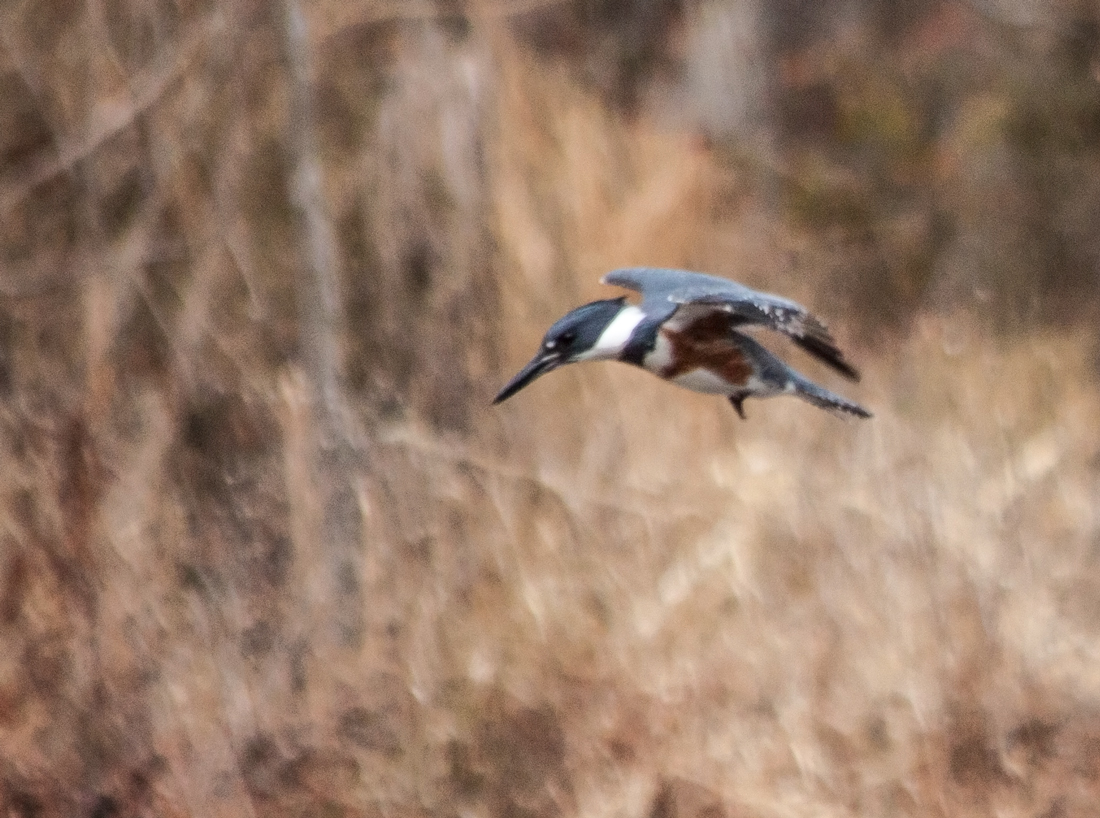
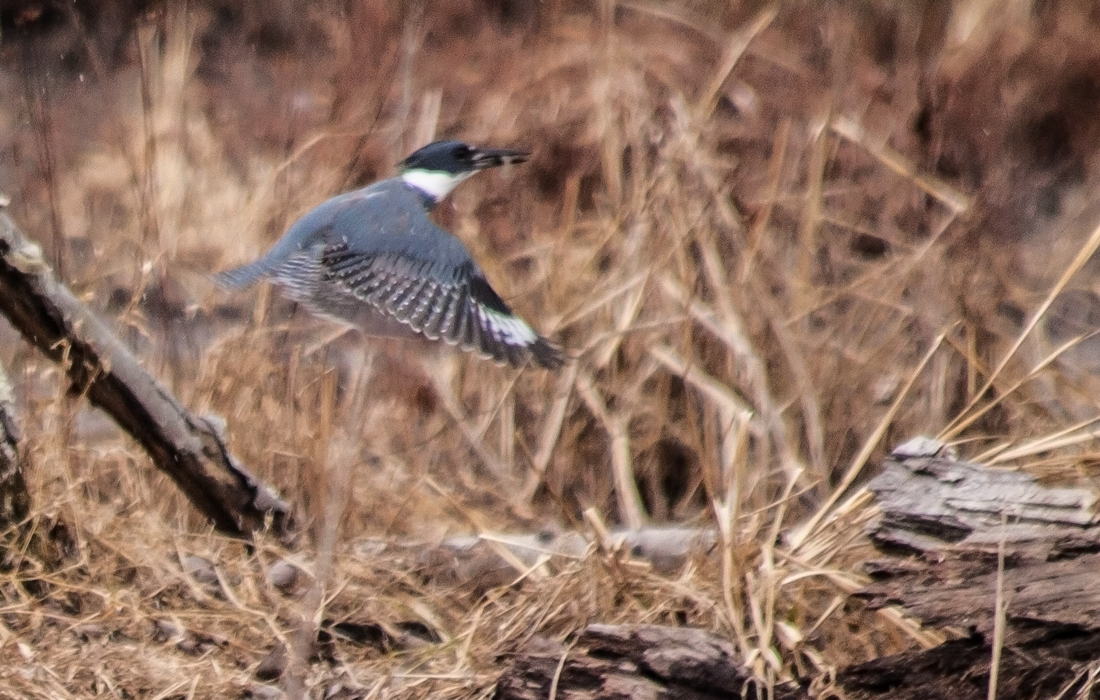
This past week I have observed female Belted Kingfishers (Megaceryle alcyon) at a couple of different locations at my marshland park and tried to capture them in flight as they dove into the water from their perches in the trees. It was challenging, because the kingfishers were pretty far away, but I did get a couple of decent shots (with a fair amount of cropping).

kingfisher4_dec_blogkingfisher1_dec_blogkingfisher2_dec_blogkingfisher3_dec_blog

© Michael Q. Powell. All rights reserved

Read Full Post »
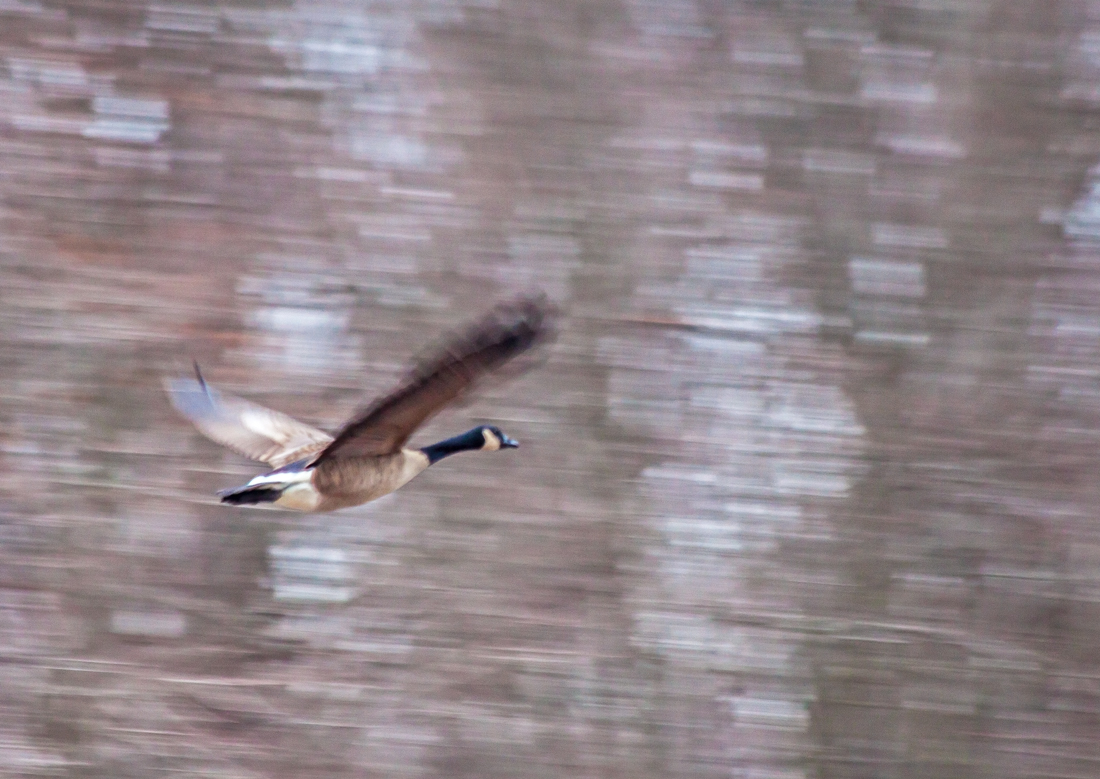
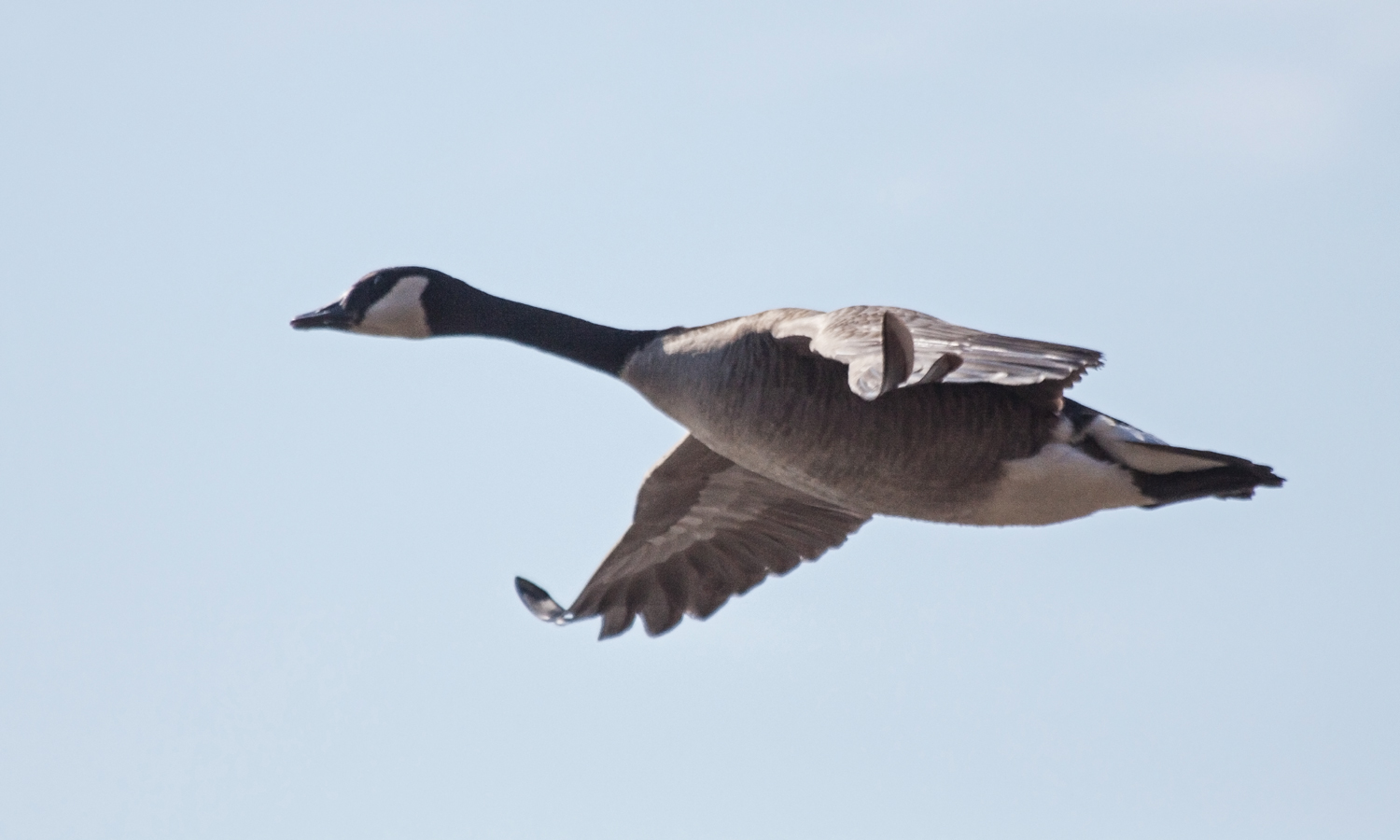
How do you capture speed? Sometimes I will pan the camera and track the moving subject, as I did yesterday with the flying Canada Goose (Branta canadensis). Usually the background is a little blurry, but this time the background became abstract, almost like a painting, an effect that I really like.

What happened? Generally, I shoot in aperture priority mode and I had my camera set on f/5.6, as wide open as I could get at the far end of my telephoto zoom. The weather was cold and gray with the threat of precipitation—it eventually rained for hours—so I set my ISO to 500. It turned out that I would have needed a much higher ISO to stop the motion completely, for my camera provided me with a shutter speed of only 1/60 of a second. That is why there is some motion blur in the wings.

goose_pan_blog

© Michael Q. Powell. All rights reserved.

Read Full Post »

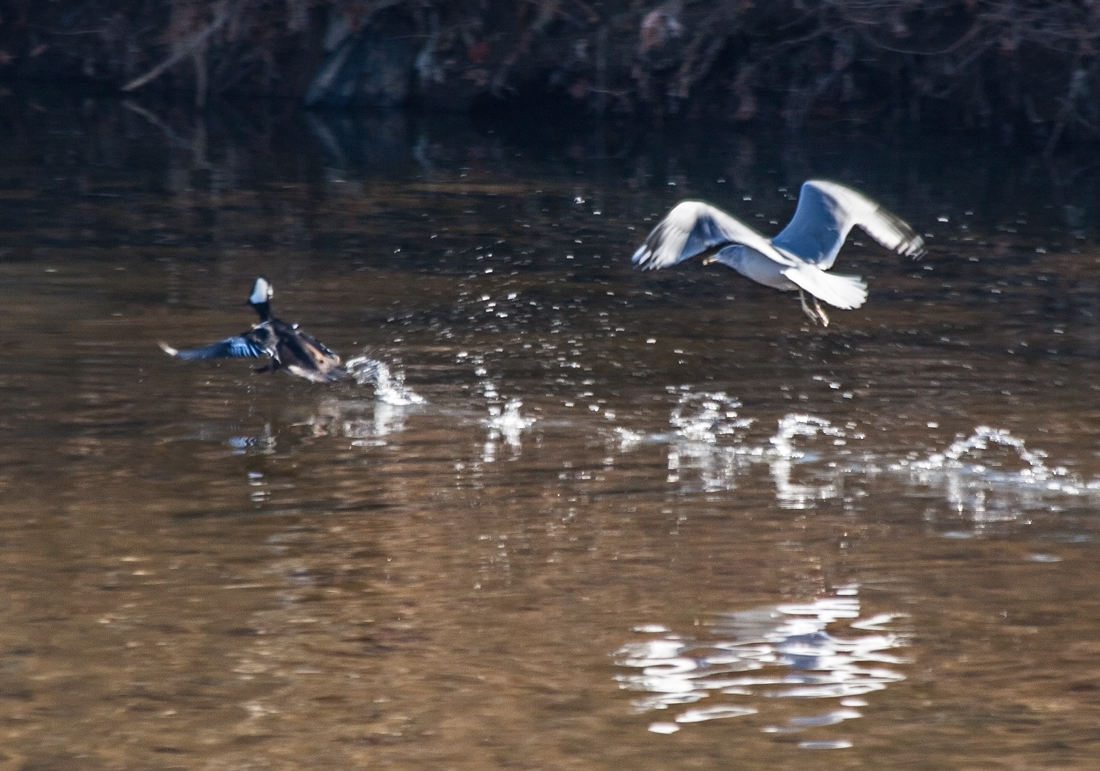
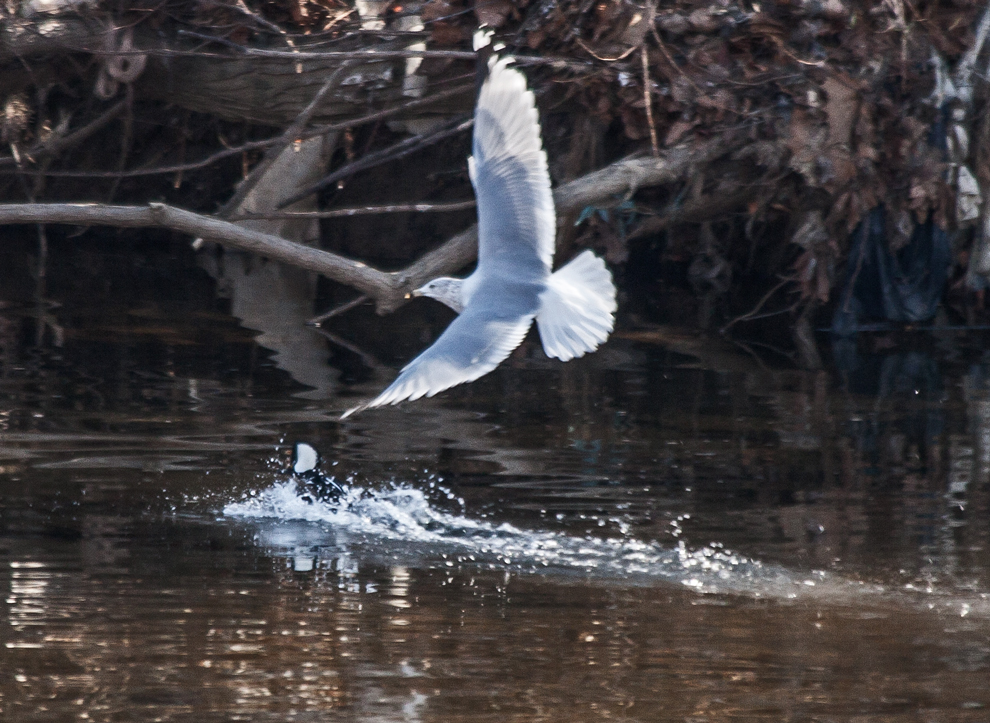
Do seagulls hunt ducks? That’s a crazy question, but that was the first thing that came to mind when a Ring-billed Gull (Larus delawarensis) started aggressively chasing a Hooded Merganser duck (Lophodytes cucullatus) with what appeared to be hostile intent.

I was walking along Cameron Run, a tributary of the Potomac River, when the scene started to unfold in front of me. The gull flew toward the dusk with its legs extended, like it was trying to snatch the duck out of the water. The duck immediately started bounding across the water (as you can see in the third photos) in an effort to escape the gull, but did not take to the air. When the duck got close to the bank of the stream, the gull turned away and left the duck in peace.

Was this merely a cranky gull or maybe a bully? Was it a territoriality thing? All I know is that it provided me a fascinating moment as I treated to a brief interaction between these two very different species of birds.

gull_chasing_duck3_bloggull_chasing_duck1_bloggull_chasing_duck2_bloggull_chasing_duck4_blog

© Michael Q. Powell. All rights reserved.

Read Full Post »

It’s been months since I have seen any Hooded Merganser ducks (Lophodytes cucullatus), so I was thrilled when I spotted several pairs in the distance this past weekend, swimming around as shown in the second photo.

Unfortunately, they sensed my presence before I could get much closer and took to the air. Given the distance and the small size and speed of these ducks, I was surprised that I got a reasonably good shot of one of the males in flight. Hooded Mergansers always look a little cartoonish, but that effect is magnified when they are straining forward in flight. If you click on the first photo, you can get a better look at some of the details of the wings and some of the beautiful colors of this little duck.

The second photo was taken before the first and it gives you a general idea of the differences between the male and female of this colorful species of duck.

merganser_flying_blogmergansers_swimming_blog

© Michael Q. Powell. All rights reserved.

Read Full Post »

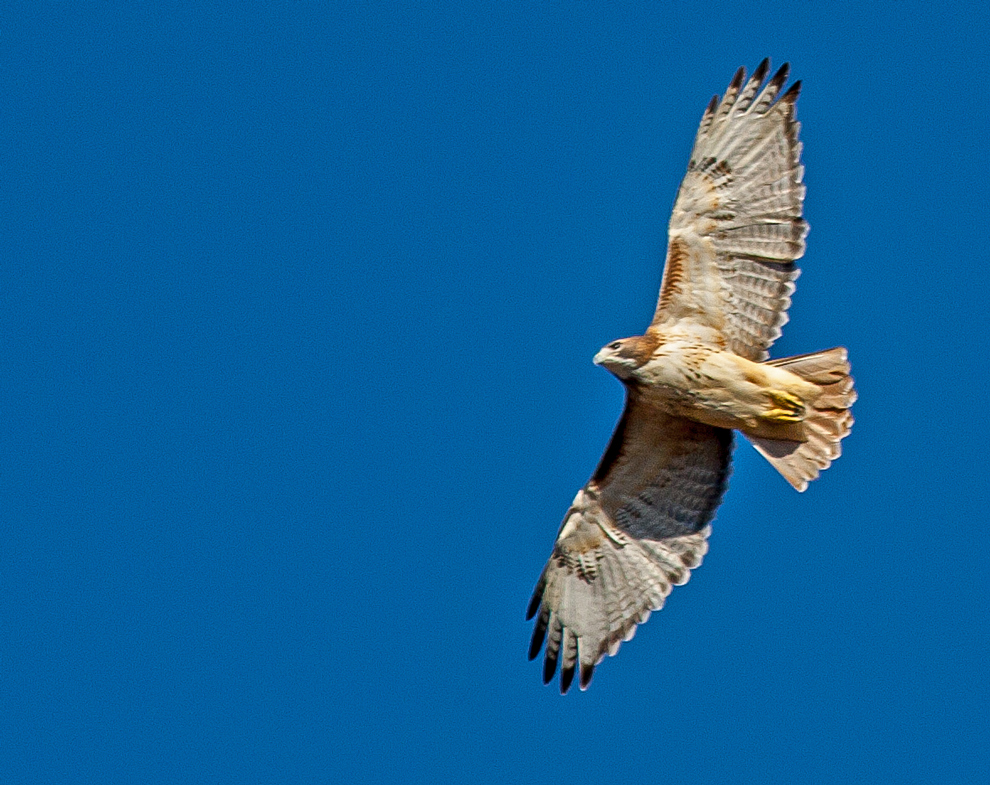
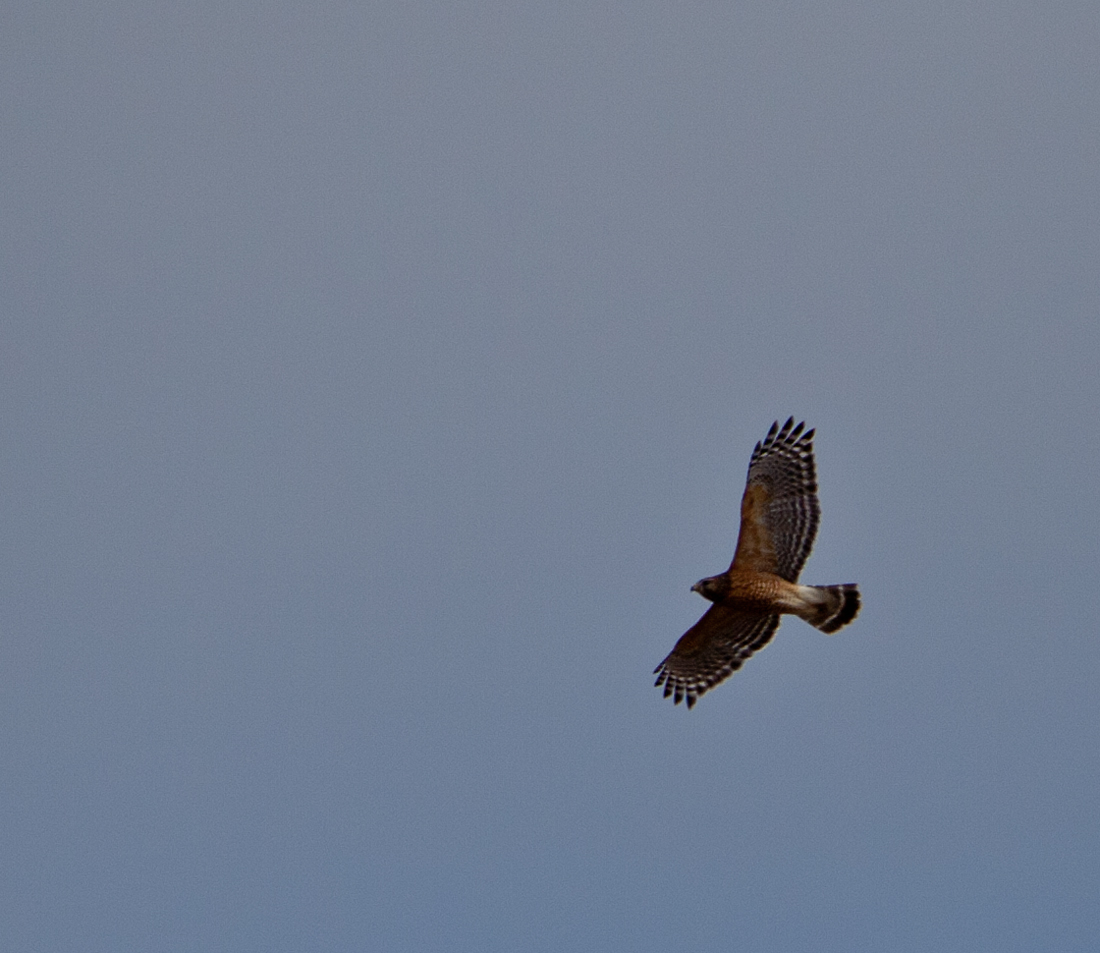
When I spotted a fairly large bird soaring in the sky, I stopped talking in mid-sentence and pointed my camera to the sky. My fellow conversationalist might have thought it was rude (she is not a photographer), but I am always trying to capture images of birds in flight and will start shooting long before I have identified a bird.

This bird looks to be a juvenile Red-shouldered Hawk (Buteo lineatus), though I am not certain about the identification and the hawk did not cry out at all, so I have only visual clues to go by. At first I thought it was just soaring for fun, but the intensity of the hawk’s eyes, especially in the second shot, suggest that it was paying attention to what was happening on the ground.

I was pretty fortunate when the hawk turned toward the light with its wings extended, providing a good look at the beautiful feathers of its wings and body. I am hoping that I will be getting better shots of hawks as we progress into winter, though, as with most wildlife subject, there are no guarantees.

hawk1_soaring_bloghawk2_soaring_blog

© Michael Q. Powell. All rights reserved.

Read Full Post »

How often have you been told (or read) that you need to fill the frame with your primary subject? If you photograph wildlife as I do, you know that it is rare that you have the opportunity to “fill the frame,” especially when your subject is moving.

I was a little shocked when I first looked at this image of a Canada Goose (Branta canadensis)—not only had I filled the frame, but I had managed to compose it pretty well. Yes, this is an uncropped image of a flying goose. I was awfully lucky to get this shot and I know that several of the images in the burst I took featured cutoff bodies or heads.

Now if I could just get a raptor to fly by this closely…

goose_fill_frame_blog

© Michael Q. Powell. All rights reserved.

Read Full Post »

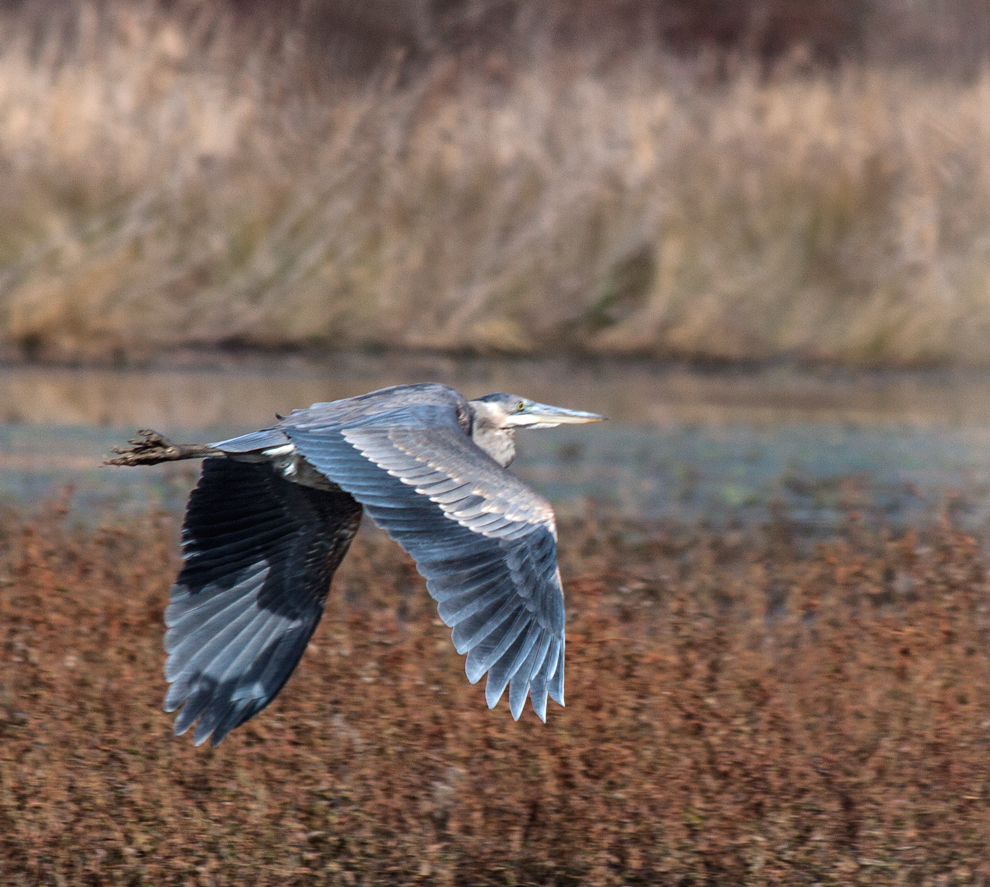
I was moving forward slowly in the underbrush, trying to get closer to some ducks, when out of the corner of my eye I detected some motion. It was a Great Blue Heron (Ardea herodias) flying low over the waters of the marshland pond.

I didn’t have time to check the settings on my camera, but the heron’s slow speed in flight did allow me to get off a few shots. This was one of the few times that I have been able to capture a bird in flying parallel to the ground at eye level and I really like this perspective.

heron_marsh2_blogheron_marsh_blog

© Michael Q. Powell. All rights reserved.

Read Full Post »

Now that most of the leaves are gone from the trees, one of the Red-shouldered Hawks (Buteo lineatus) seems to have returned to a favorite perch at my local marsh. The good news is that I know where the perch is, but the bad news is that there is a large field of cattails in mud and water between my best observation spot and the tall tree in which the hawk is perched.

The branch is parallel to the ground and seems to provide the hawk a comfortable observation post from which to survey the surroundings and look for prey. Apparently it is so comfortable that the hawk can stay in that one spot for a long period of time. I had my camera on a tripod for the first shot and I waited and waited for the hawk to fly.

A fellow Canon photographer came by and we started taking about menu settings and I took the camera off the tripod in order to check the menus. As I was thumbing through the menus, my friend suddenly blurted out that my hawk had taken off. I turned back in the direction of the hawk and was able to snap off a couple of quick shots of the hawk in flight.

The shots highlight some of the beautiful colors and patterns of the hawk’s wings and so I have chosen to include them in this posting. As one of my fellow bloggers Lyle Krahn has noted, any day that you see a hawk is a good day. Be sure to check out his blog for some awesome shots of hawks (and lots of other wildlife), including this recent posting, in which you are asked to make a difficult choice between two hawk photos for an imaginary calendar.

hawk_flying3_bloghawk_flying_bloghawk_flying2_blog

© Michael Q. Powell. All rights reserved.

Read Full Post »

Sometimes you don’t have to make a choice between two options—you can have them both.

In this morning’s blog posting, I posed the question, “When it comes to images of birds in flight, do you prefer the sky as the background or some element of the earth?” and I received quite a few responses, with a greater number having a preference, in general, for background or contextual elements rather than a plain blue sky.

Sometimes I manage to get an image that incorporates the best of both worlds. This image, for example, has one Canada Goose against a leafy background, one against the sky, and one in between.

Who says you have to choose? (In the interest of full disclosure, I intentionally set up the question as a false dichotomy in order to stimulate thinking. For me, the best answer to the question I posed, which called on you to make a sweeping overgeneralization, was the person who responded quite simply with the words, “It depends.”)

geese_flying_cropped_blog

© Michael Q. Powell. All rights reserved.

Read Full Post »

When it comes to images of birds in flight, do you prefer the sky as the background or some element of the earth? Here are two photographs of Canada Geese (Branta canadensis) that I took this past Monday that illustrate my question.

Canada Geese are some of my favorite subjects as I try to improve my skills in photographing flying birds—they are relatively big, flight slowly (especially when taking off and landing), and, perhaps most importantly, there are a lot of them.

In some ways, it’s a little easier to track a bird in the sky, since there is nothing else to grab the camera’s focus (if you can lock in the focus quickly enough). However, the light is a lot more variable, particularly when a bird is circling, so proper exposure is a challenge and shadows are a sad reality. I was happy that I was able to time the second shot so that the light illuminated most of the underside of the goose. Some photographers, though, seem to look down at photos of birds in the sky and prefer more environmental shots.

I had to act quickly to get the shot of the goose with the trees in the background, when some geese took off and flew by me at almost eye level. The trees were far enough away that they blurred out and the head of the goose is mostly in focus. Depth of field is always an issue for me in shots like this—you can actually see the depth of field in the amount of the extended wings that is in focus.

So there you have it, two different shots of a goose in flight. Does the background play a role in your assessment of which one you prefer?

goose_flying_11Nov_blog

goose_flying2_11Nov_blog

© Michael Q. Powell. All rights reserved.

Read Full Post »

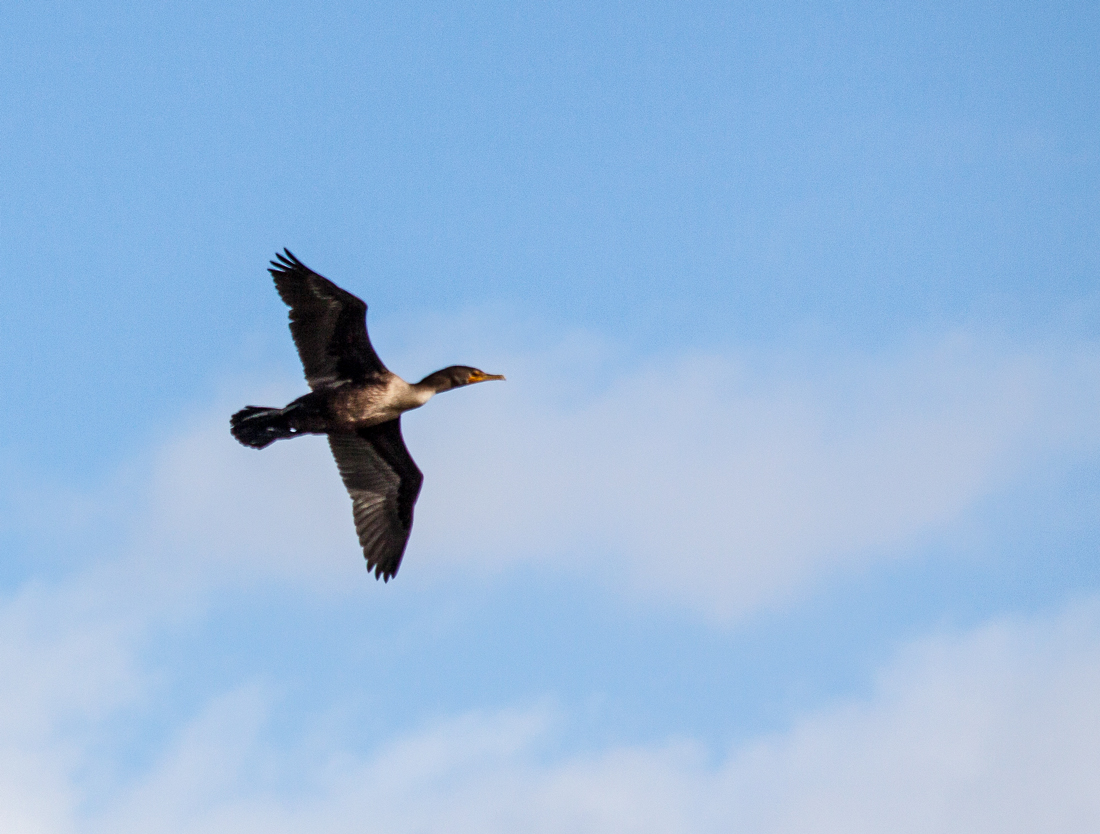
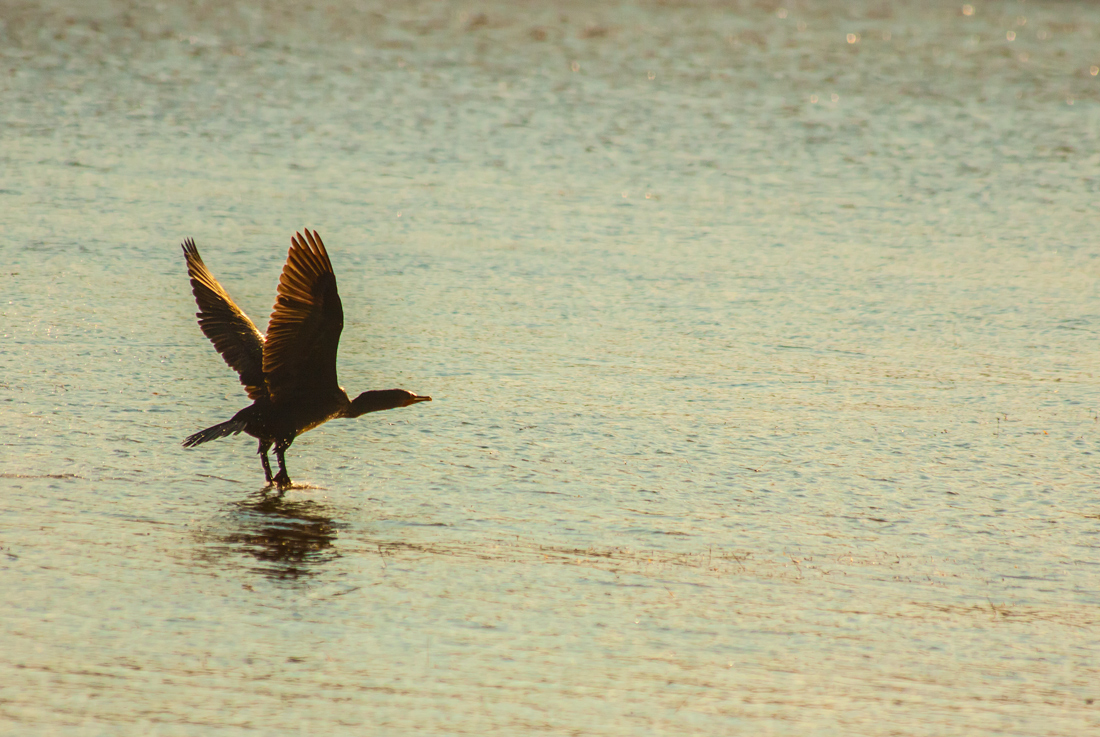
Two weeks ago I didn’t even realize that we had Double-crested Cormorants (Phalacrocorax auritus) in this area and now I can find quite a number of them on the Potomac River. It’s a little difficult to tell from the range maps in my bird guide if the cormorants are migrating through this area of if they may choose to winter here.

The more I observe these birds, the stranger they appear. The Cornell Lab of Ornithology described them this way—”The gangly Double-crested Cormorant is a prehistoric-looking, matte-black fishing bird with yellow-orange facial skin. Though they look like a combination of a goose and a loon, they are relatives of frigatebirds and boobies and are a common sight around fresh and salt water across North America.”

I am still working on getting some shots of the cormorants in the water, but as a start, here are a couple of images of a cormorant in the air. I took the first one before I knew that it was a cormorant—I have a habit of trying to capture anything in flight that is remotely in range. The second one shows a cormorant as he is taking off from the water after some bounding steps across the surface as he gained speed. The location of the light caused much of the cormorant’s body to be in the shadows, but did illuminate the details of some of its feathers.

cormorant_flying1_blogcormorant_liftoff_blog

© Michael Q. Powell. All rights reserved.

Read Full Post »

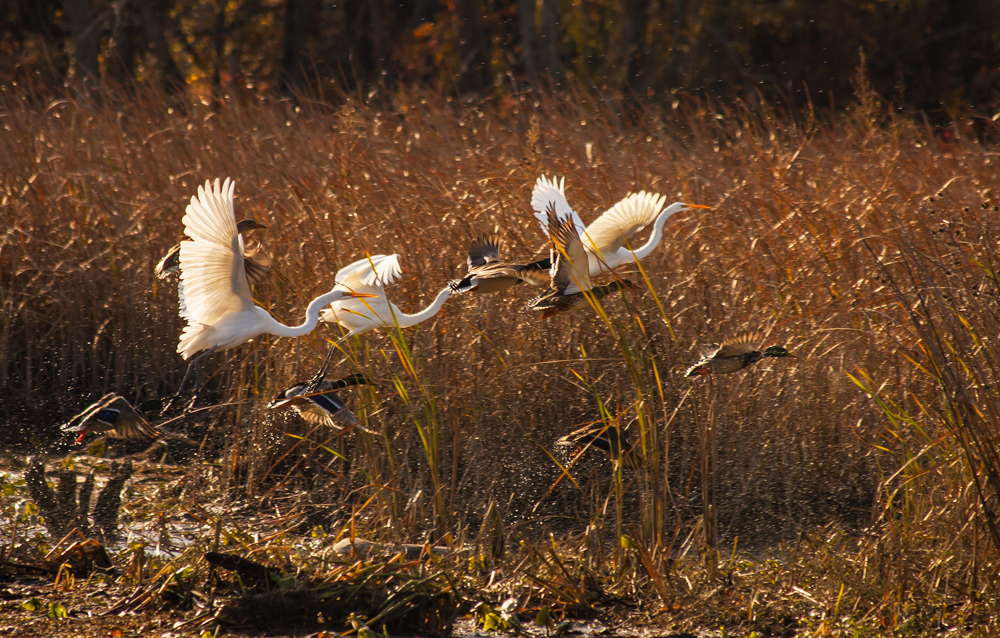
I was watching some Great White Egrets (Ardea alba) yesterday at Dyke Marsh Wildlife Preserve, a freshwater tidal wetland on the Potomac River, when something startled the birds.

The egrets and some mallard ducks took off from the water en masse in a great explosion of water. I captured some of that noise and confusion in the second photo. The photo I chose to feature shows the birds a short after the take off as they start to lift off a little and fly over a meadow-like area with tall golden grass. The light was especially beautiful on the wings of the egrets, which happily I managed to capture without blowing out the highlights as sometimes I do with these very white birds.

Click on the photos to see some of the beautiful details of the birds in greater resolution.

takeoff_group1_blog takeoff_group2_blog

© Michael Q. Powell. All rights reserved.

Read Full Post »

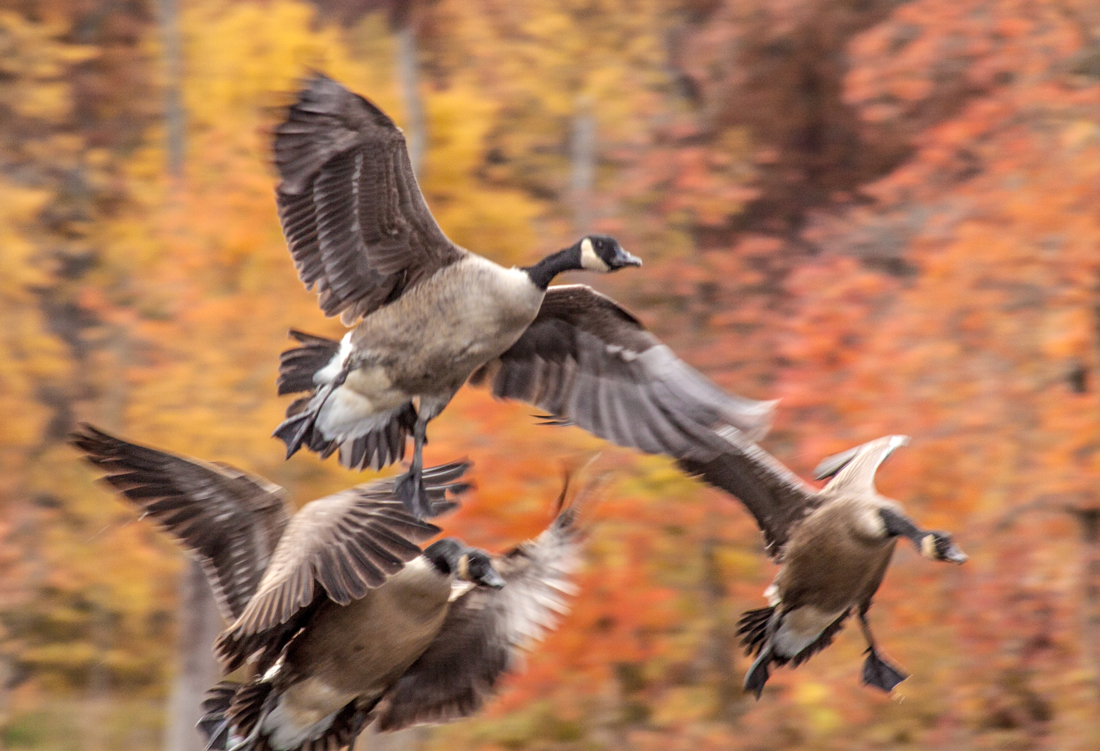
Standing at the end of a small pond, I heard the sounds of an approaching flock of Canada Geese (Branta canadensis). I looked all around as I prepared to track them and couldn’t help noticing areas of beautiful autumn foliage.

Wouldn’t it be cool  if I could capture the geese landing with the colorful leaves as a background? I put that idea in the back of my mind, remembering that it was going to be tough enough to capture decent shots of the geese without worrying about the background.

It’s a noisy crazy couple of moments when the geese come in for a landing—they come in waves and there is so much activity that it’s hard to figure out what to focus on. Usually, as I did here, I will try to concentrate on a single bird as it approaches and to keep it in focus.

I captured this image at the moment when the geese were slowing down just prior to entry into the water. My main subject is in a pretty good focus and the other geese are in interesting positions. I was surprised that I was able to get the orange background—it had been a hope, but certainly not an expectation. The result is an image that I really like, an image that combines two of the iconic elements of the autumn.

geese_landing_fall_blog

© Michael Q. Powell. All rights reserved.

Read Full Post »

Most of the time when I try to photograph ducks in flight, I end up with shadows and muted colors. Last weekend, though, the light was right and I was able to capture a small group of mallards (Anas platyrhynchos) in full color. They were pretty far away, but I like the formation that I was able to capture. There are four males and one female, and one of the males is a straggler who seems to have trouble keeping up with the group.

straggler_blog

Click on the photo to see it in higher resolution.

© Michael Q. Powell. All rights reserved.

Read Full Post »

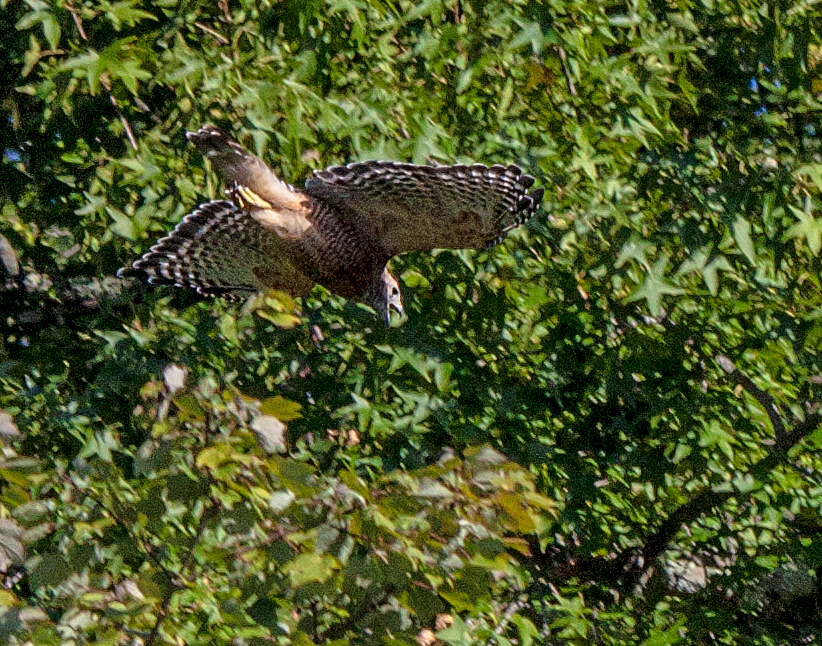
I have not seen any hawks at my local marsh for quite some time, so yesterday I was really happy when I heard the unmistakable sound of screaming Red-shouldered hawks (Buteo lineatus). (Check out the sound file on the Cornell Lab of Ornithology website if you have never heard the cry of these magnificent birds.)

From the sound of the loud screaming, I could tell that the hawks were not far away and eventually I spotted two of them soaring above the trees. After a few minutes, one of them flew silently into view and landed in a tree across the beaver pond from where I was standing. I suspected that he would not remain very long, so I decided to try to get some shots with the lens that I happened to have on my camera at the time, my Tamron 180mm macro lens, rather than take the time to set up my tripod and change to a longer lens.

Before long, I heard the cries of the other hawk and the one that I was watching took to the air and joined in the screaming. I was a little surprise to see that it flew laterally and downward, but I was able to track it pretty well and got the in-flight shot that you see below.

I was pleased to see that the lens was able to capture a pretty good amount of contrast and detail, even in heavily-cropped images like the two that I am posting. I enjoy the challenge of attempting to capture any birds in flight and look forward to more attempts as we move out of insect season, when my macro lens is use most of the time, into bird season, when I switch to a telephoto lens.

screaming3_blogscreaming2_blog

© Michael Q. Powell. All rights reserved

Read Full Post »

Have you ever seen a Great Blue Heron (Ardea herodias) attempt to do a vertical takeoff from the water? Most of the time, blue herons gain altitude with a few thrusts of their powerful wings as they move forward into the air.

This heron, however, looked like he was initially trying to levitate straight up into the air, like a Harrier jet, a jet that is capable of taking off vertically. It looked like the heron could not perform a normal takeoff because his feet were tangled in the weeds at the bottom of the little pond.  Before he could take off, he had to untangle his feet and his initial upward wing movements were intended to accomplish that task. Only then was he cleared for takeoff.

You’ll probably noted that I posted the images in reverse chronological order, so if you want to follow the takeoff process, you should start at the bottom. The first two images are more impressive as photographs, because I was able to capture the heron in the air, with the wings in interesting positions, despite the fact that I was using “only” a 180mm lens. (Some of the bird photographers that I encounter have 500mm or longer lenses.) The last two images are interesting and a little whimsical, because of the heron’s actions and the angle at which we are viewing the heron. Did you notice how skinny his face and neck look when shot from a head-on position?

flying2_blog

Click on the image for a higher-resolution view.

flying1_blog

flying4_blog

Before you can take off, you have to untangle your feet.

Before you can take off, you have to untangle your feet.

© Michael Q. Powell. All rights reserved

Read Full Post »

I am in awe of photographers who can capture amazing shots of birds in flight and I continue my quest to improve my own skills. So many things have to come together to get such shots including the timing, location, lighting, and focusing.

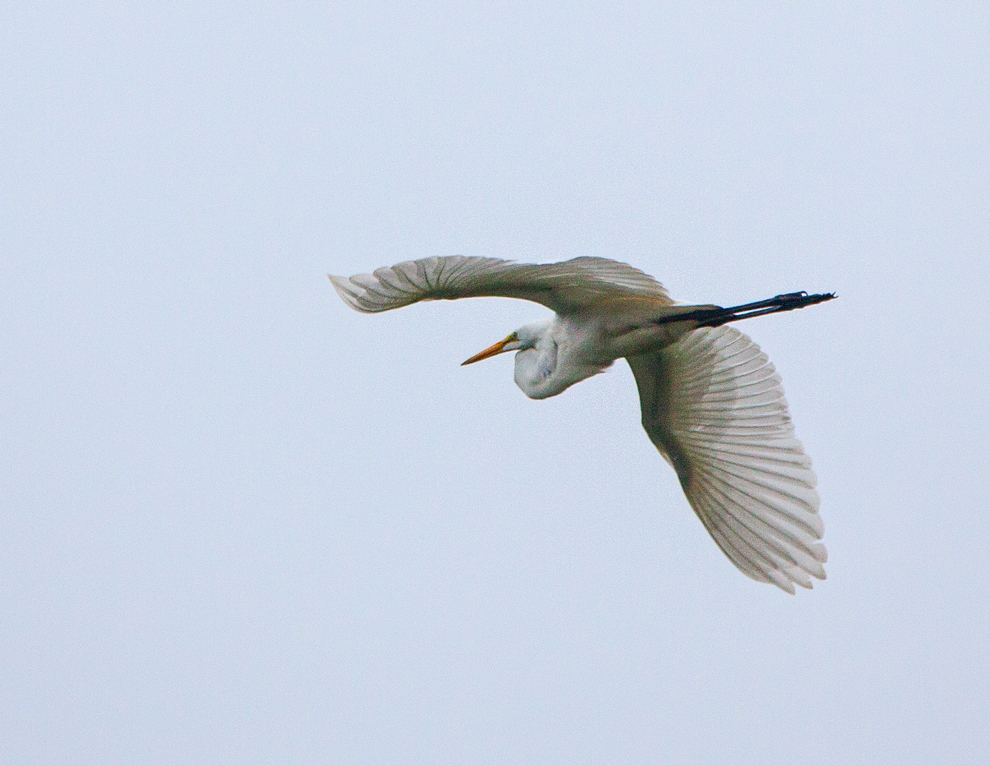
Here is one of my most recent efforts, a shot of a Great Egret (Ardea alba) in flight. The focus is a little soft, but I really like the position of the egret that I managed to capture, with a beautiful sweep of the wings.

flying_egret1_blog

© Michael Q. Powell. All rights reserved

Read Full Post »

I have always thought that Great Blue Herons (Ardea herodias) look a bit awkward on the ground, tall and gangly, but they are exceptionally beautiful in the air.

As I approached this blue heron yesterday at my local marshland park, it decided to take off. I often try to capture photos of birds in flight, though generally I’ve had only limited success.

I was pretty happy with this shot, taken shortly after the heron had taken to the air. The shaded woods make a decent backdrop and I like the blooming mallow flowers in the foreground. The focusing is a little soft, but I was able to capture some of the magnificent details of the visible wing.

heron_flying_blog

© Michael Q. Powell. All rights reserved

Read Full Post »

As I watch Barn Swallows (Hirundo rustica) flying, I am amazed at their aerial acrobatic skills. They change direction in such unpredictable ways and swoop up and down so quickly that I thought that I would never be able to capture them in flight.

However, one day this past weekend I spent some time observing them more closely and eventually I decided to try to get some in-flight shots. Most of my shots were either blurry or the swallow was only partially visible in the frame, but I was able to get a few decent (or at least recognizable) shots of a swallow swooping down over the water.

flying_swallow2_blogflying_swallow1_blog

Michael Q. Powell. All rights reserved

Read Full Post »

Wood Ducks (Aix sponsa), especially the males, are probably the coolest-looking ducks, but in the past few months the only ones that I have seen have been flying away from me, generally from branches on which they were perched.

I was not really expecting that I would see any Wood Ducks on the ground when I approached a tiny pond earlier this week. However, I did notice a little movement at the water’s edge and had just focused on that area, when suddenly a pair of wood ducks took off. I snapped off a few shots, not really expecting that they would be in focus and was pleasantly surprised at the result

The ducks in this image ended up pretty much in focus, especially the male’s head, his most prominent and colorful feature. The wings have some motion blur, but it’s not too distracting.

I’d like to say that my focusing skills are getting better, but I know that this shot was primarily the result of luck. It doesn’t really matter that much how I got the shot—what matters more to me is that I like the result.

woodduck_flying_blog

Michael Q. Powell. All rights reserved

Read Full Post »

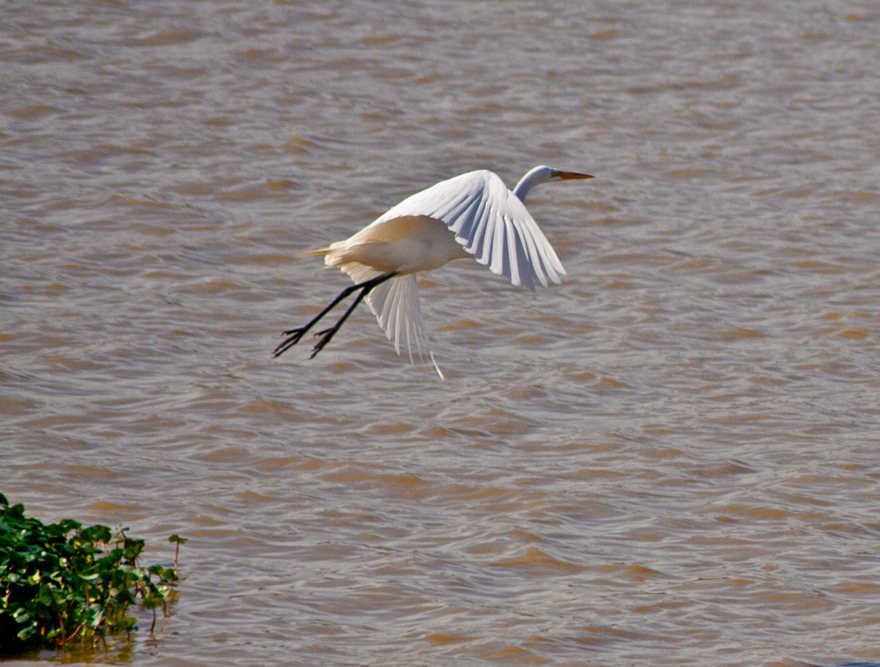
I continue my efforts to capture photos of herons and egrets in flight whenever I can and here are a couple of shots from this past weekend of a flying egret.

In theory, it should be easy to photograph these birds—they are large and fly slowly—but the changing backgrounds and direction of flight has often made it tough to get the proper exposure and focus.

The egrets were gone all winter, but they are back now. I am hoping that I will continue to see them often enough to be able to get some better photos of them (or at least to try).

egret_flying2_blogegret_flying_blog

Michael Q. Powell. All rights reserved

Read Full Post »

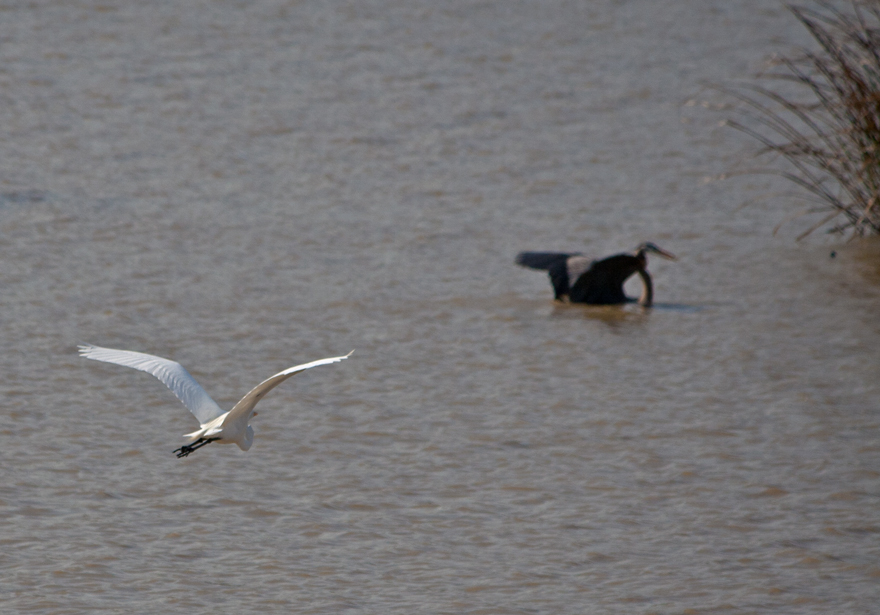
What was the mission that prompted this Great Egret to launch himself into the air?  His mission, it seems, was to continue to harass a Great Blue Heron that he had previous forced out of a prime fishing spot. As you can see from the second photo onward, the egret headed straight for the heron and only at the last minute did he veer off. (I may post some photos later of the initial encounter, but I especially like these in-flight photos.)

I took this series of photos a couple of weeks ago, when I was in Augusta, Georgia, at the Phinizy Swamp Nature Park.

takeoff_blogattack_blogattack2_blogattack3_blogattack4_blog

Michael Q. Powell. All rights reserved

Read Full Post »

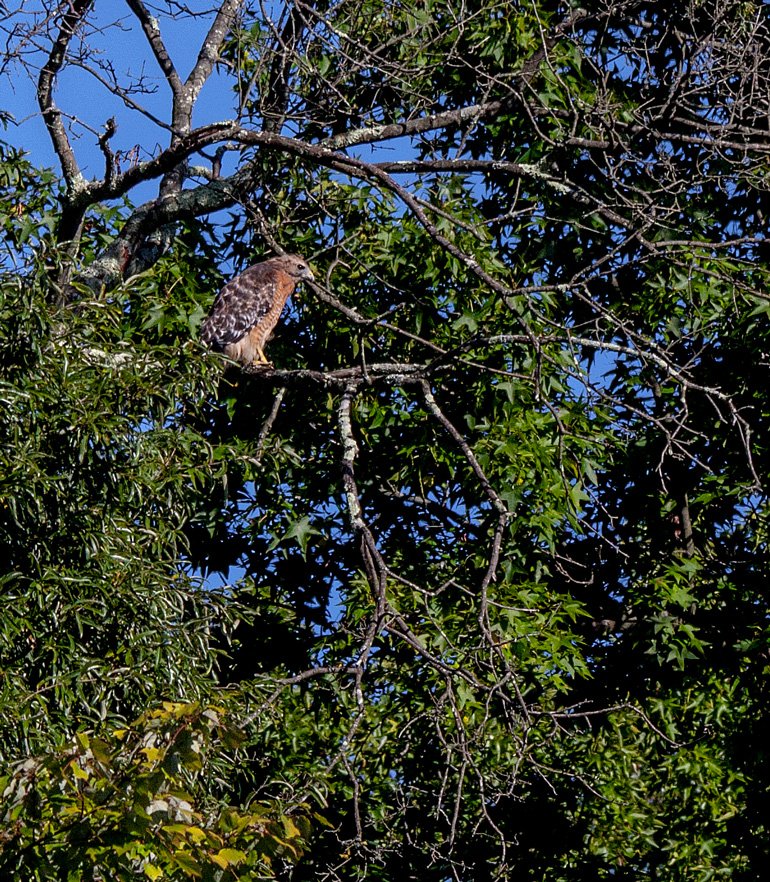
I’m starting to see hawks—primarily Red-shouldered Hawks (Buteo lineatus) with some regularity, but really good shots of these powerful birds have proven to be elusive so far.

I am happy that I am beginning to capture images of the hawks while they are flying, but virtually all of the time they are flying away from me and not toward me, so the hawks do not fill up much of the frame.

Perhaps when the weather is warmer, there will be more prey for the hawks, thereby giving me more chances to get good shots. At a minimum, I’ll have more hours of daylight in which to make my attempts.

hawk2_bloghawk1_blog

© Michael Q. Powell. All rights reserved

Read Full Post »

« Newer Posts - Older Posts »