Feeds:
Posts
Comments

Posts Tagged ‘birds in flight’

A loud smack in the water yesterday afternoon at Lake Cook in Alexandria, Virginia caused me to turn my head and I was shocked when I saw an Osprey (Pandion haliaetus) pull a fish out of the water—I though that all of the osprey had gone south for the winter months ago.

This encounter was a real test of my ability to react quickly. I had been watching some small birds in the bushes at the edge of the water when I heard the osprey’s impact with the water. My brain went into overdrive as I tried to figure out what had caused the sound, but simultaneously I was raising my camera to my eye and pointing it in the direction from which the sound had come. I didn’t have time to change the settings on the camera and was fortunate that they were more or less ok. My focus was set for single shot and not continuous focus, so many of my shots were not in focus and my shutter speed ended up at 1/500 sec, a bit too slow to freeze the action. Still, I am thrilled that I got a couple of decent shots out of the encounter.

After I posted a photo in a birding forum in Facebook, several local birders noted that osprey often return to the area in mid-February, so this osprey is only a bit of an early bird.

osprey

osprey

© Michael Q. Powell. All rights reserved.

Read Full Post »

As I was focusing on a bird across the water, I detected some motion out of the corner of my eye—a small bird was zooming fast and low over the surface of the water in a flight path parallel to the bank on which I was standing.

I reacted as quickly as I could to track the bird and fire off a few shots and was surprised that I managed to capture some relatively sharp images of a female Hooded Merganser (Lophodytes cucullatus). Although female Hoodies often have puffy hairstyles, this one had a more aerodynamic look while she was flying.

The angle at which I was shooting made the water the primary background for the images and somehow the water ended up looking like it had been painted by Monet. Luck and skill combined to help me capture these fun images.

Hooded Merganser

Hooded Merganser

Hooded Merganser

© Michael Q. Powell. All rights reserved.

Read Full Post »

When I first caught sight of this bird in the distance, I thought it might be a Red-shouldered Hawk, but I may have gotten lucky and captured some shots of a Merlin (Falco columbarius) this morning at Huntley Meadows Park. The past few months there have been repeated sightings of a pair of these falcons, but I personally have seen one of them on only two occasions. After so many recent days of cloud-filled skies, it was nice to have some sunshine and blue skies today, though the temperature was right around the freezing mark when I set out in the pre-dawn darkness.

UPDATE: One of my Facebook viewers has suggested that this looks to him to be an immature Red-tailed Hawk. As you can see, bird identification is not one of my strengths.


Merlin

Merlin

© Michael Q. Powell. All rights reserved.

Read Full Post »

One of my fellow photographers keeps posting such awesome photos of the birds of Fort Washington Park, a historic fort on the Potomac River in Maryland, that I decided to make a visit there yesterday. Upon arrival, I quickly realized that I did not know exactly where in the park I would be most likely to find wildlife, so I wandered around somewhat aimlessly for most of my time there.

I had been at the park once before and had seen a bald eagle that time, so my eyes looked mostly upwards as I scanned the trees and the sky. Several times I focused my camera on a shape in the trees and was disappointed that it was only a misshapen branch or a clump of leaves. Finally, though, I spotted a Bald Eagle (Haliaeetus leucocephalus) high in the trees.

Sometimes bald eagles will perch on branches somewhat in the open, but this one was buried among the branches. This photo show my initial view of the eagle as I looked through my lens zoomed all the way out to 600mm.

Bald Eagle

Focusing on eagle was somewhat of a challenge because of all of the branches, but as this blow-up of a part of the image above shows, I was able to capture some pretty good detail.

Bald Eagle

I tried to be stealthy as I moved a bit closer, but the eagle detected my presence and immediately took off. Initially the eagle flew behind the trees, but I managed to acquire my target and capture a number of image before the eagle disappeared in the distance. The lighting was not the greatest and I had to crop the images a good deal, but I am really pleased that I managed to get some relatively sharp views of the eagle’s head.

I am pretty sure that eagles will show up in my blog again in the upcoming months, though not with quite the regularity with which they have appeared recently.

Bald Eagle

Bald Eagle


© Michael Q. Powell. All rights reserved.

Read Full Post »

Is it possible to post too many photos of Bald Eagles (Haliaeetus leucocephalus)? I don’t think so. Here’s a shot of one I saw yesterday flying in the distance at Huntley Meadows Park. It was a nice bonus that we had sunshine and blue skies after a series of dreary, overcast days, even though it was still pretty cold outside.

I see Bald Eagles, including juvenile ones, often enough at the park that I frequently wonder if there is a nest hidden somewhere the park. I have wandered through some pretty remote areas of the park, but so far have been unsuccessful in locating a nesting site.

Bald Eagle

Bald Eagle

© Michael Q. Powell. All rights reserved.

Read Full Post »

The sky was pretty overcast early Friday morning at Huntley Meadows Park and the light was limited, so I had to crank up my ISO to 1600. My long telephoto zoom lens works best when there is good light, so I was thrilled that I somehow managed to capture some identifiable shots of this Bald Eagle (Haliaeetus leucocephalus) as it circled around me before flying away.

Any day I see a bald eagle is a wonderful day.

Bald Eagle

Bald Eagle

Bald Eagle

© Michael Q. Powell. All rights reserved.

Read Full Post »

Whenever a vulture is circling overhead, I like to make sure I move about from time to time. This Turkey Vulture (Cathartes aura) at Huntley Meadows Park didn’t seem to be paying too much attention to me, but you can never be too cautious, especially if you have not taken a shower that morning.

Turkey Vulture

Turkey Vulture

© Michael Q. Powell. All rights reserved.

Read Full Post »

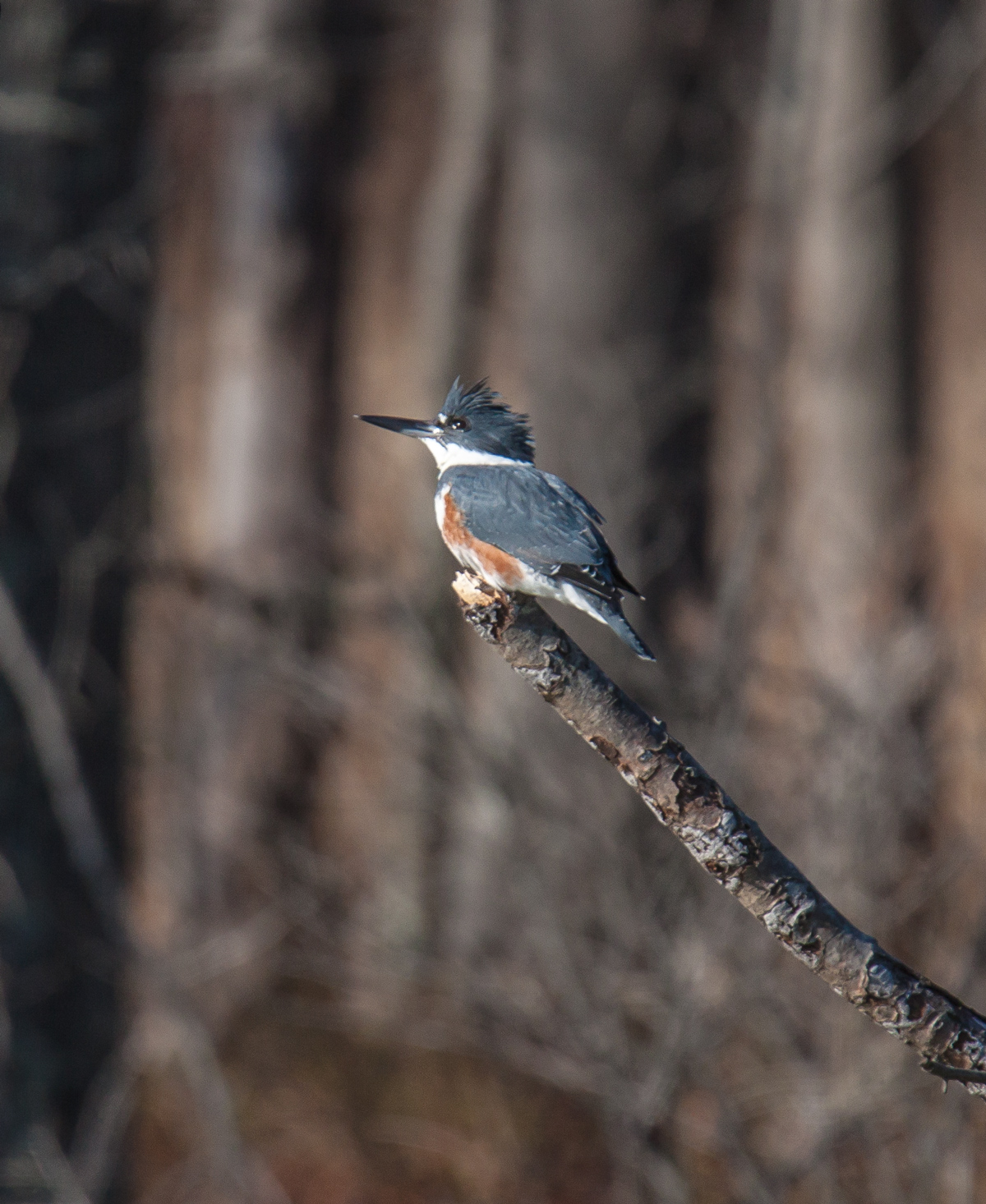
I spent a fair amount of time yesterday at Huntley Meadows Park watching a female Belted Kingfisher (Megaceryle alcyon), one of my favorite birds. She was perched on a broken-off tree a pretty good distance away and there was no way that I could get any closer, since there was water between the boardwalk on which I was standing and that tree.

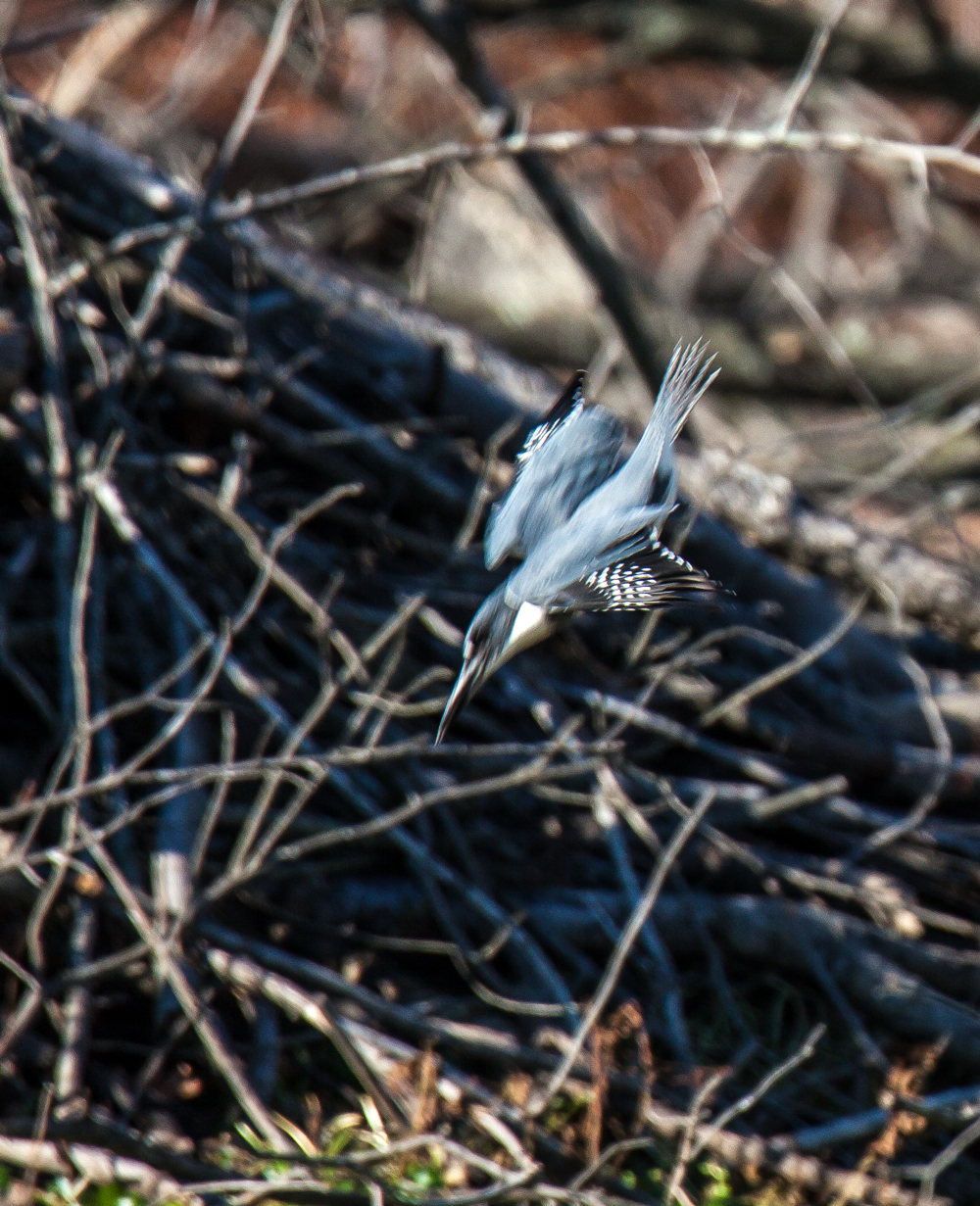
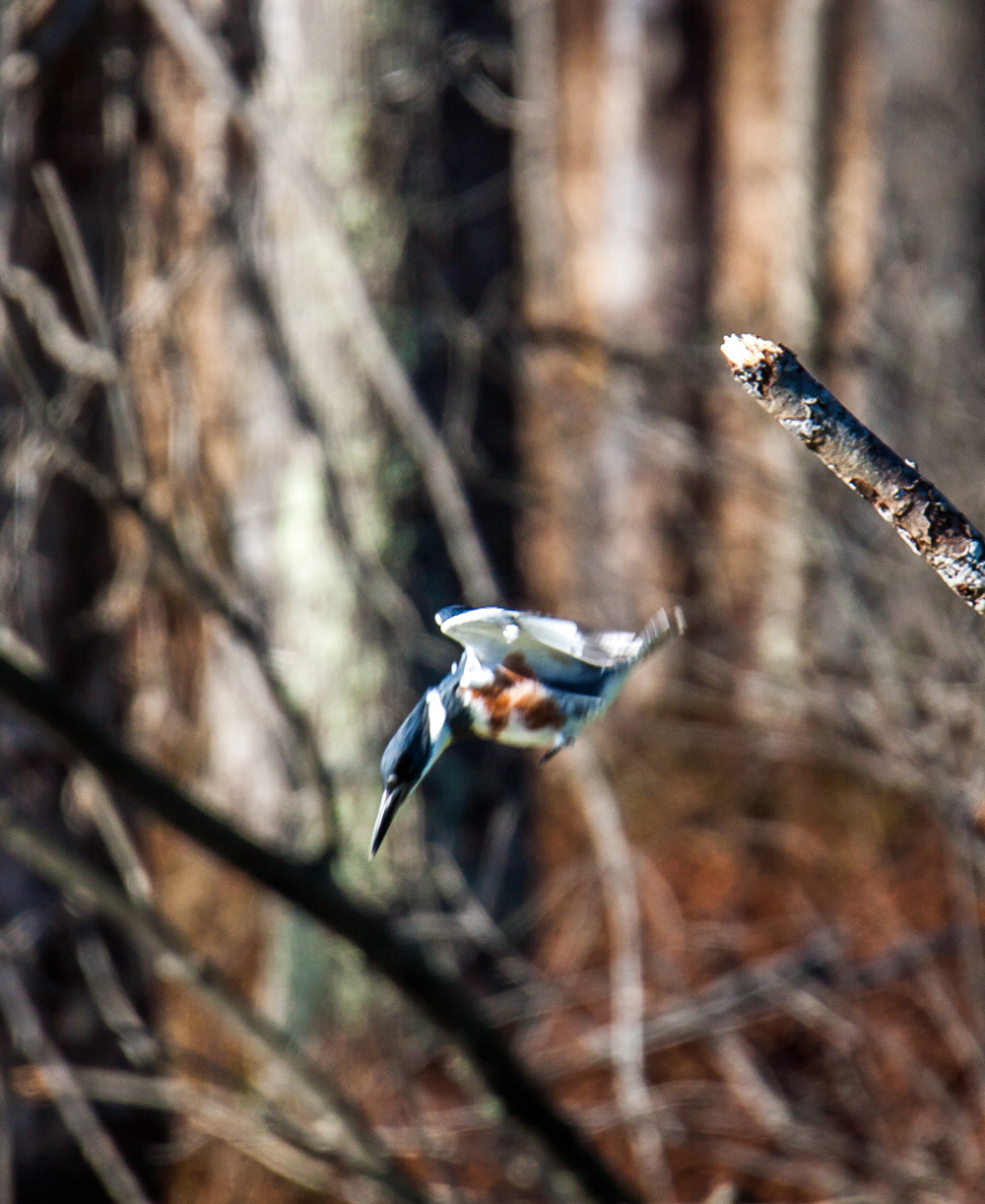
The kingfisher remained perched for quite some time, so I had plenty of time to steady myself and adjust settings until I was relatively content with some of my shots. What I really wanted to do, though, was to capture the kingfisher. I knew that eventually the kingfisher would dive into the water and I waited. Kingfishers don’t give any real warning when they are ready to dive, so I tried to remain alert and ready, even though I knew the chances of me capturing this fast-moving bird in flight were slim.

The kingfisher dove several times and I did manage to capture a few ok images of her flight toward the water. My favorite shot, however, is the final one here in which she is flying out of the water with what looks to be a small fish.

It was a nice catch for both of us.

Belted Kingfisher

Belted Kingfisher

Belted Kingfisher

Belted Kingfisher

© Michael Q. Powell. All rights reserved.

Read Full Post »

Yesterday the fields and forests of Huntley Meadows Park were alive with the sound of birds, lot of birds. I didn’t get a close enough look to identify the black birds, but they seem to be Rusty Blackbirds or Grackles. As they foraged, they moved from one spot to another in a great cloud of birds, all flying at the same time.

I tried to capture images of the birds with different backgrounds and especially like the first one below, which reminds me of some pf Escher’s pen-and-ink drawings of birds.

birds in flight

birds in flight

birds in flight

© Michael Q. Powell. All rights reserved.

Read Full Post »

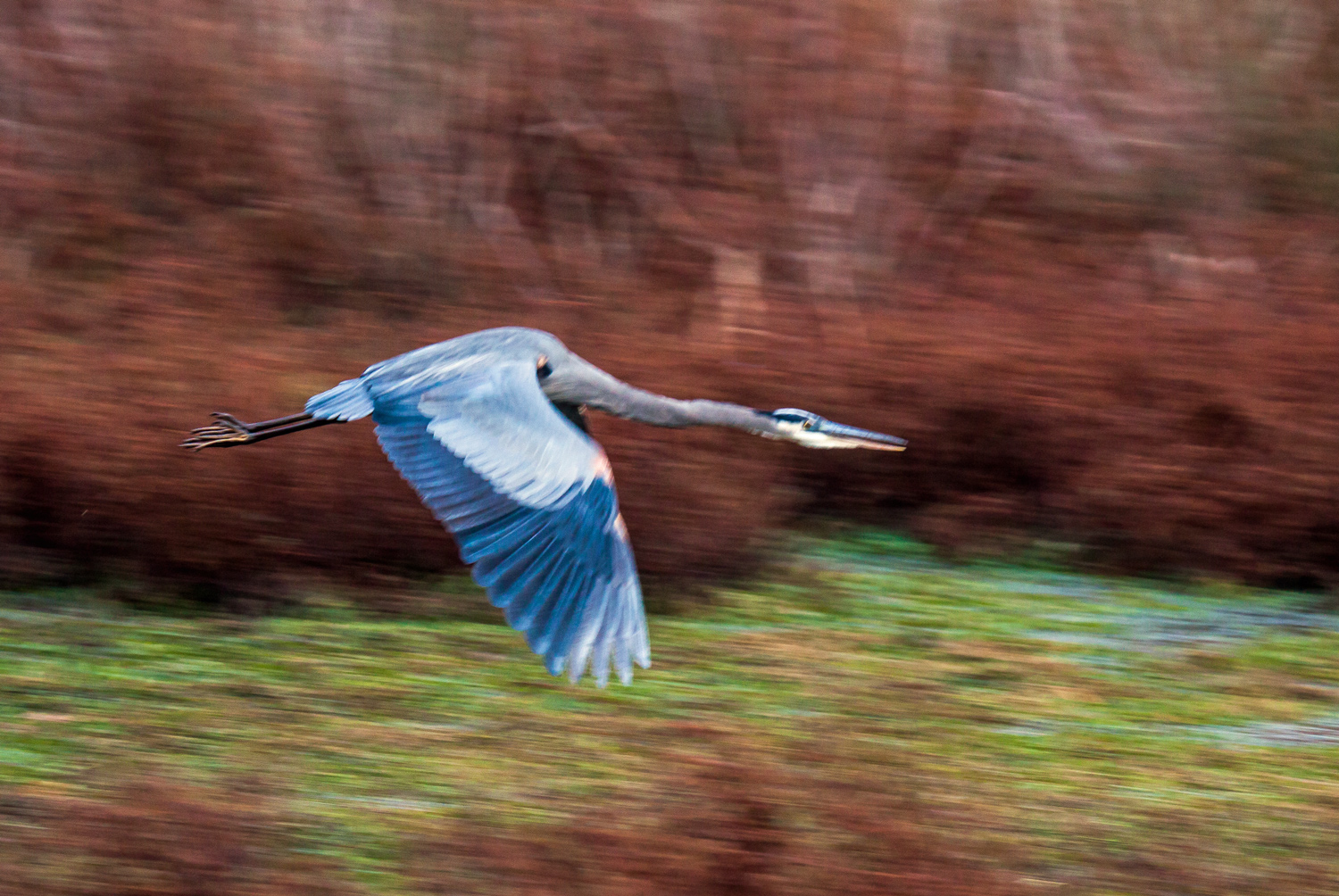
Sometimes I will intentionally use a slow shutter speed when I am panning a moving subject to blur the background and give a sense of motion, but that was not the case with these photos—I was shooting in aperture-priority mode and simply wasn’t paying attention to the shutter speed that the camera was giving me. In all three of these images, the shutter speed was 1/100 of a second, which is really too slow for handholding my 150-600mm zoom lens.

As the old saying goes, though, sometimes it is better to be lucky than good. I really like the way the background was rendered and am not at all bothered by the somewhat soft focus on parts of the moving heron.

Great Blue Heron

Great Blue Heron

Great Blue Heron

© Michael Q. Powell. All rights reserved.


Read Full Post »

Some birds seem to explode out of the water when they are taking off, but Great Blue Herons (Ardea herodias) often seem to gently lift off with almost no splash at all. The Great Blue Heron at Huntley Meadows Park were really active early yesterday morning, frequently flying from one location to another. They seemed to be more intent on socializing with each other than with finding food. In a future post, I’ll look more closely at that behavior, which might be related to courting, but today I’m focusing on one heron’s gentle liftoff.

I’ve watched herons take off hundreds of times, but this is one of the first times that I have been able to capture the moment of liftoff from the water. In this little sequence of three images, you can see the heron rising up, leaving the water, and gradually gaining altitude. The stillness of the early morning helped create some wonderful reflections,  a nice bonus that adds some additional visual interest to the images.

heron liftoff

heron liftoff

heron liftoff

© Michael Q. Powell. All rights reserved.


Read Full Post »

Generally it’s best to have the sun behind you when taking photos, but sometimes you are forced to shoot almost directly into the sun. When the conditions are right you can sometimes get wonderful silhouettes, like these images of Double-crested Cormorants (Phalacrocorax auritus) that I spotted on the Potomac River near Dyke Marsh in Alexandria, Virginia this past Monday.

The shot of the perched cormorant was a conscious composition—I assessed the light and knew that I was shooting a silhouette. In the case of the flying cormorant, however, I was reacting to the movement of a bird taking off from the water and trying so hard to hard to capture focus and keep the bird in focus that I was not paying much conscious attention to the lighting.

Double-crested Cormorant

Double=crested Cormorant


Double-crested Cormorant

© Michael Q. Powell. All rights reserved.

Read Full Post »

On a cloudy, misty afternoon yesterday at Huntley Meadows Park, this female Belted Kingfisher ( Megaceryle alcyon) couldn’t make up her mind where to perch, flying from one rotted tree to another in the marshland. I was thrilled to get this shot when she took off from one of her perches.

Belted Kingfisher

© Michael Q. Powell. All rights reserved.

Read Full Post »

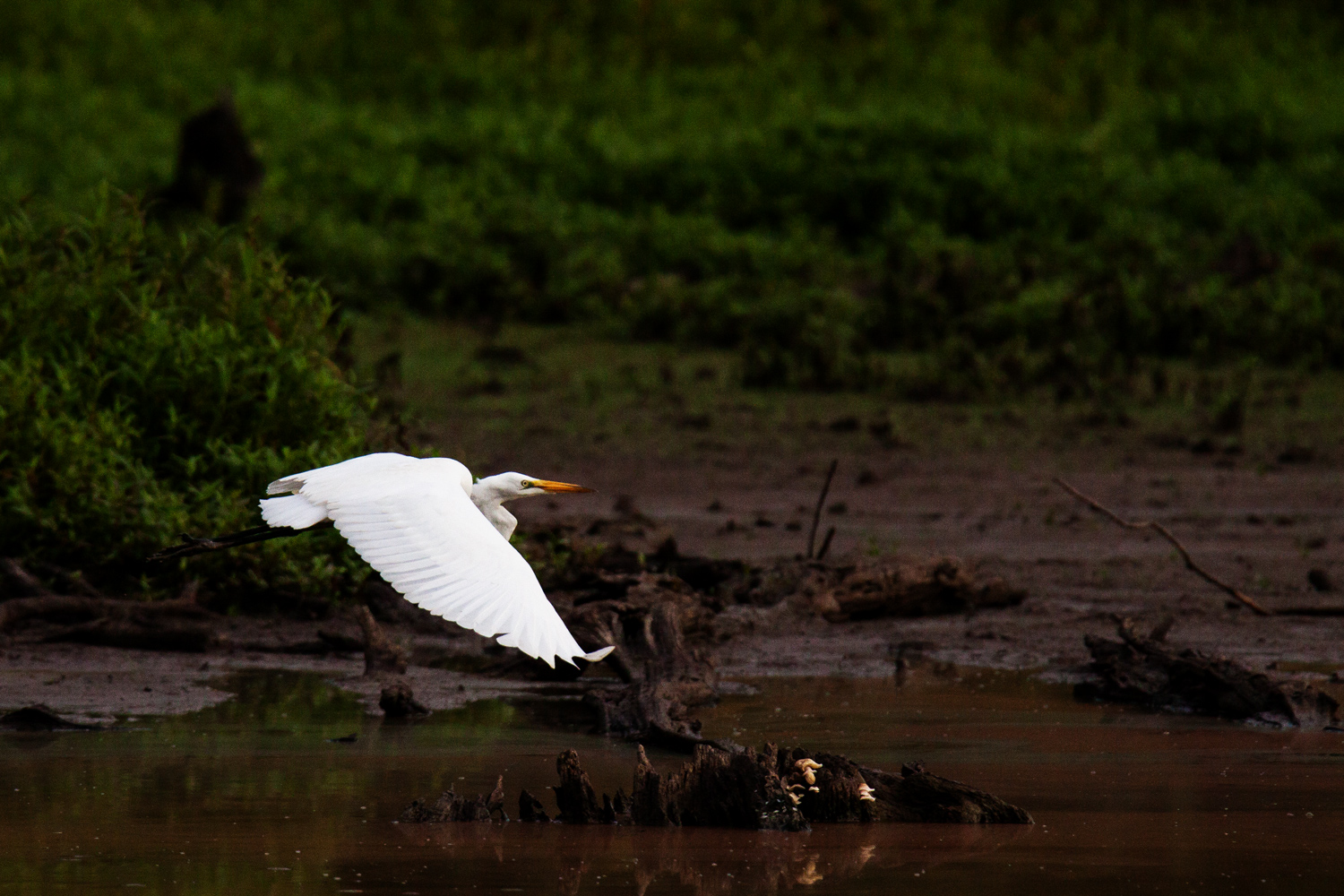
The Great Egret (Ardea alba) was beautiful in the bright sunlight. Its wingspan was impressive and its flight was graceful as it took to the air.

Yes, the takeoff indeed was great.

Great Egret

Great Egret

© Michael Q. Powell. All rights reserved.

Read Full Post »

This Great Egret (Ardea alba) seemed to be trying to minimize energy expenditure in the heat as it flew low and slowly from one location to another part of Huntley Meadows Park. The recent extreme heat must be tough on many of the inhabitants of the park—temperatures yesterday soared to 101 degrees (38 degrees C) in the Washington D.C. area, a new record for the date.

I have a tendency to crop my images to emphasize the subject, but I took these shots at pretty long range and like the way that they give you a sense of the environment at my favorite marshland park.

Great Egret

© Michael Q. Powell. All rights reserved.

Read Full Post »

Tree Swallows (Tachycineta bicolor) are fast and erratic fliers as they chase after insects in mid-air. It’s tough to track them in my camera’s viewfinder and even more difficult to get shots that are in focus.

Last Friday, however, I managed to capture some images of a Tree Swallow at Huntley Meadows Park as it swooped so low above the surface of the water that it cast a reflection. It was an overcast day in which the sky and the water seemed to have the same gray color,, making it hard to tell where the sky ended and the water began.

Tree Swallow

Tree Swallow

© Michael Q. Powell. All rights reserved.

Read Full Post »

Late yesterday afternoon an excited fellow photographer told me that that she had spotted a pair of Little Blue Herons (Egretta caerulea) at Huntley Meadows Park. I had no idea if her identification was accurate, but I knew that sightings of Little Blue Herons are pretty unusual in our area.

I rushed to the place she had described and eventually I was able to spot the two herons in the back area of a beaver pond. As I observed them from a distance, I couldn’t help but notice the mottled colors of the feathers of the one on the left. Last year a couple of juvenile Little Blue Herons, which were entirely white, spent some time at the park, but this one, which I assume is an adolescent, seemed to be transitioning to a darker plumage. The colors of the adult, which I was seeing for the first time, were equally amazing, with beautiful shades of maroon and dark blue.

After some grooming, the light-colored heron flew to another tree and shortly thereafter they both took off into the air. I was happy that I was able to get a few in-flight shots of these beautiful birds. I’ll be looking for them on my next visits to the park, but suspect they were merely making a rest stop on a longer journey.

Little Blue Heron

Little Blue Heron

Little Blue Heron

© Michael Q. Powell. All rights reserved.


Read Full Post »

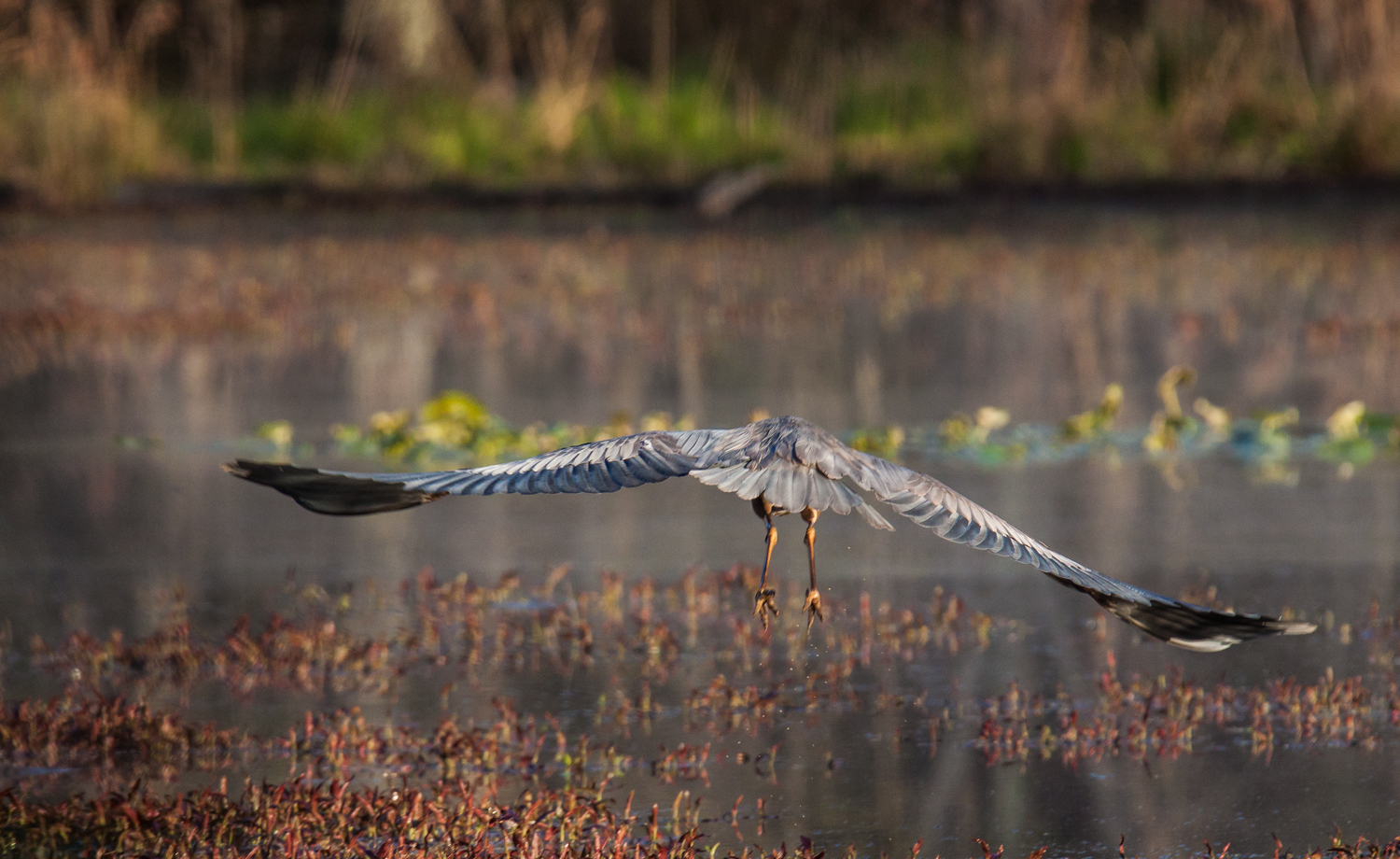
I’ve probably photographed a Great Blue Heron (Ardea herodias) taking off dozens of times, but this is the first time when I captured the bird flying directly away from me. This perspective makes the wingspan of the heron even more impressive  than usual.

I’ve managed to violate one of the main rules of bird photography by not ensuring that the eye was in focus (or even visible in this case), but I think that it helps to focus the viewers attention on the movement and shapes of the wings of the heron in this sequence of images.

Great Blue Heron

Great Blue Heron

Great Blue Heron

Great Blue Heron

© Michael Q. Powell. All rights reserved.


Read Full Post »

Do you find yourself shooting the same subjects with the same lens all of the time? Sometimes it’s fun to try to try to photograph a subject with the “wrong” lens.

Conventional wisdom tells me to use a telephoto lens to photo birds, a macro lens to photograph insects, and a wide-angle lens to photograph landscapes. Following that wisdom, I had my macro lens on my camera this past weekend when I traveled with some friends to Meadowlark Botanical Gardens in Vienna, Virginia, where I anticipated that I would be shooting flowers and insects.

As I was walking around a small pond, hoping in vain to spot some dragonflies, I suddenly came upon a Great Blue Heron (Ardea herodias). From a distance, vegetation at the water’s edge had blocked the heron from view. With the heron right in front of me, I had two choices—I could try to change to the 70-300mm lens that I had in my camera bag to gain some additional reach or I could make do with my macro lens. I chose the latter option.

My macro lens is a 180mm Tamron lens. It is slow and noisy when focusing at close distances, but when I pay attention to my technique, I have taken some pretty good macro shots with it. How would it do with a bird? I have gotten used to photographing birds with a 150-600mm Tamron lens that has a built-in image stabilization system and, obviously, lets me zoom in and out. My macro lens lacks both of these capabilities, so I really did not know how well it would fare, particularly when I tried to capture some in-flight shots of the heron—I was pretty sure the heron would be spooked by my presence and I proved to be right.

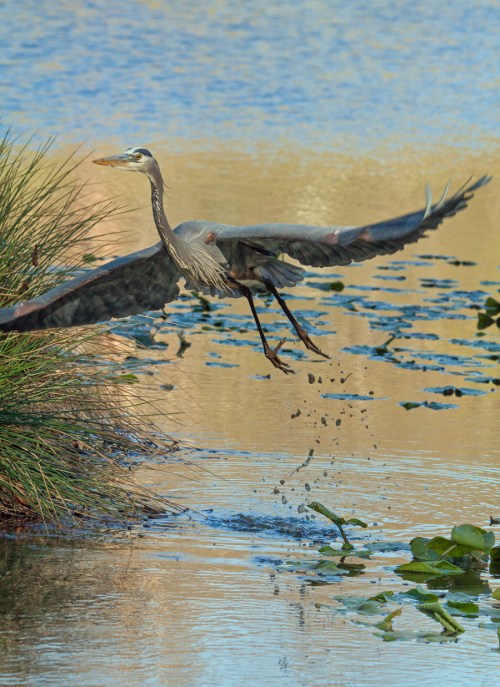
Well, I ended up following the heron around for quite a while and captured images of it at several locations, including in the air. It worked out remarkably well. In some ways, it was even more enjoyable shooting with a prime lens than with a zoom lens, because I could concentrate better on tracking and framing the subject—my decision process was simplified when I had to zoom with my feet.

I particularly like the first photo below. The lighting at that moment was very unusual and the colors are so vivid that a friend asked me if I had used some kind of art filter. With the exception of a few minor tweaks in post-processing, however, the image looks like it did when I first looked at it on the back of my camera.

So what did I learn? I have a greater appreciation of the capabilities of my macro lens and realize that I can use it for more than just macro shots. I think that I also appreciate better the experience of shooting with a prime lens—I think my zoom lenses sometimes make me a bit lazy and sloppy.

I look forward to trying to shoot some more little experiments like this of thinking outside of the box and shooting more subjects with the “wrong” lens.
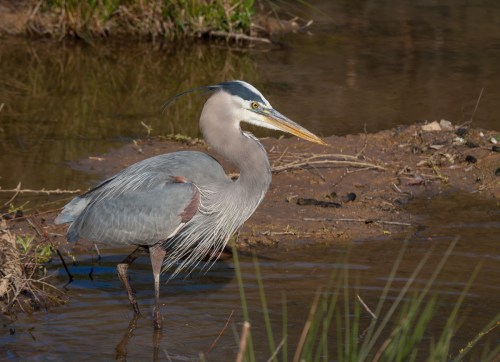
Great Blue Heron

Great Blue Heron

Great Blue Heron

Great Blue Heron

© Michael Q. Powell. All rights reserved.

Read Full Post »
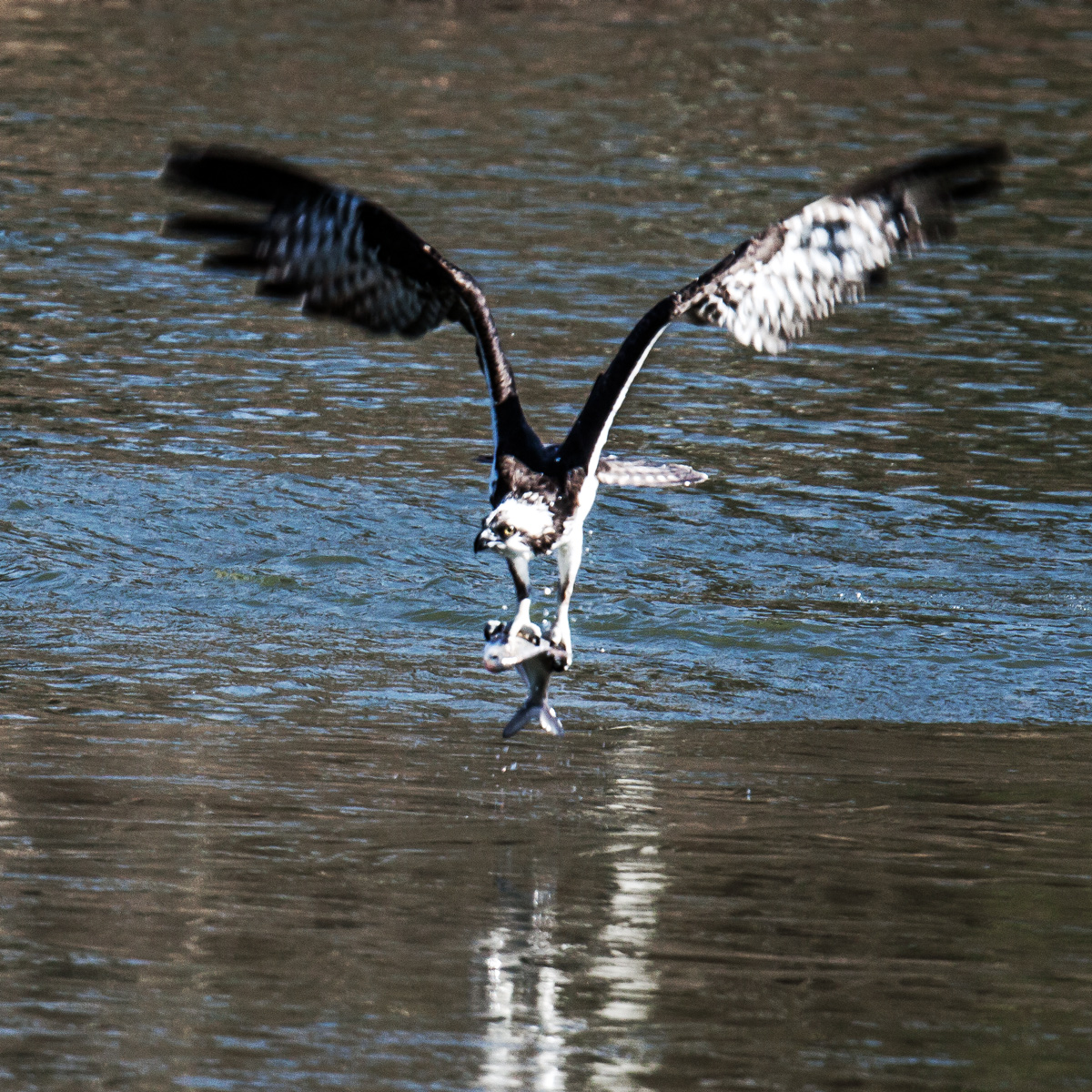
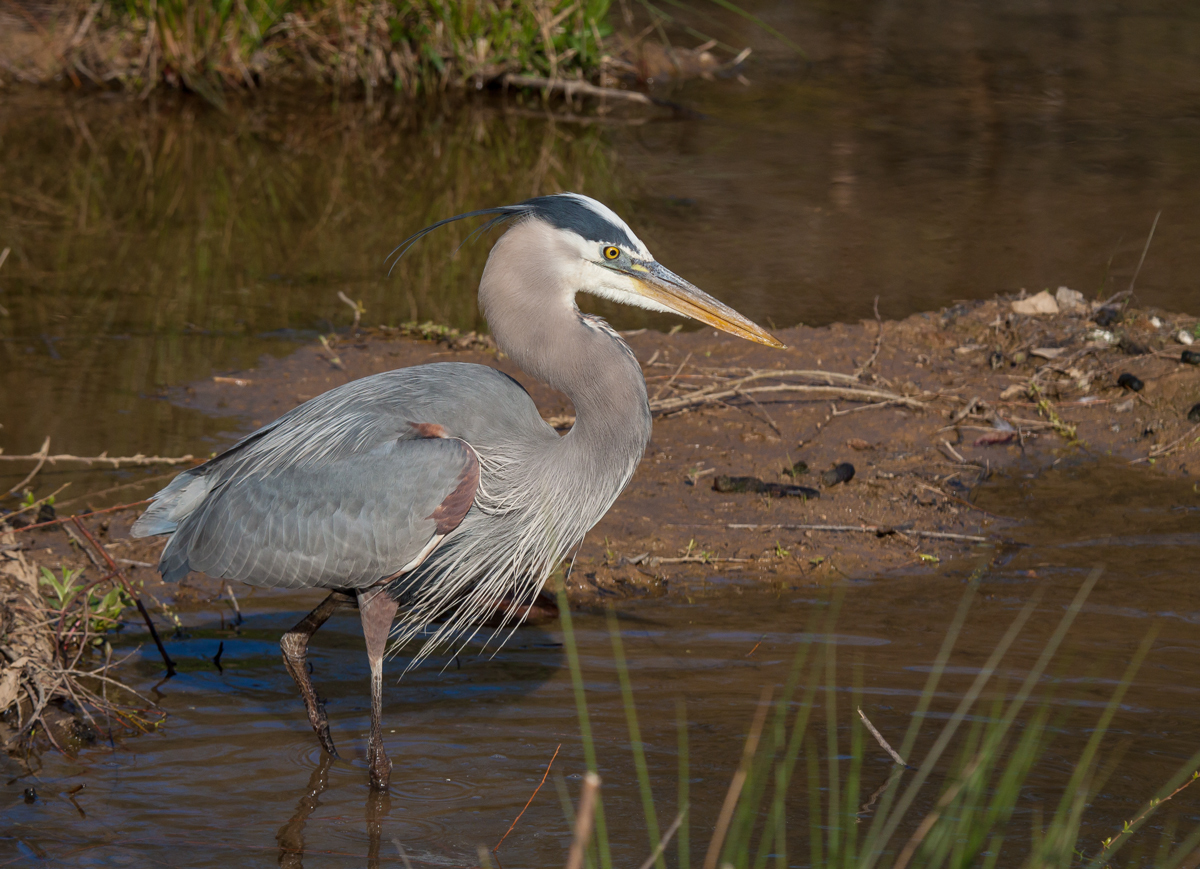
Great Blue Herons (Ardea herodias) are one of my favorite birds, in part because they are with us the entire year. Even during the snowy days of winter, I would occasionally see one of them.

Now that spring is here, there are many more birds at Huntley Meadows Park, but I am always happy to see one of the faithful Great Blue Herons, like this one that flew by me yesterday morning.

Great Blue Heron

© Michael Q. Powell. All rights reserved.

Read Full Post »

I heard this Wood Duck couple take off at Huntley Meadows Park this past weekend before I actually saw them. Wood Ducks (Aix sponsa), especially the female, make a distinctive shrieking noise when disturbed and when taking flight. (Check out this page from the Cornell Lab of Ornithology website to hear some of the sounds made by Wood Ducks.)

Normally Wood Ducks fly away from me and I often don’t even get to see them before they disappear in the distance. This time, however, the birds flew across my field of vision and I was able to capture this long-distance shot as they passed me. I really like the way that we get a glimpse of the beautiful colors on the inside part of the wings of these striking ducks.

Wood Duck

© Michael Q. Powell. All rights reserved.

Read Full Post »

My heartbeat definitely accelerates when a Bald Eagle (Haliaeetus leucocephalus) flaps its wings and heads straight in my direction, as one did again this past Monday morning. I don’t know why the eagle chose to fly toward me, since I am pretty sure that it was aware of my presence and could have flown away. Perhaps the eagle was simply curious and wanted to check me out.

Eventually the eagle did pull up and fly past me, without getting as close as it might seem from the images. Some readers have asked me if I was near an eagle nest when I posted similar photos in the past. I have seen eagles multiple times in the same general location and suspect there might be a nest nearby, but so far have not located one.

Bald Eagle

Bald Eagle

Bald Eagle

© Michael Q. Powell. All rights reserved.


Read Full Post »

There were a lot of Canada Geese (Branta canadensis) coming and going at Huntley Meadows Park early yesterday morning. This one was descending rapidly and coming in so fast that it looked like the goose was going to land right on me.

Canada Goose

© Michael Q. Powell. All rights reserved.

Read Full Post »

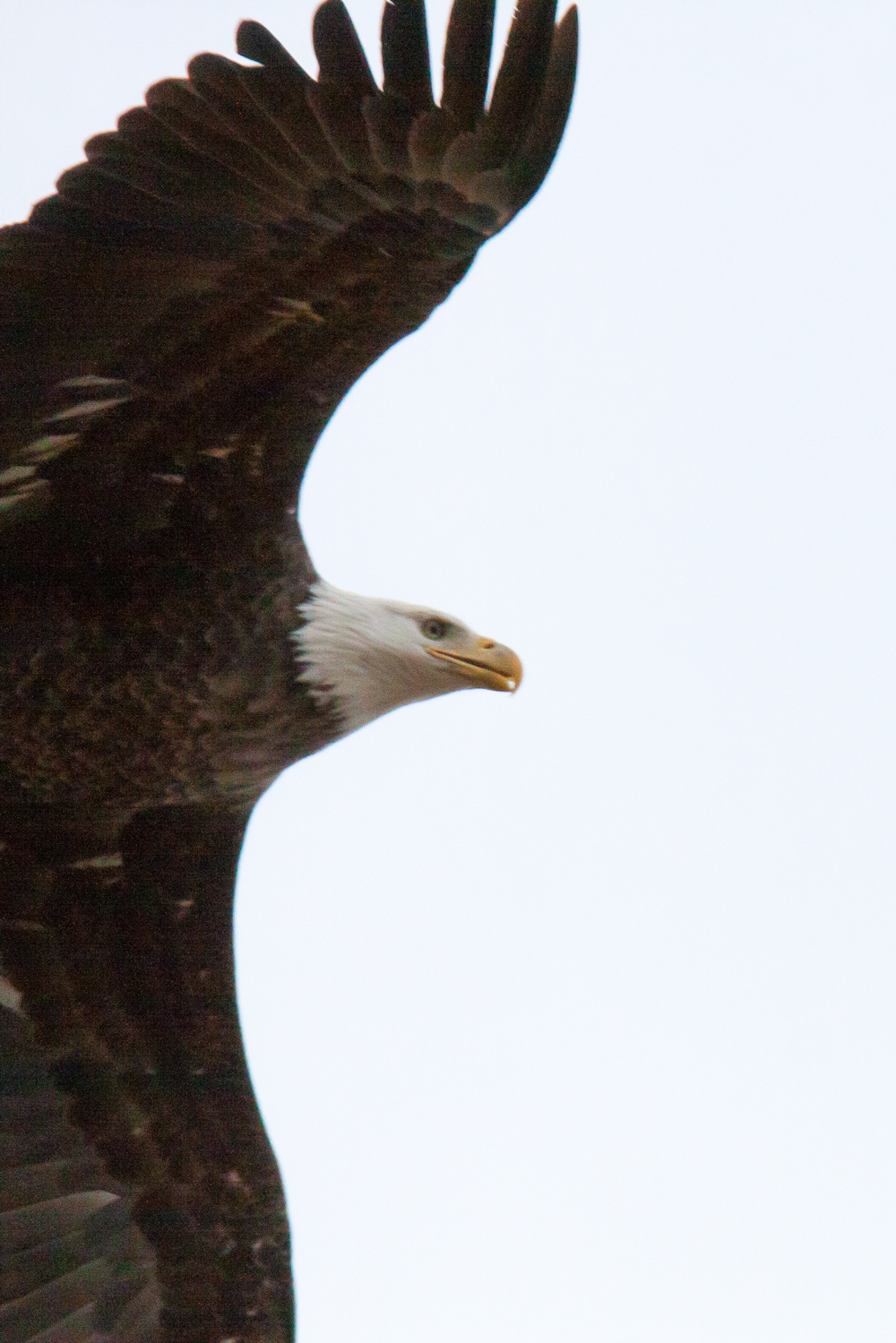
I didn’t see where this Bald Eagle (Haliaeetus leucocephalus) came from early yesterday morning at Huntley Meadows Park, but suddenly it was overhead at a relatively low altitude. I zoomed back a bit on my telephoto lens, but the eagle still more than filled the frame. At that close range, tracking was difficult and I had trouble keeping the eagle in the viewfinder (I think adrenaline might have been a factor too).

Incredibly, the first shot is an uncropped image. It was shot handheld at 483mm on my crop sensor Canon 50D camera with my trusty Tamron 150-600mm lens. The lighting was not that great, so I was shooting at ISO 1600, which resulted in a somewhat grainy image.

The second shot is one in which I got a bit ahead of the eagle in tracking it and chopped off its body. I liked the eagle’s expression so I cropped off the wide expanse of white sky to the right, turning the image from landscape mode to portrait mode, but otherwise left the framing untouched.

If someone had told me before yesterday that I could fill the frame of an image with a bald eagle in flight, I almost certainly would have laughed at them. Reality continues to amaze me.


Bald Eagle

Bald Eagle

© Michael Q. Powell. All rights reserved.

Read Full Post »
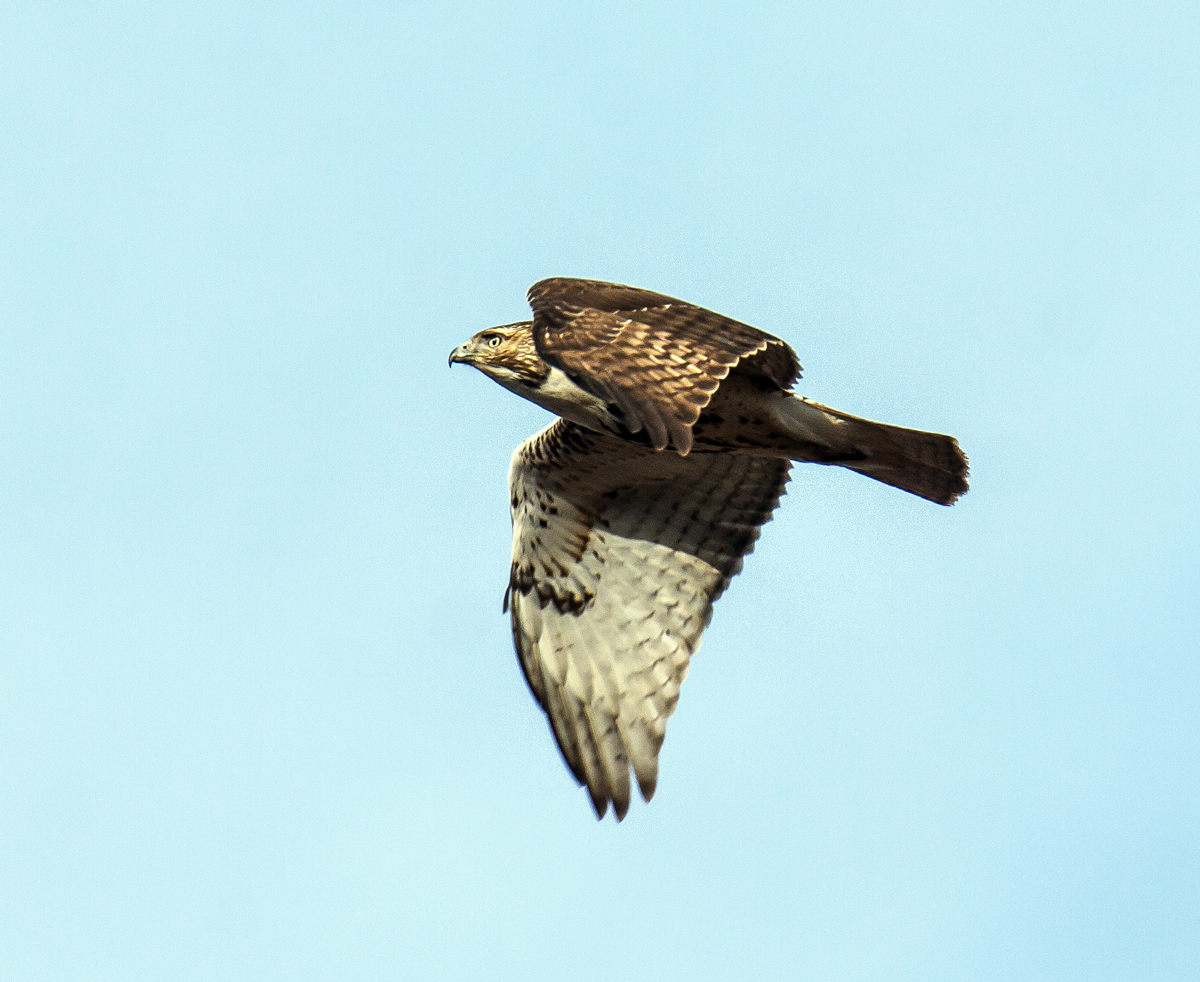
No matter how slowly and silently I move, a Bald Eagle (Haliaeetus leucocephalus) seems to sense my presence very quickly and immediately takes to the air. It’s really not that surprising, given the eagle’s amazingly keen eyesight that lets it spot prey from a long distance away.

Last weekend I spotted this Bald Eagle when it was perched atop a broken-off tree. Most of the previous times the stationary eagles that I have seen have been sitting on branches. When they took off, they seemed to push off of the branch a bit to gain some forward momentum.

In this case, the eagle appeared to initially push in an upward direction to gain a little height before flapping its powerful wings. Here are a few shots that show some of the stages of the takeoff process.


Bald Eagle

Bald Eagle

Bald Eagle

© Michael Q. Powell. All rights reserved.

Read Full Post »
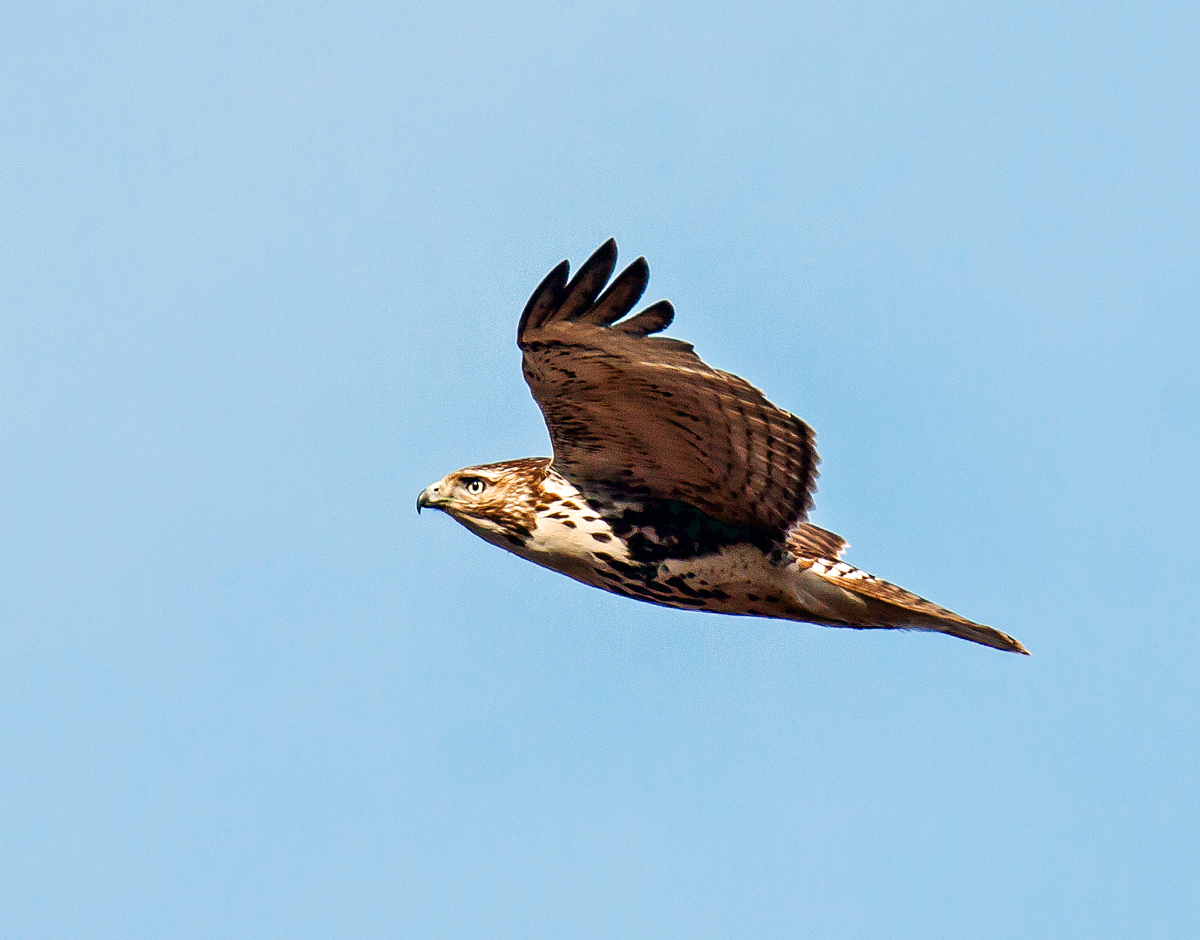
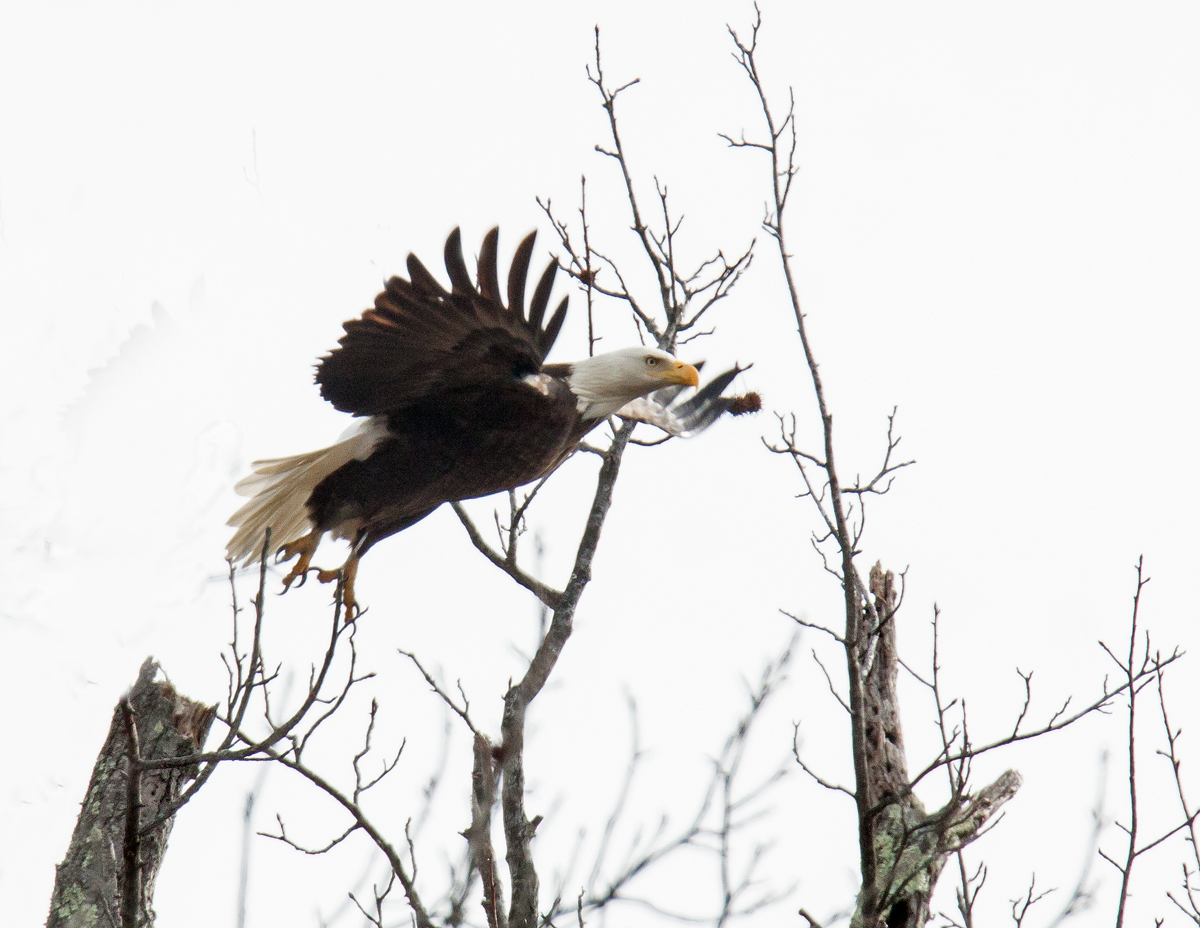
I usually miss the takeoff sequence of a Bald Eagle, because the eagle spots me before I see it, but this weekend I managed to capture a series of shots of one such takeoff.

My first indication of an eagle’s presence is often when I see it flying away. Several times this past weekend, however, I spotted a Bald Eagle (Haliaeetus leucocephalus) perched in the trees at Huntley Meadows Park and I was able to observe the eagle for at least a few minutes at a time.

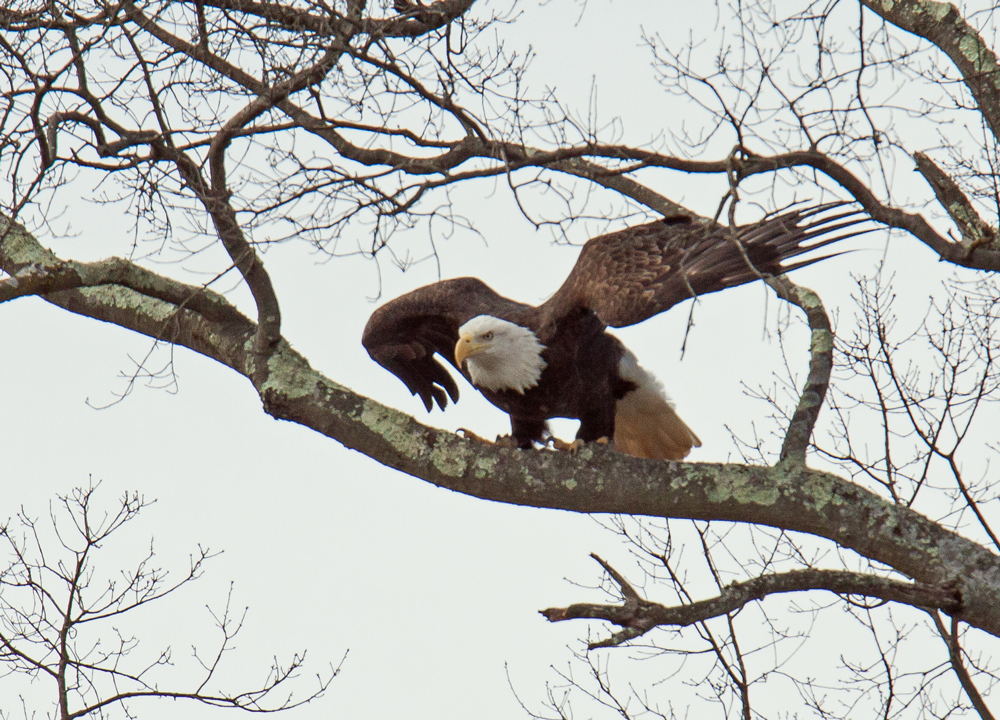
In the case of these images, I was looking across a beaver pond at the eagle as it perched in the trees. In the first couple of shots, the eagle seemed to getting a little agitated and is lifting its feet and flexing its wings. Then he assumed a position that reminds me of the start of a speed skating race or a sprint, with a flexed wing ready to propel the eagle forward. Finally the eagle pushed off from the tree and descended a little with talons extended before leveling off and flying away.

Some of the time it seems an eagle just springs into motion and ignores most of the items on its pre-flight checklist as it prepares for takeoff. Other times, like this one, it follows the established procedures and waited for flight clearance from the tower.

Bald Eagle

Bald Eagle

Bald Eagle

Bald Eagle

Bald Eagle

Michael Q. Powell. All rights reserved.

Read Full Post »

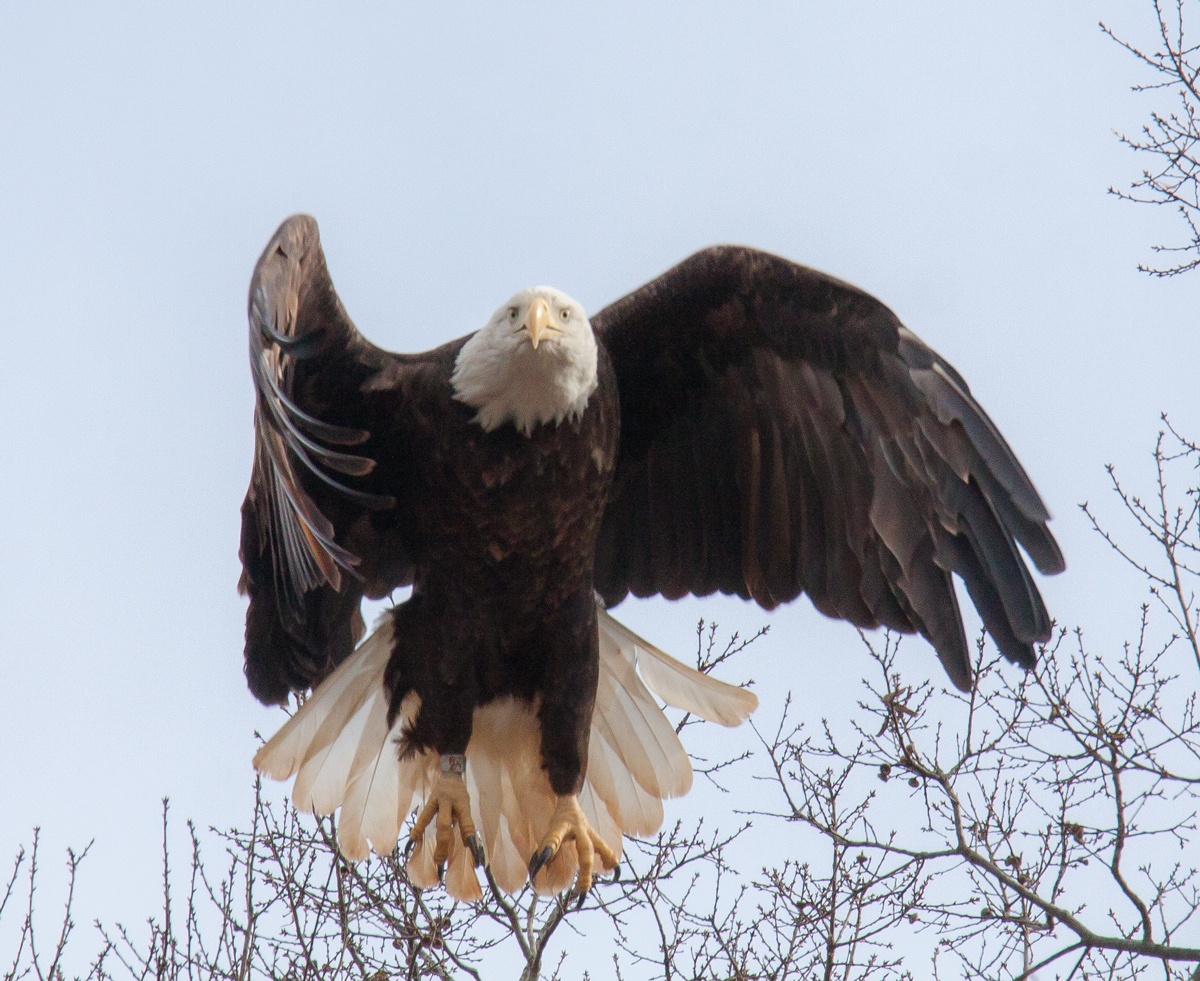
Yesterday was a great day for me photographing Bald Eagles (Haliaeetus leucocephalus) at Huntley Meadows Park. I took this photo later in the day than the more close-up shots that I posted earlier. I can’t tell if it is the same eagle, but it too appears to have a band on its right foot.

I really like the way that the dynamic position of the eagle’s wings conveys a sense of the power of this majestic creature. There is a kind of dramatic tension in the pose that captivates me.

Bald Eagle

Michael Q. Powell. All rights reserved.

Read Full Post »

Yesterday, for the second day in a row a Bald Eagle (Haliaeetus leucocephalus) flew close to me at Huntley Meadows Park. Unlike the previous day, when the eagle simply soared by overhead, this one looked like he thought I might be a potential prey.

With the snow almost totally gone, I decided yesterday to hike out to some of the more remote regions of the park. I was following a familiar stream when I noticed a dark shape near the top of a tall tree on the opposite bank of the stream. I extended my lens to its full length and was surprised to see that it was a bald eagle.

I had time to shoot shoot only a couple of images when suddenly the eagle took off, initially heading right toward me. I kept firing as the eagle grew larger and larger in my viewfinder. I think I might have startled the eagle when I moved to bring the camera up to my eye and his instinctive reaction was to check out the movement.

Eventually the eagle veered off and flew in the opposite direction and my heart rate started to return to normal.  I don’t think that I was actually at risk, but through a 600mm lens, it sure looked like the eagle was speeding toward me with talons extended.

I couldn’t help but notice that the eagle has a band on its right foot. Whenever I capture a shot of an eagle, I will have to check to see if I can see a band. I don’t know how many eagles hang out at our park, but eagle sightings have become much more common this last year than previously.

Bald Eagle

Bald Eagle

Bald Eagle

Bald Eagle

Michael Q. Powell. All rights reserved.

Read Full Post »

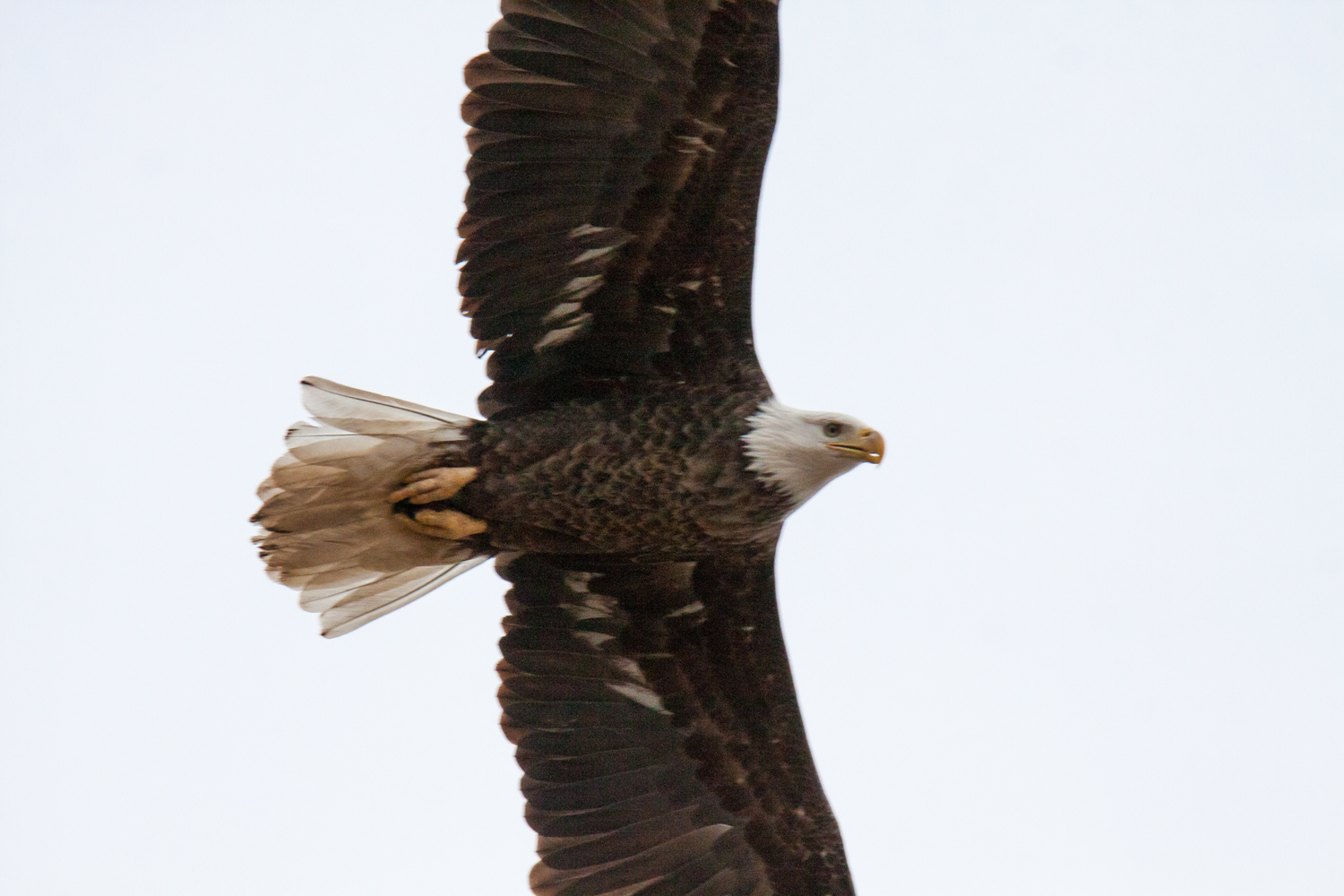
Another eagle? I know that I posted some eagle photos a few days ago, but normally when I see a Bald Eagle (Haliaeetus leucocephalus), it is flying in the distance. Yesterday at Huntley Meadows Park, however, one flew almost directly over me while I was on the boardwalk.

This different perspective allowed me to get some shots that are much more detailed than usual, showing, among other things, the eagle’s tail feathers and fully-extended wings. The wingspan of this magnificent bird is amazing.

Bald Eagle

Bald Eagle

Bald EagleMichael Q. Powell. All rights reserved.

Read Full Post »

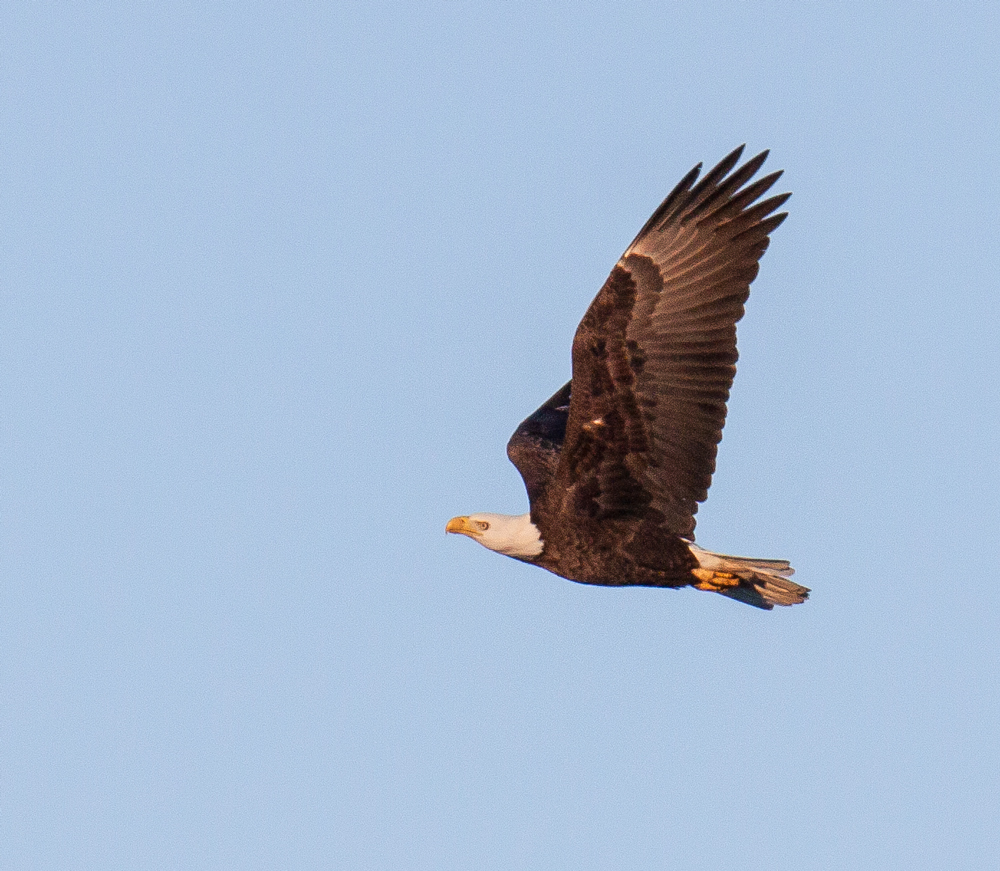
This past weekend at Huntley Meadows Park, I accidentally spooked a Bald Eagle (Haliaeetus leucocephalus) perched on a distant tree. As the eagle flew away, I was able to capture a few images that highlight some of its beautiful details.

These images were shot from a long way off and I had to do a lot of cropping. I am really happy, though, with the performance of my lens, even when zoomed out all the way, especially when the light is nice.

I continue to hold fast to the view that any day that I spot one of these majestic creatures is a wonderful day. I hope that today is wonderful for you, however you choose to define “wonderful.”

Bald Eagle

Bald Eagle

Michael Q. Powell. All rights reserved.


Read Full Post »

Clouds can be a mixed blessing. Clouds can help diffuse the sunlight and eliminate harsh highlights. However, when the skies are as heavily overcast as they were for most of this past weekend, they can block so much light that details are hidden and contrast is really soft.

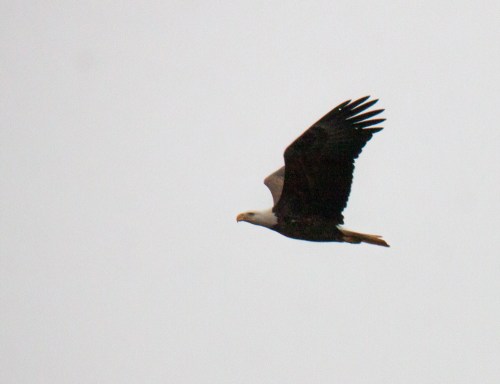
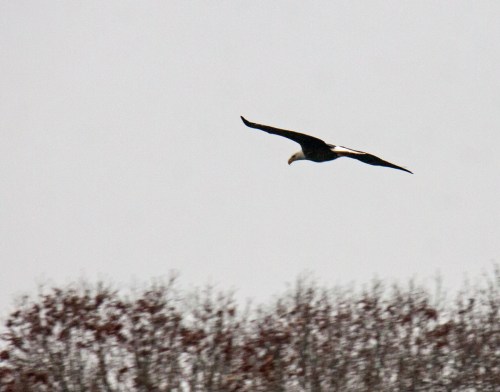
When I saw a bird with a large wingspan take flight in the distance, I readied myself. I wasn’t sure if it was a hawk, a vulture, or an eagle (or possibly even a heron), but I will generally try to get shots of any large bird I see in the sky. As I tracked the bird and took some shots, I still couldn’t positively identify the bird, but my hopes rose in anticipation that it might be a Bald Eagle (Haliaeetus leucocephalus).

Bald Eagles are one of the few species that I will try to photograph every single time that I manage to spot one. I did get some shots of what turned out in fact to be a Bald Eagle. They are recognizable, though the poor lighting conditions made it impossible to capture the details of its feathers. Usually I worry about blowing out the highlights of the eagle’s white head—that was not a problem this time.

I’ve had a pretty good year spotting eagles and suspect this might be the last one that I see in 2015, though I am heading out in a little while and am eternally hopeful that I will spot another one. As with many other photographic subjects, I hope in the coming year to get even better images of eagles, one of my favorite (and most challenging) subjects.

Bald Eagle

Bald Eagle

Bald Eagle

Bald Eagle

© Michael Q. Powell. All rights reserved.


Read Full Post »

« Newer Posts - Older Posts »