Feeds:
Posts
Comments

Posts Tagged ‘Alexandria VA’

Yesterday afternoon I had a little photo shoot with Freckles, a two year old Cocker Spaniel who is one of my favorite subjects. Freckles belongs to a friend who has been staying with me and I have the pleasure of spending a lot of time with this beautiful little dog.

Freckles was more cooperative than usual, though I still had to chase her around a lot to try to get some shots. The small size of the backyard of my townhouse and the 180mm focal length of my lens guaranteed that all the shots would be close-ups, which means you can easily see her beautiful coloration and expressive eyes.

Freckles1_oct_blog Freckles2_oct._blog Freckles3_oct_blog Freckles4_blog

© Michael Q. Powell. All rights reserved.

Read Full Post »

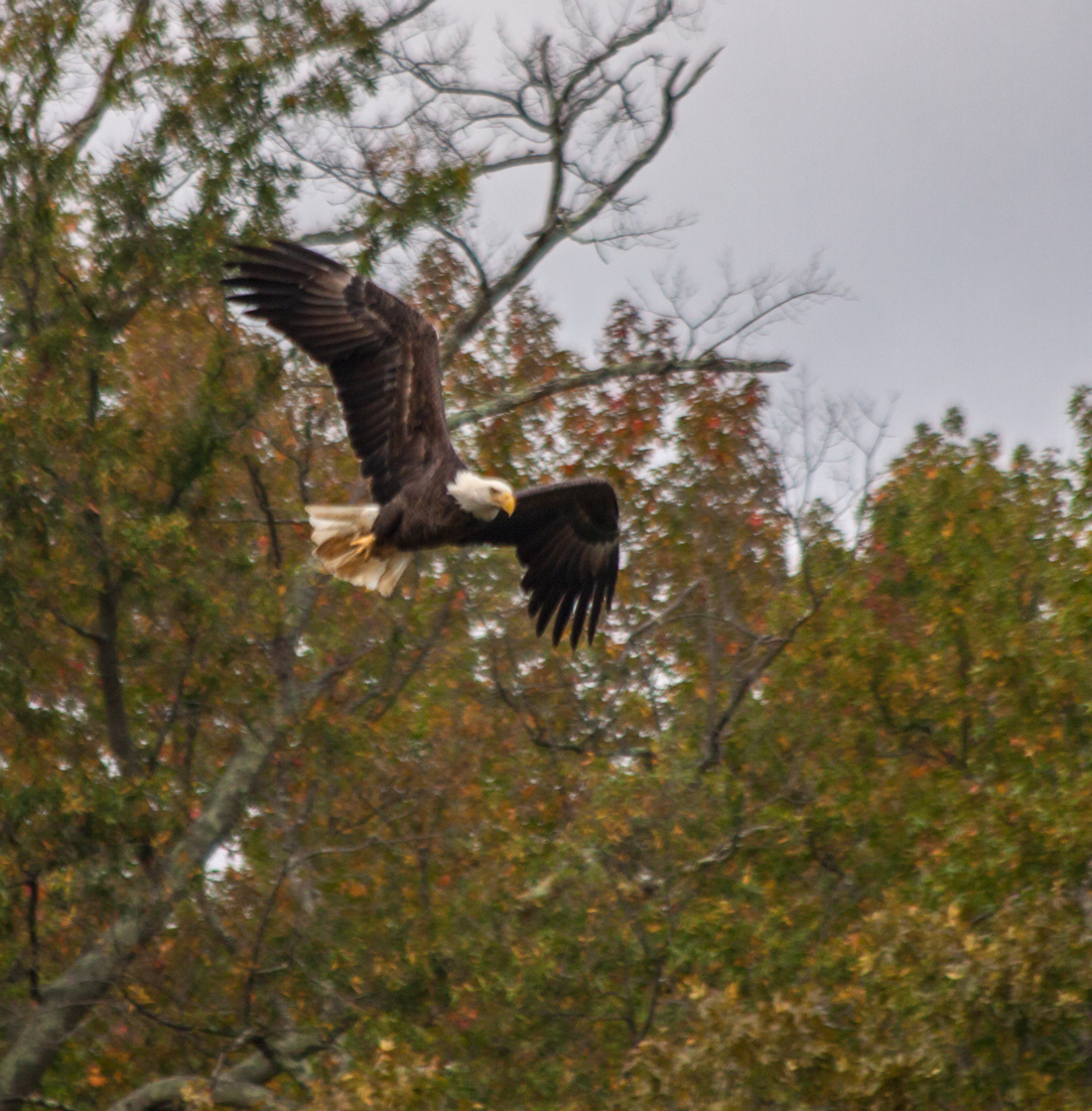
This morning I spotted a Bald Eagle (Haliaeetus leucocephalus) in a tree a my local marshland park, not far from where I had previously seen one. Once again, the eagle reacted more quickly than I did and took off before I was completely ready. This time, however, I was able to more quickly track the flying eagle and got a better shot than last time. I’m still not fully satisfied with the sharpness of this image, but I continue to believe that any day that I see an eagle is a great day.

Bald Eagle at Huntely Meadows Park

© Michael Q. Powell. All rights reserved.


Read Full Post »

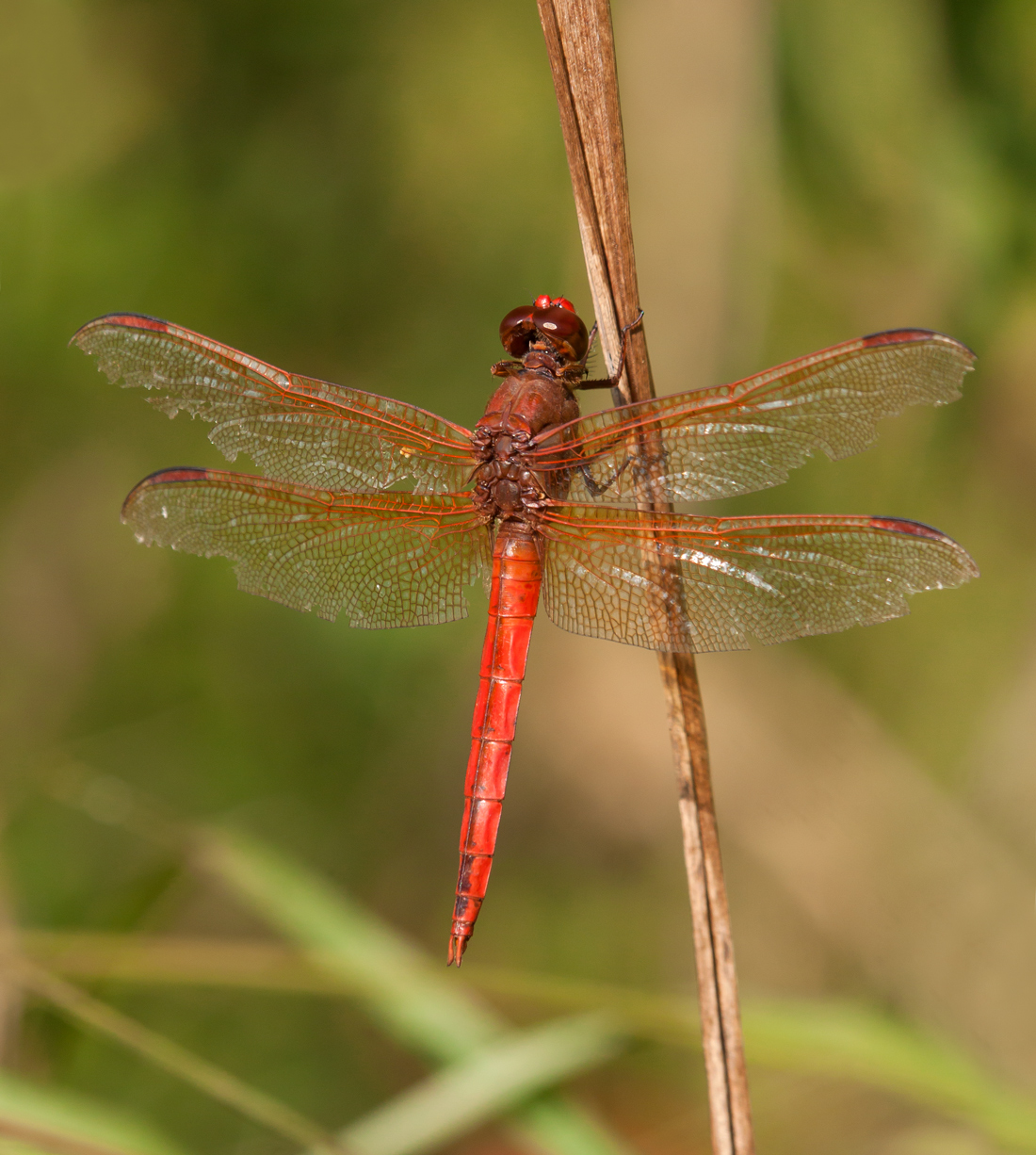
Two weeks ago, during the waning days of summer, I captured this image of a beautiful Needham’s Skimmer dragonfly (Libellula needhami) at Huntley Meadows Park, the local marshland where I do a lot of my shooting. The vivid red of its body made it really stand out—camouflage did not seem to be a viable option.

Although this dragonfly species is pretty common, I only saw a couple of them this season and this was the only one that I managed to photograph. The dragonfly was perched on a dried stalk in a field and it was tough to try to get any kind of clear background, particularly because I did not want to move too much and risk scaring away the dragonfly.

In these two images, you can see two slightly different approaches that I used. In the first one, I was not worried that there were some horizontal stalks in the background. In fact, I actually like the repetition of the horizontal line and don’t find them distracting, given how blurred they are. In the second image, I tried to get as uncluttered a background as I could, which isolates the dragonfly a little better. I tend to like the first image a little more, but I welcome any thoughts about which image you prefer.

Needham's SkimmerNeedham's Skimmer

© Michael Q. Powell. All rights reserved.


Read Full Post »

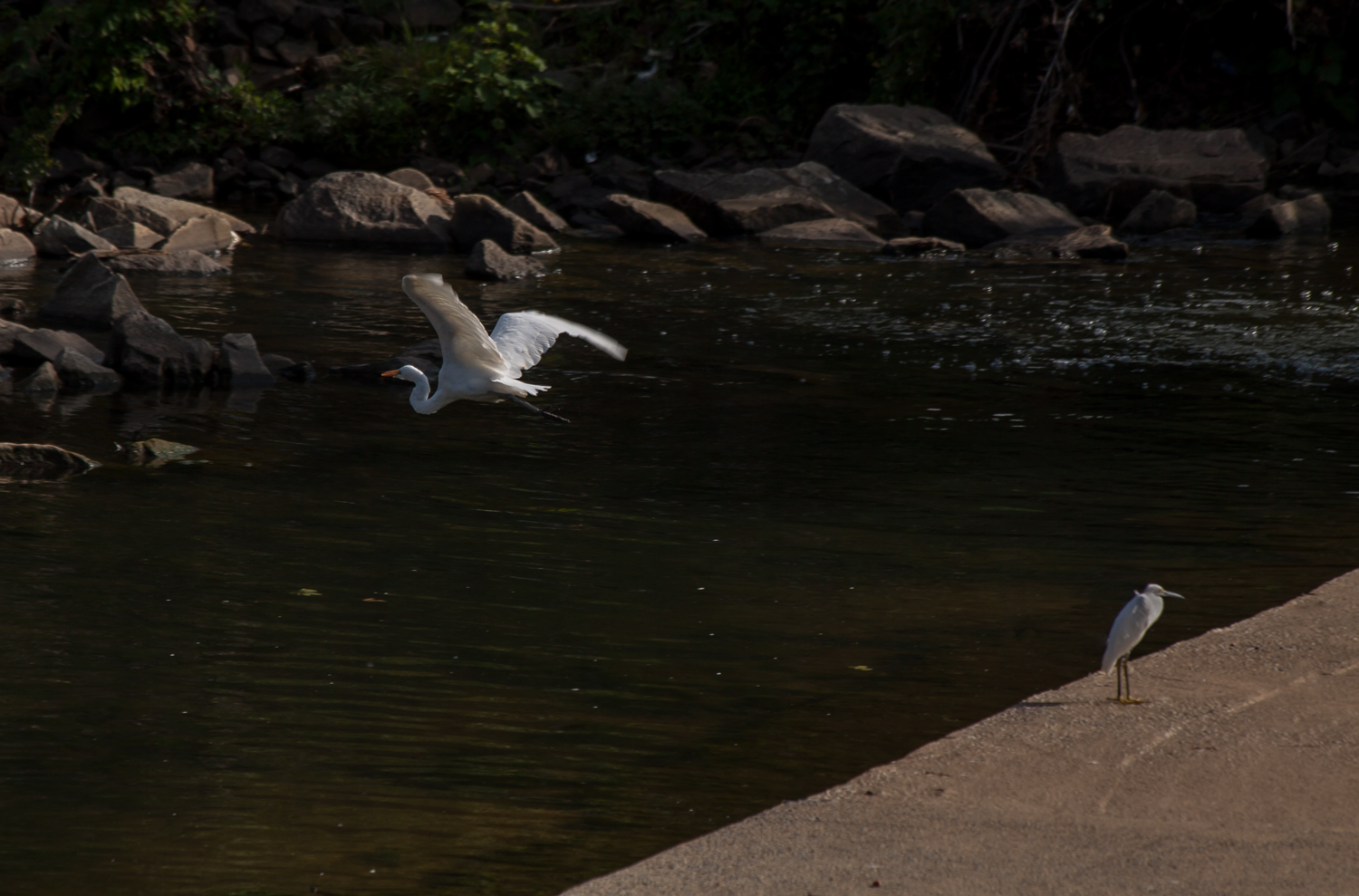
I’ve seen lots of Great Egrets (Ardea alba) over the past couple of years, but until recently I had never seen a juvenile one and had no idea that they were so small compared to the adults.

I caught this little interaction between what I assume is a mother and a young egret at Cameron Run, a tributary of the Potomac River in Alexandria, Virginia. The birds were standing on one of a number of concrete slabs that cross the entire width of the stream, presumably to slow down the flow of the water.

UPDATE: A number of more experienced birders have weighed in and pointed out that the smaller egret is not a juvenile Great Egret as I thought, but is instead a Snowy Egret (Egretta thula), a species that I had never seen before. As a result, the scenario below that I imagined is no longer valid—I’ll have to think a bit more about what herons of two different species might have been discussing.

The mother seemed to be giving instructions to the young one to stay put while she flies off to fish a short distance away.

Great Egret and baby

Mom gets a bit excited as she warns the little one to stay put

Great Egret adult and juvenile

The little one finally agrees

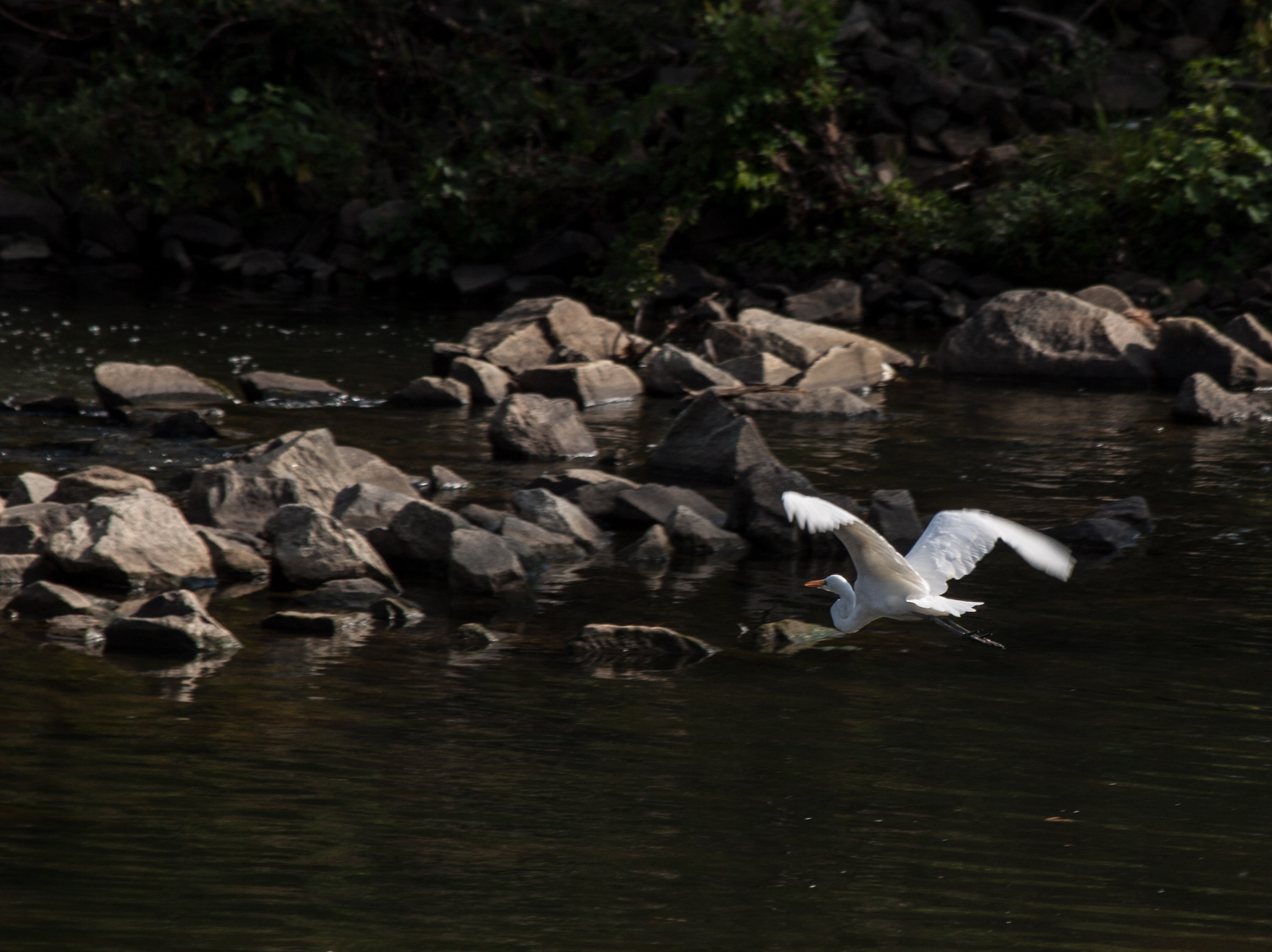
The mother eventually is reassured and takes off for the rocky edge of the water, hoping for a quick catch, so that she can feed the hungry youngster.

Great Egret adult and juvenile

Flying away for a little while

Great Egret in flight

Searching for the perfect spot for fishing

The young egret is left all alone to wait for the return of his Mom, hopefully with a tasty snack.

Great Egret adult and juvenile

Waiting for Mom

© Michael Q. Powell. All rights reserved.


Read Full Post »

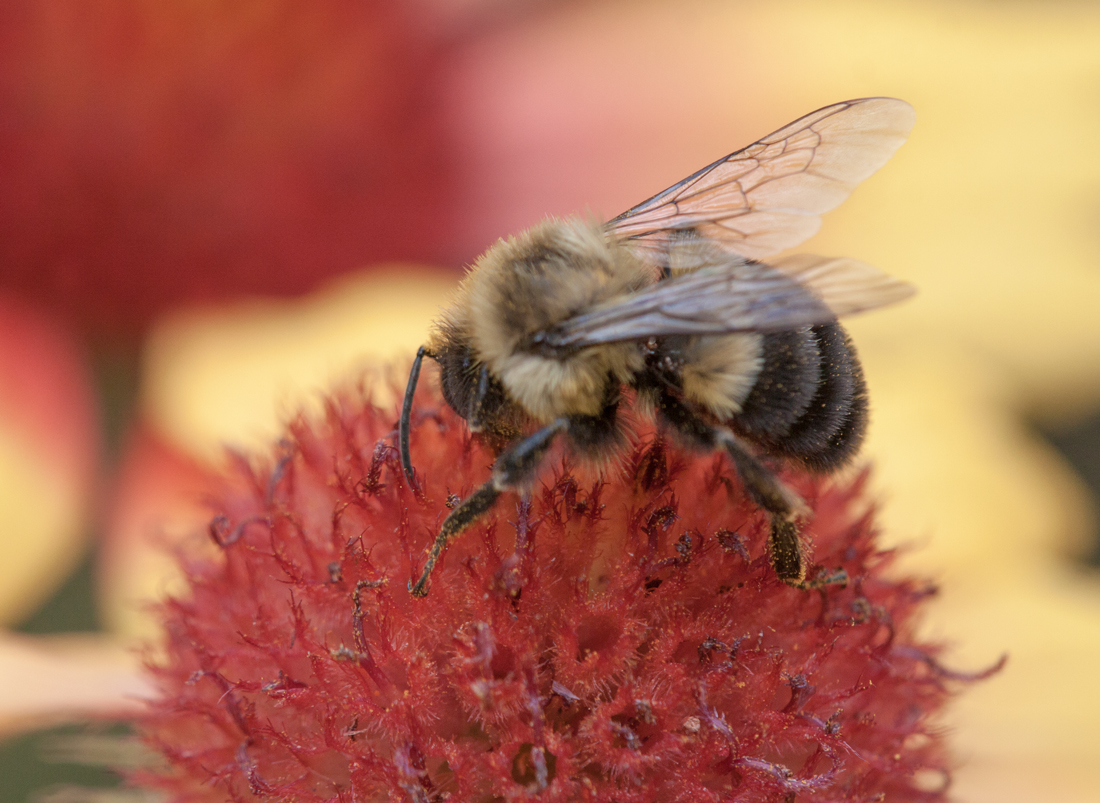
With rain and gray skies that started today, I feel the need to compensate with some bright colors, so I thought I’d post an image from this past weekend. I love the way that it looks like this bumblebee is clinging to a rolling red ball, which, of course, is merely the center of a flower in the garden of my neighbor and fellow photographer Cindy Dyer.

bee_fall_blog

© Michael Q. Powell. All rights reserved.

Read Full Post »

Here’s an awesome image of a pair of mating dragonflies by a photographer with whom I often go shooting at my local marshland park. Be sure to check out the rest of his blog for some more amazing shots.

waltersanford's avatarwalter sanford's photoblog

Lately I’ve been working harder at “making art” rather than just getting a shot. How am I doing?

Autumn Meadowhawk dragonflies (mating pair, in wheel)

The preceding photo shows a mating pair of Autumn Meadowhawk dragonflies (Sympetrum vicinum) spotted during a photowalk at Huntley Meadows Park on Sunday, 28 September 2014. The pair is shown “in wheel.”

The copulatory, or wheel, position is unique to the Odonata, as is the distant separation of the male’s genital opening and copulatory organs. Source Credit: Paulson, Dennis (2011-12-19). Dragonflies and Damselflies of the East (Princeton Field Guides) (Kindle Locations 377-378). Princeton University Press. Kindle Edition.

All dragonflies and damselflies have a 10-segmented abdomen: male dragonfly secondary genitalia are located in segments two and three (2 and 3); female genitalia in segment eight (8). Therefore, the male dragonfly is on top; the female is on the bottom.

Copyright © 2014 Walter Sanford. All rights reserved.

View original post

Read Full Post »

As I reached the boardwalk, I glanced to my right and realized that I was eye-to-eye with a snake that was loosely coiled on top of a bush. This Common Ribbonsnake (Thamnophis sauritus sauritus) seemed to have appointed himself as the official greeter of the day at the marsh, though I suspect that not all visitors welcomed his presence so close to them as they walked by.

ribbon_blog

© Michael Q. Powell. All rights reserved.

Read Full Post »

Do you photograph some subjects over and over again, hoping to get better (or at least different) images? I never grow tired of observing herons and egrets at my local marshland park. Most of the time, they (and I) are standing still, waiting for a brief moment of action, generally when they are fishing or when they take off into the air. These birds look gangly and awkward when on the ground or in the water, but when they are flying, it’s like watching an aerial ballet.

I took this shot last Friday as a Great Egret (Ardea alba) was just taking off from the muddy waters of one of the small ponds at the park. I was thrilled to be able to capture both a shadow and reflection of the graceful bird. Although I often have trouble getting a good exposure and frequently blow out the highlights, in this case I as able to capture some of the details of the wing feathers.

The egrets will be migrating out of this area soon, but I will continue to have the herons to keep me occupied in the upcoming months (and I’ll be trying to get more shots like this one).

Great Egret

© Michael Q. Powell. All rights reserved.

Read Full Post »

When the urge to take some photos strikes me and I don’t want to travel very far, I can usually depend on Cindy Dyer, my neighbor and photography mentor, to have something interesting to shot in her garden. About five o’clock today, I photographed what looks to be a tiny metallic green bee on one of the colorful flowers still in bloom at the side of her townhouse.

I like my fall colors to be bright and vivid, not muted and faded.

greenbee1_blog

© Michael Q. Powell. All rights reserved.

Read Full Post »

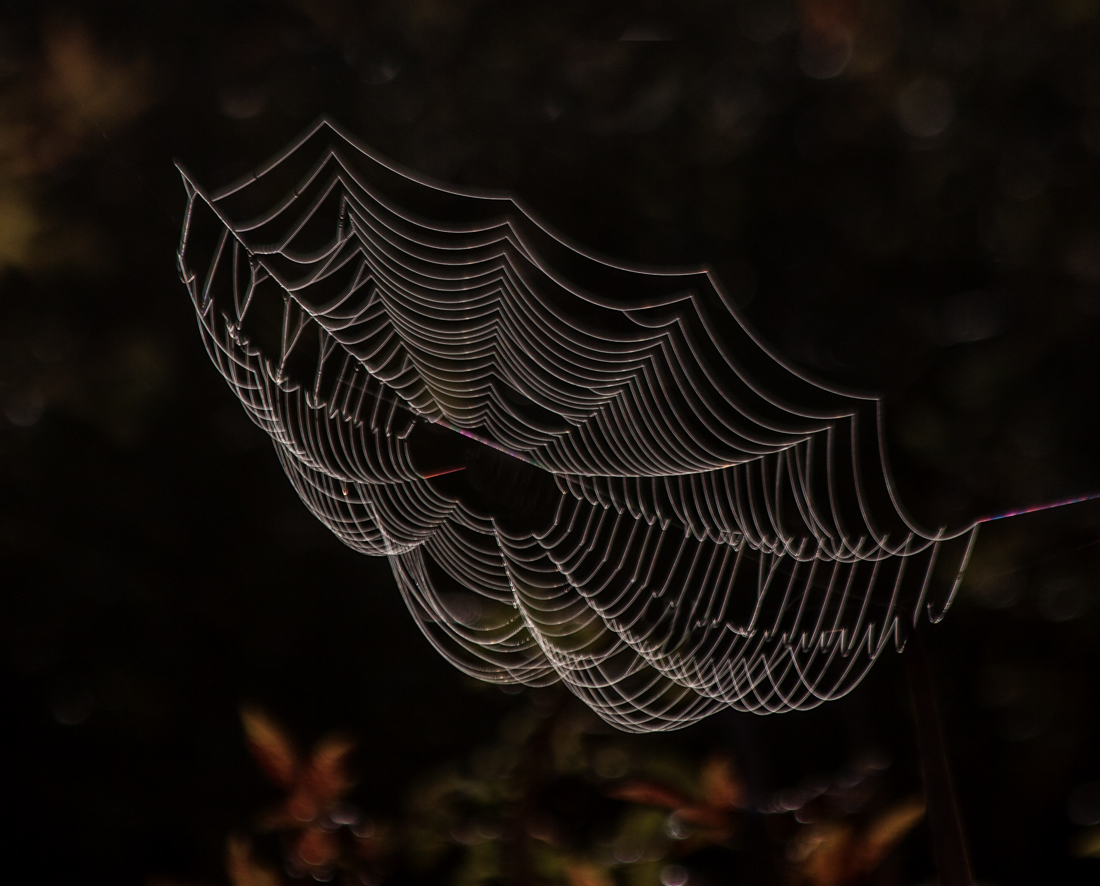
One of the joys of arriving early at the marsh at this time of the year is having the chance to see spiders’ handiwork, backlit by the rising sun.

web2_blog web3_blog

© Michael Q. Powell. All rights reserved.

Read Full Post »

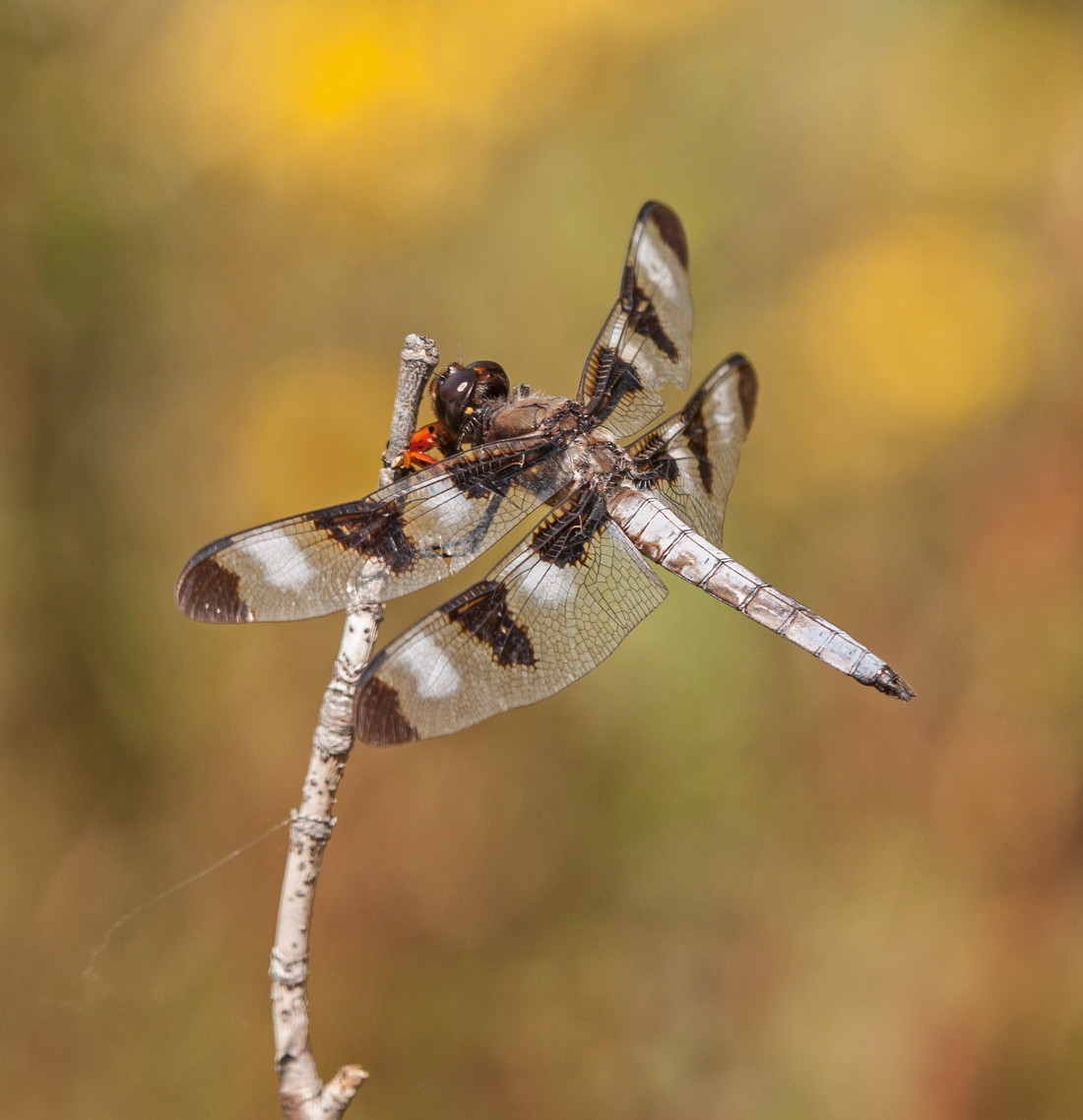
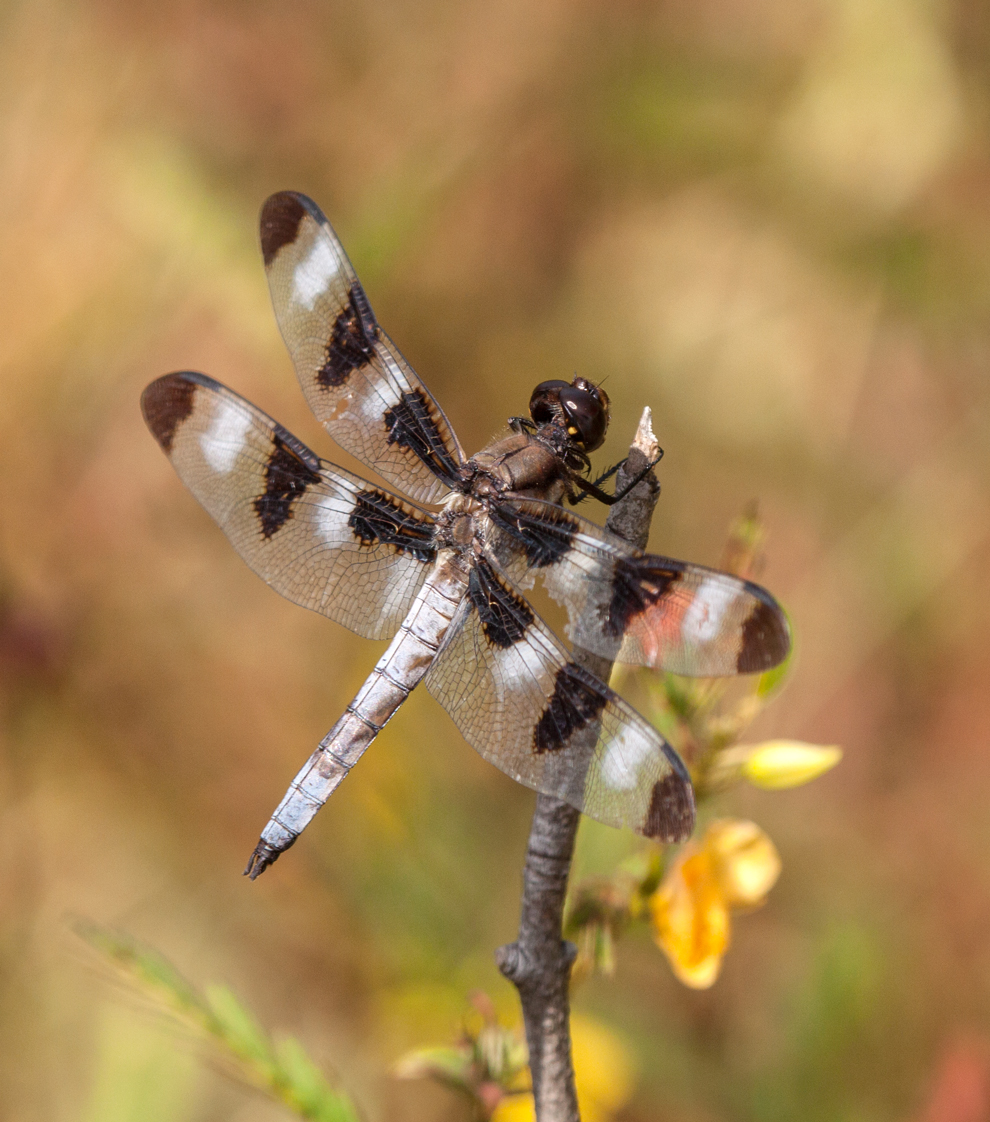
It won’t be long before most of the dragonflies are gone for the season, so I am really enjoying them while they are still around. A little over a week ago, I was able to capture images of some male Twelve-spotted Skimmer dragonflies (Libellula pulchella), a species that I had not seen previously this summer.

Twelve-spotted Skimmer

In the first shot, the dragonfly seems to be eating something that is bright red in color. I can’t tell for sure, but when I zoom in, it looks like it might be a ladybug. Whatever the case, I am happy that I was able to frame the shot to be able to get some of the yellow meadow flowers into the background.

In the other shots, I worked to get the wings into focus by shooting on a plane horizontal to their position. The dragonflies were reasonably cooperative and I am pretty happy with the resulting images.

12spot1_blog 12spot2_blog 12spot3_blog

© Michael Q. Powell. All rights reserved.

Read Full Post »

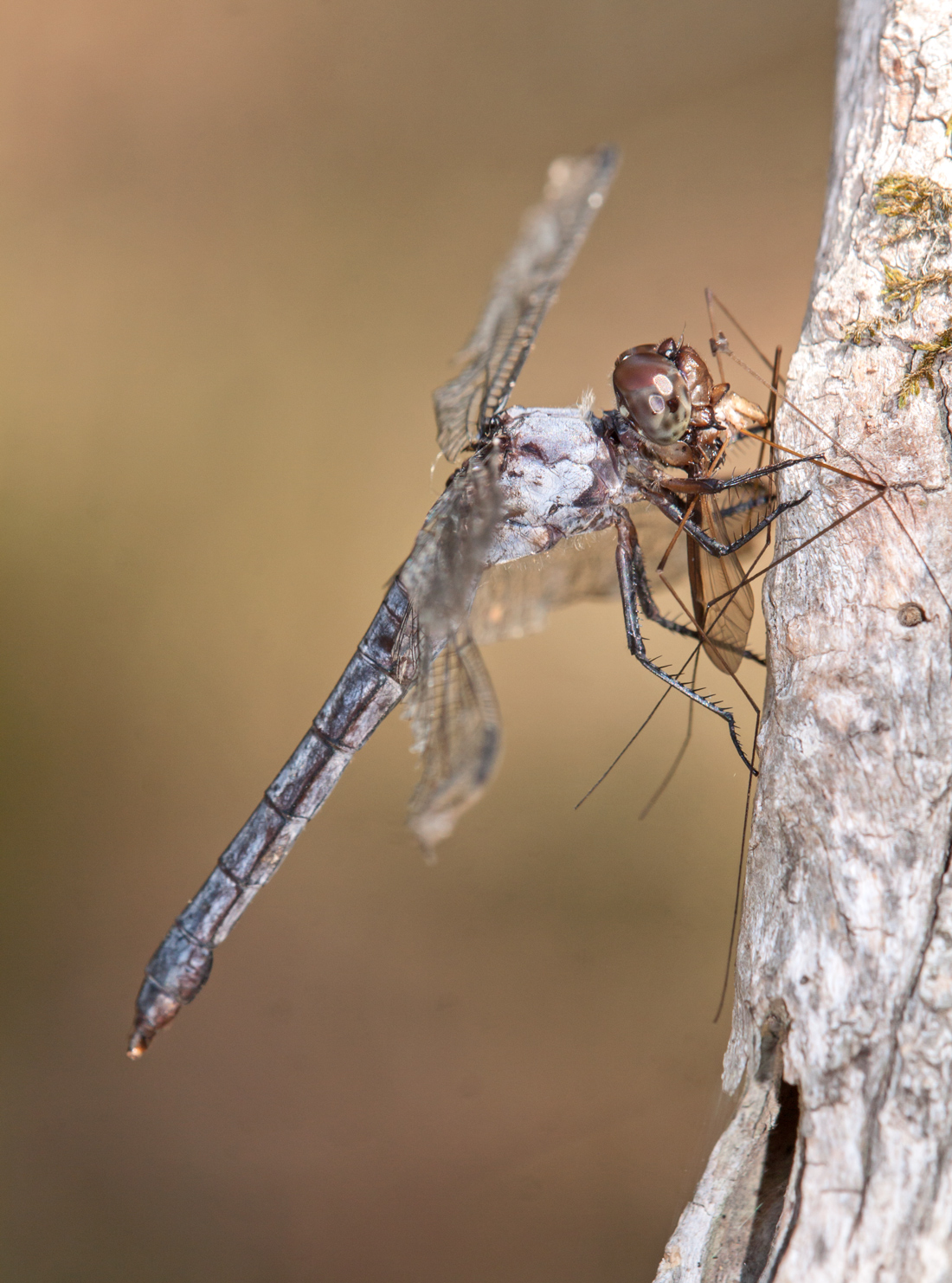
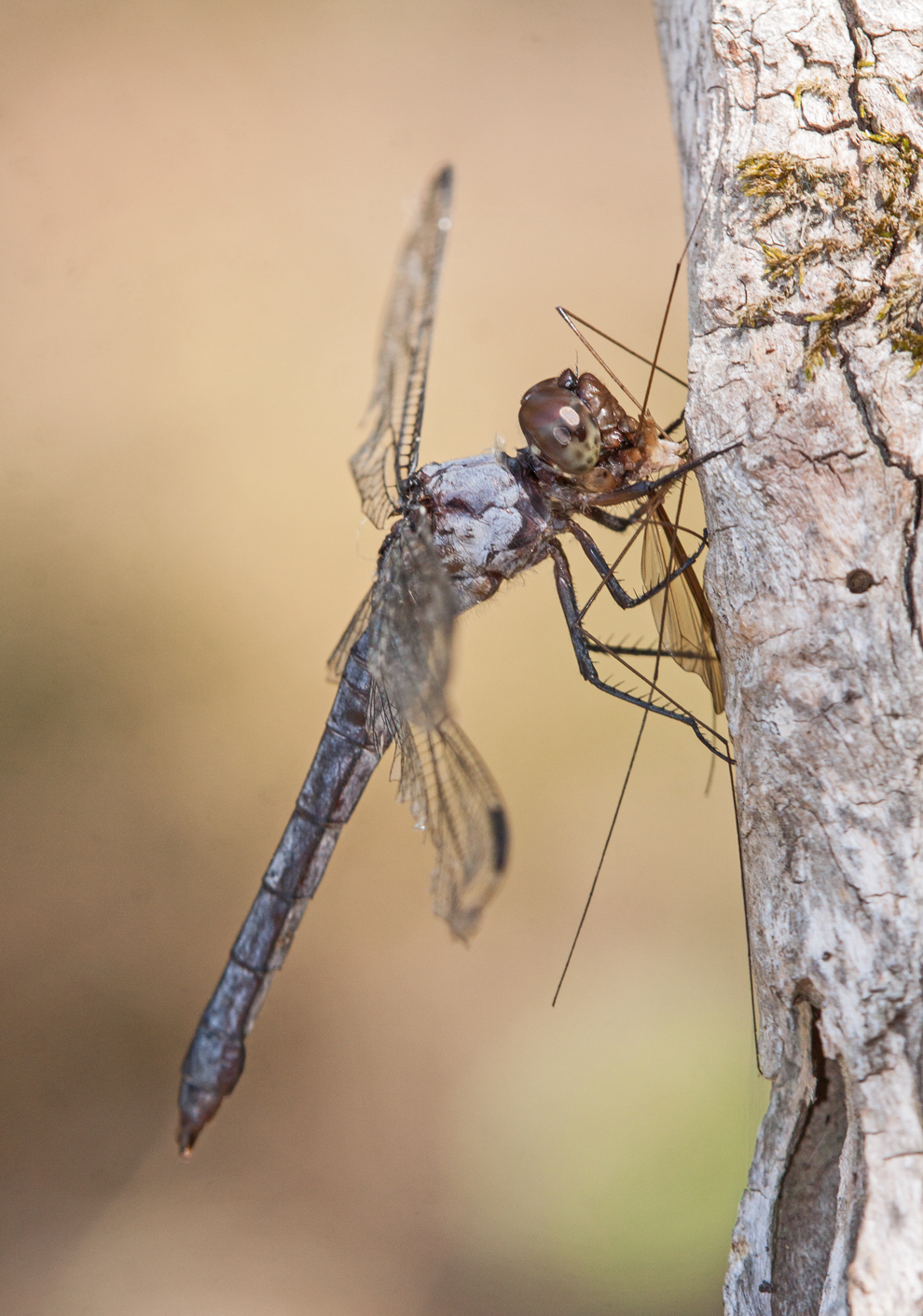
What do dragonflies eat for lunch? I stumbled upon this dragonfly earlier in September as it was beginning to enjoy a freshly caught insect. Judging from the long legs and wings of the prey, it looks like the dragonfly is munching on a crane fly.

The dragonfly was so focused on eating that it let me get pretty close without flying away and I was able to take a number of shots from different angles and with different settings. I defer to others on identification of the dragonfly species. I initially thought it was a Great Blue Skimmer, but the eye color seems wrong.

lunch3_bloglunch2_bloglunch1_blog

© Michael Q. Powell. All rights reserved.

Read Full Post »

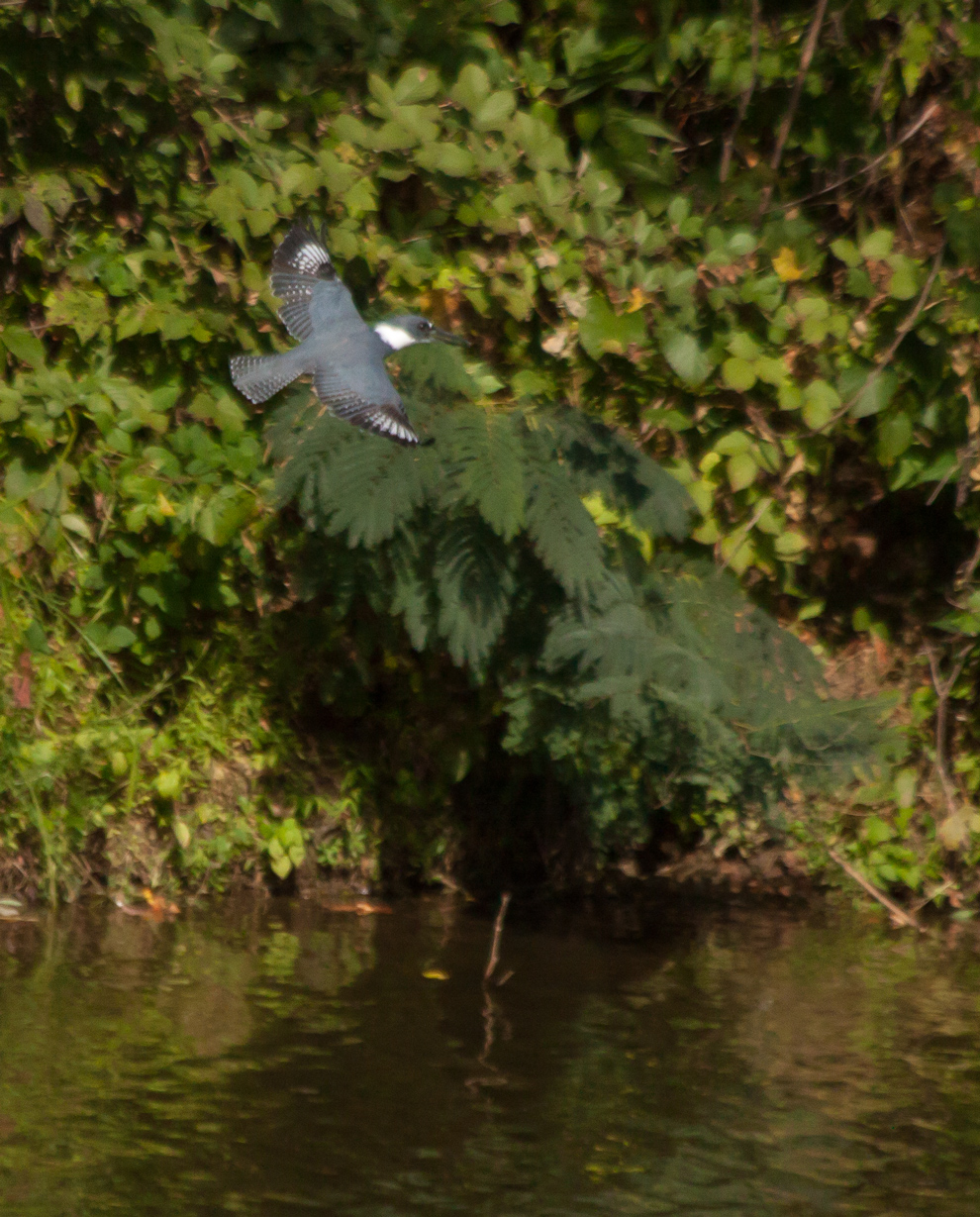
It’s autumn now and my thoughts (and my camera) are starting to focus more on birds than insects. This past weekend, I returned to a location where I had previous seen a female Belted Kingfisher (Megaceryle alcyon).  The kingfisher would perch on the limbs of some trees overlooking a small trout-stocked pond called Lake Cook, which is really more like a small pond, and periodically make a foray across the surface of the water and grab a fish.

I realized this time that I had a problem—there are so many leaves still on the trees that I couldn’t spot the kingfisher when I heard its very distinctive, rattling call. I could get a general idea of its location, but couldn’t see the kingfisher until it was already in flight, which mean I had to react really quickly to acquire and track it, hoping that I would be able to focus on it.

As it turns out, hope is not really an effective photographic technique and not surprisingly I ended up with a lot of blurry, improperly exposed images, in part because the kingfisher was flying in an out of the shadows. I was pleased, though, that I was able to capture a few decent images of the kingfisher in flight. I was shooting from across the pond from where the kingfisher was perched, so the shots are not close-ups of the bird, but are more like environmental action shots. Maybe I need a longer lens!

Belted KingfisherBelted KiingfisherBelted KingfisherBelted Kingfisher

© Michael Q. Powell. All rights reserved.

Read Full Post »

Over the last few weeks, I’ve repeatedly seen a Northern Watersnake (Nerodia sipedon) sunning itself on a log at my local marsh. I don’t know whether it was hunger or boredom that prompted it to move, but I was utterly fascinated this past weekend as I watched the snake make preparations to dive into the water.

The snake initially sensed the conditions by sticking out its tongue and then gradually slid its head into the water. After testing the water with its head, it slowly slithered into the muddy waters of the marsh, probably in search of fish or frogs.

Northern Watersnake

I’ve never before used the slideshow feature on my blog, but decided to try it out here to show a sequence of shots of the snake diving into the water. (I think the slide show starts automatically. If not, click on one of the photos and it should start.)

This slideshow requires JavaScript.

The alternative to the slide show is to do the gallery look, in which you click through the images at your own pace (and the images show up a lot bigger). Here’s the same images in that format. You start by clicking on any one of the images. Do you prefer this look?

Just for fun, here’s a blown-up view of the image in which the snake is sticking out its tongue. Click on the image (if you dare) to see a higher resolution view of the snake.

Northern Watersnake

© Michael Q. Powell. All rights reserved.

Read Full Post »

Do you have a favorite insect? I realize that’s a strange question and, if pressed, most people probably would respond with the name of a butterfly or perhaps a ladybug or a dragonfly, but my favorite is unquestionably the Handsome Meadow Katydid (Orchelimum pulchellum).

Two summers ago, I had my initial encounter with the rainbow-colored grasshopper-like insect at my local marshland park and it was love at first sight. It was so unexpected to see those beautiful blue eyes staring at me with apparent curiosity. The amazing colors of the body are so vivid and varied that one of my friends accused me of creating them in Photoshop. I can’t help but be cheered up by the mere sight of one of these beauties.

There was a lot of reconstruction work at my marsh this past year and water levels are a lot higher than in the past. All summer I waited for my friends to reappear, fearing that the changed habitat or the polar vortex of this past winter had adversely affected their survival. Suddenly, two weeks ago I started hearing from others that the Handsome Meadow Katydids were back.

Last week, I finally saw a few of these beauties myself and took this shot of one of them. In addition to the gorgeous colors, you can’t help but notice the really long legs and antennae (is one of them missing).

I don’t care who you are—you have to agree that these katydids really are handsome, even if it’s not at the top of your list. As for me, it’s still my favorite.

Handsome Meadow Katydid

© Michael Q. Powell. All rights reserved.

Read Full Post »

Sometimes when the Great Egrets (Ardea alba) are moving from one place to another at Huntley Meadows Park, my local marshland park, they fly really low, almost like they are in stealth mode and are trying to avoid being picked up on the radar.

Great Egret

Great EgretGreat Egret

© Michael Q. Powell. All rights reserved.

Read Full Post »

There is perhaps nothing more ordinary than this, a simple Cabbage White butterfly (Pieris rapae) on a small white flower (which is possibly a weed), but the ordinary can be extraordinarily beautiful.

Cabbage White butterfly

© Michael Q. Powell. All rights reserved.

Read Full Post »

One of my fellow photographers, Walter Sanford, pointed at the water and exclaimed, “Spider!” A spider in the water? Yes, fishing spiders don’t make a web and instead hunt by sensing the vibrations on the surface of the water.

There are numerous species of fishing spiders, but I think this may be a Six-spotted Fishing Spider (Dolomedes triton). Yes, I realize there are more than six white spots on its back—apparently the name refers to six dark spots on the underside of the spider, a part of the spider that I have never seen.

Six-spotted Fishing Spider

© Michael Q. Powell. All rights reserved.


Read Full Post »

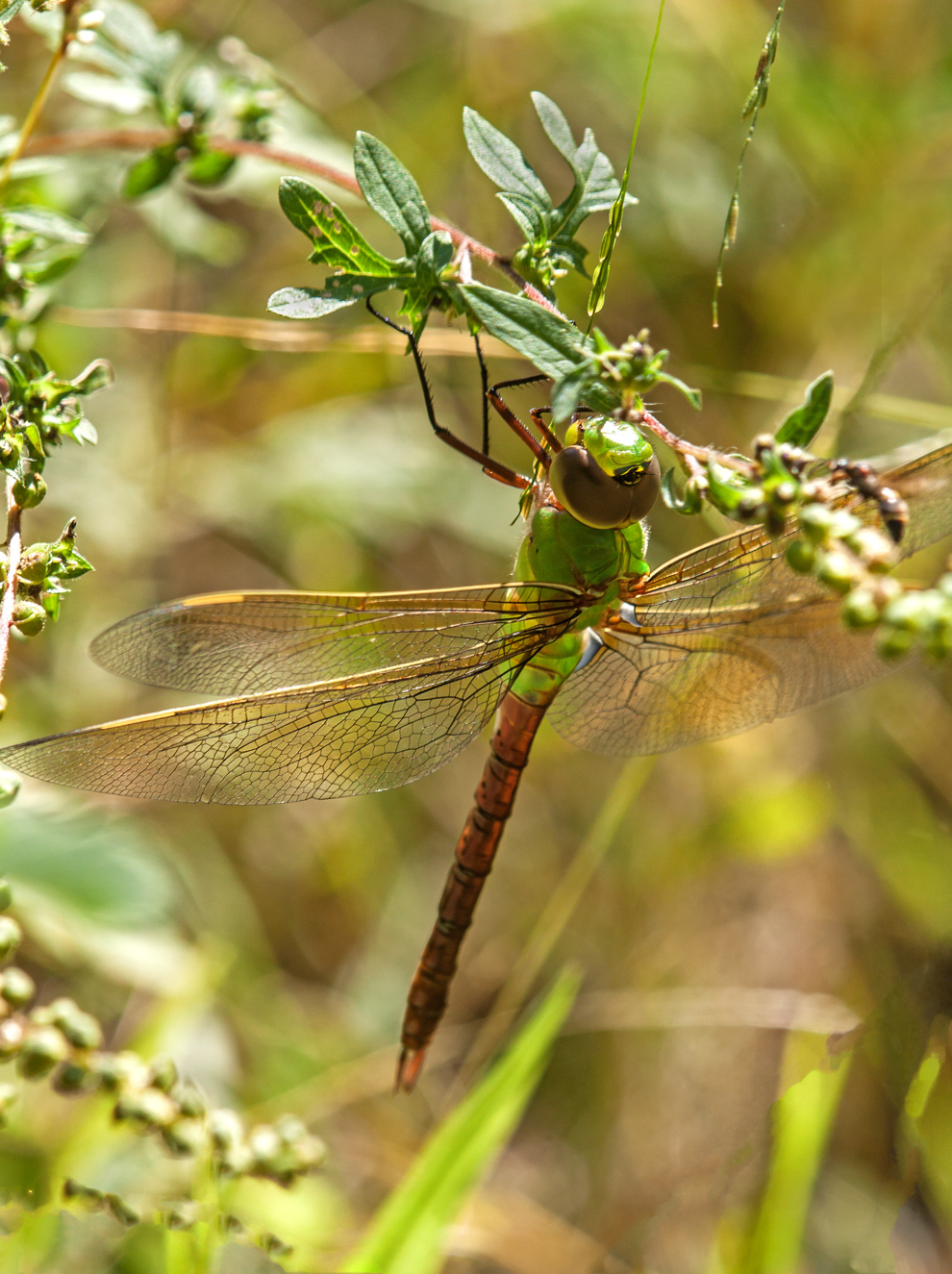
As I was walking through a meadow at my local marsh this past Monday, dragonflies would take off from the high grass and low vegetation as I approached. Most of them appeared to be Common Whitetail dragonflies (Plathemis lydia), a species that seems to like to perch on the ground.

One of the dragonflies, however, really caught my eye, because it was larger than the rest and was a pastel green in color. At first, I thought it might be a female Eastern Pondhawk (Erythemis simplicicollis), one of the few green dragonflies that I have encountered. The green dragonfly flew weakly away and came to rest on some low vegetation a short distance away. As I drew closer, I noted that the dragonfly was hanging from the vegetation and was not perching on it, so I knew it was not an Eastern Pondhawk, which perches horizontally.

When I got a clear look at the dragonfly’s body, I could see that it was shaped like a darner, and I concluded the beautifully-colored dragonfly was probably a young Common Green Darner (Anax junius), judging from its shape and pale coloration. I hadn’t really considered the possibility that this might be a Green Darner, because dragonflies of this species are really strong fliers and I had never seen one behave like this.

I’m going out shooting later today, searching for more beautiful butterflies and dragonflies, enjoying the good news that they are still here with us.

Common Green DarnerCommon Green Darner

© Michael Q. Powell. All rights reserved.

Read Full Post »

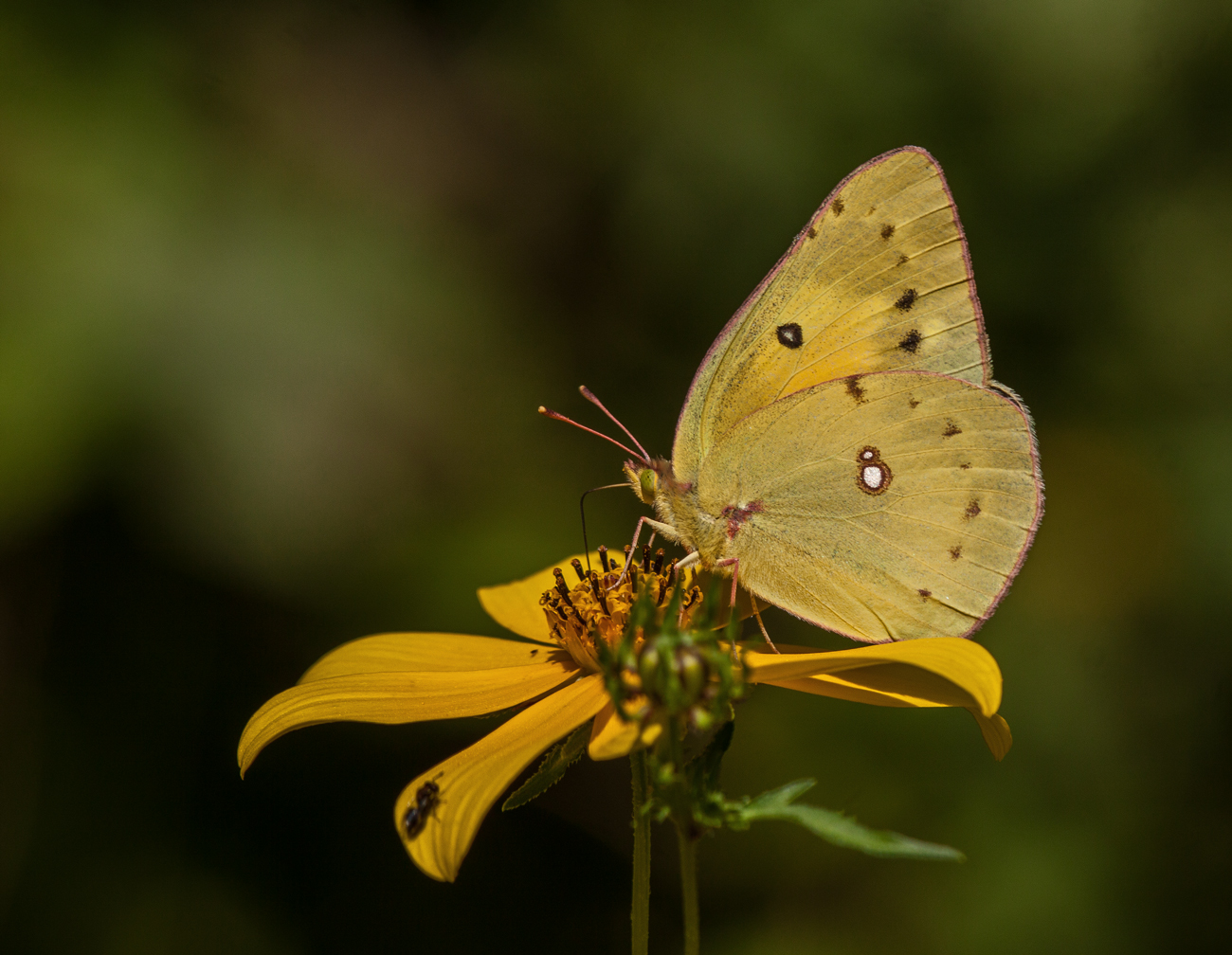
Strange as it seems, I have been seeing more butterflies in the waning days of summer than I did at its height. I think that this little beauty, which I spotted on Monday at my local marshland park, is a Clouded Sulphur butterfly (Colias philodice).

Clouded Sulphur

© Michael Q. Powell. All rights reserved.

Read Full Post »

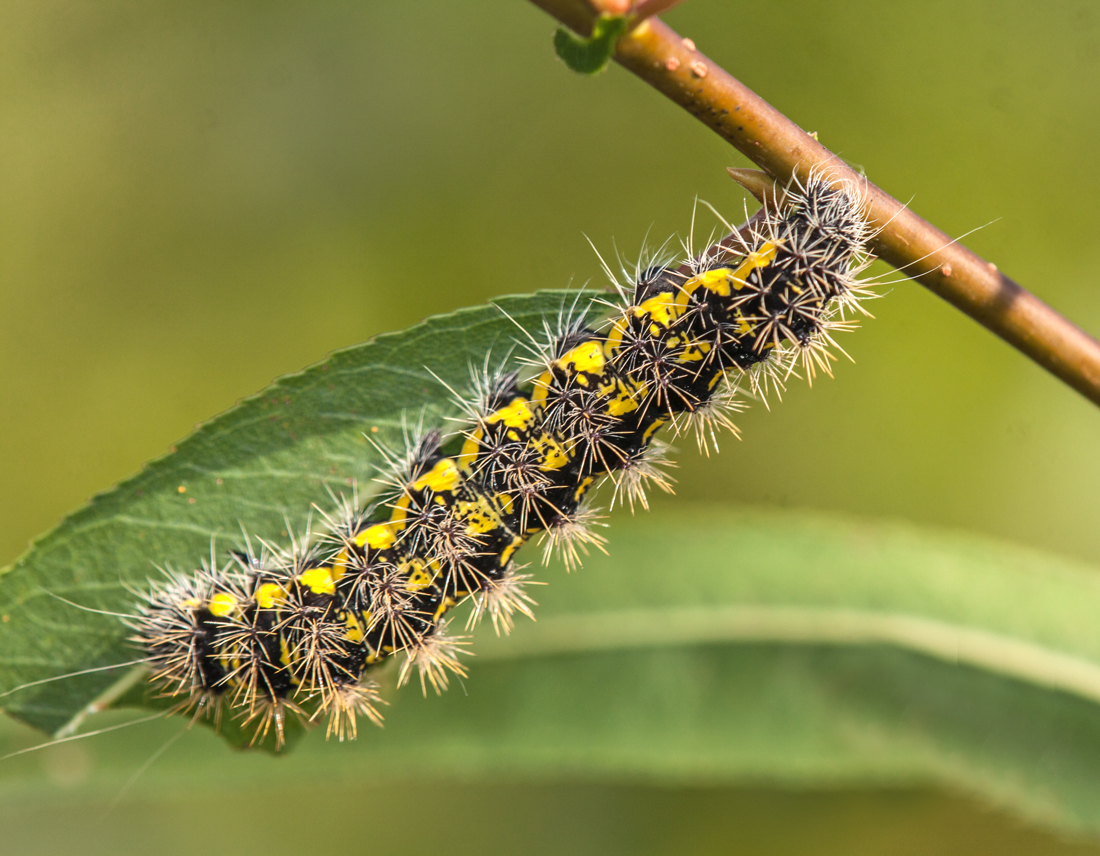
I love to photograph insects with cool or unusual names, like this caterpillar known as the Smeared Dagger Moth Caterpillar (Acronicta oblinita). Who makes up these crazy names? Freddy Krueger? Jason? Someone obviously had been been watching too many slasher or horror films.

The first time that I photographed this caterpillar, I called it the Pittsburgh Steelers caterpillar, because its colors matched those of the Steelers’ uniforms. I even proposed that the Steelers adopt the caterpillar as a mascot, but the idea didn’t catch on—a fuzzy caterpillar probably doesn’t match the Steelers macho image anyways.

Now that I have captured the Smeared Dagger, I’m searching for one of my previous subjects, the Twice-stabbed Stink Bug (Cosmopepla lintneriana). Yes, that’s a real insect. You can’t just make this stuff up, or maybe you can.

Smeared Dagger Moth caterpillar

© Michael Q. Powell. All rights reserved.

Read Full Post »

I ran into a painted lady yesterday in a meadow at my local marshland park. No, I did not have a secret rendezvous with a tattooed female, but a chance encounter with this beauty, a Painted Lady butterfly (Vanessa cardui).

Painted Lady

The weather is getting cooler and the days are getting shorter, but as long as butterflies are still flying, it feels like summer to me.

© Michael Q. Powell. All rights reserved.

Read Full Post »

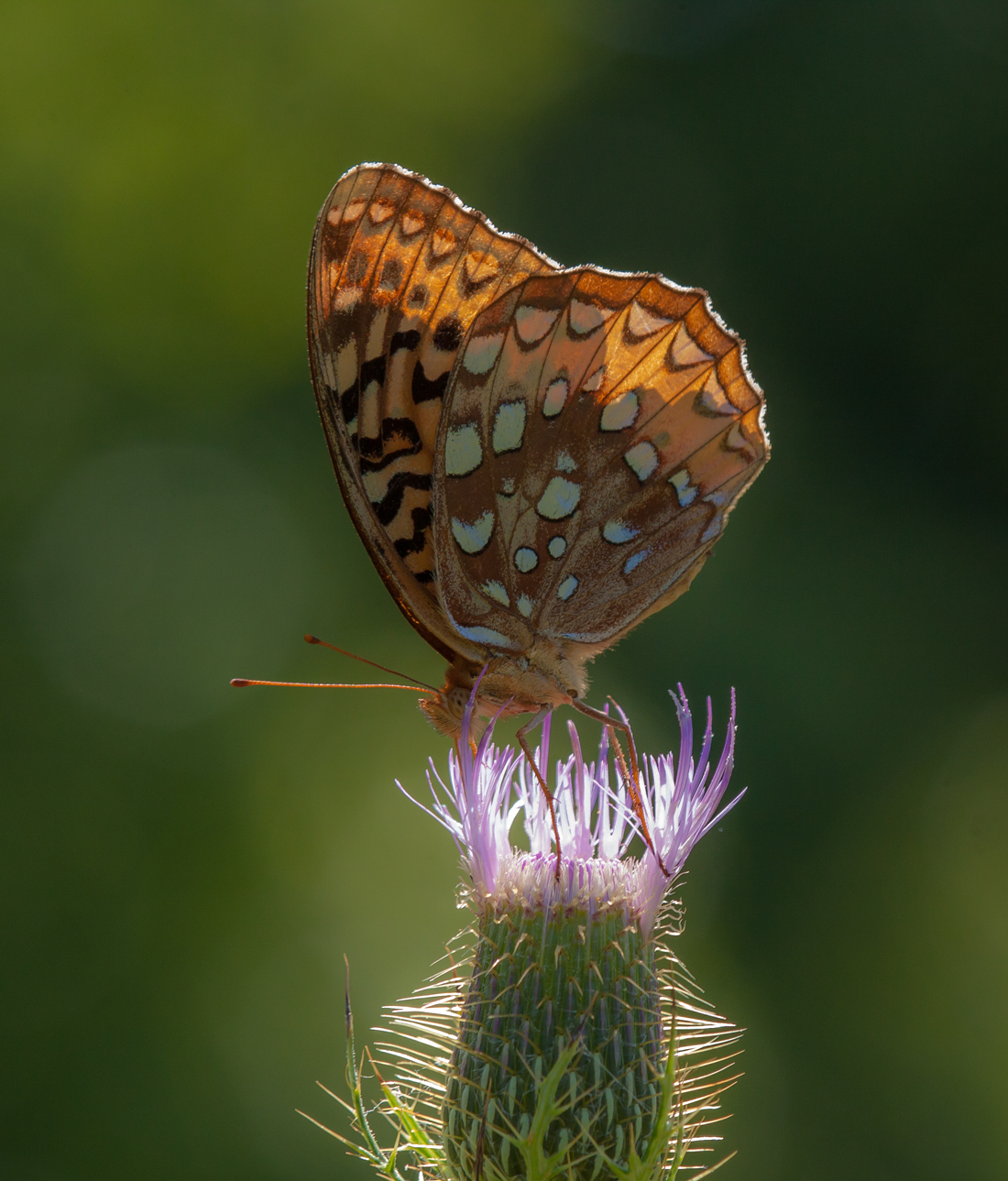
As this Great Spangled Fritillary butterfly (Speyeria cybele) moved about on a flower, the light hit it in different ways, beautifully illuminating its colorful wings.


© Michael Q. Powell. All rights reserved.


Read Full Post »

When you photograph something really cool, do you return to the same location with the hope of finding your subject again? In late August, I spotted a Mocha Emerald dragonfly (Somatochlora linearis) for the first time and was really excited, but I wanted to get some better shots.

Over the course of this summer, I have learned that some dragonflies are very habitat-specific—you can only find them in places where the water or vegetation have certain characteristics. So I returned on the 5th of September and followed the same shallow stream and was thrilled to find another Mocha Emerald. Initially I caught sight of the dragonfly in flight and wasn’t sure that it was a Mocha Emerald until it landed. Only them could I see the really narrow abdomen and unusual terminal appendage that are characteristic of this species.

Getting a shot was a bit of a technical challenge. The area was heavily shaded, but there was some light coming in from directly behind the dragonfly, creating a silhouette. I cranked up the ISO to 1250 and underexposed a bit and got the second image below after a bit of post processing. I decided to use my pop-up flash to try to balance the light coming from the back and got the first image, my favorite one.

However, I really wanted to get more of the wings into the photo and I started to circle around the perched dragonfly. Unfortunately, one foot slid into the water of the shallow stream and I composed the third shot with one foot in the water and one on the bank, not exactly an optimal shooting position.

When I tried to continue my movement to frame the dragonfly from a different angle, it flew away. I suspect that the Mocha Emeralds are now gone from the season, but I may return one last time to that location to see if there are any stragglers. I might get lucky again.

Mocha Emeraldmocha_2_blogmocha_3._blog

© Michael Q. Powell. All rights reserved.

Read Full Post »

During these last few days of summer, the bees seem especially busy. I love the sight of bees covered in pollen, especially unusual ones like this striped bee (I think it is a bee, but would welcome corrections to my identification).

bee_summer_blog

© Michael Q. Powell. All rights reserved.

Read Full Post »

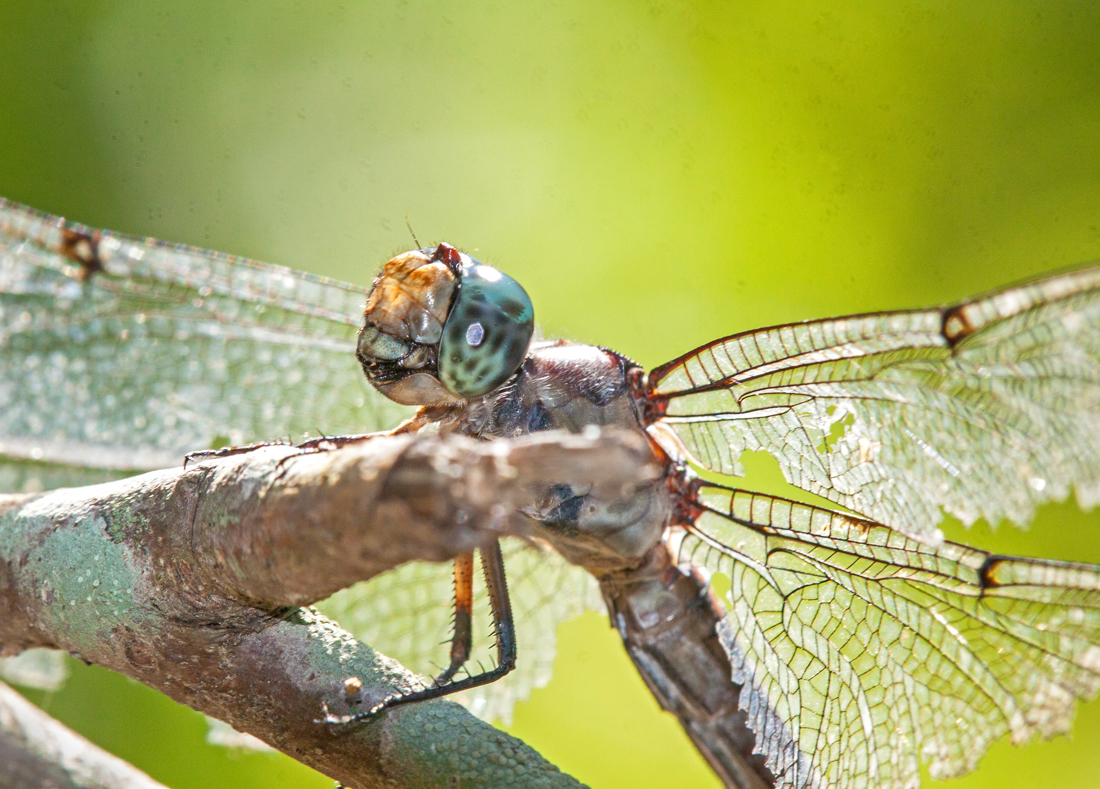
One of the dangers of shooting with a macro lens is that I am often so focused on shooting close-up that I forget to step back and look at the bigger picture.

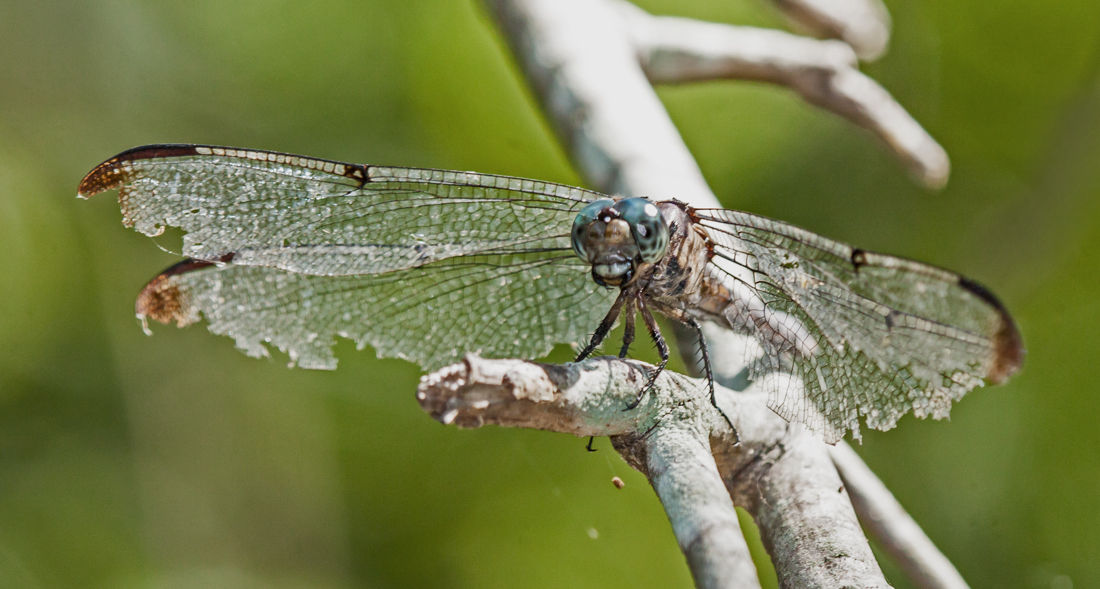
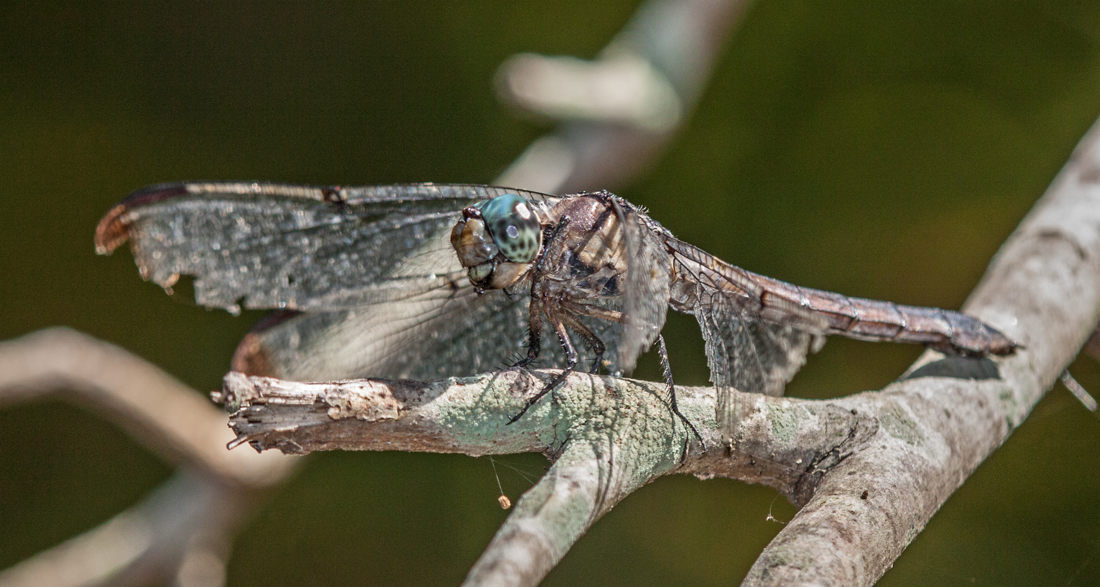
A couple of days ago, I posted a photo of a dragonfly basking in the sun and felt pretty content that I had been able to capture a detailed shot of its eyes and face. I had instantly gravitated to several close-up images to the point that I temporarily forgot that my initial shots had been from a greater distance. As a result, I made my preliminary identification on the basis of the facial shot alone.

After I posted the image on Facebook, one of my fellow photographers, Walter Sanford, who is much more of an expert on dragonflies than I am, asked me if I had any shots of the dragonfly’s entire body, probably with a desire to check my identification. When I reviewed my more distant shots of the dragonfly, I was immediately struck by how tattered the wings were of this female Great Blue Skimmer (Libellula vibrans). Sure, I’ve seen lots of dragonflies with minor damage to the wings, but these are seriously tattered.

When I posted these follow-up images on Facebook, Walter replied, “Definitely an old female Great Blue Skimmer dragonfly, as indicated by its tattered wings, coloration, and flanges beneath the eighth abdominal segment. The flanges are used to scoop and hold a few drops of water when laying eggs (oviposition), hence the family name “skimmer.” ”

Be sure to check out Walter’s blog for his wonderful shots of dragonflies and his more  scientific descriptions of his subjects. My background was more in the liberal arts area rather than in science, and my writing in my blog tends to be a reflection of that background.
tattered_blog tattered2_blog


© Michael Q. Powell. All rights reserved.

Read Full Post »

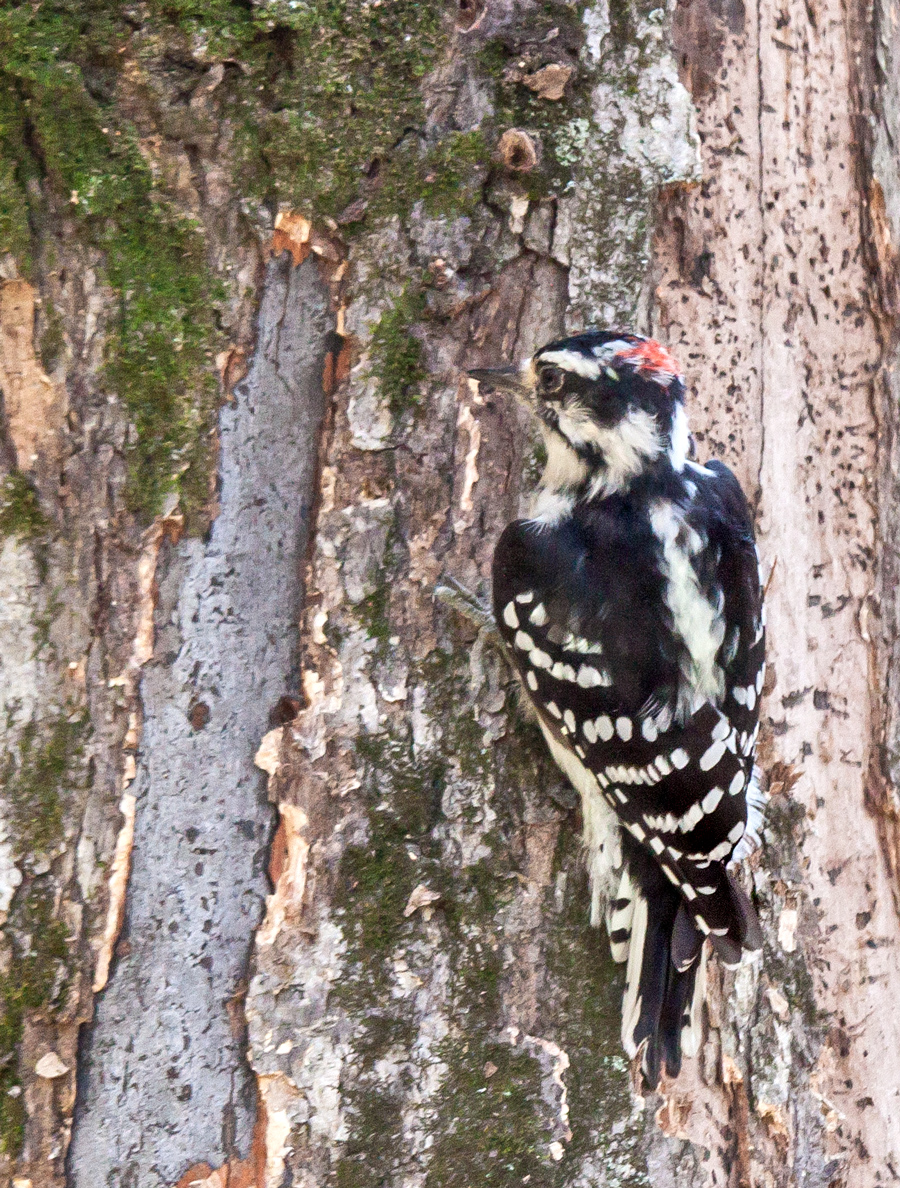
I don’t know where they have been hiding, but for several months this summer I hadn’t seen a single woodpecker at my local marsh. Consequently, I was really happy when I sighted this Downy Woodpecker (Picoides pubescens) right in front of me this past weekend. Downy Woodpeckers are small, but they make up for what they lack in size with an amazing amount of energy—they never seem to stand still.

downy_fall_blog

© Michael Q. Powell. All rights reserved.

Read Full Post »

I was suffering in the heat and humidity on Friday, but this dragonfly, which I think is a female Great Blue Skimmer (Libellula vibrans), seemed to enjoy basking in the sunlight and let me get really close for this shot.

dragon_superclose_blog

© Michael Q. Powell. All rights reserved.

Read Full Post »

As I gazed across the little creek that I was following, I spotted a spider hanging in midair. The spider scrambled up one of its silken threads as I approached and stopped just short of the branch from which it had been hanging. It was pretty dark in the shade, so I cranked up the ISO to 1250, popped up the built-in flash, and propped the camera against another tree for stability.

Of the images that I attempted, this is the best one I managed of what I believe is a Spotted Orbweaver spider (Neoscona crucifera).

Neoscona crucifera

© Michael Q. Powell. All rights reserved.

Read Full Post »

For the first time in my experience, ospreys have been hanging out at my local marsh this summer, probably because of the higher water levels as a result of a massive wetland restoration project. I love watching the ospreys soaring high in the air. They are generally too far aware for me to capture their high-speed dives into the water, but occasionally I will see one catch a fish. Recently I captured some shots of the various wing positions of an osprey flying away with its freshly caught fish.

© Michael Q. Powell. All rights reserved.


Read Full Post »
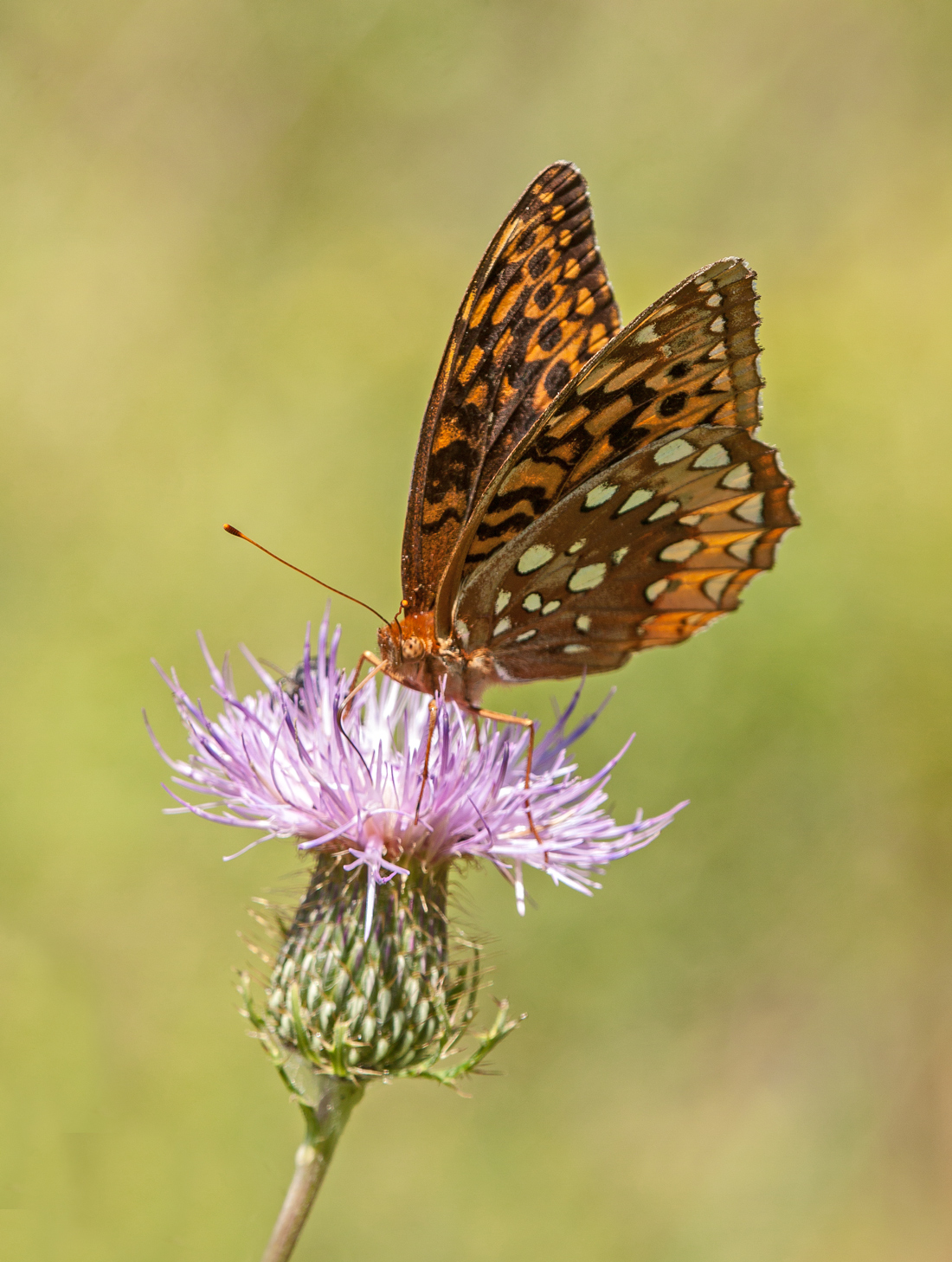
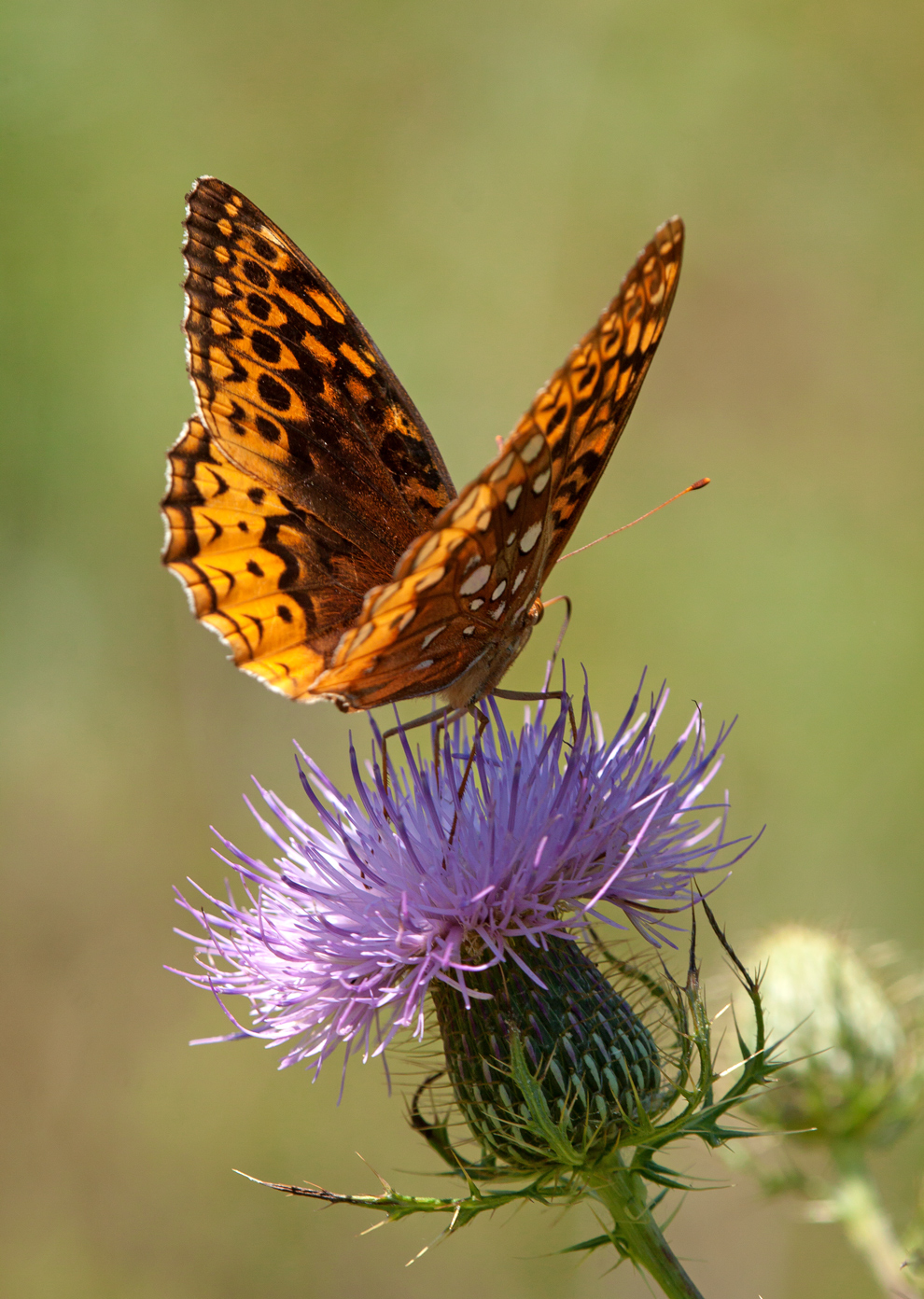
As I came out of the woods into a meadow at my local marshland park, I caught sight of some bright orange butterflies, which I could immediately identify as Great Spangled Fritillary butterflies (Speyeria cybele). The butterflies were concentrating their attention on a small cluster of plants which looked to be some kind of thistle.

I moved closer to get some shots, wading through the vegetation, which by this time of the summer is chest-high. I’ve already learned the hard way about the “joys” of chiggers and ticks, but I tossed my concerns to the side and boldly stepped forward. Fortunately for me, the butterflies were distracted with their feeding activity and did not fly away at my approach.

The sunlight was pretty strong and the look of the photo changed a lot as I circled around the butterflies, as you can see from the images below. I took a lot of shots, some of which I have not yet processed, but I was so happy with the images that I captured that I figured I better post some while it is still summer. Don’t be surprised if you see a few more images like this in the near future.

Great Spangled Fritillary

Great Spangled FritillaryGreat Spangled Fritillary

© Michael Q. Powell. All rights reserved.

Read Full Post »

« Newer Posts - Older Posts »