October 18, 2020 by Mike Powell
My idea of a perfect bird shot during this autumn season would be to capture a pretty bird perfectly posed against a background of colorful foliage. Alas, things don’t often work out that well in the real world, so I have to make the best of what I am able to find.
In this case, it was a Gray Catbird (Dumetella carolinensis) that I spotted during a recent visit to Occoquan Bay National Wildlife Refuge. The feathers of this catbird are muted in color, as are the colors of the dying leaves that surround it. Nonetheless, I like this rather pleasing portrait of a bird that has a vocal repertoire equal to that of a mockingbird.

© Michael Q. Powell. All rights reserved.
Posted in Autumn, Birds, Nature, Photography, Portraits, wildlife | Tagged Canon 50D, Dumetella carolinensis, gray catbird, Occoquan Bay National Wildlife Refuge, Tamron 150-600mm, Woodbridge VA | 12 Comments »
October 18, 2020 by Mike Powell
Flowers are slowing giving up their colors and fewer insects are flying as we move deeper into fall. It lifts my spirits to see the survivors, like this Cabbage White butterfly (Pieris rapae) that I spotted during a trip to Occoquan Bay National Wildlife Refuge at the end of September. The Cabbage White may appear to be completely monochromatic, but if you double-click on the image, you can get a look at its beautiful speckled green eyes.

© Michael Q. Powell. All rights reserved.
Posted in Autumn, Butterflies, Insects, Nature, Photography, wildlife | Tagged Cabbage White, Cabbage White butterfly, Canon 50D, Occoquan Bay National Wildlife Refuge, Pieris rapae, Tamron 180mm, Woodbridge VA | 13 Comments »
October 17, 2020 by Mike Powell
Large black spiders are often associated with Halloween—many people find them to be merely spooky, but some are totally creeped out by them. Maybe the spiders need better marketing and a new poster child for the autumn holidays. I would nominate this colorful Marbled Orbweaver spider (Araneus marmoreus) that I spotted on Thursday at Huntley Meadows Park.
When I spotted this spider, I was immediately attracted to the way that the light was illuminating its legs from behind and causing them to glow. As I made adjustments to my camera settings, I was a little shocked to see the beautiful orange coloration and intricate patterns on the spider’s body. The oval body brought to mind a kind of stylized jack-o’-lantern and I later learned that one of the informal names for this spider is “pumpkin spider.”
For many of us this is the season for voting. Would you vote for this spider as a new autumn mascot?

© Michael Q. Powell. All rights reserved.
Posted in Arachnids, Autumn, Macro Photography, Nature, Photography, spiders, wildlife | Tagged Alexandria VA, Araneus marmoreus, Canon 50D, Huntley Meadows Park, Marbled Orbweaver, Marbled Orbweaver spider, Tamron 180mm | 28 Comments »
October 16, 2020 by Mike Powell
On Wednesday I travelled to Huntley Meadows Park with fellow dragonfly enthusiast Walter Sanford in search of some late-season species. A vernal pool in the woods, where we had seen them in the past, unfortunately has largely filled in with dense vegetation over the course of the last few years. The changed habitat appears to have caused out target species to disappear and we left that area empty-handed.
Fortunately, though, there are other areas in the park to explore, including a boardwalk that runs through a wetland areal, and we did manage to get some shots of other subjects. The day was starting to come to a close and we started down a gravel-covered trail heading for the parking lot. As I was scanning the vegetation on the side of the trail I suddenly caught sight of a spreadwing damselfly perching in a patch of greenbrier vines.
I was not sure what species it was, but Walter initially identified it as a female Southern Spreadwing damselfly (Lestes australis), but a closer examination of the photos of the dragonfly by an even more experienced dragonfly revealed that it is a female Slender Spreadwing (Lestes rectangularis). The damselfly was reasonably cooperative and perched in a couple of different places on the vines before it flew away.
Walter and I shoot with very different gear configurations and we often like to do complementary blog postings to show how two photographers shooting the same subject can produce somewhat different results. I was shooting with my Canon 50D and Tamron 150-600mm zoom lens, which has a minimum focusing distance of 8.9 feet (2.7 meters), so I had to be pretty far from the damselfly to get a shot and focused manually. I was also using a monopod for stability. Walter was shooting with a Panasonic Lumix DMC-FZ300 superzoom camera and a full-sized flash and was able to get a bit closer to our subject and composed his shots from different angles.
Be sure to check out Walter’s blog posting today entitled “Slender Spreadwing damselfly (female)” to read his narrative and see his excellent photos of this beautiful female Slender Spreadwing damselfly.


© Michael Q. Powell. All rights reserved.
Posted in Autumn, damselfly, Insects, Nature, Photography, wildlife | Tagged Alexandria VA, Canon 50D, greenbrier vines, Huntley Meadows Park, Lestes australis, Lestes rectangularis, Slender Spreadwing, Slender Spreadwing damselfly, Southern Spreadwing, Southern Spreadwing damselfly, Tamron 150-600mm, Walter Sanford | 11 Comments »
October 15, 2020 by Mike Powell
Red Admiral butterflies (Vanessa atalanta) are quite common in my area, but for some unknown reason I have not seen very many of them this year. I was therefore quite happy to spot this one during a recent visit to Occoquan Bay National Wildlife Refuge. In this image, the red leaf in the bottom of the frame helps to remind us that we are well into autumn and more and more of the foliage is changing colors or dropping to the ground—after a recent heavy rainstorm, the grown was covered with fallen leaves.

© Michael Q. Powell. All rights reserved.
Posted in Autumn, Butterflies, Insects, Nature, Photography, wildlife | Tagged Canon 50D, Occoquan Bay National Wildlife Refuge, Red Admiral, Red Admiral butterfly, Tamron 180mm, Vanessa atalanta, Woodbridge VA | 17 Comments »
October 14, 2020 by Mike Powell
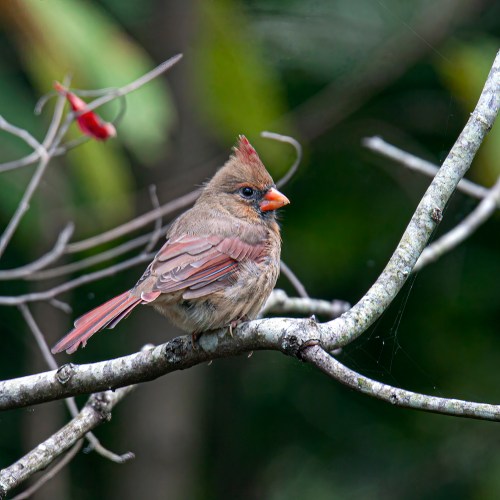
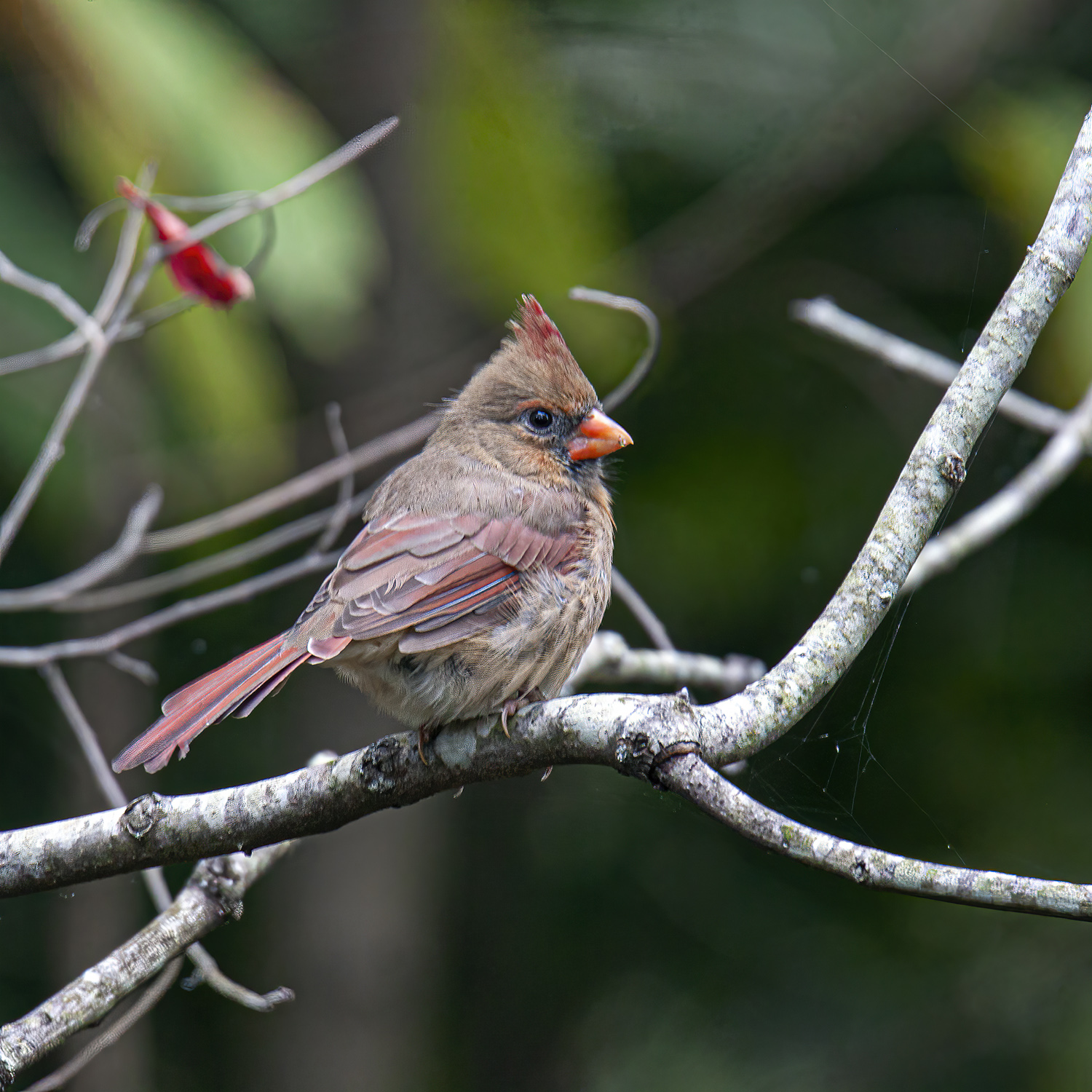
Although I really like the bright red color of the male Northern Cardinal (Cardinalis cardinalis), there is something even more special about the subtle beauty of a female cardinal, like this one that I spotted last week at Occoquan Bay National Wildlife Refuge. The muted colors of this bird seem particularly appropriate for autumn in this area. The changing foliage here rarely has the brilliant yellows and reds found in other parts of the country, but transitions to paler shades before the leaves all fall to the ground.
© Michael Q. Powell. All rights reserved.
Posted in Autumn, Birds, Nature, Photography, Portraits, wildlife | Tagged Canon 50D, Cardinalis cardinalis, female Northern Cardinal, Northern cardinal, Occoquan Bay National Wildlife Refuge, Tamron 150-600mm, Woodbridge VA | 12 Comments »
October 13, 2020 by Mike Powell
As I was walking along one of the trails recently at Occoquan Bay National Wildlife Refuge, my eyes were drawn to the bright orange of a patch of fungus. Orange is one of the colors that I tend to associate with autumn and with holidays like Halloween and Thanksgiving, so I was feeling very seasonal. I do not know my fungi very well, but I think that this might be Chicken of the Woods (Laetiporus sulphureus).
From what I have read, this mushroom can be used as a substitute for chicken and can be sautéed, deep fried, baked, and used in soups. I prefer to enjoy its beauty with my eyes only—the consequences of eating the wrong mushroom can be pretty dire.
The third image gives you an overall view of the mushroom “patch.” However, I had a macro lens on my camera, so I had fun exploring the different elements of the scene. The first image reminds me of Halloween candy corn, a traditional candy that most people either love or hate. In the second image, I was attracted to the circular rows of water droplets that paralleled the rings of colors of the mushroom.


© Michael Q. Powell. All rights reserved.
Posted in Macro Photography, Photography | Tagged Canon 50D, Chicken of the Woods, Laetiporus sulphureus, Occoquan Bay National Wildlife Refuge, Tamron 180mm, Woodbridge VA | 31 Comments »
October 12, 2020 by Mike Powell
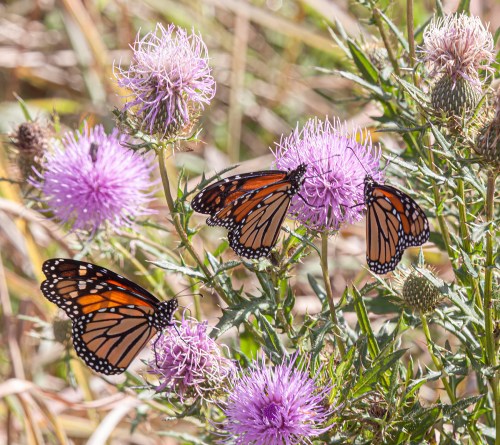
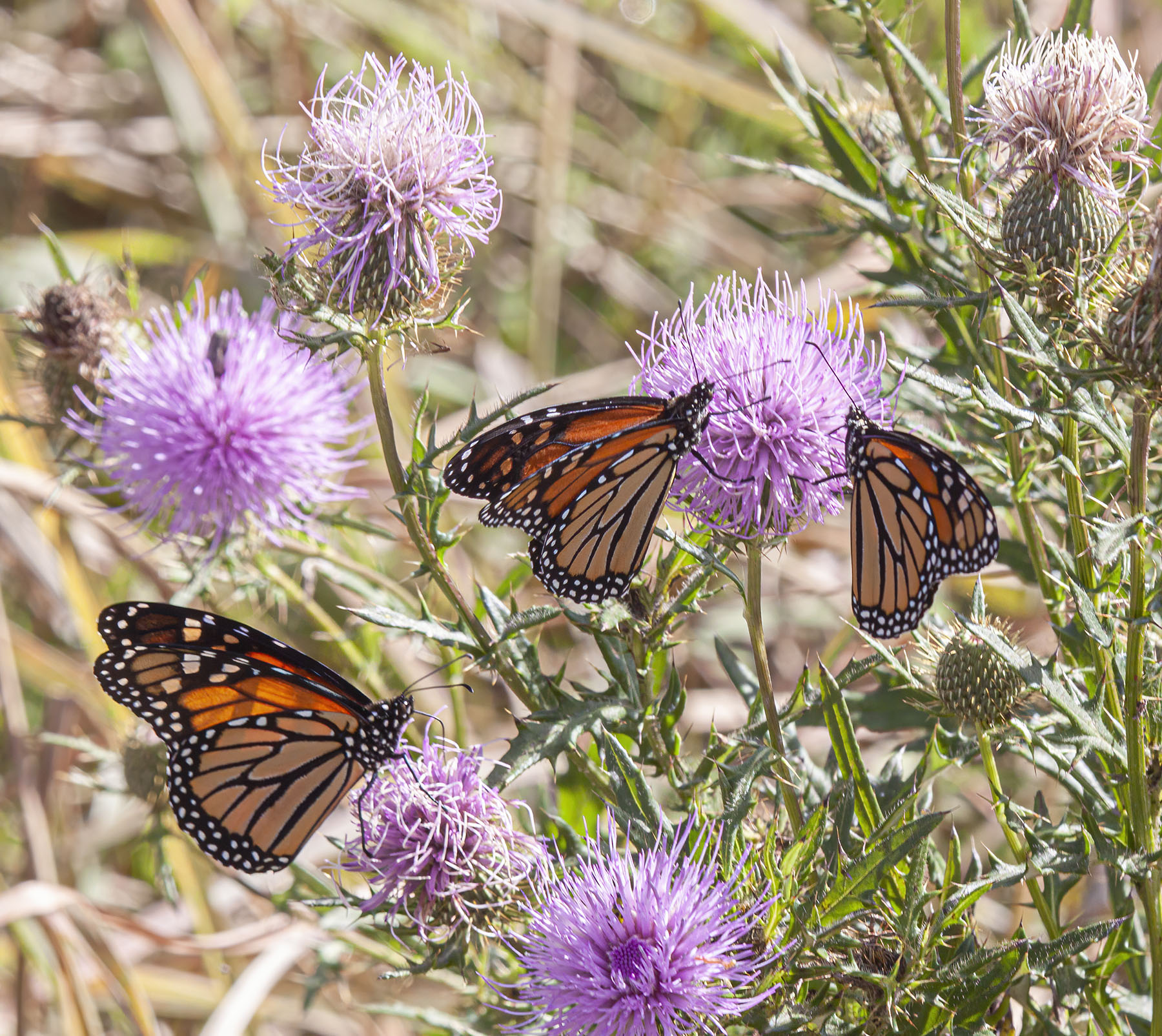
As many of you know, I am always excited to see a Monarch Butterfly (Danaus plexippus). This season started slowly and after a few months I feared that I would not see any of them at all. However, late in the season I began to spot them at multiple locations. Often they were by themselves and only occasionally did I see two of them in the same location.
Imagine my joy when I managed to capture three of them in a single shot on the first of October at Occoquan Bay National Wildlife Refuge, long after I expected them to have migrated out of our area. The butterflies were feverishly feeding on some thistles that were flowering, probably packing in energy for the long migratory journey south.
I suspect that this will be my last sighting of this colorful butterfly species this year. I bid these three monarchs farewell and wish them a safe onward journey.
© Michael Q. Powell. All rights reserved.
Posted in Autumn, Butterflies, Insects, Nature, Photography, wildlife | Tagged Canon 50D, Danaus plexippus, migrating butterflies, Monarch, monarch butterfly, Occoquan Bay National Wildlife Refuge, Tamron 180mm, Woodbridge VA | 18 Comments »
October 11, 2020 by Mike Powell
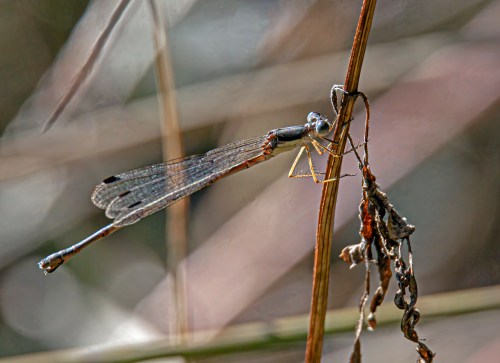
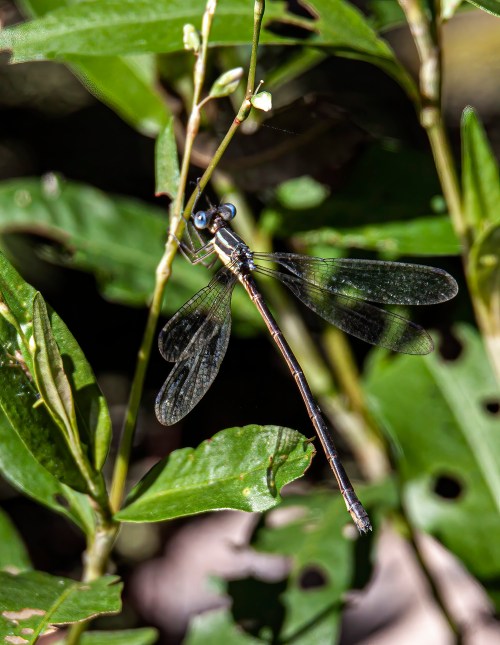
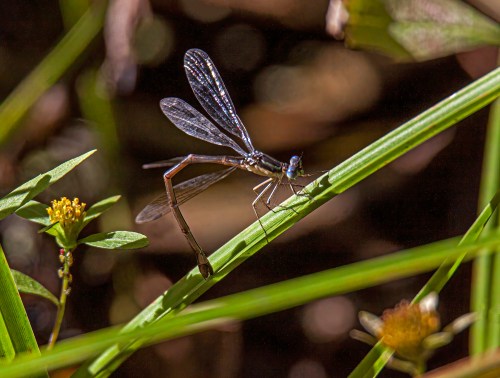
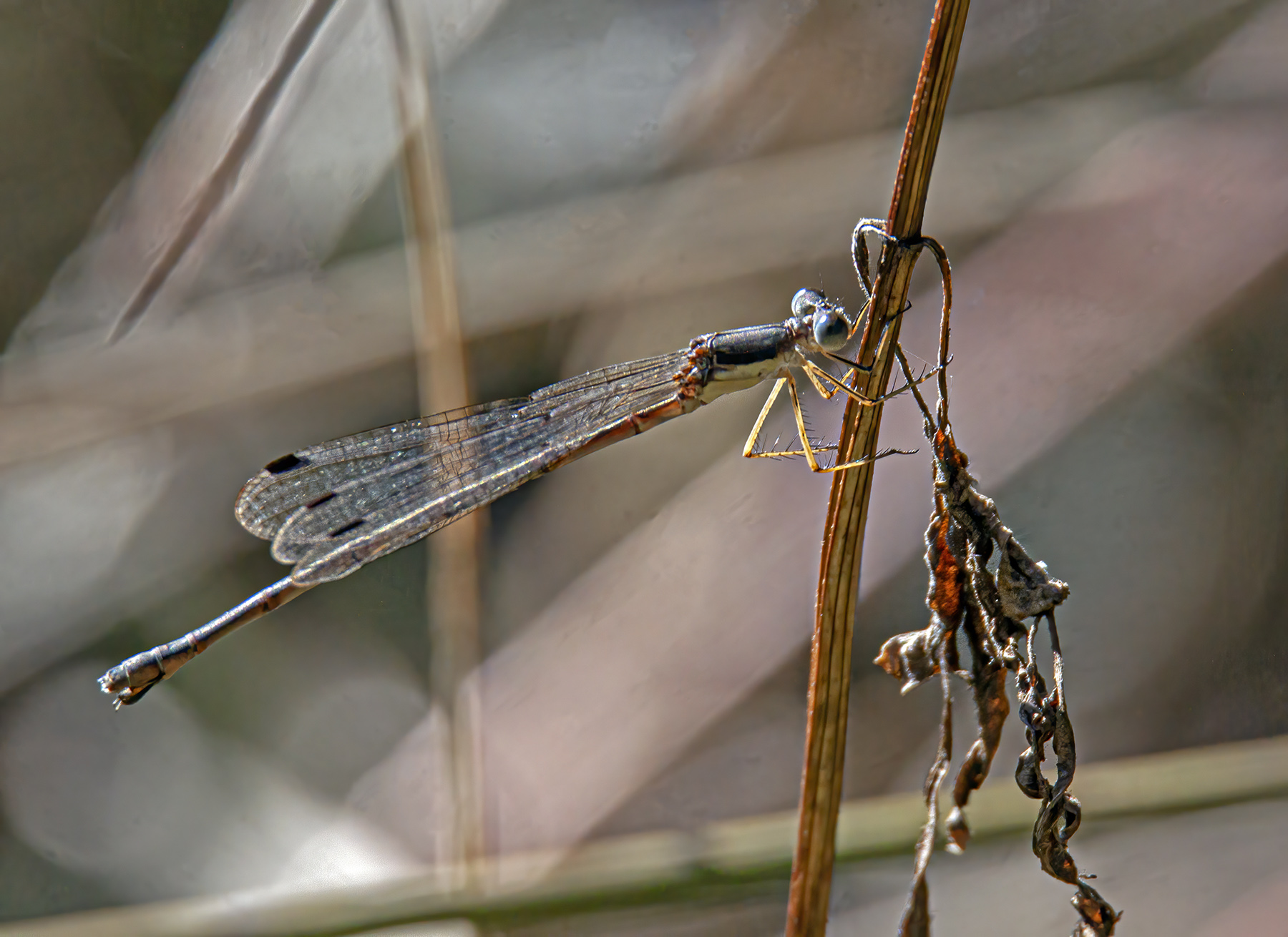
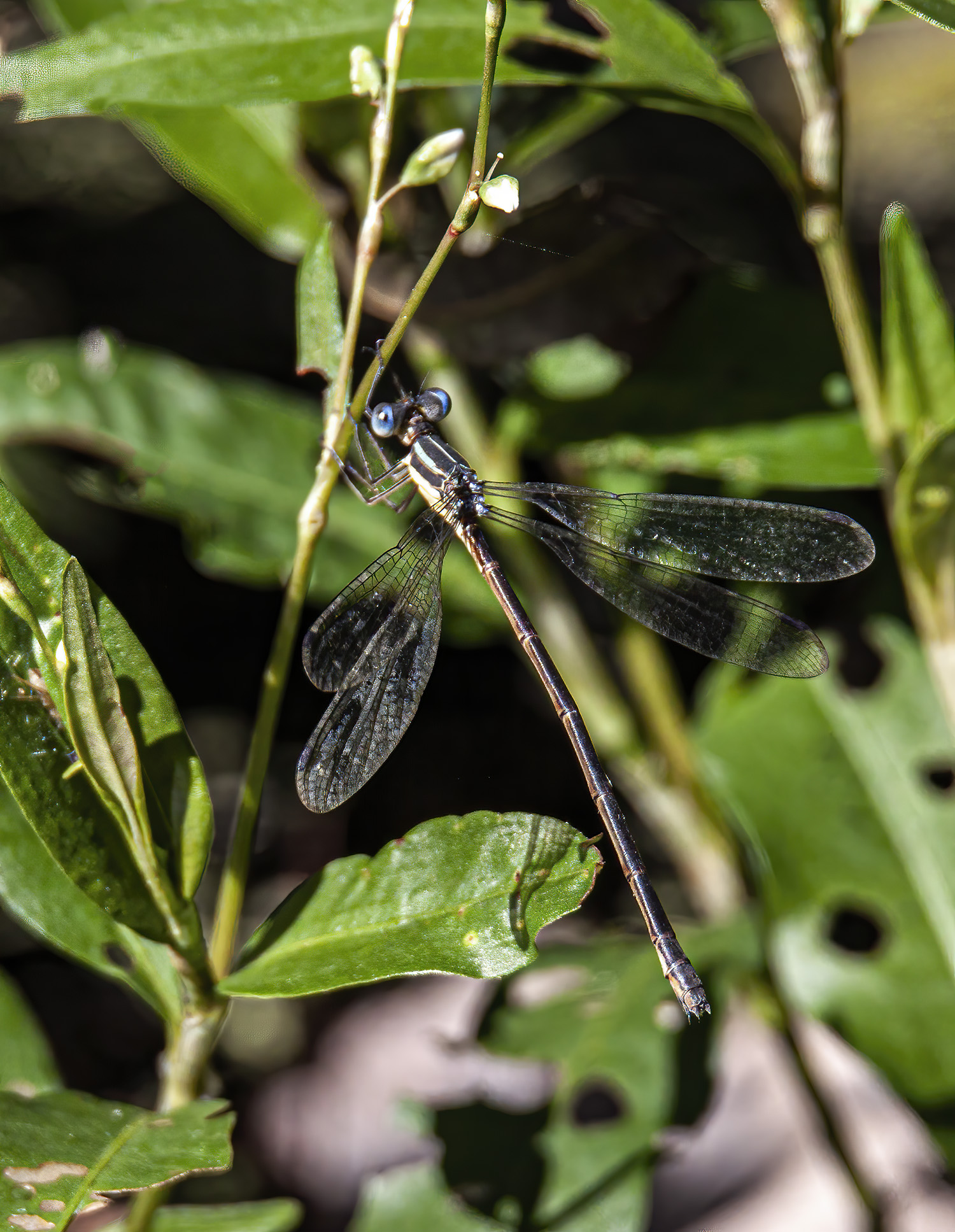
I was excited to spot several female Slender Spreadwing damselflies (Lestes rectangularis) during a visit to Huntley Meadows Park this past Thursday. As damselflies go, Slender Spreadwings are quite large, up to 2 inches (51 mm) in length, and are very striking in appearance. Normally spreadwings, as their name indicates, perch with their wings outstretched, though the one in the first photo has its wings mostly closed above its body like a “normal” damselfly—its paler coloration suggests to me that it may have emerged relatively recently.
The middle photo shows well the typical perching style of a spreadwing, with its body held at an angle and several legs grasping a thin stem. The final photo shows a female Slender Spreadwing depositing eggs in the leafy stem of a plant.
I have noted several times my dismay at the winding down of the dragonfly/damselfly season, so it is particularly gratifying for me to spot species like this one that I rarely see.
© Michael Q. Powell. All rights reserved.
Posted in Autumn, damselfly, Insects, Nature, Photography, wildlife | Tagged Alexandria VA, Canon 50D, Huntley Meadows Park, Lestes rectangularis, Slender Spreadwing, Slender Spreadwing damselfly, Tamron 150-600mm | 10 Comments »
October 10, 2020 by Mike Powell
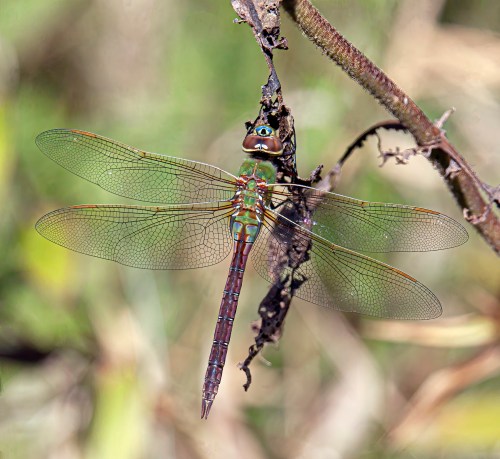
The beautiful colors on this dragonfly that I spotted yesterday at Huntley Meadows Park are so amazing that it it hard for me to call it “common,” even though I know that it is a Common Green Darner dragonfly (Anax junius). I initially spotted this dragonfly when it was patrolling over a field and was thrilled when I saw it land nearby.
Although my telephoto lens zooms out to 600mm, I needed to extend it to only 450mm, because Common Green Darners are so large, about 3 inches (75 mm) in length. As a result, the images were sharper and I was able to capture a lot of detail. I encourage you to double-click on the images to see those details, like the bullseye pattern on the top of the “nose” and the spectacular rainbow colors of this dragonfly.
Common Green Darners are a migratory species that flies in swarms so big that they can be picked up on weather radar. This dragonfly seemed to be alone, so it could be a migratory straggler or simply a part of the local population.

© Michael Q. Powell. All rights reserved.
Posted in Autumn, Dragonflies, dragonfly, Nature, Photography, wildlife | Tagged Alexandria VA, Anax junius, Canon 50D, Common Green Darner, Common Green Darner dragonfly, Huntley Meadows Park, Tamron 150-600mm | 32 Comments »
October 9, 2020 by Mike Powell
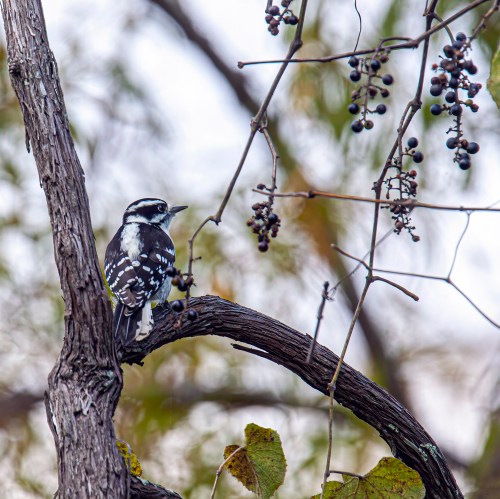
I have always admired Downy Woodpeckers (Picoides pubescens), the smallest woodpeckers in our area, because they are so energetic, hard-working, and focused. They are fun to watch as they move all around in a tree, poking and probing as they search for a tasty treat. I spotted this Downy Woodpecker, which looks to be a female because it does not have a patch of red on the back of its head, last week as I was exploring Occoquan Bay National Wildlife Refuge.

© Michael Q. Powell. All rights reserved.
Posted in Autumn, Birds, Nature, Photography, wildlife | Tagged Canon 50D, Downy Woodpecker, Occoquan Bay National Wildlife Refuge, Picoides pubescens, Tamron 150-600mm, Woodbridge VA | 8 Comments »
October 8, 2020 by Mike Powell
How sticky are the toe pads of a tree frog? This Green Tree Frog (Hyla cinerea) had no problems clinging to the painted surface of a sign when I spotted it last Thursday at Occoquan Bay National Wildlife Refuge.
Was it technically in violation of the access policy?


© Michael Q. Powell. All rights reserved.
Posted in Amphibians, Autumn, frog, Nature, Photography, wildlife | Tagged Canon 50D, Green Tree Frog, Green Treefrog, Hyla cinerea, Occoquan Bay National Wildlife Refuge, Tamron 180mm, tree frog, Woodbridge VA | 15 Comments »
October 8, 2020 by Mike Powell
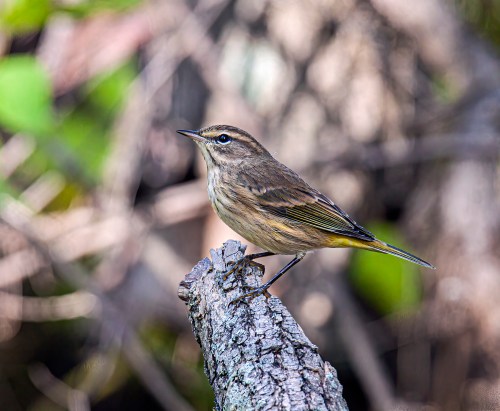
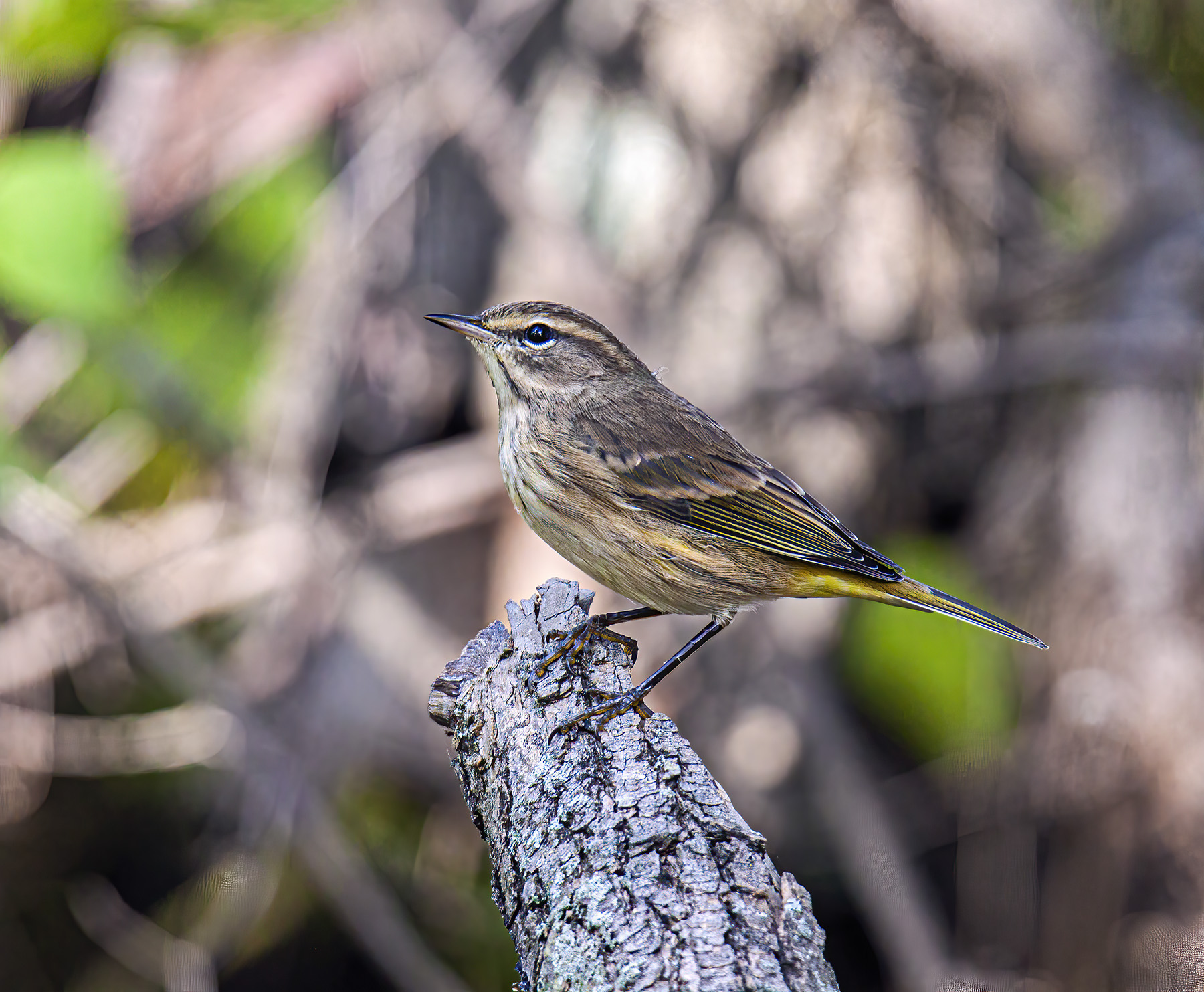
When I first saw this bird bouncing around on the ground on Monday at Occoquan Bay National Wildlife Refuge, I thought that it might be a sparrow. Then I caught a flash of yellow as the bird wagged its tail and I realized that it was a Palm Warbler (Setophaga palmarum).
Most warblers forage high in the trees, where they are difficult to see. The Palm Warbler, however, forages mainly on open ground or in low vegetation, making it marginally easy to spot and to identify.
© Michael Q. Powell. All rights reserved.
Posted in Autumn, Birds, Nature, Photography, wildlife | Tagged Canon 50D, migrating warbler, Occoquan Bay National Wildlife Refuge, Palm Warbler, Setophaga palmarum, Tamron 150-600mm, warbler, Woodbridge VA | 11 Comments »
October 7, 2020 by Mike Powell
I was fortunate when the Black Saddlebags dragonfly (Tramea lacerata) that I was tracking finally landed on Monday at Occoquan Bay National Wildlife Refuge and I was able to capture this image. Black Saddlebags spend most of their time gliding and circling overhead and it is rare for me to see one perching. This species is one of only a handful of dragonfly species in North America that migrate and this dragonfly may have been merely visiting the refuge on a southward journey.
As I noted in my posting yesterday, I have now switched to my 150-600mm telephoto zoom lens as my walkaround lens and I captured this image with that lens. The lens was fully extended to 600mm for this shot and I was using a monopod for some additional stability. It is a little unusual for me to try to photograph such a small subject with my long lens, but this shot shows that it is possible to get a reasonably sharp image if I pay a lot of attention to my technique.

© Michael Q. Powell. All rights reserved.
Posted in Autumn, Dragonflies, dragonfly, Insects, Nature, Photography, wildlife | Tagged Black Saddlebags, Black Saddlebags dragonfly, Canon 50D, migrating dragonfly, Occoquan Bay National Wildlife Refuge, Tamron 150-600mm, Tramea lacerata, Woodbridge VA | 12 Comments »
October 6, 2020 by Mike Powell
Yesterday marked the change of seasons for me—I switched the walkaround lens on my camera from my 180mm macro, which has been my almost constant companion throughout the spring and summer, to my much longer 150-600mm telephoto zoom lens. The change signifies my reluctant acceptance of the reality that the insect season is slowly drawing to a close and that increasingly I will be focusing on birds.
Warblers are still passing through our area as they head south, so I decided yesterday to try to find some at Occoquan Bay National Wildlife Refuge, a location where I know that other photographers have spotted a variety of warblers. Although early morning is usually the best time for birding, I went at midday to avoid any potential crowds.
Most of the leaves are still on the trees, so it is a challenge to spot little birds and even tougher to photograph them. I was thrilled when I caught a glimpse of yellow after a long fruitless search and managed to get this mostly unobstructed view of a handsome warbler. I had no idea what species it was, but some experts on a Facebook birding forum informed me that it was a Cape May Warbler (Setophaga tigrina), a species that I had never before encountered.
Cape May Warblers breed in the spruce-fir forests in the North and winter in the Caribbean, in lush habitats with plenty of insects and flowers—I think I might enjoy that lifestyle. According to the Cornell Lab of Ornithology website, the tongue of the Cape May Warbler is unique among warblers—it is curled and semi-tubular and is used to collect nectar, almost like a hummingbird does.

© Michael Q. Powell. All rights reserved.
Posted in Autumn, Birds, Nature, Photography, wildlife | Tagged Canon 50D, Cape May Warbler, migrating warbler, Occoquan Bay National Wildlife Refuge, Setophaga tigrina, Tamron 150-600mm, warbler, Woodbridge VA | 23 Comments »
October 5, 2020 by Mike Powell
I am always excited to see brightly-colored Blue-faced Meadowhawk dragonflies (Sympetrum ambiguum) at this time of the year when the overall number of dragonflies is dropping. This couple that I spotted last Thursday at Occoquan Bay National Wildlife Refuge was doing its best to ensure that I see this species for years to come. The acrobatic pose in the photo, sometimes referred to as the “wheel position,” is used by dragonflies and damselflies when mating, with the male clasping the female by the back of her head.

© Michael Q. Powell. All rights reserved.
Posted in Autumn, Dragonflies, dragonfly, Insects, Nature, Photography, wildlife | Tagged Blue-faced Meadowhawk, Blue-faced Meadowhawk dragonfly, Canon 50D, mating Blue-faced Meadowhawks, Occoquan Bay National Wildlife Refuge, Sympetrum ambiguum, Tamron 180mm, Woodbridge VA | 11 Comments »
October 4, 2020 by Mike Powell
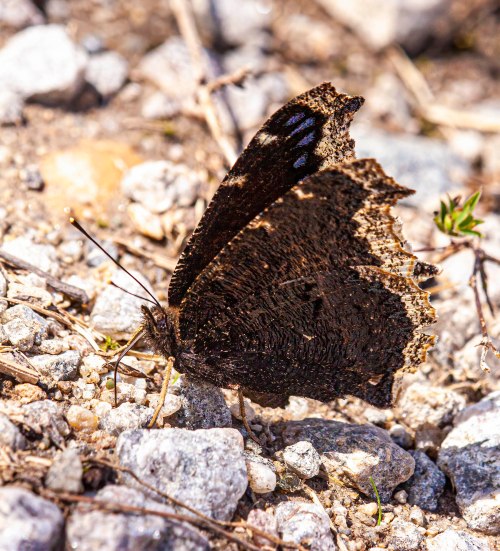
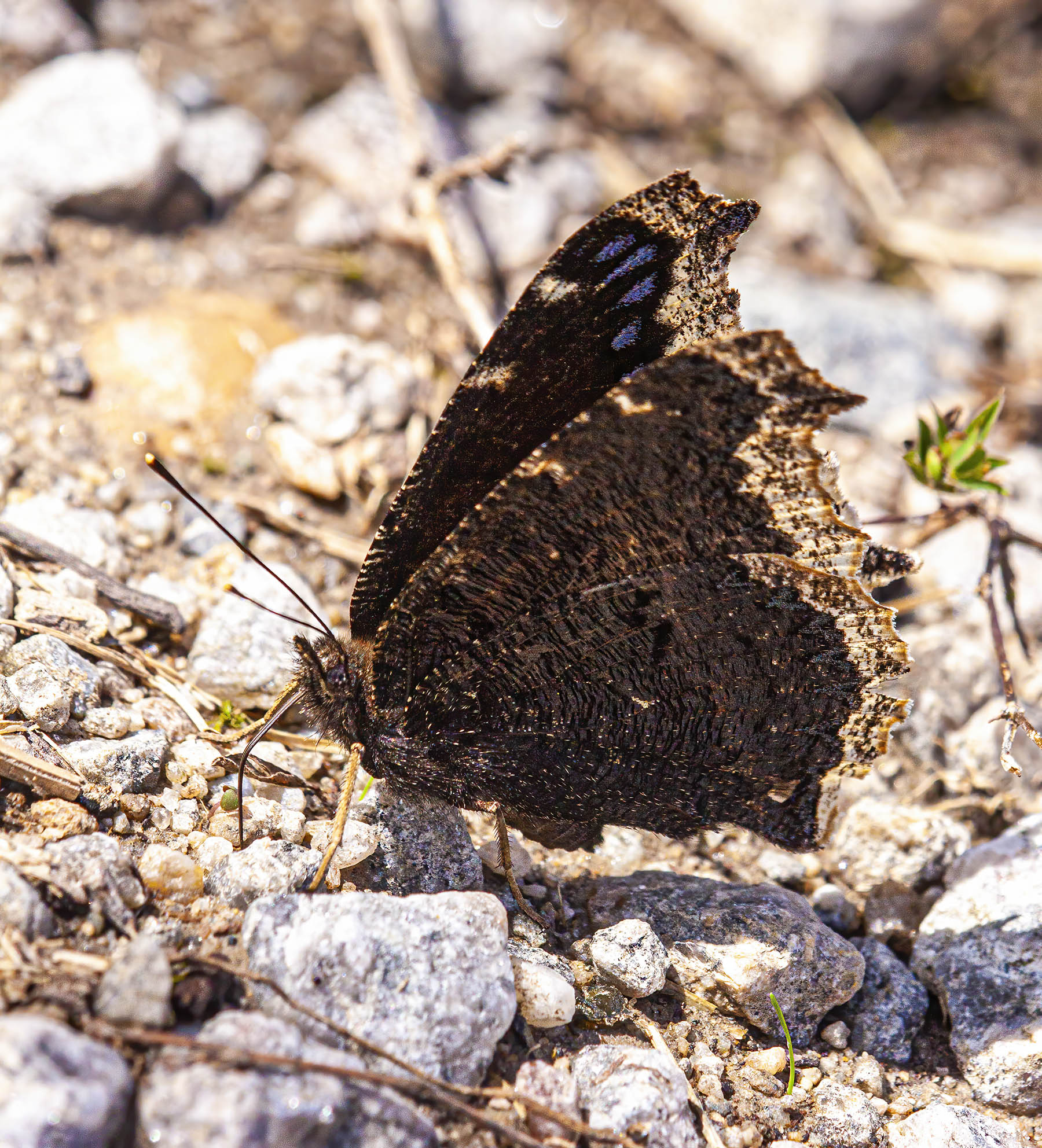
How long do butterflies live? According to most sources, Mourning Cloak butterflies (Nymphalis antiopa), which can live for 10-11 months, are thought to be the longest living butterflies in their range. I am always thrilled to see these darkly colored butterflies, which are known as “Camberwell beauties” in Great Britain, in the early spring and in the autumn.
Where are they the rest of the time? Mourning Cloaks spend part of the summer in aestivation, a hibernation-like state of inactivity to avoid the heat and lack of water. They are active in the fall, eating voraciously to fatten up and then overwinter as adults in another state of dormancy, often on the underside of fallen trees. In the spring, they reawaken to eat, mate, and die. In the north, there is often only a single brood annually, but in the south there may be two or more.
I spotted this butterfly on the first of October at Occoquan Bay National Wildlife Refuge. It looked to me like the butterfly was getting nutrients from the soil or possibly from animal droppings—unlike some butterflies, Mourning Cloaks do not rely on nectar from flowers as a primary source of nutrition.

© Michael Q. Powell. All rights reserved.
Posted in Autumn, Butterflies, Insects, Nature, Photography, wildlife | Tagged aestivation, Canon 50D, Mourning Cloak, Mourning Cloak butterfly, Nymphalis antiopa, Occoquan Bay National Wildlife Refuge, Woodbridge VA | 15 Comments »
October 3, 2020 by Mike Powell
Common Whitetail dragonflies (Plathemis lydia) are among the first dragonflies to appear in our area in the spring and among the last to disappear in the fall. They thrive in a wide variety of habitats and are probably our most frequently seen and easily identified dragonfly—the name “common” seems to fit quite well.
Despite their ubiquitousness, I enjoy trying to photograph these little dragonflies whenever I can. Many of my photos are almost carbon copies of previous photos (you have to pretty old to remember carbon copies), but sometimes I manage to capture an image that is different and distinctive. At times I can envision such a moment when I am out in the field, but often I discover that things “clicked” only when I am examining the images on my computer.
I captured this image of a female Common Whitetail last Tuesday at Occoquan Bay National Wildlife Refuge. The dragonfly had been perching on the ground, as dragonflies of this species are wont to do, and flew up to a precarious perch on a bent stalk of vegetation. She was not there long, but it was enough time for me to snag this shot. For me, it is the wonderful twisting curve of the vegetation that makes the shot work so well as an “artsy” environmental portrait of a Common Whitetail dragonfly.

© Michael Q. Powell. All rights reserved.
Posted in Autumn, Dragonflies, dragonfly, Nature, Photography, wildlife | Tagged Canon 50D, Common Whitetail, Common Whitetail dragonfly, Occoquan Bay National Wildlife Refuge, Plathemis lydia, Tamron 180mm, Woodbridge VA | 5 Comments »
October 2, 2020 by Mike Powell
A bee and a flower—it’s such a simple, yet beautiful composition. I photographed this Eastern Carpenter Bee (Xylocopa virginica) on a globe thistle flower this past Tuesday in the garden of my neighbor and dear friend Cindy Dyer.
Some folks might suffer a little cognitive dissonance when they look at the flower in the photo and hear the name “globe” thistle. I thought about renaming it “hemisphere thistle” for the purposes of the picture. 🙂
Beauty is everywhere.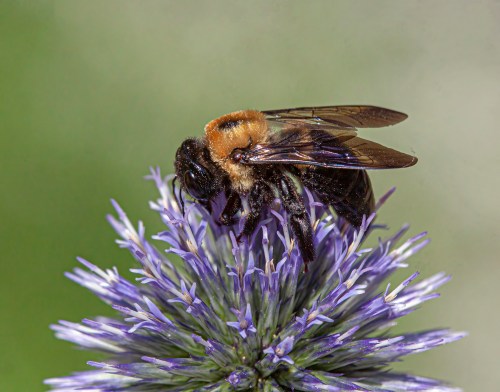
© Michael Q. Powell. All rights reserved.
Posted in Autumn, Bees, Flowers, Insects, Nature, Photography | Tagged Alexandria VA, Canon 50D, carpenter bee, Cindy Dyer, Eastern Carpenter Bee, globe thistle, Tamron 180mm, Xylocopa virginica | 9 Comments »
October 1, 2020 by Mike Powell
Today is National Poetry Day in the United Kingdom and in Ireland. To celebrate, I decided to read a little poetry when I went out to photograph nature today at Occoquan Bay National Wildlife Refuge and brought along with me three poetry collections that were all published during the past two months in the United Kingdom by The Hedgehog Poetry Press (https://www.hedgehogpress.co.uk/).
I am most familiar with Eat the Storms by Damien B. Donnelly, an Irish poet whose blog I have followed for quite some time. One of the highlights of my stay in Paris last November was having a chance to meet Damien in person, shortly before his return to Ireland—check out my blog posting Paris Portraits: Damien. Damien is amazingly creative and has done video versions of a number of his poems that he has featured on YouTube and even on TikTok. The poems in this collection, his first, are full of references to colors that characterize both the physical and psychological landscape, including some steps of his personal journey. Be sure to check out his blog at deuxiemepeaupoetry.com and his newly-created Eat the Storms podcast that features Damien and a host of poets from around the world. The podcast can be found at https://anchor.fm/damieneatsthestorms as well as on Spotify.
The second collection here, Venus in pink marble, was written by Belfast-based Gaynor Kane. I was introduced to her when she did a joint poetry launch video with Damien that was published on YouTube and was entitled “Venus Eats the Storms, A Poetry Launch of two Poets, Gaynor Kane and Damien B. Donnelly.” Both of them are energetic, funny, and engaging as they talk about their individual stories and read selections of their poetry. They apparently had so much fun recording the video that they decided to post an outtake video that is hilarious and can be seen by clicking this link.
The final poetry collection is called Seasons and was written by Katie Proctor, a young poet from Yorkshire, England. I encountered Katie during a Zoom launch presentation in mid-September that presented a “Prickle of Hedgehogs,” with readings from poets, including Katie, whose collections had been published by The Hedgehog Poetry Press. You can learn more about her at her webpage or on Twitter.
You might have had bad experiences from being forced to read and analyze poetry when in school, but I encourage you to give it another shot. The poems by these three poets help me to see and experience the world in different ways, through different eyes. I encourage you to listen to a podcast or two or check out the websites for which I have provided links.
All of these poetry collections are available from Amazon, but I encourage you to order them directly from the poets for two reasons. First of all, it helps to support them more. Secondly, the quality of the books is not the same. I was so anxious to get a copy of Eat the Storms that I ordered one from Amazon and one from Damien. Not surprisingly the one from Amazon arrived first. It was printed in the USA and the paper is of lower quality and is off-white, rather than white like the “original.” The Amazon version also lacks the inner flap photo and biographic information that is found in the UK version.
Let me end with Damien’s standard closing, “Stay Bloody Poetic.”

© Michael Q. Powell. All rights reserved.
Posted in Inspiration, Language, people, poetry | Tagged #eatthestorms, Damien B. Donnelly, deuxiemepeaupoetry.com, Gaynor Kane, Katie Proctor, National Poetry Day, The Hedgehog Poetry Press | 6 Comments »
October 1, 2020 by Mike Powell
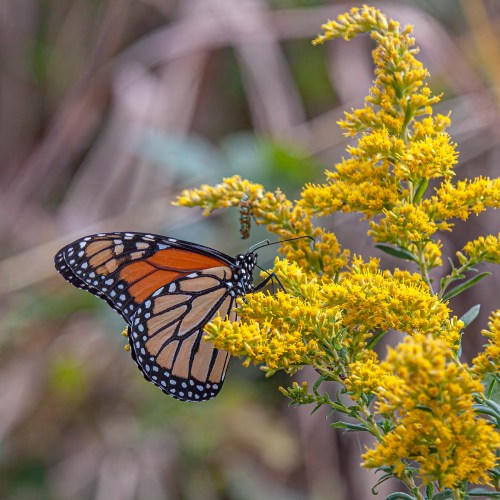
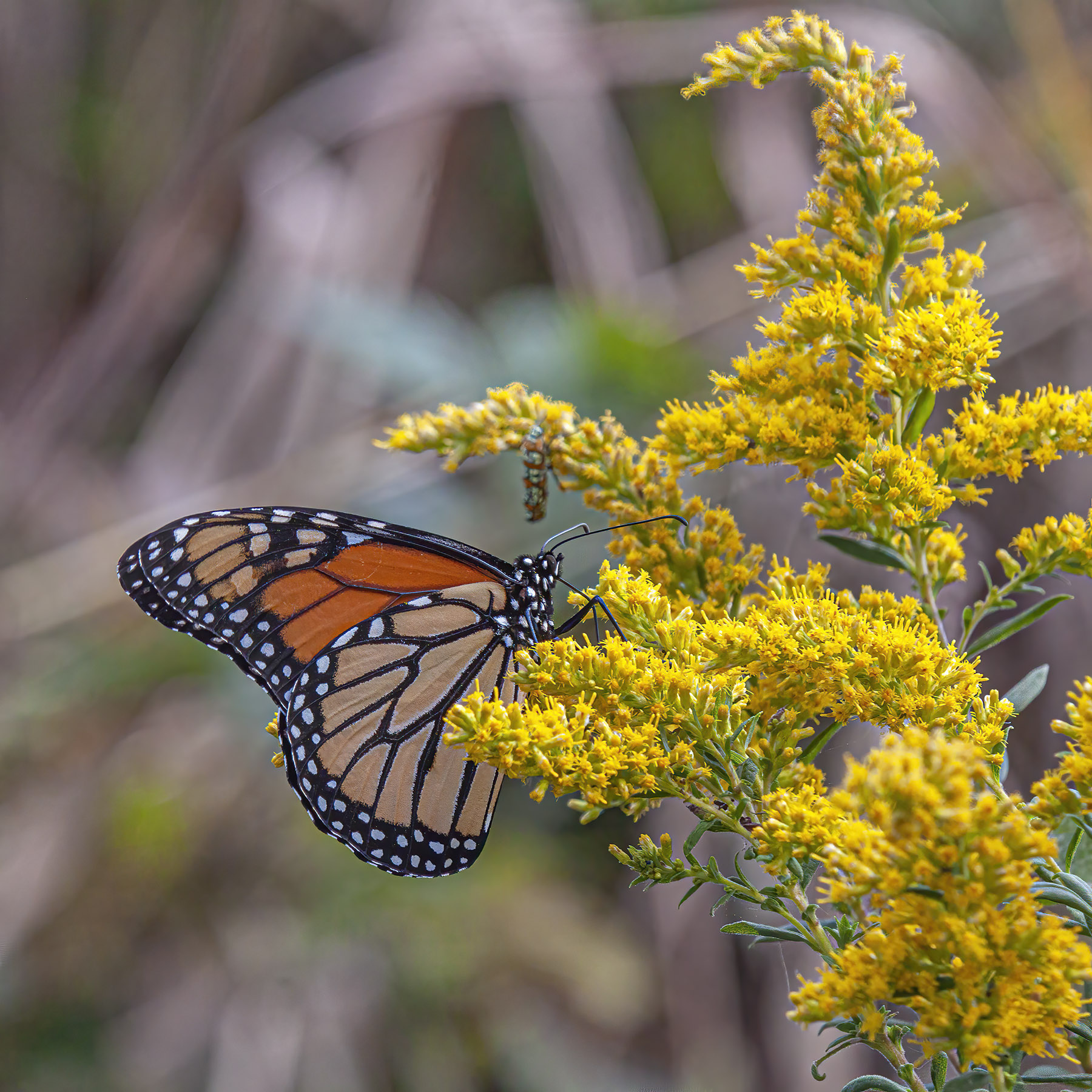
Have Monarch butterflies (Danaus plexippus) started their migration southward? I thought that they were already gone from my area, but was delighted to spot this one on Tuesday at Occoquan Bay National Wildlife Refuge in a newly blooming patch of goldenrod.
Is this butterfly a bit behind schedule? Perhaps this is a butterfly that started its migration journey from a point farther north and stopped in for a snack. Whatever the reason for its presence, my spotting of this beautiful butterfly added a colorful highlight to my day.
Keep your eyes open and look expectantly for colorful highlights in your own daily lives. That sense of joyful expectation will have a positive influence on your entire day.
© Michael Q. Powell. All rights reserved.
Posted in Autumn, Butterflies, Nature, Photography, wildlife | Tagged Canon 50D, Danaus plexippus, goldenrod, Monarch, monarch butterfly, Occoquan Bay National Wildlife Refuge, Tamron 180mm, Woodbridge VA | 16 Comments »
September 30, 2020 by Mike Powell
Humans shed skin cells all of the time—according to one source, in one year, each of us sheds more than 8 pounds (3.6 kg) of dead skin. Snakes have an entirely different shedding process. Several times a year they grow a complete new layer of skin underneath the old layer. During shedding, snakes secrete a fluid to help separate the old skin from the new, and this fluid runs under their specialized eye caps, resulting in the opaque or blue quality of the eye.
Last Friday I encountered one of these blue-eyed snakes while exploring Occoquan Bay National Wildlife Refuge. Snakes are vulnerable during this stage when their vision is impaired and I was a little surprised to see this snake was in a fairly open area. I think this may be an Eastern Ratsnake (Pantherophis alleghaniensis), but did not examine the snake at length for fear of disturbing it.
Moving as stealthily as I could, I leaned in with my macro lens to capture this image. If you look carefully into the eye (or double-click on the image to enlarge it) you will see that I managed to capture a “selfie” reflection.
As an interesting coincidence, my most viewed posting of 2020 has been a May 2016 posting that also featured a snake with a blue eye. That posting, entitled Blue-eyed garter snake, has had 597 views so far this year. If you are not totally creeped out by today’s photo, you might want to check out the 2016 posting, which has some full body shots as well as a close-up shot of the snake’s head.

© Michael Q. Powell. All rights reserved.
Posted in Autumn, Macro Photography, Nature, Photography, Reptiles, snake, wildlife | Tagged Canon 50D, Eastern Ratsnake, Occoquan Bay National Wildlife Refuge, Pantherophis alleghaniensis, shedding, Tamron 180mm, Woodbridge VA | 20 Comments »
September 29, 2020 by Mike Powell
How flexible are you? I used to run marathons and, like most runners, I am not very flexible. I marvel at ordinary people who can bend down and touch the floor while keeping their knees straight and am utterly fascinated when I watch gymnasts and acrobats. Several years ago I attended a Cirque de Soleil performance and was mesmerized the entire time.
I don’t think of grasshoppers and katydids as being particularly flexible—their outer shell seems rigid and armor-like. Imagine my surprise and delight when I stumbled upon this flexible female Handsome Meadow Katydid (Orchelimum pulchellum) last week at Occoquan Bay National Wildlife Refuge. Normally her ovipositor, the yellow scimitar shaped appendage at the end of her abdomen, faces to the back. In this case, though, she has arched her back so much that the tip of the ovipositor extends further forward than her head.
What is she doing? I think that she is somewhere in the process of depositing eggs. I do not know exactly how that works, but a University of Arkansas website described the ovipositing for a similar katydid with these words, “An ovipositing female embraces a plant stem with her prothoracic and mesothoracic legs and brings the curved and sword-like ovipositor far forward so its tip can scrape the substrate.” There are a lot of unfamiliar scientific words there, but I think I get the gist of what is going on.
I do not recall photographing this process before, but a search of my blog revealed that, in fact, I captured a series of images in a September 2013 posting entitled “Rainbow katydid depositing eggs?“. Be sure to check out that earlier posing for more fascinating photos of a flexible katydid.

© Michael Q. Powell. All rights reserved.
Posted in Autumn, Insects, Macro Photography, Nature, Photography, wildlife | Tagged Canon 50D, Handsome Meadow Katydid, Occoquan Bay National Wildlife Refuge, Orchelimum pulchellum, Tamron 180mm, Woodbridge VA | 18 Comments »
September 28, 2020 by Mike Powell
The weather has turned cooler, but traces of summer still remain, like this tiny Summer Azure butterfly (Celastrina neglecta) that I spotted last Wednesday at Occoquan Bay National Wildlife Refuge. The Azure butterflies are among the smallest butterflies in our area, with a wing span of just over one inch (25 mm). My current approach is to shoot any insect that I can find—it won’t be long before they are all gone and I will change to a longer lens and focus primarily on birds.

© Michael Q. Powell. All rights reserved.
Posted in Autumn, Butterflies, Insects, Macro Photography, Nature, Photography | Tagged Canon 50D, Celastrina neglecta, Occoquan Bay National Wildlife Refuge, summer azure, SUmmer Azure butterfly, Tamron 180mm, Woodbridge VA | 6 Comments »
September 27, 2020 by Mike Powell
At this time of the year, the vegetation is thick and the leaves are still on the trees, so it is hard for me to spot birds. Of course, it is a bit easier when the birds are large in size, like this Great Blue Heron (Ardea herodias) that I spotted amidst the reeds and lily pads this past Wednesday at Occoquan Bay National Wildlife Refuge.
The heron did not show any signs that it was actively hunting, but with herons, it is hard to tell—they will stand for lengthy periods of time in a single spot and then strike suddenly and violently. As a photographer, it is tough for me to have that same amount of patience and vigilance. After a reasonable amount of waiting, I will often move on, as I did here, and leave the heron peacefully in place.

© Michael Q. Powell. All rights reserved.
Posted in Autumn, Birds, Nature, Photography, wildlife | Tagged Ardea herodias, Canon 50D, Great Blue Heron, Occoquan Bay National Wildlife Refuge, Tamron 180mm, Woodbridge VA | 12 Comments »
September 26, 2020 by Mike Powell
This year has been full of question marks as our lives have been turned upside down by the pandemic and so many of those questions have gone unanswered. Somehow, then, it seemed appropriate that I spotted this Question Mark butterfly (Polygonia interrogationis) on Tuesday when I was exploring Occoquan Bay National Wildlife Refuge.
At this time of the year, when the leaves are turning brown and falling to the ground, this butterfly blends in well with its surroundings. This butterfly, however, did not seem interested in blending in and chose instead a rocky surface to help highlight the irregular shape of its wings. Normally Question Marks are more opaque in their brown coloration, but the sun was illuminating the wings from behind and gave us a hint of the beautiful orange interior and distinctive markings of this butterfly—I love it when internal beauty shines through.

© Michael Q. Powell. All rights reserved.
Posted in Autumn, Butterflies, Insects, Nature, Photography, wildlife | Tagged Canon 50D, Occoquan Bay National Wildlife Refuge, Polygonia interrogationis, question mark, Question Mark butterfly, Tamron 180mm, Woodbridge VA | 15 Comments »
September 25, 2020 by Mike Powell
Nature sometimes saves the best for last. Many dragonflies that have kept me company through the long, hot days of summer have started to disappear. The appearance in autumn of the spectacularly colored male Blue-faced Meadowhawk dragonfly (Sympetrum ambiguum) compensates in part for this sense of loss.
I spotted this handsome dragonfly on Wednesday as I was exploring Occoquan Bay National Wildlife Refuge. I hope to be seeing this species for another month or so and also its “cousin,” the Autumn Meadowhawk, which has a similarly colored body but has brown eyes.

© Michael Q. Powell. All rights reserved.
Posted in Autumn, Dragonflies, dragonfly, Insects, Macro Photography, Nature, Photography, wildlife | Tagged Blue-faced Meadowhawk, Blue-faced Meadowhawk dragonfly, Canon 50D, male Blue-faced Meadowhawk, Occoquan Bay National Wildlife Refuge, Sympetrum ambiguum, Tamron 180mm, Woodbridge VA | 16 Comments »
September 24, 2020 by Mike Powell
Most of the butterflies that I have photographed this season have been in sunny fields, where they are attracted to wildflowers or other blooming vegetation. Last week while photowalking in Occoquan Bay National Wildlife Refuge, I was thrilled to spot a butterfly that prefers a marshy woodland and captured this image of an Appalachian Brown butterfly (Satyrodes appalachia).
The colors of this butterfly species are quite subdued, when compared with those of a Monarch or an Eastern Tiger Swallowtail, but I love the beautiful brown-on-brown patterns on the wings and the distinctive-looking series of eye spots. There are several similar butterflies with slightly different arrangements of eyespots. I am relatively confident that this one is an Appalachian Brown butterfly, but there is a chance that it is an Eyed Brown butterfly (Satyrodes eurydice).
As always, I defer to those with greater expertise in identification—I have been humbled multiple times when I have confidently made an identification and have been absolutely wrong.

© Michael Q. Powell. All rights reserved.
Posted in Autumn, Butterflies, Nature, Photography, wildlife | Tagged Appalachian Brown, Appalachian brown butterfly, Canon 50D, Occoquan Bay National Wildlife Refuge, Satyrodes appalachia, Tamron 180mm, Woodbridge VA | 11 Comments »
September 23, 2020 by Mike Powell
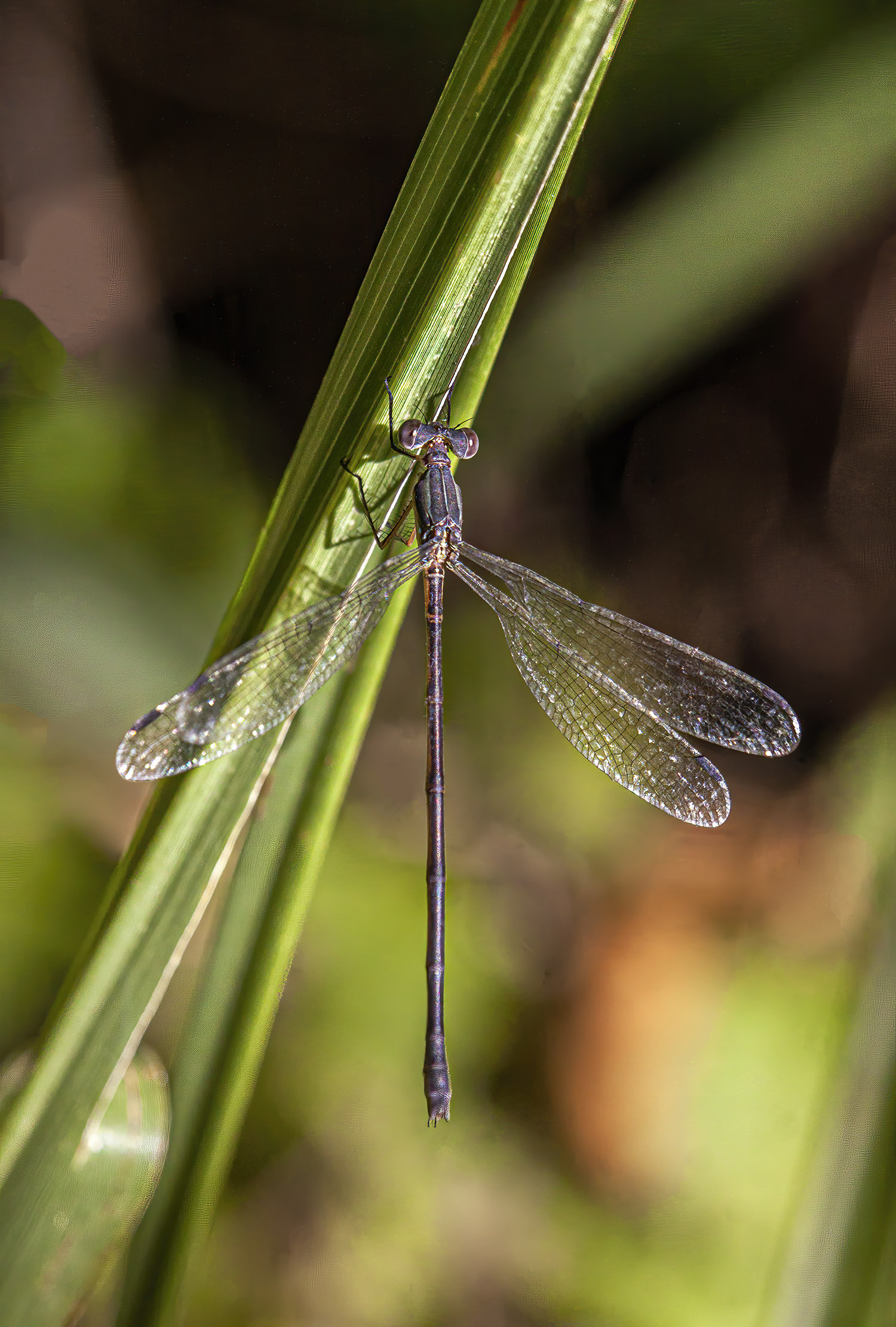
Most damselflies fold their wings above their bodies when they are perched. There is, however, a small group of fairly large damselflies, known as spreadwings, that hold their wings partially open when perching.
I do not see spreadwing damselflies very often, so I was excited to spot this one on Monday at Occoquan Bay National Wildlife Refuge. I managed to capture shots from a couple of angles before it flew away, but did not get a shot that showed the thorax markings, which can help a lot with identification. I can tell for sure that the damselfly is female, but it is difficult to determine with certainty its species.
I posted the photos in a Facebook dragonfly forum and even the experts were not certain—females tend to lack the distinctive markings of the males and generally are harder to identify. They narrowed it down to a few possibilities and if I had to guess, I’d say this is a female Slender Spreadwing damselfly (Lestes rectangularis).


© Michael Q. Powell. All rights reserved.
Posted in damselfly, Insects, Nature, Photography, Winter | Tagged Canon 50D, Lestes rectangularis, Occoquan Bay National Wildlife Refuge, Slender Spreadwing, Slender Spreadwing damselfly, Tamron 180mm, Woodbridge VA | 6 Comments »
September 22, 2020 by Mike Powell
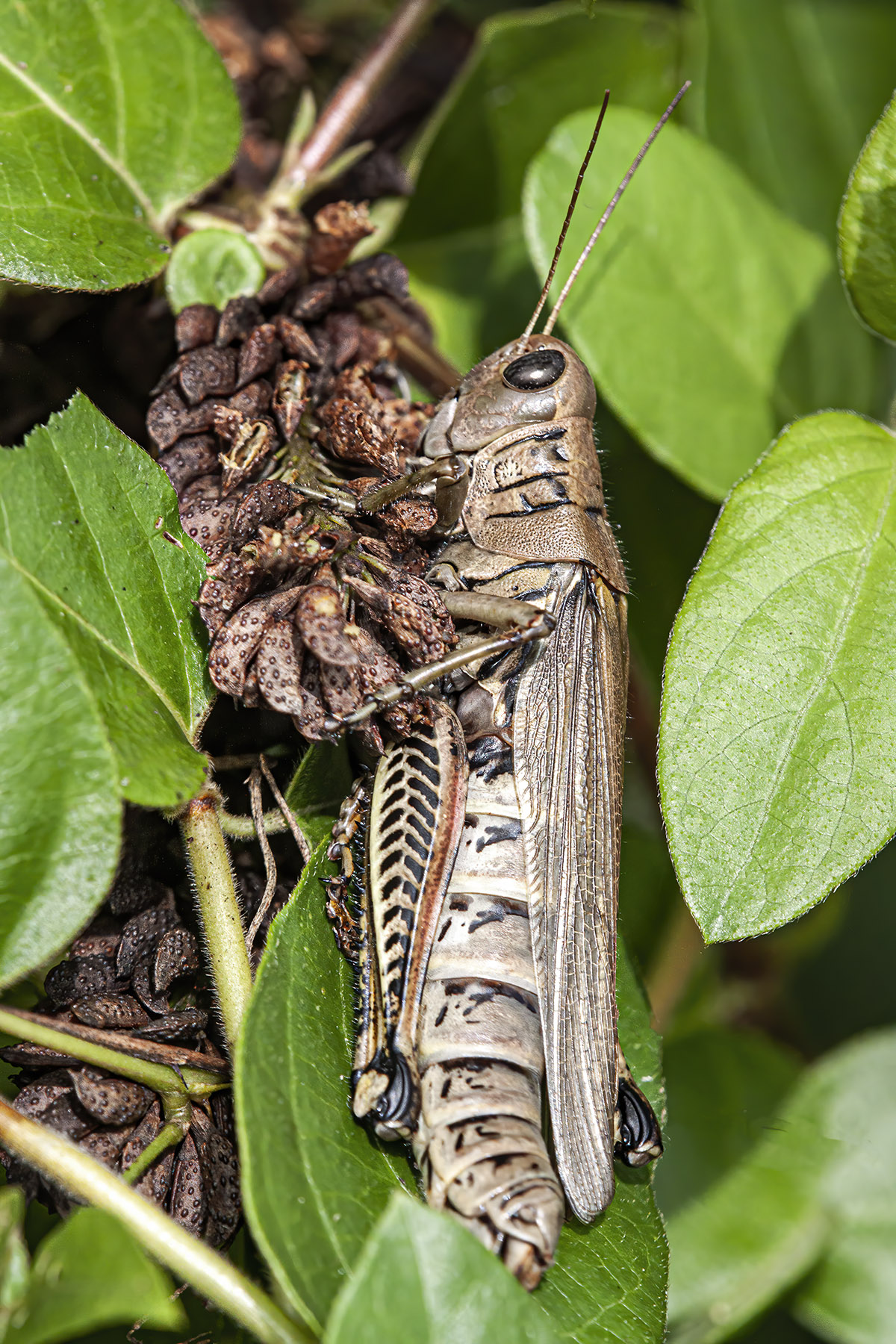
When I first spotted this large grasshopper last week at Occoquan Bay National Wildlife Refuge it was so still that I was not sure that it was alive. I gently rustled the vegetation and the grasshopper moved a little, so I knew that it was not dead. As I watched, I could see its mouth moving and I think that it might have been eating, which might explain why it was distracted and did not immediately fly away. The first photo was an unsuccessful attempt to determine what the grasshopper was eating.
I am not very good at grasshopper identification, but my friend Walter Sanford, with whom I was hunting for dragonflies, knew that it was a Differential Grasshopper (Melanoplus differentialis). The prominent chevrons on the hind femur are apparently one of the identification features for this species.


© Michael Q. Powell. All rights reserved.
Posted in Autumn, Insects, Macro Photography, Nature, Photography, wildlife | Tagged Canon 50D, differential grasshopper, grasshopper, Melanoplus differentialis, Occoquan Bay National Wildlife Refuge, Tamron 180mm, Woodbridge VA | 11 Comments »
September 21, 2020 by Mike Powell
Roses are red and bluets are blue, except when the bluets are damselflies, when they might be a different color. Last week while photowalking at Occoquan Bay National Wildlife Refuge, fellow dragonfly enthusiast Walter Sanford pointed out this Orange Bluet damselfly (Enallagma signatum) that was perched in a tree just above eye level. As he pulled back a branch that was blocking my view, I was able to get this unobstructed shot of the beautiful little damselfly.
You might think that the bright coloration of this damselfly would make it easy to spot, but Orange Bluers are small, less than an inch and a half (38 mm) in length, and elusive. I am lucky if I manage to spot a couple of them during an entire season, so I was thankful for Walter’s sharp eyes.
This Orange Bluet, I think, would make a good mascot for the autumn season, when oranges and browns begin to dominate the natural and manmade landscape and the stores are filled with decorations for Halloween and Thanksgiving. I suspect that some stores are already starting to decorate for Christmas, but I am not ready to give up on the waning moments of summer—for some of us, tomorrow is the autumnal equinox, the first day of fall.

© Michael Q. Powell. All rights reserved.
Posted in Autumn, damselfly, Insects, Macro Photography, Nature, Photography, wildlife | Tagged Canon 50D, Enallagma signatum, Occoquan Bay National Wildlife Refuge, Orange Bluet, Orange Bluet damselfly, Tamron 180mm, Woodbridge VA | 22 Comments »
« Newer Posts - Older Posts »















 Mike Powell