July 3, 2021 by Mike Powell
It was pretty early this morning when I walked over to the garden of my dear friend and neighbor Cindy Dyer, but a bee was already busy on one of her lavender plants. A shot like this is easy to get with my 180mm macro lens, which lets me stand back farther from my subject. However, I happened to have a much shorter 60mm macro lens on my camera, which meant that I had to be almost on top of the bee. The bee was focused on the flower and did not seem to be bothered by my presence.

© Michael Q. Powell. All rights reserved.
Posted in Bees, Flowers, Insects, Macro Photography, Nature, Photography, Summer | Tagged Alexandria VA, bee, Canon 50D, Canon 60mm, Cindy Dyer, lavender | 11 Comments »
July 3, 2021 by Mike Powell
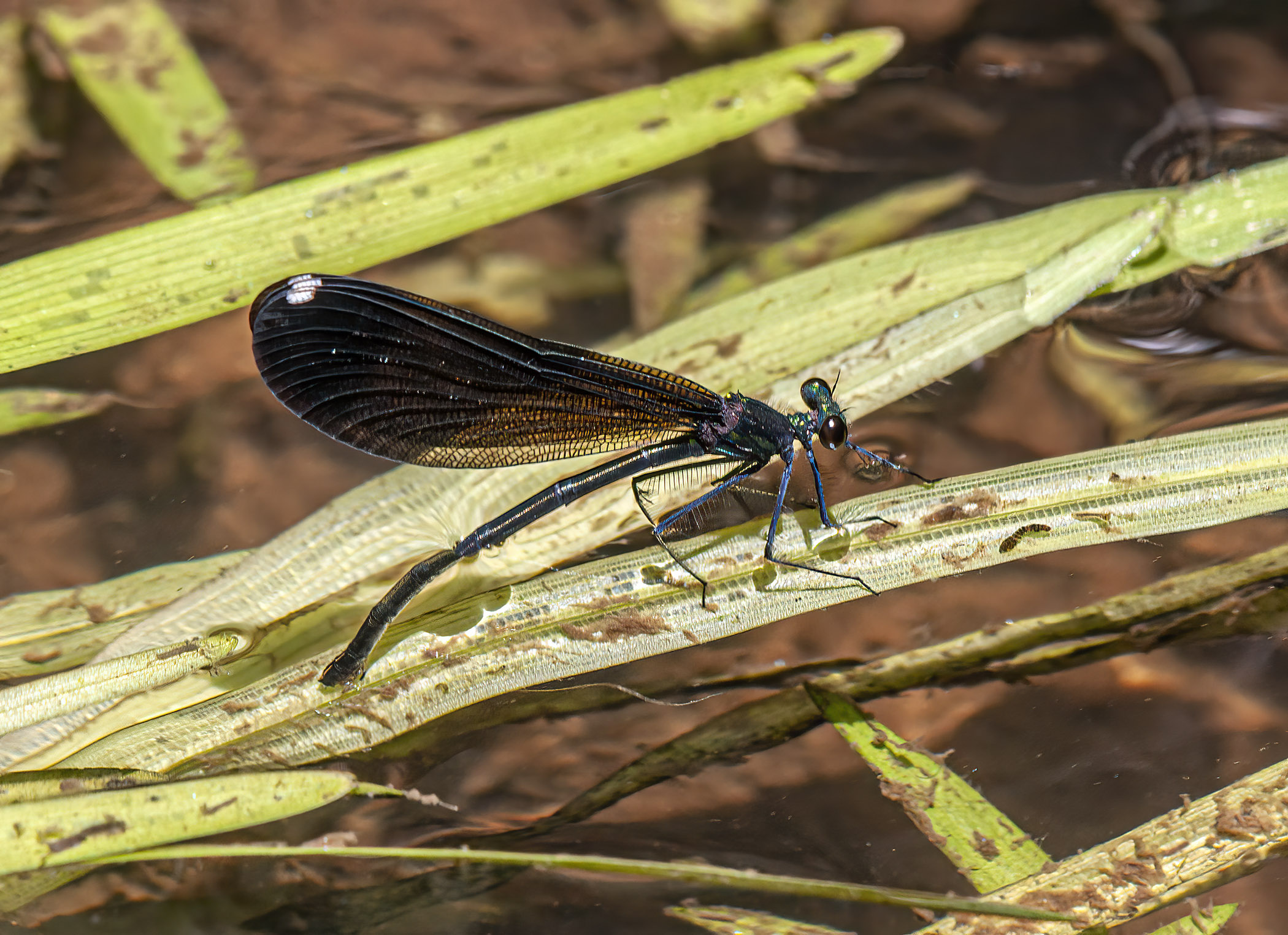
Sometimes the shadows are at least as interesting as the subject in my wildlife photos, as was the case with this Ebony Jewelwing damselfly (Calopteryx maculata) that I spotted last week while exploring a stream in Fairfax County. Initially the dragonfly was perched on the rock with its wings closed and I merely observed it. As soon as it flared its wings, though, I knew I had to take a shot and am pretty happy at the way that it turned out.

© Michael Q. Powell. All rights reserved.
Posted in damselfly, Insects, Nature, Photography, Summer, wildlife | Tagged Calopteryx maculata, Canon 50D, Ebony Jewelwing, Ebony Jewelwing damselfly, Fairfax County Virginia, Lorton VA, Occoquan Regional Park, Tamron 180mm | 15 Comments »
July 2, 2021 by Mike Powell
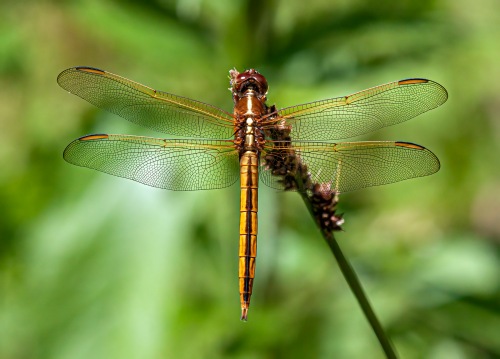
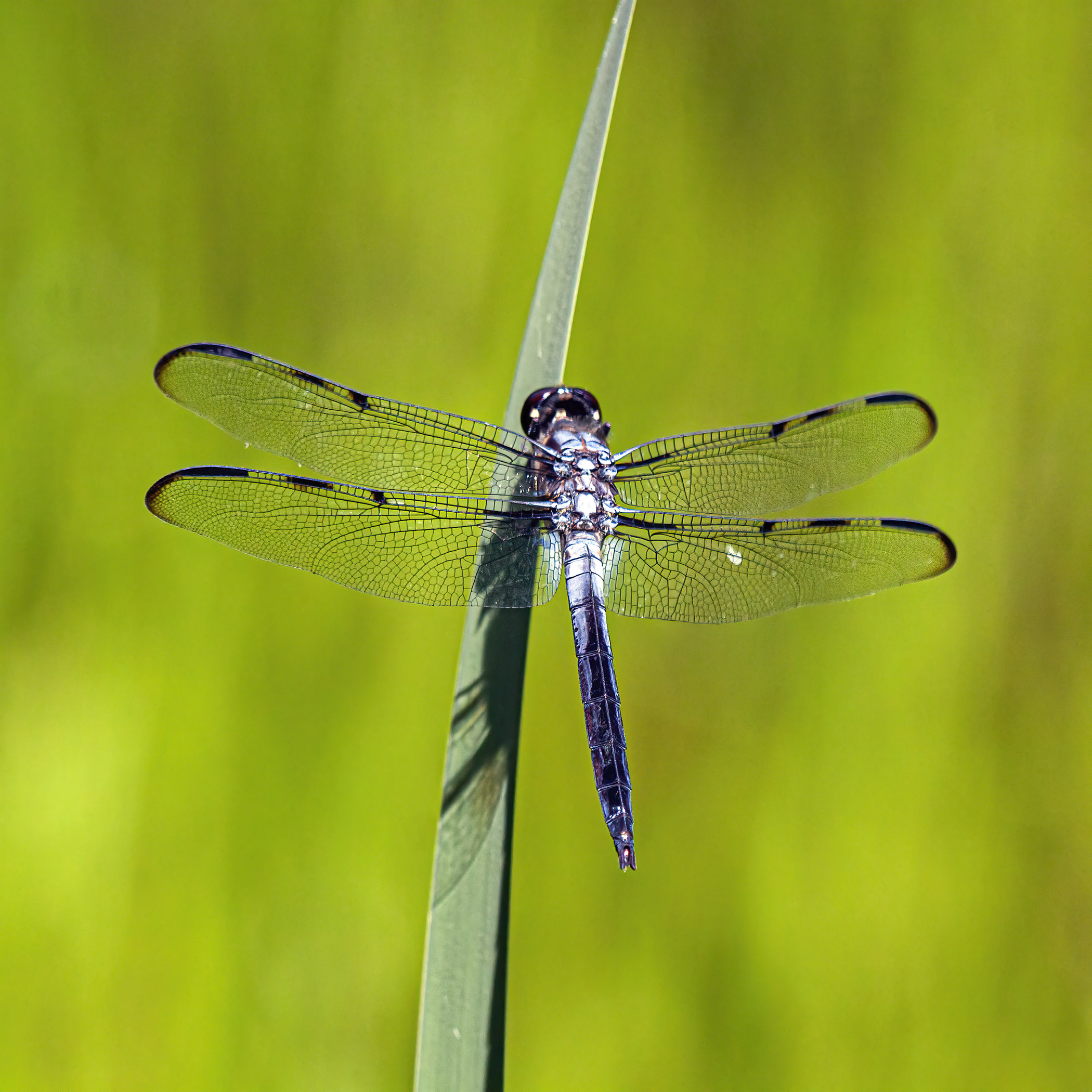
Have you even examined dragonfly wings really closely? I tend to think of dragonfly wings as being made up lots of individual “cells” that are uniform in size and shape, like the squares on piece of graph paper. The reality, however, is that the wings are incredibly complex and are full of intricate designs and shapes that presumably help the dragonfly to maneuver its way so masterfully through the air.
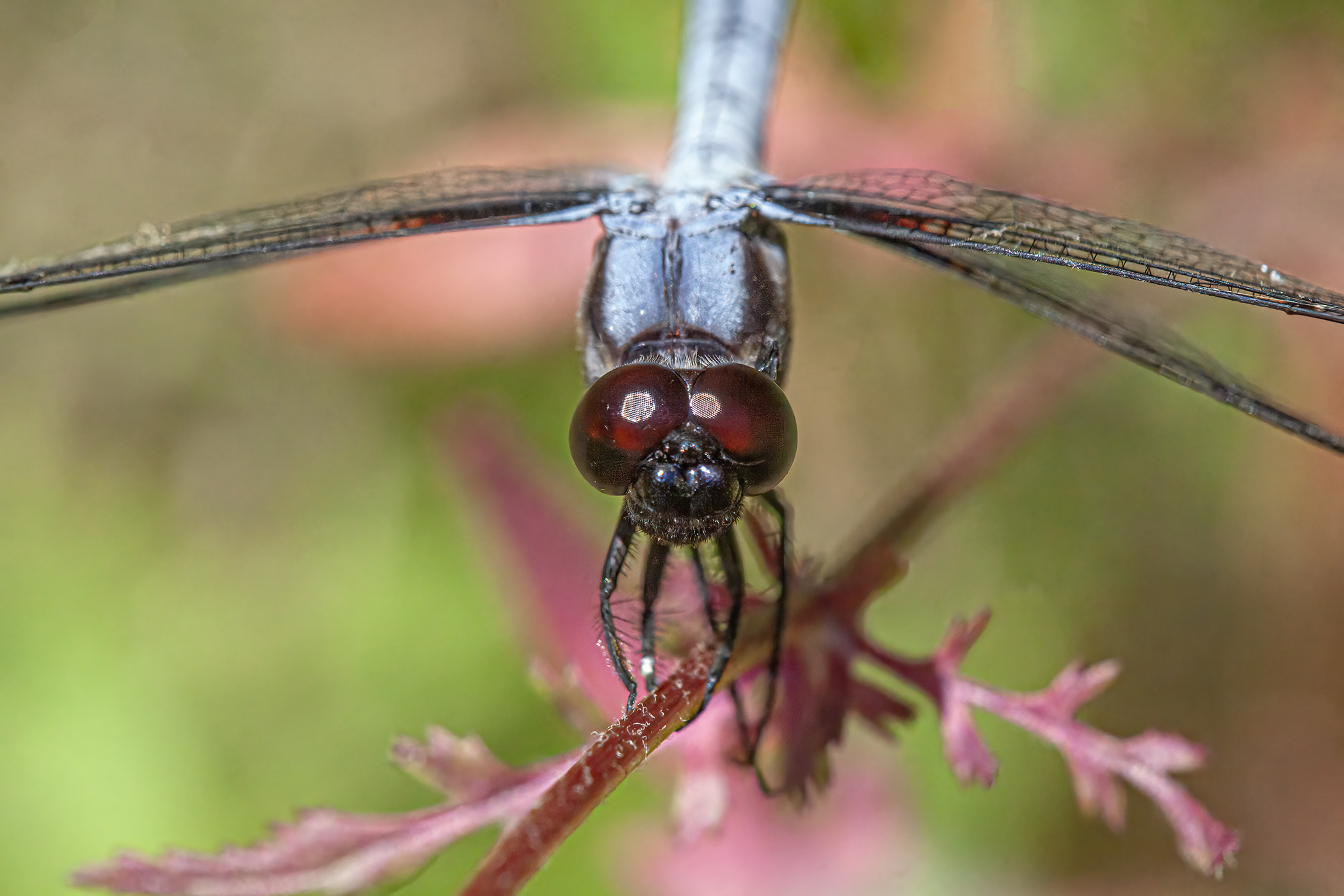
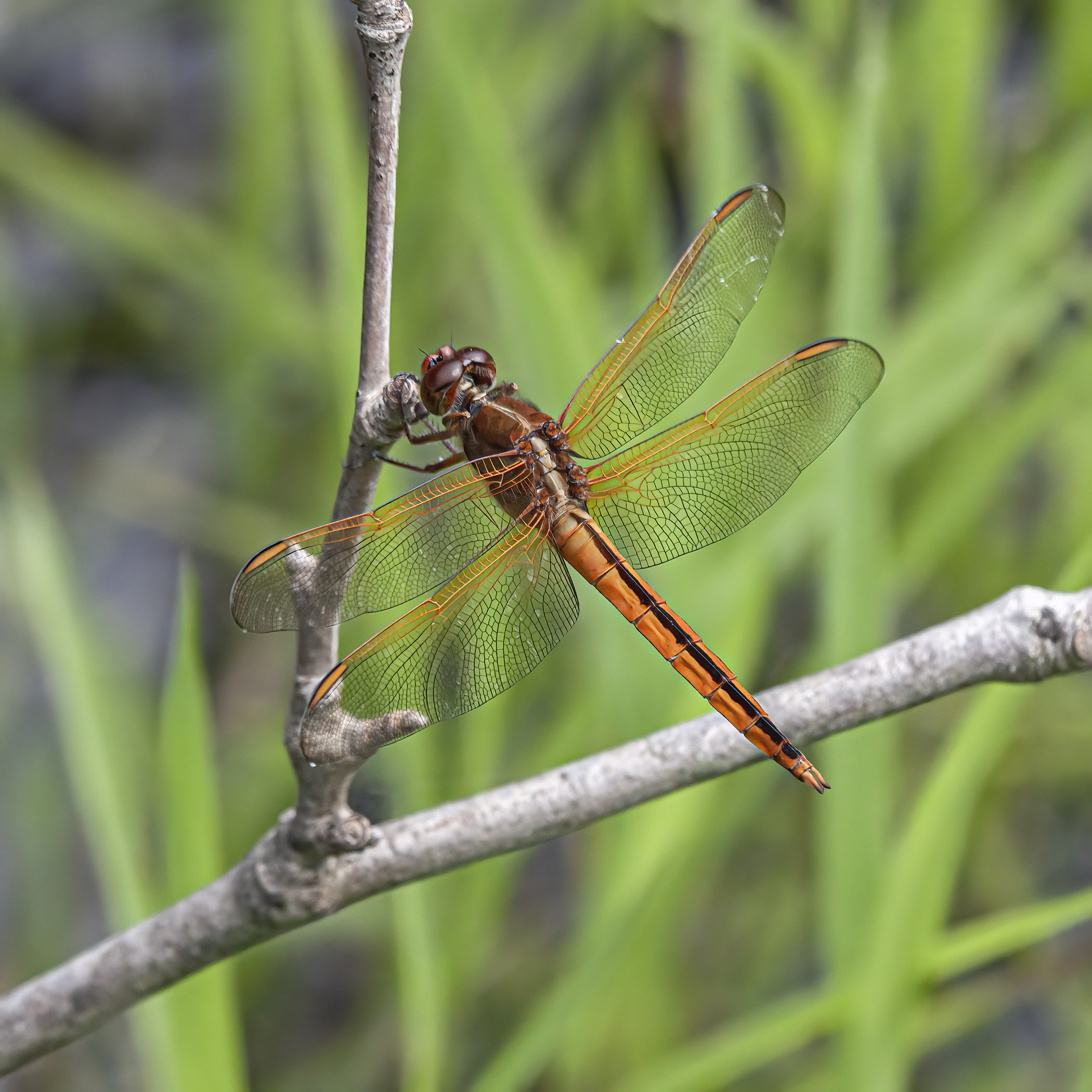
Last week I captured this image of an immature male Needham’s Skimmer (Libellula needhami) while I was exploring in Occoquan Regional Park. I managed to position my camera so that I was almost perfectly parallel to the plane of the wings that are consequently in sharp focus. I highly encourage you to click on the image to see the breathtaking wing details that form such complex mosaic-like patterns. Wow!
It is no wonder that it is so hard for me to draw or paint dragonfly wings that look realistic.
© Michael Q. Powell. All rights reserved.
Posted in Dragonflies, dragonfly, Insects, Macro Photography, Nature, Photography, Summer, wildlife | Tagged Canon 50D, dragonfly wings, Libellula needhami, Lorton VA, Needham's Skimmer, Needham's Skimmer dragonfly, Occoquan Regional Park, Tamron 180mm | 16 Comments »
July 1, 2021 by Mike Powell
I was happy to spot these handsome Powdered Dancer damselflies (Argia moesta) in mid-June as I was exploring a rocky stream in Prince William County. Most of time when I see a damselfly it is at a pond or marshy area, but this large, distinctive damselfly seems to prefer rivers and streams. Although I occasionally spot them perched in vegetation, as in the second photo, Powdered Dancers quite often perch on bare ground or on flat stones.


© Michael Q. Powell. All rights reserved.
Posted in damselfly, Insects, Macro Photography, Nature, Photography, Summer, wildlife | Tagged Argia moesta, Canon 50D, Powdered Dancer, Powdered Dancer damselfly, Prince William County VA, Tamron 180mm | 7 Comments »
June 30, 2021 by Mike Powell
I enjoy wearing camouflage when I am traipsing about in the wild. It is not so much that I am trying to hide, but somehow it connects me to my past life as an Army officer. One of the patterns that I sport from time to time is an urban pattern that is a mixture of white, black, and gray rather than the greens and browns of traditional camouflage patterns.
When I spotted this Gray Petaltail dragonfly (Tachopteryx thoreyi) last Sunday as I was exploring in Fairfax Country, I had this strange thought that the drab colors of this dragonfly would blend in perfectly in an urban environment (though he is more likely to be found in a seep than in a city). Part of that thought might have come from the fact that the dragonfly was perched on a manmade trail sign rather than on the side of a tree where I usually find Gray Petaltails.
Normally I prefer natural perches for my wildlife subjects, but somehow this one really works for me. The large wire staples at the top of the post help to add to the industrial vibe of the images. I really like the textures and colors of the post and they serve as an interesting backdrop of the dragonfly. The shadows from the wings add a final bit of visual interest to the images, especially the second one.


© Michael Q. Powell. All rights reserved.
Posted in Dragonflies, dragonfly, Insects, Nature, Photography, Summer, wildlife | Tagged Canon 50D, Fairfax County Virginia, Gray Petaltail, Gray Petaltail dragonfly, Tachopteryx thoreyi, Tamron 180mm | 10 Comments »
June 29, 2021 by Mike Powell
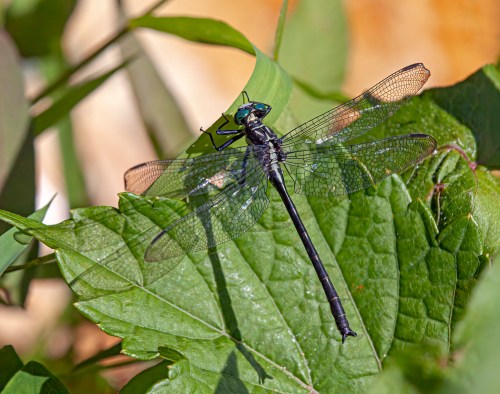
We are coming to the end of the season for the Sable Clubtail (Stenogomphurus rogersi), so it was really exciting to spot Sable Clubtails last Wednesday as I was exploring a small stream in Fairfax County. As some of you may recall, the Sable Clubtail is an uncommon dragonfly species in my area. A month ago I was really concerned that the increase of silt and vegetation in the stream where they have previously been seen seem might have caused them to disappear.
I am somewhat more optimistic now that I have seen them several times over the past month. During my most recent trip, I think I may have spotted at least two individual Sable Clubtails. If you compare the front wing tips of the dragonflies in the second and third images, they appear to be different. I photographed the dragonfly in the first photograph later that same day in the same general area, so it could have been one of the others that I photographer earlier or a third individual.
It is always fun to try to figure out the best way to photograph a dragonfly when I encounter it. To a certain extent my options are dictated by the way the dragonfly perches and the habitat in which it is found. In the case of the Sable Clubtail, I usually find them perched low on leafy vegetation overhanging the stream. If I am lucky, I’ll find myself in a position to attempt a close-up shot like the first image—I was crouched low as I straddled the stream to capture that image.
Although the Sable Clubtail will soon be gone, other dragonflies will be appearing on the scene before long. I expect to be busy chasing after these newcomers as we move deeper into the summer.


© Michael Q. Powell. All rights reserved.
Posted in Dragonflies, dragonfly, Insects, Nature, Photography, Portraits, Summer, wildlife | Tagged Canon 50D, Fairfax County Virginia, Sable Clubtail, Sable Clubtail dragonfly, Stenogomphurus rogersi, Tamron 180mm | 34 Comments »
June 28, 2021 by Mike Powell
Six-spotted Fishing Spiders (Dolomedes triton) sense their prey through vibrations in the water, so generally when I see them they have several legs lighting touching the surface of the water. When I spotted this one yesterday at a small pond in Fairfax County, however, it was perched on top of some vegetation several inches above the water.
I have no idea why it was there, though there were plenty of dragonflies buzzing around that would occasionally perch on the same type of vegetation. Could it possibly be hoping to catch a dragonfly? I have included a photo of a male Blue Dasher dragonfly (Pachydiplax longipennis) from a previous day that was perched in the same area to give you an idea of the spider’s potential prey. I would think that a dragonfly’s excellent vision would allow it to spot the spider and avoid it—I can’t imagine that a dragonfly would deliberately choose to land on top of the spider, but who knows?
If you look closely at the first photo, you may also notice what appear to be several spider legs poking out from underneath the edge of the vegetation. Was there another spider there and if so, why? Nature is full of mysteries and intrigue, with lots of unanswered questions.


© Michael Q. Powell. All rights reserved.
Posted in Arachnids, Macro Photography, Nature, Photography, spiders, Summer, wildlife | Tagged Blue Dasher, Canon 50D, Dolomedes triton, Fairfax County Virginia, fishing spider, Pachydiplax longipennis, Six-spotted Fishing Spider, Tamron 180mm | 14 Comments »
June 28, 2021 by Mike Powell
When it comes to insects, I devote the majority of my attention to dragonflies and butterflies. However, there are other insects that periodically capture my attention, like this mating pair of bee-like robber flies (Laphria index/Laphria ithypyga) that I spotted last week at Occoquan Regional Park. I had no idea what species they might be, but was able to get some help when I posted the photo in a robber fly Facebook group. Yes, there actually is such a group in Facebook.
My favorite robber fly, though, is the Red-footed Cannibalfly—there is something about its creepy name that has always fascinated me. Apparently I am not alone, because a posting I did in 2013 that was simply titled Red-footed Cannibalfly has had 2,798 views to date, including 228 views last year, making it my second most viewed posting ever. Most people appear to find the posting by doing a search in Google for “Red-footed Cannibalfly.” My posting used to show up on the first page of results for that Google search, but has now slipped lower, though it was still the third entry when I did the same search in Bing this morning.
I definitely do not understand insect mating practices, so I will leave it to your imagination to figure out what is going on in this photo. As for me, I can’t help but think of one of Dr. Dolittle’s fantastic animals, the pushmi-pullyu.
Have a wonderful Monday.

© Michael Q. Powell. All rights reserved.
Posted in Insects, Macro Photography, Nature, Photography, Summer, wildlife | Tagged Canon 50D, Laphria index, Laphria ithypyga, Lorton VA, mating robber flies, Occoquan Regional Park, robber flies, Tamron 180mm | 7 Comments »
June 27, 2021 by Mike Powell
It is not often that I have a chance to photograph a dragonfly species for the first time, so you can understand my excitement on Friday when I looked down at a rock in a small stream that I was exploring in Fairfax County and spotted this tiny male Eastern Least Clubtail (Stylogomphus albistylus). I knew that there was a chance that I might find one, because several other photographers had recently spotted this species, but it still came as a bit of a surprise when it actually happened.
As its name suggests, the Eastern Least Clubtail is the smallest of North American clubtails and among the smallest clubtails in the world at only 1.2 to 1.4 inches (31-36 mm) in length. As the Dragonflies of Northern Virginia website notes, “This small, thin dragonfly is easily overlooked, or mistaken for a damselfly. The dark coloring, slight build and small, clear wings require sharp eyes to spot.”
Fortunately this dragonfly was perched flat on a rock in a sunny spot of the stream, a male Eastern Least Clubtail’s preferred perch according to identification guides, so I managed to spot it. The dragonfly must have really liked that perch, because it remained in place as I carefully captured images of it from different distances and angles. In fact, this handsome little guy was still basking in the sun on that stone in the stream as I departed, filled with joy at my newest find.


© Michael Q. Powell. All rights reserved.
Posted in Dragonflies, dragonfly, Nature, Photography, Summer, wildlife | Tagged Canon 50D, Eastern Least Clubtail, Eastern Least Clubtail dragonfly, Fairfax County Virginia, Stylogomphus albistylus, Tamron 180mm | 14 Comments »
June 26, 2021 by Mike Powell
On 17 June I was really happy to photograph some Yellow-sided Skimmers (Libellula flavida) while exploring a pond in Prince William County with fellow blogger and dragonfly enthusiast Walter Sanford. This is a fairly uncommon species where I live and I have knowingly seen it only a couple of times previously. Yellow-sided Skimmers at certain stages of development look a lot like Needham’s Skimmers, a species that I encounter much more frequently, and I sometimes have trouble telling them apart.
As several readers have noted in commenting on the portraits of me that I have recently posted, the eyes and the smile are critical in capturing the personality of a subject. I think that is equally true for this stunning female Yellow-sided Skimmer. Her beautiful eyes and toothy grin convey a sense of warmth and friendliness—it was like she was happy to be posing for me.
If you would like to see Walter’s take on our encounter with the Yellow-sided Skimmers, check out his blog posting entitled Yellow-sided Skimmer (female, male). Walter included photos of both genders of this species along with additional information about its preferred habitat and its geographic range.

© Michael Q. Powell. All rights reserved.
Posted in Dragonflies, dragonfly, Insects, Nature, Photography, Portraits, Summer, wildlife, Winter | Tagged Canon 50D, Libellula flavida, Prince William County VA, Tamron 180mm, Yellow-sided Skimmer, Yellow-sided Skimmer dragonfly | 8 Comments »
June 26, 2021 by Mike Powell
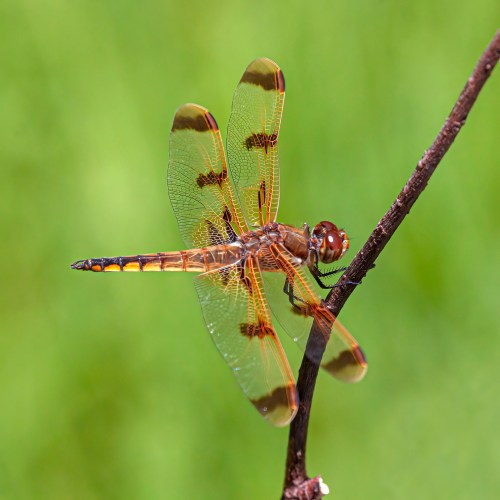
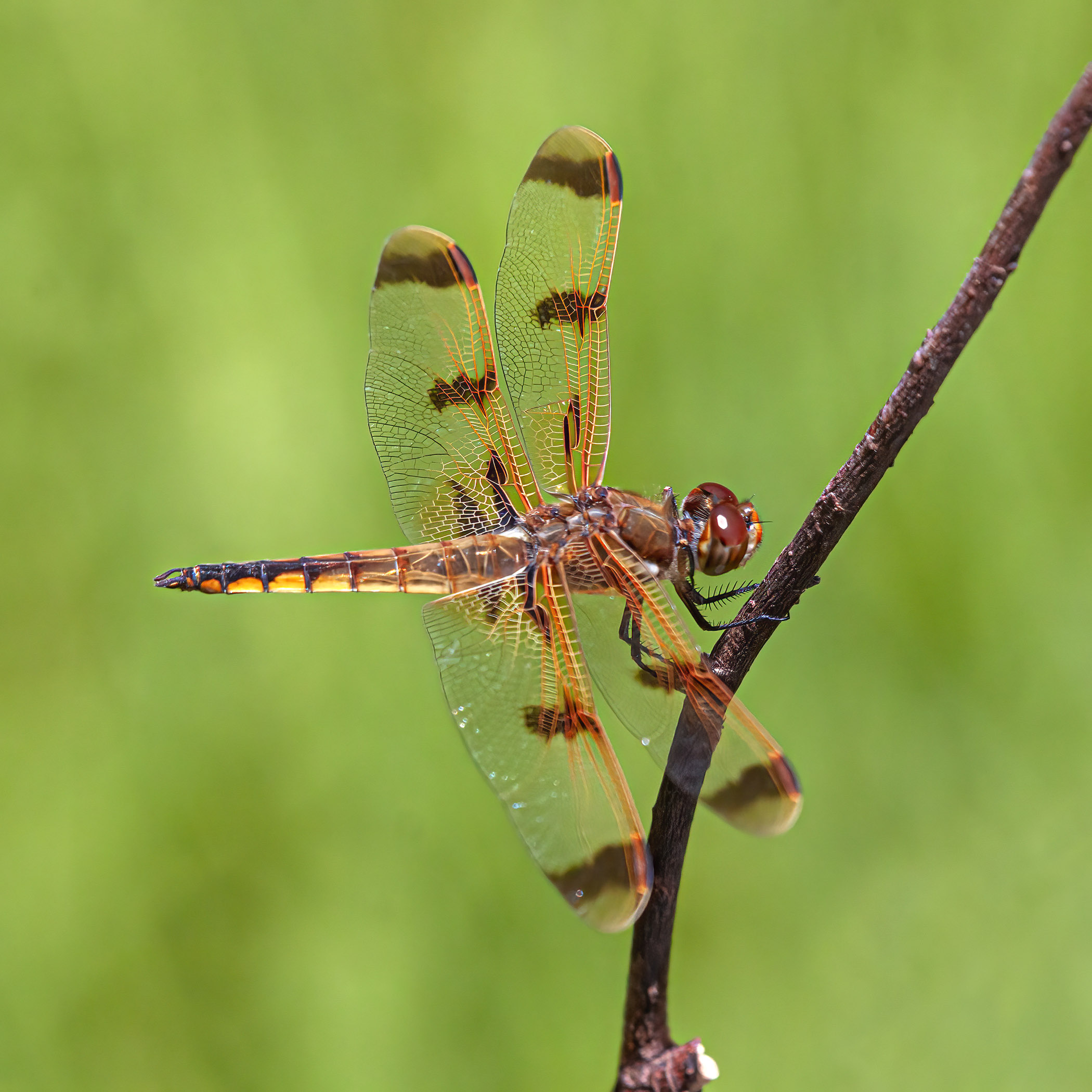
I was pretty excited to spot this handsome male Painted Skimmer dragonfly (Libellula semifasciata) yesterday while exploring in Fairfax County. I love the warm tones and patterns of this species and the cool contrast of the soft green background. The composition is simple and graphic and, in my view, effective in capturing the beauty of the moment when I spotted the dragonfly.
© Michael Q. Powell. All rights reserved.
Posted in Dragonflies, dragonfly, Insects, Nature, Photography, Summer, wildlife | Tagged Canon 50D, Fairfax County Virginia, Libellula semifasciata, Lorton VA, Occoquan Regional Park, Painted Skimmer, Painted Skimmer dragonfly, Tamron 180mm | 10 Comments »
June 25, 2021 by Mike Powell
I guess that I could be accused of shameless self-promotion by reposting more photos of myself, but I am so happy with the way that they turned out. Cindy Dyer is such a talented photographer who so perfectly captured my personality in these photos.
Our initial goal for our little photoshoot was to shoot some colorful images to help me celebrate LGBTQ+ Pride Month, an annual month-long celebration in June. As stated in a recent presidential proclamation, “Pride is both a jubilant communal celebration of visibility and a personal celebration of self-worth and dignity.”
The goal of this month quite simply is to highlight the efforts of so many people to live freely and authentically. It is my firm conviction that diversity is one of the elements that makes our human communities stronger and more vibrant.
 Cindy Dyer's Blog
Michael P says: I am celebrating Pride Month 2021 with sole. T-shirt from the Converse 2021 Pride Collection, hightop Converse All-star Sneakers 2020 Pride Edition, and white Levi’s 501 jeans.
Michael is an accomplished nature/wildlife photographer as well as a gifted storyteller. Check out his blog here:
https://michaelqpowell.com/ View original post
Posted in Photography, Portraits, Pride Month | Tagged Cindy Dyer, Cindy Dyer portraits, LGBTQ+ Pride Month, Pride Month | 39 Comments »
June 25, 2021 by Mike Powell
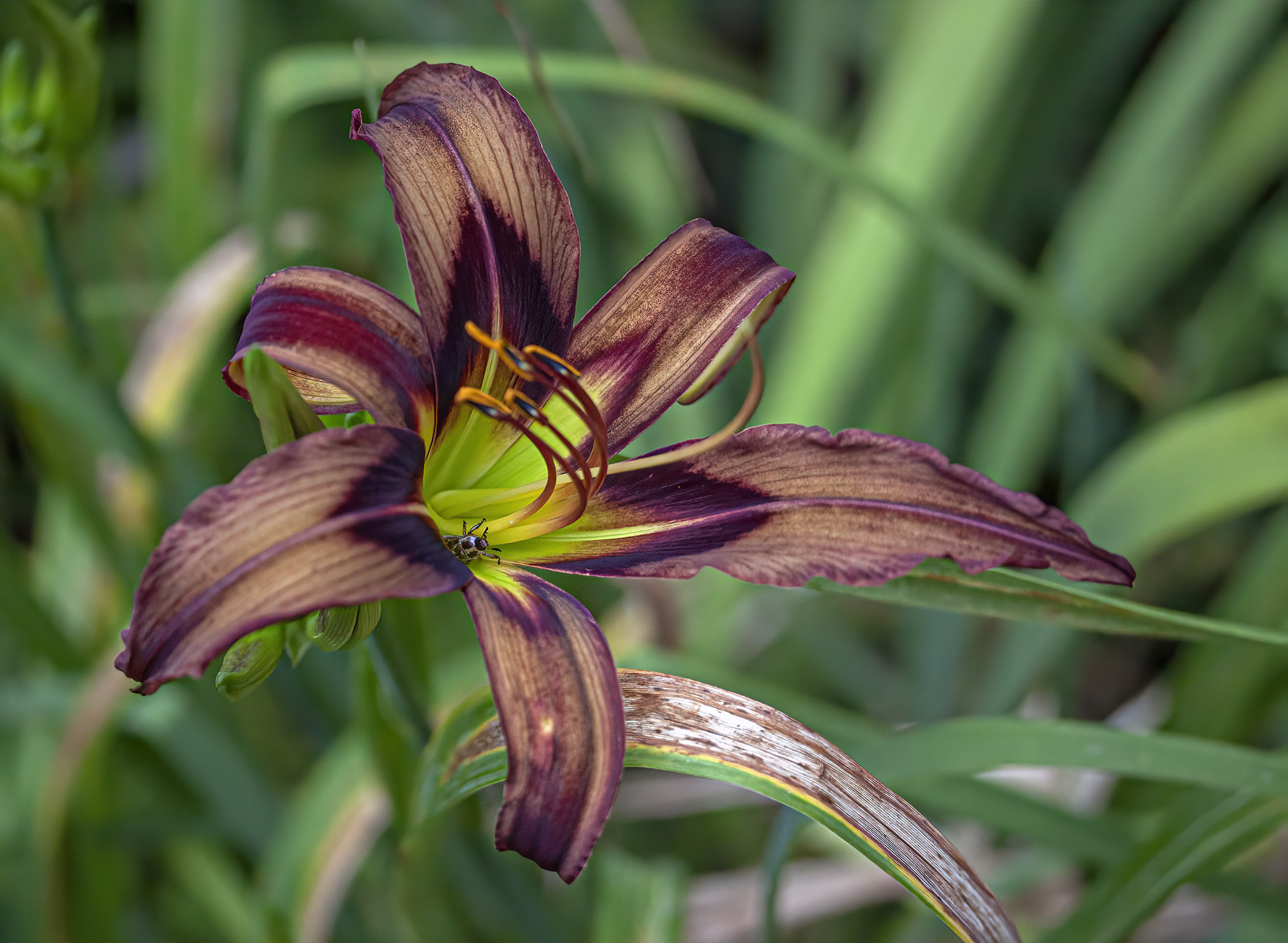
It’s amazing the things that show up in my photos that I did not notice when taking the shot, like this little beetle in the center of a striking lily that I photographed recently in the garden of my dear friend and neighbor Cindy Dyer. Cindy likes to call them “bonus bugs.” According to our rules, any bugs that you see when capturing a shot don’t “count” towards a bonus.
I do not have enough information to identify the insect. At first I thought it might be a cucumber beetle, but the pattern does not quite match the ones I have seen before. Cindy suggested that it might possibly be a carpet beetle. I also checked out a lot of different types of scarab beetles, but eventually decided that I was ok with not knowing the identity of the bonus bug.
I have included the second photo as a bonus. My original purpose in photographing the lily was to capture its beauty and unusual coloration and the second shot accomplished that goal. I carefully focused on the stamens (and particularly the anthers) and allowed the rest of the flower to fall out of focus. If I had not looked at the first photos, I might not have noticed the fuzzy shape of the bonus bug in the second image, but it is definitely there.


© Michael Q. Powell. All rights reserved.
Posted in Flowers, Insects, Macro Photography, Nature, Photography, Summer | Tagged Alexandria VA, bonus bug, Canon 50D, Canon 60mm, Cindy Dyer, Cindy's garden, lily | 9 Comments »
June 25, 2021 by Mike Powell
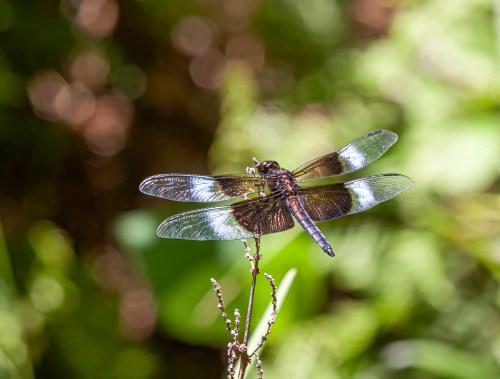
Most of the Widow Skimmer dragonflies (Libellula luctuosa) that I have seen this season have been immature males, like the one in the second photo below that I spotted on Wednesday at Occoquan Regional Park. When they are that young, their colors and wing markings match those of their female siblings.
As they mature, however, the males develop the additional white patches on their wings that are simply spectacular, like those of the mature male Widow Skimmer in the first photo that I spotted later that same day. Their bodies also turn blue and with varying degrees of pruinosity, the dusty looking coating on their abdomens that gives them a frosted look. (According to the Educalingo website, the word pruinose comes “from Latin pruīnōsus frost-covered, from pruīna hoarfrost.”)
We have moved into the lazy days of the summer, when dragonflies are now a frequent sight at most of the ponds in our area. Hopefully you are seeing them too. Most of those dragonflies are probably from the skimmer family, a large group of dragonflies in which many species tend to be habitat generalists. I will certainly be photographing lots of skimmers, but will also be keeping an eye out for more uncommon species, like the Cyrano Darner that I featured yesterday.

© Michael Q. Powell. All rights reserved.
Posted in Dragonflies, dragonfly, Insects, Nature, Photography, Summer, wildlife | Tagged Canon 50D, Libellula luctuosa, Lorton VA, male Widow Skimmer, Occoquan Regional Park, Tamron 180mm, Widow Skimmer, Widow Skimmer dragonfly | 14 Comments »
June 24, 2021 by Mike Powell
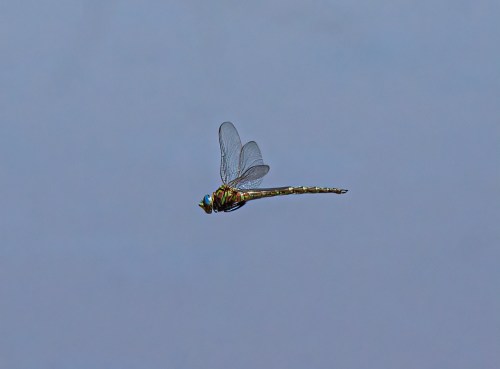
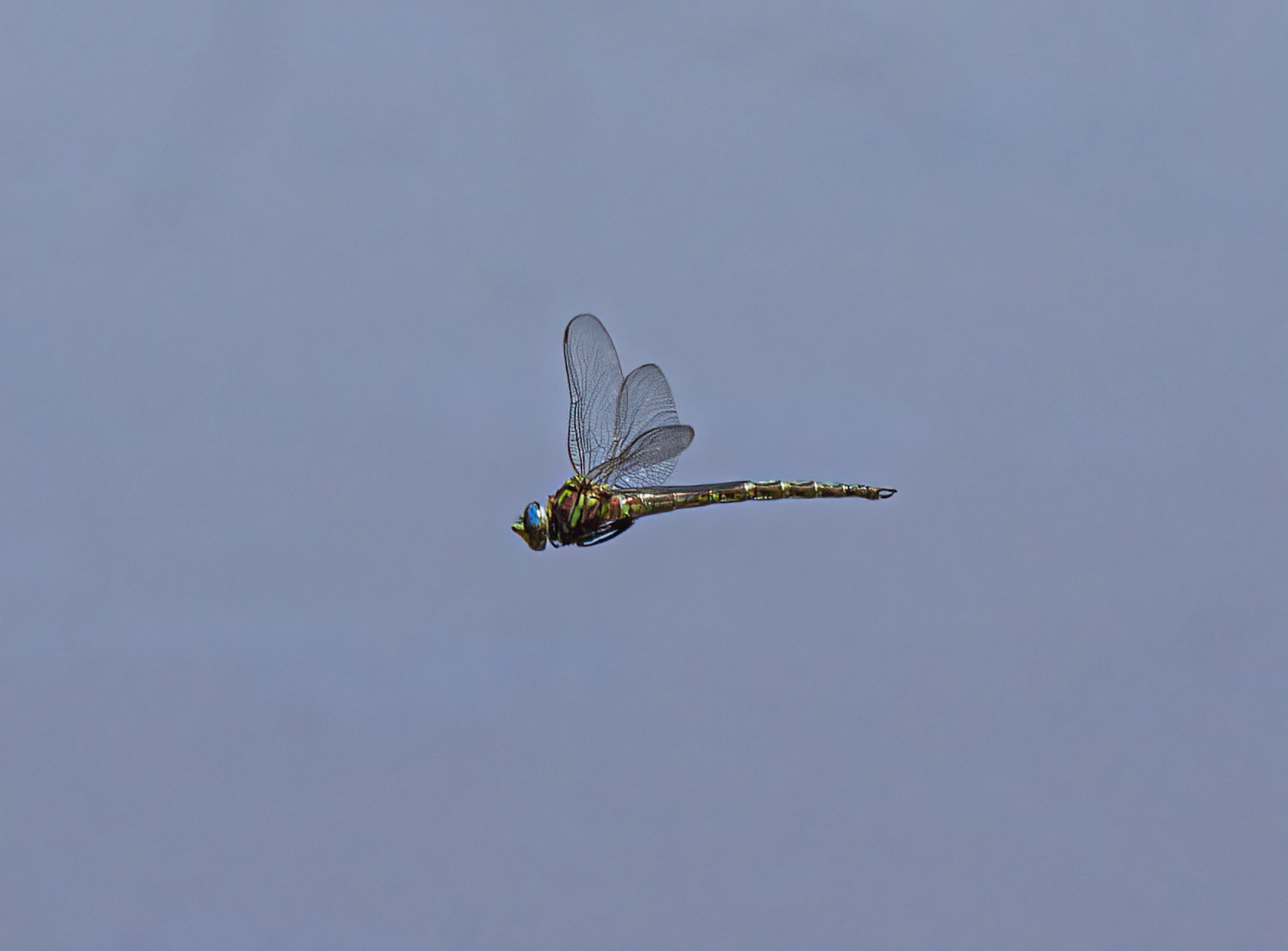
As I stood at the edge of an open marshy area yesterday at Jackson Miles Abbott Wetland Refuge, I was excited to spot a large patrolling dragonfly. The dragonfly was flying low over the water in repetitive patterns and I suspected that it was a Cyrano Darner dragonfly (Nasiaeschna pentacantha), a species that I do not see very often.
When the dragonfly flew into the light I got a good enough look at it to confirm that it in fact was a Cyrano Darner. In case you are curious, the species is named for its long, protruding, greenish forehead that is somewhat reminiscent of the long nose of literary character Cyrano de Bergerac.
I kept hoping that the dragonfly would fly closer, but it kept its distance and the only shots I could get were at relatively long range. I am happy that I managed to capture some images that are more or less in focus and show some of the beautiful details of this dragonfly.
The second shot is a bit sharper and you can see the dragonfly’s colors and patterns better. However, I have a slight preference for the first image, because the reflections of the vegetation in the water in the first shot give you a sense of environment that is lacking in the more clinical view of the second one.

© Michael Q. Powell. All rights reserved.
Posted in Dragonflies, dragonfly, Nature, Photography, Summer, wildlife | Tagged Canon 50D, Cyrano Darner, Cyrano Darner dragonfly, dragonfly in flight, Fort Belvoir VA, Jackson Miles Abbott Wetland Refuge, Nasiaeschna pentacantha, Tamron 180mm | 14 Comments »
June 24, 2021 by Mike Powell
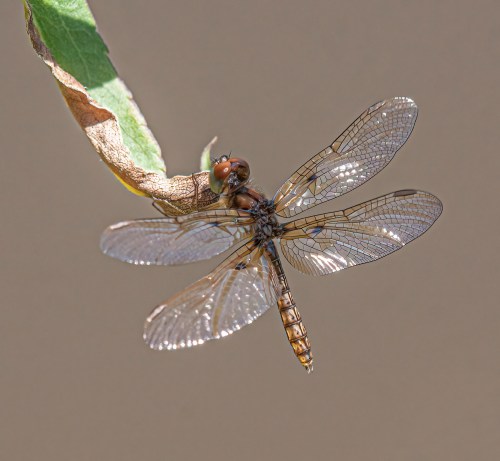
Male Eastern Amberwing dragonflies (Perithemis tenera) are really easy to identify, because their wings are amber-colored. However, when they first emerge and are in a stage known as “teneral,” their wings are clear and shiny, like those of this Eastern Amberwing that I spotted yesterday at the edge of the pond at Jackson Miles Abbott Wetland Refuge.
For comparison purposes, I have included a shot from earlier this year of a mature male Eastern Amberwing at the same location—it was part of a posting called Eastern Amberwing in May. Now that we have moved into summer it is quite common to see these tiny dragonflies, the smallest dragonflies in our area at about one inch (25 mm) in length, though I had never before seen a teneral male of this species.

© Michael Q. Powell. All rights reserved.
Posted in Dragonflies, dragonfly, Insects, Nature, Photography, Summer, wildlife | Tagged Canon 50D, Eastern Amberwing, Eastern Amberwing dragonfly, Fort Belvoir VA, Jackson Miles Abbott Wetland Refuge, Perithemis tenera, Tamron 180mm | 5 Comments »
June 23, 2021 by Mike Powell
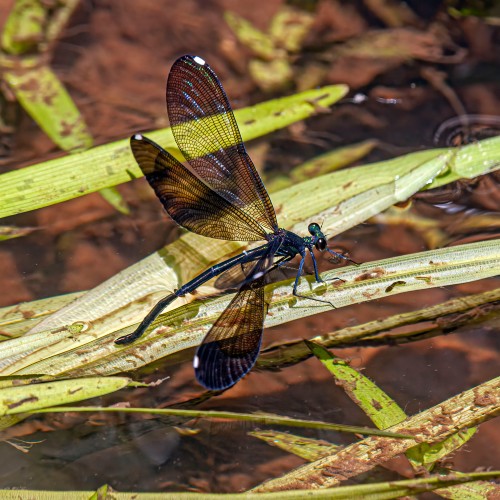
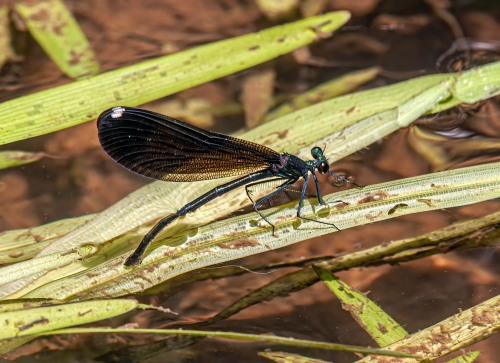
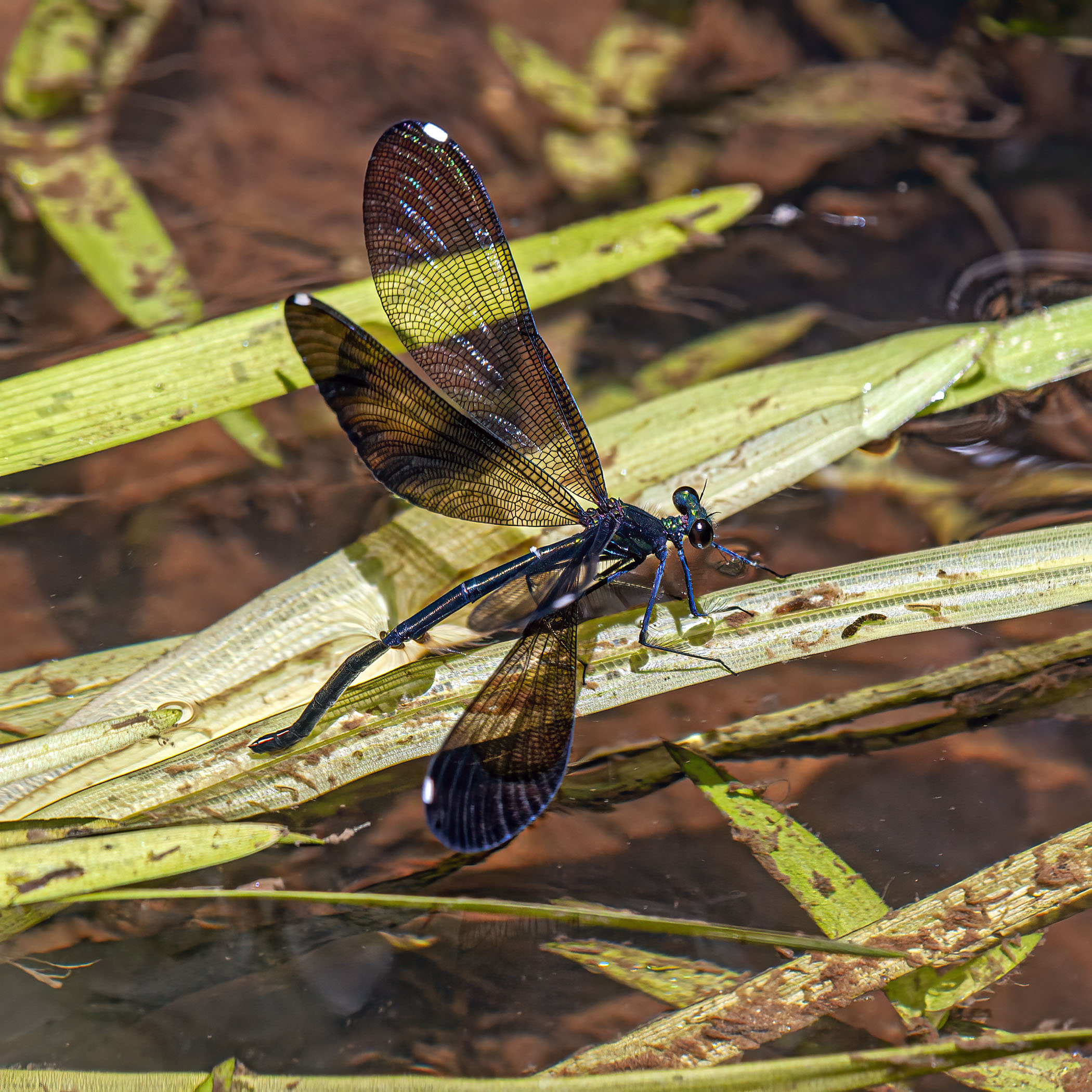
Last week I spotted a female Ebony Jewelwing damselfly (Calopteryx maculata) as she was depositing eggs in vegetation at the edge of a small stream in Prince William County, Virginia. Some dragonflies lay their eggs directly in the water by tapping, but damselflies (and some dragonflies) use their ovipositors, the tubular, sharply-pointed appendages at the tips of their abdomens, to make slits and insert eggs into the tissues of the plants.
If you look really closely at the second photo, you can actually see the damselfly’s tiny ovipositor that is shaped a bit like a thorn. The damselfly appeared to arch her entire abdomen, insert the ovipositor into the vegetation, and then forcefully push down on her abdomen to insert the eggs more deeply, as you can see in the first photo. Sometimes she would flap her wings a few times, either for stability, I assume, or possibly for additional leverage.
I noticed that vegetation in which the damselfly is depositing her eggs has an unusual pattern, a broken line that looks like a seam made by a sewing machine. I wonder if that line is the result of the damselfly’s meticulous efforts to deposit her eggs.
© Michael Q. Powell. All rights reserved.
Posted in damselfly, Insects, Nature, Photography, Summer, wildlife | Tagged Calopteryx maculata, Canon 50D, Ebony Jewelwing damselfly, Ebony Jewelwing ovipositing, female Ebony Jewelwing, ovipositing, Prince William County VA, Tamron 180mm | 8 Comments »
June 22, 2021 by Mike Powell
If you read the title of this posting before you saw the photo, you might have assumed that I was the one behind the camera in the studio. In this case, however, I was the one in front of the camera.
Cindy and I share a studio space with a video production company. When we moved to a new and much larger space last year, one of our goals was to expand her portrait shooting business. The pandemic restrictions, though, have severely limited the number of opportunities for her to shoot portraits.
Cindy is a really talented photographer and over the past year we have talked about doing a colorful photoshoot to help me celebrate Pride month. This past Sunday we finally did that shoot and Cindy also took advantage of the opportunity to do some more formal shots of me, like this one, and even some crazy action shots. (Stay tuned—you might see some of them in the future.)
I do not consider myself to be particularly photogenic and am not really comfortable in front of the camera. Cindy gently guided me through a series of poses that occasionally felt awkward, but ended up looking really good.
I love the way that this shot turned out. As I commented in Facebook when Cindy posted a similar shot, I definitely need to write a book now, because I already have a photo for the book jacket.
Thanks, Cindy. Be sure to check out Cindy’s blog and her portfolio to see some amazing images.
Cindy Dyer's Blog
© Cindy Dyer. All rights reserved.

View original post
Posted in Photography, Portraits | Tagged Cindy Dyer, Cindy Dyer portraits | 24 Comments »
June 22, 2021 by Mike Powell
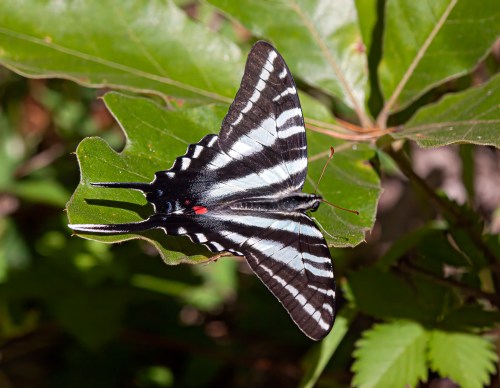
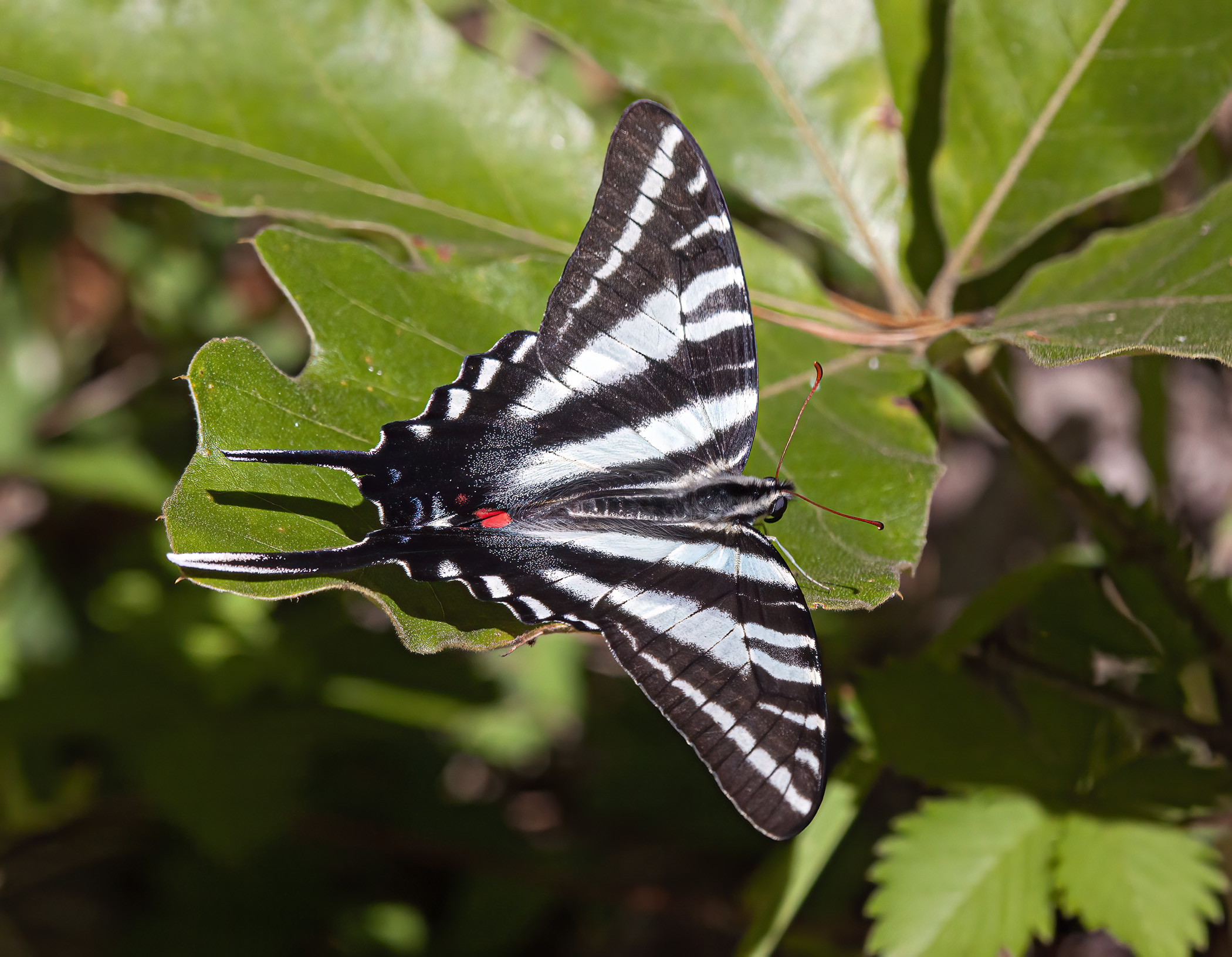
I was really happy to be able to photograph this Zebra Swallowtail butterfly (Eurytides marcellus) last week in Prince William County as I was exploring a small pond with fellow photographer and blogger Walter Sanford. Quite often when I see one of these butterflies, it flits about and refuses to perch, but this one was quite cooperative.
Out of all of the different swallowtail butterflies in our area, the Zebra Swallowtails probably have the longest “tails.” Although this butterfly is in almost perfect condition, I couldn’t help but notice that one of its tails is already damaged and is shorter than the other one.
What is the purpose of these tails? According to the website bugunderglass.com, the tails are an “evolutionary feature. Birds love to eat butterflies and when they attack butterflies they go for the neck or body, which would be a clear-cut kill instead of a piece of wing. In response to this, swallowtails have evolved tail extensions that resemble their necks and body. Therefore, a bird will see these extensions as a “body or neck” and be directed away from the butterfly’s vital organs and fly away with a piece of wing, leaving the butterfly with its life.”

© Michael Q. Powell. All rights reserved.
Posted in Butterflies, Insects, Nature, Photography, Summer, wildlife | Tagged Canon 50D, Eurytides marcellus, Prince William County VA, Tamron 180mm, Zebra Swallowtail, Zebra Swallowtail butterfly | 14 Comments »
June 21, 2021 by Mike Powell
I was not sure what kind of dragonfly this was when I photographed it last Thursday while exploring a stream in Prince William County with fellow dragonfly enthusiast Walter Sanford, but Walter was able to immediately identify it for me as a Black-shouldered Spinyleg dragonfly (Dromogomphus spinosus). Unfortunately the dragonfly flew away before Walter was able to get a shot of it himself.
As I look at the photo now, I am pretty confident that I would have eventually come up with the correct identification. If you look carefully at the upper portion of the long back legs, you can’t help but notice the distinctive leg spines that are responsible the common name for this species and that help him to snag and hold onto prey. As for his “shoulders,” the wide shoulder stripe looks a little more brown than black in this photo, but may darken with age.
Many of you know that when I am out in the field, I do not worry too much about making definitive identifications of my subjects. I am amused whenever I see birders pulling out identification guides or checking their favorites apps when they are out in the field. I am content to worry about identification after I have returned home and I tend to follow what I like to call the “law of the Old West”—shoot first and ask questions later.

© Michael Q. Powell. All rights reserved.
Posted in Dragonflies, dragonfly, Insects, Nature, Photography, Summer, wildlife | Tagged Black-shouldered Spinyleg, Black-shouldered Spinyleg dragonfly, Canon 50D, Dromogomphus spinosus, Prince William County VA, Tamron 180mm | 7 Comments »
June 21, 2021 by Mike Powell
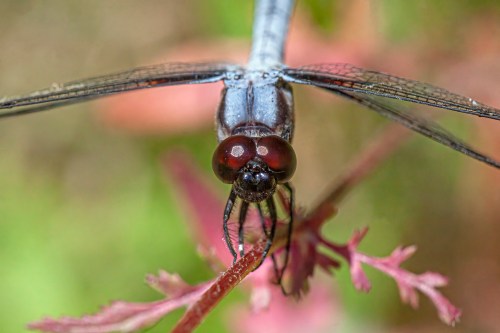
I had a really close encounter with this male Bar-winged Skimmer dragonfly (Libellula axilena) last Thursday while exploring a small pond in Prince William County, Virginia with fellow dragonfly enthusiast and blogger Walter Sanford. It is a challenge to handhold a macro shot when I am that close to a live subject, but the dragonfly was pretty cooperative and stayed put while I composed the shot. The colorful vegetation on which he was perched added some additional visual interest to the image without drawing attention away from the primary subject.
© Michael Q. Powell. All rights reserved.
Posted in Dragonflies, dragonfly, Macro Photography, Nature, Photography, Summer, wildlife | Tagged Bar-winged Skimmer, Bar-winged Skimmer dragonfly, Canon 50D, Libellula axilena, Prince William County VA, Tamron 180mm, Walter Sanford | 13 Comments »
June 20, 2021 by Mike Powell
How do you draw attention to the main subject in your photograph? One effective way is to choose a camera setting that will give you a shallow depth of field, so that only the subject is in sharp focus and the rest of the image is blurred. Another way is to ensure that the colors and texture of the background contrast with those of the subject.
I used both of these techniques yesterday morning when I spotted this metallic green sweat bee (g. Agapostemon) on one of the Shasta daisies growing in the garden of my neighbor and photography mentor Cindy Dyer. I love these little bees with their large speckled eyes and shiny green bodies and got as close to this one as I dared with my Canon 60mm macro lens.
I opened the aperture of the lens all the way to f/2.8 to let in lots of light and to achieve the narrowest possible depth of field. That is why the center of the daisy falls so quickly out of focus. As I was composing the shot, the flower reminded me of an egg that had been fried “sunny-side up” and I chose an angle that emphasized that look. (In case you are curious about the other camera settings, the ISO was 800 and the shutter speed was 1/800 sec.)
There is nothing super special about this image, but it is a fun little photo taken close to home that reminds me that beauty is everywhere. A series of creative choices in camera settings and composition by the photographer can often help to draw a viewer’s attention to that beauty. (I encourage you to click on the image to get a better view of the beautiful details of the little green bee.)

© Michael Q. Powell. All rights reserved.
Posted in Bees, Flowers, Insects, Macro Photography, Nature, Photography, Summer | Tagged Agapostemon, Alexandria VA, Canon 50D, Canon 60mm, Cindy Dyer, daisy, metallic green sweat bee, Runnymeade, Shasta daisy, sweat bee | 17 Comments »
June 19, 2021 by Mike Powell
Eye contact and posture are often key factors when trying to assess the attitude of another person we encounter. Is the same true for dragonflies? I am certainly guilty of anthropomorphism when I attribute human emotions and other traits to my little flying friends, but I often cannot help but do so—it is fun to let my imagination run free.
I grew up watching cowboy movies and one of the traditions of these movies was a showdown, often at high noon, at which two gunfighters face off for a climactic formal duel. I spotted the first male Lancet Clubtail dragonfly (Phanogomphus exilis) on Tuesday in the rocks on the banks of a stream in Prince William County. The small dragonfly did not seem to be afraid of me at all and in fact his whole attitude and direct stare seemed almost confrontational, like he was challenging me to a gunfight.
The male Lancet Clubtail in the nearby vegetation, by contrast, seemed shy and demure, glancing at me only out of the corner of his eyes. Perhaps he was hoping that I would simply go away, but he did not want to push the issue and definitely seemed to be avoiding a direct confrontation.
Who knows what goes on in the minds of dragonflies and other wild creatures? Whenever I look at the massive compound eyes of a dragonfly, I am acutely aware that they perceive the world in a way that is radically different from the way that I do. My mind threatens to explode when I try to imagine what it would be like have that kind of sensory input. Sometimes I try to interpret their behavior in human terms, but most often I simply gaze at them with awe and wonder, marveling at their beauty and extraordinary capabilities.


© Michael Q. Powell. All rights reserved.
Posted in Dragonflies, dragonfly, Insects, Nature, Photography, Summer, wildlife | Tagged Canon 50D, Lancet Clubtail, Lancet Clubtail dragonfly, Phanogomphus exilis, Prince William County VA, Tamron 180mm | 4 Comments »
June 18, 2021 by Mike Powell
Like many other nature photographers who take pictures of birds and dragonflies, I am always looking for subjects that have chosen photogenic perches or are engaged in some interesting activity. Some photographers even look derisively at commonplace photos of “a bird on a stick.” Yes, it is always nice when I can capture images like yesterday’s shots of a Prince Baskettail dragonfly in flight, but the reality is that most birds and dragonflies spend a lot of time perched in a single spot and I do my best to capture their beauty as well as I can.
I was thrilled on Tuesday to see quite a few Bar-winged Skimmers (Libellula axilena) as I explored a small pond in Prince William County. I do not see Bar-winged Skimmers very often and the Dragonflies of Northern Virginia website notes that they are “uncommon” in our area. Superficially they look a bit like the Great Blue Skimmers and Slaty Skimmers that I see quite often. Great Blue Skimmers, however, have bright white faces and male Slaty Skimmers tend to have more uniformly dark bodies.
I was particularly excited when one of the Bar-winged Skimmers that I was tracking perched on a bent-over stalk of vegetation, giving me a great view of both its abdomen and its face. The second shot is a bit more of an ordinary view, but it shows the wing markings really well that are responsible for the common name of this species. In both images, I was thrilled as well with the beautiful green background.


© Michael Q. Powell. All rights reserved.
Posted in Dragonflies, dragonfly, Insects, Nature, Photography, Summer | Tagged Bar-winged Skimmer, Bar-winged Skimmer dragonfly, Canon 50D, Libellula axilena, Prince William County VA, Tamron 180mm | 12 Comments »
June 17, 2021 by Mike Powell
I stopped by Jackson Miles Abbott Wetland Refuge yesterday and noticed that a changing of the guards has taken place. The last time I was there, Common Baskettail dragonflies (Epitheca cynosura) were patrolling the pond, but it looks like they have now been replaced by Prince Baskettail dragonflies (Epitheca princeps). The species are relatively easy to tell apart, because the Prince Baskettails have dark patterns on their wings, a feature that is visible even when they are flying.
In both cases, these are dragonflies that fly endlessly, moving back and forth in low patrols near the edges of the pond, never seeming to perch. The only way to capture an image of one is to photograph it in flight. If you watch one for long enough, though, you can start to detect patterns in the way that it flies. Each Prince Baskettail seems to have its own area of responsibility and often will turn around when it reaches its outermost boundaries.
So there is some predictability in the flight path of the dragonfly, but the dragonfly will instantaneously alter its path when it needs to chase off intruders or when the wind changes or for other reasons that I cannot understand or anticipate.
Here are a few of my more successful shots from yesterday—I had lots and lots of shots in which the dragonfly was out of focus or entirely missing from the frame. In some cases, a Prince Baskettail would fly relatively close to the shore and I was able to point my camera down at it, as in the first photo. Most of the time, though, I had to try to focus on the dragonfly at a greater distance and my camera was more level, as you can see in the second image and to a certain extent in the final photo.
I am often content to photograph dragonflies when they are perched, but from time to time it is good to push my skills and my patience by attempting shots like these. I remember my sense of amazement the first time I saw photos of dragonflies in flight and never imagined that I would eventually be able to capture similar images.


© Michael Q. Powell. All rights reserved.
Posted in Dragonflies, dragonfly, Insects, Nature, Photography, Summer, wildlife | Tagged Canon 50D, Common Baskettail, Epitheca cynosura, Epitheca princeps, Fort Belvoir VA, Jackson Miles Abbott Wetland Refuge, Prince Baskettail, Prince Baskettail dragonfly, Tamron 180mm | 20 Comments »
June 16, 2021 by Mike Powell
I was delighted on Monday to see that Swamp Milkweed (Asclepias incarnata) is now flowering at Huntley Meadows Park, a local marshland refuge. Butterflies really seem to like all varieties of milkweed and I was thrilled to photograph several different species that were feeding on these fabulous flowers, including a Spicebush Swallowtail(Papilio troilus) in the first image; an Eastern Tiger Swallowtail (Papilio glaucus) in the second image; and in the final image, a Silver-spotted Skipper (Epargyreus clarus), a smaller skipper that I cannot identify, and a bee.


© Michael Q. Powell. All rights reserved.
Posted in Butterflies, Flowers, Nature, Photography, wildlife | Tagged Alexandria VA, Asclepias incarnata, Canon 50D, Eastern Tiger Swallowtail, Epargyreus clarus, Huntley Meadows Park, Papilio glaucus, Papilio troilus, Silver-spotted Skipper, Spicebush Swallowtail, swamp milkweed, Tamron 180mm | 12 Comments »
June 16, 2021 by Mike Powell
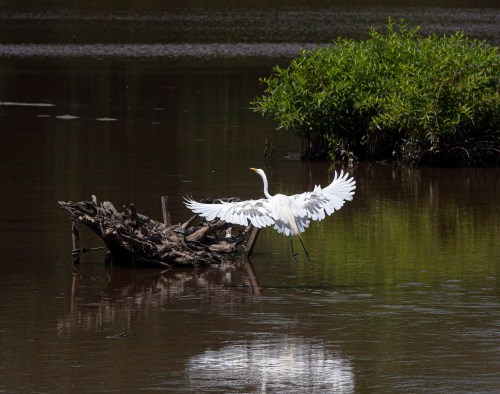
Unlike Great Blue Herons, which remain throughout the winter, “our” Great Egrets (Ardea alba) overwinter in warmer places. Great Egrets may have returned weeks or even months ago, but it was only on Monday that I spotted my first ones of the year, while I was exploring Huntley Meadows Park, a marshland refuge not far from where I live. This park used to be my favorite place for wildlife photography, but it became so popular that it is frequently crowded, and for that reason I visit it now only occasionally.
As I approached a small viewing platform overlooking the central wetland area, I could see four Great Egrets, including one that was fairly close to the shore. I was mostly looking for dragonflies, butterflies that day, so I had my 180mm macro lens on my camera and a 24-105mm zoom lens in my bag. I was hoping that the close-in egret would remain in place, so I would have a chance of getting a shot with my macro lens, but the large white bird took off as I approached.
I had anticipated that this would happen, and managed to capture a few shots of the egret in flight. I was fortunate that the egret flew only a short distance to a nearby pile of branches and remained there, allowing me time to compose some additional shots.
Although I would have liked to have gotten closer to the action with a longer lens, I am pretty happy with the shots that I got, which highlight the habitat as well as the beautiful bird. I love the feathery wingspan in the first photo as the egret was preparing to land. In the second photo, you can see that the long feathers of the egret’s breeding plumage if you click on the image to see the details better.
Whenever people ask me about camera gear, I encourage them to use whatever they have, rather than staying a home and lamenting that they do not have. Make the best use possible of what you have—I try to apply that lesson in other aspects of my life and not just in photography.

© Michael Q. Powell. All rights reserved.
Posted in Birds, Nature, Photography, Summer, wildlife | Tagged Alexandria VA, Ardea alba, Canon 50D, egret, Great Egret, Huntley Meadows Park, Tamron 180mm | 14 Comments »
June 15, 2021 by Mike Powell
I was happy yesterday to spot several Common Sanddragon dragonflies (Progomphus obscurus) while exploring a creek that runs through a small suburban park in Fairfax County, only a few miles from where I live. Unlike many other dragonflies that like areas with vegetation, this species prefers sunny, shallow creeks with sandy or gravelly banks.
Quite often Common Sanddragons will perch flat on the sand or with their abdomens raised a little or even a lot, as shown in the third image. The third image is quite unusual, because it shows a Common Sanddragon perched off of the ground and away from the water. When I first spotted the dragonfly perched on that dead branch, I had to look really closely to convince myself that it was in fact a Common Sanddragon. Fortunately, male Common Sanddragons have bright terminal appendages, known as cerci, at the tip of their abdomens that make them easy to identify.


© Michael Q. Powell. All rights reserved.
Posted in Dragonflies, dragonfly, Insects, Macro Photography, Nature, Photography, Summer, wildlife | Tagged Alexandria VA, Canon 50D, Common Sanddragon, Common Sanddragon dragonfly, Progomphus obscurus, Tamron 180mm, Wickford Park | 4 Comments »
June 14, 2021 by Mike Powell
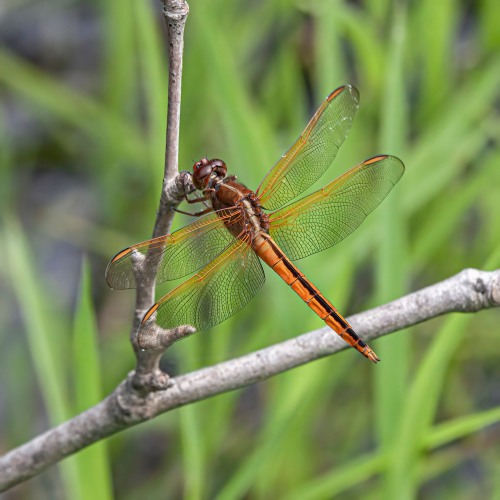
How do you stand out from the crowd? A touch of gold always adds a bit of bling, especially if you are a dragonfly. I spotted this young male Needham’s Skimmer dragonfly (Libellula needhami) yesterday while exploring a small pond in Fairfax County.
At the moment this juvenile male Needham’s Skimmer has the same colors as a female, but eventually his abdomen will turn an orange-red in color, but retain the black stripe down the middle. It is still a bit early in the season, though, for me to see an adult, as Needham’s Skimmers are a summer species that is just now starting to emerge—this is my first sighting of one this year.
© Michael Q. Powell. All rights reserved.
Posted in Dragonflies, dragonfly, Insects, Nature, Photography, Summer, wildlife | Tagged Canon 50D, Libellula needhami, Lorton VA, Needham's Skimmer, Needham's Skimmer dragonfly, Occoquan Regional Park, Tamron 180mm | 9 Comments »
June 13, 2021 by Mike Powell
I was happy to spot this handsome male Painted Skimmer dragonfly (Libellula semifasciata) during a recently trip to Occoquan Regional Park. A Painted Skimmer was the first dragonfly that I spotted this year on 26 April and I have not seen very many of them since that time at this park, the location of that first sighting. (See the posting Painted Skimmer in April for further details.)
Usually when I am trying to get a side shot of a dragonfly, I will shoot from above the wings or below the wings. In this case, though, I attempted to shoot between the wings, which gives the image an unusual perspective.
I would have liked to have been able to move forward a little to get a better view of the head, but I would then have been standing in several inches of water and mud of an uncertain depth. I opted to keep my feet dry at that moment, though later in the day I ended up with one foot stuck in mud that went above my ankle.

© Michael Q. Powell. All rights reserved.
Posted in Dragonflies, dragonfly, Insects, Nature, Photography, Summer, wildlife | Tagged Canon 50D, Libellula semifasciata, Lorton VA, Occoquan Regional Park, Painted Skimmer, Painted Skimmer dragonfly, Tamron 180mm | 11 Comments »
June 12, 2021 by Mike Powell
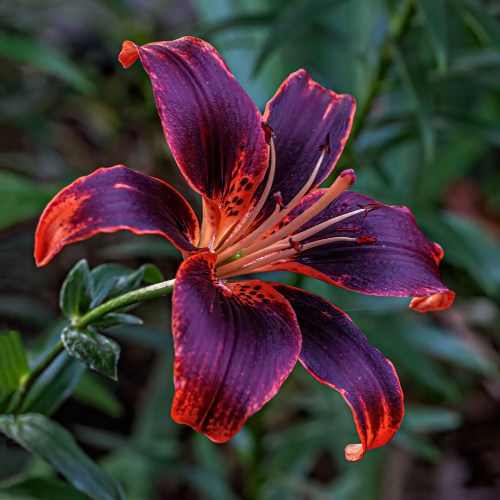
I love the spectacular colors of the Asiatic lilies that are now blooming in the garden of my dear friend and neighbor Cindy Dyer. These brilliant colors, which look almost neon in their intensity, were especially welcome yesterday, when it was gray and rainy the entire day.


© Michael Q. Powell. All rights reserved.
Posted in Flowers, Gardening, Nature, Photography, Summer | Tagged Alexandria VA, Asiatic lilies, Asiatic lily, Canon 50D, Cindy Dyer, Cindy's garden, Runnymeade, Tamron 180mm | 12 Comments »
« Newer Posts - Older Posts »




















 Mike Powell