June 5, 2016 by Mike Powell
There were lots of Common Grackles (Quiscalus quiscula) foraging Friday at Huntley Meadows Park and I was thrilled when one of the stood still for a moment and I was able to snap off this shot. At times grackles appear to be almost pure black, but when the light is right, they shimmer with shades of green and pink.

© Michael Q. Powell. All rights reserved.
Posted in Birds, Nature, Photography, Portraits, wildlife | Tagged Alexandria VA, Canon 50D, Common Grackle, grackle, Huntley Meadows Park, Quiscalus quiscula, Tamron 150-600mm | 7 Comments »
June 4, 2016 by Mike Powell
While exploring
Meadowood Recreation Area in Lorton, VA last month with fellow photographer
Walter Sanford, I observed this Giant Water Bug (
Lethocerus americanus) perched in the vegetation at the edge of a small pond. The bug’s size and its pose remind me of a tree frog—it’s over 2 inches (5 cm) long.
I have since learned that these bugs are nicknamed “toe-biters” and am happy that I didn’t get too close to it.
© Michael Q. Powell. All rights reserved.
Posted in Bugs, Insects, Macro Photography, Nature, Photography | Tagged Canon 50D, Giant Water Bug, Lethocerus americanus, Lorton VA, Meadowood Recreation Area, Tamron 180mm, toe-biter | 7 Comments »
June 3, 2016 by Mike Powell
Do you have a favorite dragonfly? One of my favorites is the Unicorn Clubtail (Arigomphus villosipes)—I love both its appearance and its name. Earlier this week, on the last day of May, I spent some time chasing an elusive unicorn at Huntley Meadows Park and captured a few photos of it. The second shot gives you a glimpse of the “horn” between the dragonfly’s eyes that is responsible for the first part of its name.


© Michael Q. Powell. All rights reserved.
Posted in Dragonflies, Macro Photography, Nature, Photography, wildlife | Tagged Alexandria VA, Arigomphus villosipes, Canon 50D, Canon 70-300mm, Huntley Meadows Park, Unicorn Clubtail, Unicorn Clubtail dragonfly | 2 Comments »
June 2, 2016 by Mike Powell
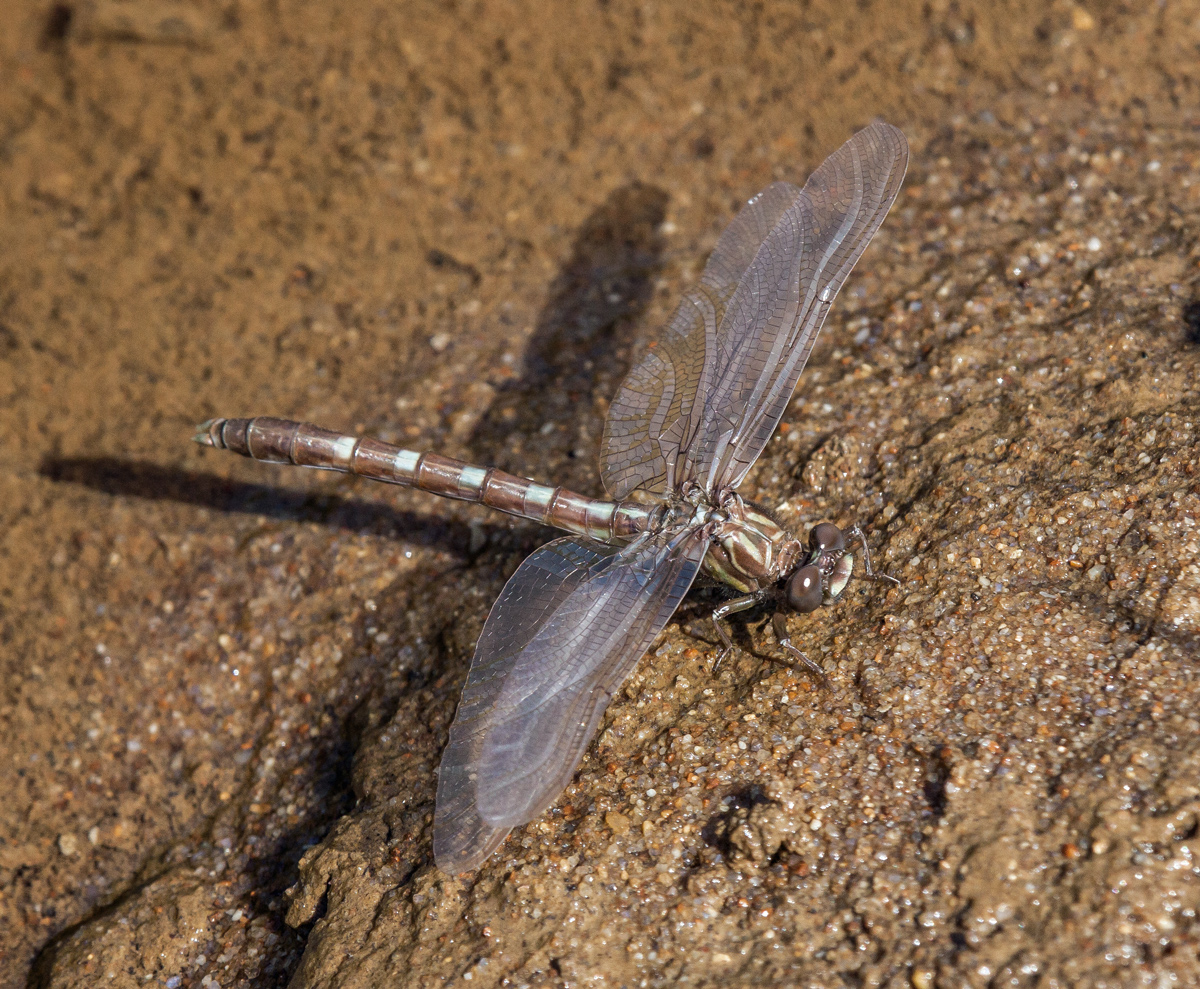
Dragonflies spend most of their lives as nymphs in the water. When the time is right, they crawl out of the water, break out of their exoskeletons, and turn into the colorful aerial acrobats that I love to watch and to photograph.
Although I have seen photos and videos of this amazing transformation, I have not yet witnessed the entire process in person. However, this past weekend I did spot some newly emerged Common Sanddragon dragonflies (Progomphus obscurus) at Huntley Meadows Park. Nymphs of many dragonfly species attach themselves to vegetation as they undergo their metamorphosis, but Common Sanddragon nymphs merely crawl out of the water onto a sandy area at the edge of a stream.
After I had spotted the dragonflies, I scoured the sandy stream bank and managed to find some cast-off skins (exuviae). Looking at the exuvia in the photo, you can see how the nymph has broken through the shell just behind the eyes and crawled out. The stringy white things on the top of the exuvia are breathing tubes used by the nymphs.
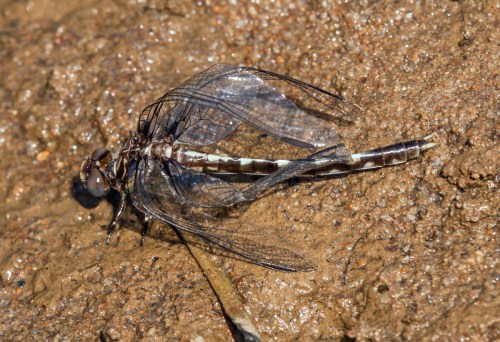
My last image is a visual reminder of how complicated and delicate this transformation can be be. The dragonfly obviously had some kind of a problem in expanding its wings and it is doubtful that it was able to survive for very long.


© Michael Q. Powell. All rights reserved.
Posted in Dragonflies, Insects, Macro Photography, Nature, Photography, wildlife | Tagged Alexandria VA, Canon 50D, Common Sanddragon, Common Sanddragon dragonfly, exuvia, Huntley Meadows Park, Progomphus obscurus, Tamron 180mm | 8 Comments »
June 1, 2016 by Mike Powell
Many damselfly species look so much alike that they are visually indistinguishable for me. I never have that problem, however, with the Ebony Jewelwing (Calopteryx maculata)—its dark wings and emerald body set it apart from all other damselflies in my area.
I spotted this distinctive little beauty yesterday, the last day of May, at Huntley Meadows Park in Alexandria, Virginia alongside one of the creeks in a remote area of the park. As I went through my photos I was drawn to this one, because of the wing positions.
When I showed a similar shot to my local dragonfly expert Walter Sanford, he immediately noticed the curve in the abdomen, something that I hadn’t even seen. I initially dismissed it as some kind of flexing by the damselfly, but when I noted the same curve in all of my images, I realized that it may be a deformity, as Walter initially suggested. Fortunately, the damselfly appeared to be able to fly normally despite the curved abdomen.

© Michael Q. Powell. All rights reserved.
Posted in Dragonflies, Insects, Macro Photography, Nature, Photography, wildlife | Tagged Alexandria VA, Calopteryx maculata, Canon 50D, Canon 70-300mm, Ebony Jewelwing, Ebony Jewelwing damselfly, Huntley Meadows Park | 8 Comments »
May 31, 2016 by Mike Powell
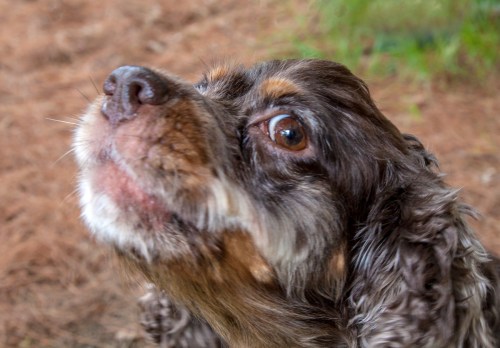
When Freckles heard the sound of a fire engine in the distance, she stopped playing and listened intently for a moment. She then leaned back her head and began to howl along with the sound of the siren. Who knew that Cocker Spaniels like to howl?
For the last two and a half weeks I have been taking care of Freckles while her owners have been on their honeymoon. It’s been a joy (and occasionally a challenge) having a dog in my life again. During this short time we have developed our own little routines and, among other things, I’ll miss her curling up around my feet as I use my laptop.


© Michael Q. Powell. All rights reserved.
Posted in animals, Dog, Photography, Portraits | Tagged Alexandria VA, Canon 24-105mm, Canon 50D, Cocker Spaniel, Freckles, howl, Runnymeade | 12 Comments »
May 30, 2016 by Mike Powell
I don’t see deer very often at my local marshland park. When I do, it is generally only a flash of their white tails as they bound out of sight. On Friday, however, I spotted a young White-tailed Deer (Odocoileus virginianus) foraging in the forest at Huntley Meadows Park on the other side of a small stream from where I was located.
I stopped and crouched and the deer slowly moved closer and closer to me. I think that the deer was aware of my presence, but did not seem to view me as a threat. I did not want to move around too much for fear of spooking the deer, so I used the lens that was on my camera at that moment and stayed in place. A 180mm macro lens would not have been my first choice for photographing a deer, but it worked out surprisingly well.
As the deer moved forward, I thought it might try to hop over the stream right where I was at, but eventually the deer moved upstream a bit and made its way to the side of the stream on which I was standing. It lingered for a while in a field before it finally disappeared from sight.
Here are a few shots from my encounter with the young deer. My favorite one might be the first one—I had no idea that deer were so flexible. The third image, which I only cropped a little gives you an idea of how close the deer was to me.


© Michael Q. Powell. All rights reserved.
Posted in animals, Nature, Photography, wildlife | Tagged Alexandria VA, Canon 50D, Huntley Meadows Park, Odocoileus virginianus, Tamron 180mm, white-tailed deer | 5 Comments »
May 29, 2016 by Mike Powell
The coloration of this female Eastern Pondhawk dragonfly (Erythemis simplicicollis) helped it to blend in almost perfectly with the lush green vegetation this past Friday at Huntley Meadows Park. This species of dragonfly is not only beautiful, but it is also deadly. I was reminded of this latter fact when I realized why the dragonfly had stopped and perched—it was consuming a small moth that it had just caught.

© Michael Q. Powell. All rights reserved.
Posted in Dragonflies, Insects, Macro Photography, Nature, Photography | Tagged Alexandria VA, Canon 50D, Eastern Pondhawk, Eastern Pondhawk dragonfly, Erythemis simplicicollis, Huntley Meadows Park, Tamron 180mm | 14 Comments »
May 28, 2016 by Mike Powell
Occasionally I complain that some species with names that include “common” are rare, but Common Whitetail dragonflies (Plathemis lydia) are in fact quite common. They are among the first dragonflies to appear in the spring and among the last to disappear in the autumn.
Even though I see them all of the time, I’ll frequently photograph Common Whitetails, with the hope of capturing a new or different view of the dragonfly. Yesterday was sunny and I knew that I would have trouble photographing male Common Whitetails, because their bodies are so white. Usually they end up overexposed with the highlights blown out.
To try to compensate for that problem, I set the metering mode on my camera for spot metering and I was able to capture this shot. The dragonfly is a male, but has not yet acquired the bright white of an adult male, which made things a little easier. I managed to get a proper exposure for the body and the rest of the image is a bit underexposed. The result was a kind of dramatic lighting effect that helps me to highlight the uncommon beauty of this common species.

© Michael Q. Powell. All rights reserved.
Posted in Dragonflies, Insects, Macro Photography, Nature, Photography, wildlife | Tagged Alexandria VA, Canon 50D, Common Whitetail, Common Whitetail dragonfly, Huntley Meadows Park, Plathemis lydia, Tamron 150-600mm | 2 Comments »
May 27, 2016 by Mike Powell
I love watching Green Herons (Butorides virescens) stalk a prey. Their movements are so focused, cautious, and deliberate they appear to be moving in slow motion.
Like the Great Egret that I featured yesterday, Green Herons migrate out of my area during the fall and it is always exciting to welcome back these colorful little herons. Green Herons often are often hidden in the vegetation at water’s edge, but this one cooperated by moving along a log in the water as it tracked its potential prey. This particular hunt was not successful and shortly after I took this photo, the heron flew off to a more distant location.

© Michael Q. Powell. All rights reserved.
Posted in Birds, Nature, Photography, spring, wildlife | Tagged Alexandria VA, Butorides virescens, Canon 50D, green heron, Huntley Meadows Park, Tamron 150-600mm | 3 Comments »
May 26, 2016 by Mike Powell
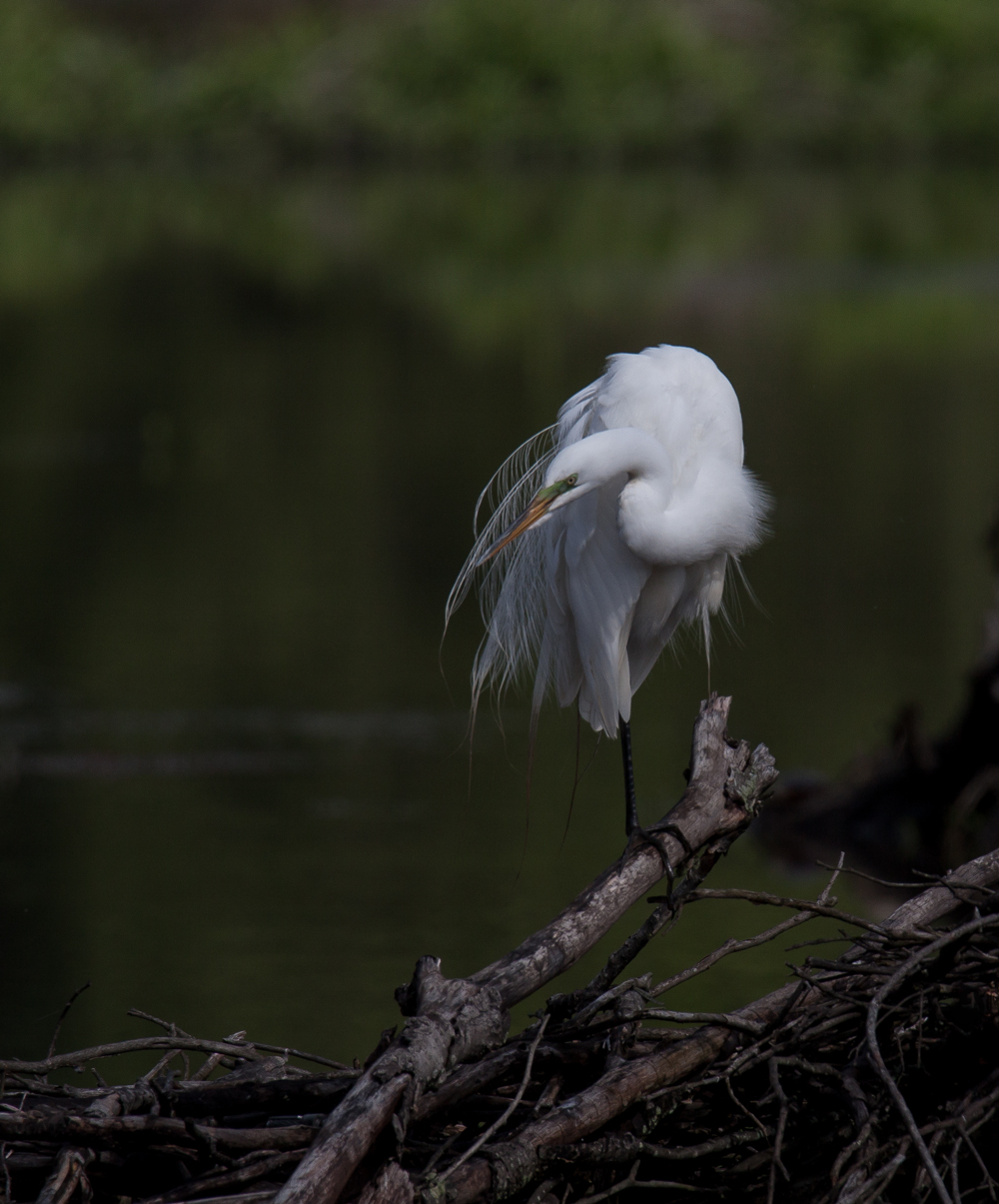
Every spring I look forward to the return of the elegant Great Egrets (Ardea alba) to our area. Unlike Great Blue Herons, which are with us throughout the winter, the egrets migrate south and return only in mid-spring when the weather has warmed up a bit.
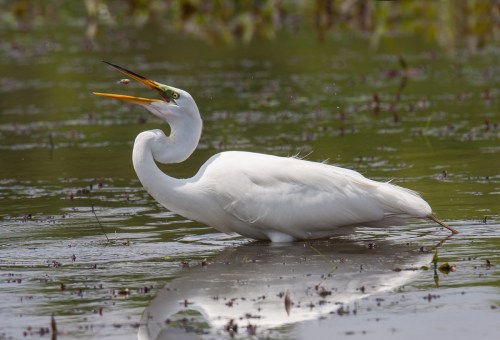
One of the highlight of egrets at this time of the year is their beautiful breeding plumage and the green lores (the area between the bill and eye). When I spotted an egret grooming itself in the early morning, I was able to capture a sense of the long additional plumes that it was sporting.

Unlike Great Blue Herons, which patiently wait for a big catch, this Great Egret at Huntley Meadows Park seemed content with a series of small bites. I think that it is a little fish, but I am not entirely certain what the egret is consuming as a snack.
© Michael Q. Powell. All rights reserved.
Posted in Birds, Nature, Photography, spring, wildlife | Tagged Alexandria VA, Ardea alba, Canon 50D, Great Egret, Huntley Meadows Park, Tamron 150-600mm | 13 Comments »
May 25, 2016 by Mike Powell
Necrophila americana—what a creepy Latin name for this beetle, known in English as the American Carrion Beetle, that feeds on dead and decaying flesh. Fortunately the backdrop was more pleasant for this specimen that I spotted on Monday in one of the fields at Huntley Meadows Park.

© Michael Q. Powell. All rights reserved.
Posted in Insects, Macro Photography, Nature, Photography, wildlife | Tagged Alexandria VA, American Carrion Beetle, beetle, Canon 50D, Huntley Meadows Park, Necrophila americana, Tamron 180mm | 7 Comments »
May 24, 2016 by Mike Powell
It’s dragonfly season and this past Friday fellow dragonfly enthusiast and photographer Walter Sanford guided me to a new spot to search for the elusive beauties. Accotink Bay Wildlife Refuge is a nature preserve located on Fort Belvoir, a nearby military base in Fairfax County, Virginia.
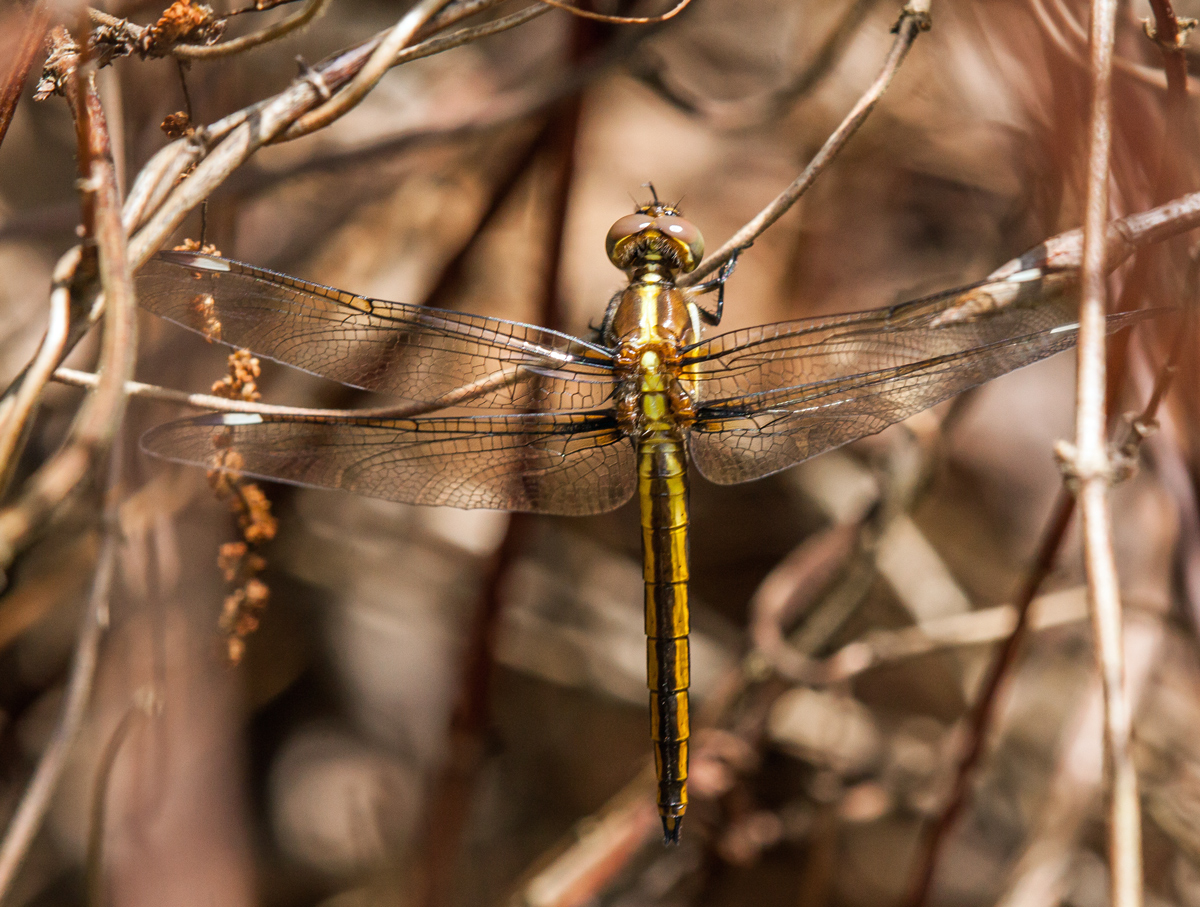
We are in a lull period of sorts for dragonflies—some of the early dragonflies are gone and others have not yet appeared. As we were making one final swing through likely locations, having come up almost empty-handed in our search, Walter spotted a dragonfly. The wings were so clear and shiny that it was obviously a teneral dragonfly, one that had only recently emerged.
Identification (and photography) was a bit of a challenge, because the young dragonfly was perched inside of a tangled mass of vegetation, making it almost impossible to get an unobstructed view. Eventually we were able to find a visual tunnel and I was able to get the first shot below. It gives a pretty good view of the dragonfly, which after the fact I could clearly see is a Spangled Skimmer (Libellula cyanea), but I really wasn’t satisfied with it.
Eventually I managed to get a second shot. It doesn’t show the dragonfly’s entire body and many element are out of focus, but it has an artistic sense that I find really appealing. I’m not sure if it’s because of the more vibrant colors or the unusual angle—I just know I like that image a whole lot more than the first one.


© Michael Q. Powell. All rights reserved.
Posted in Dragonflies, Macro Photography, Nature, Photography, wildlife | Tagged Accotink Bay Wildlife Refuge, Canon 50D, Fairfax County Virginia, Libellula cyanea, Spangled Skimmer, Spangled Skimmer dragonfly, Tamron 180mm | 9 Comments »
May 23, 2016 by Mike Powell
As I turned to photograph a tiny damselfly perched on an overhanging branch, it flew down to the water. Initially I was disappointed, but then I looked more closely through my camera’s viewfinder. The male Fragile Forktail (Ischnura posita) had landed on a floating leaf and had assumed a pose that made it look like he was riding a surfboard. As a bonus, I was able to capture a fascinating area of bubbles in the algae in the foreground of the image.

© Michael Q. Powell. All rights reserved.
Posted in Dragonflies, Insects, Macro Photography, Nature, Photography | Tagged Canon 50D, Fragile Forktail, Fragile Forktail damselfly, Ischnura posita, Lorton VA, Meadowood Recreation Area, Tamron 180mm | 4 Comments »
May 22, 2016 by Mike Powell
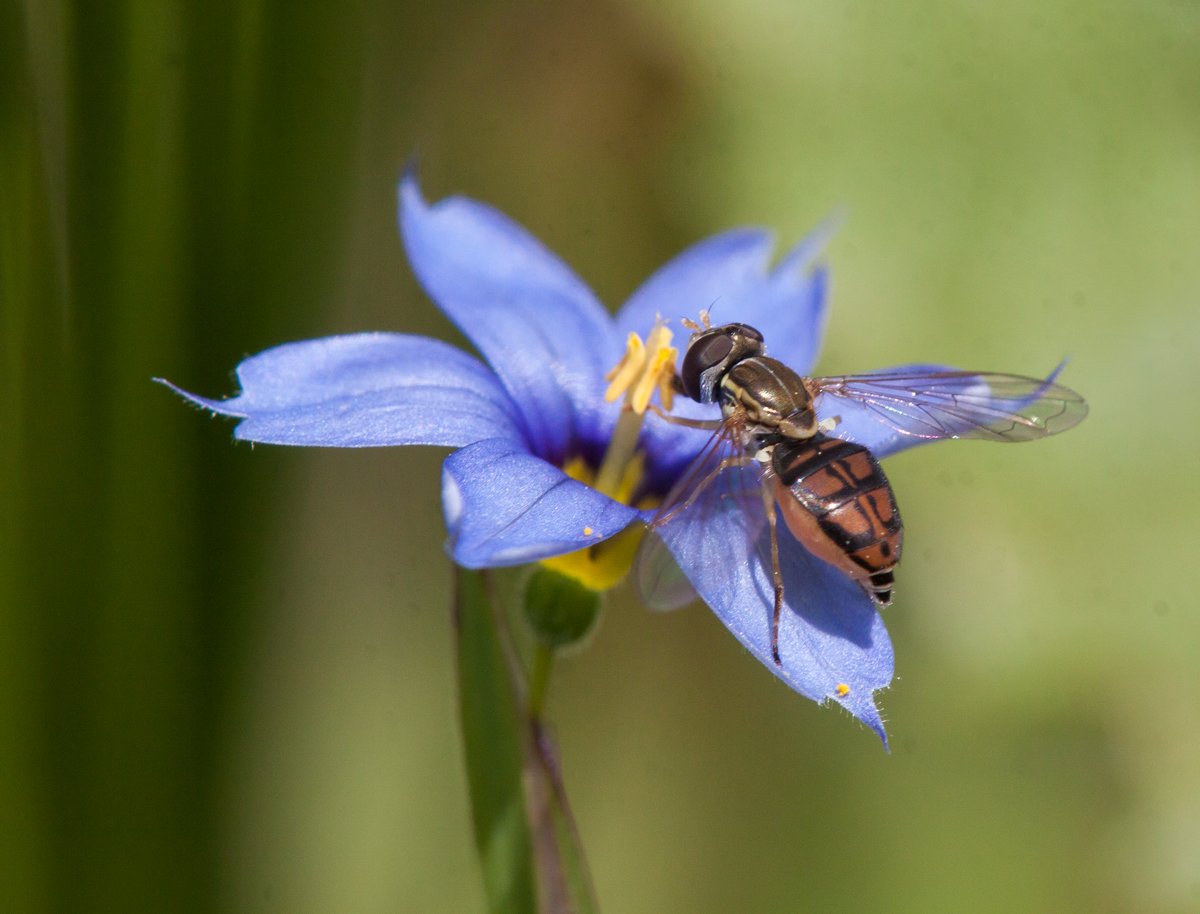
While I was hunting for dragonflies the past Friday at Meadowood Recreation Area in Lorton, Virginia, I managed to get this shot of a hoverfly (family Syrphidae) on what I was told was blue-eyed grass (Sisyrinchium) by some folks conducting a wildlife survey.
I had no idea what blue-eyed grass was, so I turned to the internet when I got home. It turns out that blue-eyed grass is not actually a grass, but a perennial plant of the iris family, and sometimes it is not blue. According to Wikipedia, the genus of blue-eyed grasses includes up to 200 species that may have blue, white, yellow, or purple petals.

© Michael Q. Powell. All rights reserved.
Posted in Insects, Macro Photography, Nature, Photography | Tagged blue-eyed grass, Canon 50D, family Syrphidae, hoverfly, Lorton VA, Meadowood Recreation Area, Sisyrinchium, Tamron 180mm | 6 Comments »
May 21, 2016 by Mike Powell
Most dragonflies like sunshine, so it’s been tough this month to find very many of them, given the almost constant cloud cover and frequent rain showers. Here are a few shots nevertheless of female Common Whitetail dragonflies (Plathemis lydia) from earlier in May. All of them appear to be young ones, in particular the one in the final shot, whose wings have not yet acquired their final coloration, indicating that it has only recently emerged.


© Michael Q. Powell. All rights reserved.
Posted in Dragonflies, Insects, Macro Photography, Nature, Photography | Tagged Alexandria VA, Canon 50D, Common Whitetail, Common Whitetail dragonfly, Huntley Meadows Park, Plathemis lydia, Tamron 180mm | 2 Comments »
May 20, 2016 by Mike Powell
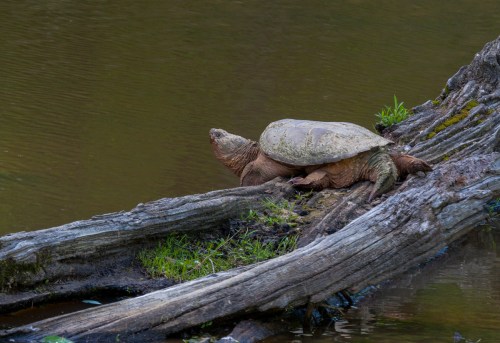
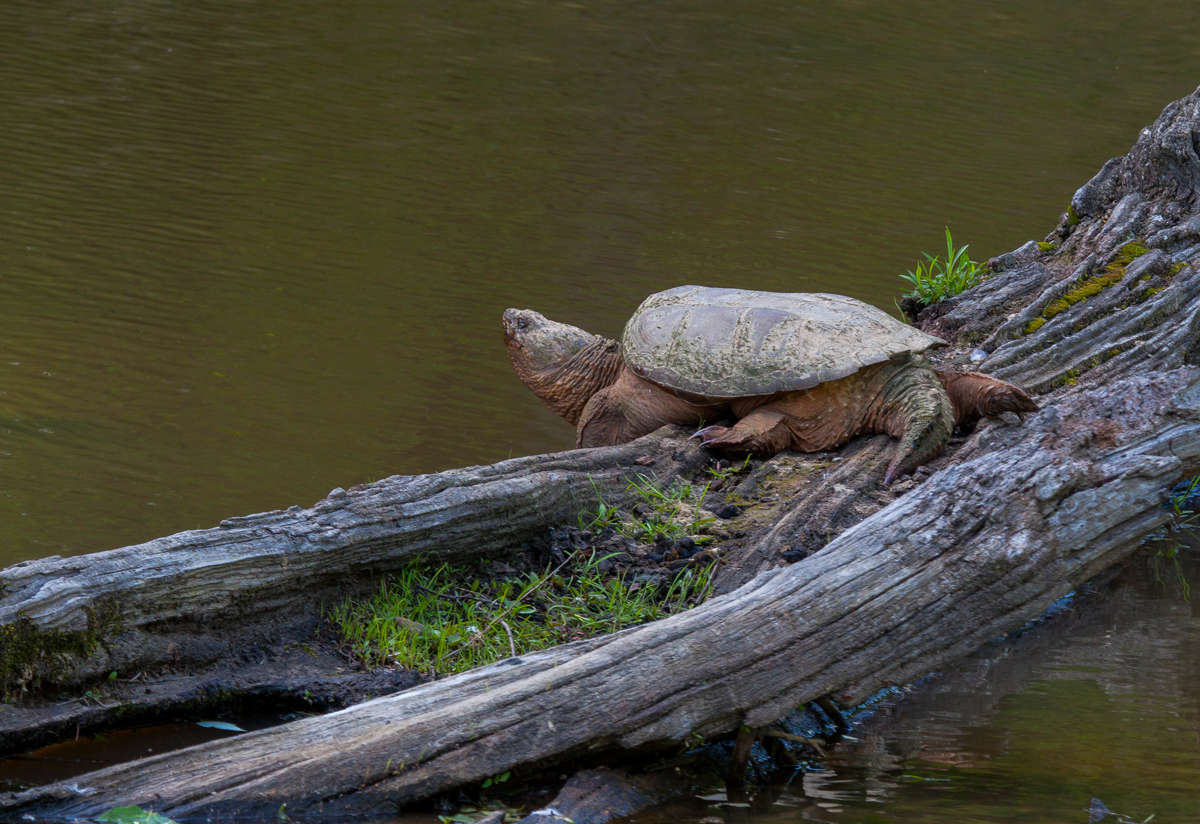
As a child, I remember thinking that turtles could all pull their bodies inside of their shells for protection. Clearly that is not the case with this prehistoric-looking Snapping Turtle (Chelydra serpentina) that I spotted last week lounging on a fallen tree at Huntley Meadows Park in Alexandria, Virginia.
We kept little turtles as pets several times in my family as I was growing up and I remember the clear flat plastic habitat that we used that had a small plastic palm tree. As a product of the suburbs of Boston, I didn’t have a whole lot of experience with wildlife, though I was Boy Scout for a while.
To this day I am amazed by the size and apparent power of snapping turtles, which are pretty common in my favorite marshland park. Most of the time I see them moving slowly in the water and only occasionally do I see one sunning itself on a log as the smaller turtles regularly are wont to do—I imagine that it is quite a chore to haul that massive body out of the water.
© Michael Q. Powell. All rights reserved.
Posted in Nature, Photography, Reptiles, wildlife | Tagged Chelydra serpentina serpentina, Eastern Snapping Turtle, snapping turtle | 9 Comments »
May 19, 2016 by Mike Powell
At this time of the year I love seeing irises growing in the wild at Huntley Meadows Park. I think these all are Blue Flag Irises (Iris versicolor), though I am not absolutely certain of this identification. These irises are not as big and showy as the ones growing in my neighbors’ gardens, but I find them to be equally beautiful.


© Michael Q. Powell. All rights reserved.
Posted in Flowers, Macro Photography, Nature, Photography | Tagged Alexandria VA, blue flag iris, Canon 50D, Huntley Meadows Park, iris, Iris versicolor, Tamron 180mm | 6 Comments »
May 18, 2016 by Mike Powell
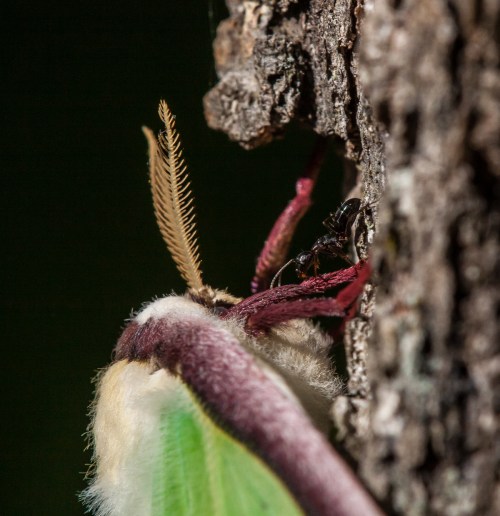
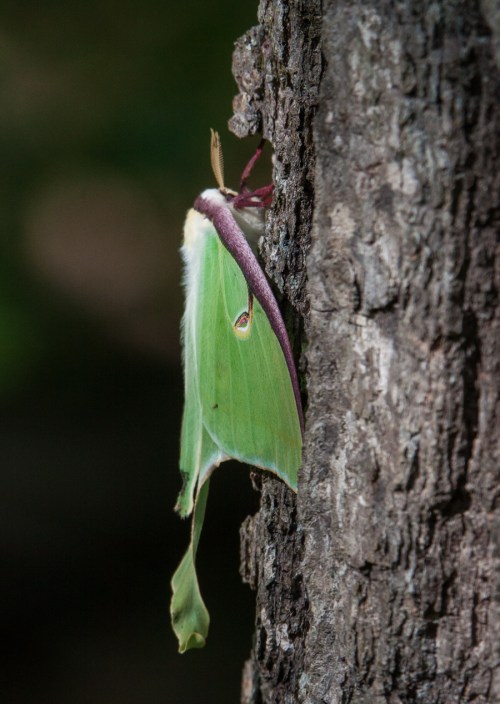
As I was wandering through the woods of Huntley Meadows Park last Friday, I came upon a giant Luna Moth (Actias luna) that seemed to be almost as big as my hand. I was trying to get a close-up of its really cool antennae when an ant crawled onto one of the moth’s legs. I thought the ant might become lunch until I learned that Luna Moths don’t eat—they have no mouths and they only live for about a week as adults, with a sole purpose of mating, according to a Fairfax County Public Schools webpage.

© Michael Q. Powell. All rights reserved.
Posted in Butterflies, Insects, Macro Photography, Nature, Photography, wildlife | Tagged Actias luna, Alexandria VA, Canon 50D, Huntley Meadows Park, Luna Moth, Tamron 180mm, Tamron 180mm macro lens | 18 Comments »
May 17, 2016 by Mike Powell
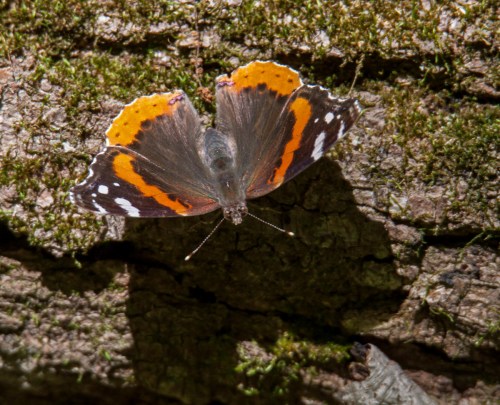
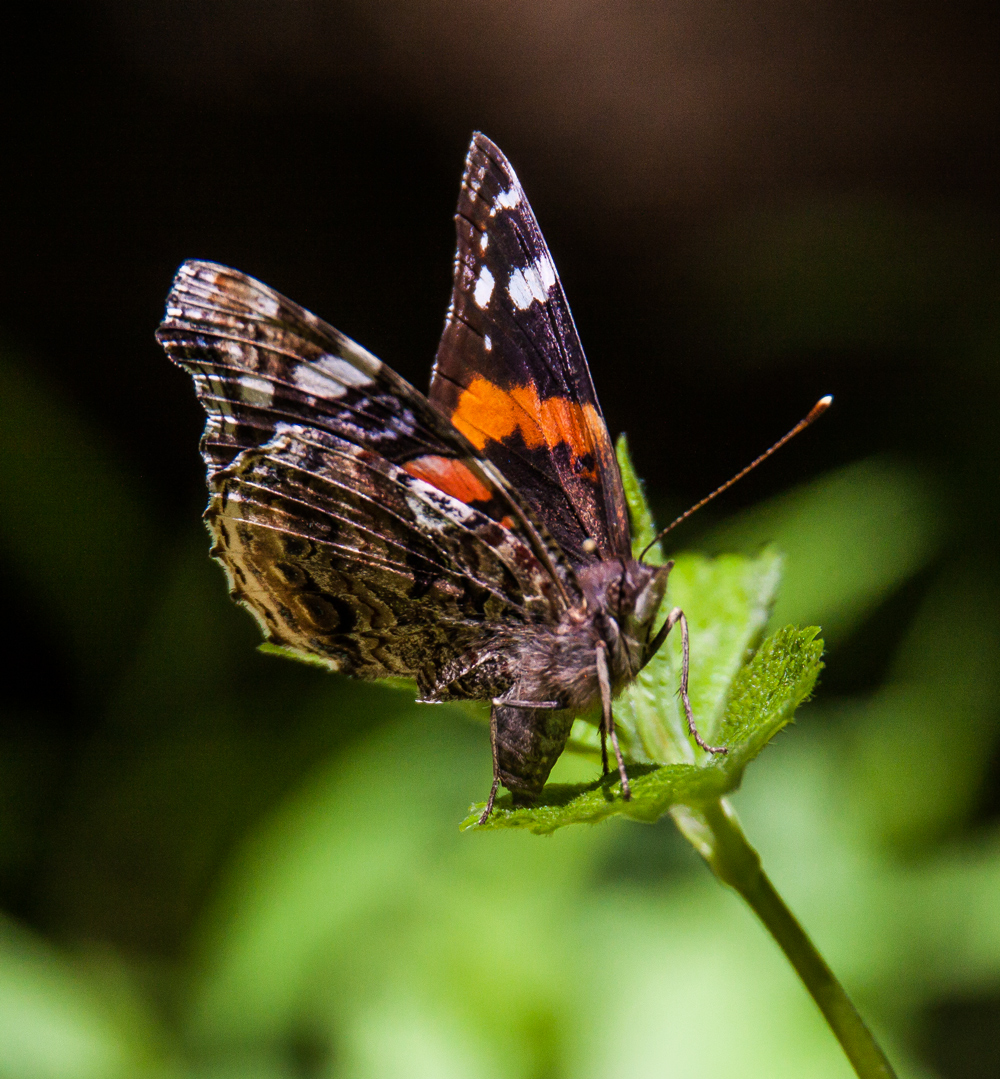
With the return of the sun, butterflies have started to reappear, like this handsome Red Admiral (Vanessa atalanta) that I spotted yesterday afternoon at Huntley Meadows Park.
It’s been gloomy and rainy for most of the past few weeks, so it was a particular joy when the sun was shining brightly yesterday. As I wandered through the woods and fields of my favorite park, butterflies flitted by a number of times, including several Red Admirals. Most of them kept moving and I was unable to capture them with my camera, but one of them perched a few times and gave me a chance to get some shots.
I’ve posted two of my favorite shots. The first is a little unconventional—the butterfly is upside down on a fallen log and I love the way it looks a bit like a heart. The second shot is a little more conventional, but it has a dynamic quality in the half-open wings and overall pose and I love the background blur.

© Michael Q. Powell. All rights reserved.
Posted in Butterflies, Insects, Macro Photography, Nature, Photography, wildlife | Tagged Alexandria VA, Canon 50D, Huntley Meadows Park, Red Admiral, Red Admiral butterfly, Tamron 150-600mm telephoto, Vanessa atalanta | 2 Comments »
May 16, 2016 by Mike Powell
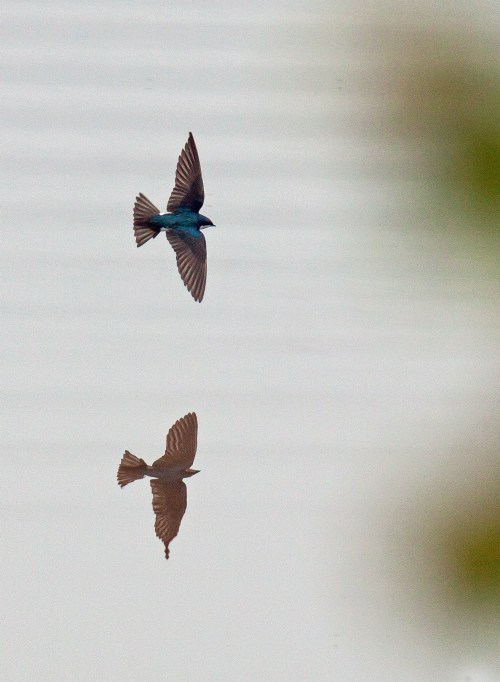
Tree Swallows (Tachycineta bicolor) are fast and erratic fliers as they chase after insects in mid-air. It’s tough to track them in my camera’s viewfinder and even more difficult to get shots that are in focus.
Last Friday, however, I managed to capture some images of a Tree Swallow at Huntley Meadows Park as it swooped so low above the surface of the water that it cast a reflection. It was an overcast day in which the sky and the water seemed to have the same gray color,, making it hard to tell where the sky ended and the water began.

© Michael Q. Powell. All rights reserved.
Posted in Birds, Nature, Photography, wildlife | Tagged Alexandria VA, birds in flight, Canon 50D, Huntley Meadows Park, swallow, Tachycineta bicolor, Tamron 150-600mm, Tree Swallow | 17 Comments »
May 15, 2016 by Mike Powell
Simple birds often seem to defy my limited identification skills. I caught sight of this little bird in the early morning Friday at Huntley Meadows Park. Its overall shape reminded me a bit of an American Robin, but the colors were all wrong.
One of the helpful birders at a Facebook group called Birding Virginia came to my rescue when I posted this photo. She identified it as a probable Swainson’s Thrush (Catharus ustulatus), a migratory species that is almost certainly just passing through our area. If you want to learn more about this bird, check out this page on the website of Cornell Lab of Ornithology, one of my favorite resources for information about birds.
© Michael Q. Powell. All rights reserved.
Posted in Birds, Nature, Photography, wildlife | Tagged Alexandria VA, Canon 50D, Catharus ustulatus, Huntley Meadows Park, Swainson's Thrush, Tamron 150-600mm | 2 Comments »
May 14, 2016 by Mike Powell
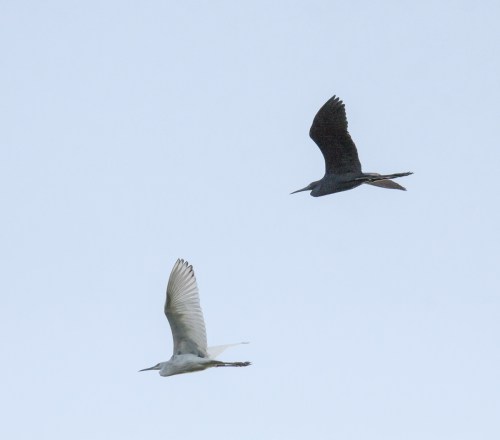
Late yesterday afternoon an excited fellow photographer told me that that she had spotted a pair of Little Blue Herons (Egretta caerulea) at Huntley Meadows Park. I had no idea if her identification was accurate, but I knew that sightings of Little Blue Herons are pretty unusual in our area.
I rushed to the place she had described and eventually I was able to spot the two herons in the back area of a beaver pond. As I observed them from a distance, I couldn’t help but notice the mottled colors of the feathers of the one on the left. Last year a couple of juvenile Little Blue Herons, which were entirely white, spent some time at the park, but this one, which I assume is an adolescent, seemed to be transitioning to a darker plumage. The colors of the adult, which I was seeing for the first time, were equally amazing, with beautiful shades of maroon and dark blue.
After some grooming, the light-colored heron flew to another tree and shortly thereafter they both took off into the air. I was happy that I was able to get a few in-flight shots of these beautiful birds. I’ll be looking for them on my next visits to the park, but suspect they were merely making a rest stop on a longer journey.


© Michael Q. Powell. All rights reserved.
Posted in Birds, Nature, Photography, wildlife | Tagged Alexandria VA, birds in flight, Canon 50D, Egretta caerulea, Huntley Meadows Park, Little Blue Heron, Tamron 150-600mm | 10 Comments »
May 13, 2016 by Mike Powell
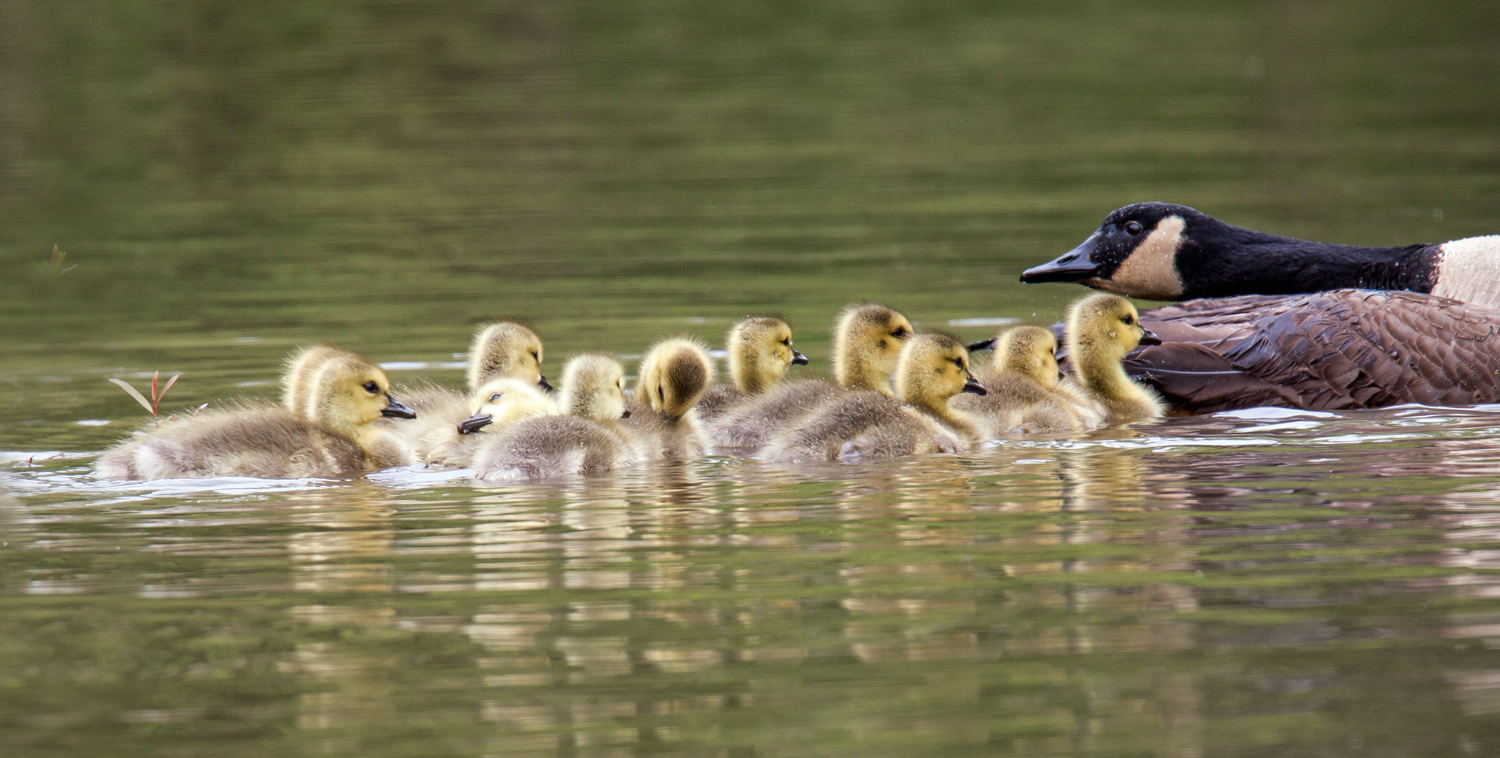
When you have as many little ones as this Canada Goose family (Branta canadensis), you have to take roll call almost all of the time to make sure that everyone stays safely together.
I was trying to focus on the group of goslings that were following the adult when the adult abruptly stopped and turned around. The little ones drifted forward and I ended up with this shot. I love the way that the attentive parent is almost at eye level with the cute little babies and has its neck almost fully extended.

© Michael Q. Powell. All rights reserved.
Posted in Baby photography, Birds, Nature, Photography, wildlife | Tagged Alexandria VA, Branta canadensis, Canada Goose, Canon 50D, goslings, Huntley Meadows Park, roll call, Tamron 150-600mm | 6 Comments »
May 12, 2016 by Mike Powell
The composition of these images couldn’t get much simpler, but I think that they help to highlight the beauty of this female Red-winged Blackbird (Agelaius phoeniceus) that I spotted last week at Huntley Meadows Park. Normally female blackbirds forage down low inside the vegetation, so it was a real treat to find one perched out in the open.
Female Red-winged Blackbirds are special to me because they were one of my first subjects when I started to photograph birds. I remember well my surprise when I learned that this bird was a red-winged blackbird, given that it clearly was not black nor did it have red wings. I’ve learned a lot about bird identification since that time and birds have become one of my favorite subjects.


© Michael Q. Powell. All rights reserved.
Posted in Birds, Nature, Photography, Portraits, wildlife | Tagged Agelaius phoeniceus, female Red-winged Blackbird, red-winged blackbird | 2 Comments »
May 11, 2016 by Mike Powell
While I was trying to get some more shots of the baby Barred Owl (Strix varia) at Huntley Meadows Park this past weekend, I managed to get some shots of one of the parents. I returned to the park the day after I got some shots of the owlet in the rain and word had gotten out about the baby owl. There were quite a few photographers present, including several with long lenses and heavy tripods. It was a far cry from the more intimate one-on-one session I had the previous day with the owl.
Fortunately there was somewhat better light than the day before and one of the parents was hanging around, keeping an eye on the baby, and was not hard to spot. Here are a couple of shots of that parent. It’s fascinating for me to note how the owl’s shape changes when it is hunched over versus sitting tall.


I never got a really clear look at the baby owl that day. Most of the time it sat on a distant tree with its back to me. Occasionally it would glance slightly over its shoulder and I got this shot during one of those occasions. It gives you a general ideal of the owlet’s body shape compared to the more elongated body of the parents.

I thought I’d finish off this post with a couple more shots of the baby owl from my first encounter. The owl was closer to me, but I was shooting upward in a rather steep angle. The perspective is a little distorted, but you certainly get a good view of its fuzzy bottom.


© Michael Q. Powell. All rights reserved.
Posted in Baby photography, Birds, Nature, Photography, wildlife | Tagged Alexandria VA, Barred Owl, Canon 50D, Huntley Meadows Park, owl, owlet, Strix varia, Tamron 150-600mm | 5 Comments »
May 10, 2016 by Mike Powell
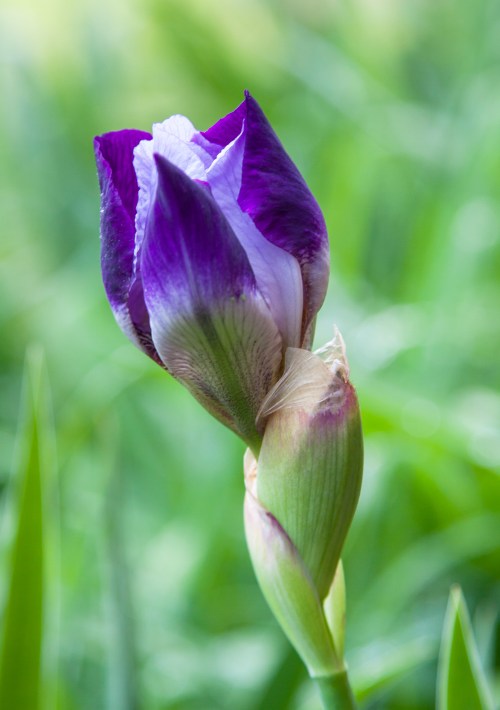
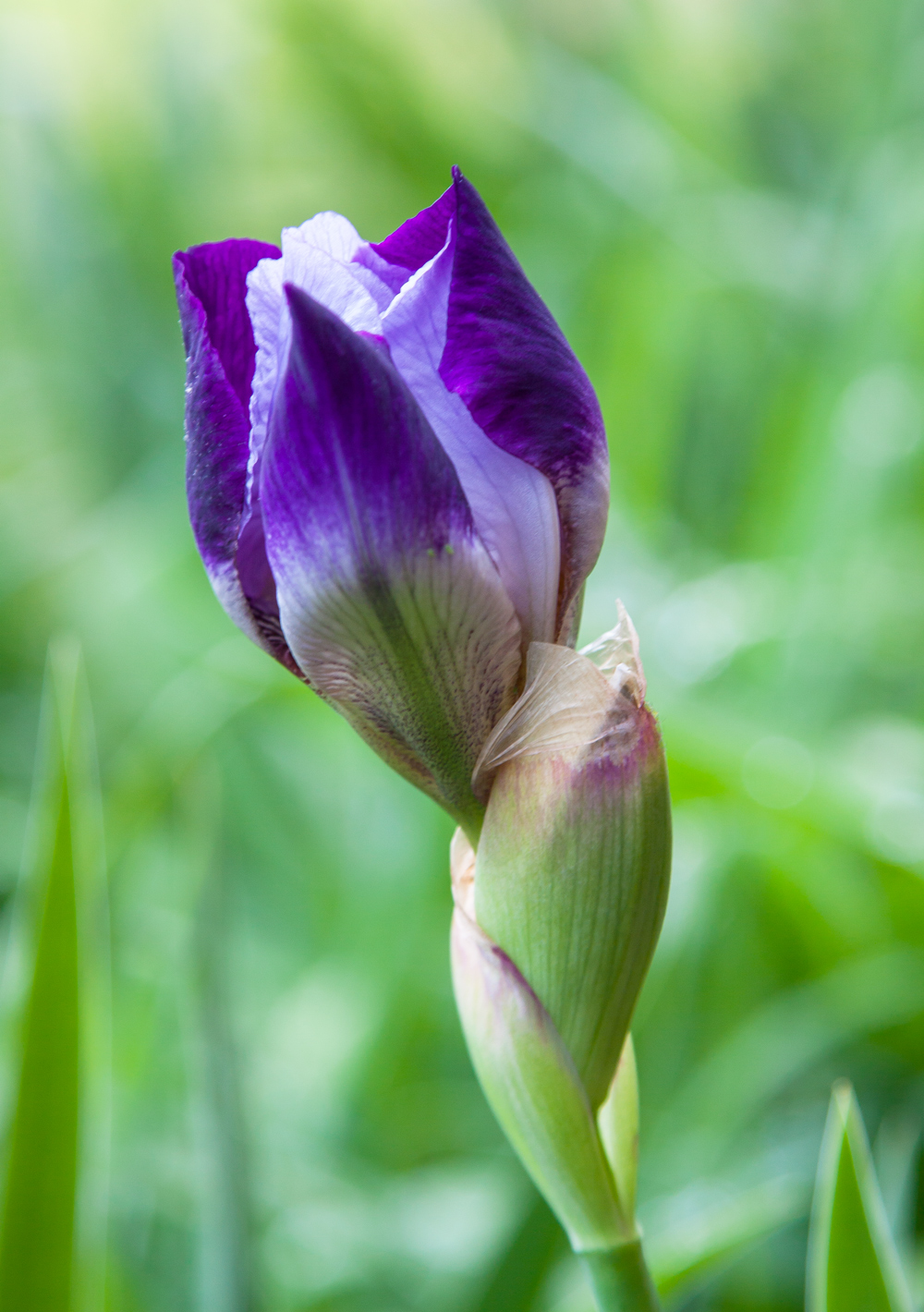
The past two weeks have been filled with intermittent rain and constant clouds, so I have not been able to chase dragonflies as I like to do at this time of year. The rain has been good for the flowers, however, and the garden of my photography mentor and neighbor Cindy Dyer is now full of beautiful bearded irises. Yesterday I attempted to capture some of the beauty of the purple ones in different stages of development. I particularly like the way the first image turned out, where the blurry image in the background gives a foretaste of the beauty that is to come when the bud opens up.
Speaking of Cindy Dyer, I was thrilled recently when I learned that another of her images will appear as a United States Postal Service (USPS) stamp. Her image of Sacred Lotuses at Kenilworth Aquatic Gardens will be part of a 16-stamp series celebrating the centennial of the National Park Service. The series will be officially unveiled in New York City on June 2. Check out this announcement from the USPS for more information and to see her beautiful image.



© Michael Q. Powell. All rights reserved.
Posted in Flowers, Gardening, Photography | Tagged Alexandria VA, Canon 24-105mm, Canon 50D, Cindy Dyer, iris, purple iris, Runnymeade | 8 Comments »
May 9, 2016 by Mike Powell
I was a bit surprised recently to spot an Eastern Garter Snake (Thamnophis sirtalis) with blue eyes at Huntley Meadows Park. Normally, a garter snake’s eyes are clear and bright and if I can get close enough, I can sometimes see my own reflection.
As I moved closer, I could see that the bluish covering over the eyes was somewhere between translucent and opaque, looking a little like cataracts. The snake was aware of my presence and flicked its tongue when I got too close, but did not try to slither away. A search on the internet revealed that the eyes turn this blue color when the snake is getting ready to shed its skin, a process that generally takes about a week.
When my macro lens is on my camera I feel drawn to move closer and closer to my subject, as you can see in the first image. This shot gives a good view of the blue eye, but doesn’t give you much a sense of the snake’s environment. When I pulled back to include the snake’s entire body, you get a look at the sinuous curves of the body, but the eye is almost lost. The final image here was a mid-range shot that was a kind of compromise—some of the body shows, but the eye has greater prominence than in the second image.
Which image do I like the most? It’s hard for me to decide, but I think it was a good idea to photograph the snake at different distances to give myself some options. I’m going to have to try that approach more often.


© Michael Q. Powell. All rights reserved.
Posted in Macro Photography, Nature, Photography, Reptiles, wildlife | Tagged Alexandria VA, Canon 50D, Eastern Garter Snake, garter snake, Huntley Meadows Park, Tamron 180mm, Thamnophis sirtalis | 31 Comments »
May 8, 2016 by Mike Powell
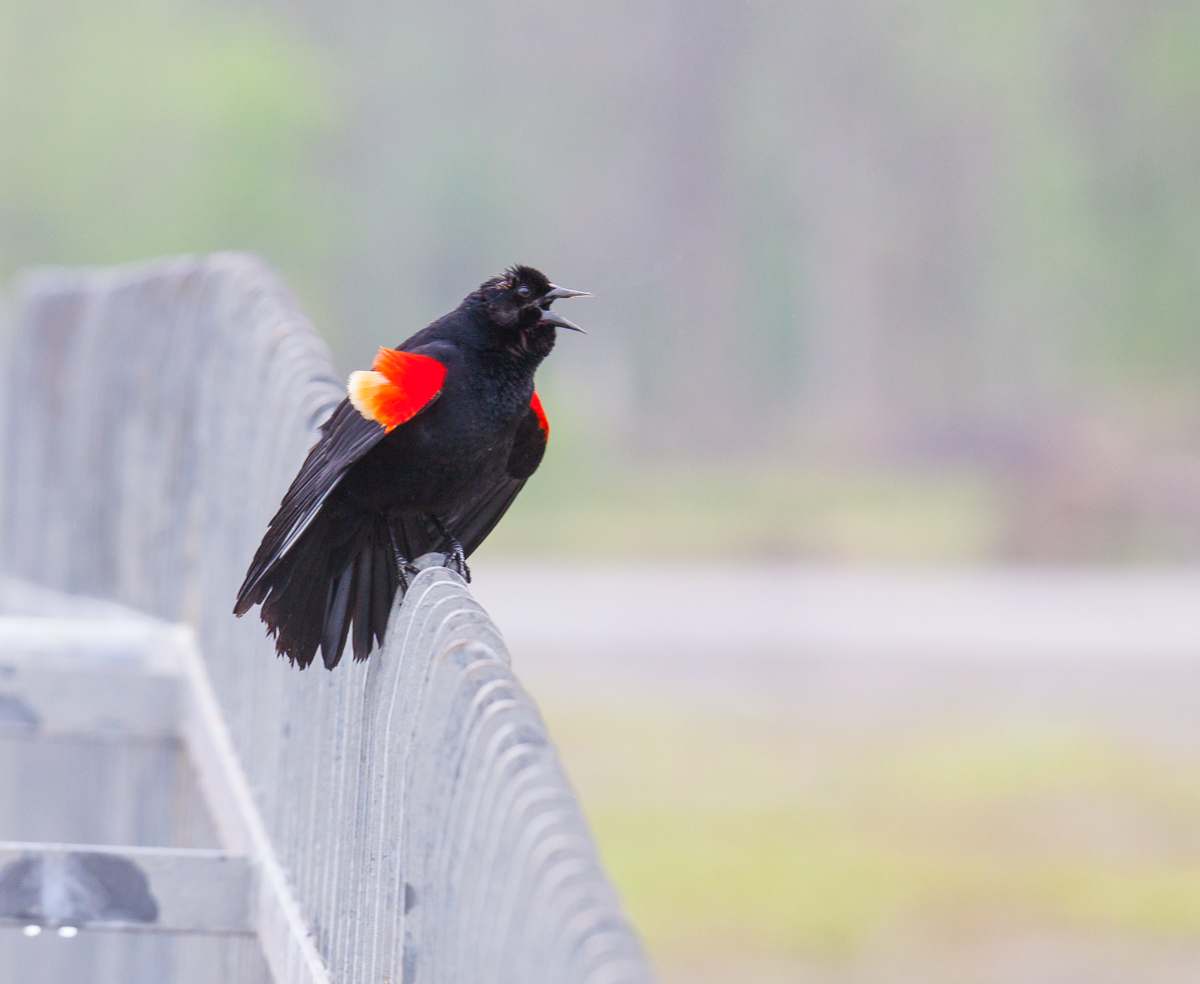
I love the feeling of the early morning, when the world is awash in pale colors and the birds are just starting to wake up. It’s a magical feeling for me sometimes, and the mist in the air last Monday only enhanced that effect.
How do you capture a moment like that? I don’t shoot a lot of landscape photos, but I can understand how some photographers are driven to find the right mix of compositional elements to pass on to others the emotional impact of a particular scene.
As I was walking along the boardwalk at my favorite marshland park, I was drawn to this male Red-winged Blackbird (Agelaius phoeniceus) perched on a railing leading to an observation platform. Normally I try not to include man-made elements in my wildlife shots, but in this case the railing faded out into an almost indistinct set of lines and shapes. Far in the distance, there is a suggestion of the trees and the water. With its bright shoulder patches, dark color, and sharper details, the blackbird provides an element of contrast with the rest of the scene.
Sometimes it’s fun to chase after more exotic subjects, like the owlet that I saw recently, but at other times I am content to try to capture the feeling of a moment, like this blackbird on a misty morning.

© Michael Q. Powell. All rights reserved.
Posted in Birds, Landscape, Nature, Photography | Tagged Agelaius phoeniceus, Alexandria VA, Canon 50D, early morning, Huntley Meadows Park, male Red-winged Blackbird, red-winged blackbird, Tamron 150-600mm telephoto | 6 Comments »
May 7, 2016 by Mike Powell
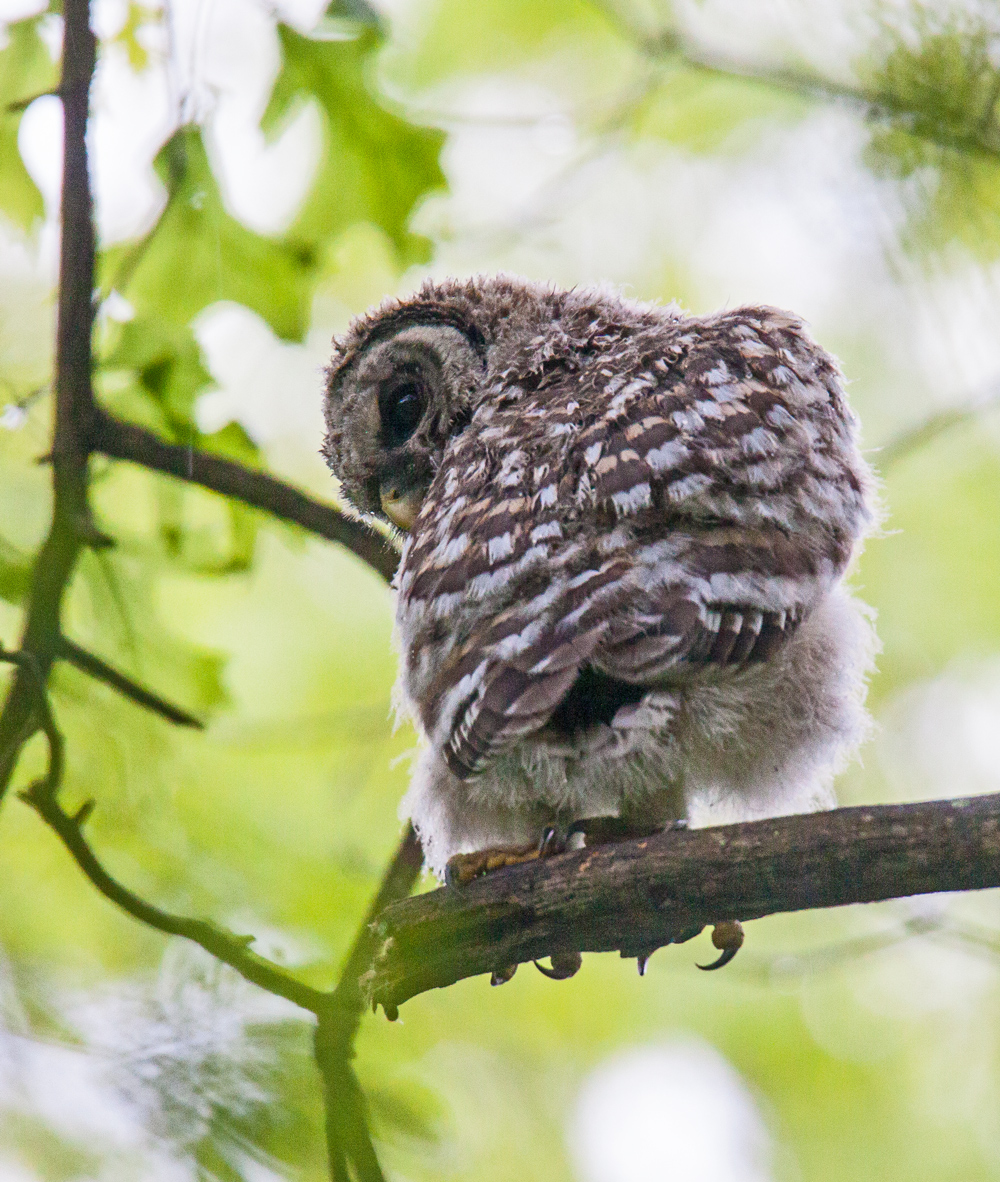
Early yesterday morning I didn’t expect to see much wildlife or even other people. I was a little surprised when through the falling rain two individuals came walking toward me. One of them asked me if I was interested in seeing an owlet. Without a second’s hesitation I replied affirmatively—I’ve seen an owl in the wild only a handful of times and had never seen an owlet.
We walked together for a short while and then he pointed to a dark lump on a broken-off branch high in a tree. There was a quite bit of foliage, but eventually I found a visual tunnel to the subject and zoomed in. At first, it was hard to tell what I was looking at, but gradually as I began to make out the mottled feathers, I realized that the little Barred Owl (Strix varia) was facing away from me.
I didn’t have much choice of a shooting position, because the leaves and branches of nearby trees obscured the owl from view when I moved to the right or to the left or tried to get a shot from the direction in which the owl was facing. So with my umbrella in one hand and my camera in the other, I watched and waited. I tried to be as stealthy as I could, but the owlet seemed to be aware of my presence and every now and then curiosity would prompt it to sneak a peek in my direction.
I am still going through my photos and may do another posting later, but wanted to share an initial image of one of the owlet’s glances in my direction.

© Michael Q. Powell. All rights reserved.
Posted in Birds, Nature, Photography, wildlife | Tagged Alexandria VA, Barred Owl, Canon 50D, Huntley Meadows Park, owl, owlet, Strix varia, Tamron 150-600mm | 8 Comments »
May 6, 2016 by Mike Powell
A Spotted Sandpiper (Actitis macularius) at Huntley Meadows Park seemed overwhelmed with curiosity as a female Hooded Merganser (Lophodytes cucullatus) swam closer and closer. What were they thinking as they checked out each other?
I love to capture multiple species in a single image, particularly when they seem to be interacting with each other. In this case, the differences in size, shape, coloration, and body position make for some fascinating contrasts.

© Michael Q. Powell. All rights reserved.
Posted in Birds, Nature, Photography, wildlife | Tagged Actitis macularius, Alexandria VA, Canon 50D, Hooded Merganser, Huntley Meadows Park, Lophodytes cucullatus, sandpiper, spotted sandpiper, Tamron 150-600mm | 4 Comments »
« Newer Posts - Older Posts »



















 Mike Powell