Feeds:
Posts
Comments

Archive for the ‘spring’ Category

When this Common Five-lined Skink (Plestiodon fasciatus) is standing up, it looks pretty tall, but as the second image shows, it can get down so low that I don’t think that you could want to challenge it to a limbo contest.

How low can you go?

skinkCommon FIve-lined Skink

© Michael Q. Powell. All rights reserved.

Read Full Post »
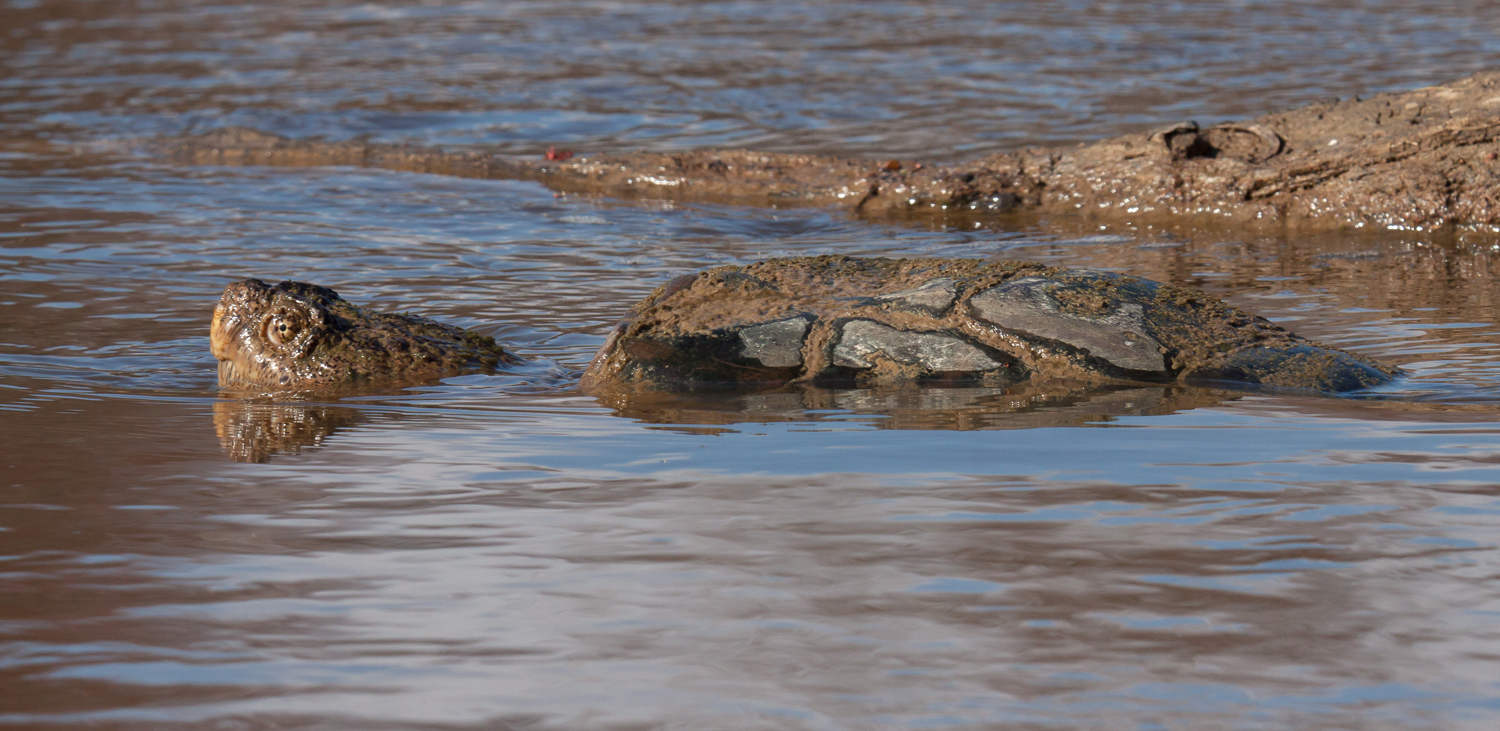
Creatures of all sorts are stirring in the marsh now that the weather has warmed up, including this particularly fierce-looking one with amazing eyes. What is it? It’s an Eastern Snapping Turtle (Chelydra serpentina serpentina), a species that is pretty common in my local marsh.

snapping turtlesnapping turtle

© Michael Q. Powell. All rights reserved.

Read Full Post »

Most of the time I try to fill the frame of my camera with my wildlife subjects, but sometimes it’s nice when they are part of a larger landscape, like this shot of a Great Blue Heron (Ardea herodias) in the rain from last Friday.

Great Blue Heron

© Michael Q. Powell. All rights reserved.

Read Full Post »

For the past year, I’ve been hosting a friend in my house, along with her dog and her rabbit. Recently she and her dog moved out, but I still have PR, the rabbit, whose initials expand to Prime Rib.

This morning I decided to try to take a photo of PR, my own little Easter bunny and here was the result.

Happy Easter to all.

Easter bunny

© Michael Q. Powell. All rights reserved.

Read Full Post »

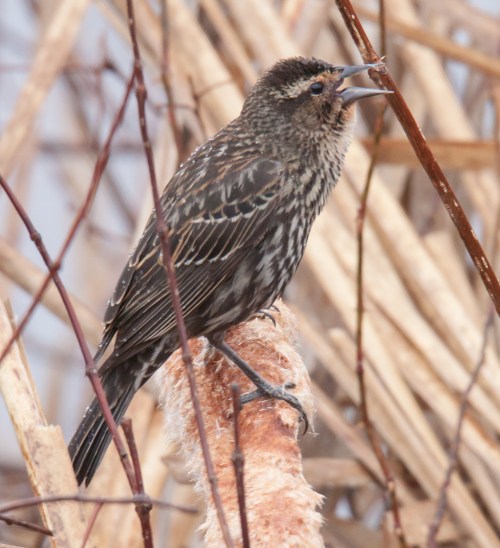
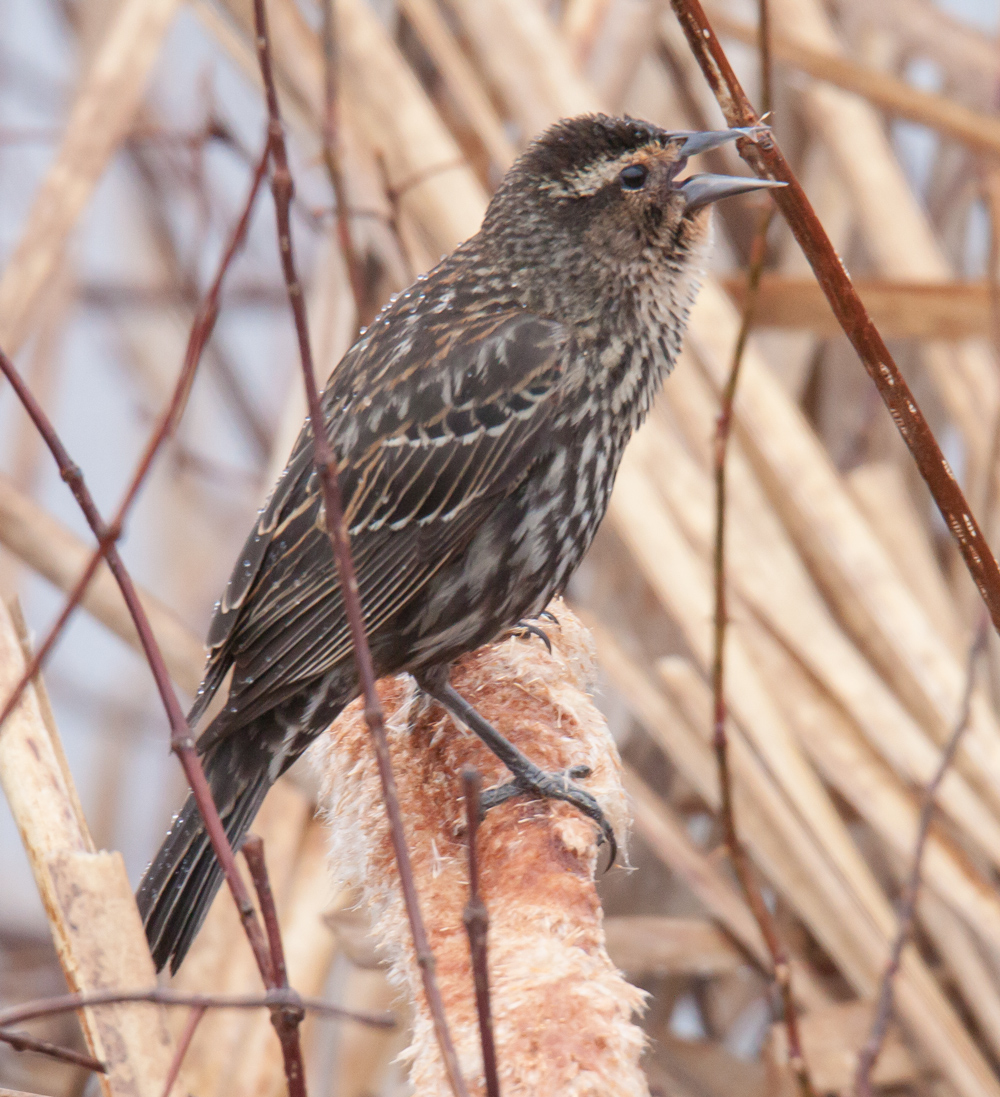
Sometimes I’m out with my camera even when it’s raining, which lets me capture shots like this Red-winged Blackbird (Agelaius phoeniceus) that I spotted this past Friday at Huntley Meadows Park.

Red-winged Blackbird

© Michael Q. Powell. All rights reserved.

Read Full Post »

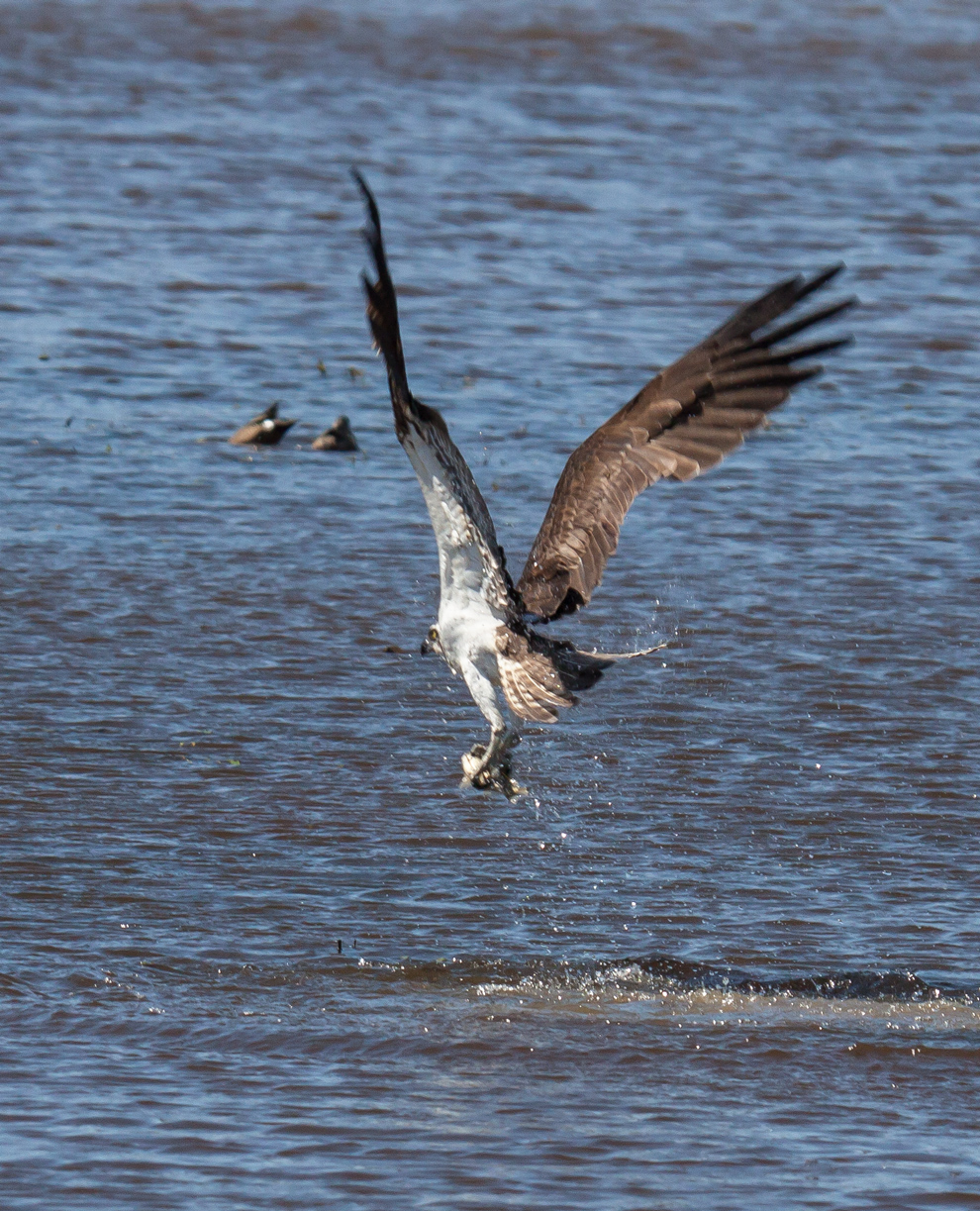
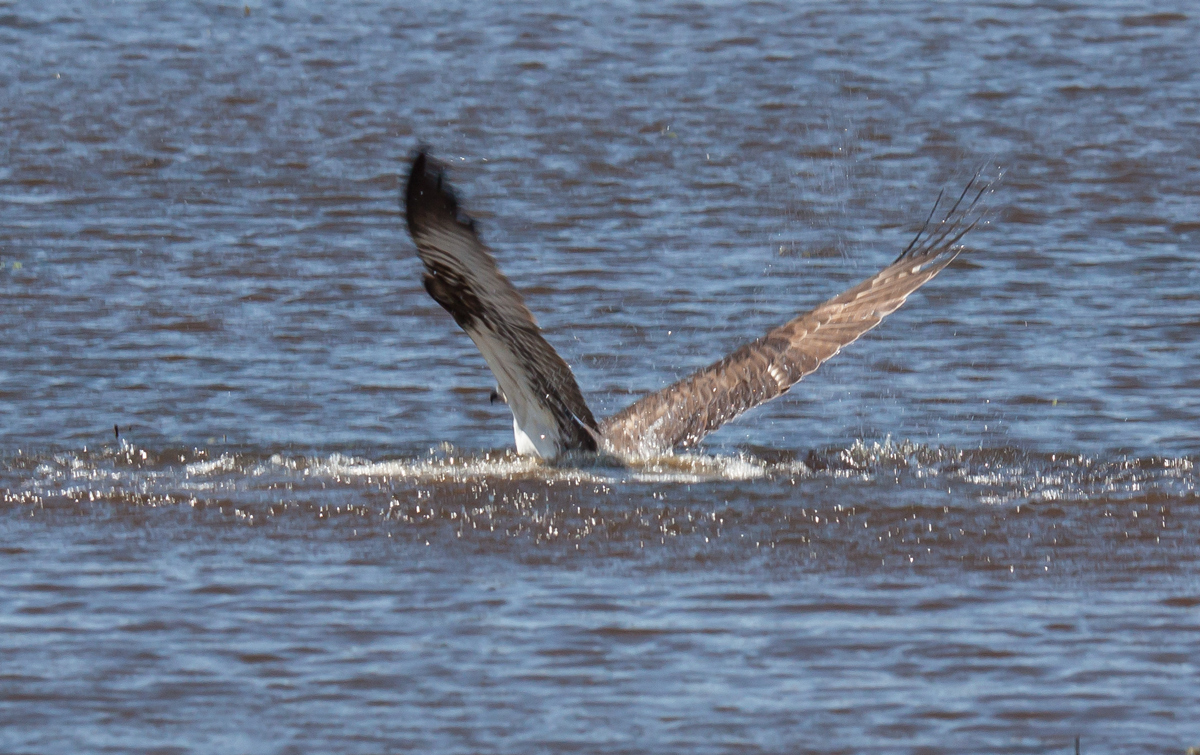
Eventually the Osprey (Pandion haliaetus) that I featured yesterday decided to fly away, with its modest fish still tightly clutched in its talons. I thought that the bird was going to consume the fish while perched, but perhaps the osprey prefers to lunch in privacy or needs to share the prize with its mate.

Osprey

© Michael Q. Powell. All rights reserved.

Read Full Post »

When an Osprey (Pandion haliaetus) flew in my direction this morning at Huntley Meadows Park and landed in a tree, I had no idea that it was clutching a small fish. It was raining and I was trying to keep my gear dry, but the osprey was so close that I knew I had to try to get some shots. In fact, I was so close that when the bird opened its wings, I couldn’t fit the entire wingspan within the frame.

I noticed the fish in the talons of the right foot only later when I was reviewing the shots on my computer.

Osprey

© Michael Q. Powell. All rights reserved.

Read Full Post »
This past Monday at Huntley Meadows Park I was thrilled to see one of my favorite ducks, the colorful male Wood Duck (Aix sponsa), weaving its way with its mate among the trees in one of the flooded area of the marsh.

This was one of the few times when I have actually had the opportunity to observes a Wood Duck swimming around—normally they take to the air as soon as they sense my presence.

The natural world is gradually moving away from the monochromatic tones of the winter to the brighter colors of spring, a transformation that I welcome with open arms.

Wood Duck wood2_blog

© Michael Q. Powell. All rights reserved.

Read Full Post »
Bird identification should be easier.  Once again I have photographed a bird and I am not sure of its identity. I am confident that it is a woodpecker, but beyond that, doubts begin to creep in and none of the pictures in my identification guide really match the bird in my photos.

The woodpecker is a lot bigger than the Downy Woodpeckers that I frequently see, but smaller than the Pileated Woodpeckers that I see less often. The black-and-white pattern on its back seems different from any that I have seen before. In some of the photos, I detect a little bit of red just above the bill, especially in the last image.

So what is it? Well, if I were to hazard a guess, I’d say it might be an immature Yellow-bellied Sapsucker (Sphyrapicus varius).

I’d welcome assistance from more experienced birders in identifying my mystery woodpecker.

Yellow-bellied SapsuckerYellow-bellied SapsuckerYellow-bellied Sapsucker

© Michael Q. Powell. All rights reserved.

Read Full Post »
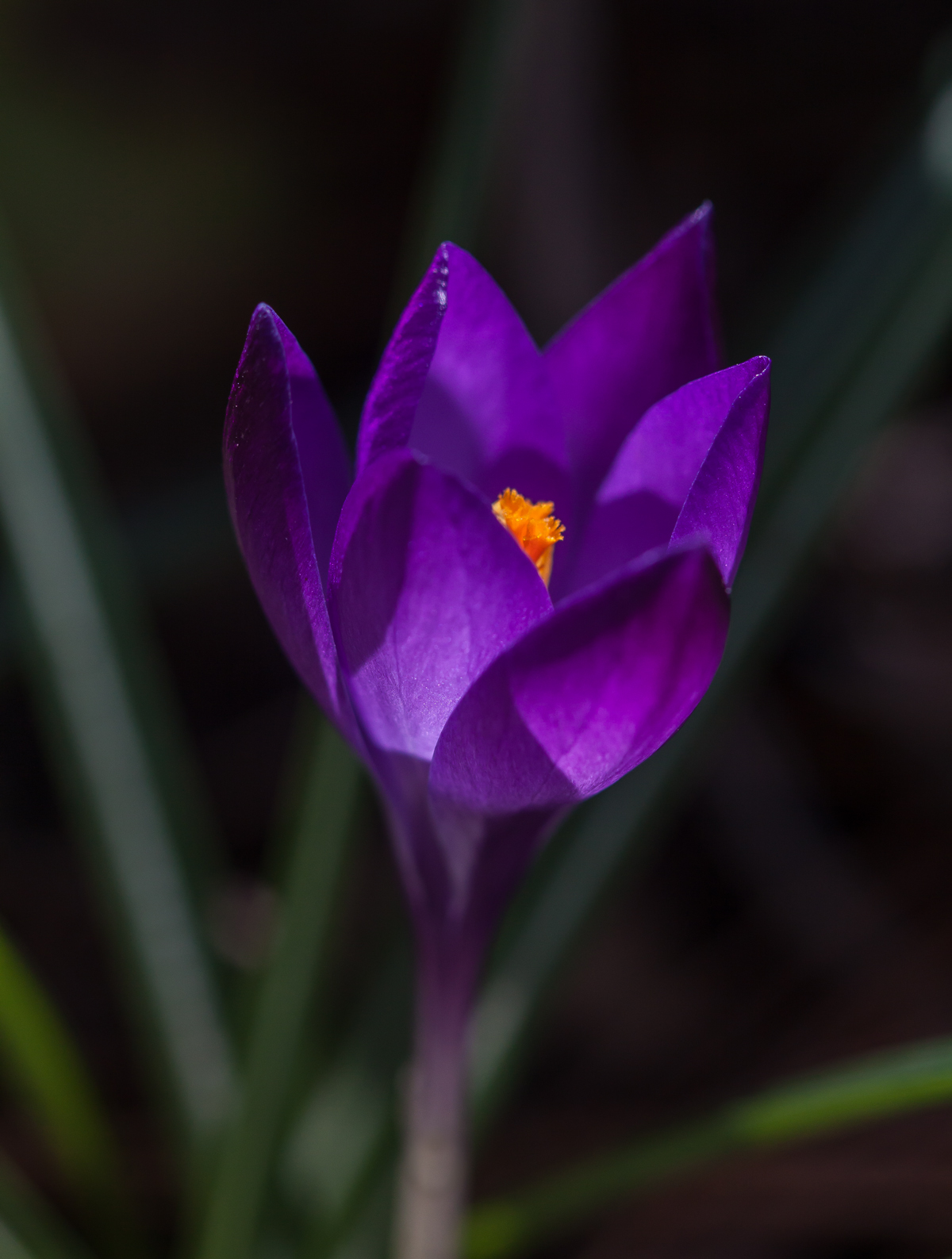
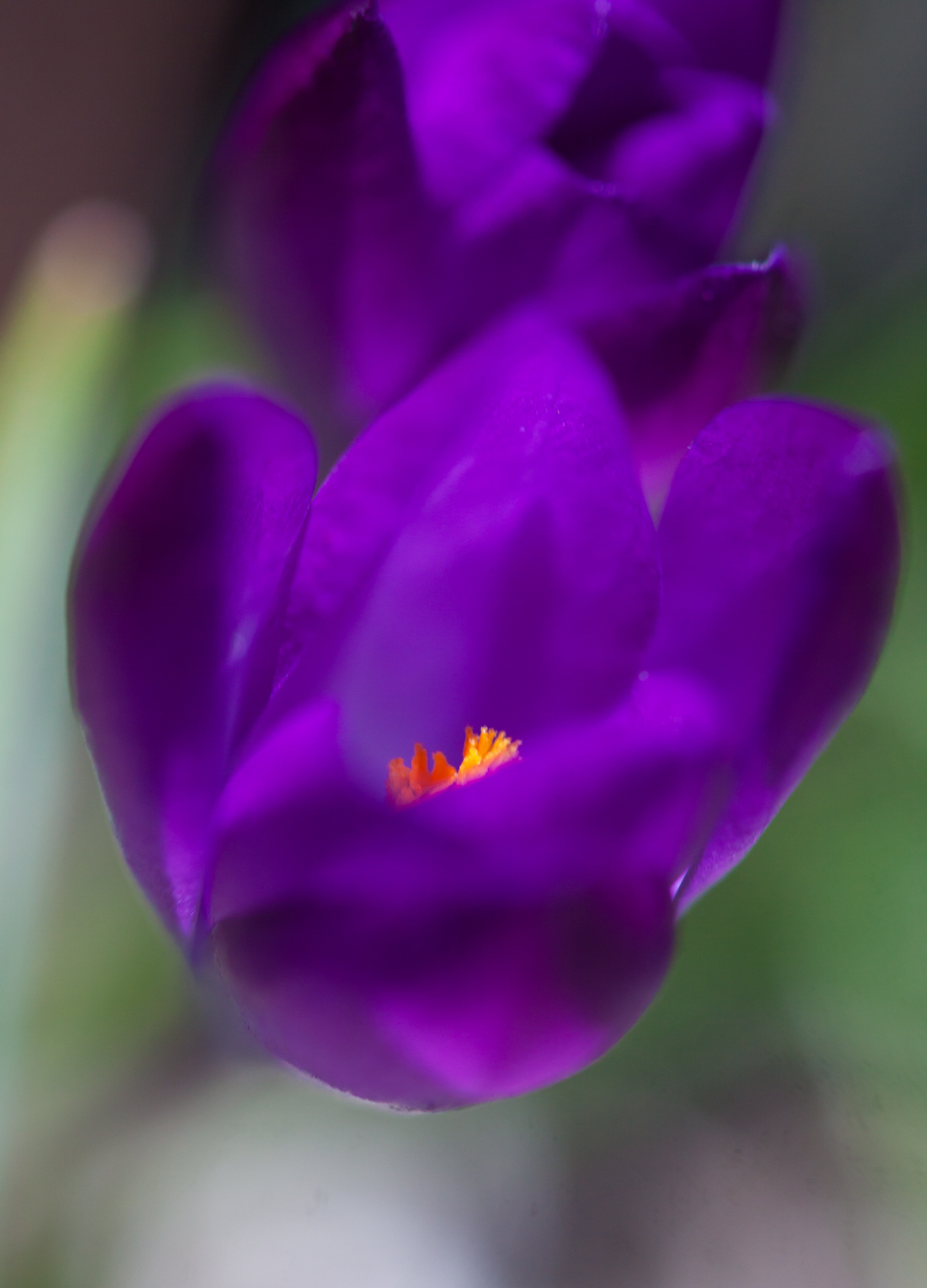
After a long winter wait, I am finally seeing a few spring flowers blooming in the gardens in my neighborhood. So far all I see are crocuses, but it looks like the daffodils will not be far behind. The weather is still erratic—I awoke to sub-freezing temperatures yesterday morning—but it is beginning to look like spring is here at last.

I took these crocus shots in the middle of the day on a windy, sunny afternoon. In the first image, I was trying to capture some of the beauty of the sunlight coming through the petals. In the second shot, I had the lens almost wide open and the really shallow depth of field helps to give a dreamy painterly quality to the image that I really like. The two images are very different, but I think they work especially well as a set.

crocus

crocus

© Michael Q. Powell. All rights reserved.

Read Full Post »


The weather has not been very cooperative and outdoors there are not yet many flowers blooming. Yesterday I went to the US Botanic Garden in Washington D.C. to get my “fix” of flowers in a more temperate setting. Among the many beautiful flowers that I observed was this Madeira Cranesbill geranium (Geranium maderense).

Madeira Cranesbill geranium

© Michael Q. Powell. All rights reserved.

Read Full Post »
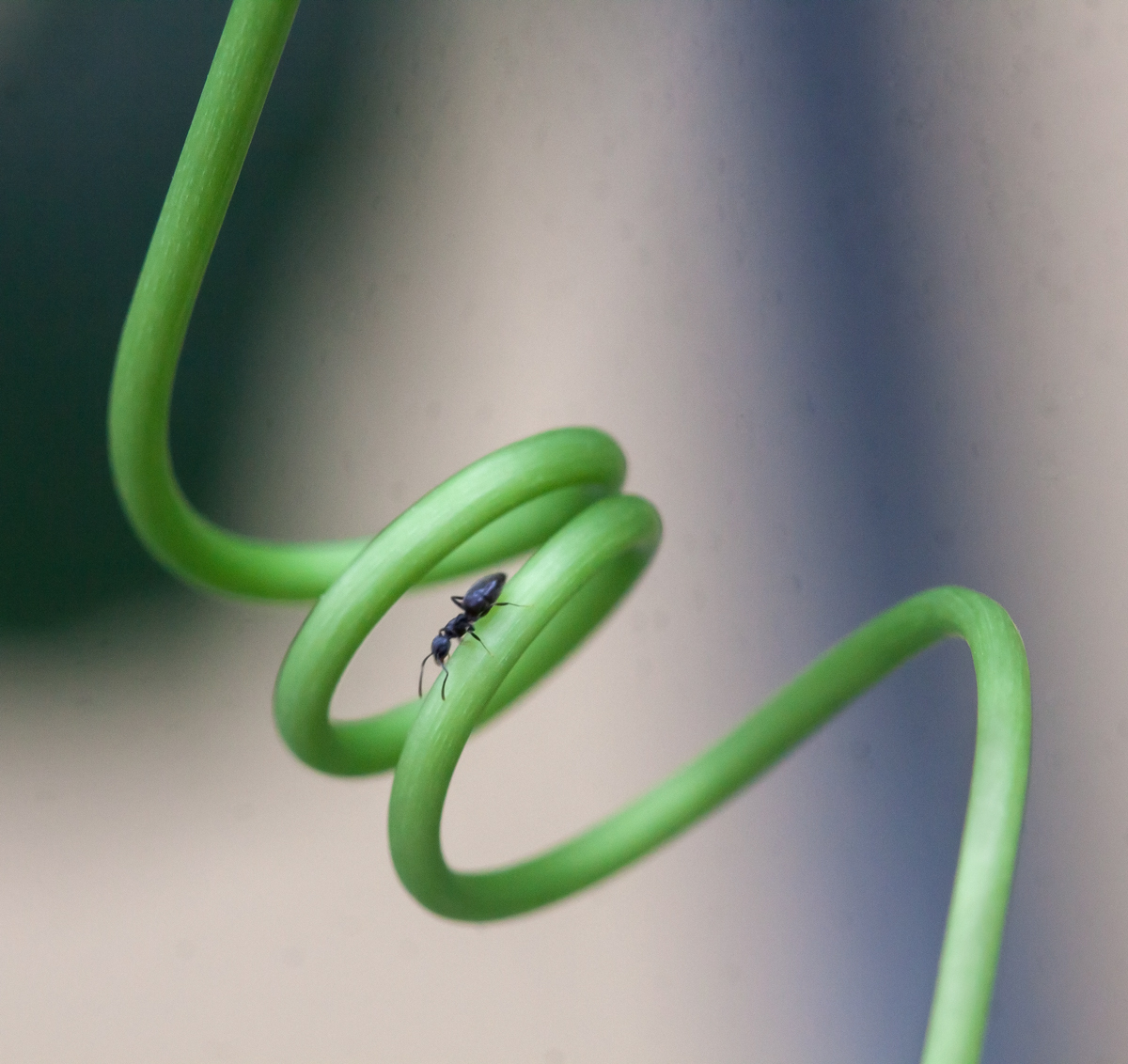
I’m so desperate for the weather to warm up more and for insects to emerge that I got really excited when one of my fellow photographers spotted a small ant on one of the tendrils of a passion flower vine yesterday at the US Botanic Garden in Washington DC.

The ant seemed determined to follow the long and winding road.

winding1_blog

© Michael Q. Powell. All rights reserved.

Read Full Post »
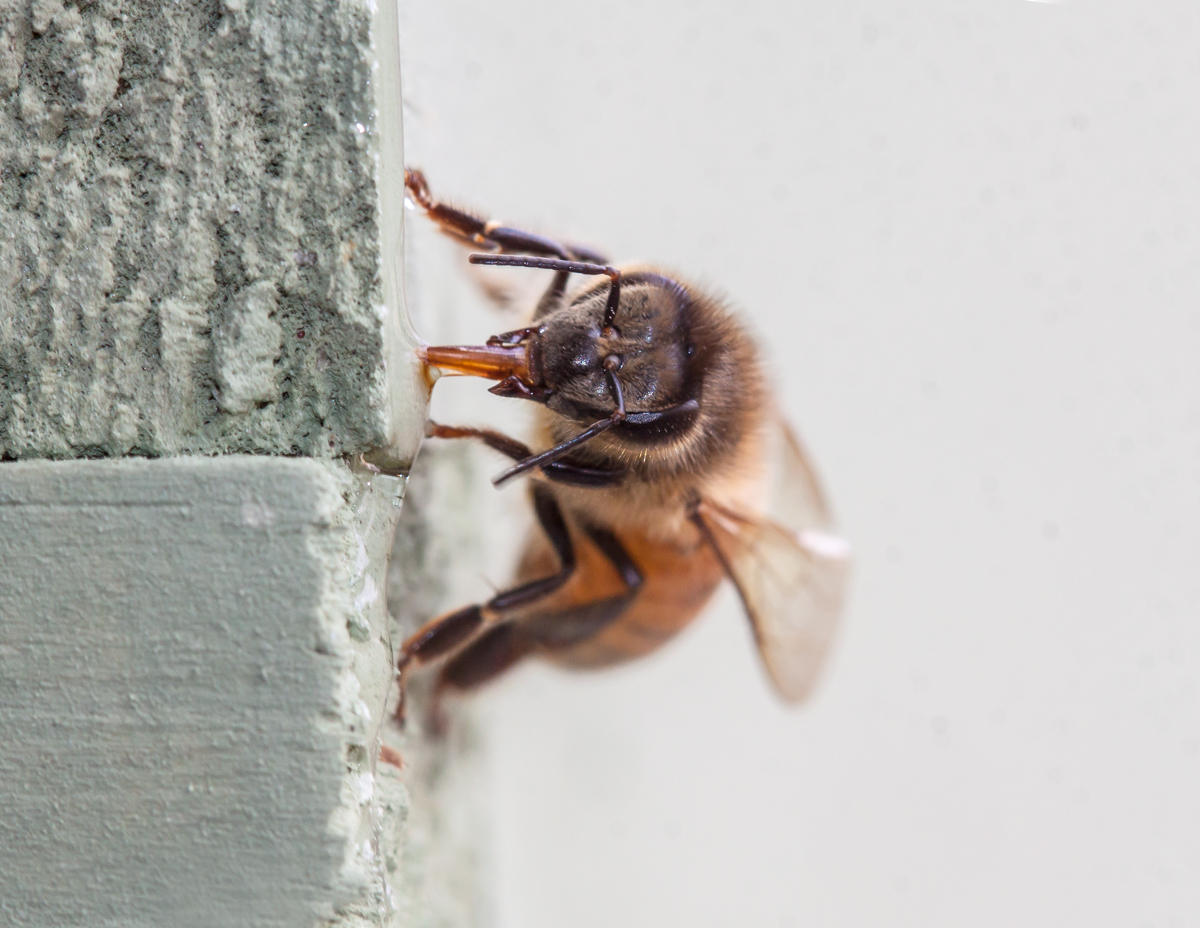
While I was in Blacklick, Ohio (just outside of Columbus) this past weekend, I had a chance to observe and photograph the beehive of the folks with whom I was staying. They offered to let me wear a beekeeper suit, but I declined and instead got up close and personal with some of the bees. In these images, a bee was licking up some syrup that had dripped down the side of the hive structure.

bee

bee

© Michael Q. Powell. All rights reserved.

Read Full Post »
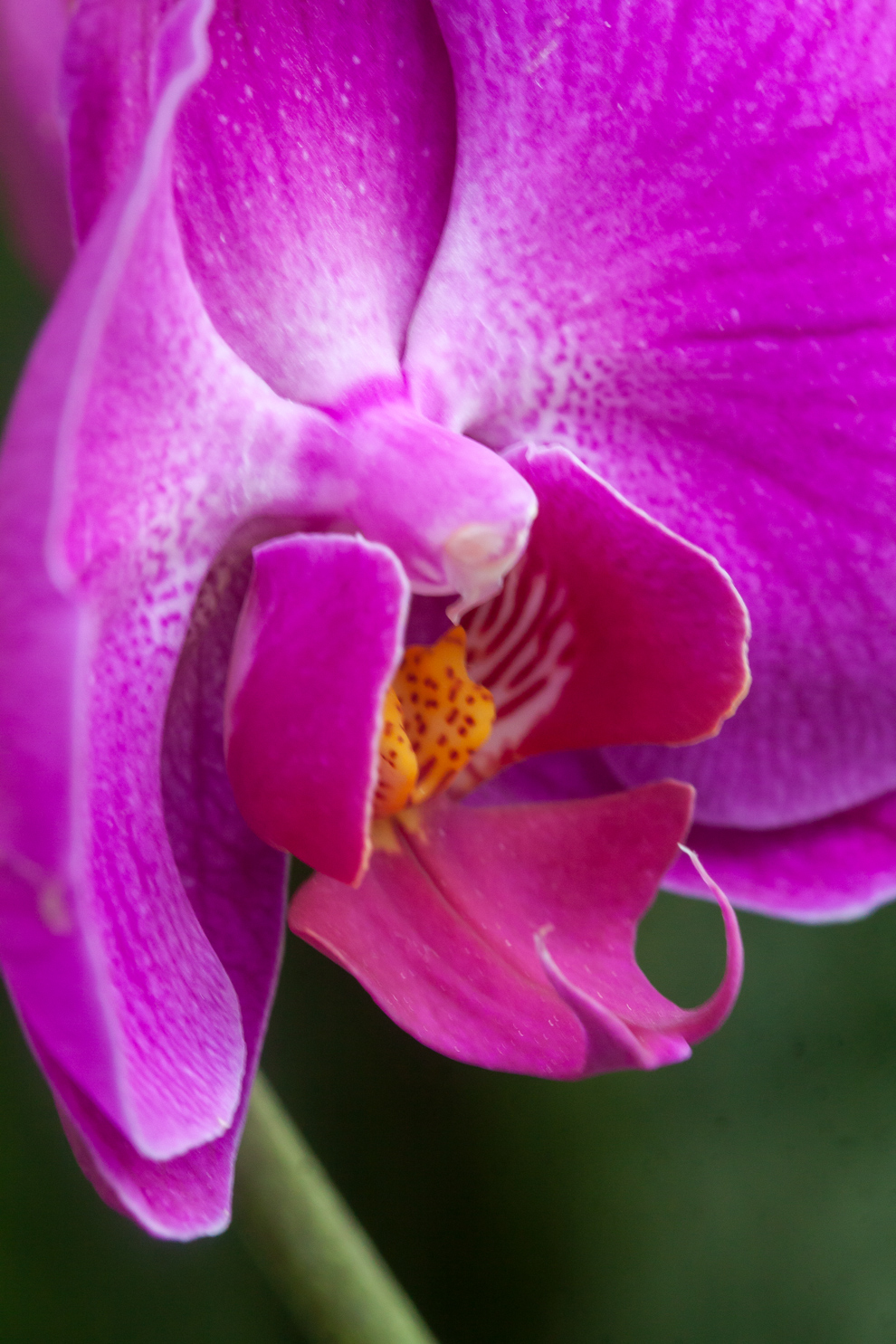
One of the many highlights of my trip this past weekend to Ohio was a visit to the Franklin Park Conservatory and Botanical Gardens in Columbus, where I was able to observe butterflies and orchids in a wonderful indoor setting.

I am still going through a backlog of photos, but this gorgeous pink orchid is one of my initial favorites. It was great to have macro lens back in my hands after a winter in which it mostly stayed on the shelf.

Orchid

© Michael Q. Powell. All rights reserved.

Read Full Post »

On a beautiful sunny day this past Monday I searched diligently for the first dragonflies of the spring at my local marshland park. I knew that it was probably too early for dragonflies, but somehow I hoped that the 65 degree temperatures (18 degrees C) would magically cause them to appear.

I traipsed through the mud and along the banks of several streams; I examined vernal pools where the frogs were already active; and I walked though fields where the dried-up vegetation was neck high. I looked and looked for half a day, but came up empty-handed.

Later in the week I was going over some photos from last June and came across this image of a Unicorn Clubtail dragonfly (Arigomphus villosipes). There was something about the image that really appealed to me.

So here is a memory of the past, with hopes for an equally successful dragonfly hunting season as we move into spring.

Unicorn Clubtail

© Michael Q. Powell. All rights reserved.

Read Full Post »
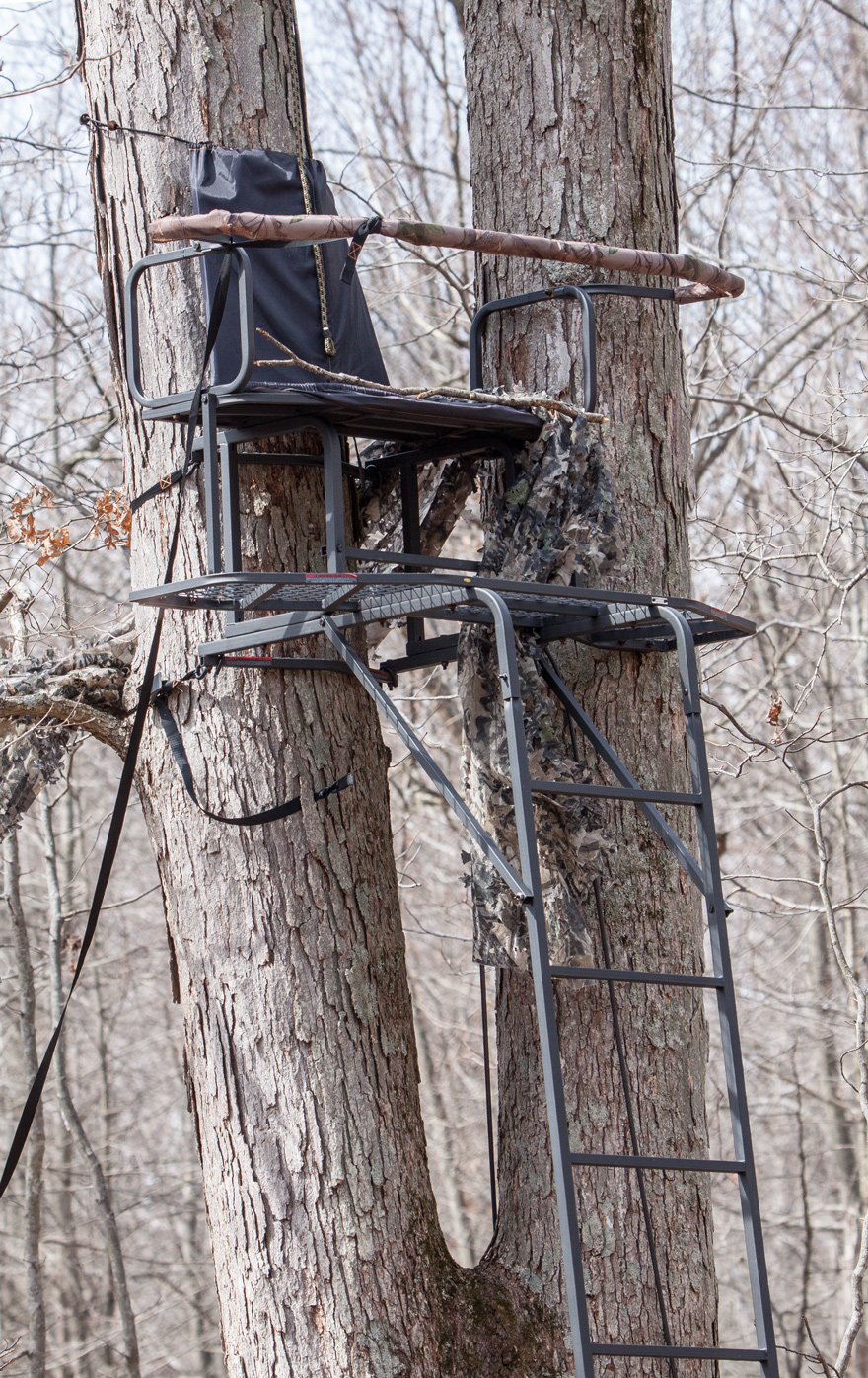
As I was wandering through remote areas of my local marshland park earlier this week searching for dragonflies, I was reminded of the need to be cautious when I came upon this hunter’s tree stand. At various times there is controlled archery hunting of deer at the park. I have not yet seen anyone with a bow, but this is the third location at which I encountered a tree stand. I was tempted to climb up into the stand and check out the view, but decided it was a bit too much trouble.

I have a bright orange stocking hat that I wear sometimes in the winter—it may not be a bad idea to get an orange baseball cap too.

reminder1_blog reminder2_blog

© Michael Q. Powell. All rights reserved.

Read Full Post »

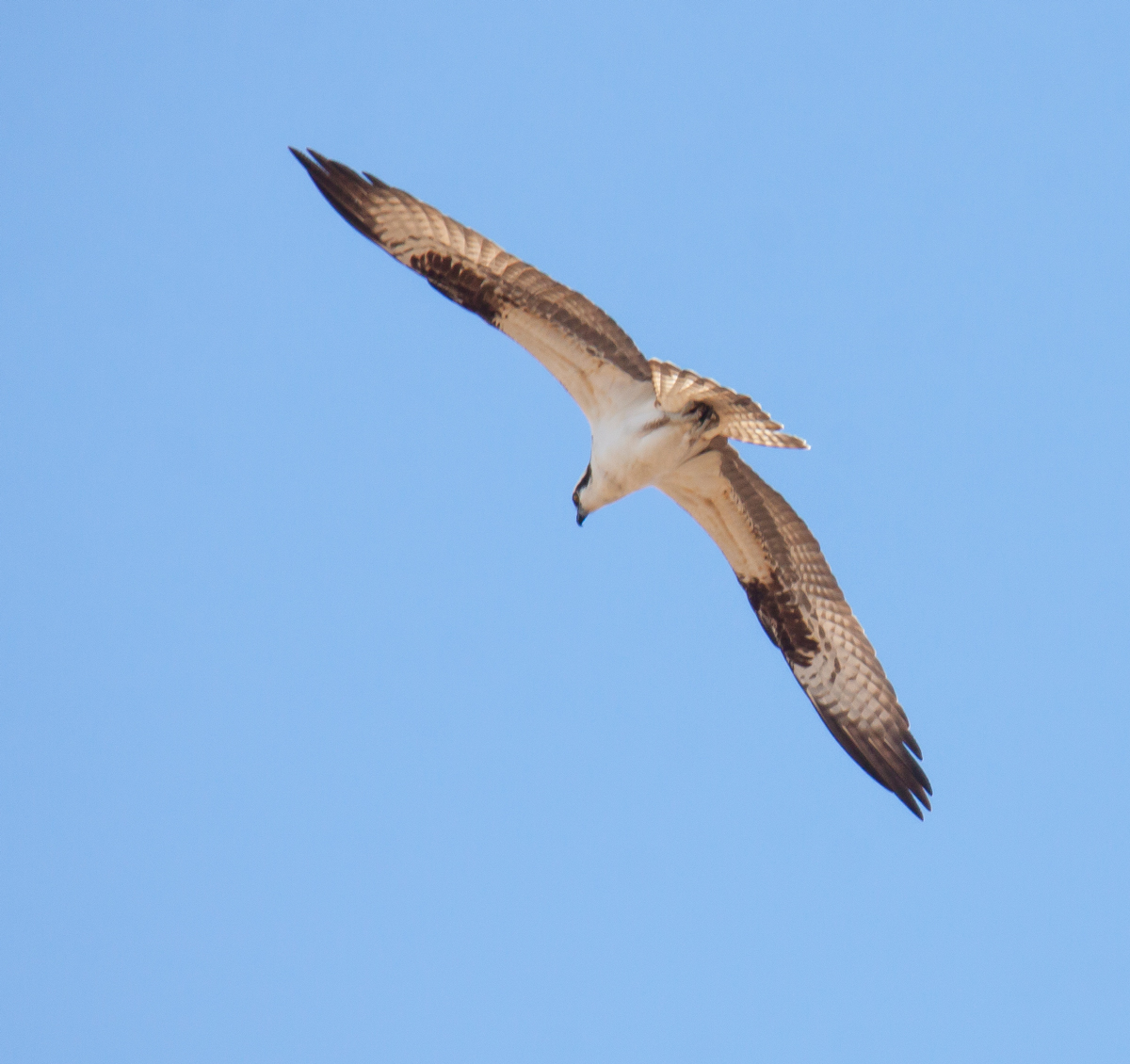
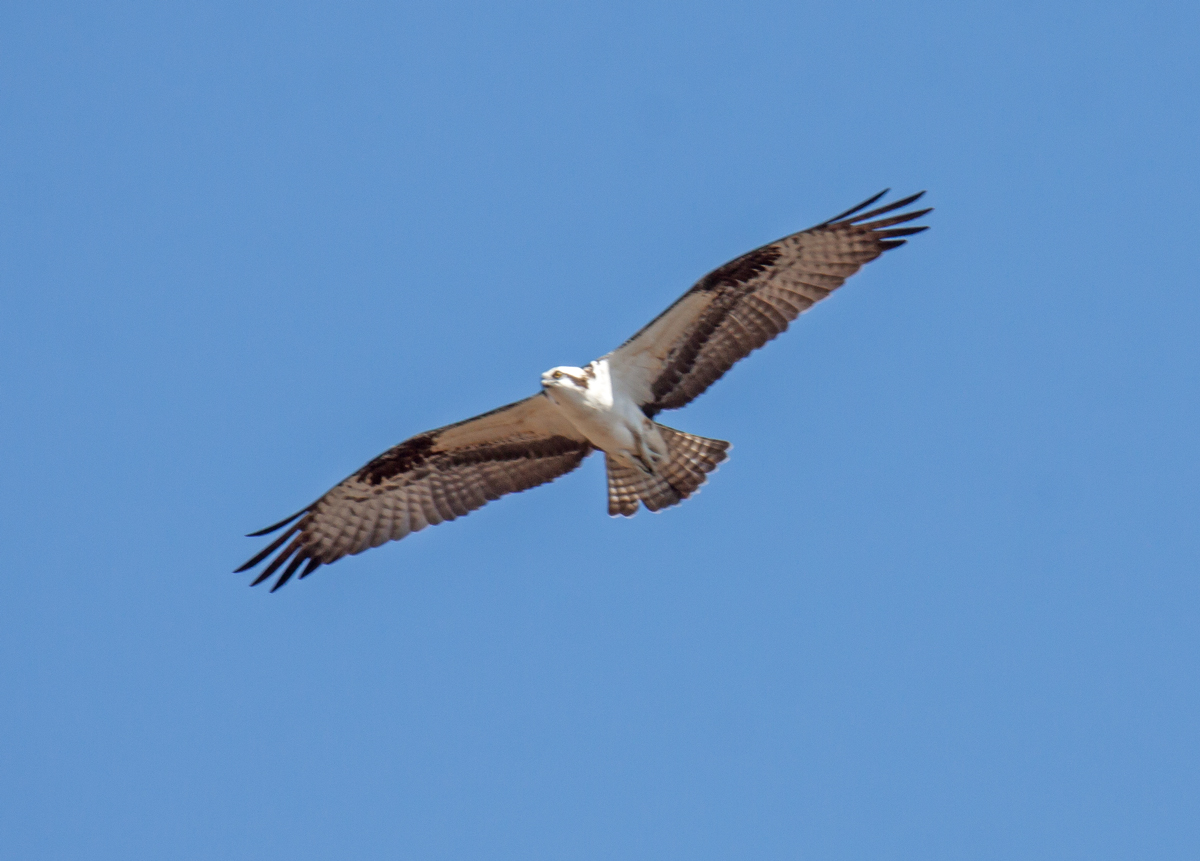
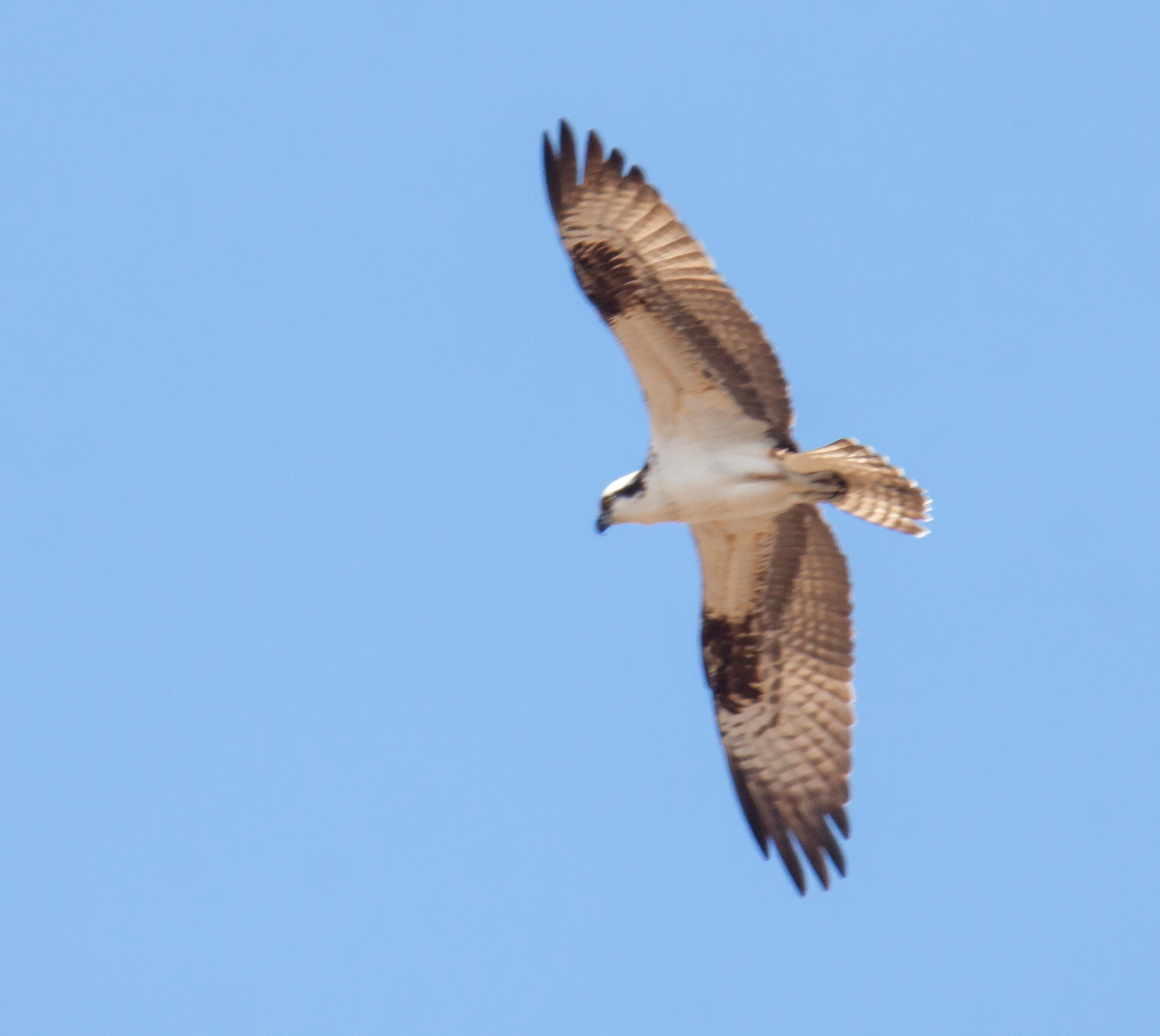
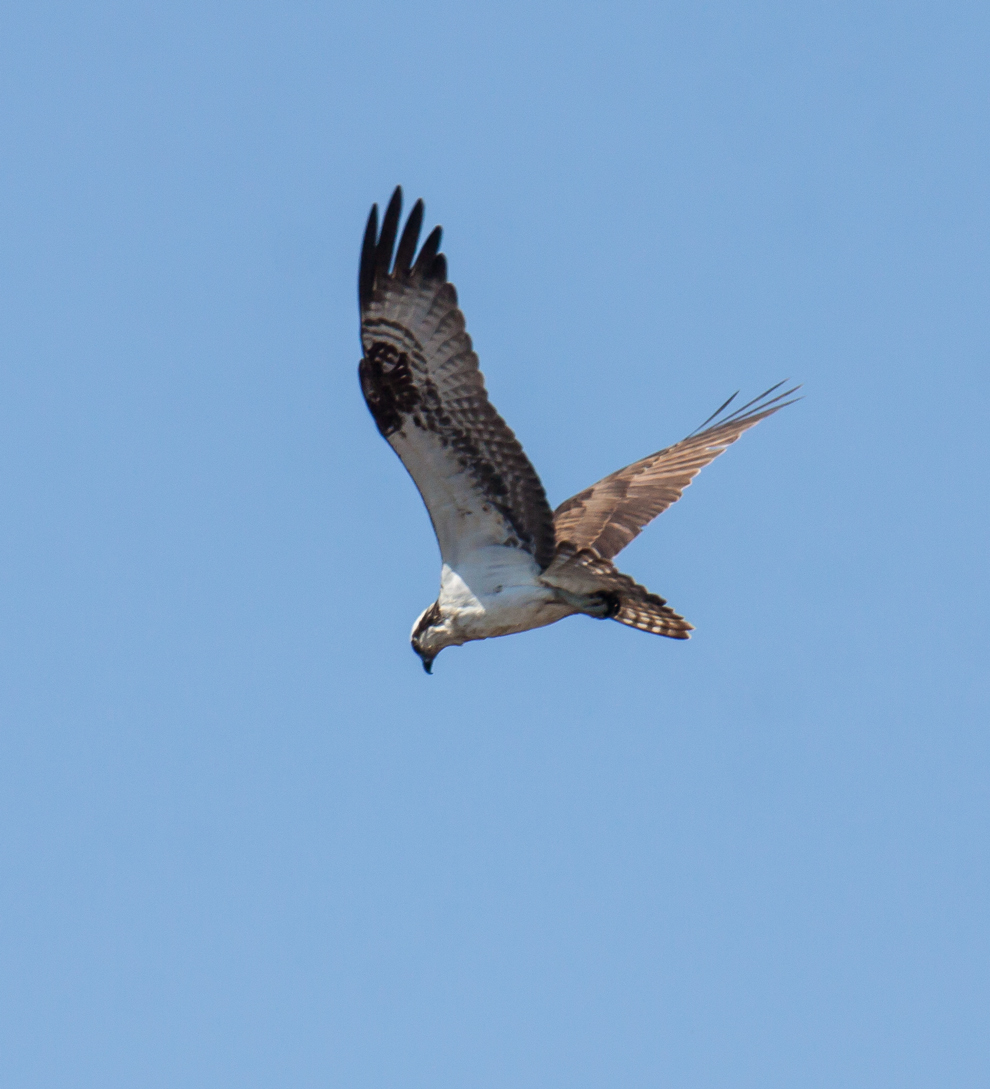
I was surprised this past Monday to see that Ospreys (Pandion haliaetus) have already returned to our area. I don’t often see ospreys at my local marshland park and was somewhat shocked to look up into the sky and see one soaring high above me. Actually I thought it was a hawk at first and then concluded that it must be a bald eagle, because of the white head. It was only when I looked more closely at the photos that I realized that it was an osprey.

In the past I have taken some closer shots of ospreys and on those occasions I was struck by the amazing yellow eyes and the incredible talons. This time, however, I was struck by the surprisingly wide wingspread of the osprey. The sunlight was coming from the right direction to illuminate and highlight the bird’s wing feathers.

There are a number of locations in our area where ospreys generally nest and I guess that it is not too early to check them out. Somehow I thought the ospreys wouldn’t be back here for another month or so, but I confess that this is not one of the birds that I have kept track of very closely in the past.

OspreyOspreyOsprey

© Michael Q. Powell. All rights reserved.

Read Full Post »

Yesterday the marsh was alive with the sound of music—frog music. As the temperatures soared to 65 degrees F (18 degrees C), the high-pitched sound of the frogs grew to almost deafening levels at some of the shallow vernal pools.

It was obvious that there were hundreds, if not thousands of frogs present in the area, but they seemed to be invisible. I managed to spot only a single one, this little Southern Leopard Frog that was partially submerged in the water at the edge of one of the pools.

In a few days the vernal equinox will arrive here in the Northern Hemisphere, marking the start of spring (according to the astrological calendar). The frogs obviously decided to get jump ahead a bit or are using the meteorological calendar, which calculates the start of spring as the beginning of the month of March.

Yesterday the frogs were loudly proclaiming that spring is here, and I am thrilled at the prospect of warmer weather and new life springing up everywhere.

Southern Leopard Frog

© Michael Q. Powell. All rights reserved.

Read Full Post »

Love is in the air and this female Hooded Merganser duck (Lophodytes cucullatus) chose to chase after her male suitors rather than wait for them to come to her.

She’s looks to be a feminist duck of the 21st century, determined to upend the traditional gender roles of the past. Who says you have to wait for the guy to make the first move?

Hooded Merganserchase1_blog

© Michael Q. Powell. All rights reserved.

Read Full Post »

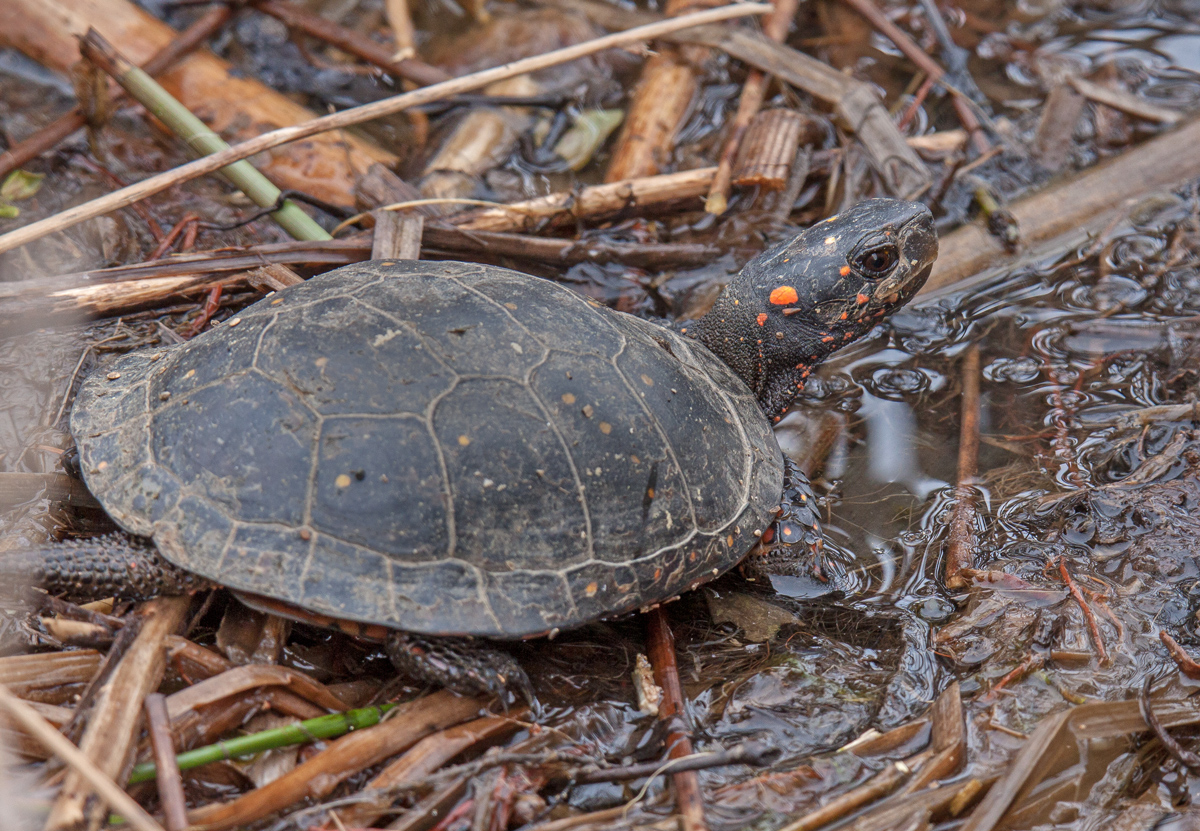
Now that the ice on the ponds has melted, the turtles have resurfaced, including this relatively uncommon Spotted Turtle (Clemmys guttata) that I photographed yesterday at Huntley Meadows Park.

According to the Virginia Herpetological Society, “Extinction or extirpation is possible. Populations of these species are in decline or have declined to low levels or are in a restricted range. Management action is needed to stabilize or increase populations.”

I was very happy to spot this turtle and tried hard not to disturb it too much in getting a few shots.

Spotted Turtle

© Michael Q. Powell. All rights reserved..

Read Full Post »

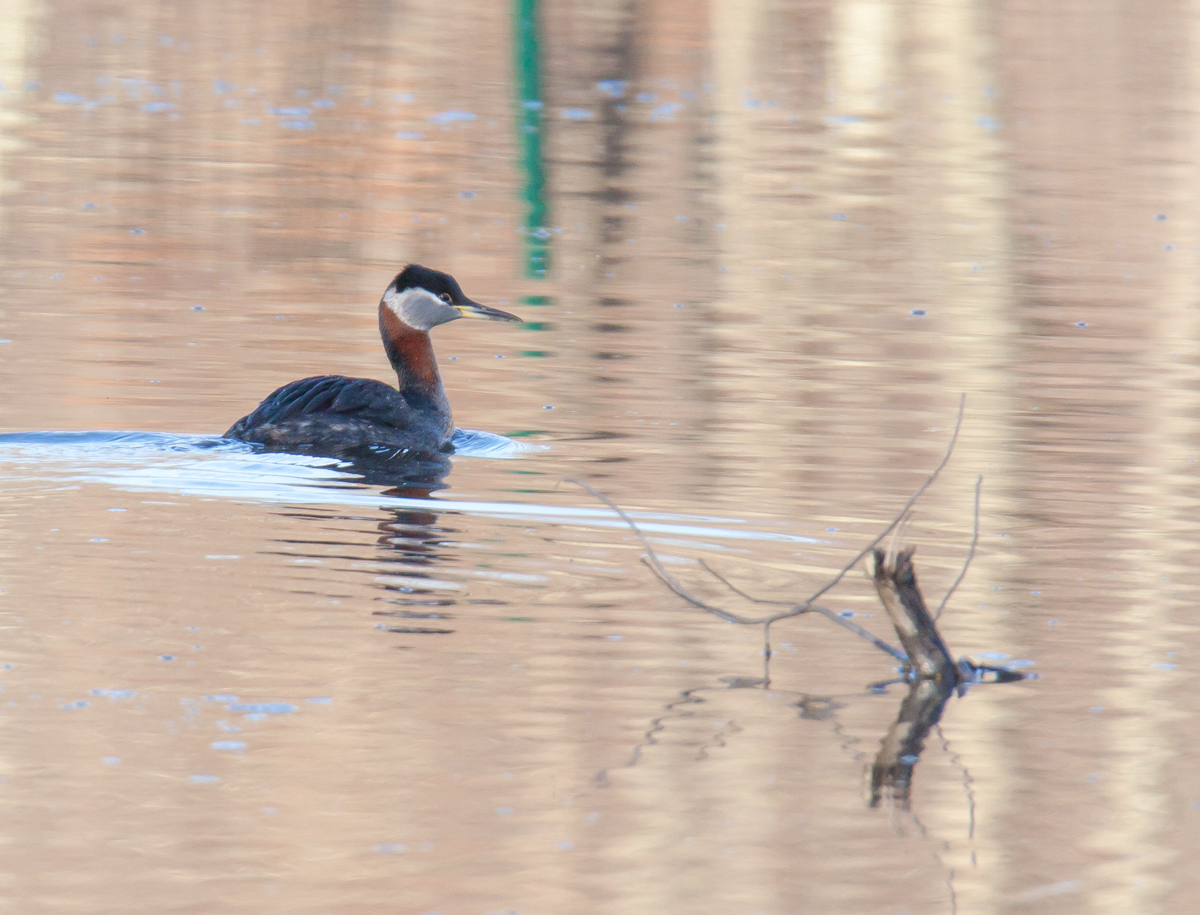
I don’t consider myself to be a birdwatcher, but I have to admit that there is something pretty exciting about seeing (and photographing) a new species. Early yesterday morning, I spotted a small bird swimming in a pond at my local marsh that looked unfamiliar.

I had no idea what it was, but took some photos so I could check when I returned home. If I hadn’t been a birdwatcher, I would have examined it more closely with binoculars or ideally a spotting scope and consulted a guidebook that I would have been carrying with me (and carried on a conversation with my fellow birdwatchers).

It looks to me like this might be a Red-necked Grebe (Podiceps grisegena), a species that I have never before encountered. With a name like “redneck,” I thought it might be a rural Southern bird, but it actually is found mostly in the north during summer months.

I am looking forward to seeing more new birds this spring and can’t wait to see what other birds decide to visit my local marshland park.

Red-necked Grebe

Red-necked Grebe

© Michael Q. Powell. All rights reserved.

Read Full Post »
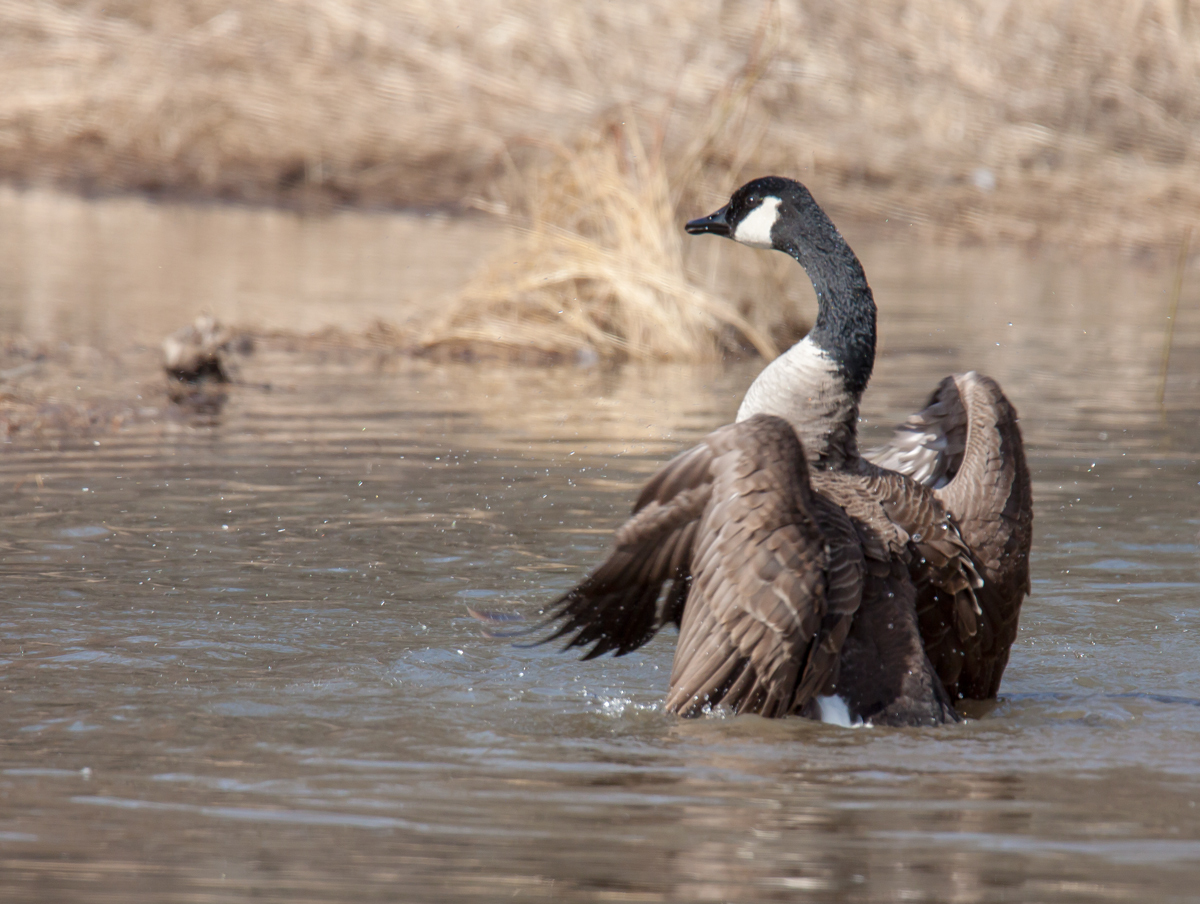
The Canada Geese at my local marsh seemed thrilled that the ice on the ponds had finally melted and they splashed about happily in what looked to be a group bathing session. Their exuberance and excited splashing reminded me of a children’s pool party. Previously I had seen geese dip their heads underwater to get wet, but these geese took it another step and appeared to be doing complete flips underwater. There was so much activity that it was virtually impossible to isolate and capture the action in a still shot.

Eventually they needed to dry off and I got this shot as one Canada Goose (Branta canadensis) rose up out of the water and vigorously flapped its wings. There is something about the goose’s pose that I really like, with the curved wings almost mirroring the curved neck.

Canada Goose bath

© Michael Q. Powell. All rights reserved.

Read Full Post »

The calendar says that it is not quite spring, but after the cold weather we have had recently, it sure feels like spring when the temperature reaches 60 degrees F (15.5 degrees C) on consecutive days. As I walked about in my marshland park this past Monday I noticed some small flying insects, giving me hope that dragonflies and damselflies will be on the scene soon.

As I was climbing down the stairs of the observation deck, I noticed something hanging in the air. When I bent toward it, it seemed to move farther away from me and eventually came to rest on the surface of the boardwalk. I was a little shocked to see that it was a tiny spider.

There was no way that I was going to be able to get a shot of the spider with the 150-600mm zoom lens that was on my camera, but fortunately I had my 100mm macro lens in my bag. With one eye on the spider, I rapidly changed lens. As I tried to figure out a way to get a shot, the spider started moving, which, of course, increases the challenge of getting a macro shot.

I managed to get a few shots of this early-appearing spider, which I have not yet been able to identify, before it crawled into a crack in the boards and disappeared from view. I’m pretty confident that I will get some better images of spiders as the weather continues to warm up, but this one is special, because it is the first one of the season for me, so I am more than happy with my record shots of it.

spring spiderspring spider

© Michael Q. Powell. All rights reserved.

Read Full Post »

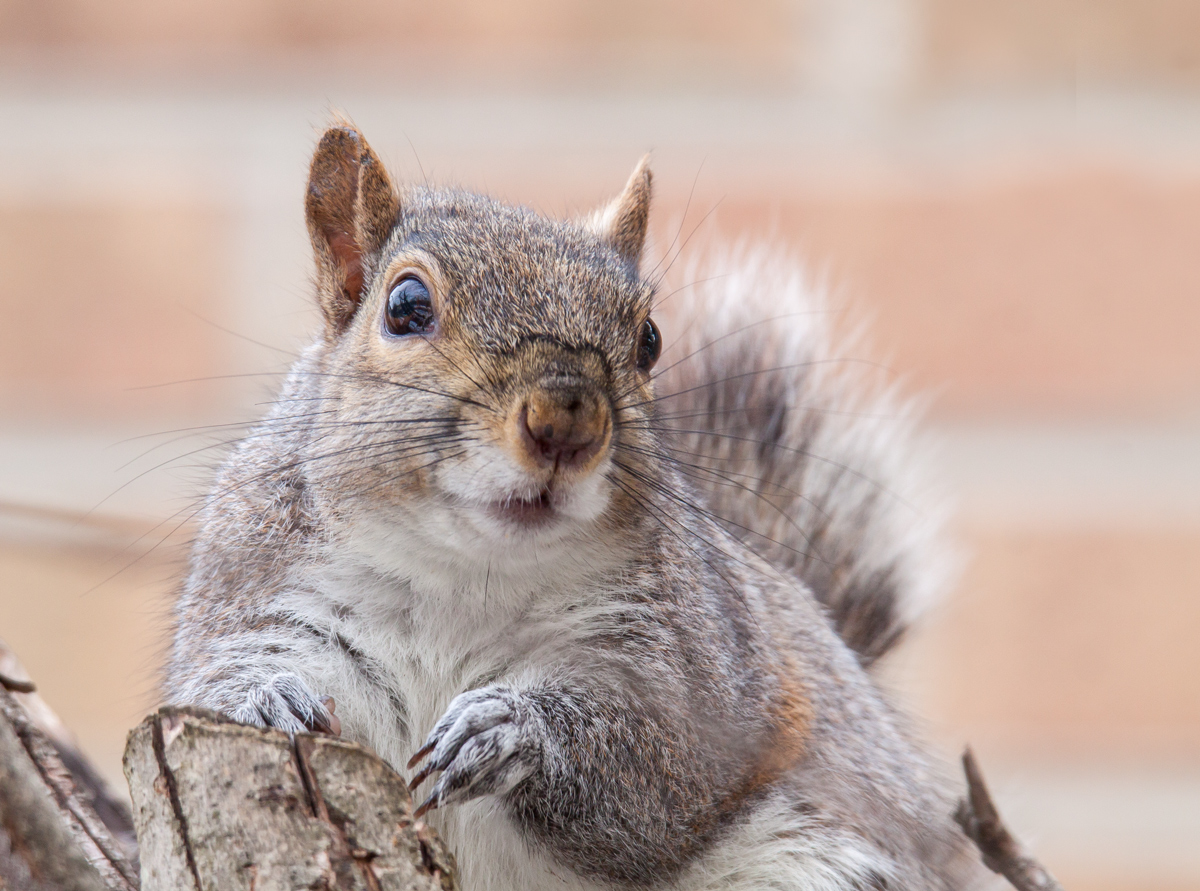
On a beautiful spring-like morning, even the squirrels in my suburban townhouse neighborhood today looked amazingly photogenic.

Eastern Gray Squirrel

© Michael Q. Powell. All rights reserved.


Read Full Post »

I can’t identify this tiny flowering plant, but it is blooming now in the garden of one of my neighbors. Despite the large mounds of snow throughout my townhouse neighborhood, I can’t help but hope and believe that spring is not far away.

flower1a_blog


© Michael Q. Powell. All rights reserved.

Read Full Post »

This dragonfly has such distinctive markings that I should have been able to identify it easily, but I had never seen one like it before, so I didn’t know what it was.

Fortunately, a short time later that day I ran into local dragonfly expert and fellow blogger Walter Sanford, who informed me that it was a Spangled Skimmer dragonfly (Libellula cyanea). Spangled Skimmers have black and white stigmas on their wings, which makes them unique among dragonflies in my part of Northern Virginia. As you may be able to guess from my images, Spangled Skimmers are among the species of dragonflies that like to perch, which makes it easier to photograph them—if you can find them.

spangled1_blogspangled2_blog

© Michael Q. Powell. All rights reserved.

Read Full Post »

What do you think about when you hear the word “dasher?”  From my early childhood days, the word meant only one thing—it was the name of one of Santa’s reindeer.

Many of us grew up hearing these familiar words from the poem “Twas the Night Before Christmas” (“A Visit From St. Nicholas“) by Clement Clarke Moore:

More rapid than eagles his coursers they came,

And he whistled, and shouted, and called them by name;

“Now, Dasher! now, Dancer! now, Prancer and Vixen!

On, Comet! on, Cupid! on, Donder and Blitzen!

To the top of the porch! to the top of the wall!

Now dash away! dash away! dash away all!”

So, every time I see a Blue Dasher dragonfly (Pachydiplax longipennis), like this beautiful male that I photographed this weekend, I can’t help but have a little thought of Christmas, even on the hottest days of summer.

But Santa, some may complain, didn’t have a blue Dasher. That’s true, of course, but Elvis had no problem singing of a Blue Christmas, the perfect setting for a Blue Dasher. (Click here to watch a You Tube video of Elvis singing this signature tune.)

dasher1_june_blog

© Michael Q. Powell. All rights reserved.

Read Full Post »

Have you ever looked really closely at a dragonfly? I expected to be able to see its beautiful colors, but I was a little surprise to see how many little hairs were present on the face and body of this Common Baskettail dragonfly (Epitheca cynosura) that I encountered in mid-May at my local marsh.

I was standing in one of my favorite spots, at the edge of a beaver pond, when this dragonfly flew in and perched a few feet away from me. I don’t know if it was resting or napping or simply didn’t mind my presence, but it allowed me to get amazingly close to it. I was able to take quite a few shots of it and even was able to set up my tripod (although there was so much underbrush that it was tough to get a really stable base).

As you can see from the first shot, depth of field was an issue for me when I moved in this close and I didn’t manage to keep all of the legs in focus. I took the second shot from a bit further back and more of the dragonfly is in focus.

Want a new view on life? Try looking at the world through a macro lens and you’ll see some amazing things.

drag1a_close_blogdrag2_close_blog

© Michael Q. Powell. All rights reserved.

Read Full Post »

Is it just me, or does the word “skink” sound funny to you? Certain words simply sound odd to me and for some reason “skink” is one of them—I can’t help but smile whenever I say the word out loud.

Recently I took this shot of a Common Five-lined Skink (Plestiodon fasciatus, formerly Eumeces fasciatus) at my local marshland park. It was sunning itself on a rotten log and didn’t detect my presence immediately and run away, which is what usually happens when I spot a skink. It seems to have its head cocked a little and has a smile on its face, as though daydreaming, as I do when sunbathing.

skink1_blog


I wonder if you could use “skink” as a verb to describe the crawling-type behavior typical of a skink, as in, “I saw my friend skinking about.” If “skink” were a verb, would it follow the model of “drink,” with verbal forms that included “skank” and “skunk?”  That might induce a bit of confusion, I suppose, since “skank” suggests a different kind of behavior, as does “skunk.” English can be a strange language.

I’ll just continue smiling.

© Michael Q. Powell. All rights reserved.

Read Full Post »

Yesterday I wrote of a male Eastern Pondhawk dragonfly (Erythemis simplicicollis) transitioning to adulthood, but I realized this morning that not all viewers know what an adult male pondhawk looks like.

This first shot shows an adult male Eastern Pondhawk perched above a big mass of algae, duckweed, and other “stuff” at a small pond at a local garden. Originally I was frustrated when the dragonfly flew into this mess and did not perch above the cleaner water of the pond. I wasn’t sure if I could get a clear shot with all of the clutter, but was pleasantly surprised with the result. I actually like the bubbles in the foreground and the texture and visual interest that it adds to the shot.

pondhawk1_blog

I took the second shot in a totally different environment, at the edge of a field. It shows the bright green coloration of the Eastern Pondhawk female (and young males). My local dragonfly expert, Walter Sanford, keeps reminding me that one of the keys to differentiating the genders is the terminal appendages and I think this one is a female.

pondhawk2_blogWhen you take the blue from the top photo and the green from the bottom one, you get the color combination of yesterday’s posting. As for me, I find the colors to be exceptionally beautifully individually as well as in combination.

© Michael Q. Powell. All rights reserved.

Read Full Post »

I have always been intrigued by the fact that many male dragonflies start out looking like females and over time acquire their male coloration. It’s a bit of an oversimplification, but male Eastern Pondhawk dragonflies (Erythemis simplicicollis) are blue and females are green. Males of this species initially are green and gradually turn blue. Last weekend I managed to get some shots of a dragonfly who is in midst of this transitional period.

I really like his current two-toned look, but before long he’ll be almost completely blue, (though he will retain the green face.

drag_bg1_blogdrag_bg2_blog

© Michael Q. Powell. All rights reserved.

Read Full Post »

« Newer Posts - Older Posts »